 Skip to content

PU vs Fabric Cosmetic Bags: Which Is Better for Custom Manufacturing, Private Label, and Beauty Brand Growth?
A cosmetic bag can look simple on a shelf, yet from side it is rarely a simple product. It sits in a tricky space between packaging, organization, gifting, travel utility, and brand presentation. That is why the material choice matters far more than many first-time expect. A glossy PU cosmetic bag and a quilted fabric pouch may hold the same lipsticks, brushes, and travel bottles, but they do not send the same message, wear the same way, clean the same way, or fit the same sales channel. One may feel sleek, wipe-clean, and gift-ready. The other may feel softer, lighter, more casual, and more natural in the hand. When ask which one is “better,” the honest answer is not universal. The better question is better for whom, sold where, at what price level, and with what product goal. That is where the real decision starts.
This is also why the topic shows up so often in B2B sourcing. are not only comparing looks. They are comparing retail positioning, production cost, custom logo compatibility, sample speed, MOQ logic, cleaning behavior, and complaint risk after launch. Jundong’s custom makeup bag page frames this clearly by presenting cosmetic bags through OEM/ODM, private label, low MOQ, free design support, fast sample production, and multiple material directions including PU and fabric-based options. That is a strong clue that the market is not reading cosmetic bags as fashion-only items. are reading them as product programs.
PU cosmetic bags are usually better for a polished look, easier wipe-clean use, and premium gift or retail presentation, while fabric cosmetic bags are often better for lighter feel, softer structure, washable use cases, and more casual or eco-leaning brand stories. Neither material wins in every category. The better choice depends on your target , product style, logo method, price goal, and how the bag will actually be used after purchase. Jundong and other OEM/ODM cosmetic bag suppliers present both material routes because brands at different market levels need different outcomes.
There is another layer here that often gets ignored in shallow comparison articles. A material is never acting alone. It works together with bag shape, zipper choice, lining, print method, reinforcement, packing format, and the expectations of the final customer. A PU cosmetic bag made with weak edge work can still disappoint. A fabric cosmetic bag made with strong construction, good quilting, and clean branding can still look retail-ready and giftable. That means should stop thinking in terms of “luxury material” versus “cheap material” and start thinking in terms of channel fit. The same cosmetic bag that works well in a travel-gift set might fail in a school kit. The same bag that looks strong in a beauty subscription box might feel overbuilt for a mass giveaway.
This article takes that view from start to finish. It compares PU vs fabric cosmetic bags through the lenses that actually decide success: material behavior, style fit, easy cleaning, durability, sample development, factory workflow, branding, and cost logic. It also keeps one practical point at the center: a cosmetic bag is not only a product. It is a small test of how well a brand understands its own customer. who get the material decision right often get more than a better bag. They get fewer complaints, stronger shelf appeal, and a cleaner path to reorders.
What Are PU and Fabric Cosmetic Bags, and Why Does This Material Choice Matter So Much?
PU cosmetic bags use a synthetic leather-like surface that often looks smoother, glossier, or more structured, while fabric cosmetic bags use textile bodies such as polyester, nylon, cotton, canvas, velvet, or quilted cloth. The choice matters because it changes appearance, cleaning, durability, logo method, price, and retail positioning. Jundong’s custom makeup bag page presents both luxury PU styles and travel-friendly fabric pouches inside the same OEM/ODM program, which shows how strongly material choice shapes the final market role of the product.
When first compare these two categories, they often reduce the difference to surface feel. PU looks smoother. Fabric looks softer. That is true, but it is not enough. Material choice affects the bag at four levels at once: how it looks, how it behaves, how it is made, and how it is sold. If those four levels are not aligned, the product can feel wrong even when the design sketch looked attractive.
Start with the most basic distinction. PU cosmetic bags usually create a more finished, sealed, and polished outer surface. That makes them common in gift sets, travel beauty kits, and more dressed-up retail presentations. Jundong’s cosmetic bag page specifically places “luxury PU makeup cases” alongside toiletry pouches and private-label custom projects, which suggests that already associate PU with a cleaner premium-facing product language.
Fabric cosmetic bags, by contrast, cover a much wider family. “Fabric” can mean lightweight polyester, quilted nylon, cotton canvas, velvet, sherpa, recycled cloth, mesh, or other textile constructions. That flexibility is why fabric bags are so common across promotional beauty kits, casual retail, daily-use cosmetic pouches, and more eco-facing product stories. Search results from cosmetic bag manufacturers and product pages show quilted polyester, nylon, sherpa, and other textile-based cosmetic pouches positioned across both promotion and retail, which shows how broad this lane really is.
This matters because do not sell “material” in isolation. They sell a complete customer experience. A PU cosmetic bag often signals:
- cleaner wipe-down use
- slightly more formal visual presentation
- stronger gift-box pairing
- a more polished private-label direction
A fabric cosmetic bag often signals:
- softer daily use
- lighter weight
- a more relaxed or practical feel
- more room for quilted, printed, or eco-facing product stories
That does not mean one is always more expensive, better, or more modern. It means they solve different product problems. A beauty brand selling polished travel sets through department-style retail may get better alignment from PU. A lifestyle beauty brand selling soft daily pouches, campus sets, or wellness-oriented gift items may get better alignment from fabric. The material decision is really a positioning decision disguised as a sourcing decision.
Many still get pulled into a false shortcut: PU equals premium, fabric equals ordinary. That shortcut is too weak to trust. A cheap PU surface with weak edge finish can look worse than a well-developed quilted fabric pouch. On the other side, a thin generic polyester pouch can feel forgettable next to a structured PU design. The material alone does not create value. Material plus execution creates value.
This is where B2B sourcing gets more serious. Jundong’s broader product pages emphasize full material, size, and function customization, 100% quality inspection before delivery, fast sampling, and mixed-SKU packing support. Those points matter because once the decides on PU or fabric, the project still has to pass through sampling, production, QC, and packaging without losing its intended market level. A good bag can be weakened by the wrong zipper, the wrong lining, or the wrong logo method even when the base material choice was right.
A simple comparison table helps frame the difference:
| Area | PU Cosmetic Bag | Fabric Cosmetic Bag |
|---|---|---|
| Surface feel | Smooth, sealed, polished | Soft, textured, varied by fabric |
| Visual style | Cleaner, more refined | Casual, cozy, sporty, or natural |
| Cleaning habit | Often easier to wipe | Depends on stain resistance and washability |
| Shape behavior | Often more structured | Can be softer or more flexible |
| Brand story | Sleek, gift-ready, polished | Daily-use, comfort, eco, or lifestyle |
So why does this material choice matter so much? Because it decides more than the outside of the bag. It quietly decides:
- how the customer will read the product in the first three seconds
- how the logo should be applied
- how the bag fits a shelf, box set, or e-commerce listing
- how the bag will age after repeated use
- how the factory will sample and build it
- how the final price will be understood by the
That is why experienced do not ask only, “Do I prefer PU or fabric?” They ask, “What kind of cosmetic bag am I actually trying to build, and which material gives that idea the strongest chance of succeeding?” Once that question is answered honestly, the material decision becomes much clearer.
Which Is Better for Beauty Brands: PU Cosmetic Bags or Fabric Cosmetic Bags?
For beauty brands, PU cosmetic bags are often better when the goal is a polished retail look, premium gift presentation, or travel-ready wipe-clean product. Fabric cosmetic bags are often better when the goal is a softer, lighter, more casual, more washable, or more eco-facing brand story. Jundong’s custom makeup bag page and other cosmetic bag OEM/ODM supplier pages present both routes because different beauty brands need different material signals at different price levels.
The easiest answer want is “PU is better” or “fabric is better.” The harder answer — and the one that actually helps — is that beauty brands should judge materials by brand language, channel, and repeat use pattern.
PU tends to work well for brands that sell aspiration. It can create a more dressed, more polished surface with less visual noise. In many gift-set or travel-beauty contexts, that helps the product feel more “finished” before the customer even opens it. Jundong’s page leans into this by mentioning luxury PU makeup cases as part of its custom manufacturing offer, while another Jundong product page for PU cooler bags highlights matte, glossy, or embossed textures, color matching, and logo embossing. Even though that second page is not about cosmetic bags specifically, it still shows the same material language can carry into PU cosmetic bag development: surface control and premium texture options.
Fabric works differently. It can create warmth, softness, approachability, and wider style range. A quilted fabric pouch can feel cozy. A canvas beauty pouch can feel grounded and reusable. A nylon cosmetic bag can feel practical and light. Rivta’s sustainable cosmetic bag positioning also shows why many brands lean toward textile routes: recycled and natural materials are presented as durable, wear-resistant, and suitable for OEM/ODM and private-label development. That makes fabric a strong route for brands whose product story includes reuse, casual daily carry, or a softer aesthetic.
The next question is: which one looks more premium? The answer depends on what kind of premium the brand is trying to express. PU often reads as neat, sleek, and cosmetically polished. Fabric can read as thoughtful, tactile, and quietly elevated. Boutique beauty brands, wellness lines, and eco-minded labels may get more value from a strong fabric story than from a shiny PU surface. On the other hand, a gift-box-driven cosmetics brand may find that PU supports the shelf image better.
This is where many sourcing decisions go wrong. copy what looks expensive in another channel without asking whether it matches their own. A beauty subscription brand might choose PU because it seems upscale, then discover that repeated shipping and casual home use would have worked better with padded fabric. A retail gift line might choose fabric because it sounds friendly, then find that the product looks too soft and too low-contrast inside a polished holiday set. The problem was not the material. The problem was channel mismatch.
A strong way to judge the choice is by type:
| Brand Type | Usually Stronger Material Direction | Why |
|---|---|---|
| Premium gift-set beauty brand | PU | Polished surface and presentation value |
| Travel beauty line | PU or coated fabric | Easier wipe-down and travel appeal |
| Wellness / lifestyle beauty brand | Fabric | Softer and more natural brand tone |
| Eco-focused beauty brand | Fabric | Better support for recycled/natural stories |
| Mass promo beauty campaign | Fabric or basic PU | Depends on budget and finish target |
Another layer is private label. A private-label usually needs more than “nice material.” They need a material that works with:
- logo treatment
- packaging plan
- price band
- sample path
- repeat-order stability
Jundong’s pages are useful here because they repeatedly frame cosmetic bags as part of OEM/ODM and private-label workflows, not just one-off products. That matters. Private-label success depends on whether the material can be repeated cleanly, customized practically, and packaged in a brand-consistent way.
One useful test is this: imagine the finished product in the customer’s hand. Does the brand need the bag to feel:
- sleek and gift-like?
- soft and everyday?
- sporty and light?
- natural and reusable?
- wipe-clean and travel-safe?
The answer usually points toward the right material faster than a mood board will.
So which is better for beauty brands? PU is often better for polished presentation. Fabric is often better for softer storytelling and daily practicality. The best choice is the one that helps the bag feel native to the brand instead of borrowed from another market. who start there usually make better first samples, better first launches, and better reorder decisions. If you want to compare both routes against your own target market, Jundong can review the project direction at info@jundongfactory.com.
PU vs Fabric Cosmetic Bags: Which Type of Material Is Best for Different Cosmetic Bag Styles?
PU is often better for cosmetic bag styles that benefit from shape, surface polish, and cleaner edge presentation, while fabric is often better for styles that need softness, quilting, flexibility, and a more casual hand feel. The best material depends on the specific bag type — flat pouch, box bag, train case, zipper organizer, travel pouch — rather than the category name alone. Search results around cosmetic bag types and custom makeup bags show that actively compare structure and material together, not separately.
This is one of the most useful decision points in the whole article because often choose material before choosing structure. That order should usually be reversed. A flat pouch, a boxed cosmetic bag, and a semi-rigid travel organizer do not ask the same thing from the material.
Take the flat cosmetic pouch first. This is one of the most flexible styles in the market. It can work in PU, cotton, canvas, quilted fabric, nylon, or other textiles. If the goal is a clean branded pouch for gift sets or retail kits, PU can work well because it helps the bag read as more polished without needing much structure. If the goal is a casual, daily-use, softer-feel beauty pouch, quilted or woven fabric may do more work with less visual effort.
Now look at the box cosmetic bag. This shape usually benefits more from body and shape retention. PU often supports that naturally because the surface and backing can help the bag stand and hold form more consistently. Fabric can still work, but it often needs added padding, interfacing, quilting, lining, or foam support to create the same visual firmness. That does not make fabric worse. It just means the build path is different.
Then there is the travel organizer or larger beauty pouch. These bags usually carry more items, get opened and closed more often, and are more likely to be used near sinks, counters, and packed luggage. That often makes PU or coated materials appealing because of wipe-clean behavior and a more travel-ready look. But fabric organizers still win in many markets when the wants lighter weight, softer packing, or a textile story that feels more grounded and less formal.
Jundong’s custom makeup bag page is helpful here because it does not lock cosmetic bags into one format. It presents luxury PU cases, travel-friendly toiletry pouches, and broader custom options inside the same factory program. That suggests a point should not miss: the bag category is wide, and the winning material changes with the intended structure.
A practical style-material map looks like this:
| Cosmetic Bag Style | Often Stronger in PU | Often Stronger in Fabric |
|---|---|---|
| Flat beauty pouch | Good for polished gift-ready look | Good for soft casual daily use |
| Box cosmetic bag | Good for shape and structure | Good with padding/quilting support |
| Travel organizer | Good for wipe-clean and structured travel use | Good for light, flexible packing |
| Quilted pouch | Less natural | Strong fit |
| Soft wellness pouch | Can feel too formal | Strong fit |
| Semi-rigid vanity case | Often stronger | Depends on internal support |
There is also a sales-channel angle here. Some styles simply sell more naturally in one material because the customer already expects that pairing. Quilted cosmetic bags are commonly seen in textile form. Clean vanity-style pouches often appear in PU or coated material. That expectation shapes perception before the reads one product bullet point.
This is where material choice starts behaving like design psychology. The product does not only need to function. It needs to feel like it belongs to its own category. A PU quilted pouch can work, but the must know what story it is telling. A very stiff fabric box bag can also work, but it needs enough structural support to justify the form.
One more trap fall into is assuming that a “better-looking” sample equals a better commercial choice. A structured PU sample may photograph beautifully, but if the target market wants softness, packability, and a washed textile feel, that sample may still be wrong. A fabric sample may feel charming on the desk, but if the brand is selling polished travel gift sets, the product may read too relaxed.
So which type of material is best for different cosmetic bag styles? PU usually wins when the bag depends on clean edges, shape, and polished surface language. Fabric usually wins when the bag depends on softness, texture, quilting, flexibility, or a more natural hand feel. who decide style first and material second usually reach a better product faster.
Are PU Cosmetic Bags Better Than Fabric Bags for Waterproofing, Spill Resistance, and Easy Cleaning?
In many everyday beauty-use scenarios, PU cosmetic bags are usually better for wipe-clean convenience, spill resistance, and sink-side or travel use, while fabric cosmetic bags can still work well when washability, softness, and lighter carry matter more. Jundong’s cosmetic bag page explicitly highlights PU, TPU, nylon, velvet, and other materials as different routes for beauty-bag development, which reflects a real sourcing truth: cleaning and moisture behavior are major selection factors, not side notes.
If only compares aesthetics, they miss one of the most practical reasons brands choose PU: cleanup behavior. Cosmetic bags rarely live in clean, controlled environments. They go into luggage, handbags, gym lockers, bathrooms, and makeup drawers. They collect powder residue, liquid smears, brush marks, lotion leaks, and daily friction. That is why easy cleaning is not just a comfort feature. It can directly affect customer satisfaction.
PU often has an advantage here because the outer surface is more sealed and usually easier to wipe down after minor spills or makeup residue. That makes it a strong option for travel beauty kits, gift sets, or products meant to sit near wet counters and busy routines. looking at travel or bathroom use should take that very seriously. The product that looks good on day one but becomes hard to maintain after a month can weaken the customer’s view of the whole brand.
Fabric works differently. It may be more forgiving in softness and can often be washed or spot-cleaned depending on the textile. That can be a real strength. But not all fabric cosmetic bags respond to stains the same way. Quilted polyester, cotton canvas, nylon, sherpa, and velvet do not absorb, release, or show stains in the same way. A washable fabric can still perform very well if the customer understands how to care for it. The issue is not whether fabric is “bad at cleaning.” The issue is that fabric cleaning is more variable.
This is where the word “better” needs more discipline. Better for what?
If the bag is for:
frequent travel
bathroom counter use
spill-prone beauty products
worry-free wipe-down
then PU often has a stronger case.
If the bag is for:
soft daily carry
lighter packing
washable textile preference
casual or cozy brand feel
then fabric may still be the better route.
A simple comparison helps:
| Use Condition | PU Cosmetic Bag | Fabric Cosmetic Bag |
|---|---|---|
| Minor makeup spills | Usually easier to wipe | May absorb depending on textile |
| Sink-side use | Often better | Depends on fabric and finish |
| Travel wipe-down | Often better | Mixed by material type |
| Soft packability | Moderate | Often better |
| Machine or hand washing potential | Limited by build | Possible with some fabrics |
There is also a hidden after-sales angle. often focus on returns caused by obvious defects, but material complaint risk can come from daily inconvenience too. If a cosmetic bag is hard to clean, stains easily, or keeps showing residue, the customer may not request a formal return — but they may silently decide not to buy again. This is why cleaning behavior should be treated as a commercial factor, not just a technical note.
Still, PU is not automatically the answer for every cleaning-related problem. A weak PU surface can scratch, crease, or age poorly if the quality level is too low. A strong quilted nylon or treated textile may still perform very well in daily beauty use. The needs to compare material grade, not just category label.
That is also why factory support matters. Jundong’s materials range and OEM/ODM approach suggest that cosmetic bag projects can be guided through different material routes based on use and channel, rather than defaulting every into one answer. That is the right way to approach this decision.
So are PU cosmetic bags better than fabric bags for waterproofing, spill resistance, and easy cleaning? In many practical beauty and travel scenarios, yes — often they are. But the real question should be: does the product need wipe-clean behavior more than it needs softness, washability, or a textile brand feel? Once that is answered, the choice becomes much more precise.
How Durable Are PU and Fabric Cosmetic Bags, and Which One Lasts Longer?
PU cosmetic bags often perform well when want a more structured, wipe-clean surface and a polished retail feel, but long-term durability depends heavily on PU grade, edge finishing, and how the bag is used. Fabric cosmetic bags often perform better when the wants flexibility, repeated daily handling, lighter weight, or washable practicality. Neither material is automatically “longer lasting” in every case. Jundong’s custom makeup bag page shows PU, nylon, velvet, TPU, and EVA all positioned for different beauty-bag functions, which reflects the real market truth: durability depends on material level plus construction, not material label alone.
A lot of ask durability questions in the wrong order. They ask whether PU is more durable than fabric, as if these were two fixed and stable materials. In reality, both are broad categories. “PU” can range from better-developed leather-like surfaces with cleaner backing and stronger finishing to weaker versions that crease, scratch, or age poorly. “Fabric” can mean light polyester, quilted nylon, cotton canvas, recycled woven materials, or padded textile laminates. That is why a cheap PU cosmetic bag can fail faster than a well-made quilted nylon pouch, while a weak thin polyester pouch can feel far less durable than a properly made PU vanity bag. The category label helps, but it does not decide the whole durability story.
PU usually has one obvious durability advantage in beauty use: surface behavior. It tends to resist minor spills better, looks more sealed, and often keeps a cleaner visual appearance in travel, counter, and gift-set environments. This is one reason so many beauty brands keep using PU-like materials in gift packaging and cosmetic accessories. Jundong’s cosmetic bag page places luxury PU cases and wipe-friendly beauty bag directions within its OEM/ODM makeup bag range, while supplier pages in the same category consistently position PU around easy-clean beauty use and premium retail presentation.
But PU has its own risks. Low-grade PU may show wear at fold lines, edge paint can weaken over time, and the product may start looking tired faster if the bag is constantly compressed in luggage or rubbed against harder objects. In other words, PU can look durable early and still age badly if the grade or finishing is weak. That is why who want PU for retail or gift projects should not only ask for the material name. They should ask how the surface is backed, how the edges are finished, and whether the bag is meant for occasional gift use or repeated daily use. The wrong PU choice often disappoints not because PU is flawed, but because the product was built for appearance first and real handling second.
Fabric works from a different strength profile. A strong textile cosmetic bag, especially in nylon, quilted polyester, or better canvas-based structures, may survive repeated stuffing, folding, and daily handling more comfortably because the material moves more naturally with the user. Textile suppliers and cosmetic bag manufacturers keep positioning quilted and woven cosmetic pouches as daily-use and travel-friendly solutions, which reflects a common assumption: fabric can feel less fragile in repeated casual use because it does not depend as heavily on a decorative surface layer.
Fabric also has a practical durability advantage in some channels because it is often easier to accept visually as it ages. Minor creasing on fabric can look normal. The same level of visual change on PU can sometimes be read as wear or surface decline. This matters in retail because “durability” is not only about whether the bag tears. It is also about whether the customer still feels the product looks acceptable after weeks or months of use. A bag can technically remain functional but still fail commercially if it starts looking worn too fast. who sell into boutique retail, beauty subscription programs, or higher-expectation gift channels should take visual aging as seriously as physical durability.
A useful durability comparison looks like this:
| Durability Factor | PU Cosmetic Bag | Fabric Cosmetic Bag |
|---|---|---|
| Surface wipe-clean use | Often stronger | Depends on textile and finish |
| Repeated folding/compression | Depends heavily on PU grade | Often more forgiving |
| Visual aging | Can show creases/surface wear | Often ages more softly |
| Washability potential | Limited by construction | Possible with some fabrics |
| Retail “fresh look” retention | Strong if quality is good | Strong if fabric is stable |
This is where construction becomes just as important as material. Zipper quality, corner tension, lining, binding, foam support, and seam control all affect how long the bag really lasts. Jundong’s broader product pages repeatedly describe full material, structure, and function customization with 100% inspection before shipment, which is the right kind of framework for who care about long-term quality rather than just a sample that looks attractive. A durable cosmetic bag is rarely the result of one material decision alone. It is usually the result of material + pattern + workmanship + QC working together.
So which one lasts longer? The best honest answer is this: higher-quality PU often lasts better in polished, wipe-clean, lower-abuse beauty environments; better fabric often lasts better in softer, high-frequency, casual-use environments. should stop trying to rank the two materials as if they compete on one straight line. They do not. They perform differently under different user behavior. For brands that want fewer complaints, the smarter move is to match material with real-life use intensity, not just with product mood boards.
How Are PU and Fabric Cosmetic Bags Made by a Manufacturer?
PU cosmetic bags are usually built through cutting, backing, panel shaping, edge finishing, stitching, logo application, lining, and final assembly. Fabric cosmetic bags are usually built through fabric sourcing, printing or quilting if needed, cutting, sewing, lining, padding, finishing, and packaging. Jundong’s product-development pages present a full OEM/ODM workflow that covers design, material sourcing, sample making, production, packaging, and shipment, which is exactly the structure should expect when developing either PU or fabric cosmetic bags at factory level.
From the outside, often think cosmetic bags are small and therefore easy. From the factory side, that assumption is dangerous. Small bags often carry tight tolerances because their scale makes every problem more visible. A zipper placed slightly wrong on a large travel bag may pass unnoticed. On a small cosmetic pouch, it can make the product feel crooked immediately. That means cosmetic bags should not be treated as “simple accessories.” They should be treated as precision soft-goods products where material behavior matters at every stage.
PU cosmetic bags usually begin with material and surface planning. The or factory must decide on the PU finish, thickness, backing behavior, texture, and whether the material needs a more matte, glossy, embossed, or leather-like look. Jundong’s cosmetic bag page and related product pages show multiple branded-material directions, including PU leather and other surface-controlled finishes, which makes sense because PU-based products are heavily shaped by how the outer surface is specified. Once that direction is fixed, the bag moves into panel cutting, support material selection, lining, zipper planning, and edge treatment decisions.
The next big issue with PU is edge behavior. Some PU products rely on folded-and-stitched construction. Others need cleaner bound or painted edges depending on the design style. That choice affects not only appearance, but production difficulty and perceived quality. A PU cosmetic bag that aims to look sleek but has uneven edge finish will lose value quickly in retail. This is why should never approve PU samples only from the front view. Side seams, top opening, zipper insertion, and edge finish are all part of the product language. If those details are weak, the “premium” idea collapses fast.
Fabric cosmetic bags follow a different path. The first decision is usually textile direction: polyester, nylon, quilted fabric, canvas, recycled woven cloth, velvet, or other textile routes. Supplier pages in this category show just how wide the fabric family is, with quilted polyester pouches, textile organizers, and softer beauty bags used across both OEM and promotional programs. Once the fabric route is fixed, the process may include printing, quilting, lamination, padding, lining, zipper installation, and sewing. The build sequence is usually more textile-driven than surface-driven.
Fabric also gives the factory different kinds of control. The bag can be made softer, puffier, flatter, more quilted, more collapsible, or more structured through lining and internal support decisions. This is one reason fabric cosmetic bags cover so many markets: the same basic textile family can produce a cheap promotional pouch, a cozy quilted beauty bag, or a refined daily-use organizer depending on how the pattern and internal build are handled. sometimes underestimate this flexibility because they treat “fabric” as a weaker, simpler option than PU. In reality, fabric often offers more style variation if the development team knows how to build with it.
A simplified factory comparison helps:
| Factory Stage | PU Cosmetic Bag | Fabric Cosmetic Bag |
|---|---|---|
| Material planning | Surface finish, backing, edge strategy | Textile type, print/quilt, padding |
| Cutting | Panel precision important for surface alignment | Panel precision important for sewing and print layout |
| Construction | Edge finish + stitching critical | Sewing + shape support critical |
| Branding | Deboss, foil, metal logo, print | Print, embroidery, woven label, patch |
| Final feel | Polished, structured, wipe-clean | Soft, light, textile-based |
This is where OEM/ODM support matters. Jundong’s product-development page lays out a full workflow from concept design to sampling, manufacturing, packing, and shipment. That matters because comparing PU and fabric are not just comparing aesthetics. They are comparing development logic. One route may require more surface attention. The other may require more textile control. A strong factory can explain both paths clearly instead of pushing every project into the same template.
So how are these bags made by a manufacturer? The practical answer is that both PU and fabric cosmetic bags rely on structured factory workflows, but PU production is more sensitive to surface and edge presentation, while fabric production is more sensitive to textile behavior and sewn construction logic. who understand that difference usually ask better questions, approve better samples, and reach better outcomes in bulk.
How Long Does It Take to Develop a Sample for PU vs Fabric Cosmetic Bags?
Sample timing for both PU and fabric cosmetic bags depends on bag complexity, material availability, logo method, structure, hardware, and revision needs. Jundong’s FAQ page states that custom samples generally take 5–7 working days, depending on design and materials, which is a useful baseline for — but the real timing still changes with product complexity. That is why “how long” should never be asked without also defining the bag type, material, and customization depth.
often ask sample timing as if it were a factory speed question only. It is not. It is a project-clarity question. A sample moves faster when the already knows the bag size, material route, logo method, and general market level. A sample slows down when the project is still undecided. This matters because the phrase “fast sampling” can sound attractive in supplier pages, but the real speed comes from how much of the product has already been mentally built before the factory begins work. Jundong’s public materials repeatedly combine fast sample language with free design support and OEM/ODM development, which shows that sampling speed is part of a broader design-to-production service, not a separate miracle.
PU cosmetic bag samples may take longer when the project depends on:
- more structured shape
- more precise edge finish
- metal or embossed branding
- lining and support materials
- special hardware
- polished presentation expectations
This is because a PU sample usually has to prove more than size and logo. It has to prove surface quality. are reading it for polish, edge neatness, zipper feel, and overall refinement. Even a small defect can change the whole impression of the bag. That means PU samples often need careful attention to details that fabric might judge more softly. If the product aims at premium retail or gift sets, sample approval should be especially strict.
Fabric cosmetic bag samples may move quickly when the build is straightforward, especially in familiar pouch shapes, but they can also slow down when:
- quilted structures are involved
- prints need placement testing
- padding or lining changes the body shape
- embroidery or woven labels are being positioned
- the is still comparing multiple fabrics
This is why fabric should not be assumed “simpler” by default. A plain nylon pouch can sample quickly. A quilted private-label cosmetic organizer with multiple textile layers can become just as development-sensitive as a PU design. Fabric samples also tend to invite more feel-based comparison. often ask to see one fabric against another because touch, softness, and perceived value are major parts of the decision.
A practical sample-timing logic looks like this:
| Sample Factor | Slows PU More | Slows Fabric More |
|---|---|---|
| Surface finish sensitivity | Yes | Less |
| Quilting / textile layering | Less | Yes |
| Edge presentation | Yes | Moderate |
| Print placement testing | Moderate | Yes |
| Shape support and lining | Yes | Yes |
Another timing issue miss is revision loops. The first sample is not always the last one. A factory may create a workable first prototype, but then the changes texture, asks for a different zipper, wants stronger padding, or decides the branding should be smaller. Each of those changes resets part of the development path. That is why the most useful question is not “How long is the sample lead time?” It is “How many decisions are still open before the sample can truly begin?”
Jundong’s FAQ positioning helps here because it treats samples as a normal part of OEM/ODM development rather than a side issue. That mindset is healthier for . Sampling should be understood as the stage where material and market meet for the first time. The more clearly the defines the market goal, the more efficiently that first meeting happens.
So which material is better for fast sampling? Neither always wins. PU may be quick when the structure is standard and the factory is experienced with the surface. Fabric may be quick when the textile is simple and the design is soft-structure. But the real driver is not material alone. It is whether the project is already coherent. Clearer product ideas almost always sample faster than vague ones.
How Much Do PU and Fabric Cosmetic Bags Cost? Price Factors and Buying Logic
PU cosmetic bags often cost more when want polished surfaces, structured construction, metal or embossed branding, and gift-ready presentation. Fabric cosmetic bags can be more cost-flexible because the fabric family is wider, but their pricing can still rise quickly with quilting, padding, lining, embroidery, or better textile grades. Jundong’s custom makeup bag program and broader product pages position price logic around full customization, OEM/ODM, low MOQ, and material/feature range, which reflects the real sourcing picture: cosmetic bag pricing is shaped by specification decisions, not by one material name alone.
The first thing should stop doing is asking “How much is a cosmetic bag?” as if the category had one stable market price. It does not. A low-cost polyester promotional beauty pouch and a private-label PU vanity pouch do not belong in the same pricing conversation. The right price discussion begins only after the defines:
- channel
- quality level
- material route
- branding method
- packaging standard
- quantity
PU often raises cost through surface expectation. The material itself may not always be dramatically more expensive than every textile option, but the product usually asks for a more refined build. Clean edges, structured lines, debossing, foil, lined interiors, and more gift-oriented presentation all raise the finished-cost logic. That is why frequently read PU bags as “premium” even when they cannot see the factory cost breakdown. The bag is asking more from the build, and the build usually costs more.
Fabric can sometimes give more pricing range. A basic polyester cosmetic pouch may sit in a very accessible cost band. A quilted nylon beauty bag may rise into a stronger mid-level tier. A canvas pouch with labels and better packaging may move higher still. This flexibility is one reason fabric remains so common in OEM/ODM cosmetic bag programs. It allows to tune the product more gradually by shifting textile quality, padding, print, and trim levels. Supplier pages in this category reflect that range clearly, with fabric cosmetic bags positioned from promotional use all the way to more finished retail presentation.
A useful pricing logic table looks like this:
| Price Driver | PU Cosmetic Bag | Fabric Cosmetic Bag |
|---|---|---|
| Base material | Often mid to higher depending on finish | Wide range from low to higher |
| Construction | Often cleaner/structured, may cost more | Flexible by style and complexity |
| Branding | Deboss, foil, metal logo can raise cost | Print/embroidery/woven label vary widely |
| Packaging fit | Often used in more gift-ready programs | Can be promo-simple or retail-ready |
| Market reading | More polished price perception | Wider spread from basic to premium |
But the real buying challenge is not understanding cost alone. It is understanding cost-to-fit. Some overspend because they build a product above the needs of the channel. Others underspend and end up with a bag that weakens the whole beauty set. The question should not only be “Can I make this cheaper?” It should also be “What level of product does this market actually need?”
This is where factory-direct sourcing becomes important. Jundong’s public pages repeatedly describe low MOQ, free design, fast sampling, and OEM/ODM support for custom bags. That matters because brands trying to control cost do not only need cheap unit numbers. They need factories that can help them reduce waste in the specification itself. Often, the biggest savings do not come from forcing cheaper material. They come from choosing the right product level from the start.
should therefore evaluate price through a checklist:
- What material grade is included?
- What zipper and lining level is assumed?
- What branding method is included?
- Is this quote based on retail packing or bulk packing?
- Is the bag built for giveaway, daily use, or premium gift sale?
- What part of the cost is driven by structure, not just material?
So how much do PU and fabric cosmetic bags cost? The only answer that stays honest is this: they cost whatever their chosen market level requires them to cost. PU often becomes more expensive because usually ask more of it. Fabric can be cheaper or more expensive depending on how far the textile build is developed. Good do not chase low price alone. They chase the right price for the job the bag has to do. For brands trying to align target price, material route, and factory feasibility, Jundong can review cosmetic bag project specs at info@jundongfactory.com.
Which Is Better for Custom Logo Printing and Branding: PU or Fabric?
PU is often stronger for cleaner premium branding such as debossing, foil, metal logos, and sleek surface effects, while fabric is often stronger for print, embroidery, woven labels, quilting-based identity, and softer casual brand language. Jundong’s custom makeup bag page and related product pages support this split by presenting both premium-surface and textile-based customization routes within the same OEM/ODM system.
Branding is where many material decisions become emotionally biased. often decide what feels premium based on logo method alone. That is risky. The logo should not be chosen first. It should be chosen after the material and market role are understood.
PU often works well for:
- debossed logos
- foil stamping
- clean metallic elements
- subtle, polished surface branding
This is because the material itself tends to support a more finished, less noisy look. A small logo on the right PU surface can feel more expensive than a large one. That makes PU especially attractive for beauty gift sets, travel beauty kits, and private-label programs that want the bag to look like a branded accessory rather than a promotional item. Jundong’s PU-related product positioning across categories, including embossing and texture options, reflects the same logic: PU can be branded in ways that emphasize finish more than volume.
Fabric branding behaves differently. Textile surfaces often work better with:
- screen printing
- embroidery
- woven labels
- patches
- quilting or texture-led identity
That does not make them less premium. It makes them premium in a different language. A fabric cosmetic bag can feel highly developed when the stitching, label placement, and textile finish are handled well. In some channels, especially lifestyle beauty or eco-facing retail, a good woven label on better fabric may do more for the brand than a shiny foil logo would. Suppliers across the cosmetic bag space repeatedly position textile-based pouches with quilting, print, and embroidered identity, which shows that fabric branding is not a compromise. It is a separate route.
A practical branding map looks like this:
| Branding Goal | Often Stronger in PU | Often Stronger in Fabric |
|---|---|---|
| Polished subtle luxury | Yes | Sometimes |
| Bold front print | Possible, but less natural | Yes |
| Embroidery | Limited / context-specific | Strong |
| Woven label | Possible | Strong |
| Foil / deboss effect | Strong | Less natural |
The biggest branding mistake make is trying to force one logo language across all materials. A large print that works on a fabric pouch can look clumsy on a clean PU case. A minimal deboss that feels elegant on PU may disappear too much on a soft fabric product aimed at more casual retail. The logo method should reinforce the product story, not fight it.
This is also where private-label thinking matters. A private-label cosmetic bag is not only a logo carrier. It is a small extension of the brand’s packaging and product world. That means the right branding method is the one that helps the bag feel native to the rest of the line. Jundong’s OEM/ODM positioning is helpful here because it treats materials, logos, and package details as one development conversation, which is exactly how should approach branded cosmetic bags.
So which is better for custom logo printing and branding? PU is often better when the brand wants sleek, controlled, premium-surface branding. Fabric is often better when the brand wants softer, more visible, more textured, or more casual brand language. should choose the branding method that makes the product more coherent, not simply louder.
Who Buys PU Cosmetic Bags, and Who Buys Fabric Cosmetic Bags the Most?
PU cosmetic bags are often chosen by brands selling premium gift sets, polished travel beauty products, and more refined retail accessories. Fabric cosmetic bags are often chosen by brands selling daily-use pouches, eco-facing beauty products, casual retail, campus/wellness kits, and broader promotional beauty programs. Current manufacturer pages and OEM/ODM cosmetic bag listings show both routes clearly because they are serving different types, not just different tastes.
sometimes talk about material as if it reflects personal preference. In B2B, material usually reflects customer type. A polished beauty-gift is not solving the same problem as a campus retail . A beauty subscription brand is not solving the same problem as a high-end travel accessory brand. Once you identify the type, the material decision often becomes more obvious.
PU is often bought by:
- premium beauty brands
- travel beauty kit sellers
- holiday or gifting programs
- retailers who want cleaner shelf presentation
- brands that want the cosmetic bag to feel like part of a refined set
Fabric is often bought by:
- daily-use beauty brands
- wellness and lifestyle brands
- eco-positioned brands
- brands with softer casual aesthetics
- schools, promotions, or subscription kits needing practical pouches
This is why there is no single “best” cosmetic bag material in the market. There are only better material- matches. who ignore that usually end up designing for themselves instead of for the customer.
Jundong’s product pages are useful here because they do not narrow cosmetic bag manufacturing to one market style. They show beauty bags through retail, travel, OEM/ODM, gift, and broader brand-customization logic. That suggests the factory is already thinking in segments, which is the right way to develop this category.
A segment view helps:
| Type | Often Stronger Material Route |
|---|---|
| Premium gift-set brand | PU |
| Travel beauty accessory brand | PU or coated fabric |
| Daily-use beauty pouch seller | Fabric |
| Eco / lifestyle beauty line | Fabric |
| Promotional beauty campaign | Fabric or basic PU depending on spec |
Which type should source directly from a cosmetic bag factory? Usually:
- wholesalers
- importers
- beauty startups
- private-label retailers
- subscription-box brands
- brands needing repeat orders and packaging consistency
These usually benefit from OEM/ODM because they need control over material, size, branding, and packing rather than simply buying stock goods. That is exactly why supplier pages in this category lean so heavily on custom and factory-direct language. The real market is not asking only, “Can I buy cosmetic bags?” It is asking, “Can I build the right cosmetic bag for my customer?”
Why Do Brands Work With a Cosmetic Bag Manufacturer Instead of Buying Stock Bags?
Brands work with cosmetic bag manufacturers because custom development gives them control over material, structure, logo, packaging, and repeat-order consistency. Stock bags can be useful for simple short-term needs, but OEM/ODM manufacturing is usually the better route when the cosmetic bag is meant to support a private-label line, a retail launch, a subscription program, or a long-term branded accessory strategy. Jundong’s public materials repeatedly present this category through OEM/ODM, free design support, low MOQ, fast sample development, and global shipment support, which matches what serious B2B normally look for.
Stock sourcing works when the project is basic. A company may only need a generic cosmetic pouch for a simple promotion. In that case, printing a logo on a stock product can be enough. But once the wants:
custom size
specific material feel
brand-matched color
special packaging
private-label tags
repeatable retail quality
the stock route starts becoming restrictive.
That is why brands move to manufacturers. They are not only buying production. They are buying fit. The bag can be fitted to the target market instead of adapted after the fact. Jundong’s development page makes that logic clear by showing design, sourcing, sampling, production, packaging, and shipping as one chain. That is how brands should think about cosmetic bag development if the product has any serious role inside the business.
OEM vs ODM is also part of this decision. OEM usually fits who already know what they want and need a factory to make it accurately. ODM often fits who need the factory to help shape the product direction more actively. Search results and supplier pages in this category keep surfacing OEM/ODM cosmetic bag language because it reflects real B2B search intent. are not just asking for bags. They are asking for the right development model.
So why choose a manufacturer instead of stock? Because a branded cosmetic bag is often doing more than holding makeup. It may be carrying the visual logic of the whole brand. Stock can solve convenience. Manufacturing can solve brand alignment.
What Is the Best ’s Guide for Choosing Between PU and Fabric Cosmetic Bags?
The best ’s guide is simple: choose between PU and fabric cosmetic bags by comparing target customer, sales channel, use condition, branding method, price target, and repeat-order plan. PU is often stronger when the product needs polish, wipe-clean behavior, and gift-ready presence. Fabric is often stronger when the product needs softness, washability, lighter feel, or a more natural and everyday brand story. A good makes the material decision after defining the market, not before.
A structured checklist helps:
| Decision Point | Ask This |
|---|---|
| Customer | Who will use this bag, and how often? |
| Channel | Is it for gift sets, retail, subscription, promo, or travel? |
| Material behavior | Does the bag need wipe-clean ease or soft daily feel? |
| Branding | Does the logo need polish, texture, visibility, or subtlety? |
| Price target | What level of finish can the market actually support? |
| Reorder plan | Is this a test, or a long-term product program? |
Brands should also test intelligently. The best first order is usually not the biggest order. It is the order that teaches the most. That means sampling seriously, reducing variables, and letting the market show whether the bag feels right in the real channel. Jundong’s FAQ and OEM/ODM support structure are useful here because they treat samples as a normal and necessary part of custom bag development, not as a side issue.
So which material is better in 2026 for long-term brand growth? The better material is the one that helps the cosmetic bag behave correctly in your real market. If that means sleek, clean, gift-ready travel beauty presentation, PU may win. If that means softer daily use, eco/lifestyle storytelling, or textile warmth, fabric may win. The wrong choice is not choosing one over the other. The wrong choice is choosing without first defining what success should look like. For custom cosmetic bag development, sampling comparison, and OEM/ODM consultation, can reach Jundong Factory at info@jundongfactory.com.
FAQ 1: Which is better for private label beauty brands: PU cosmetic bags or fabric cosmetic bags?
The better material for a private label beauty brand depends on the brand’s price level, customer expectations, sales channel, and product story. This is the most honest answer, and it is also the most useful one for real . A lot of people want a quick answer like “PU is more premium” or “fabric is more practical,” but those short answers are only partly true. In private label development, material choice is not just about appearance. It is about whether the final bag supports the way your brand wants to be perceived and used.
For many beauty brands, PU cosmetic bags work well when the goal is to create a more polished, giftable, and visually “finished” product. PU often helps a cosmetic bag look cleaner on a shelf, easier to match with premium gift sets, and more suitable for travel beauty collections. If a brand is selling curated skincare sets, limited-edition holiday boxes, travel beauty kits, or retail products that need a stronger luxury signal, PU often makes more sense. It creates a more controlled surface and usually feels more intentional in premium packaging environments.
However, fabric cosmetic bags can be the stronger choice for brands that want to feel softer, more natural, more lifestyle-driven, more wellness-oriented, or more casual and daily-use friendly. Fabric works especially well for eco-story brands, wellness and self-care brands, daily makeup organizers, subscription boxes, and lighter retail accessories. A quilted fabric cosmetic bag, for example, can feel warm, modern, and highly usable in a way that a shiny PU bag may not.
This is why the best material depends on brand identity. If your customer expects:
- sleek
- travel-ready
- easy to wipe
- gift-worthy
- more refined visual value
then PU usually has an advantage.
If your customer expects:
- soft
- cozy
- everyday-friendly
- reusable
- more natural or relaxed styling
then fabric may perform better.
A simple comparison helps:
| Brand Need | PU Cosmetic Bag | Fabric Cosmetic Bag |
|---|---|---|
| Premium visual appeal | Strong | Moderate to strong, depending on fabric |
| Soft lifestyle branding | Moderate | Strong |
| Travel / gift set positioning | Strong | Moderate |
| Eco / wellness storytelling | Moderate | Strong |
| Daily casual use | Moderate | Strong |
Another thing private label should consider is logo behavior. PU often works better with debossing, foil stamping, metal plates, or cleaner premium branding. Fabric often works better with embroidery, print, woven labels, or a softer, more tactile brand expression. That means material choice also affects how “branded” the bag can feel.
The most common mistake beauty brands make is choosing material based on what looks expensive in another category, instead of what actually fits their own product line. A PU bag can look too formal for a soft self-care brand. A fabric bag can look too relaxed for a luxury gift program. The better question is not “Which material is more premium?” The better question is: “Which material makes this cosmetic bag feel like it belongs inside my brand world?”
For most private label , that is the real decision point. If that answer is clear, material selection becomes much easier.
FAQ 2: Are PU cosmetic bags more expensive than fabric cosmetic bags?
PU cosmetic bags are not always more expensive than fabric cosmetic bags, but they often become more expensive in projects where expect cleaner surface finish, stronger structure, and more premium branding details. That difference matters. should not compare PU and fabric as if each material has one fixed price. In real custom manufacturing, both categories include many quality levels, and the final cost depends on the complete product specification, not just the material name.
A lot of first-time ask, “Which one is cheaper?” That is understandable, but it is not yet the right question. The better question is: “At the quality level I need, which material gives me the best value?” A very basic PU cosmetic bag may actually cost less than a heavily quilted, lined, embroidered fabric cosmetic bag. On the other hand, a better-grade PU bag with clean edge finishing, upgraded zipper, debossed logo, and retail-ready packing may cost much more than a simple polyester cosmetic pouch.
In most projects, the biggest pricing drivers are:
- Material grade
- Bag size
- Shape and structure
- Lining
- Zipper quality
- Logo method
- Packaging
- Order quantity
- Target quality standard
That means should stop thinking in terms of “PU price vs fabric price” and start thinking in terms of product program price logic.
For example:
| Product Type | Likely Cost Direction |
|---|---|
| Basic polyester pouch | Lower |
| Quilted fabric cosmetic bag with lining | Mid |
| Canvas makeup pouch with embroidery and woven label | Mid to higher |
| PU cosmetic bag with premium finish and foil logo | Mid to higher |
| PU travel case with structured body and gift packaging | Higher |
This is where a lot of confusion happens. Some compare a low-cost promotional fabric pouch with a retail-level PU beauty bag and conclude that PU is always expensive. That comparison is not fair because those two products are built for different markets. A better comparison would match channel to channel and quality to quality.
There is another important point: factory-direct pricing and retail pricing are not the same thing. may see a cosmetic bag online at a certain retail price and assume that factory cost should be very low. But retail prices include branding, warehousing, freight, platform fees, marketing, and markup. Factory pricing reflects production logic more directly, but it also depends on quantity, customization depth, and packaging.
The smartest do not only ask for the “best price.” They ask:
- What material is included?
- What thickness or hand feel is assumed?
- Is there lining?
- What zipper is quoted?
- What branding method is included?
- What packing standard is included?
- Is the quote based on one style or multiple variants?
That is how real price clarity happens.
So, are PU cosmetic bags more expensive? Sometimes yes, sometimes no. PU often becomes more expensive when also want a more polished retail presentation, more precise edge finish, more structured shape, and more premium branding. Fabric can be more cost-flexible, but it can also become expensive when choose quilted construction, thicker textiles, embroidery, or more advanced packaging.
The real takeaway is this: the cheapest material is not always the smartest decision. The better decision is the one that gives the right balance between cost, customer expectation, and product positioning.
FAQ 3: Which cosmetic bag material is better for easy cleaning and makeup spills: PU or fabric?
PU is usually better for quick wipe-clean convenience, while fabric can still work well when the values softness, washability, and more casual everyday use. For many real-world beauty products, this is one of the most practical questions in the entire sourcing process. may spend a lot of time comparing appearance and price, but the customer may judge the bag most strongly based on what happens after the first makeup spill.
Cosmetic bags live in messy environments. They carry foundation, lipstick, lip gloss, powder, mascara, skincare bottles, mini cleansers, sunscreen, and travel containers. They are used in bathrooms, handbags, luggage, gym lockers, office drawers, and hotel rooms. That means cleaning performance is not a small technical detail. It is a major part of product satisfaction.
PU cosmetic bags often perform well here because the outer surface is more sealed and easier to wipe down after minor spills. If a little foundation or skincare residue gets on the inside or outside surface, users often feel more confident cleaning it quickly. This is especially useful for:
- travel beauty bags
- toiletry kits
- gift-set cosmetic bags
- bathroom-use organizers
- bags sold with liquid skincare or beauty products
This does not mean PU is indestructible. A weak PU surface can still scratch, wrinkle, or age poorly over time. But for quick surface cleaning, PU often gives an advantage.
Fabric cosmetic bags behave differently. They are not automatically worse, but they are more variable. A nylon pouch, quilted polyester bag, cotton cosmetic bag, and velvet beauty case do not handle stains in the same way. Some fabric bags are washable. Some are only easy to spot clean. Some absorb product residue more obviously. Some hide minor dirt better because of texture or pattern.
So the real comparison is not simply “PU cleans better, fabric cleans worse.” The better question is:
- Does the customer need to wipe and go?
- Or is the customer okay with washing or deeper cleaning later?
A useful comparison table:
| Cleaning Need | PU Cosmetic Bag | Fabric Cosmetic Bag |
|---|---|---|
| Quick wipe after spill | Strong | Moderate |
| Daily bathroom use | Strong | Moderate |
| Machine / hand wash potential | Limited | Depends on fabric |
| Soft, casual everyday use | Moderate | Strong |
| Travel spill management | Strong | Moderate |
This is why travel-focused beauty brands often lean toward PU or coated materials. Customers in that channel usually value convenience, especially when dealing with liquids, makeup leakage, or frequent packing and unpacking.
However, fabric can still be the better option when the bag is meant to feel:
- lighter
- softer
- more natural
- more lifestyle-oriented
- more comfortable for daily casual use
The most common mistake here is choosing based only on how the bag looks in product photos. A fabric pouch may look charming online, but if the user expects easy cleanup, that charm may not protect the product from disappointment. A PU bag may look sleek in a gift set, but if the brand’s customer wants a soft washable textile pouch, PU may feel less emotionally right.
So, which material is better for easy cleaning? In many beauty-use and travel-use scenarios, PU usually wins. But if the product direction is softer, fabric-led, or wash-friendly, fabric may still be the better commercial decision.
The right answer depends on what kind of inconvenience your customer is willing to accept. Smart always think about that before they approve the sample.
FAQ 4: How should decide between PU and fabric cosmetic bags for OEM or ODM custom manufacturing?
The best way to decide between PU and fabric cosmetic bags in OEM or ODM development is to compare the product through five practical filters: target market, brand image, use condition, customization method, and reorder logic. who use these filters usually make better decisions than who choose only by appearance or only by low price.
This is one of the most important sourcing questions because OEM and ODM development are not only about making a bag. They are about building a product that can survive sampling, production, packaging, and actual customer use.
A very useful decision framework looks like this:
1. Target Market
Where will this bag be sold or distributed?
- retail
- gift set
- travel line
- subscription box
- promotion
- school / wellness / lifestyle program
If the answer is premium retail, beauty gift set, or polished travel product, PU may often be the better route. If the answer is daily-use pouch, eco-friendly line, casual beauty accessory, or soft lifestyle retail, fabric may often be the better route.
2. Brand Image
How should the product feel emotionally?
- sleek
- polished
- modern
- soft
- relaxed
- natural
- cozy
- sporty
PU usually supports a more polished and visually refined message. Fabric usually supports a softer, more approachable message.
3. Use Condition
How will the customer actually use it?
- travel
- bathroom
- handbag
- daily organization
- makeup storage
- gift presentation
If the bag must handle spills, quick wiping, and travel environments, PU often has a stronger case. If the bag must feel soft, easy to carry, and more textile-led, fabric may be more suitable.
4. Customization Method
What kind of logo and branding will be used?
- debossing
- foil stamping
- metal logo
- embroidery
- woven label
- screen print
- patch
PU often works better for debossed, foil, and cleaner premium branding. Fabric often works better for print, embroidery, woven labels, and textured casual branding.
5. Reorder Logic
Will this be:
- a small test run?
- a repeat retail product?
- a long-term private label line?
- a one-time launch?
This matters because repeatability is just as important as first-sample appeal. Some choose a material because the sample looks impressive, but then struggle with bulk consistency, price control, or customer complaints. That is why should think beyond the first order.
A practical decision table:
| Decision Filter | When PU Often Wins | When Fabric Often Wins |
|---|---|---|
| Market | Premium retail, gift, travel | Daily-use, casual retail, eco-oriented |
| Brand Feel | Sleek, refined, clean | Soft, warm, natural |
| Use Condition | Spill-prone, wipe-clean, travel | Light daily use, softer carry |
| Branding | Deboss, foil, metal logo | Print, embroidery, woven labels |
| Reorder Suitability | Stable premium programs | Flexible daily-use or broader volume programs |
When enter OEM or ODM development without this framework, they often end up making emotional decisions disguised as business decisions. That leads to weak samples, unnecessary revisions, cost creep, and product-channel mismatch.
The better approach is to treat the material decision as a business model decision, not just a design preference. Once do that, the path becomes much clearer.
If your team is comparing PU and fabric for a real custom cosmetic bag project and you want a factory-side opinion on which route better fits your target market, you can send your project brief to info@jundongfactory.com for review.
FAQ 5: How long does it usually take to make PU vs fabric cosmetic bag samples?
Sample timing for PU and fabric cosmetic bags depends less on the material name alone and more on the bag’s complexity, logo method, structure, and how clear the project brief is. Jundong states publicly that custom samples typically take 5–7 working days, while standard samples can move faster, and its product-development page describes this prototype stage as including confirmed fabrics, hardware, branding, compartments, and revision support.
That timing matters because often ask “How long?” as if sample lead time were only about factory speed. In real OEM/ODM development, sample timing is also shaped by how many product decisions are still open. If the has already defined the bag size, material direction, zipper type, logo method, lining, and packaging level, the process usually moves faster. If the is still comparing multiple options, the project naturally slows down because the factory is not just making a sample — it is helping define the product. Jundong’s homepage and development page both position fast prototyping alongside free design, material guidance, and OEM/ODM full-service, which shows that sample speed is part of a larger product-development system, not an isolated promise.
In many cases, PU cosmetic bag samples take time because usually care about edge finish, structure, surface feel, and polished branding. A PU bag meant for private label, gift sets, or travel beauty lines often needs the sample to prove more than just shape. It must also prove that the material looks refined, the zipper aligns neatly, the edges feel clean, and the branding fits the intended market. Jundong’s custom makeup bag page specifically presents PU leather cosmetic pouches inside a private-label and OEM/ODM framework, which suggests that PU routes are often selected for more presentation-sensitive products.
Fabric cosmetic bag samples can also move quickly, especially when the style is simple, but they may slow down when the product involves quilting, multiple layers, padding, printed panels, embroidery, or a more developed lining structure. Textile-based cosmetic bags can look easy from the outside while still requiring significant pattern and sewing control. That is why should not assume fabric is always the “faster” route. A plain polyester zipper pouch is one thing. A quilted private-label cosmetic organizer with labels, padding, and multiple compartments is something else.
A useful timing framework looks like this:
| Sample Situation | Likely Timing Pressure |
|---|---|
| Simple stock-style fabric pouch + logo | Often faster |
| Simple PU pouch with clear specs | Often moderate |
| Quilted / padded fabric cosmetic bag | Can take longer |
| PU cosmetic bag with refined finish and premium details | Can take longer |
| Any sample with multiple revisions | Slower, regardless of material |
The smartest thing can do is not just ask for the sample lead time. The smarter move is to ask:
- What information do you need before sampling?
- What is included in the sample stage?
- How many revisions are realistic?
- Will the sample use final materials or substitute materials?
- What parts of the design are most likely to affect timing?
That is where clarity begins. And that clarity usually leads to better samples, fewer revisions, and better bulk orders later.
FAQ 6: Which material is better for custom logo printing and branding: PU or fabric cosmetic bags?
Neither PU nor fabric is universally better for branding. The better material is the one that supports the logo method, market level, and brand message of the final product. PU usually works better for cleaner, more polished, premium-style branding, while fabric often works better for print, embroidery, woven labels, and softer lifestyle branding. Jundong’s custom makeup bag page publicly states that can customize size, material, color, and logo printing, while its broader product-development and product-range pages show that branding, materials, and structure are treated as part of the same OEM/ODM process.
This distinction is more important than many realize. A lot of brands choose logo treatment by habit. They assume embroidery is always more premium, or they assume a large front print is always better for visibility. In reality, the branding method needs to fit both the material and the channel. A large printed graphic might work perfectly on a soft fabric cosmetic pouch used in a youth-oriented beauty promotion. The same graphic may look awkward on a sleek PU cosmetic bag meant for gift retail. The product category is the same, but the brand language is completely different.
PU cosmetic bags often support branding methods such as:
- debossing
- foil stamping
- metal logo plates
- subtle, clean print placement
These methods work well because PU surfaces usually look more controlled and more “finished.” often choose PU when they want a bag to feel more elevated, and subtle branding tends to support that effect. Jundong’s leather-goods and wallet manufacturing pages reinforce this same logic across adjacent categories by emphasizing precise logo integration, material choice, and perceived value in custom branded products.
Fabric cosmetic bags often support:
- screen printing
- embroidery
- woven labels
- patches
- more tactile or visible brand expression
This is one reason fabric remains strong in wellness, lifestyle, campus, and casual beauty retail. Textile surfaces often feel more natural with more visible decoration, especially when the product is not trying to look like a rigid premium accessory. Tote Bag Factory’s customization pages repeatedly reference screen printing, heat transfer, embroidery, woven labels, printed QR codes, hang tags, and custom labels as practical customization options across textile bag programs, which makes this a useful reference point for how textile-led bag branding is generally handled in the market.
A simple comparison helps:
| Branding Goal | PU Often Stronger | Fabric Often Stronger |
|---|---|---|
| Minimal premium look | Yes | Sometimes |
| Large visible print | Sometimes | Yes |
| Embroidery | Limited / selective | Strong |
| Woven label identity | Possible | Strong |
| Deboss / foil effect | Strong | Less natural |
The biggest branding mistake make is trying to force the same logo strategy onto every cosmetic bag. That usually creates products that feel mismatched. A bag should not only carry the logo. It should make the logo feel believable on that product. That is why good ask:
- Is this bag supposed to feel premium, casual, or promotional?
- Does the logo need to be seen from far away, or appreciated up close?
- Does the material support the chosen branding method cleanly?
- Will the branding still make sense once the bag is in real daily use?
Good branding does not come from choosing the loudest option. It comes from choosing the most coherent option. Once understands that, the material decision becomes much easier.
FAQ 7: What cosmetic bag styles work best in PU, and which work best in fabric?
PU and fabric do not perform equally well across all cosmetic bag styles. In many cases, PU works better for more polished, shaped, or gift-oriented cosmetic bags, while fabric works better for softer, quilted, casual, or highly flexible pouch styles. Jundong’s custom makeup bag page reflects this range directly by presenting PU leather cosmetic pouches, clear PVC travel bags, luxury velvet cases, and broader custom cosmetic organizers under one OEM/ODM offer, which tells something important: the winning material often depends on the bag style, not just on the material category itself.
This matters because many still choose material before they define the bag style clearly. That usually leads to confusion. A flat zipper pouch, a box cosmetic bag, a vanity case, a toiletry organizer, and a padded makeup train case all ask different things from the material. A material that looks excellent in one format may feel wrong in another.
PU usually works especially well for:
- box-style cosmetic bags
- semi-structured travel beauty cases
- clean zipper pouches meant for gifting
- vanity-style cosmetic organizers
- retail gift-set beauty bags
Why? Because these product types usually benefit from shape retention, surface control, and a more deliberate edge presentation. PU can help the bag feel more stable and visually “ready” without needing as much visible quilting or textile texture. who want a cosmetic bag to look sleek inside a boxed beauty set often prefer this effect.
Fabric usually works especially well for:
- quilted cosmetic pouches
- soft daily-use zipper pouches
- lightweight organizers
- eco-oriented or casual beauty pouches
- fabric train cases with padded body
- subscription-box or wellness-brand pouches
Why? Because fabric handles softness, texture, quilting, padding, and more casual daily use extremely well. A quilted beauty bag often feels more natural in fabric than in PU. A cozy or lifestyle-oriented makeup pouch often relies on the textile itself to create emotional value.
A practical style guide helps:
| Cosmetic Bag Style | PU Often Stronger | Fabric Often Stronger |
|---|---|---|
| Flat zipper pouch | For polished retail | For casual daily use |
| Box cosmetic bag | Strong | Possible with support |
| Quilted pouch | Less natural | Strong |
| Travel organizer | Strong for wipe-clean use | Strong for light flexible packing |
| Gift-set vanity pouch | Strong | Moderate |
| Wellness / cozy beauty pouch | Moderate | Strong |
This is also where channel fit becomes extremely important. A boutique beauty brand may want a soft quilted fabric pouch because that texture supports the brand story. A premium skincare gift program may want a cleaner PU case because it makes the whole gift set feel more refined. Neither decision is “right” in general. The right decision is the one that makes the style and the market feel aligned.
The most common mistake here is assuming that a good-looking sample in one style means the material is broadly correct for the whole line. It does not. A PU flat pouch can be excellent, while a PU quilted case may feel forced. A fabric box pouch can be beautiful, while a fabric vanity-style gift case may feel underbuilt if the support is not strong enough.
So, which cosmetic bag styles work best in PU and which in fabric? The answer depends on whether the style needs shape, polish, and surface control, or softness, quilting, and textile character. who define the bag type first, then choose the material, usually reach a stronger product faster.
FAQ 8: How can reduce quality risk before placing a bulk order for PU or fabric cosmetic bags?
The best way to reduce quality risk before placing a bulk cosmetic bag order is to control the project before bulk production starts. Most problems in custom cosmetic bag orders do not begin on the production floor. They begin earlier — with incomplete RFQs, weak sample review, vague material assumptions, or missing QC checkpoints. Jundong’s public pages are especially relevant here because they repeatedly stress 100% quality inspection, OEM/ODM process control, fast prototyping, low MOQ, and a full development path from concept to packaging. Those are all strong indicators of the kind of system should look for when trying to reduce risk.
The first step is sending a stronger RFQ. should not only send a reference image and ask for a price. A stronger inquiry usually includes:
- use case
- bag size
- material preference
- logo method
- quantity
- packaging needs
- sales channel
- delivery timing
- target quality level
When factories understand these factors early, they can quote more accurately and sample more effectively. When they do not, the first sample often ends up based on assumptions rather than alignment.
The second step is using samples as a real testing stage, not just a visual approval stage. Jundong’s FAQ and free-sample pages explain that can request both standard samples and custom samples, with custom sample fees typically refundable against confirmed bulk orders. More importantly, Jundong states that custom samples usually take 5–7 working days, which means have a built-in opportunity to verify material, logo, size, construction, and feel before committing to bulk.
The third step is keeping the first order commercially focused. A lot of risk comes from overcomplicating the first production run. Too many colors, too many logo methods, too many SKUs, and too many packaging variations can create more inconsistency than the factory or brand can manage comfortably in a first launch. A better first order usually focuses on:
- one material direction
- one core style
- one clear logo strategy
- one defined channel
The fourth step is setting QC expectations before production begins. should define what matters most:
- material hand feel
- logo position
- stitch neatness
- zipper smoothness
- lining quality
- packaging accuracy
- color consistency
These expectations should not appear only after the first bulk issue is found. They should exist before the production line starts.
A simple risk-control framework looks like this:
| Risk Area | Best Prevention Method |
|---|---|
| Wrong product level | Better RFQ and market definition |
| Weak sample match | Serious pre-production sample review |
| Too many variables | Keep first order simpler |
| Bulk inconsistency | Pre-set QC checkpoints |
| Factory misunderstanding | Use a supplier with process transparency |
This is also where the factory’s communication quality matters. Jundong’s product-development and FAQ pages both show a process where concept, material, sample, production, and shipping are linked together. That matters because many failures happen in the handoff points between those steps, not in one single sewing action.
So how can reduce quality risk? By moving more decisions forward and leaving fewer things open to assumption. That is the core lesson. The earlier the project is clarified, the safer the bulk order becomes. For brands planning a new cosmetic bag line and wanting factory feedback before committing, Jundong can review project details at info@jundongfactory.com.
FAQ 9: Who should buy directly from a cosmetic bag factory instead of buying stock cosmetic bags?
should source directly from a cosmetic bag factory when they need control over materials, logo application, structure, packaging, MOQ strategy, and repeat-order consistency. Stock cosmetic bags can be useful for quick projects, but they become limiting very fast once the bag is expected to act like a real branded product instead of just a generic container. Jundong’s public pages describe its role as a Guangzhou-based OEM/ODM factory serving brands, private label projects, and bulk order customers, and its custom makeup bag page positions cosmetic bags as a full-service customization category with low MOQ, free design support, fast sample production, and brand-specific packaging options.
The simplest way to understand this is to separate purchase convenience from product control. Stock cosmetic bags are usually the better fit when the only needs a simple ready-made item with little or no structural change. For example, a one-time event may only need a basic cosmetic pouch with a printed logo. In that case, a stock route may be fast and efficient. But once the wants the bag to match a brand line, a beauty collection, a gift set, or a retail packaging program, stock becomes much less useful.
Factory-direct sourcing starts making sense when the needs one or more of the following:
- specific PU or fabric direction
- custom size
- custom zipper or lining
- special branding method
- private label tags or woven labels
- retail-ready packaging
- repeatable quality across reorders
- sample review before mass production
- better cost control at volume
This means factory-direct sourcing is often the better fit for:
- private label beauty brands
- retailers
- subscription-box brands
- importers and wholesalers
- gift-set and travel beauty programs
- brands testing a long-term cosmetic bag line
Jundong’s website is a strong example of how this works in practice. Its product-development page explains that the company supports projects from concept design and material sourcing to prototype development, mass production, packaging, and shipment, while its FAQ and shipping pages clearly explain sample timing, production windows, and custom sample handling. Those are not “nice extras.” They are exactly the services need when the cosmetic bag is part of a real product program rather than a one-off purchase.
Another important point is reorder logic. A beauty brand usually does not want one good order. It wants a second order that still matches the first one. That becomes much easier when the factory is already keeping track of approved materials, logo methods, labels, and packing standards. Stock purchasing is often weaker at that stage because the is adapting to what exists. Factory development is stronger because the supplier is helping preserve what was approved.
A simple decision table can help:
| Buying Route | Best For | Main Limitation |
|---|---|---|
| Stock Cosmetic Bag | Fast one-time projects, simple giveaways, no structural control | Limited branding and product differentiation |
| Semi-Custom Factory Order | Moderate customization, better material or logo control | Some design limits may still remain |
| Full OEM/ODM Factory Development | Private label, retail, subscription, long-term cosmetic bag programs | Requires better planning and sample review |
So, who should buy directly from a cosmetic bag factory? Any who needs the cosmetic bag to behave like a product, not just like a container. Once the bag starts carrying a brand identity, a retail role, or a repeat-order expectation, factory-direct sourcing usually becomes the smarter path. For beauty brands comparing PU and fabric routes and wanting a project-level review before sampling, Jundong can assess the development direction at info@jundongfactory.com.
FAQ 10: What makes a cosmetic bag look cheap, and what makes it look more premium?
A cosmetic bag usually looks cheap when the materials, shape, logo treatment, zipper quality, and finishing feel disconnected or careless. It looks more premium when those same elements feel balanced, intentional, and appropriate for the sales channel. The word “premium” is often misunderstood in sourcing. It does not automatically mean expensive. In many successful beauty-bag programs, a cosmetic bag looks more premium simply because the made better choices about fabric weight, edge cleanliness, branding size, lining, and packaging. Jundong’s custom makeup bag page highlights luxury PU makeup cases, travel-friendly toiletry pouches, custom packaging style, and direct-factory quality, which reflects the same principle: premium perception comes from how the whole product is built, not from one isolated feature.
The fastest way for a cosmetic bag to look cheap is mismatch. A large loud logo on a weak thin body material can make even a functional product feel disposable. A glossy PU surface with poor edge finishing can make the bag look less premium than a well-developed quilted fabric pouch. Cheap-looking products are often not “bad” because they use the wrong material category. They are cheap-looking because the product decisions are not consistent with one another.
Typical cheap-looking signals include:
- thin or weak body material
- crooked or low-tension zipper installation
- oversized or generic front branding
- poor edge finish on PU
- flat unstructured shape when the bag should feel more formed
- inconsistent lining color or low-grade interior finish
- no packaging logic in a retail or gift channel
In contrast, premium-looking signals often include:
- better fabric or PU hand feel
- balanced shape and proportions
- cleaner logo size and placement
- stronger zipper and puller quality
- more thoughtful lining
- reinforced or cleaner corners
- labels, inserts, or presentation details that match the channel
This is one reason Jundong’s product pages place so much emphasis on material sourcing, structural consulting, free design support, and brand-specific packaging. Those are the levers that help move a cosmetic bag from “generic pouch” to “brand-relevant product.”
A useful comparison helps:
| Cheap-Looking Signal | More Premium Signal |
|---|---|
| Very thin body material | Better hand feel and more stable body |
| Weak zipper / rough puller | Cleaner zipper line and smoother pull |
| Oversized generic print | More intentional logo balance |
| Messy PU edge finish | Cleaner edges or neater stitched finishing |
| No product presentation logic | Packaging and labels that match the channel |
Another major factor is channel honesty. A cosmetic bag meant for a beauty giveaway does not need to look like a luxury accessories item. But it still should not look embarrassingly disposable. On the other hand, a cosmetic bag meant for boutique retail or premium gift sets cannot rely on the same shortcuts as a promotional pouch. often get into trouble when they try to use giveaway-level specifications in a retail environment or overbuild an event bag to the point where the margin no longer works.
This is why “premium” should always be tied to the target market. A fabric cosmetic bag can absolutely feel premium in the right channel if the textile, quilting, branding, and lining are handled well. A PU cosmetic bag can look weak if the material grade, zipper, or edge work is poor. The better question is not “Which material looks more premium?” The better question is “What makes this product feel right for the level at which it is being sold?”
The most successful understand that premium perception comes from coherence. Every visible part of the cosmetic bag should tell the same story. Once that happens, the product often looks better without requiring dramatic extra cost.
FAQ 11: Which material is better for travel cosmetic bags and gift-set packaging: PU or fabric?
PU is often the stronger choice for cosmetic bags used in polished travel sets, luxury-style beauty packaging, and wipe-clean gift presentations, while fabric can be the stronger choice for lighter travel use, softer packing, and more relaxed or lifestyle-oriented gift concepts. The key is that travel and gift-set packaging are not one single market. A structured skincare gift box, a beauty subscription kit, and a casual weekend travel pouch all ask for different things from the material. Jundong’s custom makeup bag page directly supports this distinction by presenting luxury PU makeup cases alongside travel-friendly toiletry pouches, showing that travel and packaging use cases already divide naturally into more than one material route.
Travel cosmetic bags are where real-world function meets visual expectation. If the bag is meant to go into luggage, sit near sinks, handle small spills, and still look polished, PU often has a natural advantage. It usually offers easier wipe-down behavior and a more refined appearance, which is why often choose it for:
- skincare gift sets
- luxury travel kits
- premium holiday packaging
- beauty boxes with stronger shelf presentation
- retail-ready vanity pouches
These are all scenarios where the bag is not only expected to be useful. It is also expected to improve the perceived value of the entire set.
Fabric, however, can be stronger in a different kind of travel or gift concept. For example:
- soft quilted travel pouches
- wellness or lifestyle beauty kits
- campus or gym beauty organizers
- subscription bag inserts
- casual travel accessories
In these settings, may care less about a sleek polished surface and more about softness, packability, lighter weight, or a more approachable hand feel. Fabric also often works well when the bag is meant to feel more “kept” and reused rather than presented as a polished accessory at the first unboxing.
This is why the better decision often comes from asking: What role does the bag play inside the package?
If the bag’s role is:
to elevate the unboxing
to look refined in a gift box
to handle small travel spills
to create a cleaner premium surface
then PU usually becomes more attractive.
If the bag’s role is:
to feel soft and practical
to serve as a reusable casual pouch
to fit a more natural or wellness brand story
to make the set feel cozy, flexible, or everyday
then fabric may be stronger.
A useful comparison table:
| Use Scenario | PU Often Stronger | Fabric Often Stronger |
|---|---|---|
| Luxury-style travel kit | Yes | Sometimes |
| Holiday gift-set packaging | Yes | Moderate |
| Soft wellness beauty pouch | Moderate | Yes |
| Subscription beauty pouch | Depends on brand level | Often yes |
| Everyday casual travel pouch | Moderate | Often yes |
There is also a packaging logic issue here. sometimes select PU because it “looks more premium” in isolation, but then discover that the rest of the product line is too soft or natural for PU to feel believable. Or they select fabric because it feels friendly and reusable, but once the bag goes inside a premium skincare set, it reads as too casual. That is why gift-set packaging should not be judged by the cosmetic bag alone. It should be judged as part of the whole boxed experience.
The best therefore compare travel and gift bags not only by material, but by:
- channel
- customer expectation
- unboxing goal
- post-purchase reuse
- spill/cleaning risk
- perceived product value
So, which material is better for travel cosmetic bags and gift-set packaging? PU often wins when presentation, wipe-clean behavior, and polished value matter most. Fabric often wins when softness, lighter daily reuse, or a more casual beauty story matter more. The smarter route is the one that makes the bag feel naturally connected to the full product experience.
FAQ 12: How should brands test a new cosmetic bag line before placing a large order?
The smartest way to test a new cosmetic bag line is to treat the first development stage as a controlled learning process, not as a full-scale launch. Brands that do this usually make better material decisions, better cost decisions, and better second orders. The reason is simple: a cosmetic bag that looks attractive in concept may still fail if it does not match the actual customer, actual channel, or actual usage behavior. Jundong’s public pages are especially useful on this point because they frame custom bag projects through prototype development, actual-size working samples, photo/video previews, physical sample shipping, revision support, and refundable sample fees against bulk orders. That is exactly the kind of structure brands need if they want to test intelligently before they scale.
The first step is to reduce the number of variables. One of the biggest reasons product tests fail is that brands try to test too many things at once. They test several shapes, too many colors, different materials, several logo methods, and multiple packaging formats all in one round. Then when feedback comes back, they cannot tell what caused the market reaction. A better first test usually focuses on:
- one clear bag style
- one material route
- one core branding strategy
- one target channel
For example, instead of testing “cosmetic bags” in general, test:
one PU travel beauty pouch for premium gift sets
or
one quilted fabric daily-use cosmetic pouch for wellness retail
That way the market’s feedback becomes useful.
The second step is to use samples as the center of learning. Jundong’s product-development page explains that samples are delivered with confirmed fabrics, hardware, branding, compartments, pockets, and closures, while its FAQ and free-sample pages make clear that custom samples are a normal part of new product development. That is important because the sample should not only confirm the look. It should confirm whether the product behaves correctly for the channel.
The third step is to test in the correct environment. A cosmetic bag for a luxury skincare gift set should be reviewed inside the box or packaging context, not only on a table. A travel pouch should be tested with actual bottles, brushes, and leak-risk items inside it. A daily-use fabric cosmetic bag should be opened, zipped, carried, and packed repeatedly. The test should simulate the real-world behavior of the bag. Otherwise, the brand is approving an object, not a product.
The fourth step is to collect feedback in categories. Instead of just asking “Do you like it?” brands should ask:
- Does the material feel right for the price?
- Does the bag feel premium, casual, or promotional?
- Is the branding too loud or too weak?
- Does the zipper feel trustworthy?
- Does the structure feel correct for travel, gift, or daily use?
- Would you keep using this bag after purchase?
That kind of feedback creates direction for the next order.
A simple testing framework looks like this:
| Test Stage | What Brands Should Learn |
|---|---|
| Sample Review | Material fit, logo fit, first-quality impression |
| Context Review | Does it work in the real sales or use channel? |
| User Feedback | What feels strong or weak in actual use? |
| Second-Spec Adjustment | What should be improved before scaling? |
The fifth step is to treat the first order as a market question, not as the final answer. This is especially important for choosing between PU and fabric. A sample may look excellent in both materials, but the actual target market may react much more strongly to one. The point of the first stage is not to prove the brand was right from the beginning. It is to learn what the market actually rewards.
That is why strong brands do not test cosmetic bags by chasing the lowest possible first-run price. They test by choosing the clearest product concept, sampling seriously, and reviewing the product under realistic conditions. Once the answer comes back, the bulk order becomes much more intelligent.
For brands deciding between PU and fabric and wanting to reduce the cost of trial-and-error, Jundong can review the bag concept, channel, and sample path before the project moves into full development at info@jundongfactory.com.
FAQ 13: Why do some cosmetic bag projects fail even when the sample looks good?
A cosmetic bag project can still fail after a good sample because a strong sample only proves that one version of the product can be made well once. It does not automatically prove that the same product can be repeated in bulk with the same material feel, construction quality, packaging accuracy, and production discipline. This is one of the most common misunderstandings in custom bag sourcing. often treat the approved sample like a final guarantee, when it is really only one checkpoint inside a much larger system. Jundong’s public product-development flow makes this especially clear by separating concept design, sample development, production, packaging, and shipment into connected stages rather than presenting the sample as the whole story.
One major reason projects fail is sample-to-bulk drift. The sample may use a nicer-feeling material lot, cleaner stitching, or more careful logo placement than what appears in mass production. This is not always because the factory is dishonest. Sometimes it happens because the project was not documented tightly enough. If the approves a sample without clearly locking the material grade, zipper standard, edge treatment, lining, or logo placement, then small differences can enter bulk production. On a cosmetic bag, especially a small one, small differences feel big. A zipper that is slightly rougher, a PU edge that is slightly messier, or a fabric hand feel that is slightly stiffer can change the whole product impression.
A second reason is late changes after sample approval. often approve a sample and then make what they think are small adjustments:
- change the color
- change the logo size
- switch from print to embroidery
- remove lining to reduce cost
- shorten the delivery window
- add an insert card or a different hangtag
Individually, each one may sound minor. Together, they can turn the bulk order into a new project. The problem is that the sample represented the old project, not the new one. This is why experienced factories and disciplined both treat specification lock-in as a serious step.
A third reason is weak bulk planning. Even if the sample is strong, the project can still fail if:
- there are too many SKUs in the first run
- packaging rules were not fully confirmed
- barcode or assortment requirements were vague
- logo files for production differ from the approved sample files
- no one defined acceptable production tolerances
This is exactly why Jundong’s public pages emphasize full-process support, mixed-SKU handling, sample confirmation, and packaging coordination. Those details may sound operational, but they are often the difference between a project that looks good on paper and one that arrives correctly packed and commercially usable.
A fourth reason is wrong sample review behavior from the side. Some approve cosmetic bag samples based only on tabletop appearance. They do not test:
- how the zipper behaves repeatedly
- whether the shape collapses awkwardly when filled
- whether the PU surface marks too easily
- whether the fabric attracts lint or feels too thin
- whether the bag still feels right inside the intended gift box, retail shelf, or travel scenario
That is risky. A cosmetic bag should never be approved only as an object. It should be approved as a real product in real use.
A simple table helps clarify the problem:
| Failure Cause | What Actually Went Wrong |
|---|---|
| Sample-to-bulk drift | Material, sewing, or branding changed in subtle ways |
| Late spec changes | The approved sample no longer matched the real order |
| Weak production planning | Too many variables, unclear packing, poor coordination |
| Shallow sample review | approved appearance, not actual product performance |
So why do projects fail even when the sample looked good? Because a good sample is necessary, but it is not enough. A strong project still needs:
- locked specifications
- realistic bulk planning
- defined QC expectations
- packaging clarity
- a factory that can repeat what was approved
The strongest understand that the sample is not the end of risk management. It is the point where risk management becomes more specific. Once treat it that way, bulk results usually improve sharply.
FAQ 14: What information should send when requesting a custom cosmetic bag quote?
The best cosmetic bag quotes come from the clearest project information. If want accurate pricing, relevant material advice, realistic lead-time guidance, and useful sample suggestions, they need to send more than a reference photo. A photo helps explain visual direction, but it does not explain the commercial purpose of the bag. Jundong’s FAQ page explicitly says can send a design file, sketch, or physical sample for OEM/ODM development, which is a strong starting point, but the most useful quotations always come when that visual input is matched with practical business details.
A strong RFQ for a cosmetic bag should normally include the following:
Bag type and use case
Is it a travel pouch, a gift-set cosmetic bag, a daily makeup pouch, a subscription-box insert, a retail organizer, or a promotional beauty bag?
Target material direction
PU, nylon, polyester, quilted fabric, canvas, velvet, recycled fabric, or “open to recommendation.”
Size or approximate dimensions
Even rough measurements are better than none.
Quantity
This affects MOQ logic, pricing, and material efficiency.
Logo method
Print, debossing, embroidery, woven label, patch, foil, metal logo, or “open to suggestion.”
Color preference
Standard color, Pantone reference, or mood direction.
Extra features
Lining, pockets, compartments, handles, padding, zipper type, insert cards, hangtags, barcode stickers, retail boxes, etc.
Sales channel or product level
Gift set, retail, beauty subscription, promo, travel, private label, or boutique.
Required delivery timing
Approximate deadline and destination market.
Artwork files
AI, PDF, clear logo file, tech pack, or reference image.
A simple RFQ table looks like this:
| RFQ Item | Why It Matters |
|---|---|
| Use case | Helps match the correct product level |
| Material direction | Changes price, feel, and branding logic |
| Size | Affects cost and structure |
| Quantity | Impacts MOQ and quote accuracy |
| Branding method | Changes setup and unit cost |
| Packaging | Affects landed cost and production workflow |
| Timeline | Helps assess feasibility |
A weak RFQ usually causes three major problems:
- the gets a quote for the wrong quality level
- the supplier makes assumptions the never intended
- the sample stage takes longer because core decisions were missing
This matters especially with PU vs fabric decisions. If the only says “I need a cosmetic bag,” the factory may quote a basic pouch when the actually wanted a polished gift-ready product. Or the factory may assume the wants retail quality when the real need is a softer promotional pouch. The more exact the brief, the more useful the quote becomes.
The real purpose of an RFQ is not only to “get a price.” The real purpose is to help the factory understand the bag well enough to respond with something commercially useful. That includes not only cost, but also material advice, sample planning, and production logic.
So, what should send? Enough information to describe both the product and the business role of the product. That is what turns a generic inquiry into a development conversation that can actually lead to a better sample and a better bulk order.
FAQ 15: How can judge whether a cosmetic bag factory is really reliable?
A reliable cosmetic bag factory is not defined by a low quote or a polished website alone. It is defined by how clearly it handles sampling, communication, quality control, product development, and repeat-order execution. should judge reliability through process behavior, not just sales language. Jundong’s public pages are helpful here because they do not only present products. They also explain sample timing, product development, OEM/ODM support, quality inspection, shipping preparation, and after-order workflow, which are the exact areas should examine when screening a supplier.
The first reliability test is how the factory answers questions before the order exists. A strong supplier should be able to discuss:
- whether PU or fabric better fits the project
- what logo methods make sense
- what MOQ applies to different levels of customization
- what sample path is realistic
- what quality risks might exist
- how packaging should be planned
If the factory only gives broad “yes, we can do it” answers, that is not enough. Better factories usually ask better questions back. That is a good sign because it shows they are thinking like product developers, not only like order takers.
The second reliability test is sample discipline. Jundong’s FAQ page states that standard samples can be used for quality checking and that custom samples typically take 5–7 working days, depending on material and design. That kind of specificity matters. It shows the supplier has a working system instead of vague promises. A reliable factory should explain:
- what files are needed
- how many revisions are realistic
- whether sample fees apply
- what the sample actually proves
- how the sample connects to bulk production
The third reliability test is quality-control transparency. Jundong’s site repeatedly highlights 100% quality inspection before delivery and category-wide quality assurance. That does not automatically prove perfection, but it does show that the company is willing to publicly define QC as part of its value proposition. should look for signs like:
- QC language that goes beyond buzzwords
- clarity about inspection stages
- willingness to discuss tolerances
- attention to packaging and labeling accuracy
- evidence that the factory understands repeatability, not just first samples
The fourth reliability test is reorder readiness. Many beauty-bag programs are not one-time orders. A reliable factory should sound prepared for:
- future repeat orders
- consistent logo placement
- stable material reordering
- packaging repeatability
- possible SKU expansion
A simple screening table helps:
| Reliability Signal | What Should Look For |
|---|---|
| Communication | Specific answers, not generic reassurance |
| Sampling | Clear process, realistic timing, revision logic |
| QC | Stated inspection thinking and consistency focus |
| Development support | Material and structure guidance, not just quoting |
| Reorder capability | Ability to repeat approved specifications |
So how can judge whether a cosmetic bag factory is reliable? By checking whether the factory behaves like a development partner before any money is paid. A strong supplier explains, questions, documents, samples, and plans. That is far more useful than simply offering the lowest number.
For brands that want a partner rather than just a bag vendor, that reliability difference usually becomes visible very early in the conversation.
FAQ 16: Which is better for subscription beauty brands: PU or fabric cosmetic bags?
For many subscription beauty brands, fabric cosmetic bags are often the stronger choice because they tend to feel softer, lighter, more flexible, and more naturally suited to repeat casual use. But PU can still be the better choice when the subscription brand wants a more premium unboxing moment, stronger wipe-clean performance, or a more polished perceived value inside the subscription set. The right answer depends on whether the brand is optimizing more for ongoing daily use or for immediate perceived value at unboxing. Jundong’s cosmetic bag pages support both routes inside the same custom manufacturing system, which reflects exactly how subscription beauty brands think: the bag can either extend the utility story or upgrade the presentation story.
Subscription brands work under a different product logic than many standard retailers. They usually care about:
- repeat monthly or seasonal value
- shipping weight
- packability
- perceived “bonus” value
- how long the customer keeps the item
- whether the item fits the brand story
That makes the material choice more strategic than it may first appear.
Fabric often works well for subscription brands because:
- it feels more casual and reusable
- it usually packs more softly into subscription boxes
- it can support print, woven labels, or embroidery easily
- it often fits wellness, self-care, and beauty-routine storytelling
- it can feel like something the customer will actually keep using
A quilted or lightly structured fabric beauty pouch can be especially strong in this channel because it balances utility with perceived softness. It does not need to feel like a standalone premium retail accessory. It needs to feel useful, on-brand, and worth keeping.
PU can still work well when the subscription brand wants:
- a more elevated gift-like impression
- stronger wipe-clean performance
- a beauty-bag moment that feels more “special”
- a cleaner premium surface for logos or branding
But should be careful. If the bag is too formal, too rigid, or too polished compared with the rest of the subscription brand’s product experience, it may feel disconnected. That is why subscription brands should think less about “premium material” and more about brand-world consistency.
A useful comparison helps:
| Subscription Brand Goal | PU Often Stronger | Fabric Often Stronger |
|---|---|---|
| Premium surprise at unboxing | Yes | Sometimes |
| Soft daily reuse | Moderate | Yes |
| Lower-weight packing | Moderate | Often yes |
| Wellness / self-care tone | Moderate | Strong |
| Easy wipe-clean beauty use | Strong | Moderate |
The best subscription brands usually ask:
- Will this bag feel “kept” after the first box is opened?
- Will the material still feel right after repeated daily use?
- Does the bag fit the emotional tone of the subscription experience?
- Does the customer want polish or softness?
So, which is better for subscription beauty brands? Fabric is often better when the brand wants repeat casual use and softer emotional fit. PU is often better when the brand wants a stronger premium reveal and easier wipe-clean function. The right answer is whichever one makes the cosmetic bag feel like a natural extension of the subscription experience rather than a random extra.
FAQ 17: Are eco-friendly fabric cosmetic bags really a strong business opportunity, or are they just a trend?
Eco-friendly fabric cosmetic bags can absolutely be a strong business opportunity, but only when the material story, customer expectations, durability, and price logic all support one another. They are not automatically a smart business choice just because they sound sustainable. The opportunity becomes real when the product is designed for a market that actually values reuse, softness, material transparency, and a more natural product feel. Jundong’s broader product pages and customization model show that brands increasingly want material flexibility, lower MOQ, and OEM/ODM support that can serve different product stories — including more eco-minded ones — rather than forcing every project into a single material route.
Eco-friendly fabric cosmetic bags often work especially well in:
- wellness and self-care brands
- natural beauty lines
- organic skincare gifting
- lifestyle and boutique retail
- museum, bookstore, or campus programs
- reusable daily beauty pouch concepts
In those channels, fabric has two major strengths. First, it can feel more human and natural. Second, it often supports a better reuse story than ultra-thin throwaway bags. But those strengths only become commercial advantages when the product is still durable enough, attractive enough, and well-positioned enough to be kept and used repeatedly.
This is where some brands make mistakes. They choose an “eco” fabric story, but then use a weak material, weak zipper, or weak structure. The result is a bag that sounds sustainable but does not feel worth keeping. That usually hurts the product rather than helping it. A better eco-minded cosmetic bag should still satisfy the same basics:
- good size
- usable zipper
- decent structure
- believable branding
- repeat-use performance
A simple business-opportunity table helps:
| Eco Opportunity | What Still Has to Be True |
|---|---|
| Stronger natural brand image | The bag still has to feel well made |
| Better reuse story | The bag must survive repeat use |
| Lifestyle retail appeal | The customer must value the material story |
| Differentiation from generic cosmetic bags | The design still needs to be commercially attractive |
Another useful point is that eco-friendly does not have to mean plain. Fabric cosmetic bags still leave room for quilting, woven labels, soft padding, printed branding, and more refined packaging. In other words, an eco-friendly route does not have to be visually weak. It just has to be honest. The material story, build quality, and price point all have to agree with one another.
So are eco-friendly fabric cosmetic bags only a trend? No. They can be a strong business opportunity when they fit the brand, the channel, and the customer’s actual priorities. The strongest ones are not built around abstract sustainability claims. They are built around a believable product promise: a beauty bag that feels good, looks right, and is worth keeping.
That is what turns an eco-friendly idea into a real commercial product.
Let's work together
With over 10 years of OEM/ODM bag industry experience, I would be happy to share with you the valuable knowledge related to leather products from the perspective of a leading supplier in China.

Factory catalogue
Latest blogs

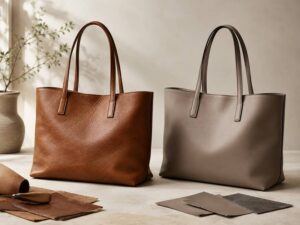
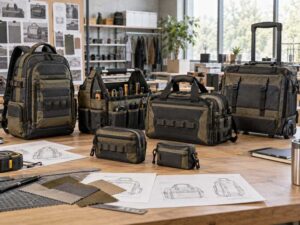
Make A Sample First?
If you have your own artwork, logo design files, or just an idea, please provide details about your project requirements, including preferred fabric, color, and customization options, we’re excited to assist you in bringing your custom bag designs to life through our sample production process.