 Skip to content

Pet Grooming Tool Bag Professional Requirements: What B2B Must Specify Before Sampling
Professional groomers don’t buy a bag. They buy time, tool protection, and clean workflow—and they notice the difference fast. A “pretty” grooming bag that collapses, traps hair, leaks shampoo into the main cavity, or lets shears knock into blades will cost a groomer money in the real world. It slows down appointments. It creates avoidable tool damage. It makes the workspace look messy. Then it turns into returns, negative reviews, and warranty emails—exactly the stuff B2B hate.
Here’s the tricky part: most sourcing problems in this category come from missing specifications, not bad intentions. sends a few reference photos, asks for “professional quality,” approves a sample, and then the bulk run drifts. Elastic loop tension changes. Divider boards soften. The base corners wear through. Zippers start snagging after a few weeks. Even if the factory is capable, the RFQ wasn’t designed to lock the details that actually control performance.
This guide is written for brands, retailers, and distributors who want a grooming tool bag that holds up to daily use. You’ll get a clear spec mindset: what to define, how to compare types, how to select materials for hygiene, and what QC checkpoints protect your repeat orders. Expect lots of “what/which/why/how” answers, plus-ready tables you can copy into your tech pack.
A professional pet grooming tool bag must protect shears, blades, clippers, and liquids while staying wipe-clean, fast to access, and stable under daily load cycles. B2B should specify the bag type (tote/case/hard/rolling), a tool-based compartment map, hygiene materials (low hair-trap surfaces, wipe-clean liners), and stress-zone reinforcement (handle roots, base corners, zipper ends). Pricing is driven by structure (EVA panels/dividers), pocket complexity, hardware, branding, and packaging. The safest path is sample → revision → pilot → bulk with a golden sample and measurable QC checkpoints.
What is a professional Pet Grooming Tool Bag, and who buys it (brand, retailer, mobile groomer, distributor)?
A professional grooming tool bag is a workflow tool that keeps grooming equipment organized, protected, and clean, day after day. include grooming brands, pet retailers, distributors, salon owners, mobile groomers, and show teams. “Professional requirements” mean repeatable performance: tool protection, hygiene-friendly surfaces, fast access, stable structure, and predictable durability—so bulk orders match the approved sample and returns stay low.
What problems does it solve (organization, tool protection, speed, hygiene)?
A grooming bag isn’t just storage. It’s the difference between “I can set up in 30 seconds” and “I’m digging around while my client waits.” Professional users care about four outcomes:
Organization that stays organized
It’s not enough to have pockets. The layout must prevent drift. Clippers shouldn’t sink under towels. Shears shouldn’t slide into blades. Small parts (guards, bands, chalk, ear powder, nail tools) must be visible and predictable.
Tool protection that reduces real replacement cost
Shears and clipper blades are expensive and sensitive. A bag that allows metal-to-metal contact creates micro-damage and dulling. A bag that allows bottles to leak can corrode tools and ruin electronics.
Speed and fewer mistakes
Pros work in rhythms. The bag should match that rhythm: quick access front panel, dedicated protected zone for cutting tools, and a “dirty zone” separation so hair-contaminated items don’t touch clean tools.
Hygiene and hair contamination control
Hair gets everywhere. Some fabrics hold hair like Velcro. Some linings trap odor. A pro bag needs wipe-clean surfaces in the right places, plus design choices that avoid deep corners where wet debris collects.
Who buys and why (salons, mobile groomers, show teams, pet retailers, distributors)?
Different purchase for different business models:
- Salon owners / grooming shops: want durability, cleanability, and a tidy workstation look. Tool damage complaints turn into real operating cost.
- Mobile groomers: prioritize carry comfort, vehicle storage fit, fast access, and leak containment (because spills in a van are a nightmare).
- Show teams: care about travel protection, presentation, and organization under pressure. Hard-case elements and neat interiors matter.
- Retailers / private label: care about photo-friendly organization, returns risk, barcode/labeling compliance, and consistent repeat orders.
- Distributors / kit builders: care about standardization across SKUs, pack-out accuracy, and a stable supplier who can handle change control.
Professional grade vs consumer tote: what “professional requirements” actually mean
“Professional” sounds like a vibe, but it’s measurable. Here’s what it really means in sourcing terms:
| Requirement | What “professional” looks like | What triggers returns |
|---|---|---|
| Structure | stands up, keeps shape, stable dividers | collapses, tools mix, bag looks messy |
| Protection | sleeves/dividers for blades/shears | metal-to-metal contact, dents, dulling |
| Hygiene | wipe-clean zones + low hair-trap areas | hair stuck everywhere, odor, staining |
| Access | fast zones + clear tool placement | searching, dumping tools out |
| Repeatability | golden sample + tolerances + QC | sample OK, bulk drift |
If you want a grooming bag that’s truly “pro,” write specs around these measurable points. If you want help turning your target user (salon vs mobile vs retail) into a clean spec sheet, email info@jundongfactory.com with your channel and tool list, and we’ll suggest a compartment map and material system that fits your price tier.
Which type is best: soft tote vs structured case vs hard case vs rolling case?
The best type depends on workflow and tool value. Soft totes are lightweight and cost-friendly but protect less. Structured cases balance protection and access, and sell well for retail and mobile grooming. Hard cases protect blades/shears best for travel and show use but cost more and ship bulkier. Rolling cases win when kits are heavy or used daily across locations. Choose type based on weight, travel frequency, and how fast the user needs access.
Tool bag vs tool case vs toolbox: which matches grooming workflows best (daily vs travel)?
A grooming kit is a mix of sharp tools, electronics, and liquids. That mix changes what “best” means.
- A soft tote is basically a carry container. It’s fine for low-risk kits and entry price points. It can also work when the wants an “add-on accessory” rather than a hero product. The downside is tool collisions and less shape control.
- A structured case is often the sweet spot. It can stand, open wide, and keep zones separated. This supports speed and reduces “everything becomes one pile.” This type is strong for mobile groomers and retail because it looks organized when open.
- A hard case behaves like protection-first luggage. It’s ideal when the kit includes high-value shears and blades, frequent travel, or show use where damage risk is high. It also signals premium value, but it increases landed cost and may reduce packing efficiency.
- A rolling case is about fatigue reduction and professional routine. If the kit is heavy (multiple clippers, dryers, products), rolling prevents shoulder strain and reduces daily pain. often miss this: comfort is part of “professional requirement.”
When a hard case is necessary (blade/shear protection, airline travel, competitions)
Hard cases make sense when:
- the user travels often
- tools are high value and sensitive
- the kit is exposed to impacts (airline, car trunk stacking, crowded events)
But hard cases can also create user friction if interior layout is weak. A hard shell with a sloppy interior still allows collisions. So “hard case” should include interior rules: blade sleeves, shear holsters, and stable dividers.
When a rolling case wins (heavy kits, mobile grooming, long walking distance)
Rolling cases aren’t only for travel. Many mobile groomers roll into client homes daily. A rolling design reduces physical stress and can increase retention for pros who work long hours.
B2B should also think about channel. Rolling cases can be a high-AOV hero SKU, but they must meet stronger durability expectations: wheels, handle system, base reinforcement, and packaging protection in transit.
A quick decision table:
| User scenario | Best type | Why |
|---|---|---|
| Salon daily, moderate tools | Structured case | speed + organized open display |
| Mobile grooming, heavy kit | Rolling case | comfort + capacity |
| Show travel, high-value tools | Hard case | impact protection |
| Entry-level retail | Soft tote / light structure | price + easy merchandising |
If you already know your target user and channel, we can recommend the safest type and build approach (structure level, divider design, hygiene zones). Share your target market and kit weight estimate to info@jundongfactory.com.
What tools must the bag protect (clippers, blades, shears, combs, bottles), and why does that change the layout?
Tool protection defines the layout. Clippers need padded, stable bays; blades need rigid sleeves or divided cases; shears need protected holsters that prevent edge contact; combs/brushes need quick access; liquids need upright bottle zones with leak containment. A pro bag must separate clean tools from hair-contaminated items, prevent metal collisions, and keep small parts visible. Start with a real tool list, then design compartments around workflow, not around a photo reference.
Tool list mapping: what professionals carry and what must ask for in RFQ
A real RFQ begins with the kit. A vague “grooming tools” description produces a vague bag. Ask for specifics:
- Clippers (count, size, corded vs cordless)
- Blades and guards (how many, how stored)
- Shears (quantity, lengths, left-handed options)
- Combs/brushes (lengths, cleaning needs)
- Nail tools (grinders, clippers)
- Liquids (sprays, disinfectants, shampoos; bottle sizes)
- Accessories (bands, chalk, ear powder, wipes, towels)
Even if your end customers vary, you can still define a “typical professional kit” and a “max kit.” That prevents the common mistake: a bag that fits only the smallest kit, forcing users to overload and causing early failure.
How to prevent damage: dedicated zones for shears, blades, clippers, and electronics
Tool damage isn’t random. It comes from predictable collisions and pressure points.
- Shears need holsters or sleeves that protect the tips and edges. The bag should keep shears from touching metal tools.
- Blades should not rattle freely. A dedicated blade case, sleeve system, or structured divider prevents contact.
- Clippers need stable bays and sometimes padding. If the bag collapses, clippers get pressed and scratched. Cord management also matters (tangling is a real time cost).
- Electronics (cordless chargers, spare batteries) should sit away from liquids and be easy to find quickly.
A practical design idea: treat the bag like two systems—sharp system (shears/blades) and support system (clippers, cords, brushes, consumables). Keep sharp tools in a protected sub-zone with structure.
Liquid handling: leak containment, upright bottle bays, and “clean vs dirty” separation logic
Liquids are the silent return driver. One leak can ruin the whole bag and corrode tools. Professional requirements here include:
- Upright bottle bays (fit common bottle diameters)
- Leak containment (wipe-clean lining, raised seams, or a removable wet pouch)
- Isolation from electronics and sharp tools
- A defined dirty zone (used towels, hair-contaminated items) separated from clean tools
If you sell into mobile grooming, this matters even more because spills happen in vehicles and clients’ homes. who ignore liquid management often get “cheap” reviews even if the stitching is fine.
A simple compartment map template B2B can request from a supplier:
| Zone | Contents | Key requirement |
|---|---|---|
| Sharp zone | shears, blades | rigid protection, no collisions |
| Power zone | clippers, chargers | padding, cord control, dry |
| Consumables zone | sprays, powders, bands | visibility, leak control |
| Dirty zone | used towels/wipes | isolated, wipe-clean |
If you want, send your target kit list and preferred bag type, and we’ll turn it into a compartment map you can approve before sampling. info@jundongfactory.com
Which materials are best for hygiene, hair contamination, and wipe-clean requirements (polyester vs TPU/PVC vs EVA)?
The best materials depend on where hair, moisture, and chemicals concentrate. Professional grooming bags work best as a material system: a durable outer (nylon/polyester), wipe-clean liners in liquid and hair-heavy zones, semi-rigid EVA panels for structure, and reinforced base materials for abrasion. Nylon often feels more premium and abrasion-resistant; polyester can be more cost-stable and color-consistent; EVA adds protection and shape; PU/TPU coatings improve cleanability when used in targeted zones.
Hygiene-first surfaces: low hair-trap textures, wipe-clean liners, odor control basics
Hair is the enemy of “clean-looking gear.” It clings to certain surfaces, gets trapped in seams, and holds odor when mixed with moisture. So, material selection for grooming is less about fashion and more about hair behavior and wipe-down speed.
A hygiene-first surface usually has three traits:
Low hair-trap texture
Very fuzzy or highly textured fabrics look nice but act like hair magnets. In professional use, that turns into “this bag always looks dirty.” Smooth weaves and coated surfaces make hair release faster with a quick brush-off.
Wipe-clean lining where the mess actually happens
The highest contamination zones are not the whole bag. They’re specific: the liquid zone (sprays, shampoos), the “tool touched by hair” zone (brushes, combs), and any place damp items might go temporarily (wipes, used towels). If you put wipe-clean lining in these zones, most users will feel the bag is “easy to maintain,” which drives better reviews and fewer returns.
Odor control by design, not fragrance
Odor happens when moisture sits in corners. A good design reduces deep, unreachable corners and uses materials that don’t hold moisture. Even simple choices like wipe-clean linings, removable pouches, and separable dirty zones cut odor complaints.
A trick: test hair-release. Take a sample panel, rub it with pet hair, then wipe or brush it off. The difference between fabrics becomes obvious in 30 seconds.
What Materials Are Best for Professional Pet Grooming Tool Bags? (Nylon vs Polyester vs EVA vs PU)
Buyers often ask “which is best,” but the real answer is “best for your channel and price tier.” Here’s how professionals typically experience these options:
Nylon
- Strength: abrasion resistance, premium hand-feel, often better long-term durability
- Where it wins: premium positioning, mobile grooming, heavy daily use
- Watch-outs: can be higher cost; some finishes show scuffs
Polyester
- Strength: stable supply, easier color matching, cost-effective for bulk
- Where it wins: private label, retail programs, multi-color lines
- Watch-outs: some polyester textures can trap hair; choose weave carefully
EVA (as panels or a molded insert)
- Strength: semi-rigid structure, protection for blades/shears, keeps bag standing
- Where it wins: “case-like” performance without full hard case cost
- Watch-outs: adds weight and cost; must be integrated correctly so it doesn’t crack at stress points
PU (as exterior or interior surfaces)
- Strength: wipe-clean, looks premium, easy to maintain if done well
- Where it wins: retail shelf appeal and quick-clean claims
- Watch-outs: long-term aging depends on grade; cheap PU can peel—buyers should specify performance expectations
Professional requirement point: don’t choose materials in isolation. A “nylon bag” can fail if the base corners aren’t reinforced. A “PU bag” can fail if the zipper ends aren’t built for daily cycles. The product is a system.
Material system thinking: outer + lining + padding + base + binding (why “fabric alone” is not enough)
Most returns come from mismatched systems. Example: a strong outer fabric paired with weak binding can fray. A wipe-clean exterior paired with absorbent inner foam can hold odor. A structured EVA panel paired with insufficient seam allowance control can warp.
A practical system checklist:
| Component | What to specify | Why it matters in grooming |
|---|---|---|
| Outer | nylon/poly weave, coating choice | abrasion + hair release |
| Lining | wipe-clean zones, color, thickness | stains + cleanability |
| Padding | foam density, placement | protects electronics/tools |
| Base | thicker fabric, anti-slip, patch | floor abrasion + moisture |
| Binding | width, stitching method | controls fraying + longevity |
If you want your bag to feel professional, specify the system and test it as a system: hair-release, wipe-clean after a simulated spill, and abrasion on the base corners. That’s the fastest way to protect your product line from returns.
What construction details define “professional grade” (reinforcement, zippers, load paths, base corners)?
Professional-grade construction is defined by stress-zone reinforcement, reliable closures, and repeatable stitching. should require a reinforcement map for handle roots, strap anchors, base corners, and zipper ends. Zippers must be matched to daily cycles and wet hands, with reinforced end stops and smooth run tests. Divider stability, stitch density consistency, and base abrasion protection are common failure points. The best factories control these with in-line QC and a locked “golden sample.”
Stress-zone reinforcement map: handle roots, strap anchors, base corners, zipper ends
If you want fewer failures, treat this product like structured soft goods, not a simple tote. The most common damage happens where force concentrates:
- Handle roots: repeated lift cycles, sudden loads
- Strap anchors (for shoulder straps): swinging motion creates shear force
- Base corners: abrasion from floors, vans, wet ground
- Zipper ends: daily open/close + pulling force at the end stops
A professional requirement is to demand a reinforcement map—photos or drawings showing exactly where extra layers, bartacks, or patches are placed. This prevents “it depends on the operator” outcomes.
Here’s-friendly reinforcement map list:
| Stress zone | Reinforcement options | Common bulk drift risk |
|---|---|---|
| Handle roots | patches + bartacks | missing patch or wrong placement |
| Strap anchors | box-X stitching | stitch pattern inconsistent |
| Base corners | heavy patch + binding | base patch skipped to save time |
| Zipper ends | end-stop reinforcement | zipper tape misaligned |
A strong supplier won’t be offended by this request—they’ll welcome it because it reduces disputes later.
Closures for wet hands: zipper vs buckle vs hook-and-loop (durability and cleaning)
Groomers often have wet hands, hair-covered hands, or gloved hands. Closures must still work.
- Zippers: best for secure compartments and small parts, but must be installed well. For professional use, zippers should be tested for smoothness and durability. Also require reinforced zipper ends so daily pulling doesn’t open seams.
- Buckles: useful for compression straps or removable panels; easy with wet hands. But buckles must be matched to load and should not rattle or feel cheap.
- Hook-and-loop: should be limited. It traps hair aggressively and loses grip over time. If used, keep it on areas that can be cleaned or replaced.
A frequent complaint in this category is “the bag looks premium, but the zipper feels cheap.” That’s not always the zipper brand—it’s often the sewing alignment and end-stop finishing.
QC checkpoints that matter: zipper run test, weight carry test, stitching consistency, divider stability
The easiest way to prevent returns is to build QC around real failure modes:
- Zipper run test: run each zipper multiple cycles; check snag points
- Weight carry test: load the bag to expected weight and carry; inspect handle roots
- Divider stability: internal boards or EVA panels must not collapse
- Stitch density and seam allowance control: inconsistent stitching causes “weak spots”
- Edge binding integrity: prevents fraying and makes the product feel “finished”
Buyers should request an inspection record or at least a factory checklist aligned to these points. If you’re ordering multiple SKUs, also require pack-out controls so you don’t get barcode and label mistakes.
If you want us to propose a professional reinforcement map and QC checklist for your target price tier, send your requirements to info@jundongfactory.com. We’ll translate “professional” into measurable build rules.
How should the internal layout be engineered (modules, removable pouches, labeled zones) for speed and fewer mistakes?
Professional grooming bags should be engineered around workflow: fast-access zones for daily tools, protected zones for blades/shears, and separated zones for liquids and hair-contaminated items. Layout works best as modules—removable pouches for small parts, rigid sleeves for sharp tools, and labeled pockets to reduce searching. The key is balancing organization with speed: too many micro-pockets slow users down; smart zones improve setup time and reduce lost items.
Workflow layout: “grab-and-go” access vs full open-flat organization
Two design philosophies dominate this category:
Grab-and-go access (front panel + quick pockets)
This suits mobile groomers and busy salons. The bag opens quickly, tools can be reached without laying everything out, and it fits into a vehicle. It also keeps the workspace tidy.
Open-flat organization (case-style full layout)
This suits show teams and users who want everything visible. It’s great for “inventory control” and can feel premium, but it requires more space to use.
B2B should decide which workflow they’re optimizing for, because it changes the whole pattern design.
Modular storage: when removable pouches beat micro-pockets (blades, guards, bands, powders)
Micro-pockets look impressive in photos, but they can frustrate real users. Small pockets can slow down workflow, and they often become unusable when the tool set changes.
Removable pouches solve this:
- small items stay together (bands, guards, powders)
- pouches can be cleaned separately
- pouches can be swapped for different services or pet types
- you can sell pouch “refill kits” later as an accessory strategy
For blades and shears, modular doesn’t mean loose. Those need fixed protection: blade cases, shear holsters, rigid sleeves. The removable approach works best for consumables and small accessories.
The “clean zone vs dirty zone” model (used towels, hair-contaminated items, liquids)
This model is what separates professional bags from generic totes. It’s not just “more pockets.” It’s contamination control.
- Clean zone: shears, blades, clippers, electronics
- Liquid zone: sprays/shampoos with containment + wipe-clean lining
- Dirty zone: used towels, hair-dirty combs/brushes, wipes
Even a simple dirty-zone pouch reduces odor and “my bag always looks gross” complaints. For mobile groomers, it’s also a huge professionalism signal when opening the kit in a client’s home.
A layout planning table can include in RFQ:
| Zone | Must-have features | Why it matters |
|---|---|---|
| Sharp tools | holsters/sleeves, rigid separation | protects edges, reduces damage |
| Clippers & power | padding, cord control, dry area | prevents scratches and moisture issues |
| Liquids | upright bays, containment, wipe-clean | prevents leaks & corrosion |
| Dirty items | removable pouch, isolation | reduces odor & contamination |
If you want the layout to match your brand’s target users (salon vs mobile vs retail), share your channel and your “typical tool kit” list. We can propose a compartment map that balances speed, protection, and hygiene.
What size is best, and how long should a Pet Grooming Tool Bag last in professional use?
The best size depends on the user’s work style: salon daily carry, mobile grooming kits, or travel/show kits. A professional bag should fit a defined “typical kit” with room for growth, without becoming a heavy, messy box. Lifespan is driven by load cycles, hygiene exposure, and stress-zone build quality. should set durability expectations by tier (entry/pro/premium) and validate with simple sample tests focused on base corners, zipper ends, dividers, and odor control.
Size selection by use case: salon daily carry vs mobile kit vs travel/show kit
“Best size” isn’t a number—it’s a workflow decision. The same bag that feels perfect for a salon station can be annoying for mobile grooming in a vehicle, and the perfect travel case can be overkill for daily salon work.
Salon daily carry
Salon users want speed and neatness. The bag should open fast, stand up, and keep key tools easy to reach. Oversized bags often become cluttered because users throw items into the main cavity. For salon use, a moderate footprint with a stable structure and clear tool zones usually wins.
Mobile grooming
Mobile groomers carry more: extra tools, sanitation supplies, spare blades, more liquids, and sometimes towels. They also move the bag between vehicle and client location. This adds two requirements: carry comfort (shoulder strap / rolling option) and spill management. If your customer is mobile, selecting a bag that fits common vehicle storage (trunk, van shelves) matters more than a “big” capacity claim.
Travel/show kit
Travel users need protection. Hard case elements, rigid sleeves, and secure closures matter. Size is influenced by airline rules and stacking requirements. For show use, the interior presentation and “inventory at a glance” layout are often valued, because users work under pressure and need quick confirmation that nothing is missing.
A practical approach for B2B: define two configurations instead of one “universal” bag:
Core Bag (everyday kit)
Pro/Travel Bag (expanded kit)
This creates a product ladder and avoids trying to make one SKU serve everyone.
Early failure modes: base abrasion, zipper ends, odor traps, pocket tearing
When grooming bags fail, it’s rarely a dramatic “whole bag ripped.” It’s small failure points that snowball into poor reviews:
- Base abrasion and corner wear: dragged on floors, placed on wet surfaces, contact with rough ground
- Zipper end failure: daily cycles + pulling force concentrates at the end stop
- Divider collapse: structure softens, tools mix, users get frustrated
- Odor traps: moisture + hair + chemicals stuck in corners or absorbent padding
- Pocket tearing: elastic loop fatigue and seam stress from overstuffing
These are predictable, so they’re spec-able. should ask suppliers how each failure mode is prevented, and require specific features (base patch, zipper end reinforcement, wipe-clean dirty zone, stable divider boards).
Lifespan expectations by price tier (entry vs pro vs premium)
A professional should align “lifespan claims” with the product tier. Overpromising durability is a common retail trap.
| Tier | Typical expectation | What you must build to meet it |
|---|---|---|
| Entry | functional organization, basic protection | simple structure, decent zipper, base patch |
| Pro | daily use durability, cleanability | stress-zone reinforcement, wipe-clean zones, stable dividers |
| Premium | travel-ready protection + strong presentation | higher structure level, better hardware, rigorous QC |
A smarter message in product content is “designed for daily professional use with reinforced stress zones and wipe-clean liners,” rather than vague “heavy duty” claims.
How much does a custom Pet Grooming Tool Bag cost: price factors every should know (materials, pockets, structure, branding)?
Pricing is driven by a simple reality: labor complexity and structure level. Pocket count, divider boards/EVA panels, binding, and reinforcement steps increase labor. Materials like coated wipe-clean zones, thicker padding, and upgraded hardware increase BOM cost. Branding and retail packaging add cost and can raise MOQ. can control price without losing professional performance by using zone upgrades, shared components, and a function-first sample strategy.
How Much Does a Professional Pet Grooming Tool Bag Cost? Price Factors Explained
Buyers ask for a price like it’s a fixed market number. In OEM/ODM, price is the output of your spec choices. The best way to think about cost is: materials + labor + packaging + risk.
Materials: outer fabric, lining, padding, EVA boards, webbing, zippers, hardware
Labor: number of sewing steps, binding, divider installation, pouch making, reinforcement operations
Packaging: hangtags, barcode, insert cards, polybags, retail boxes, carton marks
Risk: yield loss from complex assembly or unstable components
In grooming bags, labor is often the silent driver. Two bags can share similar materials yet differ significantly in cost because one has:
12 micro-pockets
multiple divider walls
rigid sleeves for shears/blades
removable pouches
heavy binding everywhere
This adds operations, which adds time, which adds cost.
Here’s a practical cost-driver table you can include in your RFQ discussions:
| Price driver | Why it raises cost | Safer cost-control option |
|---|---|---|
| Pocket count | more operations | fewer pockets + smart zones |
| Dividers/EVA panels | structure build time | EVA only in sharp zone walls |
| Binding everywhere | labor heavy | binding only on high-wear edges |
| Coated wipe-clean | harder sewing | coat only liquid/dirty zones |
| Hardware upgrades | BOM increase | standardize hardware across SKUs |
| Rubber patches/molds | tooling + MOQ | start with woven labels |
| Retail boxes | print MOQ + assembly | pilot with simple pack-out first |
What drives labor: pocket count, divider complexity, binding, EVA panels
If you want “professional requirements,” you need structure and control. But you don’t need unnecessary complexity. A strong strategy is to design the bag around three to four zones and only add detail where it prevents real failures:
- sharp tools need separation and protection
- liquids need containment
- dirty items need isolation
- power tools need padding and dry storage
Everything else is optional. Over-design often creates cost without improving user results.
Also, consider “operator time variability.” Highly complex pocket maps increase the chance of bulk inconsistency. That is a hidden cost: more QC, more rework, and more claims.
What drives material: coated zones, padding thickness, hardware grade
Material cost goes up with:
- thicker coated materials
- higher-grade zippers/hardware
- thicker foams and premium linings
- EVA panels or molded inserts
But can often hit the same performance with targeted upgrades. Example: you don’t need wipe-clean lining everywhere—only where spills and contamination actually happen.
Brand & packaging cost: logo method, barcode, insert cards, retail box impact
Branding can quietly change MOQs and lead times. If you choose a rubber patch that requires a mold, it may force higher MOQ. If you choose a printed retail box, the print house MOQ might dominate the whole program.
A smart launch path:
- function-first sample
- pilot with simple pack-out
- scale into full packaging and upgraded branding after demand is proven
If you want-style cost breakdown for your target bag concept, send your desired type, material direction, and target channel to info@jundongfactory.com. We’ll suggest where to spend and where to simplify.
What is the OEM/ODM process: sample → revision → pilot → bulk, and how long does each step take?
The safest OEM/ODM process is: define the tool list and compartment map → build a function-first sample → revise based on real tests → lock a golden sample and tolerance sheet → run a pilot to validate repeatability → scale to bulk with in-line QC and pack-out rules. Time depends on complexity, custom components, and packaging. reduce delays by standardizing materials, limiting molded trims early, and writing clear change control rules.
What to include in RFQ/tech pack: tool list, compartment map, target weight, logo, pack-out
The fastest projects start with a clear RFQ. For professional grooming bags, include:
- Tool list (counts + key dimensions)
- A compartment map (zones + which tools go where)
- Target bag size and capacity
- Target weight range (important for carry comfort)
- Material system direction (outer + lining + wipe-clean zones + structure level)
- Closure preferences (zipper/buckle limits; wet-hand usability)
- Logo method and placement
- Packaging requirements: barcode location, hangtag, insert card, retail box (if any)
- Multi-SKU rules (if ordering multiple colors or styles): inner bag labels, carton marks, SKU separation
Most sampling loops happen because these items weren’t defined early. sends “make it professional” and the factory guesses. That’s how you get cost drift.
Sample strategy: function-first prototype vs brand-finish sample (how to reduce revision loops)
The best strategy is two-stage sampling:
Function-first sample
No fancy branding. Focus on layout, structure, protection, cleanability, and carry comfort. Test with real tools. Spill a little water. Shake it. Carry it loaded. If the bag passes, you’ve locked what matters.
Brand-finish sample
Add logos, packaging, colorway details, and any premium touches. This prevents you from paying for branding changes while still changing the pocket map.
This approach reduces revision loops and keeps your cost predictable.
Preventing “approved sample vs bulk drift”: golden sample, tolerances, in-line QC, pilot run logic
Bulk drift is one of the biggest fears for private label. Prevent it with:
- a golden sample kept as the only reference
- a tolerance sheet (key dimensions, pocket positions, divider stiffness, strap length)
- defined reinforcement map
- in-line QC checkpoints (zipper run, seam checks, pocket alignment)
- final inspection rules (function tests, pack-out accuracy)
For higher risk programs, add a pilot run before full bulk. A pilot can be small but must be production-like: same operators, same materials, same process. The goal is to reveal repeatability issues early, when they are cheap to fix.
A simple timeline mindset: customization that requires molds, custom dyes, or complex packaging usually adds time. If your launch window is tight, start with standard components and upgrade in V2.
How do you choose the best manufacturer or factory for private label (audit questions, proof, scorecard)?
The “best” manufacturer is the one that can repeat your approved sample at scale with stable materials, controlled processes, and accurate pack-out. Choose a factory that can prove repeatability, not just show a pretty sample. Ask for a supplier scorecard: capability fit (structure + hygiene), process control (golden sample + tolerances), in-line QC, multi-SKU packing discipline, and corrective action behavior. Compare manufacturers vs trading companies based on transparency and accountability.
How to Choose the Best Pet Grooming Tool Bag Manufacturer or Factory
Many think factory selection is about unit price. In reality, your biggest cost is what happens after shipment: returns, tool-damage complaints, missing items, barcode mistakes, or odor issues. So, the best factory is not the cheapest. It’s the most repeatable and most controlled.
For professional pet grooming tool bags, you should evaluate suppliers across four pillars:
Capability fit (product + process)
This category blends soft goods with case-like requirements. Your factory must handle:
- structured walls or EVA panels without warping
- protected zones for shears/blades
- wipe-clean liners and coated zones without sloppy stitching
- stress-zone reinforcement that looks consistent, not “hand-wavy”
Evidence of repeatability
Ask for proof that sample-to-bulk drift is actively prevented:
- golden sample control method
- tolerance sheet examples
- in-line QC checkpoints
- photos of reinforcement maps from production, not just sample room
Packaging and pack-out discipline
If you sell retail or e-commerce, pack-out mistakes can ruin your program:
- barcode placement rules
- hangtag / insert control
- inner polybag labeling per SKU
- carton marks that match PO and destination
- anti-mix workflow for multi-SKU runs
Corrective action behavior
Defects happen in manufacturing. The question is: what does the factory do when they happen? Strong suppliers document causes, implement fixes, and prevent repeat issues. Weak suppliers argue or “promise to be careful next time.”
A-friendly scorecard (you can copy/paste into vendor evaluation):
| Category | What to ask for | Pass/Fail signal |
|---|---|---|
| Capability | similar bag photos (structure + hygiene) | can explain build logic clearly |
| Repeatability | golden sample + tolerances | welcomes measurable control |
| QC | in-line + final inspection points | tests function, not just looks |
| Pack-out | barcode + carton mark examples | anti-mix rules are standard |
| Communication | change confirmation, timeline | clear, written, consistent |
| Problem-solving | corrective action examples | proposes fix + prevention |
What proof to request: production photos of stress zones, inspection records, packing control for multi-SKU
If a supplier can’t show evidence, you’re buying hope. Request:
- close-up photos: handle roots, zipper ends, base corners, divider installation
- a QC checklist or inspection report structure
- packaging photos: barcode location, inner labels, carton marks
- if possible, a short video of zipper run tests and packing line separation
This is not being “difficult.” It’s how you protect your supply chain.
First order verification: pilot run checklist, defect handling, corrective actions, re-order stability
Your first order should be treated as a controlled test of the supplier, not a full gamble. Use a pilot or a smaller bulk run and measure:
- pocket alignment consistency across units
- divider stiffness consistency
- zipper smoothness rate
- cleanability outcomes
- pack-out accuracy rate (SKU matching, labels)
If the supplier passes, you scale. If not, you either correct the process or change suppliers before your brand takes damage.
If you want a supplier scorecard tailored to your target channel (retail vs mobile grooming), email info@jundongfactory.com with your product concept and we’ll send-ready checklist you can use internally.
What common mistakes do make, and how do you write specs that avoid rework and returns?
The biggest mistakes are: copying a photo without defining the workflow, ignoring hygiene and liquid realities, and over-compartmentalizing until the bag becomes slow and inconsistent to produce. Avoid rework by writing specs around real failure modes: define clean vs dirty zones, require leak containment, lock a reinforcement map, set tolerances for pocket alignment, and validate with function tests. The best specs are simple, measurable, and tied to user behavior.
Mistake: copying a photo without defining workflow (salon vs mobile vs retail)
A reference photo can be a trap. It shows appearance, not daily use. The same bag might be “perfect” for a salon station and terrible for mobile grooming. Without workflow definition, the factory guesses. Then you either:
- revise repeatedly (wasting time and budget), or
- approve a sample that doesn’t match real use, then get returns
A workflow spec can be short:
- typical tool kit + maximum kit
- how fast access must be
- whether the bag needs to stand
- whether it must fit in a vehicle compartment
- whether it needs spill containment and dirty zone separation
This is the difference between an engineering project and a guessing project.
Mistake: ignoring hygiene realities (hair contamination + liquids + odor)
Hygiene is not optional in grooming. often focus on “strong fabric” and forget the daily reality:
- hair sticks to textured surfaces
- sprays leak
- damp towels create odor
- chemicals can stain and degrade materials
So specs should include:
- wipe-clean liners in liquid and dirty zones
- a removable dirty pouch
- material choice that releases hair
- avoidance of deep, unreachable corners
- clear separation of electronics from liquids
A simple sentence like “liquid zone must be wipe-clean and isolated from clippers” prevents countless problems.
Mistake: over-compartmentalizing (more pockets ≠ faster workflow) and how to simplify intelligently
Retail photos make micro-pockets look “premium,” but professionals hate slow systems. Too many pockets:
- slow down tool retrieval
- increase sewing operations (higher cost)
- increase bulk inconsistency risk
- create more corners that trap hair and odor
Smart simplification means:
- build 3–4 major zones
- add fixed protection only where necessary (shears/blades)
- use removable pouches for small consumables
- keep the main cavity controlled, not a dumping ground
A should ask: “Does this pocket reduce a failure mode or reduce time?” If not, delete it.
What is the best “professional requirements checklist” (materials, layout, hygiene, packaging, QC) to send your supplier?
The best checklist is channel-based and measurable. Define the bag type, tool list, compartment map, clean vs dirty zones, wipe-clean requirements, and a reinforcement map. Specify materials as a system (outer/lining/padding/base/binding), closure requirements for wet hands, and functional QC tests (zipper cycles, weight carry, cleanability). Add pack-out rules for barcode, hangtags, inserts, and carton marks—especially for multi-SKU orders. This prevents drift and reduces returns.
Channel-based checklist: retail vs salon vs mobile grooming (must-haves by channel)
Start by deciding the channel, because the “must-haves” change:
Retail private label
- organized open display and photo-friendly layout
- stable supply and color consistency
- packaging: barcode location, hangtag, insert card
- lower return risk through wipe-clean messaging
Salon professional
- fast access and stand-up structure
- tool protection zones and easy cleaning
- durability on base corners and zipper ends
Mobile grooming
- carry comfort or rolling option
- spill containment and dirty zone separation
- vehicle-friendly dimensions and stronger base
Why Custom Design Matters for Professional Pet Grooming Tool Bags
Custom design is not about being fancy. It’s about reducing business risk and improving professional outcomes.
- Protects tools and reputation: if shears or blades get damaged, users blame the product and your brand
- Improves workflow speed: faster access means more appointments per day
- Reduces returns: cleanability, spill control, and stable structure reduce “this feels cheap” reviews
- Creates a product ladder: core bag + pro/travel version + accessories (pouches) = higher AOV and repeat sales
If your goal is to grow a professional line, custom design is your leverage. Generic bags compete on price. Professional bags compete on workflow and reliability.
Final supplier checklist: pack-out rules + QC checkpoints (function + load + cleanability tests)
Here is-ready checklist you can send to suppliers. Keep it short, measurable, and tied to real failure modes.
A) Product definition
- Bag type: tote / structured case / hard case / rolling
- Use case: retail / salon / mobile / travel
- Tool list: clippers, blades, shears, liquids, accessories
- Target size and target loaded weight range
B) Layout requirements
- Compartment map with labeled zones
- Sharp tools zone: rigid separation + sleeves/holsters
- Liquid zone: upright bays + containment + wipe-clean lining
- Dirty zone: removable pouch + isolation
- Electronics isolated from liquids
C) Material system
- Outer: nylon/poly choice, weave preference (low hair-trap)
- Lining: wipe-clean zones (spec where)
- Padding: where and how thick
- Base: abrasion + moisture protection
- Binding: width and method
D) Construction
- Reinforcement map: handle roots, strap anchors, base corners, zipper ends
- Closure rules for wet hands
- Divider stiffness requirement (EVA panel thickness or board spec)
E) QC tests (sample + bulk)
- zipper run test cycles
- weight carry test
- divider stability check
- cleanability wipe test (liquid zone)
- odor risk check (dirty zone design)
- pack-out accuracy: barcode location, SKU label match, carton marks
F) Packaging / pack-out
- inner polybag + barcode label placement
- hangtag / insert card spec
- carton marks: SKU, color, qty, PO, destination
- anti-mix rules for multi-SKU orders
If you’d like, we can turn your concept into a one-page RFQ and checklist that your team can reuse across future SKUs. Contact info@jundongfactory.com with your target channel and tool list.
FAQs
FAQ 1 — What makes a pet grooming tool bag “professional grade” instead of a normal tote?
A “professional grade” grooming tool bag is defined by repeatable performance, not by appearance. A normal tote can hold items, but a pro bag must protect shears, blades, clippers, liquids, and keep them organized through daily load cycles. In practice, that means the bag should have a reinforcement map (handle roots, base corners, zipper ends), a stable structure (often EVA panels or rigid dividers), and a layout that matches real workflows—fast access plus protected zones.
The biggest difference shows up after 2–6 weeks of use. Consumer totes start collapsing, tools collide, elastic loops loosen, and hair gets trapped everywhere. A professional bag should also plan for hygiene: wipe-clean zones for liquids and dirty items, and surfaces that don’t hold hair like Velcro.
If you’re buying for retail or private label, “professional grade” also means fewer returns: consistent pocket alignment, smooth zippers, and controlled pack-out labeling. The smartest move is to ask your supplier for proof of sample-to-bulk repeatability, not just a nice sample photo.
FAQ 2 — Which type is best: soft tote vs structured case vs hard case vs rolling case?
There isn’t one “best” type. The best choice depends on kit weight, how often the user travels, and how fast they need access.
- Soft tote: best for entry-level price points and light kits, but offers the least protection.
- Structured case: the most balanced option for many pros—stands up, opens wide, keeps zones separated.
- Hard case: best for travel and show use when tool damage risk is high; higher landed cost and bulky shipping.
- Rolling case: best for heavy kits and mobile groomers who move daily between vehicle and client locations.
A helpful buying rule: if the kit includes multiple clippers + liquids + spare blades, structured or rolling designs reduce chaos and fatigue. If your market is “pro travel,” hard cases sell on protection and presentation.
For private label, choosing the type is step one—because it controls the material system, the layout, and most of the cost drivers.
FAQ 3 — What tools should the bag protect, and how do I turn that into a compartment map?
Start with a real list of what professionals carry: clippers, blades, shears, guards, combs/brushes, cords/chargers, and sprays or disinfectants. Then translate that list into zones. A compartment map that works in real life usually follows a simple logic:
- Sharp Zone: shears + blades in rigid sleeves/holsters to prevent metal collisions.
- Power Zone: clippers/chargers in padded bays, kept dry.
- Liquids Zone: upright bottle bays with leak containment and wipe-clean lining.
- Dirty Zone: removable pouch for hair-contaminated items or used towels.
The mistake make is designing pockets for how the bag looks in photos. Pros care about “grab speed” and “tool protection.” If the bag makes them slow, they’ll stop using it—even if it looks premium.
If you don’t know your end customer’s exact kit, define a typical kit and a max kit. Build for the max kit so users don’t overstuff, because overstuffing is what causes pocket tearing and zipper-end failure.
FAQ 4 — What materials are best (Nylon vs Polyester vs EVA vs PU), especially for hygiene and hair?
Think in systems, not single fabrics. A professional grooming bag performs best when you combine: a durable outer fabric, wipe-clean liners in contamination zones, and structure (often EVA or rigid boards) where protection matters.
- Nylon: often feels more premium and is strong for abrasion. Great for pro-tier positioning.
- Polyester: cost-stable, good for consistent colors and bulk supply. Choose weaves that release hair easily.
- EVA (panels/inserts): adds structure so the bag stands, protects blades/shears, and keeps zones separated.
- PU: can be very wipe-clean and retail-friendly, but quality varies. Cheap PU can age poorly, so specify performance expectations.
For hygiene, prioritize low hair-trap surfaces, wipe-clean linings in liquid/dirty zones, and avoid deep corners that trap moisture. The “best” material is the one that matches your channel: retail wants clean visuals; mobile grooming needs wipe-down speed; salon daily needs durability.
FAQ 5 — How do I design for “wipe-clean” without making the bag stiff or expensive?
Use zone upgrades, not full coating. Most mess happens in two areas: the liquid zone and the dirty zone (hair-contaminated tools, used towels). Coat or use wipe-clean lining there, not everywhere. This keeps cost and stiffness under control while giving users the cleaning benefit they actually feel.
A simple spec that works well: standard outer fabric for the main body, plus a wipe-clean liner in the liquid bays and dirty pouch, and an abrasion-resistant base patch. This approach also improves reviews because the bag stays looking “professional” longer.
Also, don’t forget construction details. Coated fabrics can be harder to sew. If seam allowances and bindings aren’t controlled, wipe-clean materials can look sloppy and drive “cheap-looking” feedback. Ask your supplier to test cleaning: put a little water or spray inside the liquid zone, wait 10 minutes, then wipe clean. If it smears or stains, the material choice is wrong.
FAQ 6 — How much does a professional pet grooming tool bag cost, and what are the biggest price drivers?
There isn’t one fixed price because OEM/ODM cost is built from your spec: materials + labor + packaging + risk. In grooming bags, labor is often the biggest silent driver because pocket count and structure add sewing operations.
Here are the most common price drivers:
| Cost Driver | Why it increases cost | Smarter cost control |
|---|---|---|
| Pocket count | more sewing steps | fewer pockets, clearer zones |
| EVA/dividers | structure assembly time | EVA only in sharp-tool zones |
| Binding everywhere | labor-heavy finishing | bind high-wear edges only |
| Wipe-clean coatings | harder sewing, higher BOM | coat only liquid/dirty zones |
| Upgraded hardware | higher BOM | standardize hardware across SKUs |
| Molded rubber patch | tooling + MOQ | woven label first, upgrade later |
| Retail box | print MOQ + packing labor | pilot with simple pack-out |
A tip: don’t chase the lowest quote. The expensive cost is returns and tool-damage complaints. A slightly higher build spec often lowers total cost of ownership for your program.
FAQ 7 — What should I include in an RFQ to get accurate quotes and fewer sample revisions?
An RFQ for a professional grooming bag should read like a mini “use case,” not a vague request. Include:
- Target user: salon / mobile / travel-show / retail
- Tool list (counts + key sizes) and estimated loaded weight
- Bag type: tote / structured / hard / rolling
- A simple zone map: sharp zone, power zone, liquids zone, dirty zone
- Material direction: outer + lining + wipe-clean zones + base reinforcement
- Logo method and placement
- Packaging rules: barcode location, hangtag/insert card, carton marks
- Any multi-SKU details (colors, variations) and anti-mix pack-out expectations
Most sampling loops happen because the supplier is guessing your tool sizes and workflow. When you specify zones and tests (zipper run, carry test, wipe-clean test), your first sample becomes closer to “real production,” not just a display piece.
FAQ 8 — How long does sampling take, and how can I speed up the process without risking quality?
Sampling time depends on complexity and how many custom components you introduce early. You can speed up sampling safely by doing a function-first sample before branding and packaging. That means you test layout, structure, protection, and cleanability first. Once the bag performs correctly, you finalize logos, colors, and retail packaging in a second step.
To speed up without quality risk:
- Keep early materials standard (avoid custom dye and molded trims in V1)
- Use woven labels or heat transfer before rubber patches
- Confirm a clear tool list and zone map so the factory doesn’t guess
- Lock a “golden sample” and tolerance points once structure is approved
If you rush into full branding while you’re still changing the pocket map, you’ll lose time and money. A two-stage sampling approach is usually the fastest path to a stable bulk order.
FAQ 9 — How do I prevent “approved sample vs bulk drift” in pocket alignment and structure?
Bulk drift is prevented by measurement and process control, not by promises. Ask for three things:
- A golden sample kept as the only reference
- A tolerance sheet for key points (bag dimensions, pocket positions, divider stiffness, strap length)
- In-line QC checkpoints that match real failure modes (zipper run tests, handle-root stitching checks, pocket alignment checks)
Also, reduce complexity where it doesn’t add value. Over-compartmentalized designs create more chances for inconsistency. Use modular pouches for small items instead of many micro-pockets. And insist on pack-out discipline—multi-SKU programs often fail in packing, not sewing.
The goal is simple: make it easy for the factory to repeat the build, and easy for your team to inspect it.
FAQ 10 — How do I choose the best manufacturer or factory for private label grooming tool bags?
Choose a supplier based on evidence, not marketing. A good factory should be able to explain how they control stress zones, hygiene materials, and repeatability. Ask for production-like photos of: handle roots, zipper ends, base corners, and divider installation. Ask what their in-line QC checks are, and how they prevent mixed-SKU packing mistakes.
Use a quick scorecard mindset:
- Capability fit: structure + wipe-clean zones + sharp-tool protection
- Repeatability: golden sample + tolerances + change control
- QC system: in-line + final, with function tests
- Pack-out discipline: barcode placement + carton marks + anti-mix rules
- Corrective action: how defects are handled and prevented
If a supplier avoids measurable controls and only says “we have good quality,” that’s risky. If they welcome your checklist, that’s usually a strong sign.
FAQ 11 — Should I design “micro-pockets everywhere” to look premium, or keep it simple?
Keeping it simple is often more premium in real professional use. Micro-pockets photograph well, but they can slow groomers down. Pros don’t want to “file” every item. They want a system that is fast and predictable: a protected sharp zone, a padded power zone, a clean liquid zone, and a dirty zone.
Micro-pockets also add cost and increase bulk drift risk because they add sewing steps and alignment points. A better strategy is “macro-zones + modular pouches.” You still deliver organization, but you reduce complexity and improve repeatability.
If you need a premium look for retail, invest in structure (bag stands up), clean materials, and tidy finishing. That reads as professional immediately—without turning the interior into a maze.
FAQ 12 — What packaging and labeling do I need for retail and e-commerce (barcode, hangtag, insert card, carton marks)?
Packaging is operational control, not decoration. At minimum, plan:
- A consistent barcode label location
- A clean hangtag or insert card explaining tool zones and key benefits
- Inner polybag labeling for multi-SKU assortments
- Carton marks that match PO, SKU, color, quantity, destination, and weights
For e-commerce, neat packaging reduces damage complaints and makes returns less likely. For retail, clear labeling prevents receiving problems and chargebacks. A simple insert card showing “where tools go” also reduces misuse and improves the user’s first impression—especially for new groomers.
Many start with simple pack-out for the pilot order, then upgrade to retail boxes after the SKU proves demand. That keeps risk low and avoids packaging MOQs controlling your whole project.
Let's work together
With over 10 years of OEM/ODM bag industry experience, I would be happy to share with you the valuable knowledge related to leather products from the perspective of a leading supplier in China.

Factory catalogue
Latest blogs


Make A Sample First?
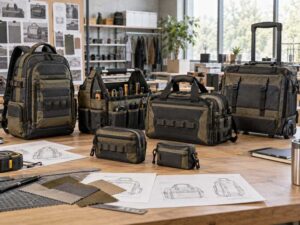
If you have your own artwork, logo design files, or just an idea, please provide details about your project requirements, including preferred fabric, color, and customization options, we’re excited to assist you in bringing your custom bag designs to life through our sample production process.