 Skip to content
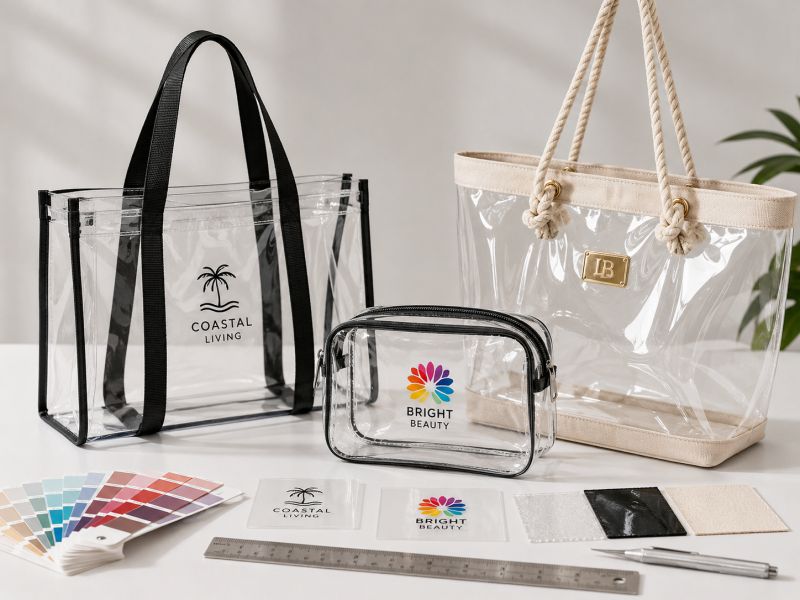
PVC Bag Logo Printing Methods: How To Choose The Right Process For Custom Orders
A PVC bag logo looks simple on a design file. In real production, it is not that simple. Clear PVC reflects light. Colored PVC changes the way ink appears. A small logo may lose detail after printing. A bright logo may look weak if the bag is transparent and the items inside show through. A logo placed near a zipper, handle, folded edge, welded seam, or corner may look fine on a mockup but wear faster in daily use.
That is why PVC bag logo printing should never be treated as a last-minute decoration. For brand programs, retail sets, beach promotions, stadium clear bags, cosmetic pouches, travel organizers, and private label PVC bags, logo printing affects brand visibility, shelf appeal, user experience, and repeat order stability.
PVC bag logo printing should be selected based on logo color, PVC transparency, print size, order quantity, bag structure, use scene, and durability needs. Screen printing works well for simple one-color or two-color logos. Heat transfer and UV printing are better for colorful designs, gradients, and detailed graphics. For clear PVC bags, logo visibility, white ink base, print position, friction, folding lines, and sample approval should be checked before bulk production.
A strong logo on a PVC bag is not only about ink. It is about matching the logo method with the material, the bag shape, the user scenario, the packing method, and the final delivery plan. A factory-led review can help reduce peeling, scratching, color mismatch, poor placement, and packaging damage before the order moves into bulk production.
What Are The Main PVC Bag Logo Printing Methods?
PVC bags can use several logo methods, including screen printing, heat transfer printing, UV printing, digital printing, foil logo, rubber patch, PVC patch, embossed effect, woven label, and metal plate logo. The right method depends on the logo artwork, PVC transparency, bag style, order quantity, use scene, and cost plan. A simple logo may need a different method from a full-color design or a premium retail finish.
Most PVC bag projects start with a simple request: “Can we put our logo here?” A better starting is: “Will this logo still look clean, readable, and durable after real use?” That is where method selection matters.
Screen printing is often used for simple brand marks, text logos, one-color graphics, and large-volume event bags. It gives a bold and direct effect. Heat transfer can support richer artwork, but it needs testing on PVC because heat, pressure, and film behavior can affect the surface. UV printing is often selected for full-color graphics, gradients, and detailed logo designs. Foil logo can create a premium look, but it is better for simple shapes than tiny text. Patches and metal plates work better when the brand wants a raised or hardware-like detail rather than a flat print.
PVC material also changes the decision. A glossy surface reflects light. A frosted PVC surface softens the print. Transparent PVC needs strong contrast. Colored PVC may shift the visual result of the logo. This is why sample approval is not just a formality. It is the stage where the brand can see the real print on the real material.
For a custom PVC bag order, the best method is not the fanciest one. It is the one that makes the logo clear, stable, and suitable for the quantity and use scene.
Which Printing Method Is Best For Simple PVC Bag Logos?
For simple PVC bag logos, screen printing is often the most practical choice. It works well for one-color logos, two-color logos, bold text, event marks, and clean brand graphics. It is suitable for clear PVC tote bags, PVC beach bags, cosmetic pouches, zipper bags, and promotional PVC bags when the artwork is not too complex. It also helps keep cost and production control more predictable.
A simple logo does not mean an easy order. The artwork still needs to be checked for line thickness, letter height, color contrast, and print area. A logo with thin strokes may look sharp on a computer screen but become weak after printing. A long slogan may look crowded on a small PVC pouch. A light color may disappear on a transparent bag.
Screen printing is strong when the logo is bold and the color plan is clear. It is often a good match for trade show giveaways, beach programs, fitness events, retail gift sets, and simple private label PVC bags. It can also work well when the same logo is used across many colors or sizes, as long as the print color is chosen carefully.
The limits are easy to understand. Screen printing is not ideal for photo-style graphics, soft gradients, complicated illustrations, or artwork with many tiny color changes. Each color layer needs control, and more colors usually mean more setup work and higher print complexity. If the logo has a gradient, shadow, fine texture, or full-color image, another method may be better.
For many brand teams, the smart route is to keep the main PVC bag logo clean. A sharp one-color mark often looks more premium than a crowded full-color graphic, especially on transparent PVC.
When Should You Use Heat Transfer Printing On PVC Bags?
Heat transfer printing can be a strong option when the logo has richer colors, larger graphic areas, or a more decorative effect than basic screen printing can handle. It may suit PVC gift bags, cosmetic pouches, clear tote bags, retail packs, and campaign bags. But PVC reacts to heat and pressure, so the film, temperature, press time, pressure, and bag surface must be tested before bulk production.
Heat transfer is useful when a logo contains multiple colors or when the graphic needs a cleaner edge than some direct printing methods can provide. It can also help when the artwork is more like a badge, emblem, illustration, or campaign graphic.
The risk is that PVC is not fabric. It can soften, mark, shine, warp, or show pressure lines if heat is not controlled. Clear PVC can be even more sensitive because surface marks are easier to notice. A heat transfer logo may look beautiful on one sample, but it still needs review after folding, rubbing, and packing.
The project team should check several things before approval. Does the transfer edge look clean? Does the surface show a heat mark? Does the print stay flat after cooling? Is the logo flexible enough for the bag shape? Will the print area touch another bag during packing? Is there any risk of sticking when bags are stacked in cartons?
Heat transfer can be a good method, but it should be used with discipline. The sample is not only for color approval. It is also for checking the behavior of PVC under heat and pressure.
How Does UV Printing Work For Full-Color PVC Bag Designs?
UV printing is suitable for full-color PVC bag designs, gradients, small details, and multi-version brand programs. It can be used for colorful logos, retail-style graphics, cosmetic PVC pouches, display bags, stadium clear bags, and limited campaign products. For transparent PVC, UV printing often needs a white ink base to make colors stronger and easier to read.
UV printing is often chosen when a brand wants more than a simple logo. Maybe the bag needs a colorful mascot, a seasonal graphic, a full-color beauty brand pattern, or a limited-edition design for retail display. It can produce sharper visual effects than basic one-color printing.
Still, UV printing is not magic. The final result depends on PVC surface quality, ink adhesion, white ink setup, artwork resolution, print thickness, and handling after printing. Clear PVC may need a white layer under the color layer. Without it, the print can look weak because the background shows through. A red logo may look strong on the design file but dull on a transparent bag filled with colorful items.
UV printing can also raise cost compared with simple screen printing, especially for large print areas or many versions. For small batch retail tests or premium visual programs, that cost may be worth it. For a simple event logo on a large-volume order, screen printing may still be the better route.
A useful way to judge UV printing is this: use it when the visual value of the artwork is part of the product. If the bag only needs a simple mark, keep it simple. If the graphic is part of the retail story, UV printing can be worth testing.
Why Does Clear PVC Bag Printing Need A White Ink Base?
Clear PVC bag printing often needs a white ink base because transparent material does not give the logo a solid background. Without a white base, light colors, gradients, and fine details can look weak or uneven. The items inside the bag may also change the logo appearance. A white base helps improve opacity, contrast, color strength, and readability on transparent PVC.
This is one of the most common hidden problems in clear PVC bag projects. The logo looks perfect in the artwork file because the background is usually white or neutral. But the real bag is clear. Once the bag is filled with swimwear, cosmetics, towels, event materials, or retail products, the logo now sits in front of a changing background.
A white logo on a clear bag may disappear against a light product. A yellow logo may become hard to read. A soft pastel mark may lose its brand feel. If the logo is printed without a base layer, the final visual effect can look thinner than expected.
A white ink base works like a backing layer. It gives the color layer a more stable foundation. This can make red, blue, green, black, and other brand colors look stronger. It also helps small text and fine logo shapes stand out. For some designs, the base may follow the exact logo shape. For others, a larger white shape may sit behind the main graphic.
Not every clear PVC logo needs a white base. A bold black logo may work well without it. A large solid white logo may be enough if the use scene is clear. But for full-color logos, gradients, light colors, and retail graphics, white ink should be discussed before sample work begins.
How To Choose Logo Placement On PVC Bags?
Logo placement on PVC bags should be chosen based on visibility, structure, friction, folding, handle position, zipper position, and packing method. A logo should usually avoid folded edges, welded seams, high-friction corners, zipper lines, handle stress areas, and curved surfaces that may distort the artwork. Good placement makes the logo easier to see and helps reduce wear during use and shipping.
Many logo problems are not caused by the print method. They are caused by the wrong location.
A PVC beach bag may look best with a logo centered on the front panel. But if the front panel folds during packing, the print may rub against another surface. A PVC cosmetic pouch may look nice with a logo near the zipper, but zipper movement and hand contact can create more friction. A clear tote may have a handle stitched or riveted into the front panel, so the logo needs enough space around the handle base.
Placement also affects production. A flat area is easier to print than a curved or raised area. A logo too close to the seam can be harder to align. A print across a folded corner may look uneven. A large logo on soft PVC may move slightly during handling, so fixture and positioning should be checked.
The best location is not always the largest location. It is the position where the logo looks natural, stays readable, avoids stress, and fits the bag structure. For event bags, visibility may come first. For retail PVC bags, proportion and shelf look may matter more. For cosmetic pouches, small and clean placement may feel more premium.
If your team already has a logo layout, send it with the bag reference photo to info@jundongfactory.com. The factory team can review size, position, material behavior, and sample method before you spend time on the wrong setup.
Screen Printing Vs Heat Transfer Vs UV Printing: Which Is Better?
Screen printing, heat transfer, and UV printing each work better for different PVC bag needs. Screen printing is best for simple logos and larger orders. Heat transfer is useful for richer graphics but needs careful PVC testing. UV printing is often better for full-color designs, gradients, and detailed artwork. The better option depends on logo complexity, material surface, order quantity, cost plan, and durability needs.
| Method | Best For | Strength | Watch Before Approval |
|---|---|---|---|
| Screen Printing | One-color or two-color logos | Clean, bold, cost-friendly for larger orders | Fine lines, color layers, small letters |
| Heat Transfer | Rich graphics and badge-style designs | Good graphic edge and decorative effect | Heat marks, adhesion, surface pressure |
| UV Printing | Full-color logos and gradients | Strong color detail and flexible artwork | White base, surface adhesion, print thickness |
| Foil Logo | Premium gold or silver effect | Strong retail gift feel | Simple shapes work better than tiny text |
| PVC Patch | Raised brand badge effect | Durable and dimensional | Mold cost, color match, position |
| Metal Plate | Premium hardware detail | High perceived value | Weight, edge safety, fixing method |
A comparison table is helpful, but it should not replace real project review. A logo that is perfect for screen printing on frosted PVC may not work the same way on glossy clear PVC. A UV print that looks great on a flat pouch may need changes on a curved toiletry bag. A heat transfer logo that works on a small sample may need packing checks before carton loading.
If a project has a tight deadline, a simple logo method may be safer. If the order is for premium retail display, the logo effect may deserve extra sample testing. If the order includes many colors, sizes, and SKUs, the printing method must also support repeatability.
The practical decision is not “which method is the best?” It is “which method gives the most stable result for this PVC bag, this logo, this quantity, and this use scene?”
How Much Does PVC Bag Logo Printing Cost?
PVC bag logo printing cost depends on logo size, color count, printing method, PVC thickness, bag size, print position, quantity, sample needs, packing style, and delivery plan. A simple one-color screen print usually costs less than full-color UV printing, foil effects, patches, or large print areas. Larger orders can spread setup work across more pieces and improve unit cost.
A good price discussion starts with the artwork. Is the logo one color or full color? Does it need Pantone color matching? Is there a gradient? Is white ink needed? Is the logo small, medium, or large? Will the print be on one side or both sides? Will the print be placed on a flat panel or near a zipper?
Quantity matters, but it is not the only factor. A large quantity with a simple logo may be efficient. A smaller order with five logo versions may need more setup time. A large graphic on both sides of a clear PVC tote may require more ink, more handling, and more inspection than a small front logo.
Packing can also affect cost. If every bag needs an individual polybag, barcode sticker, hangtag, insert card, or carton sorting by color, the overall project changes. For retail and event programs, these details are often just as meaningful as the logo itself.
Instead of asking only for the lowest price, a stronger request is: “Please review the best logo method for this artwork, quantity, and use scene.” That gives the factory room to suggest a practical setup. For a clear quote, include the logo file, PVC bag type, size, quantity, logo position, packing needs, and target delivery date.
What Artwork Files Are Needed Before Sampling?
Before PVC bag logo sampling, send editable logo files, color details, logo size, placement, bag reference photo, PVC material preference, quantity, packing method, timeline, and destination. AI, PDF, SVG, or high-resolution files are helpful. Pantone colors, print size, and placement marks reduce misunderstanding and make sample approval faster, cleaner, and closer to the intended production result.
A clean sample begins with clean information. If the logo file is too small, blurred, or taken from a website image, the print result may not be sharp. If the color is described only as “blue” or “gold,” the factory may need to guess. If the logo position is described as “middle,” the team still needs exact size and distance from edges.
Here is a useful file checklist:
| What To Send | Why It Helps |
|---|---|
| Editable logo file | Keeps edges sharp and production-ready |
| Pantone color number | Reduces color guesswork |
| Logo size | Sets print scale before sample work |
| Placement drawing | Reduces position mistakes |
| Bag reference photo | Helps review structure and print area |
| PVC color or thickness | Affects print method and visibility |
| Order quantity | Helps match cost and setup method |
| Packing request | Avoids friction and sorting issues |
| Target delivery date | Helps plan sampling and bulk timing |
| Destination | Helps prepare carton and export details |
If the project is still early, a reference photo and logo file are enough to start a first review. The factory can then suggest PVC material, printing method, logo size, and sample direction.
How Long Does PVC Bag Logo Sampling And Bulk Production Take?
PVC bag logo sampling time depends on bag structure, material availability, logo method, artwork readiness, and revision needs. Simple PVC bag samples may move faster when files are clear and materials are available. Bulk timing depends on quantity, print method, packing details, and production season. Early artwork approval, clear comments, and realistic sample review help reduce delays.
A simple logo on a standard PVC pouch may need less time than a full-color logo on a structured clear tote with custom handles, zipper color, hangtags, barcode labels, and retail packing. The more variables in the project, the more coordination is needed.
The first sample checks the shape, material, logo method, and size. The revised sample corrects proportion, color, placement, handle length, zipper style, or packaging. The approved sample then becomes the reference for bulk production. This reference should not be vague. It should include photos, logo size, placement marks, material details, packing notes, and any agreed tolerance.
For brand and retail programs, delays often come from unclear artwork, late color decisions, changing logo placement, or missing packing details. A project may look like “just a PVC bag with a logo,” but the timeline also includes material purchase, cutting, printing, sewing or heat sealing, inspection, packing, carton marks, and shipping arrangement.
If timing is tight, keep the logo method simple, approve the artwork early, and avoid changing the bag structure after sampling begins. This is one of the easiest ways to protect the delivery schedule.
What Quality Checks Prevent PVC Bag Logo Problems?
Quality checks for PVC bag logo printing should cover color, position, clarity, adhesion, surface marks, scratches, folding risk, edge distance, packing friction, and sample-to-bulk consistency. Inspection should happen before, during, and after production. For custom PVC bags, logo checking should be linked with material inspection, process control, finished product review, and packing checks.
The most expensive logo problems usually appear late. The print color is slightly wrong. The logo is 8 mm lower than approved. The clear PVC surface has pressure marks. The small text is not readable. The printed area rubs against another bag during packing. The logo looks fine on the top carton but scratched in the bottom carton.
These risks can be reduced with a clear inspection plan.
Before printing, the team should check PVC material, surface cleanliness, print file, color target, print size, and placement standard. During production, the team should compare the first pieces with the approved sample. During final inspection, the team should check print clarity, position, stains, scratches, peeling risk, folding behavior, and packing method.
For retail or private label programs, the inspection should also include labels, hangtags, barcode stickers, polybags, carton marks, and SKU separation. A perfect logo on the wrong color version still creates a delivery problem.
PVC bag logo quality is not only visual. It is also about repeatability. A brand needs the first 500 pieces and the next 5,000 pieces to look like they came from the same standard.
Why Work With A PVC Bag Factory Instead Of A Promo Catalog?
A PVC bag factory can review the logo method together with material, bag structure, print position, sample approval, bulk consistency, packing, labeling, and delivery details. A promo catalog may be useful for simple stock items, but custom PVC bag projects often need deeper review. This matters for brand programs, retail sets, private label lines, event kits, and repeat orders.
A catalog-style order usually starts with a ready bag shape and a fixed logo area. That can work when the design is simple and the goal is fast distribution. But when the project needs custom size, PVC thickness, zipper color, handle style, insert card, barcode label, carton sorting, or multi-destination delivery, the catalog route can become limiting.
A factory can look at the product as a full project. Is the PVC thickness right for the use scene? Is the logo method suitable for the material? Will the print position be affected by the handle? Does the clear bag need a white ink base? Will the packing method protect the logo surface? Can the same design be repeated for another color or size next season?
This is also where long-term value appears. A one-time event bag may only need speed. A growing brand needs stable repeats, color consistency, material records, packing records, and room to add more SKUs later. A factory with project support can help build that foundation.
Jundong supports custom PVC bag projects from material review, logo method advice, sample confirmation, production control, quality checks, packing, and export delivery. For a new PVC bag logo project, you can send the idea, artwork, size, quantity, and schedule to info@jundongfactory.com for a practical review.
What Should You Send For A PVC Bag Logo Printing Quote?
For a PVC bag logo printing quote, send the bag style or reference photo, logo file, logo color, Pantone number if available, logo size, placement, PVC thickness or material preference, quantity, packing needs, target delivery date, and destination. These details help the factory suggest a suitable logo method, sample plan, cost direction, and production route.
A clear request saves time on both sides. It also helps avoid the common back-and-forth that slows down custom projects. The factory does not need every detail at the first message, but a few basics can make the first review much more useful.
Send these details when possible:
- PVC bag style or reference photo
- Logo file in AI, PDF, SVG, or high-resolution format
- Logo color or Pantone number
- Logo size and placement idea
- Bag size
- PVC color, thickness, or surface preference
- Quantity per design
- One-side or two-side printing
- Packing method
- Target delivery date
- Destination country or region
- Any retail label, barcode, hangtag, or carton mark needs
If you are not sure which printing method is right, that is normal. The method should be chosen after reviewing the bag, logo, material, and order plan together. Send your PVC bag idea and logo file to info@jundongfactory.com before sampling, and the team can help check which route is more practical for your project.
FAQs About PVC Bag Logo Printing Methods
1. What is the best logo printing method for custom PVC bags?
Certainly. The best logo printing method for custom PVC bags depends on your logo design, PVC transparency, order quantity, surface finish, and how the bag will be used. For a simple one-color or two-color logo, screen printing is often the most practical route because it gives a clean, bold result and works well for larger runs. For full-color artwork, gradients, mascots, seasonal graphics, or detailed brand patterns, UV printing or heat transfer printing may be a better fit. For premium gift packaging, foil logo, rubber patch, PVC patch, or metal plate details may also be considered.
A smart way to choose is to match the method to the job, not the other way around. A beach PVC tote may need strong visibility and rub resistance. A clear cosmetic pouch may need a white ink base so the logo stays readable. A retail PVC gift bag may need a more polished finish. A stadium clear bag may need a simple, high-contrast mark that can be seen from a distance.
Here is a quick decision table:
| Logo Need | Practical Method | Best Fit |
|---|---|---|
| Simple one-color logo | Screen printing | Event bags, clear totes, beach bags |
| Two-color brand mark | Screen printing | Bulk custom PVC bags |
| Full-color design | UV printing | Retail bags, cosmetic pouches |
| Rich graphic effect | Heat transfer | Gift bags, campaign bags |
| Metallic look | Foil logo | Beauty, gift, premium packaging |
| Raised brand detail | PVC patch or rubber patch | Outdoor, lifestyle, retail bags |
If you are unsure, send the logo file, bag reference, quantity, and use scene for review before sampling. That step often saves more time than choosing a method too early.
2. Is screen printing good for PVC bags?
Sure. Screen printing is a strong choice for PVC bags when the logo is simple, bold, and limited in color. It is commonly used for clear PVC tote bags, beach bags, zipper pouches, cosmetic bags, event giveaway bags, and promotional packaging. The method works especially well for one-color logos, two-color logos, text marks, block graphics, and clean brand symbols. It is also easier to control when the order quantity is larger and the same logo needs to be repeated across many pieces.
The key advantage is clarity. A well-prepared screen print can make a logo look direct and easy to read. It can also be a cost-friendly route compared with full-color methods, especially when the artwork does not need gradients or tiny details.
But screen printing has limits. Very small letters, thin strokes, soft shadows, photo effects, and complex multi-color artwork may not print as clearly as expected. The PVC surface also matters. Glossy PVC, frosted PVC, colored PVC, and clear PVC can all change the final look. For clear PVC bags, color contrast is especially important because the items inside the bag can affect logo visibility.
For best results, prepare a vector logo file and confirm the logo size before sampling. If the logo has tiny text, it may need to be enlarged or simplified. A clean screen-printed logo often looks more professional than an overcomplicated design that loses detail during production.
3. Can full-color logos be printed on clear PVC bags?
Absolutely. Full-color logos can be printed on clear PVC bags, but the artwork should be reviewed carefully before production. UV printing and heat transfer printing are often used when the design includes multiple colors, gradients, illustrations, mascots, seasonal patterns, or detailed brand graphics. The main thing to remember is that clear PVC has no solid background. That means the logo can look different depending on what is placed inside the bag.
For example, a colorful beauty brand logo may look bright on a design file but weaker on a transparent pouch filled with skincare bottles. A yellow logo may disappear against a light towel. A pastel graphic may look soft when the clear bag is used at the beach or in a retail display. This is why a white ink base is often needed. It works like a backing layer and helps the color stay stronger, cleaner, and easier to read.
Full-color printing also needs good artwork. Low-resolution files, blurred edges, and screenshots are not suitable for production. AI, PDF, SVG, or high-resolution artwork is better. Pantone color references can also help, although the final effect still depends on the PVC material, ink system, surface gloss, and lighting.
For retail or brand programs, sample approval is highly recommended. The sample should be checked with real PVC material, real logo size, and real packing conditions. That gives you a much better view of the final result.
4. Do clear PVC bags need a white ink base for logo printing?
Definitely. Many clear PVC bags need a white ink base when the logo includes light colors, gradients, full-color graphics, or fine details. A white base helps the logo stand out because transparent PVC does not provide a stable background. Without it, the items inside the bag, the user’s clothing, shelf lighting, or outdoor background may change how the logo looks.
Think of clear PVC as a window. If the logo is printed directly on that window, everything behind it can affect the color. A pale pink logo may look soft against a white product. A blue logo may look different when the bag is filled with colorful items. A full-color graphic may lose depth if there is no backing layer. A white base gives the design more body and improves readability.
That said, not every logo needs it. A bold black logo, a dark navy logo, or a large solid mark may work well without a white base. But for brand graphics, retail designs, beauty packaging, and colorful campaign logos, it should be discussed before sampling.
The decision should be made after reviewing three things: logo color, PVC transparency, and what will be inside the bag. If the bag is used for cosmetics, swimwear, event kits, or retail sets, the inside contents are part of the visual result. A white base can prevent the logo from looking weak after the bag is filled.
5. Which logo method is more durable on PVC bags?
Of course. Durability depends less on the name of the printing method and more on how well the method matches the PVC surface, logo position, use scene, and packing method. Screen printing can be durable for simple logos when the ink and surface are well matched. UV printing can work well for full-color designs, but adhesion and scratch resistance should be checked. Heat transfer can look clean, but the film, pressure, temperature, and PVC reaction must be tested.
A logo placed on a flat front panel usually performs better than one placed near a folded edge, zipper pull, handle base, corner, or high-friction zone. A print that rubs against another bag during packing may scratch before the product even reaches the end user. A beach bag may face sand, moisture, sunscreen, and towel friction. A cosmetic pouch may touch oils, creams, and frequent hand contact. These use scenes all affect logo performance.
A practical durability check should include:
| Check Item | Why It Matters |
|---|---|
| Adhesion review | Helps reduce peeling risk |
| Rub check | Shows possible surface wear |
| Fold area review | Avoids cracking or stress marks |
| Packing friction check | Protects logo during shipment |
| Position check | Reduces contact with zipper, handle, or edges |
| Sample-to-bulk comparison | Keeps repeat orders consistent |
The most reliable route is to test the actual logo on the actual PVC material before approval. This is where a factory review is useful, because the logo is checked together with the bag structure, not as a separate decoration.
6. How should we choose logo placement on PVC bags?
Certainly. Logo placement should be chosen by looking at visibility, bag structure, user handling, friction, folding lines, zipper position, handle position, and packing style. The best placement is not always the biggest open area. It is the area where the logo can stay clear, balanced, readable, and less exposed to wear during use and shipping.
For a clear PVC tote bag, the front center is often a strong option because it gives good visibility. But the logo should not be too close to the handle base or side seam. For a PVC cosmetic bag, the logo may look better in the lower center or upper front panel, depending on the zipper and pouch shape. For a beach PVC bag, a larger logo may work well, but the print should avoid heavy fold lines if the bag will be packed flat. For a small zipper pouch, the logo may need to be reduced or simplified so it does not look crowded.
Bad placement can create real problems. A logo too close to a seam may be hard to align. A logo near a zipper may rub during daily use. A logo on a curved area may distort. A logo near a heat-sealed edge may look uneven. A large logo on thin soft PVC may shift slightly during handling.
Before sampling, send a placement drawing or mark the logo position on a reference photo. If there is no exact drawing yet, the factory can help suggest a safer print area based on the bag structure.
7. How much does PVC bag logo printing cost?
Sure. PVC bag logo printing cost is affected by the logo method, logo size, number of colors, print area, PVC material, bag size, order quantity, sample needs, packing method, and delivery schedule. A small one-color screen print is usually more cost-friendly than full-color UV printing, foil logo, patch logo, or large-area printing. Larger orders can also spread setup work across more pieces, which helps reduce unit cost.
The cost changes quickly when the artwork changes. A simple black logo on the front of a clear PVC pouch is very different from a full-color graphic printed on both sides of a large beach tote. A metallic logo effect needs different setup from a standard ink print. A rubber patch or PVC patch may need mold work. If the order has several logo versions or many color combinations, handling and setup also become more complex.
Here are common cost drivers:
| Cost Factor | Typical Impact |
|---|---|
| Logo color count | More colors usually mean more setup |
| Logo size | Larger areas use more ink or material |
| Printing method | UV, foil, and patch methods often cost more than simple screen print |
| Quantity | Larger runs usually improve unit cost |
| Packing style | Individual bags, barcodes, hangtags, and carton sorting add work |
| Sample rounds | Revisions add time and possible cost |
A better request is not “What is the cheapest print?” but “What is the most practical logo method for this design, quantity, and use scene?” That leads to a more useful quote and fewer surprises later.
8. Can Jundong help with logo design, placement, and sample review?
Absolutely. Jundong can support logo placement review, logo size adjustment, sample confirmation, Pantone color matching, material review, and custom branding methods for PVC bag projects. This is helpful when the project is still early and the brand team knows the look they want but has not decided the most suitable production route. A professional review can prevent common issues such as weak logo contrast, poor placement, tiny unreadable text, and mismatched print methods.
For example, if you want a clear PVC cosmetic pouch with a pastel logo, the team may suggest checking white ink base or a stronger color contrast. If you want a large logo on a PVC beach bag, the team may review whether the logo crosses a fold line. If you want a metallic effect for a retail gift bag, foil logo or metal plate options may be discussed. If you want a simple event logo, screen printing may be enough.
The review is not only about artwork. It also includes bag style, PVC thickness, surface finish, zipper, handle, label, packing, and delivery needs. That is why early project information helps so much.
To start the review, send the bag reference photo, logo file, target size, quantity, logo color, placement idea, and target schedule to info@jundongfactory.com. Even if the information is not complete, those basics are enough for a first direction.
9. What files and details should we send before making a PVC bag sample?
Of course. Before making a PVC bag sample, send the logo file, bag reference, target size, PVC preference, logo color, logo placement, quantity, packing request, and delivery timeline. AI, PDF, SVG, or high-resolution artwork is much better than screenshots because production needs clean edges and accurate shapes. If you have Pantone colors, send them too. If not, a color reference can still help the team start the review.
A clear sample request should include:
| Detail To Send | Why It Helps |
|---|---|
| Bag style or reference photo | Shows structure, opening, handle, zipper, and shape |
| Logo file | Helps check print quality and method |
| Logo size | Sets real print scale |
| Placement idea | Reduces position misunderstanding |
| PVC thickness or color | Affects structure and logo visibility |
| Quantity | Helps choose a practical method |
| Packing request | Prevents surface scratching or sorting mistakes |
| Target date | Helps plan sample and production timing |
| Destination | Helps plan carton and export needs |
If you only have a rough idea, that is still workable. A reference image plus a logo file can begin the first review. The sample stage is where the bag shape, PVC material, logo method, color effect, and packing direction become more concrete.
A strong sample is not just a nice photo. It should become the standard for bulk production. That means the sample record should include logo size, placement, color, material, zipper, handle, label, and packing notes.
10. How long does a custom PVC bag logo project usually take?
Definitely. The timeline depends on bag structure, PVC material, logo method, artwork readiness, sample revisions, order quantity, packing details, and shipping plan. Simple PVC bag samples can move faster when the logo file is ready and the material is available. More complex projects need more time, especially when they include full-color printing, special PVC thickness, custom handles, special labels, retail packing, or several logo versions.
For many custom bag projects, a practical planning structure looks like this:
| Stage | What Happens |
|---|---|
| Project review | Bag style, logo, PVC material, quantity, and use scene are checked |
| Sample making | Shape, material, logo method, size, and placement are tested |
| Sample revision | Color, logo size, position, structure, or packing may be adjusted |
| Approval | The final sample becomes the bulk reference |
| Bulk production | Cutting, printing, sewing or sealing, inspection, and packing are arranged |
| Shipment preparation | Carton marks, labels, packing list, and delivery details are checked |
The biggest delays usually come from late artwork changes, unclear logo position, missing color references, changing bag size after sampling, or undecided packing details. If the project has a fixed event date or retail launch date, it is better to confirm the logo method and sample direction early.
For smoother timing, prepare the logo file before sample work begins, keep the first design round focused, and approve changes in writing. Clear communication at the sample stage makes bulk production much easier to control.
Let's work together
With over 10 years of OEM/ODM bag industry experience, I would be happy to share with you the valuable knowledge related to leather products from the perspective of a leading supplier in China.

Factory catalogue
Table of Contents
Latest blogs

Make A Sample First?
If you have your own artwork, logo design files, or just an idea, please provide details about your project requirements, including preferred fabric, color, and customization options, we’re excited to assist you in bringing your custom bag designs to life through our sample production process.