 Skip to content
Target Keywords: drawstring packaging bags,shoe packaging bags,gift set bags,custom drawstring bags,shoe dust bags,gift pouches,cotton drawstring bags,satin gift bags,logo drawstring bags,drawstring bag factory,custom shoe bags,private label packaging,bulk drawstring pouches,drawstring gift bag size,best fabric for drawstring bags
20 Tag Keywords: Drawstring Packaging Bags, Shoe Packaging Bags, Gift Set Bags, Custom Drawstring Bags, Shoe Dust Bags, Gift Pouches, Cotton Drawstring Bags, Satin Gift Bags, Velvet Pouches, Canvas Shoe Bags, Logo Drawstring Bags, Private Label Packaging, Retail Packaging Bags, Bulk Drawstring Pouches, Product Packaging Bags, Reusable Gift Bags, Custom Shoe Bags, Drawstring Bag Factory, Packaging Bag Sample, Bulk Bag Packing
Drawstring packaging bags can make a shoe pair feel cleaner, a gift set feel more complete, and a retail product feel more intentional. But the wrong bag can do the opposite. A bag that is too tight can wrinkle the product, crush the presentation, or make packing slow. A bag that is too large may look empty and cheap. The right drawstring bag should fit the product, support the brand look, protect the surface, close smoothly, show the logo clearly, and pack well in cartons. For shoes and gift sets, this is not just a pouch decision. It is a packaging decision.
Drawstring packaging bags for shoes and gift sets should be planned around product size, fabric feel, protection needs, logo method, closure style, packing rules, and bulk consistency. Shoe bags need enough room for length, height, and pair packing, while gift set bags need a clean shape and strong presentation. A sample helps confirm fit, fabric, logo clarity, drawstring function, folding, labels, and carton packing before bulk production.
What Are Drawstring Packaging Bags For Shoes And Gift Sets?

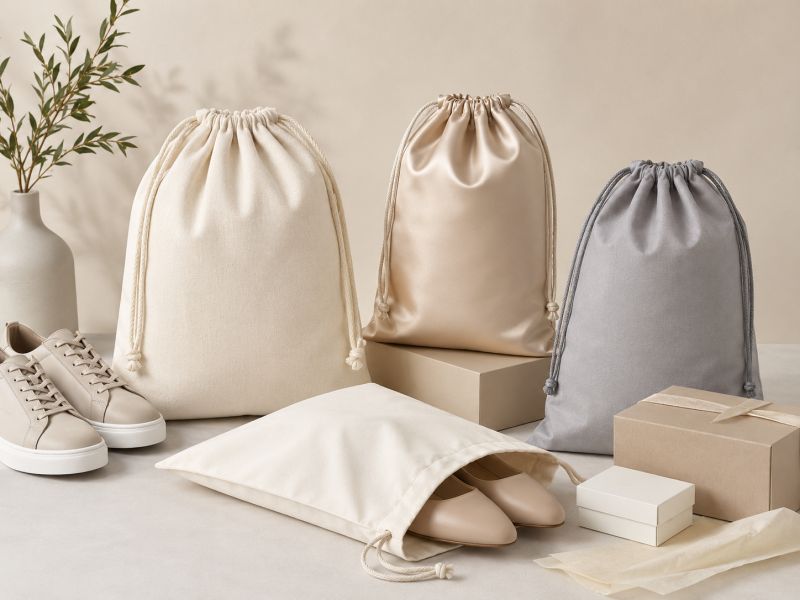
Drawstring packaging bags are soft fabric bags used to protect, present, store, or pack shoes, gift sets, retail products, hotel items, and branded giveaways. For shoes, they work as dust bags, travel bags, or inner packaging. For gift sets, they improve the unboxing feel and make the product reusable. The best design balances fit, fabric, logo, closure, and packing.
A drawstring bag may look like a simple sewn pouch, but in product packaging it carries more responsibility. It can protect a shoe upper from dust and scratches. It can separate footwear from clothing during travel. It can make a candle, perfume, cosmetic set, jewellery item, or corporate gift feel more finished. It can also reduce the need for heavier packaging when the product does not require rigid protection.
Still, it should not be treated as a one-size-fits-all item. A satin pouch for a small fragrance set is very different from a canvas shoe bag for sneakers. A velvet pouch for jewellery should not be sized like a non-woven giveaway bag. A drawstring bag that works well for a small gift box may not work for a shoe box or boot pair.
The goal is to match the packaging bag with the product and the channel. A retail set may need a barcode label and polished presentation. A hotel amenity pouch may need softness and easy opening. A shoe dust bag may need breathability and a size that allows fast packing. A brand gift program may need a clean logo and repeatable colour control.
Why Packaging Bags Are Different From Simple Pouches
A simple pouch is mainly a container. A packaging bag has to carry product value. It needs to fit well, look good when filled, protect the product surface, support the logo, and stay consistent across bulk orders.
For shoes, the bag should not squeeze the toe box, heel, or upper material. For gift sets, it should not make the product look loose or bulky. For retail, the bag may need labels, folding rules, carton marks, or SKU separation. These are not small details. They decide whether the final delivery looks organized or careless.
Who Uses Them For Product Packaging?
Drawstring packaging bags are used by shoe brands, sneaker companies, slipper brands, gift companies, cosmetics brands, jewellery brands, hotels, event teams, retail stores, e-commerce sellers, corporate gift programs, and private label projects.
Each group uses the bag differently. A sneaker brand may want a breathable dust bag with a clean logo. A jewellery brand may need velvet or satin with a small foil logo. A hotel may use cotton or non-woven pouches for amenity kits. A corporate gift project may need several bag sizes for different gift sets.
What Products Can They Hold?
These bags can hold shoes, sneakers, slippers, sandals, boots, cosmetic gift sets, perfume boxes, candles, jewellery boxes, scarves, hotel amenities, electronics accessories, promotional gifts, holiday gift sets, and retail bundles.
| Product Type | Common Bag Use | Main Planning Focus |
|---|---|---|
| Sneakers | Dust bag or travel shoe bag | Size, breathability, logo placement |
| High heels | Pair protection or single shoe packing | Height, heel shape, fabric softness |
| Slippers | Soft retail or hotel packaging | Cost, folding, logo clarity |
| Gift sets | Product bundle packaging | Shape, fabric feel, presentation |
| Cosmetics | Gift pouch or retail set bag | Logo method, colour, label rules |
| Jewellery | Small pouch or velvet bag | Soft touch, logo detail, premium feel |
| Hotel amenities | Reusable amenity pouch | Light fabric, easy packing, low bulk |
| Corporate gifts | Branded gift packaging | Logo, size mix, carton organization |
What Size Drawstring Bag Do Shoes And Gift Sets Need?

The right drawstring bag size depends on the product’s length, width, height, thickness, and how it will be packed. Shoe bags need room for the shoe shape, pair packing, heel height, or sneaker bulk. Gift set bags need enough space to close smoothly without looking loose. A good size should protect the item, look neat, and control fabric and carton cost.
Size is where many packaging projects start to go wrong. People often measure only the front face of the product and forget height, depth, curves, soft corners, or packaging allowance. A shoe is not a flat rectangle. A gift set may include bottles, boxes, paper inserts, and dividers. A bag must allow the product to slide in easily and still close cleanly.
For bulk orders, size affects much more than product fit. It changes fabric usage, cord length, labour, folding method, carton quantity, and shipping volume. One extra inch can look harmless in a sample, but across thousands of bags it becomes real cost. At the same time, cutting the size too tightly can slow down packing and make the filled bag look strained.
A practical sizing process starts with the product, not with a catalogue size. Measure the product, decide whether it will be packed flat or upright, choose whether the bag needs a gusset or boxed bottom, then add enough allowance for closing and handling.
What Is A Good Size For A Drawstring Bag?
A good drawstring bag size is one that fits the product comfortably, closes without stress, and looks balanced when filled. Small pouches may be used for jewellery, cosmetics, accessories, or small gifts. Medium sizes work for gift boxes and slippers. Larger sizes are better for sneakers, shoe pairs, travel shoes, boot bags, and full gift sets.
For packaging use, “good size” does not mean “large size.” A large bag can make a premium gift look unfinished if the product floats inside. A small bag can look neat when empty but fail when the product is loaded. The best size is usually the smallest size that still allows easy packing, smooth closure, and a clean filled shape.
How To Measure Shoes Before Choosing Bag Size
For shoes, measure the longest shoe length, widest part, and highest. For heels, measure the heel height and the angle of the shoe. For sneakers, remember the upper may be bulky. For boots, height becomes the main issue.
Then decide how the shoes will be packed. Will both shoes go in one bag? Will each shoe have its own bag? Will the bag sit inside a shoe box? Will it be used as a travel pouch after purchase? These decisions change the size.
A shoe dust bag should allow easy insertion without forcing the heel or toe. If the fabric is soft and the shoes are heavy, extra seam strength may be needed at the sides and bottom. For premium shoes, the bag should protect without rubbing or leaving lint on the product surface.
What Size Gift Bag Do I Need For A Shoe Box?
A gift bag for a shoe box should be larger than the box length, width, and height, with enough extra space for closing at the top. The bag must not only cover the box. It must allow the drawstring channel to sit above the box so the closure can gather cleanly.
For a rectangular shoe box, measure length, width, and height first. Then add allowance for side movement, fabric thickness, and top closure. If the bag is too tight, the box corners will push against the fabric and make the bag look strained. If the bag is too large, the top may collapse and look messy.
For shoe box gifting, a gusset or boxed bottom can help the bag stand better and look more structured. A flat bag may work for soft shoe bags, but a box usually looks better with a bottom structure.
What Size Works For Gift Sets And Product Bundles?
Gift sets often need more careful size planning than shoes because the contents can be irregular. A cosmetic set may include bottles, jars, small boxes, paper inserts, and a card. A holiday gift set may include a mug, candle, socks, and sweets. A corporate gift may include different items in different shapes.
Start with the largest item, then test how the full set sits together. If the set will be packed inside the bag as a bundle, the bag needs enough space for the group shape, not only the largest item. If the set is already inside a box, measure the box and decide whether the bag should fit tightly or create a softer gift feel.
For retail bundles, shape matters. A loose, sagging bag may look less valuable on a shelf. A slightly structured fabric or boxed bottom may help the set look cleaner.
When To Use A Flat Bag, Gusset Bag, Or Boxed Bottom
Flat bags are simple, cost-friendly, and good for soft items, slippers, light shoes, small gifts, and dust bag use. They fold easily and pack efficiently.
Gusset bags add side or bottom depth. They are useful when the product has thickness, such as a gift box, cosmetics set, sneaker pair, or folded apparel bundle. A gusset helps reduce pressure on seams and gives the product more room.
Boxed bottom bags create a more structured base. They are useful for gift sets, shoe boxes, premium packaging, and products that need to stand better. They usually cost more than flat bags, but they can improve presentation.
Why Oversized Bags Can Look Less Premium
An oversized bag may seem safe because it can fit more products, but it often creates a weaker presentation. The product sinks inside, the fabric collapses, the logo may sit too low, and the closure may gather too much fabric at the top.
For gift sets, this can make the product look less planned. For shoes, it may create a messy dust bag look. For retail, oversized packaging can also increase shelf space, carton volume, and transport cost.
The best packaging feels intentional. It gives the product enough breathing room without making it look lost. If you are unsure, a sample with real products is the best way to confirm the size before bulk production.
Which Fabric Works Best For Drawstring Packaging Bags?

The best fabric for drawstring packaging bags depends on product value, protection needs, presentation style, logo method, and quantity. Cotton and canvas feel natural and reusable. Satin and velvet look softer and more gift-ready. Microfiber protects delicate surfaces. Polyester and non-woven fabrics support cost-efficient bulk projects. RPET can suit reusable packaging when documents and claims are reviewed properly.
Fabric decides how the package feels before the product is even seen. A cotton bag feels natural and simple. Satin gives a soft gift effect. Velvet feels richer for smaller items. Canvas gives strength for shoes and travel storage. Non-woven fabric is practical for lighter projects. Polyester keeps cost and colour more stable in larger quantities.
The fabric should be chosen for the product, not only for appearance. A shoe bag may need breathability and abrasion resistance. A jewellery pouch may need softness. A gift set may need colour, drape, and a clean logo. A retail program may need labels, folding consistency, and carton efficiency.
What Is The Best Fabric For Drawstring Bags?
There is no single best fabric for every drawstring bag. Cotton is strong for reusable natural packaging. Canvas is better for heavier shoes and travel use. Satin and velvet are better for gift presentation. Polyester works well for stable bulk cost and printing. Microfiber is useful for delicate products. The best fabric is the one that matches product weight, brand feel, logo process, and packing method.
A useful rule is simple: if the product is delicate, choose soft fabric. If the product is heavy, choose stronger fabric. If the project is high volume, choose stable fabric. If the packaging is part of the gift experience, choose fabric with better touch and visual finish.
Cotton For Natural And Reusable Packaging
Cotton drawstring bags are popular for natural-looking packaging. They work well for gift sets, shoes, cosmetics, lifestyle products, hotel items, and reusable packaging programs. Cotton feels friendly and familiar, which is useful for brands that want a softer, less plastic feeling.
Cotton is also suitable for screen printing, woven labels, hangtags, and simple private label details. It folds well, but it may wrinkle more than polyester. If the final presentation must be very clean, packing pressure and folding method should be reviewed during sampling.
Canvas For Stronger Shoe And Travel Bags
Canvas is a stronger option for shoe bags, sneaker bags, travel bags, and heavier product sets. It feels more durable than thin cotton and can support a more substantial brand image.
For shoes, canvas can help protect against dust and light rubbing. It is often chosen when the bag is expected to be reused for travel or storage. The trade-off is weight and cost. Canvas also takes more carton space than very thin fabrics, so it should be selected when durability and presentation justify the upgrade.
Satin, Velvet, And Microfiber For Gift Presentation
Satin gives a smooth, soft, gift-ready surface. It works well for cosmetics, perfume sets, jewellery gifts, holiday gifts, and promotional gift packs. The surface can look elegant, but logo method and heat sensitivity should be tested carefully.
Velvet feels richer and is often used for jewellery, watches, small premium gifts, and luxury-style pouches. It creates a strong touch impression but may not be suitable for very low-cost or high-volume projects.
Microfiber is useful when product protection is more important than decoration. It can work for eyewear, jewellery, electronics accessories, and delicate surfaces that need a softer contact material.
Polyester, Non-Woven, And RPET For Bulk Projects
Polyester is practical for large quantity packaging because it offers stable colour, good print options, and controlled cost. It can be used for shoe dust bags, travel pouches, retail gift bags, and event packaging.
Non-woven fabric is often used when cost control and light packaging are more important than premium feel. It works for simple giveaways, lightweight gift sets, and short-use packaging.
RPET can support reusable packaging projects with a sustainability story, but claims should be reviewed with the right material documents. If the packaging will mention recycled content on tags or public materials, confirm the document needs before production.
How Fabric Choice Affects Protection And Cost
Fabric affects surface protection, hand feel, foldability, logo clarity, carton volume, and price. Soft fabric protects delicate items. Stronger fabric supports shoes and repeated use. Shiny fabric may look premium but can show wrinkles or marks more easily. Thick fabric improves feel but increases cost and shipping volume.
If the packaging is for shoes, fabric should not scratch, stain, or shed easily. If it is for gift sets, fabric should support the desired visual tone. If it is for retail, it should fold and label consistently. If it is for bulk programs, cost and packing efficiency matter.
How Should Logo Design Be Planned On Drawstring Bags?
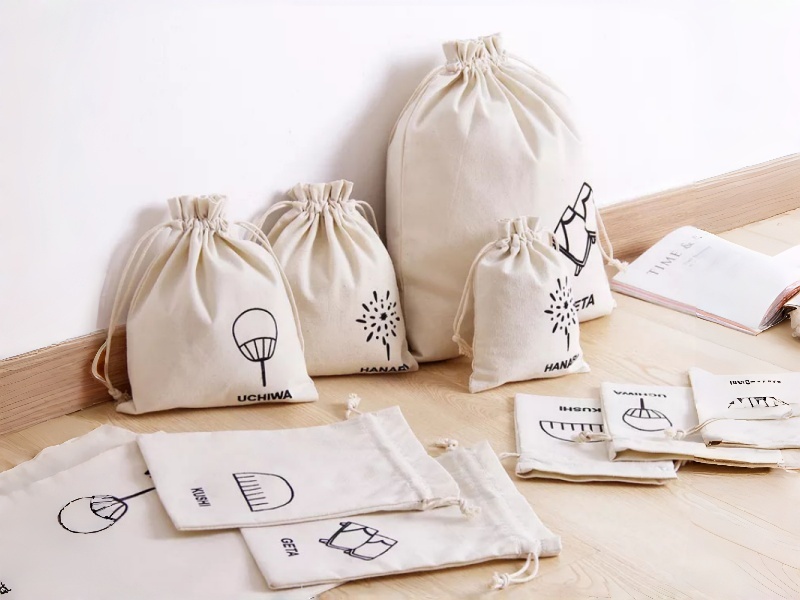
Logo design on drawstring packaging bags should be planned by fabric type, bag size, product position, closure style, and final packing method. Screen printing works well on cotton and canvas. Heat transfer can suit some polyester designs. Woven labels, embroidery, foil effects, and hangtags can lift the look for selected gift and retail projects. Logo placement must avoid heavy folds and drawstring gathering.
A logo on a drawstring bag does not sit on a flat board. The fabric moves, folds, gathers, and sometimes wrinkles after the cord is pulled. That is why logo design should be tested on the real bag structure, not only viewed on a digital mockup.
Small pouches need simpler logos. Large shoe bags can support bigger logos. Satin and velvet may need more careful process testing. Cotton and canvas usually handle simple prints well. A retail project may need both a main logo and labels for barcode, SKU, size, or product version.
Which Logo Method Works Best On Each Fabric?
Cotton and canvas usually work well with screen printing, embroidery, woven labels, and hangtags. Polyester can work with screen printing or heat transfer depending on coating and design. Satin may work with selected print methods or foil-style effects, but samples should confirm surface result. Velvet often works better with woven labels, embroidery, patches, or carefully tested logo methods.
The logo method should match the fabric. A fine logo on heavy canvas may lose detail. A large solid logo on satin may feel stiff. A metallic effect can look good on a gift pouch but may not be suitable for every fabric surface.
Where Should The Logo Be Placed?
The logo should be placed where it remains visible when the bag is filled and closed. For flat bags, the center front is common. For shoe bags, the logo may sit slightly above center so it does not disappear when the product fills the lower area. For gift bags, the logo should avoid the top gathering area because the drawstring may wrinkle the fabric.
If the bag will be folded in retail packaging, logo position should also be checked after folding. A logo that looks perfect on an open bag may become hidden under a fold or label.
What Logo Size Looks Clear On Small Pouches?
Small pouches need simple logos. Thin lines, tiny letters, complex gradients, and multi-colour details can become hard to read. For jewellery pouches, cosmetic gift bags, or small fabric gift bags, a clean symbol, short brand name, or woven label often works better than a complicated full artwork.
Logo size should also leave breathing room around the edges. If the logo nearly fills the pouch, the packaging may look crowded. If it is too small, the brand may disappear. A sample helps confirm the visual balance.
When To Use Hangtags, Woven Labels, Or Foil Effects
Hangtags are useful when the packaging needs retail information, product story, barcode, or care details. Woven labels are useful for a more finished private label look. Foil effects can add gift value for selected satin, paper-touch, cotton, or coated fabrics, but the process should be tested.
These details can make the bag feel more complete, but they also affect cost, lead time, and inspection. They are best used when the packaging supports a brand program, retail line, gift set, or repeat order plan.
Drawstring Bag Vs Box Vs Plastic Bag: Which Packaging Works Better?
Drawstring bags work better when the product needs soft protection, reusable value, easy branding, and a warmer unboxing feel. Boxes work better when the product needs strong shape, stacking strength, or anti-crush protection. Plastic bags may reduce cost, but they often look less premium. For shoes and gift sets, many brands combine a box with a fabric drawstring bag.
Packaging is rarely about one perfect option. It is about the product, the price level, the sales channel, the shipping method, and the brand feeling. A soft drawstring bag can make a product feel more personal and reusable. A rigid box can protect shape and support display. A plastic bag can keep dust away but may not create much brand value.
For many shoe and gift set projects, a drawstring bag is not used to replace every other package. It may work as an inner dust bag, a travel pouch, a gift wrap layer, a set organizer, or a reusable add-on inside a box. This layered approach often gives a better balance between protection and presentation.
When Drawstring Bags Add More Brand Value
Drawstring bags add more value when the packaging will be touched, kept, reused, photographed, or included as part of the product experience. A cotton shoe bag with a clean logo can feel more thoughtful than a plain plastic sleeve. A satin pouch can make a cosmetic set feel more gift-ready. A canvas bag can give sneakers or travel shoes a stronger lifestyle feel.
The reusable nature also matters. May throw away a plastic sleeve quickly, but a well-made fabric bag may be kept for travel, storage, accessories, or future gifting. That repeated use gives the logo more visibility over time.
When A Box Still Gives Better Protection
A drawstring bag is soft. It protects against dust, light scratches, and product separation, but it does not offer strong anti-crush protection. If the product is fragile, expensive, sharp-edged, or easily deformed, a box may still be necessary.
For example, a glass perfume bottle, a fragile gift set, or structured footwear may need a rigid box first. The drawstring bag can then work as an inner wrap, dust bag, or gift layer. This is a more honest and practical way to use fabric packaging.
How To Combine A Box And Fabric Bag
A box and a fabric bag can work together very well. Shoes can sit inside a branded dust bag inside the shoe box. A gift set can be packed in a cotton pouch and then placed into a mailer or gift box. A jewellery pouch can sit inside a rigid presentation box.
When using both, the sizes must match. The drawstring bag should not be so bulky that it prevents the box from closing. It should also not be so thin that it fails to protect the product surface. The logo position, fabric thickness, and folding method should be tested together with the box during sample review.
How Do Custom Drawstring Packaging Bag Orders Work?
Custom drawstring packaging bag orders usually start with product size, product photos, bag use, fabric preference, logo artwork, quantity, colour plan, packing method, deadline, and destination. A factory then reviews fit, fabric, structure, cord, logo process, sample feasibility, cost, and bulk timing. The approved sample becomes the reference for bulk production and packing.
A good custom order should not start with only “how much is this bag?” The same-looking pouch can have very different costs depending on fabric, size, cord, lining, logo, label, packing, and quantity. A serious review begins with the product that goes inside.
Jundong is a Guangdong-based custom bag factory with 20+ years of OEM/ODM experience. The team supports custom, private label, and OEM/ODM bag projects for global brands and large project teams. With 600+ employees, an 18,000㎡ production area, and 80 QC inspectors, Jundong can help review material, size, logo, sample, packing, and delivery details for shoe packaging bags and gift set bags.
How A Fabric Drawstring Gift Bag Is Made For Bulk Projects
For bulk projects, a fabric drawstring gift bag is not made like a one-off DIY craft item. The process usually includes material selection, size confirmation, pattern making, cutting, logo processing, sewing, drawstring channel construction, cord insertion, finishing, inspection, folding, labeling, and packing.
The basic sewing idea may look simple: two fabric panels, side seams, a top channel, and a cord. But in bulk work, details need consistency. The channel width should match the cord. The seam allowance should stay stable. The logo position should repeat. The opening should close smoothly. The finished size should match the approved sample.
This is why a DIY search topic can become a useful custom packaging topic. The same sizing and sewing logic matters, but large orders need controlled specifications, not hand-made variation.
From Product Size To Bag Specification
The product decides the bag. Start with the product length, width, height, weight, surface sensitivity, and final presentation style. Then decide whether the bag should be flat, gusseted, lined, boxed-bottom, soft, structured, single-layer, or more premium.
For shoes, decide whether one pair goes into one bag or each shoe needs a separate bag. For gift sets, decide whether the bag holds loose products, a gift box, or a complete bundle. For retail projects, decide whether the bag needs labels, hangtags, barcode stickers, or SKU separation.
If the product is available, physical testing is best. If not, accurate product measurements and photos can still help the factory build a practical sample.
From Fabric And Logo Review To Sample
After the bag specification is roughly clear, fabric and logo review should happen together. Logo method depends on fabric surface. Fabric choice affects logo clarity. Bag size affects logo proportion. Cord closure affects the top area and may change where the logo should sit.
Sampling usually confirms the bag size, fabric hand feel, colour, logo position, logo method, cord movement, closure, folding, and packing method. For packaging projects, the sample should be tested with the real product or a similar dummy product.
From Approved Sample To Bulk Packing
Once the sample is approved, the details should be locked. These include fabric, colour, size, logo, cord, sewing method, label, folding, individual packing, carton packing, SKU rules, and carton marks.
Bulk packing should not be decided at the last minute. For shoes, packing may involve pair bags, single shoe bags, size separation, colour separation, or box insertion. For gift sets, packing may involve complete set packing, retail labels, barcode rules, or mixed carton instructions.
A clean approved sample plus written packing rules helps reduce mistakes when production moves from one sample to many cartons.
What Affects The Price Of Drawstring Packaging Bags?
The price of drawstring packaging bags is affected by size, fabric, lining, logo method, cord type, sewing structure, bottom design, label, packing method, quantity, colour count, and delivery schedule. Small bags are not always cheap because setup, cutting, logo preparation, and packing labour still exist. Cost control should protect the product presentation, not weaken it.
A drawstring pouch may look simple, but there are many cost decisions inside it. Satin costs differently from cotton. Canvas uses more weight than thin polyester. Velvet may need more careful handling. A boxed bottom takes more sewing time than a flat bag. A printed logo costs differently from a woven label or foil effect.
The right way to control cost is to simplify what does not improve the product experience, while keeping the details that protect fit, look, and function.
Size, Fabric, Logo, Cord, And Packing
Most packaging bag costs come from five areas:
| Cost Factor | What It Changes | Practical Review |
|---|---|---|
| Size | Fabric use, cord length, folding size, carton volume | Match the real product, not a guess |
| Fabric | Hand feel, protection, look, weight, unit cost | Choose by product value and use |
| Logo | Setup, clarity, colour, process cost | Match artwork to fabric surface |
| Cord | Closure feel, look, strength, cost | Check thickness, length, and finish |
| Packing | Labour, labels, SKU control, carton marks | Confirm before sample approval |
For a clean quote, these details should be clear before production. If the project has several sizes, colours, logos, or packing versions, each one should be listed separately.
Why Small Bags Are Not Always Cheap
Small bags use less fabric, but that does not mean they are always cheap. Small pouches may require precise sewing, small logo placement, careful folding, labels, cords, and packing labour. A tiny velvet jewellery pouch with a foil logo may cost more than a larger plain polyester pouch.
Setup cost also matters. Logo preparation, material sourcing, sample work, cutting, machine setup, label checking, and packing organization are needed even when the bag is small. If the quantity is low, those costs are spread across fewer pieces.
Jundong’s standard MOQ is usually 500 pcs per design. Some simple styles may be reviewed at 200–300 pcs case by case. Lower-cost basic styles may require 1000 pcs or more. Sample fees can be refunded or deducted when the bulk order reaches 2000 pcs.
How To Reduce Cost Without Hurting Presentation
Cost can often be reduced by choosing a simpler bag shape, using one main fabric, limiting colour versions, simplifying the logo, using standard cord options, and confirming packing rules early.
The wrong way is to make the bag too tight, choose fabric that does not match the product, or shrink the logo until it loses clarity. Packaging should still make the product look intentional.
For shoe bags, cost may be controlled by using a flat structure and good fabric rather than an over-designed construction. For gift sets, a clean cotton or satin bag with the right logo may look better than a complicated bag with poor proportions.
If you have a target budget, send product size, bag size, fabric idea, logo, quantity, packing method, deadline, and destination to info@jundongfactory.com. Jundong can review practical options before sampling.
What Should Check Before Approving A Sample?
Before approving a sample, check product fit, opening size, fabric feel, colour, thickness, logo clarity, drawstring function, folding method, pair packing, labels, barcode position, and carton packing. A sample should be tested with the real shoes, shoe box, or gift set. Good sample review prevents size mistakes, logo distortion, poor closure, and packing confusion in bulk orders.
Sample approval is the moment to slow down. Many problems that seem small in the sample stage become expensive in bulk. If the shoe is hard to slide in, packing staff will lose time. If the gift box stretches the side seams, the presentation will look weak. If the logo sits too close to the top channel, it may distort when the bag is pulled closed.
A packaging sample should be reviewed by both product and operations teams when possible. The product team checks the look. The packing team checks speed and fit. The retail or warehouse team checks labels and carton rules.
Product Fit And Opening Size
The product should go in and out smoothly. The opening should be wide enough for easy packing but not so wide that the finished bag loses shape. For shoes, test the largest size in the collection, not only a small sample size. For gift sets, test the full bundle with all inserts or boxes.
If the bag is for a shoe box, check the top closure carefully. The drawstring channel should sit above the box, not around the box edge. Otherwise, the bag may not close neatly.
Fabric Feel, Colour, And Thickness
Fabric should match the product level. A high-value gift set may feel wrong in a fabric that is too thin. A travel shoe bag may feel weak if the fabric is too soft. A satin bag may look too shiny for some brands, while canvas may feel too casual for others.
Colour should also be checked under normal light. Dark colours may hide dust but can make printed logos less visible. Light colours can look fresh but may show marks more easily. For brand colours, a material swatch and sample approval are important.
Logo Clarity And Drawstring Function
Logo clarity should be checked when the bag is flat, filled, closed, and folded. Some logos look clean only when the bag is flat. Once the drawstring is pulled, the fabric gathers and the logo may shift visually.
The drawstring should move smoothly and close fully. Check cord thickness, cord end finish, knot security, and channel width. For premium packaging, the drawstring feel can affect the first impression as much as the fabric.
Folding, Pair Packing, And Retail Label Review
For shoe projects, check whether the bags are packed singly, in pairs, inside shoe boxes, or in bulk cartons. Pair packing must be clear, especially if the project includes different sizes or shoe types.
For retail gift sets, check label position, barcode readability, hangtag placement, SKU separation, and carton marks. A beautiful bag can still create problems if the receiving team cannot identify the contents quickly.
How Is Bulk Quality Controlled For Packaging Bags?
Bulk quality for packaging bags should be controlled through fabric inspection, cutting checks, sewing inspection, logo position review, colour consistency, drawstring function, finished size measurement, label checks, packing count, SKU separation, barcode review, and carton mark confirmation. This is especially important for shoe and gift set projects with multiple sizes, colours, product versions, or destinations.
Drawstring packaging bags are often used close to the final product. That means visible mistakes matter. A crooked logo, mismatched colour, weak cord, wrong size, or mixed packing carton can affect how the product is received.
Quality should be checked during the process, not only at the end. If cutting size is wrong, sewing cannot fully fix it. If logo position is wrong, packing will not hide it. If cartons are mixed, the receiving side may need extra sorting time.
Fabric, Cutting, And Sewing Checks
Fabric inspection should cover colour, texture, thickness, coating, stains, and defects. For satin, velvet, and microfiber, surface marks may be more visible. For cotton and canvas, weave, colour shade, and shrinkage concerns may need attention.
Cutting should follow the approved specification. Sewing should be checked at side seams, bottom seams, drawstring channels, boxed corners, gussets, and label positions.
Logo Position And Colour Consistency
Logo position should match the approved sample. For multiple colours or fabrics, each version should be checked separately because print results can change across fabric surfaces.
Colour consistency is important for brand packaging. Bags from different batches should not look noticeably different when placed together. Material records, colour references, and approved samples help keep the bulk order aligned.
Drawstring, Channel, And Closure Inspection
Drawstring inspection should check cord length, cord thickness, cord colour, cord end finish, opening smoothness, and closure appearance. The channel should not jam, twist, or create uneven gathering.
For gift bags, closure appearance is part of presentation. For shoe bags, closure should be strong enough for repeated use. A weak cord or rough channel can make the bag feel cheap even if the fabric looks good.
Packing Count, SKU, Barcode, And Carton Marks
Packing inspection should confirm quantity per bag, quantity per carton, SKU labels, barcode labels, hangtags, box labels, and carton marks. This is very important when projects include several sizes, colours, or product types.
For shoe brands, cartons may need separation by style, size, or shoe type. For gift sets, cartons may need separation by set version, colour, destination, or campaign. Written packing rules help prevent confusion.
What Should You Send To A Drawstring Bag Factory?
To get a practical quote, send product photos, product size, desired bag size, fit requirement, fabric preference, logo file, target quantity, colour breakdown, packing method, deadline, destination, and label needs. These details help the factory review size, fabric, logo process, sample time, cost, MOQ, packing rules, and delivery plan more accurately.
A clear request saves time. A photo can start the discussion, but it cannot replace measurements. “Cotton bag with logo” is not enough. Is the bag for shoes, shoe box, jewellery, cosmetics, hotel amenities, or gift set packaging? Will it be used inside a box, as the main package, or as a reusable gift layer?
The more clearly the use is explained, the better the factory can suggest the right fabric, structure, logo, and packing method.
Product Size, Bag Size, And Fit Requirement
Send the product length, width, height, and weight if possible. For shoes, include the largest shoe size and whether the shoes are packed as a pair or separately. For shoe boxes, provide box dimensions. For gift sets, provide product layout or box size.
If you already have a preferred bag size, share it. If not, send the product measurements and the factory can help review a practical size.
Fabric, Logo, Quantity, And Colour Breakdown
Share the fabric direction, such as cotton, canvas, satin, velvet, microfiber, polyester, non-woven, or RPET. Send logo files, brand colours, print size, and logo position if available.
Quantity should be separated by size, colour, logo version, and packing version. This helps avoid quoting mistakes and gives a clearer production plan.
Packing Method, Deadline, Destination, And Label Needs
Packing details should include whether the bags are individually packed, paired, inserted into shoe boxes, packed with gift sets, labeled for retail, or sorted by destination. Also share barcode, SKU, hangtag, carton mark, or FBA label needs.
Deadline and destination help review production and shipping timing. Bulk production usually takes 20–30 days after sample approval for many standard custom bag orders, while sampling usually takes 5–7 days depending on material and logo details. Simple styles may be faster, but timing should be confirmed after project review.
For a faster review, send your product photos, dimensions, fabric idea, logo, quantity, packing needs, deadline, and destination to info@jundongfactory.com.
FAQs About Custom Drawstring Packaging Bags
Can Drawstring Bags Replace Shoe Boxes?
Drawstring bags can replace simple dust bags or plastic sleeves, but they should not fully replace shoe boxes when the product needs rigid protection, stacking strength, or anti-crush support. Many shoe brands use fabric drawstring bags inside boxes to improve product protection and brand presentation.
Which Logo Method Works On Satin Bags?
Satin bags need careful logo testing because the surface is smooth and sometimes sensitive to heat or pressure. Selected printing, foil-style effects, woven labels, or stitched labels may work depending on design and fabric. A sample should confirm logo clarity, adhesion, colour, and surface finish before bulk production.
Are Cotton Drawstring Bags Good For Retail Packaging?
Cotton drawstring bags are a good choice for natural, reusable, and soft retail packaging. They work well for shoes, cosmetics, lifestyle products, hotel items, and gift sets. They can support screen printing, hangtags, woven labels, and simple private label details. Wrinkle control and folding method should be checked during sampling.
How Long Does Sampling Usually Take?
Sampling usually takes 5–7 days for many standard custom bag projects. Simple styles may take 2–3 days when material and logo details are clear. Special fabric, complex logo work, lining, gusset, boxed bottom, or multiple versions may take longer. Timing should be confirmed after reviewing the full specification.
What Is The MOQ For Custom Drawstring Bags?
Jundong’s standard MOQ is usually 500 pcs per design. Some simple styles may be reviewed at 200–300 pcs case by case. Lower-cost basic styles may require 1000 pcs or more. MOQ depends on fabric, size, logo method, colour count, packing, and project details.
Can You Pack Shoe Bags In Pairs?
Yes, shoe bags can be packed in pairs, individually, inside shoe boxes, or by size and colour. Pair packing should be confirmed before bulk production because it affects folding, labour, carton count, label rules, and inspection. For shoe brands, clear size and style separation helps reduce warehouse confusion.
Can You Add Barcodes And SKU Labels?
Yes, barcode labels, SKU labels, hangtags, woven labels, wash labels, carton marks, and retail labels can be added based on project needs. These details should be confirmed before production because they affect packing cost, inspection, carton organization, and receiving requirements.
What Details Help The Factory Quote Faster?
A faster quote needs product photos, product size, bag size, fabric preference, logo artwork, quantity, colour breakdown, packing method, deadline, destination, and label needs. If the product is a shoe, include the largest shoe size or shoe box size. If it is a gift set, share the product layout or set dimensions.