 Skip to content
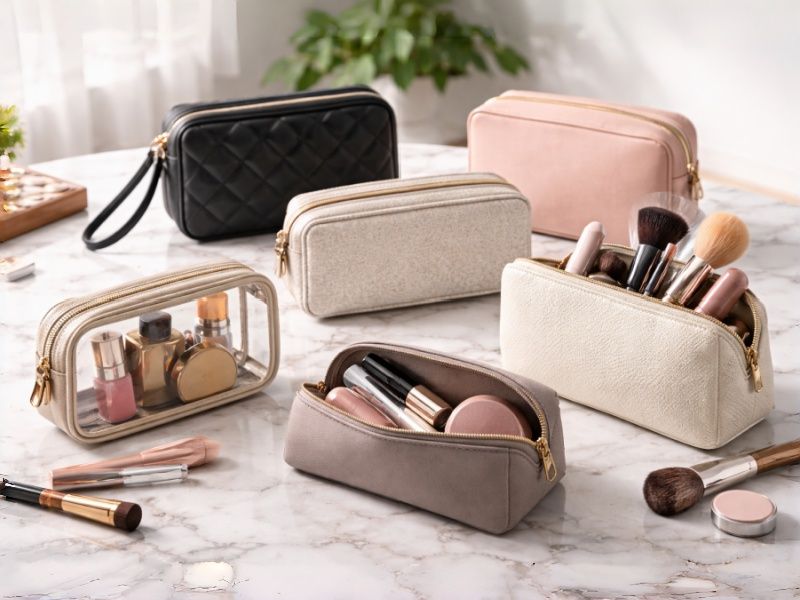
Best Small Makeup Bag for Purse: What Size Works Best, Which Type to Choose, Clear vs Fabric, Price Guide, and Custom Factory Tips
A small makeup bag sounds simple. In real use, it is not. The wrong one wastes space, catches powder residue, leaks into the lining, bulges inside a purse, or turns touch-ups into a messy digging exercise. The right one does the opposite. It keeps your daily essentials visible, protects the rest of your bag, feels easy in the hand, and fits the way real people move: office commute, lunch meeting, school run, weekend trip, airport line, and after-work dinner.
That is why the “best” small makeup bag is not only about beauty. It is about size discipline, shape control, opening angle, wipe-clean performance, and how well the bag matches the purse it lives in. A pouch that looks cute on a product listing can still fail badly once it is placed inside a compact shoulder bag or a medium tote. This is also why many beauty brands, gift programs, and private-label teams keep coming back to this category. A small makeup bag is practical, easy to understand, and easy to bundle. It can work as a daily organizer, a travel add-on, a gift-with-purchase item, or a stand-alone retail style.
The best small makeup bag for purse use is usually a compact pouch around the daily-essential size zone, with a shape that stays slim, a zipper that opens wide enough to see inside, and a lining that wipes clean easily. For daily purse carry, many size guides place small cosmetic bags in roughly the 5–8 inch class, while larger 9–12 inch styles are usually better for travel rather than purse use. Clear bags are handy for visibility and checkpoints, but nylon, coated fabric, and PU often feel better for everyday carry because they are softer, easier to style, and less noisy inside a handbag.
A good small makeup bag also depends on who is using it. A minimalist may only need lip balm, concealer, and a mini powder. A beauty-heavy routine may call for brush loops, leak-resistant compartments, and a base wide enough to let products stand. A retail program may care more about visual appeal and logo placement, while a gift set may care more about price control and pack-out efficiency. The smart choice comes from matching real use, not chasing a generic “best seller.”
What Is the Best Small Makeup Bag for a Purse?
The best small makeup bag for a purse is one that holds your true daily essentials without turning bulky. In most daily-use guides, that means a bag in the small cosmetic bag size band, often around 5–8 inches, with a slim footprint, a smooth zipper path, and enough structure to stop products from sinking into a heap. If it feels more like a mini travel case than a purse pouch, it is usually already too big for everyday handbag use.
There is a simple test that works better than any trendy recommendation: Can you place the pouch into your regular purse without changing how you pack the rest of your day? If the is no, it is not the right purse makeup bag. A purse bag should fit around your wallet, phone, keys, charger, tissues, and personal items without creating dead corners or pushing the bag out of shape.
The best size is often smaller than people expect. Most daily routines do not need a full foundation bottle, a brush roll, and multiple palettes. They need a “repair kit”: lipstick, concealer, pressed powder, compact mirror, blotting sheets, mini fragrance, hair tie, maybe one pencil item. When the pouch is designed around this reality, it works better and gets used more often.
A useful way to think about it is this:
| Use case | Common working size | What it usually holds | Best for |
|---|---|---|---|
| Mini touch-up pouch | 5–6 in | Lip product, concealer, powder, mirror | Small shoulder bags, evening bags |
| Daily purse makeup bag | 6–8 in | Core touch-up kit, 1–2 mini extras | Medium handbags, work totes |
| Compact travel cosmetic bag | 9–12 in | Foundation, brushes, skincare minis | Weekend trips, carry-on packing |
The daily and travel size split above follows current size guidance that places 5–8 inches in the small daily zone and 9–12 inches in the travel zone.
For brands or sourcing teams, this category works best when it is honest. If the bag is meant for purse use, do not quietly make it oversized just to improve perceived value. A pouch that fits beautifully into a handbag creates more repeat use than a bag that feels “generous” on paper but annoying in daily life.
Which Type of Small Makeup Bag Fits Best in Different Purse Styles?
The best type depends on the purse shape. Flat pouches work well in slim shoulder bags and satchels. Soft zip-top pouches suit medium totes. Mini box bags fit better in larger totes because they stand and protect contents. Slim organizers are best when a user carries pencils, lip products, or a narrow touch-up set. In other words, purse shape should decide makeup bag shape, not the other way around.
A flat pouch is often the safest starting. It wastes the least room and slides neatly against the wall of a handbag. It is ideal for light kits and minimal routines. The weakness is capacity. Once the user starts adding rounded items, a flat pouch becomes hard to close and visually messy.
A soft zip-top pouch with a slightly boxed bottom is the best middle ground for many people. It gives enough base room for compact products but still compresses slightly when tucked beside other items. This is why that shape keeps showing up in well-reviewed daily-use cosmetic bags: it balances storage and flexibility better than fully structured cases. Editorial testing this year has repeatedly favored bags that are easy to pack, easy to see into, and flexible enough to fit different carry situations.
A mini box bag looks more polished. It photographs well, protects products better, and gives stronger logo presentation. It is a good choice for premium gift sets, beauty bundles, or private-label lines where shelf presence matters. But it can be frustrating inside smaller purses because rigid walls do not adapt.
A slim organizer works best for very specific routines: lip collection, touch-up pencils, mini brush set, or one-step office makeup. It is not universal, but when the user’s routine matches the format, it performs extremely well.
The bigger point is that “best” is tied to the purse environment. A pouch designed for a roomy tote will fail in a compact crossbody. A slim organizer will feel too tight for a person who carries powder and sunscreen. The smartest product lines often offer two or three shape families instead of pretending one format works for everyone.
Why Do Size, Shape, and Compartment Layout Matter So Much?
Size, shape, and compartments matter because a small makeup bag is used in motion. People reach into it quickly, often in poor lighting, in a car, at a desk, or in a restroom. A good layout reduces digging, prevents leaks, and keeps frequently used items visible. The right shape also helps the pouch sit well inside a purse instead of tipping, bulging, or swallowing small items into one cluttered corner.
A makeup bag fails when it has the wrong kind of capacity. Many styles look spacious but offer no control. Everything falls to the bottom. Lip products slide under powder cases. Small pencils disappear sideways. Then users overstuff the bag because they cannot see what is already inside. That leads to zipper strain and product damage.
A better layout starts with one : What items are touched most often? In a purse makeup bag, the is usually lip product, powder, concealer, blotting sheets, mini fragrance, and one or two emergency items. These should be fast to grab. Brush loops, mesh pockets, or one shallow divider can help. Too many compartments, though, make a small bag rigid and reduce usable volume.
Opening behavior matters more than many teams realize. A pouch that only opens narrowly forces the user to dig. A wider opening makes the same interior feel larger because more of the contents are visible at once. Tested beauty bags that score well often share this trait: they open wide enough to reduce searching.
There is also a hygiene angle. Makeup is messy. Powders shed. Lip products uncap. Pencil dust collects. A loose interior without wipe-clean lining turns into a maintenance problem. That is why the best daily bags are not always the prettiest soft pouch. Very often, the winner is the one with the most practical interior.
From a custom development view, layout is where a pouch becomes more than a pouch. One extra pocket, a better gusset, or a cleaner top opening can be the difference between a forgettable promo item and a style people actually keep. If you are planning a custom purse makeup bag line, this is one of the first details worth testing in sample form. Jundong supports rapid development, in-house QC, and sample-to-bulk coordination, which helps teams test those details before scale-up.
Clear vs Fabric vs PU vs Nylon: Which Material Is Best for Daily Use?
For daily purse use, nylon, coated polyester, and PU are usually the strongest practical choices because they balance wipe-clean performance, shape control, and everyday appearance. Clear PVC or TPU is best when visibility matters, especially for travel and checkpoint use. Fabric options such as canvas or cotton can look warm and casual, but they usually need a coating or lining upgrade if the goal is easy cleaning and stain resistance.
Material should be chosen by use case, not trend. A small purse makeup bag lives close to spills, powder, hand cream, and pen marks. So the first is not “What looks premium?” It is “What still looks decent after three months inside a handbag?”
Here is a practical comparison:
| Material | Best use | Strengths | Weaknesses |
|---|---|---|---|
| Nylon / coated polyester | Daily purse use | Light, durable, wipe-clean, easy to print | Can feel basic if trim is weak |
| PU | Premium daily use, gifting | Smooth look, stronger visual value, easy to brand | Can crease or age poorly if low grade |
| Clear PVC / TPU | Travel, visibility, liquids | See contents fast, easy to wipe, good for checkpoints | Can feel stiff, noisy, less elegant in daily handbags |
| Canvas / cotton | Casual styles, eco feel | Soft handfeel, lifestyle look, strong for printing | Harder to clean without coating or lining |
Recent cosmetic bag material guides consistently daily-use shoppers toward nylon or polyester, travel users toward clear or coated options, and premium positioning toward PU or leather-look materials.
Nylon wins more often than people expect because it solves real problems. It is lightweight, flexible, and practical. Inside a purse, that matters more than a dramatic exterior. PU works when the brand needs a more polished look, a cleaner logo story, or a gift-set feel. Clear materials are still very useful, but more as functional tools than as long-term everyday style pieces.
The real material decision should also include lining. A weak outer fabric can be rescued by a smart lining. A premium outer can be ruined by a low-grade interior that stains and peels. For private-label work, lining is one of the best places to improve perceived quality without making the style overbuilt.
When Should You Choose a Purse Makeup Bag vs a Travel Makeup Bag?
Choose a purse makeup bag when the main job is daily touch-ups and handbag organization. Choose a travel makeup bag when the main job is moving liquids, tools, and a broader routine between locations. The dividing line is not only size. It is also product mix, packing frequency, and whether the bag needs to deal with airport rules, hotel counters, or longer-use storage. TSA rules also make clear quart-sized bags more relevant for carry-on liquids than everyday purse use.
This distinction matters because many people buy a “small makeup bag” but actually use it like a short-trip bag. That usually leads to disappointment. A purse bag is about access speed and space discipline. A travel bag is about containment, visibility, and moving more categories at once.
For air travel, U.S. TSA guidance allows each passenger one quart-sized bag of liquids, aerosols, gels, creams, and pastes in carry-on baggage, and containers must generally be 3.4 ounces / 100 ml or less. That is why clear bags remain strongly associated with travel use. They solve a specific checkpoint problem. They do not automatically solve the everyday handbag problem.
A purse bag should feel invisible until needed. It should sit quietly in the handbag, not compete with everything else inside it. A travel bag can be more structured, more open, more segmented, and even a little larger because its job is different.
For beauty brands, this distinction is commercially useful. A purse-format bag makes sense for gift-with-purchase, compact launch kits, loyalty programs, and light private-label lines. A travel-format bag makes sense for holiday bundles, skincare sets, airport retail, and higher-value kits. Mixing the two categories without clarity usually weakens both.
How Long Should a Small Makeup Bag Last, and How Do You Check Quality?
A good small makeup bag should last through regular daily use without zipper failure, seam splitting, lining breakdown, or shape collapse. In practical terms, the best check is not one single feature. It is a combination of zipper smoothness, stitch density, edge finish, lining choice, stain behavior, and how the bag looks after repeated opening, closing, and stuffing. Reviews and testing roundups consistently reward bags with wipe-clean interiors, stable construction, and easy access.
Many quality problems show up early if you know where to look. Start with the zipper. Does it snag near the corners? Does the tape wrinkle? Does the pull feel thin and light? A small bag gets opened constantly. The zipper often fails before the fabric does.
Then check the seams. A daily purse pouch is often squeezed between heavy items such as wallets, chargers, or bottles. Weak seam allowance, poor reinforcement at the zipper ends, and thin interior binding will show stress fast. Corner shape matters too. Sharp, tight corners may look neat in photos but can distort after use.
The lining tells you whether the bag was planned for makeup or just borrowed from a general pouch design. A proper cosmetic bag lining should tolerate powder dust, lipstick smears, and occasional foundation marks. It does not need to be luxurious. It needs to be sensible.
A simple quality checklist works well:
| Check area | What to look for | Why it matters |
|---|---|---|
| Zipper path | Smooth opening, no corner drag | High-frequency failure zone |
| Seams | Even stitching, no skipped areas | Daily compression stress |
| Lining | Wipe-clean, non-flaking surface | Makeup mess control |
| Bottom shape | Stable but not bulky | Better purse fit |
| Edge finish | Clean binding or turned seams | Longer visual life |
For private-label teams, do not judge only the first sample. Test a pouch with actual products inside. Put it in a handbag. Open it twenty times. Wipe powder from the lining. Add weight. That is when the real quality picture appears. Jundong’s internal development setup, QC team, and sample-to-mass coordination make that type of practical check easier to manage before full production.
Who Needs a Stock Style, and Who Should Order a Custom Makeup Bag?
Stock styles work best for teams that need speed, lower setup effort, and simple branding. Custom styles work best for brands that need specific size, material, shape, color, logo placement, pack-out fit, or retail differentiation. If the bag is meant to support brand identity, bundle presentation, or long-term repeat sales, custom usually creates better results than trying to adapt a generic pouch later.
A stock style is not a weak choice. It can be the smartest move for short lead-time promotions, event giveaways, trial programs, first test orders, or simple logo projects. When the timeline is tight and the product role is clear, an existing shape saves time and reduces development risk.
Custom starts to matter when details begin driving the result. A beauty kit may need a pouch that fits a very specific bottle height. A gift set may require a matching color story. A brand may want a cleaner zipper line, a softer handfeel, a more premium puller, or a base shape that stands on shelf. At that stage, the difference between “good enough” and “commercially strong” often comes from custom work.
This is especially true for purse-format bags. Since the product is small, every detail becomes more visible. A weak zipper, a cheap lining, or slightly awkward proportions stand out quickly. Small bags do not have much space to hide design mistakes.
A simple way to choose:
- Go stock when you need speed, entry-level cost control, and low design risk.
- Go custom when you need fit, identity, or stronger brand memory.
- Go semi-custom when you want to modify material, color, zipper, lining, or logo on a proven body shape.
For teams planning a beauty accessory line, gift program, or branded pouch collection, custom usually pays off when the bag is expected to stay in use rather than act as disposable packaging. If you are comparing these routes, Jundong can support low-MOQ development, product refinement, and multi-step sample work for bag projects across different materials and structures. Contact: info@jundongfactory.com.
How Does a Makeup Bag Factory Handle Custom Design, Sample Process, Price, and Production?
A good factory process starts by locking the use case, target size, material, structure, lining, logo method, and packaging before sampling. The sample stage checks proportion, function, finish, and cleaning performance. Pricing is then shaped by material grade, size, structure complexity, logo process, hardware, packaging, and order volume. The smoothest projects move from concept to sample, then approval, then bulk planning with clear QC checkpoints and delivery communication.
The first mistake many teams make is treating a makeup bag like a simple pouch. It is simple only when the expectations are simple. The moment you care about branding, wipe-clean interiors, zipper feel, presentation quality, or retail fit, the process becomes more detailed.
A practical custom flow usually looks like this:
- Brief confirmation Lock the intended use: purse carry, gift set, travel liquids, launch bundle, or retail accessory.
- Structure planning Decide flat pouch, soft box, mini stand-up shape, or compartment style.
- Material and trim selection Outer, lining, zipper, puller, logo method, edge finish, and optional inserts.
- First sample Check size accuracy, opening angle, handfeel, interior usability, and visual balance.
- Revision round Fix what looked acceptable on paper but feels wrong in real use.
- Bulk approval Confirm color, finishing, logo clarity, packaging, and inspection standards.
That revision step matters more than people think. Many pouch projects are not fixed by changing the whole design. They are fixed by small changes: a wider zipper opening, a better gusset depth, a firmer lining, a smoother puller, or a cleaner edge treatment.
Price follows the structure. These are the main cost drivers:
| Cost driver | What raises cost | What helps control cost |
|---|---|---|
| Material | Premium PU, clear TPU, specialty fabric | Standard coated nylon or polyester |
| Construction | Multi-panel body, piping, many pockets | Simple body, clean seams |
| Logo | Metal plate, emboss, multi-step print | One-color print, woven label |
| Trim | Custom pullers, heavy hardware | Standard zipper and puller |
| Packaging | Gift box, inserts, printed wrap | Polybag or simple header card |
| Quantity | Small runs | Higher volume, shared components |
Jundong’s file shows a setup that aligns well with this type of project: Guangdong base, export-oriented service, product development support, rapid sampling, low-MOQ options, in-house QC, structured communication, order updates, and support from sample to bulk, backed by 600+ staff, around 18,000 square meters, and 80 QC inspectors. Those are the kinds of foundations that matter when a small bag still needs to be treated like a real product rather than an afterthought.
If your team is building a custom purse makeup bag, a branded cosmetic pouch set, or a beauty gift program, send the size target, reference style, logo method, and planned quantity to info@jundongfactory.com. Starting with the right brief usually saves more time than trying to rescue a vague sample later.
Is a Small Makeup Bag Still a Good Product for Private Label, Gift Sets, and Beauty Brand Packaging?
Yes. A small makeup bag is still a strong product because it solves a real daily problem while also carrying branding well. It works across entry gifts, premium bundles, launch kits, loyalty rewards, holiday sets, and stand-alone accessory lines. The strongest versions are not generic pouches with a logo. They are bags designed around a clear use scene, with a material and shape that fit the brand level and expected daily handling.
This category continues to work because it sits in a useful middle zone. It is more practical than decorative packaging, but less expensive and complex than a large beauty case. That gives brands room to use it in many programs without making the item feel excessive.
For private label, the bag has three strong advantages. First, it is highly visual. Color, zipper, puller, lining, print, patch, and shape all support identity. Second, it is repeat-friendly. Once a body shape works, it can be refreshed seasonally. Third, it pairs well with many beauty categories: skincare minis, lip kits, eye sets, travel refills, and event gifts.
The weak version of this idea is a pouch chosen only for low cost. That usually leads to something the user keeps in a drawer. The strong version is one with a believable reason to exist. Maybe it is the ideal desk touch-up bag. Maybe it fits three hero lip colors and a mirror. Maybe it works as a clean clear pouch for travel liquids. Maybe it is a structured mini bag that upgrades gift perception.
Small size does not mean small commercial value. In many product programs, a compact, usable, well-finished pouch does more brand work than a larger bag that feels inconvenient. That is why this category still deserves serious development rather than leftover decisions.
For brands that want to build a purse-friendly cosmetic pouch line or add a useful bag to a beauty set, Jundong can support development across fabric, PU, PVC, neoprene, and other soft-goods materials, with design, sample work, and QC support built into the process.
Top 10 FAQs About the Best Small Makeup Bag for Purse Use
FAQ 1. What size is actually best for a small makeup bag in a purse?
The best size is not the one that holds the most. It is the one that fits the way people really carry a handbag every day. For purse use, a small makeup bag should feel easy to slide in, easy to pull out, and easy to open without disturbing everything else inside the bag. That usually means keeping the proportions compact, especially in width and depth. A bag that looks attractive on its own can still feel frustrating once it starts competing with a phone, wallet, charger, keys, tissues, and sunglasses.
A smart way to judge size is to start with the actual daily makeup routine, not the full cosmetics collection. Most people do not need to carry every product they own. They usually carry a small refresh set: lipstick, compact powder, concealer, mirror, blotting papers, hair tie, maybe one pencil item. If the makeup bag is built around that real-use group, it is more likely to stay practical over time.
Depth is often where designs go wrong. A bag that is too deep wastes vertical space inside the purse and can make small items disappear into the bottom. A bag that is too flat may not hold rounded items well. The strongest styles usually land in the middle: slim enough for handbag use, but with just enough bottom room to stop the pouch from looking stuffed.
| Bag Style | Best Everyday Use | Main Strength |
|---|---|---|
| Flat Pouch | Very light touch-up kit | Saves space |
| Soft Box Pouch | Daily routine with 5–8 items | Better balance |
| Slim Organizer | Lip products, pencils, mini tools | Fast access |
The right size should never make the purse feel overcrowded. If it does, the bag is already too big for the job.
FAQ 2. How many compartments should a small purse makeup bag have?
A good small makeup bag should have enough organization to prevent clutter, but not so much structure that the bag loses usable space. That balance matters more than people expect. In a compact pouch, every divider takes away room. So the goal is not to add as many pockets as possible. The goal is to make the inside easier to use.
For most daily purse styles, one main compartment plus one light organizing detail is often enough. That detail could be a slip pocket, a mesh pocket, or a small interior divider. It gives quick separation for items that should stay visible, like lip products, mini mirrors, or blotting papers, without turning the bag into a crowded little case. Once too many pockets are added, the bag can start feeling stiff and inefficient, especially when the end user carries different product shapes from day to day.
Compartment design should follow the routine. If the pouch is for a simple touch-up set, keep it open and flexible. If it is for a premium beauty set or a brush-and-pencil combination, then a more guided interior may make sense. Brush loops can help, but only when the bag is large enough to use them without stealing too much space from the main body.
The biggest mistake is adding organization that looks impressive in a sample but feels awkward in real life. People do not use a purse makeup bag like a travel trunk. They open it fast, often with one hand, and want to find the right item quickly. That is why clear visibility and easy reach usually matter more than a complicated interior.
If a brand is planning a custom style, it is worth testing at least two sample layouts before approval. A small change inside can make a big difference in long-term use.
FAQ 3. Is a clear makeup bag better than a fabric or PU makeup bag for purse use?
A clear makeup bag is not automatically better. It is better for certain situations, especially when visibility matters. For example, clear styles work well for travel, quick product checks, and liquid organization. People can see what is inside at a glance, which reduces searching. That is a real advantage. But for daily purse use, clear bags are not always the most comfortable or stylish option.
A fabric or PU makeup bag often performs better in everyday handbag life because it feels more natural next to other personal items. It is quieter, softer, and usually easier to style with different purse designs. A coated nylon or polyester bag is especially practical because it is light, flexible, and easier to clean than plain fabric. PU can look more polished and giftable, which makes it useful for higher-positioned beauty sets or retail-ready pouch programs.
Clear bags also come with trade-offs. Some feel stiff. Some crease over time. Some become visually messy because every powder mark, cotton swab, or half-used product is always visible. That is fine for travel utility, but not everyone wants that look inside a daily handbag.
A helpful way to choose is this:
- Choose clear when visibility and liquid control are the first priority.
- Choose coated fabric or nylon when daily use, flexibility, and light weight matter most.
- Choose PU when the project needs a more polished, brand-forward look.
The strongest decision usually comes from the intended use scene, not from trend. A bag for a purse should feel easy to live with every day, not just easy to photograph.
FAQ 4. What lining works best inside a small makeup bag?
The lining matters more than many people realize. In a makeup bag, the lining is not just an interior detail. It is one of the main reasons the pouch feels practical or disappointing after a few weeks of use. A good lining should help with easy cleaning, light spill resistance, powder control, and overall shape support. Without that, even a nice outer material can start to feel messy very quickly.
For daily purse use, the strongest lining choices are usually wipe-clean synthetic linings that can handle loose powder, foundation smudges, lip product marks, and occasional leakage without absorbing everything. If the lining is too soft, porous, or uncoated, the bag becomes harder to maintain. That can make a style look aged faster than it should.
Some teams focus heavily on the outer fabric and forget the interior. That is a mistake. The outer material creates first impression, but the lining often decides whether the user keeps reaching for the bag. A soft cotton-style lining may feel pleasant at first, but if it traps stains and is hard to wipe, it quickly becomes a weak spot. A lightly structured lining can also help the pouch hold its shape better, which makes the inside easier to use.
Here is a simple comparison:
| Lining Type | Best For | Watch Out For |
|---|---|---|
| Wipe-Clean Synthetic Lining | Daily use, easy care | Needs clean finishing |
| Soft Textile Lining | Softer handfeel | Harder to clean |
| Thicker Structured Lining | Better shape support | Can add bulk |
For custom work, lining is one of the smartest places to upgrade the product without changing the whole exterior look. A better lining often creates a stronger daily-use experience than adding more decoration outside.
FAQ 5. Should a small makeup bag for a purse be soft or structured?
The best choice depends on how the bag is supposed to behave inside the purse. A soft makeup bag is usually better when flexibility and space efficiency matter most. It can shift slightly between other belongings, compress when needed, and feel easier to carry in handbags that are already full. That is why soft pouches often work well for daily commuting, casual handbags, and lighter beauty routines.
A structured makeup bag gives better shape control. It protects products more clearly, stands better on a table, and often looks more premium in photos and retail presentation. This can make it a strong choice for gift sets, beauty launches, and more polished pouch programs. But structure comes with a cost: it takes up more fixed space. If the handbag is small, a rigid pouch may feel less convenient even if it looks better on its own.
What matters most is the relationship between bag shape, purse style, and product mix. If the end user carries soft essentials and needs a light everyday pouch, a soft body is usually the smarter choice. If the bag must hold fragile compacts, stand on a vanity, or present neatly in a boxed set, then more structure can help.
The best small purse makeup bags often use a middle-ground approach. They are not completely floppy, but they are not fully rigid either. A lightly supported body with a stable bottom and flexible upper section often gives the best real-life result. It keeps the silhouette neat without making the bag feel bulky or hard to pack.
For custom development, testing both a softer and a more structured sample is often worth the time. The difference becomes obvious very quickly once the pouch is placed into a real handbag.
FAQ 6. What makes a small makeup bag look premium instead of cheap?
A small makeup bag looks premium when the details feel intentional, balanced, and clean. It is rarely about one dramatic feature. More often, it is about many small decisions working together: the proportion of the bag, the smoothness of the zipper, the quality of the puller, the neatness of the stitching, the firmness of the shape, the handfeel of the outer material, and how the logo sits on the surface. When those elements align, even a simple pouch can feel refined.
Cheap-looking bags often show the same warning signs. The zipper is too light. The body shape feels unstable. The edges look rough. The logo method does not match the material. The lining feels like an afterthought. The proportions are slightly off, which makes the whole bag feel less polished even if the materials themselves are acceptable.
Material choice matters, but material alone does not solve the problem. A low-grade PU can look worse than a well-finished nylon bag. A nice outer surface can still feel disappointing if the bag collapses, the corners wrinkle, or the hardware looks weak. Premium appearance comes from consistency, not just surface value.
A few upgrades usually make the biggest difference:
- Better zipper and puller feel
- Cleaner edge finishing
- More stable body proportion
- A lining that feels deliberate
- A logo method that suits the surface
For brands planning a custom beauty pouch, this is where careful sample review matters most. Small bags do not hide flaws well. Minor quality gaps become visible fast. That is why a good custom process should focus on finish, balance, and real handling, not only on color and logo placement.
FAQ 7. Can a small purse makeup bag work well for gift sets, beauty kits, and private-label programs?
Yes, and in many cases it works extremely well. A small makeup bag sits in a very useful space between packaging and product. It is more practical than a paper box, but still compact enough to keep the overall program easy to pack, easy to price, and easy to understand. That is exactly why it continues to perform well in beauty sets, mini launch kits, loyalty gifts, holiday bundles, and stand-alone accessory lines.
Its strength comes from repeated use. If a person keeps the bag in daily rotation, the pouch continues carrying brand memory long after the original product set is gone. That is harder to achieve with disposable packaging. A well-made cosmetic pouch can stay in a handbag, desk drawer, carry-on, or gym bag for a long time. That gives it a much stronger afterlife than most branded extras.
Still, not every small pouch works well in these programs. If the bag looks generic, feels too thin, or does not match the rest of the set, it can lower the perceived value instead of raising it. The strongest projects usually begin by deciding the role of the pouch very clearly:
- Daily touch-up bag
- Travel liquid pouch
- Premium gift add-on
- Mini beauty organizer
- Seasonal branded accessory
Once that role is clear, the shape, material, lining, and logo direction become easier to plan. For private-label work, the category is also flexible. One proven body can often be refreshed with seasonal colors, printed patterns, or new trim details without needing a completely new development path every time.
That balance of usefulness, visibility, and repeat use is what keeps this category commercially strong.
FAQ 8. What should be confirmed before making a custom sample?
A custom sample works best when the project team locks the real use case before talking about decoration. Too many pouch projects start with color or logo, while the more important decisions are still unclear. That often leads to a sample that looks acceptable in photos but feels wrong in real use. Before the first sample begins, it helps to confirm six basic areas: size, shape, outer material, lining, opening style, and what the bag needs to hold.
The most useful starting material is not a long written wish list. It is a practical brief. That can include a reference photo, target measurements, the list of products that need to fit inside, preferred material direction, logo method, and how the bag will be packed or sold. If the pouch is part of a beauty set, the actual product sizes should be confirmed early. A bag that is only “approximately right” can still fail once the real items are placed inside.
Here is a practical pre-sample checklist:
| Item to Confirm | Why It Matters |
|---|---|
| Target Size | Prevents wrong scale from the start |
| Intended Use | Shapes the whole structure |
| Material Direction | Affects look, feel, and cleaning |
| Lining Choice | Affects daily experience |
| Logo Method | Must suit the surface |
| Packing Style | Influences cost and final presentation |
It is also wise to confirm whether the first sample is meant to test structure, visual finish, or both. Not every sample needs to solve every detail at once. Clear priorities usually lead to faster improvement and fewer avoidable revisions later.
FAQ 9. What affects price most in a custom small makeup bag project?
Price is usually shaped by construction, material, trim, decoration, packaging, and quantity. The mistake many teams make is assuming the bag is small, so the pricing logic must also be simple. In reality, a small cosmetic pouch can become surprisingly detailed. Once special linings, custom pullers, shaped panels, premium finishes, or gift-style packaging are added, the project changes quickly.
Material is one of the biggest cost drivers, but not the only one. A simple coated nylon bag with standard zipper parts is very different from a PU pouch with a metal logo, custom puller, inner pocket, and branded gift wrap. Two bags may look similar from a distance yet land in very different cost positions once the details are fully compared.
A helpful way to read pricing is to separate the product into layers:
- Body material
- Lining
- Zipper and hardware
- Logo method
- Construction complexity
- Packaging
- Order volume
Quantity matters because small runs carry development and setup cost less efficiently. That does not mean small projects are impossible. It just means the cost per piece may sit higher than teams expect if they want highly specific features at a very modest volume.
The best way to control price is not to strip the bag down blindly. It is to decide which two or three details matter most, then simplify the rest. In many cases, a better lining and zipper create more value than adding extra pockets or complicated decorative elements. A smart cost plan protects the parts the end user will notice every day.
FAQ 10. How can a brand reduce mistakes when moving from sample to bulk production?
The safest way to reduce mistakes is to treat the approved sample as a control tool, not just a visual reference. Many problems happen because teams approve a sample based on general appearance, then move forward without locking the exact details that made the sample work. Once bulk begins, small variations in material feel, zipper shade, logo sharpness, lining behavior, or body proportion can create a product that feels “close” but not truly consistent.
A stronger handoff process usually includes a confirmed sample, clear measurement notes, approved color standard, final logo file, lining confirmation, packaging approval, and a short quality checklist focused on the most sensitive details. For a small makeup bag, those sensitive areas are often the zipper path, corner shape, stitching cleanliness, wipe-clean behavior, and how the pouch opens when filled.
It also helps to define what matters most in bulk review. For example:
| Priority Area | What to Check in Bulk |
|---|---|
| Shape | Does the body match the approved silhouette? |
| Opening | Does the zipper open smoothly at corners? |
| Interior | Is the lining clean and functional? |
| Logo | Is placement and finish consistent? |
| Packing | Does the final presentation match approval? |
One more practical step is worth mentioning: test the bulk sample with real contents, not empty. A pouch can look fine when flat and still behave poorly once loaded. A quick real-use check often catches what visual inspection misses. That extra discipline is usually what separates a smooth project from an expensive correction later.
Let's work together
With over 10 years of OEM/ODM bag industry experience, I would be happy to share with you the valuable knowledge related to leather products from the perspective of a leading supplier in China.

Factory catalogue
Table of Contents
Latest blogs


Make A Sample First?
If you have your own artwork, logo design files, or just an idea, please provide details about your project requirements, including preferred fabric, color, and customization options, we’re excited to assist you in bringing your custom bag designs to life through our sample production process.