 Skip to content
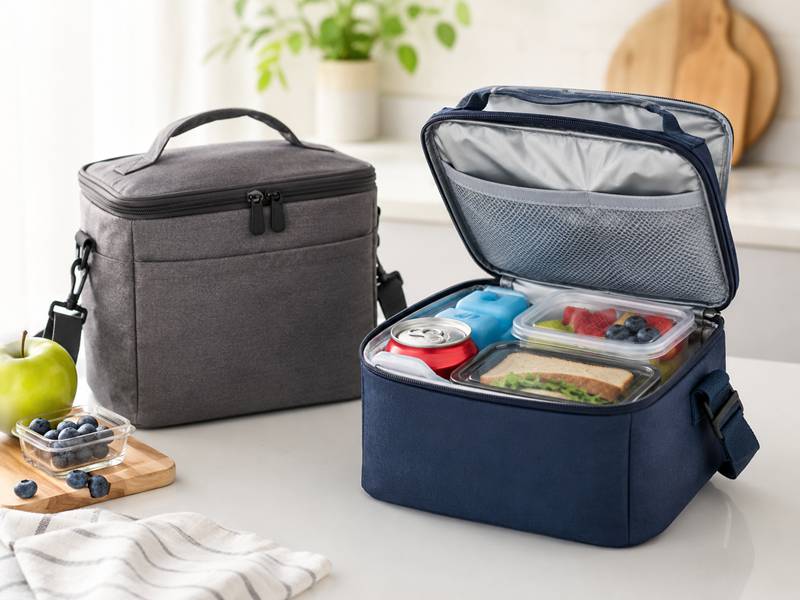
The longest-lasting cooler is not automatically the thickest, the largest, or the one with the shiniest silver lining. Cold retention comes from the whole thermal structure working together. Insulation slows heat transfer, the lining manages the inner surface, closures limit warm-air exchange, the internal volume affects how much air must be cooled, and ice packs provide the cold energy that the bag itself cannot create.
That distinction becomes especially important when developing a portable lunch bag. A heavy outdoor cooler may keep ice much longer than a lightweight lunch carrier, but copying that structure can make an everyday bag bulky, expensive, difficult to pack, and uncomfortable to carry.
Among portable formats, a rigid cooler generally has the greatest potential for long ice retention, while a well-built soft cooler offers the stronger balance for a custom lunch bag. Long-lasting performance comes from adequate insulation, a well-fitted lining, limited air leakage, efficient ice-pack placement, appropriate internal volume, and controlled opening. The final retention time should always be confirmed through repeatable sample testing.
A useful lunch bag therefore starts with a simple requirement: how long does the food actually need to remain cold, under what conditions, and with how much added cooling material?
Two bags can look almost identical on a desk and perform very differently after several hours. One may use thicker insulation but lose cold air through a wide zipper opening. Another may use slightly less padding but maintain a more compact internal chamber, better closure contact, and more effective ice-pack placement. The visible difference may be small; the thermal difference can be significant.
That is where product development becomes much more interesting than simply asking for “thicker foam.”
What Cooler Type Stays Cold the Longest?
Rigid coolers usually have the highest potential for long ice retention because thick insulated walls, low air leakage, and firm lid contact reduce heat entering the chamber. Premium soft coolers follow closely when portability matters. For a custom lunch bag, however, the strongest design is rarely the heaviest one. The better choice is the structure that reaches the required cold-retention period while remaining practical in weight, capacity, carrying comfort, packing volume, and cost.
Cold retention is controlled by the complete thermal system. The outer fabric protects the structure, the insulation slows heat transfer, the lining manages the inner surface, the zipper controls air exchange, and the ice pack supplies cooling energy. Internal capacity, opening frequency, starting temperature, ambient temperature, and how tightly the bag is packed also change the result.
For custom cooler and lunch bag projects, polyester, Oxford fabric, nylon, PEVA, aluminum foil, EPE foam, and neoprene can all be used in different combinations. Jundong’s technical material guidance specifically notes that cooler performance depends on outer fabric, lining, insulation thickness, stitching, opening structure, zipper, ice-pack use, and test conditions rather than one material alone.
| Cooler Format | Cold-Retention Potential | Portability | Empty Storage | Common Use |
|---|---|---|---|---|
| Rigid hard cooler | Very high | Low | Low | Camping, outdoor storage, long trips |
| Premium soft cooler | High | High | Medium | Travel, sports, beverages, outdoor use |
| Insulated lunch bag | Medium to high | Very high | High | Office, school, meal prep, gifts |
| Neoprene lunch carrier | Light to medium | Very high | Very high | Lifestyle, promotional, short daily use |
| Delivery cooler bag | Medium to high | Medium | Medium | Food delivery, catering, meal transport |
The table describes structural potential, not guaranteed hours. A carefully developed lunch bag can outperform a larger soft cooler if the larger product has poor closure control, excessive empty volume, or weak insulation continuity.
Hard Cooler vs Soft Cooler
A hard cooler starts with a physical advantage: its walls can be much thicker without collapsing, the lid can seal against a defined contact surface, and the insulation does not compress easily during use.
That is why hard coolers are better suited to applications where maximum ice life matters more than portability.
The disadvantage appears immediately when the product must be carried every day.
A rigid shell:
- occupies nearly the same space when empty and full;
- increases carton volume;
- increases storage requirements;
- adds weight before food or drinks are loaded;
- can reduce usable internal capacity when thick walls are used;
- offers less flexibility for pockets and folding;
- may be less convenient for school or office use.
A soft cooler takes a different approach. It accepts more panel movement and more construction complexity in exchange for lower weight and easier carrying.
The challenge is controlling the weak areas.
In a soft bag, insulation can be compressed at the seams. Zippers create long openings. Corners contain several layers. Handles and pockets can add stitching through the outer structure. If these details are not planned carefully, increasing insulation thickness alone may produce only a limited improvement.
For a daily lunch program, a soft insulated structure is often the more practical choice because the product is carried much more often than it is stored for extreme-duration cooling.
Maximum Ice Retention Time
There is no single maximum ice-retention number that can be applied to every lunch bag.
A statement such as “keeps ice for 12 hours” means very little without knowing how the test was performed.
Consider these two conditions.
Condition A
- indoor environment;
- chilled food at the start;
- two fully frozen ice packs;
- bag filled close to capacity;
- zipper remains closed;
- no direct sunlight.
Condition B
- hot vehicle;
- food starts warmer;
- one small ice pack;
- bag half empty;
- zipper opened every hour;
- bag exposed to sunlight.
The same product can produce very different temperature curves.
For this reason, cold-retention claims should be tied to defined conditions.
Useful variables include:
| Test Variable | Why It Matters |
|---|---|
| Ambient temperature | Determines external heat load |
| Starting food temperature | Changes how much cooling energy is needed |
| Ice-pack weight | Changes available cooling capacity |
| Ice-pack position | Influences temperature distribution |
| Internal loading | Affects empty air volume |
| Opening frequency | Introduces warm air |
| Opening duration | Determines how much cold air is replaced |
| Bag dimensions | Changes surface area and volume |
| Probe position | Can change recorded temperature |
| Test duration | Must match the intended carrying cycle |
Jundong’s cooler material rules specifically avoid fixed-hour claims without project verification. Cold retention must be evaluated according to material, insulation, structure, cold packs, testing conditions, and actual use.
A more useful specification is:
“The final sample should meet the agreed temperature performance under a defined loading and ambient test.”
That gives the development team something measurable.
Daily Lunch Cooling
For office and school use, the best-performing structure is usually not designed around multi-day ice storage.
The product may only need to protect food from morning preparation until lunch or the end of a work shift. That shorter duty cycle allows the design to remain lighter and more comfortable.
A practical daily lunch bag often benefits from:
- moderate to substantial foam insulation;
- an easy-clean inner lining;
- a compact main chamber;
- a full-closing zipper;
- enough internal space for one or two cold packs;
- limited unnecessary empty volume;
- stable base construction;
- reinforced handle attachment;
- simple internal organization.
The internal size should follow the food containers.
For example, if the bag is designed for two stackable meal boxes, one drink, and one ice pack, the chamber should be developed around those dimensions. Making the bag 30% larger “just in case” can create excess air volume and reduce carrying efficiency.
A more precise fit also improves appearance. Containers move less during transport, the bag holds its shape better, and the zipper is less likely to be overloaded by poorly arranged contents.
Soft Cooler Structure
A soft cooler can approach much stronger thermal performance when its wall construction is properly balanced.
A common layered structure may include:
outer textile + insulation + inner lining
Each layer performs a different job.
The outer textile may contribute abrasion resistance, color, printability, and structural protection.
The insulation provides the main resistance to heat movement.
The lining gives the inside its cleaning characteristics and helps form the internal chamber.
Jundong’s material specifications identify EPE foam as an insulation, cushioning, and structural layer; PEVA as an easy-clean inner material; and aluminum foil as a commonly used thermal-style lining. These materials are often used together rather than treated as single-material solutions.
The insulation should also remain as continuous as practical.
Areas where the thermal layer becomes thin or compressed deserve extra attention:
- zipper edges;
- base corners;
- side seams;
- top corners;
- handle attachment areas;
- divider seams;
- pocket attachment areas.
A soft cooler with very thick foam but poorly controlled seams can perform worse than expected because heat follows the easier path.
Opening Size
The opening is one of the most underestimated parts of a lunch bag.
Every time the zipper opens, the internal environment changes.
A large three-sided opening is convenient for meal boxes because it allows wide access. However, it exposes most of the chamber when opened.
A narrow top zipper reduces the open area but can make large containers difficult to load.
This creates a clear design trade-off.
| Opening Style | Access | Cold-Air Exposure | Best Use |
|---|---|---|---|
| Wide U-shaped opening | Excellent | Higher | Meal prep, large containers |
| Straight top zipper | Good | Medium | Daily lunch |
| Small lid opening | Moderate | Lower | Drinks, compact food |
| Full front opening | Excellent | High | Organized meal systems |
The strongest option depends on how often the product is opened.
If the lunch bag is opened once at lunchtime, a wide opening may have little practical downside.
If it is opened repeatedly throughout the day for drinks and snacks, a smaller opening or separated access area can help reduce thermal loss.
Internal Volume
More capacity is not always better.
Cooling efficiency is strongly affected by how much empty space remains around the contents.
An oversized bag carrying one sandwich and a small drink may have a large volume of air that warms each time the bag opens.
A better-sized chamber reduces this empty space.
For custom development, internal dimensions should be checked against the actual items:
- food box length;
- food box width;
- food box height;
- number of containers;
- drink diameter;
- ice-pack dimensions;
- required clearance;
- stacking direction.
A physical loading trial during sampling is very useful.
Instead of placing random objects inside, use the real or representative containers. Close the zipper, carry the bag, set it on a table, open it, remove the food, and repack it.
This quickly reveals whether the design is truly practical.
Cold-Pack Position
The bag slows warming, but the cold pack provides much of the cooling energy.
Where the pack sits therefore matters.
A single pack lying at the bottom may keep the lower food area colder than the top.
A side pocket can improve convenience but may reduce contact with the meal containers.
A flat pack near the top can help cool the warmer upper air space.
For fixed meal systems, dedicated positioning can be useful.
Possible arrangements include:
- one flat pack at the base;
- one pack above the food;
- two slim packs on the sides;
- integrated pockets that hold packs close to the containers.
The correct arrangement depends on product geometry.
For general retail use, too many dedicated pockets can reduce flexibility. For a meal-kit program using fixed containers, dedicated cold-pack locations can improve consistency.
Outdoor and Vehicle Use
A lunch bag used in a climate-controlled office and one left inside a vehicle face very different thermal loads.
The vehicle environment is usually much harder.
The bag may experience:
- elevated ambient temperature;
- direct or indirect solar heating;
- hot seat or floor surfaces;
- limited air circulation;
- repeated door opening;
- longer exposure.
For those conditions, increasing insulation thickness may be justified, but other details become equally important.
A light-colored exterior may absorb less solar energy than a very dark surface under direct sun. A stronger bottom can reduce heat transfer from a hot floor. A compact chamber can make better use of the available ice packs.
Outdoor programs may also require stronger fabrics, reinforced handles, larger zipper pullers, and more durable seams because the bag is handled more aggressively.
These changes should be considered together. Improving thermal performance while weakening carrying durability would not create a better product.
Choosing the Right Cooler Type
The strongest cooler type for a custom lunch program can be selected by answering five practical requirements:
- How long should the contents remain cold?
- Where will the bag normally be used?
- What exactly will be packed inside?
- How many times will the bag be opened?
- How much weight and bulk are acceptable?
From there, the structure becomes much easier to define.
For short daily use, a lightweight insulated lunch bag may be enough.
For longer office, travel, or sports use, stronger insulation and more controlled closure can be added.
For outdoor beverage programs, a premium soft cooler may be more appropriate.
For large food transport, a delivery cooler with reinforced carrying structure and a larger insulated chamber may be necessary.
The longest-lasting cooler is therefore not automatically the correct lunch bag.
The better product is the one that provides enough verified cold retention for the real carrying cycle while keeping the bag comfortable, practical, visually appropriate, and economically sensible at production scale.
Which Insulation Is Best for Custom Lunch Bags?

The best insulation for a custom lunch bag is usually a layered system rather than one material. EPE foam is often used as the main insulating and structural layer, while PEVA or aluminum foil forms the interior surface. Neoprene works better when softness and flexibility are more important than maximum thermal structure. The correct combination depends on cooling duration, bag size, ice-pack use, weight, cleaning, and cost.
An insulated lunch bag does not become high-performing simply because it contains foam. The finished wall must control several things at once: heat entering through the panels, warm air entering through the zipper, thermal loss around seams, compression at corners, and the amount of empty air surrounding the food.
For this reason, insulation should be specified as a complete construction:
Outer shell + thermal layer + inner lining + seam construction + closure + cold source
Jundong’s material specifications list polyester, Oxford fabric, nylon, PEVA, aluminum foil, EPE foam, and neoprene among common materials for cooler bags. PEVA is frequently used as an easy-clean lining, aluminum foil as an insulated inner surface, and EPE foam for insulation, cushioning, and structural support. These materials are often combined.
A useful comparison is:
| Material | Primary Role | Thermal Potential | Structural Feel | Cleaning | Best-Fit Direction |
|---|---|---|---|---|---|
| EPE Foam | Main insulation | High when correctly specified | Medium–firm | Not exposed | Everyday insulated lunch bags |
| Neoprene | Flexible insulating body | Light–medium | Soft | Moderate | Lifestyle and compact designs |
| PEVA | Inner lining | Supportive, not primary insulation | Flexible | High | Lunch and meal-prep interiors |
| Aluminum Foil | Inner thermal lining | Supportive, not primary insulation | Flexible | Good | Classic thermal interiors |
| Polyester/Oxford | Outer shell | Indirect | Varies | External surface | Protection and structure |
The most important decision is therefore not “PEVA or EPE?” They perform different jobs.
EPE Foam vs Neoprene
EPE foam is usually more suitable when the lunch bag requires a defined insulated chamber. It sits between the outer material and lining, helping slow heat transfer while also giving the walls body and cushioning.
This makes it useful for:
- structured lunch bags;
- meal-prep bags;
- picnic cooler bags;
- bottle cooler bags;
- food-delivery carriers;
- designs requiring a stable base or sidewalls.
Neoprene behaves differently. It can form much of the visible bag body itself and is valued for softness, elasticity, compactness, and comfortable hand feel. Jundong’s material specifications note common neoprene thicknesses such as 3 mm, 5 mm, 7 mm, and 8 mm, depending on the project. Increased thickness affects cost, hand feel, protection, thermal feel, and sewing difficulty.
| Design Requirement | EPE Foam Construction | Neoprene Construction |
|---|---|---|
| Strong insulated chamber | Better suited | Moderate |
| Soft flexible body | Moderate | Excellent |
| Box-shaped lunch bag | Excellent | Less structured |
| Foldable compact product | Moderate | Excellent |
| Multi-layer interior | Easy to configure | More limited |
| Premium meal-prep structure | Strong fit | Secondary fit |
| Promotional lunch carrier | Suitable | Strong fit |
| Higher wall thickness | Practical with review | Can become bulky |
Neoprene should not automatically be described as waterproof or capable of a fixed long-hour cooling period. Its final performance still depends on thickness, seams, opening structure, loading, and cold packs.
For a lunch bag expected to carry food for several hours, EPE-based multi-layer construction usually provides greater freedom to adjust thermal performance independently from the exterior appearance.
PEVA vs Aluminum Foil
PEVA and aluminum foil are both common interior options, but neither replaces the main insulation layer.
PEVA is often selected where cleaning convenience matters. Lunch containers, fruit, bottled drinks, sauces, condensation, and accidental spills can make the inner surface more important than it first appears.
Aluminum foil gives a recognizable thermal appearance and is commonly associated with cooler interiors. It can work well where the design needs a classic insulated visual style.
Their roles can be compared this way:
| Consideration | PEVA | Aluminum Foil |
|---|---|---|
| Easy-clean interior | Strong | Good |
| Flexible lining | Strong | Strong |
| Thermal appearance | Moderate | Strong |
| Lunch bag use | Very common | Very common |
| Meal-prep use | Strong | Strong |
| Works with EPE | Yes | Yes |
| Determines cooling hours alone | No | No |
A silver interior should never be used as proof that a bag will stay cold longer.
Two samples may use visually similar foil lining while one contains much stronger insulation underneath. Conversely, a PEVA-lined bag with better foam, tighter construction, and better ice-pack placement can outperform a thin foil-lined design.
The material specification therefore needs to describe the full wall structure, not just the visible inner surface.
Jundong’s cooler bag material guidance explicitly treats PEVA, aluminum foil, and EPE as materials that are frequently combined. Cold performance also depends on insulation thickness, stitching, zipper structure, opening design, cold packs, and test conditions.
Foam Thickness
Increasing foam thickness can improve the insulation potential, but more thickness is not automatically the best commercial decision.
Every additional layer changes the physical dimensions of the finished bag.
If the internal capacity must stay the same, thicker walls increase the external size. If the outside dimensions remain fixed, usable storage space becomes smaller.
Thickness can also affect:
- seam bulk;
- corner shape;
- zipper installation;
- binding;
- panel stiffness;
- folding;
- finished weight;
- material consumption;
- carton quantity;
- shipping volume.
The effect becomes easier to understand with a simple dimensional example.
Suppose a rectangular lunch chamber needs approximately 240 × 160 × 180 mm of usable internal space. If additional insulation is added around the sidewalls, the outside dimensions must also increase unless internal capacity is reduced.
Even a few millimeters per wall can become noticeable because insulation exists on both sides of every dimension.
A sensible development process compares several sample constructions rather than selecting the thickest one immediately:
| Sample | Insulation Direction | Main Evaluation |
|---|---|---|
| A | Light | Weight and basic daily use |
| B | Medium | Balance of retention and portability |
| C | Heavier | Maximum practical thermal gain |
Each version should then be compared for:
- temperature performance;
- empty weight;
- internal capacity;
- wall firmness;
- zipper usability;
- carrying comfort;
- finished dimensions;
- packing volume;
- cost impact.
The best sample is the one that reaches the required thermal target without adding material that brings little practical benefit.
Food-Grade Lining
Food-related material suitability and cold retention should be treated as two separate requirements.
A lining may have suitable documentation for an intended food-related application without providing significant insulation by itself. Similarly, a strong thermal structure does not automatically mean that every internal material is suitable for every food-contact requirement.
When the bag is intended to carry lunches, meal-prep containers, drinks, or food-delivery items, the inner layer should be reviewed for:
- material specification;
- cleaning;
- odor;
- flexibility;
- moisture exposure;
- seam construction;
- puncture risk;
- intended contact condition;
- required documentation.
The words “PEVA lining” alone are not sufficient to justify a food-grade claim.
Jundong’s technical requirements specifically state that food-related claims require material and testing confirmation. The same guidance also warns against describing all PEVA or all cooler bags as automatically food-safe.
From a thermal perspective, the lining mainly forms part of the inner wall system. Cold-retention performance still depends heavily on what is behind it and how the whole bag is assembled.
This distinction matters when product packaging will include phrases relating to food use. The wording should follow the actual material documentation and any required testing rather than assumptions based on material name.
Outer Fabric
The outer shell is rarely the main insulating layer, but it still affects the way the thermal structure works in daily use.
Common exterior options for cooler and lunch bags include polyester, Oxford fabric, nylon, RPET, canvas, and other project-specific textiles. Jundong also works with PEVA, foil, EPE foam, and neoprene within cooler bag constructions.
The outer material affects:
- abrasion resistance;
- bag shape;
- foam protection;
- color;
- printing;
- embroidery;
- surface feel;
- moisture resistance;
- finished weight.
A firmer Oxford shell can help keep the insulated chamber stable. A softer polyester construction can create a lighter everyday feel. Neoprene can combine the outer body and part of the insulation function.
The shell should also protect the foam from repeated compression.
If a lunch bag is constantly folded, crushed, or loaded tightly into another bag, the insulated wall may not retain its original geometry indefinitely. A structure intended for heavy repeated use may therefore need more support than a lightweight promotional version.
Water resistance should also be described carefully. Polyester or Oxford fabric does not become fully waterproof simply because it is used on a cooler bag. Coating, seam construction, zipper design, and the complete structure all influence the final result.
Insulation by Use
The strongest insulation choice changes with the job the lunch bag needs to perform.
A small school lunch bag should not automatically use the same construction as a large food-delivery carrier.
| Application | Insulation Priority | Weight Priority | Structural Need | Practical Direction |
|---|---|---|---|---|
| School lunch | Medium | Very high | Medium | Compact insulated chamber |
| Office lunch | Medium–high | High | Medium | Balanced foam + easy-clean lining |
| Meal prep | High | Medium | High | Stronger insulation + stable base |
| Outdoor lunch | High | Medium | High | More insulation + durable shell |
| Beverage carrier | High | Medium | High | Strong body + cold-pack space |
| Delivery cooler | High | Lower | Very high | Larger insulated structure |
| Promotional lunch carrier | Light–medium | Very high | Low–medium | Simple, lightweight construction |
The required cooling period should be set first.
Then consider:
- whether chilled food is loaded from a refrigerator;
- whether frozen packs are included;
- how many times the zipper opens;
- whether the bag stays indoors;
- whether it may sit in a vehicle;
- how much weight is acceptable;
- whether fixed food containers must fit;
- whether the product needs retail packaging;
- whether the same structure will be produced in several colors.
This produces a much more reliable material decision than asking for the “best insulation.”
For many custom lunch bags, a balanced construction using a durable textile shell, appropriate EPE insulation, and a PEVA or foil lining provides a practical starting direction. Neoprene remains valuable where flexibility, simplicity, and soft hand feel are more important.
The final choice should still be confirmed through a physical sample. Material hand feel, thickness, color, structure, and logo effect are all items Jundong recommends confirming during sampling rather than after production begins.
The strongest lunch bag is therefore not created by choosing one impressive material name. It comes from matching the outer shell, insulation, lining, thickness, closure, internal volume, and cold-pack arrangement to the exact use of the finished product.
How Does Bag Construction Affect Cold Retention?

Bag construction can influence cold retention almost as much as the insulation itself. A lunch bag with good foam can still lose performance through an oversized opening, compressed insulation around seams, weak zipper closure, poorly fitted lining, excessive empty space, or ineffective ice-pack placement. The strongest designs control heat transfer through the entire insulated chamber, not only through the side panels.
A lunch bag has several possible heat-entry paths:
- front, back, side, top, and bottom panels;
- zipper track and zipper ends;
- stitched seams and corners;
- handle and strap attachment areas;
- internal divider stitching;
- repeatedly opened access areas;
- areas where foam becomes compressed or interrupted.
This is why two bags using similar EPE foam and PEVA lining may produce noticeably different thermal results.
For cooler bags, Jundong’s material specifications specifically identify outer fabric, lining, insulation thickness, stitching method, opening structure, zipper, ice-pack use, and test conditions as interconnected factors.
A useful way to evaluate the construction is to divide the bag into five thermal zones:
| Thermal Zone | Main Risk | What to Check |
|---|---|---|
| Main panels | Heat through walls | Insulation thickness and continuity |
| Top opening | Warm-air exchange | Opening size, lid fit, zipper layout |
| Seams and corners | Compressed or interrupted foam | Seam construction and corner geometry |
| Base | Contact with warm surfaces | Insulation, stability, bottom structure |
| Accessory areas | Extra stitching or openings | Handles, pockets, straps, dividers |
The goal is not to eliminate every seam. That would be impossible in a sewn product. The aim is to prevent one weak area from undermining an otherwise strong insulated structure.
Zippers and Openings
The zipper area deserves special attention because opening the bag can introduce warm air much faster than heat slowly passing through an insulated wall.
Consider two lunch bags with the same insulation:
- Bag A has a wide three-sided U-shaped lid.
- Bag B uses a shorter top zipper.
Bag A may be much easier to load with meal boxes, but each opening exposes a larger portion of the interior. Bag B reduces exposure but may be less convenient for large containers.
Neither construction is automatically better.
The correct choice depends on how the bag is used.
| Opening Type | Loading Access | Warm-Air Exposure | Suitable Direction |
|---|---|---|---|
| Straight top zipper | Good | Medium | Daily lunch |
| Wide U-shaped opening | Excellent | Higher | Meal prep and containers |
| Small top lid | Moderate | Lower | Drinks and compact meals |
| Full-front opening | Excellent | High | Organized multi-container designs |
| Dual access | Flexible | Depends on use | Snacks + main meal separation |
Opening frequency matters just as much as opening size.
A lunch bag opened once at noon may perform perfectly well with a large U-shaped lid. A sports cooler opened every 30 minutes for drinks experiences repeated air exchange, so a smaller access section can be valuable.
For designs intended for frequent access, one practical solution is to separate the contents:
- main insulated chamber for the meal;
- smaller external pocket for utensils or dry snacks;
- dedicated drink access where appropriate.
This prevents the main thermal chamber from being opened unnecessarily.
Zipper performance should also be checked physically. Jundong’s functional inspection guidance includes zipper smoothness, puller security, opening convenience, lining, compartments, and whether sewing interferes with use; cooler bags receive specific attention to lining, insulation, opening, and cleaning.
A zipper that looks premium but jams around a thick insulated corner is not a successful solution.
Leakproof Zippers
A special zipper can improve moisture control, but a zipper alone cannot make the whole lunch bag leakproof.
This distinction matters when the bag may contain:
- melting ice;
- condensation;
- chilled bottles;
- meal containers;
- sauces;
- wet reusable cold packs.
Liquid may escape through several places:
- zipper teeth or coil;
- zipper ends;
- needle holes;
- lining seams;
- lower corners;
- handle stitching;
- base seams.
A water-resistant or coated zipper can reduce moisture passage through the closure area, but the lining and seam construction still determine whether liquid escapes elsewhere.
For a stronger leak-control design, review the entire internal chamber:
| Area | Possible Issue | Development Check |
|---|---|---|
| Zipper | Moisture through closure | Zipper specification and installation |
| Zipper ends | Small construction gaps | End finishing |
| Bottom corners | Liquid accumulation | Corner and lining construction |
| Lining seams | Needle holes or joins | Seam method |
| Handle attachment | Stitch penetration | Position and reinforcement |
| Interior pocket | Extra stitched area | Whether it interrupts inner chamber |
Jundong’s cooler bag guidance treats leak resistance as dependent on both structure and process rather than on one lining or zipper component.
If strong leak resistance is part of the product promise, it should be verified on the finished sample.
A practical check can include adding a controlled amount of liquid or simulating heavy condensation, then inspecting the bottom, corners, seam lines, and zipper ends after a defined period.
Avoid confusing water-resistant, leak-resistant, and leakproof. The wording should follow the verified performance of the final construction.
Seams and Stitching
Seams are necessary for assembly, but they can become thermal weak spots.
Imagine a 6 mm insulated panel. Across most of the sidewall, the insulation maintains its full thickness. At the seam, several materials may be folded, compressed, trimmed, or bound together. The thermal structure at that location is no longer identical to the center of the panel.
The same issue appears at:
- side-to-base connections;
- lid seams;
- zipper attachment areas;
- corners;
- internal dividers;
- handle reinforcement zones.
This does not mean thicker seams are always better.
Too much material at a corner can cause:
- difficult sewing;
- distorted shape;
- uneven zipper movement;
- excessive bulk;
- compressed insulation;
- unattractive finishing.
Construction must balance insulation continuity with practical sewing.
A good prototype inspection should look beyond the exterior. Turn the bag inside as far as practical and examine:
- whether the lining sits smoothly;
- whether foam reaches the intended edges;
- whether corners have large uninsulated gaps;
- whether seam allowance creates hard ridges;
- whether the zipper compresses the top excessively;
- whether the base remains flat after assembly.
Load-bearing areas also need attention because lunch bags can become surprisingly heavy once filled with meal boxes, drinks, and frozen packs. Jundong’s inspection standards identify handles, shoulder straps, bottom seams, zipper areas, side connections, reinforcement stitching, stress corners, and heavy-load zones as important areas for cooler bags and other load-carrying products.
A strong thermal design still needs to survive repeated carrying.
Ice Packs
The bag does not create cold. The ice pack, frozen bottle, chilled food, or other cold source supplies the cooling energy; the insulated structure slows the rate at which that energy is lost.
This makes ice-pack planning part of bag construction.
Three details are especially important.
Cold-pack mass
A larger frozen mass can generally absorb more incoming heat before warming, but it adds carrying weight and occupies space.
Cold-pack location
Cold is not distributed perfectly throughout a soft bag. A pack placed at the bottom can create a colder lower zone, while the upper section warms faster.
Possible arrangements include:
- one flat pack underneath the meal;
- one pack on top;
- two slim side packs;
- top-and-bottom packs;
- dedicated sleeves holding packs close to the containers.
Cold-pack fit
If the bag is designed around a specific reusable pack, its pocket should hold the pack without excessive movement or compression.
For fixed-container programs, this can be developed very precisely.
Example:
| Contents | Suggested Internal Planning |
|---|---|
| 1 meal box | Bottom or top cold pack |
| 2 stacked meal boxes | Top + bottom position |
| Bottles/cans | Side or central cold source |
| Multi-meal prep | Multiple distributed packs |
| Delivery use | Larger cold mass with stable placement |
During thermal comparison, keep the pack type, weight, starting condition, and position identical. Otherwise, it becomes difficult to tell whether the improvement came from the bag or the cold source.
Leak Resistance vs Insulation
Leak resistance and cold retention are often discussed together because both involve the inner chamber, but they solve different problems.
Insulation controls heat transfer.
Leak resistance controls liquid movement.
A heavily insulated lunch bag can still leak.
A highly leak-resistant bag can still warm quickly.
The distinction can be seen clearly:
| Performance Need | Main Construction Factors |
|---|---|
| Cold retention | Foam, lining, closure, volume, ice packs |
| Leak resistance | Lining seams, bottom, corners, zipper ends |
| Outer water resistance | Fabric coating, seams, zipper |
| Easy cleaning | Lining surface, corner design, accessibility |
| Carrying durability | Handles, straps, stitching, reinforcement |
This separation is useful when setting specifications.
For example, a meal-prep bag may need high cold retention and moderate leak resistance because sealed containers are used.
A beverage cooler may need stronger moisture control because condensation or melting ice can accumulate inside.
A delivery carrier may need both stronger insulation and easier cleaning because it is opened repeatedly and reused frequently.
Jundong’s cooler bag material guidance also separates these issues: insulation performance depends on the full thermal structure, while leak resistance depends on construction and workmanship.
Capacity and Compartments
Internal volume has a major effect on how efficiently the cold source is used.
A bag that is much larger than its contents contains more air. Every time it opens, part of that cooled air is exchanged with warmer air from outside.
A tightly packed chamber generally uses the available cold packs more efficiently.
But the bag should not be so tight that:
- containers compress the insulation;
- the zipper is under tension;
- the lid bulges;
- food boxes are difficult to remove;
- ice packs cannot fit properly.
For container-based programs, measure the real contents before finalizing the bag.
Useful dimensions include:
- meal box length;
- width;
- height;
- number of boxes;
- bottle diameter;
- ice-pack dimensions;
- stacking direction;
- clearance around the contents.
Suppose two meal boxes each measure 210 × 140 × 55 mm.
Stacking them creates a food load about 110 mm high before adding the ice pack and clearance. Designing a 200 mm-high chamber may leave unnecessary empty space. Designing a 115 mm-high interior may be too tight once the pack, lining, and normal dimensional tolerance are considered.
The correct size usually sits between those extremes.
Compartments also have thermal consequences.
A divider can:
- organize food;
- reduce movement;
- hold a cold pack;
- separate dry and chilled items.
But it also adds:
- material;
- stitching;
- internal bulk;
- labor;
- possible interruption of the lining or insulation.
Use dividers where they solve a real problem, not simply to make the bag look more complex.
Structural Balance
The strongest lunch bag is rarely the one with the most features.
A practical cold-retention design coordinates:
- insulation thickness;
- opening size;
- zipper construction;
- lining;
- seam layout;
- base structure;
- internal volume;
- cold-pack location;
- handle reinforcement;
- cleaning access.
When these elements work together, the bag can achieve better thermal efficiency without becoming unnecessarily bulky.
During sampling, cooler bags should be checked for insulation layer, lining, leak-resistant structure, and capacity, rather than appearance alone. Jundong’s sampling process specifically identifies these as key cooler-bag development items.
The most useful prototype is therefore not simply the one that feels thickest in the hand. It is the one that demonstrates that the thermal chamber remains well insulated, closes properly, fits the intended contents, carries the expected load, uses cold packs efficiently, and can be produced consistently without creating weak seams or difficult-to-use openings.
How Should a Custom Lunch Bag Sample Be Tested?
A custom lunch bag sample should be tested as a working product, not only inspected for appearance. The evaluation should cover cold retention, insulation construction, internal capacity, zipper operation, lining, leakage risk, carrying strength, dimensional accuracy, logo execution, cleaning, and packing fit. For thermal comparison, keep the ambient condition, food load, cold-pack quantity, starting temperature, probe location, opening schedule, and test duration consistent.
For cooler bags, the insulation layer, lining, leak-resistant structure, and capacity are specifically important during sampling. Cold retention also depends on the complete structure—including outer fabric, foam thickness, stitching, opening design, zipper, ice packs, and test conditions—rather than one material alone.
A practical approval process should therefore evaluate three separate areas:
| Test Area | What It Reveals | Typical Decision |
|---|---|---|
| Thermal performance | How quickly the interior warms | Insulation and closure selection |
| Physical use | Whether meals, packs, zippers, handles work properly | Size and structural revision |
| Production readiness | Whether approved details can be repeated consistently | Final specification and QC criteria |
The most useful sample is not necessarily the one with the lowest temperature at one isolated reading. It is the one that performs reliably under conditions close to its intended daily use.
Cold-Retention Measurements
A cold-retention test becomes much more useful when temperature is recorded throughout the test instead of measured only once at the end.
At minimum, record:
- ambient temperature;
- starting internal temperature;
- starting temperature of the test contents;
- cold-pack quantity and weight;
- cold-pack starting condition;
- internal temperature at fixed intervals;
- opening times and opening duration;
- final internal temperature;
- visible condensation or leakage.
A practical development test might record readings at:
| Time | Internal Temp. | Ambient Temp. | Bag Opened? | Observation |
|---|---|---|---|---|
| 0 hour | Record | Record | No | Starting condition |
| 1 hour | Record | Record | As planned | Check early warming |
| 2 hours | Record | Record | As planned | Compare samples |
| 4 hours | Record | Record | As planned | Mid-test condition |
| 6 hours | Record | Record | As planned | Daily-use check |
| 8 hours | Record | Record | As planned | Extended-use check |
This is an example schedule, not a universal testing requirement. The actual duration should follow the intended use.
The temperature curve is often more informative than the final reading. One sample may warm quickly during the first two hours and then stabilize, while another warms gradually throughout the day. Those two products can have the same final temperature but behave differently in actual use.
Probe location must also remain consistent. A sensor touching a frozen pack will produce a very different reading from one placed between food containers.
Thermal Test Duration
The test should cover the real carrying cycle rather than chase the largest possible hour number.
A school lunch bag may only need to perform from morning packing until lunchtime. A meal-prep bag may need to protect several meals throughout a workday. An outdoor lunch carrier or delivery cooler may face a longer and more demanding cycle.
A sensible duration can therefore be defined from the intended routine:
| Use Scenario | Test Direction |
|---|---|
| School lunch | Morning packing to lunchtime |
| Office lunch | Morning commute through afternoon |
| Meal prep | Full workday |
| Outdoor use | Longer exposure under warmer conditions |
| Delivery use | Route duration plus repeated opening |
The test should ideally continue slightly beyond the required use period so there is visibility into performance margin.
For example, if six hours is the intended carrying period, stopping the test exactly at six hours shows whether the target was met, but it does not show how quickly the temperature changes afterward.
Jundong’s technical guidance intentionally avoids assigning one fixed number of cooling hours to every cooler bag because materials, insulation, structure, cold packs, test conditions, and actual use all affect the result.
The useful requirement is therefore not simply “8-hour insulation.” A stronger specification defines the required duration together with the loading and environmental conditions.
Controlled Test Conditions
Comparative testing only works when the variables are controlled.
Suppose Sample A is loaded with two frozen packs while Sample B receives one. Even if Sample A stays colder, the result does not prove that its insulation is better.
The same problem appears when one bag is tested in an air-conditioned room and another in a warm vehicle.
For an A/B comparison, keep these conditions unchanged:
- bag size, unless size is the variable being studied;
- test contents;
- amount of food or drink;
- starting temperature;
- cold-pack type;
- cold-pack weight;
- pack placement;
- ambient environment;
- sensor position;
- opening schedule;
- measurement intervals.
A useful test record can look like this:
| Variable | Sample A | Sample B | Control Needed |
|---|---|---|---|
| Outer size | Same | Same | Yes |
| Outer fabric | Same | Same | Yes |
| Lining | Same | Same | Yes |
| Foam | 5 mm option | 8 mm option | Deliberate change |
| Cold packs | 2 × same pack | 2 × same pack | Yes |
| Food load | Same | Same | Yes |
| Opening | Same schedule | Same schedule | Yes |
| Test duration | Same | Same | Yes |
Changing one important variable at a time makes the result much easier to interpret.
Photographing the loading arrangement is also useful. It creates a simple visual reference showing container position, cold-pack location, probe position, and internal filling level for the next test.
Certified Thermal Test Data
Internal comparison data and third-party test data serve different purposes.
Internal tests are useful during development. They help compare foam thickness, lining combinations, opening structures, or ice-pack arrangements before the final version is fixed.
Formal third-party testing becomes relevant when a retailer, destination, contract, or specific performance claim requires documented results.
Before arranging such testing, confirm:
- the required test method;
- the exact product configuration;
- which thermal claim needs support;
- whether the test concerns the complete finished bag or a material;
- whether food-related documentation is also required;
- which version of the sample will be submitted.
Jundong can cooperate with third-party testing when required, but compliance and test documents need to match the material, product, destination, and defined requirements. Products should not be described as universally certified without supporting documents. Third-party testing can also be arranged when required for a specific project.
This timing matters. If a thermal test is completed and the final version later changes from one insulation thickness to another, changes zipper construction, or increases the internal dimensions, the earlier result may no longer represent the final product closely enough.
Comparing Insulation Samples
When deciding between insulation structures, avoid changing several major components at once.
A stronger sample comparison might use:
| Specification | Sample A | Sample B | Sample C |
|---|---|---|---|
| Outer fabric | Same | Same | Same |
| Internal size | Same | Same | Same |
| Lining | PEVA | PEVA | PEVA |
| Insulation | Light | Medium | Heavier |
| Zipper | Same | Same | Same |
| Ice packs | Same | Same | Same |
| Food load | Same | Same | Same |
| Opening schedule | Same | Same | Same |
After the test, compare more than temperature.
Record:
- finished bag weight;
- wall thickness;
- usable internal capacity;
- zipper ease;
- corner shape;
- stiffness;
- carrying comfort;
- packing volume;
- sewing appearance;
- thermal curve;
- cost impact.
This often reveals why “thicker” is not always the strongest commercial choice.
Imagine Sample C performs somewhat better than Sample B but becomes noticeably heavier, reduces internal capacity, creates bulky corners, and increases carton volume. If Sample B already satisfies the intended daily-use period, the additional thickness may deliver little practical value.
The strongest decision comes from combining thermal results with physical usability and cost—not from selecting the largest insulation number.
Sample-to-Bulk Consistency
Once a sample passes the thermal and physical checks, the approved construction should be turned into clear production information.
Sample approval should cover more than appearance. Jundong’s documented sample process includes product size, material and color, structure and capacity, zipper and hardware, lining and padding, functional performance, logo, and packaging.
For a lunch bag, the approved record should ideally include:
- exterior dimensions;
- usable internal dimensions;
- outer material specification;
- outer color reference;
- insulation material;
- insulation thickness;
- lining material;
- zipper specification;
- seam construction;
- handle and strap construction;
- cold-pack pocket dimensions;
- internal dividers;
- logo size and position;
- packing method.
Thermal-sensitive materials deserve particular attention.
If the final sample uses one foam thickness, replacing it later with a visually similar but different construction could affect performance even if the finished bag still looks almost identical.
The same applies to lining, zipper design, and opening geometry.
A pre-production sample is especially useful for complex, private-label, multi-color, multi-SKU, or larger programs. It can reconfirm the final material, dimensions, structure, logo, packaging, labels, production method, and QC items before the full run.
QC Before Bulk Production
Before the full order proceeds, the inspection criteria should reflect the functions that made the sample acceptable.
For a custom insulated lunch bag, practical checks can include:
- correct outer material;
- color consistency;
- insulation type and thickness;
- lining material;
- lining assembly;
- finished dimensions;
- internal capacity;
- zipper smoothness;
- zipper alignment;
- seam quality;
- corner construction;
- handle and strap security;
- bottom stability;
- cold-pack fit;
- compartment dimensions;
- logo placement;
- cleanliness;
- packing method.
Jundong’s bulk-production guidance specifically notes that cooler bags require attention to the lining, insulation layer, and opening structure. During production, material, color, dimensions, stitching, zipper operation, lining, padding, and other construction details are checked before problems spread across the full quantity.
Functional inspection should also verify that the zipper runs smoothly, pullers are secure, pockets and compartments work correctly, the opening is convenient, the bottom remains stable, and the lining is properly assembled. These are part of real-use quality, not cosmetic details alone.
For projects where thermal retention or leakage performance is especially important, periodic finished-unit checks can be included using the same agreed method used during sample approval.
The purpose of testing is not to produce the most impressive hour claim. It is to establish a repeatable, measurable construction that performs as intended and can be carried from the approved sample into the full production run without losing the details that created that performance.
How Do You Choose the Best Custom Lunch Bag Manufacturer?

The best custom lunch bag manufacturer is not simply the factory offering the lowest quotation or the thickest insulation. A stronger choice can translate a cold-retention requirement into a workable combination of outer fabric, insulation, lining, zipper, internal capacity, ice-pack position, logo, packaging, testing, and repeatable production control. For a branded program, sample quality and bulk consistency matter just as much as the first price.
Lunch bags look simple from the outside, but they combine several functions at once. The bag must carry weight, protect food containers, stay easy to clean, operate smoothly, display branding correctly, and maintain the intended temperature performance.
Before comparing factories, define what the product actually needs to do.
| Area | Details to Define Before Development |
|---|---|
| Use | School, office, meal prep, outdoor, gifts, delivery |
| Cooling target | Intended carrying period and conditions |
| Capacity | Meal boxes, bottles, cold packs |
| Outer material | Polyester, Oxford, nylon, neoprene or other option |
| Insulation | Material, thickness and wall structure |
| Lining | PEVA, foil or project-specific option |
| Closure | Zipper type, opening size, leak-resistant requirement |
| Branding | Print, embroidery, label, patch or other method |
| Quantity | Total units and units per color |
| Packing | Polybag, hangtag, barcode, retail box or other format |
| Testing | Thermal, material or destination-specific requirements |
A factory that asks for these details before finalizing the product is generally in a better position to develop a reliable lunch bag than one that treats every insulated bag as the same construction.
Factory Experience
Experience matters most when it is relevant to the product being developed.
For custom lunch bags, useful capabilities include:
- cooler and insulated bag experience;
- material selection;
- pattern development;
- sample making;
- insulation assembly;
- lining construction;
- zipper installation;
- logo application;
- functional inspection;
- packaging preparation;
- repeat-order control.
Jundong is a Guangdong-based custom bag factory with more than 20 years of OEM/ODM bag experience, supported by 600+ employees, an 18,000㎡ production area, and 80 QC inspectors. Its documented custom scope includes material, structure, size, color, logo, lining, zipper, hardware, packaging, and labels.
These numbers are useful, but factory size alone should never make the decision.
The more important test is whether the development team understands why a lunch bag using 5 mm insulation, PEVA lining, a wide zipper lid, and one ice pack may behave differently from another bag using a different wall structure.
Ask for a discussion around the complete thermal construction, not simply a list of materials.
Sampling Questions
A good sample process should reduce uncertainty before bulk production begins.
Before sampling, confirm:
- finished dimensions;
- usable internal dimensions;
- intended contents;
- insulation direction;
- lining;
- outer fabric;
- color;
- zipper;
- handles and straps;
- internal compartments;
- cold-pack position;
- logo;
- packaging;
- expected order quantity;
- required delivery date.
For cooler bags, Jundong’s sample process specifically focuses on the insulation layer, lining, leak-resistant structure, and capacity. Sample making can include material preparation, pattern making, cutting, logo processing, sewing, assembly, finishing, and inspection.
A sample should therefore resolve practical issues such as:
“Can two meal containers fit without compressing the lid?”
“Is there enough room for the cold pack?”
“Does the zipper move smoothly around thick corners?”
“Does the bag stand properly when loaded?”
“Can the lining be cleaned easily?”
“Does the insulation remain continuous around the main chamber?”
These details usually matter more than whether the first prototype simply looks attractive in a photo.
Sample Process
A well-controlled lunch bag development sequence can follow these stages:
1. Product definition
Confirm use, dimensions, capacity, quantity, cooling expectation, logo, packing, and deadline.
2. Material selection
Choose the outer shell, insulation, lining, zipper, webbing, hardware, and other components.
3. Pattern development
Turn the design into panels, seams, corners, opening geometry, pockets, and reinforcement areas.
4. Prototype assembly
Prepare the physical sample with the proposed materials and construction.
5. Packing trial
Load the actual or representative meal boxes, bottles, and cold packs.
6. Functional inspection
Check zipper access, handles, base stability, lining, compartments, carrying comfort, and cleaning.
7. Thermal comparison
Where cold retention is important, test the sample under defined loading and environmental conditions.
8. Revision
Adjust insulation, dimensions, zipper position, compartments, logo, or other details if required.
9. Final confirmation
Record the approved construction for subsequent production.
Jundong’s normal sampling time is generally 5–7 days, while selected simple styles may be completed in 2–3 days. Bulk production is normally around 20–30 days, depending on the confirmed construction and project details.
Complex insulated bags can require additional development when thermal performance, special zippers, multiple compartments, custom packaging, or further testing is involved.
Custom Lunch Bag Price
Price should be calculated from the confirmed construction, not from the words “custom lunch bag.”
Two lunch bags measuring 25 × 18 × 20 cm can still have very different costs.
The main variables include:
| Cost Driver | What Changes the Cost |
|---|---|
| Outer fabric | Material, weight, coating, color |
| Insulation | Type and thickness |
| Lining | PEVA, foil or other specification |
| Size | Total material consumption |
| Shape | Number of panels and sewing difficulty |
| Zipper | Length, size, puller and special properties |
| Structure | Dividers, pockets, reinforcement |
| Logo | Method, colors, size and placement |
| Hardware | Hooks, buckles, D-rings, metal parts |
| Packing | Labels, barcodes, boxes, hangtags |
| Quantity | Fixed setup distributed across units |
| Testing | Required method and third-party fees |
| Delivery | Destination and freight method |
Jundong’s documented pricing logic follows these same variables: material, size, structure, logo, hardware, accessories, packaging, quantity, lead time, testing, and shipping can all affect cost.
Cost reduction is most effective when it removes features that do not improve the main function.
For example, simplifying a decorative external pocket may reduce work without affecting cold retention. Reducing insulation thickness can directly affect thermal performance and therefore deserves more careful evaluation.
A slightly higher initial unit cost can also make sense if the construction produces better durability, easier use, and more stable repeat orders.
MOQ for Custom Lunch Bags
Jundong’s standard MOQ is usually 500 pieces per design.
Selected simple styles may be reviewed at 200–300 pieces on a project basis. Some basic low-unit-cost products may require 1,000 pieces or more because material purchasing, printing setup, sewing, packing, QC, and production scheduling still involve fixed work.
For insulated lunch bags, MOQ can be influenced by:
- outer fabric;
- insulation material;
- lining;
- zipper specification;
- custom color;
- logo process;
- packaging;
- number of styles;
- number of colors.
The total order quantity should not be viewed separately from the quantity per color or configuration.
An order for 1,000 identical lunch bags is operationally very different from 1,000 pieces divided among ten colors.
Minimum Order for Custom Colors
Custom-color planning is often underestimated.
Suppose a total order contains 1,000 pieces.
One color means 1,000 pieces of the same fabric and trim combination.
Ten colors means only 100 pieces per color.
That creates more work around:
- fabric sourcing;
- shade control;
- zipper matching;
- webbing matching;
- thread selection;
- logo color;
- lining coordination;
- cutting;
- SKU identification;
- packing;
- carton separation.
Jundong’s multi-color order rules therefore evaluate each style, color, material, and packing requirement separately. A 1,000-piece program divided into ten colors can require a different MOQ and cost assessment from 1,000 pieces in one color.
When custom dyeing is required, confirm whether the desired shade is:
- an existing stock color;
- a close available shade;
- Pantone-matched;
- developed from a physical reference.
Also determine whether only the outer fabric needs custom coloring or whether the zipper tape, webbing, thread, lining, and logo must match.
Color consistency is much easier to manage when these decisions are made before sampling.
Thermal and Compliance Testing
Thermal performance should be discussed before a claim is printed on packaging.
If the product is expected to support a statement concerning cold retention, food-related use, or another measurable property, clarify what supporting data is required.
There are two different needs.
Development testing helps compare one construction against another.
Third-party testing may be required for a retailer, contract, destination, or specific product claim.
Jundong can cooperate with third-party testing when required. The applicable documents need to be reviewed according to the final material, product type, destination, and defined requirements.
Avoid assuming that:
- all PEVA is food-grade;
- every lunch bag has the same thermal performance;
- one material certificate covers the complete finished product;
- one test result remains valid after major structural changes.
If the final sample changes insulation thickness, zipper construction, dimensions, lining, or cold-pack arrangement, the relevance of earlier thermal data should be reviewed.
Bulk Consistency
One excellent sample is only valuable if the final production follows it closely.
The approved version should establish:
- dimensions;
- outer material;
- color standard;
- insulation;
- lining;
- zipper;
- handles;
- straps;
- compartments;
- logo;
- accessories;
- functional requirements;
- packaging.
Jundong’s documented process uses approved samples and pre-production samples as references for final material, color, size, structure, logo, packaging, labels, production method, and QC inspection.
For an insulated product, hidden details deserve the same control as visible ones.
A change in foam thickness may be difficult to see after the bag is finished, yet it can affect the performance that originally justified the design.
The lining, opening construction, zipper installation, and internal dimensions should therefore remain part of the production specification.
What to Send for a Quote
A useful quotation can begin with a relatively small amount of information.
Send:
- reference photo, sketch, or existing sample;
- approximate dimensions;
- required capacity;
- intended use;
- expected cooling period;
- outer material idea;
- lining preference;
- insulation requirement;
- logo artwork;
- quantity;
- colors;
- packaging;
- delivery deadline;
- destination;
- required tests or documents.
A complete technical file is not required at the first stage. Jundong can begin reviewing a project from a reference image, existing sample, sketch, design file, logo, approximate dimensions, target price, use case, packaging idea, or delivery requirement. Final pricing and sampling become more accurate once size, materials, logo, quantity, packaging, and timing are confirmed.
For an insulated lunch bag, adding one sentence about real use can make the discussion much more precise:
“The bag needs to carry two meal containers, one bottle, and two reusable cold packs from morning until late afternoon.”
That immediately gives useful information for capacity, insulation, opening style, cold-pack position, and carrying structure.
The strongest factory choice is ultimately the one that can turn that real use requirement into a tested sample, clearly defined construction, realistic cost, workable MOQ, and repeatable finished product—without relying on vague claims about “premium insulation” or an unsupported number of cooling hours.