 Skip to content
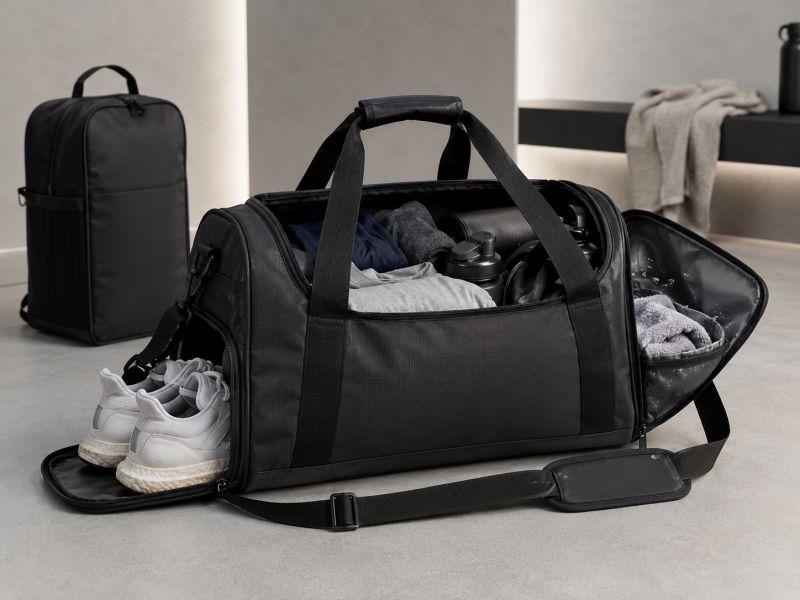
A travel duffel bag is right for sports brands when it supports both movement and organization. It should separate shoes, wet gear and clean clothing, carry weight comfortably, protect items from moisture, look aligned with the brand, and stay practical for training, travel, team use or retail sale. The strongest design is not the one with the most pockets, but the one with the right pockets in the right places.
A basic weekend bag can look good in lifestyle photos, but sports use is less forgiving. Shoes bring dirt. Towels bring moisture. Bottles add weight. Athletes need fast access. Team programs need color consistency. Retail projects need better logo placement and packaging.
This is where many bags fail. They add a shoe compartment, but it steals too much main space. They add a wet pocket, but it is too small for a towel. They add a padded shoulder strap, but the attachment are weak. They add many pockets, but users cannot remember where anything goes.
A sports travel duffel should feel simple in use even if the development work behind it is complex.
What Is The Difference Between A Duffle Bag And A Duffel Bag?
“Duffel bag” and “duffle bag” usually mean the same type of soft-sided cylindrical or rectangular travel bag. “Duffel” is the more traditional spelling, while “duffle” is also widely used in product searches, retail listings and casual language.
For a custom sports bag project, the spelling matters less than the structure. Whether the product is called a duffel bag, duffle bag, gym bag, weekender or sports travel bag, the key decisions are the same: capacity, shoe storage, wet area, carry comfort, material, zipper strength, logo position and packing method.
What Is The Best Sports Duffle Bag For Brand Projects?
The best sports duffle bag for a brand project is one that matches the target user and sales channel. A gym bag may need a shoe compartment, wet pocket and water bottle area. A team travel bag may need larger capacity, stronger straps and durable bottom panels. A retail sports bag may need cleaner branding, better lining and a more refined finish.
There is no single best design for every sports brand. A 25L bag may be great for light training but too small for team travel. A 50L bag may work for gear-heavy sports but feel bulky for everyday gym use. The best version is the one that feels intentional.
Why Is A Sports Duffel Bag Different From A Basic Weekender Bag?
A basic weekender bag often focuses on travel clothes, toiletries and simple overnight packing. A sports duffel bag has to manage dirt, sweat, moisture, shoes, gear and heavier movement.
That difference changes the construction. Sports bags often need reinforced seams, washable lining, separate compartments, stronger webbing, smoother zippers, breathable shoe areas and better load distribution. The look can still be clean, but the structure has to do more work.
How Should A Shoe Compartment Be Designed?

A shoe compartment should separate footwear from clean clothing while keeping the main compartment useful. The best design gives enough room for target shoe sizes, uses easy-clean lining, may include ventilation, and opens wide enough for real use. Its position should not make the bag collapse, bulge badly, or reduce the main storage more than necessary.
A shoe compartment sounds simple: add a side pocket and call it done. In real development, it is one of the most important structural decisions in a sports duffel.
If it is too small, users complain. If it is too large, the main compartment feels smaller than expected. If it is poorly shaped, shoes are hard to insert. If the lining is weak, dirt and odor become a problem. If the zipper curve is tight, daily use becomes annoying.
For sports brands, shoe storage should be designed around real footwear, not only a drawing. Running shoes, football boots, basketball shoes, trainers and cycling shoes all use space differently.
What Is A Duffle Bag With A Shoe Compartment?
A duffle bag with a shoe compartment is a sports or travel bag with a separate storage area for shoes. This section is usually built into the side, end, or bottom of the bag so footwear can stay apart from clean clothes, towels, electronics and personal items.
The best versions do more than separate. They make shoes easy to insert, reduce odor transfer, protect the main compartment, and keep the bag shape balanced. For brand projects, the shoe section should be checked with the actual shoe size and sport type.
Should The Shoe Compartment Be On The Side Or Bottom?
Side shoe compartments are common because they are easy to access and can slide into the main body space. They work well for gym, training and weekend use. Bottom shoe compartments can keep footwear lower in the bag, but they may increase height or change how the bag stands.
Side placement is usually more practical for standard sports duffels. Bottom placement may suit structured travel bags or larger capacity designs. The decision depends on capacity, target sport, shoe size, opening direction and desired bag shape.
How Do Ventilation, Lining, And Shoe Size Affect The Design?
Ventilation helps reduce trapped odor, especially when shoes are stored after training. Mesh eyelets, breathable panels or vent holes can help, but they should not weaken the structure or make the bag look cheap.
Lining should be easy to wipe. Darker lining can hide dirt better, but it should still feel clean and durable. Large shoe sizes need enough length, width and depth, and the entry must be easy to use. A shoe compartment that fits only in theory will quickly disappoint users.
How Does A Wet Pocket Improve User Experience?
A wet pocket improves user experience by separating damp towels, swimwear, sweaty clothes, toiletries or wet gear from dry items. It should use water-resistant or waterproof lining, have a practical opening, and sit in a position that does not damage the main storage. A good wet pocket protects clean clothes while keeping the bag easy to pack and clean.
A wet pocket is not just a bonus. For swim, gym, yoga, football, basketball, running or training programs, it may be the detail users remember most after use.
The pocket should be large enough for its intended items. A tiny wet pocket may look good in a feature list but fail in real use. A pocket that can hold a wet towel or swimsuit has much more value. But if it is too large, it may reduce dry storage and make the bag feel unbalanced.
The lining and seam construction matter. Water-resistant lining is helpful, but a wet pocket should not be described as fully waterproof unless the structure, seams, zipper and material support that claim.
What Is A Wet Pocket In A Duffel Bag?
A wet pocket is a separate compartment designed to hold damp or wet items away from dry gear. It may be used for swimsuits, towels, sweaty clothes, toiletries, shower items or small wet accessories.
In sports duffel bags, the wet pocket often uses PEVA, TPU-coated fabric, PVC-coated fabric, coated polyester or another wipe-clean lining. The material should be selected by project use, target cost and expected moisture level.
Which Items Should A Wet Pocket Hold?
A wet pocket may need to hold a wet towel, swimwear, socks, base layers, sweaty gym clothes, small toiletries, shampoo bottle, shower slippers or a used training shirt. The required size depends on the sport.
Swim and gym projects usually need a larger wet zone. Running event bags may need only a smaller sweat-gear pocket. Yoga or wellness brands may prefer a cleaner internal wet pocket with a soft exterior look.
How Can A Wet Pocket Separate Wet And Dry Gear Without Leaking?
A wet pocket separates wet and dry gear through lining choice, seam quality, pocket position, zipper direction and realistic use boundaries. A coated lining helps, but construction also matters.
For better performance, the pocket should not press water directly into the main compartment under load. The seam should be reviewed carefully. The zipper should open smoothly. If the pocket is meant for very wet items, the design should be tested before bulk production.
How Should Strap Design Support A Fully Loaded Bag?
Strap design should support the bag when it is fully loaded, not only when empty. A sports duffel may need hand carry, shoulder carry, crossbody carry, backpack-style straps or a luggage sleeve. Strap width, padding, webbing strength, buckle quality, stitching and attachment all affect comfort, durability and real user satisfaction.
Many duffel bags look fine until they are packed. Then the weak appear. The shoulder strap twists. The pad slides. The hand grip feels sharp. The side attachment pulls the body out of shape. The hardware makes noise or feels unstable.
Strap design is where comfort and strength meet. A larger bag needs better load spreading. A team travel bag needs stronger attachment . A gym bag needs quick grab handles. A carry-on sports duffel may need a luggage sleeve. A sports retail product should also look clean when worn.
Which Is Better: Hand Carry, Shoulder Strap, Crossbody, Or Backpack Style?
Hand carry works well for short distances and quick movement. A shoulder strap is useful for daily gym and travel use. Crossbody carry helps balance weight across the body. Backpack-style straps can work for heavier gear or longer walks, but they add complexity and may change the bag look.
The best carry style depends on use. A compact gym duffel may only need handles and a detachable shoulder strap. A 45L travel sports bag may need padded shoulder carry and a trolley sleeve. A team gear bag may need stronger handles and reinforced side .
How Do Strap Width, Padding, Buckles, And Stitching Affect Comfort?
Wider straps spread weight better. Padding reduces shoulder pressure. Better buckles and hooks improve confidence under load. Reinforced stitching protects stress areas where straps meet the bag body.
Small choices make a big difference. A narrow strap on a full 45L bag can feel painful. A weak plastic hook may not match a high-capacity sports bag. Poor stitching at the side tabs can shorten the bag’s life.
Why Should Strap Design Be Tested With Real Weight?
Because comfort cannot be judged from a flat sample. The bag should be loaded with the expected weight, carried by hand, worn on the shoulder, tested crossbody if needed, and checked after movement.
The test should show whether the bag tilts, twists, pulls on seams, presses into the shoulder or makes the zipper hard to use. A strap that passes real load testing gives the final product a much stronger chance of being used often.
What Capacity Works Best For Sports Travel Duffel Bags?

The best capacity depends on sport type, travel length, shoe size, wet gear, clothing volume and carry style. A 25L bag suits light gym or commuting. A 30–35L bag fits gym plus overnight use. A 40–45L bag works for weekend travel or team use. A 50L+ bag may suit gear-heavy sports but needs stronger straps, bottom support and careful packing design.
Capacity is often misunderstood. A bag may be labeled 40L, but if the shoe compartment pushes into the main space and the wet pocket takes internal volume, the usable dry space feels smaller.
Sports brands should think in packing sets, not only litres. What does the user actually carry? Shoes, clothes, towel, bottle, toiletries, laptop, ball, uniform, recovery gear or extra outfit? Each item affects pocket layout and structure.
Is 25L, 35L, 45L, Or 50L Better For Your Project?
25L works for light gym, yoga, running or daily fitness use. 35L is a balanced size for gym plus overnight packing. 45L is strong for weekend travel, team activities and sports gear. 50L or larger can work for equipment-heavy use, but it may feel bulky if the carry system is not strong enough.
A smaller premium bag can be better than a large messy one. The target user should decide the capacity.
How Do Shoe Compartments And Wet Pockets Reduce Main Space?
Shoe compartments and wet pockets are useful, but they take space from somewhere. A side shoe compartment often pushes inward. A wet pocket may reduce dry storage. A thick lining or structured divider may make the bag feel smaller.
This is not a problem if planned correctly. The issue appears when the listed capacity suggests one thing, while real packing feels different. Sample testing should include the actual items the bag is meant to carry.
When Should A Duffel Bag Meet Carry-On Or Weekend Travel Needs?
A duffel should meet carry-on or weekend travel needs when the product is positioned for athletes who move between training, work, short trips, events or tournaments. In that case, size, shape, trolley sleeve, laptop area, toiletries pocket and strap comfort may matter more.
If the bag is only for gym use, carry-on structure may not be necessary. If it is for sports travel, those features can make the product more useful.
Which Materials Work Best For Sports Duffel Bags?

Sports duffel bags usually work best with durable polyester, nylon, Oxford fabric, coated fabric or mixed-material structures. The outer fabric should support abrasion resistance, water resistance and brand appearance. Shoe compartments and wet pockets need easy-clean lining. Bottom panels, zippers, webbing and hardware must match the expected load and usage intensity.
Material selection should follow function. A high-use team bag needs stronger fabric and reinforced stress. A lifestyle fitness bag may need softer texture and cleaner branding. A swim or gym bag needs wet-area lining. A travel sports bag may need a tougher bottom panel.
The right material is not always the thickest one. It is the one that supports the expected use, target cost, logo method, weight and packing needs.
What Makes A Waterproof Duffel Bag Worth Developing?
A waterproof duffel bag is worth developing when the target use involves rain, wet gear, swimwear, boating, outdoor training or travel in damp conditions. But “waterproof” should be used carefully. Some bags are water-resistant, while truly waterproof designs need more specialized materials, seams and closures.
For many sports brands, a water-resistant duffel with a strong wet pocket may be more practical than a fully waterproof structure. It can control cost, keep the bag flexible and still handle normal gym, travel and light rain use.
How Do Polyester, Nylon, Oxford, And Coated Fabrics Compare?
Polyester is widely used because it is cost-friendly, stable and available in many weights. Nylon can feel stronger and smoother, often with better tear resistance depending on construction. Oxford fabric gives a durable, practical look and is common in sports and travel bags. Coated fabrics can add water resistance and structure.
The final choice depends on the brand look, target price, use intensity, lining, logo method and delivery plan.
What Lining Works Best For Shoe Compartments And Wet Pockets?
Shoe compartments often need wipe-clean polyester, coated lining or darker lining that handles dirt better. Wet pockets may use PEVA, TPU-coated fabric, PVC-coated material, coated polyester or other water-resistant linings based on the project.
The lining should be tested for cleaning, smell, flexibility and seam performance. A good lining does not only look neat. It should survive the way the bag will actually be used.