 Skip to content
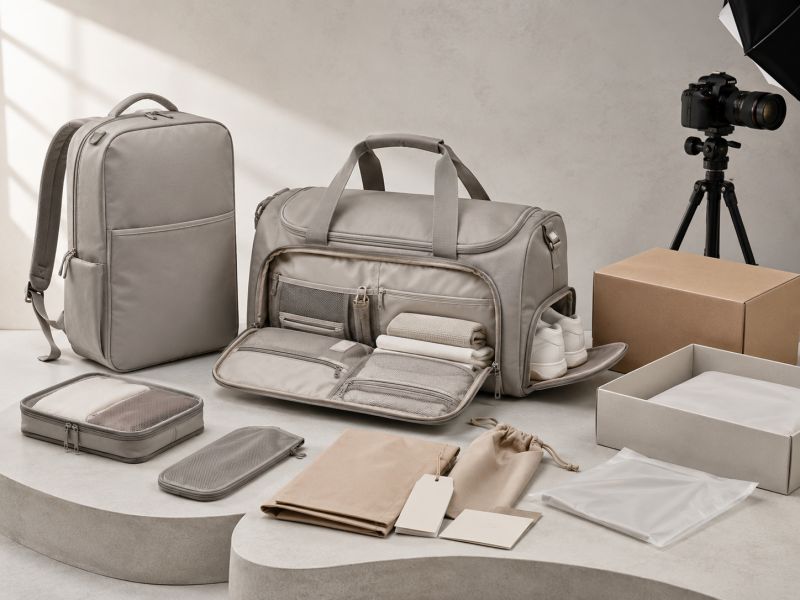
Private label travel bags for online sales need more than good styling and a clear logo. They must match the product photos, hold the items shown, protect their shape during delivery, carry the right labels, and feel reliable in real travel use. The goal is simple: create a travel bag that looks clear before purchase and feels right after arrival.
Travel bags sit in a tougher category than simple flat pouches or giveaway totes. A weekender bag, business travel bag, duffel, cabin-style soft bag, or luggage companion has many moving parts: main compartment, laptop sleeve, shoe pocket, zipper opening, shoulder strap, handle reinforcement, trolley sleeve, lining, label, and packing method.
If any of these details are unclear, online sales can become risky. A bag may sell well from attractive photos, but if shoppers receive something that feels smaller, softer, heavier, weaker, or less organized than expected, returns can rise quickly.
This is why serious private label travel bag projects should be planned from both sides: product development and online presentation. The bag must be made well, but it must also be explained well. The photo set, package, label, and approved sample should all support the same promise.
Jundong works with custom, private label, OEM, and ODM bag projects from materials, structure, logo process, sampling, bulk production, quality checks, packing, labeling, and delivery review. For an e-commerce travel bag, the useful goal is not only “make this style.” It is “make this style clear enough to sell online and stable enough for repeat orders.”
Who Is This Guide For?
This guide is written for travel brands, Amazon and Shopify teams, retail product teams, private label operators, hotel travel programs, corporate gift planners, and product managers developing travel bags for online sales.
It is especially useful when the style direction is already clear, but the team wants to reduce return risks before sampling, photography, packing, or bulk production.
Why This Is Not A Standard Wholesale Travel Bag Project
A standard stock travel bag project usually starts with available styles. The discussion often focuses on color, logo, quantity, price, and delivery time.
A private label travel bag for e-commerce starts from a deeper issue: what will shoppers believe after seeing the listing, and will the real bag deliver that promise?
That changes the whole project. Size must be shown clearly. Capacity must be realistic. Laptop fit must be tested. Packaging must protect shape. SKU labels must match the correct style and color. The approved sample must become the standard for photos and bulk checks.
Private Label Vs Ready Stock Travel Bags
Ready stock can work for urgent events, simple promotions, or short-term campaigns. Private label is stronger when the product needs brand identity, repeated sales, channel-specific packaging, custom structure, or better control over online presentation.
Private label also gives more control over details that influence returns: fabric weight, lining color, zipper quality, shoulder strap comfort, logo position, laptop sleeve size, packing method, insert cards, barcode labels, and carton marks.
What Makes A Travel Bag E-Commerce Ready?
An e-commerce-ready travel bag is easy to understand before purchase and satisfying after delivery. It should show real size, clear capacity, visible compartments, reliable hardware, clean branding, practical packing, and consistent bulk quality.
A simple test helps: if shoppers only see the photos and a short product description, can they understand what the bag can hold, how it feels, and how it will arrive? If not, the product may attract clicks but create returns later.
Why Do Travel Bags Get Returned Online?
Travel bags are often returned because the received product does not match the expectation created online. The bag may look smaller, softer, darker, lighter, less structured, less comfortable, or less organized than expected. Many returns can be reduced before production by checking product photos, size proof, material records, zipper movement, strap comfort, packaging, labels, and sample-to-bulk consistency.
Returns are not always caused by poor workmanship. Sometimes the factory made what was approved, but the approved sample did not match the online selling story.
For example, a weekender bag may be photographed with shoes, clothing, a laptop, toiletries, and a water bottle. If those items only fit when tightly forced inside, shoppers may feel misled. A soft duffel may look structured in studio light, but arrive folded and wrinkled if the packing method is not planned. A laptop compartment may be described as 15-inch, but still fail to fit a thicker 15.6-inch laptop with a protective case.
These are practical problems, not small details. They affect reviews, service messages, restocking, repeat orders, and brand trust. The best time to reduce them is before the sample is approved.
Photos That Create Wrong Expectations
Beautiful photos can damage a product when they exaggerate structure, size, or capacity. Travel bags should look attractive, but they should not look bigger, firmer, or more premium than the real product.
The safest photo plan shows three things clearly: what the bag looks like, what it holds, and how it behaves in use.
Size, Capacity, And Volume Confusion
“Large capacity” is not enough. Shoppers need to see scale and real packing examples. A bag can look spacious when empty, but feel tight once clothing, shoes, laptop, chargers, and toiletry bags are added.
Good product content should include dimensions, model scale, capacity images, laptop fit, shoe placement, and pocket layout. Visual proof is stronger than vague claims.
Material, Color, And Hand-Feel Mismatch
Fabric can look different under studio light, phone screens, and natural light. Oxford fabric, nylon, canvas, PU, RPET, and coated materials each reflect light differently. Even black, navy, beige, grey, and olive can vary from batch to batch.
For private label projects, material swatches, color references, approved sample photos, and production records should be saved before bulk work begins. This helps reduce “not as pictured” complaints.
Weak Zippers, Straps, And Stress Areas
Zippers and straps often feel fine when the bag is empty. Real problems appear when the bag is loaded, pulled, squeezed, and carried.
For travel bags, zipper smoothness, slider choice, zipper tape strength, puller quality, strap width, handle reinforcement, D-ring position, and shoulder pad comfort can all influence reviews. If a zipper feels rough during sample review, it is unlikely to feel better after bulk delivery.
Packaging Damage And Poor First Impression
A travel bag can be made well but still feel low-value if it arrives crushed, dusty, wrinkled, or badly folded. Soft travel bags need packing that protects presentation without creating unnecessary freight cost.
The real issue is not “how cheap can packing be?” It is “will the bag still look presentable when someone opens the package?”
SKU, Barcode, And Warehouse Packing Errors
Wrong labels can create the same damage as poor product quality. If navy and black bags are mixed, if barcode labels do not match cartons, or if multi-SKU packing is unclear, the wrong item may be shipped.
Private label travel bag projects should confirm color codes, SKU labels, barcode rules, carton marks, inner labels, and carton quantity before bulk packing starts.
What Photos Reduce Travel Bag Return Risks?

The best travel bag photos reduce returns by showing size, scale, capacity, structure, material texture, function, packing, and real use. Online shoppers cannot touch the bag, so photos must replace hand feel and in-store explanation. A strong photo set should help people judge the product clearly before purchase, not just make the bag look attractive.
Photos should be planned during sample approval, not after bulk goods are finished. The photo sample often becomes the visual promise of the product. If that sample has firmer structure, cleaner logo work, better lining, smoother zipper, or a different packing setup than bulk goods, the online promise becomes risky.
A good product photo plan should include closed view, open view, side view, bottom view, worn view, packed view, laptop fit, shoe fit, zipper detail, lining, strap length, logo close-up, packing view, and label position.
Size And Scale Photos
A flat product image does not show real size. Scale photos can include model carrying shots, suitcase handle shots, shoulder carrying shots, or simple object comparisons.
For weekender bags and travel duffels, scale photos often explain more than long descriptions. They help shoppers judge whether the bag suits overnight travel, gym use, business travel, or short holidays.
How To Display Bag Volume On Amazon Listing Images
Bag volume should be shown visually, not only written as litres. A useful image can show folded clothing, shoes, toiletry pouch, laptop, charger, passport pouch, and water bottle placed inside or beside the bag.
The image should stay realistic. If the bag fits three outfits comfortably, do not show five bulky sweaters. Honest capacity images may reduce overhyped clicks, but they help reduce disappointed returns.
Capacity And Compartment Photos
Travel bags sell better when the inner layout is easy to understand. Open-top photos, top-down views, pocket callouts, and clean compartment images can show the main area, wet pocket, shoe section, laptop sleeve, zipper pocket, passport pocket, and bottle pocket.
This is especially important for travel bags that compete on organization, not only style.
Laptop, Shoe, And Clothing Fit Photos
Laptop fit is a common return trigger. A “15-inch laptop sleeve” should be checked against real device dimensions, not just screen size. A thick laptop, protective case, or charger pouch can change the fit.
Shoe compartments also need realistic testing. Men’s shoes, women’s trainers, sandals, and travel slippers use different space. A clear fit photo helps avoid confusion.
3D Product Rendering For Clearer Online Expectations
3D rendering can help online travel bag stores explain shape, color options, compartments, and design direction before final photography. It is useful during early planning, internal review, or pre-sample discussion.
But rendering should not replace real sample checks. If a render makes a soft bag look too structured or too spacious, it may increase returns instead of reducing them. The safest use is to support explanation, then confirm every key detail with a real sample.
Material, Zipper, Strap, And Handle Detail Photos
Detail photos should show what shoppers care about after delivery: fabric texture, zipper teeth, puller shape, stitch quality, strap padding, handle grip, lining color, logo finish, and bottom reinforcement.
These images also reduce service . When shoppers can see the zipper, strap, lining, and logo clearly, they are less likely to feel surprised later.
Packing And Unboxing Photos
For premium weekender bags, unboxing photos can support perceived value. Show the dust bag, care card, insert card, folded state, hangtag, barcode label, and final package where suitable.
This helps shoppers understand not only the bag, but the full delivery experience.
Which Travel Bag Details Should Be Confirmed Before Sampling?
Before sampling, travel bag details should be confirmed around material, size, capacity, laptop fit, zipper choice, strap structure, logo process, lining, pocket layout, packing method, and sales channel. A clear sample brief saves time because the first sample can test real use, photo accuracy, packing, and bulk feasibility, instead of only showing a rough shape.
A good sample is not just a nice-looking bag. It is a working decision piece. It should help the team judge whether the product can be photographed honestly, packed safely, produced consistently, and used comfortably.
Many return problems begin before the sample is made. A pocket is too low. A zipper opening is too short. A shoulder strap is too narrow. A laptop sleeve is based on screen size, not real device dimensions. A logo is placed on a curved area where printing becomes unstable. A fabric looks premium as a swatch, but wrinkles badly after folding.
The cleaner the development brief, the fewer sample revisions later. If you already have a reference photo, target size, logo file, quantity, packing idea, and destination, Jundong can review the details through info@jundongfactory.com before sampling.
Material Type And Fabric Weight
Material affects appearance, hand feel, structure, cost, packing, and durability. Common choices for travel bags include polyester, nylon, Oxford fabric, canvas, PU, RPET, coated fabric, and mixed-material designs.
Do not choose fabric only because it looks good in a photo. Ask how it folds, whether it holds shape, how it supports printing or embroidery, whether coating may crack, and how it performs when loaded.
A lightweight polyester duffel may suit foldable travel use. A heavier Oxford fabric can give a weekender bag stronger body. Canvas gives a lifestyle feel, but weight and colour variation should be checked. PU can look premium, but folding marks and edge finishing need attention.
Bag Size, Shape, And Capacity
A travel bag’s size should come from real use. Is it for weekend travel, business trips, gym use, cabin travel, hotel gifts, retail shelves, or corporate travel kits?
Capacity should be tested with real items. A bag that looks large when empty may feel tight once shoes, clothing, a laptop, charger, and toiletry pouch are added.
A practical size plan should include outer dimensions, main compartment space, laptop sleeve size, pocket opening width, handle drop, shoulder strap length, and packed carton volume. These numbers help both production and online content.
TSA-Friendly Laptop Sleeve Design
A TSA-friendly laptop sleeve can support frequent travellers when the bag is designed for easy access, stable holding, and clear fit. It can also reduce returns when shoppers quickly understand whether the laptop area suits their travel routine.
The sleeve should be checked for device size, padding thickness, opening angle, closure method, and ease of removal. A laptop should slide in smoothly even when the bag is partly filled.
A useful sleeve design should make three things clear: what laptop size it fits, how the device is protected, and how easily the user can take it out during travel.
Handles, Shoulder Straps, And Load
Travel bags carry more weight than daily totes. Handles and shoulder straps should be reviewed under loaded conditions, not only when the bag is empty.
Important checks include stitch reinforcement, strap width, shoulder pad comfort, webbing density, buckle quality, D-ring placement, and whether the loaded bag tilts or pulls awkwardly.
A strap may look neat in photos but feel uncomfortable after ten minutes. A handle may look strong but stretch if reinforcement is weak. For weekender bags, load testing should be part of sample review.
Zipper Brand, Smoothness, And Return Risk
Zipper brand can matter, but brand name alone does not solve every problem. Smoothness depends on slider choice, zipper tape quality, curve position, sewing accuracy, lining clearance, and how the bag is packed.
For private label travel bags, the zipper should be tested after the bag is loaded. If it is smooth only when empty, real use may still disappoint.
Zipper problems are noticed immediately. A rough zipper makes the whole bag feel cheaper. A zipper that catches lining fabric creates frustration. A zipper that struggles around corners can make the design feel unfinished.
Logo Position, Color, And Process
Logo work should match the material and bag structure. Screen printing, heat transfer, embroidery, rubber patch, woven label, leather patch, metal plate, embossing, and debossing each fit different brand styles and fabric surfaces.
The logo should be approved on the actual material, not only on a digital mock-up. Colour, size, edge quality, placement, and durability should be checked before bulk production.
A common mistake is placing the logo where the bag bends, folds, or stretches. It may look fine in artwork, but distort after sewing or packing.
Inner Structure And Functional Zones
Functional zones help shoppers understand value. A laptop sleeve, shoe pocket, wet pocket, passport pocket, charger pocket, trolley sleeve, bottle pocket, or mesh pocket can all improve usability.
But more pockets do not always mean a better bag. Too many compartments can increase cost, add weight, and make the product harder to understand.
The best layout fits the real use. A gym travel bag may need shoe separation and wet storage. A business weekender may need laptop protection, document storage, and a trolley sleeve. A family travel bag may need wide opening and easy-clean lining.
How Does Packaging Support E-Commerce Sales?

Packaging supports e-commerce sales by protecting the bag, keeping presentation clean, helping warehouses identify SKUs, improving unboxing, and reducing wrong shipments. For private label travel bags, packaging is not just an outer cover. It is part of the product experience, delivery process, and return-control plan.
A travel bag may pass factory inspection, then lose value during folding, carton packing, shipping, warehouse handling, or final delivery. Deep fold lines, crushed handles, dusty polybags, missing labels, weak cartons, and unclear SKU codes can all affect the final impression.
Packaging decisions should be made before bulk production because they affect folding method, carton size, barcode placement, cost, lead time, and warehouse receiving. If packaging is discussed too late, the team may need to choose between delay, extra cost, or a weaker delivery presentation.
Good packaging should also consider returns. If the bag is returned, can the shopper repack it? Can the warehouse scan it quickly? Can it be checked and restocked without confusion? Simple packaging details can reduce a lot of operational stress.
Polybag, Dust Bag, Hangtag, And Care Card
Common travel bag packing items include polybag, dust bag, hangtag, care card, insert card, warning label where needed, and outer carton.
For premium weekender bags, a dust bag and care card can make the product feel more giftable. For practical travel duffels, a clean polybag with clear barcode and SKU label may be more useful.
The packing choice should match the product position. A premium PU weekender in a dusty thin polybag feels underwhelming. A simple foldable duffel in an oversized gift box may raise freight cost without improving reviews.
Eco-Friendly Packaging Materials For Travel Bag Shipping
Eco-friendly packaging may include recycled polybags, kraft paper wraps, recyclable cartons, paper hangtags, soy-ink printed cards, or reduced-plastic packing plans. The right option depends on product value, moisture risk, destination, shipping method, and brand standards.
Sustainable packaging still needs to protect the product. A paper wrap that tears during shipping may create more damage, more waste, and more returns.
For travel bags, the key is balance. Reduce unnecessary plastic, but still protect fabric, logo, handle shape, and product presentation. If goods ship by sea, humidity and carton strength should be reviewed. If goods ship direct to consumers, outer protection and label durability become more important.
Unboxing Inserts For Premium Weekender Bags
Unboxing inserts work best when they are useful, not decorative. A care card, strap guide, folding guide, warranty note, QR code, or travel checklist can improve first impressions.
The insert should be short and practical. Long text is rarely read. A simple card explaining how to unfold the bag, adjust the strap, clean the fabric, or use the laptop sleeve can reduce confusion.
For premium weekender bags, a good insert does two jobs: it supports brand value and prevents misuse.
Barcode, SKU Label, FBA Label, And Carton Mark
Labels should be treated as production data, not last-minute stickers. Each colour, size, model, and package type should match the correct barcode, SKU label, FBA label where needed, carton mark, and packing list.
For multi-SKU projects, label rules should be confirmed with a packing table before mass packing starts.
| Packing Detail | Why It Matters | What To Confirm |
|---|---|---|
| SKU Label | Prevents wrong item shipment | Model, colour, size, barcode |
| Carton Mark | Helps warehouse receiving | PO, quantity, destination, carton number |
| Inner Label | Supports sorting and returns | SKU, barcode, product code |
| Dust Bag Or Polybag | Protects presentation | Size, material, warning text if needed |
| Insert Card | Improves first use | Care, strap, folding, warranty note |
| Packing Table | Controls multi-SKU orders | Units per carton, colour split, label rule |
A simple packing table helps the factory, warehouse, and brand team follow the same rule. It also gives QC staff a clear reference during packing inspection.
Multi-Color And Multi-SKU Packing Rules
Colour mix-ups are common when packing rules are unclear. A black, navy, charcoal, and dark green travel bag program needs strict SKU separation.
The safest approach is to confirm packing quantity, colour ratio, label placement, carton number rule, and photo records before shipment.
If one carton contains one colour, the carton mark should make that colour clear. If one carton contains mixed colours, the inner packing list should show exact quantities. If different channels use different labels, those label versions must be separated before packing starts.
Packaging For Amazon, Shopify, Retail, And Warehouse Orders
Different sales channels need different packaging decisions. Amazon orders may need FBA labels and strict carton data. Shopify brands may care more about unboxing and return-friendly packing. Retail programs may need hangtags, price stickers, inner packs, and shelf-ready cartons.
Packaging should follow the channel, not a one-size-fits-all habit.
A travel bag going to a retail chain may need stronger hangtag information. A direct-to-consumer weekender may need a better insert. A bulk warehouse order may need stronger carton marks and clearer pallet details.
Return-Friendly Packing Details
Return-friendly packing does not mean encouraging returns. It means reducing damage and confusion if returns happen.
A resealable bag, clear label, simple folding guide, strong carton, and clean insert card can help the product come back in better condition.
For higher-value travel bags, a simple folding guide can prevent users from forcing the bag into the wrong shape. This protects both product appearance and user experience.
How Does Sample Approval Reduce Returns?
Sample approval reduces returns by turning product expectations into fixed production records before bulk work begins. A useful approved sample should confirm photos, material, size, colour, logo, zipper, strap, laptop sleeve, pockets, packing, label placement, and carton rules. When the sample becomes the shared standard for product content and quality checks, the final travel bags are less likely to surprise shoppers after delivery.
A sample is not only a preview. It is the bridge between design, product photos, production, warehouse handling, and real use. If the sample is approved only by appearance, important problems may stay hidden until the goods reach the end user.
For e-commerce travel bags, the approved sample should be checked like a strict shopper would check it. Does the bag fit the laptop shown in the photo? Does the shoe pocket close smoothly when filled? Does the shoulder strap feel comfortable with real weight inside? Does the folded package keep the bag presentable? Does the colour still look close to the product image under normal light?
Small sample-stage checks can prevent large after-sales problems. Once bulk goods are finished, changes become costly and slow. Before that stage, changes are still part of smart development.
What Should A Photo-Ready Sample Confirm?
A photo-ready sample should match the approved production version. It should not use better materials, cleaner stitching, stronger structure, or a different logo finish just to look better in photos.
The sample should confirm size, shape, colour, fabric, logo finish, laptop sleeve, zipper movement, strap comfort, inner layout, label placement, and final packing method.
This matters because the sample used for photos becomes the visual promise of the product. If the final goods do not match that promise, shoppers may feel the product is not as described, even when the bag itself is well made.
A safe rule is simple: never photograph a version that the final user will not receive.
How To Check Sample-To-Bulk Consistency
Sample-to-bulk consistency depends on clear records. The final sample should be photographed, measured, labelled, and stored as a reference. Material swatches, colour notes, zipper selection, webbing, lining, logo method, packing method, and carton rules should be documented.
For travel bags, do not rely on memory. A 1 cm difference in a laptop sleeve, a lighter webbing, a thinner lining, or a different zipper puller can change the user experience.
Consistency should be checked from different angles: appearance, size, function, material feel, logo effect, packing style, and label position. If a project has several colours, each colour should have its own reference record.
When Should Teams Revise A Sample?
A sample should be revised when the issue affects use, photo accuracy, comfort, packaging, or repeat sales. Cosmetic preference can sometimes be accepted. Functional risk should not be ignored.
Revise the sample if the zipper catches, the handle feels weak, the laptop fit is tight, the shoulder strap twists, the bag collapses too much, the logo looks unstable, or the packing creates deep wrinkles.
Some teams hesitate to revise because they want to save time. But a rushed approval can create a bigger delay later. A small sample revision may take a few days. A bulk problem may take weeks to fix and may also hurt reviews.
What Records Should Be Saved Before Bulk Production?
Before bulk production, save the approved sample photos, size chart, material card, colour reference, logo file, stitch notes, hardware list, packing table, carton mark layout, SKU sheet, and inspection checklist.
These records protect both sides. They give the brand team a clear standard and give the factory a practical production target.
For private label travel bags, the most useful records are usually connected to the end-user experience: laptop sleeve dimensions, zipper type, shoulder strap length, handle drop, pocket layout, logo placement, folded packing method, barcode label position, and carton quantity.
How Approved Samples Support Listing Photos And Packaging Rules
The approved sample should guide product photos and packing rules at the same time. If the sample is photographed with a dust bag, insert card, laptop sleeve, and shoe pocket, those same details should be confirmed for bulk goods.
This avoids a common problem: the product image shows one version, but the shopper receives another.
The same logic applies to packaging. If the photos show a premium unboxing setup, the bulk packaging should follow that setup. If the sample is shown with a care card, strap guide, or dust bag, those items should not disappear during production unless the product content is also updated.
How Does A Factory Control Bulk Quality?

A factory controls bulk travel bag quality by checking materials, colour, logo, sewing, zipper, strap strength, size, laptop fit, compartments, packing labels, and carton marks at different stages. Final inspection matters, but it is not enough by itself. For e-commerce travel bags, quality must be controlled from incoming materials to final packing because returns often come from small repeated mistakes.
Travel bags have many parts. Fabric, lining, zipper, webbing, buckle, padding, label, logo, pocket structure, and packing material must work together. A bag can look fine from the outside but still create problems if the laptop sleeve is too narrow, the strap is uncomfortable, the lining colour is wrong, or the barcode label is misplaced.
A stronger quality process starts before sewing. Materials are checked first. Then cutting, logo placement, stitching, assembly, function, packing, and carton labels are reviewed step by step. This gives the team more chances to catch problems early.
Jundong has 80 QC inspectors and supports multi-stage quality checks for custom bag projects. For private label travel bags, staged review is especially useful because one repeated error can become hundreds or thousands of complaints after delivery.
Incoming Material And Color Check
Material should be checked before cutting. Fabric type, texture, thickness, coating, colour, lining, webbing, zipper tape, hardware, and logo materials should match the approved sample.
Colour checks are especially important for online sales. If the product photo shows warm beige but bulk goods look grey beige, shoppers may feel misled.
Material checking should also review surface defects, stains, shade difference, coating marks, odour, hand feel, and fabric direction. These details may look small in the factory, but they can become visible in close-up photos and reviews.
Logo, Sewing, Zipper, And Strap Inspection
Logo inspection should confirm position, size, colour, edge quality, and attachment strength. Sewing inspection should review stitch density, seam straightness, reinforcement, pocket shape, and thread trimming.
Zippers should be tested in real opening directions. Straps should be pulled and checked under load, not only viewed flat on the table.
Travel bags often fail at connection areas. Handle roots, shoulder strap anchors, zipper ends, D-rings, trolley sleeve seams, and pocket corners need more attention than flat panels.
Size, Capacity, And Functional Testing
Travel bag size should be checked against the approved measurement table. Capacity should be tested with real-use items where needed.
For online listings, function must match what is shown. If a bag is sold as a laptop weekender, the laptop sleeve must fit the promised device size. If it shows a shoe pocket, the opening should allow easy use.
Functional testing should include opening and closing zippers, loading the bag, carrying it by the handles, using the shoulder strap, checking the trolley sleeve, testing pockets, and reviewing whether the bag stands or collapses as expected.
Laptop Sleeve, Compartment, And Fit Review
Laptop sleeves need special attention because they are easy to misunderstand. A screen-size claim does not always equal real device fit.
Check inner width, height, padding thickness, opening angle, closure method, and whether the laptop can slide in smoothly when the bag is partly filled.
Compartment review should also check whether pockets remain easy to use after the main compartment is packed. A pocket that works when the bag is empty may become difficult when the bag is full.
Final Packing And Label Inspection
Final packing inspection should review polybag, dust bag, hangtag, insert card, barcode, SKU label, carton mark, packing quantity, carton sealing, and destination marks.
For multi-SKU projects, final packing photos can be useful records before shipment.
This is where many e-commerce problems can still be prevented. If the wrong label is applied, the wrong product may be shipped. If the carton mark is unclear, warehouse receiving may slow down. If the folding method is wrong, the bag may arrive with shape problems.
Why Final Inspection Alone Is Not Enough
Final inspection catches visible problems. It may not fully solve issues created earlier, such as wrong material, unstable logo, poor zipper sewing, incorrect laptop sleeve, or mixed SKU labels already packed inside cartons.
The best quality control is preventive. It catches risk before it becomes finished stock.
For private label travel bags, staged checks are more useful than one final review because the product has many connected details. Quality control should follow the full path: material, cutting, logo, sewing, assembly, function, packing, and shipment records.
What Affects Price, MOQ, And Lead Time?
Price, MOQ, and lead time for private label travel bags depend on material, size, structure, hardware, zipper quality, logo process, packaging, label rules, order quantity, sample revisions, and delivery timing. A lower unit price is not always better if it leads to weak zippers, poor packing, unclear photos, or higher returns. The smarter goal is cost control without damaging the user experience.
A simple foldable duffel is very different from a structured weekender bag with laptop sleeve, shoe pocket, trolley strap, padded shoulder strap, custom lining, rubber patch, dust bag, insert card, barcode label, and multi-SKU carton packing.
That is why a useful quote cannot be based on one product image alone. Size, fabric, logo, quantity, packing, sales channel, destination, and deadline all affect the real cost.
Jundong’s usual MOQ is 500 pcs per design. Some simple styles may be reviewed at 200–300 pcs based on project details. Sampling usually takes 5–7 days, while simple styles may take 2–3 days. Bulk production usually takes 20–30 days after confirmation. Sample fees can be refunded or deducted when the order reaches 2000 pcs.
Material, Size, Structure, Logo, And Packaging Costs
The main cost drivers are fabric, lining, size, pocket structure, reinforcement, zipper, hardware, logo process, and packaging. A small-looking change can affect labour, material use, carton size, and production time.
For example, adding a padded laptop sleeve, shoe compartment, custom lining, premium zipper, leather patch, metal plate, dust bag, or printed insert card can improve value, but it also changes cost.
The best way to control price is not to remove every detail. It is to keep the details that help sales and reduce returns, then simplify the details that do not improve the user experience.
Why MOQ Depends On The Project
MOQ depends on material sourcing, printing setup, hardware availability, colour selection, logo method, packing material, and production efficiency.
A simple travel pouch may allow more flexibility. A custom weekender bag with special fabric, several trims, private label packaging, and multi-SKU labels needs a more stable quantity to keep cost and production organized.
If the quantity is low, the unit price usually rises because setup, sampling, material preparation, and packing work are spread across fewer pieces.
How Long Does Sampling Take?
Most travel bag samples take around 5–7 days after details are confirmed. Simple styles may be faster. More complex structures, custom hardware, special logo processes, or revised materials can take longer.
A fast sample can help a team review direction quickly, but final approval should still be careful. Rushing a sample without checking size, fit, zipper, strap, and packaging can move problems into bulk production.
How Long Does Bulk Production Take?
Bulk production usually takes around 20–30 days after the sample, materials, logo, packing, and quantity are confirmed. Large orders, multi-SKU projects, special packaging, or urgent delivery needs may require a separate schedule review.
Shipping time should be planned separately from production time. Express, air, sea, rail, and appointed forwarders all have different timelines and cost structures.
How To Lower Cost Without Increasing Return Risk
Cost can often be reduced by simplifying structure, choosing practical materials, improving carton efficiency, using a suitable logo method, reducing unnecessary pockets, and avoiding over-complicated packaging.
Do not reduce cost by weakening zippers, shoulder straps, handles, stress areas, or packing protection. Those savings can return as complaints, bad reviews, and restocking pressure.
A practical cost review should ask: does this detail help the product sell, protect the bag, reduce confusion, or improve repeat use? If yes, keep it. If not, simplify it.
How To Choose A Private Label Travel Bag Factory?
Choose a private label travel bag factory by checking whether it understands online selling details, not only sewing. The right factory should support product development, material review, sample revision, logo testing, e-commerce packaging, SKU rules, staged inspection, and bulk consistency. For travel bags sold online, a useful factory asks practical before quoting because wrong assumptions can create returns later.
A strong factory does not only say, “We can make it.” It asks what the bag is for, where it will sell, what it must hold, how it will be packed, how many colours or SKUs are involved, what logo process is needed, and whether past products had return issues.
Those may feel detailed, but they are signs of experience. Travel bags must carry weight, protect items, look right in photos, survive shipping, and feel good after delivery.
Jundong is a Guangdong-based custom bag factory with 20+ years of OEM/ODM experience, 600+ employees, an 18,000㎡ factory area, and 80 QC inspectors. The factory supports travel bags, luggage, backpacks, cooler bags, makeup bags, clear bags, tactical bags, EVA bags, leather goods, and related soft goods for global brand and large project clients.
Which Factory Capabilities Matter Most?
Look for development support, material advice, sample room capability, logo process knowledge, structured quality checks, packaging support, and experience with multi-SKU orders.
A factory that only follows a photo may miss hidden risks. A factory that reviews use, structure, cost, packing, and quality details can help create a stronger product.
Do They Understand E-Commerce Packaging?
E-commerce packaging is more than putting the bag in a polybag. It includes barcode labels, SKU separation, carton marks, return handling, unboxing, warehouse receiving, and channel rules.
If the factory does not understand these details, the product may still face problems after production. A well-made travel bag can still cause trouble if the label is wrong, the carton mark is unclear, or the package arrives in poor condition.
Are They Strong In Sample Development?
A strong sample process should review material, size, structure, logo, comfort, capacity, and packing. It should also allow practical revisions before bulk production.
For online travel bags, sample development is where many return risks can be removed early. Laptop fit, zipper movement, strap comfort, shoe pocket size, trolley sleeve position, and folded packing can all be tested at this stage.
Can They Support QC Records And Bulk Consistency?
Ask whether the factory can keep approved sample records, material references, size tables, packing sheets, and inspection notes. These records help keep bulk goods aligned with the approved standard.
Consistency matters more when the order has multiple colours, sizes, packaging types, or shipment destinations. Without records, the second order may slowly drift away from the first approved version.
Do They Ask The Right Before Quoting?
Good lead to better quotes. Before offering a useful price, the factory should ask about product size, material, logo, quantity, packaging, sales channel, delivery deadline, and destination.
If a team quotes only from one image without checking these details, the price may change later or miss important risks.
A practical quote should be built from real project details, not guesses. This protects budget, schedule, and product quality at the same time.
What Should Teams Send For A Practical Quote?
For a practical quote, send product photos or reference designs, target size, material preference, logo file, logo position, order quantity, colour plan, packaging needs, sales channel, delivery deadline, destination, and any previous return concerns. The more complete the brief, the easier it is to review cost, sampling, MOQ, packing, and production schedule accurately.
A quote is only as useful as the information behind it. When details are missing, the factory has to guess. Guessing leads to wide price gaps, slow communication, wrong samples, and later revisions.
For private label travel bags, even simple details can change the quote. A 45 cm weekender and a 50 cm weekender may look close in a photo, but they use different material amounts. A printed logo and rubber patch may both look simple, but the cost and process are different. A dust bag, barcode, and insert card may also change packing time and carton volume.
To review a project efficiently, send your travel bag details to info@jundongfactory.com. A clear request should include photo, size, material, logo, quantity, packing, deadline, and destination.
Product Photo Or Reference Design
Start with a product photo, sketch, sample image, or reference link. Mark the details you want to keep and the parts you want to change.
Do not assume every visible detail matters equally. If the trolley sleeve, laptop pocket, shoe section, or logo position is important, say it clearly at the beginning.
Size, Material, Logo, And Quantity
Share target dimensions, preferred material, logo artwork, logo size, logo position, colour plan, and order quantity.
If material is not fixed, explain the target use and product level. For example, a lightweight travel promo bag, a premium weekender bag, and a business laptop travel bag need different material decisions.
Sales Channel And Packaging Needs
Tell the factory whether the bag is for Amazon, Shopify, retail stores, hotel programs, corporate travel gifts, warehouse delivery, or multi-SKU distribution.
This helps decide labels, cartons, inserts, folding method, barcode placement, and packing rules.
Laptop Size, Capacity Target, And Functional Requirements
If the bag needs to hold a laptop, shoes, clothing, toiletries, documents, or travel accessories, list the real items.
For laptop bags, include device size and thickness where possible. This helps avoid a common problem: the bag looks right but does not fit the intended items.
Delivery Deadline And Destination
Production time and shipping time should be reviewed together. Share the required delivery date and destination country, port, warehouse, or appointed forwarder if available.
Urgent projects may need simpler materials, faster logo methods, or adjusted packing decisions.
Previous Return Issues Or Complaints
If a previous travel bag had returns because of size, colour, zipper, packaging, smell, laptop fit, or wrong shipment, share that information.
This is not a weakness. It helps the new project avoid repeating the same mistake.
FAQs About Private Label Travel Bags For E-Commerce
Private label travel bag projects often raise practical concerns about product photos, packaging, MOQ, sampling, zipper quality, laptop sleeves, eco-friendly packing, and return reduction. The best way to reduce risk is to confirm these details before bulk production, not after complaints appear. Clear records, realistic photos, suitable packing, and staged quality checks make the whole project easier to control.
Is Private Label Better Than Ready Stock For E-Commerce Travel Bags?
Yes, private label is usually better when a brand needs repeat sales, clear identity, channel-specific packaging, and better control over product details. Ready stock may work for urgent use, but private label gives more control over material, logo, pockets, straps, laptop fit, packaging, SKU labels, and product photos.
For online sales, that control helps reduce misunderstanding and improves long-term consistency.
Do Accurate Product Photos Really Reduce Returns?
Accurate product photos can reduce returns because they help shoppers understand size, capacity, material, structure, and use before ordering. Photos should show scale, real packing capacity, laptop fit, compartments, zipper details, strap style, and packaging.
Over-polished photos may attract attention, but honest photos create better expectations. Better expectations usually mean fewer unhappy returns.
Can 3D Product Rendering Help Online Luggage Stores?
Yes, 3D rendering can help explain shape, structure, colour options, and compartments before final photography. It is useful for design review and early listing planning.
However, rendering must match the real sample. If the render makes a soft bag look too rigid or too spacious, it may create new return risks.
What Eco-Friendly Packaging Protects Travel Bags During Shipping?
Eco-friendly packaging can include recycled polybags, kraft paper, recyclable cartons, paper hangtags, and reduced-plastic packing. The right choice depends on product value, moisture risk, shipping method, and brand standards.
Protection should come first. Packaging that looks responsible but fails during shipping can still cause damage, waste, and returns.
How Should Bag Volume Be Shown On Amazon Images?
Bag volume should be shown with real items, not only litres. Use clothing, shoes, laptop, toiletry pouch, charger, passport holder, and water bottle to show realistic capacity.
The image should be honest. If the bag only fits items when overfilled, the photo may create complaints.
Do Zipper Brands Affect Return Rates?
Zipper brand can affect user experience, but sewing accuracy, slider type, zipper curve, lining clearance, and load testing also matter. A good zipper can still perform poorly if it is sewn badly or forced around a tight curve.
For travel bags, test zipper smoothness when the bag is loaded, not only when empty.
Do TSA-Friendly Laptop Sleeves Reduce E-Commerce Returns?
They can help when the product is aimed at business travel, airport travel, or frequent travellers. A TSA-friendly laptop sleeve should be easy to access, padded, stable, and sized correctly.
Clear laptop fit photos and accurate sleeve dimensions are just as important as the sleeve design itself.
What Unboxing Inserts Improve Premium Weekender Bag Reviews?
Useful inserts work best. A care card, strap adjustment guide, folding guide, warranty note, QR code, or travel checklist can improve the first experience.
Avoid overloading the package with unnecessary paper. A short, practical insert often feels more premium than a thick booklet no one reads.
Can One Factory Support Bags, Labels, And Packing Rules?
Certainly. A project-focused bag factory can support the bag itself, logo process, hangtags, care cards, barcode labels, SKU labels, carton marks, and packing tables. These should be confirmed before bulk packing begins.
This is important for Amazon, Shopify, retail, and warehouse orders where label accuracy matters.
What Is The Best Way To Reduce Sample-To-Bulk Differences?
The best way is to save clear approved sample records before production. Keep photos, measurements, material cards, logo files, zipper details, lining notes, packing rules, and quality checklists.
Then use those records during material checking, sewing, logo work, assembly, and final packing inspection.
Are Small MOQ Orders Suitable For Private Label Travel Bags?
Small MOQ orders can work for simple styles or early testing, but they may have higher unit cost and fewer custom options. Jundong’s usual MOQ is 500 pcs per design, while some simple styles may be reviewed at 200–300 pcs depending on project details.
For complex travel bags with custom packaging, a stable quantity is usually better for cost control and consistency.
Closing Note
Private label travel bags for e-commerce succeed when the product, photos, packaging, and quality checks tell the same story. A travel bag may look like a simple soft goods project, but online sales make every detail visible: size, shape, colour, zipper, laptop sleeve, strap comfort, insert card, barcode, carton mark, and packing condition.
The strongest projects are built before the first bulk order starts. Clear samples create accurate photos. Accurate photos create better expectations. Better expectations reduce unnecessary returns. Practical packaging protects the first impression. Staged checks protect consistency.
If your team is developing private label travel bags for online sales, send your reference photo, size, logo, quantity, packing needs, deadline, and destination to info@jundongfactory.com. Jundong can help review the project from product development to sample and bulk production planning.