 Skip to content
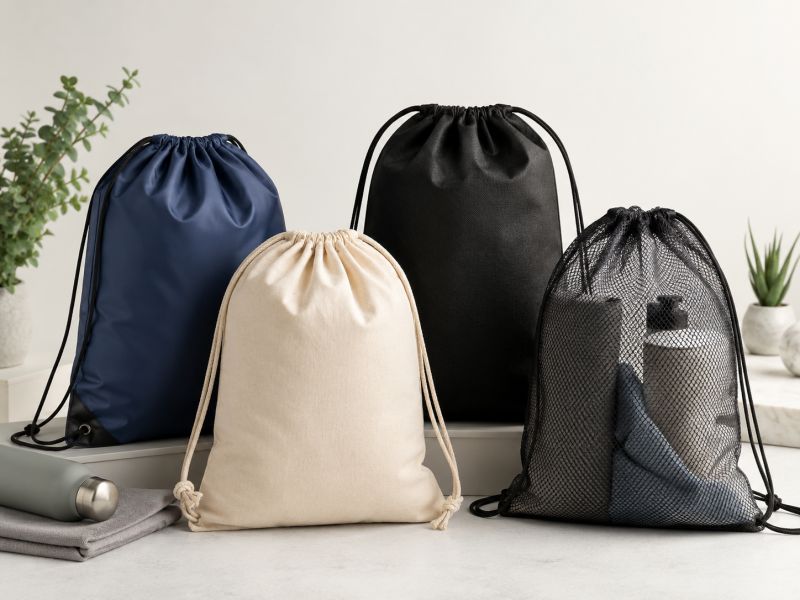
The best material depends on how the bag will be used. Polyester is usually the strongest all-round option for repeated use. Non-woven is better for short-term events and large-volume handouts. Cotton works well when a softer, more natural look matters. Mesh is best when airflow, visibility or wet-item storage is needed.
Choosing a promotional drawstring bag by material alone can be misleading. A lightweight polyester bag and a heavier polyester bag are not the same. A thin non-woven bag and a higher GSM non-woven bag feel very different. Cotton and cotton canvas can create very different value impressions. Mesh can be soft, stiff, fine, open, strong or weak depending on construction.
So the real decision is not “which material is best?” It is “which material matches the use, budget, logo, packing and expected life of this project?”
If the bag only needs to carry a brochure and small gifts at a one-day event, non-woven may be practical. If it should survive school use or sports practice, polyester will often be more stable. If the bag is part of a wellness kit, boutique gift or lifestyle package, cotton may fit the brand better. If the project involves towels, swim gear, gym clothes or wet items, mesh becomes more useful.
What Is The Best Fabric For Drawstring Bags?
For most promotional projects, polyester is the safest fabric because it balances strength, cost, color choice, light weight and logo compatibility. It is widely used for school events, sports programs, brand campaigns, charity runs and outdoor activities.
Non-woven PP is often chosen when cost control and high-volume distribution matter most. Cotton or cotton canvas is better when the bag needs a warmer, more natural hand feel. Mesh is the right direction when breathability is part of the function.
A good fabric decision should include three checks: what the bag carries, how long it should be reused, and how the logo should appear.
Polyester Vs Non-Woven Vs Cotton Vs Mesh: Quick Comparison
| Material | Best Use | Feel | Reuse Level | Logo Fit | Project Reminder |
|---|---|---|---|---|---|
| Polyester | Schools, sports, outdoor events, repeated use | Light, smooth, practical | Medium to high | Good for print and transfer | Check denier, coating, cord and corner strength |
| Non-Woven | Trade shows, conferences, short events | Light, simple, cost-friendly | Low to medium | Good for bold simple logos | Check GSM, seam strength and load weight |
| Cotton | Retail gifts, wellness, lifestyle brands | Soft, natural, warmer | Medium to high | Good for print, embroidery, labels | Check weight, shrinkage, color and creasing |
| Mesh | Gym, swim, beach, sports storage | Breathable, visible, functional | Depends on mesh type | Needs panel, patch or label | Check hole size, edge strength and logo area |
This table gives a quick direction, but the final material should be checked with the actual project. A bag for shoes needs different strength from a bag for brochures. A bag for boutique retail needs a different feel from a charity event handout.
Why Is There No One Best Material For Every Event?
Because every event has a different success standard.
A conference team may need thousands of light bags that stay within budget. A sports team may need stronger fabric and better cords. A school project may need bright colors, clean printing and safe daily use. A beach program may need mesh that dries quickly. A retail gift set may need cotton canvas because the bag is part of the brand experience.
One material cannot be the best at everything. Non-woven helps control cost, but may not be ideal for long-term use. Cotton feels better, but costs more and needs careful handling. Mesh solves airflow, but limits logo placement. Polyester covers many uses, but still needs the right denier and stitching.
The smarter choice is not the material with the best description. It is the material with the least mismatch risk.
Why Do Materials Matter More Than Style?

Materials matter more than style because they control how the bag performs after it leaves the event table. Fabric choice affects logo clarity, hand feel, carry comfort, weight capacity, corner strength, folding, carton volume and reuse. A similar-looking drawstring bag can feel cheap or reliable depending on fabric weight, drawcord, stitching and finishing.
A style photo can make almost any drawstring bag look acceptable. Real use is less forgiving. People pull the cords, carry the bag on one shoulder, place shoes or bottles inside, toss it in a car, or pack it in a school locker. That is when fabric, seams and drawcords show their real value.
Material also affects how the logo behaves. A sharp logo on smooth polyester may look clean. The same artwork on rough cotton may need adjustment. A fine design on non-woven may lose detail. A logo printed directly across open mesh will not work the same way as a logo placed on a solid panel.
This is why serious projects should begin with material and use, not only shape and color.
How Does Material Affect Brand Exposure?
A promotional bag gives more value when people keep using it. If the bag tears, feels rough, or looks too weak, it may disappear after one day. If it feels useful, it keeps moving through gyms, schools, events, parks, offices and trips.
Polyester often gives longer exposure because it is light and practical. Cotton can give better emotional value because it feels more thoughtful and retail-friendly. Mesh gives repeated exposure in specific situations, especially swim, sports and gym programs. Non-woven works well when the goal is wide distribution and short-term visibility.
Brand exposure should be measured by real use, not just quantity handed out.
How Does Fabric Choice Affect Logo Quality?
Logo work depends heavily on fabric surface. Smooth polyester is usually friendly for screen printing and heat transfer. Non-woven is better for bold, simple artwork. Cotton works well with screen printing, embroidery, woven labels or patches, but texture and weight matter. Mesh often needs a solid fabric panel, label or patch to keep the logo clear.
Logo position also matters on drawstring bags. If the logo sits too high, it may wrinkle when the top closes. If it sits too close to the side seams, it may look unbalanced when filled. If the bag is small, a large logo may overpower the front panel.
A physical sample should confirm logo size, process, position and color before bulk work starts.
What Materials Work Best For Drawstrings?
Common drawstring materials include polyester cord, PP cord, cotton cord, flat webbing and sometimes reflective cord. Polyester cord is widely used because it is smooth, strong and cost-friendly. Cotton cord matches natural cotton bags. Flat webbing can feel better on the shoulder when the bag carries more weight.
The cord should match the bag body. A cotton bag with a hard synthetic cord may feel mismatched. A sports bag may need stronger cord and better corner reinforcement. A mesh swim bag needs cord that dries quickly and does not feel rough when wet.
Drawcord length and thickness should be checked on the sample. Too short feels uncomfortable. Too long looks messy. Too thin may cut into the shoulder. Too thick may not close smoothly.
When Should You Choose Polyester Drawstring Bags?
Choose polyester drawstring bags when the project needs a practical balance of durability, light weight, color choice, logo effect and repeated use. Polyester works well for schools, sports, outdoor programs, charity runs, travel kits, employee gifts and brand events where the bag should last longer than one day.
Polyester is often the safest middle ground. It is stronger than basic non-woven, usually more cost-friendly than cotton canvas, and easier to use across many event types than mesh. It also supports many logo methods, color options and packing styles.
But polyester is not one fixed material. 210D and 420D feel different. Coated and uncoated fabrics behave differently. A thin cord and weak corner stitching can reduce the value of an otherwise good polyester bag.
Is Polyester Best For Schools, Sports, And Outdoor Events?
For many school, sports and outdoor projects, polyester is one of the best choices. It is light enough for daily carry and strong enough for repeated use when built with suitable fabric and seams.
School bags often need bright colors, clear logos and low weight. Sports bags need stronger corners, comfortable cords and better seam strength. Outdoor events may need a fabric that handles light moisture and dirt better than cotton. Polyester can meet these needs when the specification is chosen carefully.
What Is The Difference Between 210D And 420D Polyester?
210D polyester is lighter and often used for standard promotional drawstring bags. It is suitable for light daily use, giveaways, school programs and event bags. 420D polyester is thicker and more structured, giving better strength and a more substantial feel.
The trade-off is cost and packing volume. 420D usually feels stronger, but it can cost more and take more carton space. 210D is easier to keep light and affordable. The decision should follow the carry weight and reuse expectation.
Which Logo Methods Work Well On Polyester?
Screen printing and heat transfer are common for polyester drawstring bags. Screen printing works well for simple artwork and larger quantities. Heat transfer can help when the logo has more colors or finer detail.
Woven labels, rubber patches, reflective strips and other details can also be reviewed for special projects. The best method depends on fabric surface, logo size, color contrast, quantity and target cost.
When Should You Choose Non-Woven Drawstring Bags?
Choose non-woven drawstring bags for short-term events, trade shows, conferences, welcome kits, charity programs and high-volume handouts where cost control matters. Non-woven is lightweight, easy to distribute and suitable for simple logos, but it should be checked carefully if the bag needs to carry weight or stay in use for a long time.
Non-woven PP is common because it keeps projects practical when the quantity is large. It can be a good choice for brochures, flyers, small samples, light gifts, coupons, T-shirts or event materials.
The mistake is treating non-woven as the right choice for every low-cost project. If the bag needs to carry books, shoes, bottles or heavy merchandise, fabric GSM, seam strength, drawcord and corner stress must be reviewed. Low cost only works when the bag still performs its job.
What Are Cheap Drawstring Bags Made Of?
Cheap drawstring bags are usually made from lightweight non-woven PP or lightweight polyester. Non-woven is common for short events because it is light, simple and cost-friendly. Lightweight polyester may be used when the project needs a little more durability without moving into a higher price level.
But “cheap” should not mean unclear specification. Ask for GSM on non-woven and denier on polyester. A small upgrade in fabric weight can make the bag feel much better while still keeping the project controlled.
Is Non-Woven Best For Trade Shows And Short-Term Events?
Yes, non-woven often fits trade shows, conferences and short-term events because it is easy to pack and distribute in large quantities. It works well for light contents such as brochures, catalogs, small gifts, samples or shirts.
If the bag will be used only during the event, non-woven may be enough. If the brand wants the bag to stay in use for weeks or months, polyester or cotton should be reviewed.
What GSM Should You Choose For Non-Woven Bags?
GSM affects hand feel, strength and price. Lower GSM helps control cost, while higher GSM usually feels stronger and more stable. The right GSM depends on carry weight, event type, logo size and expected use.
A conference brochure bag does not need the same strength as a retail gift bag. During sample review, check whether the fabric feels too thin, whether the seams hold well and whether the logo looks clean on the surface.
When Should You Choose Cotton Drawstring Bags?
Choose cotton drawstring bags when the project needs a softer, natural or retail-friendly feel. Cotton works well for wellness brands, lifestyle campaigns, boutique gifts, organic-style product sets, stationery, cosmetics, coffee, skincare and premium event kits. It can support screen printing, embroidery, woven labels and patches when fabric weight is chosen correctly.
Cotton creates a different emotional response. It feels warmer and less disposable than non-woven. It can make a simple drawstring bag feel like part of a brand set rather than just an event container.
However, cotton needs careful review. It may cost more, crease more, and require better control for color, shrinkage, stitching and logo detail. If the bag needs to look clean in retail packing, folding and carton pressure should be tested before bulk work.
Is Cotton Better For Natural Brand Image?
Cotton is often better when the brand wants a natural, simple or reusable image. It suits lifestyle products, wellness programs, handmade-style gifts, cosmetics, food brands and retail gift sets.
If environmental claims are planned, material documents and claim wording should be checked by project requirement and destination. A natural look is helpful, but claims need proper support.
Cotton Vs Cotton Canvas: Which Feels More Premium?
Cotton canvas usually feels more premium than lightweight cotton because it is thicker, stronger and more structured. It gives the bag better body and a more substantial hand feel.
Lightweight cotton is softer and easier to fold, but may feel less durable. Cotton canvas is better for higher-value gift sets, retail packaging and lifestyle branding, but it adds cost and carton volume.
Which Logo Methods Work Best On Cotton Bags?
Screen printing, embroidery, woven labels and patches can all work well on cotton bags. Screen printing is practical for clean artwork. Embroidery gives texture. Woven labels and patches create a more finished brand feel.
Fine details should be tested because cotton texture can affect sharpness. A small logo with thin letters may need adjustment to stay clean.
When Should You Choose Mesh Drawstring Bags?
Choose mesh drawstring bags when airflow, visibility, drying speed or wet-item storage matters. Mesh is useful for gym programs, swim clubs, beach events, sports teams, laundry kits and equipment storage. It is not the best choice for large direct printing, so a solid fabric panel, label or patch is often needed for clean branding.
Mesh is a functional material. It is chosen because it lets air pass through, helps wet items dry faster and allows users to see what is inside. That makes it useful for programs where a closed fabric bag would trap moisture, odor or sand.
Still, mesh should be used carefully. The hole size, yarn strength, softness, edge binding, seam strength and drawcord should match the real use. A small travel mesh pouch and a large sports mesh sack are not the same product. One may carry socks or toiletries; the other may carry towels, shoes or team gear.
What Are The Little Mesh Drawstring Bags Called?
Small mesh drawstring bags are often called mesh pouches, mesh drawstring pouches, laundry mesh bags, swim gear bags, produce mesh bags or breathable storage pouches. The name depends on size and use.
For product planning, the name is less important than the construction. Size, mesh density, drawcord style, label position and seam strength should be confirmed before sample approval.
Is Mesh Best For Gym, Beach, Swim, And Sports Programs?
Mesh is often a strong choice for gym, beach, swim and sports programs because it allows airflow and helps wet or sweaty items breathe. It also helps users identify contents quickly.
For beach use, check whether sand can shake out easily. For swim use, check whether wet towels or goggles can be stored without trapping moisture. For sports use, check whether the mesh and seams can handle shoes, uniforms, balls or bottles.
Where Should The Logo Go On Mesh Bags?
The logo usually works best on a solid fabric panel, woven label, rubber patch or reinforced printable area. Direct printing across open mesh is rarely the cleanest choice.
If the project needs a large logo, combine mesh with polyester. A front solid panel gives clear branding while the mesh body keeps the breathable function.
How Do Logo Methods Change By Material?

Logo methods change because each material has a different surface, texture and heat behavior. Polyester usually works well with screen printing and heat transfer. Non-woven fits bold and simple prints. Cotton supports screen printing, embroidery, woven labels and patches. Mesh often needs a solid panel or label area for cleaner branding.
A logo that looks perfect in a digital mockup can look very different on fabric. Drawstring bags are soft, flexible products. They gather at the top, bend at the corners and move when carried. Logo placement should respect that movement.
For large programs, logo approval should be based on a real sample, not only artwork on screen. This is where color, edge sharpness, position and hand feel can be checked before bulk work begins.
Screen Printing Vs Heat Transfer: Which Is Better?
Screen printing is usually practical for simple logos, solid colors and larger quantities. It works well on polyester, non-woven and cotton when the design is not too complex.
Heat transfer is useful for more detailed artwork, gradients or multi-color designs. It can look sharp on suitable polyester, but the fabric surface and durability expectation should be reviewed.
The better method depends on artwork, material, quantity, cost and use. A one-color event logo may not need heat transfer. A full-color brand graphic may need it.
Do Embroidery, Woven Labels, Or Patches Work For Drawstring Bags?
Yes. Embroidery, woven labels, rubber patches, leather patches and printed patches can work well when the project needs a more finished feel.
Embroidery often suits cotton, canvas and some thicker polyester bags. Woven labels are useful on textured surfaces. Rubber patches can create a sporty look. Leather patches fit natural or lifestyle cotton bags.
These details add cost and sample review time, so they should match the project value. A one-day event bag may not need a patch. A retail gift set may benefit from one.
How Can Logo Position Avoid Drawstring Wrinkles?
Keep the logo away from the top drawstring channel and heavy gathering area. A good logo position usually sits on the front panel with enough space from the top seam, side seams and bottom corners.
If the bag is small, reduce the logo size. If the logo is tall, check it on a filled sample. If the material is mesh, add a solid logo area. The goal is simple: the logo should look clean when the bag is flat, filled and pulled closed.
How Do You Match Materials With Event Types?
Match drawstring bag materials by event use, carry weight, logo needs, budget and expected reuse. Non-woven works for conferences and short events. Polyester suits schools, sports and outdoor programs. Cotton fits retail gifts, wellness kits and natural brand campaigns. Mesh fits gym, beach, swim and breathable storage needs.
The easiest way to choose material is to start from the event, not the fabric name. What will be inside the bag? How heavy will it be? Will people keep the bag? Does the logo need to look premium? Will the bag be packed individually or handed out in bulk?
Once these details are clear, the material choice becomes much easier. The goal is not to overbuild every bag. The goal is to avoid underbuilding the one that needs to perform.
What Are Those Bags With Drawstrings Called?
They are commonly called drawstring bags, cinch bags, drawstring backpacks, gym sacks, sport packs, string backpacks, pull-string bags or drawstring pouches. The name changes by country, use and size.
For promotional projects, “drawstring bag” and “cinch bag” are common. For school and sports use, “drawstring backpack” or “gym sack” may be more familiar. For small packaging, “drawstring pouch” is more accurate.
What Are The Different Types Of Drawstring Bags?
Common types include flat drawstring bags, drawstring backpacks, cinch sacks, cotton drawstring pouches, mesh drawstring bags, shoe bags, laundry bags, sports sacks, travel pouches and retail gift pouches.
Each type needs different checks. A shoe bag needs stronger bottom seams. A pouch needs softer cord. A sports sack needs reinforced corners. A retail gift pouch needs better fabric and neater stitching.
Which Bags Suit Conferences, Schools, Sports, Retail Gifts, And Brand Campaigns?
For conference kits, non-woven or lightweight polyester is often practical. For schools, polyester usually offers better repeated use. For sports and charity runs, polyester or mesh is more suitable. For retail gifts and brand campaigns, cotton, cotton canvas, higher-grade polyester or better-finished non-woven may be reviewed.
The event also affects packing. A conference order may be bulk packed for quick distribution. A retail gift may need individual packing, hangtags, barcode labels or carton marks.
How Do Price, MOQ, And Quality Balance?
Price, MOQ and quality should be reviewed together. Cost is affected by material, fabric weight, size, drawcord, stitching, corner reinforcement, logo method, quantity, packing and delivery schedule. A low price can be useful for short events, but weak fabric, poor cord, rough stitching or unclear packing can reduce the value of the whole promotion.
Promotional drawstring bags often involve large quantities, so small price changes matter. But the lowest number is not always the best project decision. If the bag tears, the logo looks poor, or the cartons must be repacked, the hidden cost can become much higher.
A better cost plan protects the details users notice first: fabric feel, cord comfort, seam strength, logo clarity and packing accuracy.
What Affects The Price Of Custom Drawstring Bags?
The main price factors are material type, GSM or denier, bag size, cord material, corner reinforcement, seam construction, logo method, number of print colors, label needs, packing method, quantity and timeline.
A simple non-woven bag with one-color print usually costs less than a 420D polyester bag with reinforced corners. A cotton canvas bag with embroidery or woven label usually costs more than a simple polyester event bag.
What Is The MOQ For Promotional Drawstring Bags?
For Jundong custom bag projects, the standard MOQ is usually 500 pcs per design. Some simple drawstring bag styles may be reviewed at 200–300 pcs based on material, logo, structure, packing and timeline. Low-cost basic styles may require 1000 pcs or more because cutting, printing, sewing and packing need efficient production volume.
MOQ should be reviewed with project details, not only the product name. A simple non-woven bag and a multi-color cotton canvas bag require very different preparation.
How Can You Control Cost Without Weakening The Bag?
Cost can be controlled by choosing a suitable fabric weight, keeping the size efficient, using a practical logo method, reducing unnecessary labels, simplifying structure and planning packing early.
The wrong cost cut is weakening the parts people feel first: fabric hand feel, drawcord comfort, seam strength, closure function and logo clarity. It is often better to simplify the design than to keep a complex design with weak materials.
What Should You Check Before Approving A Sample?

Before approving a drawstring bag sample, check fabric weight, hand feel, size, logo clarity, logo position, drawcord length, opening smoothness, corner strength, seam quality, carrying comfort, packing method and color accuracy. The sample should match the project use, not just the mockup.
Sample approval is where a simple bag becomes a real standard. Fill the bag with the expected items. Pull the cord several times. Carry it on the shoulder. Check whether the logo wrinkles when closed. Open the bag after packing and see how it recovers.
Small problems in one sample can become large problems in a bulk order. A slightly rough cord, weak corner or poorly placed logo may repeat across every unit.
Does The Sample Match Fabric Weight And Hand Feel?
The sample should use the final fabric weight whenever possible. If a substitute fabric is used, that should be recorded clearly.
A budget event bag can be light, but it should not feel too weak for the planned contents. A retail gift bag should feel more substantial. A sports bag should feel ready for active use.
Are Logo, Drawcord, Stitching, And Corners Approved?
These four details deserve close review. Logo affects brand image. Drawcord affects comfort and closure. Stitching affects durability. Corners take stress when the bag carries weight.
Check stitch density, seam alignment, drawcord length, cord end finishing, corner reinforcement and opening smoothness. If the bag will carry heavier items, test it with weight.
How Long Does Sampling Usually Take?
Jundong’s usual sampling time is 5–7 days for many custom bag projects. Some simple styles may be completed in 2–3 days when material and logo details are straightforward. More complex samples, special materials, custom labels, multiple colors or revised artwork may take longer.
Sample fees can be refunded or deducted when the order reaches 2000 pcs. For serious custom projects, sampling is not a delay. It is the step that helps prevent bulk mistakes.
How Does A Factory Control Bulk Quality?
Bulk quality is controlled through material inspection, cutting accuracy, logo checking, sewing checks, drawcord testing, finished product review, packing control and carton mark verification. For drawstring bags, key checks include fabric weight, color, size, logo position, seam strength, drawcord length, opening function, corner reinforcement, carton quantity and color sorting.
A drawstring bag has a simple shape, but bulk issues can still happen quickly. Logos can shift. Sizes can vary. Cord lengths can become inconsistent. Corners can tear. Colors can be mixed. Cartons can be labeled incorrectly.
Quality should be checked during production, not only after everything is packed. Once thousands of bags are boxed with wrong labels or mixed colors, fixing the order can affect delivery.
How Are Fabric, Cutting, Logo, And Sewing Checked?
Fabric should be checked for color, weight, defects, coating and hand feel before cutting. Cutting should match the approved pattern and size. Logo work should be checked for placement, clarity, color and alignment. Sewing should be checked for seam strength, skipped stitches, loose threads and corner stress areas.
Jundong has 80 QC inspectors and supports multi-stage checks for custom bag projects. For drawstring bags, these checks help keep simple products from creating large order problems.
How Are Drawcord Strength And Bag Opening Tested?
Drawcord checks include length, thickness, hand feel, friction, knot security, end finishing, shoulder comfort and closure smoothness. The bag should open and close without excessive force.
For heavier-use projects, the bag should be tested with expected load. The cord should not feel too sharp on the shoulder, and the corners should not tear during normal use.
How Should Multi-Color Orders Be Packed And Labeled?
Multi-color orders should be separated clearly by color, size, SKU, carton mark and quantity. Mixed cartons can be used when needed, but the packing list and carton mark must be easy to understand.
For event distribution, this prevents confusion. For retail or online sales, it helps warehouse teams receive and sort goods correctly. A clean packing plan protects the whole project.
What Should You Send For A Practical Quote?
To get a practical quote for promotional drawstring bags, send the project use, reference photo, target size, material preference, logo file, print color, quantity, color plan, packing needs, destination and deadline. If material is not confirmed, share the event type and target cost so polyester, non-woven, cotton, mesh or another suitable option can be reviewed.
A clear request saves time. “We need 5,000 drawstring bags” is too broad. “We need 5,000 polyester drawstring bags for a school sports event, size 34 × 42 cm, one-color front logo, packed 100 pcs per carton, delivery to Germany before August” is much easier to review.
The more precise the project details, the faster material, structure, logo, MOQ, sample time, packing and delivery can be reviewed.
What Project Details Help The Factory Recommend Material?
The most useful details are project use, carry weight, expected reuse, event date, target cost, logo style, color plan, packing method and delivery destination.
If the bag is for a conference, non-woven may be enough. If it is for a sports team, polyester or mesh may fit better. If it is for a retail gift, cotton or a higher-grade polyester may be more suitable.
Do You Need A Reference Photo, Logo File, Size, Quantity, And Deadline?
Yes. A reference photo explains the shape. A logo file helps choose the process. Size affects fabric use. Quantity affects unit price and MOQ. Deadline affects sampling, production and delivery review.
These basic details reduce repeated emails and help turn an idea into a workable plan.
How Can Jundong Review Material, Logo, Sample, Packing, And Delivery?
Jundong can review fabric options, fabric weight, drawcord type, logo process, sample timing, bulk production, QC details, packing method, carton marks and delivery plan based on your project information.
Jundong is a Guangdong-based custom bag factory with 20+ years of OEM/ODM experience, 600+ employees, an 18,000㎡ production area and 80 QC inspectors. To review a promotional drawstring bag project, send your photo, size, logo, quantity, packing needs and deadline to info@jundongfactory.com.