 Skip to content
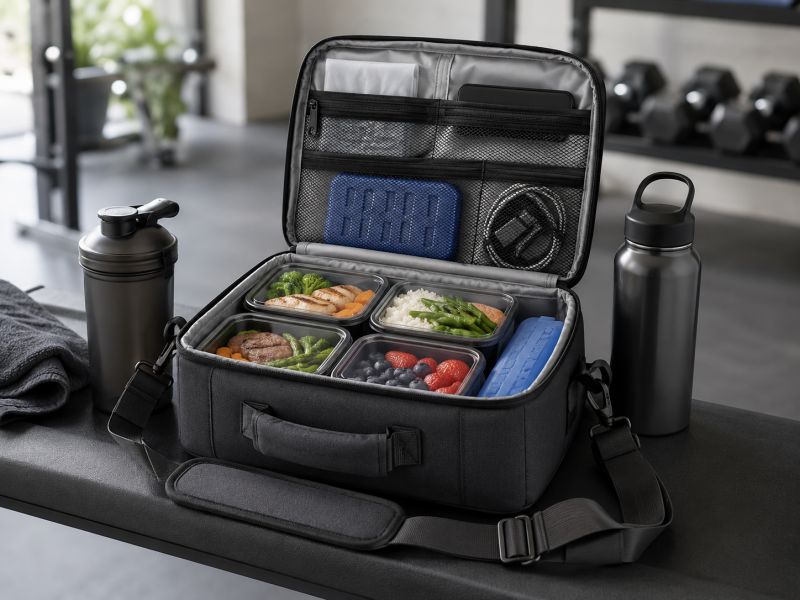
A meal prep bag is not just a lunch bag with a bigger body. For fitness brands, it becomes part of a daily nutrition routine. It may carry four meals, two ice packs, a shaker cup, supplements, snacks, cutlery, keys, a phone, and sometimes even a laptop. That sounds simple until the bag is full. Then every detail matters: container size, cold zone layout, shoulder pressure, zipper opening, liner cleaning, and whether the bag still looks like fitness gear instead of a bulky food box.
The best meal prep bags are built around real movement. People take them to the office, gym, car, airport, training session, and long workday. If the compartments are wrong, meals shift. If the ice packs are poorly placed, cooling becomes uneven. If the strap is weak, the bag feels uncomfortable. This guide explains how fitness meal prep bags should be developed for practical use, strong branding, and repeatable production.
Jundong supports custom meal prep bag projects for fitness brands, nutrition product teams, gym programs, private label lines, and lifestyle collections. With 20+ years of OEM/ODM bag experience, a Guangdong-based factory, 600+ employees, an 18,000㎡ production area, and 80 QC inspectors, Jundong helps project teams review materials, structure, logo methods, sampling, bulk production, packing, labeling, and delivery details before the bag enters daily use.
What Makes A Meal Prep Bag Different From A Regular Lunch Bag?
A meal prep bag is different from a regular lunch bag because it is built for planned meals, cold storage, supplements, containers, and heavier daily carry. It often needs multiple compartments, ice pack sleeves, shaker cup pockets, easy-clean lining, reinforced handles, shoulder support, and a stable base. A regular lunch bag may hold one meal; a fitness meal prep bag should organize a complete nutrition routine.
The word “lunch bag” can make a meal prep project sound smaller than it is. A regular lunch bag is usually designed around one meal. A meal prep bag is designed around a sequence: breakfast, lunch, post-workout food, snacks, supplements, hydration, and sometimes work items.
This changes the structure. Instead of one insulated space, the bag may need a cold meal zone, dry accessory zone, bottle pocket, shaker cup holder, personal pocket, and sometimes a laptop area. If these zones are not separated clearly, food, supplements, cables, and personal items can interfere with each other.
It also changes the weight. One lunch box is light. Four containers plus gel packs and a full bottle can become heavy quickly. That means comfort and reinforcement must be designed from the start, not added after the sample looks nice.
Is A Meal Prep Bag The Same As A Cooler Bag?
Not exactly. A cooler bag mainly focuses on keeping items cold. A meal prep bag focuses on food planning, portion storage, organization, and daily carry.
A good fitness meal prep bag may use cooler-style insulation, but it also needs structured compartments, container fit, supplement pockets, bottle storage, and better carry balance. A cooler bag can be one open insulated space. A meal prep bag usually needs a more organized interior.
For fitness brands, that distinction matters. The product should feel like daily gear for disciplined eating, not just a soft cooler.
Who Needs Custom Meal Prep Bags For Fitness Projects?
Custom meal prep bags are useful for fitness brands, nutrition brands, gym programs, wellness product lines, sports event projects, private label stores, lifestyle retailers, and e-commerce fitness collections.
They are especially useful when a brand wants its own logo, color system, meal container layout, ice pack set, supplement storage, retail packing, barcode labels, or matching gym product line.
A strong meal prep bag can become more than a single product. It can become part of a larger fitness lifestyle collection with shaker bottles, containers, towels, gym bags, backpacks, and accessories.
Why Fitness Meal Prep Bags Need Better Structure And Comfort
Fitness meal prep bags need stronger structure because they often carry heavier and more organized loads than regular lunch bags. The bag may include stacked containers, cold packs, water bottles, supplement tubs, and small personal items.
When the bag is full, weak structure becomes obvious. The base may sag. The zipper may pull unevenly. The shoulder strap may dig into the body. The containers may tilt. The inner lining may wrinkle and trap food residue.
A good design should prevent those problems before sampling. That means proper base support, balanced load direction, smooth opening, reliable lining, strong handles, and practical compartment planning.
Which Meal Prep Bag Type Fits Your Fitness Brand?

The right meal prep bag type depends on the target user, meal count, carry style, daily routine, and brand position. A tote works well for office and light gym use. A backpack suits commuters and heavier loads. A gym bag with meal compartment fits training gear plus food. A cooler-style bag supports stronger cold storage. The best product line may include several bag types for different routines.
Many fitness brands start with one: should we make a tote or backpack? The better is: how will the user move through the day?
A desk worker may prefer a clean meal prep tote that sits upright beside a laptop bag. A trainer may prefer a backpack that keeps hands free. A bodybuilder may need a larger cube-style meal management bag. A frequent traveler may need a hybrid style with meal storage, personal pockets, and a more mature look.
The best design is not always the biggest one. It is the one that fits the user’s real schedule.
Meal Prep Tote Vs Meal Prep Backpack: Which Works Better?
A meal prep tote is easier to open on a table and often looks cleaner for office use. It works well for 2 to 4 meals, simple ice pack layouts, and users who carry the bag by hand or shoulder.
A meal prep backpack spreads weight better and keeps hands free. It is better for commuters, cyclists, public transport users, trainers, and users carrying more meals or extra items.
When Is A Gym Bag With Meal Compartment A Better Choice?
A gym bag with meal compartment is a better choice when users carry shoes, clothing, towel, lifting accessories, personal items, and meals in one product. This style is useful for fitness brands that want a stronger gym lifestyle identity.
The challenge is separation. Food should not sit next to sweaty clothes. Dry items should not absorb food smell. A well-built design should separate the cold meal zone, gym gear zone, wet pocket, bottle pocket, and personal storage.
If the structure is not planned carefully, the bag becomes too big, too heavy, or too messy.
Do You Offer Multi-Compartment Designs For Laptops And Meal Boxes?
Yes, multi-compartment designs can combine laptop storage and meal box storage, but the layout must protect both sides. Food zones can create moisture, smell, and temperature change. Laptop zones need padding, pressure protection, and separation from cold packs and containers.
A practical layout usually keeps the laptop section in a dry back compartment, while the meal zone sits in a front or lower insulated compartment. The zipper paths should also be separate so food access does not expose electronics.
This type of bag works well for work-gym users who leave home with everything needed for the day.
What Type Of Meal Prep Bag Fits Work, Gym, And Travel?
For work, clean shapes and neutral colors usually matter. For gym use, stronger straps, bottle pockets, and durable outer fabrics become more important. For travel, packing stability, zipper access, and weight balance are key.
A hybrid meal prep backpack may be the most flexible option for all three. But a tote can still work if the target user drives to work or carries fewer meals.
The structure should follow the lifestyle. A travel user needs secure closures. A gym user needs gear separation. An office user needs a professional look.
How To Build A Meal Prep Product Line By Use Scenario
A fitness brand can build a meal prep product line by dividing products by daily use:
This approach helps a brand avoid one product trying to serve every user.
How Many Meals Should A Meal Prep Bag Hold?
A meal prep bag should hold the number of meals that matches the user’s routine without becoming too bulky or heavy. A 2-meal bag works for light daily use. A 3-meal bag fits work plus training. A 4-meal bag suits full-day nutrition planning. A 6-meal layout may fit serious training or event prep. Meal count, container size, ice pack space, and loaded carry weight should be planned together.
Meal count is one of the strongest decision drivers in this category. Fitness users often think in meals, not liters. They ask, “Can it hold four meals?” before they ask about bag dimensions.
But meal count can be misleading if container size is not defined. Four slim containers may fit easily. Four deep containers may change the whole bag. Add two gel packs and a shaker cup, and the real size changes again.
That is why custom development should begin with the container set. The bag is built around the meals, not the other way around.
2-Meal, 3-Meal, 4-Meal, And 6-Meal Bag Planning
A 2-meal bag works for light office use, short commutes, and users who want simple portion control. A 3-meal design fits a normal workday plus post-workout food. A 4-meal design is popular for all-day fitness routines. A 6-meal design suits longer days, athletes, trainers, or event prep.
The larger the meal count, the more important the structure becomes. A 6-meal bag needs stronger base support, better ice pack placement, and more comfortable carry than a small daily tote.
How Container Size Changes The Bag Structure
Container size affects the bag’s width, depth, height, zipper opening, insulation shape, and compartment planning. Wide containers need a flat base. Stacked containers need vertical structure. Deep containers need height and lid clearance.
If containers are included in the set, they should be chosen before the bag pattern is finalized. If the bag will be sold without containers, it should fit common meal prep box sizes without too much empty space.
Why Meal Count, Ice Pack Space, And Carry Weight Must Match
A 4-meal bag that cannot fit ice packs properly is not a true meal prep solution. A 6-meal bag that becomes painful to carry will not feel premium. Meal count, cold support, and loaded weight must work together.
For each planned size, review:
How To Avoid Overbuilding A Bag That Becomes Too Heavy
Overbuilding is common in this category. A project adds thicker foam, more pockets, bigger hardware, extra bottle holders, a laptop zone, and more meals. Suddenly the bag looks impressive but feels tiring.
The better approach is to define the core user first. A daily office user does not need the same structure as a competition prep user. A compact 3-meal bag may sell better than an oversized bag if it fits the brand’s audience.
For a practical review, share meal count, container dimensions, ice pack needs, carry style, and target quantity with Jundong at info@jundongfactory.com.
How Should Compartments Be Designed?
Meal prep bag compartments should separate food, cold packs, supplements, bottles, cutlery, dry items, and personal belongings without wasting space. The main meal compartment should fit containers securely. Cold zones should keep ice packs close to meals. Dry zones should protect supplements, phones, keys, and cards. If the bag includes laptop storage, it should be separated from moisture, smell, pressure, and food residue.
More compartments do not always mean a better bag. Too many small pockets can make the bag confusing, expensive, and harder to clean. Too few compartments make meals shift, supplements mix with personal items, and cold packs sit in the wrong place.
The best compartment plan starts with a real packing routine. What does the user put in first? What needs quick access? What should stay cold? What should stay dry? What should never touch food?
Once those habits are clear, the structure becomes easier to design.
Main Meal Container Compartment Layout
The main meal compartment is the heart of the bag. It should fit the planned containers without forcing them, crushing lids, or leaving too much empty space.
Horizontal layouts are easier for quick access and stable stacking. Vertical layouts can save footprint but may make container removal harder. Drawer-style access can feel premium but needs careful zipper and panel control.
The compartment should also be easy to wipe. A beautiful container layout is not enough if food residue gets trapped in deep corners.
Separate Space For Snacks, Supplements, And Cutlery
Snacks, vitamins, pill boxes, protein bars, sauces, cutlery, napkins, and small supplement packs should not float around the cold meal area. A small dry zone keeps these items organized and easier to reach.
This is also a strong brand detail. Fitness users appreciate order. A clean supplement pocket or cutlery sleeve makes the bag feel more intentional.
Shaker Cup, Water Bottle, And Protein Storage Pockets
Shaker cups and bottles often decide the side pocket structure. A pocket that is too loose lets the bottle tilt. A pocket that is too tight becomes annoying. Elastic mesh, stretch fabric, adjustable strap, or full-height side pocket can be reviewed based on cup size.
Protein powder storage needs more caution. If a pocket holds powder tubs or small containers, it should be separated from wet areas and easy to clean if residue spills.
Dry Zone Vs Cold Zone: How To Keep Items Organized
The cold zone should hold meals and ice packs. The dry zone should hold supplements, phones, wallet, keys, cards, documents, or electronics. Mixing these zones can create smell, moisture, and cleaning issues.
A clean design may use separate zipper access, inner dividers, mesh pockets, or lined dry pockets. This keeps the bag practical and improves daily trust.
Laptop Zone Vs Meal Zone: How To Prevent Heat, Smell, And Pressure Issues
Laptop storage can make a meal prep backpack more useful for work-gym routines, but it requires careful separation. The laptop zone should stay dry, padded, and away from food moisture or cold packs.
The meal zone should not press hard against the laptop panel. Foam, divider panels, back padding, and independent zipper access can help. If the bag is overloaded, the structure should prevent meal containers from pushing into the laptop area.
Where Should Ice Packs Go In A Meal Prep Bag?
Ice packs should be placed where they can support cooling without crushing food, creating poor weight balance, or wasting space. Common layouts include top sleeves, side sleeves, back wall sleeves, bottom placement, or removable gel pack pockets. The best option depends on container layout, meal count, bag shape, insulation, user routine, and whether the bag is carried upright, sideways, or as a backpack.
Ice packs are not only accessories. In meal prep bags, they are part of the internal cooling design. Poor placement can make one meal cold and another warm. It can also press into food, add weight to one side, or make the bag hard to carry.
The position should follow the way food is arranged. If containers stack vertically, side or back ice packs may work better. If containers sit flat, top or bottom placement may support wider cooling. If the bag is carried as a backpack, weight distribution becomes even more important.
Top, Side, Back, Or Bottom Ice Pack Placement
Top placement helps cool the upper area but may press on soft foods. Side placement works well when containers are stacked and need cold contact along the side. Back placement can support a clean layout but may affect comfort if the bag is worn as a backpack. Bottom placement may help cold support but adds pressure under containers.
There is no single best placement. The correct layout depends on container size, insulation, meal count, and carry style.
How Ice Pack Layout Affects Cooling And Food Shape
Ice packs should sit close enough to support cooling but not so close that they crush delicate foods. Salads, fruit, wraps, and soft containers can deform if pressure is too strong.
A sleeve or pocket helps control ice pack movement. It also makes packing easier for the user. If the ice pack slides around, the bag feels less professional and food protection becomes less predictable.
When To Use Reusable Gel Packs Or Ice Pack Sleeves
Reusable gel packs are useful when the meal prep bag is sold as a complete set. They make the product feel ready to use and more valuable. Ice pack sleeves are helpful when brands want a fixed cooling position and cleaner packing experience.
If gel packs are included, size and thickness should be reviewed with the container layout. A pack that looks good alone may not fit once food containers are loaded.
Can You Custom-Brand Internal Meal Containers And Ice Packs?
Yes, meal containers and ice packs can be custom-branded when the project scope, material, quantity, and printing method support it. Branding may include logos on container lids, printed sleeves, molded marks, stickers, labels, or custom packaging.
These details should be reviewed early because containers and ice packs may follow different production requirements from the bag itself. If the set includes multiple components, packaging and SKU control become especially important.
How To Balance Cooling Support With Bag Weight
More ice packs can improve cooling support, but they also add weight. That weight changes the strap design, handle strength, and comfort. A good design does not simply add more gel packs. It places the right size pack in the right position.
For large meal prep backpacks, weight balance should be checked with full containers and ice packs during sampling.
What Materials Work Best For Fitness Meal Prep Bags?

Fitness meal prep bags often use durable outer fabrics, insulated foam, easy-clean lining, coated materials, strong webbing, and reliable zippers. Common options include polyester, Oxford, nylon, TPU-coated fabric, PVC-coated fabric, RPET, PEVA lining, aluminum foil lining, EPE foam, PE foam, and insulated padding. The best material structure depends on cooling needs, cleaning, loaded weight, brand appearance, cost, MOQ, and lead time.
Material selection should follow the product role. A compact office meal tote may use lighter polyester and PEVA lining. A rugged fitness meal backpack may need stronger Oxford fabric, reinforced webbing, thicker padding, and a more structured base.
For fitness brands, appearance also matters. Black, gray, olive, navy, and sport-inspired textures are common because the bag should feel like gear, not a children’s lunch tote.
The lining is just as important as the outer fabric. If food spills inside, users care more about cleaning than fabric technical terms. The inner surface must be smooth, reachable, and stable enough for repeated use.
What Materials Provide Better Thermal Insulation For Long-Day Use?
For long-day use, insulation depends on the full material system, not one layer. EPE foam, PE foam, aluminum foil lining, PEVA lining, insulated padding, zipper structure, and ice pack placement all work together.
It is better to avoid promising a fixed “12+ hours” result unless the exact structure, food type, ice pack setup, room temperature, and testing method are defined. A responsible claim should be based on the project’s tested conditions.
For practical fitness use, review foam thickness, container fit, ice pack contact, zipper closure, and how often users open the bag.
Polyester, Oxford, Nylon, TPU, PVC, And RPET Options
Polyester is practical and works well for many meal prep totes and backpacks. Oxford fabric gives a stronger look and is useful for sportier or more durable products. Nylon can offer flexibility and strength for selected styles.
TPU-coated and PVC-coated fabrics may support water resistance and easier cleaning, but hand feel, weight, and target positioning should be reviewed. RPET can support recycled material stories when proper documentation is available.
PEVA Vs Aluminum Foil Lining For Meal Prep Bags
PEVA lining is often selected for smooth wiping and practical cleaning. Aluminum foil lining can support thermal reflection and is common in insulated bags, but it should be reviewed for wrinkle resistance, durability, and user feel.
For meal prep bags, the best result often comes from lining plus foam plus ice pack layout. A shiny lining alone will not solve cooling if the zipper leaks air, the ice pack is poorly placed, or the containers do not fit.
Are PEVA Bag Liners FDA-Approved And Leak-Proof?
PEVA liner claims must be handled carefully. Whether a liner can support food-related documentation depends on the specific material, intended contact, target region, and testing scope. A lunch or meal prep bag liner is often used as a secondary surface, while food should stay inside containers.
Leak-proof is also not automatic. A sewn bag has seams, zipper openings, corners, and needle holes. It is usually safer to describe soft bag liners as leak-resistant unless the full structure has been designed and tested for a stronger claim.
EPE Foam, PE Foam, And Insulated Padding Choices
EPE foam is lightweight and common in insulated bags. PE foam can offer firmer structure. Insulated padding can improve hand feel and help support bag shape.
The choice depends on whether the bag needs soft flexibility, strong shape, better cold support, or lower weight. For larger bags, foam selection also affects bulk shipping volume and loaded comfort.
How Material Choice Affects Price, MOQ, And Lead Time
Material affects cost, sample timing, MOQ, print method, weight, durability, cleaning, and packing size. Standard available materials usually make development faster. Special colors, coated fabrics, RPET documentation, custom lining, or complex lamination may need more time and quantity.
Jundong’s standard MOQ is usually 500 pcs per design. Some simple styles may be reviewed at 200–300 pcs depending on material, structure, logo, and project details.
How Can A Meal Prep Bag Stay Easy To Clean?
A meal prep bag stays easier to clean when it uses smooth lining, wide openings, reachable corners, fewer deep inner seams, leak-resistant structure, and materials that dry without holding odor. Food spills, sauce residue, condensation, and supplement powder are common in fitness meal bags. A good design should let users wipe the inside quickly, remove containers easily, and air-dry the bag before the next day.
Meal prep users are disciplined about food, but real life is messy. Chicken juice leaks from a container. A sauce cup opens. Protein powder dust gets into a side pocket. An ice pack sweats. A banana gets crushed. If the inside of the bag is hard to reach, one small spill can turn into a smell problem.
Easy-clean design is not only a liner choice. It is about access, seam position, inner shape, pocket depth, and whether the user can actually see what needs cleaning. A bag with ten clever pockets may look useful, but if every pocket traps crumbs, it becomes a problem after two weeks of use.
For fitness brands, cleaning experience affects repeat use. A bag that wipes clean quickly feels more premium than a bag with extra features that become hard to maintain.
Why Smooth Lining Matters For Food Spills
A smooth PEVA or coated lining helps users wipe away light spills, food residue, and condensation. The smoother the surface, the less likely crumbs and sauce will stay in texture or seam lines.
However, smooth lining should also be properly attached. Loose lining can wrinkle, trap food, or make containers harder to slide in and out. During development, the lining should be reviewed after the bag is loaded with containers, not only when it is empty.
How Wide Openings Help Cleaning And Container Access
A wide opening makes two things easier: packing meals and cleaning the inside. Users should be able to place containers without tilting them and wipe the bottom corners without fighting the zipper.
For meal prep bags, opening design is often more important than an extra pocket. If a user cannot quickly remove containers, clean the liner, and reload meals the next morning, the bag may feel frustrating even if it looks stylish.
Leak-Resistant Vs Leakproof: What Should Brands Claim?
For sewn soft meal prep bags, leak-resistant is usually a safer and more accurate description than leakproof. Seams, needle holes, zipper paths, and corners can all affect liquid control.
A leak-resistant liner can help with small spills and easier cleaning, but food containers should still provide the main seal. If a stronger leakproof claim is needed, the full structure and testing method should be reviewed before that wording is used.
This careful language protects both the brand and the end user’s expectations.
What Should Be Checked During Sample Cleaning Tests?
A useful sample cleaning test is simple. Load the bag with containers and ice packs, remove everything, wipe the inside with a damp cloth, check the corners, leave the bag open, and see how easily it dries.
During the test, review liner wrinkles, seam traps, odor, zipper access, pocket depth, and whether liquid can reach stitching areas. If the bag includes protein powder pockets or supplement storage, check whether dry residue is easy to remove.
How To Improve Carry Comfort When The Bag Is Full
Carry comfort improves when the meal prep bag is designed around loaded weight, not empty appearance. A full bag may include containers, ice packs, shaker cups, supplements, bottles, and personal items. Comfortable carry depends on balanced weight distribution, padded straps, reinforced handles, stable base support, proper compartment placement, smooth zipper access, and stress that can survive repeated lifting and movement.
Meal prep bags often look easy to carry when empty. The real test begins after the bag is packed with four meals, gel packs, a shaker cup, and a full water bottle. At that moment, handle position, shoulder pressure, and weight balance decide whether the user likes the bag or leaves it at home.
A design can fail even if the fabric is strong. If one side is heavier because the ice pack pocket and bottle pocket sit together, the bag twists. If the strap is too narrow, it digs into the shoulder. If the base is too soft, containers lean. Comfort is a structure issue, not just a strap issue.
Why Loaded Weight Matters More Than Empty Bag Weight
Empty weight is useful, but loaded weight is what users feel. A lightweight bag can still be uncomfortable if the weight is poorly balanced. A slightly heavier bag can feel better if the base, handles, and shoulder strap are designed correctly.
For larger meal prep backpacks, test the bag with the planned full setup: containers, ice packs, bottle, supplements, and personal items. This gives a much more honest view of comfort.
How Do You Ensure Ergonomic Weight Distribution For Full Bags?
Ergonomic weight distribution starts with placing heavy items close to the body and keeping the load balanced left to right. For backpacks, the meal zone should not pull too far away from the back. For totes, the handle position should align with the loaded center of gravity.
Ice packs, bottles, and containers should be placed so the bag does not tilt. A structured base can help keep the load stable. Padded straps and wider webbing reduce pressure, but they cannot fully fix a badly balanced layout.
Shoulder Strap, Handle, Backpack Strap, Or Crossbody Carry?
A hand-carry tote works well for lighter meal prep setups and office use. A shoulder strap is helpful for 3- to 4-meal bags. Backpack straps are better for heavier loads, commuting, or hands-free movement. Crossbody carry can work for compact designs, but may feel awkward when the bag is wide or heavy.
The carry method should match the meal count. If the bag is designed for 6 meals, it needs more than a thin handle and a basic strap.
How Padding, Balance, And Base Support Improve Comfort
Padding reduces pressure. Balance reduces twisting. Base support keeps containers level. Together, these details make a full bag feel more controlled.
Useful features may include shoulder pads, padded back panels, reinforced webbing, PE board base support, EVA panels, anti-slip handle wraps, and stronger D-rings. The exact choice depends on bag type, weight, and target price.
What Stress Need Reinforcement?
Key stress include handle attachments, shoulder strap anchors, D-rings, zipper ends, bottom corners, side seams, bottle pockets, and divider stitching. These areas take repeated force when the bag is lifted, loaded, placed on the floor, or carried during commuting.
Bar-tack stitching, stronger webbing, reinforced panels, binding, rivets, or thicker thread may be reviewed based on the design. For meal prep bags, reinforcement should be planned before sampling, not added only after a problem appears.
How Can Branding Work On Meal Prep Bags?
Branding on meal prep bags can include logo patches, woven labels, heat transfer, screen printing, reflective details, custom zipper pullers, inner labels, branded containers, ice pack labels, hang tags, retail packaging, and color collections. For fitness brands, the bag should look like training gear or lifestyle equipment, not a basic lunch tote. Good branding should stay durable, clean, and aligned with the full product line.
Fitness users care about identity. The bag sits beside gym shoes, shaker cups, protein tubs, lifting straps, and training clothes. If it looks too soft, too cute, or too lunchbox-like, it may not match the brand image.
A strong meal prep bag often uses cleaner shapes, sport-inspired materials, darker colors, rubber patches, reflective details, coated zippers, and hardware with a more active look. The logo should feel intentional, not pasted on.
Branding also extends beyond the bag. If containers, ice packs, zipper pullers, labels, and packaging all feel connected, the product looks more complete and easier to sell as a set.
Which Logo Process Fits Fitness Meal Prep Bags?
The best logo process depends on material, location, color detail, durability, and brand style. Rubber patches work well for fitness and outdoor-inspired bags. Woven labels give a clean and professional detail. Heat transfer supports colorful logos and smooth panels. Reflective print can suit night training or commuter styles. Embroidery can work on fabric panels but should be reviewed for cleaning and backing.
Logo placement should avoid high-rub areas, tight curves, and places where the bag folds under load.
Rubber Patch, Woven Label, Heat Transfer, Or Reflective Print?
The safest choice is confirmed during sampling with the final material.
How To Make The Bag Look Like Fitness Gear, Not A Lunch Tote
The easiest way is to remove “kitchen product” signals and add “training product” signals. Use stronger silhouettes, cleaner panels, darker colorways, rubber patches, coated zippers, technical fabric textures, structured bases, and controlled branding.
A meal prep bag for fitness does not need to look aggressive. It just needs to feel mature, active, and confident enough to sit beside gym gear.
Can Containers, Ice Packs, Pullers, And Inner Labels Be Branded Together?
Yes, a full set can be branded across several components when the project scope supports it. Options may include printed or labeled meal containers, branded ice pack sleeves, custom zipper pullers, woven inner labels, logo patches, hang tags, and private label packaging.
These items should be planned together. If the bag is developed first and the containers are added later, fit and packaging may become harder to control.
How Private Label Packaging Supports Fitness Product Lines
Private label packaging helps turn a bag into a complete retail product. Hang tags, insert cards, barcode labels, instruction cards, polybags, cartons, and set packaging can explain the meal count, ice pack use, cleaning instructions, and brand story.
For e-commerce and multi-SKU programs, packaging also helps prevent color mix-ups and receiving errors. Good packing is not just decoration; it protects the order flow.
What Should Check Before Sampling?
Before sampling, project teams should confirm meal count, container size, ice pack size, bag type, compartment layout, material direction, lining, carry method, logo files, branding scope, packaging, quantity, deadline, and destination. A sample should be tested with real containers and ice packs. It should confirm fit, cooling layout, loaded comfort, cleaning, zipper access, branding, and production feasibility.
A meal prep bag sample is not just a shape preview. It is the first real test of the meal routine. If the containers do not slide in smoothly, if the ice pack pocket is too tight, if the bag tilts when full, or if the liner is hard to wipe, the design needs adjustment.
Many problems can be solved early if the test is realistic. Do not approve a sample empty. Pack it the way the end user will.
What Files And Product Details Should Be Sent First?
Useful starting information includes reference photos, bag type, target user, meal count, container dimensions, ice pack dimensions, shaker cup size, supplement storage needs, logo files, color direction, material preference, quantity, packaging request, deadline, and destination.
If the project includes containers, ice packs, or private label packaging, include those requirements from the beginning. This helps the quote and sample plan stay realistic.
How Long Does A Custom Meal Prep Bag Sample Take?
For many custom meal prep bag projects, sampling usually takes about 5–7 days after main details are confirmed. More complex styles with custom containers, branded ice packs, special lining, multiple compartments, backpack structure, or private label packaging may require more time.
A rushed sample may miss the most important test: how the bag performs when packed full.
What Should Be Tested With Real Containers And Ice Packs?
Test container fit, stacking, removal, ice pack position, zipper opening, inner cleaning, loaded weight, carry comfort, bottle pocket, supplement storage, and whether the bag holds shape.
If the bag includes a laptop zone, test it with a laptop dummy and full meal setup. Make sure containers do not press into the electronics area.
How To Review Carry Comfort, Cleaning, And Logo Placement
Carry the bag fully loaded. Walk with it. Lift it by the handle. Use the shoulder strap or backpack straps. Put it down and open it. Remove containers. Wipe the lining. Check whether the logo is still placed well when the bag is full.
This kind of test often reveals issues that a photo cannot show.
How Does A Factory Control Bulk Quality?

Bulk quality for meal prep bags is controlled through fabric, lining, foam, zipper, trim, compartment layout, container fit, ice pack placement, sewing, handle strength, shoulder strap, shape, cleaning detail, odor review, packing, barcode, SKU, and carton mark checks. Since meal prep bags carry food containers and heavier loads, inspection must confirm function, not only appearance.
Meal prep bags have more moving parts than standard lunch bags. A small change in foam thickness can affect container fit. A zipper change can affect access. A lining change can affect cleaning. A strap change can affect loaded comfort.
That is why quality control should happen across the process. Materials should be checked before sewing. Compartments should be checked during assembly. Final goods should be reviewed with the approved sample and packing rules.
Incoming Fabric, Lining, Foam, Zipper, And Trim Checks
Incoming checks review fabric color, coating, lining surface, foam thickness, zipper smoothness, webbing strength, buckle function, logo parts, labels, and any custom trims.
For meal prep bags, lining and foam deserve extra attention because they affect food storage, cleaning, and shape.
Compartment, Container Fit, And Ice Pack Layout Review
Compartments should match the approved sample. Container zones, cold zones, dry pockets, bottle holders, supplement pockets, and laptop areas should be checked for position and size.
If containers and ice packs are included, they should be checked with the bag before packing. A set only works if all parts fit together.
Sewing, Handle Strength, Shoulder Strap, And Shape Checks
Sewing quality affects durability. Handle and strap strength affect comfort and safety. Shape control affects container stability.
Areas such as bottom corners, handle anchors, strap connections, zipper ends, and divider seams should be reviewed carefully because they take repeated stress.
PEVA Lining, Odor, Leak-Resistant Detail, And Cleaning Review
The lining should be smooth, clean, low-odor, and properly attached. Leak-resistant details should be checked at seams, corners, and lining joins.
If the bag is promoted as easy-clean, the production standard should support that claim. Wrinkled, loose, or hard-to-reach lining can weaken the user experience.
Packing, Barcode, SKU, And Carton Mark Review
Meal prep bag sets may include containers, gel packs, straps, labels, hang tags, or instruction cards. Each component must be packed correctly.
Carton marks may include item number, color, quantity, PO number, SKU, carton number, weight, and destination. For private label or multi-color programs, carton accuracy is part of product quality.
What Affects The Price Of Custom Meal Prep Bags?
The price of custom meal prep bags is affected by size, meal count, material, lining, insulation, foam thickness, ice packs, containers, accessories, zipper type, carry structure, logo method, private label packaging, quantity, testing needs, and delivery terms. A lower-cost design may work for simple use, but fitness meal prep bags need enough structure to support food, cold packs, and loaded carry.
Meal prep bag cost is not only about the outer fabric. The inner layout often drives the value. A bag with four meal containers, two ice pack sleeves, a shaker pocket, laptop zone, PEVA lining, strong strap, and private label packaging is a different project from a one-compartment lunch tote.
The best cost control protects the features users feel every day: container fit, cooling support, cleaning, strap comfort, and branding. Removing those features may reduce unit cost but weaken the product’s real value.
Size, Meal Count, Material, Insulation, And Quantity
Larger meal count increases size, material use, foam, zipper length, and packing volume. Thicker insulation and stronger fabric add cost but may improve structure. Quantity affects setup efficiency and unit price.
Jundong’s standard MOQ is usually 500 pcs per design. Some simple styles may be reviewed at 200–300 pcs depending on structure, material, logo, and project details.
How Ice Packs, Containers, And Accessories Affect Cost
Ice packs, containers, shaker pockets, pill pockets, cutlery sleeves, laptop compartments, shoulder pads, and extra straps all affect cost. They also affect packing, inspection, and shipping volume.
If accessories are included, they should be listed clearly before quote review. Otherwise, the first price may not reflect the real product set.
How Custom Branding And Private Label Packaging Affect Price
Logo method, patch type, color count, custom zipper pullers, inner labels, hang tags, insert cards, barcode labels, polybags, and retail cartons can all affect cost.
These details are often worth it for fitness brands because they turn the meal prep bag into a real product line, not a generic food carrier.
What Is The MOQ For Custom Meal Prep Backpacks Or Tactical-Style Fitness Bags?
MOQ depends on fabric, structure, size, logo process, accessories, and whether the bag includes special trims or molded parts. For Jundong custom bag projects, the standard MOQ is usually 500 pcs per design. Simple styles may be reviewed at 200–300 pcs. Tactical-style fitness meal backpacks, multi-compartment backpacks, or bags with many custom components may require higher quantities because development and production setup are more involved.
The best way to confirm MOQ is to share the bag type, meal count, material direction, logo plan, and accessory list.
How To Lower Cost Without Weakening Fitness Use Performance
Cost can often be improved by simplifying low-value pockets, using available materials, keeping container sizes standard, choosing practical logo methods, reducing oversized foam, and planning efficient packing.
The wrong way is to weaken the handle, remove useful lining, shrink ice pack space, or make the main compartment too tight. Those changes may reduce price but hurt daily use.
What Should Send For A Practical Quote?
For a practical quote, send target user, meal count, container size, ice pack size, supplement storage needs, laptop storage needs, bag type, material direction, lining choice, logo files, branding scope, quantity, packaging request, deadline, destination, and compliance notes. Clear details help review structure, material, sample time, MOQ, cost, packing, and delivery direction without repeated back-and-forth.
A vague request such as “quote a meal prep bag” is not enough for a reliable price. A 3-meal tote, a 6-meal backpack, and a gym duffel with cold compartment are completely different projects.
A practical quote starts with the real use case. Who uses it? How many meals? What containers? How many ice packs? Is there a shaker cup? Is there a laptop? Is it for retail, e-commerce, gym programs, or private label product lines?
Target User, Meal Count, And Container Size
Share whether the bag is for office fitness users, gym members, athletes, trainers, commuters, or travel users. Include planned meal count and container dimensions.
If containers are not decided yet, share the target meal count and serving style. Jundong can help review bag structure around common container directions.
Ice Pack Needs, Supplement Storage, Laptop Storage, And Carry Style
Explain whether the bag needs ice pack sleeves, reusable gel packs, supplement pockets, shaker cup holder, laptop compartment, shoulder strap, backpack straps, or crossbody carry.
These details change the internal structure and loaded comfort, so they should be discussed early.
Logo Files, Bag Type, Quantity, Packaging, And Deadline
Send logo files, preferred bag type, quantity, packaging request, and deadline. Vector artwork is preferred for logo review.
If the project includes private label packaging, barcode labels, hang tags, insert cards, or multi-SKU packing, share those details before sampling.
Container Branding, Ice Pack Branding, And Private Label Notes
If containers, ice packs, zipper pullers, inner labels, or packaging need branding, include that in the first request. These components may need different production planning from the bag body.
A complete meal prep set should be reviewed as one product, not separate pieces added at the last moment.
Destination, Compliance Needs, And Project Notes
Destination affects shipping, packing, labeling, and possible testing needs. If the project has food-related claims, recycled material claims, retail requirements, or special delivery rules, share them before development.
For a practical custom review, send target user, meal count, container size, ice pack needs, logo files, quantity, packaging request, and delivery destination to info@jundongfactory.com. Jundong can review structure, sample direction, MOQ, and production details based on the project.
Closing: Build The Bag Around The Fitness Routine
A strong meal prep bag starts with the user’s day. How many meals do they carry? Where do they eat? How long are they away from home? Do they bring a shaker cup, supplements, laptop, gym gear, or travel items? How heavy is the bag when full?
Once those details are clear, the design becomes smarter. Compartments keep food and accessories organized. Ice pack sleeves support cold storage. PEVA or other easy-clean lining reduces mess. Strong straps and balanced structure improve carry comfort. Branding turns the bag into a fitness product, not just a food container.
Jundong supports custom meal prep totes, meal prep backpacks, gym meal bags, insulated cooler bags, multi-compartment fitness bags, and private label meal prep sets. With free design support, fast sampling, multi-stage QC, packaging and labeling support, and 20+ years of OEM/ODM bag project experience, Jundong helps fitness brands turn meal prep ideas into practical products ready for real daily use.
FAQs About Custom Meal Prep Bags For Fitness Brands
1. How many meals should a fitness meal prep bag hold?
Certainly — the best meal count depends on the user’s daily routine, not just the biggest capacity available. A 2-meal bag works well for office users or light meal planning. A 3-meal bag fits work plus gym use. A 4-meal design is strong for all-day nutrition planning. A 6-meal bag suits athletes, trainers, long shifts, or event prep. The key is to match meal count with container size, ice pack space, and loaded carry comfort. A bag that holds many meals but feels painful when full will not create a good user experience.
2. Can meal prep bags include custom containers and branded ice packs?
Absolutely. Meal prep bags can be developed as a complete set with meal containers, reusable gel packs, shaker cup pockets, supplement storage, cutlery sleeves, and private label packing. Containers and ice packs can often carry logo labels, printed sleeves, molded details, stickers, or branded packaging, depending on material, order quantity, and artwork requirements. These parts should be planned early because container size, ice pack thickness, and bag compartments must fit together. A complete set usually feels more professional than a bag sold alone, especially for fitness brands building a nutrition product line.
3. What materials provide better insulation for long-day meal prep use?
Sure — better insulation comes from the full structure, not one magic material. EPE foam, PE foam, aluminum foil lining, PEVA lining, insulated padding, zipper closure, and ice pack placement all work together. For long-day use, the bag should fit containers closely, leave space for ice packs, and reduce warm air entry through poor zipper design. It is safer to describe performance based on tested conditions rather than promise fixed hours for every situation. Food type, room temperature, ice pack size, and opening frequency all affect cooling.
4. Are PEVA liners FDA-approved and fully leak-proof?
Not automatically. PEVA liner claims must be reviewed based on the specific material, intended use, food-contact scope, destination, and testing plan. In most meal prep bags, food should stay inside containers, while the PEVA liner supports easy cleaning and spill control. A sewn soft bag should usually be described as leak-resistant, not fully leak-proof, unless the full structure has been designed and tested for that stronger claim. Seams, zipper openings, needle holes, and corners can all affect liquid control. Clear wording builds more trust than over-promising.
5. Should fitness brands choose a meal prep tote or meal prep backpack?
Definitely — both can work, but they serve different users. A meal prep tote is easier to open on a desk or kitchen counter and works well for 2–4 meals. A meal prep backpack is better for commuting, cycling, public transport, or heavier all-day setups. If the product needs a laptop zone, shaker pocket, supplement storage, and 3–4 meals, a backpack often makes more sense. If the brand wants a clean office-to-gym look, a structured tote can be more polished. The choice should follow how users move through the day.
6. Can you design multi-compartment meal prep bags for laptops and meal boxes?
Of course. Multi-compartment designs can combine laptop storage and meal box storage, but separation is critical. The meal zone may involve moisture, smell, cold packs, and food residue. The laptop zone needs padding, dryness, and pressure protection. A practical design usually places the laptop in a dry back compartment and the meal containers in a front or lower insulated section with separate zipper access. The sample should be tested fully loaded to make sure meal boxes do not press into the laptop area and cold packs do not create unwanted condensation near electronics.
7. How do you improve ergonomic comfort when the bag is full?
Certainly — full-bag comfort starts with weight distribution, not just a padded strap. Heavy items should sit close to the body and stay balanced left to right. For backpacks, the meal zone should not pull too far away from the back. For totes, the handle should align with the loaded center of gravity. Wider webbing, shoulder pads, back padding, reinforced D-rings, firm base panels, and stable container layout can all improve comfort. During sampling, the bag should be tested with real containers, ice packs, bottles, and accessories, not empty.
8. What should be tested in the first custom meal prep bag sample?
Absolutely — the first sample should be tested like a real fitness day. Pack the target meal containers, reusable ice packs, shaker cup, supplements, cutlery, phone, keys, and any laptop item if included. Check zipper access, container removal, ice pack position, bottle pocket stability, lining cleaning, loaded weight, strap comfort, base shape, and logo placement. Wipe the inside after removing containers to see if corners and seams are easy to clean. This kind of practical sample review helps prevent problems before bulk production begins.
9. What is the MOQ for custom meal prep bags or meal prep backpacks?
Usually, Jundong’s standard MOQ is 500 pcs per design for custom bag projects. Some simple meal prep totes or lunch cooler styles may be reviewed at 200–300 pcs depending on material availability, structure, logo method, and project details. More complex meal prep backpacks, tactical-style fitness bags, multi-compartment designs, custom containers, branded ice packs, or private label sets may require higher quantities because development and production setup are more involved. The most practical way to confirm MOQ is to share bag type, meal count, material direction, branding needs, and accessory list first.
10. What should we send to get a practical quote for custom meal prep bags?
Sure — for a practical quote, send the target user, meal count, container size, ice pack size, bag type, carry style, material direction, lining choice, supplement storage needs, laptop storage needs, logo files, packaging request, quantity, deadline, and destination. If containers or ice packs need branding, mention that from the start. Photos or reference styles also help. You can send project details to info@jundongfactory.com. The clearer the first brief is, the faster the structure, sample direction, MOQ, and cost review can become realistic.