 Skip to content
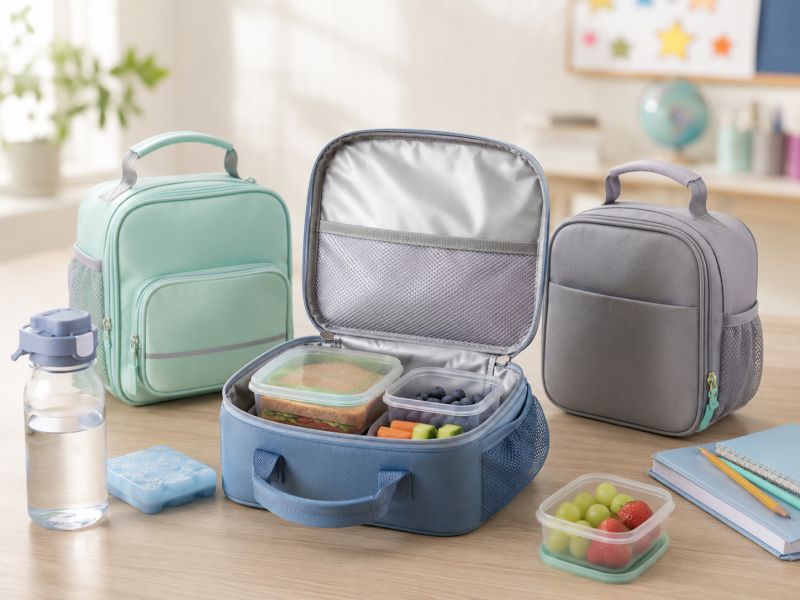
A kids lunch bag looks simple until it enters real school life. It gets packed before sunrise, squeezed into a backpack, dropped on classroom floors, opened by small hands, touched by yogurt lids, juice boxes, fruit water, crumbs, sauces, and sometimes forgotten until the next morning. Parents want it clean. Children want it fun and easy to use. Brands want fewer complaints, stronger repeat orders, and a product that looks good after more than one school week.
That is why a school lunch bag should not be developed like a small promotional pouch. Size, lining, insulation, zipper opening, handle strength, material safety review, name label, and cleaning structure all affect how the product performs in daily use.
Jundong supports custom lunch bag projects for brands, retailers, school programs, private label lines, and children’s product collections. As a Guangdong-based custom bag factory with 20+ years of OEM/ODM experience, 600+ employees, an 18,000㎡ production area, and 80 QC inspectors, Jundong helps project teams review materials, structure, logo methods, sampling, bulk production, packing, labeling, and delivery details before a lunch bag enters real school use.
What Makes A Kids Lunch Bag Suitable For School?
A kids lunch bag is suitable for school when it fits daily meals, opens easily for children, protects food with insulation, wipes clean after spills, resists light moisture, holds its shape in a backpack, and uses materials and trims reviewed for child-friendly use. It should also support name labels, durable zippers, reinforced handles, and practical packing for retail, school, or private label programs.
A school lunch bag has a tougher life than many people expect. It does not sit nicely on a kitchen shelf. It travels with backpacks, jackets, books, water bottles, sports clothes, and homework folders. It may be carried by a preschool child one day and thrown into a classroom cubby the next.
A good design must satisfy three users at once. Parents want easy cleaning, safer materials, and fewer leaks. Children want a bag they can open, carry, and enjoy. Brands and retail teams want consistent quality, attractive designs, clear packaging, and fewer returns.
This is where custom development matters. A cute print may create the first sale, but the zipper, lining, insulation, and cleaning details decide whether the product earns trust.
Is A School Lunch Bag Different From A Regular Lunch Tote?
Yes, a school lunch bag needs more child-focused details than a regular lunch tote. It should be lighter, easier to open, safer to handle, and more forgiving when food spills inside.
A regular tote may only need a handle and a basic compartment. A school lunch bag may need an insulated body, PEVA lining, rounded inner corners, a wide zipper opening, an ice pack area, name label, bottle side pocket, and a shape that fits both lunch boxes and backpacks.
The outside can still look simple. The real difference is in the daily-use structure.
Who Needs Custom Kids Lunch Bags For School Projects?
Custom kids lunch bags are suitable for children’s brands, school supply lines, retailers, e-commerce stores, private label programs, gift projects, campus events, and backpack-and-lunch-bag set developers.
They are especially useful when a project needs custom size, custom print, safer material review, insulated lining, private label branding, barcode labels, hang tags, color collections, or multi-SKU packing.
For larger programs, the lunch bag is rarely just a side product. It often becomes part of a full school collection.
Why School Use Changes Size, Cleaning, And Durability Needs?
School use changes everything because children use products differently from adults. They pull zippers harder, drop bags more often, spill food more easily, and may not clean the bag the same day.
This means the design should reduce risk before it happens. A wider opening makes wiping easier. A stronger handle reduces tearing. A stable base protects lunch boxes. A smooth lining reduces crumb build-up. A name label helps prevent mix-ups. A practical size keeps the bag usable instead of bulky.
A school-ready lunch bag feels simple because the hard thinking already happened during development.
What Size Should A Kids Lunch Bag Be?

A kids lunch bag should be large enough to fit the main lunch box, snacks, fruit, napkin, small cutlery, and ice pack, but not so large that it overwhelms the child or takes over backpack space. Size should be planned by age group, meal style, lunch box shape, bottle needs, and whether the bag is carried alone or packed inside a school backpack.
Many lunch bag problems begin with the wrong size. Too small, and parents struggle to fit a lunch box and snack. Too large, and the bag becomes awkward for children, takes up too much shelf or cubby space, and increases shipping volume for the brand.
A better approach is to start with the lunch system. What type of lunch box will be used? Is it a bento box, sandwich box, stainless steel container, food jar, or soft snack pouch? Does the project need room for a water bottle or only a juice box? Will the ice pack sit above, below, or beside the food?
A good school lunch bag does not chase maximum capacity. It creates smart usable space.
Which Lunch Box Sizes Should The Bag Fit?
A school lunch bag should be designed around the lunch containers children actually use. Bento boxes often need a wider flat base. Sandwich boxes need enough length and height. Food jars may require upright space. Snack containers need small pockets or flexible room.
If the project is planned as a set, the lunch box size should be confirmed before the bag pattern is finalized. If the bag is sold separately, it should fit common school lunch containers without being too loose.
Useful size checks include:
How Much Space Is Needed For Snacks, Fruit, And Ice Packs?
A child’s lunch is rarely just one box. Many school meals include fruit, crackers, yogurt, a snack bar, cutlery, napkin, and sometimes an ice pack. If all these items are squeezed into one tight space, soft foods get crushed and spills become harder to clean.
The bag should have enough extra room to close without pressure. But the extra space should be controlled. Too much empty space allows lunch boxes to move, which can create leaks or damage softer foods.
For custom projects, it is useful to define a “full lunch test” during sampling: main lunch box, snack, fruit, ice pack, napkin, and child-friendly closure.
Should A Kids Lunch Bag Fit Inside A Backpack?
For many school projects, yes. A lunch bag that fits inside or attaches neatly to a backpack is easier for children to manage. However, backpack fit should not destroy lunch structure. If the bag is too soft, food may get crushed by books. If the bag is too tall, it may not fit neatly.
There are two common directions. One is a compact lunch bag designed to slide into a backpack. The other is a handled or shoulder-strap lunch bag meant to be carried separately. Backpack-and-lunch-bag set projects should review both items together so size, color, print, label, and packing match.
What Size Works For Preschool, Elementary, And Older Students?
Preschool children usually need a lighter bag, easy zipper pullers, visible name labels, and simple space for a small lunch box and snack. Elementary students often need more room for fruit, snacks, ice packs, and larger lunch boxes. Older students may prefer cleaner styling, larger capacity, and stronger handles.
A useful direction is to create size groups instead of one-size-for-all:
Which Materials Are Best For Kids Lunch Bags?
The best materials for kids lunch bags depend on safety review, cleaning needs, insulation, durability, cost, and brand positioning. Common choices include polyester, Oxford fabric, RPET, neoprene, canvas, PEVA lining, aluminum foil lining, and EPE or PE foam insulation. For school use, materials should be easy to wipe, light enough for children, stable for repeated use, and reviewed according to the target region and project requirements.
Material choice should begin with how the lunch bag will be used. A lunch bag for daily school use needs a different balance from an adult cooler tote or a simple giveaway bag. It should feel soft enough for children, strong enough for school handling, and practical enough for parents to clean.
The inner lining matters as much as the outer fabric. Parents rarely complain because the outside fabric is not technical enough. They complain because the inside smells, stains, leaks, cracks, or traps crumbs. That is why lining, insulation, seam structure, and opening shape should be reviewed together.
What Is The Healthiest Material For Lunch Bags?
There is no single “healthiest” material for every lunch bag. A safer direction depends on material selection, intended use, target age, food-contact risk, and testing requirements. For school lunch bags, brands often review PEVA lining, BPA-free material claims, PVC-free direction, low-odor materials, washable surfaces, and third-party testing needs based on the target region.
A practical rule is simple: food should be held in proper lunch containers, while the bag should support insulation, cleanliness, spill control, and safe daily handling. If a project wants to make food-contact or child-safety claims, those claims should be backed by the right material documents and testing plan.
Polyester, Oxford, RPET, Neoprene, And Canvas Options
Polyester is widely used for kids lunch bags because it is practical, printable, and cost-friendly. Oxford fabric gives a stronger woven look and can support more durable school-use designs. RPET may suit projects with recycled material goals, but claims should be supported by proper documentation.
Neoprene is flexible and soft, often used for stretchy lunch bags, though it may not fit every structure or price target. Canvas gives a natural look but may need careful review for stain resistance and cleaning.
Each option has trade-offs. A cute fabric that stains easily may not work for school. A durable fabric that feels too heavy may not work for younger children.
PEVA Vs Aluminum Foil Lining: Which Is Better For School Lunch Bags?
PEVA lining is often used in lunch bags because it can provide a smooth, wipeable inner surface. It is practical for daily school use when the design needs easy cleaning and a clean appearance.
Aluminum foil lining can support thermal reflection and is common in insulated bags. However, it may wrinkle or wear depending on structure and use. The final choice depends on the desired hand feel, insulation structure, cleaning needs, appearance, cost, and durability target.
For many school lunch bags, the best result may come from combining lining choice with insulation foam, seam planning, and a wide opening.
What Type Of Insulation Helps Keep Food Fresh?
Common insulation structures include EPE foam, PE foam, insulated padding, aluminum foil lining, or PEVA lining with foam. The goal is to slow temperature change, not create a magic fridge.
School lunch bags often work best when paired with proper lunch containers and ice packs. The bag structure can help, but food freshness also depends on packing habits, room temperature, food type, and how long the food stays outside refrigeration.
How Material Choice Affects Price, MOQ, And Lead Time
Material choice affects cost, sample timing, print method, MOQ, hand feel, cleaning performance, and delivery schedule. Standard available materials usually make sampling and bulk production smoother. Special colors, custom prints, recycled material claims, special lining, or unique coatings may require more review time and higher quantity.
Jundong’s standard MOQ is usually 500 pcs per design. Some simple styles may be reviewed at 200–300 pcs based on material, structure, logo, and project details. If you already know your target age group, lunch box size, material direction, and quantity, you can send details to info@jundongfactory.com for a practical custom review.
How Should Safety Be Reviewed For Kids Lunch Bags?

Kids lunch bag safety should be reviewed through material selection, lining use, odor control, zipper and puller design, small parts, label placement, age group, food-contact risk, and required testing documents. A safe school lunch bag is not only about one claim such as BPA-free. It should be developed with practical child use, target region requirements, cleaning behavior, and brand responsibility in mind.
Safety language can easily become too broad. For children’s lunch bags, a responsible project should avoid unsupported claims. It is better to say what will be reviewed and what documents can be arranged based on the target region and project requirements.
A lunch bag may not directly touch food if the meal is packed in a container. Still, the lining, odor, zipper, coating, print, label, and trims matter because children handle the product every day. The design should reduce sharp edges, difficult closures, loose small parts, and cleaning problems that may create daily-use concerns.
What Does BPA-Free, PVC-Free, Or Food-Contact Review Mean?
BPA-free usually refers to avoiding bisphenol A in relevant plastic components or materials. PVC-free means the project avoids PVC materials in the selected parts. Food-contact review relates to whether materials intended to touch food meet relevant requirements.
For soft lunch bags, it is important to define what touches food and what does not. Most food should stay inside a lunch box, not directly on the bag lining. If a brand wants to claim food-contact safety, the material and testing route should be reviewed before production.
Which Parts Should Be Checked For Child-Friendly Use?
Child-friendly review should include zipper pullers, handle width, shoulder strap, buckle shape, small detachable parts, inner lining, seams, labels, print surface, and edges. Nothing should feel sharp, overly tight, confusing, or difficult for children to open.
Younger children may need larger zipper pullers and lighter structures. School staff and parents may also prefer visible name labels, simple closure, and quick wipe cleaning.
What Are 6 Tips For Packing A Safe School Lunch?
Packing habits affect lunch safety as much as bag design. A lunch bag can help, but it cannot replace proper food handling. Six practical tips are:
These habits also guide product design. A bag with a wide opening, smooth lining, ice pack pocket, and easy-dry structure supports better daily use.
When Are Third-Party Testing Documents Needed?
Third-party testing may be needed when the project involves children’s products, food-related claims, target-region retail requirements, recycled material claims, private label compliance, or large retail programs.
The exact documents depend on the destination, material, age group, labeling, and product claim. It is best to review testing needs before sampling, not after bulk goods are ready.
How To Avoid Overclaiming Safety In Custom Projects
Avoid broad promises such as “100% safe for all children” or “food-grade everything” unless the claim is supported by material scope and testing. A better approach is to define the material, intended use, target age, target region, and testing plan.
This kind of careful wording does not weaken the product. It makes the brand look more serious.
How Can Easy-Clean Design Reduce Daily Mess?
Easy-clean design reduces daily mess by making spills easier to wipe, crumbs easier to remove, odor less likely to stay, and the bag easier to dry after cleaning. Wide openings, smooth PEVA lining, rounded inner corners, fewer inner seams, leak-resistant structure, darker stain-hiding options, removable name labels, and stable shapes can all improve parent satisfaction and reduce school-use complaints.
Parents do not judge a lunch bag only on the first day. They judge it after yogurt spills, juice leaks, strawberries stain the lining, and crumbs hide in the corners. A lunch bag that looks great online can lose trust quickly if it becomes smelly or hard to wipe.
Easy-clean design should be built into the structure, not added as a slogan. If the opening is too narrow, parents cannot reach the corners. If the seams are deep, crumbs stay inside. If the lining wrinkles too much, moisture collects. If the bag cannot dry well, odor becomes harder to control.
Why Wide Openings Make Lunch Bags Easier To Wipe
A wide opening lets parents see and reach the full inside. It also helps children place containers more easily without tilting them. This reduces spills and makes daily cleaning faster.
A narrow zipper opening may look neat, but it can make cleaning frustrating. For school lunch bags, a slightly wider opening often creates a better user experience than a very compact top opening.
How Rounded Corners And Fewer Inner Seams Help Cleaning
Food crumbs and liquids often collect in sharp corners and deep seam lines. Rounded inner corners and fewer exposed inner seams make wiping easier.
This detail sounds small, but it can make a big difference after weeks of use. A smoother inner structure also helps the bag dry faster and reduces areas where odor may build up.
Which Lining Helps With Leaks, Odors, And Crumbs?
A smooth PEVA lining is often used when easy wiping is important. Aluminum foil lining can support insulated structures but should be reviewed for wrinkle resistance and long-term wear. Some projects may use laminated or coated inner surfaces depending on target cost and appearance.
No lining can fix every spill if the lunch box leaks badly. The best result comes from leak-resistant lining plus a sealed lunch box and good cleaning habits.
Can A Lunch Bag Be Easy To Dry After Washing?
Yes, drying can be improved through wide openings, stable shape, less absorbent lining, fewer deep seam traps, and materials that do not hold moisture easily. A bag that stands open or can be opened widely is easier to air dry.
For school products, fast drying matters because the bag may be cleaned at night and used again the next morning.
Leakproof Vs Leak-Resistant: What Should Brands Know?
A soft kids lunch bag is usually better described as leak-resistant rather than fully leakproof unless its full structure is designed and tested for that claim. Leak-resistant lining can help manage small spills and make cleaning easier, but lunch box sealing, zipper position, seams, stitching holes, and inner construction all affect the result. Brands should review claims carefully during sampling to avoid user disappointment.
Leakproof is a powerful word, but it can be risky for soft bags. Many leaks begin inside the lunch box, not the bag. Soup, fruit juice, yogurt, dressing, or sauce can escape from containers and then test the bag lining.
A good lunch bag should reduce mess, not promise the impossible. The design can use smooth lining, fewer seams, raised edges, and easier cleaning. But if liquid reaches stitching holes, zipper tape, or seam gaps, a soft bag may not fully contain it.
Is A Soft Lunch Bag Truly Leakproof?
Some soft lunch bags can be designed with stronger leak-resistant features, but a standard sewn soft bag should not automatically be called fully leakproof. Sewing creates needle holes. Zippers create openings. Corners and seams create weak spots.
If a fully leakproof claim is required, the structure, materials, seam method, and testing should be reviewed carefully before that promise is used.
How Leak-Resistant Lining Protects Against Small Spills
Leak-resistant lining helps small spills stay on the inner surface long enough to be wiped. It is useful for fruit water, crumbs, condensation, and light food residue.
The lining should be smooth, easy to reach, and compatible with the bag structure. If the lining is hidden under deep folds, the benefit becomes harder to use.
Why Lunch Box Sealing And Bag Lining Should Work Together
The lunch box should handle the main leak risk. The bag should provide backup protection and easier cleaning. When both work together, parents get a better experience.
This is especially important for bento sets, food jars, yogurt cups, and fruit containers. A good bag design assumes accidents will happen and makes cleanup less stressful.
What Should Be Checked During Sampling?
During sampling, check the lining surface, seam areas, zipper opening, corners, drying behavior, odor after cleaning, and whether the bag shape allows easy wiping.
A practical spill test with water or light colored liquid can reveal weak areas. It should not replace proper lab testing when a formal claim is required, but it helps evaluate daily-use performance early.
How To Design Better Insulated Lunch Bags For Schools

A better insulated lunch bag for school should slow temperature change, fit common food containers, leave room for an ice pack, and stay light enough for children to carry. Insulation is not only about thicker foam. It also depends on lining, bag shape, zipper opening, inner space, food container choice, and how long the lunch stays outside refrigeration. A practical design supports freshness without becoming bulky.
School lunch is different from a picnic cooler. Children may pack the bag at 7 a.m., place it in a backpack, store it in a cubby, and open it several hours later. Some foods are fine at room temperature. Others need better temperature control. A lunch bag can help, but it should work together with safe packing habits, sealed containers, and ice packs.
A common mistake is to add thick insulation without thinking about size. A bag may become too large for a backpack or too stiff for small hands. Another mistake is making the bag too soft, so the lunch box moves and food gets crushed. Good insulation design should protect food quality and keep the bag easy to use.
How Long Can Insulated Lunch Bags Help Keep Food Cool?
An insulated lunch bag can help slow heat transfer, but the actual cooling time depends on food type, ice pack use, room temperature, bag structure, lining, foam thickness, and how often the bag is opened. It is better to describe insulation as “helps keep food cool” rather than promising an exact time for every situation.
For school use, a more practical design direction is to create enough space for a main lunch box and an ice pack without squeezing the food. If the bag is too tight, parents may skip the ice pack, which weakens the whole cooling setup.
When Should The Bag Include An Ice Pack Pocket?
An ice pack pocket is useful when the lunch bag is designed for yogurt, fruit, cheese, milk, cold sandwiches, or longer school days. A pocket can keep the ice pack in a stable position and reduce direct pressure on soft foods.
The pocket can be placed on the top, back wall, or side depending on the bag shape. For younger children, it should be simple and easy for parents to use. A hidden or overly tight ice pack pocket may look clever in a sample but become annoying in daily use.
How EPE Foam, PE Foam, And Aluminum Foil Affect Structure
EPE foam is light and commonly used in insulated lunch bags. It helps create a soft thermal barrier while keeping the bag affordable and flexible. PE foam can feel firmer and may be used when better structure is needed. Aluminum foil lining can help with thermal reflection, but it should be reviewed for durability, wrinkles, noise, and cleaning performance.
The best structure often combines several parts: outer fabric, insulation foam, inner lining, zipper design, and shape support. One material alone does not decide the result.
How To Balance Insulation, Weight, And Bag Size
A school lunch bag should not become a mini cooler that children dislike carrying. Insulation needs to be balanced with weight, softness, capacity, and backpack fit.
A useful rule is to protect the lunch area without overbuilding the whole bag. Add enough foam to slow temperature change, keep the lining smooth for cleaning, and leave room for an ice pack. Avoid unnecessary bulk in areas that do not improve daily use.
What Makes A Lunch Bag Child-Friendly?
A child-friendly lunch bag is light, easy to open, easy to carry, easy to identify, and simple to pack. It should have zipper pullers that small hands can grip, a comfortable handle, a stable base, smooth lining, visible name label, and a design children enjoy using. For school projects, child-friendly design also means fewer daily frustrations for parents, teachers, and children.
Children do not use lunch bags like adults. They may pull the zipper from the wrong angle, stuff the bag into a cubby, carry it upside down, or forget to close it fully. Good design should be patient with real behavior.
Child-friendly does not mean childish only. A preschool bag may need bright prints and oversized zipper pullers. An older student may prefer cleaner graphics, stronger structure, and a more grown-up look. Good product planning respects age differences instead of forcing one design on everyone.
Do Kids Need Larger Zipper Pullers And Easy-Grip Handles?
Often, yes. Larger zipper pullers help younger children open the bag without asking for help. Easy-grip handles make the bag more comfortable to carry and easier to hang in school areas.
The puller should be big enough to grip but not so large that it becomes easy to break, chew, or catch on other items. Handle width, webbing softness, stitch strength, and position also need review. A small handle may look cute but feel uncomfortable when the bag is fully packed.
Why Lightweight Structure Matters For Younger Children
Younger children already carry books, water bottles, jackets, and sometimes school folders. A lunch bag should not add unnecessary weight. Heavy fabric, thick foam, oversized shape, or bulky hardware can make the bag feel tiring.
Lightweight does not mean weak. It means selecting the right structure for the age group. A preschool lunch bag may need lighter fabric and simple insulation. A school program bag may need stronger fabric and reinforcement, but still should not feel oversized for daily use.
How Name Labels Help Schools And Parents Avoid Mix-Ups
Name labels are small details with big value. In classrooms, lunch bags often look similar. A clear name label helps teachers, parents, and children identify the right bag quickly.
Labels can be sewn inside, placed on the back panel, added as a writable window, or designed as a removable tag. For school programs, labels can also support class identification, color coding, or asset tracking.
Which Designs Make Kids More Willing To Use The Bag?
Children are more likely to use a lunch bag they enjoy. Popular directions include animals, dinosaurs, space, sports, rainbow colors, simple icons, soft pastels, character-inspired themes, and matching backpack sets.
For private label projects, the design should match the target age group. Younger children often like playful prints. Older children may prefer cleaner color blocks, patch details, or more minimal styles. A good school lunch bag should make children feel proud, not embarrassed.
How Can Branding Work On Kids Lunch Bags?
Branding on kids lunch bags can include custom prints, woven labels, rubber patches, embroidery, heat transfer, zipper pullers, hang tags, inner labels, retail packaging, barcode labels, and matching backpack sets. Good branding should look fun and clean, but still survive daily school use and repeated cleaning. For larger projects, branding should also support retail display, e-commerce packing, multi-color collections, and private label identity.
For children’s lunch bags, branding is not only a logo. The print, color, shape, zipper puller, name label, packaging, and matching school items all build the product feeling.
A lunch bag that looks great online but fades, peels, or wrinkles after short use will hurt the full brand line. That is why logo method and print choice should be tested on the selected material, not decided only from artwork.
What Lunch Bags Are Trending For School And Retail Programs?
Current school lunch bag directions often include insulated soft lunch bags, bento-compatible lunch bags, backpack-and-lunch-bag sets, easy-clean PEVA lining bags, RPET material stories, simple color-block designs, animal or dinosaur prints, pastel collections, and lightweight boxy lunch bags with wide openings.
Trends are useful, but they should not replace practical design. A trendy shape still needs to fit a real lunch box, wipe clean, hold the handle strength, and pack efficiently for shipping.
Which Logo Process Fits School Lunch Bags?
The best logo process depends on the material, artwork detail, color count, order quantity, and target durability. Heat transfer is useful for colorful designs and smooth panels. Screen printing can work for simple graphics. Woven labels create a clean brand detail. Rubber patches add a playful or premium feel. Embroidery can look nice on fabric but may not suit every lunch bag position or cleaning need.
Logo placement should avoid heavy fold lines, corners, and high-friction areas.
Custom Prints, Woven Labels, Rubber Patches, Or Heat Transfer?
The safest choice is confirmed during sampling, especially when the bag uses coated fabric or wipe-clean lining.
How To Build Backpack And Lunch Bag Sets
Backpack and lunch bag sets work well for school programs because they create a complete product story. The print, color, logo, zipper puller, label, hang tag, and carton packing should match.
The lunch bag should not simply copy the backpack artwork. It needs its own size, insulation, lining, and cleaning structure. A strong set looks coordinated but still lets each item do its own job.
What Packaging Works For Retail, E-Commerce, And School Programs?
Retail packaging may need hang tags, belly bands, insert cards, barcode labels, or display-ready packing. E-commerce projects may need polybags, SKU labels, carton labels, and packing methods that reduce deformation. School programs may need bulk packing, name label cards, class colors, or project labels.
Packing affects cost, lead time, and receiving accuracy. It should be reviewed before sampling is fully approved, not at the final shipment stage.
What Should Project Teams Check Before Sampling?
Before sampling, project teams should confirm target age group, lunch box size, bag dimensions, lining material, insulation structure, zipper opening, handle style, logo artwork, print direction, quantity, packaging, testing needs, deadline, and destination. A sample should not only be judged by appearance. It should be tested for capacity, cleaning, insulation layout, child use, handle comfort, and production feasibility.
A kids lunch bag sample is a reality check. The print may look beautiful, but can the bag fit the lunch box? Can a child open it? Can a parent wipe the bottom corners? Does the ice pack pocket make sense? Does the zipper catch the lining? Does the handle twist when loaded?
The more complete the first review, the fewer surprises appear later. This is especially important for private label and retail programs where color, barcode, packaging, and multi-SKU rules must stay consistent.
What Files And Product Details Should Be Sent First?
Useful starting details include target age group, reference photos, lunch box dimensions, desired bag size, material preference, lining choice, insulation requirement, logo files, print artwork, quantity, packaging request, deadline, and destination.
If the project includes a matching backpack, send the backpack size, material, color, print pattern, and branding direction together. This helps the lunch bag fit the collection instead of looking like a separate item.
How Long Does A Custom Kids Lunch Bag Sample Take?
For many custom lunch bag projects, sampling usually takes about 5–7 days after main details are confirmed. Simple styles may be faster. Projects with custom prints, special lining, molded structure, multiple colors, custom labels, or retail packaging may need more review time.
Rushing too much can create avoidable issues. A lunch bag used by children every school day deserves a sample that checks function, not only appearance.
What Should Be Checked In The First Sample?
The first sample should be tested with the real or target lunch box. It should also be packed with a snack, ice pack, napkin, and any expected accessories.
Check zipper smoothness, opening width, inner lining, smell, handle comfort, base stability, logo position, print alignment, seam quality, and whether the bag wipes clean easily. For school collections, also check how the bag looks with the backpack or packaging.
How To Test Size, Lining, Zipper, Handle, And Cleaning Details?
A practical test is simple: pack the full lunch setup, carry the bag, place it in a backpack, open it like a child would, wipe the inside with a damp cloth, then leave it open to dry.
This test can reveal whether the bag is too small, too bulky, too hard to clean, too soft, or uncomfortable when loaded. It also helps decide whether the lining, zipper, and handle need adjustment before bulk production.
How Does A Factory Control Bulk Quality?
Bulk quality for kids lunch bags is controlled through fabric, lining, foam, zipper, trim, printing, cutting, sewing, shape, handle strength, odor review, leak-resistant detail checks, packing, barcode, SKU, and carton mark confirmation. For school products, quality control must look beyond appearance. It should confirm child-friendly use, easy cleaning, insulation structure, and consistency with the approved sample.
Lunch bags are small, but production details can be surprisingly sensitive. A slightly different lining can affect cleaning. A zipper change can affect opening. A foam change can affect shape and insulation. A print shift can affect the full collection.
For this reason, inspection should not be saved for the last step. A strong process checks materials before production, structure during sewing, and packing before shipment.
Incoming Fabric, Lining, Foam, Zipper, And Trim Inspection
Incoming inspection should review fabric color, print quality, lining surface, foam thickness, zipper smoothness, webbing, buckles, labels, and any custom accessories.
For kids lunch bags, odor and lining feel are especially important. If the inner material smells strong or wrinkles badly, the product may lose trust quickly even if the outside looks good.
Printing, Sewing, Shape, And Handle Strength Checks
Printing should match approved colors and pattern layout. Sewing should be neat and stable. Shape should follow the approved sample. Handles should be checked under realistic loaded weight.
Common areas to review include zipper ends, handle attachment, side seams, bottom corners, lining connection, and inner pocket stitching.
Lining Cleanliness, Odor, And Leak-Resistant Detail Review
The inner lining should be clean, smooth, and properly attached. Wrinkles, glue marks, trapped threads, strong odors, or sharp seam areas can affect user experience.
Leak-resistant details should be checked at corners, seam areas, and lining joins. If the project makes any spill-control claim, the sample and production standard should be clear.
Packing, Barcode, SKU, And Carton Mark Review
For retail, e-commerce, or school programs, packing is part of quality. A wrong barcode, missing color label, mixed SKU, or unclear carton mark can create receiving problems even if the product itself is good.
Carton marks may include item number, color, quantity, PO number, destination, carton number, weight, and packing details. For multi-color lunch bag programs, this is not a small detail.
What Affects The Price Of Custom Kids Lunch Bags?
The price of custom kids lunch bags is affected by size, material, lining, insulation foam, zipper, handle, print method, logo process, color count, private label packaging, quantity, testing needs, and delivery terms. A lower price may look attractive, but school lunch bags need enough quality to handle daily use, cleaning, spills, and child behavior without damaging brand trust.
A kids lunch bag is a small product with many cost drivers. The outer fabric, inner lining, insulation layer, zipper, print, handle, label, and packing all matter. Removing the wrong detail can make the product cheaper but weaker.
Good cost control does not mean making the bag as thin as possible. It means protecting the features that drive real value: size fit, easy cleaning, insulation, zipper function, handle durability, and clean branding.
Size, Material, Insulation, Printing, And Quantity
A larger bag uses more fabric, lining, foam, and packing space. A special lining or thicker insulation can increase cost. Full-print patterns may cost more than simple logos. Multiple colors or SKUs add planning and packing work.
Quantity also affects unit cost and setup efficiency. Jundong’s standard MOQ is usually 500 pcs per design. Some simple styles may be reviewed at 200–300 pcs depending on material, structure, logo, and project details.
Why Easy-Clean Lining Can Add Long-Term Product Value
Easy-clean lining may cost more than a very basic inner material, but it can improve parent satisfaction. A lunch bag that wipes clean, dries faster, and handles small spills better is more likely to earn repeat use.
For school products, daily cleaning experience can be just as important as first-day appearance. A small material upgrade may reduce complaints more than a decorative feature.
How Multi-Color Designs And Private Label Packaging Affect Cost
Multi-color projects may require more fabric sourcing, print matching, SKU labels, packing separation, and carton control. Private label packaging may include hang tags, woven labels, care labels, barcode stickers, insert cards, polybags, or retail cartons.
These details help products sell and ship correctly, but they should be included early in the quote. Adding them late can affect cost, sample timing, and production schedule.
How To Lower Cost Without Weakening School Use Performance
Cost can often be improved by simplifying unnecessary pockets, choosing standard available materials, reducing oversized dimensions, using practical logo methods, limiting low-value hardware, and planning efficient packing.
The wrong way is to weaken the zipper, remove useful lining, make the handle too thin, or reduce insulation so much that the bag no longer performs well. For school lunch bags, practical durability is part of the product value.
What Should Project Teams Send For A Practical Quote?
For a practical quote, send the target age group, lunch box size, desired bag dimensions, material direction, lining choice, insulation needs, logo files, print artwork, quantity, packaging request, testing needs, deadline, destination, and project notes. The more complete the details, the easier it is to review structure, material, MOQ, sample time, cost, packing, and delivery direction without unnecessary back-and-forth.
A clear request saves time. Instead of asking for “a kids lunch bag price,” send enough details to show the real product direction. Even a rough reference photo and target lunch box size can help the team suggest a better structure.
If you are unsure about material, lining, or insulation, explain the use case. Is the bag for preschool, elementary school, retail, e-commerce, campus events, or a backpack set? The use case often reveals what the bag needs.
Target Age Group, Lunch Box Size, And Capacity Needs
Share whether the lunch bag is for preschool, lower elementary, older children, or a school program. Include the lunch box size and whether the bag needs to fit snacks, fruit, water bottle, food jar, cutlery, or ice pack.
This helps avoid the common size mistake: a bag that looks nice but fails the real lunch test.
Material, Lining, Insulation, And Cleaning Requirements
Share preferred outer material, lining type, insulation need, and cleaning expectation. If you want PEVA lining, aluminum foil lining, RPET fabric, water-resistant exterior, or easy-wipe inside, mention it early.
If you are not sure, send the target price level and use scenario. Jundong can review practical material directions based on the project.
Logo Files, Print Design, Quantity, Packaging, And Deadline
Send logo files, print artwork, color references, label needs, expected quantity, packaging method, and delivery deadline. Vector files are preferred for logo review.
For private label or multi-SKU programs, include packaging and barcode needs early. This helps the quote reflect the full project instead of only the bag body.
Destination, Compliance Needs, And Project Notes
Destination matters because testing, labeling, shipping, and packing expectations may differ by region. If the project has compliance needs, school program requirements, retail requirements, or special packaging rules, share them before sampling.
For custom kids lunch bag projects, you can send target age group, lunch box size, logo files, quantity, packaging request, and material direction to info@jundongfactory.com. Jundong can review the structure, sample direction, MOQ, and practical production details based on your project.
Closing: Make The Lunch Bag Easy For Parents, Fun For Kids, And Stable For Brands
A school lunch bag succeeds when it works on a busy morning and survives an ordinary school day. It should fit the lunch box, leave room for snacks and ice packs, open easily for children, wipe clean for parents, support safer material review, and hold up through repeated use.
For brands and project teams, the strongest kids lunch bag is not only cute. It is easy to clean, practical to pack, reasonable to produce, stable in bulk, and ready for private label, retail, e-commerce, or school programs.
Jundong supports custom kids lunch bags, insulated lunch bags, school lunch cooler bags, backpack-and-lunch-bag sets, and private label school bag projects. With material review, free design support, fast sampling, multi-stage QC, packaging support, and 20+ years of bag OEM/ODM experience, Jundong helps turn school lunch bag ideas into practical products ready for real daily use.