 Skip to content
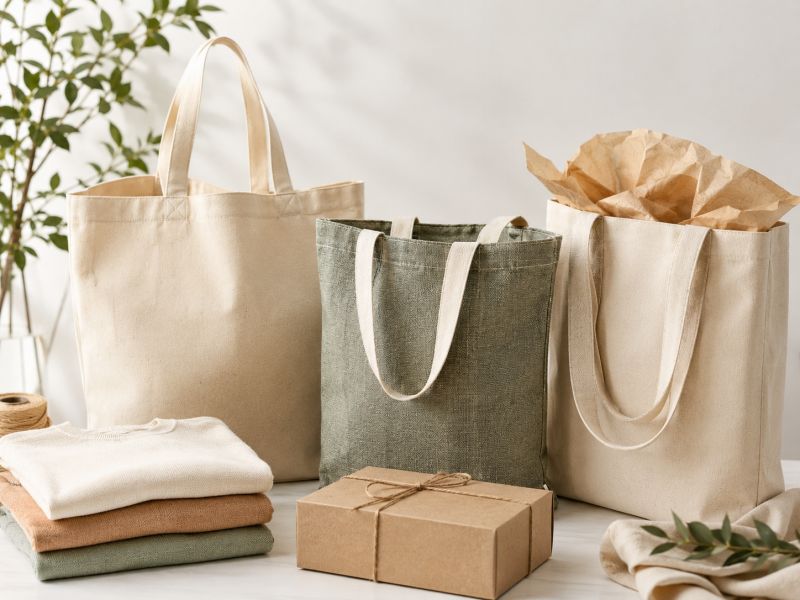
Retail packaging has changed. A shopping bag is no longer just something that carries a product from the store to the door. For many brands, it has become part of the product experience. A plain disposable bag may finish its job in ten minutes. A well-made canvas tote bag may stay in daily use for months or even years.
That is why eco-friendly canvas tote bags have become a strong choice for fashion stores, beauty brands, gift shops, lifestyle labels, bookshops, museum stores, organic product lines, event teams, and private label projects. They are practical, reusable, easy to brand, and flexible enough for many retail scenes.
Eco-friendly canvas tote bags are reusable retail packaging bags made from cotton canvas, recycled cotton canvas, organic cotton canvas, or blended canvas materials. For retail brands, they can work as shopping bags, gift packaging, event bags, private label packaging, and long-term brand carriers. A strong custom canvas tote bag project should match material, canvas weight, bag structure, logo method, packing style, budget, timing, and repeat-order quality control.
The real value is not only in the word “eco-friendly.” The real value comes from how the bag works after the sale. Will the shopper keep it? Will they carry it in public? Will the logo still look clean after repeated use? Will the handle feel comfortable when the bag is full? Will the same quality be repeated in the next order?
For serious retail projects, those details matter. The right canvas tote bag can reduce one-time packaging waste, improve brand presentation, support store campaigns, and give the end user something they actually want to keep.
What Are Eco-Friendly Canvas Tote Bags for Retail Packaging?
Eco-friendly canvas tote bags are reusable fabric bags designed for shopping, gifting, retail packaging, and brand presentation. They are often made from natural cotton canvas, recycled cotton canvas, organic cotton canvas, or blended canvas. For retail use, they can replace short-life packaging while giving the brand a larger surface for logos, labels, artwork, and daily reuse.
In real retail projects, the same product can serve different roles. A flat cotton tote may work for apparel stores. A bottom gusset canvas tote may hold boxed skincare sets. A heavy canvas bag with a woven label may suit lifestyle brands. A natural cotton tote with a simple one-color logo may work beautifully for bookstores, organic stores, or coffee brands.
This is why canvas tote bags should not be treated as one fixed item. The material, thickness, structure, handle length, logo method, and packing style all change the final result.
A retail team may begin with a simple request like, “We need an eco tote bag with our logo.” A better starting brief would be: “We need a reusable canvas tote bag for folded apparel, used as store packaging and member gift, with natural color fabric, one-color logo, soft handfeel, and carton packing for store distribution.”
That second brief leads to a much better product. It gives the factory enough information to suggest fabric weight, size, handle length, print method, and packing method.
Why Are Canvas Tote Bags a Better Packaging Choice for Retail Brands?
Canvas tote bags work well for retail brands because they combine packaging, function, and brand display in one product. Unlike a disposable bag, a canvas tote can be used again for shopping, commuting, books, groceries, travel items, or daily errands. That repeated use gives the brand more visibility and a better chance to stay in the user’s routine.
A paper bag may look good at checkout, but it rarely becomes part of someone’s daily life. A thin plastic bag may be low in cost, but it does little for brand feeling. A common non-woven bag may be useful for large events, but it often lacks the texture and weight that many retail brands want.
Canvas has a more natural feel. It works well with clean logos, simple artwork, and private label details. It also fits many store types: fashion, beauty, wellness, gifts, books, organic food, handmade goods, home goods, museums, and lifestyle retail.
The best retail packaging does three jobs at the same time. It carries the product safely. It presents the brand clearly. It gives the user a reason to keep it. Canvas tote bags can do all three when the design is matched to the product and use scene.
The mistake many brands make is treating canvas tote bags as low-cost giveaway items. That often leads to bags that are too thin, too small, badly printed, or uncomfortable to carry. If the final user does not want to keep the bag, the retail value is lost.
For a better result, choose the bag from the user’s side. Ask what they will carry, how heavy the contents may be, where they will use it, and whether the design feels like part of the brand rather than a random extra.
Which Canvas Material Is Best: Natural, Recycled, or Organic Cotton?

The best canvas material depends on the brand position, budget, product weight, and sustainability story. Natural cotton canvas works well for flexible retail projects. Recycled cotton canvas supports recycled material goals. Organic cotton canvas suits premium programs with stricter material expectations. Heavy cotton canvas is better for long reuse, while blended canvas can help control cost.
Material choice should not be made by trend alone. A brand can choose recycled cotton because it wants to reduce reliance on virgin material. Another brand may choose organic cotton because the product line already focuses on natural sourcing. A high-volume store project may choose natural cotton canvas because it balances cost, appearance, and production stability.
Here is a practical way to compare common choices:
| Material | Best For | Typical Benefit | Watch Before Order |
|---|---|---|---|
| Natural cotton canvas | Daily retail bags, store packaging | Clean look, flexible cost | Shade and shrinkage should be reviewed |
| Recycled cotton canvas | Reusable retail programs, brand campaigns | Strong recycled material story | Color consistency may need closer checking |
| Organic cotton canvas | Premium gifts, wellness, beauty, lifestyle | Better fit for natural-positioned brands | Cost and material lead time may be higher |
| Heavy cotton canvas | Long-use shopping bags, boutique packaging | Stronger structure and handfeel | Higher weight affects cost and shipping |
| Blended canvas | Large-volume projects | Better budget control | Material story may be less premium |
Material is only one part of the decision. A 12 oz natural cotton canvas tote may feel more premium than a very light recycled tote. A recycled material story is useful, but the bag still needs good stitching, comfortable handles, clean logo execution, and practical size.
For retail packaging, the bag must also match the product. A soft natural cotton tote may be perfect for folded apparel. A stiffer heavy canvas tote may be better for boxed gifts. A lighter canvas tote may work for events where cost and quantity matter more than structure.
The safest path is to confirm material swatches and a first sample before a larger run. This lets the brand review handfeel, color, logo effect, folding style, and packing before production moves forward.
What Canvas Weight Should You Choose for Custom Tote Bags?

Canvas weight affects handfeel, strength, print result, structure, cost, and shipping weight. Light canvas such as 6 oz can work for simple promotions. 8 oz is common for daily retail bags. 10 oz and 12 oz give better structure and reuse value. 14–16 oz is more suitable for premium or heavier-duty retail projects.
A tote bag does not become better just because the fabric is thicker. The right weight depends on what the bag needs to carry and how the brand wants it to feel.
| Canvas Weight | Suitable Use | Common Retail Fit |
|---|---|---|
| 6 oz | Light packaging, event handouts, simple gift bags | Budget-friendly projects |
| 8 oz | Daily shopping bags, apparel packaging | Balanced cost and function |
| 10 oz | Brand packaging, reusable store bags | Better handfeel and repeat use |
| 12 oz | Boutique packaging, gift sets, heavier goods | More structure and stronger feel |
| 14–16 oz | Premium totes, lifestyle retail, long-term use | Higher-end product experience |
For a fashion store, 8 oz or 10 oz may be enough if the bag carries shirts, scarves, or light apparel. For beauty gift sets, a 10 oz or 12 oz bottom gusset tote may feel more stable. For a lifestyle brand selling books, candles, bottles, or boxed goods, 12 oz may offer a stronger user experience.
Canvas weight also affects printing. A very loose or light fabric may not hold a clean logo as well as a more stable canvas. A heavy fabric can look premium, but it can also raise unit cost, packing volume, and freight cost.
This is where factory advice saves time. Instead of asking for the thickest material, tell the project team what will go inside the bag, the target retail scene, and the expected budget level. Jundong can review size, canvas weight, structure, and logo method before sampling. Project details can be sent to info@jundongfactory.com for review.
Which Tote Bag Structure Works Best for Your Product?
The best tote bag structure depends on the product size, retail use, packing method, and how the final user will carry it. Flat totes suit light goods and apparel. Bottom gusset totes work better for boxes and gift sets. Side gussets add capacity. Box-bottom totes give a cleaner standing shape. Zippers, pockets, labels, and longer handles add more retail value.
Structure is where many canvas tote projects succeed or fail. Two bags may use the same fabric and logo, but the one with the right bottom, handle, and size will feel much more useful.
A flat tote bag is the simplest option. It is easy to fold, ship, store, and distribute. It is suitable for apparel, books, documents, and event materials. It is also a good choice when the project needs clean branding and controlled cost.
A bottom gusset tote gives the bag more depth. This is helpful for beauty boxes, gift sets, folded garments, bakery items, and retail bundles. It also helps the bag look more structured when filled.
A side gusset tote adds capacity and flexibility. It is useful when products vary in size or when the bag needs to hold several items. For chain stores or seasonal retail projects, this can reduce the need for too many different bag sizes.
A box-bottom tote gives a more premium retail feel. It can stand better, present boxed products more neatly, and look stronger in store photos. This is a good option for boutique retail, gift packaging, and lifestyle products.
Zippers and inner pockets are not always needed, but they can turn a packaging bag into a product the user will keep. For member gifts, VIP retail programs, travel-related brands, or lifestyle campaigns, these added details may increase reuse.
The key is not to add features for decoration. Every feature should solve a real use issue: carrying comfort, product fit, store display, daily reuse, or brand presentation.
How Can Logo Printing Make Canvas Bags Work as Brand Packaging?

Logo execution turns a canvas tote bag from a plain carrier into retail packaging. Screen printing is good for clean logos and large orders. Heat transfer suits colorful artwork. Embroidery gives a premium feel. Woven labels, PU patches, hangtags, care labels, and barcode stickers help the bag fit private label and store-ready projects.
A canvas tote bag has one big advantage: a wide and visible surface. This makes it ideal for logo display. But a large print area can also expose mistakes. If the logo is too low, too small, off-center, or printed on the wrong fabric shade, the whole bag feels less professional.
Screen printing is often the most practical choice for simple logos. It works well on natural cotton, recycled cotton, and many canvas weights. It is clean, stable, and suitable for larger quantities.
Heat transfer can show more color detail. It may be useful for artwork, campaign graphics, or visual designs that require stronger color expression. The fabric texture, print size, and washing expectations should be checked before final approval.
Embroidery works best when the logo is not too large and the brand wants a more premium finish. It adds texture and depth, but it may not be suitable for very large filled artwork.
Woven labels and hangtags are useful for private label projects. They make the tote feel less like a promotional item and more like a retail product. A small woven label on the side seam, an inside care label, or a kraft hangtag can change the whole product feeling.
Before sampling, confirm logo file format, color reference, print size, placement, and whether the print should sit on one side or both sides. For natural cotton canvas, the base fabric is not pure white, so logo color may look warmer than it does on screen.
Eco-Friendly Canvas Tote Bags vs Paper Bags vs Non-Woven Bags
Canvas tote bags, paper bags, and non-woven bags all have different strengths. Paper bags work well for short-use retail packaging. Non-woven bags can fit large promotional projects. Canvas tote bags are stronger for repeated use, better brand retention, and higher retail texture. For brands that want packaging customers will keep, canvas is often the better long-use option.
A paper bag can be elegant. It is a strong choice for short retail moments, gift presentation, and products that need a more formal checkout experience. But paper bags are usually less durable in daily reuse, especially when carrying heavier items or facing moisture.
Non-woven bags are often used for events, supermarkets, and large-volume giveaways. They can be affordable and lightweight. However, the texture may not match premium retail brands, and the final user may not keep them as long as a well-designed canvas tote.
Canvas tote bags sit in a different space. They may cost more than simple paper or non-woven bags, but they also offer longer use. When designed well, they become part of daily life: grocery runs, gym items, books, work supplies, travel extras, or casual shopping.
| Bag Type | Strength | Limitation | Best Use |
|---|---|---|---|
| Paper bag | Clean retail look, easy for checkout | Short use, lower durability | Gift shops, fashion checkout, boutique stores |
| Non-woven bag | Light, practical, cost-friendly | Less premium texture | Events, supermarkets, large giveaways |
| Canvas tote bag | Reusable, strong logo display, better texture | Higher cost and more fabric planning | Retail packaging, brand gifts, lifestyle projects |
The smart choice depends on the role of the bag. If it only needs to carry a product home once, paper may be enough. If it needs to serve as a low-cost event carrier, non-woven may work. If it needs to stay with the user and continue showing the brand, canvas deserves serious consideration.
How Much Do Custom Canvas Tote Bags Cost?
Custom canvas tote bag cost depends on material, canvas weight, size, structure, handle length, logo method, print colors, labels, packing, quantity, and shipping plan. A simple flat tote with one-color print costs less than a heavy bottom-gusset tote with embroidery, woven label, hangtag, individual packing, and multi-location delivery needs.
There is no useful single price for all canvas tote bags. Two bags that look similar from far away may have very different cost structures.
A larger bag uses more fabric. A heavier canvas raises both material cost and shipping weight. A bottom gusset adds sewing work and fabric use. A zipper, pocket, woven label, or patch adds parts and labor. A multi-color logo may require a different print method and more checking.
Quantity also matters. Jundong’s standard order quantity is usually 500 pcs per design. For simple styles, 200–300 pcs can sometimes be arranged, but smaller runs usually carry higher unit cost because material purchase and full production steps still need to be handled. At 500 pcs or more, pricing is usually more workable for regular projects.
Here are common price drivers:
| Cost Factor | Why It Matters |
|---|---|
| Material type | Organic and recycled options may cost more than basic cotton |
| Canvas weight | Heavier fabric increases material and freight cost |
| Bag size | Larger panels use more fabric |
| Structure | Gussets, zippers, pockets, and reinforced seams add labor |
| Logo method | Screen print, heat transfer, embroidery, and patches differ in cost |
| Print colors | More colors need more setup and checking |
| Labels and hangtags | Useful for retail, but add parts and process steps |
| Packing style | Individual packing, barcode, carton sorting, and store labels add handling |
| Quantity | Larger orders usually reduce unit cost |
A good quote should not be based only on a photo. For a useful review, send size, material idea, logo file, quantity, packing needs, and delivery country. That gives the factory enough detail to check cost in a practical way.
How Long Does Sampling and Bulk Production Take?
Sampling for custom canvas tote bags is usually around 5–7 days after details are clear. Some simple styles may be faster. Bulk production is usually around 20–30 days after sample approval, depending on material, logo method, order quantity, packing needs, and revision rounds. A confirmed sample should guide size, logo, stitching, color, and packing.
Time planning is especially important for retail projects. Store openings, seasonal launches, gift campaigns, and event schedules do not leave much room for delay.
A simple natural cotton flat tote with one-color logo may move quickly. A recycled cotton tote with custom dyed fabric, special hangtag, woven label, barcode sticker, and store sorting will need more planning.
The sample stage should not be rushed blindly. It is the moment to check the product before money and time are committed to production. During sample review, look at fabric handfeel, logo size, handle comfort, stitching, gusset depth, folding method, and packing style.
A practical process may look like this:
| Stage | What Happens | Typical Timing |
|---|---|---|
| Project review | Size, use scene, fabric, logo, quantity, packing details | 1–2 working days |
| Sample making | Pattern, fabric cutting, logo work, sewing, checking | Usually 5–7 days |
| Sample revision | Adjust size, logo, handle, fabric, or structure if needed | Depends on changes |
| Production prep | Confirm sample, material, artwork, packing, carton marks | Before bulk starts |
| Bulk production | Cutting, logo process, sewing, trimming, inspection, packing | Usually 20–30 days |
| Shipment prep | Carton check, documents, delivery coordination | Based on shipping plan |
For deadline-driven projects, share the target delivery date early. This helps the factory review whether the schedule is realistic and which material or logo method may save time.
How Does a Canvas Bag Factory Control Quality Before Shipment?

A reliable canvas bag factory controls quality through material inspection, sample confirmation, in-process checking, logo review, stitching inspection, handle pull checks, size tolerance review, packing checks, carton mark review, and final inspection. For retail packaging projects, quality control should focus on both product function and brand presentation.
Canvas tote bags look simple, but many details can go wrong. The fabric may have shade differences. The logo may shift. The handles may not be equal. Stitching may look messy. The bottom gusset may not match the approved sample. Carton marks may not match the packing list.
For retail brands, these details affect store presentation and end-user trust. A tote bag with crooked handles or poor printing does not feel like sustainable packaging. It feels like a rushed giveaway.
Useful quality checks include:
| Check Item | What To Review |
|---|---|
| Fabric | Weight, shade, texture, shrinkage risk, stain marks |
| Cutting | Panel size, symmetry, direction, fabric waste control |
| Logo | Position, color, size, clarity, adhesion, alignment |
| Sewing | Stitch density, thread trimming, seam strength, neat corners |
| Handles | Length, placement, pull strength, comfort |
| Structure | Gusset depth, bag shape, opening, folding result |
| Labels | Woven label, care label, hangtag, barcode accuracy |
| Packing | Polybag, folding, carton quantity, store sorting |
| Carton marks | SKU, color, quantity, destination, project code |
Jundong’s setup is useful for these projects because the company has an in-house quality team, project communication support, sample development ability, and export packing experience. For larger retail programs, those checks help reduce repeat-order risk.
Who Should Use Eco-Friendly Canvas Tote Bags for Retail Packaging?
Eco-friendly canvas tote bags are suitable for brands and retail teams that want reusable packaging with stronger daily-use value. They fit fashion stores, beauty brands, lifestyle shops, bookstores, museum stores, organic product lines, coffee brands, gift programs, event merchandise, subscription boxes, chain retail stores, and private label projects.
This product is especially useful when the packaging itself becomes part of the brand experience.
Fashion brands can use canvas totes for apparel packaging, launch gifts, or seasonal capsule projects. Beauty and skincare brands can use bottom gusset totes for gift sets, sampling kits, or retail bundles. Bookstores and museum shops can create reusable store bags that customers naturally keep and carry.
Coffee shops, bakeries, and organic product stores may prefer natural cotton or recycled cotton canvas because the texture supports a warm, everyday feeling. Lifestyle stores may choose heavier canvas, woven labels, and inner pockets to create a product that feels retail-ready.
Subscription box brands can use canvas totes as an added value item inside a package. Event teams can use them for reusable merchandise bags. Chain stores can create store-level packaging that supports repeated use while keeping logo presentation consistent.
The best fit is not based only on industry. It depends on whether the brand wants the bag to be kept. If the answer is yes, then material, size, print, stitching, and handle comfort should be treated with more care.
What Should You Send to Start a Custom Canvas Tote Bag Project?
To start a custom canvas tote bag project, send the bag size, use scene, product to be packed, preferred canvas material, canvas weight, logo file, logo size, logo position, quantity, bag color, handle length, label or hangtag needs, packing method, delivery date, and destination country. Clear details lead to better samples, faster quotes, and smoother production.
A short message with only “Please quote canvas bag” usually leads to many follow-up emails. A clearer brief helps the project move faster.
Here is a practical checklist:
| Detail To Send | Why It Helps |
|---|---|
| Reference photo or sketch | Shows the expected style quickly |
| Bag size | Helps calculate fabric use and product fit |
| Product to be packed | Helps choose structure and weight |
| Canvas material | Natural, recycled, organic, or blended |
| Canvas weight | Affects handfeel, strength, cost, and shipping |
| Logo file | Needed for print or label review |
| Logo size and position | Helps avoid wrong placement |
| Quantity | Affects cost, material planning, and production time |
| Bag color | Natural, dyed, black, custom color, or mixed colors |
| Handle length | Hand carry or shoulder carry |
| Label and hangtag | Helps create private label retail presentation |
| Packing method | Bulk pack, individual pack, barcode, store sorting |
| Delivery country | Helps review export packing and shipping plan |
If the project is still early, a reference image, target size, logo file, quantity, and use scene are enough to begin the first review.
For canvas tote bag projects that need material advice, logo review, sample planning, or retail packing support, project details can be sent to info@jundongfactory.com. A clear start helps Jundong recommend a practical fabric weight, bag structure, logo method, packing plan, and production path.
Custom Canvas Tote Bag Process from Idea to Shipment
A strong canvas tote bag project follows a clear process: project review, material selection, sample making, sample approval, production planning, bulk production, inspection, packing, and shipment. Each step should protect the same goal: the final bag must match the brand style, product use, budget, timing, and repeat-order standard.
The first step is project review. The factory should understand what the bag will carry, where it will be used, who will receive it, and how the brand wants it to feel. A retail tote for luxury skincare is different from a tote for a campus event. A store bag for folded apparel is different from a tote for boxed candles.
The second step is material and structure selection. This is where canvas weight, fabric type, gusset, handle, and logo method are matched to the use scene. A good factory should not push the most expensive option by default. The better choice is the one that fits the product and budget.
The third step is sample making. A sample is not just a preview. It is the control standard for bulk production. During sample approval, check the handle length, logo placement, stitch quality, fabric feel, bag size, color, and packing style.
The fourth step is production planning. Materials, artwork, packing details, carton marks, and delivery schedule should be locked before bulk production starts. This reduces confusion during production.
The fifth step is quality inspection and packing. For retail packaging, the bag must look clean and consistent. Stains, loose threads, uneven handles, poor logo printing, and wrong labels should be caught before shipment.
The final step is shipment coordination. Carton size, carton marks, packing list, and delivery plan should match the receiving side’s needs. For chain stores, multi-location shipments, or store-level sorting, these details should be planned early.
How to Build a Better Retail Packaging Program with Canvas Tote Bags
A canvas tote bag works best when it is planned as part of a retail packaging program, not as a last-minute add-on. The best projects connect material, structure, logo, label, packing, store use, and repeat-order records into one clear system.
Think about the full journey. The bag is packed at the factory. It is shipped in cartons. It reaches a warehouse or store. A staff member fills it with product. The shopper receives it. Then the shopper may reuse it in public.
Every step can create value or create trouble.
If the bag is too large, it wastes fabric and feels empty. If it is too small, the product does not fit well. If the handle is too short, it is uncomfortable. If the logo is too low, it disappears when the bag is filled. If packing is not consistent, stores may receive mixed colors or wrong versions.
For growing brands, repeat-order records are also important. Keep approved sample photos, material cards, logo files, print size, label position, packing photos, carton marks, and color references. These records help the next order stay consistent.
That is the difference between a simple order and a real packaging program. A simple order ends after delivery. A good program can support new colors, new store launches, holiday versions, member gifts, and future product lines.
If your team is planning a reusable retail bag project, start with the product and the end user. Then build the canvas tote bag around that real use. The result will be more practical, more brand-ready, and much easier to repeat.
FAQs About Eco-Friendly Canvas Tote Bags for Sustainable Retail Packaging
1. Are eco-friendly canvas tote bags suitable for retail packaging?
Certainly. Eco-friendly canvas tote bags are a strong fit for retail packaging when the brand wants the bag to be reused, not thrown away after one trip. They work especially well for fashion stores, beauty sets, gift shops, bookstores, lifestyle stores, museum shops, wellness brands, coffee brands, and event merchandise. A canvas tote can carry the product, show the logo clearly, and stay in the shopper’s daily life after the sale.
The key is to choose the right structure. A flat canvas tote is practical for apparel, books, and lightweight products. A bottom gusset tote works better for boxed skincare, candles, gift sets, and folded retail bundles. A heavier canvas tote with a woven label or hangtag can feel more like a retail product than a simple carrier bag.
For brands that want cleaner packaging and longer brand visibility, canvas tote bags often give better long-term value than disposable packaging. The bag may cost more than a paper bag at the start, but it can continue working as a reusable brand item. If your team is planning a store launch, seasonal retail set, member gift, or private label packaging program, a well-planned canvas tote can make the product feel more finished and more memorable.
2. Which canvas weight is best for custom tote bags?
Sure. The best canvas weight depends on what the bag will carry, how premium it should feel, and how often the shopper may reuse it. For light retail packaging, 6 oz canvas can work. For daily store bags, 8 oz is a common choice. For better structure and repeated use, 10 oz and 12 oz are usually stronger options. For premium lifestyle products or heavier contents, 14–16 oz canvas may be worth considering.
A thicker canvas is not always the best choice. It can improve handfeel and structure, but it also increases material cost, carton weight, and shipping volume. A 12 oz tote may feel great for boutique packaging, but it may be unnecessary for a simple event handout. On the other hand, a 6 oz tote may save cost, but it may not give the strength or retail feeling needed for higher-value products.
| Canvas Weight | Better For | Practical Note |
|---|---|---|
| 6 oz | Light events, simple packaging | Cost-friendly, lighter handfeel |
| 8 oz | Daily store bags, apparel packaging | Balanced option for many projects |
| 10 oz | Reusable retail tote bags | Better handfeel and stronger structure |
| 12 oz | Gift sets, boutique stores | More premium and more stable |
| 14–16 oz | Lifestyle products, heavier use | Stronger, but higher cost and freight weight |
The safer approach is to match the weight to the product. Send the product size, estimated weight, bag size, logo plan, and order quantity to Jundong, and the team can suggest a practical canvas weight before sampling.
3. What is the difference between natural cotton, recycled cotton, and organic cotton canvas?
Of course. Natural cotton canvas is often chosen for its clean look, flexible cost, and stable use in everyday retail packaging. Recycled cotton canvas is suitable for brands that want a recycled material story and a more responsible packaging direction. Organic cotton canvas is usually chosen for premium projects where material origin and brand positioning matter more.
Natural cotton canvas is practical for apparel stores, bookstores, coffee shops, gift packaging, and general retail use. It has a familiar texture and is easier to pair with simple logo printing. Recycled cotton canvas can be attractive for brands that want to show a stronger material message, but color consistency and fabric feel should be reviewed through actual swatches. Organic cotton canvas often feels more aligned with wellness, baby products, clean beauty, organic food, and higher-end lifestyle projects, but cost and material timing may need earlier planning.
| Material Type | Best Fit | What To Review |
|---|---|---|
| Natural cotton canvas | Flexible retail packaging | Fabric shade, shrinkage, print effect |
| Recycled cotton canvas | Reusable brand programs | Color stability, handfeel, material story |
| Organic cotton canvas | Premium natural-positioned brands | Cost, availability, fabric reference |
| Blended canvas | Larger volume projects | Material composition and final texture |
A good retail tote should not rely on material name alone. The bag still needs the right weight, strong stitching, clean logo placement, comfortable handles, and practical packing. Material gives the story; construction gives the real use value.
4. Can we print a large logo on eco-friendly canvas tote bags?
Definitely. Large logo printing works well on canvas tote bags because canvas offers a wide and visible surface. Screen printing is often a strong choice for clean logos, simple artwork, and larger runs. Heat transfer can work for colorful designs. Embroidery, woven labels, rubber patches, or PU patches can add a more refined look when the logo is smaller or more detail-focused.
The main thing is not only whether the logo can be printed, but whether it should be printed at that size. A logo that looks strong on a screen may become too heavy on fabric. A very large solid-color print may feel stiff on lighter canvas. A low logo position may disappear when the bag is filled. A print placed too close to the bottom seam may also look crowded.
Before sampling, it is better to confirm these details:
| Logo Detail | Why It Matters |
|---|---|
| File format | Clean artwork helps clean printing |
| Logo size | Controls visual balance and cost |
| Print position | Avoids awkward placement after the bag is filled |
| Print color | Natural canvas may change the final color feeling |
| One side or two sides | Affects cost and production time |
| Print method | Impacts texture, durability, and visual effect |
For retail packaging, the best logo is not always the biggest one. It is the one that looks clear, balanced, and easy to recognize in real use. If you are unsure about size or position, Jundong can review your artwork and suggest a practical layout for sampling.
5. How much do custom eco-friendly canvas tote bags cost?
Absolutely, this is one of the most common concerns. The cost of custom eco-friendly canvas tote bags depends on material, canvas weight, size, structure, handle length, logo method, print colors, labels, packing, quantity, and shipping plan. A simple flat tote with one-color screen printing will cost less than a 12 oz bottom gusset tote with embroidery, woven label, hangtag, individual packing, and carton sorting.
It is not very useful to judge price from a photo alone. Two bags may look similar but have very different costs. A larger bag uses more fabric. Heavier canvas increases material use and freight weight. A zipper, inner pocket, reinforced bottom, or special label adds more process steps. Multi-color printing also takes more setup and checking.
For Jundong projects, the usual starting quantity is around 500 pcs per design. Some simple styles may be arranged at 200–300 pcs, but smaller runs usually have a higher unit cost because the material preparation, cutting, logo work, sewing, inspection, and packing steps still need to be completed.
If your team wants a realistic cost review, prepare the bag size, canvas weight, logo file, print method, quantity, packing style, and destination country. This gives the project team enough information to check the cost more accurately and avoid a rough quote that later changes too much.
6. How long does it take to make samples and bulk orders?
Certainly. For custom canvas tote bags, sample making usually takes about 5–7 days after the main details are clear. Some simple styles may move faster. Bulk production usually takes around 20–30 days after sample approval, depending on fabric, logo process, quantity, packing needs, and revision rounds.
The timeline can be shorter or longer based on project complexity. A natural cotton flat tote with one-color screen printing is usually easier to prepare. A recycled cotton tote with custom color fabric, large logo, woven label, hangtag, barcode sticker, and retail packing needs more planning. If the project involves several colors, several sizes, or store-level carton marks, the schedule should be confirmed earlier.
Here is a practical timing view:
| Stage | Typical Time | What Happens |
|---|---|---|
| Project review | 1–2 working days | Size, material, logo, quantity, packing check |
| Sample making | Usually 5–7 days | Pattern, cutting, logo work, sewing, sample check |
| Sample revision | Based on changes | Adjust size, logo, handle, fabric, or packing |
| Bulk production | Usually 20–30 days | Material prep, production, inspection, packing |
| Shipping prep | Based on delivery plan | Carton marks, documents, freight coordination |
For event launches, retail openings, seasonal campaigns, or holiday gift programs, share the target delivery date from the beginning. This helps the team suggest a safer material, logo method, and production route.
7. What quality checks are needed before canvas tote bags are shipped?
Of course. Quality checks for canvas tote bags should cover fabric, cutting, logo, sewing, handles, size, labels, packing, and carton marks. For retail packaging, the bag needs to look clean, feel stable, carry the product properly, and match the approved sample. Small errors can become very visible when the bag is used in a store or given to shoppers.
Important checks include fabric weight, fabric shade, stains, cutting accuracy, logo position, print clarity, print adhesion, stitch density, thread trimming, handle length, handle strength, gusset depth, label accuracy, folding method, carton quantity, and outer carton marks. A crooked logo or uneven handle may seem small during production, but it can make the finished packaging feel careless.
For larger retail programs, quality should also be repeatable. The second order should not feel different from the first order. That means approved sample photos, material cards, logo size records, packing photos, and carton mark formats should be saved.
Jundong has an internal quality team and multiple inspection steps, which is valuable for projects that need stable output and repeat orders. If your bag will be used for chain stores, private label programs, or multi-SKU retail packaging, quality control should be discussed before production starts, not only at the end.
8. Can canvas tote bags include private label details such as labels, hangtags, and barcode stickers?
Definitely. Canvas tote bags can include many private label and retail-ready details, including woven labels, cotton labels, care labels, hangtags, barcode stickers, QR code labels, inner labels, branded polybags, carton marks, and store sorting labels. These details help the bag look like part of a formal retail program rather than a plain logo bag.
For fashion, beauty, lifestyle, and gift projects, private label details can make a big difference. A small woven label on the side seam can give the tote a cleaner brand feel. A kraft hangtag can tell the material story. A care label can explain fabric content and use instructions. A barcode sticker can help warehouse or store handling. A branded polybag can improve presentation before the bag reaches the retail side.
The key is to plan these details early. Label size, label position, tag string, barcode format, warning text, carton information, and packing logic should be confirmed before bulk production. If labels arrive late or barcode files change after production begins, delays and repacking risks can happen.
For multi-SKU projects, clear labeling is even more important. Different bag colors, logo versions, or store destinations should have clean packing records. This reduces sorting mistakes and makes repeat orders much easier to manage.
9. Are canvas tote bags better than paper bags or non-woven bags for sustainable retail packaging?
Sure, in many retail programs canvas tote bags offer stronger long-term value, but the best choice depends on the project. Paper bags are clean and useful for short-term checkout packaging. Non-woven bags are practical for large-volume events and budget-driven projects. Canvas tote bags are better when the brand wants repeated use, stronger texture, better logo visibility, and longer brand presence.
A paper bag can look elegant, especially for boutiques and gift stores. But it usually has a shorter life. It may crease, tear, or lose shape after use. Non-woven bags can be light and cost-friendly, but they often feel more promotional than retail. Canvas sits in a stronger position when the brand wants the bag to be kept and carried again.
| Bag Type | Main Strength | Best Use |
|---|---|---|
| Paper bag | Clean checkout look | Short-use retail packaging |
| Non-woven bag | Cost-friendly and light | Events, giveaways, supermarkets |
| Canvas tote bag | Reusable, stronger, more brand-friendly | Retail packaging, gift sets, lifestyle brands |
Canvas tote bags may not always be the lowest-cost option, but they can bring more value when reuse matters. If the shopper keeps the bag, carries it outside, and remembers the brand, the packaging continues working after the first sale.
10. What should we send to start a custom canvas tote bag project?
Absolutely. To start a custom canvas tote bag project smoothly, send the bag size, reference photo, product to be packed, preferred canvas material, canvas weight, logo file, logo size and position, quantity, bag color, handle length, label needs, packing style, target delivery date, and destination country. Clear information helps the project team review cost, structure, sample timing, and production plan faster.
If the project is still early, do not worry about having every detail ready. A reference image, target size, logo file, quantity, and use scene are enough for a first review. From there, the team can suggest canvas weight, structure, logo method, packing style, and sample route.
Here is a simple project checklist:
| Detail | Example |
|---|---|
| Use scene | Store packaging, gift set, event bag, member gift |
| Product inside | Apparel, skincare box, book, coffee product, gift set |
| Bag size | Width × height × gusset |
| Material | Natural cotton, recycled cotton, organic cotton |
| Canvas weight | 6 oz, 8 oz, 10 oz, 12 oz, 16 oz |
| Logo | Screen print, heat transfer, embroidery, woven label |
| Quantity | 500 pcs, 1,000 pcs, 5,000 pcs, or more |
| Packing | Bulk pack, individual pack, barcode, carton marks |
| Delivery | Destination country and target date |
For a clear project review, you can send your details to info@jundongfactory.com. The Jundong team can help review material, structure, logo, sampling, packing, and bulk production details before the project moves forward.