 Skip to content
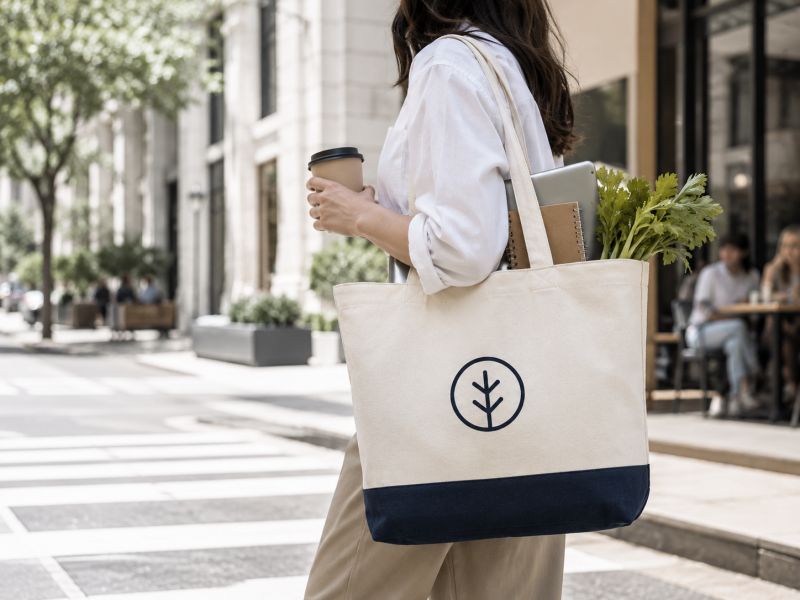
A trade show canvas bag has a harder job than most people think.
At first glance, it looks simple. It is a bag with a logo. It holds brochures, samples, catalogs, cards, and small gifts. People pick it up at a booth and walk away. Easy, right?
Not really.
A trade show bag can either become a moving brand sign across the event floor, or it can become one more giveaway that gets folded, forgotten, or thrown into a hotel room corner. The difference is rarely one single detail. It is usually the result of several small decisions: fabric weight, bag size, handle length, logo size, print method, color choice, packing method, and delivery timing.
A low-cost bag may look good on a spreadsheet, but if the canvas is too thin, the handle is uncomfortable, or the print feels oversized, the brand impression drops quickly. A premium bag may feel great, but if it costs too much for a high-volume event, it may not fit the project plan. The smartest choice sits between these two extremes.
A good trade show canvas bag should be affordable for bulk use, clear enough for brand visibility, strong enough for event materials, and useful enough to be carried after the show. The right option depends on canvas weight, bag size, logo area, printing method, packing plan, delivery date, and the real purpose of the event.
This guide walks through how to plan custom canvas bags for trade shows from a practical project view. It is written for brand teams, event companies, exhibitors, promotional programs, retail groups, and sourcing teams that need more than a quick logo print. The goal is to help you choose a bag that works on the event floor and still makes sense after the event is over.
What Makes a Canvas Bag Work for Trade Shows?
A canvas bag works well for trade shows when it is easy to carry, large enough for event materials, strong enough for loaded use, and clean enough to show the logo clearly. The best trade show canvas bags are not always the thickest or most expensive. They are the ones that match the booth traffic, giveaway purpose, visitor profile, and expected reuse scene.
Trade shows are busy. Visitors move from booth to booth while carrying catalogs, flyers, samples, business cards, notebooks, water bottles, and small gifts. If the bag opening is too narrow, packing becomes slow. If the handle drop is too short, people cannot carry it comfortably on the shoulder. If the body size is too small, brochures bend. If the logo is too large, the bag may look like a temporary ad instead of something people want to keep.
A good event canvas tote should feel natural in a visitor’s hand. It should not fight the user. A simple flat tote can work well for brochures and light items. A gusseted tote is better when the event kit includes product samples or boxed items. A thicker canvas shoulder tote works better for conferences, brand events, VIP visitors, or lifestyle campaigns.
The real test is simple: after the visitor leaves the booth, will they still carry the bag around the venue? After the event, will they use it for groceries, work, school, errands, or travel? If the is yes, the bag is doing more than holding materials. It is extending the brand’s presence into everyday life.
For trade shows, the best custom canvas bag is not only a container. It is part of the event experience.
Why Should Budget Start with Use, Not Unit Price?
Budget planning should start with how the bag will be used, not only with the lowest unit price. A cheap canvas bag can become expensive if it fails to carry the right items, gives a weak brand impression, or is not reused. A better plan reviews fabric weight, size, print colors, packing, carton volume, delivery timing, and total event value before confirming the final style.
Many event teams ask for the lowest possible price first. That is understandable. Trade show quantities can be large, and every cent matters. But a canvas bag has several cost layers.
The most visible cost is the unit price. The less visible costs include sample changes, print setup, packing method, carton size, freight volume, rush timing, and the risk of poor usage after the event. A bag that saves a little on fabric but feels too thin may reduce the chance of reuse. A very large multi-color print may look attractive in a mockup but push the project beyond budget when scaled to thousands of pieces.
A more useful budget discussion starts:
What will the bag carry?
How visible does the logo need to be?
Will the bag be used after the event?
Once these are clear, the cost plan becomes easier. A high-traffic giveaway may use a lighter cotton canvas, one-color print, and a standard flat tote. A brand booth may choose a mid-weight canvas with a clean front logo. A VIP event may need heavier canvas, bottom gusset, inner pocket, woven label, or better packing.
Here is a simple planning view:
| Project Goal | Better Bag Direction | Cost Logic |
|---|---|---|
| Large booth giveaway | Light cotton or canvas flat tote | Controls cost for high volume |
| Standard trade show kit | 8oz–10oz canvas tote | Balances feel, strength, and price |
| Brand booth promotion | Mid-weight tote with clean logo | Better visual effect without overbuilding |
| VIP event gift | 12oz canvas, gusset, better finish | Higher perceived value and stronger reuse |
| Multi-event program | Repeatable style with stable print | Easier reorder and cost tracking |
Budget is not only about spending less. It is about spending in the right places. For many projects, the best place to invest is not the largest logo or the thickest fabric. It may be a better handle length, stronger stitching, a cleaner print area, or a more practical size.
If you already have an event date, target quantity, and logo file, Jundong can review the project and suggest a practical custom canvas bag plan at info@jundongfactory.com.
Which Canvas Bag Type Fits Your Event Budget?

The right canvas bag type depends on the event purpose, quantity, load, and expected reuse. Flat totes are suitable for lightweight giveaways. Gusset totes work better for samples and boxed items. Heavy canvas totes fit brand events and VIP programs. Foldable totes are useful when storage and shipping space matter. Shoulder totes are better when daily reuse is part of the goal.
Not every event needs the same bag. A school fair, a software expo, a retail trade show, and a luxury brand event should not use the same canvas tote structure.
A flat canvas tote is the simplest option. It is clean, easy to pack, and usually more cost-friendly. It works well for brochures, leaflets, postcards, thin catalogs, and small gifts. If the main goal is wide distribution, this style often makes sense.
A gusset canvas tote adds more room. The bottom or side gusset helps the bag stand better and carry thicker items. It is a better fit when the event kit includes product samples, boxed gifts, notebooks, bottles, or retail-style packs. It usually costs more than a flat tote, but the extra space can prevent awkward packing.
A heavy canvas tote feels more premium. It gives more structure and can carry heavier event materials. This is useful for VIP guests, retail launch events, partner meetings, and brand programs where quality perception matters.
A foldable tote helps when storage and shipping efficiency are key. It can be packed more tightly and handed out quickly. This is useful for travel-related events, conferences, and campaigns with limited booth storage.
A shoulder tote is a strong choice when reuse matters. A comfortable handle drop makes people more likely to carry the bag after the show. If the bag feels good on the shoulder, it has a better chance of entering daily use.
| Bag Type | Best Use Scene | Main Advantage | Watch Out For |
|---|---|---|---|
| Flat canvas tote | High-volume booth giveaway | Simple and cost-friendly | Limited depth for bulky items |
| Gusset canvas tote | Samples, catalogs, event kits | More capacity | Higher cost and carton volume |
| Heavy canvas tote | VIP gifts, premium events | Better feel and structure | Not always needed for mass giveaway |
| Foldable tote | Travel events, quick handout | Easy packing and storage | Less structured appearance |
| Shoulder tote | Reuse-focused projects | Better daily carry value | Handle length must be checked |
A smart choice does not start with “Which style is popular?” It starts with “What will people do with this bag?”
How Big Should the Logo Be on Trade Show Canvas Bags?
A trade show canvas bag logo should be large enough to be seen at the event, but not so large that the bag feels like a short-term ad. A practical logo width often sits around 50–70% of the bag body width, depending on the artwork shape, print method, and brand style. Safe margins, QR code size, and daily-use appeal should be checked before bulk production.
Logo size is one of the most common hidden problems in custom canvas bags.
Small logos may look clean in a design file but disappear on a crowded event floor. Oversized logos may look strong in a booth photo but feel too loud for daily use. The best logo size depends on what the brand wants the bag to do.
For event visibility, the logo should be readable from a few steps away. For reuse, the logo should feel wearable and not too aggressive. For budget control, the print area should stay reasonable, especially when using multi-color artwork.
A common 15 x 16 inch tote can often support a front logo around 8–11 inches wide, depending on the logo shape. A smaller tote may work better with a 5–7 inch logo. A large gusset tote can carry a larger design, but it still needs enough blank space around the artwork.
QR codes need special care. A code that looks fine on screen may be too small or too close to other artwork on fabric. It should have enough quiet space around it. It should also be tested with a phone from a natural scanning distance.
Sponsor logos can also create layout problems. When several logos are placed on one bag, the design may become crowded. In many cases, a clean main logo on the front and sponsor details on the back works better than forcing everything into one large block.
Good logo planning should review:
| Logo Detail | What To Check |
|---|---|
| Logo width | Match bag size and viewing distance |
| Print height | Avoid awkward vertical crowding |
| Safe margin | Keep space from edges and seams |
| Color count | Control print cost and stability |
| QR code | Keep clear space and test scanning |
| Double-sided print | Use only when visibility justifies cost |
| Sponsor layout | Keep hierarchy clear and readable |
The goal is not to make the logo as big as possible. The goal is to make it easy to see, easy to remember, and easy to live with after the event.
What Printing Method Is Best for Custom Canvas Trade Show Bags?

The best printing method depends on logo color, artwork detail, order quantity, budget, and deadline. Screen printing works well for bold logos and larger quantities. Heat transfer suits colorful designs. Digital printing fits detailed artwork and smaller runs. Embroidery, woven labels, and patches create a more refined look, but they should match the bag style and event purpose.
There is no single best print method for every canvas bag.
Screen printing is often a strong choice for trade show canvas bags because many event logos are simple, bold, and clean. It is suitable for one-color or limited-color artwork and works well for bulk projects. It can keep the logo clear while controlling cost.
Heat transfer can handle more color detail. It is useful when the event graphic includes gradients, illustrations, or full-color visual elements. The finish may look different from screen print, so the artwork style and fabric texture should be reviewed.
Digital printing works for detailed artwork and smaller runs. It gives more flexibility for complex designs but may not always be the best option for every fabric weight or long-term rub resistance requirement.
Embroidery can look premium, but it is not ideal for every logo. Large embroidery areas on a canvas tote can become heavy, stiff, and costly. It works better for small logos, monograms, badges, or higher-end programs.
Woven labels and patches are useful when the brand wants a more retail-style look. A woven label can make the bag feel less like a giveaway and more like a product. Rubber or PVC patches can add texture, but they need to fit the bag’s style and budget.
A practical print review should compare:
| Method | Better For | Less Suitable For |
|---|---|---|
| Screen print | Bold logos, bulk orders, simple colors | Very detailed artwork |
| Heat transfer | Multi-color graphics, event visuals | Some textured fabric effects |
| Digital print | Detailed designs, flexible artwork | Some heavy-use needs |
| Embroidery | Premium small logos | Large artwork areas |
| Woven label | Retail-style branding | Big front graphics |
| Patch | Textured brand detail | Tight budget giveaways |
Before confirming a method, check the real artwork file, fabric color, canvas texture, logo size, and expected usage. A method that looks good on a flat digital mockup may behave differently on woven cotton canvas.
How Can Reuse Value Increase Brand Exposure After the Show?
Reuse value increases brand exposure because the bag keeps working after the trade show ends. If visitors use the canvas bag for shopping, commuting, school, gym, travel, or daily errands, the logo continues to appear in real life. A reusable bag needs practical size, comfortable handles, durable stitching, suitable fabric weight, and a design people are willing to carry.
Many event giveaways are useful for one day. A good canvas tote can be useful for months or even years.
That is why reuse value matters. The longer people keep the bag, the longer the brand stays visible. But reuse does not happen by accident. People keep bags that fit real life.
A reusable trade show canvas bag should fit common daily items: a laptop sleeve, a book, groceries, a water bottle, gym clothing, children’s items, travel accessories, or office supplies. It should not feel too flimsy. It should not feel too bulky. It should not look so event-specific that it feels outdated after the show.
Design also affects reuse. A huge event date printed across the front may work on the event floor, but it can reduce daily appeal later. A cleaner logo, softer color, or more lifestyle-friendly layout may encourage people to keep using the bag.
Handle length is another small detail with big impact. Short handles may work for hand carry, but they are less comfortable when the bag is full. Shoulder-length handles usually improve daily use, especially for conferences and city events where visitors walk for long periods.
To increase reuse value, review these details:
| Reuse Factor | Better Direction |
|---|---|
| Bag size | Fit A4 documents and daily items |
| Handle length | Allow comfortable shoulder carry |
| Fabric weight | Choose enough strength without unnecessary bulk |
| Logo style | Keep it visible but not overwhelming |
| Color | Pick a shade people can use often |
| Stitching | Reinforce stress areas |
| Bottom gusset | Add capacity when needed |
| Packing | Keep it clean and easy to distribute |
A bag that people keep using gives the brand more chances to be seen. That is why reuse value should be planned at the beginning, not added as an afterthought.
Custom Canvas Bags vs Cheap Trade Show Giveaways: Which Gives Better Value?
Custom canvas bags often give better event value when the goal is visibility, usefulness, and continued brand exposure. Low-cost giveaways can work for quick handouts, but many have short lifespans. A canvas tote can carry other event materials, move across the venue, support a visible logo, and stay useful after the show, making it a stronger choice for many brand programs.
Cheap giveaways have their place. Pens, flyers, plastic folders, stickers, and thin bags can support a campaign. They are easy to distribute and can fit tight budgets.
But a canvas bag plays a different role. It becomes the item that holds the other items. It travels through the event with the visitor. It creates a larger visible logo area. It can be photographed, reused, shared, and kept.
This does not mean every event needs a premium canvas tote. Some events are purely volume-driven. In those cases, a lighter tote or another low-cost item may be enough. But when the goal includes brand impression, visitor experience, and post-event use, a canvas bag often gives stronger value.
The comparison looks like this:
| Item Type | Event Role | Main Strength | Common Limit |
|---|---|---|---|
| Flyer | Information | Very low cost | Often discarded quickly |
| Pen | Small gift | Easy to hand out | Limited brand area |
| Plastic folder | Document holder | Keeps papers organized | Less lifestyle reuse |
| Thin non-woven bag | Budget carry bag | Low cost | Lower perceived value |
| Canvas tote | Carry + brand display | Large logo area and reuse | Needs better planning |
The best decision depends on the event goal. If the bag is only a container, cost may lead the choice. If the bag is part of the brand experience, quality and reuse should carry more weight.
What Is the Best Canvas Weight for Trade Show Tote Bags?
The best canvas weight depends on budget, load, and reuse goal. A 6oz cotton tote can work for large-volume giveaways. An 8oz to 10oz canvas tote gives better feel for standard events. A 12oz or heavier canvas tote is better for VIP gifts, retail-style programs, or long-term use. Thicker is not always better; the right weight should match the project.
Canvas weight affects touch, strength, structure, price, packing volume, and how the bag hangs when carried.
Lightweight cotton or canvas is easier to control for large quantities. It is good for simple event kits, flyers, and light materials. It folds easily and keeps shipping volume lower. But if the bag carries heavy catalogs or samples, it may feel weak.
Mid-weight canvas is often the safest choice for many trade show projects. It feels better in hand, supports a cleaner shape, and still remains practical for larger orders. It works well for brand booths, conferences, education events, corporate programs, and retail promotions.
Heavy canvas gives the strongest impression. It looks more structured and can support long-term reuse. It is useful for premium programs, VIP gifting, lifestyle brands, and retail-style events. But it also adds cost and weight, so it should be chosen when the added value is clear.
| Canvas Weight | Feel | Best For | Notes |
|---|---|---|---|
| 6oz | Light and simple | Large-volume giveaways | Cost-friendly, lower structure |
| 8oz | Practical and balanced | Standard trade shows | Better handfeel, still efficient |
| 10oz | Stronger and more reusable | Brand booths and conferences | Good balance for many projects |
| 12oz+ | Premium and structured | VIP gifts and retail-style use | Higher cost and carton weight |
A common mistake is choosing heavy canvas only because it sounds better. If the event goal is high-volume handout, heavy fabric may not be needed. A second mistake is choosing the lightest fabric when the bag must carry catalogs and samples. The better choice sits between use and budget.
How Does a Factory Control Samples Before Bulk Production?

A good sample process checks more than the first appearance. It should confirm bag size, canvas weight, handle length, logo size, print color, print position, stitching, packing, and overall structure before bulk production. A clear sample process reduces the risk of wrong artwork, weak handles, color mismatch, poor proportions, or late corrections.
Sampling is where many future problems either get solved or carried into bulk production.
A digital mockup can show the idea, but it cannot show fabric handfeel, real print texture, handle comfort, or how the bag looks when loaded. That is why a physical sample matters, especially for custom canvas trade show bags with a clear event deadline.
A practical sample process often includes:
| Step | What It Checks |
|---|---|
| Artwork review | File quality, color, print size, layout |
| Material review | Canvas weight, color, texture |
| First sample | Shape, size, handle, print effect |
| Sample revision | Adjust logo, size, structure, details |
| Pre-production sample | Final reference before bulk production |
| Packing sample | Folding, polybag, label, carton logic |
The sample should be reviewed like a working product, not like a photo. Put brochures inside. Carry it by hand and shoulder. Check if the logo still looks good when the bag is loaded. Test whether the handle length feels right. Review if the fabric color matches the brand’s event look.
For larger projects, sample records matter. Approved sample photos, material references, logo size, print placement, packing details, carton mark format, and delivery notes should be saved. This helps maintain consistency if the project repeats in another city or season.
Jundong supports project review, material selection, logo size and placement review, sample adjustment, and pre-production confirmation. For custom canvas trade show bag projects, the sample stage is often the best time to control both cost and risk.
What Should Teams Check Before Confirming Bulk Production?
Before confirming bulk production, teams should check size, canvas weight, handle length, logo file, logo size, print method, print position, fabric color, packing method, carton mark, delivery address, event date, and inspection standard. These details help prevent wrong goods, mixed versions, unclear branding, packing delays, and event delivery problems.
Bulk production should not start with “Looks fine.” It should start with a clear checklist.
Trade show projects often involve fixed dates. If something goes wrong, there may be no time to repair, remake, or reship. That is why confirmation must be specific.
Use this checklist before approval:
| Detail | What To Confirm |
|---|---|
| Bag size | Width, height, gusset, usable capacity |
| Canvas weight | 6oz, 8oz, 10oz, 12oz, or custom |
| Handle | Length, width, reinforcement, comfort |
| Logo file | Vector file, color code, final version |
| Logo size | Width, height, safe margin |
| Print position | Front, back, center, lower area |
| Print method | Screen print, transfer, digital, label, patch |
| Fabric color | Natural, dyed, Pantone match if needed |
| Packing | Bulk pack, individual pack, event kit pack |
| Carton mark | Event name, SKU, color, quantity, destination |
| Delivery | Date, address, contact person, shipping method |
| Inspection | Print, stitching, size, color, packing, carton |
The most common errors are not always dramatic. A logo can be 1 inch too low. A handle can be too short for shoulder carry. A carton mark can miss the booth number. A QR code can be too small. A color version can be mixed with another version.
These small mistakes can create big stress at the event site.
For multi-version orders, add SKU control. If there are different colors, sponsor logos, cities, teams, or event dates, each version should have a clear code. Packing photos should be shared before shipment so the receiving team knows what to expect.
Factory vs Promotional Product Platform: What Is the Difference?
A promotional product platform is useful for simple ready-made selections and fast ordering. A factory is better when the project needs material choice, size adjustment, logo proportion review, structure change, sampling, quality control, packing plans, carton marks, mixed versions, or repeat orders. The difference is not only where the bag is ordered, but how much control the project requires.
Many online platforms are convenient. They offer ready styles, quick pricing, and simple logo placement. For small, low-risk orders, that may be enough.
But custom canvas bags for trade shows often need more than a product listing. A brand may need a specific handle length. An event company may need different logo versions for different venues. A retail group may need hangtags and barcode labels. A conference team may need carton marks by booth, city, or delivery date. A lifestyle brand may want a softer logo layout and a better fabric feel.
This is where a factory partner becomes useful.
A factory can review the project from several angles:
Can this bag carry the planned items?
Is the selected canvas weight suitable?
Will the logo size look balanced?
Can the print method match the artwork?
Will packing support fast event distribution?
Can the same style be repeated later?
Can the project scale from trial quantity to larger runs?
The difference is especially clear when the bag needs to match a brand program, not just a giveaway list.
| Need | Online Platform | Factory Partner |
|---|---|---|
| Ready style ordering | Strong | Available if style exists |
| Custom size | Limited | More flexible |
| Logo proportion review | Basic | More detailed |
| Material change | Limited | Stronger support |
| Sample adjustment | Limited | More practical |
| Multi-version packing | Basic | Better project control |
| Repeat order consistency | Varies | Easier with records |
| Larger program support | Depends | Better fit |
If your project has fixed event dates, several logo versions, special packing, or a long-term campaign plan, working directly with a factory can reduce friction.
How Long Do Custom Canvas Trade Show Bag Projects Take?

Custom canvas trade show bag timing depends on design clarity, sample needs, order quantity, print method, packing, and shipment route. A practical timeline includes project review, quotation, artwork check, sampling, sample revision, bulk production, inspection, packing, and delivery. For event projects, planning early is safer because late delivery can damage the whole campaign.
Timing is one of the biggest risks in trade show projects.
A custom canvas bag may seem simple, but the schedule includes several steps. Artwork needs to be checked. Fabric needs to be confirmed. A sample may need revision. Printing needs setup. Bulk production needs time. Packing and shipment must match the event date.
A practical planning view may look like this:
| Stage | Typical Focus |
|---|---|
| Project review | Size, quantity, event date, artwork, budget |
| Quotation | Material, print, packing, delivery terms |
| Artwork check | Logo file, color, size, position |
| Sample | Real bag, real print, real structure |
| Revision | Adjust details if needed |
| Bulk production | Cutting, sewing, printing, finishing |
| Inspection | Size, stitching, logo, packing, cartons |
| Packing | Polybag, bulk pack, labels, carton marks |
| Shipment | Air, sea, express, or mixed plan |
For simple styles, samples can often move faster. More complex structures, dyed fabric, special logo methods, or multi-version packing may need more time.
Trade show dates are fixed. That means the bag schedule should work backward from the event date, not forward from the order date. Leave time for sample review, internal approval, production, inspection, and shipping.
For event programs, earlier planning gives more room to improve the bag without rushing the factory or increasing freight cost. If your event date is already confirmed, send the timeline together with your bag details to info@jundongfactory.com so the project can be reviewed realistically.
What Information Should You Send for a Custom Canvas Bag Quote?
For a custom canvas bag quote, send the event date, target quantity, bag size, canvas weight, logo file, print colors, logo size, print position, packing request, delivery country, and reference photo. If the project is still early, send the event use, items to be packed, budget level, and preferred style so the factory can suggest a practical option.
A clear request saves time. It also helps prevent wrong suggestions.
Many quote delays happen because the request is too general. “We need canvas bags with logo” can mean many things. A flat cotton tote with one-color print is very different from a heavy canvas gusset tote with double-sided full-color artwork and retail packing.
Here is what to prepare:
| Information | Why It Helps |
|---|---|
| Event date | Checks production and delivery feasibility |
| Target quantity | Affects material planning and unit cost |
| Bag size | Controls capacity and print proportion |
| Items inside | Helps choose flat or gusset structure |
| Canvas weight | Affects feel, cost, strength, and reuse |
| Logo file | Needed for print review |
| Print colors | Affects method and cost |
| Logo size | Helps control visibility and budget |
| Packing method | Affects event distribution and freight |
| Delivery country | Helps plan shipping route |
| Reference photo | Speeds up style understanding |
If you do not know the exact canvas weight yet, that is fine. Share the event use and target budget. A practical factory review can suggest options.
For example, if the bag is for mass giveaway, the recommendation may focus on simple structure and cost control. If it is for a VIP partner event, the recommendation may include heavier fabric, gusset, inner pocket, woven label, or cleaner retail-style packing.
The better the starting information, the faster the quote can become useful. A good quote should not only give a number. It should help you understand what that number includes and whether the bag fits the event plan.
FAQs About Custom Canvas Bags for Trade Shows
1. Are canvas bags good for trade show giveaways?
Certainly, canvas bags are a strong choice for trade show giveaways because they are useful during the event and can remain useful afterward. Visitors can use them to carry brochures, catalogs, product samples, notebooks, water bottles, and other booth materials. Compared with small giveaways, a canvas bag gives the logo more visible space and moves around the venue with the visitor.
The key is to choose the right style. If the event has high foot traffic and a tight budget, a lighter flat tote may work well. If the event is for brand partners, VIP guests, or retail-style promotion, a heavier canvas tote with better handle comfort may create a stronger impression.
Canvas bags work best when they are not treated as one-day giveaways. Plan the size, handle, logo, and fabric so people will keep using them after the event.
2. What size is best for trade show canvas tote bags?
A practical trade show canvas tote often needs enough space for A4 documents, catalogs, flyers, and small gifts. Common sizes such as 15 x 16 inches are popular because they work for many event materials without feeling too large. If the event kit includes boxes, bottles, samples, or thicker catalogs, a gusseted tote may be better.
The best size should come from the items being packed. Before choosing the bag, place all event materials on a table and measure the tallest and widest items. Then review whether the bag needs extra depth. This avoids the common problem of brochures bending or samples creating a bulky shape.
3. How large should the logo be on a canvas trade show bag?
Sure, the logo should be visible, but it should not take over the entire bag. For many standard totes, a logo width around half to two-thirds of the front body width works well. The exact size depends on the logo shape, bag size, print method, and desired style.
A big logo can help visibility in a busy hall, but an oversized print may reduce daily-use appeal. If reuse is part of the goal, keep the design clean. Leave enough space around the logo, avoid crowding the edges, and test QR codes before production.
4. Which canvas weight should we choose?
Of course, the best canvas weight depends on your event goal. A 6oz cotton tote may work for large-volume giveaways with light materials. An 8oz or 10oz canvas tote gives a better balance of feel, strength, and budget. A 12oz or heavier tote is better for premium events, VIP gifts, or long-term reuse.
Do not choose fabric weight only by number. Think about what the bag will carry, how long people will use it, and what impression the brand wants to create. Heavier fabric feels better, but it also affects cost, carton weight, and shipping volume.
5. Is screen printing better than heat transfer for canvas bags?
It depends on the artwork. Screen printing is often a strong option for simple logos, bold colors, and larger runs. It gives a clean look and can help control cost. Heat transfer is better when the artwork has many colors, gradients, or detailed graphics.
For trade show projects, the right method should be selected after reviewing the logo file, fabric color, quantity, timeline, and expected use. A simple one-color booth logo and a full-color event illustration should not be handled the same way.
6. Can canvas bags be made with different colors and logo versions?
Definitely, canvas bags can be made in different fabric colors, print colors, and logo versions. This is common for multi-city events, sponsor programs, internal team gifts, regional campaigns, and brand partnerships.
The key is version control. Each color and logo version should have a clear code. Packing lists, carton marks, and final photos should match the version plan. This prevents mixed goods and makes event distribution easier.
7. How can we reduce cost without making the bag look cheap?
A smart way to reduce cost is to simplify the right details, not remove all value. You can choose a standard size, use one-color printing, reduce oversized artwork, avoid unnecessary pockets, and select practical bulk packing. At the same time, keep the handle comfortable, the print clean, and the stitching stable.
A bag looks cheap when it feels weak, prints poorly, or fails to carry event materials. Cost control should protect the user experience. In many cases, a simple well-made tote looks better than a complicated low-quality bag.
8. How early should we start a trade show bag project?
For custom trade show bags, it is safer to start as early as possible after the event date is confirmed. The project needs time for style review, quote, artwork checking, sample making, sample approval, bulk production, inspection, packing, and shipment.
Simple styles can move faster, but urgent timing limits choices. If the schedule is tight, you may need to use standard materials, fewer colors, simple packing, or faster shipping. Planning earlier gives more room to balance cost and quality.
9. What packing is best for trade show canvas bags?
The best packing depends on how the bags will be handed out. Bulk packing can be efficient for high-volume booth distribution. Individual polybag packing keeps each bag clean. Event kit packing works when the bag needs to include brochures, gifts, badges, or product samples.
For multi-location events, carton marks are very important. Each carton should show style, color, quantity, event name, destination, and receiving details. Clear packing reduces confusion at the event site.
10. Can Jundong help review a canvas bag idea before sampling?
Certainly, Jundong can review the bag idea, use scene, reference photo, size, logo file, canvas weight, print method, packing request, and event schedule before sampling. This helps turn a rough idea into a practical production plan.
A review before sampling can prevent common problems, such as wrong bag size, oversized logo, weak handle structure, unsuitable print method, or packing that does not fit event distribution. You can send your custom canvas trade show bag request to info@jundongfactory.com for project review.