 Skip to content
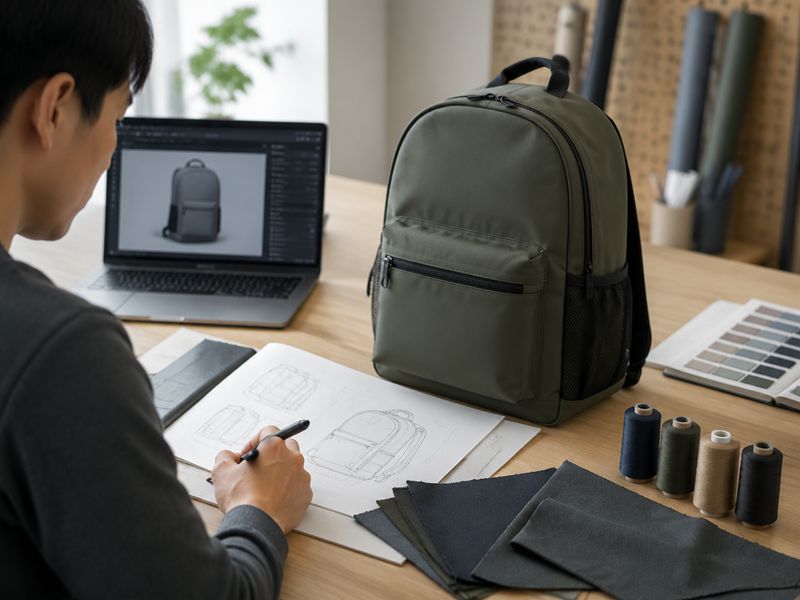
Two backpacks can share the same dimensions and still have very different production costs. A flat promotional style made from lightweight polyester may use one main zipper, an unpadded back, and a printed logo. A laptop model of similar size may contain lining, foam, several compartments, shaped shoulder straps, reinforced load-bearing seams, custom zipper pulls, woven labels, and retail packaging. The outside dimensions reveal only a small part of what is being produced.
Custom backpacks do not have one dependable average price. An existing backpack with a printed logo costs less than a fully developed design with custom fabric, padded compartments, branded hardware, private labels, and dedicated packaging. For bulk production, the unit figure is calculated from the confirmed specification and quantity, while sampling, testing, freight, duties, and urgent delivery may be charged separately.
A low quotation can become expensive when essential details are missing. It may exclude the lining, use thinner foam, assume standard zippers, allow only one logo position, or include basic packing instead of retail-ready presentation. The practical goal is not to collect the smallest number on a spreadsheet. It is to establish what that number includes, what quality it represents, and whether the finished backpack can reach its intended sales channel without redesign, repacking, or unexpected charges.
How Much Do Custom Backpacks Cost?
Custom backpack cost depends on the production route, material specification, dimensions, structure, logo method, quantity, packaging, testing, and delivery terms. An existing backpack with one printed logo costs less than an original laptop, travel, or outdoor model requiring new patterns, padded compartments, branded hardware, private labels, and dedicated packaging.
The word “custom” can describe very different levels of work. One project may use an established daypack with a screen-printed logo. Another may require original dimensions, custom-dyed fabric, a dedicated laptop sleeve, shaped shoulder straps, several pockets, molded zipper pulls, woven labels, and retail boxes. Both are custom, but their material consumption and production work are not comparable.
For projects developed through Jundong, the standard MOQ is usually 500 pieces per design. Selected simple styles may be reviewed at 200–300 pieces according to material availability, logo method, color quantity, packaging, and production conditions. The order quantity helps determine feasibility, but it does not create one universal unit figure.
| Customization level | Main changes | Development work | Cost pressure |
|---|---|---|---|
| Existing backpack with logo | Logo and basic packing | Low | Lower |
| Light customization | Color, logo, labels and minor trims | Moderate | Low to moderate |
| Private-label backpack | Materials, labels, branded trims and packing | Moderate to high | Moderate |
| Fully custom backpack | Size, patterns, structure, components and packaging | High | Higher |
| Technical backpack | Performance materials, load control and special tests | High | Higher |
A useful quotation should state exactly which level is being priced. If one quotation covers an existing backpack and another covers original product development, placing the two figures in the same spreadsheet without technical notes creates a false comparison.
Why Is There No Fixed Price?
A backpack is made from more than outer fabric. The full construction may include lining, foam, reinforcement, zippers, webbing, buckles, elastic, mesh, binding, labels, logo materials, thread, individual packing, and export cartons. Each item affects material purchasing, cutting, sewing, assembly, inspection, and packing.
A practical unit calculation follows this structure:
Quoted unit figure = materials + components + cutting and sewing + logo work + standard packing + allocated setup and quality control
Sampling, molds, third-party testing, freight, duties, taxes, destination handling, and urgent arrangements may be listed separately.
Two backpacks with the same approximate capacity can still require very different resources:
| Specification | Basic 20 L daypack | Structured 20 L laptop backpack |
|---|---|---|
| Shell | Lightweight polyester | Structured Oxford or nylon |
| Lining | None or partial | Full lining |
| Main sections | One | Two or more |
| Device protection | None | Padded laptop sleeve |
| Shoulder straps | Light padding | Shaped foam-padded straps |
| Back panel | Flat | Foam and breathable mesh |
| Front storage | One simple pocket | Several organized pockets |
| Branding | One printed logo | Logo, labels and branded trims |
| Packing | Individual bag | Retail-ready packing |
The structured version uses more cutting pieces, longer zippers, additional lining, foam, binding, and reinforcement. It also requires more sewing operations and more inspection items. Its higher cost is produced by the complete construction, not by one isolated feature.
A fixed figure is also difficult before quantity per color is known. An order of 1,000 pieces in one color gives very different production conditions from 1,000 pieces split among five colors. The second plan creates five material groups, five color controls, several line changes, and more packing records.
Timing can change the amount as well. Standard bag sampling through Jundong is usually about 5–7 days, while bulk production is commonly planned at about 20–30 days after approval and material confirmation. A compressed schedule may require urgent component delivery, special line arrangements, or faster freight.
The safest approach is to treat an early figure as an estimate until the following details are confirmed:
- External dimensions and intended capacity
- Shell fabric and lining
- Foam and reinforcement
- Compartment layout
- Zipper and buckle specification
- Logo method and positions
- Quantity per design and color
- Labels and packaging
- Testing requirements
- Delivery destination and arrival date
Stock Logo Backpacks vs Fully Custom Backpacks
A stock-logo backpack starts with an existing model. Its shape, capacity, pockets, straps, fabric, zippers, and available colors are already established. The main work is applying the logo, confirming its position, and preparing the required packing. This route can suit events, staff programs, school activities, and promotional distribution.
A fully custom backpack starts with the intended user and use. Dimensions, capacity, materials, compartments, straps, padding, hardware, colors, labels, and packaging are developed around a defined product brief.
| Decision area | Stock-logo backpack | Fully custom backpack |
|---|---|---|
| Shape | Predefined | Developed for the project |
| Capacity | Fixed | Set around intended contents |
| Materials | Limited to available options | Selected for appearance and function |
| Compartments | Fixed | Configurable |
| Straps and back | Existing construction | Developed around comfort and load |
| Color | Available stock colors | Custom color review possible |
| Branding | Mainly surface logo | Logo, labels, trims and hardware |
| Packaging | Standard options | Retail, e-commerce, gift or private label |
| Sampling | Logo approval may be sufficient | Complete physical sample required |
| Product distinction | Limited | Much stronger |
The stock route reduces development work, but it also limits control. A backpack may have the right overall appearance while lacking the required laptop protection, bottle-pocket size, shoulder-strap comfort, or internal organization.
Full development offers stronger ownership but should be used with discipline. Every custom feature adds work. A decorative buckle, hidden pocket, or molded patch should support function or identity rather than exist only because it can be added.
A balanced decision considers the product’s expected life. For a one-time event, an existing structure may be more practical. For a retail collection or repeat program, custom dimensions, reliable materials, and controlled components can create stronger long-term value.
Which Type of Backpack Costs More?
Backpacks become more expensive as they require more materials, components, sewing operations, shaping, padding, load control, or technical verification. Product category gives an early indication, but the actual construction remains more important than the name.
| Backpack type | Common construction | Main cost drivers | Relative pressure |
|---|---|---|---|
| Drawstring backpack | Flat panels and cords | Fabric, logo and cord system | Lower |
| Promotional daypack | Main zipper and basic straps | Front pocket, lining and logo | Low to moderate |
| School backpack | Several pockets and padded straps | Comfort, reinforcement and durability | Moderate |
| Laptop backpack | Padded device section and organization | Foam, lining, dividers and zippers | Moderate to high |
| Business backpack | Structured shape and refined details | Hardware, internal finish and shaping | Higher |
| Travel backpack | Larger opening and carrying options | Capacity, zippers, straps and reinforcement | Higher |
| Outdoor backpack | Load control and technical features | Fabric, webbing, buckles and testing | Higher |
| Tool backpack | Heavy structure and organized storage | Reinforcement, base support and hardware | Higher |
A small backpack is not automatically cheaper. A compact business model with curved panels, hidden zippers, dense foam, metal trims, several internal pockets, and detailed lining can require more work than a larger rectangular daypack.
The intended carrying load must also be considered. A campaign backpack holding brochures does not need the same shoulder-strap roots or bottom reinforcement as a laptop, tool, or outdoor backpack. Weakening these areas may save a small amount initially, but it can shorten service life.
Product teams can control spend by separating essential performance from optional decoration:
| Protect first | Review for simplification |
|---|---|
| Shoulder-strap attachment | Decorative seams |
| Main zipper quality | Extra logo positions |
| Laptop protection | Unused internal pockets |
| Load-bearing seams | Complex color blocking |
| Bottom reinforcement | Custom hardware without clear value |
| Required labels | Oversized gift packaging |
This approach reduces low-value complexity while preserving the features that people notice during repeated use.
Who Needs Fully Custom Production?
Fully custom production is suitable when an existing backpack cannot meet the required function, dimensions, appearance, or sales-channel presentation. It becomes especially valuable when the design will support a long-term product line, coordinated collection, repeat program, or recognizable brand identity.
Common applications include:
- Technology collections needing device-specific padding, charger storage, and cable organization
- School programs needing name labels, reflective details, balanced straps, and easy-clean fabric
- Travel collections needing trolley sleeves, passport pockets, wide openings, and compression straps
- Sports programs needing wet-and-dry separation, ventilated compartments, and bottle storage
- Outdoor designs needing chest straps, reinforced webbing, abrasion resistance, and controlled weight
- Business collections needing structured panels, refined hardware, concealed pockets, and organized interiors
- Retail programs needing woven labels, custom zipper pulls, branded colors, barcodes, and dedicated packing
Full development should begin with the intended contents. A statement such as “18 L laptop backpack” is not enough. The factory still needs to know the laptop size, charger dimensions, document size, bottle capacity, pocket access, carrying duration, expected load, and preferred opening style.
The design should also reflect the selling method. A backpack displayed in a retail store may need hangtags and strong visual structure. An e-commerce model may need compact packing and surface protection. A corporate distribution program may need destination sorting, names, or department labels.
Fully custom does not mean every component must be original. Standard zippers, buckles, and webbing can control spending while original patterns, colors, labels, and pocket arrangements create distinction. This mix often produces a better balance than developing expensive hardware for every detail.
Full development becomes less practical when the required arrival date is close, only a logo must change, or the quantity cannot support dedicated materials and components. In those cases, an established structure with controlled branding may deliver a cleaner result.
Is Unit Price the Same as Landed Cost?
Unit price and landed cost are different figures. A quoted unit figure may cover the completed backpack under an agreed trade term, while landed cost includes the additional amount required to move each piece into the destination warehouse.
A practical calculation is:
Landed cost per backpack = product cost + allocated development charges + packaging + inspection + freight + duty and tax + destination handling
| Cost layer | Possible items | Confirm clearly |
|---|---|---|
| Product | Fabric, components, labor and logo | Exact specification |
| Development | Sample, pattern, mold and setup | Separate or included |
| Packaging | Polybag, labels, box and carton | Packing level and carton quantity |
| Verification | Testing and independent inspection | Required scope |
| Freight | Express, air, sea or agreed service | Actual and volumetric weight |
| Import | Duty, tax and clearance | Destination rules |
| Local handling | Port, airport and warehouse delivery | Included destination charges |
Backpacks are often light compared with their packed volume. Thick foam, rigid back panels, uncompressed shapes, and gift boxes can raise freight per piece.
For express and air delivery, chargeable weight may be calculated from carton dimensions:
Volumetric weight = carton length × width × height in centimeters ÷ 5,000 or 6,000
The divisor depends on the carrier and service.
For sea delivery:
Carton volume in cubic meters = length × width × height in centimeters ÷ 1,000,000
A carton measuring 60 × 45 × 50 cm occupies:
60 × 45 × 50 ÷ 1,000,000 = 0.135 m³
If an order uses 20 cartons:
0.135 × 20 = 2.7 m³
This calculation explains why packaging design influences more than presentation. A rigid gift box may improve shelf appearance while reducing the number of backpacks packed into each carton.
The trade term must also be confirmed. EXW, FOB, CIF, and DDP quotations stop at different stages. Two unit figures cannot be compared fairly if one includes export handling and another stops at the factory door.
A dependable budget should therefore compare the same product specification, packaging, quantity, inspection scope, shipping method, destination, and trade term. The smallest factory figure does not always create the lowest warehouse cost.
Which Factors Change Custom Backpack Price?

Custom backpack pricing changes mainly with fabric, dimensions, internal structure, padding, hardware, logo application, packaging, order quantity, and testing requirements. Two backpacks that appear similar in photos can have very different costs when one uses heavier fabric, reinforced stress areas, a padded laptop compartment, water-resistant zippers, molded hardware, and individual retail packaging. An accurate quotation therefore requires a complete specification, not just an image and quantity.
How Do Materials Affect Price?
Fabric selection affects more than the outer shell. A complete backpack may contain exterior fabric, lining, mesh, foam, webbing, binding tape, reinforcement material, zipper tape, thread, and coatings. Changing any of these components can alter material consumption, sewing difficulty, durability, weight, and freight efficiency.
Common exterior options include polyester, nylon, Oxford fabric, canvas, RPET, PU, and PVC-coated textiles. Each serves a different purpose:
| Material | Common Applications | Main Cost Drivers | Practical Considerations |
|---|---|---|---|
| Polyester | School, promotional, travel and everyday backpacks | Denier, density, coating and color | Economical, versatile and easy to decorate |
| Nylon | Outdoor, sport and lightweight travel bags | Fiber grade, weave and coating | Strong for its weight, usually priced above basic polyester |
| Oxford fabric | School, work and travel styles | Yarn thickness, weave density and backing | Structured appearance with good abrasion resistance |
| Canvas | Lifestyle, fashion and heritage designs | Fiber composition, fabric weight and dyeing | Heavier shipping weight and thicker sewing seams |
| RPET | Eco-focused collections | Traceability, certification and yarn quality | Documentation requirements may add administrative and testing work |
| PU | Fashion panels, trims and structured designs | Thickness, backing and surface finish | Appearance and aging performance depend heavily on material grade |
| PVC-coated fabric | Waterproof or heavy-duty applications | Coating thickness and construction | Strong water barrier, but heavier and less flexible |
A fabric description such as “600D polyester” is not complete enough for a dependable comparison. Denier describes yarn thickness; it does not independently confirm fabric weight, weave density, tear resistance, abrasion performance, colorfastness, or waterproofness. Two textiles carrying the same 600D description may differ in hand feel, opacity, backing quality, usable width, and price.
The coating also matters. An uncoated textile may suit a lightweight drawstring bag, while a school or travel backpack may use PU coating to improve water resistance and fabric stability. PVC backing can create a firmer and more water-resistant body, but it adds weight and may require different handling during cutting and sewing.
Before approving the main textile, review these details:
- Fiber type and denier
- Fabric weight in grams per square meter
- Weave density
- PU, PVC, TPU, or other backing
- Water-repellency treatment
- Abrasion and tear requirements
- Colorfastness expectations
- Restricted-substance requirements
- Recycled-content documentation
- Approved color standard
Color can also affect the quotation. Standard shades are easier to source than a specially dyed color. Custom dyeing may require a separate material minimum, lab dips, shade approval, and additional lead time. Very light colors can need cleaner handling, while fluorescent or high-visibility shades may involve special pigments and testing.
The least expensive fabric is not always the most economical choice. If an under-specified textile creates seam slippage, rapid abrasion, coating separation, or excessive returns, the apparent saving disappears quickly.
How Do Size and Capacity Affect Cost?
A larger backpack normally consumes more fabric, lining, foam, webbing, zipper tape, and packing space. Yet capacity alone does not determine the final figure. Shape, panel layout, nesting efficiency, and internal construction can matter just as much as liters.
Consider three bags with the same nominal 20-liter capacity:
| Construction | Material Consumption | Sewing Work | Cost Pressure |
|---|---|---|---|
| Simple drawstring-style body | Low | Low | Low |
| Standard daypack with front pocket and lining | Medium | Medium | Medium |
| Structured laptop pack with multiple compartments | High | High | High |
A rectangular design may use the fabric width efficiently, while a highly curved body can create more cutting waste. Large single panels are not always cheaper because their shapes may leave unusable spaces between pattern pieces. Fabric width must therefore be considered together with the cutting layout.
Dimensions also influence packaging and freight. A soft, foldable backpack can be compressed inside a shipping carton. A rigid design with thick foam, a molded back panel, or a reinforced base occupies more carton volume. This can increase freight expense even when the finished product weight changes only slightly.
Capacity should be defined through physical dimensions and intended load rather than a broad label such as “medium backpack.” Useful specifications include:
| Specification | Example Information |
|---|---|
| Finished dimensions | 45 × 30 × 15 cm |
| Target capacity | Approximately 20 liters |
| Laptop size | Up to 15.6 inches |
| Intended load | Daily items up to a defined weight |
| Main use | Commuting, school, travel or sport |
| Packing method | Flat, partially filled or shape-retaining |
| Carton limits | Preferred carton size or gross-weight limit |
Even small dimensional adjustments can affect several components simultaneously. Increasing body depth may lengthen the zipper, enlarge side panels, widen binding tape consumption, and change carton capacity. Adding only two centimeters to each dimension can create a noticeable material increase across several thousand pieces.
A practical approach is to begin with the required contents. If the bag must hold a laptop, charger, bottle, notebook, jacket, and accessories, the internal layout can be developed around those items. This avoids paying for unnecessary volume or discovering after sampling that the intended equipment does not fit.
Which Features Increase Cost?
Features raise costs through three channels: additional materials, extra sewing operations, and more complex quality control. A detail that looks small on a drawing may require several components and multiple assembly steps.
The following comparison shows the relative effect of common additions:
| Feature | Additional Components | Production Effect | Relative Cost Pressure |
|---|---|---|---|
| Side bottle pocket | Mesh or shell fabric, elastic and binding | Extra cutting and attachment | Low to medium |
| Padded laptop sleeve | Lining, foam, closure and reinforcement | More internal assembly | Medium |
| Separate shoe compartment | Panels, zipper, lining and binding | Complex body construction | Medium to high |
| Hidden anti-theft pocket | Pocketing fabric and zipper | Precise placement and sewing | Low to medium |
| USB charging opening | Port component and internal cable | Additional sourcing and inspection | Medium |
| Reflective trim | Reflective tape or printed detail | Extra placement control | Low to medium |
| Compression straps | Webbing, buckles and reinforcement | More bar tacks and assembly | Medium |
| Trolley sleeve | Fabric, lining and reinforced seams | Additional back-panel work | Low to medium |
| Waterproof zipper | Coated zipper and careful sewing | Higher component cost | Medium to high |
| Molded back panel | Molded foam or EVA structure | Tooling and specialized assembly | High |
| Custom metal hardware | Mold, plating and logo control | Tooling, minimums and inspection | High |
Not every feature deserves inclusion. A well-designed commuter backpack might need a protected laptop sleeve, organized front pocket, bottle holder, and luggage strap. Adding a shoe compartment, charging port, and multiple concealed pockets may increase expense without improving daily use.
Hardware grade is another major variable. A basic plastic buckle and a branded performance buckle may look similar from a distance, yet differ in resin quality, load capacity, temperature resistance, mold accuracy, and consistency. The same principle applies to zippers. Coil size, slider quality, zipper tape, puller design, plating, water-resistant treatment, and expected cycle life all influence pricing.
Reinforcement should be placed according to load, not added everywhere. Shoulder strap roots, top handles, compression straps, and other load-bearing areas may need bar tacks, box stitching, or internal reinforcement patches. These operations add time but can prevent common failures.
Before adding a feature, evaluate four matters:
- Does it solve a real use problem?
- Does it affect the bag’s load-bearing structure?
- Can it be assembled consistently at the required quantity?
- Will it increase inspection, packing, or testing work?
Removing an unnecessary zipper compartment may save more than switching to a slightly lighter outer textile because the compartment includes fabric, zipper tape, slider, binding, thread, cutting, sewing, and inspection.
Do Pockets and Padding Cost More?
Pockets and padding often create a larger difference than expected because their visible size does not reflect the work behind them. A small organizer pocket may include several internal panels, zipper sections, binding, elastic loops, pen slots, and reinforcement pieces.
Pocket construction can be divided into three broad levels:
| Pocket Type | Construction | Cost Effect |
|---|---|---|
| Open slip pocket | One panel with a finished edge | Low |
| Zipper pocket | Pocket bag, zipper, slider and seam finishing | Medium |
| Organizer compartment | Multiple panels, slots, mesh and closures | Medium to high |
| Independent compartment | Separate body section with its own zipper | High |
A backpack with one main compartment and one front pocket can move through sewing much faster than a design with two main openings, an organizer, laptop section, concealed back pocket, side pockets, and separate base compartment. More openings also create more opportunities for alignment differences, zipper waviness, and measurement variation.
Padding cost depends on material type, thickness, density, coverage, and lamination. Foam is used in shoulder straps, grab handles, laptop sleeves, back panels, bases, and protective walls. A specification stating only “padded back” is too vague for a precise quotation.
A clearer padding specification includes:
- Foam type, such as PE, EVA, EPE, or sponge
- Thickness in millimeters
- Density or firmness
- Coverage area
- Number of layers
- Whether lamination is required
- Compression-recovery expectations
- Ventilation structure
- Intended protection or comfort level
Thicker foam is not automatically better. Very soft material can flatten under load, while overly rigid material can feel uncomfortable and make packing difficult. Shoulder straps require a balance of cushioning, stability, curve, width, and reinforcement.
Laptop protection should be considered as a complete structure. Foam on only one side may not protect the device from base impact. A suspended sleeve, raised bottom, elastic securing strap, and appropriately dense padding may provide better protection than simply increasing foam thickness.
Back-panel designs can also change sewing complexity. A flat padded panel is relatively straightforward. Multiple raised channels, breathable mesh, contoured foam pieces, and decorative stitching require additional cutting, positioning, and seam control.
The most economical layout concentrates protection where it matters: shoulder contact areas, the laptop zone, load-bearing seams, and the bottom. Padding every panel can increase material use, carton volume, and sewing difficulty without delivering an equal improvement.
Which Logo Method Fits the Budget?
Logo application should be selected according to artwork, fabric, order quantity, visual target, and expected wear. The cheapest method on one design may be unsuitable for another.
| Logo Method | Best Suited To | Main Cost Variables | Practical Notes |
|---|---|---|---|
| Screen printing | Simple logos and solid colors | Number of colors, print size and positions | Economical for clean, bold artwork |
| Heat transfer | Detailed graphics and gradients | Transfer size, finish and application area | Works well for multicolor artwork |
| Embroidery | Premium or textured appearance | Stitch count, logo size and thread colors | Adds texture but can stiffen light fabric |
| Woven label | Small, detailed brand marks | Label size, fold style and quantity | Consistent and easy to apply |
| Rubber or silicone patch | Sport and outdoor styles | Mold, size, colors and attachment | Tooling may apply |
| Metal badge | Premium fashion or travel designs | Mold, plating, finish and fastening | Heavier and requires secure attachment |
| Debossed PU patch | Lifestyle and heritage styles | Patch material, mold and dimensions | Subtle appearance with low color contrast |
| Custom zipper puller | Repeated branding across the bag | Mold, material, plating and quantity | Affects both tooling and hardware minimums |
Screen printing is often efficient for one- or two-color graphics, but each color may require separate setup and alignment. A large print across a curved or pocketed area can be more difficult than a small print on a flat panel.
Embroidery is normally calculated by stitch count rather than logo dimensions alone. Two logos of equal width can have very different stitch counts if one uses dense filled areas. Embroidery also adds backing material and sewing time. On waterproof fabric, needle penetration should be considered because it can reduce resistance around the decorated area.
Heat transfer handles gradients and detailed graphics well, but the chosen film must suit the base textile and coating. Poor compatibility may result in peeling, color migration, or an unwanted glossy border. Testing becomes especially important on coated or stretch fabrics.
Three-dimensional patches, custom pullers, metal badges, and molded emblems often require tooling. This is easier to justify when the same hardware will be used across several styles or repeated orders. For a limited first run, a woven label or existing puller may preserve the desired appearance with less initial expense.
Logo placement also changes labor. A mark applied to a front panel before assembly is easier than one positioned near a finished seam or on a completed pocket. Multiple placements multiply setup and inspection work.
For accurate pricing, provide:
- Vector artwork
- Finished dimensions
- Pantone or other approved color references
- Decoration method
- Number of colors
- Exact placement
- Number of locations
- Surface finish
- Durability expectations
A restrained identity system often delivers better value than placing several different decorations on one bag. One strong front logo, a branded label, and a coordinated zipper puller can feel more intentional than multiple competing marks.
Does Custom Packaging Add Cost?
Packaging influences material expense, labor, carton capacity, freight efficiency, labeling accuracy, and presentation. The difference between a simple bulk pack and a retail-ready pack can be substantial.
| Packaging Format | Included Work | Cost and Freight Effect |
|---|---|---|
| Bulk carton packing | Several backpacks placed directly in one carton | Lowest material use |
| Individual polybag | One bag per unit, warning print if required | Low additional expense |
| Recycled or biodegradable bag | Alternative bag material and documentation | Depends on specification |
| Printed paper sleeve | Custom print, folding and placement | Medium |
| Hangtag and barcode | Printed tag, string, barcode and attachment | Low to medium |
| Retail box | Printed box, inserts and assembly | High; increases carton volume |
| Gift box | Rigid structure, print and protective insert | High |
| E-commerce preparation | Unit labels, carton labels, barcode rules and packing checks | Added handling and accuracy control |
A backpack intended for retail display may require hangtags, barcode labels, care labels, tissue, shaped inserts, and presentation packaging. An e-commerce program may need individual identification, specific carton dimensions, scannable labels, carton-content records, and drop-test considerations.
Packaging can affect freight more than the product itself. Suppose a soft backpack can be packed flat at 20 pieces per carton. Adding rigid paper inserts or individual boxes may reduce the carton quantity to 8 or 10 pieces. The shipment then occupies far more space even though the number of backpacks remains unchanged.
Polybag dimensions and thickness should be matched to the folded product. Oversized bags waste plastic and carton space; undersized bags can crease the backpack or tear during packing. Ventilation holes, suffocation warnings, recycled-content claims, and destination-specific requirements should be confirmed before bulk packing begins.
Carton strength must also suit the shipment route. A carton prepared for palletized handling may need different specifications from one moving through parcel networks. Gross weight should remain practical for handling, while empty space should be limited to reduce crushing.
Packaging details should be decided before the final quotation:
- Individual or bulk packing
- Product folding method
- Polybag material and thickness
- Warning text
- Tissue or protective insert
- Hangtag and attachment method
- Barcode type and location
- Retail sleeve or box
- Inner-carton requirements
- Master-carton dimensions
- Carton marks
- E-commerce labeling rules
The best packaging protects the backpack, presents it appropriately, and uses carton space efficiently. Decorative components that do not improve protection, identification, or presentation may add expense at every stage—from packing labor to freight and final disposal.
A reliable custom backpack quotation connects all six areas: materials, dimensions, construction, pockets and padding, logo application, and packaging. When these details are defined together, prices can be compared on the same specification, samples can be evaluated against measurable requirements, and late-stage cost changes become far less likely.
How Does Quantity Affect Unit Cost?
Higher quantity usually lowers the cost per backpack because pattern work, logo setup, cutting preparation, machine adjustment, material handling, and production planning are distributed across more pieces. Larger orders can also improve fabric utilization and sewing efficiency. However, savings depend on quantity per design, color, size, and logo version—not simply the combined order total.
What Is the MOQ for Custom Backpacks?
MOQ is the minimum quantity required to produce a backpack efficiently under a defined specification. It may apply per design, color, size, logo version, or material rather than to the entire order.
For custom backpacks, a standard MOQ is commonly 500 pieces per design. Selected simple styles may be reviewed at 200–300 pieces when they use available fabric, existing hardware, straightforward construction, limited color variations, and standard packaging. Complex structures, multiple SKUs, specially dyed materials, custom molds, or exclusive hardware are normally evaluated separately.
| Project Type | Common Quantity Position | Main Conditions |
|---|---|---|
| Existing backpack with one logo | 200–300 pieces may be reviewed | Available style, one color and simple decoration |
| Modified standard design | Usually 500 pieces per design | Limited structural changes and available components |
| Fully custom backpack | Usually 500 pieces or more | New patterns, sample development and custom construction |
| Multi-color collection | Quantity assessed per color | Material minimums and separate production handling |
| Custom-hardware project | Quantity assessed by component | Mold, plating and component minimums |
| Multi-size series | Quantity assessed per size | Separate patterns, cutting and packing records |
MOQ exists because backpack production uses more than sewing labor. Fabric may need to be ordered by roll, webbing by length, zippers by color and size, printed packaging by batch, and hardware by carton. A quantity below these component minimums can leave unused materials that still have to be paid for.
The correct MOQ should therefore be confirmed only after reviewing:
- Backpack dimensions
- Material type and color
- Number of compartments
- Foam and lining construction
- Zipper and hardware specifications
- Logo application
- Quantity by color and size
- Packaging requirements
- Testing needs
- Required schedule
A statement such as “2,000 backpacks in four colors” does not necessarily mean one 2,000-piece production run. It may operate as four separate 500-piece runs, particularly when each color needs different fabric, thread, zippers, webbing, labels, and carton identification.
Why Do Smaller Orders Cost More?
Smaller orders cost more per backpack because fixed preparation work is divided across fewer pieces. The cutting room, sampling team, logo department, sewing line, inspection team, and packing area still need instructions, setup, and control even when the quantity is only a few hundred pieces.
The main fixed or semi-fixed activities include:
- Pattern development
- Prototype preparation
- Material sourcing
- Fabric color approval
- Cutting-marker preparation
- Print-screen setup
- Embroidery digitization
- Sewing templates
- Machine adjustment
- Production-line preparation
- Inspection instructions
- Barcode and label setup
- Packing trials
- Carton planning
A simplified calculation is:
Unit cost = material and labor per piece + fixed project expense ÷ accepted quantity
The following example uses an illustrative fixed project expense of US$1,000. It is not a product quotation; it only shows how quantity changes the contribution carried by each backpack.
| Quantity | Fixed Expense per Backpack |
|---|---|
| 200 pieces | US$5.00 |
| 500 pieces | US$2.00 |
| 1,000 pieces | US$1.00 |
| 2,000 pieces | US$0.50 |
| 5,000 pieces | US$0.20 |
The physical materials may remain identical at every quantity, yet the unit figure changes because development and setup are allocated differently.
Material purchasing creates another issue. Suppose a fabric is sold in full rolls and the backpack order consumes only part of one roll. The remaining fabric cannot always be returned or used elsewhere, especially when it has a custom color, coating, print, or brand-specific pattern. Its expense may need to be absorbed by the current project.
Small runs can also reduce cutting efficiency. A cutting table is most productive when multiple fabric layers are spread and cut together. If only a few layers are needed, preparation time is divided across fewer panels. The same applies to printing, embroidery, sewing, inspection, and packing.
Production-line efficiency normally improves after workers repeat the same operation. In a short run, the style may finish before the line reaches its most stable output. This does not mean quality controls should be reduced; it means the preparation effort represents a larger share of each piece.
How Does Volume Lower Unit Cost?
Volume can lower backpack cost through better material utilization, longer production runs, more efficient cutting, repeated sewing operations, and broader distribution of setup charges. The improvement is not always linear, and it eventually becomes smaller once the main efficiencies have already been achieved.
Quantity can create savings in several areas:
| Cost Area | How Volume Helps |
|---|---|
| Exterior fabric | Better roll utilization and less leftover material per piece |
| Lining and foam | Larger cutting layouts and improved nesting |
| Zippers and webbing | More efficient component ordering |
| Logo application | Setup divided across more pieces |
| Cutting | More layers cut from one marker |
| Sewing | Longer repetition of the same operations |
| Inspection | Shared preparation and documentation |
| Packaging | Larger print batches and better material use |
| Cartons | More stable carton planning and loading |
| Tooling | Mold charge divided across more backpacks |
Fabric cutting is one of the clearest examples. Backpack patterns include large body panels, curved gussets, narrow straps, small pockets, reinforcement patches, and foam components. Efficient nesting places these pieces together to reduce waste. A larger order allows more complete use of the cutting marker and fabric roll.
Sewing efficiency also improves through repetition. A custom backpack may require dozens of separate operations, such as:
- Preparing shoulder straps
- Sewing zipper panels
- Building the laptop sleeve
- Attaching internal pockets
- Joining body panels
- Adding binding
- Reinforcing stress areas
- Assembling the lining
- Attaching handles and webbing
- Completing final edge work
When the same style continues through a longer run, workstations become more stable. Operators repeat the same seam, attachment, or assembly method, reducing unnecessary handling and adjustment.
The cost reduction becomes smaller after a certain volume. Moving from 300 to 1,000 pieces may create a noticeable improvement because setup is spread more widely and material use becomes more efficient. Moving from 10,000 to 10,700 pieces may create little difference if fabric pricing, line output, and component costs have already reached their practical level.
This is why quantity-tier quotations are useful. Instead of requesting only one figure, request the same specification at several volumes, such as:
| Quantity Tier | Purpose |
|---|---|
| 500 pieces | Standard entry quantity |
| 1,000 pieces | First scale comparison |
| 2,000 pieces | Stronger setup allocation |
| 3,000 pieces | Material and production review |
| 5,000 pieces | Larger-volume planning |
The comparison should use the same design, materials, colors, logo, packaging, testing, and delivery term. Changing the specification between tiers makes the cost difference difficult to interpret.
Do Colors and SKUs Change MOQ?
Yes. Colors and SKUs can divide one large order into several smaller production groups. Each variation may require separate materials, artwork, cutting records, sewing instructions, labels, inspection records, and packing identification.
Consider three orders with the same total quantity:
| Order Structure | Total Pieces | Effective Production Groups |
|---|---|---|
| One design, one color | 2,000 | 1 group of 2,000 |
| One design, four colors | 2,000 | 4 groups of 500 |
| Two sizes, four colors | 2,000 | 8 groups of 250 |
The third order carries more complexity even though the total remains 2,000 pieces. Each size may require separate patterns and cutting markers. Each color may need different exterior fabric, lining, thread, webbing, zippers, labels, and carton marks.
SKU complexity affects several stages:
- Material ordering
- Fabric shade control
- Cutting allocation
- Component sorting
- Sewing-line changeover
- Logo matching
- Label verification
- Barcode control
- Packing separation
- Carton identification
- Quantity reconciliation
- Final inspection
Not all variations have the same effect. Changing only the hangtag barcode is simpler than changing the body size. Changing embroidery thread color is generally less disruptive than ordering a different custom-dyed fabric. A second exterior color may also require matching zippers, lining, webbing, buckles, and thread.
| Variation | Likely Effect |
|---|---|
| Different barcode only | Low |
| Different logo thread color | Low to medium |
| Different body color using available fabric | Medium |
| Custom-dyed fabric per color | High |
| Different size | Medium to high |
| Different pocket layout | High |
| Different hardware finish | Medium to high |
| Different packaging structure | High |
A practical collection plan uses shared components where possible. Several colors can use the same black lining, zippers, buckles, webbing, foam, labels, and packaging dimensions. Shared components simplify sourcing and reduce leftover materials.
Color allocation should be decided before final pricing. A quotation for 2,000 pieces in one color should not be assumed to remain valid if the order later changes to eight colors of 250 pieces each.
When Can a Lower MOQ Be Reviewed?
A lower MOQ may be practical when the backpack uses an established structure, available materials, standard hardware, one or two colors, a simple logo, and uncomplicated packing. An efficient design is easier to produce at 200–300 pieces than a feature-heavy style with exclusive components.
Conditions that support a lower quantity include:
| Helpful Condition | Why It Helps |
|---|---|
| Existing backpack pattern | Reduces development work |
| Stock fabric color | Avoids custom dyeing minimums |
| Standard zipper and buckle | Avoids special component orders |
| One size | Limits pattern and cutting setup |
| One main color | Simplifies material preparation |
| Simple logo | Reduces decoration setup |
| Standard individual bag | Avoids custom packaging minimums |
| Flexible production date | Allows scheduling around available capacity |
| Shared components | Improves material utilization |
| No custom mold | Removes tooling and component restrictions |
Conditions that make a lower quantity difficult include:
- Custom-dyed exterior fabric
- Several color combinations
- Multiple sizes
- New molded zipper pullers
- Custom buckles or metal badges
- Large all-over printing
- Complex embroidery
- Structured molded back panels
- Waterproof seam sealing
- Numerous compartments
- Retail gift boxes
- Separate packaging for many SKUs
- Extensive testing across several materials
A lower quantity may also be possible when the same material and components are shared across several backpack styles. However, styles cannot always be combined merely because the total volume is high. If each design needs different patterns, hardware, fabrics, or packing, each remains a separate production setup.
Reducing features solely to reach a lower MOQ should be done carefully. Removing an unnecessary organizer or custom puller may improve efficiency without changing the product’s core use. Reducing strap reinforcement, laptop protection, or load-bearing quality could weaken performance and create higher costs after delivery.
The most useful lower-quantity request includes two options:
- The preferred fully customized specification
- An alternative using available materials and standard components
This allows the factory to identify which details create the quantity restriction and which can remain unchanged.
Are Setup Costs Spread Across Bulk Orders?
Many setup costs are distributed across the order quantity, but not every charge can be shared across all colors, sizes, and designs. Patterns may be shared across colors, while custom-dyed fabrics, print screens, labels, and packaging may require separate setup.
| Setup Item | Can It Be Shared? |
|---|---|
| Main backpack patterns | Usually shared across colors of the same size |
| Size-specific patterns | Separate for each size |
| Embroidery digitization | Shared when artwork and dimensions remain unchanged |
| Screen-print setup | Shared only when artwork, colors and print method remain the same |
| Rubber patch mold | Shared when shape, size and logo remain unchanged |
| Metal badge mold | Shared when the component design remains unchanged |
| Custom fabric color | Separate by color |
| Woven label setup | Shared when the label does not change |
| Barcode artwork | Separate by SKU |
| Retail packaging artwork | Shared only when print content remains unchanged |
| Laboratory testing | Depends on materials, colors and required protocol |
| Sample development | Separate when structure or size changes significantly |
Tooling provides a clear example. If a custom mold costs a fixed amount, its contribution per backpack falls as quantity increases:
| Quantity | Tooling Contribution |
|---|---|
| 500 pieces | Mold charge ÷ 500 |
| 1,000 pieces | Mold charge ÷ 1,000 |
| 2,000 pieces | Mold charge ÷ 2,000 |
| 5,000 pieces | Mold charge ÷ 5,000 |
At 2,000 pieces, the tooling contribution per backpack is 75% lower than at 500 pieces. If the logo shape changes, however, the original mold cannot usually be shared with the new version.
Sample development follows a similar principle. Pattern work and prototype sewing support the later bulk run, but structural changes introduced after approval can create additional development expense. Keeping one controlled revision file helps prevent completed work from being repeated.
For qualifying Jundong backpack orders reaching 2,000 pieces, the agreed sample charge may be refunded or deducted under the written quotation terms. Courier delivery, special molds, laboratory testing, and major redevelopment may remain separate.
The clearest quotation separates four types of cost:
| Cost Type | Examples |
|---|---|
| Per-piece cost | Fabric, lining, foam, zippers, labor and packing |
| One-time setup | Patterns, digitization, print screens and molds |
| Variation-specific cost | Custom colors, size patterns, barcodes and SKU labels |
| Post-production cost | Inspection, freight, duty and local delivery |
Quantity creates meaningful value only when the product structure remains controlled. Combining volume into fewer colors, sharing components across styles, approving one stable sample, and avoiding late changes can reduce unit cost more effectively than simply increasing the total number on a purchase order.
What Costs Are Often Missed?

The backpack price is only one part of the total project spend. Sampling, artwork setup, custom molds, laboratory testing, third-party inspection, packaging preparation, freight, duties, storage, and urgent scheduling can all change the final cost. These items are often missed because they appear before production, after the goods leave the factory, or only when a design requires special development.
How Much Does a Backpack Sample Cost?
A custom backpack sample normally costs more per piece than a bulk unit because it is produced individually. Pattern development, material preparation, logo setup, cutting, sewing, revisions, inspection, and courier delivery are completed for only one or a few pieces rather than being spread across hundreds or thousands.
A sample charge may include:
| Sample Activity | What the Work Covers |
|---|---|
| Specification review | Dimensions, materials, structure, logo and intended use |
| Pattern development | Paper patterns for the body, pockets, lining and straps |
| Material preparation | Sourcing or cutting small quantities of fabric and trims |
| Logo setup | Print screens, embroidery files, transfers, labels or temporary patches |
| Cutting and sewing | One-piece workmanship without bulk-line efficiency |
| Structural adjustment | Changes to capacity, strap shape, foam and reinforcement |
| Sample inspection | Measurements, appearance, function and workmanship |
| Packing and courier | Protective packing and international delivery |
The first sample is rarely just a miniature bulk order. It is a development tool used to verify proportion, capacity, comfort, compartment access, zipper movement, logo scale, material appearance, and construction feasibility.
A clear specification can reduce sampling expense. A vague request such as “make it premium” leaves too much room for interpretation. A more useful brief defines:
- Finished dimensions and target capacity
- Intended contents and expected carrying load
- Exterior fabric, lining and coating
- Pocket quantity and purpose
- Laptop or tablet dimensions
- Foam position, thickness and firmness
- Zipper, buckle and webbing requirements
- Logo artwork, size, color and location
- Packaging method
- Performance or compliance requirements
Bag samples commonly take about 5–7 days after the main details and suitable materials are confirmed. A simple style may be completed in approximately 2–3 days. Complex structures, specially dyed fabric, molded components, multiple decorations, or unavailable trims can extend development.
Revisions also affect the total. A color correction or logo-position adjustment may be handled quickly, while changing the dimensions, pocket arrangement, strap curve, or body construction can require new patterns and another complete sample.
| Revision Type | Likely Work Required | Cost Effect |
|---|---|---|
| Thread or print color | Material or process adjustment | Low |
| Logo size or position | New setup or panel remake | Low to medium |
| Pocket dimensions | Pattern and panel revision | Medium |
| Strap shape or foam | Pattern, material and sewing revision | Medium |
| Main body dimensions | Multiple new patterns and a full remake | High |
| Structure or compartment layout | Extensive redevelopment | High |
Courier charges should be separated from sample development. Sending one prototype alone may be inefficient, so it can be useful to combine the backpack, fabric swatches, color options, logo trials, packaging samples, and hardware references in one parcel.
For Jundong projects, the sample charge may be refunded or deducted when the confirmed bulk quantity reaches 2,000 pieces, subject to the written quotation. The quotation should state whether courier fees, molds, special materials, and repeated revisions are included or billed separately.
Are Design and Setup Fees Included?
Design and setup costs are not automatically included in every unit quotation. Their treatment depends on whether the backpack uses an existing construction, modifies an established style, or requires development from drawings.
There are three common development routes:
| Development Route | Work Required | Setup Pressure |
|---|---|---|
| Existing style with logo | Logo preparation and minor color changes | Low |
| Modified existing style | Pattern changes, material selection and new sample | Medium |
| Fully custom structure | Complete pattern work, component development and repeated fitting | High |
A fully custom backpack can involve more technical preparation than its exterior appearance suggests. A laptop bag, for example, may require separate patterns for the front panel, back panel, gusset, base, lining, laptop sleeve, organizer, shoulder straps, handle, zipper guards, foam pieces, reinforcement patches, and internal binding.
Common setup items include:
- Pattern development
- Technical drawing refinement
- Size grading
- Material swatches and color matching
- Fabric lab dips
- Embroidery digitization
- Screen-print preparation
- Heat-transfer trials
- Woven-label development
- Barcode creation
- Hangtag and packaging artwork checks
- Sewing templates
- Positioning guides
- Inspection criteria
- Packing instructions
The word “design” can create confusion because it may refer to several different services. It could mean converting a sketch into a technical drawing, developing the internal structure, creating production patterns, preparing logo files, or designing retail packaging. Each quotation should identify the exact work included.
Screen printing illustrates why setup and unit charges should be separated. A logo with three solid colors may need three screens and precise alignment. Once prepared, the setup can support the full order. Dividing that charge across 500 pieces creates a higher unit contribution than dividing it across 5,000 pieces.
The same principle applies to embroidery digitization. Artwork must be converted into a stitch file that controls stitch direction, density, sequence, underlay, and thread changes. A wide logo filled with dense stitching can require much more work than a small text mark, even when both use the same number of thread colors.
Setup should also be checked when an order contains several colors or styles. One backpack offered in black, navy, beige, and green may share the same patterns, but each color can require separate material sourcing, logo matching, label records, packing identification, and approval. If the structure changes between sizes or models, separate patterns and samples may be needed.
A complete quotation should state:
| Item | Detail to Confirm |
|---|---|
| Pattern charge | Included, separate, or refundable |
| Logo setup | Charged once or charged by color and position |
| Artwork work | File checking only or full artwork preparation |
| Color development | Stock shade, lab dip, or custom dyeing |
| Labels | Existing format or newly developed |
| Packaging artwork | Provided print-ready or prepared separately |
| Revision allowance | Number and type of revisions included |
| File ownership | Access to artwork, patterns or molds after payment |
| Repeat orders | Which setup items can be reused |
This prevents a low initial quotation from becoming more expensive after artwork, patterns, labels, and packing details are approved.
Do Molds and Custom Hardware Add Cost?
Custom rubber patches, metal badges, zipper pullers, buckles, cord ends, plastic emblems, and molded foam structures can require dedicated tooling. The tooling charge is normally separate from the cost of producing each component.
The total contribution of a custom component can be expressed as:
Effective component cost per backpack = component unit cost × quantity used per backpack + tooling charge ÷ backpack quantity
If one mold is shared across the entire order, its contribution falls as volume increases:
| Order Quantity | Tooling Contribution per Backpack |
|---|---|
| 500 pieces | Tooling charge ÷ 500 |
| 1,000 pieces | Tooling charge ÷ 1,000 |
| 2,000 pieces | Tooling charge ÷ 2,000 |
| 5,000 pieces | Tooling charge ÷ 5,000 |
At 2,000 pieces, the tooling contribution per backpack is 75% lower than at 500 pieces. At 5,000 pieces, it is 90% lower. This is why an elaborate custom puller may be practical for a continuing program but less efficient for a limited release.
Tooling may apply to:
- PVC, rubber, or silicone patches
- Custom-shaped zipper pullers
- Debossed PU labels
- Metal logo plates
- Branded buckles
- Custom cord locks
- Molded EVA panels
- Structured back-padding forms
- Plastic decorative parts
- Special packing inserts
Several details influence the final charge. A two-dimensional rubber patch is usually simpler than a layered three-dimensional emblem. A standard metal finish may be easier than a custom plating color. Fine recessed lines, multiple colors, moving parts, or very small lettering can require additional development.
Tooling ownership should be documented. The order record should identify:
- Which component the mold produces
- Who paid for the tooling
- Whether the mold is exclusive
- Where it will be stored
- How long it will be retained
- Whether it can be used for repeat orders
- Whether maintenance or replacement is chargeable
- Whether a revised logo requires a new mold
A logo change often requires new tooling, even if the component dimensions remain the same. Changing only the plating color may not require another mold, but it can introduce a separate finish minimum.
Custom hardware also creates lead-time risk. Production cannot proceed until the component drawing, finish, size, attachment method, and sample are approved. If the hardware is attached early in backpack assembly, a delay can hold the entire schedule.
An existing buckle, puller, or label shape can sometimes achieve the desired look without dedicated tooling. Custom hardware is most worthwhile when it adds recognizable identity, improves function, or will be reused across several releases.
Do Testing and Inspection Add Cost?
Testing and inspection should be planned before sample approval because requirements can affect material selection, construction, documentation, and lead time. Adding testing after bulk production may expose a problem when replacement is expensive or impossible within the delivery schedule.
Testing falls into three practical groups:
| Test Group | Examples | Why It Matters |
|---|---|---|
| Material performance | Colorfastness, abrasion, tear strength and coating adhesion | Checks whether the chosen textile suits repeated use |
| Product performance | Strap strength, seam strength, zipper cycling and load testing | Evaluates completed backpack construction |
| Chemical or regulatory | Restricted substances and destination-specific requirements | Supports applicable compliance obligations |
Not every backpack needs every test. Requirements depend on intended use, destination, age group, material claims, retail program, and contractual specification. A promotional drawstring bag and a children’s school backpack do not carry the same risk profile.
Common evaluations may include:
- Strap attachment strength
- Top-handle load resistance
- Seam strength and seam slippage
- Zipper opening and closing cycles
- Buckle operation
- Fabric abrasion resistance
- Tear strength
- Colorfastness to rubbing
- Water-resistance performance
- Coating adhesion
- Print or transfer adhesion
- Sharp-edge checks
- Small-component attachment
- Restricted-substance screening
- Carton drop or compression checks
Laboratory charges can rise when several materials, colors, or components require separate submissions. A backpack containing coated fabric, mesh, printed lining, rubber patches, metal hardware, and several plastics may need more testing work than a single-material style.
A failed result can create four additional expenses:
- Replacement material or revised construction
- A second sample
- Retesting
- Schedule changes or faster freight
Inspection is different from laboratory testing. Inspection verifies whether produced goods match the approved sample and written specification. It can include incoming-material checks, sewing-line checks, finished-piece inspection, measurement review, logo placement, packing verification, barcode scanning, and carton checks.
A third-party inspection usually creates a separate charge based on service scope, location, time, quantity, and reporting requirements. If the goods fail and another visit is required, reinspection is commonly charged again.
An inspection plan should define:
| Inspection Detail | Required Decision |
|---|---|
| Approved reference | Signed sample, specification and color standard |
| Inspection stage | During production, pre-shipment, or both |
| Sampling method | Agreed inspection level and acceptance limits |
| Critical defects | Safety or compliance failures |
| Major defects | Functional or prominent appearance failures |
| Minor defects | Small workmanship differences |
| Measurements | Tolerance for each key dimension |
| Functional checks | Zippers, buckles, straps, pockets and accessories |
| Packing checks | Quantity, labels, barcodes and carton marks |
| Reinspection | Responsibility and procedure after failure |
Testing and inspection are most economical when requirements are fixed before material approval. They become costly when treated as a final-stage formality.
How Do Shipping and Duties Affect Cost?
Freight is influenced by shipment size, weight, route, season, transport method, packing efficiency, delivery terms, and destination handling. Backpacks are often lightweight but bulky, so freight may be calculated from volume rather than actual weight.
For air delivery and courier services, dimensional weight is commonly calculated as:
Dimensional weight = length × width × height ÷ dimensional factor
The dimensional factor depends on the carrier and service. If a carton measures 60 × 45 × 40 cm and the applied factor is 5,000:
60 × 45 × 40 ÷ 5,000 = 21.6 kg
If the carton physically weighs 14 kg, the freight charge may still be based on 21.6 kg. Reducing unused carton space can therefore save more than reducing a small amount of product weight.
For sea transport, volume is commonly recorded in cubic meters:
60 × 45 × 40 cm = 0.108 m³ per carton
If 100 cartons use the same dimensions, the shipment occupies approximately 10.8 m³ before palletization or other loading adjustments.
Packaging decisions directly change freight efficiency:
| Packing Decision | Likely Freight Effect |
|---|---|
| Flat-packed soft backpack | Lower carton volume |
| Thick foam throughout the body | Higher volume |
| Shape-retaining paper insert | Fewer pieces per carton |
| Individual retail box | Much higher volume |
| Rigid molded back panel | Limited compression |
| Vacuum packing | Lower volume but possible creasing or foam deformation |
| Optimized folding method | Better carton utilization |
The quoted trade term also changes which expenses appear in the factory price:
| Term | Common Cost Boundary |
|---|---|
| EXW | Goods collected from the factory |
| FOB | Goods delivered through export handling to the agreed port |
| CIF | Ocean freight and insurance included to the named destination port |
| DDP | Delivery arranged to the named destination under agreed conditions |
The exact inclusions should always be written because local charges, unloading, storage, customs clearance, duty, tax, appointment delivery, and remote-area fees may not be treated identically in every quotation.
Import duty depends on the product classification, materials, declared customs value, country of origin, and destination rules. A general backpack description is not enough to confirm the applicable rate. Classification should be checked using the actual construction and destination requirements.
Frequently overlooked logistics charges include:
- Export handling
- Documentation
- Origin transport
- Port or terminal handling
- Fuel or peak-season surcharges
- Customs clearance
- Import duty and tax
- Destination handling
- Pallet charges
- Warehousing
- Demurrage or storage
- Delivery appointments
- Residential or remote-area delivery
- Carton relabeling
- Shipment insurance
The most useful comparison is the cost to the final receiving location, not only the unit figure at the factory. Product cost, packaging, testing, inland handling, international freight, duties, destination charges, and local delivery should be placed in one calculation.
Do Rush Orders Cost More?
Urgent orders can cost more when the requested date requires stocked materials, priority sampling, overtime, split shipments, faster transport, or specially arranged production. The extra expense depends on what part of the schedule must be shortened.
A normal backpack timeline commonly contains several separate stages:
| Stage | Common Timing |
|---|---|
| Simple sample | Approximately 2–3 days |
| Standard sample | Approximately 5–7 days |
| Sample revision | Depends on the change |
| Material preparation | Depends on stock and color |
| Bulk production | Commonly 20–30 days |
| Air delivery | Approximately 7–12 days |
| Sea delivery | Approximately 40–45 days |
These times begin only after the required information, materials, artwork, and approvals are ready. Delayed feedback can remove more time from the schedule than the sewing stage itself.
Urgency can create extra cost through:
- Priority pattern development
- Express material delivery
- Use of available stock instead of custom-dyed fabric
- Overtime or weekend work
- Dedicated equipment or sewing-line allocation
- Smaller production batches
- Split production
- Split inspection
- Partial air delivery
- Full air delivery
- Express courier service
- Extra coordination and approval cycles
The most expensive response is often moving the entire order by air. A better approach may be to send a limited quantity by air for launch or event use, followed by the balance by sea. This protects the critical date while controlling freight expense.
Not every process can be safely compressed. Custom dyeing, coating curing, molded hardware, laboratory testing, print drying, material conditioning, and corrective work need sufficient time. Skipping approval or inspection to recover a few days can create a much larger loss after delivery.
A practical urgent-order review should confirm:
- Required arrival date
- Destination and delivery address
- Quantity needed on the first date
- Quantity that can arrive later
- Materials available from stock
- Acceptable substitute materials
- Logo method and setup status
- Packaging complexity
- Testing requirements
- Sample approval deadline
- Air, sea, or split-delivery plan
The lowest-risk schedule preserves sample approval, material checks, load-bearing reinforcement, logo confirmation, and final inspection. Time should be saved through faster decisions, available components, simpler packaging, and carefully planned transport—not by removing the controls that protect the finished backpack.
How Do You Get an Accurate Factory Quote?
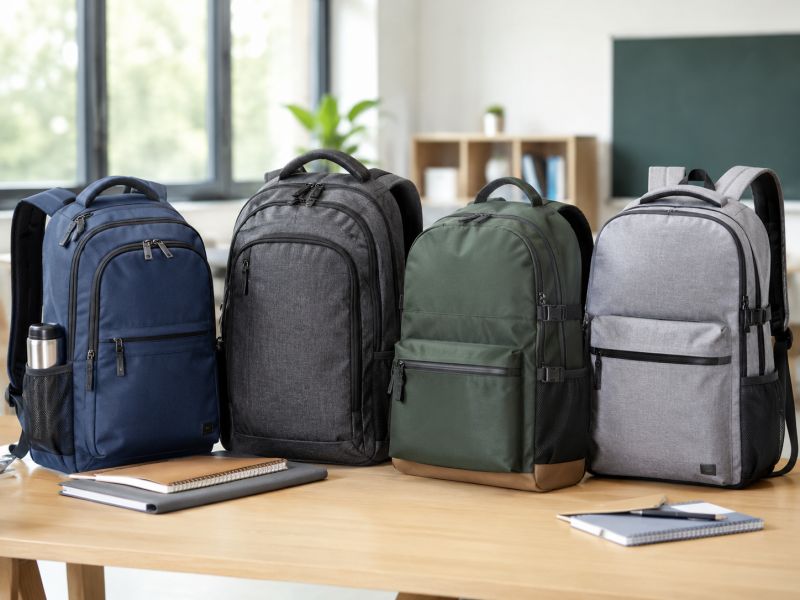
An accurate custom backpack quotation requires finished dimensions, materials, construction, logo method, packaging, quantity by color, testing needs, delivery destination, and required arrival date. A reference photo alone is not enough. The more clearly each component is defined, the easier it becomes to calculate material consumption, sewing time, setup work, packing volume, and transport expense without adding large assumptions.
Where Can You Get a Custom Backpack Made?
Custom backpacks are best developed by a specialist bag factory with pattern development, sampling, material sourcing, cutting, sewing, logo application, quality control, and packing capabilities. The right facility depends on whether the project needs a standard backpack with a logo, a modified existing style, or a completely original structure.
| Development Route | Suitable Situation | Information Required | Cost Accuracy |
|---|---|---|---|
| Existing style with logo | Promotional programs and fast launches | Logo file, quantity, color and delivery details | High after the existing style is confirmed |
| Modified existing style | Changes to size, pockets, fabric or padding | Marked photos, dimensions and feature list | Medium before sampling; high after approval |
| Fully custom backpack | Original structure, fit and visual identity | Technical pack, drawings, measurements and materials | Improves as specifications become complete |
A capable backpack facility should be able to explain how a requested feature will be constructed, not merely confirm that it can be added. For example, a laptop sleeve requires decisions about device size, padding density, suspension from the base, closure type, lining, and protection on each side.
Relevant capabilities may include:
- Backpack paper-pattern development
- Prototype and pre-production sampling
- Polyester, nylon, Oxford, canvas, RPET, PU and coated-fabric handling
- Foam cutting and lamination
- Screen printing, embroidery, heat transfer and label application
- Reinforced sewing for straps and handles
- Custom zipper puller, buckle and patch development
- Incoming-material, sewing-line and final inspection
- Barcode, hangtag and retail packing
- Export-carton and shipment preparation
A facility that mainly handles simple promotional bags may not be suitable for a structured travel pack with molded back padding and complex compartments. In the same way, a highly specialized technical workshop may be unnecessarily expensive for a basic drawstring style.
Relevant project evidence is more useful than a long product list. A commuter backpack should be compared with completed laptop or business styles. A hiking pack should be reviewed against projects using load-bearing straps, breathable back panels, chest buckles, compression webbing, and water-resistant components.
How Is a Custom Backpack Made?
A custom backpack moves through specification review, costing, pattern development, sampling, approval, material preparation, bulk production, inspection, and packing. Each stage provides information that improves cost accuracy.
| Stage | Main Work | Effect on the Quotation |
|---|---|---|
| Specification review | Confirm use, dimensions, capacity and features | Identifies missing details |
| Preliminary costing | Estimate materials, labor, setup and packing | Provides an initial figure |
| Pattern development | Create panels, pockets, straps and internal pieces | Confirms structural complexity |
| Prototype sample | Build and evaluate the first physical piece | Reveals actual construction needs |
| Revision | Correct fit, function, appearance and materials | Updates consumption and labor |
| Approved sample | Lock the production reference | Supports final confirmation |
| Material preparation | Reserve or order fabric, trims and hardware | Confirms component availability |
| Bulk production | Cutting, decoration, sewing and assembly | Applies the approved construction |
| Inspection | Verify dimensions, function and workmanship | Controls delivery risk |
| Packing | Fold, label, bag and carton the goods | Confirms carton volume and handling |
Initial costing is usually based on estimated material consumption and operation time. Pattern development and sampling can reveal hidden work. A front pocket that appears simple in a drawing may need lining, foam, binding, a zipper garage, reinforcement, and several additional sewing steps.
The approved sample should become the physical production reference. A clear record should define:
- Finished dimensions and tolerances
- Exterior and lining materials
- Coating and color references
- Foam type and thickness
- Zipper brand, size and color
- Webbing width and buckle type
- Pocket construction
- Reinforcement positions
- Logo size and location
- Label placement
- Stitching details
- Packing method
Once these details are locked, material consumption and sewing operations can be calculated with much greater confidence.
What Does a Backpack Factory Need?
A factory needs enough information to reproduce the same backpack consistently across the full quantity. The essential file is usually a technical pack supported by artwork, reference images, material requirements, and an order breakdown.
A quotation brief should cover six areas:
| Area | Required Information |
|---|---|
| Product | Backpack type, intended use, capacity and load |
| Dimensions | Height, width, depth and important pocket measurements |
| Materials | Outer fabric, lining, mesh, foam, webbing and coating |
| Construction | Compartments, pockets, straps, closures and reinforcement |
| Identity | Logos, labels, colors, zipper pullers and hardware |
| Commercial details | Quantity, color split, packaging, destination and date |
A backpack described only as “20 liters, waterproof, with a laptop pocket” still contains several uncertainties. “Waterproof” might mean water-repellent fabric, coated fabric, waterproof zippers, taped seams, or a fully sealed construction. These are very different products.
A more useful material specification could state:
- 600D polyester exterior
- Defined fabric weight
- PU backing
- Water-repellent surface treatment
- 210D polyester lining
- Air mesh on the back and shoulder straps
- EVA foam in the laptop sleeve
- PE foam in the body panels
- Polyester webbing in a defined width
- Coil zippers in a defined size
Quantity should be divided by style, size, color, and logo variation. A total of 2,000 pieces does not always create the same efficiency.
| Style | Color | Logo Version | Quantity |
|---|---|---|---|
| 20 L commuter pack | Black | Main logo | 1,000 |
| 20 L commuter pack | Navy | Main logo | 600 |
| 20 L commuter pack | Stone | Main logo | 400 |
| Total | 2,000 |
If the black, navy, and stone versions use the same patterns and components, several setup items may be shared. If each version uses a different lining, puller, logo, label, and carton mark, sourcing and packing work increase.
The following files make the review faster and more precise:
- Vector logo in AI, EPS, PDF, or SVG format
- Pantone or another recognized color reference
- Front, back, side and internal drawings
- Finished measurement chart
- Material and component list
- Packaging artwork
- Barcode data
- Testing requirements
- Delivery address
- Required arrival date
If a technical pack is not available, a marked reference sample or annotated images can provide a useful starting base. Physical measurements and intended contents should still be added before final costing.
How Does the Sample Process Work?
Sampling begins after the main specifications, materials, artwork, and development charge are confirmed. The first prototype checks whether the written concept works as a physical backpack. It should be evaluated for function as well as appearance.
A structured sample review follows this order:
- Confirm overall dimensions and capacity.
- Load the intended contents.
- Check pocket access and item fit.
- Test zipper movement around corners.
- Review shoulder-strap length, curve and comfort.
- Check back padding and weight distribution.
- Inspect handle and strap reinforcement.
- Confirm logo size, color and alignment.
- Compare materials with approved references.
- Review folding, packing and carton fit.
Comments should be measurable. “Make the straps better” gives little direction. “Increase strap width from 60 mm to 70 mm, use 8 mm EVA foam, and move the lower attachment 15 mm inward” can be applied and checked.
A revision record should contain:
| Revision Item | Current Sample | Required Change | Verification Method |
|---|---|---|---|
| Main body height | 440 mm | Increase to 455 mm | Finished measurement |
| Laptop sleeve | Fits 14-inch device | Fit 15.6-inch device | Device-fit check |
| Strap foam | Too soft under load | Increase firmness | Loaded wearing test |
| Front logo | 90 mm wide | Reduce to 75 mm | Placement template |
| Bottle pocket | Bottle slips out | Add stronger elastic | Movement test |
When several people review the sample, comments should be consolidated into one controlled file. Conflicting instructions sent at different times create unnecessary remakes and schedule loss.
The final approved sample should be signed, dated, photographed, and linked to the confirmed specification. Any accepted difference—such as substitute sample fabric, temporary hardware, or unprinted packaging—should be recorded so it is corrected in production.
Sample charges may cover pattern work, material preparation, one-piece sewing, logo setup, inspection, and packing. Courier delivery, molds, specially dyed fabric, and major revisions may be listed separately. For qualifying Jundong orders reaching 2,000 pieces, the agreed sample charge can be refunded or deducted according to the written terms.
How Long Do Sampling and Production Take?
A standard backpack sample commonly takes about 5–7 days after the required details and materials are confirmed. Simple styles may take approximately 2–3 days. Bulk production commonly takes 20–30 days after sample approval and material readiness, while complex structures or multiple variations can take longer.
| Activity | Common Timing | Main Conditions |
|---|---|---|
| Simple sample | 2–3 days | Stock materials and straightforward construction |
| Standard custom sample | 5–7 days | Confirmed specification and available components |
| Sample revision | Depends on change | Minor correction or structural remake |
| Bulk production | 20–30 days | Approved sample and materials ready |
| Air delivery | 7–12 days | Route and space availability |
| Sea delivery | 40–45 days | Port, route and destination conditions |
The production clock should not begin at the first inquiry. It should begin after the order terms, deposit, approved sample, materials, artwork, packaging, and testing plan are confirmed.
The following items frequently delay costing or production:
- Artwork supplied in low resolution
- Dimensions missing from the drawing
- Undefined material grade
- No color reference
- Late logo or label changes
- Custom-dyed fabric
- New molded hardware
- Multiple unconfirmed SKUs
- Packaging not approved
- Testing added after production starts
- Delayed sample comments
- A required arrival date without a delivery address
A delivery plan should work backward from the required arrival date. It needs time for sample development, revisions, approval, material preparation, production, inspection, packing, transport, customs clearance, and local delivery.
If the date is fixed, identify the first quantity genuinely required. A partial air shipment followed by a sea shipment may be more practical than sending every piece by air.
What Should a Price Quote Include?
A professional quotation should define the product being priced, the assumptions behind the figure, what is included, and what remains separate. Without this detail, two quotations may appear comparable while describing different backpacks.
The document should include:
| Quotation Item | Required Detail |
|---|---|
| Product description | Style, dimensions and capacity |
| Material specification | Exterior, lining, foam, mesh and coating |
| Construction | Compartments, pockets, padding and reinforcement |
| Components | Zippers, pullers, buckles, webbing and hardware |
| Logo | Method, size, colors and positions |
| Quantity | Total and breakdown by style, color and size |
| Unit price | Price for each quantity tier |
| MOQ | Per style, color, size or logo version |
| Packaging | Polybag, hangtag, barcode, box and carton |
| Setup charges | Printing, embroidery, labels and artwork |
| Tooling | Molds for patches, hardware or pullers |
| Sample | Charge, timing and refund conditions |
| Testing | Included checks and separate laboratory work |
| Inspection | Internal control and third-party service |
| Delivery term | EXW, FOB, CIF or DDP with named location |
| Freight | Included or separate |
| Lead time | Sample, production and transport |
| Payment | Deposit, balance and accepted method |
| Validity | Period during which the quotation applies |
| Exclusions | Duty, tax, testing, courier or other charges |
Material descriptions need enough detail to prevent substitution. “Nylon backpack” is too broad. Fiber grade, denier, fabric weight, coating, lining, color, and approved reference should be recorded where they matter.
The delivery term must include a named location. “FOB China” is incomplete; “FOB Shenzhen” or another confirmed port is clearer. A DDP figure should identify the destination postcode, delivery type, carton quantity, and any excluded tax or remote-area charge.
Price validity also matters because textiles, freight, exchange rates, and hardware costs can change. If development takes several months, final confirmation may be required before material booking.
How Do You Compare Factory Quotes?
Factory quotations should be compared only after they have been placed on the same specification, quantity, packaging method, delivery term, destination, and testing requirement. A lower figure may result from lighter fabric, thinner foam, generic hardware, fewer reinforcements, simpler packing, or excluded setup charges.
Use a comparison table that exposes specification differences:
| Item | Quote A | Quote B | Quote C |
|---|---|---|---|
| Exterior fabric | 600D polyester with PU backing | “600D polyester” | 420D polyester |
| Lining | 210D polyester | Not stated | 190T polyester |
| Laptop foam | 8 mm EVA | 5 mm sponge | Not stated |
| Zippers | Defined size and puller | Generic | Defined size |
| Strap reinforcement | Internal patch and bar tack | Bar tack only | Not stated |
| Logo | Two-color screen print | One-color print | Heat transfer |
| Packing | Individual bag and barcode | Bulk pack | Individual bag |
| Testing | Listed separately | Not included | Unclear |
| Delivery term | FOB named port | EXW | FOB without named port |
| Lead time | Starts after approval | Not defined | Starts after deposit |
Ask for clarification wherever the response says “standard,” “good quality,” “normal zipper,” or “premium fabric.” Such terms cannot be measured.
A useful comparison considers:
- Specification completeness
- Sample accuracy
- Material traceability
- Strength at load-bearing seams
- Consistency across colors and SKUs
- Tooling ownership
- Inspection procedure
- Packaging accuracy
- Schedule realism
- Communication speed
- Cost of revisions
- Cost to the final receiving location
- Repeat-order consistency
The unit figure should never be separated from the approved construction. A backpack priced without confirmed foam, lining, zipper, reinforcement, or packing details is an estimate, even when it is presented as a final quotation.
Which Factory Offers the Best Value?
The best value comes from a factory that can reproduce the approved backpack consistently, document what is included, control materials and workmanship, and deliver within a realistic schedule. The lowest initial figure has little value if the sample requires repeated correction, the bulk order differs from approval, or hidden charges appear later.
Look for practical evidence:
| Area | Evidence to Request |
|---|---|
| Development | Comparable samples, patterns and technical records |
| Materials | Labeled swatches and complete specifications |
| Construction | Reinforcement method and internal workmanship |
| Quality control | Incoming, sewing-line and final inspection records |
| Measurement control | Defined tolerances and inspection tools |
| Logo control | Approved strike-offs and placement templates |
| Production capacity | Schedule for the required quantity and SKU count |
| Packing control | Barcode, carton-mark and quantity checks |
| Problem handling | Written correction and reinspection procedure |
| Repeat orders | Retained samples, records and component references |
The approved sample should also be examined critically. Straight stitching alone does not prove that the backpack will perform well. Check strap attachment, seam allowance, zipper movement, foam recovery, load balance, pocket access, lining fit, logo durability, and base protection.
Communication quality is part of the commercial value. A strong team identifies missing information, explains cost consequences, records revisions, and distinguishes confirmed details from temporary sample substitutions.
Before selecting a factory, request the same quotation brief from each candidate and compare the returned documents line by line. The strongest quotation is usually not the shortest. It explains exactly which backpack will be produced, how it will be packed, when it will be ready, and which expenses remain outside the stated unit price.