 Skip to content
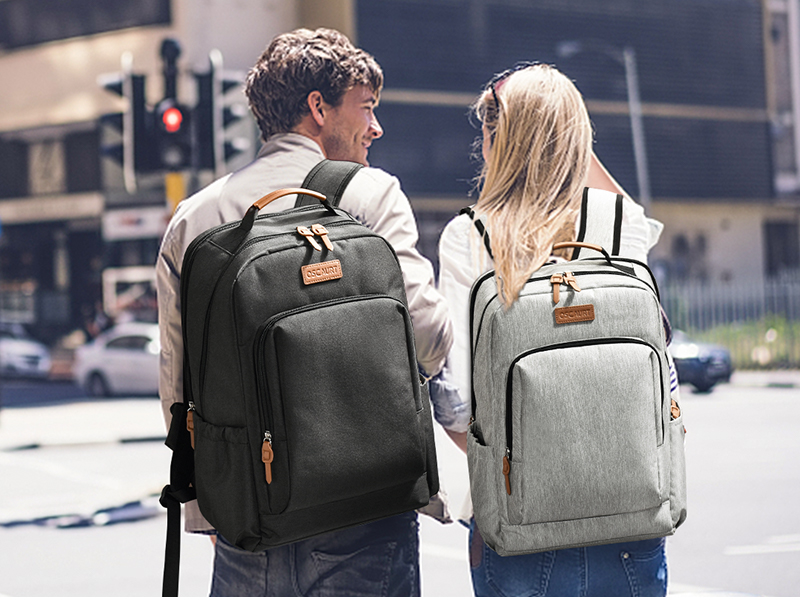
A backpack can look simple until two quotations for the same reference image arrive with a 30% difference. Both may mention polyester, a laptop sleeve and an embroidered logo. One, however, may use thicker fabric, denser foam, reinforced shoulder-strap anchors, better zipper sliders and individual retail packing. The other may leave those specifications undefined. The two amounts are not necessarily describing the same product.
Custom backpacks cost more because the quoted amount covers more than fabric and sewing. It can include design review, paper patterns, material preparation, sample revisions, logo setup, specialized components, production-line preparation, quality checks, packaging and delivery planning. Smaller orders carry a larger share of these fixed expenses per piece, while complex structures, premium materials, multiple SKUs and urgent schedules increase the unit amount further.
Consider a stock backpack that has already been produced tens of thousands of times. Its patterns are finished, materials are shared across many orders, and each sewing operation is familiar. A new design starts with drawings, measurements and technical decisions that have not yet been tested. The two bags may look similar in a photograph, but they begin from completely different commercial positions.
Why Are Custom Backpacks More Expensive Now?

Custom backpacks cost more because current projects often combine original development, smaller quantities per SKU, stronger materials, more compartments, detailed logo work, retail packing and shorter schedules. The final amount covers much more than fabric and sewing: pattern work, samples, material minimums, component setup, production preparation, staged inspection and packing control all contribute to the unit cost.
A backpack may look like a simple combination of fabric, foam, zippers and webbing, yet even a medium-complexity design can contain dozens of cut pieces. Each panel must be identified, cut, positioned and sewn in the correct sequence. Pockets need separate pocket bags. Shoulder straps need foam, reinforcement and symmetrical shaping. A laptop section may use several layers before the lining is closed.
Order structure has also changed. Many collections contain more colors, sizes and logo versions, but fewer pieces in each variation. For example, 2,000 identical black backpacks create one SKU. Dividing the same quantity among four designs and five colors creates 20 SKUs, leaving only 100 pieces per variation. The total remains 2,000, but material allocation, cutting, sewing changes, inspection and packing become far more complex.
Price is therefore best understood as the result of several connected decisions:
| Decision | Lower-cost direction | Higher-cost direction |
|---|---|---|
| Development | Existing style with logo | Original size and structure |
| Material | Stock polyester color | Special nylon, coating or custom dyeing |
| Construction | One or two compartments | Multiple shaped sections |
| Padding | Flat basic foam | Multilayer or molded support |
| Hardware | Standard zipper and buckle | Branded or custom-finished parts |
| Branding | One print position | Embroidery, molded patch or metal plate |
| Quantity | One concentrated design | Multiple small-volume SKUs |
| Packing | Individual polybag | Tags, inserts, barcode sets or gift boxes |
| Timing | Planned material preparation | Compressed production or split shipment |
What Does “Custom” Include?
“Custom” can describe three very different levels of development. The lightest version adds a logo to a completed stock backpack. A modified style starts from an existing pattern but changes selected materials, colors, pockets or labels. A fully original design develops the size, construction, carrying system, materials, components and packing around a specific brief.
| Customization level | Work involved | Cost behavior |
|---|---|---|
| Stock decoration | Add print, embroidery or label | Lowest development expense |
| Existing-style modification | Change fabric, color, pocket or lining | Moderate preparation |
| Fully original development | Create patterns, structure and components | Highest initial preparation |
A small change can affect more than one operation. Increasing body depth changes outer panels, lining, zipper length, foam, pocket proportions and carton volume. Moving a logo onto a padded section may require a different application sequence. The deeper the change, the more testing is needed before bulk cutting can safely begin.
Which Recent Cost Changes Matter?
The most important recent change is often the number of requirements attached to one backpack. A modern laptop style may need a suspended device sleeve, tablet pocket, organizer section, breathable back padding, luggage strap, coated fabric and barcode packing. An earlier version may have used one main compartment and flat foam.
Other changes frequently include:
- More colors with fewer pieces per color
- Custom-dyed fabric, webbing and zipper tape
- RPET material with supporting documentation
- Higher-grade zippers and hardware
- Larger embroidered areas
- Molded rubber or metal logo parts
- Retail tags and platform labels
- Destination-specific testing
- Compressed launch schedules
- Separate packing for regions or sales channels
These additions do not affect every project equally. A simple promotional pack using a stock black textile may remain economical. A six-color collection with custom lining, shaped foam and individual retail boxes follows a different cost path. The useful approach is to identify which requirements changed rather than accepting a vague statement that everything has become more expensive.
Custom vs Stock Backpacks: Why the Price Gap?
A stock backpack benefits from work completed before the current order. Its pattern already exists, fabric consumption is known, and the sewing sequence has been repeated many times. Materials can be purchased across several production runs, allowing setup expenses to be distributed broadly.
An original design begins much earlier:
| Development step | Stock style | Original design |
|---|---|---|
| New pattern set | Usually not required | Required |
| Structural review | Limited | Detailed |
| Material matching | Limited choices | Project-specific |
| Logo trial | Required | Required |
| Full construction sample | Often unnecessary | Required |
| Revision work | Lower | Depends on design maturity |
| New production instructions | Existing | Newly prepared |
| Packing development | Standard | Project-specific |
A pattern set, embroidery program or molded component may require nearly the same preparation for 300 pieces as for 3,000. At 300 pieces, each backpack carries a larger share of that work. Stock items avoid much of this because the preparation has already been absorbed by earlier and larger production runs.
Which Type of Custom Backpack Costs More?
Technical travel, camera, tool, outdoor and protective laptop backpacks usually cost more than simple school or promotional designs. They contain more panels, stronger reinforcement, thicker padding and specialized components. Construction intensity often matters more than external size.
| Backpack type | Main cost drivers |
|---|---|
| Promotional | Logo, color and quantity |
| School | Compartments, zippers and strap strength |
| Laptop | Foam, suspended sleeve and back structure |
| Business | Clean finishing, refined materials and hardware |
| Travel | Clamshell opening, expansion and organization |
| Outdoor | Abrasion resistance, strap system and buckles |
| Camera | Thick foam walls and removable dividers |
| Tool | Heavy textile, reinforced seams and load support |
A 20-liter camera pack may cost more than a 35-liter school backpack. The camera style may require foam walls, padded dividers, a reinforced base and precise internal sizing. Likewise, a clean business design can contain several hidden compartments and bound internal seams. The most expensive type is usually the one requiring the greatest material preparation, sewing time and performance control.
What Is the Most Expensive Backpack Brand?
There is no permanent single record because rare materials, limited releases, private commissions and auction pieces change continually. Among established luxury houses with publicly listed products, Hermès regularly appears near the top.
As checked in July 2026, the official Hermès US store listed several backpacks above $10,000:
| Product | Listed retail price | Main material |
|---|---|---|
| Bolide a Dos | $17,500 | Natural grained cowhide |
| 24 Noeuds PM | $14,400 | Togo calfskin |
| Hac a Dos GM | $13,000 | Leather construction |
| Hac a Dos PM | $12,800 | Barenia Faubourg calfskin |
The Hermès Bolide a Dos was listed at $17,500 when checked.
Luxury retail pricing includes heritage, scarcity, distribution, store presentation and prestige. It should not be used as a benchmark for a bulk private-label project. Factory pricing is built from materials, construction minutes, components, development, inspection, packing and volume—not luxury positioning.
Are Higher Prices Always Linked to Better Quality?
A higher amount can indicate stronger materials, better components and more careful construction, but it does not prove quality by itself. Expense can also come from inefficient specifications, excessive packing, fragmented quantities or decorative features that add little practical value.
A meaningful upgrade should create a clear result:
| Added expense | Useful result |
|---|---|
| Stronger base textile | Better abrasion resistance |
| Reinforced strap anchors | Improved load reliability |
| Better zipper sliders | Smoother repeated opening |
| Denser laptop padding | Stronger device protection |
| Bound internal seams | Cleaner and more durable finishing |
| Colorfast lining | Lower color-transfer risk |
| Better carton packing | Less crushing during transport |
Not every premium feature is worthwhile. Metal buckles may add weight where quality plastic components would perform better. Thick foam can make the body bulky without improving comfort. Dense embroidery may stiffen lightweight fabric and cause puckering.
The practical test is whether the added expense improves strength, comfort, organization, appearance, protection or presentation. If no clear improvement can be identified, the specification may need simplification.
Why Can Similar Backpacks Have Different Prices?
Two backpacks can share the same dimensions and exterior shape while using very different internal specifications. Photographs rarely reveal fabric backing, lining density, foam thickness, zipper grade, reinforcement or seam finishing.
| Hidden specification | Lower-cost version | Higher-specification version |
|---|---|---|
| Outer textile | Unspecified polyester | Confirmed 600D polyester with coating |
| Lining | Thin basic textile | Denser lining with controlled color |
| Laptop section | Flat foam sleeve | Suspended padded compartment |
| Back panel | One foam sheet | Layered foam with breathable mesh |
| Strap anchors | Standard seam | Reinforcement patch with bartack |
| Zippers | Generic components | Specified chain, slider and puller |
| Internal seams | Basic edge finishing | Bound seams |
| Logo | Small one-color print | Dense embroidery or molded patch |
| Packing | Bulk packing | Individual bag, tag and barcode |
| Inspection | Final visual check | Material, inline, function and final checks |
The lower quotation may be completely suitable for a light promotional use. The higher version may be necessary for daily laptop travel. The important issue is not which one costs less; it is whether each construction matches its intended use.
A fair comparison requires both quotations to use the same dimensions, textile specification, lining, foam, zipper grade, logo method, quantity per color, packing method, inspection requirements, trade term and delivery schedule. Without those details, two prices may be describing two different backpacks.
Which Factors Change Custom Backpack Price?

Custom backpack price changes with material specification, size, structure, padding, hardware, logo process, order volume, SKU count, packaging, inspection and delivery timing. These factors interact: a larger body needs more fabric and longer zippers, while additional compartments increase cutting, sewing and inspection. The quotation should therefore be based on a complete specification rather than an exterior image alone.
The visible outer textile may be important, but it is only one part of the calculation. A backpack can also contain lining, foam, mesh, reinforcement, zipper chain, sliders, webbing, thread, buckles, labels and packing materials. A laptop or travel design may contain 40–80 individual cut pieces once outer panels, lining panels, pockets, straps and reinforcement patches are counted.
Labor rises with operation count rather than weight. Adding a zippered pocket may require several cut pieces, zipper preparation, opening reinforcement, positioning, sewing and function checks. Changing a printed logo to embroidery introduces digitizing, stitch time and thread changes. Dividing one design into several colors reduces the quantity repeated under each setup.
A useful quotation should define at least these areas:
| Cost area | Information required |
|---|---|
| Body | Finished dimensions and intended capacity |
| Outer textile | Fiber, denier, weight, backing and coating |
| Interior | Lining, foam, mesh, pockets and reinforcement |
| Components | Zippers, sliders, buckles, webbing and pullers |
| Branding | Process, size, colors, coverage and positions |
| Quantity | Pieces per design, color and logo version |
| Packing | Polybag, tags, labels, inserts and retail boxes |
| Inspection | Material, inline, function and final checks |
| Delivery | Schedule, destination and trade term |
Which Materials Cost More?
Material price depends on construction, not just its name. “Polyester” can refer to a lightweight uncoated textile or a dense coated fabric. “Nylon” can describe a thin lining or a high-tenacity outer shell. Denier indicates yarn mass but does not prove finished strength; weave density, yarn quality, backing and coating also matter.
| Material direction | Common use | Main cost drivers |
|---|---|---|
| 300D polyester | Lightweight school or event styles | Density, backing and color |
| 600D polyester | School, laptop and work packs | Coating, weave and hand feel |
| Oxford fabric | Travel, utility and sports styles | Yarn, coating and abrasion need |
| 420D–500D nylon | Travel and outdoor designs | Fiber quality and finish |
| Heavy canvas | Lifestyle and retail collections | Fabric weight and sewing resistance |
| RPET textile | Recycled-material programs | Traceability and documentation |
| PU material | Fashion and business designs | Surface quality, backing and thickness |
| PVC-coated textile | Utility and wet-use designs | Thickness, coating and seam method |
Stock black, navy or gray is usually easier to source than a custom Pantone color. Special textures, prints, coatings or recycled-content requirements may introduce a material minimum. The right textile should match load, use frequency, expected appearance and cleaning needs rather than simply using the highest available specification.
How Do Size and Capacity Affect Cost?
Size changes outer fabric, lining, foam, zipper length, webbing and packing volume at the same time. Adding a few centimeters in three directions can create a much larger body.
Consider two simplified rectangular envelopes:
| External dimensions | Mathematical volume | Change |
|---|---|---|
| 45 × 30 × 15 cm | 20.25 L | Base |
| 48 × 32 × 18 cm | 27.65 L | About 37% larger |
| 50 × 35 × 20 cm | 35.00 L | About 73% larger |
Actual usable capacity will be lower because curves, seams, padding and pockets occupy space. The calculation still shows why a slightly taller, wider and deeper backpack can consume much more material.
Size also affects freight. A thick back panel and rigid shape may limit compression, reducing the number of pieces per carton. Before enlarging the body, define what it must hold: laptop size, document format, bottle diameter, shoes, clothing or equipment. Removing 2–3 cm of unnecessary depth can lower material use and carton volume without harming function.
Why Do Pockets and Padding Add Labor?
A pocket is a group of materials and operations rather than a single feature. A zippered front pocket may require a face panel, pocket bag, zipper, reinforcement, binding and several sewing steps. Internal organizer sections can contain even more small parts.
A zippered pocket may involve:
- Cutting the outer pocket panel
- Cutting one or two lining pieces
- Preparing the zipper chain and slider
- Reinforcing the opening
- Sewing the zipper
- Closing the pocket bag
- Positioning it on the body panel
- Checking alignment and function
Padding creates similar complexity. Foam must be cut accurately and held in place without twisting. A shoulder strap may combine outer textile, mesh, foam, webbing and reinforcement. Curved straps also need matched left and right pieces.
Foam thickness affects protection, shape and packing volume. A 3–5 mm layer may suit a light structure, while 8–10 mm may be selected for a laptop section or shoulder strap. Thickness alone does not define performance; density, compression recovery and coverage still need review.
How Do Zippers and Buckles Change Price?
A multi-compartment backpack may use several meters of zipper chain, multiple sliders, pullers, buckles, adjusters and D-rings. Each component has a material, size, finish and performance level.
| Component | Economical direction | Higher-cost direction |
|---|---|---|
| Zipper chain | Standard coil | Branded, coated or heavy-duty chain |
| Slider | Standard finish | Locking or custom-finished slider |
| Puller | Cord or stock metal puller | Molded or engraved logo puller |
| Buckle | Standard plastic buckle | Premium acetal, nylon or metal part |
| Adjuster | Stock plastic | Custom color or metal finish |
| D-ring | Standard plastic | Coated metal or custom shape |
Zipper size should match use. A #5 coil zipper may suit pockets or lighter openings, while #8 or #10 constructions may be selected for travel, tool or heavy-use designs. Larger does not automatically mean better; the zipper must also follow curves cleanly and suit the surrounding textile.
Custom pullers can involve molds, plating, engraving and protective packing. Metal components may scratch each other during transport, while poorly selected plastic parts can become brittle or distort. Component upgrades should be concentrated on frequently used and load-bearing locations.
Does Logo Method Affect Price?
Logo expense changes with process, size, color count, coverage, placement and order volume. One small print on a flat front panel is very different from dense embroidery across a padded pocket or several logos on separate sections.
| Logo method | Main cost driver | Suitable application |
|---|---|---|
| Screen print | Color count and screen setup | Clear graphics on flat textile |
| Heat transfer | Printed area and film type | Multicolor artwork |
| Embroidery | Stitch count and thread changes | Durable textile branding |
| Woven label | Label quantity and edge finish | Small detailed artwork |
| Rubber patch | Mold, colors and size | Sport and outdoor designs |
| Leather patch | Material, cutting and embossing | Lifestyle collections |
| Metal plate | Mold, plating and attachment | Premium presentation |
Embroidery is calculated largely through stitch count. A 25,000-stitch design takes much longer to run than an 8,000-stitch version. Large coverage can also stiffen lightweight material or cause puckering.
Placement influences cost and consistency. A logo applied to a flat panel before assembly is easier to control than one crossing a seam or sitting on a curved padded section. Final artwork should be tested at actual size on the selected material before bulk approval.
Do Packaging and Testing Add Cost?
Packaging may extend far beyond a basic polybag. Retail or e-commerce programs can require tissue, shape-support inserts, silica gel, hangtags, care labels, barcode labels, FBA labels, gift boxes and destination-specific carton marks.
| Packing level | Included items | Cost and freight effect |
|---|---|---|
| Basic | Folded backpack and polybag | Lowest packing volume |
| Branded | Polybag, hangtag and care label | Additional materials and labor |
| Retail-ready | Insert, barcode and display packing | More control and larger volume |
| Gift presentation | Tissue, card and rigid box | Highest material and freight impact |
| Multi-SKU distribution | Assortment labels and sorted cartons | More counting and packing control |
Testing depends on intended use, destination and claims. Relevant checks may include colorfastness, seam strength, strap attachment, zipper cycling, buckle function, load performance, coating adhesion and restricted-substance requirements.
Testing should be confirmed before the quotation is finalized. Adding it after the sample or bulk materials have been approved can create delays, new sample needs or changes to the textile, ink, coating and packaging.
Why Are Multiple SKUs More Expensive?
Total order quantity does not show how efficiently the run can be organized. Quantity per design, color, size and logo version determines how many pieces repeat under one setup.
A 2,400-piece project can be structured very differently:
| Order structure | SKU count | Pieces per SKU |
|---|---|---|
| 1 design × 1 color | 1 | 2,400 |
| 2 designs × 3 colors | 6 | 400 |
| 4 designs × 3 colors × 2 logo versions | 24 | 100 |
The 24-SKU version needs separate material allocation, cutting identification, thread matching, logo control, quantity records, polybag labels and carton assortment. Each color may also create its own textile, webbing or zipper-tape minimum.
SKU complexity can be reduced without removing meaningful variety:
- Share one lining across all exterior colors.
- Use one zipper and hardware finish.
- Keep one logo process across the collection.
- Standardize pocket construction.
- Combine weak colors into stronger quantities.
- Use common polybags and cartons where practical.
- Separate regional labels at the final packing stage.
The goal is not to remove every option. It is to concentrate differences where they create visible or commercial value while standardizing the parts that are rarely noticed.
How Do MOQ and Volume Affect Price?
MOQ and order volume change the unit price because material preparation, pattern work, logo setup, cutting plans, production-line arrangement, and inspection all require time before the first backpack is completed. A larger run spreads these fixed expenses across more pieces, while smaller runs carry a heavier cost per bag. The saving, however, depends on quantity per design, color, and SKU—not merely the total number ordered.
Why Does a Factory Set an MOQ?
A minimum order quantity is not chosen from backpack size alone. It reflects the smallest workable production lot across fabric, lining, zipper tape, webbing, buckles, labels, packaging, cutting, sewing, and color control. Each component may have a different minimum, so the final MOQ is often determined by the least flexible item.
Fabric is a common constraint. A mill may sell a coated polyester or nylon fabric by full roll, while a custom-dyed fabric may require a much larger dye lot. Even when a backpack needs only part of that quantity, the remaining material still has to be paid for, stored, reused, or treated as project waste.
Hardware creates similar limitations. A standard black buckle may be available in small quantities, but a custom-colored buckle, zipper pull, metal badge, or molded rubber patch may require a dedicated production lot. Packaging also matters: printed polybags, woven labels, hangtags, barcode stickers, and retail boxes often have their own setup requirements.
The sewing process has another economic threshold. Before production begins, the team must study the approved sample, prepare operation instructions, arrange machines, set sewing guides, check stitch requirements, and train operators on unfamiliar details. A 200-piece run may finish shortly after the line becomes stable, leaving little time to recover the preparation cost through efficient repetition.
For Jundong backpack projects, the standard MOQ is usually 500 pieces per design. Simple styles using available materials and standard components may be reviewed at 200–300 pieces, depending on color, construction, logo method, and available production capacity. This flexibility does not mean every complex design can be produced efficiently at the same volume.
| Cost area | What creates the minimum | What can keep the MOQ lower |
|---|---|---|
| Outer fabric | Full rolls, coating runs, custom dye lots | Available fabric and established colors |
| Lining | Separate color and material requirement | Shared lining across several styles |
| Zippers | Tape color, slider finish, zipper size | Standard zipper tape and stock sliders |
| Buckles | Custom color or mold requirement | Existing black or standard-color parts |
| Logo | Screen setup, embroidery program, molds | Simple print or existing logo tooling |
| Labels | Woven-label loom setup and print quantity | Shared label across several products |
| Packaging | Printed bags, boxes, inserts, barcodes | Plain polybag and standard export carton |
| Sewing | Line preparation and operator learning | Proven structure with fewer special operations |
MOQ should therefore be evaluated per design and per variation. An order for 1,000 backpacks split into five constructions is not economically equal to 1,000 identical pieces.
How Do Fixed Costs Affect Unit Price?
Some expenses change directly with quantity. Fabric, zippers, buckles, foam, thread, labels, and cartons are needed for every backpack. Other expenses occur once, or only a few times, regardless of whether the run contains 200 or 2,000 pieces.
These fixed or semi-fixed expenses may include:
- Pattern development and size grading
- Material sourcing and color matching
- Logo artwork preparation
- Embroidery digitizing or print-screen setup
- Cutting-marker preparation
- Sample construction and technical revisions
- Production-line setup
- Operation instructions and reference samples
- Packing instructions and carton-mark preparation
- Initial machine adjustment
- Pre-production meetings
- Test preparation and inspection documentation
The mathematical effect is straightforward:
Fixed preparation cost per piece = Total fixed preparation cost ÷ Finished quantity
The following example uses an illustrative preparation cost of USD 1,200. It is not a product quotation, because real development expenses depend on structure, materials, branding, testing, and the number of revisions.
| Finished quantity | Fixed preparation per piece |
|---|---|
| 200 pieces | USD 6.00 |
| 500 pieces | USD 2.40 |
| 1,000 pieces | USD 1.20 |
| 2,000 pieces | USD 0.60 |
| 5,000 pieces | USD 0.24 |
This does not mean the complete backpack becomes USD 5.40 cheaper when volume increases from 200 to 2,000 pieces. Material and sewing costs still remain, and some expenses rise with quantity. The table isolates only the fixed preparation effect.
Efficiency can also improve after the sewing line becomes stable. Operators repeat the same motions, material feeding becomes smoother, machine settings remain unchanged, and inspection staff encounter fewer unfamiliar details. However, these gains are not unlimited. Once the production line reaches stable output, doubling the quantity will not automatically cut the price in half.
The strongest reduction often occurs between a prototype-sized run and a stable commercial run. Beyond that level, further savings usually become smaller unless fabric mills or component producers offer meaningful quantity breaks.
200 vs 500 vs 2,000 Pieces: What Changes?
A 200-piece run, a 500-piece run, and a 2,000-piece run may look identical in a spreadsheet, yet they behave very differently during development and production.
At 200 pieces, available fabrics, existing colors, standard hardware, and uncomplicated construction are usually the most practical choices. A highly specialized backpack can still be developed at this volume, but custom materials may create surplus stock, and setup expenses will be divided across relatively few finished pieces.
At 500 pieces, there is usually more freedom to develop an original structure, select dedicated materials, add private labels, and coordinate several backpack components. This is why 500 pieces per design is a common working MOQ for Jundong projects: it balances customization with production efficiency without requiring an unusually large commitment.
At 2,000 pieces, fixed expenses become much less significant per unit. Material planning improves, cutting utilization becomes more predictable, and component orders may reach better price levels. Jundong’s sample charge can normally be refunded or deducted when the bulk quantity reaches 2,000 pieces, provided the agreed project conditions are met.
| Volume per design | Most practical approach | Main limitations | Cost behavior |
|---|---|---|---|
| 200–300 | Simple design, available fabric, standard hardware | Fewer custom colors and special components | High setup allocation per piece |
| 500 | Original construction, selected materials, private labels | Some custom-dyed items may still exceed the order need | Better balance between freedom and efficiency |
| 1,000 | More stable material planning and repeated sewing | Savings depend on SKU concentration | Lower fixed-cost allocation |
| 2,000 | Dedicated component planning and stronger production repetition | Complex SKU splits can weaken the benefit | More efficient setup distribution |
| 5,000+ | Planned material commitments and sustained line output | Storage, forecasts, delivery timing, and cash flow require care | Further savings are possible but usually less dramatic |
Quantity must be calculated at the SKU level. Consider a 2,400-piece program:
| Program structure | Number of SKUs | Pieces per SKU |
|---|---|---|
| 1 design × 1 color | 1 | 2,400 |
| 1 design × 4 colors | 4 | 600 |
| 2 designs × 4 colors | 8 | 300 |
| 4 designs × 3 colors × 2 logos | 24 | 100 |
Although every program totals 2,400 pieces, the last version behaves like 24 small runs. It requires more material separation, labels, work orders, line changes, carton marks, counting, inspection records, and packing control. Its unit cost can therefore be much closer to a low-volume project than to a continuous 2,400-piece run.
Do Custom Colors Increase MOQ?
Custom colors can increase MOQ when they require new dyeing, coating, plating, painting, injection molding, or zipper-tape production. The effect depends on which components must match the approved color standard.
A single backpack may contain several color-sensitive materials:
- Outer fabric
- Contrast panels
- Lining
- Mesh
- Zipper tape
- Webbing
- Binding tape
- Sewing thread
- Plastic buckles
- Elastic cord
- Metal fittings
- Printed or woven labels
- Logo ink or embroidery thread
Approving “navy blue” does not automatically make these parts identical. Polyester fabric, nylon webbing, plastic buckles, and metal finishes reflect light differently. Even when each component is matched to the same physical color reference, their finished appearance may vary because of fiber type, surface texture, gloss, coating, and dye absorption.
Available colors can reduce both MOQ and development time. If an established 600D polyester and a matching black zipper tape are acceptable, materials may be sourced without commissioning a dedicated run. If an exact corporate color is required across the shell, lining, webbing, zipper tape, and buckles, each material source may impose a separate minimum.
Before approving a custom color program, it is useful to define:
- The physical color standard, such as a Pantone reference
- Which components require an exact match
- Which parts may use the closest available shade
- Acceptable color tolerance under controlled lighting
- Whether one dye lot must cover the full order
- Ownership and future use of surplus material
- Reorder expectations and color continuity needs
A practical compromise is to reserve exact color matching for the main fabric and logo while using coordinated standard colors for internal lining, buckles, and zipper tape. This preserves the visual identity without forcing every component into a separate custom production lot.
Are Low-MOQ Prices Truly Comparable?
Two low-volume quotations are comparable only when the product specifications and commercial conditions are equally detailed. A lower figure may reflect a simpler backpack, existing materials, lighter fabric, generic hardware, fewer reinforcements, less protective packing, or excluded development expenses.
The phrase “500 custom backpacks” is not a complete basis for comparison. One quotation may include a padded laptop compartment, shaped shoulder straps, reinforced stress areas, water-resistant coating, private labels, printed packaging, and final inspection. Another may cover a single-compartment bag with thin foam and standard components.
A fair comparison should place the following details side by side:
| Item | Details that should match |
|---|---|
| Dimensions | Finished height, width, depth, and tolerance |
| Fabric | Fiber, denier, weight, backing, coating, and approved color |
| Lining | Material, density, color, and coating |
| Padding | Foam type, thickness, density, and placement |
| Structure | Compartments, pockets, panels, bindings, and reinforcements |
| Zippers | Size, tape color, slider type, puller, and finish |
| Buckles | Material, dimensions, color, strength, and finish |
| Logo | Method, dimensions, colors, placement, and number of positions |
| Labels | Woven label, care label, country label, barcode, and hangtag |
| Packaging | Polybag, inserts, silica gel, carton size, and carton marks |
| Quantity | Pieces per design, color, size, logo, and SKU |
| Quality control | Inspection stage, sampling method, and agreed tolerances |
| Delivery term | EXW, FOB, CIF, or another agreed term |
| Exclusions | Tooling, testing, courier, freight, duties, and inspection fees |
Low MOQ can also be presented in different ways. One proposal may spread setup expenses across every piece. Another may list development, screens, molds, or custom labels separately. The unit figure may look lower in the second format even though the total project cost is similar.
The correct calculation is:
Total project cost = Unit price × Quantity + Development + Tooling + Testing + Inspection + Packing extras + Freight-related charges
Comparison should also include the usable delivery quantity. If poor construction, unstable sizing, or color inconsistency makes part of a shipment unsellable, the effective cost per usable backpack rises. A slightly higher unit price can be economically stronger when the specification is clear and production controls are built into the project.
When Does a Larger Order Reduce Cost?
A larger order reduces cost most effectively when it creates repetition. The same construction, fabric, hardware, logo treatment, sewing method, and packing format should continue for enough pieces to improve purchasing and production efficiency.
Higher volume can create savings through:
- Better use of full fabric rolls
- More efficient cutting markers
- Lower leftover-material ratios
- Longer sewing runs with fewer line changes
- Fewer color and thread changes
- Better distribution of logo setup expenses
- Shared labels and packaging
- More efficient carton planning
- Lower testing expense per piece
- Reduced sample and development allocation
The savings weaken when the total is divided among many small variations. For example, 3,000 pieces split across ten colors may require ten fabric lots, ten zipper-tape colors, separate work orders, and frequent packing changes. A 1,500-piece program using one color and one construction could be more efficient.
Volume also does not help if the design changes after materials have been ordered. A revised size may make the original cutting plan unusable. A new logo position may require different panels. A zipper change may leave old components unused. Early approval of dimensions, colors, hardware, artwork, packaging, and reference samples is therefore as important as the final quantity.
Several methods can preserve variety while keeping production concentrated:
- Use one core construction across several visual versions.
- Share lining, webbing, buckles, and zipper sizes across all colors.
- Keep internal components neutral while changing only the outer fabric.
- Use the same logo dimensions and placement on every version.
- Replace multiple custom buckles with one proven component.
- Print variable barcode stickers instead of producing many packaging structures.
- Arrange phased delivery from one confirmed production run where storage and scheduling permit.
- Forecast repeat orders before commissioning custom-dyed materials.
Larger commitments should not be placed solely to obtain a lower unit figure. Storage charges, inventory aging, design changes, seasonal demand, cash flow, and forecast accuracy also affect the real cost. The most efficient quantity is the amount that combines production repetition with realistic sales and replenishment needs.
A well-planned 500-piece run can be financially safer than an unfocused 2,000-piece program. Conversely, a stable design with predictable repeat demand may benefit substantially from 2,000 pieces or more. The decisive factor is not volume by itself, but how much of that volume shares the same materials, construction, color system, components, and packing instructions.
How Do the Sample and Factory Process Add Cost?
A custom backpack sample includes pattern development, material preparation, logo setup, component selection, individual cutting, skilled sewing, fitting checks, and technical revisions. These tasks occur before efficient bulk production begins, so their cost is concentrated in one or a few prototypes. Careful sampling costs more initially, but it prevents incorrect dimensions, weak straps, unsuitable materials, and expensive bulk rework.
What Does a Backpack Sample Include?
A backpack sample is a working prototype used to verify appearance, dimensions, carrying comfort, internal organization, construction strength, logo execution, and packing requirements. It should represent the intended product closely enough to reveal problems before materials are committed for bulk production.
Development usually begins with a drawing, reference bag, photograph, specification sheet, or physical sample. These references must be translated into patterns that account for seam allowances, curves, binding, padding thickness, zipper installation, panel alignment, and the three-dimensional shape of the finished backpack.
A complete sample review should cover the following areas:
| Development area | What should be confirmed |
|---|---|
| Finished dimensions | Height, width, depth, opening size, and measurement tolerance |
| Capacity | Intended contents, compartment volume, and usable space |
| Outer fabric | Fiber, denier, weight, coating, color, texture, and hand feel |
| Lining | Material, color, coating, seam finish, and visibility |
| Structure | Panel shape, gusset depth, opening style, base construction, and internal support |
| Compartments | Laptop sleeve, main chamber, front pocket, side pockets, and concealed sections |
| Padding | Type, thickness, density, recovery, and placement |
| Shoulder straps | Width, curve, length, adjustment, padding, and reinforcement |
| Back panel | Foam structure, airflow channels, mesh, support, and comfort |
| Components | Zippers, sliders, pullers, buckles, webbing, elastic, and metal fittings |
| Branding | Method, dimensions, color, placement, and edge quality |
| Workmanship | Stitch consistency, seam allowance, symmetry, binding, and thread trimming |
| Packing | Folding method, inserts, labels, polybag, carton quantity, and carton marks |
Capacity should not be judged from external dimensions alone. A nominal volume can be estimated as:
Height × Width × Depth ÷ 1,000 = approximate liters
A backpack measuring 45 × 30 × 15 cm has an outer box volume of approximately 20.25 liters. Its usable capacity will be lower because padding, curved panels, seams, internal dividers, and tapered sections occupy space. Testing the intended contents in the physical sample is therefore more reliable than relying on a calculated figure.
The prototype should also be worn. Strap spacing that looks balanced on a table may feel uncomfortable on the shoulders. A thick laptop sleeve may reduce the usable main compartment. A deep side pocket may hold a bottle securely but interfere with the zipper opening. These interactions become visible only when the complete bag is assembled and used.
Why Is the First Sample Expensive?
The first sample is expensive because it combines product development with one-piece production. Most operations are completed individually, while bulk efficiency has not yet begun.
A pattern maker must convert the design into separate pieces for the front, back, gussets, base, shoulder straps, pockets, lining, padding, bindings, and internal sections. Each piece must fit the others after material thickness, folding, seam allowance, and reinforcement are considered.
Materials may also be inefficient at this stage. A prototype might require only one meter of fabric, but the required coated fabric may be sold by the roll. A custom zipper, webbing color, buckle, or lining may require a sample order, separate courier charge, or substitution for initial evaluation. Specially dyed materials are rarely economical for a single prototype.
| Activity | First sample | Bulk production |
|---|---|---|
| Pattern preparation | Created and corrected individually | Approved patterns reused |
| Cutting | One set prepared separately | Multiple layers cut together |
| Sewing | One-piece operation with frequent checking | Repeated operations on an arranged line |
| Machine settings | Adjusted for different materials and details | Settings remain stable for repeated work |
| Logo setup | Screen, program, plate, or mold prepared | Setup distributed across the full quantity |
| Components | Small-lot sourcing or temporary alternatives | Planned in commercial quantities |
| Inspection | Every feature reviewed individually | Checks arranged by production stage |
| Documentation | Specifications still being refined | Approved documents guide production |
The first attempt may also uncover hidden design conflicts. A zipper curve may be too tight for smooth operation. Thick foam can make a bound edge difficult to sew cleanly. An embroidered logo may distort lightweight fabric unless backing is added. A side pocket may cover the seam where the shoulder-strap reinforcement needs to be attached.
Solving these issues takes technical judgment, not just sewing time. The real value of the first prototype is its ability to expose weaknesses while the project is still changeable.
Sample charges should therefore be assessed together with the work included. A low charge may cover a simple appearance model, while a more complete service may include original patterns, material selection, logo setup, construction review, revision notes, and an approval sample.
For Jundong custom backpack projects, the sample charge can generally be refunded or deducted when the confirmed bulk quantity reaches 2,000 pieces, subject to the agreed project terms.
How Long Does Backpack Sampling Take?
Sampling time depends on structural complexity, material availability, logo method, component development, and the completeness of the design information. The schedule should begin after dimensions, materials, colors, artwork, and essential construction details have been confirmed.
| Sample type | Common development time | Suitable examples |
|---|---|---|
| Simple adaptation | 2–3 days | Logo change, color adjustment, or minor pocket revision on an established structure |
| Standard custom backpack | 5–7 days | Original panel layout, selected materials, private labels, and common hardware |
| Complex structure | 7–15 days | Multiple compartments, shaped padding, technical straps, reinforced panels, or unusual openings |
| Custom molded component | Project-specific | Exclusive zipper pull, rubber badge, buckle, handle, or metal fitting |
| Custom-dyed material | Project-specific | Dedicated fabric, webbing, zipper tape, mesh, or lining color |
A five-day sample schedule does not necessarily mean five days of continuous sewing. Time may be distributed among pattern work, material preparation, logo production, cutting, assembly, inspection, and correction.
Several conditions can extend development:
- Incomplete dimensions or unclear capacity requirements
- Artwork without vector files or approved colors
- Materials that must be sourced outside the existing inventory
- Custom-dyed fabric, webbing, or zipper tape
- Exclusive metal or molded components
- Embroidery requiring several sew-out adjustments
- Complex curves, thick foam, or multilayer reinforcement
- Repeated changes after cutting has begun
- Formal testing that requires finished samples
- Physical approval samples sent by international courier
A faster result is more realistic when the technical input is complete. The most useful starting information includes overall dimensions, intended capacity, reference images, material preference, color standard, logo artwork, branding position, pocket layout, expected load, packaging method, and quantity per variation.
It is also helpful to separate the sample completion date from the approval date. The prototype may be completed in five working days, but the full cycle continues while it is shipped, reviewed, commented on, revised, and approved.
When Do Revisions Increase Cost?
Revisions increase cost when they require new patterns, replacement materials, another logo setup, recutting, or complete reconstruction. Not every revision has the same effect.
A small change made before cutting may require only a drawing update. The same change requested after assembly may require a new prototype. Timing is therefore as important as the change itself.
| Revision level | Examples | Likely effect |
|---|---|---|
| Minor adjustment | Label position, thread color, webbing tail length, or zipper-puller choice | Limited rework if materials remain unchanged |
| Component change | New zipper, buckle, foam thickness, lining, or logo method | New sourcing and partial reconstruction may be needed |
| Structural change | Different dimensions, pocket depth, opening shape, strap curve, or compartment layout | Patterns and several panels may need to be remade |
| Fundamental redesign | New size, intended use, carrying system, or material family | Often treated as a new development cycle |
Dimensions can create wider changes than expected. Increasing depth from 15 to 18 cm affects the side gussets, base, zipper length, lining, binding, and sometimes the shoulder-strap position. Moving a laptop sleeve can alter the internal seam sequence and back-panel thickness. Changing from print to embroidery may require stabilizing material and a different sewing order.
Revision records should describe the required result instead of using vague comments. “Make the straps better” gives little technical direction. A clearer instruction would specify a strap width of 70 mm, a finished foam thickness, an adjustment length, a revised attachment angle, and reinforcement at the upper seam.
Photographs should be marked with arrows, measurements, and version dates. A revision list can prevent approved details from being changed accidentally while another feature is corrected.
Before requesting another complete prototype, it is useful to decide whether the concern can be verified through:
- A material swatch
- An embroidery or print strike-off
- A partial structure sample
- A revised pattern measurement
- A zipper or buckle reference
- A video showing function
- A photograph beside a ruler
- A complete second sample
Partial confirmation can reduce time and expense, but it should not replace a full approval sample when the change affects fit, capacity, comfort, strength, or overall appearance.
Who Pays for Custom Tooling?
Custom tooling is normally itemized when a design requires a dedicated mold, plate, die, screen, or digital setup that cannot be recovered through the unit price of a small run. Payment terms should be agreed before development begins.
Backpack projects may involve:
- Embroidery digitizing
- Screen-printing screens
- Embossing or debossing plates
- Heat-transfer preparation
- Rubber or silicone patch molds
- Custom metal badge molds
- Exclusive zipper-puller molds
- Injection-molded buckle or handle tooling
- Cutting dies for shaped leather or synthetic patches
- Printing plates for special packaging
Not every setup becomes a reusable physical tool. An embroidery program is a digital file, while a rubber patch mold is a physical asset. A screen may wear out or become unusable after long storage. Metal tooling may last through many production runs but require cleaning, maintenance, or replacement.
The tooling agreement should clarify:
| Tooling term | Detail to confirm |
|---|---|
| Initial charge | What the payment covers |
| Ownership | Who owns the tool or digital file |
| Exclusivity | Whether it may be used only for the specified design |
| Storage | Where and how long it will be kept |
| Reorder use | Whether future runs can reuse it without another setup |
| Maintenance | Who pays for cleaning, repair, or renewal |
| Service life | Expected use before replacement |
| Modification | Whether logo or size changes require new tooling |
| End of storage | What happens if no reorder is placed for an extended period |
Sample charges and tooling charges should be separated because they cover different work. The sample charge supports development and prototype construction. Tooling creates a reusable asset or setup for a specific detail.
A custom zipper pull may strengthen visual identity, but it may also increase cost, MOQ, and development time. If the same visual effect can be achieved with an existing puller plus a branded cord, rubber tab, or metal charm, the simpler solution may be more practical. The right choice depends on expected reorder volume and how important the exclusive component is to the design.
How Does an Approved Sample Protect Bulk Orders?
An approved sample protects bulk production by providing a physical reference for dimensions, materials, color, construction, components, logo execution, workmanship, and packing. It reduces reliance on memory or subjective descriptions.
However, the physical prototype should not stand alone. Some details are difficult to see after the backpack is sewn, including seam allowance, hidden reinforcement, foam density, internal stitching, and material backing. The strongest approval package combines the sample with written records.
| Approval record | What it controls |
|---|---|
| Physical sample | Overall appearance, proportion, hand feel, fit, and function |
| Measurement sheet | Finished dimensions and allowable tolerance |
| Material card | Outer fabric, lining, mesh, foam, webbing, and binding |
| Component sheet | Zippers, sliders, buckles, pullers, elastic, and metal parts |
| Logo file | Artwork, dimensions, colors, method, and placement |
| Construction notes | Seams, reinforcement, stitch requirements, and assembly details |
| Revision history | Changes accepted during development |
| Packing instructions | Folding, labels, polybag, carton quantity, and marks |
| Test requirements | Functional checks, laboratory tests, and acceptance criteria |
The approved sample is often called a golden sample or sealed sample. One copy should remain available during production so that cutting, sewing, quality control, and packing teams can compare work against the same reference.
Approval should be written and version-controlled. If several prototypes exist, the documents must identify which one governs production. Mixing comments from different versions can reintroduce details that were already rejected.
The sample should also be approved under realistic conditions. A laptop backpack should be checked with the intended device size. A school backpack should be loaded with representative books and bottles. An outdoor style should be examined while worn, not merely viewed on a table.
Once the approval sample is confirmed, changes should be controlled carefully. Replacing a zipper, foam, lining, or coating after approval may alter performance even if the finished appearance looks similar. Any substitution that affects use, durability, color, or compliance should be reviewed before bulk production continues.
Which QC Checks Add Real Value?
Quality control adds cost through staff time, measurement, recordkeeping, functional checks, defect sorting, and possible laboratory work. Its value comes from finding problems early, when correction is still practical.
Inspection should be distributed through production rather than delayed until packing is complete.
| Inspection stage | Main checks | Problems prevented |
|---|---|---|
| Incoming materials | Fabric color, coating, width, defects, hardware, zipper function, and component count | Wrong or unstable materials entering production |
| Pre-production review | Approved sample, specification, patterns, artwork, and operation sequence | Different teams following conflicting instructions |
| Cutting inspection | Panel dimensions, grain direction, shade grouping, notches, and quantity | Distortion, mismatched panels, and size inconsistency |
| Logo inspection | Dimensions, color, position, density, adhesion, and edge quality | Misplaced or inconsistent branding |
| Inline sewing inspection | Stitching, seam allowance, reinforcement, symmetry, and assembly order | Repeated defects continuing through the run |
| Functional checks | Zippers, buckles, straps, pockets, laptop fit, and load behavior | Products that look correct but fail during use |
| Final inspection | Appearance, measurements, workmanship, cleanliness, and quantity | Unacceptable pieces reaching packing |
| Packing inspection | Labels, barcodes, folding, polybags, carton count, and marks | Shipment errors and incorrect SKU allocation |
Functional checks should reflect the backpack’s intended use. Relevant evaluations may include shoulder-strap attachment strength, handle reinforcement, seam strength, zipper operation, buckle engagement, colorfastness, abrasion resistance, coating performance, and loading behavior.
A water-resistant fabric does not automatically create a waterproof backpack. Needle holes, uncovered zippers, seam construction, binding, and panel joints can still allow water to enter. Claims should therefore match the finished-product test method rather than the outer fabric specification alone.
Laboratory work may be required for restricted substances, colorfastness, seam strength, abrasion, coating performance, or destination-specific requirements. The total expense depends on the number of materials, colors, test items, laboratories, and retests. Sharing the same compliant fabric, lining, webbing, and hardware across several SKUs can reduce repeated testing.
Not every backpack requires every possible test. A lightweight promotional style and a technical outdoor pack do not carry the same load or face the same conditions. Inspection criteria should be tied to intended use, product claims, destination, and agreed specifications.
Jundong supports its production system with 80 quality inspectors across incoming materials, inline work, final inspection, and packing control. Combined with an approved sample and clear technical records, these checks help keep the finished shipment aligned with the product that was originally approved.
How Do You Compare Quotes and Choose a Manufacturer?

Compare custom backpack quotes by aligning the dimensions, materials, construction, logo, quantity per SKU, packaging, testing, delivery term, and schedule. A price is meaningful only when these details and all exclusions match. Factory selection should also consider sampling accuracy, production capacity, quality records, communication, and change control—not merely the lowest unit figure.
How Much Should a Good Quality Backpack Cost?
There is no universal price for a good-quality custom backpack because “good quality” describes fitness for use, not one material or construction level. A lightweight promotional backpack, a structured laptop pack, and a load-bearing outdoor style require different fabrics, components, labor, and testing.
The unit amount can be understood through this structure:
Unit cost = Materials + Components + Cutting and sewing + Logo + Packaging + Allocated development + Quality control + Operating cost
Freight, duties, formal laboratory tests, tooling, third-party inspection, and sample courier charges may be included or listed separately, depending on the agreed terms.
A useful quotation should connect each cost to a defined specification:
| Backpack type | Cost-sensitive features |
|---|---|
| Promotional backpack | Lightweight fabric, simple structure, printed logo, basic packing |
| School backpack | Reinforced straps, bottle pockets, organized sections, abrasion-resistant base |
| Laptop backpack | Device sleeve, protective foam, structured back panel, organized pockets |
| Travel backpack | Larger capacity, compression straps, multiple openings, stronger zippers |
| Sports backpack | Ventilated sections, mesh, wet-item pocket, easy-clean lining |
| Outdoor backpack | Load-bearing system, technical webbing, chest strap, reinforced stress areas |
| Business backpack | Clean structure, refined hardware, concealed organization, shape retention |
Fabric denier alone cannot establish quality. A well-constructed 600D polyester backpack may outperform a poorly designed bag made with more expensive nylon. Coating adhesion, seam construction, reinforcement placement, zipper grade, foam recovery, and workmanship all influence service life.
A reasonable figure is therefore the price of a backpack that meets its intended performance without unnecessary materials or weak shortcuts. If a quote is given before dimensions, fabric construction, pocket layout, logo method, quantity, and packing are known, it should be treated as an early estimate rather than a production-ready price.
What Should a Factory Quote Include?
A professional quote should make the proposed backpack reproducible. It should identify what is included, what is excluded, how long the price remains valid, and which details still require confirmation.
| Quotation item | Required detail |
|---|---|
| Product reference | Style number, drawing, photograph, or approved sample reference |
| Dimensions | Finished height, width, depth, and tolerance |
| Outer fabric | Fiber, denier or weight, backing, coating, color, and finish |
| Lining | Material, color, density, and coating |
| Padding | Material, thickness, density, and placement |
| Structure | Main sections, pockets, dividers, openings, and reinforcements |
| Zippers | Size, tape color, slider type, puller, and required grade |
| Buckles and hardware | Material, size, color, finish, and function |
| Webbing | Fiber, width, thickness, color, and placement |
| Logo | Method, dimensions, colors, position, and number of applications |
| Labels | Main label, care label, country label, barcode, and hangtag |
| Quantity | Total pieces and quantity per design, color, size, and logo |
| Packaging | Polybag, insert, tissue, retail box, carton count, and carton marks |
| Sample | Charge, schedule, revision terms, and refund conditions |
| Tooling | Mold, plate, screen, die, or digital setup |
| Production time | Start condition and estimated completion period |
| Quality control | Inspection stages and acceptance criteria |
| Testing | Included tests, laboratory, sample quantity, and retest terms |
| Delivery term | EXW, FOB, CIF, DDP, or another agreed term |
| Payment | Deposit, balance, currency, and bank-charge responsibility |
| Validity | Date until which the quoted price remains effective |
| Exclusions | Freight, duty, tax, inspection, courier, testing, or storage |
Material descriptions require enough precision to prevent silent substitutions. “Polyester backpack with good zipper” is too vague. A clearer record identifies the fabric construction, coating, lining, zipper size, slider, foam thickness, webbing width, and approved colors.
The quote should also state whether the price is based on one continuous production run. Dividing an order into several delivery dates, color lots, or packing formats may change material use and line efficiency.
What Costs Are Often Missed?
The unit figure is only one part of the project cost. Several charges arise before production, during quality verification, or after the goods leave the factory.
Frequently missed items include:
- Prototype development and additional revisions
- Sample courier charges
- Embroidery digitizing
- Print-screen or transfer setup
- Rubber patch, zipper-puller, badge, or buckle tooling
- Custom-dyed fabric and surplus material
- Woven labels, care labels, hangtags, and barcode stickers
- Retail inserts, tissue paper, gift boxes, and protective packing
- Laboratory tests and retests
- Third-party inspection
- Replacement samples for destructive testing
- Spare units or replacement components
- Mixed-SKU carton sorting
- Pallets, corner protectors, or special carton requirements
- Freight, fuel surcharges, and peak-season charges
- Destination handling, duties, taxes, and customs services
- Warehousing and delayed collection
- Bank charges and currency conversion
- Urgent material sourcing or expedited shipping
A practical comparison uses the complete project amount:
Comparable project cost = Product value + Development + Tooling + Testing + Inspection + Packaging extras + Freight-related expenses + Duties and taxes
Delivery terms also affect what appears in the quotation:
| Trade term | Common cost boundary |
|---|---|
| EXW | Goods made available at the factory; collection and export arrangements are handled separately |
| FOB | Goods cleared for export and delivered on board at the named port |
| CIF | Ocean freight and insurance included to the named destination port; destination charges and duties usually remain separate |
| DDP | Delivery to the named destination with broader transport and import responsibilities included, subject to the written agreement |
A lower FOB price is not automatically cheaper than a higher FOB price if one quotation excludes export packing, local port charges, or required documentation. Each cost boundary must be read carefully.
Which Specifications Does a Factory Need?
Accurate pricing begins with a clear design brief. The more uncertainty that remains, the larger the allowance may need to be for material, labor, and development risk.
The essential information includes:
- Backpack type and intended use
- Finished height, width, and depth
- Target capacity and items to be carried
- Preferred outer fabric and lining
- Required water resistance or coating
- Number and position of compartments
- Laptop or tablet dimensions
- Pocket layout and closure methods
- Shoulder-strap width, curve, and padding
- Back-panel structure
- Handle and strap load expectations
- Zipper, buckle, and hardware preference
- Logo artwork, dimensions, colors, method, and placement
- Main label, care label, hangtag, and barcode requirements
- Quantity per design, color, size, and logo
- Individual packing and carton requirements
- Destination country
- Required testing or restricted-substance controls
- Inspection requirements
- Requested delivery term
- Required completion or arrival date
Photographs are useful, but they do not reveal hidden construction. A reference image cannot confirm foam density, seam allowance, internal reinforcement, zipper size, coating, or lining quality. A physical reference bag or cross-section photographs can improve accuracy when the structure is important.
The expected contents should also be stated. “Laptop backpack” is incomplete without the device dimensions. A nominal 15.6-inch laptop may differ in body size from another device with the same screen class. Sleeve width, opening size, foam thickness, and closure must be verified against actual dimensions.
For load-bearing styles, specify the intended working load rather than saying “strong straps.” The factory can then review webbing width, stitch pattern, reinforcement layers, seam placement, and construction testing around a measurable requirement.
Is the Lowest Price the Best Choice?
The lowest price is valuable only when it covers the same product, service level, and delivery responsibility. A substantial price difference usually comes from a difference somewhere in the specification or cost boundary.
Common sources of a low figure include:
- Lighter or thinner fabric
- Less coating or a different backing
- Lower-density foam
- Narrower webbing
- Smaller or lighter zipper construction
- Generic buckles and sliders
- Fewer reinforcement layers
- Reduced stitch density
- Simplified internal organization
- Smaller finished dimensions
- Unprinted packaging
- Excluded labels or inserts
- No formal testing
- Limited inspection
- Different delivery terms
- Longer schedule with more flexible timing
Some changes may be sensible. A hidden lining does not always need a premium decorative finish. An existing buckle can perform as well as an exclusive molded part. A single reinforced logo position may create more impact than several small applications.
Other reductions can affect service life directly. Removing reinforcement from the shoulder-strap attachment, using weak zipper sliders, reducing seam allowance, or substituting low-density foam may not be visible in photographs. These changes often appear later as broken straps, damaged seams, collapsed padding, or difficult zipper operation.
Price should therefore be judged against:
- Intended use
- Expected load
- Product life target
- Visual standard
- Safety and testing needs
- Reorder consistency
- Defect tolerance
- Delivery reliability
- Cost of replacement or returns
The cheapest finished piece is not always the lowest-cost usable piece. If 3% of a shipment cannot be sold, the effective unit amount rises because the project cost is divided across fewer acceptable backpacks.
How Do You Compare Two Backpack Quotes?
Begin by creating one comparison sheet rather than reading each quotation in its original format. Place every technical and commercial item in the same row so differences become visible.
| Comparison area | Quote A | Quote B | Required decision |
|---|---|---|---|
| Finished dimensions | 45 × 30 × 15 cm | 43 × 29 × 14 cm | Confirm required size |
| Outer fabric | 600D polyester with PU backing | “600D polyester” | Confirm backing and coating |
| Lining | 210D polyester | Not stated | Confirm whether included |
| Laptop protection | 5 mm foam | Foam sleeve | Confirm thickness and density |
| Main zipper | No. 8 coil zipper | Standard zipper | Confirm size and slider |
| Shoulder straps | Padded with reinforcement | Padded | Confirm construction |
| Logo | One-color screen print | Logo included | Confirm method and dimensions |
| Labels | Main and care labels | Main label only | Confirm all label requirements |
| Packing | Individual polybag | Bulk polybag | Confirm retail presentation |
| Quantity | 1,000 pieces in one color | 1,000 total across four colors | Align SKU split |
| Inspection | Inline and final | Final only | Confirm inspection plan |
| Delivery term | FOB Shenzhen | EXW Guangdong | Normalize freight boundary |
| Production time | 25 days after approval | 30 days after deposit | Align start condition |
| Validity | 30 days | Not stated | Confirm price validity |
Differences should be resolved before asking for a revised figure. Otherwise, each factory may continue pricing a different backpack.
A useful evaluation sheet can apply weighted scoring:
| Evaluation area | Suggested weight |
|---|---|
| Specification conformity | 25% |
| Sample execution | 20% |
| Quality control evidence | 15% |
| Capacity and schedule | 15% |
| Cost completeness | 15% |
| Communication and change control | 10% |
| Total | 100% |
The weights can change according to the project. A fixed launch date may require greater emphasis on capacity and schedule. A technical outdoor backpack may place more emphasis on construction, material verification, and functional testing.
The comparison should also include how each factory handles an unclear detail. A reliable team identifies missing information, explains its effect, and records the final decision. Immediate pricing without technical clarification may appear efficient, but it can move unresolved costs into sampling or bulk production.
How Can You Control Cost Without Lowering Quality?
Cost control works best when unnecessary complexity is removed while the functional parts remain protected. The goal is to spend more where performance is visible or measurable and less where additional detail brings little value.
| Cost-control method | Practical adjustment | Quality protected |
|---|---|---|
| Clarify intended use | Define actual load, capacity, and working conditions | Prevents both overbuilding and underbuilding |
| Consolidate materials | Share lining, webbing, buckles, and zippers across SKUs | Maintains consistent components |
| Limit custom colors | Use exact colors on visible panels and coordinated standard colors internally | Preserves visual identity |
| Simplify pockets | Remove redundant sections or combine organizers | Retains essential storage |
| Standardize hardware | Select proven existing buckles and sliders | Preserves function without exclusive tooling |
| Optimize logo use | Use one strong placement rather than several small logos | Maintains recognition |
| Review dimensions | Remove unused depth or excess panel area | Keeps intended capacity |
| Improve carton use | Adjust folding and carton count without crushing the product | Reduces shipping volume |
| Concentrate SKU volume | Reduce unnecessary color or logo variations | Improves consistency and efficiency |
| Freeze specifications early | Approve materials, artwork, structure, and packing before ordering | Prevents waste and rework |
| Plan repeat orders | Reuse approved materials, tooling, and patterns | Reduces repeated development |
| Test the right features | Match checks to product claims and intended use | Avoids irrelevant expense |
Material changes should be performance-based. Replacing nylon with polyester may be suitable for some promotional or school styles, but not where abrasion, weight, or technical performance requires a specific construction. Likewise, reducing foam thickness is acceptable only if protection and comfort remain sufficient.
The largest avoidable costs often come from late revisions, surplus custom-colored material, excessive SKU splitting, decorative components with separate MOQs, and inefficient packing. Addressing these areas can protect both the design and the budget.
How Do You Choose the Best Custom Backpack Manufacturer?
The strongest factory is the one that can translate the design into a controlled, repeatable product and provide evidence for each production stage. Size alone does not prove suitability, and an attractive sample alone does not prove stable bulk capability.
Before making a decision, review:
- Experience with similar backpack structures
- Physical samples showing comparable workmanship
- Pattern and development capability
- Access to the required fabrics and components
- Material identification and color-control methods
- Sample schedule and revision procedure
- Current production capacity
- Production-line organization
- Incoming, inline, and final inspection records
- Measurement and tolerance control
- Functional testing capability
- Defect handling and corrective-action records
- SKU separation and packing controls
- Export documentation experience
- Communication speed and technical clarity
- Protection of artwork, patterns, molds, and product information
- Ability to reproduce the approved sample in repeat orders
Evidence is more useful than broad claims. A factory should be able to show material swatches, construction samples, inspection forms, measurement records, production photographs, test arrangements, and examples of comparable products where confidentiality permits.
Jundong has more than 20 years of custom bag experience, an 18,000-square-meter facility, over 600 employees, and 80 quality inspectors. Its backpack development covers school, laptop, business, sports, outdoor, travel, children’s, and private-label styles. Standard backpack MOQ is generally 500 pieces per design, with some simple 200–300-piece projects reviewed individually. Samples usually take 5–7 days, while bulk production commonly takes 20–30 days after approval and material confirmation.
For an accurate comparison, send the same design brief to every shortlisted factory. Include dimensions, reference images, materials, color standards, logo artwork, quantity per SKU, packaging, testing, destination, delivery term, and timing. When every quotation describes the same backpack, the final decision becomes clearer: select the factory that offers the strongest combination of product accuracy, dependable control, transparent cost, and realistic delivery.