 Skip to content
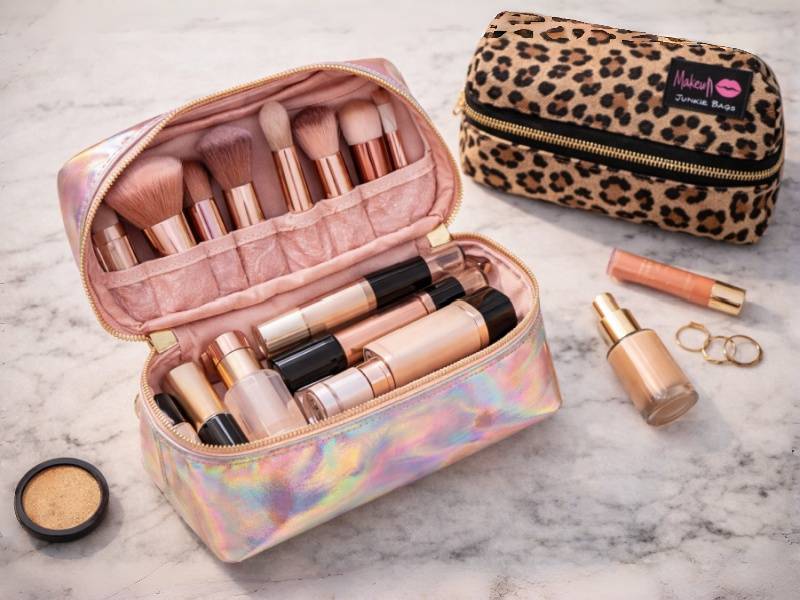
Some products become popular because of branding. Others keep selling because they solve a real daily problem that users feel every time they get ready, travel, or search inside a messy bag. Makeup junkie bags belong to the second group. Their popularity is not just about print, color, or trend appeal. It comes from a very simple promise: make beauty storage faster, easier to see, easier to clean, and less frustrating to use. That sounds basic, but it one of the oldest complaints in this category. Traditional cosmetic bags often turn into cluttered pockets. Small items disappear into the bottom. Powders spill. Brushes bend. Linings stain. Deep pouches may look neat from the outside, but the user experience is often poor once the bag is full. The flat lay concept changed that experience by making contents more visible and more reachable in one motion, which is a strong part of why this product style keeps getting attention. The official brand story also ties the product to that same pain point: bags that tipped over, became a “black hole,” or got dirty too quickly inside.
That popularity also makes sense from a commercial point of view. The category sits at the intersection of beauty, travel, gifting, organization, and lifestyle accessories. That gives it more than one trigger. A shopper may want one for daily cosmetics, a boutique may want it for a giftable impulse purchase, and a private label brand may see it as a good format for seasonal collections or logo programs. On the official site, the assortment is not limited to one print or one pouch. It extends into clear-top versions, train cases, mixed sets, brush-related items, seasonal designs, and gift-oriented collections. That breadth matters. A product becomes easier to scale when it can fit more than one use case and more than one selling channel.
Featured Snippet: Makeup junkie bags are popular because they combine a flat lay opening structure, wipeable interior, strong visual appeal, and practical travel use in one product. Instead of forcing users to dig through a deep pouch, this format lets them see and access cosmetics more easily. That improves convenience, cleanup, and day-to-day usability. Their popularity also grows because the style works across beauty, gifting, travel, and boutique retail, making it attractive not only to end users but also to private label brands and custom bag factories evaluating new cosmetic bag formats.
There is also a deeper reason why this category keeps showing up in searches and product discussions. The design speaks to a larger shift in accessories: users no longer want storage that looks good but wastes time. They want products that support routines. In beauty, that means fast access, easy cleanup, and bag formats that feel less chaotic. In retail, it means products that are simple to explain and easy to demonstrate. In factory development, it means a structure with a clear value proposition that can be translated into custom materials, linings, zipper gauges, size sets, and branding details. So when people ask why makeup junkie bags are so popular, the best is not just that they are trendy. It is that they translate a frustrating routine into a more controlled, visible, and giftable product experience. That is a stronger reason than trend alone, and it is also why custom bag developers keep studying this category closely. Brands and project owners looking to build a similar cosmetic bag line can use that logic to guide size planning, lining selection, and sample development before bulk production begins. For custom inquiries, selected projects can be discussed with Jundong at info@jundongfactory.com.
What Is a Makeup Junkie Bag and Why Do So Many Search for It?
A makeup junkie bag is best understood as a flat lay cosmetic bag format popularized by a specific brand, then recognized more broadly as a highly practical style of beauty pouch. People search for it because they are looking for a bag that opens wide, shows contents clearly, and is easier to clean than a standard cosmetic pouch. The search interest is not only about the name. It is also about the function tied to the name.
The first thing to understand is the difference between a brand term and a product behavior. “Makeup Junkie Bags” is a brand identity, but the reason it keeps getting searched is that the product delivers a recognizable use experience.The bag is presented around a patented lay-flat design and wipe-clean interior. Those two features give the term meaning beyond a logo. When a branded format becomes strongly associated with a specific use benefit, search demand tends to grow in two directions at once. One group of users searches for the original brand. Another group searches because they want that function, whether from the original brand or from similar bag styles. That is how product language grows into category language.
This is where many factories and project owners make a mistake. They assume popularity comes mainly from surface appearance. In reality, popularity in storage products usually starts with irritation reduction. People search because their current solution annoys them. The official brand press description makes this point very clearly: some bags are wide but unstable, some are deep but impossible to search through, and some look attractive but become dirty too fast inside. That is not a fashion problem. It is a workflow problem. A good cosmetic bag reduces wasted movement. It reduces the “digging” moment. It reduces cleanup anxiety after spills. Once a bag format reduces friction, remember it, share it, and search for it by name.
Another reason the search volume around this term makes sense is channel versatility. This is not a product limited to one shelf or one type of consumer. It works for beauty lovers, travel shoppers, gift givers, boutique retailers, event merchandise planners, and even private label brands looking for a proven cosmetic pouch structure. On the official site, the product assortment already shows that the format can stretch into clear collections, train cases, sets, and themed collections. On Faire, the brand is also visible in a wholesale context, which confirms that the style is not only a direct-to-consumer item. It also has resale logic.
That resale logic matters because products become more searchable when they cross from personal utility into commercial utility. Boutique owners search for items that are giftable, easy to merchandise, and simple to explain. A flat lay cosmetic bag does not require a long demonstration. Open it, show visibility, mention the wipeable interior, and the value becomes clear. That makes it easier for stores to sell and easier for end users to justify as a self-use item or a gift. The product’s commercial language becomes short, memorable, and repeatable. That helps search behavior too.
There is also a content factor. Products that many natural questions tend to attract more search interest over time. This one can support “what is it,” “how does it work,” “which size is best,” “is it washable,” “is it good for travel,” “what is the price,” “does it come in clear styles,” “can I wholesale,” and “can a factory make similar custom bags.” In other words, one product format supports many search pathways. That gives the category strong long-tail potential even when the core phrase is branded.
For a bag factory, the lesson is useful. When you study a popular format like this, do not just copy the shape. Study why the search intent keeps returning. The popularity is tied to clear user pain, easy demonstration value, visual merchandising strength, and strong extension potential across sizes and collections. That is exactly why this style deserves attention from private label teams and cosmetic pouch developers. The real opportunity is not to imitate a brand name. It is to understand the structure behind the demand and translate that into a custom product strategy with your own material, zipper, logo, packaging, and channel positioning.
Why Is the Flat Lay Makeup Bag Design So Popular?
The flat lay makeup bag design is popular because it changes how users see, access, and manage their cosmetics. Instead of creating a narrow cavity that hides products at the bottom, it opens broadly and turns the inside into a visible working surface. That reduces search time, improves convenience, and makes the bag feel more usable in real life.
At a practical level, flat lay design solves a visibility problem. Many traditional cosmetic bags work like small buckets. Once they fill up, they stop being organized, even if the user packed them neatly at the start. Small items slide under larger items. Lip products hide under compacts. Brushes end up diagonally across the opening. Users spend time moving one item to reach another. A flat lay structure changes the geometry of that interaction. The zipper opens around a wider path, the body loosens, and the contents spread into view. That one movement creates a better retrieval experience. For beauty users, that matters more than many people realize. The bag is not just storage. It is part of a routine, and any friction inside that routine becomes noticeable very quickly.
The official product descriptions reinforce this value by repeating the phrase “lay-flat design for easy access.” That wording matters because it confirms the product is being sold not merely as a style bag, but as a behavior-improving tool. In a strong accessory category, the best products are the ones users can explain from personal experience in one sentence. “I can find everything fast.” “It opens all the way.” “It is easier to clean.” That kind of product language spreads better than abstract claims about quality.
Flat lay design is also popular because it pairs well with emotional relief. This is often overlooked in bag development. Cosmetic bags do not only store objects. They store repeated micro-frustrations. Users remember the bag that caused a powder spill, the one that stained internally, the one that forced them to unload everything in a hotel bathroom just to find one item. A better cosmetic bag reduces those bad moments. That creates a stronger attachment than a typical accessory purchase. The bag becomes associated with calm, speed, and tidiness. In product psychology, that is powerful. It shifts the purchase from “nice to have” into “I do not want to go back.”
There is also a visual reason behind the popularity. The flat lay format photographs well. When opened, it displays more product at once. That is useful in retail, social sharing, gifting, and merchandising. A product that shows itself clearly tends to sell more easily online because can quickly understand its function without needing long explanation. The same is true in wholesale presentations. Store owners like products that “read well” visually. A flat lay bag with a distinctive print or material finish has both form and demonstration value.
Still, it would be too simple to say flat lay always wins. There are trade-offs. Some users may prefer a structured box-style case for stacked products or rigid organization. Some travel users may want more vertical containment. But the popularity of the flat lay format does not come from winning every comparison. It comes from being noticeably better at the problem many users experience most often: fast access inside a soft cosmetic bag. That is enough to create strong preference.
For factories and brand teams, this is where product development becomes interesting. A flat lay concept can be adapted in many ways. Zipper path, bag depth, seam allowance, gusset behavior, lining stiffness, and base shape all influence how “flat” the opening actually feels. Two bags may look similar when closed but perform very differently when opened. That is why sample development matters. A strong flat lay cosmetic bag is not just a silhouette. It is a pattern engineering problem. If the zipper arc is wrong, the bag may resist opening. If the body is too stiff, the spread effect weakens. If the lining bunches, visibility drops. If the fabric collapses too much, the bag loses shape after repeated use.
This is also why the category keeps attracting private label interest. The popularity proves the concept is commercially valid, but the execution still leaves room for differentiation. A brand can adjust size ratios for travel, use coated canvas for easier wipe-down, switch to nylon for lighter weight, add clear top panels, include internal pockets, or develop logo-friendly zipper pulls. The flat lay principle stays the same, but the final product can serve very different channels. A boutique gift line is not the same as a travel retail line. A salon promotion set is not the same as a branded cosmetic subscription insert.
That is the deeper reason the design remains strong. It is not frozen. It is adaptable. And adaptable formats usually last longer than novelty formats. If your team is planning a custom flat lay cosmetic bag program, it is worth building samples around real user scenarios rather than just appearance boards. Think about brush length, compact height, cleanup expectations, zipper smoothness, and how the bag behaves on a bathroom counter, hotel vanity, or inside a carry-on. Those choices influence whether the bag only looks like a flat lay bestseller or actually performs like one. J can help assess cosmetic bag structures, lining options, and sample development routes for custom projects at info@jundongfactory.com.
Which Features Make Makeup Junkie Bags Stand Out vs Regular Makeup Bags?

Makeup junkie bags stand out because they combine wide-opening access, wipeable interiors, strong visual design, and size flexibility in a way many regular cosmetic bags do not. What makes them memorable is not one single feature. It is the way those features work together in daily use.
The most obvious difference is the opening behavior. A regular cosmetic bag often behaves like a tunnel. A user can put things inside, but retrieving them is less efficient because the entry is narrow compared with the stored volume. A makeup junkie style bag behaves differently. Its opening structure creates a larger visual field. That improves searchability and makes the bag feel more “active” once opened. This alone is enough to create noticeable contrast against basic zipper pouches.
The second major differentiator is the interior story. The official brand repeatedly emphasizes wipe-clean linings and zero-hassle cleanup, and wholesale descriptions reference moisture-resistant interior liners. That matters because the inside of a cosmetic bag is where many products fail over time. Exterior fabric sells the first impression, but lining performance shapes repeat satisfaction. Foundation leaks, powder dust, cream residue, and brush pigment are normal in real life. Users know this. So when a bag promises easier cleanup, it is speaking directly to a recurring pain point, not offering a decorative extra.
The third difference is presentation value. This category does not ignore appearance. Many of the products are offered in strong prints, seasonal styles, velvet-like textures, and clear-top options. That balance matters. A purely functional bag can feel cold or generic. A purely decorative bag can feel impractical. Makeup junkie style products sit in the middle. They are sold as useful, but still visually expressive. That is why they work so well in boutique environments and gift-driven retail. They feel personal enough for self-purchase and polished enough for gifting. The official collections show this clearly through broad assortment variation rather than one single plain format.
Another feature that strengthens the category is size logic. Product describe size options and call out dimensions as part of the decision process. That may seem ordinary, but it is more important than many brands realize. Cosmetic bag dissatisfaction often comes from mismatch between contents and cavity. A bag looks attractive online, but in use it cannot fit a palette, full-size bottle, or brush set comfortably. The official site directly connects size choice with intended beauty essentials, which makes the shopping process more concrete.
Warranty positioning also plays a role in standing out. The brand maintains a lifetime warranty, and some wholesale listings mention that warranty clearly. Warranty language is not only about repair or replacement. It signals confidence. In accessories, especially soft accessories, confidence claims help justify price. A cosmetic bag is a relatively small product, but still compare quality expectations. Strong zipper performance, lining durability, seam stability, and consistent finishing all become more believable when a brand stands behind the product over time.
That said, standing out is not just about adding more features. It is about choosing features that users immediately notice in use. Some bag developers overload cosmetic bags with compartments, loops, tiny slots, or decorative details that complicate sewing but do not improve satisfaction. The stronger approach is usually selective usefulness. A flat lay opening, easy-clean lining, reliable zipper, right size, and appealing exterior often outperform a more complex bag that looks “feature rich” but creates packing friction. This is especially true in travel and daily routine products, where speed matters.
For custom bag projects, the lesson is clear. If you want a cosmetic bag to stand out, start with performance features users will mention to others after real use. Do not build from trend language alone. Build from routine behavior. Ask which complaints your bag should solve. Ask which surfaces will get dirty first. Ask which products must fit without forcing the zipper. Ask whether the bag needs to look premium, playful, technical, or giftable. Then align material, lining, zipper gauge, and pattern shape to those priorities.
Below is a practical comparison table that helps explain why this product type keeps gaining attention:
| Feature | Makeup Junkie Style Bag | Regular Makeup Pouch |
|---|---|---|
| Opening Visibility | Wide, spread-out view | Narrower, more hidden contents |
| Access Speed | Faster item retrieval | More digging required |
| Interior Cleanup | Often wipeable or moisture-resistant | Depends on lining, often harder to clean |
| Merchandising Appeal | Strong visual demo value | More basic shelf presentation |
| Giftability | High, especially with prints and sets | Moderate, depends on branding |
| Private Label Potential | Strong, adaptable across materials and sizes | Also possible, but harder to differentiate |
The strongest products in this category succeed because they do not force users to choose between beauty and practicality. They give both. That is a large part of why the product format stays relevant. It also explains why factories studying cosmetic bag development should treat lining, zipper architecture, and opening behavior as commercial decisions, not only technical ones.
Are Makeup Junkie Bags Better Than Traditional Cosmetic Bags, Pouches, and Travel Cases?
Makeup junkie bags are often better than traditional cosmetic pouches for visibility, speed, and everyday convenience, but they are not automatically better for every use case. Their main advantage is how they improve access inside a soft cosmetic bag. Their limits appear when a user wants rigid protection, heavy compartmentalization, or more structured vertical packing.
This question matters because popularity can create the illusion that one format replaces all others. In practice, cosmetic storage products solve different problems. A flat lay bag solves access and cleanup more directly. A structured train case solves containment and separation more directly. A clear pouch solves quick compliance or visibility in restricted settings. A small zip bag solves portability and light carry. When people ask whether makeup junkie bags are better, the honest is that they are better at certain priorities, especially when the user wants one flexible bag that opens wide and keeps daily items easy to reach.
Compared with a standard soft pouch, the flat lay style usually wins on retrieval comfort. A basic pouch can hold a lot, but the packing experience becomes messy once volume increases. Compared with a boxy train case, the flat lay style often feels less bulky and more intuitive for casual use. Compared with a clear bag, it usually wins on style and gifting, while the clear bag may win in compliance-driven scenarios like stadium rules or certain travel environments. Interestingly, the brand itself also sells clear-related collections and train cases, which suggests even within the same ecosystem, no one format solves everything.
The best way to compare these formats is to think about user environment. On a bathroom counter, flat lay is excellent because it spreads contents into view. In a hotel setting, it saves time because users do not need to unload the bag to find one small item. Inside a handbag, a smaller soft pouch may still be more efficient if the goal is minimal space use. In luggage, a train case may protect stacked bottles or tools more effectively if the user carries a larger beauty routine. This is why category comparison should never be reduced to “best” in the abstract. It should always be connected to use case.
There is also a maintenance comparison. Bags with wipeable or moisture-resistant interiors have a clear advantage over soft-lined pouches that absorb stains or trap residue. This matters more than appearance-only shoppers may expect. Over time, cleanup burden changes how often people keep using a bag. A bag that becomes dirty too fast loses its appeal, even if the exterior still looks good. That is one reason why the easy-clean promise is so central to this category’s success.
However, there are limits to the flat lay style that brands should acknowledge honestly. If a user needs upright bottle separation, a hanging organizer, or many internal compartments, another format may be better. If a user carries fragile glass bottles or high-value tools, a more structured case may provide better protection. If a user wants airline-friendly transparency, a clear bag may be the better immediate . A mature product strategy does not deny these differences. It uses them. That is how brands build credible collections instead of forcing one shape into every need.
For private label brands and factories, this comparison is commercially useful because it guides assortment planning. A single cosmetic bag design can bring attention, but a stronger line usually includes different formats for different use contexts. A flat lay hero bag can anchor the collection. A mini pouch can serve daily handbag use. A larger travel case can target overnight packing. A clear version can cover event, stadium, or visibility-driven needs. The result is a line that feels complete rather than repetitive.
The same logic applies to content strategy. When a brand explains not only why its hero bag is useful but also when another format may suit a different situation, it becomes more trustworthy. Trust grows when products are matched to actual routines instead of pushed as universal solutions. That makes the decision easier and reduces disappointment after purchase.
Below is a useful comparison table for content and product planning:
| Product Type | Best For | Strength | Limitation |
|---|---|---|---|
| Flat Lay Makeup Bag | Daily cosmetics, travel vanity use | Wide visibility and easy access | Less structure for rigid separation |
| Standard Makeup Pouch | Light carry, low-cost storage | Compact and simple | Can become cluttered quickly |
| Train Case | Larger beauty sets, tools, bottle storage | More structure and containment | Bulkier and less flexible |
| Clear Cosmetic Bag | Fast visibility, regulated venues, simple travel | Instant visual access | Lower style privacy, can scratch or stiffen |
| Compartment Organizer | Users who want strict separation | Strong item zoning | Slower packing and less flexible cavity |
So, are makeup junkie bags better? In many of the situations that matter most to everyday beauty users, yes. They are better because they improve flow. They reduce clutter stress. They make cleanup easier. They look good while doing it. But the smarter conclusion is not that all other cosmetic bags are outdated. It is that this format revealed a gap in the category and it very effectively. For custom cosmetic bag development, that is the real takeaway: understand the gap first, then design the product around it.
What Types of Makeup Junkie Bags Are Most Popular?
The most popular types are usually core flat lay cosmetic bags, clear-top versions, larger travel-ready sizes, and giftable or seasonal prints. Size and transparency options matter because popularity in this category does not come from one single shape. It comes from giving users a familiar bag format in versions that fit different routines and selling channels.
When look at this category, they often focus first on pattern or color. That is understandable because the visual surface is easy to notice. But from a commercial view, the more important question is which product versions are easiest to sell repeatedly. The official site shows a broad assortment that includes classic makeup bags, clear collection items, train cases, and grouped sets. That tells us something important: the product’s popularity is not locked into one exact SKU. The strength is in the adaptable format.
The core hero product is still the soft flat lay cosmetic bag. This is the version most clearly tied to the brand’s value proposition of easy access and wipeable interior. It works as the entry point because it is simple to understand and broad in use. Can it for makeup, toiletries, travel essentials, or purse organization. That kind of flexible use helps a core SKU become a bestseller. It also helps boutiques because one product can be presented to more than one type without complicated explanation.
Clear-top versions are popular for a different reason. They preserve some of the original bag’s visual charm while adding faster visibility from the outside. That has appeal in retail because transparency adds confidence at a glance. A user can see part of the contents or the bag’s interior layout immediately. It also speaks to users who want a more functional or travel-oriented cosmetic bag without switching to a fully clear utilitarian pouch. multiple designs appear at a common price point, which suggests the clear-top style is not a side idea. It is an established branch of the assortment.
Larger travel-oriented sizes and train-case-adjacent formats are also commercially strong because many users outgrow the standard daily makeup pouch. Once a beauty routine includes larger brushes, hair items, skincare bottles, or longer trips, the need changes. The official site’s product organization and older blog material both point toward size-based utility, including bags sized around common beauty items. That gives size a very practical role in selling the category. Bigger bags are not just “more space.” They serve a different routine.
Seasonal prints and gift-friendly finishes matter too. This may sound secondary, but in boutique and gifting channels, pattern rotation can drive a meaningful share of repeat sales. A functional bag gets the first purchase. A beautiful or collectible exterior helps trigger the second. That is why strong cosmetic bag lines often succeed through a combination of stable shapes and rotating print stories. The consumer does not have to relearn the product. They only choose a new version that feels fresh.
The most useful way to think about “popular types” is by role, not only by appearance:
| Product Role | Typical Use | Why It Sells |
|---|---|---|
| Core Flat Lay Bag | Daily cosmetics | Easy to explain, easy to use |
| Clear-Top Cosmetic Bag | Travel, visibility-focused storage | Faster visual access, functional look |
| Jumbo or Travel Size | Extended routines, overnight packing | Holds more without changing product logic |
| Mini Pouch | Purse carry, small-item storage | Lower price entry, good add-on item |
| Set or Bundle | Gift boxes, retail displays, promotions | Higher perceived value and stronger merchandising |
This role-based view is valuable because it helps brands build a complete line without guessing. Instead of launching random cosmetic pouches, a brand can define one hero function, one travel extension, one mini add-on, and one giftable version. That structure often performs better than chasing too many unrelated shapes.
There is another critical point here: popularity does not always mean the most complex product. In cosmetic accessories, often prefer products they can understand immediately. A flat lay bag with the right size and right lining may outsell a more elaborate organizer because it asks less from the user. Fewer decisions. Faster use. Easier explanation. That simplicity is a strength, not a limitation.
This category is attractive because it allows many material and branding variations without losing the core product logic. Nylon, coated canvas, PU, velvet-touch fabric, quilted synthetic materials, or cotton-based constructions can all create different visual identities around the same basic use behavior. Add logo patches, custom zipper pulls, embossed branding, printed lining, gift sets, or window packaging, and the collection becomes highly adaptable. That is why this category remains so relevant for private label development and boutique-targeted accessory programs.
How Easy Are Makeup Junkie Bags to Clean, Maintain, and Use for Travel?
These bags are popular partly because they are designed to be easier to clean and easier to live with than many ordinary cosmetic bags. Wipeable or moisture-resistant interiors reduce cleanup stress, and the flat lay format makes the bag practical for vanity use, hotel stays, and day-to-day travel routines.
Cleaning is one of the least glamorous but most decisive factors in cosmetic bag satisfaction. Many do not think about it at the purchase moment. They think about print, shape, or trend appeal. Then real life begins. Powder breaks. Foundation caps loosen. Lip liner dust collects in the corners. A brush goes back in before it is fully dry. Over time, the lining becomes the truth-telling part of the product. If it traps stains too easily or absorbs residue, the bag’s premium feeling fades fast. That is why the official brand language leans so heavily on wipe-clean or moisture-resistant interior claims. It addresses the part of the product experience that most users eventually face.
From a user point of view, easy-clean performance does more than protect appearance. It lowers usage anxiety. People are more willing to actually use a product when they do not fear ruining it. That matters in beauty, where products are messy by nature. A bag that feels “too precious” often gets underused. A bag that looks attractive but still feels easy to maintain tends to stay in rotation longer. This is one reason why wipeable linings are such a smart feature in the category. They help the product stay both aspirational and practical.
Travel use strengthens this advantage. On the road, cosmetic storage is exposed to time pressure, small counters, shared sinks, rushed repacking, and frequent handling. A bag that opens wide is easier to use in these situations because the user can see what is inside without emptying the whole contents. A wipeable interior also matters more during travel because spills are harder to deal with when someone is away from home. This is why flat lay cosmetic bags often feel more travel-ready than their small size might suggest. They are not rigid travel cases, but they support a smoother travel routine.
Still, travel performance should be judged honestly. A soft flat lay bag is excellent for accessibility, but not always ideal for maximum protection. If a user carries fragile glass skincare containers or wants fully upright separation, a more structured case may still be the better choice. The smarter view is that these bags are highly travel-friendly within the soft cosmetic bag category, not that they replace every travel case format. Brands that present the product this way tend to sound more credible and earn more trust.
Maintenance also depends on materials beyond the lining. Exterior textures can change how durable, washable, or premium the bag feels over time. Some fabrics are better for gentle wipe-down. Some work better with machine washing under specific conditions. Some prints hold visual appeal longer under repeated handling. Some zipper finishes look luxurious but may show wear differently. This is where custom development matters. A cosmetic bag should not only look attractive on launch day. It should still look acceptable after real use. That means brand teams need to think about both immediate shelf appeal and long-term wear behavior.
Cleaning and maintenance claims must always be supported by material reality. It is easy to write “easy clean” in marketing. It is harder to build a bag whose lining coating, seam construction, and zipper installation still support that claim after repeated use. That is why sampling should include more than just appearance approval. It should include basic usage simulation. Wipe tests. Spill checks. Zipper cycle checks. Corner residue visibility. Lining puckering review after cleaning. These are not luxury checks. They are commercial checks, because the product’s reputation depends on them.
Travel suitability also has a packaging and assortment angle. Cosmetic bags sold into travel or gifting channels often perform better when paired with size guidance, use suggestions, or bundled sets. A shopper may not know whether to choose one large bag or two smaller bags without context. Good brands reduce that confusion by linking size to use case. The official site does this through size callouts and dimensions, which helps users visualize fit before purchase.
The big question is not just “can we make a pretty cosmetic bag?” It is “can we make a cosmetic bag people will keep using because it stays easy to clean, easy to access, and easy to pack?” That is the question that protects repeat orders and better reviews. If you are developing a travel-ready cosmetic pouch line or a private label beauty bag program, J can help review materials, linings, and sample logic for custom production at info@jundongfactory.com
When Did Makeup Junkie Bags Become Popular and What Is the History Behind the Trend?
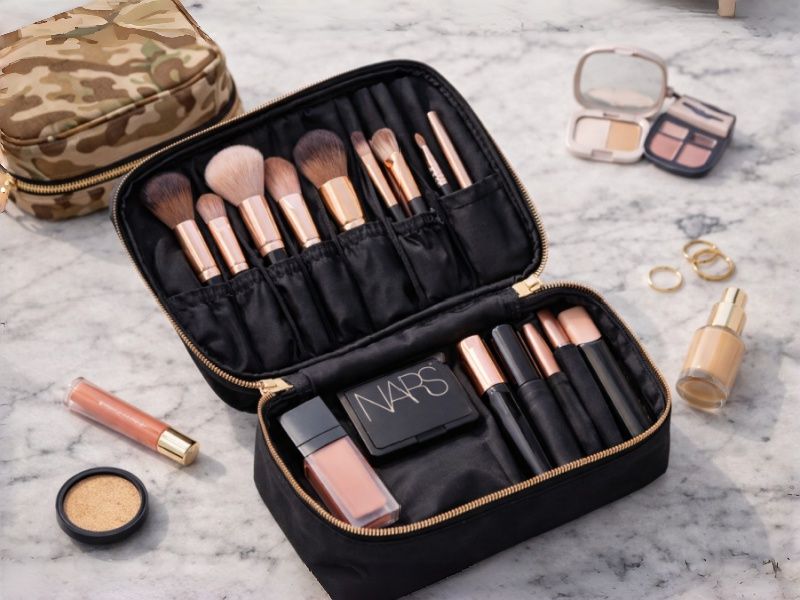
Makeup junkie bags became popular because the brand connected a familiar frustration with a clear product fix, then expanded that message through direct selling, product assortment, and media exposure including Shark Tank references on its own site and wholesale channels. The brand’s official story traces the concept to dissatisfaction with bags that were unstable, hard to search through, or difficult to keep clean.
The history matters because popularity rarely appears out of nowhere. In accessories, product success often follows a very recognizable pattern. A founder experiences a repeated irritation. Existing products feel close but not right. A new product form is created around a sharper daily-use insight. Then the product catches on not only because it looks different, but because users immediately understand the benefit. That is exactly the sort of origin story reflected in the own press . The product was not invented to make cosmetic bags more decorative. It was created to solve the problems of tipping, searching, and dirty interiors. That problem-solution logic gave the brand a much stronger starting point than trend chasing.
Media and exposure then helped amplify the concept. The brand’s own site references a journey “from kitchen table to Shark Tank,” and wholesale listings also mention that visibility. Public exposure matters, but it usually works best after a product already has a strong use story. Media can increase awareness. It cannot create durable demand if the product does not solve something meaningful. In this case, the exposure appears to have accelerated a product that already had clear consumer logic behind it.
Another reason the trend lasted is that the product was not trapped in one selling moment. The assortment expanded. Collections broadened. Sizes multiplied. Clear variants appeared. Travel-oriented extensions showed up. That is a sign of category maturation. Many trendy accessories spike and vanish because they depend on one look or one viral period. Stronger products survive because they can be extended into new use cases without losing their identity. The official collection show exactly that kind of extension behavior.
The history of this trend also reveals a larger shift in beauty storage. Consumers increasingly value hybrid products that are both useful and expressive. They do not want plain utility if it feels dull. They do not want beauty without function if it creates frustration. Products that solve a real problem while still feeling attractive are more likely to cross from niche audience to broader adoption. That is one reason a cosmetic bag category like this can grow beyond a small founder story into a recognizable retail format.
This history is also useful for custom developers. It shows that the strongest bag ideas are often rooted in routine friction rather than in abstract fashion direction. If you want to create a successful cosmetic pouch line, start by identifying what users dislike about current options. Do they hate digging through clutter? Do they want faster wipe-down cleanup? Do they want a bag that feels giftable but still practical? The more specific the irritation, the stronger the development brief becomes.
Who Is the Ideal for Makeup Junkie Bags in Retail, Wholesale, and Private Label Channels?
The ideal is not just one person. This product format works well for beauty-focused retail, gift-driven stores, travel accessory programs, salon and spa resale, and private label cosmetic pouch projects because it combines fast visual appeal with practical use. That mix makes it easier to position across more than one sales channel. On Faire, the brand is clearly presented as a wholesale line for stores, while its own site shows multiple collections, sizes, and giftable variations that suit repeat merchandising.
One strong group is boutique retail. Small shops tend to do well with products that are easy to explain in a few seconds, attractive on display, and suitable for self-use or gifting. A flat lay cosmetic bag fits that pattern well. It gives the retailer a product story that is simple and concrete: it opens wide, helps users see what is inside, and is easy to clean. Those are that do not require technical education or long demonstrations. They also work across a wide age, which gives the product broader shelf flexibility than more trend-dependent accessories.
Another strong group is the beauty-and-personal-care environment. Salons, spas, lash studios, cosmetic service providers, and beauty subscription programs all benefit from small soft goods that feel useful rather than disposable. A cosmetic bag that looks polished but still feels practical can work as retail merchandise, event collateral, loyalty gifting, or bundled value-added packaging. That is one reason why products like this stay commercially relevant. They are not tied to only one mood. A shopper can one because she needs organization, because she wants a gift, or because the print feels special.
Gift-oriented retailers are also a very natural fit. This is one of the reasons the category scales so well. When a product sits at the overlap of daily use and giftability, it becomes easier to merchandise year-round. Seasonal prints, clear-top variations, collections, and set-friendly sizes all help the product move from one gifting window to the next without changing its basic logic. The official collections structure reflects this kind of assortment strategy rather than one fixed utilitarian lineup.
Travel and lifestyle shops represent another strong group. These stores do not always want heavily beauty-branded items, but they do want compact organizers that solve common packing frustrations. A flat lay cosmetic bag can easily be positioned as a travel pouch, vanity organizer, brush holder companion, or everyday essentials bag. That flexibility matters. A product with only one narrow identity is harder to extend into other channels. A product with several credible use cases becomes easier to reorder.
Then there is the private label side. This is where the category becomes especially interesting for product developers. A style like this appeals to private label teams because the function is already validated, but the final product can still be tailored through fabric, zipper, lining, print, embossing, packaging, and size architecture. A boutique brand might want a soft-touch velvet exterior with metallic logo hardware. A travel-focused brand may want coated canvas or wipe-friendly polyester. A minimalist line may want neutral solids and understated zipper pulls. The core user benefit stays the same, but the product identity shifts by channel.
That channel adaptability is what makes the format commercially durable. It is not locked into a single aesthetic tribe. It can feel fun, premium, practical, giftable, sporty, or seasonal depending on execution. That is very valuable for teams building long-term cosmetic accessory lines, because it creates room for assortment planning rather than one-off launches.
It is also useful to think about who this product is not for. It may not be the best primary item for shoppers who need hard-shell protection, strict compartmentalization, or professional kit-level separation. It may not be the right fit for programs focused on ultra-low-cost giveaways where material and lining value get stripped too far down. The product works best when the user still cares about both routine convenience and perceived quality. That is why the strongest are usually those selling lifestyle value, not just chasing the cheapest pouch format available.
Below is a simple channel-fit table that helps explain where this type of cosmetic bag performs well:
| Channel | Why the Format Fits | What Matters Most |
|---|---|---|
| Boutique retail | Easy to gift and easy to explain | Print appeal, display value, margin |
| Salon / spa resale | Useful and beauty-adjacent | Cleanability, branding, size |
| Travel / lifestyle stores | Helps organize daily essentials | Weight, wipeability, flexibility |
| Seasonal gift programs | Strong repeat-purchase potential | Pattern refresh, packaging, bundles |
| Private label projects | Core function already proven | Custom materials, logo, sample quality |
This matters because the should shape product development decisions from the start. A cosmetic bag for boutique gifting should not be developed exactly like one for travel utility or one for salon resale. Exterior feel, lining choice, zipper finish, packaging style, and logo method should all follow the channel logic. That is where stronger custom development begins. If your team is evaluating a flat lay cosmetic pouch line for private label or branded resale, J can review the project direction and help shape the sample route at info@jundongfactory.com.
How Much Do Makeup Junkie Bags Cost and Why Does Price Matter?
Price matters because this category sits in a space where users still expect visible quality, usable design, and giftable presentation. On the official site, clear-top bags are shown at $36.00, highlights lifetime warranty messaging and a claim that the bags fit 30% more than a standard bag, both of which help support premium positioning rather than entry-level cosmetic pouch pricing.
The most useful way to think about price in this category is not “how cheap can a cosmetic bag be made?” but “what combination of function and appearance makes the price feel justified?” Soft accessories like this live or die by perceived value. It is not only fabric and zipper. She is easier routines, less mess, faster access, better organization, and a product that feels worthy of gifting or repeat purchase. When those benefits are communicated clearly, the price ceiling rises.
That is why price matters so much in product planning. If the bag is positioned too low, the product may lose the materials and lining quality needed to keep its core promise. If it is positioned too high without enough functional support, it begins to feel like style-only markup. The strongest cosmetic bag lines sit in the middle: attractive enough to feel like a treat, useful enough to feel justified, and polished enough to work in boutique or branded resale environments.
Official pricing examples help illustrate how the category is being framed. The clear collection list multiple items at the same regular price point, suggesting structured assortment discipline rather than random price swings. Meanwhile, product reinforce warranty, easy-care messaging, and enhanced capacity claims, all of which are part of the price logic. are not simply being asked to pay for a pouch. They are being asked to pay for a more convenient bag experience.
The more relevant question is margin architecture. A cosmetic bag that looks too generic may force discounting because it lacks a strong reason to choose it. A bag with clearer product language, stronger lining performance, and stronger presentation often supports healthier markup because the selling story is easier. This is why price cannot be separated from retail explanation. The faster a shopper understands why the product is useful, the easier it is to defend a higher ticket.
Material choice also changes the pricing story. Coated fabrics, special prints, velvet-touch textures, custom zipper pulls, and premium interior finishes all influence landed cost. But not all cost additions create equal value. Some raise price without improving the first-use or repeat-use experience. Others directly protect the bag’s reputation. A better lining, smoother zipper action, stronger seam consistency, and packaging that improves gifting can all support price more effectively than decorative complexity that users barely notice after purchase.
There is also a size factor. Many brands underestimate how much size clarity influences perceived value. If users understand exactly what fits in each version, they judge the price more fairly. If the size feels confusing or disappointing after arrival, the price feels wrong even when the bag itself is well made. That is why strong cosmetic bag brands often tie size to real use cases rather than presenting dimensions without context.
Price matters even more because it determines which channel the finished product can realistically enter. A bag developed for boutique retail may justify a richer exterior and more decorative packaging. A salon resale item may need a slightly tighter cost profile but still require strong lining performance. A promotional beauty gift program may need a simpler structure to hit budget while keeping the signature flat lay experience intact. There is no single “correct” price. There is only price alignment with channel, materials, and product promise.
Below is a practical cost-thinking table for this type of category:
| Cost Driver | Why It Changes Price | Why It Matters Commercially |
|---|---|---|
| Exterior material | Changes hand feel and visual identity | Affects perceived quality immediately |
| Interior lining | Affects cleanup and long-term use | Protects repeat satisfaction |
| Zipper quality | Affects opening experience and durability | High-use area, easy to notice |
| Size | Changes material usage and function | Shapes value perception |
| Packaging | Affects gifting and shelf presence | Supports resale presentation |
| Branding details | Logo pullers, patches, labels, embossing | Helps private label differentiation |
The deeper point is this: price matters because the category is neither fully basic nor fully luxury. It is a practical lifestyle accessory with emotional appeal. That means a good price strategy must protect both use value and display value. For custom projects, the right target is usually not the lowest possible unit cost. It is the cost structure that lets the bag still feel worth keeping, worth gifting, and worth reordering. Teams developing custom cosmetic bags with flat lay features, wipeable linings, or boutique-ready finishes can discuss size tiers, material options, and sample planning with Jundong at info@jundongfactory.com.
Can Makeup Junkie Style Bags Be Made by a Custom Bag Factory?
Yes, a custom bag factory can develop flat lay cosmetic bags inspired by the same user logic, but the real challenge is not drawing a similar silhouette. It is building a bag that actually delivers the wide-opening behavior, easy-clean interior, and repeat-use quality users expect from the category. That means pattern engineering, material pairing, lining choice, zipper path, and sampling are all more important than surface appearance alone.
This is where many cosmetic pouch projects go wrong. A team sees a successful product format and assumes it can be reproduced by matching only the outer look. In practice, a bag that looks similar when zipped closed can perform very differently when opened, filled, cleaned, and repacked. That difference comes from construction logic. The zipper curve, seam allowance, depth distribution, lining bulk, piping choice, and fabric stiffness all affect whether the bag opens smoothly and lays out in a useful way.
A capable custom bag factory approaches this kind of product by studying function first. Before fabric swatches or print layouts are finalized, the development team should clarify what the finished bag must do. Does it need to hold daily cosmetics, travel toiletries, or both? Should it flatten wide on a vanity, or only open enough to improve visibility? Is wipeability a hard requirement? Will the bag use a clear top panel, a soft exterior, or a stiffer coated material? What sort of logo application is needed? These questions affect pattern and material decisions from the start.
Material choice is especially important. A flat lay cosmetic bag can be made in polyester, nylon, PU, coated canvas, cotton-based composites, or mixed-material constructions, but each option changes hand feel, cleaning behavior, and opening response. Some fabrics collapse beautifully and feel soft, but may not hold premium shape after heavy use. Some coated materials wipe down well but can feel too stiff if not balanced correctly. Clear top windows can add function, but they also change seam behavior and visual weight. This is why custom development should begin with intended use, not just with inspiration images.
Factories also need to think about the interior as a commercial feature, not just a hidden layer. In this category, lining performance is part of the core promise. If the lining wrinkles badly, stains too easily, or separates from the outer shell under repeated use, the bag may still pass a casual visual inspection but fail in the hands. That is why a serious cosmetic bag project should never treat the lining as an afterthought. It should be treated as one of the product’s main value drivers.
Another major part of factory readiness is zipper execution. The zipper is not just a closure here. It is part of the user experience architecture. Opening smoothness, bite consistency, curve control, and puller choice all affect the perceived quality of the bag. If the zipper catches or the opening motion feels awkward, the product’s whole reason for existing becomes weaker. In a flat lay bag, zipper performance is not a minor trim issue. It is central.
Private label teams should also think beyond the first sample. A good factory can help translate the concept into a small product family rather than only one pouch. Once the core flat lay bag performs well, the line can expand into mini sizes, travel sizes, clear-top variants, bundle sets, or seasonal editions. That sort of extension is where the category gets commercially stronger. It lets the brand build repeat-order logic instead of relying on one SKU forever.
Still, custom production in this category requires discipline. Teams should avoid trying to add too many internal compartments, decorative trims, or construction changes before the basic opening behavior is proven. Over-design often hurts soft cosmetic bags. The strongest first sample is usually the one that gets the flat lay function, lining cleanup, zipper flow, and size proportion right. Once that works, decorative and assortment layers can be added carefully.
The good news is that this type of project is very suitable for factories with strong soft-bag development capability. It does not require hard-shell tooling or unusually complex hardware. What it does require is attention to routine behavior. That makes it a very good category for teams that understand cosmetic bag use, travel use, and giftable soft accessories rather than only general sewing.
The biggest takeaway is this: yes, the style can be made by a custom bag factory, but success depends on choosing a team that understands why the format became popular in the first place. If the factory only reproduces shape without protecting access, cleanup, and daily usability, the result may look acceptable but perform weakly. If the factory builds around the actual user logic, the product can become a strong and repeatable part of a branded accessories line.
How Does the Sample and Production Process Work for Custom Makeup Bags?
The sample and production process works best when the project moves from use-case definition to pattern development, then to material confirmation, sample testing, and only then into bulk approval. In this category, the sample stage is especially important because the difference between a good flat lay cosmetic bag and a disappointing one usually shows up in opening behavior, lining performance, and size reality rather than only in appearance.
The first stage is concept clarification. A project owner should decide what the bag is being built to hold, where it will be used, and which channel it will be sold through. Daily cosmetics, travel essentials, beauty tools, gifting, and boutique retail all create different design priorities. At this point, the team should also define whether the product needs a wipe-clean lining, a clear window, a structured or softer body, a premium zipper pull, or specific branding details. Without these decisions, the factory will be forced to guess, and guessing is expensive.
The second stage is technical brief preparation. This usually includes reference images, approximate dimensions, logo files, preferred material direction, target quantities, and any packaging expectations. For cosmetic bags, it is also very useful to share what needs to fit inside the bag. Actual product fit is one of the most overlooked parts of development. A drawing can look perfect while still failing to hold standard beauty items in a comfortable way. A better brief helps avoid that problem before sampling begins.
The third stage is pattern and structure development. This is where the factory turns the idea into a real soft-goods pattern. In a flat lay cosmetic bag, this stage matters more than many people expect. Curve shape, zipper path, bag depth, and lining allowance all need to be balanced correctly. This is why early samples should be judged on opening behavior, not only exterior appearance. If the bag does not spread well, closes awkwardly, or bunches internally, those issues should be corrected before decorative details become the focus.
The fourth stage is material confirmation. Exterior fabric, lining, zipper, puller, clear panel if any, label, and print treatment all need to be reviewed together. Cosmetic bags are high-touch products, so material mismatch becomes obvious quickly. A soft body with an overly stiff zipper may feel awkward. A nice print with a poor lining can damage long-term satisfaction. A premium lining with weak exterior construction creates imbalance. Good sample development is really about harmony between parts, not isolated upgrades.
The fifth stage is sample review. This is where teams should check more than color and logo placement. A serious sample review for this category should ask:
| Sample Checkpoint | Why It Matters |
|---|---|
| Opening spread | Core value of the flat lay concept |
| Zipper smoothness | Daily-use quality and first impression |
| Lining cleanability | Supports the easy-care promise |
| Actual capacity | Confirms the bag fits intended items |
| Exterior hand feel | Shapes perceived value |
| Seam and curve quality | Affects both appearance and durability |
| Branding clarity | Protects shelf identity and resale value |
The sixth stage is revision. Most good projects benefit from at least one round of structured sample feedback. This is normal. The goal is not to get every detail perfect at once. The goal is to identify which issues affect the bag’s core function and correct them before bulk. Common revision include depth balance, zipper path, lining behavior, puller comfort, logo scale, or bag size relation to actual contents.
The seventh stage is pre-production confirmation. Before bulk starts, the project owner and factory should align on approved sample, final material references, color standards, packaging, carton rules, and quality checkpoints. This stage reduces the common gap between what the sample promised and what the finished bulk goods actually deliver. In cosmetic bag projects, that gap often shows up in zipper quality, lining consistency, or print clarity if control are not locked early.
The eighth stage is mass production and quality control. Here, the key is repeatability. A nice sample is not enough. The line must keep opening and cleaning performance stable across the run. That means controlling not just visual defects but also soft-goods behavior. Random sample inspections, zipper checks, lining finish review, measurement checks, and packaging accuracy all matter.
The final stage is packaging and shipment readiness. A cosmetic bag sold for boutique, gifting, or branded retail should not be treated like a generic polybag item unless the channel truly demands it. Packaging affects first impression, resale positioning, and even return risk. Some projects need individual branding inserts or gift-ready presentation. Others need simpler packing for value-focused channels. The correct packaging approach should be tied to the sales plan, not decided at the last minute.
The biggest mistake in this whole process is rushing from concept to bulk because the bag “looks good enough.” In this category, “good enough” can hide real problems. If the opening action feels weak, the lining stains too easily, or the size frustrates users, the product’s popularity logic disappears. A better sample process protects against those outcomes. That is why cosmetic pouch development should always be treated as a function-first project, even when the final result needs strong visual appeal.
Supports custom soft-bag development across cosmetic bags, travel pouches, clear-top designs, and branded private label projects. Teams that want to review structure, sample feasibility, material options, or production planning can reach out at info@jundongfactory.com.
What Should Project Owners Check Before Choosing the Best Cosmetic Bag Factory?
Before choosing a factory, project owners should check whether the team can do more than sew a nice-looking sample. The right factory should understand pattern behavior, lining performance, repeat-use quality, development communication, and bulk consistency. In a category like flat lay cosmetic bags, that matters more than a low quote alone.
The first thing to check is whether the factory understands the product’s core function. A cosmetic bag like this is popular because of how it works, not only how it looks. So the development team should be able to discuss opening behavior, size logic, lining cleanability, zipper route, and intended use case. If a factory only talks about print or material price and cannot discuss how the bag performs in use, that is a warning sign.
The second thing to check is sampling quality. Ask whether the factory can support structured sample review, not just one fast prototype. Good development usually includes pattern refinement, material balancing, and function testing during the sample stage. A factory that treats samples as quick visual mockups may not protect the project well enough before mass production.
The third thing to check is communication depth. In soft goods, weak communication creates hidden costs. A useful factory should be able to confirm what information is missing, what trade-offs a certain material creates, and which details must be locked before bulk. The best development partners do not just say yes. They point out where risk lives. That saves time later.
The fourth thing to check is quality control thinking. Cosmetic bags need more than basic visual inspection. Zipper smoothness, opening shape, lining finish, dimension stability, logo placement, and packaging accuracy all influence sell-through and repeat satisfaction. Ask how the factory controls soft-goods consistency across production, especially in areas notice immediately.
The fifth thing to check is material and matching ability. A project may need wipe-clean linings, clear panels, coated outers, soft-touch exteriors, quilted looks, metallic accents, or logo hardware. The right factory should be able to explain which combinations make sense and which ones may hurt functionality. Not every attractive material works well in a flat lay bag, and a good team should tell you that early.
The sixth thing to check is bulk realism. A factory may produce one good sample but struggle to maintain the same zipper feel, curve control, or lining quality across a full order. That is why project owners should ask how approved samples are translated into production control. Repeatability is where real factory value shows up.
The seventh thing to check is channel understanding. A bag for boutique retail, a beauty event, a subscription box, and a travel-focused lifestyle line should not all be developed in exactly the same way. A factory that understands resale environments can give better advice on materials, branding, and packaging. That advice often protects margin and reduces redesign later.
Here is a practical evaluation table for project owners:
| Factory Check Area | What to Ask | Why It Matters |
|---|---|---|
| Product understanding | Can you explain how the flat lay function is built? | Protects core user value |
| Sampling process | How many rounds of revision are realistic? | Prevents rushing weak samples into bulk |
| Material guidance | Which lining and outer combinations work best? | Affects cleanability and feel |
| Quality control | How do you inspect zipper and lining consistency? | Protects repeat satisfaction |
| Bulk consistency | How do you match approved samples in production? | Prevents sample-to-bulk drift |
| Packaging support | Can you align packaging to our channel? | Supports retail readiness |
Ultimately, the best cosmetic bag factory is not simply the one with the fastest reply or lowest initial number. It is the one that can protect the bag’s reason for being popular in the first place. In this category, that means keeping the product easy to open, easy to clean, attractive to hold, and consistent in bulk. Teams that choose on those criteria usually build stronger private label results and avoid expensive correction cycles later.
Are Makeup Junkie Bags Just a Trend, or Will This Product Type Stay Popular?
This product type looks more like a durable category than a short-lived novelty because its appeal is built on routine convenience, not only seasonal fashion. The official site still actively markets large collections, clear-top variants, best sellers, warranty messaging, and capacity claims, all of which suggest ongoing commercial confidence rather than a fading one-season idea.
To understand whether the format will last, it helps to separate trend from structural demand. A trend often spikes because it looks new. Structural demand lasts because it repeated user frustration. Flat lay cosmetic bags belong much more to the second group. Users will continue to need ways to store makeup, toiletries, travel items, and beauty tools with less mess and less wasted time. As long as the product keeps solving that problem effectively, it remains relevant.
Another reason the type looks durable is that it has room for adaptation. The core idea is stable, but the execution can evolve. Clear-top variants, larger travel formats, compact daily sizes, seasonal prints, more minimal styles, and bundled sets all fit under the same basic function. Products that can extend this way often last longer because they respond to new channels and new aesthetics without abandoning what made them useful.
The category also benefits from gifting and resale logic. Many beauty accessories become overly trend-driven and lose momentum once the first visual hook fades. Cosmetic bags with visible utility tend to behave differently. They can sell as practical self-purchases, but also as birthdays, travel gifts, boutique add-ons, and seasonal impulse . That multi-purpose logic adds resilience.
Of course, the category can still weaken if brands rely only on print novelty and stop protecting function. If future products become harder to clean, less comfortable to open, or too decorative at the expense of usability, then the format could lose some of its force. That is why the winning brands and factories in this category will be the ones that keep improving routine performance while refreshing presentation carefully.
The better question is not whether the style will vanish. It is whether your version of the style will stay useful enough to earn repeat orders. That depends on how honestly the project protects the reasons people liked the format in the first place. Easy access, cleanable interiors, strong zipper use, sensible sizes, and attractive presentation still form a very strong product foundation. That is why this type of cosmetic bag remains worth studying, developing, and customizing.
Closing Thought
Makeup junkie bags are popular for a simple reason that is stronger than trend language: they reduce everyday friction. They help users see more, reach faster, clean easier, and carry a cosmetic bag that feels both functional and attractive. That is why the category keeps showing commercial strength across direct retail, wholesale, gifting, and custom development. For teams planning a private label cosmetic bag line, the best path is not to chase appearance alone. It is to protect the user logic that made the format successful in the first place, then build your own material story, size plan, and branded execution around it.
Makeup Junkie Bags FAQs
1) What actually makes a makeup junkie style bag different from a normal cosmetic bag?
A makeup junkie style bag is different from a normal cosmetic bag because the value is built around how the bag behaves when people use it, not just how it looks on a shelf. A regular cosmetic pouch often works like a soft pocket with a zipper on top. It can hold products, but once users put in brushes, lip items, compacts, travel bottles, and small accessories, the inside often becomes messy very quickly. The user then has to dig through the bag, move products around by hand, and waste time trying to find one item. That daily friction is exactly why this product style stands out. The official brand messaging ties the format to a patented flat-lay design, a waterproof wipeable lining, and the claim that it can hold up to 30% more than a standard bag, while still staying easier to access.
What makes that difference commercially useful is that it is very easy for shoppers to understand. When a bag opens wider, lays out more visibly, and lets people get to their products faster, the benefit is immediate. That matters in retail because products that can be understood in a few seconds tend to sell more naturally. It also matters in private label development because a format with clear use logic is easier to adapt into different materials, print stories, logo programs, and size families. The product is not only “cute” or “trendy.” It offers a routine improvement that can be explained simply: faster access, easier cleanup, and less clutter stress.
There is also a deeper reason this distinction matters. Many cosmetic bags compete on color, shape, or novelty print, but not all of them solve a daily problem in a meaningful way. A makeup junkie style bag usually performs well because it combines three commercial strengths at the same time: visibility, cleanability, and giftability. Visibility helps the user. Cleanability improves long-term satisfaction. Giftability helps resale. When those three qualities live in one item, the bag becomes easier to position across boutiques, gift shops, beauty businesses, and branded accessory lines. That is why so many store owners and product teams study this format closely when planning new cosmetic pouch collections. If your brand wants to build a similar project with custom fabrics, branded zipper pulls, or new size combinations, this is exactly the type of category where thoughtful sampling can create strong repeat-order potential. For custom development support, product planning, or structure review, teams can reach out to heyzizi for discussion.
2) Why do wipeable linings matter so much in cosmetic bag design?
Wipeable linings matter because the inside of a cosmetic bag carries the real performance burden. The outside may attract the purchase, but the interior determines whether the bag still feels worth using after weeks or months of real life. In beauty storage, spills and residue are normal. Powder dust, foundation leaks, gloss smears, damp tools, and cream transfer happen much more often than many people admit. If the lining absorbs these marks, traps residue in corners, or becomes difficult to clean, the product starts feeling old very quickly. That is why the official product descriptions repeatedly highlight a waterproof, wipeable interior lining and recommend easy cleanup with a damp cloth or baby wipe. On wholesale listings, the same idea appears again as a moisture-resistant interior liner, which shows the lining is not a side detail.
From a product development view, lining choice affects much more than cleanliness. It changes how the bag feels when opened, how premium the inside appears, how the seams behave, and how the whole product ages in the hands. A weak lining can make an otherwise attractive cosmetic bag feel disappointing after just a short period of use. A better lining, by contrast, can protect the bag’s reputation long after the first impression fades. This is especially relevant for stores and private label owners, because repeat satisfaction is what supports stronger reviews, word-of-mouth, and second purchases. A cosmetic bag that looks nice but becomes stained inside too quickly may generate early excitement but weaker long-term loyalty.
There is also a strong travel angle here. Cosmetic bags are often used in hotels, restrooms, handbags, carry-ons, and gym settings where users do not want a fragile interior that requires special care. A wipeable lining lowers stress. People are more willing to use the bag fully because they know a small spill does not automatically ruin it. That is a very powerful emotional advantage. It turns the bag from something decorative into something dependable. For custom projects, this means lining selection should never be treated as a minor purchasing decision. It should be discussed early, tested during sampling, and evaluated alongside zipper behavior and bag size. When brands get the lining right, they are not just improving maintenance. They are improving the product’s everyday credibility.
3) Which size is best for a makeup junkie style bag, and how should brands choose size for custom projects?
There is no single best size for every user, because cosmetic bag satisfaction depends heavily on what people carry, how often they travel, and where the bag will be used. The official size guides are useful because they connect bag size to real-life use: Micro is shown as a tiny on-the-go option, Mini for daily essentials and purse use, Small for weekend or gym-style needs, Medium for longer trips, and Large for extended travel with 25 or more items. These size descriptions matter because they move the conversation away from abstract dimensions and toward actual storage behavior. do not inches alone. They the expectation that the bag will fit their routine comfortably.
Choosing the right size should start with the intended use case, not with trend copying. A bag designed for boutique gifting may do very well as a mini or small size because it feels approachable, easy to display, and suitable for a broad audience. A travel-focused line may need medium and large sizes because people want to fit full-size skincare, brushes, and longer-trip essentials. A beauty subscription or event kit might need a compact size that keeps landed cost under control while still feeling premium enough to retain. In other words, size is not just a technical detail. It is part of product positioning, price logic, packaging strategy, and sales channel fit.
A smart custom project often works better with a size family than a single one-size-fits-all pouch. That is also what the official assortment suggests: most are guided toward two or three sizes for full organization, with medium called the most popular for daily use, small for purses, and large for travel. That kind of size architecture helps increase average order value and also makes the collection feel more complete. From a development angle, brands should test real fill scenarios during sampling: lipstick count, compact height, brush length, zipper comfort when full, and how the bag behaves on a flat surface once loaded. That process reveals whether a size is truly functional or just visually attractive. When custom cosmetic bags are developed around real fill behavior rather than guesswork, the finished product becomes easier to sell, easier to explain, and much more likely to generate repeat business.
4) Are makeup junkie style bags really good for travel, or are they better for everyday use?
They are good for both, but the reason they work well is slightly different in each case. For everyday use, the strength is speed and visibility. People want to reach the items they use most often without searching through a deep, crowded pouch. The flat-lay format helps because it spreads contents more openly and reduces that “black hole” effect often mentioned in the brand’s story. For travel, the advantage is a combination of easy access, wipeable maintenance, and practical size options. The official size chart directly links medium and large sizes to longer trips, while the FAQ content highlights that the bags are easy to clean and can hold up to 30% more than standard bags. Those are highly travel-relevant benefits because they reduce both clutter and packing frustration.
That said, a travel-ready cosmetic bag should not be judged only by how much it fits. Travel puts more pressure on the product than daily home use does. The bag may be packed tighter, moved more often, opened on smaller surfaces, and exposed to more rushed cleanup situations. In that environment, zipper smoothness, lining cleanup, seam quality, and shape balance matter a lot. A bag that looks attractive online but collapses awkwardly or becomes annoying to repack will not perform well over time. This is why the most successful travel-friendly cosmetic bags usually combine soft convenience with enough structure to stay manageable when partially full or fully packed.
The travel question is useful because it helps define what kind of bag should be built. A bag for handbag touch-ups is not the same as one for a five-day trip. A travel version may need larger dimensions, stronger zippers, different lining weight, or even leak-oriented details depending on the product mix. A gift-focused bag may prioritize aesthetics slightly more. A travel-focused bag should prioritize repeat use under pressure. When development teams understand that difference early, they can avoid one of the most common soft-goods mistakes: trying to make one pouch do everything equally well.
So yes, this style is genuinely strong for travel, but only when the bag has been sized and engineered honestly for travel behavior. Brands that want to turn a beauty pouch into a reliable travel companion need to think carefully about fill volume, item mix, cleaning expectations, and how the bag opens on a hotel counter or inside a carry-on. That is where good sampling becomes more valuable than trend imitation.
5) Can a custom factory really make a bag like this well, or is it harder than it looks?
A custom factory can absolutely develop this type of bag well, but it is harder than it looks if the team focuses only on exterior appearance. The challenge is not drawing a pouch shape. The challenge is building a bag that delivers the same ease-of-use logic that made the category popular: wide-opening access, smooth zipper motion, balanced softness, and an interior that still feels easy to maintain after repeated use. The official product messaging centers on a patented flat-lay design, wipeable interior, and a format that “actually works.” That wording is important because it reminds us the product’s strength is functional, not decorative.
In real development work, several things can go wrong even if the first sample looks similar from the outside. The zipper curve may be too tight, making the bag fight against opening. The body material may be too stiff, which weakens the lay-flat effect. The lining may bunch or wrinkle, making the inside feel cheap. The bag depth may be off, so the product seems spacious when empty but awkward when filled. Clear panels, coated fabrics, velvet-touch exteriors, or decorative trims can also change how the bag behaves. This is why a strong factory must understand soft-bag structure, not just sewing. It needs to think about how all parts work together.
A capable development partner will usually start by asking smart questions: What needs to fit inside? Is the bag for daily essentials or longer travel? Does the line need mini, small, medium, and large sizes? Is wipeability a hard requirement? Should the product feel soft and fashion-led, or cleaner and more utility-focused? These questions matter because they influence pattern logic, zipper selection, lining type, and even packaging. A good factory also knows that cosmetic bags often succeed through selective usefulness, not over-design. Too many pockets, loops, or unnecessary trims can ruin what should have been a simple, satisfying bag.
So yes, the style can be custom developed very well, but only if the factory respects the product’s real reason for being popular. For project owners, that means choosing a team that understands behavior, not just looks. If your line needs custom fabrics, logo patches, zipper pullers, gift packaging, or size-family planning, this category is actually a strong one for thoughtful private label work, because the function is proven and the visual possibilities are broad. The key is disciplined sampling and honest performance review before bulk.
6) How should brands review a sample before approving bulk production of a cosmetic bag like this?
Brands should review a sample as a real-use product, not just as a photo-ready prototype. In this category, a cosmetic bag can look attractive in a meeting or in product photography and still perform poorly once someone actually fills it, opens it, wipes it, and travels with it. That is why bulk approval should never be based only on print, color, or logo placement. The official product positioning emphasizes easy access, wipeable lining, size-based fit, and a layout that can hold more than a standard bag. If those use claims are central to the product story, then the sample review must test whether they are truly happening in real life.
A strong sample review should include both technical and user-centered checks. Technically, the team should look at zipper smoothness, seam cleanliness, symmetry, lining attachment, curve consistency, odor, and dimensional accuracy. From the user side, the more important questions are often simpler: Does the bag open in a satisfying way? Can someone quickly find items inside? Does the lining feel durable and easy to wipe? Does the size match the intended product mix? Does the bag still look balanced when half full and when fully packed? Those practical checks often reveal more than visual inspection alone.
It also helps to review the sample using actual fill items. If the bag is intended for lipstick, brushes, compact powder, cleanser tubes, or travel minis, the team should put those products inside and use the bag the way real people will. This instantly exposes whether the proportions are right. A bag can be technically correct and still be commercially wrong if the fill behavior feels awkward. Brands should also test cleanup with harmless simulated residue, especially if easy-care performance is part of the selling story.
Below is a simple sample review checklist that can improve approval quality:
| Sample Review Area | What to Check | Why It Matters |
|---|---|---|
| Opening behavior | Does it spread and stay usable? | Core user experience |
| Zipper action | Smoothness on full and partial fill | High-frequency touchpoint |
| Lining quality | Wipe test and finish appearance | Long-term satisfaction |
| Real capacity | Actual fit with intended items | Prevents size mismatch |
| Shape balance | Does it collapse awkwardly? | Affects perceived quality |
| Branding | Patch, label, puller, logo scale | Shelf identity and consistency |
The biggest approval mistake is assuming that “good enough” is enough. In cosmetic bag projects, small weaknesses become obvious fast because people use these bags repeatedly. A better sample review protects your brand before bulk begins. It also reduces the risk of returns, weak reviews, and disappointing reorder performance. That is why smart project owners treat sample approval as one of the most commercial steps in the entire development cycle, not just a technical checkpoint.
7) How much should a custom flat lay cosmetic bag cost, and what really affects the price?
The cost of a custom flat lay cosmetic bag should never be judged by size alone, because the real price is shaped by a combination of material choice, lining performance, zipper quality, pattern complexity, branding details, packaging, and order quantity. That is especially true in this category because are not paying only for a pouch. They are paying for a better storage experience. On the official site, clear-top bags are listed at $36.00 retail, highlights a lifetime warranty and the claim that the bags can fit up to 30% more than a standard bag, which helps explain why the category supports a stronger value position than a basic low-cost cosmetic pouch.
For private label teams, the most useful way to think about price is to divide it into visible value drivers and hidden value drivers. Visible value drivers are the things shoppers notice right away, such as exterior fabric, print, logo style, zipper pull, color matching, and packaging. Hidden value drivers are what protect satisfaction after purchase, such as lining quality, zipper smoothness, seam stability, and pattern accuracy. A lot of product teams make the mistake of spending too much on visible upgrades while keeping the hidden parts weak. That may create a nice first impression, but it often leads to more complaints, lower repeat purchases, and weaker long-term brand trust.
Price also changes depending on what kind of brand story the product needs to support. If the bag is being developed for boutique retail, it may need better shelf presence, a nicer hand feel, and packaging that looks gift-worthy. If it is for a salon program or subscription box, the project may need to stay more disciplined on cost while still keeping the bag functional and polished. If it is meant to be a travel-oriented hero item, the team may need to prioritize larger size, stronger zipper performance, and more durable lining. These are all different price structures, even though the final products may belong to the same category.
The smarter pricing question is not “How cheap can we make it?” but “What cost structure still protects the reason people want this type of bag?” If the bag loses wipeable performance, opens awkwardly, feels flimsy, or looks too generic, then the project may save a little money upfront but lose commercial strength. That is why the best custom projects usually aim for balanced value, not minimum possible cost. A flat lay cosmetic bag needs to feel worth keeping, worth gifting, and worth reordering. That kind of value rarely comes from the absolute lowest quote. It comes from disciplined product choices that protect the category’s strongest user benefits. For teams evaluating private label cosmetic pouch development, this is one of the most important early planning discussions to get right.
8) What materials work best for custom makeup junkie style bags?
The best materials depend on the intended channel, brand image, and use case, but in most projects the strongest combinations are the ones that balance appearance, cleanability, shape behavior, and repeat-use comfort. In this category, the official assortment itself shows how much material direction matters. The brand offers clear-top versions, textured and patterned exteriors, and travel-ready bag styles, all supported by a wipeable waterproof lining and zipper-led opening system. That tells us something useful: the product does not rely on one single material. It relies on the right material pairing.
For example, a soft fashion-oriented exterior may look beautiful and feel premium in the hand, but if it is paired with the wrong backing or zipper structure, the bag may not open and settle well. A coated exterior can improve wipeability and travel practicality, but if it is too stiff, the flat lay effect may feel less natural. Clear PVC or TPU panels can add visibility and stronger functional identity, but they also change seam stress, edge finishing, and perceived structure. Cotton-based constructions can create a softer lifestyle feeling, but they usually need help from lining and reinforcement choices if the bag is meant to stay visually crisp over time.
The lining matters just as much as the shell. Since this product category is strongly associated with easy cleanup, the interior cannot be chosen purely on cost or color. It needs to hold up to repeated wiping, resist looking dirty too quickly, and support the bag’s overall feeling of quality. If a project wants to position the bag as premium but uses a thin or unstable lining, the contradiction becomes obvious in use. In contrast, when the lining feels smooth, practical, and durable, the whole product becomes more believable.
A good custom development process often starts by mapping materials against channel goals. Below is a simple material planning table:
| Material Direction | Best Use Scenario | Advantage | Risk if Used Poorly |
|---|---|---|---|
| Coated polyester / nylon | Travel, easy-care lines | Wipe-friendly and durable | Can feel too technical if styling is weak |
| PU / faux leather look | Boutique or gift-led lines | Premium appearance | Can crack or feel heavy if poorly chosen |
| Cotton / canvas-based look | Lifestyle and soft casual lines | Warm and approachable feel | Can stain more easily if not balanced well |
| Clear PVC / TPU top | Visibility-focused lines | Functional and easy to explain | Seams and edge behavior need careful control |
| Velvet / brushed touch | Fashion and seasonal gifting | Strong emotional appeal | Needs careful pairing to avoid impracticality |
The best material is the one that supports the bag’s real job. That may sound simple, but it is exactly where many projects fail. Teams often choose materials based on trend mood boards instead of daily use behavior. In a flat lay cosmetic bag, materials affect everything: how the zipper moves, how the bag settles, how easy it is to wipe, how premium it feels, and how long it stays attractive. That is why material discussion should happen early and be tested in real samples, not just approved from swatches. The right material mix can turn a familiar cosmetic bag idea into a highly brand-specific and commercially strong product line.
9) Should a brand develop one hero size first, or launch a full size family?
Most brands are better off starting with one strong hero size, then building into a small size family after they confirm product fit, sales response, and real user behavior. The reason is simple: in cosmetic bag development, a weak size family does not make a line look bigger. It makes the line look confused. The official product ecosystem is large and includes size guidance across multiple formats, but that kind of assortment usually makes more sense after a brand already understands which use cases sell best and which size feels most natural to its audience. The official FAQ-style content makes it clear that different sizes serve very different jobs: Micro for tiny essentials, Mini for purse use, Small for short trips, Medium for everyday full use, and Large for longer travel.
For a new project, launching with one hero size creates several advantages. It makes sampling more focused. It keeps the material and zipper decisions simpler. It allows the brand to test the core opening behavior without spreading development resources too thin. It also gives the merchandising story a clearer starting point. can understand the product faster when there is one “main” version being introduced first.
That said, there are cases where a small size family is the better first move. If the product is designed specifically for gifting, boutique retail, or travel sets, then having two carefully chosen sizes can make the line feel more complete and more commercially useful from day one. One smaller size can capture purse use and low-entry gifting, while one larger size can serve travel or fuller routines. This is often a stronger strategy than launching four or five sizes immediately. Too many sizes too early can create inventory complexity, packaging confusion, and diluted sell-through.
From a development perspective, the smartest route is usually one of these two:
- Hero-size-first strategy Best for newer brands, first-time cosmetic pouch projects, or cautious private label launches.
- Two-size system strategy Best for boutique collections, travel-adjacent sets, or brands that already understand their user routines well.
The critical thing is to make the size logic easy to explain. A size family only adds value if the immediately understands why each size exists. If the difference between sizes feels arbitrary, the line becomes harder to shop and harder to sell. That is why official size guidance that links each size to real life use is so effective. It removes guesswork and helps the visualize fit before purchase.
Custom projects, a practical first step is to start with one proven hero size, collect feedback, and then extend the line once the brand understands whether users want handbag convenience, giftability, or travel volume. That approach tends to create stronger assortment discipline and fewer costly missteps. If needed, brands can later expand into mini, medium, or clear-top variants while keeping the same overall product identity.
10) What kind of packaging works best for boutique retail, gifting, and branded cosmetic bag collections?
The best packaging is the one that supports how the bag will be sold, not just how it will be shipped. This sounds obvious, but many projects still treat packaging as a last-minute decision. For a category like makeup junkie style bags, that is a missed opportunity. These bags often sell because they are both useful and giftable, which means the packaging should help communicate value without making the product feel over-engineered or hard to display. The official site clearly leans into giftability through seasonal collections, clear organization, and lifestyle presentation, while the wholesale presence confirms that the product also works in boutique and reseller environments.
For boutique retail, packaging usually needs to do three jobs: protect the bag, support visual presentation, and avoid blocking the product too much. If the exterior print or material is one of the main reasons the bag attracts attention, then packaging should not hide it completely. Clear sleeves, belly bands, hangtags, tissue-style inserts, or gift-oriented wraps can work well because they preserve visibility while still making the item feel polished. For gifting, a slightly richer presentation may help, especially during holiday or seasonal programs, but it should still feel easy to stock and easy for the shopper to understand.
Packaging also needs to align with the product’s price position. A premium-looking bag with overly simple packaging may lose some of its perceived value. On the other hand, very elaborate packaging can raise cost without increasing actual sell-through if the channel is more casual or display-driven. The most effective packaging choices are usually the ones that match the tone of the product: clean, giftable, and useful. They do not overwhelm the bag. They support it.
A practical packaging table can help during early planning:
| Channel Type | Packaging Goal | Practical Option |
|---|---|---|
| Boutique shelf display | Show the product clearly | Clear sleeve + branded insert |
| Gift-oriented retail | Add polish without hiding the bag | Belly band + tissue + hangtag |
| Online branded orders | Protect during transit + unboxing feel | Polybag + tissue + thank-you insert |
| Travel or utility line | Keep packaging simple and clear | Minimal branded band or card |
| Seasonal set program | Create bundle value | Coordinated wrap or set box |
Another important detail is packaging language. If the bag’s selling story depends on flat lay opening, easy cleanup, or size use, then packaging or inserts should mention that clearly. Many decide faster when the product explains itself right away. A short insert showing use scenario, key capacity logic, or lining benefit can help make the bag feel more intentional and more premium. For custom projects, packaging should be planned at the same time as the product itself, because retail-readiness is not only about the bag. It is about the full first impression.