 Skip to content
How Premium Cosmetic Bags Improve Brand Image: What Buyers Should Specify
Beauty brands don’t lose reputation only because of formulas. They also lose it because of “small” physical moments that feel off: a zipper that sticks on day three, a bag that arrives creased in a PR kit, a lining that absorbs a spilled serum and smells weird, or a logo that looks shiny and cheap under bathroom light. These are not cosmetic details. They are brand signals. And customers are fast at reading them.
Here’s the tricky part. A premium cosmetic bag is not just packaging. It becomes a mobile billboard that travels in handbags, gym lockers, airport bathrooms, and hotel counters. People see it. Friends ask about it. Influencers film it. It can make your brand feel more “real” than an ad ever could. Research and surveys on packaging consistently show that packaging design and materials can influence purchasing decisions for a large share of consumers, and it matters even more when buying gifts. That same psychology applies to the bag you ship with a set, include in a loyalty bundle, or add to a PR mailer.
But there’s a buyer-side warning too: “premium bag” is one of the easiest things to overspend on without actually improving brand perception. If procurement buys a fancy-looking pouch that fails in real use, the brand image drops. If the bag is durable, easy to clean, and feels intentional, brand trust goes up. The difference is not luck. It’s a specification decision.
Premium cosmetic bags improve brand image by creating a high-value, reusable touchpoint that customers keep in daily life. The biggest impact comes from practical premium cues—structured shape, smooth zippers, wipe-clean lining, consistent stitching, and logo methods that match brand tone. To get that result in bulk, buyers must lock clear specs (materials, hardware, construction, pack-out) and run a disciplined sample process to avoid “approved sample vs. bulk drift.”
In this guide, we’ll break down what “premium” really means, which bag types fit different programs, and how to specify materials, features, sampling steps, and factory checks—so the bag supports your brand image instead of risking it.
What is a “premium cosmetic bag,” and which features signal “high-end” to customers?
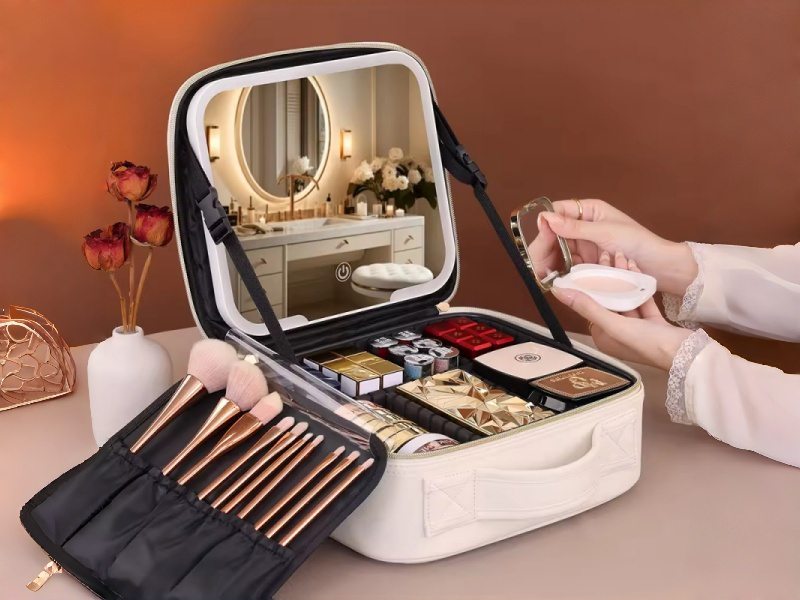
A premium cosmetic bag is a reusable brand asset, not a disposable pouch. Customers read “high-end” through tactile and functional cues: structured shape, smooth zipper performance, clean edge finishing, balanced hardware weight, wipe-clean lining, and organization that fits real routines. A high quality makeup travel bag should protect products, open wide, clean easily, and keep shape after shipping and daily use. These cues matter because customers link packaging quality with brand value.
Premium is not one feature. It’s a system that feels “right” in the hand and performs well in real life. If you’re sourcing for a beauty program—retail sets, subscription boxes, loyalty gifts, or PR kits—your bag needs to do three jobs at once:
- Look like your brand belongs at a higher price point
- Survive shipping and daily use without looking tired
- Make the customer’s routine easier
That third point is where many “luxury-looking” bags fail. A bag can look good in a product photo and still feel annoying to use. Annoying doesn’t feel premium.
What features should you look for in a high quality makeup travel bag?
Think of this like a buyer checklist you can hand to a factory:
- Wide opening + stable mouth: If users can’t see their items, they dump everything out. A wider opening (often a U-zip or framed opening) reduces that mess.
- Wipe-clean lining: Makeup and skincare leak. A lining that wipes clean (and doesn’t stain easily) protects the “new” feeling.
- Zipper glide and end-stop strength: Premium is felt when a zipper moves smoothly with one hand and doesn’t pop at the corners. Many failures start at zipper ends due to tension.
- Shape retention: Customers judge “quality” when the bag stays upright and doesn’t collapse. Shape comes from panel build, foam choice, seam accuracy, and binding quality.
- Pocket logic that matches use: Brush holders, elastic loops, a small zip pocket for jewelry, or a separate zone for liquids can change how premium the bag feels, even if cost changes only a little.
Which details create “premium cues” fast?
Customers notice what their fingers touch and what their eyes see at close distance:
- Hand-feel of outer material: Coated canvas can feel crisp; microfiber PU can feel soft and clean; textured nylon can feel sporty.
- Stitch density and straightness: Wavy stitch lines read as “cheap” because they suggest weak control.
- Edge finishing: Clean binding, turned edges, or well-cut piping can make the bag look expensive without flashy elements.
- Hardware weight and plating consistency: A light, thin zipper pull can make a bag feel budget. Balanced hardware adds “quality weight.”
What should procurement lock before sampling?
A premium program gets expensive when specs are vague. The sample may look fine because one skilled operator built it slowly. Bulk is where drift shows up. You reduce that risk by locking the “non-negotiables” early:
Spec Lock Items :
- Dimensions and tolerance (what matters most: height, base, mouth opening)
- Outer + lining + padding system (not just “PU” or “nylon”)
- Zipper specification (coil size, tape width, slider type, puller finish)
- Logo method + placement + size + color standard
- Inside layout (pockets, brush loops, divider board, elastic)
- Pack-out rules (how to stuff, protect, and carton-pack to prevent creasing)
Here’s a simple way to turn “premium” into measurable requirements:
| Premium Cue Customers Notice | What You Specify to a Factory | What You Inspect in Bulk |
|---|---|---|
| Smooth, “expensive” opening | Zipper type + slider quality + sewing tolerance | Glide test, corner tension, end reinforcement |
| Clean interior after leaks | Lining type + coating + seam sealing logic | Wipe test, stain check, odor check |
| Bag keeps shape | Padding thickness + board option + edge method | Drop/press test, shipping simulation |
| “Quiet luxury” branding | Deboss/metal plate/woven label rules | Placement accuracy, color match, adhesion |
If you want a spec-first quotation for a premium cosmetic bag program (retail set, PR kit, or loyalty gift), email your target size, use case, and logo method to info@jundongfactory.com and we’ll respond with a practical material and structure route.
Why do premium cosmetic bags improve brand image more than standard pouches?
Premium cosmetic bags improve brand image because they convert packaging into a reused, visible object that reinforces quality every time it’s carried. Packaging research shows that design and materials can influence purchase decisions for many consumers, and cosmetics packaging works as a brand communication tool. When a bag feels durable and intentional, it supports trust in the product inside. When it fails (zipper jams, stains, creases), it signals low control—hurting brand perception.
Brand image is not a slogan. It’s a pattern of small experiences that feel consistent. A premium cosmetic bag improves brand image because it changes the customer experience in three ways that ordinary pouches rarely do.
How does packaging promote brand image?
It works through perception shortcuts. Customers don’t test your lab process. They judge what they can touch and see. Academic work on cosmetics packaging describes packaging as a vehicle for brand communication, shaping perception at the shelf and in selection moments.
A premium bag adds more “proof” to that communication:
- Proof of care: A sturdy bag suggests the brand cares about the full experience, not only the formula.
- Proof of control: Straight seams and clean finishing imply process discipline, which customers often map onto product quality.
- Proof of belonging: The bag signals which “tier” the brand belongs to—clinical, luxury, sporty, eco, or minimalist.
Why “kept and reused” packaging creates longer exposure than disposable packaging
A carton is thrown away quickly. A cosmetic bag can stay in use for months or years. That means repeated brand touchpoints: the logo, texture, and construction become part of the customer’s daily routine.
This matters in beauty because repetition builds familiarity. A customer who sees your brand every morning while packing their routine is different from a customer who only sees your brand once at checkout.
Why premium reduces “cheap promo” perception and complaint risk
Standard promo pouches often create one of two reactions:
- “Nice freebie, but it feels cheap.”
- “Why did they spend money on this instead of product?”
A well-specified premium bag avoids both. It feels useful, not wasteful. It also reduces the kind of failures that trigger negative reviews, returns, and customer service costs.
Here’s a practical way to think about ROI as a B2B buyer. The bag is not just a unit cost. It is a risk control tool:
| Risk That Hurts Brand Image | What Customers Experience | How a Premium Bag Spec Reduces It |
|---|---|---|
| Leaks ruin the inside | Stains, odor, “gross” feeling | Wipe-clean lining, seam control, liquid zone |
| Bag arrives deformed | “This looks cheap” on unboxing | Pack-out rules, board/padding, carton sizing |
| Zipper sticks or breaks | Daily irritation, fast abandonment | Zipper spec, end reinforcement, glide testing |
| Logo looks off | Feels counterfeit or low control | Color standard, placement jig, inspection photos |
Surveys also show that packaging design and materials influence purchase decisions for a large share of consumers. Even if your bag is not the primary pack, it sits in the same mental category: “This brand pays attention.”
There’s another angle many teams miss: gifting behavior. Ipsos found packaging design becomes even more influential when buying a gift. A premium bag turns a set into a gift-ready object—without changing the formula.
If your program goal is to move your brand one tier up (or protect a premium price), a bag can be a smart lever—but only when it is engineered for real use and shipped to arrive clean, structured, and on-time. For a premium cosmetic bag quotation with a structure recommendation, reach us at info@jundongfactory.com.
Which type of premium cosmetic bag matches your use case: retail set, PR kit, travel, or membership gift?
The best type of premium cosmetic bag depends on your goal: retail conversion, PR impressions, travel utility, or loyalty retention. Choose types based on what the customer will do next: display it, travel with it, or store a routine at home. Cosmetic bags prioritize beauty tools and visibility; toiletry bags prioritize hygiene items and water resistance. Many guides describe this use-based difference, and it matters for size, lining, and layout specs.
“Premium” is not one universal bag. The wrong type can quietly waste your budget. The right type can make your brand feel thoughtful and high-control.
Start with one question that procurement teams often skip:
What is the job of the bag in the customer’s life?
Which bag type fits your program goal?
Here are four common use cases and what they require:
1) Retail set bag (bundles, holiday sets, refill starter kits)
The bag’s job is to make the set feel worth more and feel gift-ready. Customers expect the bag to look polished and stay structured. Features that matter:
- Clean exterior material that holds shape
- Moderate padding to protect contents
- Branding that feels intentional (often low-contrast, minimal)
- Interior organization that prevents “rattle chaos”
2) PR kit bag (influencer mailers, media kits, VIP sends)
The bag’s job is camera performance and protection in shipping. It must arrive “photo-ready.” Specs that matter:
- Anti-crease packing method (stuffing + polybag + carton fit)
- Scratch control on PU or coated surfaces
- Logo that reads well on camera (size and placement rules)
- Insert card pocket or message tag for storytelling
3) Travel makeup bag (the daily carry / frequent flyer bag)
The bag’s job is speed and cleanliness in bathrooms and airports. This is where functional premium wins. Features that matter:
- Wide opening, easy visibility
- Wipe-clean lining and leak tolerance
- Brush holders or elastic loops
- A stable base so it stands without collapsing
4) Membership gift or loyalty bundle bag
The bag’s job is long-term reuse and brand recall. Durability matters more than extra compartments. Specs that matter:
- Strong zipper and binding
- Fabric that resists dirt and scuffing
- Comfortable hand-feel
- A look that fits many lifestyles (not too trendy)
Cosmetic bag vs. toiletry bag: what is different, and when does it matter?
This seems simple, but it drives your material and layout decisions. Makeup bags typically focus on cosmetics and tools; toiletry bags often focus on hygiene items and tend to prioritize water resistance and practicality.
When it matters:
- If your brand sells skincare with liquids, customers may treat the bag like a toiletry bag. That means leak control and wipe-clean lining become non-negotiable.
- If your brand sells color cosmetics, brushes, and palettes, visibility and brush storage become more important.
- If the bag will enter wet zones (bathroom counter, shower room, pool travel), water resistance and seam control become higher priority.
Which size and layout works for SKU sets, refill programs, and travel rules?
Size is not “small/medium/large.” Buyers should size around:
- Your SKU set footprint: bottles standing up vs lying flat
- Customer routine speed: do they open once a day or multiple times?
- Travel reality: will this go in a carry-on? will it sit in a hotel bathroom?
A practical sizing approach is to prototype two sizes:
- Size A: “Daily routine” (most-used products, fast access)
- Size B: “Full kit” (complete set, travel-ready)
Then test pack-out and shipping. If Size B arrives creased, brand perception drops on unboxing. That’s why bag type and pack-out rules are linked.
If you share your product list (SKU count + bottle sizes) and your target use case (retail set, PR kit, travel, loyalty), we can propose a type and layout that matches your positioning. Email info@jundongfactory.com when you’re ready.
What materials work best for a premium look, and which ones protect formulas in real use?
The best materials for premium cosmetic bags are the ones that match your brand tone and survive real use. For “luxury,” buyers often choose microfiber PU or coated canvas; for daily durability and wipe-clean function, PU-coated nylon is widely used; for transparent travel and visibility, TPU often performs better long-term than PVC for clarity and anti-yellowing. Material choice should be tied to cleaning, leakage risk, abrasion, and shipping deformation.
Material is where brand image becomes physical. People don’t say, “This brand has good supply chain management.” They say, “This feels expensive,” or “This feels cheap.” That reaction usually comes from touch, sound, and how the bag behaves after one messy week.
A practical way to choose materials is to start from the reality of cosmetics: oils, powders, pigment, fragrance, and occasional leaks. Your bag needs to stay clean enough that customers keep using it. If they stop using it, the “brand image lift” stops with it.
What materials communicate “luxury” vs “clean clinical” vs “sport/active”?
Think of materials as “tone of voice.”
- Luxury / gift-ready: Microfiber PU leather, textured vegan leather, or coated canvas tends to photograph well and hold a structured silhouette. Customers often read these as higher value because they look intentional and finished, not like a free pouch.
- Clean clinical / skincare: Smooth matte finishes, minimal texture, and materials that look sterile-clean (coated fabrics, subtle grain PU) support that “lab-grade” vibe.
- Sport/active / travel: Nylon (especially PU-coated) reads practical and durable. It can still look premium when the shape, stitching, and hardware are upgraded.
Many factories and material guides call out PU-coated nylon as a strong all-around choice for makeup bags because it balances water resistance, stain resistance, and easy cleaning, especially at scale.
Which linings resist stains, leakage, and odor ?
Lining is your “silent protector.” Customers rarely compliment lining when it works. They complain fast when it fails.
What works well in practice:
- Wipe-clean coated linings (some PU-coated or laminated linings)
- Smooth polyester linings that resist powder embedding (depends on weave and finish)
- Clear separation zones (a simple interior pocket or divider) that keeps liquids away from brushes
How to evaluate linings like a buyer, not a designer:
- Wipe test: Rub a small amount of foundation or tinted sunscreen on the lining, wait 10 minutes, wipe with a damp cloth. You’re checking stain shadow and how quickly it looks clean again.
- Odor check: After the wipe test, close the bag for 24 hours. Open and smell. Some low-quality coatings trap odor.
- Leak tolerance: Put a closed cap sample bottle in a pocket and simulate travel motion. If a small leak happens, does the lining “drink” it or contain it?
What material choices reduce deformation, scratching, or color transfer in shipping and daily carry?
Brand image can get hurt before customers even use the bag. Shipping damage is a huge silent cost.
- Deformation control: A stiffer outer (coated canvas, structured PU, or PU-coated nylon) plus the right padding thickness helps the bag arrive upright, not collapsed.
- Scratch control: Some glossy PU shows scuffs easily. Matte or lightly textured surfaces often hide scratches better.
- Color transfer control: Dark PU or dyed canvas can rub onto light fabrics. This is where colorfastness testing matters (more in H2 5).
TPU and clear materials: why “clear” is not all the same
If your brand uses clear cosmetic bags (airport-friendly, easy visibility, “clean” aesthetic), material choice becomes brand protection.
Multiple industry write-ups note that TPU tends to perform better than PVC for long-term clarity and resistance to yellowing in certain conditions, while PVC is often cheaper.
That matters because a yellowed clear bag makes your brand look tired even when the product is new.
A buyer-friendly rule:
- Short-term promo or very cost-driven programs may accept PVC.
- Premium positioning or long-life reuse usually favors TPU when clear is required.
If you want a material recommendation that matches your positioning (luxury vs clinical vs travel), share your use case and target price range with info@jundongfactory.com. We’ll suggest a material system (outer + lining + padding + hardware) that can hold up in bulk.
Materials vs. performance: PU leather vs. nylon vs. canvas vs. clear TPU — which is best for your brand?
No single material is “best.” PU leather tends to win on premium look and gift perception; nylon (PU-coated) often wins on daily durability and wipe-clean practicality; canvas can win on brand storytelling and toughness; clear TPU wins when visibility and long-term clarity matter. Common failures—yellowing, cracking, peeling, fogging—are predictable and can be reduced by matching the material to environment and writing simple test requirements into your spec.
Most sourcing mistakes happen when teams pick materials like a mood board instead of a performance decision. A premium cosmetic bag is handled in bathrooms, thrown into tote bags, wiped with random tissues, and exposed to heat from car interiors. If the material can’t handle the environment, “premium” disappears fast.
Below is a procurement-style comparison that focuses on brand image risk.
Which material wins by positioning?
PU leather
- Best for: Luxury gifts, retail sets, “quiet premium” branding
- Why it helps brand image: Looks finished, holds shape, logo methods like emboss/deboss can look clean
- Main risks: Surface scratching, peeling/cracking if low-grade, heat aging in hot storage
Nylon
- Best for: Travel, daily-use pouches, sporty/clinical brands
- Why it helps brand image: Practical premium—customers keep using it because it’s easy to clean and durable; many guides describe PU-coated nylon as a strong functional standard for makeup bags.
- Main risks: Can look “too basic” if you don’t upgrade structure, hardware, and stitching finish
Canvas
- Best for: Eco-leaning brands, natural aesthetics, rugged daily use
- Why it helps brand image: Toughness and texture feel authentic; heavy-duty canvas is often described as very durable for daily use.
- Main risks: Staining if uncoated; can look rough if seams and piping aren’t tidy; color transfer risk if dyes are unstable
Clear TPU
- Best for: TSA-style visibility, “clean routine” story, pro kits, travel
- Why it helps brand image: Clear bags show what’s inside, which can feel organized and premium if clarity stays good
- Main risks: Fogging, yellowing, brittleness in low-grade materials; TPU is often described as more resistant to yellowing than PVC in long-term use cases.
What can go wrong?
The most common brand-image killers are predictable.
- Yellowing (clear bags and some coatings)
- Why it matters: A yellowed clear panel reads old and dirty.
- Prevention: Choose TPU when long-life clarity is part of the premium promise; specify an “anti-yellowing” expectation and require pre-production material confirmation.
- Cracking/brittleness (PVC in cold or aged conditions; low-grade coatings)
- Why it matters: Looks broken fast; customers stop using it.
- Prevention: Match material to environment (cold travel, car storage). Ask the factory what happens under low temperature and repeated bending.
- Peeling (low-quality PU, weak lamination)
- Why it matters: Peeling is a “fake premium” signal.
- Prevention: Specify a minimum quality level of PU, avoid extreme glossy finishes if durability is uncertain, and require abrasion and peel-related checks.
- Staining and odor absorption (linings)
- Why it matters: Skincare leaks happen. A bag that smells “off” gets thrown away.
- Prevention: Choose wipe-clean linings and run simple stain/odor checks.
Which test checks matter for bulk consistency?
You don’t need a laboratory to reduce risk. You need a few clear, repeatable checks tied to outcomes:
| Risk | Simple Buyer Check | What it Protects |
|---|---|---|
| Scuff/scratch | Abrasion rub test (controlled rub on corners) | “Still looks new” perception |
| Color transfer | Rub dark surface on white cloth (dry + slightly damp) | Prevents “messy” complaints |
| Zipper failure | Open/close cycles + corner tension pull | Daily-use trust |
| Clear panel aging | Heat/UV exposure comparison (sample panel check) | Prevents yellowing optics |
Here’s the critical mindset shift: premium image is a reliability promise. If the bag survives daily life, customers assume your product is equally reliable.
If you’re comparing materials for a program rollout and want a factory to propose 2–3 options with cost impact, send your target dimensions and quantity plan to info@jundongfactory.com.
Branding options: Which logo methods look premium, and how do you avoid cheap-looking outcomes?
Premium logo methods are the ones that match your brand tone and stay stable in bulk: deboss/emboss on PU/leather patches, metal plates, woven labels, and clean embroidery often read higher-end than shiny, thick prints. Deboss tends to feel subtle and durable on suitable materials, while emboss creates raised visibility. The “cheap look” usually comes from poor placement control, wrong contrast, and finishes that scratch, peel, or look overly glossy.
Logo is where many premium cosmetic bags accidentally self-sabotage. The bag can be well-made, but one loud, shiny print can drag it straight back into “promo freebie” territory.
The trick is to treat branding as a design system with rules, not a single artwork file.
Which logo methods signal premium?
Deboss / emboss (heat press on PU/leather or patches)
Deboss and emboss both use pressure and a die to create a recessed or raised mark. Many branding references describe deboss as subtle and emboss as more attention-grabbing.
- Deboss often fits “quiet luxury” and minimalist skincare.
- Emboss can work when the logo needs more visibility without color.
Metal plate (engraved/etched plate, stitched or riveted)
Metal plates read premium when plating is consistent and corners are clean. They also help when your brand uses minimal color and wants a sharp, engineered feel.
Woven label (side seam label or interior label)
Woven labels feel “apparel grade,” which can signal real brand seriousness. They work well for travel lines and sport/active tone.
Embroidery (on fabric, canvas, some nylons)
Embroidery can feel premium if stitch density and edge finishing are controlled. It can feel cheap if thread colors are off or the backing puckers.
How to avoid the “budget look”
Cheap-looking outcomes usually come from three causes:
Wrong finish for the brand tone
High-gloss prints can look loud. That might work for a youthful pop brand, but it often clashes with premium skincare positioning.
Poor placement control
A logo 5 mm too high looks like a mistake. A 2-degree tilt looks like low QC. Customers read that as “low control,” even if they can’t explain it.
Overbranding
Putting your logo everywhere doesn’t make the bag premium. It often makes it feel like a giveaway.
A useful procurement rule is “one hero logo.” Choose one primary branding location and make it perfect. Secondary marks should be subtle (zipper pull engraving, small woven label, inside print).
Which placement and contrast strategies protect brand tone?
Placement and contrast are what customers photograph. They also determine whether the bag looks premium across lighting conditions.
Low-contrast branding (tone-on-tone)
- Works well for premium skincare, minimalist beauty, and luxury gift sets
- Best methods: deboss, emboss, matte metal plate, woven label
High-contrast branding (logo pops)
- Works well for color cosmetics, youth brands, sports lines
- Best methods: embroidery on fabric, clean screen print (thin, not thick), contrast woven labels
Practical “spec lines” you can add to your RFQ
Instead of saying “logo: nice,” write measurable requirements:
- Logo method: deboss on PU patch / metal plate / woven label
- Placement: centered, X mm from top seam; tolerance ±3 mm
- Size: max width/height in mm (prevents oversized logos)
- Color standard: Pantone reference or “black matte only”
- Bulk control: pre-production confirmation photo + first-article inspection photo
How can a skincare brand’s packaging or shipping affect its brand image?
A skincare brand’s packaging and shipping performance shape brand image because they decide whether customers feel trust, care, and premium value—or feel let down. Real-world research shows the same product can be perceived as higher value when it arrives in “premium” packaging versus “economy” packaging, with measurable lifts in perceived retail price and emotions like trust and excitement.
Skincare is a “close-to-body” category. People expect hygiene, protection, and detail. So when your product arrives, the box, the seals, the inserts, and even the smell of the materials become part of the brand story—whether you planned it or not.
Here’s the part many teams underestimate: customers don’t separate product quality from delivery quality. They judge your whole system.
A well-known study on unboxing and value perception compared the same product delivered in two different packaging styles—an “economy” pack versus a “premium” pack. The results were blunt: the premium-pack group expected a 45% higher retail price for the same item. The cost difference to “upgrade” the packaging in that study was described as only $0.19 per package, yet the perceived value jump was dramatic.
That’s the brand-image lesson in one sentence: small packaging upgrades can create outsized perception shifts—because customers read packaging as a signal of how much you care about product protection and experience.
Now bring this into skincare reality:
1) Damage and leakage create “silent churn”
Skincare shipping issues are often “low drama” but high impact:
a pump arrives cracked
a cap loosens
a jar lid cross-threads
a serum leaks into the mailer
Even if you refund quickly, customers remember the moment. That memory reshapes brand image from “premium” to “messy” or “risky.”
A practical rule: treat packaging as a risk-control system, not a decorative layer. When you plan your next SKU or seasonal kit, map out:
- drop risk (warehouse + last-mile)
- temperature risk (hot/cold routes)
- compression risk (stacking, tight mailers)
- leak risk (threads, seals, inner caps)
2) Shipping speed and predictability are brand signals
In DTC and subscription, customers read shipping updates as proof of professionalism. Late shipments, missing tracking, or inconsistent carton marking don’t just cause support tickets—they create a “disorganized brand” feeling.
This is where a manufacturing partner can help: if your bag supplier also supports pack-out rules, hangtags, labels, and export documentation, you reduce handoffs and reduce mistakes. Jundong’s service list covers packaging and packing options like individual polybag, custom packaging bags, color box, gift box, plus hangtags & labels and compliance support. Jundong Factory Introduction
3) “Premium” is often a combination of small choices
Customers usually don’t say, “I loved the carton tape.” They say, “This brand feels premium.” That feeling is built from:
- clean interior presentation (dust bag, tissuJundong Factory Introductionn opening (no over-taped chaos)
- consistent branding color + typography
- protection that prevents dents and scuffs
A packaging blog summary on unboxing also notes that negative packaging stories can reduce future purchase intent for a meaningful portion of consumers, while positive unboxing experiences can create lift—so the experience itself becomes part of your acquisition and retention loop.
4) How to translate this into action for your next launch
If you’re planning custom cosmetic bags or travel kits to reinforce brand image, treat the bag + shipping as one system:
| Risk Area | What Customers See | Brand-Image Outcome | What to Specify in OEM/ODM |
|---|---|---|---|
| Scuffing / dents | “Arrived beat up” | Low value signal | protective wrap + carton rules |
| Leakage | “Product ruined” | Low trust | seal checks + inner bagging |
| Messy unboxing | “Too much tape” | Cheap feeling | open-easy design + consistent packout |
| Inconsistent branding | “Looks random” | Not premium | color standards + print control |
If you want this handled as a single program (bag + branding + packing logic), send your target size, use case, and market to info@jundongfactory.com and ask for a pack-out recommendation that matches your positioning.
What is the price of premium cosmetic bags, and how do MOQ, samples, and lead time change it?
The “price” of premium cosmetic bags is driven less by the word premium and more by materials, hardware, structure, logo method, and pack-out requirements. MOQ affects unit cost through factory efficiency and material minimums; sampling affects cost through pattern work and revision rounds; lead time shifts with material availability and complexity. Many import programs use planning benchmarks like 6–8 weeks for custom packaging production, but timing varies by scope.
Let’s talk like procurement teams talk: you don’t buy “premium.” You buy a build specification that behaves premium in the customer’s hands.
The 5 biggest cost drivers
1) Material system
Two bags can look similar in photos but price differently because of:
outer fabric type (PU, nylon, canvas, coated fabrics)
lining thickness and finish
padding and structure (foam, PE board, EVA panels)
The more structured the bag, the more steps it usually needs: cutting, lamination, edge finishing, reinforcement.
2) Hardware and trims
Premium feel often comes from small touches: zipper quality, zipper pullers, metal logo plates, custom sliders, branded snaps. These add cost, but they also reduce “cheap feel” risk.
3) Logo method and setup
Branding is never “just print.” Different logo methods come with different setup needs:
screen print (good for bold logos)
heat transfer
embroidery
woven label
metal plate or rubber patch
Jundong lists multiple custom logo & branding services, including screen printing, heat transfer, woven label, rubber/PVC patch, and metal plate logo—this matters because each method changes both cost and timeline. Jundong Factory Introduction
4) Structure complexity and compartments
Every pocket is labor. Every elastic loop is labor. A premium travel makeup bag with brush slots and partitions can look “high value,” but it costs more because it takes longer to sew and inspect.
5) Pack-out and presentation
If you add tissue, dust bag, hangtag, insert card, or gift box, your cost changes—and your brand perception changes too. The earlier study we referenced showed that even modest pac Jundong Factory Introductioneived value dramatically, which is why presentation spend often competes with performance spend.
How MOQ shapes your unit price
MOQ is not only a supplier preference. It’s a production reality:
- factories batch materials to reduce waste
- custom components often have minimum purchase quantities
- small runs can carry higher setup cost per unit
If you’re testing the market, a trial order that uses a simpler logo method and fewer custom trims can reduce risk. Then you scale into more premium hardware once the SKU proves demand.
How long do samples and production take?
Timelines depend on complexity and revisions. Some suppliers describe physical sampling as roughly 5–10 days for standard developments, while other workflows (like PPS steps) can stretch longer depending on materials and approvals.
For bulk timing benchmarks, many importer guides cite ranges like 6–8 weeks for custom cosmetic packaging production, but the real answer is always “it depends.”
Procurement tip: when you request a quote, ask your manufacturer to break lead time into:
- material sourcing time
- sampling time (and revision assumptions)
- bulk production time
- QC and packing time
If you want a quote that’s actually usable internally, email info@jundongfactory.com with your target size, estimated order quantity, logo method, and target ship country—and ask for 2 options: a “launch version” (cost controlled) and a “premium version” (presentation upgraded).
Which manufacturer is best for premium cosmetic bags: OEM vs ODM vs private label?
The best manufacturer setup depends on whether your brand needs original development, speed, or tight cost control. OEM fits brands that already have specs and want consistent execution. ODM fits brands that want the factory to propose structures and materials. Private label fits fast launches using existing patterns with your branding. A “best” partner also supports sampling, QC checkpoints, and clear communication routines, not only sewing.
This question shows up on Google in many forms:
“best cosmetic bag manufacturer”
“OEM vs ODM cosmetic bags”
“private label makeup bag supplier”
Most people ask it because they’ve been burned once: the sample looked fine, bulk drifted, and nobody could explain why.
Here’s a buyer-friendly way to choose.
Step 1: Decide what you actually need: OEM, ODM, or private label
OEM (Original Equipment Manufacturing)
Choose OEM when you already have:
- tech pack or drawings
- exact materials or approved alternates
- clear QC tolerances (size, stitch, logo placement)
OEM is great when your goal is repeatability across seasons and reorders. Your factory’s job is to execute precisely and keep the spec stable.
ODM (Original Design Manufacturing)
Choose ODM when you want:
factory-led structure proposals
material recommendations for your market position
faster development from concept to sample
ODM is strong when your internal team has brand direction but not detailed manufacturing knowledge.
Private label
Choose private label when:
speed matters more than novelty
you can accept existing base patterns
you want your logo + packaging system to do the branding work
Private label can still feel premium if the base product is solid and your branding and pack-out are consistent.
Step 2: Evaluate the factory beyond “capability photos”
Many factories can show nice photos. The real question is whether they can run a stable system:
- incoming material checks
- in-process checkpoints
- final inspection logic
- defect definitions and reporting
Quality-control frameworks often get described as IQC / IPQC / FQC with structured checkpoints and AQL sampling logic.
Even if you don’t enforce every detail, you want a partner who speaks this language and can show how they run it.
Jundong’s internal capability map explicitly highlights 80+ QC inspectors and layered inspections (incoming, in-process, final). Jundong Factory Introduction
That matters for premium cosmetic bags because premium is often judged by:
- zipper smoothness
- edge finishing
- symmetry
- logo alignment
- interior cleanliness
Step 3: Ask the questions that predict bulk consistency
If you only ask “Can you make this?” you’ll get “Yes.”
Ask questions that force operational clarity:
- How will you control sample-to-bulk deviation?
- What is your “golden sample” or PP sample process?
- Which checkpoints catch logo shift, zipper misalignment, and stitching density drift?
- How do you handle material substitutes if a fabric is out of stock?
Golden-sample and pre-production-sample practices are widely used in custom manufacturing to lock a reference standard before bulk runs.
Step 4: Watch for the “premium” trap
Some brands overspend on appearance upgrades and under Jundong Factory Introductionosmetic bag that doesn’t stand up, doesn’t wipe clean, or has a zipper that catches will damage brand image faster than a simpler bag that works every day.
Buyer move: ask for two builds:
- Version A: performance-first (durability, cleanability)
- Version B: presentation-first (lining, trims, packaging)
Then choose based on your channel: retail, DTC, gifting, travel sets.
How does the custom cosmetic bag manufacturing process work from sample to bulk, and how long does it take?
A custom cosmetic bag process usually runs: concept → material selection → pattern → prototype sample → revisions → pre-production (PP) sample / golden sample → bulk production → inspections → packing → shipment. Time depends on complexity and revision rounds; many makers describe sampling in roughly 5–10 days for standard projects, while PP sample timelines can extend based on approvals. Locking specs early reduces rework and protects delivery.
If you want premium outcomes, the process needs to be premium—meaning repeatable, not “heroic.”
Here’s the most common custom route, explained in practical terms.
Stage 1: What you send to start
To start cleanly, brands usually provide:
- target dimensions or capacity (what must fit)
- usage scenario (daily makeup, travel, pro artist kit, skincare set)
- reference photos (what you like + what you hate)
- logo method preference
- target market and compliance needs
- target order quantity and timeline
What slows everything down is unclear input, late logo changes, or changing bag size after the pattern is built.
Stage 2: Material + structure proposal
A real premium bag is a system:
- outer + lining
- padding and structure
- zipper and hardware
- internal organization
- reinforcement points
This is where you prevent the classic failure: the sample looks nice but collapses, wrinkles, or gets dirty easily in real use.
Stage 3: Pattern and prototype sample
The pattern is the hidden core. If the pattern is off by a little, your bag will never look premium—because symmetry and proportions will drift.
Many suppliers describe prototype sample creation in about a week range for standard projects (varies by complexity and workload).
At this stage, you should test:
- zipper run (fast open/close)
- stain wipe test (basic wipe-down)
- standing ability (if that matters)
- pocket usability (real brush sizes, real bottles)
Stage 4: Revisions (where premium gets built—or destroyed)
Revisions are normal. The goal is to keep them controlled:
annotate photos
list changes clearly
avoid changing everything at once
Some packaging manufacturers describe adjustment cycles as a few days per iteration, but the lesson is universal: each revision round adds time, so clear decisions early protect launch schedules.
Stage 5: PP sample / golden sample
This is the “reference truth.” A PP or golden sample becomes the benchmark for bulk. Many QC guides describe golden samples as a way to lock a standard before mass production and reduce quality fade.
What you verify here:
- exact logo placement and size
- color match and material hand-feel
- zipper model and puller
- seam allowance and edge finish
- packaging feasibility (polybag, hangtag, insert, carton)
Stage 6: Bulk production + QC checkpoints
Premium bags require process discipline:
incoming material checks
in-line inspections
final inspections
Buyer-facing QC checklists often organize this into structured phases (incoming, in-process, final).
Jundong’s capability list also includes pre-production sample support and layered QC services (incoming, in-process, final), which aligns with how premium programs protect consistency. Jundong Factory Introduction Jundong Factory Introduction
Stage 7: Packing and shipping
Even if the bag is perfect, bad packing can crush your presentation. If the bag is part of a skincare set, define:
- fold method (to prevent creases)
- stuffing method (to protect shape)
- carton marks and inner counts
- moisture protection if needed
If you want a factory-led workflow proposal, email info@jundongfactory.com with your target style and ship plan. Ask for:
- a timeline breakdown (sample + PP + bulk)
- a QC checkpoint list
- a pack-out plan that matches premium brand positioning
FAQs — Premium Cosmetic Bags & Brand Image
FAQ 1) What makes a cosmetic bag “premium,” and how does it improve brand image in real life?
A cosmetic bag feels premium when customers don’t have to “think” while using it. It opens smoothly, stays clean, holds its shape, and looks consistent with your brand tone. That day-to-day experience matters because the bag becomes a repeated brand touchpoint—in bathrooms, gyms, airports, and handbags. If it feels reliable and intentional, customers unconsciously transfer that feeling to your skincare or makeup. If it feels flimsy, they assume the brand cuts corners.
From a B2B view, “premium” is not a vague style word. It is a spec system: (1) material hand-feel + scratch resistance, (2) zipper glide + end reinforcement, (3) wipe-clean lining, (4) clean edge finishing (binding/piping/turned edges), (5) logo method that doesn’t peel, and (6) pack-out rules so it arrives photo-ready. Your job is to lock those specs early so bulk output stays stable.
If you share your use case (PR kit, retail set, travel, membership gift), our Heyzizi team can recommend a “premium build” that fits your budget and brand tone—without paying for details customers won’t notice.
FAQ 2) What features should you look for in a high-quality makeup travel bag (not just a pretty pouch)?
A high-quality makeup travel bag should solve real travel problems: messy counters, quick access, and surprise leaks. The most useful “premium” features are practical, not decorative. Start with a wide opening that lets users see everything without dumping it out. Add structure so the bag stays upright on a sink. Choose a wipe-clean lining so foundation, sunscreen, or serum can be cleaned without leaving a stain shadow. And don’t ignore the zipper: smooth glide and strong zipper-end reinforcement are a major part of “premium feel.”
For internal layout, premium means the bag matches routine: brush slots for makeup-heavy kits, a separate liquid pocket for skincare-heavy kits, or a divider to reduce product collision. Also check the small things that create complaints: sharp zipper teeth that snag wipes, a lining that holds odor, or elastic loops that loosen quickly.
Here’s a quick buyer checklist you can copy into an RFQ:
| Feature | Why Customers Notice | What to Specify |
|---|---|---|
| Wide mouth opening | Faster routine, less mess | Opening shape + zipper path |
| Wipe-clean lining | Less staining/odor | Lining type + coating |
| Stable shape | Looks expensive | Padding/board option |
| Smooth zipper | Daily trust | Zipper size + slider type |
If you want, send your SKU list and target size; we’ll propose a travel-friendly layout that keeps brand image strong after real use.
FAQ 3) PU leather vs nylon vs canvas vs clear TPU — which material is best for a premium cosmetic bag program?
There is no universal “best.” The best material is the one that matches your brand positioning and survives your customer’s environment. PU leather often reads premium fast and supports subtle logo methods like deboss/emboss. It’s popular for gift sets and PR kits because it photographs cleanly. The risk is surface scratching and long-term peeling if material grade is too low.
Nylon (often coated) wins on daily practicality: it’s lightweight, easy to wipe, and can look premium when structure and hardware are upgraded. Canvas can signal “natural” or “heritage,” especially for eco-leaning brands, but it needs stain planning (coated canvas or smart color choices). Clear TPU is best when visibility is part of the concept (airport-ready, “clean routine” storytelling). TPU usually holds clarity better than cheaper clear materials over time, which matters for brand image because yellowing makes a product feel old.
Use this positioning map:
| Material | Best For | Brand Image Risk | Practical Fix |
|---|---|---|---|
| PU leather | Gift/PR, luxury tone | Scratch/peel | Choose grade + matte texture |
| Coated nylon | Travel/daily | Can look basic | Upgrade structure + trims |
| Canvas | Eco/natural story | Stains/transfer | Coated option + testing |
| Clear TPU | Visibility concept | Yellowing/fogging | Material confirmation + tests |
If you share your channel (retail vs PR vs travel), we can recommend the safest material system for bulk.
FAQ 4) Which logo methods look premium and stay durable in bulk production?
The most “premium-looking” logo method is the one that fits your brand tone and stays stable in manufacturing. For minimalist skincare, deboss (recessed logo) often feels high-end because it’s subtle and tactile. Emboss (raised) gives more visibility without adding ink. For travel and sports tone, a woven label can feel brand-authentic (like apparel). For stronger identity, a metal plate can look premium—if plating consistency and edge finishing are controlled.
What tends to look cheap? Thick glossy prints that crack, heat transfers that peel at corners, or logos placed slightly crooked. Customers may not say “logo tolerance,” but they feel the brand is less controlled.
To protect results in bulk, write these into your spec:
- Logo method (one primary method; avoid too many)
- Placement rule (distance from seam in mm) + tolerance (±3 mm)
- Color standard (Pantone / matte-only instruction)
- Bulk control: pre-production photo confirmation + first-article inspection photos
If you want to keep it premium without being loud, ask us for “quiet branding” options that match your category and price point.
FAQ 5) How do you prevent “approved sample looks great, but bulk quality drops”?
This problem is common, and it’s avoidable when both sides treat sampling as a process, not a single object. The sample is often sewn by a highly skilled operator at slower speed, with extra attention. Bulk is about repeatability, line efficiency, and material batching. If your specs are loose, bulk drift is almost guaranteed.
To reduce risk, lock a Golden Sample / PP Sample before bulk. That sample becomes the reference for: stitching density, edge finish, zipper model, logo placement, and interior layout. Then define inspection checkpoints that match real failure points: zipper-end reinforcement, seam allowance consistency, alignment on panels, and cleanliness inside the bag.
Here is a buyer-friendly “anti-drift” checklist:
| Stage | What You Approve | What You Document |
|---|---|---|
| Prototype sample | Look + basic function | Change list with photos |
| Revision sample | Structure + usability | Updated spec sheet |
| PP/Golden sample | Final reference standard | “Approved reference” photos |
| Bulk | Consistency | QC checkpoints + AQL plan |
If you’re planning a program launch, share your expected reorder plan. We can propose a spec + QC routine that protects consistency across reorders.
FAQ 6) What drives price and MOQ for premium cosmetic bags, and is low MOQ realistic?
Price is driven by the build system, not by the word “premium.” The biggest cost levers are: outer material grade, lining and padding, zipper and hardware, logo method, and compartment complexity. Every extra pocket adds labor time. Every custom metal puller adds setup and lead time. And presentation adds cost too: individual polybags, hangtags, gift boxes, or inserts.
MOQ is influenced by material minimums and production efficiency. Low MOQ can be realistic when you use stock materials, avoid fully custom hardware, keep colors limited, and choose a logo method with lower setup complexity (like woven labels or standard patches). A smart strategy is a “pilot” run: build a performance-first version for market testing, then upgrade trims for the next run once demand is proven.
If you tell us your target quantity range and price ceiling, we can offer two options: a cost-controlled “launch version” and a premium “brand-building version,” so your team can decide with real trade-offs.
FAQ 7) How long does sampling and production take, and when should you lock the spec?
Timing depends on complexity and revision rounds, but the structure is predictable: requirements → material selection → pattern → prototype sample → revisions → PP/Golden sample → bulk production → packing → shipment. The fastest projects are those with clear inputs: target size, use case, logo method, and reference photos.
You should lock the spec after you confirm three things: (1) the bag works in real use (opening, layout, cleaning), (2) it survives basic stress points (zipper ends, corners, seams), and (3) it packs well without creasing or collapsing. Locking too early can freeze a design flaw; locking too late creates schedule risk.
A practical planning tip: ask your manufacturer to break the timeline into: material booking time, sample time, PP sample time, bulk time, QC time, and packing time. This makes internal launch planning much easier, especially for seasonal drops and PR campaigns.
If you have a target ship date, share it early. We can suggest a realistic sample plan that avoids last-minute compromises.
FAQ 8) How does packaging promote brand image, and what packing rules prevent deformation during shipping?
Packaging promotes brand image because it controls the first impression: whether the bag looks structured, clean, and gift-ready when the customer opens it. Even a well-made bag can look cheap if it arrives creased, dusty, or flattened. That’s why pack-out rules are not “logistics detail”—they’re brand protection.
For cosmetic bags, the most common shipping failures are: (1) collapsed shape, (2) corner dents, (3) surface scuffs on PU, and (4) inner dust or loose threads showing on unboxing. The fixes are usually simple and cost-effective: use proper stuffing (paper/airbag) to hold shape, use individual polybags to prevent scuff, choose carton sizing that prevents crushing, and write carton mark rules so warehouses handle the product correctly.
Here’s a simple pack-out spec you can adopt:
| Risk | Pack-Out Rule | Outcome |
|---|---|---|
| Creasing | Stuffing + shape hold | Premium silhouette |
| Scuffing | Polybag + separators | Clean surface |
| Crushing | Correct carton size | Fewer dents |
| Messy unboxing | Trim check + dust control | “High control” feel |
If you want a premium unboxing plan (bag + inserts + carton marks), message Heyzizi. A strong pack-out plan can protect brand image as much as the bag itself.
Let's work together
With over 10 years of OEM/ODM bag industry experience, I would be happy to share with you the valuable knowledge related to leather products from the perspective of a leading supplier in China.

Factory catalogue
Latest blogs


Make A Sample First?
If you have your own artwork, logo design files, or just an idea, please provide details about your project requirements, including preferred fabric, color, and customization options, we’re excited to assist you in bringing your custom bag designs to life through our sample production process.