 Skip to content
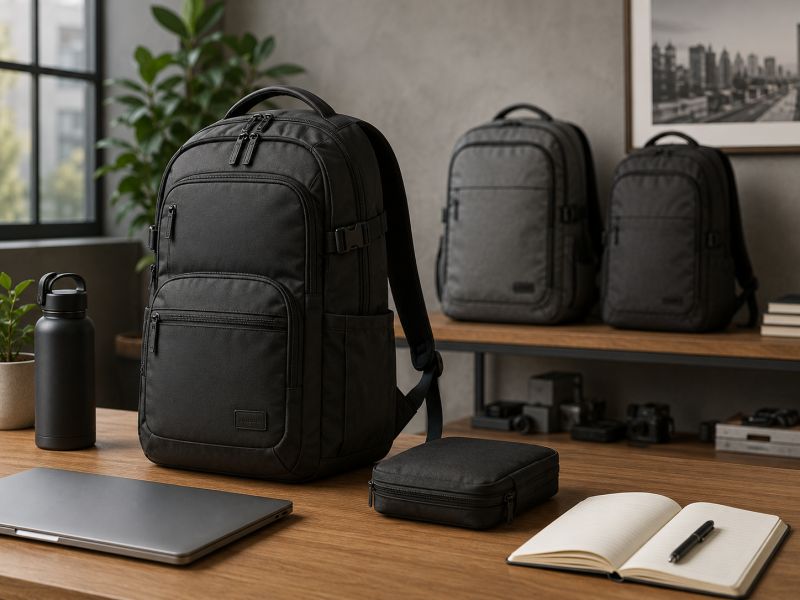
Choosing an EDC backpack sounds simple at first. Pick a size, add a laptop pocket, choose a fabric, and put a logo on it. But anyone who has worked on real backpack projects knows the truth: a daily carry backpack can fail even when the size looks right on paper.
A 20L backpack can feel roomy if the main compartment is clean and square. A 28L backpack can feel tight if the laptop padding, front organizer, bottle pockets, and thick back panel eat up too much space. A 30L backpack can be perfect for work and gym use, yet too large for a clean office commute. That is why EDC backpack size should never be judged by liters alone.
For brands, retailers, private label teams, and product developers, the better decision starts with the real daily load. What does the end user carry? A 14-inch laptop or a 16-inch laptop? A water bottle? A hoodie? A tech pouch? Lunch? Camera gear? Tools? Gym clothes? The best size becomes clear only after the use case is clear.
For most EDC needs, a 20L–25L backpack is the most practical size. It can hold a laptop, charger, notebook, water bottle, light jacket, tech pouch, and daily personal items without feeling oversized. A 15L–18L backpack works better for minimal carry, while 25L–30L suits work-plus-gym, student use, camera gear, or heavier daily loads. For custom EDC backpack projects, the final decision should include laptop fit, internal layout, pocket depth, opening style, material weight, shoulder comfort, sample testing, packing method, MOQ, and production plan.
Jundong works with custom bag projects from Guangdong, China, supporting product evaluation, material selection, structural design, sampling, OEM/ODM production, quality checks, packing, and export coordination. The factory information shows 600+ employees, around 18,000㎡ factory space, 80 quality inspectors, a professional sample room, product development and design teams, and material support across fabric, leather, PU, PVC, neoprene, plush, and more.
What Size Backpack Is Best for EDC?
For most everyday carry needs, a 20L–25L backpack is the safest size choice. It is large enough for work items, laptop accessories, a water bottle, notebook, light jacket, and small personal gear, yet still compact enough for commuting, city use, school, and retail programs. Smaller bags suit light carry. Larger bags work better for gym, camera, tools, or short travel.
| EDC Backpack Size | Best Fit | Typical Use |
|---|---|---|
| 10L–15L | Minimal carry | Phone, wallet, keys, tablet, small pouch |
| 16L–20L | Light daily carry | Laptop, charger, notebook, bottle |
| 21L–25L | Standard EDC | Laptop, tech pouch, jacket, documents |
| 26L–30L | Heavy daily carry | Gym gear, books, camera, work tools |
| 30L+ | Daily plus travel | Overnight items, larger gear, flexible packing |
The reason 20L–25L works so well is balance. It gives enough space for most daily objects, but it does not make the user feel like they are carrying a travel pack every day. Current backpack size guides also place strong focus on common liter sizes such as 20L, 25L, and 30L because users want to know what each size can actually hold, not just how large the bag looks.
Still, there is no single perfect size. A city office worker may prefer a slim 18L–22L backpack because it looks cleaner with business clothing. A college student may need 25L–30L because books, laptop, charger, bottle, and lunch take more space. A photographer may want 25L with padded dividers, not 30L of open space. A gym user may choose 28L because shoes and clothes need depth.
For a custom project, start with the end user, not the number. A backpack designed for tech workers should protect devices and organize cables. A backpack designed for school use should handle heavier books and daily abrasion. A backpack designed for an outdoor lifestyle brand may need stronger fabric, bigger bottle pockets, compression straps, and better weather resistance.
So the best EDC backpack size is not just “25L.” A better rule is this: choose 20L–25L for broad daily use, go smaller for clean minimal carry, and go larger only when the user has a clear reason to carry more.
Is 20L, 25L, or 30L Better for Everyday Carry?

20L is best for light daily carry, 25L is the most flexible middle size, and 30L is better for heavier daily loads. If the user carries only a laptop, charger, bottle, and small items, 20L can work well. If the user also carries lunch, a jacket, books, gym clothes, or camera gear, 25L–30L is usually more practical.
| Size | Better When | Main Risk |
|---|---|---|
| 20L | Clean commute, laptop basics, light EDC | May feel tight with jacket or lunch |
| 25L | Most daily use, work, school, tech gear | Needs good layout to avoid bulk |
| 30L | Gym, camera, tools, books, short travel | May look too large for office use |
A 20L backpack can be very strong when the design is simple. It should have a clear laptop sleeve, a practical main compartment, a side bottle pocket, and a small front section for keys, phone, cables, and wallet. If too many small pockets are added, the usable space gets broken up. The bag may still be 20L, but the user feels the squeeze.
A 25L backpack is often the safest main size for retail and private label programs. It gives enough room for work and casual use while staying friendly for daily wear. Many everyday backpack collections use this size because it works across office, school, urban, and weekend settings. Recent EDC and everyday backpack reviews often show 25L models as strong all-day options, especially for users who want laptop storage and flexible internal space.
A 30L backpack is not wrong. It is just more specific. It becomes useful when the user needs extra depth and load support. Think of a commuter who goes to the gym after work, a student carrying books, a field worker carrying tools, or a camera user carrying padded inserts. In these cases, 30L can feel smart, not oversized.
For a brand planning a product line, one size may not cover every user. A clean line could include a 20L office model, a 25L main EDC model, and a 30L work-plus-gym model. That gives the collection a clear story instead of forcing one backpack to do everything.
What Should an EDC Backpack Hold in Real Daily Use?
A useful EDC backpack should hold the real objects people carry every day, not just an empty volume on a spec sheet. Most daily carry packs need space for a laptop, charger, cables, water bottle, notebook, documents, personal items, and sometimes a jacket, lunch box, camera, or gym clothing. Real item testing is the fastest way to confirm the right size.
| Daily Item | Why It Matters |
|---|---|
| 13–16 inch laptop | Decides sleeve size, padding, and back panel layout |
| Charger and cables | Needs small storage that does not tangle |
| Water bottle | Needs side pocket size and walking stability |
| Notebook or documents | Needs flat space and clean corners |
| Light jacket or hoodie | Needs flexible main compartment volume |
| Lunch box | Needs depth and shape control |
| Headphones or tech pouch | Needs protected quick access |
| Keys, wallet, phone | Needs small pockets that are easy to reach |
This is where many backpack projects go wrong. The design team approves the front view. The logo looks good. The fabric feels right. The size sounds reasonable. Then the first sample arrives, and the laptop fits, but the charger has no good place. The water bottle pocket is too narrow. The front pocket bulges. The bag falls forward when packed. The user can carry the items, but the experience feels messy.
A good EDC backpack should make daily life smoother. The user should not need to dig for keys. The bottle should not fall out when the bag is placed on a car seat. The laptop should slide in without scraping the zipper. The main compartment should still have room after the laptop sleeve is filled. Small details decide whether the backpack becomes a daily favorite or a return problem.
For product teams, this means every size decision should be connected to a load list. Before confirming 20L, 25L, or 30L, build a sample packing set. Include the laptop size, charger, cable pouch, notebook, bottle, jacket, and any special item for the target user. Then check comfort, shape, pocket access, and packing flow.
For custom EDC backpack projects, Jundong can help review size, structure, material, and logo placement based on the intended carry scene. Project details can be sent to info@jundongfactory.com for a practical review before sampling.
Backpack Liters vs Dimensions: Which Matters More?

Liters tell you volume. Dimensions tell you outside size. Structure tells you how useful the backpack feels. For EDC backpacks, liters and dimensions both matter, but neither can fully explain comfort, access, or real storage. A well-shaped 25L backpack can carry better than a poorly divided 28L backpack.
Backpack size guides often explain why liter capacity is useful for comparison, while dimensions help users understand body fit and storage shape. Knack Bags’ guide focuses on liters, volume, common sizes, and organization features such as laptop sleeves and compartments.
But in factory development, the real concern is usable space. Here are a few examples:
| Design Choice | Effect on Real Capacity |
|---|---|
| Thick laptop padding | Protects devices but reduces main space |
| Deep front organizer | Adds function but can make the bag bulky |
| External bottle pocket | Frees main space |
| Curved body shape | Looks sleek but may reduce flat storage |
| Square main compartment | Easier for documents, pouches, and folded clothing |
| Clamshell opening | Better access for packing and travel use |
| Narrow top opening | Cleaner look but harder to load |
| Thick back panel | Improves comfort but changes internal depth |
This is why a simple size label can be misleading. A 25L backpack with a slim business profile may feel smaller than expected because the shape is narrow. A 22L backpack with a boxier structure may feel surprisingly useful. A 30L tactical backpack with many pockets may not have one large open area, but it may organize tools and gear better.
For brands, the goal is not to chase the largest number. The goal is to match the structure with the use case. Office backpacks need clean storage and a neat silhouette. Student backpacks need stronger seams and weight support. Camera EDC backpacks need protection and access. Gym EDC backpacks need odor separation, shoe space, or wipe-clean lining. Tactical EDC backpacks need modular storage and abrasion resistance.
The smartest development step is to review liters, outer dimensions, internal layout, and packed shape together. That gives a truer view of how the backpack will perform after the end user fills it.
Which EDC Backpack Size Fits Different User Types?
Different users need different EDC backpack sizes because their daily loads are not the same. A minimalist may feel comfortable with 12L. A tech worker may prefer 22L. A student may need 28L. A gym user may need 30L. The best size depends on what the person carries, how long they carry it, and where the backpack will be used.
| User Type | Suggested Size | Product Direction |
|---|---|---|
| Minimal daily user | 10L–15L | Slim shape, light fabric, simple pocketing |
| Office commuter | 18L–24L | Laptop sleeve, clean profile, document space |
| Tech worker | 20L–25L | Organizer panel, cable storage, protected laptop area |
| Student | 22L–30L | Book space, reinforced straps, durable bottom |
| Work + gym user | 25L–30L | Clothes area, bottle pocket, optional shoe section |
| Camera EDC user | 20L–30L | Padding, dividers, side or rear access |
| Tactical EDC user | 22L–30L | Utility pockets, MOLLE, durable fabric |
| Daily + short travel user | 28L–35L | Full opening, flexible packing, stronger carry system |
The office commuter wants a backpack that looks clean in a meeting room. It should not collapse when half full or look like hiking gear. For this user, 18L–24L usually works well. A slim profile, padded laptop sleeve, smooth zipper travel, and neat front storage matter more than extra volume.
The tech worker needs more organization. A 20L–25L bag can hold a laptop, tablet, charger, mouse, power bank, cables, and notebook. But there is a warning: too much organization can become annoying. Many real users prefer just enough pockets, not twenty tiny spaces that slow them down. A clean tech section plus one flexible main compartment often works better.
The student and work-plus-gym user need more depth and stronger carry support. A 25L–30L backpack handles books, clothing, bottle, and personal items better. For students, shoulder strap width and bottom strength matter. For gym users, lining, ventilation, and separation between clean and used items can become a selling feature.
The tactical EDC user is different again. This user cares about fast access, modular function, durable fabric, and pocket logic. Some tactical backpack sources place common EDC-style tactical sizes around 25L–30L or higher, especially when modular attachments are involved.
A strong EDC backpack collection should not treat every user the same. It should choose one main use case, then build the size, shape, material, and pocket layout around that person’s day.
What Size Backpack Should a Brand Develop for EDC?
For most custom EDC backpack projects, a 20L–25L main model is the best place to start. It fits the widest daily use group and keeps the product easy to position. A 16L–20L model can serve office users. A 25L–30L model can serve work-plus-gym, student, tactical, camera, or travel-ready users.
| Project Direction | Suggested Capacity | Why It Works |
|---|---|---|
| Slim office backpack | 16L–20L | Clean look for laptop and light commute |
| Main EDC backpack | 20L–25L | Broad daily use and easier retail positioning |
| Tech commuter backpack | 20L–25L | Good for laptop, tablet, cables, and accessories |
| Student backpack | 24L–30L | Better for books, devices, bottle, and lunch |
| Work + gym backpack | 25L–30L | More depth and stronger use story |
| Urban tactical backpack | 22L–30L | Pocket-rich and function-led |
| Daily + weekend backpack | 28L–35L | Useful for light travel and flexible packing |
The first mistake many teams make is starting with a competitor’s photo. The second mistake is choosing a size because it “sounds popular.” A better method is to define the daily carry set, target price level, sales channel, visual style, and packing requirement first.
For example, a fashion lifestyle brand may not want the biggest EDC backpack. It may need a 20L–22L model with a clean front panel, soft-touch fabric, and refined logo placement. A sports brand may prefer 28L with better airflow, straps, and shoe or clothing space. A tech brand may need 24L with a floating laptop sleeve, cable pocket, and water-resistant fabric.
Jundong’s factory introduction lists support for brand owners, private label teams, retailers, wholesalers, importers, e-commerce operators, agents, trading companies, and sourcing offices. It also describes consultation, material selection, cost evaluation, MOQ review, function and structure advice, custom design, sampling, logo methods, production, inspection, packing, and export help.
That matters because EDC backpack development is rarely only about sewing. It is a chain of decisions: size, fabric, lining, padding, zipper, pocket layout, logo method, sample approval, packing, carton labels, and delivery. A factory that can support these decisions helps reduce mistakes before mass production starts.
For a new EDC backpack line, a practical starting plan could be:
| SKU | Suggested Role |
|---|---|
| 20L office model | Clean daily laptop carry |
| 25L main model | Core everyday carry product |
| 30L active model | Work, gym, student, or light travel use |
This three-size logic helps a brand cover more use cases without creating a messy collection.
How Do Materials and Structure Change EDC Backpack Capacity?

Materials and structure can make the same backpack size feel very different. Polyester, nylon, canvas, PU, leather, PVC, neoprene, and EVA all shape the bag in different ways. The fabric weight, lining, padding, zipper choice, pocket layout, and back panel structure can change comfort, storage, appearance, and cost.
| Material | Better For | Notes |
|---|---|---|
| Polyester | Light daily packs, event programs, cost-sensitive projects | Easy to manage for many styles |
| Nylon | Urban, travel, outdoor-style EDC | Stronger feel and better performance options |
| Canvas | Lifestyle, school, casual, vintage-style packs | Good texture, heavier handfeel |
| PU / Synthetic leather | Business, fashion, premium commuter packs | Clean look, needs careful structure control |
| Genuine leather | Premium work bags and lifestyle lines | Higher cost, more careful production needed |
| Neoprene | Soft protection and tech sections | Useful for sleeves or padded details |
| PVC / waterproof materials | Utility, outdoor, wet-use projects | Good for wipe-clean or weather-focused designs |
| EVA | Structured protective sections | Useful for molded panels or hard cases |
A soft fabric backpack can expand slightly when packed. A structured backpack holds its shape better but may feel less flexible. Thick padding protects a laptop, but it takes room from the main compartment. A water-resistant fabric may need seam treatment or coating decisions. A premium PU commuter backpack may need stronger reinforcement to avoid shape collapse.
The opening style also changes the size experience. A top-loading backpack can look clean but may be harder to organize. A clamshell backpack opens wider and works well for travel or tech gear. A roll-top can expand, but it may be slower to access. A front-panel opening gives fast access, but it needs careful zipper and fabric support.
Pocket layout is another hidden size factor. Some teams request many pockets because they believe more pockets mean more value. Not always. Too many pockets can reduce flexible space, increase labor cost, add weight, and make the bag harder to use. The better goal is useful organization: one laptop area, one main area, one front quick-access area, one bottle pocket, and perhaps one hidden pocket.
Jundong’s material and product scope supports fabric, genuine leather, synthetic leather, PU, PVC, neoprene, plush, and many custom product types, including backpacks, laptop bags, travel bags, outdoor bags, tactical bags, tool bags, cooler bags, cosmetic bags, EVA cases, and more.
For custom development, the best material is not always the most expensive one. It is the one that matches the carry weight, target price, style, durability need, logo method, and packing plan. Send your target size, material idea, and reference style to info@jundongfactory.com if you want a practical structure review before sample work begins.
How Should a Factory Test an EDC Backpack Sample Before Bulk Production?
A custom EDC backpack sample should be tested with real items before full production. Photo approval is not enough. The sample should be checked for laptop fit, load comfort, zipper flow, pocket access, bottle stability, front pocket bulk, bottom shape, seam strength, and final packing. This reduces size mistakes and improves repeat order consistency.
| Test Item | What to Check |
|---|---|
| Laptop fit test | 13–16 inch laptop fit, sleeve height, padding thickness |
| Load test | Daily gear weight, shoulder pressure, seam stress |
| Bottle pocket test | Bottle fit, stretch, tilt, walking movement |
| Zipper test | Smooth opening after the bag is packed |
| Pocket bulge test | Whether the front area becomes too thick |
| Standing test | Whether the packed bag keeps shape |
| Wear test | Strap comfort, back panel feel, balance |
| Packing test | Folded size, carton logic, retail packing |
A strong sample is not just a good-looking prototype. It is proof that the design can survive real use and repeat production. The difference matters. A sample may look neat when empty, but after loading, the shoulder straps may twist, the zipper may pull, the bottle pocket may lean, or the front panel may swell. These details affect reviews, returns, and long-term confidence.
Sample testing should also include logo checks. A logo that looks good on a flat drawing may be too low on a curved pocket. A woven label may work better than printing on textured fabric. A rubber patch may suit a tactical model, while a small metal logo may fit a business commuter bag. Logo position, size, color, and method should be checked on the actual material.
Packing should be reviewed early too. If the backpack needs retail packing, hangtags, labels, barcode stickers, warning labels, or carton marks, do not leave them until the end. Packing can affect folded shape, carton quantity, shipping cost, and warehouse receiving.
Jundong’s service scope includes sampling, rapid prototyping, sample revision, material confirmation, color confirmation, logo approval, PP sample support, incoming inspection, in-process quality checks, final inspection, functional testing, durability testing, load and stress testing, packing solutions, labeling, documentation, and shipping coordination.
This is why sample review should be treated as the bridge between design and production. The sample is not just something to approve. It is a tool to find problems while they are still cheap to fix.
What Is the MOQ, Sample Time, and Production Process for Custom EDC Backpacks?

For most custom EDC backpack projects, the usual MOQ is 500 pcs per design. Some simple styles may be reviewed at 200–300 pcs depending on material, structure, logo method, and production schedule. Sample time is usually 5–7 days, and some simple styles may be completed in 2–3 days. Bulk production usually takes 20–30 days.
These project figures come from Jundong’s factory introduction and should be treated as a practical starting reference. Final timing depends on the backpack’s size, fabric, pocket structure, logo method, hardware, order quantity, packing needs, and inspection level.
| Project Step | What Happens |
|---|---|
| Requirement review | Size, use case, target user, logo, budget, order plan |
| Material suggestion | Fabric, lining, padding, zipper, webbing, hardware |
| Structure planning | Laptop area, pocket layout, bottle pocket, opening style |
| Cost review | MOQ, material cost, labor, logo method, packing |
| Sample making | Pattern, cutting, sewing, logo test, first sample |
| Sample revision | Fit, pocket, shape, comfort, logo, material changes |
| PP sample | Final reference before production |
| Bulk production | Material prep, cutting, sewing, assembly |
| Quality check | Incoming, in-process, final, function and load checks |
| Packing and delivery | Labels, hangtags, cartons, export coordination |
The MOQ discussion should be honest. Very small runs can be useful for testing, but they often carry higher unit costs because sampling, material sourcing, printing setup, cutting, sewing, inspection, and packing still require time. At 500 pcs and above, the production setup becomes easier to balance, and pricing usually becomes more efficient.
For simple EDC backpacks, 200–300 pcs may be possible. For complex styles with custom fabric, special padding, molded panels, many pockets, custom hardware, or retail packing, a higher MOQ may be more realistic. The right MOQ should match the project stage, not just the hope for the lowest number.
A clear tech pack speeds up everything. If you have size, fabric, logo file, pocket ideas, laptop size, reference photos, target quantity, and packing needs, the project can move faster. If you only have a photo, the factory may need to help define the missing details first.
For project review, you can send drawings, reference photos, quantity, target size, and logo details to info@jundongfactory.com.
How Much Does a Custom EDC Backpack Cost?
A custom EDC backpack cost depends on the full specification, not only the size or a product photo. Capacity, fabric, lining, padding, zipper, hardware, laptop sleeve, pocket layout, logo method, MOQ, packing, testing, and delivery terms all affect the final price. A clear specification leads to a more accurate quote.
| Cost Factor | Why It Changes Price |
|---|---|
| Capacity | Larger size uses more fabric, lining, and padding |
| Main fabric | Polyester, nylon, canvas, PU, leather, PVC all differ |
| Lining and padding | Affects comfort, laptop protection, and structure |
| Laptop compartment | Adds foam, lining, sewing time, and quality checks |
| Pocket layout | More pockets increase cutting, sewing, and labor |
| Zipper and hardware | Better parts improve durability and appearance |
| Logo method | Printing, heat transfer, woven label, patch, metal logo vary |
| MOQ | Larger runs usually improve unit cost |
| Packing | Polybag, hangtag, label, retail box, carton mark all add cost |
| Inspection needs | More testing and reporting require more control time |
A low price can look attractive at the start, but it may hide weak fabric, thin padding, poor zippers, loose stitching, or unstable shape. For daily backpacks, these risks show up quickly because the product is used often. A backpack that carries a laptop every day needs stronger seams, stable straps, better zipper movement, and reliable bottom structure.
Price should also be judged by sales position. A budget promotional EDC backpack may use polyester, simple lining, basic printing, and fewer pockets. A premium commuter backpack may use stronger nylon or PU, padded laptop protection, custom lining, smooth zippers, branded hardware, refined logo placement, and retail-ready packing. These are different products, even if both are called “EDC backpacks.”
The best way to get a useful quote is to share a clear project brief:
| Detail to Provide | Why It Helps |
|---|---|
| Target capacity | Helps estimate material use |
| Laptop size | Defines sleeve and padding |
| Fabric preference | Affects cost and performance |
| Logo method | Affects setup and unit price |
| Pocket layout | Affects labor and structure |
| Quantity | Affects MOQ and unit cost |
| Packing style | Affects final handling and shipping |
| Target use | Helps avoid overbuilding or underbuilding |
A good factory discussion should not push the cheapest option every time. It should help the project reach the right balance between price, function, look, and long-term consistency.
FAQ About EDC Backpack Size and Custom Backpack Projects
What is the best backpack size for EDC?
For most users, 20L–25L is the best EDC backpack size. It covers daily laptop carry, chargers, notebooks, water bottles, small tech items, and a light jacket without becoming too large. Minimal users can choose 10L–15L, while users carrying gym clothes, books, camera gear, or work tools may need 25L–30L.
Is 20L enough for everyday carry?
Yes, 20L is enough for light everyday carry if the layout is clean. It works well for a laptop, charger, notebook, water bottle, phone, wallet, keys, and a few small items. It may feel tight if the user carries lunch, a hoodie, gym clothing, or camera equipment every day.
Is 25L better than 30L for EDC?
25L is usually better for broad daily use because it gives useful space without looking oversized. 30L is better when the user carries more than standard work items, such as gym clothing, books, camera gear, tools, or short-trip items. The better choice depends on the real daily load.
Is a 30L backpack too big for work?
A 30L backpack can be too big for a clean office look, but it is not too big for every work setting. It works well for people who carry a laptop plus clothing, lunch, documents, tools, or gear. A slim 30L design can still feel professional if the structure and pocket layout are controlled.
What size backpack fits a 16-inch laptop?
Most 16-inch laptops need a backpack of around 20L–30L, depending on sleeve design and laptop thickness. The key is not only total capacity. The laptop compartment must have enough height, width, padding, and easy access. Always confirm the actual laptop dimensions before sample approval.
What is the best EDC backpack size for brands to develop?
For many brand projects, a 20L–25L EDC backpack is the safest main product. It fits office, school, tech, and urban lifestyle users. A 20L version can target slim commuter use, while a 30L version can serve gym, student, tactical, or light travel needs.
Can I customize the fabric, pockets, logo, and laptop compartment?
Yes. Custom EDC backpacks can be developed with different fabrics, linings, padding, zippers, pockets, bottle holders, laptop sleeves, logo methods, labels, tags, and packing options. The best result comes from matching these details to the target use, not adding features only for appearance.
What is the MOQ for custom EDC backpacks?
Jundong’s usual MOQ is 500 pcs per design. Some simple backpack styles may be reviewed at 200–300 pcs based on material, structure, logo method, and production schedule. More complex projects may need a higher quantity because setup, sourcing, and production control require more work.
How long does a custom backpack sample take?
A custom backpack sample usually takes 5–7 days. Some simple styles may be completed in 2–3 days. The timing depends on material availability, pattern work, structure difficulty, logo testing, and the number of sample changes needed before approval.
How do I choose a factory for private label EDC backpack projects?
Choose a factory that can discuss size, material, structure, logo method, sampling, quality checks, packing, and delivery clearly. For EDC backpacks, experience matters because daily carry products must balance comfort, durability, appearance, and real storage. A good partner should help prevent problems before production starts.