 Skip to content
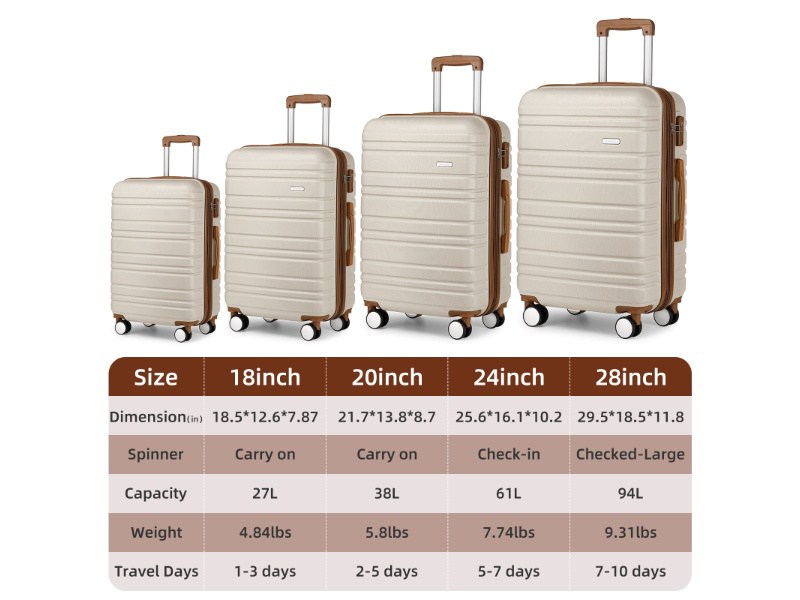
Air travel today is more complicated than ever — not because of where you go, but what you bring. One of the most searched travel questions worldwide is: “What is the maximum carry-on bag size?” Travelers dread the gate-side confrontation when their suitcase doesn’t fit the overhead bin. For brands and manufacturers, it’s an even bigger challenge: creating luggage that fits global airline standards while staying stylish, lightweight, and durable.
The maximum carry-on bag size for most airlines is 22 x 14 x 9 inches (56 x 36 x 23 cm), including wheels and handles, with a typical weight limit of 7–10 kg (15–22 lbs).
This standard ensures the bag fits in overhead compartments across international fleets. However, exact limits vary by airline, aircraft type, and travel class, making compliance both a traveler’s and manufacturer’s priority.
The story doesn’t end there. From budget carriers cutting bag dimensions to luxury airlines offering flexibility, understanding size rules is no longer optional — it’s strategy. And if you’re in the luggage business, brands like Jundong can help you design and produce airline-approved carry-ons that pass every check — from Tokyo to Toronto.
Let’s explore exactly what counts, how airlines differ, and what both travelers and OEM partners need to know.
What Is the Maximum Carry On Bag Size?
The maximum carry-on bag size allowed by most airlines is 22 x 14 x 9 inches (56 x 36 x 23 cm), including wheels and handles. This ensures the luggage fits in overhead compartments. However, size limits differ by airline, route, and travel class. Budget airlines often have smaller limits, while premium or international flights allow slightly larger bags or higher weight allowances.
Carry-on luggage has one job — to fit into the overhead bin or under the seat in front of you. But there’s no truly universal size.
The 22×14×9 inch rule is an IATA guideline, adopted by many airlines, yet interpreted differently depending on region, aircraft, and business model.
What Are the Most Common Maximum Dimensions Among Airlines?
| Region | Typical Max Size (cm) | Inches Equivalent | Weight Limit |
|---|---|---|---|
| North America | 56 x 36 x 23 cm | 22 x 14 x 9 in | 10–15 kg / 22–33 lbs |
| Europe | 55 x 40 x 20 cm | 21.6 x 15.7 x 7.8 in | 7–10 kg / 15–22 lbs |
| Asia-Pacific | 56 x 36 x 23 cm | 22 x 14 x 9 in | 7–10 kg / 15–22 lbs |
The subtle differences can mean the world when your suitcase is measured at the gate.
How Do Carry-On Limits Differ by Route, Class, or Airline Type?
- Route: Long-haul flights often allow larger bags than short-haul ones.
- Class: Business or first-class passengers get more generous limits.
- Airline type: Budget airlines (like Ryanair or AirAsia) enforce strict, smaller dimensions.
So even though “22x14x9” dominates search results, the real answer depends on who you fly with — and how you measure your bag.
Which Airlines Have Different Carry-On Bag Policies?

Carry-on policies differ among airlines. U.S. carriers like United and Delta use 22x14x9 inches, while European airlines such as Ryanair limit to 55x40x20 cm. Asian carriers like Emirates and ANA allow similar sizes but enforce strict weight rules of 7–10 kg. Always check your specific airline’s website before packing.
No two airlines handle luggage quite the same way. Below is a comparison that highlights how “standard” is anything but universal:
| Airline | Size Limit (cm/in) | Weight Limit | Notes |
|---|---|---|---|
| United Airlines | 56x35x22 cm / 22x14x9 in | No weight limit (U.S.) | Consistent across domestic flights |
| British Airways | 56x45x25 cm / 22x18x10 in | 23 kg / 50 lbs | One personal item included |
| Ryanair | 40x20x25 cm / 15.7×7.8×9.8 in | 10 kg / 22 lbs | Strict for basic fares |
| Emirates | 55x38x20 cm / 22x15x8 in | 7 kg / 15 lbs | Business allows two bags |
| ANA Japan | 55x40x25 cm / 21.6×15.7×9.8 in | 10 kg / 22 lbs | Combined cabin weight policy |
Regional variations reflect aircraft cabin sizes, route economics, and customer expectations.
Luxury carriers focus on comfort and convenience; budget airlines focus on turnover speed and ticket price transparency.
For manufacturers, this complexity means precision.
At Jundong, OEM engineers track evolving airline standards to ensure every bag design — from molds to stitching — aligns with the latest industry dimensions.
How Do You Measure a Carry-On Bag Correctly?

To measure a carry-on bag correctly, include all external parts — wheels, handles, and side pockets — in your total. Airlines measure length + width + height, and your bag must fit within their stated limits. Some airlines use metal “bag sizers” or automated scanners at the gate to check dimensions and weight.
Which Measurement Methods Do Airlines Use?
- Sizer Boxes: Common at airports; if it fits, you fly.
- Manual Checks: Carried out at check-in counters or boarding gates.
- Automated Scanners: Used by major airports to tag luggage for compliance.
What Counts Toward Total Dimensions?
Handles, wheels, side pockets, and expansion zippers — yes, all count.
Many travelers get caught because their bag fits when empty, but expands beyond the limit when packed.
How to Measure Before You Fly (or Manufacture)
- Stand the bag upright.
- Measure length (top to bottom), width (side to side), and depth (front to back).
- Add all three to confirm compliance with 22x14x9 inches.
Jundong’s OEM Precision Standards
During production, Jundong performs dimension and tolerance testing to ensure all OEM carry-ons comply with target airline categories.
This includes using 3D measurement tools and QC checklists to guarantee “fit accuracy” before export — helping brands avoid costly design reworks.
How Much Weight Can a Carry-On Bag Hold?

Most airlines limit carry-on weight to 7–10 kg (15–22 lbs). However, U.S. carriers often have no specific weight limit, focusing instead on physical fit. Premium class tickets and long-haul routes may allow heavier bags or two carry-ons. Always verify before you pack.
Why Weight Rules Exist
Overhead bins have weight-bearing limits. Airlines also balance cabin weight for fuel efficiency and safety.
Typical Weight Allowances
| Airline Region | Standard Limit | Exceptions |
|---|---|---|
| North America | No limit (must fit) | Some smaller aircraft enforce limits |
| Europe | 7–10 kg (15–22 lbs) | Business class: up to 12 kg |
| Asia-Pacific | 7 kg (15 lbs) | Strictly enforced on low-cost carriers |
Can You Bring Heavier Bags if They Fit?
Technically no — gate staff often perform spot checks.
Manufacturers must design bags that look compact yet optimize internal capacity.
How Jundong Achieves Lightweight Durability
By using materials like nylon Oxford, EVA panels, and polycarbonate shells, Jundong creates bags under 2.5 kg empty weight, passing both strength and airline weight tests — ideal for frequent flyers and retail brands.
What Types of Bags Qualify as Carry-Ons?
Carry-ons include small rolling suitcases, backpacks, duffel bags, and garment bags that meet airline size and weight restrictions. Personal items like laptop bags or handbags are separate and must fit under the seat.
Common Cabin Bag Types
- Trolley Suitcases: Rigid, structured, and professional.
- Backpacks: Versatile and lightweight for everyday travel.
- Duffels: Flexible for soft packing and smaller aircraft.
- Garment Bags: For suits or formal clothing.
Personal Item Rule
Most airlines allow one personal item (e.g., 40x30x15 cm) in addition to the main carry-on.
Manufacturers like Jundong design matching sets — a main carry-on with a coordinated laptop or shoe bag for business travelers.
Which Styles Are Most Airline-Compliant
The most efficient carry-ons combine rigid form, light frame, and compression-friendly fabric — such as EVA or nylon blends.
How Should OEM / ODM Factories Design Carry-On Bags?
OEM factories must design carry-ons to meet global airline size limits (22x14x9 in), with strong yet lightweight structures. Testing should include handle pull, wheel durability, and zipper cycle performance. Jundong offers full OEM/ODM customization with free design support and low MOQs.
Design Parameters for Airline-Approved Carry-Ons
- Max size: 56 x 36 x 23 cm / 22 x 14 x 9 in
- Handle pull force: 300N
- Wheel test cycles: 10,000+ rotations
- Zipper durability: 5,000 cycles
Materials for Efficiency
- ABS / PC hard shell for protection
- Polyester & Oxford for flexibility and lightweight use
- EVA + Aluminum frame for balance and structure
Customization Options at Jundong
- Free design service (CAD, 3D mockup)
- OEM logo printing, pattern weaving, and packaging
- MOQ: 100 pcs with global delivery and short lead time
Sustainable design is also rising in demand.
Jundong’s eco-fabric line includes rPET and recycled canvas options — strong, airline-safe, and environmentally responsible.
What Tips Should Travelers and Brands Keep in Mind?
Travelers should measure their carry-on including wheels and handles, pack efficiently, and verify airline limits before departure. Brands should design to the strictest standard (22x14x9 inches) to ensure global acceptance. Partnering with OEM experts like Jundong ensures precision and compliance.
For Travelers
- Always weigh your bag at home.
- Pack shoes and heavy items at the bottom.
- Label your bag and avoid overstuffing expanders.
For OEM Brands
- Cross-check target airline standards before mass production.
- Use sample fittings during development.
- Keep size tolerance under ±0.5 cm for accuracy.
How Jundong Helps Clients
Jundong provides pre-shipment compliance checks for airline fit and dimensional accuracy.
Their experience with IATA size and weight specifications ensures your product passes without modification — saving cost and time.
Conclusion: The Perfect Carry-On Balances Design, Weight & Compliance
A perfect carry-on bag is more than a travel accessory — it’s the result of precision engineering, material innovation, and global compliance.
For travelers, knowing the maximum carry-on size means smoother boarding and fewer surprises.
For brands, it means producing luggage that passes gate checks worldwide.
With over 20 years of OEM/ODM expertise, Jundong turns airline data into design reality — from custom carry-on bags to lightweight business travel luggage.
✈️ Contact Jundong today for a free design consultation, fast sampling, and OEM production that keeps your brand flying high.
Because when your bag fits perfectly, your business takes off.