 Skip to content
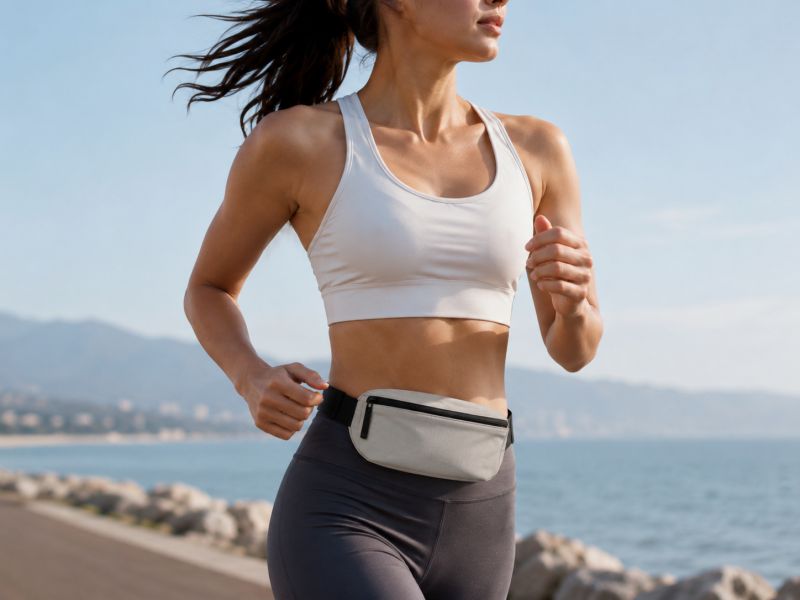
What Do Running Waist Bags Need To Do?
Running waist bags need to carry small essentials without bounce, rubbing, sliding, or bulky movement. A strong design should hold a large phone with case, key, card, ID, earbuds, small cash, and energy gels while staying close to the body. The structure should feel light, open smoothly, handle sweat, fit different waist sizes, and remain stable during repeated running motion.
A running waist bag is not judged by how it looks when it is empty. It is judged by how it behaves at a steady pace, during faster intervals, on warm days, and after the runner has opened the pocket many times. The product should not slap the waist, twist to one side, loosen after ten minutes, or press the buckle into the body. A runner may tolerate a little weight, but not constant distraction.
The key design goal is controlled carrying. The bag should not simply “have space.” It should control where each item sits. A phone should stay close to the waist. Keys should not hit the screen. Cards should stay flat. Energy gels should be easy to find. The zipper should open without scraping the phone. The strap should hold tension without leaving deep pressure marks.
A practical running waist bag should be checked through real movement:
| Running Need | Design Requirement | Sample Check |
|---|---|---|
| Low bounce | Close-fit body, controlled pocket, stable strap | Jog, run faster, turn, and check movement |
| Phone fit | Pocket fits large phone with case | Insert and remove while worn |
| Key control | Key loop or small separated area | Check noise and screen-scratch risk |
| Sweat comfort | Smooth back panel and soft edges | Wear during warm movement |
| Quick access | Smooth zipper or stretch opening | Remove phone and card quickly |
| Long wear | No sharp trim, no buckle pressure | Wear loaded sample for 30–60 minutes |
| Fit flexibility | Adjustable or size-planned structure | Test different waist measurements |
| Night use | Reflective detail if needed | Check visibility under low light |
A running waist bag should feel secure without feeling tight, slim without feeling useless, and light without feeling weak. When the runner forgets it is there, the structure is doing its job.
Why Do Runners Use Waist Bags?
Runners use waist bags because they need essentials close to the body without holding them in hand or depending on loose clothing pockets. A good running waist bag can carry a phone, key, ID, card, earbuds, cash, and energy gel while keeping both hands free and reducing the risk of item loss during movement.
Modern running often depends on a phone. Runners use it for music, route tracking, pace apps, payment, emergency contact, ride apps, gym entry, photos, or messages. Many running shorts and leggings do not have secure pockets that can hold a large phone with a protective case. Some pockets pull fabric downward. Some let the phone hit the thigh. Some are difficult to access while moving.
A waist bag places the load around the waist, where weight can be carried more naturally. This only works if the bag stays close to the body. If the pocket sits away from the waist, bounce increases. If the strap loosens, the bag slides down. If the pocket is too wide, the phone shifts from side to side.
Common reasons runners use waist bags:
| Runner Need | How A Waist Bag Helps |
|---|---|
| Phone carry | Keeps phone close and accessible |
| Key storage | Prevents keys from swinging in clothing pockets |
| Card and ID | Supports gym, travel, race, and emergency use |
| Energy gels | Useful for longer sessions and race training |
| Hands-free motion | Keeps arms relaxed and natural |
| Clothing flexibility | Works with shorts, leggings, jackets, and racewear |
| Safety | Keeps essentials attached to the body |
| Daily use | Works for running, walking, gym, and errands |
For fitness brands, this product can become a daily training accessory. It should support real routines: morning runs, gym sessions, city jogging, running clubs, wellness programs, race kits, and travel workouts.
What Items Should A Running Waist Bag Hold?
A running waist bag should hold a large phone with case, house key or car key, ID, card, small cash, earbuds, and one to three energy gels for longer runs. Some versions can hold a soft flask or small bottle, but hydration storage needs a stronger structure because liquid weight moves during running.
The phone is the first item to test. Many users carry large phones with thick protective cases, card holders, rings, grips, or magnetic accessories. A pocket that only fits a slim phone can limit real use. The opening should let the phone slide in smoothly without scraping the zipper teeth, stretching seams, or creating pressure on the front panel.
Keys need separation. If keys sit loose with the phone, they may scratch the screen or create noise. A key loop, elastic holder, or small pocket can solve this with very little added weight. Cards and ID should stay flat and easy to remove. Energy gels should not be crushed or create a lumpy shape against the body.
A practical carry plan:
| Item | Better Position | Structure Detail |
|---|---|---|
| Phone with case | Main pocket close to body | Stretch opening or smooth zipper |
| ID and card | Inner slip area | Flat, secure, easy to reach |
| Key | Key loop or mini pocket | Prevents scratching and noise |
| Earbuds | Small inner zone | Easy to find before or after running |
| Energy gel | Side sleeve or stretch section | Keeps gel away from phone pressure |
| Small cash | Flat inner pocket | Prevents loss during access |
| Soft flask | Separate hydration structure | Needs stronger bounce control |
| Safety item | Small easy-access area | Useful for night or group runs |
Useful pocket planning should start with actual item dimensions. Many large phones with cases can be around 16.5–17.5 cm high, 8–9 cm wide, and over 1 cm thick. The pocket opening should allow finger access, not just tight storage. If the phone fits only when forced, the design will create frustration during a run.
A loaded sample should close naturally. If the zipper is strained, the pocket is too tight. If the phone creates a sharp bulge, the depth or panel structure needs adjustment. If keys make noise, separation is missing. If the belt sags after loading, fabric recovery or strap tension needs review.
Who Uses Running Waist Bags Most?
Running waist bags are used by city runners, gym members, marathon trainees, running clubs, fitness communities, travel runners, night runners, wellness groups, sports teams, race participants, and active lifestyle programs. Each group has different needs, so the structure should match the main use instead of trying to serve every runner at once.
A city runner usually needs phone, key, card, and light comfort. A gym member may need phone, earbuds, locker key, and access card. A marathon trainee may need gels, ID, and a more stable fit over longer time. A night runner may need reflective trim. A running club may need a clean logo position, reliable sizing, and consistent comfort across many body types.
Use direction by runner group:
| User Type | Main Need | Better Product Direction |
|---|---|---|
| City jogger | Phone, key, card | Slim adjustable belt |
| Gym member | Phone, locker key, earbuds | Soft strap and simple pocket |
| Marathon trainee | Phone, gels, ID | Stretch pocket and stable fit |
| Running club | Unified look and reliable comfort | Adjustable sizing and logo control |
| Night runner | Visibility and safety | Reflective trim or reflective print |
| Travel runner | Phone, card, key, small cash | Secure pocket and close fit |
| Outdoor runner | Durability and moisture control | Coated fabric or stronger textile |
| Fitness program | Product identity and repeat use | Clean logo, comfort, good packing |
The strongest running waist bag has a clear main user. A minimal belt for 5 km runs should not be built like a hydration pack. A hydration pack should not be judged by the same weight standard as a slim phone belt. A gym-ready waist bag should avoid rough edges that rub during movement.
For product planning, one core scenario should lead the first sample. After the main use is proven, added versions can be developed: reflective night style, gel-storage style, hydration style, or premium retail style.
When Is A Waist Bag Better Than An Armband?
A waist bag is better than an armband when runners need to carry more than a phone or want the load closer to the body’s center. Waist bags can hold phone, key, card, ID, cash, earbuds, and gels. Armbands work for phone-only use, but they may feel uneven, restrict arm movement, trap sweat, or struggle with larger phones.
Armbands place weight on one arm. For short sessions, this may be acceptable. For longer runs, the uneven load can become irritating. Large phones make this more noticeable. Some users dislike arm compression, sleeve conflict, and sweat buildup under the band. Screen access may seem convenient, but touching the phone while running is still awkward for many people.
A waist bag distributes weight around the waist. It can sit under a shirt or jacket, work with many outfits, and carry several small items in one place. The key condition is stability. If the waist bag bounces, the armband may feel simpler. If the waist bag is well-structured, it gives more storage with better balance.
Comparison table:
| Detail | Running Waist Bag | Armband |
|---|---|---|
| Phone storage | Strong for large phones if pocket is sized well | Can feel bulky with large phones |
| Extra items | Key, card, ID, gels, cash | Usually limited |
| Weight balance | Centered around waist | One-sided on arm |
| Comfort risk | Bounce, waist pressure, strap rubbing | Arm compression, sweat, slipping |
| Access | Good if zipper and placement are planned | Screen visible, but touch can be awkward |
| Clothing match | Works with shorts, leggings, jackets | May conflict with sleeves |
| Longer sessions | Better if stable | Can feel heavy on one arm |
| Logo area | Belt body or pocket area | Smaller surface |
A waist bag is the better choice when storage and balanced carry matter. An armband is better for minimal phone-only carry when the user accepts arm compression and does not need key, card, gel, or cash storage.
Running Belt Vs Waist Pack: What Is Different?
A running belt is usually slimmer, stretchier, and more body-hugging. A waist pack usually has a more defined pouch, zipper compartments, and larger capacity. Running belts focus on low bounce and close fit. Waist packs can carry more, but they need stronger strap, pocket, and load-control design to stay stable while running.
This difference matters because many products look similar in photos but perform differently. A stretch running belt can hold a phone close to the body and disappear under a shirt. A pouch-style waist pack can offer easier access and more logo space, but if it protrudes too much, it may bounce. A hydration waist pack can support longer training, but water weight requires compression and stronger belt control.
Structure comparison:
| Product Type | Best Use | Strength | Risk |
|---|---|---|---|
| Slim running belt | Short runs, phone carry, gym | Light and close to body | Limited capacity |
| Stretch running belt | Phone, key, gels | Good bounce control | Size accuracy matters |
| Adjustable running belt | Group programs and mixed users | Flexible fit | Buckle and adjuster may press |
| Pouch waist pack | More storage and logo space | Easy access | Bounce if body is too deep |
| Hydration waist pack | Longer runs and outdoor training | Carries water and fuel | Heavier, harder to stabilize |
| Race belt with pockets | Race day and simple carry | Very light | Limited daily storage |
The product name should match the structure. A bulky pouch should not promise a barely-there running belt feel. A slim stretch belt should not promise large storage. A hydration waist pack should be presented around stability and load control, not minimal weight.
The best product direction starts with the runner’s real carry list. Phone-only? Choose slim and close-fitting. Phone plus gels? Add stretch storage. Water bottle? Plan a stronger waist system. Club or gym use? Add adjustability and durable trims.
What Is The History Of Running Waist Bags?
Running waist bags developed from simple belt pouches and travel waist packs into performance-focused running belts. Early versions mainly carried keys, coins, and small cash. As phones became larger and running apps became common, the product had to change. Today, it must carry modern essentials while staying light, stable, and comfortable.
Early running pouches were usually simple: one pocket, a basic zipper, and an adjustable strap. They worked for small keys and coins, but they were not built for smartphones. When phones became larger and heavier, old pouch structures started to bounce, sag, or feel awkward. This pushed product design toward stretch pockets, wider waist panels, softer edges, reflective details, and better load placement.
Modern running waist bags now sit between activewear and gear. They need the soft touch of sports apparel, the durability of bags, and the fit logic of body-worn accessories. This makes them more technical than casual fanny packs.
Development path:
| Stage | Product Focus | Limitation |
|---|---|---|
| Simple belt pouch | Keys and small cash | Poor phone fit |
| Phone waist pouch | Larger main pocket | Bounce and bulk issues |
| Stretch running belt | Close fit and low bounce | Size control needed |
| Adjustable running belt | More flexible fit | Hardware may create pressure |
| Hydration waist pack | Longer-distance storage | More weight and bounce risk |
| Modern fitness belt | Phone, comfort, low bounce, logo | Needs stronger sample testing |
The core need has stayed the same: runners want essentials without carrying them by hand. What changed is the standard. A modern running waist bag should stay quiet during motion, fit larger phones, manage sweat, avoid rubbing, and still look clean enough for fitness brand use.
How Should A Running Waist Bag Be Checked Before Approval?
A running waist bag should be checked with real items, real movement, and different body sizes before approval. The sample should be loaded with a phone with case, key, card, ID, earbuds, and gels if needed. Then it should be worn during walking, jogging, faster intervals, bending, sitting, and repeated pocket access.
A table review is not enough. The product must be tested as a moving item. A pocket that looks clean empty may bulge with a phone. A strap that feels fine while standing may slip after ten minutes of running. A zipper that opens smoothly on a table may press into the waist when worn.
Sample approval checklist:
| Check Area | What To Test | Good Result |
|---|---|---|
| Phone fit | Large phone with case | Smooth insert and removal |
| Bounce | Jog and faster run | Low vertical movement |
| Strap tension | 10–20 minutes of movement | No major slipping |
| Comfort | Waist and crossbody positions if relevant | No rubbing or buckle pressure |
| Pocket control | Key, card, gel, earbuds | Items stay separated |
| Sweat feel | Warm movement or active wear | Back panel stays comfortable |
| Zipper | Open and close 30–50 times | Smooth, no catching |
| Size fit | Different waist measurements | Secure without over-tightening |
| Logo area | Loaded and worn view | Logo stays clean and flat |
| Packing | Retail or event packing | Product presents neatly |
Good approval should include notes, not only a yes-or-no decision. Record phone dimensions tested, strap adjustment length, pocket opening, loaded weight, running feedback, and any fit concerns. These details make later production more consistent.
How Does Bounce Control Work?
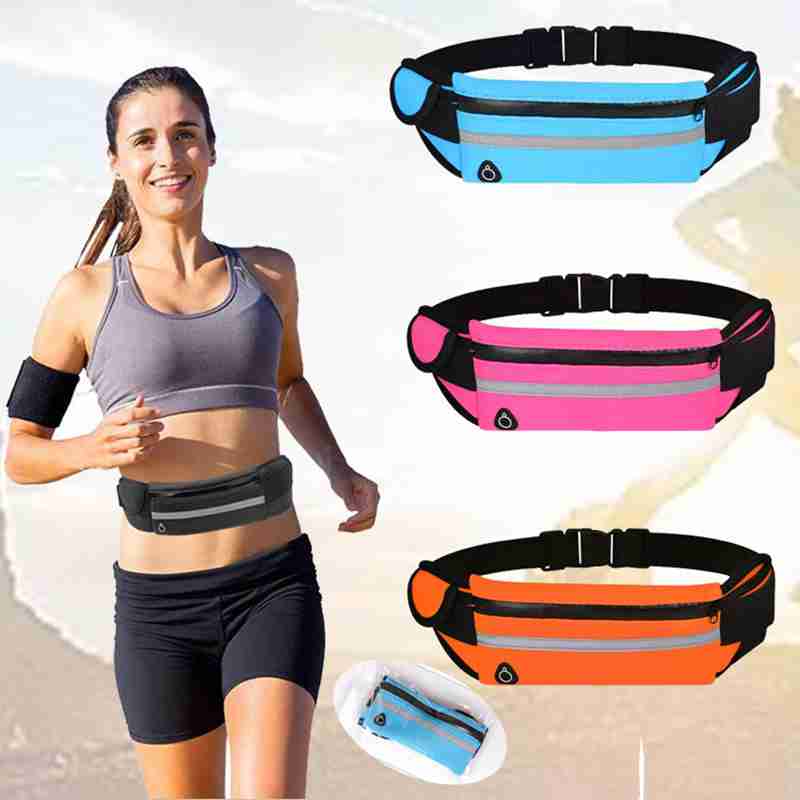
Bounce control works by keeping the loaded pocket close to the body, reducing empty space around the phone, balancing weight near the waist center, and using a belt system that holds tension without painful pressure. A running waist bag should move with the runner’s body, not separately from it. Good control comes from pocket shape, strap stability, fabric recovery, edge comfort, and real movement testing.
Bounce is not only an “elastic belt” problem. It is usually caused by several small design choices working together. A phone pocket may be too deep. The phone may sit too far away from the waist. The strap may loosen after several minutes. The adjuster may not grip the webbing well. The fabric may stretch but fail to recover. The zipper area may become stiff and lift the pocket away from the body. A hydration bottle may pull one side down.
A running waist bag should control movement in three areas:
| Control Area | What It Means | Good Design Direction |
|---|---|---|
| Load control | Phone, key, gels, and cards stay in place | Close pocket shape, inner separation, limited empty space |
| Body contact | The belt stays close to the waist | Smooth back panel, stable strap, correct pocket depth |
| Tension control | The belt stays secure without pain | Strong elastic recovery, grippy adjuster, suitable width |
A phone can weigh around 180–240 g with a protective case. That weight may seem small in hand, but during running it moves with every step. If the pocket is loose, the phone becomes a moving weight. If the belt is too soft, the phone pulls the bag down. If the bag sticks out from the waist, the movement becomes stronger. This is why a slim, close, controlled pocket often feels better than a larger pouch.
Bounce control should not be achieved by making the belt extremely tight. A painfully tight belt can reduce movement, but it may cause breathing restriction, waist pressure, rubbing, or skin marks. The better goal is stable comfort: enough hold to stop jumping, enough softness to support longer wear.
Why Do Waist Bags Bounce?
Waist bags bounce when the load moves separately from the runner’s body. This can happen when the pocket is too loose, the body is too deep, the strap slips, the elastic loses recovery, or the heaviest item sits too far from the waist center. Bounce can also come from poor side-tab angle, weak stitching, or uneven item placement.
The phone is usually the main source of bounce. A large phone with case is flat, rigid, and heavier than keys or cards. If it sits in a loose pocket, it rises and falls with each step. If the pocket has too much empty space, the phone hits the fabric. If keys or gels sit loose beside it, the bag feels even more unstable.
Common bounce causes:
| Cause | What Happens During Running | Better Adjustment |
|---|---|---|
| Pocket too loose | Phone jumps inside the pocket | Use closer pocket shape or stretch compression |
| Bag body too deep | Pouch swings outward | Reduce depth or move load closer to body |
| Strap too soft | Belt stretches and drops | Use stronger recovery or wider support |
| Adjuster slips | Fit loosens over time | Match webbing and adjuster grip |
| Heavy item off-center | One side pulls downward | Center phone and separate small items |
| Weak side tabs | Bag tilts forward | Improve side angle and reinforcement |
| Bottle not compressed | Liquid weight moves | Add firm bottle sleeve or compression strap |
A sample should never be judged empty. A running belt that looks clean without load may bounce once a phone, key, card, and gels are added. The loaded test is the real test.
How Does Body Fit Reduce Bounce?
Body fit reduces bounce by keeping the running waist bag close enough to move with the runner. When the belt follows the waist shape and holds the load near the body, the pocket moves less. Good fit depends on strap tension, fabric recovery, belt width, buckle position, pocket depth, and size planning.
A secure running belt should feel snug but not restrictive. It should not slide downward, rotate around the waist, roll at the edge, or need repeated adjustment. It should also not leave deep pressure marks after active wear. The best fit feels stable after the first few minutes and does not keep asking for attention.
Fit can be created through different structures:
| Fit Structure | Strength | Risk To Check |
|---|---|---|
| Adjustable webbing belt | Fits more waist sizes | Buckle or adjuster may press |
| Stretch fabric belt | Smooth and close to body | Size accuracy and recovery matter |
| Wide elastic belt | Spreads pressure well | Can roll if elastic is weak |
| Hybrid stretch + adjuster | Combines comfort and flexibility | Needs careful hardware placement |
| Low-profile pouch belt | Clean look and easy access | Pocket depth can create bounce |
Fit should be tested on different waist sizes and clothing layers. A belt that feels stable on a 72 cm waist may feel tight on a 92 cm waist or loose on a smaller runner if the adjustment span is not planned well. If the product uses graded sizes, each size should be tested with a phone and small running items. If it uses one adjustable size, the shortest and longest usable fit should both feel practical.
The goal is not tightness. The goal is stable contact.
Which Pocket Position Works Best?
The best pocket position keeps heavier items close to the body’s center while allowing fast access. A front-center or slightly off-center phone pocket often works well when the body remains flat. Side pockets are better for lighter items such as gels or keys. Back pockets can feel clean and stable, but they may be harder to reach while running.
Pocket placement affects both stability and convenience. Front placement helps phone access. Back placement can reduce visual bulk. Side placement can support small items, but heavy side storage may pull the belt unevenly. Hydration storage needs extra care because water moves differently from a phone or card.
Pocket position planning:
| Pocket Position | Better For | Risk To Watch |
|---|---|---|
| Front center | Phone, ID, key access | May press when bending |
| Front low-profile | Fast phone access | Must stay close to the waist |
| Side sleeve | Energy gel, small key, earbuds | Uneven pull if overloaded |
| Back center | Clean look and low visual bulk | Harder access while moving |
| Around-belt stretch pocket | Slim close fit | Size and stretch control matter |
| Side bottle pocket | Hydration use | Strong bounce risk |
Phone storage should usually stay close to the waist center. Gels can sit at the side because they are lighter. Keys should be clipped or placed in a small separated area. Cards and cash should stay flat so they do not add bulk.
A useful pocket test is simple: place the loaded sample on the body, jog, then rotate the pocket position slightly front, side, and back. The best position will feel secure while still allowing the runner to use the product naturally.
Do Elastic Belts Stay Stable?
Elastic belts can stay stable when the material has strong recovery, the width spreads pressure, the pocket load is controlled, and the size fits the wearer. Poor elastic can stretch out, roll, loosen, or create pressure. Good elastic holds the pocket close while moving with the body.
Elastic is useful because running is not a static activity. The waist expands with breathing, the torso moves, clothing shifts, and the runner changes pace. A well-chosen elastic belt can follow these movements better than a rigid strap. But elastic must recover. If it stretches during use and does not return, the belt becomes loose and bounce increases.
Elastic stability depends on several details:
| Elastic Detail | What To Check |
|---|---|
| Recovery | Does it return after repeated stretching? |
| Width | Does it spread pressure without rolling? |
| Edge finish | Does it rub skin or clothing? |
| Load support | Does it hold a phone close to the waist? |
| Sweat effect | Does it feel slippery or heavy after moisture? |
| Size fit | Does it support different waist measurements? |
| Long wear | Does it stay secure without pressure marks? |
A wide elastic band can improve comfort, but if it is too soft, it may roll. A narrow elastic can feel light, but it may dig into the waist after loading. Elastic plus an adjuster can support more sizes, but hardware placement must avoid pressure zones.
Elastic should be tested repeatedly. Stretch the belt, load it with a phone, run, adjust it, then run again. If it feels looser after testing, the material or fit structure needs improvement.
How Tight Should A Running Belt Feel?
A running belt should feel snug enough to keep the load stable, but not so tight that it restricts breathing, causes pressure marks, or rubs the waist. It should hold the phone close during jogging and faster movement while allowing natural breathing, bending, and arm swing.
Too loose creates bounce. Too tight creates discomfort. The correct fit sits between those two. The belt should stay in place at normal pace without sliding downward or rotating. It should also avoid sharp pressure at the buckle, zipper, edge, or side tabs.
Fit feeling review:
| Fit Feeling | Likely Cause | Better Adjustment |
|---|---|---|
| Slides down while jogging | Too loose or poor material grip | Improve tension, width, or back-panel contact |
| Bounces with phone | Pocket too loose or belt too soft | Tighten pocket shape or strengthen recovery |
| Leaves pressure marks | Too tight or too narrow | Increase width or improve softness |
| Rolls at top edge | Elastic or width issue | Review band structure |
| Buckle presses body | Hardware position issue | Move buckle or use lower-profile hardware |
| Feels stable after several minutes | Good fit direction | Keep structure and record measurements |
A good fit should not require constant adjustment. If the runner touches the belt every few minutes, the product is not stable enough. If the runner feels pressure while breathing deeply, it is too tight. The best belt feels secure at the start and almost unnoticed after the run begins.
The fit should also account for different body shapes. Some runners prefer the belt at the natural waist. Some wear it lower on the hips. Some wear it under a shirt. Some wear it over a jacket. Fit testing should include several wearing positions before approval.
How Should Bounce Be Tested?
Bounce should be tested with a fully loaded sample during real running movement. The sample should carry the intended items: phone with case, key, card, earbuds, gels, and bottle if included. It should be tested during slow jogging, normal pace, faster intervals, direction changes, stairs, bending, and sitting. Walking alone is not enough.
A structured test prevents false approval. A belt may feel stable while standing and still bounce during running. It may stay secure for five minutes and loosen after fifteen. It may work with a slim phone but fail with a thicker case. It may feel fine when dry but slip after sweat.
Practical bounce test:
| Test Step | What To Do | What To Watch |
|---|---|---|
| Load test | Add real carry items | Does the pocket close naturally? |
| Slow jog | Jog for 5–10 minutes | Does the bag move vertically? |
| Normal pace | Run at target training pace | Does the strap loosen? |
| Faster interval | Increase speed briefly | Does the phone hit the body? |
| Turn test | Change direction several times | Does the belt rotate or slide? |
| Stairs or slope | Move up and down | Does the load jump? |
| Bend and sit | Bend, squat, sit | Does buckle or zipper press? |
| Sweat check | Test during warm activity | Does fabric become slippery or heavy? |
| Repeat access | Remove phone several times | Does the fit change after opening? |
Bounce should be judged with comfort. A belt can stop movement by being painfully tight, but that is not a strong design. The better result is low movement with natural breathing and no rubbing.
A useful rating method can be used during sample review:
| Rating | Movement Feeling | Product Decision |
|---|---|---|
| Low bounce | Barely noticeable during normal running | Suitable for approval if comfort is also good |
| Mild bounce | Noticeable but not distracting | Review pocket depth or strap tension |
| Medium bounce | Runner adjusts belt several times | Revise structure |
| High bounce | Phone or pocket hits body repeatedly | Redesign pocket, strap, or load position |
The sample should be tested by more than one person when possible. Different waist sizes and running styles can reveal different problems.
What Sample Data Should Be Recorded?
Sample data should record pocket dimensions, phone fit, belt length, adjustment span, loaded weight, stretch recovery, strap slippage, bounce behavior, zipper smoothness, comfort feedback, and logo placement after loading. These details help turn a good sample into a stable product.
Running waist bags depend on small differences. A pocket opening that is 1 cm too small may block large phones. A strap that slips 2–3 cm during running can create bounce. Elastic that looks fine on day one may lose recovery after repeated stretching. A zipper placed slightly too high may press into the waist. Without clear records, these issues are easy to miss.
Useful sample records:
| Data Item | What To Record |
|---|---|
| Phone fit | Device dimensions or phone models tested |
| Pocket opening | Width, height, zipper length, stretch behavior |
| Belt fit | Minimum and maximum usable length |
| Loaded weight | Total test weight inside the belt |
| Bounce behavior | Low, mild, medium, or high movement |
| Strap slippage | Change after 10–20 minutes of running |
| Elastic recovery | Shape return after repeated stretch |
| Comfort notes | Pressure, rubbing, heat, edge feel |
| Zipper use | Smoothness after repeated opening |
| Logo position | Whether logo stays flat when loaded |
| Reflective detail | Visibility under low light if included |
Good records make revisions easier. If the second sample performs better, the improvement should be clear: stronger elastic, tighter pocket, smoother zipper, better side angle, wider strap, or adjusted phone position.
For fitness brands, this data also helps with product confidence. The goal is not only to approve a nice sample. The goal is to make sure the same structure can be repeated consistently in bulk work.
How Can Bounce Control Protect Brand Value?
Bounce control protects brand value because a running waist bag is judged during use, not just at first glance. If the belt jumps, slides, or rubs, the user quickly loses trust in the product. If it stays stable and comfortable, the logo becomes associated with practical performance, not just appearance.
Fitness products create fast feedback. Runners notice discomfort immediately. A zipper that catches, a belt that slips, or a phone that hits the waist can become the detail people remember. On the other hand, a belt that stays quiet during a run feels reliable. That reliability supports reuse.
The brand value of a running waist bag depends on:
| Product Feeling | User Reaction |
|---|---|
| Stable and light | Keeps using it |
| Smooth zipper | Trusts the product detail |
| No rubbing | Comfortable for repeat runs |
| Phone stays secure | Feels safer during movement |
| Logo stays clean | Product looks professional |
| Fit works across sizes | Easier for teams, clubs, and programs |
| Pocket does not sag | Looks better after loading |
A running waist bag can be a small product, but it carries the promise of the fitness brand. If the structure performs well, the product can stay in weekly use. If it does not, even a strong logo cannot save the experience.
Which Lightweight Structure Works Best?
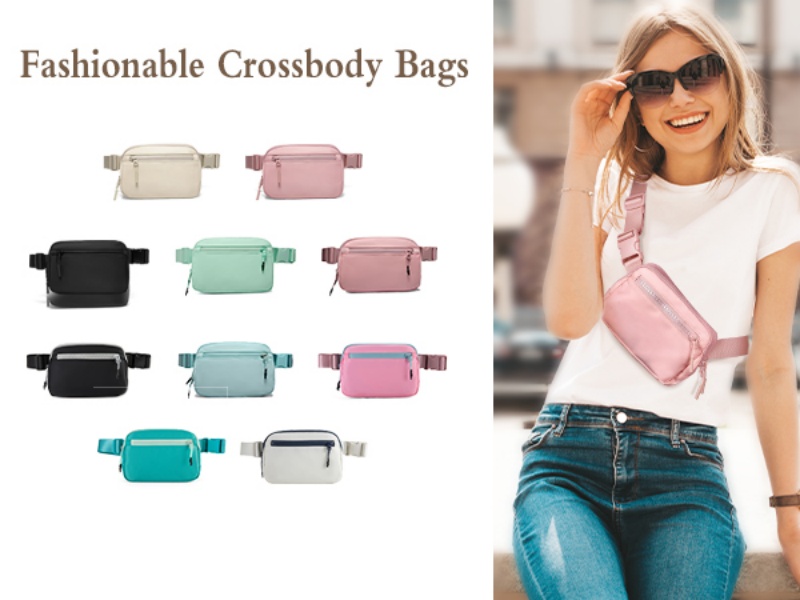
The best lightweight structure for running waist bags uses a slim body, controlled stretch, close pocket fit, stable strap tension, smooth edges, and low-bulk materials. The bag should feel light without becoming weak or floppy. It should keep the phone close to the waist, reduce item movement, handle sweat, and stay comfortable during jogging, faster running, gym training, and longer outdoor sessions.
Lightweight structure is not only about reducing grams. A running waist bag can feel light in the hand but still perform poorly if the phone jumps inside, the belt slides downward, the pocket collapses, or the back panel traps sweat. A stronger design removes unnecessary bulk while protecting the parts that control real movement: pocket shape, belt recovery, strap grip, zipper position, seam softness, and load placement.
The best running waist bag usually sits between two extremes. If the structure is too soft, the phone moves and the body wrinkles. If it is too stiff, the bag presses into the waist and feels uncomfortable. A balanced design should stay close to the body, carry essentials securely, and feel smooth enough for repeated wear.
A practical lightweight structure can be reviewed like this:
| Structure Detail | Better Direction | Risk If Too Weak | Risk If Too Heavy |
|---|---|---|---|
| Body fabric | Light but stable textile | Wrinkles, sagging, poor shape | Hot, stiff, bulky |
| Pocket depth | Close fit around phone | Phone moves inside | Hard to access items |
| Stretch area | Controlled stretch recovery | Loosens after use | Feels restrictive |
| Strap | Smooth, stable, suitable width | Slides or digs in | Feels heavy |
| Back panel | Soft and sweat-tolerant | Rubs skin or clothing | Traps heat |
| Zipper | Smooth and low-profile | Feels cheap or catches | Presses into waist |
| Edge finish | Clean and soft | Chafing | Thick seam bulk |
| Logo area | Light decoration | Poor identity | Stiff or heavy surface |
The right structure should be tested after loading. A 70 g belt that bounces can feel worse than a 120 g belt that stays quiet. During running, stability often matters more than empty weight.
What Materials Fit Running Use?
Materials for running waist bags should be light, sweat-tolerant, flexible, and stable enough to keep items close to the body. Common choices include polyester, nylon, stretch fabric, mesh, neoprene, coated fabric, and elastic webbing. The best material depends on whether the product is made for short jogging, gym use, club training, marathon preparation, night running, or light hydration.
A close-fit running belt often needs stretch fabric because it can hold the phone close without adding hard structure. A pouch-style waist pack may need polyester or nylon for better body control. Mesh can improve breathability on the back panel or inner lining. Neoprene gives a soft, padded touch, but it can feel warm if the design is too thick. Coated fabric helps with sweat and light moisture, but decoration and seam behavior need testing.
Material should follow real use, not just appearance:
| Material | Better Use | Strength | Check Carefully |
|---|---|---|---|
| Lightweight polyester | Standard running waist bags, fitness programs | Stable, flexible, broad color choice | Thin fabric may wrinkle |
| Nylon | Premium active accessories | Smooth hand feel, clean appearance | Color and trim matching |
| Stretch fabric | Close-fit running belts | Body-hugging, low bounce | Recovery after repeated stretch |
| Mesh | Back panel or lining | Breathability and lighter feel | Snagging and durability |
| Neoprene | Soft sport pouch, gym use | Cushioned touch | Heat buildup and thickness |
| Coated fabric | Outdoor running and sweat-ready styles | Easier wiping, surface protection | Logo adhesion and coating marks |
| Elastic webbing | Belt and adjustment zones | Fit control and movement comfort | Rolling or stretch fatigue |
A running waist bag often works best with material mixing. The main pocket may use stretch fabric. The back panel may use mesh or soft lining. The strap may use elastic or webbing. The zipper area may need stronger edging. This keeps the product light while giving each part the right job.
Material testing should include repeated stretch, loaded running, sweat contact, zipper friction, and logo application. A fabric swatch can look suitable, but cutting, sewing, loading, and wearing reveal the real behavior.
Nylon Vs Polyester: Which Is Better?
Nylon is often better for a smoother and more premium running waist bag, while polyester is often better for practical cost control, color choice, and large fitness programs. Both can work well when fabric weight, coating, lining, strap structure, and logo method match the product goal.
Polyester is a strong option for many running waist bags because it is versatile and stable. It works well for adjustable running belts, sport waist packs, race kits, and fitness club gear. Different polyester specifications can support light phone belts or more structured pouch styles. It also works with common decoration methods such as print, heat transfer, woven labels, reflective print, and small patches.
Nylon can create a cleaner surface and softer hand feel. It is useful for premium active accessories, running club collections, gym retail lines, and lifestyle fitness products. Matte nylon, ripstop nylon, or smooth nylon can create different looks: clean, sporty, or outdoor-inspired. The limitation is that nylon often needs closer control in color matching, coating, and hardware pairing.
A direct comparison:
| Detail | Nylon | Polyester |
|---|---|---|
| Hand feel | Smooth and refined | Practical and familiar |
| Visual style | Clean, premium, active | Versatile and sporty |
| Cost direction | Usually higher | Usually more efficient |
| Color choice | Good, needs closer control | Broad and flexible |
| Logo methods | Strong with suitable finish | Strong for print and heat transfer |
| Body structure | Depends on weave and backing | Can be light or structured |
| Sweat use | Good with suitable finish | Good with suitable finish |
| Better fit | Premium fitness lines | Large programs and standard running belts |
The material name alone should not decide the product. A high-quality polyester can perform better than a weak nylon. A smooth nylon can still bounce if the pocket shape is wrong. Material supports performance, but pocket shape and belt tension control the wearing experience.
For high-volume fitness programs, polyester often provides a strong balance. For premium active accessories, nylon can raise the perceived value when paired with a smooth zipper, soft back panel, stable strap, and clean logo detail.
Stretch Fabric Vs Neoprene: Which Fits Running?
Stretch fabric fits running when close body fit and low bounce are the main goals. Neoprene fits soft sport pouches, gym accessories, wellness products, and light active carry where cushioning matters more. Stretch fabric hugs the body and controls movement. Neoprene feels soft and protective, but it can add heat and bulk if the body is not carefully shaped.
Stretch fabric is widely used in running belts because it gently compresses the load. It helps hold a phone close to the waist and reduces empty space inside the pocket. Good stretch fabric should recover after repeated pulling. If recovery is weak, the belt may become loose after several runs.
Neoprene gives a cushioned feel. It can protect the phone and feel soft against the body. It works well for gym use, walking, light jogging, beach fitness, and wellness items. For faster running, thick neoprene can feel warm or bulky. If the pouch sticks out from the body, bounce risk increases.
Comparison table:
| Detail | Stretch Fabric | Neoprene |
|---|---|---|
| Better use | Close-fit running belts | Soft gym and sport pouches |
| Feel | Flexible and body-hugging | Soft, padded, thicker |
| Bounce control | Strong when recovery is good | Depends on body depth and strap |
| Phone protection | Moderate | Stronger cushioning |
| Heat buildup | Usually lower with breathable fabric | Can feel warmer |
| Body shape | Slim and close | Can protrude if too thick |
| Logo methods | Heat transfer, reflective print, woven label | Heat transfer, print, patch, label |
| Main concern | Recovery and sizing | Bulk and breathability |
For serious running, stretch fabric usually performs better when bounce control is the priority. For gym or wellness use, neoprene can provide a softer feel. For hybrid styles, a soft pouch can be combined with elastic or stretch straps, but body depth must stay controlled.
A sample should be tested with a large phone inside. Stretch fabric may feel tight at first but perform well during running. Neoprene may feel comfortable in hand but bounce if the pocket protrudes too much.
What Type Of Strap Works Best?
The best strap for running waist bags is stable, smooth, secure, and matched to the load. Slim running belts may use stretch fabric or elastic bands. Pouch-style waist packs often need adjustable webbing. Hydration styles need wider support, stronger hardware, and extra compression around the load.
The strap controls whether the bag stays in place. If it slips, the pocket bounces. If it is too narrow, it may dig into the waist. If it is too wide and stiff, it may feel bulky. If the buckle sits in the wrong place, it may press into the body during running, bending, or sitting.
A practical strap guide:
| Strap Type | Better Use | Strength | Risk |
|---|---|---|---|
| Stretch fabric belt | Slim running belt | Close fit, low profile | Size accuracy matters |
| Elastic webbing | Lightweight adjustable belt | Comfortable movement | Weak recovery can loosen |
| Polyester webbing | Standard adjustable waist pack | Stable and durable | Edge softness needs review |
| Nylon webbing | Premium active products | Smooth feel | Hardware grip must match |
| Wide elastic band | Larger phone or gel carry | Better pressure spread | May roll if too soft |
| Hybrid strap | Mixed fit and comfort needs | Balance of adjustment and stretch | Needs careful sample review |
The strap should match wearing habits. Some runners wear the pocket in front. Some rotate it slightly to the side. Some wear it over a T-shirt, while others wear it over a jacket. A product for running clubs or group fitness often benefits from adjustability because body sizes vary. A premium stretch belt may use graded sizing for a smoother fit.
Key strap checks:
| Strap Detail | What To Check |
|---|---|
| Length | Fits target waist measurements without long loose tail |
| Width | Spreads pressure without bulk |
| Edge | Smooth against skin and clothing |
| Adjuster | Holds position during running |
| Buckle | Does not press or bounce |
| Side angle | Keeps pocket close to the body |
| Strap end | Does not flap or twist |
| Pull strength | Handles repeated adjustment |
A running waist bag should not need constant tightening. If it does, the strap system is not strong enough for active use.
Is Water Resistance Needed?
Water resistance is useful for running waist bags because sweat, light rain, wet hands, and outdoor training can affect comfort and item protection. It is not always necessary for indoor gym use, but for outdoor running, fitness events, race kits, and travel running, a sweat-ready or water-resistant structure adds practical value.
Water-resistant fabric should be described honestly. A coated fabric can resist light moisture, but water may still enter through zippers, seams, stitch holes, and pocket openings. A running waist bag does not become waterproof only because the surface has a coating. Stronger protection needs zipper planning, seam treatment, material selection, and structure control.
Common protection levels:
| Protection Level | Better Use | Material Direction | Caution |
|---|---|---|---|
| Basic sweat tolerance | Gym and short city runs | Polyester, nylon, stretch fabric | Limited moisture protection |
| Water-resistant surface | Outdoor running and race kits | Coated polyester or nylon | Zippers and seams still matter |
| Sweat-friendly back panel | Long active wear | Mesh, soft lining, breathable textile | Avoid rough edges |
| Wipeable pouch | Gym and wellness use | Coated fabric or neoprene | Heat buildup should be checked |
| Higher moisture protection | Outdoor training with more exposure | Technical coated textile | Higher cost and structure needs |
For running use, sweat contact is often more important than rain. The back panel touches the body and absorbs heat. If the material traps moisture, the belt may feel heavy or slippery. If the edge finish is rough, sweat can make rubbing worse. Breathability, softness, and quick drying matter.
Decoration should also be tested with moisture. Reflective print, heat transfer, and rubberized detail may behave differently after sweat, bending, and rubbing. A decoration that looks clean when dry should still hold up during active use.
Which Reflective Details Matter?
Reflective details matter for night running, early morning training, road running, race events, and fitness groups that exercise in low light. Reflective trim, reflective print, zipper pull detail, reflective piping, or reflective webbing can improve visibility without adding much weight. The best placement remains visible from front, side, or rear angles depending on how the bag is worn.
Reflective design should support safety without making the bag look overly technical. A small reflective strip on the front can help when the bag is worn forward. Side reflective tabs can help when the runner is seen from an angle. Rear reflective detail can be useful when the belt is worn at the back. If the bag may be worn crossbody during walking or gym use, reflective placement should also be checked in that position.
Reflective detail options:
| Reflective Detail | Better Use | Risk To Check |
|---|---|---|
| Reflective print | Lightweight logo or line detail | Durability after bending |
| Reflective piping | Edge visibility | Sewing consistency |
| Reflective zipper pull | Small low-bulk detail | Limited surface area |
| Reflective woven label | Clean active look | Lower visibility from distance |
| Reflective webbing strip | Strap visibility | Strap may twist |
| Reflective front band | Road running and night training | May affect design balance |
Reflective detail should not replace proper safety gear, but it can add practical value to a running waist bag. For fitness brands, reflective elements can also give the product a more active and technical feel when used with restraint.
Reflective placement should be checked under low light with the bag worn in different positions. A reflective strip that faces downward or hides under an arm will not perform well. The best detail remains visible during natural movement.
How Should Lightweight Structure Be Tested?
Lightweight structure should be tested with real item load, real movement, repeated stretch, sweat contact, and different waist sizes. Empty weight is only one part of the review. The product must stay stable with a phone, key, card, earbuds, and gels inside.
A practical structure test can include:
| Test Area | What To Do | Good Result |
|---|---|---|
| Empty weight | Weigh finished sample | Meets target without feeling weak |
| Loaded shape | Add phone, key, card, gels | Body stays close and controlled |
| Stretch recovery | Stretch belt repeatedly | Returns to original shape |
| Jog test | Run at normal pace | Low bounce and no sliding |
| Fast movement | Run faster or climb stairs | Load does not slap body |
| Sweat contact | Wear during warm activity | No slippery or rough feel |
| Zipper test | Open and close repeatedly | Smooth access |
| Edge check | Rub edge against skin/clothing | No irritation |
| Logo check | Bend and stretch decorated area | Logo remains clean |
| Size check | Test different waist measurements | Stable without over-tightening |
The best lightweight structure feels balanced after the test. It should not sag, twist, roll, rub, trap too much heat, or lose shape. The runner should not need to tighten it again and again.
A good sample record should include weight, pocket dimensions, strap length, stretch recovery, phone fit, bounce level, comfort notes, and loaded appearance. These records make it easier to improve the next sample and keep bulk production close to the approved design.
How Do Comfort And Storage Stay Balanced?

Comfort and storage stay balanced when a running waist bag carries only what the activity truly needs, keeps heavier items close to the body, separates small objects, uses smooth contact surfaces, and avoids unnecessary depth. A strong design should hold a phone, key, card, ID, earbuds, and gels without becoming bulky, hot, tight, or unstable during movement.
Running waist bags often fail when storage grows faster than structure. Adding more pockets sounds useful, but every extra pocket adds seams, layers, stiffness, and possible pressure. Adding more capacity sounds attractive, but deeper space can increase bounce. Adding a bottle holder may support longer sessions, but liquid weight changes the whole fit requirement.
A good design starts from the runner’s real carry list. A short jog may only need a phone, key, and card. A gym session may need earbuds, locker key, access card, and phone. A longer training session may need energy gels, ID, and small cash. A hydration version may need a soft flask or bottle, but that should be treated as a different structure, not just an added pocket.
Storage should support comfort, not fight it:
| Use Scenario | Real Carry Items | Better Structure | Comfort Risk |
|---|---|---|---|
| Short city run | Phone, key, card | Slim belt with key loop | Pocket too tight or phone bounce |
| Gym session | Phone, earbuds, locker key, access card | Soft pouch with simple storage | Rough edge or bulky buckle |
| Daily jogging | Phone, card, cash, key | Main pocket plus flat inner area | Items mixing together |
| Long training | Phone, gels, ID, key | Stretch storage and stable belt | Gel pressure or belt sag |
| Night run | Phone, key, reflective detail | Slim body with reflective trim | Reflective area hidden when worn |
| Hydration run | Bottle or soft flask, gels, phone | Wider belt with compression support | Liquid bounce and waist pressure |
The best running waist bag should feel stable first, then useful. A runner will accept limited storage if the belt stays comfortable. A runner will not keep using a larger bag that bounces, rubs, traps heat, or needs constant adjustment.
How Big Should The Phone Pocket Be?
The phone pocket should fit large phones with protective cases without forcing the zipper, stretching the seams, or pushing the bag away from the body. It should allow smooth removal while worn and keep the phone close enough to reduce bounce. A pocket that fits only a bare slim phone may not work for real runners.
Many modern phones with cases can be around 16.5–17.5 cm high, 8–9 cm wide, and over 1 cm thick. Some cases include card holders, magnetic rings, finger grips, or thicker protective corners. These small changes can decide whether the phone slides in easily or gets stuck at the opening.
The phone pocket should be sized around access, not only storage. A tight pocket may hold the phone securely, but if the runner has to stop and use two hands to remove it, the design feels frustrating. A loose pocket is easier to access, but the phone may jump inside. The best pocket gives a close fit with a smooth opening.
Phone pocket planning:
| Detail | Better Direction | Risk If Ignored |
|---|---|---|
| Pocket width | Fits large phone with case | Phone cannot enter smoothly |
| Pocket height | Phone sits secure below zipper line | Zipper scratches or presses the phone |
| Opening length | Allows finger access | Hard removal during movement |
| Pocket depth | Minimal empty space around phone | Phone jumps inside |
| Back surface | Smooth against the body | Phone edge presses through fabric |
| Key separation | Phone does not touch metal items | Screen scratches and noise |
| Stretch control | Fabric recovers after loading | Pocket becomes loose |
| Zipper path | Smooth and away from pressure areas | Zipper catches or presses waist |
A useful phone test should include:
| Test Item | Why It Matters |
|---|---|
| Large phone with protective case | Reflects common daily use |
| Phone with card case | Adds thickness |
| Phone plus key nearby | Checks scratch risk |
| Phone plus two gels | Checks pressure and pocket shape |
| Phone removal while worn | Confirms access |
| Phone during jogging | Reveals bounce |
| Phone after repeated insertion | Checks pocket recovery |
A strong phone pocket should close naturally, keep its shape, and allow fast access. If the zipper is strained, the pocket is too tight. If the phone moves loudly, the pocket is too loose. If the phone creates a sharp bulge, the structure needs adjustment.
How Many Pockets Are Enough?
Most running waist bags need one main phone pocket, one key holder, and one flat card or ID area. Longer training styles may add gel sleeves or small side sections. Hydration styles may add a bottle holder. More pockets can help only when they do not increase bounce, heat, rubbing, or body thickness.
Running is not the best activity for complicated storage. The runner wants simple access and quiet movement. Too many pockets can create more seams, more layers, more weight, and more areas that may press into the body. They can also make the belt harder to use during movement.
Useful storage should solve a clear problem:
| Pocket Detail | Problem It Solves | Risk If Poorly Planned |
|---|---|---|
| Main phone pocket | Holds phone close | Bounce if too loose |
| Key loop | Prevents phone scratches | Metal noise if loop is too long |
| Flat card slip | Keeps ID and card easy to find | Card falls out if opening is loose |
| Gel sleeve | Supports longer sessions | Gel presses into waist |
| Small zipped pocket | Holds cash or medicine | Adds stiffness |
| Back pocket | Hides flat items | Hard to reach while running |
| Bottle sleeve | Adds hydration | Strong bounce risk |
A clean daily running setup often works like this:
| Storage Zone | Suggested Items | Design Direction |
|---|---|---|
| Main pocket | Phone with case | Close fit, smooth zipper or stretch opening |
| Inner flat area | ID, card, cash | Thin, easy to reach, no bulky seam |
| Key loop or mini pocket | House key or car key | Secure and separated from phone |
| Side stretch sleeve | One to three gels | Light pressure, not near sharp seams |
A pocket should be added only when it improves real use. A key loop is useful because it prevents scratches. A card slip is useful because it keeps flat items visible. Gel storage is useful for longer sessions. Decorative pockets that add bulk without function should be avoided.
After each pocket is added, the sample should be loaded and worn. If the belt feels lumpy, the pocket location needs revision. If items are hard to find, the layout is not clear enough. If the belt bounces, storage has exceeded the structure.
Are Hydration Pockets Needed?
Hydration pockets are useful when the running waist bag is designed for longer runs, outdoor training, race preparation, trail use, or fitness programs where water access matters. They are not necessary for short city runs, gym use, or phone-only carry. Adding hydration changes the product because liquid weight moves during running.
A small bottle or soft flask adds much more movement than a key or gel. A 250 ml bottle carries about 250 g of water before including the bottle itself. That may be heavier than many phones. As the runner moves, the liquid shifts. Without compression or a stable holder, the bottle can swing, bounce, and pull the belt to one side.
Hydration should be planned as a structure decision:
| Hydration Type | Better Use | Structure Need | Risk |
|---|---|---|---|
| No hydration | Short runs, gym, city jogging | Slim belt | Limited long-run support |
| Soft flask sleeve | Medium runs and compact training | Stretch support close to body | Flask can sag |
| Small bottle holder | Outdoor runs and race events | Angled pocket and compression | Bottle bounce |
| Dual bottle layout | Longer training | Wider belt and balanced load | More weight and heat |
| Removable bottle option | Flexible programs | Secure attachment and fit check | Extra parts can shift |
Hydration makes sense only when the target activity needs it. A phone belt with a bottle pocket may sound more useful, but if the bottle bounces, the whole product feels unstable. If the holder is too tight, the runner cannot remove the bottle easily. If it is too loose, the bottle moves with every step.
For many fitness brand running waist bags, a non-hydration model or gel-storage model is easier to keep light and stable. Hydration should be added when the product is truly meant for longer sessions or outdoor use.
How Can Brands Avoid Chafing?
Chafing can be reduced with smooth fabric, soft edges, flat seams, suitable strap width, stable fit, breathable contact surfaces, and careful hardware placement. The belt should not slide, roll, rub, or trap too much sweat. Comfort should be tested during movement because dry touch can be misleading.
Rubbing usually comes from repeated small movement. A rough seam may feel fine for one minute but irritate skin after half an hour. A narrow strap may look light but dig into the waist when the phone is loaded. A buckle placed near the side may press during arm swing. A raised zipper edge may rub when the belt bounces.
Chafing control guide:
| Area | Better Direction | Risk |
|---|---|---|
| Back panel | Smooth or breathable textile | Rough lining or trapped sweat |
| Edge finish | Soft binding or clean turned edge | Sharp edge against skin |
| Seams | Flat and away from high-rub areas | Raised seam irritation |
| Strap width | Wide enough to spread pressure | Narrow strap digs in |
| Buckle position | Away from pressure areas | Presses waist or ribs |
| Fit | Stable without over-tightening | Sliding creates friction |
| Fabric | Sweat-tolerant and soft | Sticky or rough after moisture |
| Zipper | Low-profile and smooth | Teeth or puller press into body |
Sweat makes comfort problems worse. A fabric that feels smooth when dry may become sticky. A seam that feels small may rub more under moisture. A strap that feels stable at first may slip when damp. This is why sweat-contact testing is important.
A comfort test should include:
| Test | What To Do |
|---|---|
| Dry wear | Wear with a running top for 10–15 minutes |
| Warm movement | Jog or move until body heat rises |
| Loaded wear | Add phone, key, card, and gels |
| Edge check | Feel strap edge, back panel, and zipper line |
| Bend test | Sit, bend, and twist |
| Post-wear review | Check pressure marks and rubbing areas |
A strong running waist bag should feel smooth where it touches the body. The runner should not need to adjust it to escape rubbing.
Is A Slim Shape Always Better?
A slim shape is better for low bounce, light feel, and close body fit, but it is not always better for storage. If the belt is too slim, it may not fit a large phone with case, gels, or keys properly. The best shape is slim enough to stay stable but not so tight that access becomes difficult.
A very slim running belt can feel almost invisible, which is excellent for short runs. But if users have to force the phone into the pocket, the product becomes frustrating. If the pocket is too flat, gels may press into the body. If there is no key separation, metal items may scratch the phone. If the belt is too narrow, it may roll or dig into the waist.
Shape comparison:
| Shape | Better Use | Strength | Risk |
|---|---|---|---|
| Ultra-slim belt | Phone, key, short runs | Light and low profile | Limited capacity |
| Slim stretch belt | Phone, card, gels | Close fit and low bounce | Size and recovery control |
| Low-profile pouch | Better access and logo area | More usable storage | Pocket depth must be controlled |
| Medium pouch | More daily storage | Easier organization | Bounce and bulk risk |
| Hydration waist pack | Long runs and outdoor training | Carries water and fuel | Needs stronger support |
A balanced design can use a slim back panel, controlled body depth, stretch pocket fabric, and stable belt tension. This gives storage without making the pouch stick out too far.
Side view is one of the most important checks. If the bag protrudes sharply with a phone inside, bounce risk increases. If it stays close while allowing access, the shape is working. The best shape is not the thinnest one; it is the most stable shape for the target carry list.
How Should Size Be Tested?
Size should be tested with real waist measurements, real items, and real movement. The sample should be worn by people with different waist sizes, loaded with target items, and tested during walking, jogging, faster movement, bending, and sitting. The size should hold securely without over-tightening or sliding.
Size includes more than belt length. It includes pocket opening, phone fit, stretch recovery, strap adjustment, buckle position, body depth, and fit over clothing. A belt that fits one person well may not fit a group. Fitness brands often need broader fit coverage, especially for clubs, gyms, wellness programs, and retail products.
Size test checklist:
| Size Detail | What To Check |
|---|---|
| Minimum fit | Fits smaller waists without long loose tail |
| Maximum fit | Fits larger waists without pressure |
| Pocket size | Fits large phone with case |
| Stretch recovery | Belt returns after repeated use |
| Strap adjustment | Hardware holds position |
| Buckle position | Does not press during movement |
| Loaded shape | Bag stays close to body |
| Clothing fit | Works over T-shirt, hoodie, or running layer |
| Waist placement | Natural waist and lower hip position both reviewed |
If the product uses S/M/L sizing, each size should be tested with real items. If it uses one adjustable size, the adjustment span should be practical. A very long strap tail may flap during running. A too-short adjustment span may exclude larger users.
A useful size review can include:
| Test User Group | What To Learn |
|---|---|
| Smaller waist | Strap tail control and pocket position |
| Medium waist | Main intended fit |
| Larger waist | Pressure, extension, buckle position |
| User with thin running top | Skin and edge comfort |
| User with hoodie or jacket | Maximum fit and strap length |
| Faster runner | Bounce and slippage |
| Casual jogger | Ease of use and comfort |
Good sizing makes the product easier to trust. Poor sizing makes even a good-looking running belt feel unreliable.
How Should Storage Be Tested Before Bulk Work?
Storage should be tested by loading the sample with the exact items it is meant to carry, then checking access, shape, comfort, bounce, and item separation during movement. The sample should not be approved only because the items fit. It should be approved because they fit well while the belt stays comfortable and stable.
A practical storage test can follow this process:
| Test Step | What To Do | Good Result |
|---|---|---|
| Load phone | Add large phone with case | Fits smoothly without force |
| Add small items | Add key, card, cash, earbuds | Items stay separated |
| Add gels | Add one to three gels if needed | No lumpy pressure |
| Close pocket | Zip or close the pocket | No stress on seam or zipper |
| Wear test | Wear at intended position | Bag stays close to body |
| Jog test | Run with loaded bag | Low bounce |
| Access test | Remove phone and card while worn | Easy and natural |
| Shape check | View from side and front | No sharp bulge or sagging |
| Comfort check | Wear for 30–60 minutes | No rubbing or pressure |
A storage design is successful when the runner can use it without thinking too much. Phone access should be easy. The key should stay quiet. Cards should be easy to find. Gels should not press into the waist. The belt should not need repeated tightening.
Good storage is not about maximum volume. It is about carrying the right items in the right place with the least discomfort.
How Should Brands Customize Running Waist Bags With A Factory?

Brands should customize running waist bags by starting with the activity type, carry list, bounce target, fit method, material direction, logo position, quantity, packing needs, and delivery date. A strong project should not begin with only a product photo. It should begin with movement checks: phone fit, strap stability, pocket depth, sweat comfort, edge softness, and loaded running performance.
Running waist bags are small, but the development work is precise. A 1 cm pocket change can decide whether a large phone fits. A weak elastic can create bounce after several runs. A rough seam can cause rubbing. A zipper placed too high can press into the waist. A logo placed on a stretch zone can crack, pucker, or reduce fabric recovery.
The product should be reviewed as active gear, not as a normal pouch. It needs to stay quiet during movement, hold small items securely, fit different waist sizes, and still look clean enough for fitness branding, running clubs, gym retail, race kits, wellness campaigns, and private-label sport accessories.
A practical custom plan should connect use, structure, cost, and timing:
| Project Detail | What To Confirm Early | Why It Matters |
|---|---|---|
| Activity type | Jogging, gym, marathon, night run, club training, hydration run | Decides pocket depth, material, strap, and testing |
| Carry list | Phone, key, card, ID, gels, earbuds, bottle | Prevents wrong size and bounce issues |
| Fit method | Adjustable, elastic, hybrid, or S/M/L sizing | Controls comfort and body coverage |
| Bounce target | Phone-only, gel carry, or hydration carry | Decides structure strength |
| Material | Polyester, nylon, stretch fabric, mesh, neoprene, coated fabric | Affects weight, sweat feel, and cost |
| Logo method | Print, reflective print, heat transfer, woven label, patch | Affects stretch, rubbing, and appearance |
| Packing | Polybag, hangtag, barcode, retail card, carton mark | Supports retail, club, event, or online sales |
| Timeline | Sample target and bulk delivery date | Keeps approval and production realistic |
The best running waist bag is not the one with the most features. It is the one that fits the activity, carries the right items, stays stable, and feels comfortable enough to disappear during the run.
How Does A Factory Review Design?
A factory reviews a running waist bag by checking whether the design can become a stable, wearable, repeatable product. The review should cover activity type, phone fit, pocket depth, belt structure, elastic recovery, zipper position, back-panel comfort, logo method, reflective detail, packing, quantity, and delivery timing.
The first review should focus on movement. A running waist bag cannot be approved from a flat drawing alone. The phone creates weight. The belt stretches. Sweat changes fabric feel. The body moves vertically. The pocket may twist. The buckle may press. A logo may look clean on a table but wrinkle when the pocket is loaded.
Key design review areas:
| Review Area | Key Check | Common Risk |
|---|---|---|
| Phone pocket | Fits large phone with case | Opening too tight or zipper under stress |
| Pocket depth | Holds items close to the body | Phone jumps inside pocket |
| Belt structure | Adjustable, elastic, hybrid, or size graded | Slides, rolls, or feels too tight |
| Elastic recovery | Returns after repeated stretch | Belt becomes loose after use |
| Back panel | Smooth and sweat-friendly | Rubbing or heat buildup |
| Zipper | Smooth, low-profile, easy to reach | Puller catches or presses |
| Logo area | Does not affect stretch or comfort | Cracking, puckering, stiff surface |
| Reflective detail | Visible in intended wear position | Detail hidden by body angle |
| Packing | Matches retail, club, race, or event use | Label or carton details missed |
A strong review should also find hidden conflicts. A wide logo may affect stretch. A thick patch may create pressure. A bottle pocket may need compression. A narrow strap may save weight but increase rubbing. A very soft fabric may feel nice in hand but fail to hold the phone close during movement.
The goal is to improve the structure before the first sample, not to correct avoidable problems later.
What Details Affect The Price?
The price of a custom running waist bag is affected by material, size, pocket count, strap structure, elastic quality, zipper type, logo method, reflective detail, hydration function, packing, quantity, and inspection needs. Two running belts may look similar in photos but differ greatly in cost once stretch recovery, hardware, and active-use testing are included.
Material is often the first cost driver. Standard polyester works well for many group fitness and club products. Nylon can create a cleaner and more refined feel. Stretch fabric improves body-hugging fit but needs recovery testing. Mesh can improve sweat comfort. Neoprene gives soft cushioning but may add bulk. Coated fabric can improve wipeability but may affect logo adhesion.
Structure also changes cost. A simple phone belt with one pocket is easier than a belt with inner card slip, key loop, gel sleeves, reflective trim, custom zipper pull, and hydration sleeve. Each detail adds material, sewing, testing, and inspection time.
| Cost Detail | Practical Direction | Higher-Value Direction | Review Carefully |
|---|---|---|---|
| Main fabric | Polyester or basic stretch textile | Nylon, technical stretch, coated textile | Sweat feel and recovery |
| Pocket structure | One main phone pocket | Phone pocket, card area, key loop, gel sleeve | Bulk and bounce |
| Strap system | Basic adjustable strap | Hybrid stretch, wider elastic, better hardware | Fit and pressure |
| Zipper | Standard lightweight zipper | Low-profile zipper, custom puller, water-resistant zipper | Smoothness and cost |
| Reflective detail | Small reflective print | Reflective piping, webbing, zipper pull, logo | Placement and durability |
| Logo method | Simple print | Reflective print, heat transfer, woven label, patch | Stretch and rubbing |
| Hydration | No bottle pocket | Soft flask or bottle support | Stronger bounce control |
| Packing | Polybag | Hangtag, barcode, card, box | Added time and material |
A smart price plan spends money where runners feel the difference: strap stability, phone fit, smooth zipper, sweat comfort, elastic recovery, and low bounce. Extra decoration or storage should be added only when it improves real use or product value.
What MOQ Should Brands Plan?
MOQ depends on material availability, logo method, trim sourcing, color count, size grading, pocket structure, packing style, and schedule. For many custom bag projects, a practical starting direction is around 500 pcs per design. Some simple styles may be reviewed at 200–300 pcs, while special fabrics, custom trims, size grading, or multi-color plans may need higher quantities.
MOQ exists because even a small running waist bag involves material sourcing, cutting, logo setup, zipper preparation, strap assembly, sewing, inspection, packing, and carton planning. If the quantity is too low, setup cost spreads across fewer pieces, and some materials or trims become harder to arrange efficiently.
MOQ may change when the project includes:
| Project Detail | MOQ Influence |
|---|---|
| Custom stretch fabric | May require higher fabric quantity |
| Special elastic webbing | Trim sourcing may need more volume |
| Multiple sizes | Quantity per size becomes important |
| Multiple colorways | Quantity per color must be practical |
| Reflective print or custom logo | Setup and testing may affect MOQ |
| Custom zipper pull or buckle | Trim mold or sourcing may require more quantity |
| Hydration sleeve or bottle holder | More structure and testing needed |
| Retail packing | Hangtag, barcode, card, or box adds setup |
| Tight schedule | Available materials may limit choices |
A simple adjustable running belt using available fabric, standard zipper, simple logo, and basic packing is easier to review at a lower quantity. A premium stretch belt with S/M/L sizes, reflective logo, custom zipper pull, and retail card packing needs more planning.
| Project Type | Quantity Direction | Reason |
|---|---|---|
| Simple phone running belt | Lower review may be possible | Simple structure and standard trims |
| Standard fitness waist bag | Around standard project quantity | Normal fabric, zipper, strap, logo |
| Stretch performance belt | More review may be needed | Material recovery and sizing matter |
| Reflective running belt | More setup review | Reflective detail needs testing |
| Hydration waist pack | Higher planning is common | More parts and stability checks |
| Multi-size program | Quantity per size matters | Each size needs control |
| Retail-ready product | Higher planning likely | Packing and barcode setup |
For a first project, one core size direction or one adjustable version is often easier to manage. After the first sample is approved, added colors, reflective details, or upgraded trims can be reviewed with more confidence.
How Long Does Sampling Take?
Sampling time depends on design clarity, material availability, logo method, stretch structure, size grading, reflective detail, hydration function, and packing requirements. For many custom bag projects, standard sampling often takes around 5–7 days after key details are confirmed. Simple styles may be faster, around 2–3 days. More complex running waist bags may need longer.
Running waist bag sampling should confirm function, not only appearance. The sample should prove that the phone fits, the belt stays stable, the pocket does not bounce badly, the strap does not slip, the zipper works smoothly, the edge does not rub, and the logo method does not affect comfort or stretch.
A useful sample should confirm:
| Sample Area | What To Check |
|---|---|
| Phone pocket | Large phone with case fits naturally |
| Strap fit | Minimum and maximum fit length |
| Elastic recovery | Returns after repeated stretch |
| Bounce behavior | Stable during jogging and faster movement |
| Zipper | Smooth opening and no body pressure |
| Back panel | Comfortable under sweat and movement |
| Key control | Key does not hit phone or create noise |
| Gel storage | Gels fit without creating pressure |
| Reflective detail | Visible in intended wear positions |
| Logo | Does not crack, pucker, or stiffen the belt |
| Packing | Matches retail or event distribution needs |
A practical sampling path:
| Sample Stage | Purpose | What To Decide |
|---|---|---|
| Structure sample | Confirms size, pocket, and fit | Is the body shape correct? |
| Decorated sample | Confirms logo and reflective method | Does decoration affect stretch or comfort? |
| Wear test sample | Confirms movement use | Does it bounce or rub? |
| Packing sample | Confirms presentation | Is it ready for retail, club, or race use? |
A plain sample can show shape, but it cannot fully prove performance when decoration affects stretch or pocket movement. For running waist bags, the decorated sample is important because logo method, reflective print, or patch detail can change how the material bends.
What Sample Tests Matter?
The most important sample tests are phone fit, loaded bounce, strap slippage, elastic recovery, zipper smoothness, sweat comfort, edge rubbing, size fit, logo durability, and reflective visibility. A running waist bag should be tested as a moving product, not only as a finished item on a table.
A strong sample test should use real running items: phone with case, key, card, ID, earbuds, gels, and bottle if included. The sample should be tested at the waist, front, side, and back positions if the design allows different wearing habits. It should also be tested over different clothing layers, such as a running top, hoodie, or light jacket.
Practical sample tests:
| Test | How To Test | Good Result |
|---|---|---|
| Phone fit | Insert and remove large phone with case | Smooth access, no zipper stress |
| Bounce test | Jog and run faster with loaded bag | Low vertical movement |
| Strap slip test | Run 10–20 minutes | Strap length holds |
| Elastic recovery | Stretch repeatedly and reload | Belt returns to intended shape |
| Zipper test | Open and close 30–50 times | Smooth pull, no catching |
| Sweat comfort | Wear during warm activity | No rough rubbing or slipping |
| Bend test | Bend, sit, squat | Buckle and zipper do not press |
| Key noise test | Move with keys inside | No loud metal movement |
| Reflective view | Check under low light | Detail remains visible |
| Logo rub test | Rub decoration area lightly | Logo remains clean and attached |
Testing should avoid false confidence. A belt can feel stable when empty but bounce with a phone. A strap can hold during walking but slip during faster pace. A logo can look clean dry but show weakness after bending and rubbing. The sample should be judged under the same conditions the product is meant to face.
How Is Bulk Quality Controlled?
Bulk quality is controlled by turning the approved sample into clear standards for material, size, stretch, pocket opening, strap length, zipper placement, logo position, reflective detail, stitching, packing, and inspection. For running waist bags, the most important controls are fit consistency, pocket size, elastic recovery, strap strength, zipper smoothness, and logo durability.
Small variations can affect performance. A pocket opening that is 1 cm smaller may block large phones. A strap that slips slightly may create bounce. Elastic with poor recovery may feel loose after use. A zipper placed too high may press into the waist. A reflective print that cracks can reduce product value. These details should be checked during production, not only at the end.
Key control stages:
| Stage | What To Control | Risk If Missed |
|---|---|---|
| Material arrival | Fabric weight, stretch, color, coating, webbing, zipper | Poor recovery or shade difference |
| Cutting | Pocket panels, belt length, strap length | Size inconsistency |
| Logo method | Position, color, adhesion, stretch behavior | Cracking, skewing, or stiff area |
| Reflective detail | Placement and visibility | Hidden or weak reflective area |
| Sewing | Seam tension, edge finish, pocket depth | Rubbing or poor phone fit |
| Strap assembly | Adjuster grip, buckle position, side angle | Slipping or pressure |
| Function check | Phone fit, zipper smoothness, loaded shape | Use failure |
| Packing | Label, color, size, barcode, carton marks | Mixed goods or missing information |
Running waist bags also need repeated fit checks. If the product uses size grading, each size should be compared with its approved measurement. If it uses one adjustable size, minimum and maximum fit length should be checked. If it uses elastic, recovery should be reviewed during production.
A practical inspection routine can include:
| Inspection Item | What To Check |
|---|---|
| Phone fit | Large phone with case fits smoothly |
| Zipper use | Opens and closes without catching |
| Strap tension | Adjuster holds after pulling |
| Elastic recovery | Belt returns after repeated stretch |
| Strap tabs | Stitches hold under tension |
| Logo | Correct position and no lifting |
| Reflective detail | Visible under low light |
| Inside finish | No rough seams or loose threads |
| Loaded shape | Close to approved sample |
| Packing | Correct label, color, size, and carton mark |
Bulk quality is not only about clean sewing. It is about whether every finished piece feels close to the approved running sample when worn, loaded, stretched, and used.
What Should Teams Send Before A Quote?
Before requesting a quote, project teams should send a reference photo or sketch, activity type, carry list, phone size, fit method, material preference, logo file, logo position, quantity, color plan, reflective needs, packing requirements, delivery date, and destination. If an existing sample is available, it can make the review faster and more accurate.
Clear information helps avoid vague pricing and repeated revisions. Without phone size, pocket dimensions are unclear. Without activity type, bounce-control needs are unclear. Without logo method, sampling and cost cannot be reviewed properly. Without quantity and color split, MOQ and unit cost remain uncertain. Without packing details, hangtags, barcodes, cards, or cartons may be missed.
Useful information to send:
| Information | Helpful Detail |
|---|---|
| Reference image or sketch | Shows shape, pocket, and fit direction |
| Activity type | Jogging, gym, marathon, night run, club, hydration |
| Carry list | Phone, key, card, gels, earbuds, bottle |
| Phone requirement | Large phone with case or specific dimension |
| Fit method | Adjustable strap, elastic belt, hybrid, S/M/L |
| Material direction | Polyester, nylon, stretch fabric, mesh, neoprene, coated fabric |
| Logo artwork | Vector file if available |
| Logo method | Print, reflective print, heat transfer, woven label, patch |
| Reflective needs | Front, side, strap, zipper pull, or piping |
| Quantity | Total quantity and quantity per color or size |
| Packing | Polybag, hangtag, barcode, retail card, box |
| Timeline | Sample date and bulk delivery target |
| Destination | Country, port, warehouse, or forwarder address |
A clear starting request may look like this:
“We need a lightweight running waist bag for fitness training programs. It should fit a large phone with case, one key, ID card, earbuds, and two energy gels. Low bounce and sweat comfort are important. We prefer an adjustable fit, reflective logo, smooth zipper, and simple retail packing. Quantity is 1,000 pcs in two colors. Please review material, structure, sample timing, and cost.”
This kind of request gives enough direction for a practical review while leaving room for material and structure advice.
How Should The First Custom Project Be Planned?
The first custom running waist bag project should focus on one core use instead of adding every possible feature. A phone-only city running belt, a gym fitness belt, a race-day gel belt, and a hydration waist pack need different structures. Starting with a clear core use makes sampling faster and reduces unnecessary revisions.
A practical first project can be planned in three levels:
| Product Level | Best Use | Suggested Structure |
|---|---|---|
| Basic active belt | Short runs, gym, clubs | Phone pocket, key loop, adjustable strap |
| Performance running belt | Training, race kits, fitness retail | Stretch pocket, card area, reflective detail |
| Hydration waist pack | Outdoor and longer runs | Bottle sleeve, compression support, stronger belt |
The first sample should prove fit, bounce control, phone access, and sweat comfort. After these are stable, colorways, logo upgrades, reflective details, retail packing, or hydration features can be added more safely.
For running waist bags, structure should lead decoration. A nice logo cannot save a belt that bounces. A strong product starts with comfort and movement, then adds visual identity in the right place.