 Skip to content
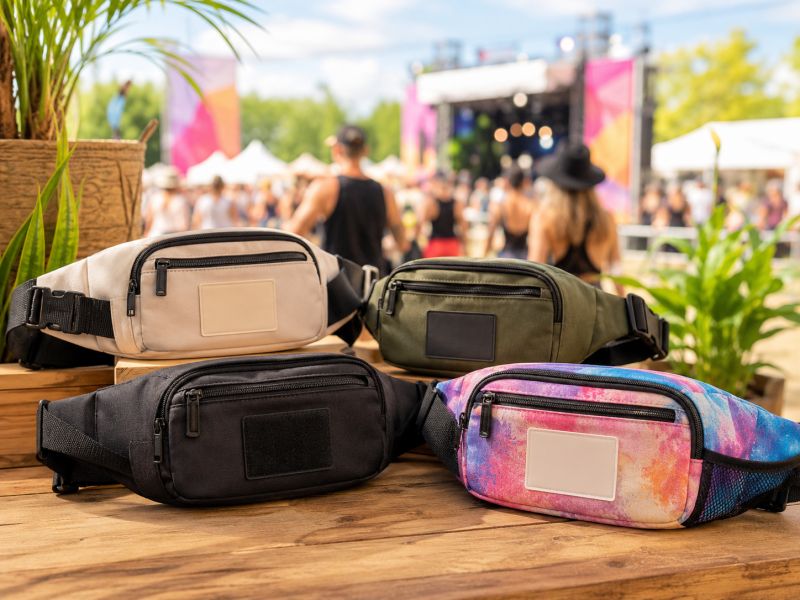
At a festival entrance, a fanny pack has only a few seconds to prove that it belongs. The logo should be easy to see in a crowd, but the zipper still needs to open smoothly. The front panel should carry a clear visual identity, but the pocket still needs to hold a phone with a case. The strap should look clean in photos, but it also needs to stay comfortable after hours of standing, walking, dancing, and waiting in lines. This is why event fanny packs are more complicated than they first appear.
Custom fanny packs for festivals and events work best when logo placement, pocket layout, strap comfort, material, and sample testing are planned together. A visible logo should sit on a stable area that does not wrinkle, curve badly, block the zipper, or reduce useful storage. The strongest design keeps the mark easy to recognize while the bag remains light, practical, secure, and comfortable for long event use.
The biggest mistake is treating the bag as a small billboard. A fanny pack is worn, handled, opened, filled, moved, and photographed. It bends around the body. It sits under sunlight. It gets touched with sweaty hands. It may carry a phone, ID, cash, cards, keys, lip balm, earbuds, and a small power bank. If the logo looks good only on a flat mockup, the design is not finished yet. The real test starts when the bag is loaded, worn, and used in the middle of the event.
How Should Brands Custom Fanny Packs With A Factory?
Custom fanny packs for festivals and events should start with a clear event scene, logo goal, item load, material direction, strap requirement, quantity, packing needs, and delivery date. A strong project does not begin with only a nice picture. It begins with practical checks: Can the logo stay visible when the bag is worn? Can the phone fit? Does the zipper open smoothly? Does the strap stay comfortable after hours of movement?
A fanny pack is a small product, but custom development can involve many details: outer fabric, lining, zipper, puller, webbing, buckle, adjuster, label, logo process, inner pockets, key loop, backing material, stitch method, packing, carton marks, and quality checks. When these details are confirmed early, sampling becomes smoother and the final goods are easier to control.
For event use, the design should be reviewed around real conditions:
- People may wear it around the waist, across the chest, or over the shoulder.
- The logo may be seen from 1–5 meters in crowds and photos.
- The main pocket may be opened many times in one day.
- The bag may carry phone, ID, card, cash, keys, earbuds, and small personal items.
- The strap may touch bare skin, T-shirts, jackets, or event uniforms.
- The product may need hangtags, barcode labels, polybags, retail cards, or grouped event packing.
- The delivery date may be fixed by the event schedule, leaving little room for late changes.
A practical custom plan should connect design, use, cost, and delivery from the start:
| Project Detail | What To Decide Early | Why It Matters |
|---|---|---|
| Event scene | Festival, concert, sports run, campus event, VIP set, staff kit | Decides size, fabric, strap, and pocket depth |
| Logo goal | Bold front exposure or subtle merch identity | Decides placement, method, and color contrast |
| Item load | Phone, ID, card, cash, keys, earbuds, sanitizer, power bank | Prevents pocket failure |
| Wearing style | Waist, crossbody, shoulder, or multi-wear | Decides strap length and buckle position |
| Material | Polyester, nylon, PVC, neoprene, coated fabric | Affects touch, structure, weight, and cost |
| Logo method | Print, heat transfer, embroidery, woven label, rubber patch | Affects sample time and appearance |
| Packing | Polybag, hangtag, barcode, card, box, carton mark | Affects presentation and logistics |
| Timeline | Sample date and bulk delivery date | Helps control approval and production schedule |
The best custom fanny pack is not the one with the most features. It is the one that fits the event, carries the right items, shows the logo clearly, and still feels good enough to wear.
How Does A Factory Review Design?
A factory reviews a custom fanny pack by checking whether the design can be made into a stable, wearable, repeatable product. The review usually covers size, shape, pocket layout, logo placement, material, zipper, strap, buckle, lining, sample needs, packing, quantity, and delivery schedule.
The first review should focus on the way the bag will be used. A festival fanny pack should not be approved only from a flat mockup. It should be checked as a worn product. The front panel curves around the body. The pocket changes shape after a phone is added. The strap may twist when worn crossbody. The logo may look lower or smaller once the bag sits on the waist.
Important review details include:
| Review Area | Key Check | Common Risk |
|---|---|---|
| Front panel | Is there a flat enough logo area? | Logo wrinkles or distorts after loading |
| Main pocket | Can a phone with case fit? | Zipper stress or poor hand access |
| Inner storage | Is there space for card, ID, and cash? | Small items mix together |
| Strap | Is the length suitable for waist and crossbody wear? | Too short, too long, or loose tail |
| Buckle | Does it sit comfortably? | Presses into waist, back, or ribs |
| Fabric | Does it hold the shape? | Thin fabric collapses or looks cheap |
| Logo method | Does it match the fabric? | Print cracks, embroidery puckers, patch feels heavy |
| Packing | Is the item ready for event distribution? | Missing label, barcode, or mixed carton issue |
A strong design review also identifies whether a requested feature creates hidden problems. A large front logo may need a flatter body. A rubber patch may need stronger backing. A clear PVC style may need softer binding near the body. A water-resistant coating may affect print adhesion. A wide strap may require a larger buckle and adjuster.
The best review does not simply confirm whether something can be made. It improves the product before the first sample. Small changes at this stage can prevent larger problems later.
What Details Affect The Price?
The price of a custom event fanny pack depends on fabric, size, pocket count, lining, zipper type, strap width, buckle, logo method, color count, packing, quantity, and production complexity. Two fanny packs may look similar in photos, but their cost can differ greatly once material, trims, decoration, and inner structure are compared.
Material is often the first cost driver. Standard polyester is practical for many event programs. Nylon usually feels more refined. PVC is useful for clear-bag needs. Neoprene gives a soft sport feel. Coated fabric adds moisture resistance. Lining, backing, foam, or mesh can improve comfort and structure but also add process steps.
Logo method has a strong effect. A simple one-color print is usually easier than multi-color artwork, embroidery, rubber patch, leather patch, or metal plate. Large logos also need more careful placement and quality checking. The more complex the logo, the more important the sample becomes.
Pocket structure also matters. One main pocket is simple. Add an inner card area, key loop, back pocket, front pocket, or hidden zip section, and the sewing steps increase. A better pocket layout can make the product more useful, but unnecessary pockets can add cost without improving the event experience.
| Cost Detail | More Economical Direction | Higher-Value Direction | Review Carefully |
|---|---|---|---|
| Fabric | Standard polyester | Nylon, PVC, neoprene, coated fabric | Hand feel, structure, color |
| Lining | Simple lining or unlined style | Printed lining, mesh, reinforced backing | Added bulk and cost |
| Pockets | One main pocket | Inner pocket, key loop, back pocket | Too much complexity |
| Zipper | Standard zipper | Reverse zipper, custom puller, lockable puller | Smoothness and cost |
| Strap | Basic webbing | Wider soft webbing, jacquard strap, keeper | Comfort and hardware match |
| Logo | Simple print | Embroidery, rubber patch, woven label, metal plate | Surface distortion |
| Color plan | One color | Multi-color assortment | Material and trim control |
| Packing | Polybag | Hangtag, barcode, retail card, box | Added time and material |
A smart price plan spends where the wearer can feel the difference: strap comfort, zipper smoothness, fabric quality, logo durability, pocket usefulness, and clean sewing. Features that look impressive but do not improve event use should be questioned early.
What MOQ Should Brands Plan?
For custom fanny packs, MOQ depends on material availability, logo method, trim sourcing, color count, pocket complexity, packing style, and schedule. A practical starting direction for many custom bag projects is around 500 pcs per design. Some simple styles may be reviewed at 200–300 pcs, while low-unit-cost or special-material projects may need higher quantities.
MOQ is not only about the size of the bag. Even a small fanny pack needs material purchasing, cutting, logo setup, sewing preparation, trim sourcing, packing, and quality checks. If the quantity is too low, setup cost spreads across too few pieces, making the unit cost less efficient.
For event products, MOQ may increase when the project includes:
- Custom fabric color.
- Special PVC thickness or clear material request.
- Rubber patch, molded logo, or custom zipper pull.
- Multiple colorways with small quantity per color.
- Special strap color, jacquard webbing, or custom buckle.
- Retail hangtag, barcode, card, or box packing.
- Large logo print on low-unit-cost bags.
- Tight delivery schedule requiring special sourcing.
- Extra pockets, lining, or staff-use compartments.
A simple event fanny pack using available polyester, standard zipper, simple print, and basic packing is easier to plan. A premium festival pack with nylon fabric, rubber patch, inner pocket, custom strap, hangtag, and color assortment needs more time and quantity planning.
| Project Type | Quantity Direction | Reason |
|---|---|---|
| Simple event fanny pack | Lower review may be possible | Simple structure and standard trims |
| Standard festival fanny pack | Around standard project quantity | Normal fabric, zipper, strap, and logo |
| Clear PVC fanny pack | Needs material review | PVC thickness and trim choice matter |
| Premium merch fanny pack | Higher planning is common | Better fabric, logo, lining, and packing |
| Multi-color event set | Quantity per color matters | Each color needs material and trim control |
| Special logo patch | Higher review likely | Mold, patch, or attachment setup |
For a first project, it is usually safer to develop one core style first. After the sample is approved, colorways, upgraded logo details, and premium versions can be added with better control.
How Long Does Sampling Take?
Sampling time depends on how clear the design details are. For many custom bag projects, standard sampling often takes around 5–7 days after the main details are confirmed. Simple styles may be faster, around 2–3 days. More complex event fanny packs with PVC, special patches, custom zipper pulls, multi-color artwork, or retail packing may need more time.
Sampling should confirm more than appearance. It should prove that the fanny pack can work in real event use. The sample should hold the intended items, keep the logo clean after loading, open smoothly, fit the strap length, and show whether the fabric and logo method are suitable.
A good sample should confirm:
| Sample Area | What To Check |
|---|---|
| Size | Phone with case, ID, cash, keys, and small items fit |
| Logo | Size, position, color, method, and surface stability |
| Main opening, inner pocket, key loop, back pocket if needed | |
| Strap | Width, length, adjuster grip, buckle comfort |
| Material | Hand feel, structure, coating, color |
| Zipper | Smooth opening, puller size, lining clearance |
| Shape | Front and side view after loading |
| Packing | Polybag, hangtag, barcode, retail card, or carton plan |
A sample without the real logo method can be useful for structure, but it cannot fully confirm final appearance. A front logo may behave differently after printing, embroidery, heat transfer, or patch attachment. For event fanny packs where logo visibility matters, at least one decorated sample should be checked before bulk work.
A practical sample review can follow this routine:
| Test Step | What To Do | What To Notice |
|---|---|---|
| Load test | Add phone, card, cash, keys, earbuds, sanitizer | Does the bag close naturally? |
| Wear test | Try waist and crossbody positions | Does the strap feel comfortable? |
| Logo test | View flat, loaded, and worn | Does the logo stay clear? |
| Zipper test | Open and close repeatedly | Does it catch or feel rough? |
| Movement test | Walk, turn, sit, and bend | Does the bag bounce or press? |
| Packing test | Place in final packing style | Does it look ready for distribution? |
A good sample reduces uncertainty. It shows what should be kept, what should be adjusted, and what needs to be locked before bulk production.
How Is The Bulk Process Controlled?
Bulk production is controlled by turning the approved sample into clear standards for material, cutting, logo placement, sewing, strap length, pocket depth, zipper direction, packing, and inspection. For event fanny packs, the most important checks are logo consistency, pocket function, strap strength, zipper smoothness, color match, and packing accuracy.
Event orders often have fixed dates, so late mistakes are costly. A logo placed 1 cm too low, a strap cut too short, or a pocket that no longer fits a phone can create major problems. Clear sample records and production checks help keep the final goods close to the approved sample.
Key control stages include:
| Stage | What To Control | Risk If Missed |
|---|---|---|
| Material arrival | Fabric color, thickness, coating, lining, webbing, zipper, buckle | Shade mismatch or weak trims |
| Cutting | Panel shape, pocket pieces, strap length | Uneven body or poor fit |
| Logo process | Position, size, color, clarity, attachment | Crooked logo or color difference |
| Sewing | Stitch density, pocket depth, seam strength | Weak seams or uneven shape |
| Strap assembly | Buckle, adjuster, side tabs, strap keeper | Slipping or uncomfortable fit |
| Zipper function | Smooth pull, clean ends, lining clearance | Catching or rough opening |
| Final shape | Loaded view, front panel, side profile | Bulging or logo distortion |
| Packing | Polybag, hangtag, barcode, carton mark | Mixed colors or missing labels |
For event fanny packs, logo control should happen before full production continues. A first-batch logo check can catch position, color, or method issues early. If the logo is printed too close to the zipper or patch placement is not aligned, correction is easier before more pieces are completed.
Strap tabs also need careful checking. These areas receive repeated pulling when people wear, adjust, remove, and pick up the bag. Reinforcement, stitch tension, and seam allowance should match the approved sample.
A practical final inspection can include:
- Load a few finished pieces with common event items.
- Check whether phones fit naturally.
- Review logo placement across different pieces.
- Pull strap tabs by hand.
- Open and close zippers repeatedly.
- Check inside pockets and loose threads.
- Compare finished goods with the approved sample.
- Confirm packing labels, barcode needs, and carton marks.
- Check color assortment and quantity per carton.
Bulk control is not only about appearance. It is about whether every fanny pack feels close to the approved one when worn, opened, loaded, and packed.
What Should Teams Send Before A Quote?
Before requesting a quote, project teams should send a reference photo or sketch, target size, event type, material direction, logo file, logo position, quantity, color plan, pocket needs, strap style, packing requirements, delivery date, and destination. If an existing sample is available, it can make review faster and more accurate.
A clear request prevents vague pricing. Without size, material usage cannot be estimated well. Without logo method, decoration cost and sampling time remain unclear. Without quantity and color split, MOQ and unit cost cannot be reviewed properly. Without packing details, hangtags, barcodes, cards, and carton requirements may be missed. Without a delivery date, production and shipping timing cannot be planned realistically.
Useful information includes:
| Information To Send | Helpful Detail |
|---|---|
| Reference photo or sketch | Shape, style, and feature direction |
| Event type | Festival, concert, sports run, campus, staff, VIP, stadium |
| Target size | Width, height, depth, or items that must fit |
| Material preference | Polyester, nylon, PVC, neoprene, coated fabric |
| Logo artwork | Vector file if available |
| Logo method | Print, heat transfer, embroidery, woven label, rubber patch |
| Logo position | Front panel, corner, strap, patch area, zipper pull |
| Quantity | Total quantity and quantity per color |
| Color plan | One color, assorted colors, or custom colors |
| Pocket layout | Main pocket, inner pocket, key loop, back pocket |
| Strap style | Waist, crossbody, webbing width, strap length |
| Packing | Polybag, hangtag, barcode, retail card, box, carton mark |
| Timeline | Sample target and event delivery date |
| Destination | Country, port, warehouse, or forwarder address |
A clear project request may look like this:
“We need custom fanny packs for a summer music festival. The bag should fit a large phone with case, ID, card, cash, keys, and earbuds. We prefer water-resistant polyester, one main zipper pocket, one inner card pocket, adjustable crossbody strap, and a bold front logo. Quantity is 1,000 pcs in two colors. Please review material, logo method, sample timing, and bulk delivery.”
This kind of request gives enough detail for a practical review. The design can still be adjusted, but the main direction is clear.
Start A Custom Event Fanny Pack Project With Jundong

A strong event fanny pack should not feel like a temporary giveaway. It should be useful enough to wear during the event and attractive enough to keep afterward. The logo should be visible, but the bag still needs smooth zippers, organized pockets, comfortable straps, durable fabric, and clean packing.
Jundong supports custom bag projects from design review, material advice, sampling, logo process, bulk production, quality control, packing, and delivery planning. For festival and event fanny packs, the review can start from a reference image, size idea, logo file, quantity, material preference, packing needs, and delivery date.
To move faster, prepare these details:
| Detail | Why It Helps |
|---|---|
| Event date | Helps review timing |
| Quantity | Helps review MOQ and unit cost |
| Logo file | Helps select decoration method |
| Bag size | Helps confirm capacity and material usage |
| Material idea | Helps control hand feel and cost |
| Color plan | Helps review fabric and trim availability |
| Pocket needs | Helps control function |
| Packing needs | Helps prepare distribution or retail use |
| Destination | Helps review shipping direction |
A custom fanny pack project becomes easier when logo visibility and function are planned together. The front panel, zipper, pocket depth, strap, material, and packing should all support the same goal: a bag people want to wear and a logo people can actually see.
For project review, send the available details to info@jundongfactory.com. A clear starting file helps the team review structure, material, logo method, MOQ, sample direction, cost, and production feasibility with fewer delays.
What Do Festival Fanny Packs Need To Do?

Festival fanny packs need to carry small essentials, stay comfortable through long movement, keep the logo visible, and protect items from falling out in crowded settings. A strong event-ready design should fit a phone with case, ID, card, cash, keys, earbuds, lip balm, and small personal items while keeping the body compact, the zipper smooth, and the strap stable.
Festival use is harsher than it looks. A fanny pack may be worn under hot sun, touched with sweaty hands, bumped in crowds, opened dozens of times, placed on grass, exposed to light rain, and photographed from different angles. It also needs to work across different wearing habits: around the waist, across the chest, or over one shoulder. If the bag looks good only when empty, it is not ready for real event use.
The most important challenge is balance. A bigger logo can improve visibility, but it may need a flatter front panel. A deeper pocket can hold more items, but it may bulge and distort the decoration. A narrow strap can look simple, but it may feel sharp after hours of wear. A lightweight fabric can reduce cost and weight, but it may collapse or wrinkle. The right design keeps the logo clear without turning the bag into a stiff, uncomfortable pouch.
A festival fanny pack should be reviewed through actual use:
| Event Use Need | Practical Design Requirement | Sample Test |
|---|---|---|
| Phone access | Main pocket fits large phones with cases | Insert and remove phone 20–30 times |
| Logo visibility | Stable front area with enough flat space | View empty, loaded, and worn |
| Item security | Zippered closure and inner storage | Walk, shake lightly, sit, and reopen |
| Long wear | Smooth strap and stable buckle | Wear loaded sample for 30–60 minutes |
| Crowd movement | Compact body and low bounce | Walk fast, turn, bend, and adjust |
| Outdoor setting | Durable fabric and cleanable surface | Check fabric after rubbing and handling |
| Event packing | Neat polybag, hangtag, barcode, carton labels if needed | Confirm distribution style before bulk work |
A useful fanny pack should feel like part of the event outfit, not a temporary pouch. If people keep wearing it through the event, the logo keeps moving with them.
Why Are Fanny Packs Useful At Events?
Fanny packs are useful at events because they keep essentials close while leaving both hands free. People need to hold drinks, scan tickets, take photos, clap, dance, shop, and move through crowds. A waist-worn or crossbody fanny pack gives easier access than a backpack and better item control than loose pockets or open totes.
In event settings, small items create the biggest stress. A phone may be needed for tickets, payment, maps, social posts, photos, ride apps, and messages. An ID may be needed at entry or drink stations. A card or wristband may need quick access. Keys, earbuds, and lip balm are easy to lose if they float in a large open space. A fanny pack solves this by keeping the most-used items close to the body.
The product also moves through the venue. It appears at entry lines, stages, food stalls, merch booths, group photos, videos, and transport lines after the event. That makes it more valuable than a static sign or a one-time printed item. But this only works when the bag is comfortable enough to stay on the body.
Strong event fanny packs usually include:
- A main zippered pocket for phone and small wallet.
- An inner slip pocket for ID or card.
- A small section or loop for keys.
- An adjustable strap for waist and crossbody wear.
- A logo area that stays visible when worn.
- Fabric that handles heat, dust, sweat, and light moisture.
- A compact body that does not bounce during movement.
A fanny pack succeeds when people use it naturally. The less they need to think about the bag, the longer it stays visible.
What Items Should An Event Fanny Pack Hold?
An event fanny pack should hold a phone with case, ID, payment card, small cash, ticket backup, keys, earbuds, lip balm, tissue, sanitizer, and sometimes a compact power bank. It does not need large capacity. It needs clean separation, fast access, and enough depth to prevent the pocket from feeling cramped.
The phone is the first item to test. Many people use thick cases, card cases, rings, or grips. A pocket that fits only a bare phone can feel outdated. The zipper opening should allow the phone to slide in and out without scraping the edge. If the front logo uses embroidery or a patch, the decorated panel should still bend enough for phone access.
Small items should not be left loose in one large space. Keys can scratch screens. Cards can slide to the bottom. Lip balm and earbuds can disappear under larger items. A small inner pocket or key loop can improve daily use without adding much bulk.
A practical item plan:
| Item | Better Position | Design Detail |
|---|---|---|
| Phone with case | Main pocket | Wide opening, no zipper stress |
| ID and card | Inner slip pocket | Easy finger access |
| Small cash | Inner zipped or slip area | Prevents falling out |
| Keys | Key loop or mini pocket | Keeps metal away from phone |
| Earbuds | Small inner section | Easy to find in low light |
| Lip balm | Small pocket or main edge | Avoids mixing with cards |
| Sanitizer | Main pocket edge | Check bottle shape and leakage risk |
| Compact power bank | Main pocket near body side | Avoid sagging and front bulge |
The bag should close naturally after loading these items. If the zipper needs force, the body size or pocket shape should be revised. If the front panel swells badly, the logo area may need to move or the pocket depth should be adjusted.
Who Uses Custom Fanny Packs Most?
Custom fanny packs are used across music festivals, concerts, sports events, charity runs, campus programs, staff kits, resort activities, tourism events, street teams, merch tables, VIP gift sets, and outdoor promotions. Each setting has a different use pattern, so the design should match the event instead of forcing one shape into every situation.
A music festival pack may need bright color, light water resistance, bold front decoration, and easy phone access. A sports run pack may need low bounce, a slimmer shape, and sweat-friendly fabric. A staff pack may need stronger seams, a larger pocket, and a key loop. A VIP pack may need better lining, smoother zipper, cleaner logo detail, and refined color matching. A stadium pack may need clear PVC depending on entry rules.
Design direction by setting:
| Event Setting | Main Need | Better Design Direction |
|---|---|---|
| Music festival | Visibility, color, movement | Bright polyester or nylon, bold logo, secure zipper |
| Concert merch | Style and daily reuse | Clean body, refined patch, smooth zipper |
| Sports run | Low bounce and light weight | Slim body, stable strap, sweat-friendly fabric |
| Campus activity | Color variety and cost control | Durable polyester, simple print, strong strap |
| VIP gift set | Higher perceived value | Nylon, embroidery, woven label, better lining |
| Staff kit | Function and repeated wear | Extra pocket, key loop, reinforced strap tabs |
| Stadium event | Entry visibility | Clear PVC, simple pocket, strong trim color |
| Resort event | Easy cleaning and relaxed style | Water-resistant fabric, soft strap, fresh colors |
The product should be designed for the person wearing it, not only for the event table. If the bag is too thin, too stiff, too small, or too uncomfortable, it may be accepted but not worn. The strongest fanny packs match the event mood while solving small daily problems.
When Is A Fanny Pack Better Than A Tote?
A fanny pack is better than a tote when the event involves walking, dancing, standing, queuing, phone use, ticket scanning, or crowded movement. It keeps essentials attached to the body and leaves both hands free. A tote works better when people need to carry larger items such as apparel, brochures, bottles, posters, or gift bundles.
The biggest difference is how the logo travels. A tote may be folded, placed under a chair, carried with the logo facing inward, or left at a booth. A fanny pack usually stays on the waist, chest, or side, which keeps the logo closer to eye level and more visible during movement. This matters for festivals, street events, sports activities, concerts, and campus days where people are constantly moving.
Still, a fanny pack should not be treated as a replacement for every event bag. It is not ideal for bulky items. Its strength is small essentials: phone, ID, card, cash, keys, ticket, earbuds, and lip balm. For programs with larger gifts, a tote and fanny pack can work together. The tote carries larger materials; the fanny pack becomes the wearable piece that remains visible.
Comparison table:
| Use Detail | Fanny Pack | Tote |
|---|---|---|
| Phone, ID, card, keys | Strong | Can get lost inside |
| Brochures or apparel | Weak | Strong |
| Hands-free movement | Strong | Limited |
| Logo visibility while moving | Strong when worn | Depends how carried |
| Long event comfort | Strong for light load | Can tire one shoulder |
| Entry convenience | Compact and close to body | May need checking or storage |
| After-event use | Strong if stylish and useful | Strong if size and material fit daily life |
A fanny pack is the better choice when the item needs to be worn, seen, and used throughout the event.
What Is The History Of Fanny Packs At Events?
Fanny packs became popular because they solved a simple movement problem: people needed a small place for essentials while keeping their hands free. They were used for walking, travel, outdoor activities, sports, casual daily wear, and tourist settings before returning strongly through music culture, streetwear, festivals, and event merchandise.
Their event comeback makes sense. Modern events are phone-heavy, photo-heavy, and movement-heavy. People need easy access to digital tickets, cashless payment, ID, wristbands, maps, and social sharing. A large bag can feel inconvenient. Pockets can feel unsafe. A fanny pack sits in the middle: small enough to wear all day, useful enough to hold key items, and visible enough to carry a logo.
The product also changed in appearance. Older versions were often bulky, plain, and rough. Modern event fanny packs can look cleaner with smoother fabrics, better zippers, softer straps, matte hardware, controlled logo size, and better internal organization. This is why they now work for music festivals, resort events, campus programs, VIP merch, staff kits, and city promotions.
Common naming also reflects different style directions:
| Name | Style Feeling | Common Use |
|---|---|---|
| Fanny pack | Casual, event-ready, retro-friendly | Festivals, concerts, street events |
| Waist bag | Practical and functional | Travel, sports, staff use |
| Belt bag | Lifestyle and fashion-focused | Retail merch, premium gift sets |
| Hip pack | Sport or outdoor feel | Hiking, cycling, running events |
| Crossbody belt bag | Modern daily styling | Campus, city events, youth programs |
The fanny pack remains relevant because the original need has not changed. People still want small storage while moving freely. What has changed is the expectation: it should now look better, feel better, hold modern devices, and show the logo without becoming a stiff promotional pouch.
How Should Festival Fanny Packs Balance Logo And Use?
Festival fanny packs should balance logo and use by giving the logo a clear, stable area while keeping the main pocket easy to open, the strap comfortable, and the body compact. A visible logo loses value if the bag is not worn. Function keeps the product on the body; visibility gives it event value.
This balance starts with the front panel. If the front pocket is the main storage area, it will move, bulge, and bend. A large logo placed across the most flexible part may wrinkle or distort. A thick patch may make the pocket harder to open. Embroidery on thin fabric may pucker. Heat transfer near a zipper curve may lift at the edge. The logo method should match the fabric and the panel shape.
Practical balance guide:
| Logo Goal | Functional Risk | Better Adjustment |
|---|---|---|
| Large front logo | Pocket becomes stiff or distorted | Use flatter front panel or simpler logo method |
| High contrast print | Color may overpower the bag | Balance fabric color and logo size |
| Rubber patch | Adds weight and thickness | Keep patch size controlled |
| Embroidery | Fabric may pucker | Use suitable backing and stable fabric |
| Full-front artwork | Higher defect risk | Test decorated sample before bulk |
| Strap logo | Strap may twist | Use woven or jacquard only when strap stays flat |
The goal is not the biggest logo. The goal is the clearest logo that still lets the bag work smoothly. A smaller logo with strong contrast on a stable front panel often looks better than an oversized mark on a wrinkled surface.
The simplest test is to load the sample, wear it, and take photos from 1 meter, 3 meters, and 5 meters. Then open the zipper 20–30 times. If the logo stays clear and the pocket still works smoothly, the balance is close.
What Quality Details Matter Most For Event Use?
The most important quality details for event fanny packs are zipper smoothness, strap strength, pocket depth, fabric stability, logo durability, stitching at stress areas, and clean packing. Event products are handled heavily, so small weaknesses can appear quickly during distribution and use.
Zippers should open smoothly because the main pocket may be used many times in one day. Strap tabs should be reinforced because people pull the bag on and off repeatedly. The front panel should hold shape after loading. The logo should resist rubbing, bending, and handling. The buckle should close securely and should not feel sharp or weak.
Quality areas to check:
| Quality Detail | What To Inspect | Common Issue |
|---|---|---|
| Zipper | Smooth pull, clean ends, no lining catch | Rough opening or snagging |
| Strap tabs | Stitch strength and reinforcement | Loose seams after pulling |
| Buckle | Secure closure and comfortable shape | Weak clip or pressure against body |
| Fabric | Thickness, color, surface finish | Wrinkle, shade difference, thin feel |
| Logo | Position, color, adhesion, stitching | Crooked mark or edge lifting |
| Pocket depth | Phone and items fit naturally | Too shallow or too tight |
| Lining | Clean sewing and no loose threads | Catching zipper or poor finish |
| Packing | Correct color, label, barcode, carton | Mixed items or missing labels |
For event use, bulk consistency matters. If some pieces have clear logos while others are crooked, the whole program looks less polished. If strap length varies, the wearing experience changes. If pocket size is inconsistent, phones may fit in some pieces but not others. A strong approved sample and clear production standards help prevent these issues.
A festival fanny pack should be judged by how it performs when loaded, worn, and handled repeatedly. Good quality is felt in the zipper pull, strap comfort, pocket access, logo finish, and clean shape after use.
How Does Logo Visibility Work?

Logo visibility works when the mark is placed on a stable, easy-to-see area that stays clear while the fanny pack is worn, loaded, handled, and photographed. A strong event design does not depend on an oversized mark. It depends on clean placement, strong contrast, suitable decoration method, enough flat surface, and no conflict with zipper movement, pocket shape, or strap position.
At festivals and events, people rarely stop and study a bag closely. They see it while walking, dancing, queuing, taking photos, holding drinks, or passing through crowds. That means recognition happens quickly. Shape, color contrast, position, and surface clarity often matter more than tiny artwork details. A smaller, clean mark on a stable front panel can be more effective than a large graphic stretched across a curved, wrinkled, or overloaded pocket.
A fanny pack is different from a flat promotional item. It wraps around the body, tilts slightly when worn, changes shape when a phone is inside, and may be worn at the waist, across the chest, or over the shoulder. The logo area must be planned around these movements. If the design only looks good when the bag is empty on a table, it may fail once the product is used at the event.
Visibility depends on five practical elements:
| Visibility Factor | What It Means | What To Check |
|---|---|---|
| Placement | Where the mark sits on the bag | Is it visible when worn at waist and crossbody positions? |
| Surface stability | Whether the panel stays smooth | Does it wrinkle, curve, or bulge after loading? |
| Color contrast | How clearly the mark separates from the fabric | Can it be seen under daylight, indoor light, and event lighting? |
| Decoration method | Print, embroidery, patch, label, heat transfer, or other process | Does the method suit the fabric and logo size? |
| Functional clearance | Space around zipper, seams, curves, and pocket opening | Does the decoration block access or make the pocket stiff? |
A useful logo is not only visible. It is visible without damaging the bag’s real purpose.
Where Should The Logo Be Placed?
The best logo position is usually the front panel, lower front corner, patch area, woven side label, zipper pull, or strap detail. For festivals and events, the front panel gives the strongest exposure because it faces outward when the bag is worn. However, it must stay smooth after loading and should not interfere with the zipper, pocket opening, or body curve.
Front placement is powerful, but it also carries the most risk. The front panel often forms part of the main pocket. It bends when opened, bulges when a phone is inside, and receives frequent hand contact. A large mark placed across the most flexible section may wrinkle, crack, lift, pucker, or look uneven.
Lower-corner placement can feel more refined and less aggressive. It works well for merch-style fanny packs that people may reuse after the event. A woven label on the side seam gives a cleaner daily-wear feel, but it is less visible from a distance. A rubber patch on the front can look strong for music, outdoor, and sport settings, but the patch size and weight must be controlled.
| Logo Position | Best For | Strength | Risk To Review |
|---|---|---|---|
| Center front panel | Festival visibility, sponsor exposure, bold event identity | Most visible from the front | Can distort if the pocket bulges |
| Upper front panel | Better visibility when worn low on the waist | Less likely to be hidden by clothing | May sit close to zipper |
| Lower front corner | Premium merch, subtle identity | Cleaner and less promotional | Lower visibility in crowds |
| Side woven label | Lifestyle and retail-style designs | Neat and reusable look | Weak distance recognition |
| Rubber patch area | Music, outdoor, sport, youth events | Strong texture and color block | Adds weight and stiffness |
| Strap logo | Repeated identity detail | Visible from side angles | Strap may twist |
| Zipper pull detail | Small premium accent | Functional and subtle | Very small viewing area |
A good placement test should include three views:
| Test View | What To Check |
|---|---|
| Empty view | The mark looks balanced on the bag body |
| Loaded view | The mark does not wrinkle after adding a phone, ID, keys, and small items |
| Worn view | The mark stays visible at waist and crossbody positions |
The safest placement is not always the largest one. It is the position that remains clear after the bag is used.
Which Logo Method Works Best?
The best logo method depends on fabric, artwork shape, color count, event style, quantity, and the feeling the fanny pack should create. Screen print works well for simple bold marks. Heat transfer is useful for detailed or colorful artwork. Embroidery adds texture. Woven labels give a clean retail look. Rubber patches create strong recognition for music, outdoor, and active settings.
The decoration method should be chosen before the front panel is finalized. A large embroidery may need stronger backing. A rubber patch needs enough flat area and secure attachment. Heat transfer needs compatible fabric and a smooth enough surface. Screen print needs clean contrast and stable fabric texture. Woven labels need a neat seam or patch area.
| Logo Method | Best Use | Visual Feel | Watch Carefully |
|---|---|---|---|
| Screen print | Simple event marks, bold graphics, larger quantities | Direct and clear | Fabric texture, print cracking, color contrast |
| Heat transfer | Multi-color artwork, gradients, modern graphics | Smooth and clean | Adhesion, edge lifting, heat sensitivity |
| Embroidery | Premium merch, staff gifts, long-use styles | Raised and durable | Puckering on thin fabric |
| Woven label | Lifestyle belt bags, subtle identity | Clean and polished | Lower crowd visibility |
| Rubber patch | Festivals, outdoor, sport, streetwear feel | Strong texture and recognition | Patch weight and stitching |
| Leather patch | Premium casual collections | Warm and refined | Less suitable for wet or high-sweat events |
| Metal plate | Higher-end gift sets | Solid and polished | Weight, scratching, attachment |
| Sublimation | All-over artwork and bright visual concepts | Full-surface creative look | Fabric compatibility and color control |
The best method should match the event mood. Music festivals may benefit from stronger color and texture. Staff kits may need durability and clean recognition. VIP gifts may need a more refined finish. Campus events may need color impact and cost control. Stadium programs may need decoration that works on clear PVC or trim areas.
A decorated sample should be checked before bulk work when logo visibility is important. Plain samples can confirm shape, but they cannot fully show how the decoration affects pocket movement, fabric stiffness, and final appearance.
How Big Should The Logo Be?
The logo should be large enough to recognize quickly but small enough to protect the bag’s shape and pocket function. On most event fanny packs, a controlled front logo works better than a full oversized design. The mark should leave space for zipper movement, seams, curves, side depth, and pocket expansion.
The usable decoration area is always smaller than the full front width. A 28 cm wide fanny pack does not offer 28 cm of clean decoration space. Seams, zipper curves, panel shape, pocket depth, edge allowance, and loaded bulge reduce the safe area.
A practical sizing guide:
| Front Panel Width | Safer Logo Width | Better Use |
|---|---|---|
| 18–22 cm | 6–9 cm | Small event pouch or slim belt bag |
| 23–28 cm | 8–12 cm | Standard festival fanny pack |
| 29–35 cm | 10–16 cm | Bold festival, sponsor, or merch design |
| Full-panel artwork | Custom review needed | Creative event concept or all-over print |
Logo height also matters. A tall logo may collide with a zipper. A wide logo may stretch into curved corners. A thick patch may reduce pocket flexibility. Detailed artwork may become unclear when scaled down, while simple artwork often reads better in crowds.
A practical logo size test should include:
| Test | What To Review |
|---|---|
| 1-meter view | Can the mark be recognized clearly up close? |
| 3-meter view | Does the color contrast remain strong? |
| 5-meter view | Is the main shape still visible in a crowd? |
| Loaded view | Does the mark wrinkle after items are inside? |
| Worn view | Is the mark hidden by clothing, arm movement, or bag angle? |
| Photo view | Does it show clearly in event photos and short clips? |
A smaller high-contrast logo can often perform better than a larger low-contrast one. Size should support recognition, not overpower the bag.
Do Front Logos Affect Pocket Use?
Front logos can affect pocket use when they sit on a bending pocket, cover a curved area, add stiffness, or sit too close to the zipper. A large print, embroidery, patch, or heat transfer can change how the fabric moves. If the decoration stiffens the front panel too much, the pocket may become harder to open or may wrinkle after loading.
The front panel is often the strongest logo area, but it is also where the main pocket sits. This creates a real design conflict. The mark needs clear visibility, while the pocket needs flexibility. The zipper must open smoothly, the hand must reach inside, and the phone must slide in without fighting the panel.
Common front-logo risks:
| Logo Issue | What Can Happen | Better Adjustment |
|---|---|---|
| Large embroidery on thin fabric | Puckering and stiff front surface | Add backing or reduce embroidery size |
| Oversized rubber patch | Pocket feels heavy or distorted | Reduce patch size or move to flatter zone |
| Heat transfer over curved area | Edge lifting or wrinkling | Keep artwork on flatter panel |
| Print too close to zipper | Rubbing, cramped look, poor durability | Leave clearance around zipper path |
| Logo across seam | Broken artwork line | Move artwork inside the seam area |
| Full-front artwork | Higher defect rate and harder control | Test full decorated sample first |
| Patch over main storage bulge | Shape looks uneven when loaded | Adjust pocket depth or logo position |
A good front logo should stay clear while the pocket still works naturally. The user should be able to open the zipper, remove a phone, place it back, and close the bag without feeling that the decoration is blocking movement.
The easiest test is to decorate the sample, load it, and use the main pocket repeatedly. Open and close the zipper 30–50 times. Remove a phone, ID, and keys. Check whether the front panel bends normally. If the decoration creates stiffness, wrinkles, or lifting, the method, size, or placement should be adjusted.
Logo Visibility Vs Function: What Balance Works?
The best balance is a logo that remains easy to see while the fanny pack still feels light, flexible, comfortable, and useful. For events, the logo should have a clear area, but the bag still needs smooth zipper access, enough pocket depth, stable strap fit, and a body shape that does not bulge badly.
Logo visibility loses value if people do not keep wearing the bag. A large front mark may look impressive in a mockup, but if it makes the pocket stiff, causes the bag to feel heavy, or distorts after loading, the product may be removed quickly. Function keeps the bag on the body. Visibility creates recognition while it is worn.
A practical balance can be planned like this:
| Visibility Goal | Functional Risk | Better Choice |
|---|---|---|
| Large front mark | Pocket stiffness and distortion | Use a flatter body or lighter decoration method |
| High contrast color | Strong event look but less subtle | Match event purpose and after-use expectation |
| Rubber patch | Added texture and recognition | Keep size controlled and attach securely |
| Embroidery | Premium feel | Use stable fabric and proper backing |
| Full-color artwork | Creative event look | Test adhesion and color on actual material |
| Strap decoration | Extra visibility from side angles | Make sure strap stays flat |
| Clear PVC body | Venue-friendly visibility | Use trim or patch areas for identity |
The balance should be checked with the product worn, not only with artwork. Put the bag on a person, add the intended items, view it from several angles, then check pocket access. If the logo stays visible and the bag still feels easy to use, the design is working.
A strong balanced fanny pack usually has these details:
- Front decoration placed away from high-stress curves.
- Enough zipper clearance.
- Practical pocket depth for phone and small items.
- Strap that does not cover the logo area.
- Material that supports the chosen decoration.
- Logo color that can be recognized in event lighting.
- No heavy detail that makes the pack sag or twist.
The best logo is not the biggest one. It is the one people keep showing because the pack is comfortable enough to stay on.
How Can Logo Color Improve Recognition?
Logo color improves recognition through contrast, clarity, and event lighting performance. A light logo on a dark bag is easy to see. A dark logo on a light bag can also work well. Tone-on-tone decoration can feel more premium, but it may lose visibility in crowds, low light, or photo-heavy settings.
Festivals and events have changing light conditions: outdoor sunlight, shade, night lighting, stage lights, indoor halls, stadium lighting, and phone camera exposure. Colors that look strong on a computer screen may look weaker on fabric. Coated polyester, matte nylon, clear PVC, neoprene, and woven fabric all reflect color differently.
Color should be planned around visibility distance:
| Color Direction | Best Use | Visibility Strength | Risk |
|---|---|---|---|
| White logo on black fabric | Concerts, staff packs, high-contrast merch | Very strong | Print durability should be checked |
| Black logo on light fabric | Clean event look | Strong | Light fabric may show dirt |
| Neon logo on dark fabric | Music festivals, youth events | High energy and easy recognition | May feel less reusable |
| Tone-on-tone embroidery | VIP merch, premium looks | Refined up close | Weak from distance |
| Bright patch on neutral bag | Outdoor, sport, festival merch | Strong shape recognition | Patch size and weight need control |
| Full-color artwork | Creative campaigns | Rich visual story | More color matching work |
| Clear PVC with colored trim | Stadium and transparent styles | Trim carries identity | Logo area may be limited |
For event fanny packs, contrast often matters more than size. A 7 cm white mark on black fabric can be clearer than a 14 cm dark navy mark on black fabric. A bold color block can also improve recognition even when the actual logo is not very large.
The final color should be checked on real material under different light:
| Light Condition | What To Check |
|---|---|
| Outdoor daylight | Color brightness and contrast |
| Indoor hall light | Logo clarity under softer lighting |
| Night or stage light | Visibility from distance |
| Phone photo | Whether the mark remains clear in images |
| Shadow or side angle | Whether the logo disappears on curved areas |
Color is one of the most efficient ways to improve visibility without enlarging the logo or adding cost-heavy details.
How Should Logo Visibility Be Tested Before Bulk Work?
Logo visibility should be tested on a decorated sample, not only a digital mockup. The sample should be loaded with real event items, worn at the waist and crossbody, photographed from multiple distances, and opened repeatedly to check whether the decoration affects pocket use.
A practical test can be completed with simple steps:
| Test Step | What To Do | What To Watch |
|---|---|---|
| Flat view | Place the empty bag on a table | Is the logo centered and balanced? |
| Load test | Add phone, ID, cash, keys, earbuds | Does the front panel distort? |
| Wear test | Wear at waist and crossbody | Is the logo still visible? |
| Distance test | View from 1 m, 3 m, and 5 m | Can the mark be recognized quickly? |
| Photo test | Take daylight and indoor photos | Does the color remain clear? |
| Movement test | Walk, turn, sit, and bend | Does the logo shift, fold, or hide? |
| Pocket test | Open and close main pocket 30–50 times | Does decoration affect access? |
| Rub test | Lightly rub decoration area | Does print, patch, or transfer hold well? |
This test is especially important for front decoration, rubber patches, embroidery, heat transfer, and full-panel artwork. These methods can change how the front panel bends. A logo that looks sharp on an empty sample may look distorted after a phone is inside.
Before bulk work, the approved sample should define:
- Logo size.
- Logo position.
- Logo color.
- Decoration method.
- Distance from zipper and seams.
- Panel area used for decoration.
- Fabric and backing.
- Loaded appearance.
- Packing presentation.
Clear logo standards help keep every finished piece close to the approved look. For event projects, consistency matters because many bags may be seen together in the same crowd, staff group, merch booth, or photo set.
Which Type Of Fanny Pack Fits Events?
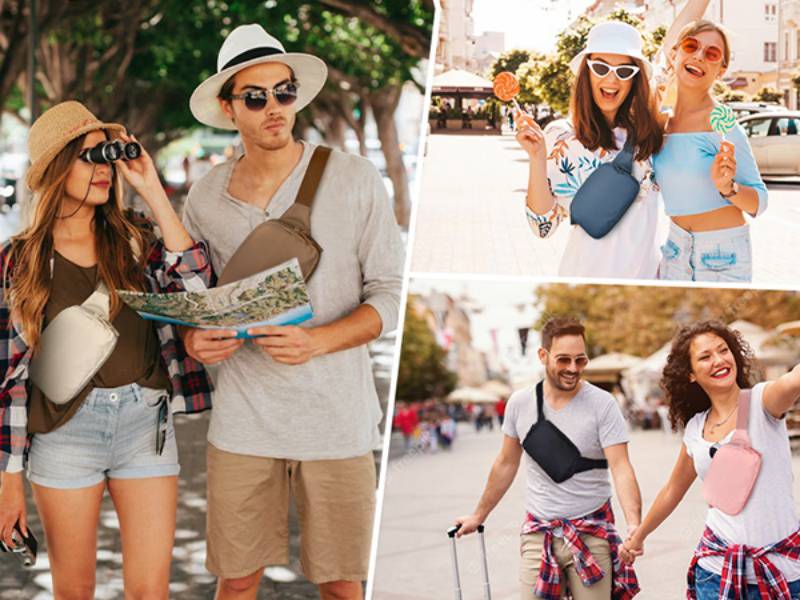
The right event fanny pack depends on venue rules, crowd movement, weather, carrying needs, logo style, and wearing time. Clear PVC is useful for stadium-style entry checks. Polyester and nylon work well for festivals, concerts, campus events, staff kits, and merch drops. Neoprene fits sport, beach, wellness, and soft-touch themes. The best choice matches the event scene before logo work begins.
Event fanny packs should not be selected by appearance alone. A clear pack may look perfect for security lines but may feel stiff in hot outdoor weather. A bright polyester pack may work well for a music festival but may look too casual for a VIP merch set. A nylon belt bag may feel clean and durable, but it may exceed the cost target for large event distribution. A neoprene style may feel soft and comfortable, but it can become bulky if the body is not controlled.
The product type should start with five real-use checks:
| Event Factor | What To Consider | Better Direction |
|---|---|---|
| Entry rules | Does the venue require visible contents? | Clear PVC or clear-panel design |
| Wearing time | Will people wear it for 2 hours or 8 hours? | Softer strap, smooth back, lower bounce |
| Weather | Outdoor sun, dust, light rain, spilled drinks | Water-resistant polyester, nylon, PVC, or coated fabric |
| Logo goal | Bold sponsor visibility or refined merch style | Print, patch, woven label, embroidery, or trim branding |
| Item load | Phone, ID, card, cash, keys, earbuds, power bank | Pocket depth and zipper length must match |
A good event fanny pack should also match the mood. Music festivals can accept stronger color and larger front decoration. Campus events often need durable fabric, clear printing, and cost control. Sports events need low bounce and sweat-friendly materials. VIP gift sets need better touch, cleaner trims, and more refined decoration. Staff packs need function first: pockets, key loops, stronger seams, and fast access.
| Event Setting | Better Fanny Pack Type | Main Strength | Risk To Avoid |
|---|---|---|---|
| Music festival | Polyester or nylon fabric pack | Color, logo area, comfort | Thin fabric and weak zipper |
| Stadium event | Clear PVC pack | Visible contents and entry convenience | Stiff body and sharp edges |
| Concert merch | Clean fabric belt bag | Daily reuse and style | Logo too loud or pocket too small |
| Sports run | Slim sport waist pack | Low bounce and light feel | Poor phone fit |
| Campus activity | Polyester fanny pack | Color choices and cost control | Cheap strap feel |
| Resort event | Water-resistant fabric pack | Easy cleaning and relaxed style | Overly technical look |
| Staff kit | Utility fanny pack | More pockets and stronger seams | Too bulky for long wear |
| VIP set | Nylon or premium polyester pack | Better hand feel and finish | High cost without visible value |
The best event type is not always the most expensive option. It is the one people will actually wear, use, photograph, and keep.
Clear Vs Fabric Fanny Packs: Which Is Better?
Clear fanny packs are better when venue entry needs fast visual inspection. Fabric fanny packs are better when comfort, color, logo methods, daily reuse, and better touch matter more. The right choice depends on whether the product’s first job is entry convenience or long-term wear.
Clear PVC fanny packs are common for stadiums, large concerts, sports arenas, school events, and public venues where bag contents may need to be visible. They can reduce friction at entry and create a direct event-ready look. Clear material also gives the design a special visual style when paired with colored trims, printed patches, bold zipper tape, or contrasting straps.
However, clear PVC has limits. It can show scratches, fingerprints, and creases more easily than fabric. If the PVC is too thin, it may look weak and collapse. If it is too thick, it can feel rigid and harder to sew cleanly. Seams, binding, and zipper areas need extra care because clear material makes imperfections easier to see.
Fabric fanny packs are more flexible for most festival and event uses. Polyester, nylon, canvas, ripstop, and coated fabrics allow more color choices and more decoration methods. They also feel more natural for after-event use. A fabric fanny pack can look like a real daily accessory instead of a one-time venue item.
| Detail | Clear PVC Fanny Pack | Fabric Fanny Pack |
|---|---|---|
| Best use | Stadiums, controlled entry, clear-bag venues | Festivals, concerts, campus events, merch |
| Main benefit | Contents are visible | Better comfort and visual variety |
| Logo options | Print, patch, trim logo, woven label | Print, heat transfer, embroidery, patch, label |
| Comfort | Needs smooth edges and good binding | Usually softer against body |
| Daily reuse | More event-specific | Stronger lifestyle use |
| Surface issue | Scratches and creases show easily | Fabric texture and wrinkles vary |
| Weather behavior | Wipeable, splash-friendly | Depends on coating and fabric |
| Visual style | Clear, bold, venue-focused | Flexible, casual, premium, sporty |
For clear PVC styles, 0.3–0.5 mm material often feels more stable than very thin PVC, though the final choice depends on body size and sewing structure. For fabric styles, 210D–600D polyester or nylon are common directions depending on whether the bag should feel light, balanced, or more structured.
If the event has strict clear-bag rules, clear PVC or clear-panel construction should be reviewed first. If the main goal is wearing comfort and after-event reuse, fabric usually creates a stronger result.
Nylon Vs Polyester: Which Material Works Best?
Polyester works well for many event fanny packs because it offers practical cost control, strong color options, and broad logo compatibility. Nylon can feel smoother, lighter, and more refined, making it suitable for premium merch, travel-themed events, and cleaner lifestyle belt bags. Both materials can work well when the fabric weight, coating, lining, and logo method are matched correctly.
Polyester is often selected for music festivals, campus programs, outdoor activities, event giveaways, and staff packs. It can be used in lighter versions for compact packs and heavier versions for more structured styles. It also works with common logo methods such as screen print, heat transfer, woven labels, rubber patches, and embroidery when the surface is suitable.
Nylon is often selected when the product needs a more refined touch. It can feel smoother and less promotional. Matte nylon, twill nylon, and ripstop nylon can create different styles: lifestyle, outdoor, or active. Nylon can improve perceived value, but it usually needs closer attention to color matching, coating, and trim consistency.
Material name alone is not enough. A well-finished polyester may perform better than a poor nylon. A premium-looking nylon may still collapse if the body lacks lining or backing. Denier, weave, coating, backing, lining, and stitch behavior all change the final feel.
| Material | Better Use | Strength | Risk To Check |
|---|---|---|---|
| 210D polyester | Light event packs | Lightweight and easy to pack | Less structure |
| 420D polyester | Standard festival fanny packs | Balanced feel and durability | Needs suitable lining |
| 600D polyester | Staff, outdoor, rugged events | Stronger body shape | May feel heavier |
| Nylon | Premium merch and lifestyle packs | Smooth hand feel and cleaner look | Cost and color control |
| Ripstop nylon | Sport and outdoor events | Lightweight strength | More active appearance |
| Coated polyester | Outdoor events and light rain use | Surface protection | Coating marks and logo adhesion |
The logo method should be selected together with fabric. Screen print needs a surface that holds clean edges. Embroidery needs enough stability to avoid puckering. Heat transfer needs good adhesion. Rubber patches need a flat enough area with strong attachment. Choosing fabric first and logo method later can lead to unnecessary sample revisions.
For high-volume event programs, polyester often gives the most flexible balance. For premium merch drops, nylon can create a stronger hand feel when paired with better zipper, lining, strap, and logo details.
PVC Vs Neoprene: Which Fits Festival Use?
PVC fits clear-entry events, stadium programs, and wet-surface settings where wipeability and visible contents matter. Neoprene fits sport, beach, wellness, fitness, and soft-touch event styles where comfort and flexibility matter more. PVC feels more structured and visual; neoprene feels softer and slightly cushioned.
PVC is useful when the event requires clear visibility or when the product needs a bold transparent look. It works well with colored binding, contrasting zippers, printed trim, woven labels, or small patches. It can handle light splashes and is easy to wipe. However, PVC can feel stiff, especially in thicker grades. It may also show scratches, fogging, folds, or seam stress more clearly than fabric.
Neoprene creates a softer and more flexible body. It is often used for sport, beach, wellness, and lifestyle event packs. It gives the bag a slightly cushioned feel and can be comfortable against the body. It also carries a casual, active style that works well for runs, beach activations, fitness clubs, and summer programs. But neoprene can become thick if the design is too large or too layered. It also needs suitable logo testing because not every decoration method behaves well on its surface.
| Detail | PVC | Neoprene |
|---|---|---|
| Best use | Clear venues, stadiums, wet-surface settings | Sport, beach, wellness, soft-touch events |
| Touch | Smooth, structured, sometimes stiff | Soft, flexible, slightly padded |
| Visual style | Clear, bold, event-specific | Sporty, casual, lifestyle |
| Logo methods | Print, label, patch, trim branding | Heat transfer, print, patch, woven label |
| Comfort | Needs smooth binding and edge control | Naturally softer |
| Shape | Holds form but may crease | Flexible but may bulge |
| Moisture | Wipeable and splash-friendly | Casual moisture resistance, needs drying |
| Quality risk | Scratches, seam stress, whitening | Thickness, stretch, edge finish |
For most music festivals, polyester or nylon still offers the broadest balance of cost, comfort, color, and logo options. PVC is best when clear entry or wipeability is required. Neoprene is best when soft touch and active lifestyle feeling are more important.
Both PVC and neoprene should be tested as real samples, not only swatches. Their behavior changes after cutting, sewing, loading, bending, and wearing.
What Type Of Strap Is Best?
The best strap for an event fanny pack is adjustable, smooth, stable, and matched to the bag’s load. Most event fanny packs work well with 25–38 mm webbing. Small giveaway styles may use narrower straps, while larger festival, staff, or premium packs may need wider webbing, stronger buckles, and strap-end control.
The strap controls how long the pack stays on the body. If it rubs, loosens, twists, or leaves a dangling tail, people may remove the bag. Once the bag is removed, the logo loses visibility. Strap quality affects both comfort and exposure.
Event fanny packs often need to support several wearing styles:
- Around the waist.
- Across the chest.
- Over one shoulder.
- Over a hoodie or jacket.
- Tight enough for movement.
- Loose enough for casual styling.
| Strap Width | Better Use | Comfort Effect | Risk |
|---|---|---|---|
| 20–25 mm | Small pouch or low-load event pack | Slim and light | Can feel sharp when loaded |
| 30–35 mm | Standard event fanny pack | Good comfort and clean look | Edge softness must be checked |
| 38–40 mm | Larger or premium event pack | Better pressure spread | May look bulky on small bags |
| 45 mm+ | Utility or staff pack | Strong support | Can feel too heavy for festival styling |
Webbing material also matters. Polyester webbing is stable and widely used. Nylon webbing can feel smoother. Seatbelt-style webbing gives a modern look but may slip if the adjuster does not grip well. Jacquard webbing can carry repeated logo detail, but it may make the design too busy if the main logo is already bold.
Important strap checks:
| Strap Detail | What To Check |
|---|---|
| Adjuster grip | Strap should not loosen while walking |
| Buckle position | Should not press into waist, ribs, or back |
| Strap edge | Should not scratch neck during crossbody wear |
| Side-tab angle | Bag should sit flat instead of tilting |
| Strap tail | Loose end should be controlled with a keeper |
| Pull strength | Strap tabs should stay firm under force |
| Hardware feel | Buckle and adjuster should match the product level |
A good strap is noticed once and then forgotten. It should let people move through the event without constant adjustment.
Which Pocket Layout Works Best?
The best event pocket layout is simple, organized, and easy to use: one main compartment for phone and daily items, one inner pocket for ID or cards, and one small secure area for keys, cash, or lip balm. Staff, VIP, or outdoor styles may add a back pocket or front pocket, but too many compartments can make the bag bulky and slower to use.
Event use requires fast access. People may need to remove a phone quickly for photos, tickets, payment, messages, or ride apps. If the pocket system is too complicated, it becomes frustrating in crowds or low light. The best layout keeps common items easy to reach while preventing small objects from mixing together.
| Pocket Area | Best Items | Design Notes |
|---|---|---|
| Main pocket | Phone, slim wallet, earbuds, sanitizer | Smooth zipper and enough hand access |
| Inner slip pocket | ID, card, folded cash | Flat storage, easy finger access |
| Small zipped section | Coins, lip balm, medicine | Prevents tiny items from disappearing |
| Key loop | Keys | Keeps metal away from phone screen |
| Back pocket | Emergency cash, staff card, small flat item | Useful for security and staff use |
| Front pocket | Ticket, small paper, wristband backup | Only if it does not damage logo area |
Pocket count affects cost, sewing time, and body thickness. A single pocket may look clean but can be frustrating. Four or five pockets may sound useful but can make the pack heavy and complicated. For most festival packs, three zones work well:
- Main pocket.
- Inner card area.
- Key loop or small secure section.
For staff packs, more compartments can make sense because staff may carry keys, radio accessories, entry cards, small tools, or cash. For VIP merch, a hidden back pocket or better lining can improve perceived value. For simple event packs, avoid overloading the structure.
The pocket layout should be tested with real event items. A phone with case, ID, payment card, keys, earbuds, sanitizer, cash, and lip balm create a realistic load. The front panel should not bulge so much that the logo becomes distorted.
Is Water-Resistant Fabric Needed?
Water-resistant fabric is useful for festivals and events because outdoor venues often involve light rain, dust, sweat, drink spills, sunscreen, and repeated handling. It is not always necessary for indoor events, but it can add practical value for music festivals, sports activities, resort programs, beach events, street fairs, and outdoor brand activations.
Water-resistant does not mean waterproof. Coated polyester or nylon can resist light moisture, but water can still enter through zippers, seams, and stitch holes. If the event requires stronger protection, the zipper, seam structure, coating, and lining need to be planned together.
For most event fanny packs, water-resistant material is practical because it helps with everyday accidents:
- Light rain during outdoor events.
- Drink spills near food stalls or stages.
- Sweat and body contact.
- Dust from open-air venues.
- Easier wiping after use.
- Better appearance after handling.
| Protection Level | Better Use | Material Direction | Caution |
|---|---|---|---|
| Basic fabric | Indoor event and short use | Standard polyester | Limited moisture resistance |
| Water-resistant | Festivals, outdoor events, campus programs | Coated polyester or nylon | Do not treat as waterproof |
| Wipeable clear | Stadiums, beach, venue entry | PVC | Watch stiffness and scratch marks |
| Soft active use | Wellness, beach, sport events | Neoprene | Thickness and drying time |
| Higher moisture protection | Outdoor tours or wet settings | TPU or coated technical fabric | Higher cost and structure needs |
The material should be tested with the logo method. Some coatings may affect print adhesion. Clear PVC may need different decoration placement. Neoprene may need heat-transfer testing. Water-resistant fabric is useful only if the final logo and seam quality remain clean.
For festivals and events, the best option is often practical water resistance: enough protection for real event mess, without making the fanny pack too stiff, heavy, or technical.
How Should Event Type Decide The Final Style?
Event type should decide the final fanny pack style because each event has different movement, weather, outfit, visibility, and storage needs. A stadium pack should follow entry requirements. A music festival pack should focus on comfort, color, and phone access. A staff pack should focus on durability and storage. A VIP merch pack should look refined enough for reuse.
A good final style decision connects the event setting with product structure:
| Event Type | Better Style | Material Direction | Logo Direction | |
|---|---|---|---|---|
| Music festival | Compact fabric fanny pack | Polyester, nylon, coated fabric | Bold front print or patch | |
| Stadium event | Clear fanny pack | PVC with colored trim | Trim logo, front print, or patch | |
| Sports run | Slim waist pack | Lightweight polyester, nylon, neoprene | Small high-contrast logo | |
| Campus event | Colorful standard pack | Polyester | Simple print or heat transfer | |
| VIP merch | Premium belt bag | Nylon, refined polyester | Embroidery, woven label, rubber patch | |
| Staff kit | Utility fanny pack | 600D polyester or stronger fabric | Clear front logo or patch | |
| Beach event | Soft or wipeable pack | Neoprene, PVC, coated fabric | Heat transfer or patch | |
| Trade event | Simple practical pack | Polyester | Clean front print | |
The final style should also consider what happens after the event. If the product looks too event-only, reuse may be limited. If it looks clean and useful, people may keep wearing it for travel, errands, campus life, gym days, or weekend outings.
For strong event value, the fanny pack should feel specific enough for the event but not so narrow that it is discarded afterward. This balance is where material, logo, color, and pocket planning matter most.
How Do Function And Comfort Stay Strong?
Function and comfort stay strong when the fanny pack is designed around real event behavior: fast phone access, secure small-item storage, smooth zipper movement, stable strap fit, low bounce, and a body size that feels compact without becoming cramped. A visible logo helps the event identity, but the pack must still open easily, sit comfortably, and carry daily essentials without annoying the wearer.
Festival and event fanny packs are used in motion. People stand in lines, dance, walk across venues, sit on grass, pass entry checks, carry drinks, take photos, scan tickets, and adjust the bag many times during the day. A design that looks clean in a photo may fail if the strap slips, the pocket is too tight, the zipper catches, or the body presses into the waist.
A strong event fanny pack should handle repeated small actions:
| Real Event Action | Product Detail That Matters | What Can Go Wrong |
|---|---|---|
| Taking out a phone | Main pocket opening and zipper length | Phone catches at the zipper edge |
| Paying or showing ID | Inner pocket access | Card sinks too deep or falls out |
| Walking fast | Strap stability and body depth | Bag bounces or tilts forward |
| Dancing or cheering | Buckle grip and strap tension | Strap loosens over time |
| Sitting down | Back panel and buckle position | Buckle presses into the body |
| Carrying keys | Key loop or small section | Keys scratch the phone |
| Wearing for hours | Strap width, webbing softness, weight | Neck, waist, or shoulder feels irritated |
| Taking photos | Body shape and logo surface | Front panel bulges and logo distorts |
Comfort is not only about soft material. A very soft bag may collapse and look messy. A very stiff bag may feel uncomfortable after long wear. A thin strap may reduce weight but feel sharp under load. A large buckle may look strong but press against the waist or ribs. The best design keeps all these details balanced.
For event use, function and comfort should be tested with real items, not just paper measurements. A phone with case, ID, card, cash, keys, earbuds, lip balm, sanitizer, and a small power bank create a more realistic load than empty padding. The sample should be worn around the waist and across the chest because many people use both positions.
How Many Compartments Are Enough?
Most event fanny packs only need two to four useful compartments. A main pocket, an inner card area, and a small secure section can handle most festival needs. Staff, VIP, travel, or outdoor styles may add a back pocket or front pocket, but too many compartments can make the bag bulky, costly, and slower to use.
The goal is not more pockets. The goal is faster access and cleaner separation. A single large pocket may look simple, but small items can mix together. Cards slide under the phone. Keys scratch the screen. Lip balm and earbuds disappear at the bottom. A few well-placed sections solve these problems without making the pack heavy.
A practical compartment plan:
| Layout | Best Use | Strength | Risk |
|---|---|---|---|
| One main pocket | Simple event giveaway | Low cost and clean outside | Items mix together |
| Main pocket + inner slip | Basic festival pack | Better ID and card storage | Keys still need control |
| Main pocket + inner slip + key loop | Strong event setup | Good balance of storage and simplicity | Needs clean sewing |
| Main pocket + back pocket | Travel, VIP, staff use | Better private storage | Back zipper must feel smooth |
| Main + front + inner + back pockets | Utility or staff pack | Strong organization | May become bulky |
For most festival fanny packs, three zones work well:
| Zone | Suggested Items | Design Detail |
|---|---|---|
| Main pocket | Phone, slim wallet, earbuds | Smooth zipper and enough opening width |
| Inner slip pocket | ID, card, folded cash | Easy finger access |
| Key loop or small pocket | Keys, coins, lip balm | Prevents scratching and item loss |
Pocket depth should be checked carefully. A deep pocket can hide small items. A shallow pocket may fail to hold a phone with case. A pocket that is too narrow may force the zipper. A pocket that is too wide may let items move too much during walking.
The sample should be loaded with event items and checked from the side. If the front panel swells badly, the pocket structure needs adjustment. If the wearer cannot find ID or card quickly, the inner layout is not clear enough.
How Does Strap Comfort Affect Wear?
Strap comfort affects how long people keep the fanny pack on. A smooth, adjustable, stable strap helps the pack stay useful and visible throughout the event. A rough, narrow, slippery, or poorly placed strap can make people remove the bag even if the logo and pocket layout look strong.
The strap must support different wearing habits. Some people wear fanny packs around the waist. Many wear them across the chest. Some loosen the strap over a hoodie or jacket. Others tighten it during dancing or walking. This means strap length, webbing width, adjuster grip, buckle placement, and strap-end control all matter.
A practical strap guide:
| Strap Detail | Good Direction | Why It Matters |
|---|---|---|
| Width | 25–38 mm for most event packs | Spreads pressure and keeps balance |
| Webbing edge | Smooth and not sharp | Reduces neck or waist irritation |
| Adjuster | Holds length firmly | Prevents slipping while walking |
| Buckle | Secure but not oversized | Avoids pressure against the body |
| Side tabs | Reinforced and angled correctly | Keeps bag from tilting |
| Strap keeper | Controls loose tail | Keeps appearance clean |
| Crossbody length | Long enough for jackets and larger body sizes | Improves fit for different users |
Strap width should match the bag size:
| Strap Width | Better Use | Comfort Notes |
|---|---|---|
| 20–25 mm | Small, light pouch styles | Clean look, but may feel sharp when loaded |
| 30–35 mm | Most event fanny packs | Good balance of comfort and appearance |
| 38–40 mm | Larger or premium packs | Better pressure spread |
| 45 mm+ | Utility or staff packs | Strong support, but may look heavy |
The buckle position is often overlooked. If the buckle sits at the center back, it may press when sitting. If it sits near the ribs during crossbody wear, it may feel uncomfortable. If it is too close to the bag body, it may interfere with adjustment. The sample should be worn while standing, sitting, walking, and bending.
A good strap should not need constant fixing. If the wearer keeps pulling, twisting, or shortening it, the strap system needs revision.
Do Zippered Pockets Matter?
Zippered pockets matter because festival fanny packs carry small items that are easy to lose. Phone, card, cash, ID, keys, earbuds, lip balm, and tickets need secure closure during walking, dancing, sitting, and crowded movement. A zipper also makes the pack feel more reliable than an open pouch or loose pocket.
The main zipper should feel smooth because it will be used often. Event visitors may open the bag dozens of times for phone photos, payment, ID checks, ride apps, messages, or tickets. If the zipper catches the lining or feels rough, the whole product feels lower quality.
Zipper quality should be checked in these areas:
| Zipper Detail | What To Check | Why It Matters |
|---|---|---|
| Slider movement | Smooth opening and closing | Improves daily use |
| Puller size | Easy to grab quickly | Helpful in crowds or low light |
| Zipper length | Wide enough opening | Makes phone access easier |
| Zipper ends | Clean reinforcement | Prevents early failure |
| Lining clearance | No fabric catching | Avoids user frustration |
| Color match | Fits fabric and logo style | Improves overall appearance |
| Puller direction | Comfortable for waist and crossbody wear | Affects access and security feel |
Different pockets may need different zipper choices. The main pocket needs the smoothest zipper. A back pocket should use a lower-profile zipper so it does not press into the body. A small inner pocket can use a lighter zipper or a slip pocket if the items are flat.
A practical sample test:
| Test | Method |
|---|---|
| Repeated opening | Open and close the main zipper 30–50 times |
| Loaded access | Remove phone, card, and keys while wearing |
| Lining check | Check whether fabric catches near the zipper teeth |
| Corner check | Test zipper movement around curved areas |
| Puller check | Grab puller quickly with one hand |
| Noise check | Shake lightly to see if metal pullers create unwanted noise |
A zipper is a small detail that people touch constantly. If it feels smooth, the bag feels better immediately.
How Should Phone Storage Be Planned?
Phone storage should be planned around modern phone sizes with protective cases. The main pocket should fit larger phones naturally, allow easy removal, and close without zipper stress. Since event visitors use phones for photos, tickets, payment, maps, ride apps, and messages, phone access is one of the most important features.
A phone pocket that is too tight creates frustration. A pocket that is too deep makes the phone hard to find. A pocket that shares space with keys can lead to scratches. A pocket under a stiff logo patch may be hard to open. The phone area should feel protected but quick.
A useful phone storage review:
| Phone Storage Detail | What To Check |
|---|---|
| Pocket width | Fits large phone with protective case |
| Pocket height | Phone does not block zipper movement |
| Opening length | Hand can reach inside easily |
| Pocket depth | Phone sits securely without sinking too low |
| Key separation | Keys do not touch the screen |
| Front shape | Phone does not create heavy bulge |
| Logo area | Decoration does not make pocket too stiff |
| Wearing test | Phone can be removed while pack is worn |
For most event fanny packs, the main pocket can handle phone storage if it is sized correctly. A separate phone sleeve is useful for premium or staff styles, but it can reduce flexibility in a smaller bag. A simple main pocket plus card slip and key loop often gives a better balance for festival use.
Phone fit should be tested with several devices and cases, not just one slim model. A safe test set includes:
| Item | Reason |
|---|---|
| Large phone with case | Reflects common daily use |
| Phone with card case | Adds thickness |
| Phone plus earbuds | Tests pocket depth |
| Phone plus keys nearby | Checks scratch risk |
| Phone plus small wallet | Tests zipper stress |
The decorated sample should be tested too. A front patch, large embroidery, or heat transfer can change how the pocket bends. The phone may fit in a plain sample but feel tight after decoration is added.
Are Lightweight Fanny Packs Better?
Lightweight fanny packs are better for long events when people carry only small essentials. A lighter body reduces fatigue and makes the pack easier to wear for hours. However, lightweight should not mean weak. The bag still needs reliable stitching, smooth zippers, stable strap tabs, and enough structure to hold shape after loading.
The best event pack feels light but not fragile. If the fabric is too thin, the front panel may wrinkle. If there is no lining or backing, the body may collapse. If the strap is too narrow, it may feel sharp with a phone and keys inside. If the zipper is too light, repeated opening may feel rough.
Weight should be reduced carefully:
| Lightweight Choice | Benefit | Risk |
|---|---|---|
| Lighter fabric | Easier wear and packing | May wrinkle or sag |
| Fewer pockets | Cleaner and lighter | Less item separation |
| Narrower strap | Slim look | Lower comfort under load |
| Smaller buckle | Lower weight | May feel weak |
| No lining | Lower cost and weight | Lower perceived value |
| Slim body depth | Less bulk | Phone may fit too tightly |
A balanced lightweight event pack often uses:
| Detail | Better Direction |
|---|---|
| Fabric | 210D–420D polyester or lightweight nylon |
| Structure | Simple lining or backing where needed |
| Pocket layout | Main pocket plus inner slip and key loop |
| Strap | 25–35 mm smooth webbing |
| Zipper | Smooth lightweight zipper with easy puller |
| Logo | Print, heat transfer, woven label, or small patch |
Lightweight design should be tested after loading. A pack that looks clean empty may sag with a phone and power bank. A pack that feels light in hand may bounce during walking if the strap angle is wrong. Side view is especially important because it shows whether the body depth looks neat or swollen.
The right goal is controlled lightness: easy to wear, still durable, and clean after loading.
How Should Size Be Tested?
Size should be tested with real event items, real wearing positions, and the final logo method. A fanny pack should be loaded with a phone with case, ID, card, cash, keys, earbuds, lip balm, sanitizer, and a small power bank if needed. Then it should be worn around the waist and across the chest to check shape, comfort, access, and visibility.
Flat measurements can be misleading. A 30 cm wide bag may still feel small if the zipper opening is short. A slim body may look clean but fail to fit a phone and wallet together. A deep body may carry more, but it can bulge and make the logo curve. Size should be judged through use, not only dimensions.
A practical size test:
| Test Area | What To Check |
|---|---|
| Empty shape | Does the bag look clean and balanced? |
| Half-load shape | Does it hold common items naturally? |
| Full-load shape | Does it bulge or stress the zipper? |
| Phone access | Can phone be removed smoothly? |
| Waist wear | Does it sit flat and stable? |
| Crossbody wear | Does it twist, tilt, or press? |
| Logo view | Does decoration stay clear when loaded? |
| Zipper movement | Does the opening stay smooth? |
| Side profile | Does the depth look reasonable? |
| Packing | Does the bag fold or pack neatly? |
A useful size direction depends on the event:
| Event Use | Better Size Direction |
|---|---|
| Simple giveaway | Compact body, basic phone fit |
| Music festival | Medium capacity, easy access |
| Sports event | Slim body, low bounce |
| Staff use | Larger body, more compartments |
| VIP merch | Balanced body with clean shape |
| Stadium clear pack | Size must match entry rules where required |
The best size feels compact on the body but not cramped inside. If the bag is too small, people may stop using it. If it is too large, it may bounce, sag, or look awkward. Event fanny packs work best when the body supports the actual item load without losing shape.
How Should Comfort Be Checked Before Bulk Work?
Comfort should be checked on a complete sample with the intended fabric, zipper, strap, buckle, and logo method. The sample should be loaded with real items and worn for at least 30–60 minutes. This reveals strap rubbing, buckle pressure, body tilt, bounce, zipper access, and front-panel distortion before bulk production begins.
A short try-on is not enough. A fanny pack may feel fine for two minutes but become irritating after longer wear. The strap edge may rub the neck. The buckle may press when sitting. The body may bounce while walking. The front panel may sag after items are added. These issues are easier to fix before production starts.
A practical comfort checklist:
| Comfort Test | What To Do | What To Notice |
|---|---|---|
| Waist wear | Wear loaded sample around waist | Pressure, bounce, buckle position |
| Crossbody wear | Wear over T-shirt and hoodie | Strap length and neck comfort |
| Walking test | Walk for 10–15 minutes | Strap slipping and body movement |
| Sitting test | Sit on chair or low seat | Buckle pressure and back feel |
| Phone access | Remove phone while wearing | Pocket opening and zipper smoothness |
| Strap adjustment | Adjust several times | Hardware grip and ease |
| Side view check | View loaded sample from side | Bulk, sagging, logo distortion |
| Touch check | Rub strap, zipper, back panel | Rough edges or sharp trim |
If the sample stays comfortable, opens smoothly, and keeps its shape after these checks, the design is ready for more serious approval. If not, changes should be made before confirming bulk details.