 Skip to content
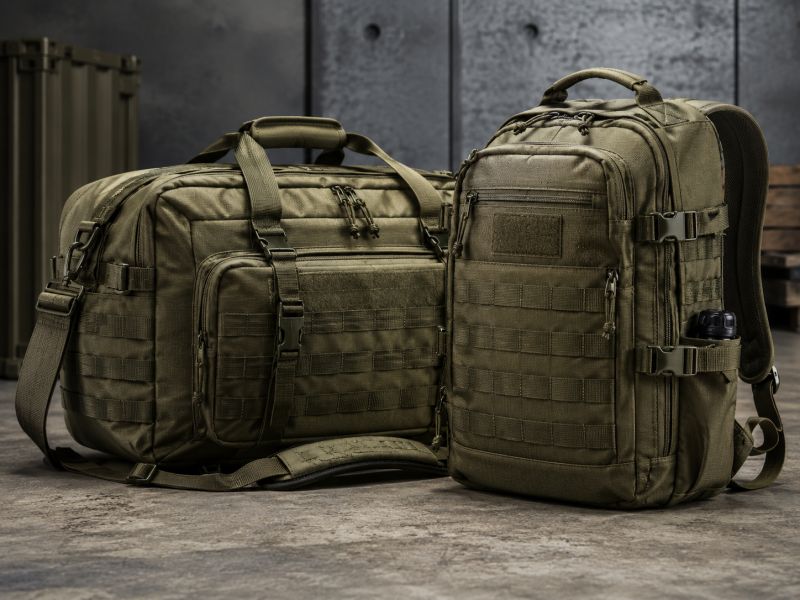
A tactical bag can look powerful before anyone even touches it. MOLLE webbing, thick fabric, compression straps, matte buckles, dark colors, loop panels, and squared shapes all create an instant rugged feeling. But real use is less forgiving than appearance. A bag may look tough in a product photo, then fail when it carries tools, medical kits, batteries, field gear, laptops, hydration systems, safety equipment, or dense accessories for several weeks.
Heavy duty tactical bags should balance rugged style with real structure. A strong bag uses durable fabric, reinforced seams, reliable zippers, functional webbing, stable compartments, protected bottom panels, comfortable straps, and sample-based load checks. Rugged appearance helps the product stand out, but long-term value comes from how the bag carries weight, organizes gear, resists abrasion, and stays usable after repeated handling.
The real test starts after the bag is packed. Does the zipper still open smoothly? Does the shoulder strap pull evenly? Do the pockets make gear easier to reach? Does the bottom resist wear when placed on concrete, gravel, vehicle floors, or work sites? A bag that passes those moments earns the heavy duty name. A bag that only looks tough becomes a costume.
What Makes A Tactical Bag Heavy Duty?
A tactical bag becomes heavy duty when its fabric, seams, webbing, zippers, buckles, handles, bottom, strap system, and internal layout can support repeated load and rough handling without losing shape or access. A rugged surface helps the bag look strong, but real strength comes from how every stress area works when the bag is packed, lifted, worn, opened, and used again.
A heavy duty tactical bag often carries mixed gear. Some contents are soft, such as gloves, clothing layers, or towels. Some are dense, such as tools, batteries, radios, books, water, medical supplies, or outdoor equipment. Some items need quick access. Some need protection. Some create sharp pressure against the fabric. This is why a true tactical bag is not judged by one material name or one strong-looking panel. It must be judged as a complete carrying system.
A practical heavy duty bag should solve these real use demands:
| Real Use Demand | What The Bag Must Handle | Design Details That Matter |
|---|---|---|
| Weight | Dense gear, tools, water, emergency supplies | Shoulder roots, handle seams, bottom, webbing |
| Friction | Ground contact, vehicle floors, work sites, rough walls | Bottom fabric, corner reinforcement, coated panels |
| Fast access | First aid, tools, flashlight, radio, documents | Pocket placement, zipper path, opening size |
| Organization | Small parts, cables, gloves, batteries, devices | Admin panel, elastic loops, mesh, dividers |
| Comfort | Longer carry, uneven load, outdoor movement | Shoulder straps, back padding, sternum strap |
| Modularity | Pouches, bottle holders, kits, patches | MOLLE spacing, backing fabric, stitch strength |
| Repeat use | Daily or field-style handling | Thread, bartack, zipper quality, buckle strength |
| Bulk consistency | Same size, same webbing, same fit across the order | Approved sample, material control, in-process checks |
The best heavy duty tactical bags are not always the heaviest. A bag made from thick fabric but poor straps can feel worse than a lighter bag with smart reinforcement. A full MOLLE front may look powerful, but if the webbing blocks the zipper or pulls the panel out of shape, it weakens the product. Heavy duty means the strength is placed where the force actually moves.
A useful way to review a tactical bag is to follow the load path. When the bag is lifted, force moves from the handle into the stitching, backing layer, main panel, side seams, and bottom. When the bag is worn, weight moves through the shoulder straps, strap roots, back panel, and side structure. When a MOLLE pouch is attached, force moves through webbing, stitches, panel fabric, and the body shape. If one of those links is weak, the bag may fail even if the outside looks rugged.
What Is A Heavy Duty Tactical Bag?
A heavy duty tactical bag is a durable carry product designed for higher wear, organized storage, modular attachment, repeated handling, and stronger load support. It can be a backpack, sling bag, duffel, waist bag, tool bag, first aid bag, emergency kit bag, outdoor gear bag, radio bag, or modular pouch system.
The word “heavy duty” should describe function, not only appearance. A dark color, large buckle, patch panel, or MOLLE row can make the bag look tactical, but those details do not prove strength by themselves. Real heavy duty construction usually includes a stronger fabric body, reinforced stress zones, secure webbing, reliable zippers, protected bottom, and a strap system that can carry the intended weight.
Common heavy duty features include:
| Feature | Why It Matters |
|---|---|
| 600D, 900D, 1000D, or 1680D fabric | Gives different levels of strength, stiffness, and abrasion resistance |
| Reinforced top handle | Supports repeated lifting when the bag is loaded |
| Wide shoulder straps | Spreads pressure across the shoulder |
| MOLLE or loop panels | Allows external pouches or identification patches |
| Compression straps | Stabilize bulky contents |
| Larger zipper gauge | Handles frequent opening and packed pressure |
| Admin panel | Keeps small tools and accessories organized |
| Double-layer bottom | Reduces sagging and abrasion |
| Bartack or box stitching | Strengthens strap roots and other stress areas |
| Padded back panel | Improves comfort during longer carry |
A compact 15–20L tactical pack may need laptop storage, clean admin pockets, and moderate MOLLE. A 30–40L outdoor tactical pack may need hydration routing, compression straps, stronger shoulder support, and more load control. A tool tactical bag may need a tougher base, vertical dividers, and abrasion-resistant pockets. The same visual style cannot support every use. The structure must match the contents.
A heavy duty tactical bag should feel reliable in motion. It should lift without strain at the handle. It should sit close to the body. It should open smoothly while packed. It should keep gear in place. It should not depend on looks to prove value.
What Is The History Of Tactical Bags?
Tactical bags developed from field carry needs, where gear had to be organized, carried under weight, and accessed quickly. Many familiar details now seen on tactical backpacks and gear bags came from practical use: MOLLE webbing, compression straps, hydration sleeves, reinforced handles, admin pockets, sternum straps, patch panels, and divided compartments.
As these ideas moved beyond military and field settings, tactical bag design became useful in outdoor activities, safety kits, work gear, emergency response, travel, and daily carry. The look became popular because it suggests durability and readiness. The function became valuable because many people need organized gear carry even outside field use.
A few key design details came from practical needs:
| Tactical Detail | Practical Purpose |
|---|---|
| MOLLE webbing | Attach extra pouches or gear outside the main bag |
| Compression straps | Tighten load and reduce movement |
| Hydration sleeve | Carry water for outdoor or long carry use |
| Admin pocket | Organize pens, maps, documents, cables, small tools |
| Reinforced grab handle | Lift loaded gear quickly |
| Heavy bottom panel | Reduce wear from rough surfaces |
| Sternum strap | Stabilize shoulder straps during movement |
| Loop patch panel | Add identification, patches, or removable labels |
| Divided compartments | Separate gear by use and access priority |
| Side attachment zones | Carry bottles, radios, gloves, or accessory pouches |
Modern tactical bags now sit in several categories. Some are built for outdoor or field-style use. Some are work-focused, carrying tools and safety equipment. Some are daily-use backpacks with a tactical-inspired look. Some are emergency or first aid bags where speed and organization matter most. A good design should be honest about which category it serves.
The history matters because it reminds us that tactical details should have a job. MOLLE should not be decoration. Compression straps should not be random straps. Padded shoulders should not only look thick. Every detail should come from a carrying need.
Who Uses Heavy Duty Tactical Bags?
Heavy duty tactical bags are used by people and teams that carry organized gear in demanding or semi-demanding settings. They are common in outdoor travel, camping, hiking, emergency kits, first aid programs, field work, repair work, tool carry, safety kits, rugged daily carry, workwear, and outdoor retail products.
Different users expect different structures:
| Use Scene | Common Contents | Design Priority |
|---|---|---|
| Outdoor hiking | Water, layers, tools, food, first aid | Comfort, hydration, abrasion control |
| Tool carry | Hand tools, parts, batteries, cables | Bottom strength, pocket separation |
| First aid kits | Medical supplies, gloves, labels, scissors | Fast access, visible compartments |
| Emergency bags | Safety items, radio, flashlight, food, water | Clear zones, quick opening, strong handle |
| Travel tactical packs | Clothing, electronics, chargers, documents | Capacity, laptop protection, comfort |
| Daily tactical carry | Laptop, cables, bottle, notebook, small tools | Clean layout, lighter weight, subtle style |
| Safety and field teams | Kits, vests, documents, equipment | Durability, labeling, repeat consistency |
| Outdoor gear lines | Active-use products | Rugged look, real function, strong finish |
A tactical bag for tools should not be planned like a commuter backpack. A first aid bag should not hide critical items under too many layers. A travel tactical bag should not be so aggressive that it feels awkward in daily environments. A camping pack should not use weak straps just because the fabric looks thick.
The most important early decision is the use scene. After that, capacity, fabric, MOLLE, pockets, handles, bottom, strap comfort, and packing can be selected with purpose. Without a clear use scene, the bag may become a pile of tactical features with no real logic.
What Do Navy SEALs Carry In Packs?
Military special operations loadouts vary by mission, location, weather, team role, and duration. Public discussions often mention water, food, medical items, navigation tools, communication gear, batteries, clothing layers, survival items, and task-specific equipment. For commercial product planning, the value is not in copying a military loadout. The value is in understanding the carrying logic behind it.
A demanding pack must keep important items in the right place:
| Carry Need | Bag Design Meaning |
|---|---|
| Water | Hydration sleeve, hose port, bottle zone, or side pouch |
| First aid | Fast-opening pocket or clearly marked pouch |
| Navigation | Flat sleeve, admin panel, map/document area |
| Communication | Protected pocket, cable path, radio loop |
| Batteries | Small divided pockets away from moisture |
| Clothing layers | Expandable main space and compression straps |
| Tools | Reinforced pockets and abrasion-resistant base |
| Survival items | Modular pouch system and quick-access sections |
| Food or energy items | Small pockets that do not crush contents |
| Task-specific gear | Flexible storage and external attachment options |
This logic works far beyond military use. Outdoor packs, tool backpacks, safety bags, emergency kits, and rugged travel bags all benefit from the same thinking: heavy items should sit close to the back, small items should not disappear, urgent items should not be buried, and external attachments should stay stable.
A tactical bag does not need to pretend to be military gear. It should borrow the discipline of organized carry. That means the layout should make sense before the bag looks cool. If a flashlight, radio, first aid kit, or tool is hard to reach, the design has missed the purpose.
Is Rugged Look Enough?
A rugged look is not enough when the bag needs to carry real weight, protect contents, stay comfortable, and survive repeated use. MOLLE rows, dark fabric, patch panels, compression straps, thick padding, large buckles, and square silhouettes can create a strong first impression, but each detail must support a real function.
Rugged-looking details can create hidden problems:
| Rugged Detail | Possible Problem |
|---|---|
| Very thick fabric | Adds weight and stiffness if not balanced |
| Full MOLLE coverage | Adds sewing time, weight, and snag risk |
| Oversized buckles | Creates bulk without better control |
| Many exterior pockets | Can make the bag look busy and catch on objects |
| Large capacity | Encourages overpacking if straps are weak |
| Heavy padding | Can trap heat or collapse if foam quality is poor |
| Dark interior | Makes small black items hard to find |
| Too many straps | Creates tangling and slows access |
| Decorative patch panels | Adds style but no carrying function |
| Narrow strong-looking handles | May still feel painful under load |
A real tactical bag should prove why it looks rugged. MOLLE should hold pouches. Compression straps should stabilize contents. Buckles should improve adjustment. Thick fabric should protect wear areas. Padded straps should make carrying more comfortable. Pockets should help find gear faster.
The best rugged design often uses restraint. A clean front panel with side MOLLE may be more wearable than a fully covered front. A reinforced bottom may matter more than another decorative strap. A lighter main body with stronger stress zones may perform better than a heavy body with weak access.
Rugged appearance should invite trust. Real function must keep that trust after use.
What Features Prove Real Function?
Real function is proven by how the tactical bag performs when packed, lifted, carried, opened, adjusted, attached with accessories, and placed on rough surfaces. Strong features are not only visible. They make the bag easier, safer, and more comfortable to use.
A practical function check includes:
| Function Area | What Good Design Shows |
|---|---|
| Load support | Weight sits close to the back and does not pull unevenly |
| Shoulder comfort | Strap width and padding reduce pressure |
| Handle strength | Loaded bag can be lifted repeatedly without strain |
| Zipper access | Main opening remains smooth when packed |
| MOLLE function | Pouches attach securely without panel distortion |
| Organization | Small tools and parts have clear places |
| Bottom protection | Base resists wear and sagging |
| Strap control | Loose webbing is managed and does not tangle |
| Interior visibility | Small items can be found quickly |
| Compartment logic | Fragile, sharp, wet, and heavy items are separated |
A good tactical backpack makes the user faster. A first aid pocket should be reachable quickly. A tool pocket should keep tools upright instead of letting them pile together. A hydration hose should route smoothly without blocking the shoulder strap. A laptop sleeve should not share direct pressure with hard tools or bottles.
Real function also means the bag still works when full. Many bags look organized when empty. The true test is a packed state. Do the pockets still open? Does the zipper still move? Does the weight feel balanced? Does the bag stand or collapse? Do attached pouches swing? These checks reveal whether the features have practical value.
Why Do Some Tactical Bags Fail?
Tactical bags often fail because the design focuses on appearance before load path, access, comfort, material matching, and sewing strength. Failure usually appears in predictable places: shoulder strap roots, handles, zipper corners, MOLLE rows, bottom panels, side seams, compression strap anchors, buckle, and inner pocket edges.
Common failure reasons include:
| Failure Issue | Likely Cause |
|---|---|
| Shoulder strap tearing | Weak root reinforcement or small stitch area |
| Handle pulling loose | Poor backing or limited stitch coverage |
| Zipper splitting | Weak zipper, sharp curve, or overpacked compartment |
| MOLLE loosening | Webbing not anchored for real pull |
| Bottom abrasion | No extra layer on high-wear area |
| Pocket collapse | Soft lining or unsupported divider |
| Shoulder discomfort | Narrow straps, weak foam, poor weight balance |
| Excessive empty weight | Overbuilt exterior with unnecessary parts |
| Poor access | Too many pockets without clear purpose |
| Shape distortion | Fabric and structure not matched to load |
| Buckle slipping | Weak adjustment part or wrong webbing thickness |
| Inner lining damage | Sharp tools or hard gear pressing through thin lining |
Some failures come from using strong material in the wrong place. A heavy fabric body cannot protect a weak zipper. A tough-looking handle cannot perform if the stitch area is too small. A MOLLE panel cannot hold pouches if the backing panel deforms. A padded strap cannot feel good if its root pulls at the wrong angle.
A better design approach is to map the stress before sample approval. Where does the force go when the bag is lifted? Which panel touches the ground first? Which zipper corner takes pressure when the bag is full? Which pouch position creates side pull? Which inner pocket carries hard tools? These reveal where reinforcement is needed.
A tactical bag fails when rugged details are treated as decoration. It succeeds when those details follow real use.
How Should MOLLE Balance Function And Style?

MOLLE should give a tactical bag useful attachment space without turning every panel into visual noise. A good MOLLE layout helps attach pouches, tools, bottle holders, first aid kits, gloves, cables, identification patches, or modular accessories while keeping zippers clear, weight balanced, and the bag comfortable to carry.
MOLLE is powerful because it does two things at once. It creates a rugged visual identity, and it can add real modular carry capacity. The problem starts when the visual part becomes stronger than the practical part. Too much webbing can increase weight, sewing time, snag risk, and stiffness. Too little webbing may leave the bag looking clean but reduce modular value. The right balance depends on the use scene, carried gear, bag size, panel strength, and desired appearance.
A useful MOLLE plan should be reviewed through five practical checks:
| Check Area | What To Confirm | Why It Matters |
|---|---|---|
| Placement | Front, side, shoulder strap, waist belt, pouch face | Controls access and visual style |
| Attachment purpose | First aid pouch, bottle pouch, tool pouch, patch, light gear | Decides strength and layout |
| Spacing | Pouch straps should fit securely | Prevents loose or unstable attachment |
| Backing | Panel fabric should support pull force | Stops webbing from deforming the bag |
| Access clearance | Zippers, handles, pockets, and straps should stay usable | Keeps the bag practical after accessories are added |
A compact daily tactical pack may only need partial MOLLE on the front or sides. A tool-focused pack may need stronger side panels and internal loops more than full external webbing. An outdoor bag may need side attachment zones for bottle pouches, gloves, or small gear. An emergency bag may need visible pouch locations and clear identification areas. A travel tactical bag may use hidden or laser-cut slots to keep a cleaner look.
MOLLE should follow the load path. If a side pouch carries a filled bottle, the force pulls downward and outward. If a front pouch carries dense tools, it can pull the bag away from the body. If a pouch sits too close to a zipper, access becomes slower. If webbing is stitched onto a weak panel, the panel may wrinkle, stretch, or tear. Good MOLLE design respects these forces before the sample is approved.
What Are Tactical Bag Loops For?
Tactical bag loops are used for modular attachment, gear separation, fast access, identification, and strap routing. They can hold removable pouches, gloves, cables, flashlights, carabiners, first aid kits, bottle holders, patch labels, or small tools, depending on loop type and placement.
Not all loops are the same. A MOLLE row is different from an elastic loop. A D-ring loop is different from a hook-and-loop patch area. Each one should have a clear job.
| Loop Type | Common Use | Key Review |
|---|---|---|
| MOLLE webbing | Attach pouches and modular accessories | Spacing, stitch strength, backing |
| Elastic loops | Hold tools, pens, cables, flashlights | Elastic recovery and item fit |
| Hook-and-loop panel | ID patch, name patch, removable label | Bond strength and surface size |
| D-ring loop | Clip keys, straps, light accessories | Pull strength and location |
| Side webbing loop | Attach small gear or compression parts | Avoid zipper interference |
| Internal elastic loop | Organize tools or medical items | Tension and repeated use |
| Shoulder strap loop | Route hydration tube or small accessory | Comfort and snag control |
| Daisy chain loop | Clip lightweight accessories | Stitch spacing and pull direction |
Loops should not be placed only because they look tactical. A loop near a zipper may block opening. A loop on a soft panel may pull the fabric out of shape. A loop inside a tight pocket may make tools hard to remove. A shoulder loop that sticks out too far may rub against clothing or catch on equipment.
A useful loop design starts with the item: What will be attached? How heavy is it? How often will it be removed? Does it need one-hand access? Does it need to stay silent and stable while walking? Once those details are clear, the loop type and position become much easier to choose.
MOLLE vs Clean Panels
MOLLE panels create modular value and a strong tactical identity. Clean panels make the bag lighter, smoother, easier to brand, easier to carry in daily settings, and less likely to snag. A strong tactical bag does not always need full MOLLE coverage. The best layout often combines clean areas with focused attachment zones.
A practical comparison:
| Design Direction | Better Use | Main Benefit | Possible Risk |
|---|---|---|---|
| Full MOLLE front | Outdoor kits, modular gear, field-style packs | Maximum attachment space | Heavier look, more sewing, higher snag risk |
| Partial MOLLE front | Tactical EDC, tool packs, safety kits | Balanced style and use | Placement must be accurate |
| Side MOLLE only | Bottle pouch, radio pouch, gloves, small gear | Cleaner front panel | Less front modular space |
| Hidden MOLLE | Travel tactical, urban tactical, low-profile packs | Cleaner appearance | Lower visible tactical identity |
| Laser-cut slots | Modern tactical styles | Flat surface and lower bulk | Needs strong base panel |
| Clean front panel | Daily carry, travel, logo display | Low snag risk and cleaner shape | Less modular value |
| Mixed clean and MOLLE | Most balanced custom tactical bags | Practical use with controlled appearance | Needs careful panel planning |
A clean panel is not a weak panel. A bag with reinforced seams, strong fabric, proper straps, and smart inner storage can perform well without being covered in webbing. MOLLE is valuable when external accessories are truly needed. It becomes unnecessary when internal storage already solves the carry need.
For a tactical product line, the visual direction matters. Full MOLLE feels more aggressive and technical. Partial MOLLE feels more wearable. Hidden or laser-cut MOLLE can keep the tactical identity while making the bag better for city, travel, work, or outdoor lifestyle use.
A strong balance may look like this: clean front pocket for logo or patch, side MOLLE for bottle or pouch attachment, shoulder strap loops for hydration routing, and internal elastic loops for tools. This keeps the bag useful without overloading the outside.
When Does MOLLE Become Decoration?
MOLLE becomes decoration when it cannot hold useful accessories, is sewn too weakly, is placed on soft unsupported panels, blocks zippers, sits too close to seams, or appears where attached gear would make the bag uncomfortable. At that stage, MOLLE adds weight and cost but does not improve the bag.
Common warning signs:
| Warning Sign | What It Means |
|---|---|
| Webbing rows are uneven | Pouches may not sit straight |
| Rows are too close or too far apart | Accessories may not attach securely |
| Stitch lines are too light | Webbing may loosen under pull |
| Backing panel is weak | Fabric may wrinkle or deform |
| Webbing crosses zipper access | Main compartments become harder to open |
| Webbing sits on curved soft areas | Pouches may wobble or sag |
| Full panel coverage on a small bag | Adds weight and visual clutter |
| Thin webbing feels loose | Looks tactical but lacks strength |
| No clear attachment purpose | Creates decoration instead of use |
| Poor alignment | Reduces perceived quality |
The easiest way to judge MOLLE is to attach real pouches during sample review. A pouch should sit flat, stay stable, and avoid twisting. The panel should not pull out of shape. The attachment should not block the main zipper, side pocket, compression strap, or handle.
MOLLE should also match bag capacity. A 15–20L compact pack can look overloaded if covered with full webbing. A 35–45L outdoor or gear pack can support more external attachment because the body has more space and stronger load structure. Bag size, attachment load, and visual style should be reviewed together.
A tactical bag should not look as if webbing was added after the body was already designed. The MOLLE area should feel integrated into the panel, stitch path, and load structure.
How Much Load Can Webbing Hold?
Webbing load depends on the webbing material, width, weave density, stitch method, backing fabric, panel shape, attachment direction, and movement during use. A fixed number can be misleading because a still load and a moving load behave differently. A light pouch may sit well, while a swinging bottle or dense tool pouch can create stronger pull.
A practical load review should focus on attachment type:
| Attachment Type | Load Behavior | Design Review |
|---|---|---|
| Small utility pouch | Light and stable | Spacing and stitch consistency |
| First aid pouch | Medium load, frequent access | Fast release and stable front position |
| Bottle pouch | Side pull and bounce | Side panel backing and balance |
| Tool pouch | Dense load and hard edges | Strong webbing and abrasion-resistant panel |
| Radio pouch | Vertical pull and cable routing | Strap path and side stability |
| Gloves or jacket strap | Light but frequent handling | Loop durability and snag control |
| Carabiner item | Localized pull force | Reinforced small loop area |
| Large external pouch | Strong forward pull | Panel strength and shoulder balance |
For planning, webbing should be checked with the heaviest expected accessory, not with an empty pouch. A pouch filled with tools may pull differently from one filled with fabric. A bottle pouch creates side force. A first aid pouch may be opened repeatedly. A radio pouch may need cable routing. These use details change the reinforcement need.
Stronger MOLLE performance usually needs:
- Dense webbing with stable edges.
- Secure stitch lines at correct intervals.
- Backing fabric strong enough to spread force.
- Attachment zones away from zipper openings.
- Reinforced side panels for heavier pouches.
- Straight rows so pouches do not lean.
- Sample testing with real accessory weight.
- Clear limits for what should and should not be attached.
If a bag only needs light patch and pouch use, the MOLLE can stay lighter. If it needs bottle, tool, radio, or emergency kit attachment, the panel should be stronger. Overbuilding every panel may add weight, but underbuilding the attachment zone creates long-term failure risk.
Are Laser-Cut Panels Better?
Laser-cut panels can be better when the bag needs a cleaner surface, lower snag risk, lighter visual style, and modern tactical appearance. Traditional sewn MOLLE webbing can be better when the bag needs strong modular attachment, classic rugged identity, and heavier pouch support. The better choice depends on style, load, fabric, and use.
A practical comparison:
| Detail | Traditional MOLLE Webbing | Laser-Cut Panel |
|---|---|---|
| Visual style | Classic, rugged, field-style | Clean, modern, low-profile |
| Surface bulk | Raised webbing | Flatter surface |
| Snag risk | Higher | Lower |
| Weight | Can be heavier | Often lighter |
| Strong attachment | Very good when sewn well | Depends on panel material |
| Heavy pouch support | Strong fit | Needs careful base material review |
| Sewing work | More stitch lines | Different panel preparation |
| Daily wearability | More tactical-looking | More subtle |
| Best use | Outdoor gear, tool bags, modular packs | EDC, travel, urban tactical styles |
Laser-cut MOLLE is not automatically stronger. Its performance depends on the material used for the cut panel, how it is bonded or sewn, and how much pull the slots will receive. If the panel is too soft, pouches may wobble. If the cut edges are weak, they may stretch. If the base panel has poor support, the whole area can deform.
Traditional MOLLE remains useful for heavy-use tactical bags because the raised webbing is easy to understand, easy to inspect, and strong when sewn correctly. It also gives a clear rugged look. For tool bags, outdoor packs, and modular kits, traditional webbing is often practical.
Laser-cut panels are stronger in visual control. They work well when the bag should look tactical but not overly aggressive. For travel, daily carry, or premium rugged designs, laser-cut panels can reduce clutter while still allowing attachment.
How Can Rugged Design Stay Wearable?
Rugged design stays wearable when the bag keeps strength without becoming too heavy, stiff, bulky, loud, or difficult to use. A tactical bag can still work in daily carry, travel, outdoor, work, or retail settings if the MOLLE is controlled, the straps are comfortable, and the silhouette stays clean.
A wearable tactical bag usually includes:
| Wearable Detail | Why It Helps |
|---|---|
| Partial MOLLE | Keeps modular use without covering every panel |
| Moderate empty weight | Makes daily carry easier |
| Comfortable shoulder straps | Reduces pressure under load |
| Clean front area | Works better in cities, offices, travel, and retail |
| Hidden reinforcement | Adds strength without adding visual clutter |
| Neutral colors | Fits more daily settings |
| Smooth zipper paths | Makes frequent access easier |
| Internal organization | Reduces need for external pouches |
| Low-snag shape | Works better in vehicles, airports, crowds, and outdoors |
| Back padding | Supports longer carry |
Rugged does not need to mean aggressive. A black, grey, olive, or earth-tone tactical backpack with partial MOLLE, strong fabric, comfortable straps, and clean compartments can feel technical without looking excessive. A tool bag may need more external structure, while a daily tactical backpack may keep most features inside.
The best wearable tactical designs often hide some strength. A reinforced shoulder root, stronger zipper end, better bottom panel, or internal tool divider may not be loud from the outside, but these details improve use every day. Strength does not always have to be visible.
A good balance asks three practical checks:
| Check | What It Reveals |
|---|---|
| Does the bag look useful without looking overloaded? | Visual balance |
| Can it carry real contents without discomfort? | Structural balance |
| Can it move through daily spaces without snagging? | Wearability balance |
When MOLLE, clean panels, straps, and compartments work together, the bag feels rugged for the right reason. It looks strong because it is designed to be used, not because it is covered with decoration.
How Should A MOLLE Sample Be Reviewed?
A MOLLE sample should be reviewed with actual pouches, realistic weight, zipper access, carrying test, and visual check. The sample should show whether the webbing spacing works, whether the panel pulls out of shape, whether attachments stay stable, and whether the bag still feels comfortable after accessories are added.
A practical sample checklist:
| Sample Check | What To Review |
|---|---|
| Webbing spacing | Pouch straps fit without looseness |
| Row alignment | MOLLE rows look straight and consistent |
| Stitch quality | No skipped stitches, loose thread, or weak tension |
| Panel support | Fabric does not wrinkle or deform under pull |
| Pouch fit | Attached pouch sits flat and stable |
| Zipper clearance | Accessories do not block openings |
| Side balance | Side pouch does not twist the bag badly |
| Carry comfort | Added gear does not pull straps unevenly |
| Visual density | Bag still looks controlled and wearable |
| Packing effect | MOLLE and attached parts do not create poor folding |
The sample should not be checked only as an empty bag. Attach a side bottle pouch, a front utility pouch, or the planned accessories. Add realistic weight. Wear the bag. Open the compartments. Tighten compression straps. Lift the bag by the handle. These actions show whether MOLLE is truly integrated.
If the webbing works only when the bag is empty, the layout needs revision. If the pouch blocks the zipper, the position should move. If the panel wrinkles under light pull, backing needs improvement. If the bag becomes too aggressive visually, partial MOLLE or laser-cut panels may be better. Sample review is where MOLLE moves from design idea to usable structure.
How To Plan Custom Tactical Bag Structure?

Custom tactical bag structure should begin with what the bag must carry, how long it will be worn, how fast gear must be reached, and which parts will take the most stress. Capacity, compartments, MOLLE, bottom support, zippers, straps, padding, laptop space, hydration space, and sample review all need to work as one system.
A tactical bag can look rugged but still feel frustrating if the structure is wrong. A 30L bag with poor inner layout may hold less useful gear than a smaller pack with better zones. A wide-opening main compartment may be perfect for tools, but unnecessary for a daily laptop pack. A hydration sleeve can help outdoor use, but it can create risk if placed too close to electronics. Structure decides whether the bag is easy to pack, comfortable to carry, and reliable after repeated use.
A practical structure plan should cover these areas:
| Structure Area | What To Decide | Why It Matters |
|---|---|---|
| Capacity | 10L, 20L, 30L, 40L+ direction | Matches use time and gear volume |
| Opening style | Top opening, front opening, clamshell, U-shape | Controls access speed |
| Main compartment | Open space, divider, tool wall, gear sleeve | Decides packing flexibility |
| Admin zone | Pens, cables, small tools, cards, notes | Keeps small items from sinking |
| MOLLE zone | Front, side, shoulder, waist, pouch face | Supports modular use |
| Laptop sleeve | Padding, false bottom, strap, smooth lining | Protects electronics |
| Hydration zone | Bladder sleeve, hose port, hanger loop | Supports outdoor or field use |
| Bottom structure | Double fabric, coated panel, foam, PE board | Reduces sagging and abrasion |
| Shoulder system | Strap width, foam, curve, sternum strap | Controls comfort under load |
| Sample test | Pack, carry, zip, lift, attach, unpack | Finds weak areas before bulk work |
A good structure should be easy to explain: heavy items stay stable, small items have a fixed place, urgent items are reachable, fragile items are protected, and the body does not collapse under the intended load. When those basics are clear, the rugged look becomes more believable.
What Capacity Fits Each Use?
Capacity should be selected by use time, gear volume, and carried weight, not only by the appearance of the bag. A compact tactical sling may work for daily tools, while a larger tactical backpack may be needed for outdoor gear, emergency supplies, work kits, or multi-day travel.
A practical capacity direction:
| Capacity Direction | Better Use | Structure Focus |
|---|---|---|
| 5–10L | Sling bag, medical pouch, small tool kit | Fast access, compact layout |
| 10–15L | EDC pouch pack, light duty pack | Admin pockets, low weight |
| 15–20L | Daily tactical backpack, commuter pack | Laptop sleeve, clean inner zones |
| 20–30L | Work gear, tool kit, short travel, outdoor day pack | Balanced compartments and carry comfort |
| 30–40L | Outdoor pack, safety kit, 2–3 day gear | Compression, strong straps, bottom support |
| 40L+ | Bulk gear, emergency supplies, large travel pack | Load stability, reinforced base, wide access |
Bigger is not always better. A large bag can encourage overpacking. If the shoulder system is not strong enough, the bag becomes tiring. If the inner layout is too divided, actual usable space may shrink. If the pack is too deep, small items disappear at the bottom.
Capacity should also match item shape. Clothing needs soft volume. Tools need vertical pockets and abrasion control. Medical items need visible separation. Electronics need padded flat space. Hydration systems need back-panel routing. Outdoor gear needs compression. A 25L tactical backpack can feel roomy or cramped depending on these choices.
Before finalizing capacity, list the expected contents by size and weight. A bag carrying laptops, cables, water, gloves, documents, and small tools needs different structure from a bag carrying clothing, first aid items, food, and outdoor layers.
How To Organize A Tactical Backpack?
A tactical backpack should be organized by weight, access frequency, item type, and protection need. Heavy items should sit close to the back and near the middle-lower area. Frequently used items should stay near quick-access pockets. Fragile items need padding. Sharp or hard gear needs separation.
A practical packing layout:
| Item Type | Better Placement | Reason |
|---|---|---|
| Heavy tools | Close to back, lower-middle area | Reduces backward pulling |
| Laptop or tablet | Padded back sleeve with false bottom | Protects electronics |
| First aid kit | Front or top quick-access pocket | Saves time |
| Water bladder | Back sleeve with hose route | Keeps weight close to body |
| Bottle | Side pocket or MOLLE pouch | Keeps liquid away from electronics |
| Batteries and cables | Admin panel or small zip pocket | Prevents loose movement |
| Flashlight or multi-tool | Elastic loop or quick pocket | Easy to find |
| Documents or maps | Flat sleeve | Prevents folding |
| Gloves | Front pocket, side pouch, or loop | Fast access |
| Clothing layers | Main compartment with compression | Uses soft volume efficiently |
Good organization reduces search time. A tactical backpack should not become a dark box full of loose gear. Small black items inside a black lining are hard to find. A lighter lining, contrast binding, mesh pockets, or labeled zones can improve usability.
Organization should also reduce damage. Tools should not press directly against a laptop. Wet gear should not sit beside documents. Batteries should not roll freely. Sharp edges should not touch thin lining. If the bag will be used for work kits, safety kits, or outdoor gear, each item group should have a clear place.
The best layout usually combines one flexible main area with several controlled small-item zones. Too many pockets can make packing slow. Too few pockets create clutter. Balance is the key.
How To Use A Tactical Backpack Properly?
A tactical backpack works better when weight is packed close to the body, access items stay reachable, straps are adjusted correctly, and external attachments stay balanced. Proper use protects the bag and improves carrying comfort.
Practical use habits:
| Use Habit | Why It Helps |
|---|---|
| Place heavy items near the back | Reduces shoulder pull |
| Keep urgent gear near the top or front | Improves access speed |
| Use compression straps | Reduces bounce and shifting |
| Balance side pouches | Prevents twisting while walking |
| Avoid overloading external MOLLE | Protects webbing and body shape |
| Close zippers fully | Reduces zipper strain |
| Adjust shoulder and sternum straps | Improves fit and stability |
| Separate sharp tools | Protects lining and electronics |
| Control loose webbing tails | Reduces snagging |
| Clean dirt from zippers | Helps smooth operation over time |
A tactical backpack should not be packed like a simple tote. If heavy items sit far from the back, the bag pulls backward. If a loaded pouch hangs on only one side, the pack twists. If the main compartment is forced shut, zipper stress increases. If tools are loose, they can damage lining or press into the back panel.
External attachments should be used with care. MOLLE can expand function, but every attached pouch changes balance. A small first aid pouch may work well on the front. A heavy bottle may be better on the side only if the opposite side is balanced. A tool pouch on the front can pull the bag outward and make carry less comfortable.
A well-designed bag supports proper use, but good packing habits still matter.
How To Design Compartments?
Compartments should be designed around item size, access priority, protection, and load balance. A tactical bag may need a main compartment, admin panel, quick pocket, side pockets, laptop sleeve, hydration sleeve, mesh pocket, elastic loops, hidden pocket, or tool wall. Each zone should have a clear purpose.
Common compartment directions:
| Compartment Type | Better Use | Design Focus |
|---|---|---|
| Main compartment | Clothing, gear, kits, larger tools | Open space or light divider |
| Clamshell opening | Tool kits, travel, medical kits | Full access and easy viewing |
| Admin panel | Pens, cables, cards, notepad, small tools | Clear small-item control |
| Front quick pocket | Frequently used gear | Fast reach |
| Side pocket | Bottle, radio, gloves, flashlight | External access |
| Laptop sleeve | Computer, tablet, flat gear | Padding and false bottom |
| Hydration sleeve | Water bladder | Hose route and separation |
| Mesh pocket | Visible small items | Easy identification |
| Elastic loops | Tools, batteries, first aid items | Fixed placement |
| Hidden pocket | Wallet, ID, keys, documents | Security and low visibility |
More compartments do not automatically improve the bag. Too many small pockets can reduce usable volume and slow packing. A tool bag may need many vertical slots. A travel tactical pack may need fewer, larger zones. A first aid bag may need wide-opening visible pockets. A daily tactical backpack may need a laptop sleeve, admin panel, and clean main space.
Compartment depth is important. Shallow pockets may not hold tools securely. Deep pockets can hide small items. Mesh must be strong enough for repeated use. Elastic loops should fit real item sizes and recover after stretching. Dividers should be firm enough to keep shape but not so stiff that they reduce flexibility.
Good compartment design should make the bag feel faster, not more complicated.
Do Laptop And Hydration Zones Work Together?
Laptop and hydration zones can work together only if they are separated, padded, and routed carefully. Both often sit close to the back panel because that position improves weight balance. But water and electronics should not share one loose space. The structure must prevent pressure, leaks, and uncomfortable back bulging.
A practical design comparison:
| Zone | Design Need | Risk If Poorly Planned |
|---|---|---|
| Laptop sleeve | Padding, false bottom, soft lining, top strap | Impact, scratches, bottom drop |
| Hydration sleeve | Bladder hanger, hose port, back location | Leakage near electronics |
| Divider | Water-resistant or padded separation | Bladder pressure against laptop |
| Hose route | Clean exit and shoulder strap guide | Hose rubbing or awkward routing |
| Access opening | Separate removal where possible | Slow packing and tangled contents |
| Back panel | Balanced thickness | Bulging or discomfort |
| Bottom space | Raised laptop bottom | Impact when bag is set down |
A bag designed mainly for outdoor use may prioritize hydration. A daily tactical pack may prioritize laptop protection. A hybrid pack can include both, but the sample should be checked with a laptop dummy and a filled bladder. The back panel should not bulge too much, the zipper should close smoothly, and the water hose should route without blocking shoulder comfort.
If both zones make the bag too thick or risky, one function should be simplified. For example, a laptop-focused pack can use side bottle pockets instead of an internal bladder. An outdoor pack can keep hydration support and reduce electronics space. The best structure is honest about the main use.
Which Bottom Reinforcement Helps?
Bottom reinforcement helps tactical bags resist abrasion, sagging, impact, moisture, and pressure from dense contents. It is especially important for tool bags, outdoor packs, emergency kits, travel tactical backpacks, and any design that may be placed on concrete, gravel, dirt, vehicle floors, or work sites.
Common bottom reinforcement options:
| Reinforcement Type | Better Use | Benefit |
|---|---|---|
| Double fabric layer | General tactical backpacks | Adds wear resistance without too much bulk |
| 1680D bottom panel | Tool bags, rugged packs | Strong abrasion protection |
| PVC or coated base | Moisture and dirt exposure | Easier cleaning and added stiffness |
| Foam padding | Laptop or fragile gear protection | Reduces impact |
| PE board | Tool bags and boxy structures | Helps the bag stand and resist sagging |
| Rubber feet | Structured bags and cases | Lifts base from rough surfaces |
| Bound bottom seam | Edge protection | Reduces seam wear |
| Corner reinforcement | Heavy load and rough handling | Protects common wear areas |
Bottom design should match carried contents. Tools and batteries create dense pressure. Books pull downward. Bottles create hard contact at the base. Clothing needs less reinforcement. A bag with a weak bottom may sag, deform, or wear through even when the upper fabric looks strong.
Too much bottom reinforcement can also create problems. A stiff PE board may improve structure but make the bag less comfortable or harder to pack. Rubber feet may help structured cases but add cost and may not suit a soft backpack. A coated base improves cleaning but can feel stiff. Reinforcement should solve the expected wear, not simply make the bag look tougher.
A sample should be placed on rough surfaces, filled with intended items, and checked for sagging, corner stress, and base shape.
How Should Shoulder Straps Work?
Shoulder straps should spread weight, reduce pressure, hold adjustment, and keep the bag stable while walking. Good straps need suitable width, foam thickness, foam density, curve, breathable backing, strong webbing, secure adjustment, and reinforced strap roots.
Important shoulder strap details:
| Strap Detail | Why It Matters |
|---|---|
| Strap width | Spreads pressure across the shoulder |
| Foam thickness | Improves comfort under load |
| Foam density | Prevents collapse after repeated use |
| Curved shape | Follows the body more naturally |
| Mesh backing | Improves airflow and reduces slipping |
| Sternum strap | Stabilizes shoulder straps during movement |
| Ladder lock | Holds adjustment position |
| Webbing tail control | Prevents loose straps from dangling |
| Root reinforcement | Protects the highest-stress area |
| Load control | Keeps the bag closer to the body |
The shoulder system should match capacity. A small 15L pack may stay comfortable with lighter straps. A 30–40L pack needs stronger roots, wider padding, and a sternum strap. A tool backpack may need extra shoulder comfort because dense items feel heavier than clothing. A travel tactical pack may need longer carry comfort and smoother strap adjustment.
Foam quality matters. Very soft foam feels comfortable at first but may flatten under weight. Very firm foam may feel harsh. The strap curve should reduce edge pressure around the neck and shoulder. The root angle should follow the natural pull direction when the bag is loaded.
A loaded sample test is necessary. Empty try-on can hide shoulder pressure. The bag should be worn with expected weight and adjusted several times to check strap comfort, slippage, and balance.
What Sample Details Need Review?
A tactical bag sample should be reviewed with realistic contents, not only checked empty. The sample should confirm capacity, material feel, compartment logic, zipper movement, MOLLE function, shoulder comfort, bottom strength, handle lift, logo placement, packing, and final appearance.
A complete sample review list:
| Sample Area | What To Check |
|---|---|
| Overall size | Fits intended gear and product role |
| Fabric | Weight, stiffness, coating, color, hand feel |
| Main compartment | Packing ease and usable space |
| Admin panel | Small-item organization |
| MOLLE | Spacing, alignment, pouch attachment |
| Zippers | Smooth movement when packed |
| Buckles | Holding power and placement |
| Shoulder straps | Comfort, root strength, adjustment |
| Handle | Lift feel under load |
| Bottom | Sagging, abrasion protection, shape |
| Laptop sleeve | Padding, false bottom, fit |
| Hydration zone | Bladder fit, hose route, separation |
| Internal loops | Tool fit, tension, recovery |
| Stitching | Bartack, box stitch, seam tension |
| Packing | Fold, carton fit, tag, SKU sorting |
| Final look | Rugged but controlled style |
The sample should go through real actions:
- Pack the intended contents.
- Lift by the handle.
- Wear on both shoulders.
- Open zippers while full.
- Attach planned MOLLE pouches.
- Adjust compression straps.
- Place on a rough surface.
- Remove key items quickly.
- Check shoulder comfort after several minutes.
- Fold or pack as planned for delivery.
If the bag fails any of these actions, revise before bulk work. A small change at sample stage can prevent large issues later. The approved sample should become the standard for fabric, size, stitch method, hardware, pocket layout, MOLLE spacing, packing, and visual finish.
How Do Price, MOQ And Quality Work?

Price, MOQ, and quality for heavy duty tactical bags depend on fabric level, bag size, MOLLE layout, zipper grade, buckle choice, webbing strength, padding, compartment complexity, logo method, packing, testing needs, and order quantity. A rugged bag cannot be evaluated by outer appearance alone. The real cost sits in the load-bearing zones, reinforced seams, hardware, sewing time, sample work, and final consistency.
A tactical bag may look simple from the outside, but the inside can be much more complex than a regular backpack. A MOLLE panel needs repeated webbing stitches. A shoulder strap root needs reinforcement. A thick bottom panel may require stronger needles and slower sewing. A large main zipper needs a clean opening path. A tool section may need abrasion-resistant lining. A hydration zone, laptop sleeve, admin panel, and side pouch system all add structure and inspection requirements.
Price should be reviewed as a product system:
| Cost Area | What Changes The Cost | Why It Matters |
|---|---|---|
| Outer fabric | 600D, 900D, 1000D, 1680D, nylon, polyester, coating | Controls strength, weight, hand feel, and sewing difficulty |
| MOLLE layout | Front rows, side rows, laser-cut panel, partial layout | Adds attachment function, sewing time, and structure review |
| Webbing | Handles, straps, compression, shoulder adjustment | Carries force and affects comfort |
| Zippers | Main zipper size, reverse coil, water-resistant style | Controls access, durability, and packed pressure |
| Buckles | Side release, ladder lock, D-ring, sternum parts | Affects fit, adjustment, and repeated use |
| Padding | Back panel, shoulder straps, laptop sleeve, bottom | Improves comfort and protection |
| Compartments | Admin panel, mesh pockets, tool loops, hydration sleeve | Adds organization and labor |
| Reinforcement | Strap roots, bottom, corners, MOLLE backing | Protects stress areas |
| Logo detail | Patch, embroidery, woven label, print, rubber badge | Changes visual level and setup |
| Packing | Individual bag, barcode, hangtag, carton sorting | Supports retail and warehouse handling |
| Inspection | Size, stitching, zipper, MOLLE, hardware, packing | Keeps the order close to the approved standard |
A practical price plan does not remove every strong detail. It keeps the details that protect real use. A tool backpack needs a stronger bottom and internal separation. A tactical travel pack needs reliable zippers and shoulder comfort. A MOLLE backpack needs proper webbing spacing and panel backing. A first aid bag needs quick access and clear organization. The product role should decide where money is spent.
What Drives Tactical Bag Price?
Tactical bag price is mainly driven by material grade, size, MOLLE coverage, hardware level, padding, inner layout, logo method, packing style, quantity, and sample revision needs. The biggest cost changes often come from heavier fabric, full MOLLE panels, reinforced shoulder systems, complex compartments, premium zippers, custom patches, and retail-ready packing.
A direct comparison helps make cost decisions clearer:
| Detail | Cost-Control Direction | Higher-Spec Direction |
|---|---|---|
| Fabric | 600D polyester | 1000D nylon, 1680D panels, coated base |
| MOLLE | Partial front or side webbing | Full front, side, and pouch-ready layout |
| Zipper | Standard zipper | Larger gauge, reverse coil, water-resistant zipper |
| Buckle | Basic plastic buckle | Stronger buckle, larger adjuster, sternum parts |
| Shoulder strap | Simple foam padding | Thick foam, mesh, curve, reinforced root |
| Bottom | Single fabric layer | Double layer, coated panel, PE board, rubber feet |
| Compartment | Main pocket only | Admin panel, laptop, hydration, tool loops |
| Logo | Woven label or simple print | Embroidery, rubber patch, custom badge |
| Packing | Bulk pack | Individual packing, barcode, hangtag, carton sorting |
The most important cost decision is where strength creates value. A 1000D fabric body may look impressive, but if the bottom, zipper, and shoulder roots are weak, the bag still fails. A 600D or 900D body with reinforcement in the correct zones may perform better for some daily-use projects. For tool carry or rough outdoor use, heavier fabric and stronger reinforcement become more important.
Cost can also rise when the design has too many separate pieces. Every extra pocket, webbing row, zipper, buckle, patch, elastic loop, and divider needs cutting, sewing, alignment, and inspection. A smart tactical bag uses structure with purpose. The best result is not the most complicated bag; it is the one where every part supports the intended use.
How Long Does Sampling Take?
Sampling time depends on structure complexity, material availability, logo method, hardware sourcing, and revision needs. Many custom bag samples can be developed in about 5–7 days when details are clear. Some simple styles may be reviewed in about 2–3 days. Complex tactical bags with MOLLE, padding, multiple compartments, special hardware, custom patches, or structured bottoms may need more time.
A practical sample timeline may look like this:
| Stage | What Happens | Time Impact |
|---|---|---|
| Detail review | Size, capacity, fabric, logo, MOLLE, packing | Faster when files and requirements are clear |
| Material check | Fabric, webbing, zipper, buckles, lining, foam | Special parts may add time |
| Pattern work | Shape, compartments, straps, bottom, MOLLE spacing | More panels need more review |
| Sample sewing | Cutting, reinforcement, assembly, hardware | Thick fabric and many webbing rows slow sewing |
| Logo work | Patch, label, embroidery, print, rubber badge | Custom parts need preparation |
| Internal review | Fit, stitching, zipper, carry feel, packing | Helps catch issues before approval |
| Revision | Adjust size, straps, pockets, MOLLE, logo, packing | Depends on change level |
A tactical bag sample should be checked with realistic contents. If it is for tools, pack tools. If it is for emergency supplies, pack medical or safety items. If it is for travel, pack clothing, laptop, cables, and accessories. If MOLLE pouches will be added, attach them during sample review. A sample that is only checked empty may hide important problems.
Late changes can affect timing. Changing fabric after pattern approval, adding MOLLE to side panels, increasing zipper size, changing from print to rubber patch, adding a hydration sleeve, or revising the bottom structure can all require new sample work. The faster the use scene and structure are locked, the smoother the project becomes.
What MOQ Fits Custom Tactical Bags?
MOQ for custom tactical bags depends on bag size, fabric, structure, color split, hardware, logo method, packing, and complexity. A common starting for many custom bag projects is around 500 pcs per design. Some simple styles may be reviewed at 200–300 pcs. Low-unit-price basic styles or more setup-heavy projects may need 1000 pcs or more.
A practical MOQ direction:
| Tactical Bag Type | MOQ Direction |
|---|---|
| Simple tactical pouch | May be reviewed at 200–300 pcs |
| Basic tactical-style backpack | Often around 500 pcs per design |
| MOLLE backpack | Usually around 500 pcs or more |
| Tool tactical bag | Reviewed by structure, fabric, and hardware |
| Emergency kit bag | Depends on compartments and packing |
| Heavy duty outdoor backpack | Usually around 500 pcs or more |
| Multi-color tactical order | Depends on quantity per color |
| Custom hardware or special patch | May need higher planning quantity |
| Low-unit-price basic bag | May need 1000 pcs or more |
MOQ is not only related to sewing. It is connected with fabric booking, cutting efficiency, zipper and buckle sourcing, webbing use, logo setup, patch preparation, packing materials, carton labels, and inspection work. A design with many custom details may need a higher practical quantity because each detail has setup cost.
For a first tactical bag program, one main structure and one or two colors are usually easier to control. After the first order is proven, later orders can add more colors, pouch sets, patch versions, or upgraded packing. This approach keeps the first run safer and gives the product team real feedback before expanding.
Which Tests Check Durability?
Durability should be checked through loaded carry, handle lift, shoulder strap stress, zipper operation, MOLLE attachment, bottom abrasion, seam tension, buckle use, pocket pressure, packing fit, and repeated access. A tactical bag should be tested with realistic contents because empty-bag inspection cannot show true performance.
Useful test directions:
| Test Area | What To Check |
|---|---|
| Loaded carry | Bag shape, strap comfort, seam pressure |
| Handle lift | Repeated lifting with expected weight |
| Shoulder strap root | Pull direction and stitch stability |
| Zipper operation | Smooth movement when the bag is packed |
| MOLLE attachment | Pouch stability and panel deformation |
| Bottom wear | Contact with rough ground or hard surfaces |
| Compression strap | Buckle hold and anchor strength |
| Tool pocket | Hard-edge pressure and seam wear |
| Laptop sleeve | Padding, false bottom, impact space |
| Hydration sleeve | Bladder fit, hose route, separation |
| Stitching | Bartack, box stitch, skipped stitch, loose thread |
| Packing | Fold marks, carton fit, tag protection |
The contents change the test result. Five kilograms of clothing is not the same as five kilograms of tools. Tools create hard pressure. Bottles create rolling weight. Books pull downward. Batteries and devices create dense stress. A bag should be checked with contents that match the intended use, not random filler.
Durability review should also include access behavior. A zipper that works when empty may struggle when the bag is full. A MOLLE pouch that sits flat when empty may bounce when loaded. A shoulder strap that feels comfortable for one minute may dig into the shoulder during longer carry. These practical checks reveal whether the structure is truly ready.
What Controls Bulk Quality?
Bulk quality is controlled by approved sample records, material checks, cutting accuracy, MOLLE spacing, stitch control, zipper review, hardware inspection, in-line checking, finished bag review, packing checks, and carton sorting. Tactical bags contain many repeat details, so small deviations can affect both appearance and use.
Important control areas include:
| Control Area | What To Review |
|---|---|
| Fabric | Color, coating, weight, surface defects |
| Webbing | Width, density, color, edge quality |
| Cutting | Panel size, direction, symmetry |
| MOLLE | Spacing, alignment, stitch length, backing |
| Stitching | Bartack, box stitch, seam allowance, tension |
| Zippers | Smoothness, puller, end reinforcement |
| Buckles | Function, fit, crack, color match |
| Shoulder straps | Length, padding, root reinforcement |
| Bottom | Shape, abrasion panel, corner finish |
| Compartments | Pocket size, mesh, elastic loops, lining |
| Logo | Patch, label, embroidery, print placement |
| Packing | Barcode, hangtag, polybag, carton mark |
| Carton | Quantity, SKU, destination mark |
Tactical bags need more than a final check after packing. Material should be checked before cutting. MOLLE and straps should be checked during sewing. Zippers and buckles should be checked before finishing. Packing should be checked against SKU, color, label, and carton information.
For a tactical bag order, repeated parts matter. A MOLLE row that shifts can make pouch attachment unstable. A zipper curve that varies can change opening feel. A shoulder strap root with missing reinforcement can create long-term risk. A barcode or patch placed on the wrong color version can create distribution confusion. Quality control should protect both physical function and order accuracy.
How To Choose A Tactical Bag Factory?
Choose a tactical bag factory that can review structure, not only shape and artwork. Tactical bags need material knowledge, MOLLE layout review, pattern development, hardware sourcing, sample making, load-area reinforcement, packing planning, and multi-stage quality checks. The right partner should help identify weak stress areas before bulk production begins.
Capabilities worth checking:
| Capability | Why It Matters |
|---|---|
| Fabric options | Helps match 600D, 900D, 1000D, 1680D, coating, lining |
| MOLLE experience | Supports spacing, attachment, and functional layout |
| Pattern development | Turns contents and use needs into workable structure |
| Sample room support | Tests shape, load, compartments, and comfort |
| Hardware sourcing | Matches zipper, buckle, webbing, and strap needs |
| Reinforcement planning | Protects handle, bottom, strap, and pocket stress zones |
| Logo options | Supports patch, label, embroidery, print, rubber badge |
| Packing support | Handles barcode, hangtag, polybag, and carton sorting |
| Quality team | Reviews stitching, hardware, webbing, and final finish |
| Reorder control | Keeps approved details consistent over time |
A tactical bag project should not be judged only by a reference photo. The factory should ask about contents, load, capacity, carry time, use scene, material direction, logo method, packing, and delivery plan. These details decide whether the final bag will work in real use.
A strong development partner should also give practical tradeoffs. For example, full MOLLE may look more tactical but increase sewing time and weight. 1000D fabric may add durability but may feel too heavy for daily carry. A zipper top may improve security but may slow access. A structured bottom may protect tools but increase carton volume. These tradeoffs help the product team make better decisions before sampling.
What Makes Reorders Easier?
Reorders become easier when the first project keeps clear records of fabric, webbing, zipper, buckle, logo, sample standard, stitch method, MOLLE spacing, compartment layout, packing method, carton data, and quality notes. Without clear records, a reorder may look similar but feel different.
Useful reorder records include:
| Record | Why It Helps |
|---|---|
| Approved sample | Physical standard for future orders |
| Fabric details | Keeps weight, color, coating, and hand feel stable |
| Webbing details | Keeps MOLLE and straps consistent |
| Hardware list | Prevents zipper, buckle, or D-ring changes |
| Pattern file | Keeps size and structure repeatable |
| Stitch details | Maintains reinforcement and stress control |
| Logo file | Keeps patch, label, or print consistent |
| Color standard | Reduces shade differences |
| Packing photo | Repeats folding, tagging, and polybag style |
| Carton mark | Supports warehouse and store allocation |
| Quality notes | Avoids repeated weak spots |
Reorders are easier when the first design avoids unnecessary complexity. Rare hardware, too many custom colors, or overcomplicated compartments may slow future production. A strong core design with clear records can later expand into more colors, pouch sets, patches, or upgraded packing.
For a long-term tactical bag line, the first order should be treated as the base standard. Once the structure is proven, future versions can change color, logo, pouch combination, or accessories while keeping the tested carry system stable.
Closing: Build Tactical Bags That Earn Their Rugged Look
A heavy duty tactical bag should look rugged because the structure deserves that look. Strong fabric, MOLLE, buckles, padding, and reinforced panels create the first impression, but real value appears after the bag is packed, lifted, worn, opened, placed on rough surfaces, and used again.
A strong tactical bag should prove itself through practical details:
- Fabric that fits the load and use setting.
- MOLLE that supports real attachments.
- Zippers that open smoothly when the bag is packed.
- Shoulder straps that remain comfortable under weight.
- Compartments that make gear easier to find.
- Bottom panels that resist abrasion and sagging.
- Stitching that follows the real load path.
- Hardware that matches strap width and force.
- Samples checked with realistic contents.
- Bulk control that keeps every bag close to the approved standard.
Rugged appearance can attract attention, but real function keeps the bag in use. For a custom tactical bag review, prepare size, capacity, contents, material direction, MOLLE needs, logo plan, quantity, packing style, and delivery timing. Jundong can review these details and suggest a practical sample direction for tactical backpacks, MOLLE bags, tool bags, outdoor gear bags, emergency bags, and related custom carry projects. For project details, you can contact info@jundongfactory.com.