 Skip to content
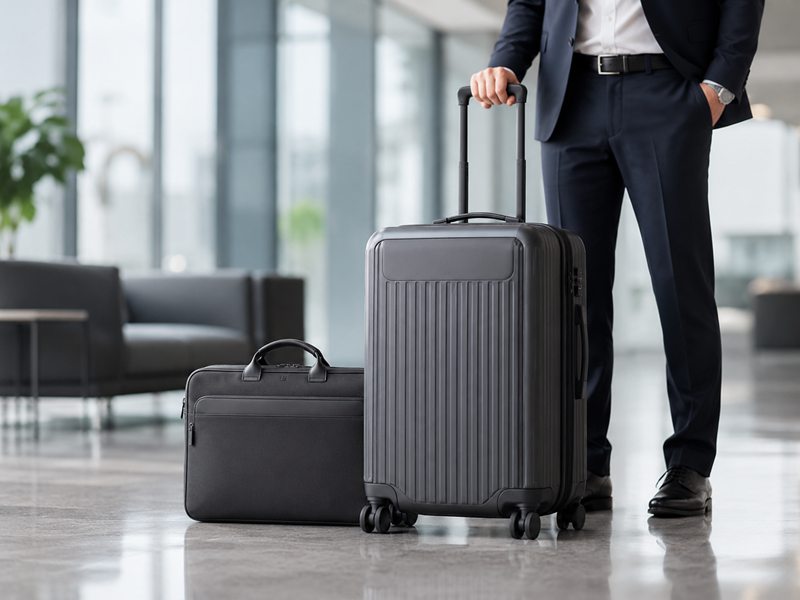
A corporate suitcase is rarely judged in a meeting room. Its real test begins when the recipient pulls it across an airport floor, lifts it into a vehicle, extends the handle for the twentieth time, or opens it in a hotel. At that moment, the gift no longer depends on a polished presentation. The wheels, trolley system, zipper, lining, structure, and logo must all perform as intended.
Premium corporate luggage needs stronger quality control when it carries visible branding, serves frequent travelers, includes individual personalization, or must arrive for a fixed event. The approved sample should establish the shell, dimensions, wheels, trolley handle, zipper, lining, logo, packaging, and functional expectations. Bulk checks should then verify appearance, movement, consistency, labeling, quantity, and transport protection before shipment.
Consider a program involving 500 personalized carry-ons for an annual sales award. The color and logo may look perfect, yet inconsistent wheel alignment across only 5% of the order would affect 25 recipients. If names are packed incorrectly, another group may receive the wrong case. The difference between an impressive gift and an expensive problem lies in the details controlled before delivery.
Why Is Custom Luggage a Premium Corporate Gift?
Custom luggage becomes a premium corporate gift when it delivers real travel value, restrained personalization, reliable function, and a polished presentation. It suits executive recognition, employee milestones, incentive travel, sales awards, partner appreciation, and international team programs. Its value comes from repeated use and positive travel experiences—not simply from a high price, large logo, or elaborate gift box.
Luggage carries greater emotional and practical weight than many corporate gifts. It can mark a promotion, celebrate ten years of service, reward a sales achievement, support an incentive trip, or welcome an executive into a global team. The recipient understands the value immediately because the product has a clear purpose and can remain useful for years.
That usefulness also raises expectations. A suitcase includes several connected systems: wheels, wheel housings, a trolley handle, body structure, main zipper, lining, dividers, carrying handles, hardware, logo work, and protective packing. A weakness in one area can change the impression of the entire product. Smooth wheels cannot compensate for a handle that collapses, and a refined shell cannot hide incorrect personalization.
A corporate luggage program therefore needs to balance five factors:
- Relevance to the recipient’s travel habits
- Functional performance during repeated trips
- Branding that remains suitable outside company events
- Packaging that protects both the product and its presentation
- Consistency across every color, name, department, and destination
Quantity makes small defects more serious. In a 500-piece program, a 2% problem rate affects 10 recipients; a 5% rate affects 25. If the gifts are presented at one annual event, even a limited issue can become highly visible. The product should be developed as a repeat-use travel item, not treated like a short-life giveaway.
| Program Type | Suitable Product | Main Value | Main Concern |
|---|---|---|---|
| Executive recognition | Carry-on or two-piece set | Refined presentation and long use | Branding feels too promotional |
| Sales achievement | Carry-on spinner | Practical reward for frequent travel | Wheel or trolley weakness |
| Service anniversary | Personalized suitcase | Emotional value and individual recognition | Name or date errors |
| Incentive trip | Carry-on with travel accessories | Immediate use during the trip | Delivery timing and group sorting |
| Partner appreciation | Subtly branded luggage | High perceived value | Product does not suit travel habits |
| International team | Standardized cabin case | Consistent equipment across regions | Airline-size differences |
| Conference speaker gift | Compact carry-on | Memorable, useful recognition | Storage and venue distribution |
The decision should not begin with logo placement. It should begin with who will receive the suitcase, how often it may be used, where it will travel, what it needs to carry, and how it will be distributed. Once those details are clear, size, structure, materials, components, personalization, and packaging can be selected with much less risk.
Who Uses Logo Luggage for Corporate Travel?
Logo luggage works best for groups that travel often enough to appreciate its practical value. These may include regional sales teams, consultants, executives, field-service staff, hospitality groups, event speakers, sports delegations, incentive-trip participants, overseas partners, and employees receiving milestone recognition.
The travel pattern should shape the product. A consultant taking two-night flights may prefer a compact carry-on with garment control and a quiet wheel system. A field team transporting demonstration materials may need stronger internal support and reinforced handles. An executive gift may place more weight on subtle branding, coordinated lining, refined hardware, and presentation packaging.
Recipient data affects the order as much as product design. A single logo on one color is relatively simple. Adding names, departments, job levels, color choices, and several destinations creates a unit-level control task.
A personalized order should connect each name to:
- Approved spelling and capitalization
- Product color and size
- Logo version
- Department or event group
- Packing label
- Carton number
- Final destination
Personalization increases emotional value, but only when the correct case reaches the correct person.
What Is the History of Corporate Travel Gifts?
Corporate travel gifts have moved from compact accessories toward more complete travel systems. Luggage tags, passport holders, document wallets, briefcases, garment bags, toiletry kits, and duffels became familiar choices because they were practical, easy to personalize, and relatively simple to distribute.
As wheeled luggage became standard for business travel, carry-ons and coordinated sets developed into higher-value recognition items. The branding approach changed at the same time. Earlier promotional products often relied on large exterior logos for visibility. More refined programs now use smaller emblems, custom lining, coordinated zipper pullers, luggage tags, interior labels, engraved plates, or presentation cards.
This shift reflects a simple reality: repeated use creates stronger visibility than logo size alone. A suitcase earns attention when it rolls smoothly, packs efficiently, looks appropriate in professional settings, and remains suitable for personal travel.
The history of the category therefore leads to a practical standard. Successful corporate luggage should feel like a good travel product first and a branded item second. When that balance is right, personalization adds meaning without reducing usability.
What Are Good Corporate Travel Giveaways?
Good corporate travel giveaways solve a recurring travel problem and match the importance of the occasion. Small accessories suit large groups, while full-size luggage is more appropriate for recognition, milestone, and incentive programs.
| Value Level | Suitable Items | Best Use |
|---|---|---|
| Compact travel kit | Luggage tag, cable organizer, passport wallet | Conferences and onboarding |
| Organized packing set | Packing cubes, shoe bag, toiletry bag | Team travel and event kits |
| Soft travel item | Weekender, garment bag, foldable duffel | Short trips and mid-level awards |
| Rolling luggage | Carry-on spinner, rolling travel bag | Sales awards and employee travel |
| Premium set | Carry-on plus check-in case | Executive and major milestone gifts |
A useful gift should fit the travel behavior of the recipient group. Packing cubes may deliver more practical value than a full suitcase when everyone already owns preferred luggage. A carry-on may be stronger when the program supports frequent short trips. A two-piece set may suit a major anniversary but creates higher freight, storage, and distribution demands.
Storage should be calculated before final selection. Packed volume can be estimated as:
Carton length × carton width × carton height × total carton quantity
This calculation should use the approved packing sample rather than an early product estimate. Gift boxes, wheel protection, handles, and nested sets can significantly change the final volume.
Custom Luggage vs Standard Gifts: Which Adds More Value?
Custom luggage can create greater long-term value than common office gifts when it is used repeatedly. A suitcase may travel through airports, hotels, conferences, and personal trips over several years. That repeated function gives the gift more opportunities to create a positive association.
Unit price alone does not show value. Cost per useful occasion provides a clearer comparison. For example, a hypothetical $120 carry-on used on 24 trips represents $5 per trip. A $20 item used once represents $20 for one occasion. This calculation does not include emotional value, but it shows why frequent use matters.
Luggage also creates a stronger presentation moment. Its size and practical purpose make it feel substantial without requiring exaggerated decoration. However, the higher perceived value makes defects more damaging. A loose wheel on a premium suitcase creates more disappointment than a minor flaw on a low-value accessory.
Standard gifts remain more suitable when:
- The recipient group is extremely large
- Travel needs are unknown
- Storage space is limited
- Rapid handout is required
- The available budget cannot support proper luggage quality
- The event venue cannot manage large cartons
Luggage adds the most value when the occasion is important and the recipients are likely to use it.
When Does a Logo Look Premium?
A logo looks premium when it feels integrated into the suitcase rather than added after the design is complete. Position, scale, color, material, surface texture, edge finish, and attachment method all affect the result.
Suitable methods include:
| Luggage Surface | Suitable Branding Options |
|---|---|
| Polyester or Oxford fabric | Embroidery, woven label, screen print, rubber patch |
| Molded EVA surface | Rubber badge, metal plate, screen print, approved digital graphic |
| Hard shell | Print, emblem, metal plate, surface graphic after compatibility review |
| Interior lining | Repeated print, woven label, message panel |
| Zipper puller | Molded rubber, metal engraving, custom shape |
| Luggage tag | Printed, embossed, engraved, individually named |
| Gift packaging | Printed sleeve, card, label, ribbon, carton graphic |
Large decoration is not automatically more effective. An oversized front logo can make an expensive suitcase resemble event merchandise. Smaller branding near the upper corner, handle area, zipper line, interior divider, or luggage tag often feels more refined.
Artwork should be reviewed at actual size. Curved shells can distort straight lines, textured surfaces can reduce print clarity, and fine text may disappear during embroidery or molding. A completed physical sample reveals whether the decoration remains balanced when the suitcase is standing, lying flat, open, and packed.
Do Recipients Use Branded Luggage Regularly?
Regular use depends on whether the suitcase fits real travel habits. A costly case may remain in storage if it is heavy, difficult to steer, awkward to organize, or covered by branding that feels unsuitable for private trips.
Continued use is more likely when:
- External dimensions suit the intended airlines
- Empty weight leaves enough packing allowance
- Wheels move quietly and track straight
- The trolley handle fits different user heights
- The main zipper follows corners smoothly
- Interior dividers do not waste capacity
- Straps hold clothing securely
- Exterior colors work for business and leisure
- Branding remains visible without dominating the case
- Handles and hardware feel comfortable during repeated use
Neutral colors often support wider use, but neutral does not have to mean plain black. Graphite, deep navy, forest green, warm gray, muted burgundy, and controlled two-tone combinations can feel distinctive while remaining suitable for professional settings.
A useful design test is straightforward: would someone choose this suitcase for a personal weekend trip if it had not been received through a company program? If the likely response is yes, the product has moved beyond promotional merchandise.
Why Does Gift Quality Affect Brand Perception?
A corporate gift becomes physical evidence of how carefully an organization makes decisions. The recipient may never see the specification, inspection record, or packing instructions, but the finished product communicates through movement, sound, touch, and appearance.
Positive signals include:
- Wheels that move smoothly without dragging
- A trolley handle that locks securely
- Zippers that follow corners without resistance
- Clean lining with correctly placed compartments
- Accurate color and decoration
- Correct individual names
- Protective packaging that arrives in good condition
Negative signals are remembered for the same reason. A wheel that locks in an airport, a handle that collapses outside a hotel, or a misspelled name at an awards event creates a visible and personal failure.
For a 500-piece order, even limited inconsistency can affect many people:
| Defect Rate | Affected Units |
|---|---|
| 1% | 5 |
| 2% | 10 |
| 3% | 15 |
| 5% | 25 |
No production process should be described as completely risk-free. The practical goal is to identify issues early, prevent repeated errors, and confirm that the finished order follows the approved requirements.
“Premium” should therefore be translated into measurable details: dimensions, empty weight, material references, color standards, wheel structure, trolley function, zipper movement, logo placement, lining layout, packing method, and inspection criteria. When these elements are controlled together, custom luggage becomes more than an impressive gift—it becomes a travel product people are willing to keep using.
Which Type of Custom Luggage Is Best?

The best custom luggage is the one that fits the trip length, travel policy, expected load, recipient profile, branding style, packing plan, and delivery route. Carry-ons offer broad usefulness, while soft cases, molded EVA luggage, hard shells, rolling travel bags, and coordinated sets serve different needs. Material alone cannot determine quality; structure, components, weight, and assembly matter just as much.
Luggage should be selected from the inside out. Start with what it needs to carry, how long the trip will last, and whether the case will travel in an aircraft cabin, baggage hold, car, train, or event vehicle. These details affect size, body depth, wheel type, trolley height, internal layout, and protective packing.
The exterior appearance comes next. A structured shell creates a clean presentation, while a fabric body provides flexible capacity and useful front pockets. Molded EVA sits between these formats, offering shape with a textile-covered or laminated surface. Each option supports different logo methods and creates different inspection needs.
The order structure also influences the decision. A single carry-on design in one color is easier to control than a collection containing several sizes, shell colors, lining prints, names, and destinations. More variation creates more material batches, component sorting, decoration setup, packing labels, and carton separation.
| Main Requirement | Suitable Direction | Detail to Control |
|---|---|---|
| Short business trips | Compact carry-on | External size and empty weight |
| Frequent airport travel | Spinner carry-on | Wheel and trolley durability |
| Flexible packing | Soft luggage | Shape, seams, and zipper structure |
| Clean structured appearance | EVA or hard shell | Surface, corners, and body consistency |
| Team equipment | Rolling travel bag | Base, handles, and load areas |
| Executive recognition | Refined carry-on or set | Subtle logo and presentation |
| Individual names | Luggage tag or controlled name plate | Data matching and packing |
| International distribution | Conservative dimensions | Airline variation and carton volume |
The highest-priced option is not automatically the most suitable. A well-designed fabric or EVA carry-on may offer better daily use than a hard shell with poor wheel attachment or excessive empty weight. The product should be judged as a complete travel system rather than a collection of expensive parts.
Soft vs Hard-Shell Luggage: Which Is Better?
Soft luggage is often more suitable when flexible capacity, exterior pockets, fabric decoration, and easier compression are important. Hard-shell luggage is often preferred when the program needs a clean silhouette, structured protection, a smooth decoration area, or a stronger presentation at an award event.
Soft constructions commonly use polyester, Oxford fabric, or nylon with lining, reinforcement, zippers, wheels, and a trolley structure. Their performance depends on more than fabric thickness. Seam design, backing materials, edge binding, wheel-base reinforcement, handle attachment, and zipper installation all affect long-term use.
Hard-shell cases may use ABS, PC, ABS/PC blends, or other confirmed materials. They can look refined but require close attention to thickness, corner behavior, surface scratches, wheel housings, drilling positions, zipper-frame alignment, and trolley installation.
| Feature | Soft Luggage | Hard-Shell Luggage |
|---|---|---|
| Packing flexibility | More adaptable | More fixed |
| Exterior pockets | Easier to include | Usually limited |
| Surface cleaning | Depends on fabric | Often easier to wipe |
| Logo options | Embroidery, patch, print, plate | Print, emblem, plate |
| Main visual risk | Wrinkles and shape variation | Scratches and dents |
| Main structural risk | Seam and base weakness | Cracking or deformation |
| Storage compression | More flexible | Limited |
| Presentation | Professional and practical | Clean and structured |
Neither format is automatically waterproof or impact-proof. The final performance depends on the complete construction and agreed evaluation method.
Is Carry-On Luggage Best for Business Travel?
Carry-on luggage is often the strongest choice for business travel because it fits short trips, remains close to the traveler, and avoids waiting at baggage collection. It is also easier to distribute than medium and large check-in cases.
The term “carry-on” is not a universal size. Airline policies vary by region, route, aircraft, and ticket type. Wheels, handles, side grips, and protective feet are normally included in the external measurement.
| Travel Reference | Common Published Dimension |
|---|---|
| Many North American airlines | About 56 × 36 × 23 cm |
| Many European and Asian airlines | About 55 × 40 × 20–23 cm |
| Stricter cabin formats | May be smaller than the figures above |
| Common cabin weight allowance | Often 7–10 kg |
These figures are planning references and should be checked against the intended airlines before the product dimensions are approved.
A corporate program covering several countries may benefit from a conservative external size. However, reducing the case too far can make it less useful. The design must balance cabin compatibility with usable internal capacity.
A carry-on works especially well for:
- One- to four-night trips
- Sales and consulting teams
- Incentive travel
- Conference speakers
- Executive recognition
- Employee milestone gifts
- Short-haul international travel
For longer journeys or equipment-heavy roles, a medium check-in case or rolling travel bag may be more practical.
What Luggage Do Wealthy Travelers Use?
Affluent travelers do not all choose the same luggage. Some prefer instantly recognizable aluminum or grooved cases, while others select understated black business luggage, heritage trunks, lightweight polycarbonate cases, or soft luggage with strong repair support.
Names often associated with premium travel include RIMOWA for aluminum and polycarbonate cases, TUMI for business organization, Globe-Trotter for heritage styling, and Briggs & Riley for practical engineering and repair support. The useful insight is not the logo on the case but the characteristics that support its reputation.
Premium luggage commonly emphasizes:
- Balanced proportions
- Controlled empty weight
- Quiet, stable wheel movement
- Comfortable handle heights
- Purposeful interior organization
- Refined hardware finishes
- Restrained exterior branding
- Clean material transitions
- Repair or replacement planning
- Consistency across the collection
A custom corporate design should not imitate protected grooves, shapes, hardware, or trademarks. It can create its own value through an original shell form, coordinated lining, distinctive zipper puller, subtle badge, custom luggage tag, interior message, or carefully selected color combination.
High value often looks quiet. A smaller emblem, well-finished handle, smooth wheel system, and clean interior can create a stronger impression than a large logo placed across the entire front.
Are EVA, ABS, PC, or Fabric Shells Suitable?
EVA, ABS, PC, and fabric constructions can all be suitable, but they behave differently and should not be selected by name alone.
| Material | Main Character | Suitable Use | Main Concern |
|---|---|---|---|
| Molded EVA | Structured but slightly flexible | Carry-ons, shaped cases, children’s luggage | Thickness, depth, recovery |
| ABS | Rigid and cost-controlled | Modern hard-shell gifts | Brittleness and corner impact |
| PC | Flexible impact behavior | Higher-value hard-shell programs | Thickness, scratches, deformation |
| ABS/PC blend | Balance of structure and flexibility | General hard-shell luggage | Actual material composition |
| Polyester | Practical fabric construction | Soft carry-ons and travel cases | Abrasion, coating, seam strength |
| Oxford fabric | Textured and durable appearance | Soft luggage and rolling bags | Weight, coating, color stability |
| Nylon | Flexible and potentially lightweight | Business and travel luggage | Grade, finish, abrasion |
Molded EVA performance depends on density, thickness, molding temperature, depth, shape recovery, and surface lamination. The zipper must follow the molded body without forcing the edge out of shape. Wheel and trolley mounts need enough internal support to distribute load.
ABS creates a firm shell and controlled visual form, but formulation, thickness, low-temperature behavior, and corner design influence cracking risk. PC can flex and recover better under some impacts, though it may still scratch or deform if the structure is unsuitable.
Fabric performance depends on yarn, density, coating, backing, sewing, reinforcement, and lining—not just whether the specification says polyester or nylon.
Material feasibility should be confirmed together with quantity, structure, tooling, components, required tests, and target cost. A material label without supporting construction details gives very little information about actual performance.
Which Wheels Work Best for Frequent Travel?
Double spinner wheels are widely used for frequent travel because they support multidirectional movement and can provide better stability. Single spinner wheels may reduce weight and component count. Inline wheels move efficiently forward and backward but offer less maneuverability in narrow aisles or crowded terminals.
| Wheel Type | Strength | Trade-Off |
|---|---|---|
| Double spinner | Stable multidirectional movement | More parts and external width |
| Single spinner | Simpler and potentially lighter | May feel less stable under load |
| Inline wheel | Efficient forward rolling | Limited sideways movement |
| Recessed wheel | Better protection from impact | Reduces internal space |
| External wheel housing | Easier turning and replacement | More exposed during handling |
Wheel durability depends on the whole assembly:
- Tread material
- Axle fit
- Bearing movement
- Wheel fork
- Housing structure
- Fasteners
- Mounting angle
- Body reinforcement
- Ground clearance
- Left-to-right alignment
A wheel can rotate smoothly by hand yet perform poorly under realistic weight. The loaded case should roll forward, backward, sideways, and in a circle. It should track without pulling to one side, and the housings should remain stable after repeated movement.
Larger wheels may cross uneven surfaces more easily, but they increase the external dimensions. Smaller wheels help maintain a compact silhouette but may provide less clearance. The best system is the one that fits the case structure and intended travel conditions.
Which Trolley Handle Is More Reliable?
A reliable trolley handle should extend evenly, lock at every intended height, retract without sticking, and remain aligned with the rear structure. Reliability depends on the tubes, locks, release button, grip, mounting plate, fasteners, and reinforcement inside the case.
| Trolley Type | Advantage | Concern |
|---|---|---|
| Two-stage double tube | Simple and stable | Fewer height choices |
| Multi-stage double tube | Fits more user heights | More locking positions |
| Single-tube system | Can save interior space | May allow more twisting |
| External trolley structure | Easier interior planning | Changes exterior appearance |
| Internal trolley structure | Cleaner exterior | Uses packing space |
A small amount of tube movement may be necessary for smooth extension. Excessive wobble, uneven locking, or visible twisting should be identified during sample approval. Terms such as “strong” or “stable” are too subjective unless the approved sample provides a physical reference.
Testing should include:
- Repeated extension and retraction
- Locking at every height
- Release-button return
- Loaded rolling
- Lifting through the grip
- Alignment after movement
- Internal mounting inspection
- Interference with lining or dividers
Handle height also affects comfort. A system that is reliable but too short for taller users can still create a poor travel experience.
What Size and Weight Fit Corporate Programs?
The right size depends on trip length, airline policies, packing habits, and distribution cost. Commercial labels such as “20-inch” or “24-inch” are useful for category naming, but actual external dimensions determine whether the case fits a travel policy.
| Product Size | Common Use | Main Consideration |
|---|---|---|
| Compact cabin case | One- to two-night trips | Limited internal space |
| Standard carry-on | Two- to four-night trips | Airline dimension differences |
| Medium check-in case | Four- to seven-night travel | Freight and storage volume |
| Large check-in case | Long trips or equipment | Weight and handling exposure |
| Two-piece set | Executive and milestone gifts | Nesting and surface protection |
Measurements should be taken at the outermost parts:
- Floor to top handle or shell
- Widest side, including side handle where relevant
- Deepest area, including front pockets or expansion
- Wheel and protective-foot projections
- Trolley grip when fully retracted
Empty weight should be recorded to the nearest practical unit and controlled against the approved sample. Thick shells, large wheels, metal plates, reinforced dividers, and complex trolley systems can improve individual features while reducing the weight available for packed belongings.
Packed dimensions also affect freight. Gift boxes and protective inserts can add substantial volume. One fully packed sample should be completed before the final carton quantity and shipping plan are confirmed.
How Can You Personalize Corporate Luggage?
Corporate luggage can be personalized through exterior decoration, custom colors, lining, pullers, hardware, luggage tags, individual names, message cards, and packaging. The most effective method depends on material, surface shape, artwork, quantity, use frequency, and desired visibility.
| Personalization Area | Available Direction | Control Requirement |
|---|---|---|
| Fabric body | Embroidery, print, patch, woven label | Puckering, alignment, edge finish |
| EVA body | Badge, plate, print, approved graphic | Surface adhesion and curvature |
| Hard shell | Print, emblem, metal plate | Scratch resistance and attachment |
| Lining | Repeated logo or custom pattern | Color, rubbing, pattern alignment |
| Zipper puller | Molded rubber or engraved metal | Shape, finish, pull strength |
| Luggage tag | Print, embossing, engraving, names | Spelling and attachment |
| Handle detail | Color accents or approved trim | Comfort and wear |
| Gift packaging | Card, sleeve, label, printed box | Crushing and color accuracy |
Subtle personalization often supports wider use. A small exterior emblem combined with custom lining, zipper pullers, and a named luggage tag can create a stronger total identity than one oversized front print.
Individual names require controlled data. Each name should be linked to the correct case color, logo version, packaging label, carton number, and destination. The list should be frozen before decoration begins, and late changes should be separated from the approved file.
A physical sample is essential. It confirms whether the decoration remains clear, flat, balanced, and durable on the finished surface. It also shows whether the suitcase still feels appropriate for both business and personal travel.
Why Do Premium Luggage Gifts Need Better QC?

Premium luggage gifts need stronger quality control because they combine visible branding with several moving and load-bearing systems. Wheels, trolley handles, zippers, shells, linings, logos, names, gift boxes, and carton labels can all fail differently. Control should begin with incoming materials, continue through assembly, and finish only after function, personalization, packing, quantity, and shipment details have been verified.
A suitcase may look impressive in a photo while hiding weaknesses that appear only after loading and movement. The wheel housing may loosen under weight. The trolley handle may lock when new but collapse after repeated operation. The zipper may move freely on an empty case and become difficult to close when packed. A metal badge may look refined but leave scratches on another case during transport.
These risks become more visible in corporate programs because many recipients use the same product at the same time. If 500 cases are distributed at an annual event, a repeated defect can affect an entire group within days. A problem that might remain isolated in individual retail sales can quickly become a shared discussion among employees or partners.
Quality control should therefore follow the suitcase through several stages:
| Stage | Main Checks | Risk Prevented |
|---|---|---|
| Incoming materials | Color, thickness, texture, shell condition, component quantity | Incorrect materials enter production |
| First completed unit | Dimensions, assembly, logo, wheel alignment, trolley function | Setup errors spread across the order |
| In-process inspection | Zippers, seams, fasteners, lining, reinforcement | Hidden assembly defects |
| Functional inspection | Rolling, tracking, handle locking, opening, closing | Poor travel performance |
| Finished-goods inspection | Appearance, dimensions, cleanliness, function | Inconsistent finished units |
| Personalization check | Names, departments, colors, logo versions | Wrong gift reaches the recipient |
| Packing inspection | Protection, accessories, labels, carton quantity | Damage and sorting mistakes |
| Pre-shipment review | Carton marks, count, destination details, documents | Delivery and receiving errors |
Final inspection alone is not enough. Once hundreds of shells have been drilled, wheels installed, logos applied, and linings closed, correcting a structural error becomes costly and slow. Earlier checks protect both the product and the delivery date.
The inspection plan should also distinguish among critical, major, and minor issues. The exact classification should be agreed before bulk inspection.
| Defect Level | Luggage Example | Likely Decision |
|---|---|---|
| Critical | Sharp metal edge, unsafe exposed part | Stop and correct immediately |
| Major | Wheel does not rotate, trolley will not lock, zipper separates, wrong name | Reject or repair affected unit |
| Minor | Small cosmetic mark within agreed limits, light thread end | Assess against approved tolerance |
For higher-value programs, basic operation of wheels, trolley handles, zippers, locks, and personalization can be checked on every unit. Endurance or destructive tests are conducted on defined samples because the tested products may no longer be suitable for delivery.
What Can Fail After Sample Approval?
Sample approval confirms one completed suitcase under controlled conditions. Bulk production introduces larger material lots, repeated assembly, several workstations, component sorting, logo setup, individual names, packing work, and shipment preparation. Each stage can create variation.
Common sample-to-bulk differences include:
- Shell or fabric color shifts between material lots
- EVA molded depth changing across production
- Wheel housings installed at slightly different angles
- Trolley handles from mixed component batches
- Zipper curves becoming tighter than the approved sample
- Logo position moving from its recorded measurement
- Metal plates using different finishes
- Lining pockets changing size or direction
- Compression straps being sewn asymmetrically
- Name files being linked to the wrong case
- Gift boxes or accessories being packed incorrectly
Approval should create a complete production reference rather than one physical item. The records should include dimensions, empty weight, body material, lining, wheels, trolley handle, zippers, hardware, logo artwork, logo position, colors, packing sequence, carton quantity, and accepted tolerances.
Changes after approval require written control. If a wheel color, zipper puller, lining material, or packing method becomes unavailable, the alternative should be reviewed before use. A visually similar substitute may differ in weight, finish, strength, fit, or lead time.
The first completed bulk units deserve close inspection. They reveal whether the sample details have been transferred correctly before the same error spreads across the full quantity.
How Are Wheels and Trolley Handles Tested?
Wheel testing should evaluate the complete rolling system, not only whether each wheel turns by hand. The tread, axle, bearing, fork, housing, fasteners, mounting angle, body reinforcement, and ground clearance all affect movement.
A practical wheel evaluation can include:
- Hand rotation to compare resistance among wheels
- Loaded movement forward, backward, sideways, and in circles
- Straight-line tracking to identify sideways pulling
- Noise comparison across all four wheel positions
- Inspection for rubbing between wheel and housing
- Housing movement after rolling
- Ground-contact consistency on a flat surface
- Fastener security
- Tread wear after repeated movement
- Body condition around each mounting area
The test load should reflect the expected suitcase size and use. An empty 20-inch case may roll smoothly even when the wheel assembly becomes unstable under packed weight.
Trolley-handle evaluation should include extension, retraction, locking, grip comfort, alignment, lifting, and repeated operation. Every intended height should lock correctly. Both tubes should extend evenly, and the release button should return after use.
Important trolley checks include:
- Lock engagement at each height
- Unintended collapse under downward force
- Tube movement and side-to-side wobble
- Grip security
- Mounting-plate stability
- Screw or rivet condition
- Alignment after loaded rolling
- Interference with lining or interior dividers
- Raised trolley channels that reduce usable capacity
Some operational clearance is necessary for extension and retraction. Excessive movement should be judged against the approved sample or a recorded tolerance rather than a vague description such as “not too loose.”
Do Drop and Rolling Tests Matter?
Drop and rolling tests matter when the suitcase is expected to tolerate airport handling, repeated business travel, road trips, heavy packing, or frequent movement over uneven surfaces. They expose weaknesses that visual inspection and short showroom rolling cannot reveal.
A loaded drop test may place the case onto its faces, edges, corners, or wheel areas according to the agreed method. After each test sequence, the case should be checked for:
- Cracks or permanent deformation
- Broken or loosened wheels
- Damaged wheel housings
- Trolley misalignment
- Zipper separation
- Open seams
- Loose top or side handles
- Detached hardware
- Interior structure movement
- Loss of normal opening and closing
Rolling-road or drum-style tests expose the suitcase to repeated wheel movement, vibration, and impact. The test should define the loaded weight, surface condition, duration or travel distance, speed, temperature where relevant, and acceptance criteria.
A “pass” should not mean only that the case remains in one piece. Wheels should still rotate, the trolley should still extend and lock, zippers should remain usable, and the body should retain acceptable shape.
These tests are usually more valuable during development or pre-production because they may damage the test sample. Bulk quality control then confirms that production follows the same materials, components, and construction used by the approved test unit.
Not every suitcase needs the same test severity. A compact cabin case, large check-in case, children’s EVA case, and rolling equipment bag experience different loads and handling conditions.
Is Logo Durability Part of QC?
Logo durability is part of quality control because decoration receives immediate visual attention. A peeling print, loose plate, scratched emblem, or fraying embroidery can make an otherwise functional suitcase feel poorly finished.
Each method needs its own inspection:
| Logo Method | Important Checks |
|---|---|
| Screen printing | Color, coverage, edge clarity, adhesion, rubbing |
| Digital graphic | Resolution, color accuracy, scratching, surface fit |
| Embroidery | Thread color, density, backing, puckering, loose threads |
| Rubber patch | Molded detail, color, edge finish, attachment |
| Metal plate | Surface finish, engraving, edge safety, fasteners |
| Woven label | Text clarity, folding, alignment, stitching |
| Printed lining | Color, rubbing, pattern direction, seam matching |
Logo position should be measured from fixed references such as a seam, zipper line, shell edge, or center axis. Terms such as “upper right” leave too much room for movement across a large order.
Curved and textured surfaces require special attention. A print that performs well on a flat material swatch may distort or lose adhesion on a molded EVA body. A metal plate may sit correctly on a firm panel but lift at the edges when attached to a flexible area.
Individual names add another control layer. Spelling, capitalization, color, product size, packing label, carton number, and destination should remain connected through one controlled data file. Visual quality is not enough if the correct name is placed on the wrong suitcase.
How Are Zippers and Hardware Checked?
The main zipper carries repeated opening force and may also hold the packed case under tension. It should move smoothly along straight sections and around corners without catching the lining or forcing the body out of shape.
Zipper resistance can come from:
- Incorrect zipper length
- A curve that is too tight
- Uneven seam allowance
- Thick material buildup near corners
- Misaligned body panels
- Slider and chain incompatibility
- Lining entering the zipper path
- Expansion panels sewn under tension
- Distorted shell or EVA edges
Inspection should open and close the entire zipper path several times, both empty and under the agreed load. The slider, puller, top stops, stitching, chain alignment, and corner movement should all be checked.
Hardware includes metal plates, locks, D-rings, hooks, buckles, screws, rivets, studs, pullers, and handle fittings. Checks should cover finish, color consistency, scratches, sharp edges, corrosion, attachment, and movement.
Where a combination lock is fitted, the number alignment, opening action, reset method, attachment, and instructions should be confirmed. A lock that works only after several attempts can create frustration even if it is not technically broken.
Decorative hardware also affects packing. Raised plates, pullers, and studs can scratch surrounding cases unless each unit has suitable protective material.
Are Lining and Compartment Details Important?
Lining and compartments directly affect capacity, organization, and the impression created when the case is opened. Loose lining, exposed internal structure, crooked pockets, or straps facing the wrong direction can make an expensive exterior feel unfinished.
Important interior checks include:
- Lining material and color match the approved sample
- Trolley channels are covered cleanly
- Seams remain closed with no raw edges
- Divider panels fit the body without sagging
- Mesh is not stretched or torn
- Pocket dimensions match the specification
- Interior zippers move freely
- Compression straps remain symmetrical
- Buckles face the correct direction
- Labels are accurate and securely attached
- Lining does not enter the main zipper
- No strong or unusual odor is trapped inside
Compartment design should be tested with realistic contents. A deep divider may look organized but reduce usable space. A large laptop sleeve may be unnecessary if the suitcase is paired with a business backpack. Raised trolley channels can create uneven packing areas unless the interior structure is planned around them.
Empty internal dimensions can be misleading. Packing the sample with shirts, shoes, toiletries, and travel accessories reveals whether the straps are long enough, dividers close correctly, and corners remain usable.
The interior should also be checked after functional testing. Rolling vibration and loaded drops may loosen lining panels, straps, or internal fasteners even when the shell remains intact.
When Does Gift Packaging Become a Quality Risk?
Gift packaging becomes a quality risk when it changes product protection, shipment volume, sorting, storage, or event preparation. A presentation box can improve the first impression, but it also adds weight and can be crushed if the outer carton is not designed for the complete packed unit.
Common luggage-packing risks include:
- Shell surfaces rubbing against cartons
- Wheels pressing into another case during nesting
- Metal parts scratching neighboring surfaces
- Trolley grips leaving pressure marks
- Protective films becoming difficult to remove
- Gift boxes collapsing under stacked weight
- Moisture or odor being trapped inside sealed packing
- Accessories moving around inside the suitcase
- Name labels becoming detached
- Colors, departments, or destinations being mixed
- Carton marks differing from the packing list
One fully packed sample should be approved before bulk packing begins. It should show the product orientation, protective layers, wheel coverage, accessories, documents, name label, gift box, outer carton, and carton markings.
For nested luggage sets, each size needs protection from the wheels, handles, pullers, and hardware of the surrounding case. Nesting can reduce freight volume, but poor separation can create scratches before the gift is opened.
Packing inspection should confirm:
- Correct product and color
- Correct name or department
- Required accessories
- Protective materials
- Gift presentation
- Barcode or label where required
- Quantity per carton
- Carton marks
- Destination details
- Final carton condition
Quality control ends only when the correct suitcase, decoration, accessories, protection, and identification are packed together and ready for the intended destination.
How Does the Custom Luggage Factory Process Work?

A custom luggage project normally moves through seven controlled stages: brief review, feasibility and quotation, material and component confirmation, sampling, written approval, bulk production, and layered inspection before packing. The safest process treats the approved sample as a technical reference, not merely a visual model. Dimensions, wheel systems, trolley handles, logos, lining, packaging, and acceptance criteria should all be recorded before volume work begins.
Luggage is more complex than a tote bag or simple backpack. Its shell or textile body must work as one system with the frame, wheels, trolley mechanism, zippers, handles, lining, fasteners, and decorative parts. A beautiful prototype can still fail during travel if these parts are not correctly matched.
The work should therefore move through clear approval gates. Each gate resolves a different type of risk: unclear specifications, unsuitable components, structural weakness, color deviation, inaccurate logo placement, inconsistent assembly, or insufficient carton protection.
| Stage | Main Work | Required Record |
|---|---|---|
| Project review | Examine design, use, quantity, destination, and delivery needs | Product brief and open-item list |
| Feasibility | Evaluate structure, materials, components, logo, and packing | Technical proposal and quotation |
| Material setup | Confirm fabric, shell, lining, wheels, trolley, zipper, and color | Material and component references |
| Sampling | Build and inspect the physical prototype | Sample report, photos, and measurements |
| Approval | Record accepted details and requested revisions | Signed sample or written approval |
| Bulk preparation | Prepare production files, materials, tools, and inspection criteria | Pre-production specification |
| Production and QC | Form, cut, print, assemble, inspect, and pack | Inspection and packing records |
| Shipment | Complete final checks and shipping documents | Packing list and shipment details |
What Does a Factory Need Before Quoting?
An accurate quotation requires more than a product photo and quantity. It should be based on the luggage structure, dimensions, materials, components, logo method, packaging, inspection needs, and delivery conditions. Missing information forces assumptions, and those assumptions often create cost changes after sampling.
The product brief should identify the intended use. A carry-on for frequent corporate travelers needs different wheels, handles, interior organization, and weight control from a promotional suitcase used for a single event. A children’s case, EVA case, rolling duffel, and three-piece luggage set also require different construction methods.
The following information helps establish a dependable quotation:
| Information | Details to Provide | Why It Matters |
|---|---|---|
| Luggage type | Carry-on, checked case, rolling duffel, EVA case, or luggage set | Defines the main construction |
| Dimensions | Body size and total external size, including wheels and handles | Affects capacity, material use, cartons, and transport |
| Body material | Polyester, Oxford fabric, EVA, or another confirmed material | Influences appearance, weight, strength, and cost |
| Interior | Lining, dividers, mesh pockets, compression straps, and zipper sections | Changes sewing work and material consumption |
| Wheel system | Two-wheel, four-wheel spinner, single wheel, or double wheel | Affects mobility, base structure, and cost |
| Trolley system | Tube material, number of stages, height, grip style, and locking method | Influences comfort and durability |
| Logo | Artwork, dimensions, position, color, and application method | Determines setup and processing requirements |
| Color | Pantone reference or approved physical swatch | Reduces visual inconsistency |
| Quantity | Total volume and quantity per color or design | Influences material preparation and unit cost |
| Packing | Polybag, dust bag, gift box, carton size, labels, and inserts | Affects presentation and shipping volume |
| Delivery | Destination, required arrival date, and preferred freight method | Determines whether the schedule is realistic |
| Verification | Required reports, inspection method, or third-party checks | Affects preparation time and inspection cost |
Vector artwork in AI, EPS, PDF, or SVG format is preferable for logo work. Pantone references should be supplied when color consistency matters. If personalized names, employee initials, serial numbers, or destination codes are required, the data format and verification method must also be agreed upon.
A reference quotation can be prepared from limited information, but it should not be treated as a fixed production cost. Final commercial terms should follow technical confirmation because changing the wheel assembly, trolley tubes, lining, logo method, or carton protection can materially alter the result.
How Is a Custom Sample Developed?
Sample development converts an idea into a physical case that can be measured, handled, packed, rolled, lifted, and inspected. The work begins with a review of the reference design and continues through pattern development, material preparation, logo trials, assembly, internal checks, and revision.
A practical sample sequence usually includes:
- Review product drawings, reference photos, physical samples, or sketches.
- Confirm feasible dimensions, structure, materials, and components.
- Select available fabrics, shell materials, lining, wheels, trolley handles, zippers, and hardware.
- Prepare patterns, forming tools, or construction templates.
- Produce the logo trial in the proposed size, color, and position.
- Form or cut the body sections and prepare reinforcement pieces.
- Assemble the body, wheel base, trolley system, handles, lining, and closures.
- Measure the finished case and compare it with the specification.
- Check rolling, trolley locking, lifting, opening, closing, and packing functions.
- Record photographs, measurements, observations, and any recommended changes.
Soft luggage usually relies more heavily on patterns, cutting, sewing, binding, reinforcement, and frame assembly. EVA or molded structures may require forming conditions, molds, compression settings, cooling time, and surface control. New rubber parts, wheel housings, metal fittings, handles, or decorative pieces may also require separate tooling.
A prototype should be inspected before it is shipped. Sending an unchecked piece merely transfers the discovery of obvious problems to the recipient and adds unnecessary courier time. Useful internal checks include overall measurements, empty weight, logo alignment, zipper movement, trolley operation, wheel tracking, handle attachment, lining construction, and carton fit.
Revision instructions should be precise. “Make the handle stronger” leaves too much room for interpretation. “Add reinforcement beneath both handle bases and increase the attachment area by 15 mm” gives the development team something measurable. Marked photographs, dimensioned drawings, and numbered comments are especially effective when several changes are requested together.
How Long Does Sampling Take?
Sampling time depends on whether the project uses an established structure or requires new patterns, molds, materials, and components. The clock should begin only after the main specifications, artwork, sample terms, and available material choices have been confirmed.
For planning purposes, an established luggage structure with available materials and a simple logo commonly takes about five to seven working days. A complex design can require seven to fifteen working days. New molds, newly developed components, unusual finishes, or repeated revisions require separate scheduling.
| Sample Condition | Practical Planning Time |
|---|---|
| Established structure with available materials | About 5–7 working days |
| Complex construction or several custom details | About 7–15 working days |
| New mold or newly developed hardware | Confirmed after technical review |
| Additional sample following major revisions | Recalculated according to the changes |
| International sample delivery | Added after the prototype is completed |
These estimates should not be interpreted as automatic promises. Material availability can influence the schedule significantly. A specified fabric color may need dyeing, while custom wheels, trolley grips, zipper pullers, or metal badges may require tooling and separate trial production.
Logo methods also affect timing. Screen printing, heat transfer, embroidery, woven labels, rubber patches, metal badges, and laser marking have different setup requirements. A metal emblem with a custom finish generally needs more preparation than a one-color printed logo.
Courier time is separate from development time. If a launch or corporate event has a fixed date, sample review, revision, approval, bulk work, inspection, freight, customs clearance, and local distribution should all be placed on one calendar. Compressing the sampling stage may save a few days initially but can create larger delays if unresolved details reach volume production.
What Should the Sample Confirm?
A good sample should confirm appearance, function, construction, packing, and production feasibility. It should not be approved solely because the logo looks attractive. The piece must represent how the finished luggage will be used, transported, stored, and presented.
| Category | Details to Confirm |
|---|---|
| Dimensions | Height, width, depth, handle extension, and external size with wheels |
| Weight | Empty case weight and practical packed weight |
| Appearance | Shape, proportions, color, surface finish, and panel alignment |
| Materials | Body, lining, reinforcement, piping, webbing, and backing |
| Wheels | Rolling smoothness, tracking, rotation, noise, and attachment |
| Trolley | Extension height, locking, tube alignment, grip comfort, and movement |
| Handles | Position, grip, reinforcement, return action, and attachment |
| Zippers | Size, puller, curve movement, alignment, and opening access |
| Interior | Lining fit, dividers, pockets, straps, seams, and usable capacity |
| Logo | Size, color, position, clarity, orientation, and resistance to handling |
| Packing | Dust bag, polybag, protective materials, gift box, labels, and carton fit |
| Presentation | Unboxing order, cleanliness, odor, loose threads, and surface protection |
Measurements should be taken from defined locations. For airline-related formats, the total external dimensions should include wheels, fixed handles, and other protruding parts. The body alone may fit the intended size while the completed suitcase exceeds it.
The empty weight also deserves attention. Thicker materials and heavier components may create a solid feel, but excessive weight reduces the traveler’s usable baggage allowance. The right construction balances strength with portability instead of simply adding more material.
Functional checks should reflect real use. The sample can be rolled across smooth flooring and uneven surfaces, turned through tight corners, lifted from the top and side handles, opened while packed, and placed inside its proposed carton. A fully packed trial may reveal body distortion, zipper tension, wheel interference, or an unstable trolley system that is not visible when the case is empty.
There is also an important difference between a visual sample and a pre-production sample. A visual sample may use substitute colors or available components to verify shape. A pre-production piece should use the approved materials, components, logo method, and packaging whenever possible. This distinction should be written clearly so that temporary substitutions are not mistakenly approved for volume work.
How Does Approval Control Bulk Production?
Sample approval becomes valuable only when accepted details are converted into controlled production records. A verbal “looks good” is not enough for a program involving multiple colors, sizes, logo positions, packaging elements, or delivery locations.
The approval file should contain:
- Sample version number and approval date
- Product drawings and finished dimensions
- Acceptable measurement tolerances
- Material names, compositions, weights, colors, and internal codes
- Wheel, trolley, zipper, handle, and hardware references
- Logo artwork, dimensions, position, and application method
- Lining layout and interior features
- Label, hangtag, insert, polybag, dust bag, gift box, and carton details
- Functional inspection requirements
- Accepted appearance standards
- Approved changes and rejected alternatives
A retained approved sample is often called the golden sample. It provides a physical reference for color, touch, proportion, logo placement, assembly, and presentation. When practical, one reference should remain beside the production team, while another is retained by the brand or project organizer.
Before full output begins, the first completed units should be compared with the approval file. This early comparison can catch an incorrect zipper puller, wheel color, lining layout, handle position, or logo orientation before the same error is repeated across hundreds of pieces.
Changes made after approval require written control. If an approved component becomes unavailable, a replacement should not enter production silently. Its dimensions, material, color, performance, cost, and visual effect should be reviewed first. Even a small wheel or zipper change can affect assembly, carton dimensions, and the overall appearance of the case.
Which QC Stages Protect the Order?
Reliable QC is distributed throughout production. Final inspection alone cannot fully correct an unsuitable fabric, poorly formed body, weak handle reinforcement, misaligned trolley housing, or incorrectly applied logo after the luggage has been assembled.
| QC Stage | Main Checks |
|---|---|
| Incoming materials | Color, texture, thickness, defects, quantities, and approved references |
| Components | Wheels, trolley handles, zippers, grips, buckles, hardware, and labels |
| Forming or cutting | Shape, panel dimensions, direction, pairing, and surface condition |
| Logo application | Size, color, placement, clarity, adhesion, and orientation |
| First completed units | Construction, dimensions, function, and comparison with approval |
| In-process inspection | Sewing, reinforcement, assembly, alignment, and cleanliness |
| Functional inspection | Wheels, trolley locks, handles, zippers, dividers, and straps |
| Finished-piece inspection | Appearance, measurements, accessories, labels, and workmanship |
| Packing inspection | Protective materials, carton fit, assortment, marks, and quantities |
| Pre-shipment inspection | Random or agreed sampling before release |
Premium luggage often benefits from combining sampling inspection with full basic function checks for essential moving parts. An agreed sampling plan can be used for broader workmanship evaluation, while every unit may receive simple checks of trolley extension, wheel rotation, zipper movement, logo presence, and packing completeness when the program requires tighter control.
Inspection criteria should define acceptable tolerances rather than rely on personal opinion. Examples include finished dimensions, logo-position deviation, visible color difference, stitch condition, zipper alignment, wheel movement, trolley locking, carton quantity, and packaging cleanliness.
The inspection plan should also reflect the gift’s presentation. A suitcase may be structurally sound yet still be unsuitable for an executive program because of scratches, dust, fingerprints, uneven protective film, dented gift boxes, or poorly placed labels. These details shape the recipient’s first impression before the luggage is ever used.
No inspection system can honestly promise that every unit will remain flawless forever. The practical goal is to prevent recurring defects, detect variation early, separate nonconforming pieces, document corrective work, and release goods according to agreed standards.
How Long Does Bulk Production Take?
Many custom bag programs require approximately 20 to 30 days for bulk production after sample approval and material readiness. Complex luggage may require 25 to 45 days, especially when it includes newly developed molds, custom hardware, several sizes, multiple colors, individual personalization, or elaborate gift packaging.
The production countdown should not begin from the date of the first inquiry. It normally begins after the design, commercial terms, approved sample, artwork, colors, components, packaging, quantities, and payment conditions have been confirmed.
| Schedule Factor | Possible Effect |
|---|---|
| Available materials and components | Allows earlier production preparation |
| Custom-dyed fabric or shell color | Adds color development and approval time |
| New molds or hardware | Adds tooling and trial time |
| Several sizes or color combinations | Requires more material separation and line setup |
| Individual names or serial codes | Adds data control and verification work |
| Gift boxes or special inserts | May create a separate packaging schedule |
| Third-party inspection | Requires booking and possible correction time |
| Late design changes | May interrupt materials, assembly, or packing |
| Peak-season capacity | Can extend the confirmed production window |
Production completion is not the same as arrival. Inspection, export documents, loading, international transport, customs clearance, local handling, and final distribution all follow. As a planning reference, air freight may take approximately 7–12 days, while sea freight may take approximately 40–45 days, depending on the route, carrier, customs activity, and destination conditions.
For a fixed travel event, award ceremony, conference, or employee program, the schedule should be planned backward from the required arrival date. Time should be reserved for sample review, possible revisions, volume work, inspection, freight, customs clearance, and local delivery. A receiving buffer is also sensible because branded luggage arriving one day after an event has little practical value.
The strongest process is not simply the fastest one. It is the one that resolves technical details early, creates a dependable approved reference, detects variation before it spreads, and delivers luggage that looks, rolls, opens, packs, and presents itself as intended.
How Do You Choose the Best Luggage Manufacturer?

The best choice is a factory that can prove product engineering, repeatable quality, realistic capacity, transparent costing, and disciplined delivery control. Evaluate physical samples, component specifications, approved-sample procedures, inspection records, packaging methods, and corrective-action speed. For corporate luggage, pay special attention to wheels, trolley systems, handles, zippers, logo consistency, carton protection, and the ability to reproduce the same standard across every unit.
A polished showroom sample is useful, but it does not prove that 500, 2,000, or 10,000 pieces will arrive at the same standard. Corporate luggage is a system of connected parts. A stronger shell cannot compensate for an unstable trolley, and premium wheels cannot rescue weak handle reinforcement. The selected factory must understand how these parts interact during rolling, lifting, packing, loading, and long-distance transport.
A practical evaluation can use weighted criteria instead of relying on presentation alone:
| Evaluation Area | Suggested Weight | Evidence to Review |
|---|---|---|
| Quality control | 25% | Inspection flow, defect records, functional checks, corrective actions |
| Product engineering | 20% | Similar samples, drawings, component knowledge, structural proposals |
| Sampling accuracy | 15% | Sample report, revision log, measurement sheet, approval procedure |
| Capacity and scheduling | 15% | Current workload, line plan, material timing, delivery milestones |
| Branding and packaging | 10% | Logo trials, color control, gift packing, carton protection |
| Commercial clarity | 10% | Detailed quotation, tooling terms, payment terms, defect handling |
| Communication | 5% | Response speed, technical clarity, written follow-up |
A high total score is useful only when supported by evidence. Certificates, photographs, and sales presentations should be connected to the actual product, production location, inspection procedure, and delivery schedule.
Does the Factory Understand Luggage Construction?
The right factory should be able to explain how the proposed luggage will be built, which components carry the greatest load, and how design choices affect weight, durability, appearance, cost, and repair risk.
For soft luggage, important construction details include fabric weight, coating, backing, panel reinforcement, edge binding, frame structure, wheel-base support, trolley attachment, zipper curves, lining, handle reinforcement, and seam placement. For EVA or formed cases, attention shifts toward material thickness, forming depth, mold accuracy, rebound, surface condition, edge stability, and the connection between the body and hardware.
Ask the development team to identify the following before sampling:
- Body material and proposed thickness
- Internal reinforcement beneath the top and side handles
- Trolley tube material, wall thickness, stages, and locking method
- Wheel diameter, housing structure, rotation style, and attachment
- Main zipper size, slider, puller, and path around corners
- Base protection and ground clearance
- Lining material, pocket layout, dividers, and compression straps
- External dimensions, including fixed handles and wheels
- Estimated empty weight
- Logo method, position, backing, and surface compatibility
- Packing method and carton protection
A capable team should also recognize design conflicts. A large metal badge may deform a soft front panel. A deep EVA body may need greater edge support. A trolley assembly chosen for a small carry-on may not suit a larger checked case. Oversized wheels may improve rolling but increase the external dimensions and carton volume.
Useful advice is specific and measurable. “Use better wheels” offers little value. “Use double spinner wheels with a reinforced housing and verify rotation after loaded rolling” demonstrates a clearer understanding of the intended performance.
Which Evidence Shows Relevant Experience?
Relevant experience should be verified through products that resemble the proposed project in structure, size, material, components, logo method, and packaging. Producing simple travel bags does not automatically prove competence in wheeled luggage.
Request several recent samples or detailed case records covering similar work. Photographs should show more than the exterior. Interior construction, wheel bases, trolley attachments, handle reinforcement, zipper curves, lining seams, carton protection, and packing sequence reveal far more than a closed suitcase photographed from the front.
| Evidence | What It Can Demonstrate |
|---|---|
| Physical luggage samples | Workmanship, weight, movement, finish, and component fit |
| Internal construction photos | Reinforcement and assembly methods |
| Technical drawings | Ability to control dimensions and component positions |
| Approved-sample records | Revision discipline and specification control |
| Inspection reports | Defect classification and release procedures |
| Packing photos | Surface protection, carton fit, and assortment control |
| Production videos | Actual equipment, work stages, and handling practices |
| Repeat-order records | Ability to reproduce an accepted design |
| Corrective-action examples | How recurring defects are investigated and controlled |
A factory visit provides the clearest verification when order value or reputational exposure is high. If an on-site visit is impractical, a live video review can cover the sample room, material area, cutting or forming section, logo work, sewing and assembly lines, inspection area, finished-goods storage, and packing section.
Recorded promotional footage may be useful, but a live review is more revealing because the project team can request close views of current work, component storage, inspection records, and actual equipment.
The strongest evidence is a connected trail: design file, prototype, approval record, production control sheet, inspection report, packed goods, and shipment record. Isolated photographs without dates, specifications, or context carry less weight.
Can the Factory Support the Required Volume?
Capacity should be evaluated against the proposed quantity, number of sizes, number of colors, personalization requirements, packing complexity, and required arrival date. A large facility can still be unsuitable if its relevant lines are already committed.
Ask for a schedule that separates the main stages:
| Schedule Stage | Details to Confirm |
|---|---|
| Development | Technical review, material selection, logo trial, and prototype |
| Revision | Number of expected rounds and time for each change |
| Material preparation | Fabric, shell, lining, wheels, trolley systems, and hardware |
| Pre-production | Approved sample, production files, first completed units |
| Bulk work | Planned start, daily output, and expected completion |
| Inspection | In-process checks, finished-piece checks, and release date |
| Packing | Gift box preparation, labeling, assortment, and carton completion |
| Freight | Booking, departure, transit, customs, and local delivery |
Many custom bag projects require approximately 20–30 days for bulk work after approval and material readiness. More complex luggage may require 25–45 days. New molds, custom-colored components, several suitcase sizes, individual names, premium gift boxes, or peak-season workload can extend the schedule.
Daily output should be discussed in relation to the actual design. A simple rolling duffel and a structured EVA suitcase do not move through production at the same speed. Ask how many lines will be assigned, which stages will be completed in-house, and whether any logo, molding, hardware, or packaging work will be completed elsewhere.
Subcontracted work is not automatically a problem, but it should be disclosed and controlled. The responsible factory should define where each operation occurs, how materials are identified, how samples are transferred, and how outside work is inspected before assembly.
A credible schedule includes contingency time. A plan with no allowance for sample correction, color adjustment, component rejection, packing revision, or inspection findings is fragile even if the promised completion date appears attractive.
How Should You Evaluate Quality Control?
Quality control should cover materials, components, construction, function, appearance, and packing. Final random inspection cannot replace checks performed during earlier stages.
The most useful inspection flow includes:
| Inspection Stage | Main Focus |
|---|---|
| Incoming inspection | Material color, thickness, surface, dimensions, and component quantities |
| First-piece review | Construction, measurements, logo, function, and approval comparison |
| In-process inspection | Cutting, forming, sewing, reinforcement, alignment, and assembly |
| Functional inspection | Wheels, trolley locks, handles, zippers, pockets, and straps |
| Finished-piece inspection | Appearance, cleanliness, dimensions, accessories, and workmanship |
| Packing inspection | Labels, protective materials, gift boxes, cartons, and assortments |
| Pre-shipment inspection | Agreed sampling before goods are released |
For premium corporate gifts, essential moving parts may need basic checks on every unit. These can include:
- All wheels rotate and track correctly
- Trolley handles extend, lock, and retract
- Main zippers open and close through the full path
- Top and side handles are correctly attached
- Logos are present, correctly oriented, and visibly acceptable
- Interior dividers and straps are complete
- Required accessories and inserts are included
- Protective materials are applied correctly
- Each case is packed in the correct carton
More demanding checks may be completed on an agreed sample quantity. Depending on the construction and intended use, these may include loaded rolling, handle lifting, trolley cycling, zipper cycling, seam-strength evaluation, drop checks, carton checks, and inspection after transport simulation.
Do not accept vague statements such as “strict QC” without supporting documents. Request the inspection checklist, defect classifications, sampling method, accepted tolerances, reporting format, and procedure for nonconforming goods.
Corrective-action ability is equally important. When a recurring defect appears, the team should identify its cause, isolate affected pieces, correct the work method, reinspect completed units, and prevent the same issue from continuing through the remaining quantity.
What Should a Professional Sample Prove?
The sample should demonstrate that the proposed design can be produced repeatedly at the intended cost and quality. It must confirm more than shape and logo appearance.
A proper review should cover five areas:
| Review Area | Details |
|---|---|
| Appearance | Shape, proportion, color, finish, panel alignment, and cleanliness |
| Construction | Materials, reinforcement, seams, binding, backing, and assembly |
| Function | Wheels, trolley, handles, zippers, interior layout, and packing capacity |
| Branding | Logo dimensions, position, color, clarity, durability, and orientation |
| Packing | Dust bag, polybag, inserts, gift box, labels, and shipping carton |
The sample should be measured from defined locations. Finished external dimensions should include wheels, fixed handles, and other protruding parts. Empty weight should also be recorded, especially for carry-on designs where every additional gram reduces usable packing allowance.
A loaded trial is more meaningful than examining an empty case on a table. Pack the sample with a realistic travel load, operate the zippers, lift it from each handle, extend the trolley, roll it through turns, and check whether the body remains balanced.
The first prototype may use available materials or components to verify construction. If substitutions are used, they should be identified in writing. A later pre-production sample should reflect the approved fabric or shell, wheel assembly, trolley system, zippers, lining, logo treatment, labels, and packaging as closely as possible.
Approval should create a complete reference, including:
- Signed or clearly documented physical sample
- Finished measurement sheet
- Material and component list
- Pantone or approved physical color references
- Logo artwork and placement dimensions
- Interior construction details
- Packing instructions
- Inspection criteria
- Revision history
- Accepted tolerances
A sample without these supporting records leaves too much open to interpretation during volume work.
What Should the Quotation Include?
The lowest unit cost is not necessarily the lowest final cost. Rework, replacements, missed events, damaged cartons, additional inspection, air freight, and inconsistent presentation can quickly erase an initial saving.
A complete quotation should identify:
- Product name, style number, and dimensions
- Body, lining, reinforcement, and component specifications
- Logo method, size, colors, and setup charges
- Quantity per design, size, and color
- Unit cost at relevant quantity levels
- Minimum quantity per design
- Sample cost and sample timing
- Mold, tooling, or custom-hardware charges
- Packaging method and included materials
- Carton quantity, dimensions, gross weight, and volume
- Bulk lead time and the conditions that start the countdown
- Trade term and shipping location
- Inspection or testing charges
- Payment terms
- Quotation validity
- Treatment of tooling for future orders
For many custom luggage programs, 500 pieces per design is a practical standard minimum. Selected projects with simpler structures may be assessed at 200–300 pieces, but material availability, logo setup, component minimums, and packaging economics must still be considered.
Carton details deserve particular attention. Luggage is bulky, so freight can become a significant part of the delivered cost. Nesting smaller cases inside larger ones may reduce carton volume for luggage sets, but the method must protect shells, wheels, handles, logos, and interior linings from rubbing or compression.
Compare quotations on the same specification. A proposal using basic wheels, thinner lining, lighter trolley tubes, generic zippers, and simple polybag packing should not be compared directly with one that includes reinforced components, custom hardware, a dust bag, a gift box, and stronger carton protection.
Can Branding and Packaging Be Controlled?
Corporate luggage may be produced in large quantities, yet every recipient experiences it as an individual gift. Logo accuracy, cleanliness, accessory placement, and unboxing presentation therefore carry unusual importance.
The factory should demonstrate control over the proposed logo method. Common choices include embroidery, screen printing, heat transfer, woven labels, rubber patches, metal badges, laser marking, and custom zipper pullers. Each method behaves differently on polyester, Oxford fabric, EVA surfaces, lining, webbing, and hardware.
Logo approval should record:
- Final vector artwork
- Finished dimensions
- Pantone reference or approved physical swatch
- Exact location measured from fixed seams or edges
- Orientation
- Surface preparation
- Backing or reinforcement
- Acceptable visual tolerance
- Protective film or tissue requirements
Personalized names, initials, serial codes, department names, or destination labels need stronger data control. The personalization list should use a fixed format, unique record numbers, approved spelling, and a verification method before packing. A single duplicate or misspelled name can make an otherwise perfect suitcase unusable for its intended recipient.
Packaging should be developed together with the luggage rather than added at the last moment. Gift boxes must fit without crushing wheels or placing excessive pressure on trolley grips. Dust bags should accommodate the entire case and close neatly. Printed inserts should sit securely without scratching the exterior.
Shipping cartons must protect presentation packaging through stacking, handling, and international transport. Carton strength, internal clearance, corner protection, moisture control, packing orientation, and pallet requirements should be confirmed before full packing begins.
How Important Are Communication and Change Control?
Communication quality during development often predicts how the later stages will be managed. Clear records reduce disputes, repeated revisions, and unapproved substitutions.
A reliable project team should provide:
- Written confirmation after technical discussions
- Numbered revision comments
- Updated drawings after dimensional changes
- Photographs or video from defined production stages
- Early notice of material or component concerns
- A clear schedule with milestone dates
- Written approval before substitutions
- Inspection results before shipment
- One controlled version of the final specification
Version control becomes essential when several people review the design. Files should carry a style number, revision number, and date. Comments such as “use the updated logo” are risky when several artwork files exist. “Use Logo Version 4, dated July 12, at 65 mm wide” is much safer.
The factory should also be willing to challenge requests that create technical risk. Agreeing to every proposal without checking weight, structure, lead time, cost, or durability may feel cooperative initially, but it can create disappointment later.
Good communication is not constant reassurance. It is the ability to identify a concern early, explain the effect, offer workable alternatives, and document the selected solution.
What Should Be Confirmed Before Order Approval?
Before committing to volume production, verify that the commercial proposal, physical sample, technical records, quality plan, schedule, and packing method all describe the same product.
Use the following final review:
| Item | Confirmation Needed |
|---|---|
| Product | Approved structure, dimensions, weight, and appearance |
| Materials | Approved body, lining, reinforcement, and colors |
| Components | Correct wheels, trolley, handles, zippers, and hardware |
| Branding | Final artwork, method, dimensions, color, and position |
| Packaging | Dust bag, gift box, labels, inserts, carton, and assortment |
| Quality | Inspection stages, functional checks, tolerances, and defect handling |
| Timing | Sample approval, materials, bulk work, inspection, and freight |
| Commercial terms | Unit cost, tooling, payment, trade term, and quotation validity |
| Changes | Written approval procedure for substitutions or revisions |
| Reorders | Tooling storage, color records, component references, and sample retention |
Warning signs include an unusually low quotation without specifications, reluctance to show similar construction, frequent undocumented changes, no retained approved sample, vague inspection claims, unrealistic delivery promises, or pressure to begin bulk work before technical details are settled.
The best choice is not simply the factory with the largest building or the lowest initial cost. It is the one that can turn a design into a measurable specification, reproduce the approved piece consistently, protect the delivery date, and respond responsibly when an issue appears.
For a custom corporate luggage program, prepare the design reference, dimensions, quantity, logo file, packaging concept, destination, and required arrival date. These details can be sent to Jundong at info@jundongfactory.com for a structured feasibility review and project-specific quotation.