 Skip to content
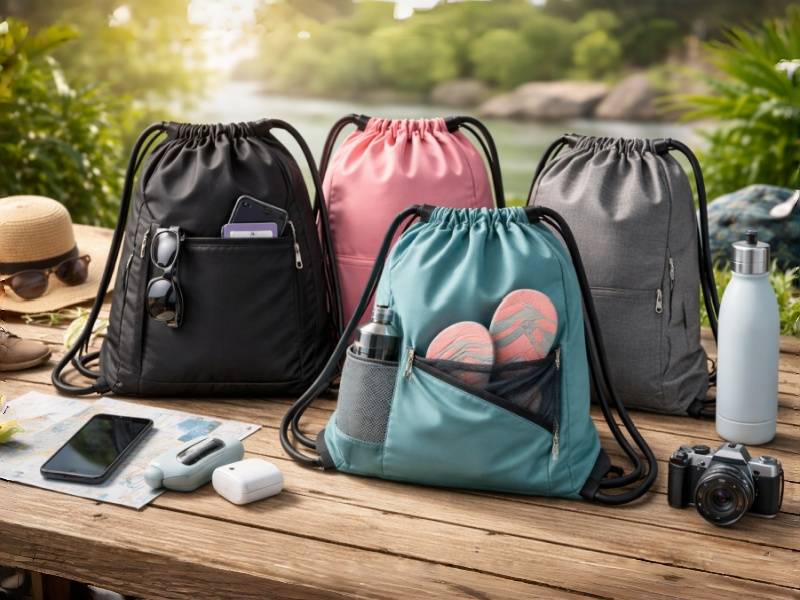
Best Drawstring Backpack for Travel: A Practical Guide to Types, Features, Fabrics, Price, and Custom Factory Development
A lot of travel bags fail for a very simple reason: they try to do everything. They become too heavy for city walking, too bulky for light packing, too simple for real organization, or too technical for daily use. That is exactly why the drawstring backpack still holds a strong place in travel. It is not trying to replace every other bag. It works because it solves a narrower problem better than many larger bags do. It is light, fast to access, easy to stash inside luggage, and often more useful on the ground than in the catalog.
That does not mean every drawstring backpack is good for travel. Some are little more than giveaway sacks. Some look fine online but feel harsh on the shoulders after twenty minutes. Some claim to be waterproof when they are only mildly splash-resistant. Some add so many pockets and panels that they lose the simple advantage that made the category useful in the first place. Travel shoppers have clearly been leaning toward packable, lightweight, water-resistant, and better-organized bags, while tested travel-bag roundups keep highlighting the value of foldability, zip pockets, and easy-access side storage.
Direct reply: The best drawstring backpack for travel is usually not the most technical or the cheapest. It is the one that matches the trip. For city breaks and flight days, the strongest choice is often a lightweight, foldable, water-resistant drawstring backpack with at least one zip pocket and reinforced corners. For beach, pool, or gym-heavy travel, a wet pocket or shoe compartment matters more. For longer walking days, padded straps and better weight distribution quickly become more valuable than low weight alone.
That is the real way to judge this category. Do not ask whether a drawstring backpack is “good” in the abstract. Ask what it will carry, how long it will be on your back, whether it needs to fit under an airline seat, whether it will be exposed to rain or sand, and whether the project is for retail, hospitality, promotions, or a private-label line. Once those conditions are clear, the right design becomes far easier to define.
What Is the Best Drawstring Backpack for Travel, and Who Is It Really For?
A travel drawstring backpack is best for people who need a secondary bag, a light day bag, or a scene-specific carry option rather than a full load-bearing pack. It works especially well for city walks, beach stops, gym sessions, theme-park days, cruise excursions, and short sightseeing runs where low weight matters more than laptop structure or long-haul comfort.
The biggest mistake is assuming this bag should behave like a conventional backpack. It should not. A drawstring backpack earns its keep when the load is modest and the trip rhythm is quick. Think water bottle, layer, phone charger, sunglasses, passport pouch, sandals, towel, or a few purchases. In that role, it is excellent. It folds down small, disappears inside larger luggage, and becomes useful exactly when a structured backpack starts to feel like overkill.
Who is it really for? It is ideal for light packers, weekend travelers, cruise guests, beach travelers, students on short trips, event teams, and hospitality programs that want a compact, practical travel giveaway. It is far less suitable for travelers carrying a laptop, camera kit, heavy guidebooks, or all-day loads. Once the carry weight starts climbing, the missing structure becomes obvious.
There is also an airline angle here. If the bag is meant for flight-day use, size discipline matters. Airlines differ. United lists a personal-item limit of 9 x 10 x 17 inches, while Delta says cabin items must fit under the seat or in the overhead bin and caps standard carry-ons at 22 x 14 x 9 inches. A drawstring backpack intended for travel should stay compact enough to work within those shifting cabin realities.
So the best drawstring backpack for travel is really the best travel-role drawstring backpack. Used as a main pack, it often disappoints. Used as a secondary, situational bag, it can be one of the smartest items in the suitcase.
Which Type of Drawstring Backpack Is Best for Travel: Foldable, Waterproof, Zippered, or Multi-Pocket?
For most trips, the best type is a foldable, water-resistant, zip-pocket drawstring backpack. That combination keeps the core strength of the category—low weight and easy packing—while fixing its most common weakness, which is poor organization. For wet or sand-heavy trips, a wet pocket or separate compartment becomes more useful than extra structure.
Here is the simplest way to read the category:
| Type | Best Use | Main Strength | Main Risk |
|---|---|---|---|
| Foldable | Flight day, city trips, backup bag | Packs flat, very light | Usually less structure |
| Water-resistant | Daily travel, light rain, commuting | Better protection from splash | Not fully waterproof |
| Waterproof | Beach, boat, wet environments | Better moisture protection | May feel stiffer, less breathable |
| Zippered | Urban travel, valuables, transit | Better item security | Slightly heavier |
| Multi-pocket | Day tours, mixed-use travel | Better organization | Can lose simplicity |
| Wet-pocket / shoe-pocket | Beach, pool, gym travel | Separates damp or dirty items | More seams, more cost |
A foldable version makes the most sense when the bag is being packed inside luggage and used later at the destination. A zippered version makes the most sense when the traveler will be in transit often and wants quicker access to smaller valuables without dumping the whole bag. Product listings and travel gear reviews keep returning to the same functional extras: front zipper access, side bottle storage, and packability.
Travelers also need to be honest about the word waterproof. Many bags in this segment are better described as water-resistant or splash-resistant. Fully waterproof designs often require different construction logic and tend to feel more specialized. If the real use case is light rain, poolside spray, or a damp towel after a swim, a coated or water-repellent body may be enough. If the use case is boat travel, soaked gear, or exposed wet conditions, the design standard changes sharply.
For travel retail or custom development, the strongest commercial option is rarely the “most featured” model. It is the one with the right feature mix. Too many details can make a drawstring backpack feel like a badly compressed regular backpack. Too few details turn it into a throwaway sack.
Drawstring Backpack vs Regular Backpack for Travel: Which One Should You Choose?
If the trip involves light carry, short walking windows, and a need for compact storage, choose a drawstring backpack. If the trip involves heavy loads, all-day wear, tech gear, or comfort over hours, choose a regular backpack. The drawstring version wins on simplicity and packability. The regular backpack wins on support and organization.
This comparison matters because many people ask the wrong thing. They ask which one is “better.” The more useful test is: better for what? A conventional backpack gives you padded harnessing, more compartment control, better structure, and usually a safer layout for electronics. A drawstring backpack gives you speed, weight savings, and low-bulk portability. Those are not competing benefits. They serve different moments in the same trip.
In fact, many experienced travelers end up using both. The regular backpack handles transit days, trains, or longer walking blocks. The drawstring backpack takes over once the main luggage is parked at the hotel, cruise cabin, or rental. That dual-bag pattern is one reason foldable daypacks and lightweight carry options continue to perform well in travel roundups.
There is also a comfort threshold that should not be ignored. A drawstring backpack can feel perfectly fine with a jacket, bottle, and daily extras. Add a tablet, charger brick, camera, snacks, umbrella, and souvenir purchases, and the cords start telling the truth. If your intended load is consistently above “light day bag,” a regular backpack is usually the better call.
So which one should you choose? For most travel brands, hotels, tour programs, and private-label collections, the better strategy is not “one beats the other.” It is right bag, right role. That mindset leads to better design decisions and fewer returns.
What Features Do Travelers Care About Most in the Best Drawstring Backpack?
Travelers care most about low weight, easy packing, a zip pocket for valuables, comfortable cords or straps, and some form of organization for wet, dirty, or small items. The bag does not need ten compartments. It needs the few that reduce friction in real travel use.
The first feature is packability. If a drawstring backpack cannot fold flat or disappear easily into luggage, it starts losing the category’s biggest advantage. This is why packable travel-bag reviews keep rewarding slim, flexible designs over overbuilt shapes. The second is quick-access storage. A front zip pocket or hidden inner zip pocket prevents the classic drawstring problem where every small item sinks to the bottom.
The third is corner reinforcement. This detail often looks minor online and becomes major in use. The corners take stress from cord tension, floor contact, and repeated opening and closing. Reinforced corner tabs, metal grommets, or stronger seam treatment noticeably improve service life in simple cinch designs. Many commercial models in this category highlight reinforced corners, metal grommets, and 210D polyester or nylon for exactly that reason.
Then comes travel-specific separation. A wet pocket is not a gimmick when the trip includes a pool, beach, gym, or rainy-day layer. A shoe compartment is not always necessary, but it becomes very useful for active itineraries. These are not universal must-haves. They are use-case multipliers.
What about padded straps? On a very light bag, they are optional. On a more feature-rich travel drawstring backpack, they can be the difference between “easy to carry” and “I’m done with this after lunch.” If the design is meant for retail rather than pure promotion, strap comfort deserves more respect than many teams give it.
Which Material Is Best for a Travel Drawstring Backpack: Polyester, Nylon, Canvas, Mesh, or EVA?
For most travel drawstring backpacks, nylon and polyester are the strongest all-round choices because they dry faster than cotton-heavy fabrics and handle travel wear better in lightweight formats. Nylon tends to offer better abrasion and tear strength, while polyester usually gives better cost control and still performs well for many light-travel uses. Canvas works when a softer, more casual look matters, but it dries more slowly. Mesh is useful for beach and pool scenes. EVA fits structured carry formats, not classic drawstring travel carry.
Here is a practical material view:
| Material | What It Does Well | Where It Fits Best | Watch-Out |
|---|---|---|---|
| Polyester | Good value, quick-drying, light | City trips, promotions, casual travel | Lower abrasion resistance than nylon |
| Nylon | Stronger abrasion and tear performance | More active travel, longer wear cycles | Usually higher cost |
| Canvas | Softer feel, casual look, print-friendly | Lifestyle travel, giftable styles | Slower drying, heavier feel |
| Mesh | Ventilation, sand release, drainage | Beach, pool, swim travel | Less security, less weather protection |
| EVA-based structure | Shape, protection, premium feel | Structured carry cases, not classic cinch bags | Not suited to true foldable drawstring use |
This is where many sourcing mistakes happen. Teams often choose fabric by look, not by travel behavior. A bag meant for cruise excursions, humid weather, or quick hotel wash-and-dry cycles should not be built like a lifestyle tote. REI’s guidance on travel and hiking fabrics is consistent on a useful principle: nylon and polyester dry faster, while cotton-based fabrics feel softer but are slower to shed moisture. REI also notes that nylon is known for stronger abrasion and tear performance, while polyester remains a durable, quick-drying synthetic at a friendlier cost level.
That does not make canvas “wrong.” It makes canvas situational. If the product is meant to feel casual, giftable, or brand-forward, canvas can still be a strong choice—especially when the travel use is more urban than active. But if the bag is expected to be stuffed into luggage, exposed to damp gear, or worn in mixed weather, synthetics usually make more sense.
For custom development, the best fabric decision is rarely about prestige. It is about how the bag will be used, cleaned, packed, and repeated.
How Long Does a Good Travel Drawstring Backpack Last, and How Can You Judge Quality Before Ordering?
A good travel drawstring backpack can last far longer than people expect, but only if the stress are built correctly. The most reliable signs are reinforced corners, clean grommet installation, stable stitching, balanced fabric weight, and a cord setup that does not saw through the body over time. Before placing a bulk order, the safest move is to judge an actual sample, not a rendering alone.
Start with the corners. Pull the cords sharply, load the bag lightly, and watch how the bottom corners react. Cheap construction often shows itself here first. Then inspect the cord path. Is it smooth? Does it twist? Does it bite the fabric opening? Next, check the stitch density on the side seams and top channel. A bag can look clean in a flat photo and still fail where real tension builds.
Fabric weight matters too, but only in relation to the design. A very light packable bag does not need to feel like a mountaineering pack. What it needs is sensible balance. If the body is too thin for the intended use, the bag feels temporary. If the body is too heavy, it stops behaving like a good travel drawstring backpack.
This is why sample review should never stop at appearance. A proper sample review includes opening and closing speed, pocket access, cord comfort on the shoulder, wet-item separation if applicable, base wear, and how the bag feels after being packed inside luggage and pulled back out. Jundong’s own factory material stresses rapid sampling, multi-round sample revision, sample-to-mass production control, and an in-house QC team, which is the right direction for a product category where small build details change long-term performance.
If you are developing a private-label or travel-program project, this is one of the moments where it makes sense to speak with a factory early. A quick sample often reveals whether the planned fabric, corner structure, and pocket layout actually match the travel use. For that kind of review, Jundong can be reached at info@jundongfactory.com.
How Much Does a Custom Drawstring Backpack for Travel Cost, and What Changes the Price?
The price of a custom travel drawstring backpack is shaped less by the silhouette itself and more by the fabric, pocket count, print method, cord setup, reinforcement, packaging, and order volume. A simple flat cinch bag and a travel-ready drawstring backpack may look close in outline, but they can be very different in build cost.
The biggest cost levers usually look like this:
| Cost Driver | Lower Side | Higher Side |
|---|---|---|
| Body fabric | Lighter polyester | Heavier nylon, coated fabric, special materials |
| Storage layout | One main compartment | Zip pockets, wet pockets, shoe sections, hidden pockets |
| Branding | One simple print | Multi-position print, embroidery, patches, metal logo, Pantone matching |
| Comfort | Standard cords | Wider cords, softer straps, padding, reinforced back area |
| Construction | Basic corners and seams | Reinforced tabs, better hardware, cleaner finishing |
| Packing | Simple polybag | Custom hangtags, retail packing, barcode and label setup |
This matters because many travel projects get priced too early and too loosely. Someone sees a simple drawstring bag online, then expects the same cost on a travel-ready design with bottle pockets, inner zip storage, water-repellent fabric, custom labels, and stronger corners. That is how confusion starts. The silhouette is simple, but the build can move from giveaway level to retail level fast.
Sample cost follows the same logic. A bag with more development variables—material handfeel, color accuracy, zip placement, cord comfort, print testing—usually needs more iteration. That is normal. It is often cheaper to solve those details in the sample stage than in a full run.
If the project is for travel retail, hospitality, cruise programs, or brand merchandise, the better is not “How low can the number go?” It is “What level of build protects the use case without overbuilding the bag?” That is where a good factory becomes useful. Jundong’s internal material emphasizes small-batch production, rapid sampling, mixed-order support, cost transparency, and support for product development, which aligns well with test-first travel projects.
How Does the Custom Drawstring Backpack Process Work From Idea to Bulk Order?
A strong custom process usually runs through six steps: use-case definition, material choice, layout and branding, sample development, sample revision, and bulk execution with QC and packing control. The travel use case should be locked before the sketch is treated as final, because travel function drives almost every meaningful bag decision.
The first step is defining the trip role. Is this bag for hotel guests, a gift-with-purchase, a cruise shore day, a sports-travel program, airport retail, or a private-label line? That decision affects fabric, pocket logic, branding size, and how compact the final bag should be when packed away.
The second step is material and structure selection. This is where nylon vs polyester, wet pocket vs no wet pocket, hidden zip vs front zip, and cord style get decided. The third step is branding execution—print, patch, woven label, embossed mark, or other logo method. Jundong’s file notes support across logo placement consulting, screen print, heat transfer, woven labels, rubber or PVC patches, metal plates, and Pantone matching, which is exactly the kind of detail that helps move a travel drawstring backpack from generic to brand-specific.
Then comes the sample. This is not just for approval photos. It is for handling. Open it, load it, fold it, carry it, test the pocket access, and simulate the trip. If needed, revise it again. Jundong’s internal structure explicitly includes rapid sampling, sample revision, material and color confirmation, and pre-production sample support, which is the correct sequence when sample-to-bulk consistency matters.
After sample lock, the project moves into material booking, production scheduling, in-process checks, final inspection, and export packing. If your drawstring backpack includes special labels, barcodes, retail hangtags, or mixed color packs, those details should be frozen before the run begins—not added casually at the end. Jundong also lists in-process QC, final inspection, packaging solutions, and international shipping coordination as part of its service chain.
If you are planning a travel drawstring backpack with private branding, a cleaner route is to send the intended use, target size, desired pocket layout, preferred fabric, logo method, and estimated quantity early. That usually shortens revision time and leads to a more useful first sample. Jundong’s contact for that is info@jundongfactory.com.
Who Is the Best Custom Drawstring Backpack Factory for Travel Projects?
The best factory for a travel drawstring backpack project is usually the one that understands travel use, sample revision, material trade-offs, and bulk consistency—not just the one that offers the lowest opening quote. A good travel bag factory should be able to explain why one layout works better for city walking, another for wet gear separation, and another for low-bulk packing inside luggage.
This is especially true for drawstring backpacks because the design looks simple. Simplicity hides risk. Small misjudgments in cord thickness, top-channel width, corner reinforcement, or pocket placement can make the finished bag feel cheap even when the silhouette looked right in development.
A stronger factory partner will usually show several signs. It can support prototype development, small-batch runs, mixed-SKU handling, production updates, on-time delivery discipline, and an actual quality-control structure. Jundong’s introduction file positions the company around drawstring bags, backpacks, travel bags, foldable bags, waterproof bags, rapid sampling, small-batch production, and an in-house QC team, backed by 600+ staff, roughly 18,000 square meters, and 80 quality inspectors in Guangdong. Those signals matter because travel projects rarely fail on the sketch. They fail in execution drift.
For anyone building a travel line, a hospitality gift program, or a branded packable bag, the best next move is not to ask for a random low quote. It is to ask for a build suggestion based on the trip role. That is where good development begins. If you want to review a custom direction with Jundong, you can write to info@jundongfactory.com.
Closing
The best drawstring backpack for travel is rarely the flashiest one. It is the one that feels light when packed, useful when walking, organized enough when moving fast, and honest about what it can carry. That is why this category keeps surviving every trend cycle. It does one job very well: it makes travel lighter when you do not need a full backpack.
For brands and travel programs, the same rule applies. The best custom version is not the one with the longest feature list. It is the one whose fabric, pocket logic, comfort, branding, and sample discipline all match the real trip. Get that right, and a very simple bag becomes very hard to replace.
Frequently Asked Questions About the Best Drawstring Backpack for Travel
1) Is a drawstring backpack really good for travel, or is it only useful for short day trips?
A drawstring backpack can be very good for travel, but only when the role is clear. It works best as a light secondary bag, not as the one bag that has to do everything. That distinction matters. If someone expects a simple cinch bag to replace a fully structured travel backpack, disappointment usually comes fast. But if the same bag is used for city walks, beach stops, cruise excursions, hotel breakfasts, gym visits, theme parks, or quick shopping runs, it can be one of the most useful pieces in the suitcase.
The reason is simple. Travel does not always require heavy structure. Many moments only need a bag that is light, quick to open, easy to pack away, and comfortable enough for a few daily essentials. Water bottle, sunglasses, power bank, passport pouch, light jacket, snacks, and a few small extras are where this type of bag shines. It folds small, takes almost no luggage space, and comes out exactly when a larger backpack starts to feel unnecessary.
That said, not every trip suits this format. If the plan includes a laptop, camera gear, long walking days, or heavier loads, a regular backpack is usually the better choice. The best travel setup is often a main backpack or suitcase plus a well-designed drawstring backpack for daily use after arrival. That is where this category feels smart, not cheap.
2) Which type of drawstring backpack is best for travel: foldable, waterproof, zippered, or multi-pocket?
The best type depends on how the bag will be used, not just how it looks in photos. For most travel situations, the most balanced option is a foldable, water-resistant drawstring backpack with at least one zip pocket. That combination keeps the bag light and easy to pack, while solving the biggest problem of basic cinch bags: poor organization.
A foldable style is great for travelers who want a bag they can keep inside luggage until they need it. A water-resistant style works well for city use, light rain, or everyday movement between airports, hotels, and short outings. A zippered style is better when the person carrying the bag wants a safer place for small valuables. A multi-pocket style is useful when the bag will carry mixed items such as a bottle, damp clothes, charger, sunscreen, and personal items.
| Type | Best For | Main Benefit |
|---|---|---|
| Foldable | Flight day, city trips, backup use | Packs flat and saves space |
| Water-resistant | Daily travel, light rain, commuting | Better protection from splash |
| Zippered | Transit, sightseeing, urban use | Easier organization and safer storage |
| Multi-pocket | Beach, gym, active travel days | Better item separation |
If the trip includes wet gear, swimwear, or beach towels, a separate wet pocket can be more useful than adding more compartments everywhere else. The best version is rarely the one with the most features. It is the one with the right features for the trip.
3) What features matter most if I want a travel drawstring backpack to feel more premium and more useful?
A better travel drawstring backpack does not need to look complicated. It needs to solve the small frustrations that make cheap versions feel disposable. The most useful upgrades are usually reinforced corners, stronger cords or softer shoulder straps, a zip pocket for small valuables, a bottle pocket, and fabric that feels reliable without becoming heavy.
Reinforced corners matter because that is where much of the stress collects. Every time the bag is opened, closed, set down, lifted, or overfilled, the lower corners absorb tension. If they are weak, the bag starts showing wear very early. Strap comfort matters for the same reason. A simple cord may be acceptable for a giveaway bag, but once the bag is expected to carry real travel items for hours, a slightly wider or softer carry system changes the entire experience.
Small storage upgrades also make a big difference. A front zipper pocket or inner zipper pocket helps keep a phone charger, keys, card holder, or lip balm from getting buried under everything else. A hidden pocket can also make the bag feel more thoughtful without making it bulky.
Another feature worth respecting is bag opening behavior. If the top closes too loosely, the bag feels insecure. If it closes too tightly and catches fabric, it becomes annoying in daily use. Good travel bags are often judged by these small details. People may not describe them in technical language, but they notice the difference immediately.
4) Which fabric is best for a travel drawstring backpack: polyester, nylon, canvas, mesh, or coated waterproof fabric?
There is no single best fabric for every travel drawstring backpack. The right fabric depends on the trip style, the desired price level, the look of the bag, and the way it will be packed and used. That said, for most travel use, polyester and nylon are the strongest all-round choices because they stay relatively light, handle daily wear well, and dry faster than heavier natural-fiber options.
Polyester is often the practical choice for broad use. It is cost-friendly, easy to print, and suitable for many lightweight travel bags. Nylon usually feels stronger and handles abrasion better, which makes it attractive for more active use or longer wear cycles. Canvas can look more elevated and lifestyle-driven, but it tends to feel heavier and takes longer to dry, which is less ideal for wet or fast-moving trips. Mesh works well in beach or pool settings because it allows airflow and lets sand or moisture escape more easily. A coated waterproof fabric is useful when the bag is meant for rainy destinations, boat use, or frequent contact with damp items.
The mistake is choosing fabric only by appearance. A bag meant for a resort gift shop, a coastal trip, a sports event, and an airport retail setting should not all be built the same way. Fabric should match real travel behavior. If the bag will be stuffed into luggage, taken out repeatedly, exposed to wet clothes, or carried in changing weather, the material choice becomes one of the most important decisions in the whole project.
5) How do I know whether a drawstring backpack sample is actually ready for bulk production?
A sample is ready for bulk production only when it has passed real-use review, not just visual approval. This is where many projects go wrong. A bag can look clean in photos, have the right color, and still fail in daily use because the cords bite the shoulders, the corners feel weak, the zipper placement is awkward, or the fabric does not match the intended trip style.
A proper sample review should test five things. The first is opening and closing performance. The bag should close smoothly, hold the shape it is supposed to hold, and not bunch or jam at the top. The second is carry comfort. Even a light bag should feel balanced when filled with realistic travel items. The third is pocket usefulness. Do the pockets actually fit a phone, charger, wallet, sunglasses case, or bottle in a convenient way? The fourth is stress performance. Pull the cords, check the corner reinforcement, inspect stitching, and look at how the top channel behaves under tension. The fifth is packing behavior. If the bag is supposed to be foldable, it should fold easily and still recover well after being unpacked.
Before moving into a full run, it helps to review the sample using a checklist like this:
| Checkpoint | What to Review |
|---|---|
| Closure | Smooth drawstring movement, secure top opening |
| Comfort | Shoulder feel under real travel load |
| Strength | Corners, seams, cord attachment, zipper stability |
| Function | Pocket size, bottle fit, wet item separation |
| Packing | Foldability, wrinkle recovery, storage size |
A sample should not just look ready. It should feel ready.
6) What usually changes the price of a custom travel drawstring backpack the most?
The biggest price changes usually come from fabric choice, pocket layout, logo method, reinforcement level, lining, packaging, and order quantity. Many people assume a drawstring backpack is always a low-cost item because the silhouette is simple. In reality, that silhouette can move from a basic event bag to a much more developed travel product very quickly.
Fabric is often the first major factor. A standard polyester shell and an upgraded nylon or coated water-resistant body do not sit at the same cost level. Then comes structure. A plain one-compartment cinch bag is very different from a travel version with a front zipper pocket, side bottle pocket, wet compartment, inner zipper pocket, lining, and improved carry straps. Each useful addition changes labor, material use, and bag behavior.
Logo treatment also matters more than many expect. A one-position print is not the same as embroidery, woven labels, rubber patches, or multiple branding locations. Packaging can quietly add cost too. A simple polybag is one thing. Retail-ready presentation with hangtags, barcode labels, inserts, or custom packaging is another.
The smart way to look at price is not to chase the lowest number first. It is to decide which features are truly necessary for the trip role and which ones only add cost without improving real use. A better project usually starts with this order: define the trip, define the bag, define the cost target. Reversing that order often leads to the wrong bag.
7) How low can the MOQ go for a custom drawstring backpack, and when does a small run still make sense?
A low MOQ can make sense, but only when the project goal is clear. Small runs are useful for trial launches, seasonal programs, resort shops, event use, new branding tests, or first-order quality checking before scaling up. They are less efficient when the bag needs many custom details, complex packaging, or several colorways, because those development costs get spread across fewer units.
The right MOQ is not just about how few pieces a factory can technically make. It is about whether the project still makes commercial sense at that quantity. A very small run with special fabric, several pockets, custom labels, and premium print work may be possible, but the cost per unit can rise much faster than many teams expect. That is why low opening quantities are best used strategically, not emotionally.
Small runs work especially well when the bag design is simple but the project still needs custom branding or a specific travel use. For example, a hotel gift program, a sports retreat, or a destination event may only need a modest quantity, but still benefit from a clean custom bag that matches the setting. In that case, a smaller opening run can be the right move.
The key is to separate production possibility from project logic. Just because a small run can be made does not mean it is the best route. The better approach is to review the design, decoration method, fabric, and intended use together, then decide whether a small run is a smart test or a costly shortcut.
8) Which logo method works best for a travel drawstring backpack: print, embroidery, patch, or label?
The best logo method depends on the bag material, the style direction, the budget, and the way the bag will be used. There is no single right method for every travel drawstring backpack. A sporty packable bag and a more lifestyle-oriented travel bag should not always use the same branding approach.
A screen print or heat transfer print usually works well for lightweight polyester or nylon styles, especially when the goal is a clean logo at a practical cost. These methods are common when the bag needs strong visual recognition without adding too much weight or texture. Embroidery can feel more premium, but it is not ideal for every bag body. On very light fabrics, it may affect drape or pull the surface slightly if not handled carefully. A rubber patch or PVC patch can suit more active or outdoor-looking styles, especially when the bag needs a stronger sporty identity. A woven label is useful for quieter branding and works well when the design is meant to feel more refined or retail-oriented.
| Logo Method | Best Fit | Visual Feel |
|---|---|---|
| Screen print | Lightweight travel bags | Clean, direct, cost-friendly |
| Heat transfer | Detailed graphics, smooth surfaces | Crisp and modern |
| Embroidery | Heavier fabrics, elevated styles | Rich and tactile |
| Rubber / PVC patch | Sporty or outdoor travel styles | Bold and dimensional |
| Woven label | Minimal branding, softer styles | Subtle and polished |
A strong custom bag usually matches the logo method to the fabric and the travel role, rather than choosing decoration first and forcing the bag to accept it later.
9) How can I reduce complaints, returns, or quality surprises on a custom travel drawstring backpack project?
Most complaints do not come from dramatic factory failures. They come from small mismatches between expectation and real use. The color looked slightly different. The cords felt thinner than expected. The front pocket was too shallow for a phone. The bag was described as waterproof, but it only handled light splash. These are not always production disasters. They are often communication gaps that could have been solved earlier.
The most effective way to reduce surprises is to lock the project in layers. Start with the use scenario. Is the bag for beach travel, city walking, sports use, retail, gifting, or daily carry after arrival? Then lock the fabric direction, because fabric affects weight, handfeel, drying speed, and overall impression. After that, confirm the pocket layout, the size, the carry style, and the logo method. Only then should packaging and bulk details follow.
It also helps to review the sample with the same mindset as the final user. Put actual travel items inside. Check whether the bottle pocket is tight enough. See whether the cords twist. Fold the bag, reopen it, and inspect how it recovers. If there is a wet compartment, test it with a damp item instead of just looking at the stitching.
The more concrete the pre-production review is, the fewer unpleasant surprises appear later. Good projects rarely rely on vague approvals like “looks good.” They rely on specific approvals tied to real use.
10) What should I send before asking for a quote or custom sample for a travel drawstring backpack?
The more clearly the project is introduced, the easier it is to get a useful quote and a useful sample. A short message saying “I need a custom drawstring backpack” is usually not enough, because this category can vary widely in fabric, structure, branding, comfort level, and final use. A better request gives the factory enough direction to judge the bag properly from the start.
The most helpful information includes: target size, intended use, estimated quantity, preferred fabric, logo artwork, color direction, pocket requirements, and any special packing needs. If there is a reference image, it should be shared. If there is a target budget, that can help too, as long as it is treated as guidance rather than the only decision driver. If the bag needs to fit a bottle, tablet, towel, shoes, or travel documents in a certain way, that should be stated clearly instead of assumed.
A simple project brief can look like this:
- Use: city travel, beach travel, cruise gift, sports event, retail, hotel program
- Size: finished bag size or preferred capacity
- Material: polyester, nylon, canvas, mesh, coated fabric, or open for suggestion
- Storage: zipper pocket, bottle pocket, wet pocket, inner pocket
- Branding: print, embroidery, patch, woven label
- Quantity: opening run and later repeat estimate
- Packing: individual bag, hangtag, barcode label, custom presentation if needed
A clearer brief saves time, improves the first sample, and leads to a better bag.
Let's work together
With over 10 years of OEM/ODM bag industry experience, I would be happy to share with you the valuable knowledge related to leather products from the perspective of a leading supplier in China.

Factory catalogue
Table of Contents
Latest blogs


Make A Sample First?
If you have your own artwork, logo design files, or just an idea, please provide details about your project requirements, including preferred fabric, color, and customization options, we’re excited to assist you in bringing your custom bag designs to life through our sample production process.