 Skip to content
A drawstring bag looks simple. That is exactly why many teams underestimate it.
On the surface, it is just a lightweight bag with cords. In real use, though, it solves several problems at once. It opens fast. It closes fast. It is easy to carry. It takes little storage space before filling. It gives a large visible area for branding. It is inexpensive enough for events, yet flexible enough to be upgraded into something much more polished for retail, gift-with-purchase, team programs, school packs, sports sets, and private label collections.
That is where many projects go off track. A team sees a low-cost promo bag online and assumes every drawstring bag is basically the same. Then sample time starts. Suddenly the fabric feels wrong. The cords cut into the shoulder. The print area is too small. The opening collapses. Corners tear under load. The bag looks cheap when the brand wanted clean and useful. In other words, the structure is simple, but the product still has to be engineered around load, comfort, image, and channel fit.
Current search results and stocked product listings show that people most often look for drawstring bags by type, fabric, use case, printable area, custom logo options, and value level, with common materials including cotton, polyester, nylon, canvas, and non-woven polypropylene. Standard promotional sizes also cluster around practical everyday formats rather than highly technical carry systems.
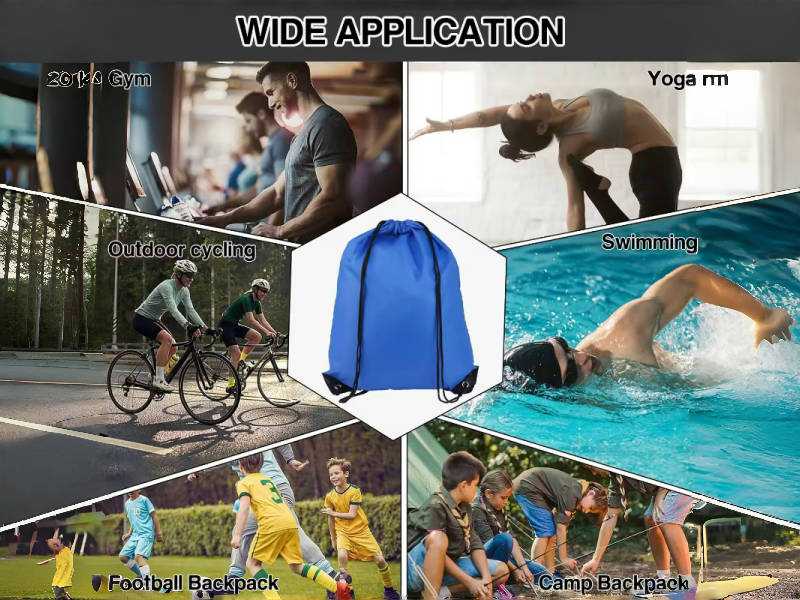
A drawstring bag works by running cords through a top channel. When the cords are pulled, the top opening gathers shut. In many versions, those same cords also anchor at the lower corners, so the bag can be carried on the back or over the shoulder. The design works because it combines closure, carry function, low material use, and quick access in one very efficient structure. That is why it remains popular for sports, events, schools, giveaways, light travel, and branded programs.
What Is a Drawstring Bag, and How Does a Drawstring Bag Work?
A drawstring bag is a soft bag that closes by tightening one or two cords threaded through a top casing. In backpack-style versions, the cords also act as shoulder straps. Pulling the cords narrows the opening; loosening them opens the bag. The design is valued because it is light, compact, fast to use, and cost-efficient compared with more structured carry forms.
The basic mechanics are straightforward. A casing, sometimes called a top channel, is sewn across the upper edge. Cords pass through that channel, often from both sides. When the user pulls the cords, the fabric gathers, and the mouth of the bag closes. In many backpack versions, each cord continues down to the lower corners, where it is fixed into reinforced tabs or metal eyelets. That turns the closure system into the carry system. One motion does both jobs.
That sounds simple because it is simple. But the working quality depends on whether the parts are balanced. If the channel is too narrow, the cords drag and do not slide cleanly. If the cords are too thin, they bite into the hand and shoulder. If the lower corners are weak, the entire bag fails where tension concentrates most. A well-made drawstring bag is not “just a bag with strings.” It is a tension structure, and tension structures only feel good when the load path is right.
This is also why the format has stayed relevant for so long. It is one of the few bag structures that can go from budget event handout to elevated branded utility bag without changing its core logic. You can keep the body flat and affordable, or you can add lining, zip pockets, mesh panels, reinforced corners, wider cords, heavy canvas, or premium trim and push it into a very different product tier.
Which Types of Drawstring Bags Are Best for Sports, Retail, Events, School, and Custom Brand Projects?

The best drawstring bag depends less on trend and more on use scene, carried weight, and brand goal. Lightweight non-woven and polyester versions work well for events and school kits. Cotton and canvas suit gift, packaging, and lifestyle programs better. Upgraded styles with zippers, pockets, or linings fit retail and private label work more naturally than basic giveaway versions.
There is no single “best” type. There is only the right fit for the job.
For sports and gym use, polyester is often the safer direction. It stays light, handles repeated use, holds color well, and does not absorb sweat the way untreated cotton can. If the bag may be dropped on locker room floors, used outdoors, or exposed to frequent friction, a stronger synthetic body usually performs better than a soft natural fabric. Current fabric discussions around drawstring backpacks repeatedly place polyester near the front for that reason.
For events, charity runs, school packs, and large handout programs, simple non-woven or basic polyester bags usually make more sense. These styles are easy to stack, easy to distribute, and cost-efficient at volume. The goal here is not premium feel. The goal is smooth fulfillment, clear logo visibility, and acceptable carrying performance at a controlled unit cost. Product listings for wholesale drawstring bags also show that low-cost non-woven styles remain one of the most common stocked formats for this kind of project.
For retail, gift sets, museum shops, and private label collections, the standard event bag often looks too thin and too generic. This is where cotton canvas, heavier blends, washed finishes, lining, inner pockets, premium cord ends, woven labels, or a shaped bottom start to matter. A drawstring bag can look clean and intentional, but only when the build has enough body to hold that visual standard. In these channels, the bag is not just carrying things. It is carrying the brand’s taste level.
For packaging use, drawstring bags can also move away from the backpack format entirely. A soft cotton or velvet-style pouch, a dust bag for shoes, or a branded gift pouch still uses the same closure idea, but the job is different. Here, the drawstring is not about shoulder carry. It is about gentle closure, protection, repeat use, and presentation. That difference should shape size, fabric hand feel, cord style, and logo method from the start.
Drawstring Bag vs Backpack: Which Option Is Better for Different Users and Use Scenarios?
A drawstring bag is usually better when the goal is light weight, quick access, low bulk, and a lower unit cost. A backpack is better when the load is heavier, the contents need organization, or comfort matters over longer carrying time. If the project is meant for an event, gym session, school kit, or casual brand handout, a drawstring style often wins. If it must handle laptops, daily commuting, or structured packing, a backpack is the smarter choice.
The mistake is treating these two shapes as if they compete directly. In many cases, they do not. They solve different levels of carry demand.
A backpack is built for distribution of weight. It often has wider straps, padding, compartments, and a base that can handle more structured packing. A drawstring bag is built for speed and simplicity. It works well when the user wants to throw in a change of clothes, shoes, a water bottle, flyers, or event materials and move. That is why it shows up so often in youth programs, sports settings, and promotional use.
There is also the branding angle. A flat drawstring body often gives a very direct front print area. No flap. No seam-heavy pocket layout interrupting the logo. No thick padding changing how the surface receives decoration. That makes drawstring bags especially useful when the bag itself is meant to be a visible message carrier.
Here is a practical way to think about it:
| Use Scene | Drawstring Bag | Backpack |
|---|---|---|
| Charity run, school event, team handout | Very suitable | Often more than needed |
| Gym clothes, spare shoes, light daily carry | Suitable | Also suitable |
| Laptop, charger, folders, commuter use | Limited | Better fit |
| Low-space storage before filling | Strong advantage | Weaker |
| Tight budget at volume | Strong advantage | Usually higher cost |
| Premium technical carry | Limited unless upgraded heavily | Better fit |
The real decision is not “Which bag is better?” It is “What load, what use time, what image, and what budget?” Once that is clear, the choice is usually obvious.
What Materials Are Best for a Drawstring Bag, and Why Do They Change Performance and Price?
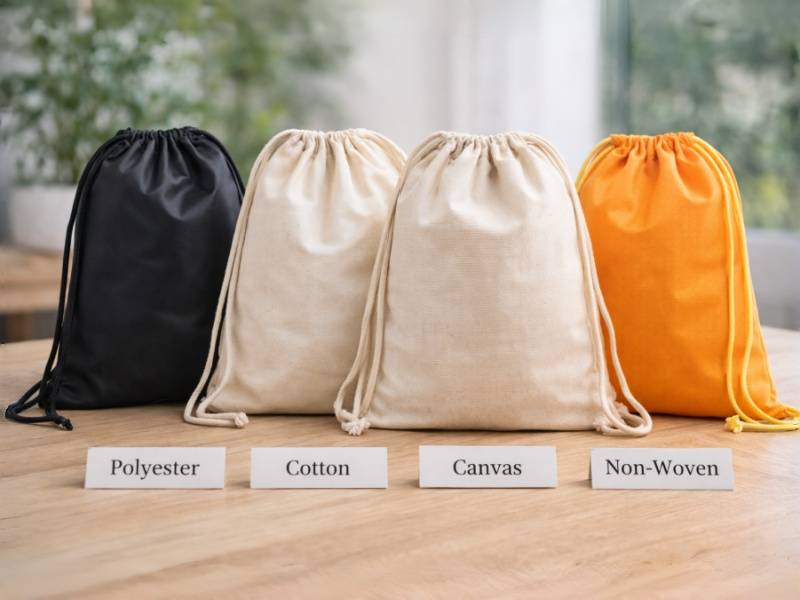
The best material depends on what the bag must carry, survive, and communicate. Polyester is often chosen for sports and event use because it is light and durable. Cotton feels softer and more natural. Canvas gives more body and a higher perceived value. Nylon handles stress well. Non-woven polypropylene helps keep cost down for large-volume programs. Fabric choice affects strength, hand feel, print result, water resistance, and unit cost all at once.
Material selection is where many projects quietly win or lose. Teams often begin by asking for a look. They should begin by asking for a job.
If the bag is headed to a sports program, outdoor event, or youth giveaway, polyester is often a practical place to start. It is light, generally durable for its weight, and tends to hold color well. Recent fabric discussions around drawstring bags highlight polyester for repeated outdoor use, while also noting that breathability is not its strength.
If the project needs a softer, more natural feel, cotton is attractive. It reads warmer in the hand and often suits gifting, organic branding, bookstores, museum shops, and simple lifestyle programs. But cotton is not always the right for wet gear, rough ground contact, or heavy abrasion. It can look charming and still be the wrong call for a hard-use setting. Product listings also show cotton drawstring versions as common in medium-size promo formats because they balance familiarity and print comfort.
Canvas moves the visual tone up. It gives more body, more structure, and more perceived substance. If a brand wants a drawstring bag that feels closer to a small retail accessory than a giveaway, canvas deserves serious attention. The tradeoff is extra weight, higher fabric cost, and less compact packing than very light synthetics.
Nylon is useful when strength-to-weight matters. Non-woven polypropylene is the usual value play when budgets are tight and order quantities are high. It is widely stocked in simple drawstring forms, including large and junior sizes, which is part of why it remains common in schools, campaigns, and event fulfillment.
A quick working comparison helps:
| Material | Best Fit | Strengths | Watch-Outs |
|---|---|---|---|
| Polyester | Sports, events, outdoor use | Light, durable, color-stable | Less natural hand feel |
| Cotton | Gifts, schools, lifestyle use | Soft feel, familiar look | Can feel less durable in rough use |
| Canvas | Retail, premium casual use | Strong body, higher value feel | Heavier, higher cost |
| Nylon | Harder-use light carry | Strong, light | Can look too technical for some brands |
| Non-woven PP | Large handout programs | Cost-efficient, easy to print | Less premium feel |
The right fabric does more than control cost. It decides whether the bag feels temporary, reusable, giftable, sporty, clean, rugged, or disposable. That is a branding decision disguised as a materials decision.
Why Do Some Drawstring Bags Work Better Than Others?
The difference usually comes down to construction details, not the basic shape. Better drawstring bags have smoother cord movement, stronger corner reinforcement, better seam control, and a fabric weight that matches the intended load. A cheap-looking bag is often the result of poor balance: thin fabric with thick cords, weak corners under high tension, a large body with no structure, or decoration that does not suit the fabric surface.
The first detail to watch is the corner structure. The lower corners carry concentrated stress every time the cords are pulled and every time the bag hangs from the shoulders. Weak stitching here causes premature failure, even when the body fabric still looks fine. Reinforcement patches, eyelets, webbing inserts, or layered corner tabs make a visible difference in service life.
The second detail is the cord itself. Thin, slippery cords may reduce cost, but they often feel unpleasant in use. Thicker cords can improve hand feel, yet too much thickness creates friction in the channel and can bunch the opening awkwardly. Good cord selection is not about “premium” versus “cheap.” It is about matching the cord diameter and texture to the fabric weight and channel width.
The third detail is the fabric-to-size relationship. A large body cut from very light fabric can look limp and unstable, especially when lightly filled. The bag may technically work, but it will not present well. That matters more than some teams expect. A half-empty bag with weak body collapses visually. A slightly heavier fabric can make the same dimensions look more intentional, even before any logo goes on.
Then there is decoration. A print method that looks sharp on cotton may behave differently on polyester or textured non-woven. A small, centered logo can look lost on a wide front panel. An oversized print can distort when the bag gathers shut. Good-looking drawstring bags are usually the result of several small decisions lining up correctly, not one expensive upgrade.
How Does a Custom Drawstring Bag Sample and Production Process Work?
A custom drawstring bag project usually moves through six steps: brief, material confirmation, artwork and sizing, sample making, revision, and bulk production. The fastest jobs use existing body shapes and standard fabrics. More involved projects add custom size, custom fabric, pockets, lining, special trim, labels, and packaging. The biggest delays usually come from unclear briefs, late artwork changes, and sample comments that mix “must-fix” issues with optional adjustments.
A strong project starts with a clear brief, not a vague photo. The production team should know the bag’s use, target fill, approximate load, target feel, fabric preference, print method, size, and packaging direction. If the project is for an event, the deadline matters. If it is for retail, the channel matters. If it is for a gift set, the fill matters. The more clearly those things are stated, the fewer revisions pile up later.
Then comes material and structure confirmation. At this stage, small details save large problems. Should the bag stay flat or hold shape? Do you need one main compartment only, or an extra zipper pocket? Does the cord need to feel soft against bare shoulders? Will the bag carry shoes, brochures, cosmetics, or a bottle? Those are not styling details. They change construction.
The sample stage is where assumptions get tested. A good sample does more than check color and logo position. It checks opening behavior, closing friction, body droop, cord comfort, seam cleanliness, and how the bag looks when lightly filled and fully filled. This is also the right time to test packing. A bag that looks fine individually may wrinkle badly when packed tight in export cartons.
After comments, the bag moves into revision and pre-production confirmation. This stage should separate critical corrections from nice-to-have polishing. If everything is labeled urgent, nothing is. Teams that manage this step well tend to move faster and spend less on rework.
Only then should bulk production begin. For repeat work, keep a clear record of approved size, fabric spec, color standard, cord spec, logo file version, label placement, and packing method. That record is what protects consistency next time.
If your drawstring bag project needs custom fabric, brand trim, upgraded construction, or a more polished retail feel, it makes sense to start from a structured brief and sample path instead of treating it like a generic stock item. For custom development support, you can contact Jundong at info@jundongfactory.com.
Who Should Work With a Drawstring Bag Factory Partner, and What Should They Ask Before Ordering?
Drawstring bag projects are a strong fit for brand owners, importers, wholesalers, school programs, event teams, sports organizations, and private label collections. Before moving forward, they should ask about fabric options, sample lead time, corner reinforcement, decoration method, print size, packing method, order minimums, and consistency control. The right factory partner should be able to explain not just what can be made, but what should be made for the intended use.
Some teams only need a straightforward event bag. Others need a drawstring style that quietly does more: a clean retail add-on, a youth program pack, a promotional piece that does not feel disposable, or a private label item that fits a wider collection. Those teams benefit from working with a production partner that can discuss both cost control and product judgment.
The most useful early are practical:
- What fabric would you recommend for this use and target feel?
- Where are the stress , and how will they be reinforced?
- Which logo method fits this fabric and artwork best?
- What is the realistic print area on this size?
- What sample comments would most affect function, not just appearance?
- How should the bag be packed for export so the body and print arrive clean?
A good production partner will also push back when needed. If the bag is too large for the chosen fabric, they should say so. If the artwork is too detailed for the surface, they should say so. If the cord is too thin for the intended load, they should say so. Silent agreement is not a sign of professionalism. It is often the start of later trouble.
This is especially true for private label work. Once a drawstring bag is tied to your brand image, small construction flaws are no longer “small.” They become part of how the brand is remembered.
How Much Does a Custom Drawstring Bag Cost, and What Factors Affect the Final Price?

The final cost is shaped by fabric, size, construction, print method, quantity, packaging, and shipping terms. A plain non-woven event bag can sit in a very different price tier from a lined canvas drawstring bag with woven labels, inner pockets, and custom packaging. The fastest way to get a useful quote is to define the intended use, target fabric, approximate size, logo method, and packing style before asking for pricing.
Unit price often moves less because of one “premium” feature and more because of combined complexity. A small upgrade in fabric may be manageable. Add lining, extra pockets, a woven label, individual gift packaging, and low quantity, and the structure changes completely. That is no longer a simple cinch bag. It is a more developed sewn product with different labor time and packing logic.
Fabric is usually the first major driver. Size follows closely. Then come decoration and accessories. A bigger print area, stronger cord, metal eyelets, thicker fabric, or custom label set can all be reasonable choices on their own. Together, they move the bag into a higher tier.
A simple working view looks like this:
| Cost Driver | Lower-Cost Direction | Higher-Cost Direction |
|---|---|---|
| Fabric | Non-woven, light polyester | Heavy canvas, lined fabric, special finishes |
| Size | Small to medium standard body | Larger custom body |
| Decoration | Simple one-position print | Large print, multiple positions, specialty trim |
| Construction | One compartment | Pockets, lining, shape support, reinforcements |
| Packing | Bulk packed | Individual bagging, inserts, retail-ready presentation |
| Quantity | Higher volume | Lower volume, more setup spread |
One more thing matters: false economy. A bag that is too cheap for the use case often becomes expensive later through poor appearance, short life, bad event feedback, or reordering from scratch. The lowest quote is not always the lowest cost.
If you want a quote that reflects the real project rather than a misleading placeholder, send the intended use, bag size, target fabric, artwork, quantity, and packing preference to info@jundongfactory.com. That usually leads to a much cleaner first discussion.
How Long Does It Take to Make a Custom Drawstring Bag, and When Should You Start Sampling?
Lead time depends on whether the bag uses a stock body, modified stock style, or fully custom build. Simple stocked promotional programs can move very quickly once artwork is approved, while fully custom work takes longer because it adds material confirmation, pattern work, sample review, and revision time. In the promotional sector, rush services can ship next day for selected items after art approval, but that speed should not be confused with true custom development.
This is one of the most common planning mistakes. A team sees “fast custom bags” online and assumes every project can move that way. Usually, those quick-turn services apply to stocked shapes, stocked fabrics, and straightforward decoration. That is useful, but it is not the same thing as building a drawstring bag around custom size, custom trim, upgraded construction, or private label details.
A safe rule is simple: the more original the bag, the earlier the sample process should start. If the bag is tied to an event date, school opening, campaign launch, sports season, or holiday program, sampling should begin before the artwork feels perfectly “finished.” It is better to lock structure early and refine graphics inside that structure than to spend too long polishing graphics for a body that may still change.
Timing also depends on revision quality. Fast projects are rarely the result of “speed” alone. They are the result of clear comments. If the sample review says, “make it better,” time disappears. If it says, “increase body height by 1.5 cm, widen channel for smoother closure, move logo 2 cm upward, and change cord to softer braided style,” the team can act.
Peak seasons add another layer. Even a simple drawstring bag can face pressure if many event and school programs are booking the same window. Starting early is not just about the factory calendar. It is about leaving space for a second sample if the first one exposes a real issue.
If your project has a fixed launch date and cannot absorb last-minute changes, start with the sample plan first, not the mass quantity. Jundong can review your bag brief and help map a more realistic path at info@jundongfactory.com.
Frequently Asked Questions About Custom Drawstring Bags
1) What size should we choose for a drawstring bag project?
The safest way to choose size is to start with what will actually go inside the bag, not with a standard number copied from another listing. In current custom drawstring bag guides, small pouch formats are often used for jewelry, beauty items, and small accessories; medium sizes are commonly used for T-shirts, shoes, event kits, and promotional sets; and larger sizes are typically used for sportswear, school gear, or travel-related use. One detail many teams miss is the top channel: the drawstring casing takes away some usable height, so a bag marked 10 × 12 inches does not give you a full 12 inches of easy packing space. That matters more than people expect when the fit needs to feel smooth instead of tight.
A practical rule is to measure the widest part, the tallest part, and the shape behavior of the contents. Flat items like folded apparel behave differently from boxy items like shoe packs or cosmetic sets. For boxier fills, add extra room for insertion and for the gathered top. For softer fills, leave enough slack for the bag to close without looking strained. If the bag is worn on the back, think beyond fit and ask one more thing: Will the filled bag still look balanced on the body? A bag that technically fits but looks too short, too deep, or too swollen usually ends up feeling cheaper than it should.
| Typical Use | Common Size Direction | Why It Works |
|---|---|---|
| Jewelry, gift pieces, cosmetics | Small | Easy closure, cleaner presentation |
| Shoes, folded T-shirts, event packs | Medium | Good balance of fill and logo area |
| Sportswear, school gear, travel extras | Large | More usable volume and better carry function |
The smartest first step is not “What is the standard size?” but “What should the bag hold, and how should it look when filled?” That single change in thinking prevents a lot of expensive revisions later.
2) Which fabric is best for a drawstring bag?
There is no universal best fabric. The right choice depends on weight, hand feel, image, and how the bag will be used after it leaves the box. Current drawstring bag guides consistently position polyester as a strong option for sports, outdoor use, and event programs because it is lightweight, durable, and quick-drying. Cotton and canvas are often chosen when the bag needs a softer, more natural, or more retail-friendly feel. Non-woven polypropylene remains common for large-volume giveaway projects because it is affordable and gives a generous printable surface. RPET is increasingly used when a recycled story matters.
What matters in real sourcing is not just the fiber name, but the match between fabric personality and project purpose. Polyester can perform very well for gym, school, and event use, but it may feel too technical for a boutique gift program. Cotton can look warm and familiar, but it may not be the first choice for wet gear or rough daily abrasion. Canvas often lifts the perceived value because it holds shape better and feels more substantial in the hand, but that improvement comes with more weight and a higher cost. Non-woven styles can be excellent for distribution projects, but they should not be expected to carry the same value signal as a heavier woven fabric.
| Fabric | Best Fit | Main Strength | Watch-Out |
|---|---|---|---|
| Polyester | Sports, events, active use | Light, durable, quick-drying | Less natural hand feel |
| Cotton | Gifts, schools, lifestyle use | Soft, familiar, easy to like | Less ideal for rough or wet use |
| Canvas | Retail, elevated casual use | Better body and value feel | Heavier, usually higher cost |
| Non-woven PP | Big-volume handouts | Cost-efficient, broad print area | Less premium feel |
| RPET | Recycled-focused programs | Reuse and recycled story | Needs the right build to avoid feeling generic |
If the bag must do more than “be there,” fabric is not a small decision. It shapes how the bag looks, feels, wears, photographs, and gets reused. That is why good teams usually lock fabric direction early, before spending too much time on trim.
3) Can a drawstring bag carry heavy items, or is it only for light use?
A drawstring bag is usually best for light-to-medium loads, not because the structure is weak by definition, but because its comfort and durability depend heavily on fabric, cord thickness, corner reinforcement, and stitch quality. Current guides describe drawstring bags as a good fit for small-to-medium contents and recommend moving toward reinforced corners, heavier materials, or even a different bag type when the load becomes more demanding. The reason is simple: once the bag is full, the stress travels quickly to the lower corners and into the shoulder cords. If those areas are underbuilt, the bag may still look fine on a table while failing in use.
That does not mean drawstring bags cannot be strengthened. They can. A heavier fabric, thicker cords, reinforced corners, webbing-backed tabs, grommets, and cleaner seam construction all help. Product examples in the current promotional and factory space frequently highlight reinforced corners, metal grommets, thicker cords, and heavier 420D/600D-style materials when the bag is meant to carry more than spare clothes or handouts. In other words, “drawstring bag” is not one fixed performance level. It is a family of structures, and some are built far more seriously than others.
The better way to judge capacity is not to ask, “How many kilos can this bag hold?” and stop there. Ask three instead: How long will it be carried? What shape is the load? Where will the tension sit? A bag carrying soft sportswear behaves very differently from a bag carrying shoes, brochures, water bottles, or boxed kits. The heavier and harder the contents, the more you should treat the corners, cords, and body fabric as performance parts rather than decorative details. If the project is meant for repeated daily use, it is usually wiser to build up the bag from the start than to squeeze a heavy job into a light structure.
4) Which logo method works best on a drawstring bag?
The best logo method depends on fabric, artwork complexity, order volume, and the visual tone you want. Current printing guides for drawstring bags consistently separate the main methods this way: screen printing works well for larger runs and simple graphics, digital printing suits smaller runs or more detailed artwork, sublimation is a strong option for bright all-over color on polyester, and embroidery adds a more elevated look but usually costs more. Some guides also highlight DTF transfers for colorful artwork across multiple fabric types.
What teams often miss is that drawstring bags are not rigid boards. They wrinkle, flex, and gather shut. That means the most reliable logos are often bold, centered, and visually simple. Current custom bag guidance recommends thicker lines, stronger contrast, and comfortable margins rather than edge-to-edge layouts or fine text. Even a well-printed logo can look weak if the artwork is too detailed for a moving, slightly crinkled surface. For the same reason, a QR code may work only when printed large enough to stay scannable on fabric that shifts in real use.
| Logo Method | Best For | What It Does Well | Where It Can Struggle |
|---|---|---|---|
| Screen Print | Clean logos, higher volume | Strong value, solid color impact | Fine detail, photo-like art |
| Digital Print | Shorter runs, complex art | Handles detail better | Usually higher cost per unit |
| Sublimation | Polyester, bright full-color looks | Excellent for vivid all-over graphics | Best on suitable polyester surfaces |
| Embroidery | Premium casual look | Texture and perceived value | Added cost, limited for very fine artwork |
| DTF / Transfers | Bright multi-color graphics | Flexible color expression | Needs the right setup and placement |
A good logo decision is never only about print technology. It is also about distance, movement, fold lines, and how the bag closes around the print area. If you want a drawstring bag to look sharp after filling and wearing, simplify earlier than you think you need to.
5) Can we add zippers, pockets, lining, or other upgrades to a drawstring bag?
Yes, and this is exactly where a drawstring bag can shift from a basic giveaway into something much more polished. Current size and style guides already treat zippered drawstring bags, string backpacks, string totes, dust bags, and pouch-style versions as different branches of the same family. They also note that zipper placement and added structure can change usable internal height and overall fit. That matters because once you add pockets, lining, or a front zipper panel, you are not just decorating the bag. You are changing how it opens, how it carries, how it packs, and how it is perceived.
A zipper is useful when the contents need better retention, extra organization, or a more finished retail look. A lining can improve hand feel, body, and durability, especially when the outer fabric is soft or thin. A front pocket can add real everyday convenience, but it also changes the front visual field and can compete with the logo zone if not planned well. Heavier webbing straps, cord-end hardware, woven labels, reinforced corners, and shaped bottoms all move the bag upward in feel, but each upgrade adds labor, parts, or both. That is why some bags look underbuilt and over-decorated: too many add-ons were placed on a body that never had enough structural quality to support them.
The right question is not “Can we add more features?” The better question is “Which added feature will make the bag more useful or more desirable in the real channel where it will be used?” For a gym program, a front zip pocket may matter. For a museum shop, better fabric body and a woven label may matter more. For a product set, a cleaner lining and controlled opening behavior may do more than any extra compartment. The strongest upgraded drawstring bags usually feel edited, not overloaded.
6) What is a realistic minimum order quantity for a custom drawstring bag?
A realistic minimum depends on fabric, printing method, hardware, and how far the project moves away from a standard body. In current private-label and custom drawstring bag guides, common starting bands often fall between about 200 and 1000 pieces per design, with lower ends more common for simpler projects and higher ends appearing when the bag uses special materials, more involved decoration, or more custom structure. That spread is wide for a reason: there is a big difference between putting a simple one-color print on a stock-shaped bag and developing a lined, branded style with custom trim.
If your run is small, the cleanest path is usually to simplify one or more variables. Keep a standard size. Use a practical fabric already being used in volume. Limit print positions. Avoid too many custom parts in the first run. This often allows a project to move forward at a friendlier starting quantity without forcing the bag into a premium cost tier. On the other hand, if the goal is a truly ownable retail style with custom color matching, special cord ends, reinforced construction, lining, labels, and upgraded packaging, a larger run usually makes more financial sense because the setup effort is spread across more units.
One more thing matters here: minimum order quantity is not the same as smart order quantity. A factory may accept a low number, but that does not automatically make it the right launch plan. Sometimes the better move is to choose a more standard version for the first run, learn from real use, then step into a more developed version on the repeat order. That approach often protects budget and leads to a stronger product instead of an overdesigned first attempt.
7) How does the sample process usually work, and what should we send first?
A smooth sample process starts with a clear brief, not a rushed message saying “make it like this photo.” In current custom drawstring bag guidance, fast sample timelines can begin in as little as three to five days for simple designs, but that speed only works when the bag direction is already clear. The team making the sample needs to understand the intended use, target size, preferred fabric, logo method, color direction, quantity, and whether the bag is meant for events, schools, retail, packaging, or heavier daily use. If the first message is vague, the sample often becomes a guessing exercise instead of a real approval tool.
The most useful starter pack is simple: artwork file, target dimensions, reference images, expected contents, fabric preference if known, and a short note on what matters most. That last part is often the most important. Is the main goal a low-cost event bag? A cleaner retail feel? Better shoulder comfort? Stronger corners? A bag can only be optimized when the priorities are ranked. Without that, teams spend too much time adjusting secondary details while the core issue stays unresolved.
A good sample should check more than color and logo placement. It should check opening smoothness, closure tension, body shape when lightly filled, cord comfort, corner strength, and packing behavior. If the bag is meant to be worn, have someone actually wear it. If it is meant to hold a set, pack the exact set. If it is meant to photograph well, test it in the way it will actually be photographed. Samples save money only when they are treated as functional tests, not just visual proofs.
8) What should we check before approving the sample?
Before approving the sample, check the parts that are hardest to fix later: usable size, corner construction, cord behavior, print clarity, and the bag’s look when filled. Current size guides stress that the drawstring channel consumes part of the top area, which means a bag can measure correctly on paper while still feeling tight in use if the fill height was misjudged. At the same time, current bag guidance repeatedly to reinforced corners, cord choice, and stitch quality as major factors in service life and comfort. That makes sample approval less about “Do we like the color?” and more about “Will this bag still feel right after repeated real use?”
A practical review should include four checks. First, fit: insert the intended contents and close the bag normally. Second, carry feel: wear it or hold it with realistic weight. Third, surface control: look at the logo when the bag is flat, lightly filled, and fully filled. Fourth, finish: examine seam cleanliness, print edges, corner tabs, and whether cords slide smoothly or catch inside the channel. If there is a zipper or pocket, check whether it improves use or just complicates the front layout.
One small habit makes a big difference: separate comments into must-fix, good-to-improve, and can-wait. When every comment is treated as equally urgent, projects slow down and budgets drift. The best repeat orders usually come from teams that approve samples with discipline, not from teams that keep polishing forever. Once the structure, print, and handling are right, lock the sample and record the exact spec clearly for bulk production.
9) What affects price most, and how can we control cost without making the bag look cheap?
Price usually moves because of combined complexity, not one isolated feature. Current custom drawstring bag guidance consistently ties cost to material choice, size, customization complexity, print colors or methods, quantity, and lead time. A simple non-woven or light polyester bag with a one-color print sits in a very different cost band from a lined canvas bag with zipper pocket, woven label, upgraded cords, and individual packaging. That difference is not just material cost. It is also labor time, packing logic, and waste control.
The smartest way to control cost is to protect the details people notice most and simplify the ones they do not. In many projects, a better fabric body and stronger corners do more for perceived value than adding too many features. A cleaner one-position logo often works harder than multiple placements. A medium size may offer better value than oversizing the bag just because “bigger feels better.” Often it does not. It just increases fabric use, carton volume, and the chance that the bag looks empty when lightly filled.
| Cost Driver | Usually Raises Cost Faster | Smarter Control Option |
|---|---|---|
| Fabric | Heavy or specialty material | Choose the lightest fabric that still supports the use |
| Size | Oversized body | Fit the bag to the real contents |
| Decoration | Large or multi-process artwork | Focus on one strong print zone |
| Construction | Extra pockets, lining, multiple trim details | Upgrade only the details that improve use or feel |
| Quantity | Very low run | Simplify specs for the first order |
The best low-cost drawstring bags do not feel cheap because they are stripped down thoughtfully. They look intentional. That is a big difference. If your team is balancing appearance, durability, and cost, it is usually worth reviewing the brief once more before quoting begins. Small changes at that stage often save much more than hard negotiation later.
10) How long do sampling and bulk production take, and can a rush order really work?
Yes, rush orders can work, but only under the right conditions. In current custom bag guidance, simple sample timelines are often described as three to five days, and some private-label drawstring bag guides mention bulk runs around ten to fifteen days for straightforward projects. In the stocked promotional space, there are even current examples of 24-hour production services for selected drawstring bags, but these are tightly controlled offers: they usually apply only to stock styles, limited imprint colors, one print location, approved artwork, and capped quantities. That is very different from a fully custom bag with special fabric, upgraded trim, or revised structure.
This is where planning discipline matters. If the project uses a standard shape, standard material, and simple print, lead time can be surprisingly short. If the bag involves custom color, lining, shaped panels, special cords, extra pockets, woven labels, or packaging details, the timeline should be treated as a development schedule, not a quick reorder. The risk is not only delay. It is also approving a bag that never had enough time to be tested properly.
A useful way to think about timing is this: rush works best when the bag is already known. True custom work needs room for sample review, comment sorting, and at least one round of correction if anything important surfaces. If the launch date is fixed, start from the sample calendar rather than the delivery date and work backward. Teams that do this usually make calmer decisions and end up with a stronger result. Teams that start too late often pay extra for speed and still compromise on the bag itself.