 Skip to content

What Kind of Luggage Is Suitable for Lightweight Travel and Retail Projects?
A suitcase can post an impressive empty weight and still feel heavy the moment it reaches a carpeted terminal. Another may weigh slightly more yet roll smoothly, lift comfortably, recover well after impact, and provide more usable space inside. That difference explains why lightweight luggage should never be judged by kilograms alone.
Lightweight travel is best supported by compact PP or PC spinners, carefully constructed softside carry-ons, underseat cases, rolling duffels, and travel backpacks. The right format keeps empty weight controlled while protecting wheels, trolley tubes, handles, closures, corners, and load-bearing seams. For retail projects, it should also offer clear sizing, repeatable colors, stable construction, useful packing space, practical packaging, and a price structure suitable for the intended sales channel.
A successful travel collection begins with a real journey, not a product sketch. Picture a traveller moving from taxi to check-in counter, lifting the case into an overhead compartment, pulling it over carpet, opening it in a small hotel room, and packing it again four days later. Every unnecessary gram matters—but so does every weak wheel, awkward handle, unusable pocket, and wasted centimeter of interior space.
What Type of Luggage Is Best for Lightweight Travel?
The best lightweight luggage is not always the case with the lowest empty weight. It is the one that gives enough usable capacity, moves smoothly, lifts comfortably, protects its contents, and remains stable after repeated packing and transport. Compact spinners, soft carry-ons, underseat cases, rolling travel bags, and travel backpacks each suit a different journey.
A practical selection should consider five things together:
- Empty weight
- Usable internal space
- Carrying and rolling effort
- Strength at high-stress areas
- Suitability for the intended trip
Jundong’s documented luggage capability includes soft luggage, carry-ons, children’s luggage, EVA luggage, rolling travel bags, and luggage sets. Important development areas include structure, wheels, trolley handles, lining, zippers, lifting handles, weight, dimensions, branding, packaging, transport checks, and after-sales exposure. ABS and PC shell options require confirmation according to the specific project and available production chain.
What Is Considered Lightweight Luggage?
“Lightweight” should be measured relative to the product’s size, capacity, and structure. An underseat case and a large checked case cannot be judged by the same weight target.
A useful evaluation combines three measurements:
Weight efficiency = empty weight ÷ usable capacity
Packing efficiency = usable internal volume ÷ external volume
Mobility efficiency = rolling effort + lifting comfort + handle stability
The first calculation shows how much case weight is required to provide each unit of usable space. The second reveals how much exterior size is lost to trolley tubes, wheels, curved corners, thick dividers, or unnecessary padding. The third reflects how the product feels during an actual journey.
A case may be physically light but inefficient when:
- Large wheel housings reduce internal room
- Trolley tubes occupy the middle of the packing area
- Thick dividers add mass without improving organization
- The shell flexes so much that extra internal support is needed
- Small wheels create high rolling resistance
- The lifting handle is uncomfortable when fully packed
For product comparison, record the same data for every sample:
| Measurement | Why it matters |
|---|---|
| Full external dimensions | Determines storage and travel compatibility |
| Empty weight | Shows how much baggage allowance is consumed |
| Internal usable dimensions | Reveals real packing space |
| Wheel and trolley intrusion | Shows lost interior capacity |
| Loaded lifting comfort | Indicates handle and balance quality |
| Loaded rolling behavior | Shows actual travel effort |
| Packed carton size | Affects storage and shipment expense |
The lightest sample should not be approved automatically. A slightly heavier version may offer better usable capacity, stronger components, and easier movement.
Carry-On vs Underseat
A carry-on case is usually the stronger all-purpose choice for short travel, while an underseat case works better for overnight use, electronics, documents, and items that need to remain accessible.
| Travel need | Carry-on | Underseat |
|---|---|---|
| Clothing capacity | Higher | Limited |
| Access during travel | Lower once stored overhead | Easier |
| Lifting requirement | Often lifted overhead | Usually kept lower |
| Core retail role | Strong main item | Supporting compact item |
| Trolley-space loss | Moderate | More noticeable |
| Suitable use | Short leisure and business trips | Overnight and personal-item travel |
The largest challenge in underseat development is preserving useful internal space. Wheels, a recessed base, trolley channels, laptop padding, and front pockets can consume a large share of a small body.
A well-planned underseat sample should hold a defined list, such as:
- Laptop or tablet
- Charging accessories
- Toiletry pouch
- One change of clothing
- Travel documents
- Small personal items
If these items fit only when the case is overfilled, the exterior design is not translating into practical capacity.
A carry-on offers more flexibility and is generally easier to extend into medium and large sizes. It can also act as the visual reference for matching vanity cases, toiletry bags, packing cubes, or travel backpacks.
The underseat case remains valuable when its role is clearly separated: quick access, compact movement, and reduced overhead lifting.
Hardside vs Softside
Neither format is automatically lighter. Finished weight depends on the complete construction.
A hard case carries weight through:
- Molded shell
- Wheels and housings
- Trolley system
- Handles
- Lock
- Zipper or frame closure
- Lining and dividers
A soft case carries weight through:
- Outer textile
- Backing and coating
- Foam
- Internal support boards
- Piping and binding
- External pockets
- Expansion section
- Wheels and trolley
- Lining and reinforcement
| Selection factor | Hardside | Softside |
|---|---|---|
| Shape | Naturally defined | Created through fabric and support |
| External access | Usually limited | Easier to add |
| Expansion | Optional | Common |
| Color presentation | Strong shell-based identity | Fabric, trim, and color-block options |
| Empty storage | Fixed shape | May compress |
| Surface concern | Scratches and dents | Abrasion, stains, and creasing |
| Weight control | Shell engineering | Layer and feature control |
A simple PP case may be lighter than a soft case with full foam, several zipped pockets, expansion, piping, and rigid boards. A carefully simplified soft carry-on may be lighter than a highly equipped hard spinner.
Hardside luggage is often suitable when the collection needs:
- Clean shell geometry
- Strong color consistency
- Easy size-family recognition
- Simple interior organization
- Modern retail presentation
Softside luggage is often suitable when the journey requires:
- External laptop or document access
- Flexible packing
- Expansion
- Easier compression during storage
- Mixed textile styling
The final decision should come from complete samples, not shell or fabric swatches alone.
Do Airlines Prefer Hard or Soft Luggage?
Airlines generally focus on the luggage’s total dimensions, total packed weight, safe handling, and ability to fit the allocated storage area. Hard and soft luggage can both work when these conditions are met.
The more useful development check is whether the external measurement includes every fixed part:
- Wheels
- Top handle
- Side handle
- Protective feet
- External pockets
- Lock
- Expansion depth
- Other protruding fittings
A soft case may fit within its intended size when empty but exceed it after expansion. A hard case keeps a more fixed body, but exposed wheel housings and handles still add to the total dimensions.
For retail descriptions, avoid broad claims that one size will be accepted everywhere. Carrier rules, aircraft, routes, and ticket conditions can differ. Clear external measurements are more valuable than universal acceptance language.
Hard luggage may be more suitable where fixed shape and surface protection matter. Soft luggage may be more useful where external access and controlled flexibility matter. The airline does not make that product choice; the intended journey and packing behavior do.
Rolling Travel Bags
Rolling travel bags are useful for short holidays, sports trips, road travel, family journeys, and bulky items that do not pack naturally into a rigid rectangular case.
Their flexible body supports:
- Shoes
- Jackets
- Sports equipment
- Soft accessories
- Irregularly shaped contents
- Compressible clothing
The wheel-end structure is the critical area. A rolling bag can look light and spacious while empty but sag badly when filled.
Key construction areas include:
| Area | Required performance |
|---|---|
| Wheel base | Stable under load |
| Trolley attachment | Controlled movement and reinforcement |
| Bottom | Enough support to prevent bending |
| Main opening | Wide access without weak corners |
| Carry handles | Comfortable under full load |
| Side compression | Control load movement |
| Fabric near wheels | Kept clear of moving parts |
A poorly balanced design may drag at the front, twist when pulled, or lean when partly packed. The sample should therefore be tested with several loading patterns:
- Evenly distributed soft contents
- Heavy items near the wheel end
- Heavy items near the front
- Partly filled condition
- Full-capacity condition
Rolling travel bags usually work best as a lifestyle extension rather than the only luggage format. They complement a cabin spinner by covering sports, driving, family, and equipment-based travel.
Travel Backpacks
A travel backpack is often the most practical lightweight option where the journey includes stairs, trains, old streets, public transport, or frequent transfers.
Its real advantage is mobility rather than the absence of wheels.
A purpose-built travel backpack should include:
- Wide suitcase-style opening
- Stable main compartment
- Internal compression
- Comfortable shoulder straps
- Secure strap anchoring
- Supportive back panel
- Document access
- Suitable device protection
- Strong top or side handle
- Balanced load placement
Weight reduction should not weaken the carrying system. Thin foam, narrow straps, poor strap angles, or an unsupported back panel can make a lighter pack feel harder to carry.
Testing should use a realistic load and review:
| Check | What to observe |
|---|---|
| Shoulder pressure | Whether weight is spread evenly |
| Bag height | Whether it sits correctly on the back |
| Strap stability | Whether adjustment slips |
| Back panel | Whether contents press through |
| Load movement | Whether the body swings while walking |
| Main opening | Whether packing stays controlled |
| Carry handle | Whether short lifting feels secure |
A travel backpack is especially useful in a collection that already has wheeled luggage. It provides a distinct hands-free option rather than repeating another case size.
Size and Capacity
The best size is the one that gives enough usable space without creating unnecessary weight, awkward movement, or excessive exterior dimensions.
A focused travel assortment may use:
| Format | Main use | Collection function |
|---|---|---|
| Underseat case | Overnight and work travel | Compact companion |
| Cabin spinner | Short journeys | Main product |
| Medium checked case | Longer personal trips | Size extension |
| Large checked case | Family or extended travel | High-capacity item |
| Rolling travel bag | Sports and road trips | Flexible-load option |
| Travel backpack | Stairs and multi-stop travel | Hands-free option |
Capacity should be validated with real contents because calculated volume can be misleading. Curved shell corners, trolley tubes, wheel wells, thick dividers, and recessed fittings all reduce usable room.
A repeatable cabin-case packing test might include:
- Four lightweight tops
- Two pairs of trousers
- One light jacket
- One pair of shoes
- Toiletry pouch
- Small electronics
- Underwear and socks
- One packing cube
The same list should be placed into each sample. Record:
- Whether everything fits without excessive compression
- Whether the main closure remains smooth
- Whether the case keeps its intended shape
- Whether the interior divider closes naturally
- Whether lifting remains balanced
- Whether the wheels remain stable
A smaller case with a clean rectangular interior may hold more practical travel items than a larger-looking case with deep component intrusion.
Spinner vs Two-Wheel
Spinner systems improve movement on smooth floors and in narrow spaces. Two-wheel systems may perform better on rougher surfaces and can sometimes use larger, more protected wheels.
| Use condition | Four-wheel spinner | Two-wheel system |
|---|---|---|
| Airport floors | Very convenient | Effective |
| Moving in queues | Easy sideways movement | Requires tilting |
| Carpet | Depends on wheel size | Often easier with larger wheels |
| Uneven pavement | More exposed | Often more stable |
| Upright movement | Strong advantage | Not designed for it |
| Component count | Higher | Lower |
| Interior intrusion | Depends on housing | May be lower in some structures |
Spinner wheels make a case feel easier to move, but they do not reduce its physical weight. Perceived lightness depends on:
- Wheel diameter
- Bearing quality
- Housing alignment
- Single or double-wheel structure
- Loaded balance
- Trolley rigidity
- Floor condition
A wheel system that performs well on a polished sample-room floor may behave differently on carpet, grout lines, concrete, or pavement joints.
Test the loaded sample by:
- Pulling it in a straight line
- Moving it sideways
- Turning through tight angles
- Crossing carpet
- Rolling over small surface joints
- Leaving it standing on a slight slope
- Repeating direction changes
Wheel attachment and trolley stability should not be weakened for a small reduction in empty weight. These are among the most frequently used parts of the product.
Frequent Travel
Frequent travel places repeated stress on the same components. The strongest format is generally a compact case with simple organization, smooth wheels, stable trolley tubes, comfortable lifting handles, and a reliable main closure.
Different travel patterns support different choices:
| Travel pattern | Suitable direction |
|---|---|
| Frequent short flights | Compact cabin spinner |
| Business travel | Underseat or soft cabin case |
| Multi-stop airport travel | Four-wheel spinner |
| Rail and flight combination | Soft case or travel backpack |
| Road and sports travel | Rolling travel bag |
| Rough urban routes | Two-wheel case or backpack |
A frequent-travel product should avoid unnecessary weight from:
- Heavy removable organizers
- Several rigid divider panels
- Oversized metal decoration
- Multiple locks
- Repeated branding
- Thick cosmetic overlays
- Low-use external pockets
- Complex expansion structures
The parts used on every journey deserve the strongest attention:
- Wheels
- Trolley grip
- Tube locking
- Top and side handles
- Main zipper
- Lock
- Compression straps
- Interior divider
The best lightweight luggage feels simple without feeling incomplete. Its mass is concentrated where strength and movement require it, while decorative and low-use details remain controlled.
Selection Matrix
The following matrix can help narrow the format before sampling:
| Priority | Strongest direction |
|---|---|
| Lowest practical exterior size | Underseat case |
| Broad short-trip use | Cabin spinner |
| Fast document access | Soft carry-on |
| Smooth airport movement | Four-wheel spinner |
| Rough streets and stairs | Travel backpack |
| Sports and bulky contents | Rolling travel bag |
| Fixed modern silhouette | Hardside case |
| Flexible external organization | Softside case |
| Collection expansion | Cabin case as the core size |
| Low packed storage volume | Compressible soft luggage |
A final choice should be made only after the case has been weighed, packed, lifted, rolled, stored, and unpacked. Lightweight travel is not created by one low number. It comes from a well-balanced product that uses its material and components efficiently while keeping the parts that travellers depend on.
Which Materials Balance Weight and Durability?
Lightweight luggage needs more than a low-density shell or thin textile. The body material must work with the wheel housings, trolley attachment, lifting handles, corners, lining, zipper, and packing method. PP, PC, nylon, polyester, Oxford fabric, and EVA can all support lightweight travel products, but each suits a different structure, visual direction, use frequency, and cost level.
Weight-to-Durability Logic
Material selection should begin with the kind of damage the luggage is most likely to face.
Hard luggage is exposed to:
- Compression
- Corner impact
- Shell flexing
- Scratching
- Wheel-base stress
- Handle and trolley pull
- Temperature changes during transport
Soft luggage is exposed to:
- Surface abrasion
- Seam tearing
- Coating wear
- Fabric distortion
- Base sagging
- Zipper tension
- Moisture and dirt
- Repeated folding and compression
A material can perform well against one form of damage and poorly against another. PC may resist impact well but show surface marks depending on the finish. Nylon may resist abrasion well but still need strong backing and reinforcement around the wheels. EVA provides cushioning and shape, but thickness and molded structure can increase packed volume.
A useful comparison should record the complete-case result rather than material weight alone:
| Review area | What should be measured |
|---|---|
| Empty weight | Complete case with final components |
| Usable capacity | Internal space after trolley and lining installation |
| Shape control | Empty, loaded, compressed, and unpacked condition |
| Impact behavior | Corners, broad panels, and wheel areas |
| Surface durability | Scratches, abrasion, marks, and coating wear |
| Component attachment | Wheels, trolley, handles, locks, and logo |
| Packing efficiency | Individual pack and carton volume |
| Recovery | Shape after storage and transport pressure |
A lower-density body material may still produce a heavy case when it requires thick reinforcement, heavy boards, or oversized components to remain stable.
Material Comparison
The following table provides a practical direction for early product planning. Final performance depends on material grade, thickness, geometry, component layout, and assembly quality.
| Material | Weight direction | Main strength | Main concern | Suitable luggage direction |
|---|---|---|---|---|
| PP | Low | Flexible recovery and practical durability | Surface feel and rigidity need control | Lightweight hard luggage |
| PC | Low to moderate | Impact performance and refined finishes | Higher expense and scratch visibility | Mid-to-premium hard luggage |
| ABS | Moderate | Clean molding and accessible cost | Lower resilience in severe impact conditions | Entry-level hard cases |
| ABS/PC composite | Moderate | Balanced appearance and cost | Layer quality affects performance | Mid-level hard luggage |
| Nylon | Low | Abrasion resistance and smooth hand feel | Higher cost than basic polyester | Soft carry-ons and travel bags |
| Polyester | Low to moderate | Stable sourcing and broad color options | Grade and backing vary greatly | Soft luggage and rolling bags |
| Oxford fabric | Moderate | Structured weave and practical durability | Can become heavy with thick backing | Travel and wheeled textile luggage |
| EVA | Low to moderate | Molded shape and cushioning | Tooling and packed volume | Beauty cases and protective luggage |
| Aluminum | High | Rigid structure and strong visual identity | Weight, dents, and higher expense | Premium specialist cases |
The strongest choice is rarely the material that ranks first in only one column. A retail line needs a balance of appearance, weight, function, repeatability, and landed expense.
Polypropylene
PP is often selected for lightweight hard luggage because it combines relatively low density with flexible recovery. Under pressure, a well-designed PP shell can bend and return toward its original form instead of remaining permanently dented.
Its main advantages include:
- Low shell weight
- Good flexibility
- Useful resistance to cracking in suitable constructions
- Strong compatibility with molded ribs
- Practical use in cabin and checked sizes
- Suitable color development
- Good potential for coordinated size sets
PP needs careful engineering because flexibility can become excessive. A very thin broad panel may feel weak when pressed, even if it does not break. Shell confidence is influenced by:
- Rib position
- Panel curvature
- Corner geometry
- Texture
- Wheel-housing design
- Trolley recess
- Handle mounting
- Local thickness
A PP case should be reviewed empty as well as loaded. Tissue, clothing, and interior dividers can temporarily make a flexible shell feel more rigid than it really is.
Surface quality also matters. Texture can help disguise small handling marks and increase visual depth. Poor texture, inconsistent color, or uncontrolled sink marks can make a technically functional shell look less refined.
PP is particularly suitable for practical lightweight collections where movement, flexibility, and controlled cost are more important than a glass-smooth exterior.
Polycarbonate
PC is valued for impact performance, dimensional stability, and refined surface possibilities. It can support matte, glossy, textured, printed, or layered visual treatments.
Its advantages include:
- Strong impact direction
- Good performance in thinner engineered shells
- Refined color and surface options
- Suitable flexibility without excessive softness
- Strong fit for higher-positioned cabin luggage
- Good visual consistency across coordinated sizes
PC should not be selected only because it is considered more premium. The shell design still determines whether the finished case feels balanced.
Excess material thickness may increase weight without improving the areas where failures are most likely. Wheel corners, handles, trolley channels, and zipper openings usually need more attention than the middle of a broad panel.
Surface finish should be chosen according to expected handling:
| Surface direction | Visual effect | Practical consideration |
|---|---|---|
| High gloss | Strong color depth | Shows fine scratches more easily |
| Matte | Modern and restrained | May reveal rubbing depending on coating |
| Fine texture | Practical and clean | Can disguise minor handling marks |
| Brushed effect | Technical appearance | Pattern consistency must be controlled |
| Printed shell | Strong identity | Print adhesion and alignment need testing |
PC may suit travel collections where low-to-moderate weight must be combined with a more refined appearance. However, actual PC and ABS hard-shell development at Jundong needs confirmation according to the structure, components, and available production arrangement.
ABS and Composite Shells
ABS supports molded shapes, clean colors, and accessible product development. It can work well for entry-level luggage, children’s cases, promotional travel products, and programs where appearance carries more importance than intensive long-term use.
Its strengths include:
- Good molding flexibility
- Clean surface presentation
- Broad color possibilities
- Practical tooling direction
- Accessible material cost
- Suitability for character shapes and decorative shells
Its main weakness is that lower-grade or overly thin ABS can be more vulnerable to cracking under strong impact or cold transport conditions.
ABS should be reviewed carefully around:
- Corners
- Wheel housings
- Lock openings
- Trolley recesses
- Large flat panels
- Handle mounting holes
- Zipper attachment edges
ABS/PC composite shells attempt to combine the surface qualities of PC with the cost control of ABS. Performance depends heavily on layer thickness, bonding quality, forming conditions, and shell design. A composite label alone does not confirm the finished result.
For either option, the sample should be inspected after loaded movement, compression, corner pressure, repeated opening, and packing trials.
Nylon
Nylon is one of the stronger textile directions for lightweight soft luggage. It is usually smoother and more abrasion-resistant than standard polyester of comparable weight, making it suitable for travel bags, cabin rollers, backpacks, and functional soft cases.
Useful qualities include:
- Low fabric weight
- Strong abrasion direction
- Smooth hand feel
- Flexible movement
- Refined technical appearance
- Suitability for coated constructions
- Good use in foldable or compressible products
Nylon grade still matters. Denier, weave, yarn strength, coating, backing, and finishing influence the final result.
A lightweight nylon shell may need:
- Foam for visual shape
- Backing for dimensional stability
- Local reinforcement around the trolley
- Stronger panels around wheel attachments
- Abrasion protection near the base
- Webbing support behind lifting handles
Using a premium nylon everywhere may not be necessary. A practical structure can combine a lighter main body with stronger material at the bottom, corners, or wheel end.
Nylon usually costs more than standard polyester, so its value is strongest where light weight, hand feel, abrasion resistance, and technical appearance are visible parts of the product direction.
Polyester and Oxford Fabric
Polyester remains a practical material for soft luggage because it offers broad color availability, stable sourcing, print compatibility, and flexible cost control.
Its performance varies widely. Two textiles described simply as “polyester” may differ in:
- Yarn thickness
- Weave density
- Tear strength
- Surface feel
- Backing
- Coating
- Colorfastness
- Abrasion resistance
- Water resistance
- Weight per square meter
A lightweight polyester can suit cabin bags, rolling travel bags, and foldable luggage. Heavy-duty Oxford fabric can offer stronger shape and abrasion resistance, but thick yarns, PVC backing, foam, and full reinforcement can increase the finished weight quickly.
The body should be divided into functional zones:
| Luggage zone | Suitable material direction |
|---|---|
| Front and side panels | Clean lightweight polyester or nylon |
| Bottom | Stronger Oxford or coated reinforcement |
| Wheel end | High-abrasion textile with backing |
| Trolley channel | Local reinforced layer |
| Corners | Durable overlay or binding |
| Expansion gusset | Flexible fabric with strong seam control |
| External pockets | Main material or a lighter compatible grade |
Water resistance should not be judged from the fiber alone. It depends on coating, backing, seam construction, zipper choice, and the complete design. A coated polyester body can resist light rain, while unsealed seams and standard zippers may still allow moisture entry.
EVA
EVA is well suited to molded travel accessories, beauty cases, electronics cases, structured organizers, medical cases, and selected compact luggage.
It provides:
- Three-dimensional shape
- Cushioning
- Low-to-moderate body weight
- Controlled surface appearance
- Protection from pressure and minor impact
- Compatibility with zippers and textile edges
- Strong potential for coordinated travel accessories
EVA performance depends on:
- Density
- Hardness
- Thickness
- Mold depth
- Lamination
- Surface textile
- Forming temperature
- Edge trimming
- Zipper construction
- Inner tray or lining
A thicker EVA body may provide stronger shape but increase carton volume. A softer grade may reduce weight and feel pleasant but lose definition after compression. A harder grade may hold its shape well but feel bulky or less flexible.
EVA is particularly effective when the collection requires a structured companion product rather than another large suitcase. Examples include:
- Vanity case
- Cosmetic travel case
- Electronics organizer
- Headphone case
- Medical travel case
- Children’s shaped case
- Compact cabin accessory
For Jundong projects, EVA, polyester, Oxford fabric, nylon, lining, wheels, trolley handles, zippers, and hardware are established luggage development areas. Hard-shell ABS and PC structures require separate project confirmation.
Lining and Support Layers
The visible shell or textile is only part of the weight. Lining, dividers, foam, boards, backing, binding, and reinforcement can add a substantial amount.
Common internal materials include:
- Lightweight polyester lining
- Brushed lining
- Mesh
- PE sheets
- PP boards
- Foam
- Nonwoven backing
- Elastic webbing
- Zippered dividers
- Compression panels
A lightweight lining should still resist tearing around:
- Zipper openings
- Compression straps
- Divider hinges
- Mesh pocket edges
- Trolley covers
- Board edges
A frequent mistake is using a light outer body and then adding several heavy interior layers. Two full dividers, thick mesh pockets, removable organizers, oversized buckles, and large compression boards can remove much of the original weight advantage.
A more efficient interior may use:
- One full divider
- One open compression side
- One mesh pocket
- Lightweight adjustable straps
- Local reinforcement only where stitched parts pull on the lining
The interior should feel organized without becoming another rigid case inside the luggage.
Shell Geometry and Thickness
Material thickness should be considered together with geometry. A curved or ribbed panel can resist flex more effectively than a large flat panel made from the same material.
Useful structural details include:
- Raised ribs
- Controlled panel curves
- Reinforced corners
- Recessed wheel housings
- Shaped trolley channels
- Local support around handles
- Stable zipper flanges
Uniform thickness is not always efficient. Low-stress areas may remain lighter, while component zones receive additional material or backing.
A shell study should review:
- Hand-pressure flex
- Recovery after deformation
- Loaded shape
- Corner response
- Wheel movement
- Trolley stability
- Handle attachment
- Zipper alignment
The goal is not maximum rigidity. A lightweight case may flex slightly and still perform well. The issue is whether that movement affects the wheels, opening, lining, locks, or overall perception of quality.
Coatings and Laminations
Textile coatings can improve water resistance, structure, cleanability, and appearance, but they also affect weight, odor, flexibility, and long-term surface behavior.
Common directions include:
- PU coating
- PVC backing
- TPU lamination
- Foam lamination
- Film backing
- Water-repellent surface treatment
A heavier backing may help a soft case stand upright, but it can also:
- Add mass
- Reduce folding recovery
- Increase stiffness around seams
- Create white stress marks
- Develop odor
- Raise packed volume
- Make turning and sewing more difficult
Before approval, the textile should be folded, stitched, rubbed, compressed, and stored in its intended packaging. Surface cracking, delamination, discoloration, or strong odor may not appear during a quick swatch review.
Coating choice should follow the required travel use. A cabin case intended mainly for hotels and airports may not need the same structure as luggage used for outdoor, sports, or wet-weather travel.
Component Materials
A lightweight body can still become heavy through wheels, trolley tubes, handles, locks, zipper pulls, and decorative hardware.
Relevant component choices include:
| Component | Lighter direction | Risk if reduced too far |
|---|---|---|
| Trolley tubes | Aluminum construction | Flex, vibration, weak locking |
| Wheel housing | Engineered plastic | Cracking or movement |
| Wheel tread | PU or suitable rubber blend | Wear, noise, rolling resistance |
| Lifting handle | Lightweight molded structure | Poor comfort or attachment failure |
| Lock | Compact integrated design | Weak operation or poor alignment |
| Zipper pull | Molded or light metal | Low strength or awkward grip |
| Logo | Print or rubber patch | Lower premium effect if poorly executed |
Weight should be removed first from oversized decoration and low-use interior fittings, not from the wheel base, trolley attachment, lifting handles, corners, or main closure.
Material Validation
The final selection should pass a structured sample review.
Useful checks include:
- Complete-case weight
- Loaded rolling
- Loaded lifting
- Shell or body compression
- Corner pressure
- Surface rubbing
- Textile abrasion
- Coating fold recovery
- Zipper movement under load
- Trolley operation
- Handle pull
- Packing compression
- Shape after unpacking
A practical comparison table can be completed for each prototype:
| Sample | Empty weight | Loaded movement | Shape recovery | Surface result | Interior efficiency |
|---|---|---|---|---|---|
| Version A | Record | Good / Fair / Weak | Good / Fair / Weak | Notes | Percentage or packing list |
| Version B | Record | Good / Fair / Weak | Good / Fair / Weak | Notes | Percentage or packing list |
| Version C | Record | Good / Fair / Weak | Good / Fair / Weak | Notes | Percentage or packing list |
The selected material should make sense as part of the whole product. A shell that saves 300 grams but needs heavier reinforcement may offer no real benefit. A slightly more expensive textile may reduce abrasion complaints, improve appearance, and support a longer retail life.
The most reliable lightweight luggage uses material precisely. The body remains light, stress areas remain protected, the interior avoids unnecessary layers, and the moving parts stay strong enough for repeated travel.
What Makes Luggage Retail-Ready?
Retail-ready luggage has to do more than survive a trip. It must communicate its purpose quickly, look consistent across sizes and colors, remain presentable after transport, fit the intended sales channel, and arrive with accurate labels, packaging, and carton information. A strong product also needs stable wheels, trolley handles, closures, lining, dimensions, and weight so the approved sample can be repeated without visible drift.
Clear Product Role
Each luggage style should have an obvious use. A shopper should understand within a few seconds whether the item is intended for overnight travel, cabin use, business trips, family holidays, sports travel, or checked baggage.
A clear role controls the rest of the specification:
| Product role | Useful structure | Details that may be unnecessary |
|---|---|---|
| Overnight travel | Compact body, quick-access pocket, simple interior | Large expansion section |
| Cabin travel | Efficient packing space, smooth wheels, stable trolley | Heavy internal organizers |
| Business travel | Laptop access, document pocket, controlled appearance | Bulky exterior decoration |
| Family travel | Higher capacity, strong wheels, clear identification | Multiple small technical pockets |
| Sports travel | Wide opening, flexible body, strong base | Rigid formal styling |
| Frequent flights | Low weight, reliable moving parts, simple organization | Excess metal trim |
A product that tries to satisfy every travel situation often becomes heavier, more expensive, and harder to explain. A cabin case with a laptop section, shoe compartment, bottle pocket, two dividers, expansion, removable organizer, and several logo positions may look impressive in a specification file but lose usable capacity and clarity.
A stronger direction usually has one primary purpose and one secondary use. A soft cabin roller may focus on business travel while remaining suitable for short holidays. A rolling duffel may focus on sports use while also working for road trips.
Core SKU
A core SKU should represent the collection visually and technically. It should have broad travel use, a clear price position, enough surface area for color and branding, and a structure that can later be extended into related sizes.
For many programs, the cabin spinner is the most practical core item because it can support:
- Short travel
- Business trips
- Gift programs
- Coordinated luggage sets
- Matching underseat cases
- Vanity cases
- Packing accessories
- Travel backpacks
A core product should also be easy to photograph, display, pack, and reorder.
Useful evaluation areas include:
| Area | Core-SKU requirement |
|---|---|
| Purpose | Easy to understand |
| Size | Broad travel relevance |
| Weight | Competitive without weak parts |
| Appearance | Strong visual identity |
| Components | Stable sourcing |
| Packaging | Repeatable and protective |
| Color | Suitable for several shades |
| Extension | Can support related products |
Launching with one well-developed cabin case may be safer than beginning with three luggage sizes and five colors. The smaller first program allows the wheel system, trolley, shell or textile, lining, logo, and packing method to be reviewed before the same construction is scaled.
Size Architecture
Retail luggage should be sized by purpose rather than by labels alone. Terms such as “20-inch,” “24-inch,” and “28-inch” can describe different external dimensions depending on wheel height, handles, shell proportion, and local naming conventions.
A proper size file should record:
- Full external height
- Full external width
- Full external depth
- Body dimensions without wheels
- Wheel height
- Handle protrusion
- Expansion depth
- Internal usable dimensions
- Empty weight
- Packed unit size
- Carton quantity
A simple collection may use:
| Product | Main use | Position in the line |
|---|---|---|
| Underseat | Overnight and work travel | Compact companion |
| Cabin | Short trips | Main product |
| Medium | Longer individual travel | Size extension |
| Large | Family or extended travel | High-capacity item |
| EVA vanity case | Cosmetics and electronics | Coordinated accessory |
| Rolling duffel | Sports and road travel | Flexible alternative |
The distance between sizes should be meaningful. When a medium case is only slightly larger than the cabin case but carries a much higher retail price, the difference may be difficult to justify. Each step should provide a clear gain in capacity, use, or structure.
Larger cases should not be created by enlarging the cabin shell without technical review. Greater packed weight increases pressure around wheels, trolley attachments, side handles, corners, zippers, and frame areas.
Usable Capacity
External volume and usable capacity are not the same. Deep wheel housings, internal trolley tubes, curved corners, thick divider systems, and oversized locks can reduce the packing space inside.
Capacity should be checked with real travel contents.
A repeatable cabin-case test may include:
- Four tops
- Two trousers
- One light jacket
- One pair of shoes
- Toiletry pouch
- Underwear and socks
- Small electronics
- One packing cube
Record:
| Check | Result to observe |
|---|---|
| Closing pressure | Main zipper closes naturally |
| Shape | Body remains balanced |
| Divider | Closes without forcing contents |
| Trolley area | Does not create awkward packing gaps |
| Wheel intrusion | Does not remove too much floor space |
| Lifting | Weight remains balanced |
| Expansion | Adds usable room without distortion |
A smaller case with a cleaner rectangular interior can be more useful than a larger-looking model with inefficient component placement.
Capacity claims should use one defined measuring method across the collection. Otherwise, numbers from different styles may not be comparable.
Weight Position
Lightweight luggage needs a realistic weight target for each size. A cabin spinner and a large checked case should not be assessed by the same figure.
Working development directions may include:
| Product type | Practical empty-weight direction |
|---|---|
| Underseat case | 1.5–2.5 kg |
| Soft cabin case | 2.0–3.2 kg |
| Hard cabin spinner | 2.3–3.5 kg |
| Rolling duffel | 2.0–3.5 kg |
| Medium checked case | 3.2–4.8 kg |
| Large checked case | 4.0–5.8 kg |
These figures are planning references, not fixed limits. Final weight depends on shell or textile, trolley, wheel system, handles, lining, locks, reinforcement, logo, and interior layout.
Weight should be shown together with capacity and structure. A very light product may lose appeal when it has:
- Weak trolley tubes
- Small wheels
- Poor lifting handles
- Excessive shell flex
- Thin corners
- Limited internal organization
- Low usable volume
A difference of 200 grams may matter less than smoother wheels, better balance, or stronger handle attachment.
Visual Consistency
Retail presentation depends on consistency across the whole product, not only the front shell.
A coordinated case should align:
- Body color
- Zipper tape
- Webbing
- Thread
- Wheel housing
- Trolley grip
- Handle
- Lock
- Metal finish
- Lining
- Logo
- Packaging
Small mismatches become more visible when the design is minimal. A black shell paired with three different black tones in the wheels, zipper, and handle can look less controlled than a more colorful case with deliberate contrast.
The product should be viewed under:
- Daylight
- Cool indoor lighting
- Warm retail lighting
- Camera lighting
- Online photography conditions
Surface finish also changes the appearance of color. A matte navy shell may look darker than a glossy shell made in the same color family. A textured textile may scatter light and appear less saturated than smooth webbing.
For a multi-size collection, all cases should be reviewed side by side. A slight color shift between cabin and large sizes can be difficult to notice separately but obvious in a group display.
Color Planning
A focused color plan is easier to control than many small color groups.
A practical opening collection may include:
- One dark neutral
- One lighter neutral
- One distinctive seasonal color
Every additional shade may require separate coordination for:
- Shell or outer textile
- Lining
- Zipper tape
- Webbing
- Thread
- Rubber parts
- Handles
- Wheel housings
- Logo
- Labels
- Cartons
A total order of 3,000 pieces divided into two colors may be easier to produce consistently than the same quantity divided into ten colors.
Small color groups can create:
- Higher material minimums
- More leftover components
- More sorting
- More label combinations
- Higher risk of carton mix-ups
- More inspection work
- More complicated repeat orders
The first color plan should support commercial variety without creating unnecessary operational complexity.
Surface Finish
The surface should remain attractive after factory handling, packing, transport, warehouse movement, and store display.
Hard-shell options may include:
- Fine texture
- Matte finish
- Gloss finish
- Brushed effect
- Molded ribs
- Printed decoration
- Transparent details
Softside directions may include:
- Smooth nylon
- Woven polyester
- Oxford fabric
- Coated panels
- Contrast webbing
- Piping
- Rubber patches
- Metal plates
Each finish has a different risk profile.
| Finish | Main advantage | Main risk |
|---|---|---|
| High gloss | Strong color depth | Fine scratches appear quickly |
| Matte | Modern appearance | Rub marks may be visible |
| Fine texture | Hides small handling marks | Texture consistency needs control |
| Brushed effect | Technical appearance | Direction must remain consistent |
| Pale textile | Clean visual style | Dirt and handling marks show easily |
| Coated textile | Wipe-clean surface | Folding marks or delamination |
The sample should be handled repeatedly before approval. Light rubbing, stacking, wrapping, unpacking, and contact with packaging can reveal surface weaknesses that are not visible in a newly finished piece.
Logo Execution
Branding should be visible enough to establish identity without disrupting the clean form of the luggage.
Possible methods include:
| Body type | Suitable logo direction |
|---|---|
| Hard shell | Metal plate, rubber patch, suitable printing |
| Soft luggage | Embroidery, woven label, rubber patch, metal plate |
| EVA case | Printing, rubber patch, metal plate |
| Rolling duffel | Embroidery, patch, printed mark |
| Children’s case | Print, molded detail, rubber patch |
One main logo position is often more effective than several smaller applications.
Repeated branding can add:
- Tooling
- Sewing operations
- Reinforcement
- Protective film
- Inspection work
- Component minimums
- Weight
Metal plates need particular attention. Review:
- Size
- Weight
- Surface finish
- Attachment
- Internal backing
- Position
- Shell curvature
- Scratch protection
- Contact during nested packing
Embroidery on soft luggage should be tested for puckering and fabric distortion. Printing on hard or EVA surfaces should be checked for adhesion, alignment, and resistance to handling.
Logo approval should take place on the actual body material at final size. A digital placement alone cannot show whether the mark appears centered on a curved shell or whether the attachment pulls the textile.
Retail Packaging
Packaging should keep the luggage clean, correctly shaped, identifiable, and easy to unpack.
Possible elements include:
- Individual protective bag
- Wheel covers
- Trolley protection
- Handle protection
- Corner guards
- Tissue or foam
- Hangtag
- Barcode
- SKU label
- FBA label
- Carton mark
- Printed carton
- Export carton
The packaging format should match the sales channel.
| Channel | Main packing need |
|---|---|
| Physical retail | Clean presentation and fast unpacking |
| E-commerce | Stronger individual parcel protection |
| Warehouse distribution | Accurate labels and efficient handling |
| Gift program | Controlled visual presentation |
| Multi-SKU program | Clear size and color identification |
Jundong’s documented packaging support includes individual bags, hangtags, barcodes, SKU and FBA labels, color boxes, gift boxes, and carton marks. The final method is reviewed according to product size, surface protection, channel needs, and shipment conditions.
Rigid gift boxes are rarely practical for full-size luggage because they add significant volume. Printed sleeves, hangtags, protective bags, or well-designed cartons may deliver a cleaner result with less freight pressure.
E-Commerce Protection
An item shipped individually may experience more handling than one delivered in a palletized store shipment.
Parcel-ready luggage may need:
- Stronger outer carton
- More wheel clearance
- Handle protection
- Trolley immobilization
- Corner protection
- Surface wrapping
- Internal filling where necessary
- Clear returns labels
- Scannable barcode placement
The packed sample should be checked for movement inside the carton. Too much empty space allows repeated impact. Too little space may press the wheel housings, handles, or shell corners.
A practical packed-unit review should record:
| Data | Why it matters |
|---|---|
| Unit dimensions | Parcel and warehouse planning |
| Gross weight | Handling and freight |
| Carton clearance | Impact protection |
| Wheel position | High-risk contact area |
| Handle position | Compression risk |
| Barcode location | Scanning efficiency |
| Unpacking time | Operational efficiency |
| Product recovery | Presentation after delivery |
A good online-sales package should protect the product without requiring excessive repacking or store preparation.
Carton Efficiency
Luggage is usually volume-sensitive. A small change in carton dimensions can affect storage and transport expense.
Carton efficiency can be improved through:
- Nesting different sizes
- Removing unnecessary empty space
- Folding soft products where recovery is proven
- Sharing carton formats
- Controlling wheel and handle orientation
- Reducing decorative packaging layers
Nested packing needs careful separation. The smaller case may contact:
- Inner shell
- Lining
- Wheels
- Metal logo
- Lock
- Trolley parts
Protective film, tissue, foam, or fitted bags may be needed between contact areas.
Carton utilization can be calculated as:
Carton utilization = packed product volume ÷ internal carton volume × 100%
The highest utilization rate is not automatically the best. Excess compression can cause:
- Scratched shells
- Deformed handles
- Bent frame parts
- Permanent fabric creases
- Pressure on wheels
- Distorted zipper openings
The correct packing density protects the retail condition while controlling volume.
Labels and SKU Control
Accurate labels are essential when several sizes and colors look similar.
A label system may include:
- Style number
- Size
- Color
- Barcode
- SKU
- Destination
- Carton number
- Quantity
- Gross weight
- Net weight
- Country marking where required
- Warehouse label
- FBA label where applicable
The same product information should match across:
- Individual label
- Hangtag
- Polybag label
- Carton mark
- Packing list
- Commercial documents
Color names should be fixed before production. Terms such as “navy,” “midnight,” “deep blue,” and “dark blue” should not be used interchangeably across files.
Multi-size sets also require clear visual coding. A small size sticker or carton mark should be readable without opening the carton.
Barcode placement should be tested on curved surfaces and textured packaging. A correct code is still ineffective when it cannot be scanned quickly.
Display Recovery
A retail-ready case should look presentable soon after unpacking.
Review:
- Shell shape
- Fabric creases
- Handle position
- Trolley movement
- Wheel alignment
- Zipper line
- Logo condition
- Lining fit
- Surface cleanliness
- Labels
Soft luggage may need limited filling to regain shape after transport. The amount of tissue or support should be controlled so the product does not depend on heavy stuffing to look correct.
Hard luggage should not arrive with:
- Shell pressure marks
- Scratched logos
- Deformed wheel housings
- Bent handles
- Misaligned openings
- Internal damage from nesting
A useful unpacking test records how many minutes are needed to prepare each unit for display. A lower packing cost can become expensive when every case requires cleaning, reshaping, thread trimming, or label correction.
Measurable Quality
Visual approval should be converted into measurable production limits.
Examples include:
| Requirement | Measurable control |
|---|---|
| Logo centered | Distance from fixed shell or seam references |
| Case dimensions | Defined tolerance by size |
| Empty weight | Agreed tolerance |
| Wheel alignment | No visible lean or irregular tracking |
| Trolley movement | Smooth extension and secure locking |
| Zipper line | No severe waviness or catching |
| Color | Approved reference under agreed lighting |
| Hardware finish | Consistent finish with no visible damage |
| Lining | No loose sections or severe wrinkles |
| Packaging | Correct protection and label placement |
Statements such as “clean finish,” “smooth wheels,” or “good shape” are too broad unless they are supported by inspection details.
The sample should become a reference for appearance and function, while written specifications protect the same details during repeat production.
Price Alignment
Retail readiness does not mean adding every available feature. It means using the available cost where the traveller and sales channel will notice it.
Protect:
- Wheel quality
- Trolley stability
- Lifting handles
- Main closure
- Corner strength
- Surface condition
- Logo execution
- Packing protection
Review for simplification:
- Duplicate dividers
- Heavy removable organizers
- Several logo positions
- Oversized metal trim
- Low-use pockets
- Excessive color splits
- Decorative inner layers
- Rigid packaging
An illustrative comparison may look like this:
| Area | Feature-heavy version | Focused version |
|---|---|---|
| Interior | Two dividers and organizer | One divider and compression straps |
| Branding | Three logo positions | One primary logo |
| Hardware | Several custom parts | One signature detail |
| Colors | Eight small groups | Three focused colors |
| Packing | Several decorative layers | Protective, channel-specific packing |
| Weight | Higher | Controlled |
| Presentation | Complex | Clear and consistent |
A focused product often looks more refined because the visual hierarchy is easier to understand.
Repeat-Order Control
A retail product should be developed with replenishment in mind.
The final file should retain:
- Material code
- Color reference
- Wheel model
- Trolley model
- Handle type
- Lock
- Zipper
- Lining
- Logo artwork
- Logo position
- Dimensions
- Weight
- Packaging
- Labels
- Carton quantity
- Revision history
Before a repeat order, confirm whether any material or component has changed. An apparently small replacement can affect color, weight, movement, interior space, or appearance.
Retail readiness is complete when the luggage can be displayed confidently, shipped safely, identified accurately, and reproduced with stable details. The product should feel deliberate from the first glance, perform naturally during travel, and arrive without creating extra sorting, cleaning, or repair work.
How Does the Custom Luggage Process Work?
Custom luggage development starts with the intended journey, dimensions, weight target, materials, components, branding, quantity, packing, and delivery date. These details are reviewed before sampling. The approved version is then converted into measurable production and inspection instructions covering the shell or textile body, wheels, trolley, handles, closures, lining, logo, labels, cartons, and shipment preparation.
Project Brief
A useful brief explains how the luggage will travel, not only how it should look. A reference image may communicate the style, but it does not define capacity, external dimensions, component strength, or packing conditions.
Provide the following details before development begins:
| Area | Information required |
|---|---|
| Product type | Hard case, soft case, EVA case, rolling duffel, or travel backpack |
| Intended use | Cabin travel, checked travel, business trips, sports, or family use |
| Dimensions | Full external height, width, and depth |
| Weight | Target empty weight |
| Capacity | Intended trip length or packing list |
| Body material | PP, PC, ABS, EVA, nylon, polyester, or material direction |
| Components | Wheels, trolley, handles, lock, zipper, and expansion |
| Interior | Dividers, straps, pockets, laptop section, or lining |
| Branding | Artwork, size, position, color, and application |
| Quantity | Split by size and color |
| Packing | Labels, protective materials, cartons, and nesting |
| Timing | Required sample and shipment dates |
| Destination | Delivery country, city, or nominated forwarder |
Clear input reduces revisions caused by missing dimensions, temporary materials, incorrect logo assumptions, or unsuitable packaging.
Feasibility Review
Before physical development, the product direction should be checked for technical and commercial feasibility.
The review covers:
- Whether the material suits the intended use
- Whether the dimensions provide useful capacity
- Whether the target weight is realistic
- Whether the wheel and trolley system fits the body
- Whether handles have enough attachment support
- Whether the logo method suits the surface
- Whether the quantity supports custom colors or fittings
- Whether the packing method protects the finished case
- Whether the schedule allows material and component preparation
- Whether testing or special documents are required
This stage often reveals conflicts. A low weight target may not work with oversized double wheels, a heavy metal emblem, two rigid dividers, expansion, and a large integrated lock. A compact underseat body may lose too much space when a deep trolley housing and padded laptop section are added.
The purpose is not to remove useful ideas. It is to decide which features deserve the available weight, space, and cost before money is spent on samples.
Cost and MOQ Review
An early quotation should explain more than one unit figure. It should show which specifications remain provisional and which expenses depend on final approval.
Main cost areas include:
- Shell or outer textile
- Tooling or molds
- Wheels and housings
- Trolley system
- Top and side handles
- Lock and main closure
- Zippers
- Lining and interior organization
- Logo work
- Color development
- Individual protection
- Labels and carton marks
- Inspection
- Shipment volume
The unit amount can change when the sample reveals greater material consumption, stronger reinforcement, different components, or larger packed dimensions.
Jundong’s standard MOQ is usually 500 pieces per design. Selected simple styles may be reviewed at 200–300 pieces, while low-unit-value items may require 1,000 pieces or more. Quantity is also affected by color splits, custom wheels, trolley parts, shell colors, metal plates, and printed packaging.
A 2,000-piece order divided into two colors is usually easier to manage than the same total divided into ten small color groups.
Material and Component Lock
The body material should be selected together with the moving and load-bearing parts. A shell cannot be approved independently from the wheels, trolley, handles, zipper, or lock because these components create concentrated stress.
Confirm:
| Component | Main approval details |
|---|---|
| Shell or textile | Grade, thickness, weight, color, finish, and backing |
| Wheels | Size, single or double format, housing, and finish |
| Trolley | Tube material, stages, height, grip, and locking |
| Handles | Position, grip, return action, and reinforcement |
| Main closure | Zipper size, frame type, lock, and alignment |
| Interior | Lining, dividers, mesh, straps, and pockets |
| Logo | Method, artwork, color, dimensions, and placement |
| Packing | Protective bag, wheel protection, labels, and carton |
Availability should also be checked. An attractive component may be unsuitable when it carries a high minimum, long preparation time, unstable color continuity, or no practical replacement option for repeat orders.
Every approved component should receive a fixed code or written description.
Development Sample
The first physical version converts drawings and selected materials into a complete case. The construction steps differ by product type.
A soft wheeled case may involve:
- Pattern preparation
- Textile cutting
- Foam and backing preparation
- Logo application
- Body sewing
- Frame and base installation
- Trolley fitting
- Wheel assembly
- Lining installation
- Finished measurement and function checks
An EVA case may require molding, trimming, lamination, zipper attachment, binding, lining, and inner-tray fitting.
A new hard case may require shell drawings, tooling review, forming trials, trimming, hole positioning, component fitting, and repeated alignment work.
The first version should be made as close as practical to the intended final specification. Temporary wheels, substitute lining, approximate colors, or mock-up logos must be identified clearly. Otherwise, an attractive prototype may create a false impression of final weight, movement, appearance, or cost.
Sample Timing
General bag sampling at Jundong usually takes 5–7 days after the key details are confirmed. Selected simple styles may take 2–3 days. Luggage can require more time when it involves new shells, molded EVA, custom hardware, special logo work, custom colors, new packaging, or several rounds of revision.
The development schedule may include:
| Stage | Main work |
|---|---|
| Brief review | Dimensions, use, weight, quantity, and timing |
| Material selection | Body, lining, backing, and trim |
| Component selection | Wheels, trolley, handles, lock, and zipper |
| Artwork approval | Logo size, position, and application |
| Construction | Shell fitting, sewing, molding, and assembly |
| Internal check | Measurements, weight, movement, and appearance |
| Packing trial | Protection and carton planning |
| Revision | Adjustments after review |
The shortest schedule is not always the safest. A fast provisional version is useful for shape review, but it should not be treated as final approval when important materials or components are still temporary.
Sample Evaluation
The finished piece should be examined as luggage, not as a display object.
Begin with measurable checks:
- Full external dimensions
- Body dimensions
- Empty weight
- Internal usable dimensions
- Trolley extension height
- Handle position
- Wheel clearance
- Logo position
- Packed dimensions
Then test it with realistic contents.
For a cabin case, use a fixed packing list and record:
- Whether all items fit
- Whether the main closure remains smooth
- Whether the dividers close without excessive pressure
- Whether the case stands evenly
- Whether the trolley remains stable
- Whether the wheels track correctly
- Whether lifting feels balanced
Roll the loaded case on smooth flooring, carpet, tile joints, and slightly uneven surfaces. Open and close the trolley several times. Lift it by every intended handle. Check whether the lining catches in the zipper and whether the lock remains aligned when the case is full.
Revision Control
Comments should identify a measurable issue and the intended correction.
Weak comment:
“Make the handle stronger.”
Useful comment:
“Add local reinforcement behind the top-handle attachment because the body pulls upward under the intended packed load.”
Revision records may cover:
- Dimensions
- Weight
- Shell thickness
- Fabric construction
- Wheel size
- Trolley movement
- Handle reinforcement
- Zipper alignment
- Lock position
- Interior layout
- Logo size or placement
- Color
- Packing
Photographs should be marked with arrows, measurements, and version numbers. Comments from design, operations, quality, packaging, and commercial teams should be consolidated before the next piece begins.
Material, structure, logo, or packaging changes can affect timing and cost. Revisions are therefore controlled by scope rather than treated as unlimited changes with no commercial effect.
Approved Sample File
Approval means more than accepting the appearance. It confirms the standard that later output should follow.
The approval file should contain:
- Product photographs
- Final external dimensions
- Empty-weight direction
- Material and color references
- Wheel model
- Trolley model and height
- Handle details
- Zipper and lock details
- Interior construction
- Logo artwork
- Logo position
- Packing method
- Labels and carton marks
- Revision history
- Final approval date
A physical piece alone cannot carry every detail. It may become worn, damaged, or difficult to access. Written specifications and images allow production and inspection teams to check the same requirements.
Jundong’s documented procedure states that the approved version should be converted into production and QC information covering materials, dimensions, colors, structure, logo, zippers, hardware, lining, packing, labels, and carton marks.
Pre-Production Sample
A pre-production piece is valuable when the first development version contains provisional parts or when important changes have been made.
It is especially useful when:
- A new shell or mold is involved
- The final shell color was unavailable earlier
- Wheels or trolley systems changed
- Final lining replaced temporary lining
- A metal plate or custom fitting was added
- Packaging changed
- Several sizes or colors are included
- Barcode or warehouse rules are strict
- The first order carries significant launch risk
This version should use final production-intended materials wherever possible.
Check it against the approved file rather than relying on memory. Confirm the finished dimensions, weight, wheel movement, trolley operation, handle attachment, closure, lining, logo, individual protection, labels, and carton arrangement.
Once approved, avoid informal changes through messages or calls. Any later change should be recorded and assessed for its effect on performance, appearance, cost, and timing.
Material Preparation
Before full output begins, incoming materials and components should be checked against the approved references.
Relevant checks include:
| Incoming item | Inspection focus |
|---|---|
| Shells | Color, finish, thickness, deformation, trimming |
| Textiles | Shade, width, weave, backing, defects, and odor |
| Wheels | Model, color, rotation, housing, and quantity |
| Trolley systems | Tube dimensions, finish, lock, and extension |
| Handles | Shape, surface, return movement, and fixing parts |
| Zippers | Size, tape color, sliders, and movement |
| Locks | Model, finish, operation, and alignment |
| Lining | Color, construction, surface, and weight |
| Logos | Artwork, finish, size, and attachment |
| Packaging | Dimensions, printing, labels, and carton strength |
One incorrect component can interrupt the whole schedule. Wheel housings, trolley parts, lock openings, and shell holes must fit one another accurately. For soft luggage, backing, foam, frame parts, and textile panels must produce the intended shape without excessive bulk.
First Production Pieces
The first assembled units should be completed and reviewed before output accelerates.
They confirm whether:
- Production tools and patterns match the approved version
- Workers understand difficult assembly areas
- Components fit correctly
- Wheel and trolley positioning is stable
- Zipper lines remain smooth
- Handles sit at the correct angle
- Logo placement is repeatable
- Dimensions remain within the agreed limits
- Packing instructions are practical
A first-piece review is particularly important for large cases because increased load changes stress around the side handle, wheels, trolley, corners, and closure.
Corrections made at this stage prevent the same issue from spreading across hundreds of pieces. Continuing full output before checking the first units may turn a small alignment or assembly error into expensive sorting and rework.
In-Line Control
Quality checks should follow the product through assembly rather than wait until everything is packed.
In-line inspection may cover:
- Shell or body appearance
- Sewing and binding
- Wheel installation
- Trolley attachment
- Handle reinforcement
- Zipper alignment
- Lock fitting
- Lining installation
- Divider position
- Logo placement
- Dimensions
- Loose threads or surface marks
For soft cases, special attention should go to the base, wheel end, trolley channel, handles, piping, expansion seams, and lining clearance.
For molded cases, inspect shell trimming, holes, edge alignment, wheel housings, lock position, and zipper or frame attachment.
Repeated defects should lead to correction at the work stage where they originate. Removing faulty pieces at the end does not correct the operation that created the problem.
Jundong uses multi-stage checks supported by 80 QC inspectors rather than relying only on a finished-goods review.
Finished Inspection
Completed luggage should be checked for appearance, function, dimensions, and packing readiness.
A finished inspection can include:
- External dimensions
- Empty weight
- Surface cleanliness
- Color consistency
- Shell shape or textile structure
- Wheel rotation and tracking
- Trolley extension and locking
- Top- and side-handle operation
- Zipper movement
- Lock setting and release
- Expansion
- Interior sewing
- Divider and strap function
- Logo condition
- Labels
- Individual protection
Defects should be classified by their practical effect. A failed wheel, broken handle, unusable lock, or separated zipper affects use directly. A visible scratch, severe color difference, crooked logo, or distorted body affects presentation. Small workmanship variations may be handled according to agreed inspection limits.
Function checks should use loaded units where appropriate. Empty operation may not reveal trolley vibration, case lean, wheel-housing movement, or zipper pressure.
Packing Validation
Packing protects the work already completed. It should be tested before all units are sealed.
Confirm:
- Individual protective bag
- Wheel protection
- Trolley position
- Handle protection
- Corner clearance
- Logo protection
- Nested-case separation
- Barcode placement
- SKU label
- Carton marks
- Quantity per carton
- Gross and net weight
A packing trial should answer three practical issues:
- Does the luggage move inside the carton?
- Do the wheels, handles, locks, or logos touch damaging surfaces?
- Does the product recover correctly after unpacking?
Nested luggage can save transport volume, but wheels, metal fittings, locks, and trolley parts may scratch the inner case. Soft cases may tolerate controlled compression, although excessive pressure can create permanent creases, bent supports, or distorted zipper openings.
Packaging affects cost, preparation time, carton volume, and delivery condition. It should therefore be confirmed before the final commercial agreement, not added after production.
Production and Delivery Timing
Jundong’s standard bulk production time is usually 20–30 days after approval and preparation of the required materials. The schedule can change according to structure, quantity, colors, custom components, logo work, packaging, inspection, and current capacity. Production time and shipping transit time must be planned separately.
A practical timeline separates:
| Phase | Main dependency |
|---|---|
| Material preparation | Availability and custom colors |
| Component preparation | Wheels, trolley, locks, and hardware |
| Bulk assembly | Quantity and structural complexity |
| Inspection | Agreed checks and correction time |
| Packing | Carton, labels, and SKU requirements |
| Transit | Courier, air, sea, rail, or nominated forwarder |
The shipment method should follow the deadline, destination, volume, and budget. Full-size luggage is volume-sensitive, so carton dimensions and nesting can strongly influence freight.
A confirmed production-completion date should not be presented as the arrival date unless transit and customs responsibilities are also defined.
Repeat Orders
Repeat production should begin with the last approved records, followed by a check for discontinued or changed materials and components.
Confirm whether the following remain unchanged:
- Body material
- Color
- Wheel model
- Trolley system
- Handles
- Lock
- Zipper
- Lining
- Logo
- Labels
- Packaging
- Carton quantity
A visually similar replacement may change weight, movement, color coordination, internal space, or attachment strength.
Keep a retained reference where practical and review the first pieces from every new production cycle. Repeat orders become more stable when the design, component codes, approved tolerances, packing rules, and revision history remain traceable.
A well-controlled custom luggage project does not move directly from an attractive drawing to bulk output. It progresses through clear requirements, feasibility review, complete sampling, measurable approval, early production checks, multi-stage inspection, and tested packing so the final luggage performs, presents, and ships as intended.
How Do You Choose the Best Custom Luggage Manufacturer?
The right custom luggage factory should be able to connect design, weight, capacity, materials, moving parts, sampling, inspection, packing, and repeat production. A polished showroom sample is not enough. The more reliable choice is the facility that can explain where failures may occur, convert approved details into measurable instructions, and maintain wheels, trolley handles, closures, dimensions, colors, logos, and packing across the full order.
Luggage carries more technical risk than a simple textile bag. One weak wheel, unstable trolley tube, broken handle, misaligned zipper, or cracked shell can make the whole case difficult to use. Selection should therefore be based on relevant evidence rather than broad company claims.
Relevant Luggage Experience
Begin by checking whether the factory has handled a similar luggage structure, not simply whether it has produced travel products before.
“Luggage experience” can refer to very different items:
- Soft cabin rollers
- Underseat cases
- Rolling travel bags
- Children’s cases
- EVA luggage
- Luggage sets
- Textile checked cases
- Molded hard-shell cases
A facility experienced in soft rolling bags may understand fabrics, frames, reinforcement, trolley channels, and sewn wheel bases, yet still need separate support for molded PP, PC, or ABS shells. Likewise, experience with small EVA vanity cases does not automatically prove readiness for large checked luggage.
Ask for examples that match the planned design in at least four areas:
| Comparison area | What should be similar |
|---|---|
| Body construction | Hard shell, textile, EVA, or hybrid |
| Size | Underseat, cabin, medium, or large |
| Components | Wheel, trolley, lock, zipper, and handle system |
| Use | Cabin, checked, business, kids, sports, or retail set |
The closer the examples are to the planned structure, the more useful they become.
Jundong’s documented luggage directions include soft luggage, carry-ons, children’s luggage, travel luggage, EVA luggage, rolling travel bags, and luggage sets. EVA, polyester, Oxford fabric, nylon, lining, wheels, trolley handles, zippers, and hardware are established review areas. ABS and PC shell capability must be confirmed according to the specific production arrangement.
Factory Evidence
Company history and facility size can support confidence, but neither should replace product-specific evidence.
Useful evidence includes:
- Material and component samples
- An active sample room
- Pattern or structure-development records
- Similar finished luggage
- Wheel and trolley fitting work
- In-line inspection
- Function testing
- Packing trials
- Carton preparation
- Retained samples
- Revision files
- Repeat-order records
A factory visit or video review should connect the complete flow:
materials and parts → sample development → cutting or shell preparation → assembly → early-piece review → in-line checks → finished inspection → packing
A showroom containing many cases does not reveal whether the wheel systems were fitted in-house, whether the approved components remain available, or whether the same details can be repeated across several colors and sizes.
Jundong’s documented foundation includes 20+ years of OEM/ODM bag experience, 600+ employees, an approximately 18,000㎡ facility, product development and design teams, a professional sample room, and 80 QC inspectors. These figures support project handling, but each luggage design still requires a separate review of structure, materials, parts, quantity, packing, and timing.
Technical Review
A technically capable team should discuss the consequences of each design choice rather than agreeing to every requested feature immediately.
Useful discussions may include:
- How the empty-weight target affects shell thickness or textile reinforcement
- How wheel housings reduce internal space
- How trolley tubes affect the back panel
- Whether the main zipper suits the intended packed load
- How side handles should be reinforced on larger cases
- Whether expansion changes external dimensions
- How a metal logo affects shell support and packing
- Whether nested packing may scratch wheels, locks, or surfaces
- Whether larger sizes need different components from the cabin size
Strong technical feedback is specific.
For example:
| Requested change | Useful technical response |
|---|---|
| Use smaller wheels | Reduces mass but may increase rolling resistance |
| Make trolley tubes thinner | Saves some weight but may increase sideways movement |
| Add a second rigid divider | Improves organization but reduces space and raises weight |
| Increase case size | Requires a new review of handles, wheels, corners, and closure |
| Add a large metal plate | Needs backing, attachment control, and surface protection |
| Nest three sizes | Saves volume but requires separation between contact areas |
A feasibility review should cover material use, structure, logo method, size, capacity, packing, MOQ, cost, timing, and any testing or documentation needs. This stage helps prevent blind sampling and late specification changes.
Sample Room Capability
The sample room is where drawings, materials, and component choices are converted into a complete case.
A capable sampling team should be able to:
- Read technical drawings and reference images
- Confirm full external dimensions
- Develop or adjust textile patterns
- Review shell or EVA structures
- Fit wheels and trolley systems
- Identify reinforcement needs
- Place handles correctly
- Align zippers and locks
- Install lining without obstruction
- Record sample weight
- Revise the structure after loaded testing
- Prepare clear approval records
The sample should not be judged only by appearance. It should be packed, rolled, lifted, tilted, opened, expanded, stored, and unpacked.
Before approving it, record:
| Sample area | Required confirmation |
|---|---|
| Dimensions | Full external size, including wheels and handles |
| Weight | Complete item with final or identified temporary parts |
| Capacity | Tested with a fixed packing list |
| Wheels | Movement, alignment, housing stability, and clearance |
| Trolley | Extension height, locking, vibration, and fit |
| Handles | Grip, position, attachment, and loaded lifting |
| Closure | Zipper, frame, expansion, and lock operation |
| Interior | Lining, divider, straps, pockets, and tube intrusion |
| Logo | Artwork, size, position, attachment, and finish |
| Packing | Protection, labels, carton size, and nesting |
A fast provisional sample can still be useful, but any temporary shell, lining, wheel, trolley, lock, logo, or packaging must be identified. Otherwise, its weight, cost, appearance, and movement may not represent the final product.
Material and Component Control
A luggage factory is only as stable as its control over the parts that make the case move and carry weight.
The body material should be reviewed together with:
- Wheels
- Wheel housings
- Trolley tubes
- Trolley grip
- Top handle
- Side handle
- Main zipper
- Lock
- Lining
- Reinforcement
- Logo fittings
- Packing protection
For each component, confirm:
| Component | Details to record |
|---|---|
| Body material | Grade, thickness, color, surface, backing |
| Wheel | Diameter, single or double, housing, tread, color |
| Trolley | Tube material, stages, dimensions, height, grip |
| Handles | Material, return action, fixing method, support |
| Zipper | Size, type, tape color, slider, puller |
| Lock | Model, finish, opening, setting, attachment |
| Lining | Material, color, weight, fit, pocket construction |
| Logo | Process, artwork, finish, size, location |
| Packing | Protective bag, covers, labels, cartons |
Ask how incoming parts are checked against the approved references. A change that looks minor can alter weight, color coordination, fitting accuracy, interior space, and durability.
Availability also matters. A custom wheel or lock may create strong visual identity, but repeat production becomes difficult when it has a very high minimum quantity, long preparation time, or uncertain replacement supply.
Hard, Soft, and EVA Capability
Different luggage structures require different technical control.
Soft luggage relies on:
- Textile grade
- Backing and coating
- Foam
- Pattern accuracy
- Frame boards
- Piping and binding
- Reinforcement
- Wheel-base sewing
- Trolley channels
- Zipper alignment
Hard luggage relies on:
- Shell material
- Forming or molding
- Tooling
- Shell trimming
- Hole positioning
- Wheel housings
- Trolley recesses
- Handle attachment
- Shell alignment
- Surface protection
EVA luggage relies on:
- Mold review
- Hardness
- Thickness
- Forming quality
- Shape accuracy
- Zipper and binding
- Inner tray
- Lining
- Packing
EVA should not be treated like an ordinary fabric case. Tooling, molded shape, thickness, zipper assembly, and dimensional accuracy need to be checked together.
Do not assume that one facility handles every structure equally. Ask which stages are completed directly, which parts are prepared through established component sources, and who carries responsibility for technical approval and finished inspection.
Weight-Control Ability
A strong luggage team should be able to explain where the product weight comes from.
A cabin case may gain mass through:
- Shell or main fabric
- Internal support
- Wheels
- Trolley system
- Lifting handles
- Lock
- Expansion
- Lining
- Dividers
- Decorative hardware
Request a component-level weight review during development. Exact confidential costing is not required, but it should be possible to identify which areas carry the largest weight contribution.
A useful revision order is:
- Remove oversized decoration
- Simplify low-use internal organization
- Reduce repeated logo positions
- Review unnecessary exterior pockets
- Standardize components
- Improve shell or textile efficiency
- Protect load-bearing and moving areas
Weight should not be reduced first from:
- Wheel mounting
- Trolley attachment
- Handle support
- Main closure
- Corners
- Bottom panels
- Expansion seams
- Compression straps
A case that is 250 grams lighter but develops unstable wheels or excessive trolley movement offers a poor trade.
Quotation Clarity
Price comparisons are meaningful only when every offer is based on the same specification.
Align:
- External dimensions
- Body material
- Material thickness
- Empty-weight direction
- Wheel model
- Trolley model
- Handles
- Lock
- Zipper
- Expansion
- Interior organization
- Lining
- Logo
- Color split
- Packing
- Tooling
- Testing
- Inspection
- Trade terms
A lower quotation may exclude items such as:
- Tooling
- Custom colors
- Logo molds
- Final packaging
- Barcode labels
- Testing
- Inspection
- Delivery to port
- Replacement parts
It may also use a lighter construction than expected.
| Hidden difference | Possible result |
|---|---|
| Thinner shell | Lower weight but greater flex or impact risk |
| Smaller wheels | Lower cost but weaker movement on carpet |
| Basic trolley | More vibration or reduced extension stability |
| Lighter lining | Lower expense but reduced interior durability |
| No reinforcement | Lower assembly cost but weaker handles or wheel areas |
| Tight packing | Lower freight volume but more surface or component damage |
A clear sample quotation should identify the sample fee, sample timing, bulk reference amount, MOQ, key material and process directions, packaging impact, possible tooling or setup fees, and the effect of revisions.
MOQ and Color Planning
MOQ should be evaluated by design, component, shell or textile color, logo, packaging, and total production efficiency.
The total quantity alone can be misleading.
For example:
| Order plan | Operational effect |
|---|---|
| 2,000 pieces in 2 colors | Larger color groups and simpler sorting |
| 2,000 pieces in 5 colors | More material and component coordination |
| 2,000 pieces in 10 colors | Small groups, more labels, more leftover parts |
| 3 luggage sizes in 1 color | More structures but simple color control |
| 3 sizes in 5 colors | Fifteen size-color combinations |
Jundong’s standard MOQ is usually 500 pieces per design. Some simple styles may be reviewed at 200–300 pieces. Basic low-unit-value items may require 1,000 pieces or more. Sample fees may be refunded or deducted when the confirmed order reaches 2,000 pieces.
For luggage, custom wheels, shell colors, locks, metal plates, trolley finishes, and printed cartons may carry separate minimums. These should be confirmed before the collection is divided into many small groups.
Capacity and Schedule
Stated monthly capacity should not be accepted without checking whether the available resources fit the planned structure and deadline.
Ask for a schedule covering:
- Material preparation
- Component preparation
- Tooling
- Shell forming or textile cutting
- Logo work
- Assembly
- Early-piece approval
- In-line inspection
- Finished inspection
- Packing
- Shipment readiness
Potential bottlenecks include:
- New shell molds
- Custom-colored components
- Wheel or trolley supply
- Printed lining
- Metal logo development
- Lock preparation
- Multi-size packing
- Retail labels
- Corrective work after inspection
Sampling at Jundong usually takes 5–7 days after essential details are confirmed, while selected simple styles may take 2–3 days. Bulk production is usually planned around 20–30 days after approval and preparation, with the exact schedule depending on construction, quantity, colors, components, logo work, packing, and current capacity.
Production time and transport time should be shown separately. A finished-goods date is not the same as the arrival date.
Quality Control
Luggage inspection should occur at several stages rather than only after packing.
A practical sequence includes:
- Incoming material and component checks
- Logo approval
- First assembled piece
- In-line structure and fitting checks
- Wheel, trolley, handle, zipper, and lock checks
- Finished dimensions and appearance
- Packing and label verification
Product-specific inspection may include:
| Area | Main checks |
|---|---|
| Body | Color, surface, structure, cleanliness |
| Wheels | Rotation, tracking, attachment, housing movement |
| Trolley | Extension, locking, vibration, alignment |
| Handles | Position, fixing, return action, loaded lifting |
| Zipper | Alignment, loaded operation, slider movement |
| Lock | Setting, release, puller fit, attachment |
| Interior | Lining fit, seams, dividers, straps |
| Logo | Position, finish, attachment, scratches |
| Dimensions | Full external measurement |
| Weight | Agreed finished direction |
| Packing | Protection, labels, carton details |
Loaded checks are important. An empty case may roll smoothly while a filled case leans, vibrates, or places excessive pressure on the zipper and wheel housings.
A repeated issue should trigger correction at the operation where it begins. Sorting defective units at the end does not solve the source of the problem.
Packaging and Transport Protection
Luggage can be damaged after assembly if the packing method ignores wheels, trolley handles, locks, logos, and surface contact.
Review:
- Individual protective bag
- Wheel covers
- Handle protection
- Trolley position
- Corner clearance
- Logo protection
- Nested-case separation
- Barcode placement
- Carton dimensions
- Quantity per carton
- Gross weight
- Carton marks
For nested sets, check whether the smaller case touches:
- Inner shell surfaces
- Metal plates
- Wheels
- Locks
- Trolley tubes
- Zippers
A carton should be efficient without placing continuous pressure on moving or protruding parts.
Jundong’s documented packaging support includes individual bags, hangtags, barcodes, SKU labels, FBA labels, color boxes, gift boxes, and carton marks. The suitable combination depends on case size, surface finish, sales channel, warehouse needs, and transport conditions.
Multi-SKU and Repeat Orders
A multi-size or multi-color program requires shared standards.
Efficiency may improve when the collection shares:
- Wheel family
- Trolley finish
- Handle style
- Lock model
- Metal finish
- Lining color
- Logo plate
- Label structure
- Packaging graphics
Each SKU still needs its own:
- Dimensions
- Weight
- Capacity
- Reinforcement
- Component load
- Packing method
- Barcode
- Inspection file
Repeat production should start by checking whether approved materials or parts remain unchanged. A visually similar replacement can alter weight, movement, color, fitting, or interior space.
The retained records should include material codes, component models, logo files, measurements, packing instructions, carton quantities, and revision history.
Communication and Revision Control
Strong communication is specific, recorded, and tied to sample versions.
Useful practices include:
- Numbered sample versions
- Written meeting notes
- Marked photographs
- Measured comments
- Fixed artwork versions
- Clear pending-item lists
- Early schedule warnings
- Written approval before changes
- No silent material or component substitution
Comments such as “make it stronger” or “make it look better” are too vague.
A stronger comment identifies:
- The affected area
- The observed problem
- The intended correction
- The measurement or reference
- Whether cost or timing may change
The strongest factory is not the one that agrees instantly. It is the one that explains when a requested feature conflicts with weight, strength, MOQ, cost, packing, or schedule.
Selection Scorecard
A weighted review helps prevent one attractive sample or low quotation from dominating the decision.
| Area | Suggested weight |
|---|---|
| Relevant luggage experience | 15% |
| Technical review | 15% |
| Sample accuracy | 15% |
| Material and component control | 10% |
| Multi-stage quality checks | 15% |
| Packing and label capability | 10% |
| Schedule planning | 5% |
| Quotation clarity | 5% |
| Communication and records | 5% |
| Repeat-order support | 5% |
Score each area from 1 to 5, then multiply it by the assigned weight. Record supporting evidence and unresolved risks beside every score.
Warning Signs
Take extra care when a factory:
- Gives a final quotation from one reference image
- Promises any structure without review
- Cannot identify the wheel or trolley model
- Uses temporary parts without saying so
- Refuses to provide complete external measurements
- Tests only empty cases
- Has no revision record
- Cannot explain how the sample becomes production instructions
- Relies only on final inspection
- Changes components without written approval
- Offers many small color groups without discussing component minimums
- Promises every certification or destination requirement without project review
- Treats packing as an afterthought
- Uses the lowest price as the main evidence of suitability
The strongest choice is the facility that can show how the luggage moves from a clear brief into a complete sample, measurable approval, controlled assembly, staged inspection, protective packing, and stable repeat production. That evidence is more valuable than a broad promise—and far more useful than selecting a unit price alone.
Let's work together
With over 10 years of OEM/ODM bag industry experience, I would be happy to share with you the valuable knowledge related to leather products from the perspective of a leading supplier in China.

Factory catalogue
Table of Contents
Latest blogs

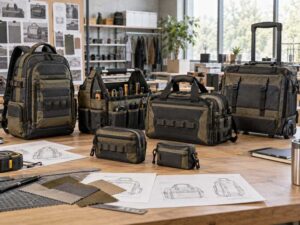

Make A Sample First?
If you have your own artwork, logo design files, or just an idea, please provide details about your project requirements, including preferred fabric, color, and customization options, we’re excited to assist you in bringing your custom bag designs to life through our sample production process.