 Skip to content
What Is Leather Made Of? A B2B Guide to Leather Types, Tanning Process, Real Leather vs PU, and Custom Manufacturing for Bags

Leather looks simple on the surface. A bag touches it, smells it, checks the grain, asks for a price, and then makes a sourcing decision. But behind that one material choice sits a long chain of technical questions. Is it real leather or coated split leather? Is it full grain, top grain, corrected grain, suede, nubuck, bonded, PU, or PVC? Is it vegetable tanned or chrome tanned? Will it hold shape in a tote bag, soften too much in a backpack, crack on folded edges, bleed color, or shift in appearance from sample to bulk? For B2B , leather is not just a material. It is a cost driver, a quality signal, a positioning tool, and sometimes the biggest reason a product line succeeds or fails.
Do Cooler Bags Actually Work? A Complete Guide to Insulation, Cold Retention, Custom Manufacturing, and Selection

Some products sell because they are seasonal. Some sell because they are cheap. Cooler bags are different. They keep returning because they solve a very practical problem: people want to carry food and drinks without losing temperature control, without carrying a heavy hard cooler, and without giving up portability. That simple need now stretches across lunch carry, grocery transport, road trips, beach use, sports events, food delivery, corporate gifts, and private label retail. That is why cooler bags are no longer a niche summer accessory. They have become a broad product category with both consumer and B2B value. Market research published in 2026 estimated the global cooler bag market at about USD 4.3 billion in 2026, with projected long-term growth, while sourcing and buying guides continue to emphasize demand across travel, grocery, delivery, and outdoor use.
Are Drawstring Bags in Style in 2026? Trends, Types, Custom Manufacturing Guide & B2B Buying Insights

A lot of bags get attention for a season and then quietly disappear. Drawstring bags have not followed that pattern. They move in and out of fashion language, but they keep showing up in real life. That matters more than runway hype alone. A bag can be talked about online for a month and still fail in retail. A bag can also look simple, even cheap at first glance, and still become a smart product category because it works for schools, gyms, events, travel, private label programs, and low-risk branded merchandise.
Are Fanny Packs OK to Wear and Sell? A B2B Guide to Belt Bag Types, Custom Manufacturing, MOQ, Samples, Pricing, and Factory Sourcing

A lot of bag categories look simple from a distance and complicated once money is involved. Fanny packs are one of the clearest examples. On the surface, this is a small bag with a strap. It looks easy to design. It looks easy to produce. It looks easy to sell. That is exactly why many brands, retailers, and importers underestimate it. They assume a waist bag is too basic to need much strategy. Then they run into the real questions. Which term should the product use: fanny pack, belt bag, or waist bag? Which structure works for travel, sport, streetwear, or promotional programs? Should the bag be designed mainly for waist wear or crossbody wear? What materials help it look more premium without pushing cost too high? What kind of MOQ, sample process, factory communication, and price structure actually make sense for a custom private label program?
Why Are Makeup Junkie Bags So Popular? A Complete Guide to Flat Lay Cosmetic Bag Design, Price, Custom Options, and Manufacturer Insights

A lot of products become popular because they are trendy. A smaller number become popular because they solve a daily problem so well that keep coming back. Makeup Junkie bags sit much closer to the second group. Their popularity is not just about prints, colors, or social media. It comes from a very specific product […]
What Beach Bags Are Trending? A B2B Guide to Best Beach Bag Types, Materials, Prices, Custom Process, and Manufacturer Options

Beach bags look easy.
That is exactly why many get them wrong.
On the surface, a beach bag seems like one of the simplest products in soft goods. It is often just a tote with a seasonal mood. No heavy hardware. No complicated internal frame. No advanced fit issue like apparel. No technical certification burden like some outdoor gear. Because of that, many brands treat beach bags as quick-win summer products. They choose a pretty material, add a logo, approve a sample, and expect easy sales. Then the problems begin. The bag is too small once towels and bottles go in. The handle drop looks fine on paper but feels bad on the shoulder. The woven body looks premium online but sheds in real use. The canvas version sells, but the opening is too exposed for travel. The mesh version is practical, but the trim makes it feel cheap. The waterproof option is useful, but the body is bulky and hard to pack.
Do Airlines Prefer Hard or Soft Luggage?
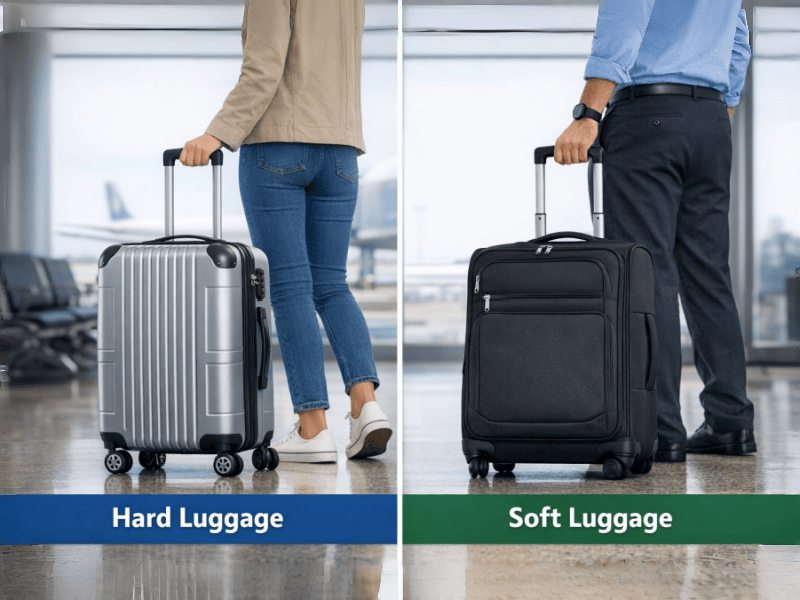
Many start with the wrong question. They ask whether airlines prefer hard luggage or soft luggage, as if airlines have a quiet bias toward one shell type and punish the other. That is not how the baggage system is built. Airlines are not product stylists. They are operators. They care about what keeps check-in moving, what fits in a cabin, what works with baggage systems, what stays within weight limits, and what does not slow down boarding or baggage handling. That is why the real issue is not shell preference. The real issue is operational compliance plus travel performance. A well-made soft-sided carry-on can be more airline-friendly than a badly sized hard-shell case. A well-built hard-shell checked bag can be more suitable than a loose, overstuffed soft bag. In other words, airlines usually care less about hard vs soft as a category and more about whether the bag behaves like standard luggage in a real airline environment.
How to Design Efficient Nail Technician Tool Bags: A B2B Guide to Layout, Materials, QC & OEM Sampling

A nail technician tool bag looks simple until you watch a busy tech work out of it for a week. The difference between a “cute organizer” and an efficient work bag shows up in small moments: how fast the tech can set up, whether bottles tip during travel, whether dust gets into electronics, whether bits disappear into pockets, whether the bag smells like acetone by day ten, and whether the handle still feels safe when it’s fully loaded.
Puppy Starter Kit Bag Components: What to Include, Who Buys, and How OEM Factories Build Retail-Ready Kits

A puppy “starter kit” sounds simple until you try to make it sellable. New puppy owners don’t just need items—they need order. They want the feeling of “I’m ready,” whether they’re walking to the park, visiting the vet, or driving home on day one. That’s why the bag matters more than most brands expect. The bag is not just packaging. It’s the organizer, the brand touchpoint, and the reason customers keep the kit instead of tossing it in a drawer.
What Material Are Backpacks Made Of? Ready Guide to Fabric Types, Coatings, Specs, Costs, Lead Time, and 2026 Trends (Nylon vs Polyester vs Canvas vs Leather)

Backpacks look simple until you try to build one that survives real life. A laptop bag that sags after three months. A school bag that pills and fades before the semester ends. A travel pack that “resists water” in the product listing… then wets out in the first storm. Most of these failures aren’t design problems. They’re material system problems—the wrong face fabric for abrasion zones, the wrong coating for heat and humidity, the wrong lining that snags and tears, or a padding choice that collapses under repeated compression. This is why experienced don’t ask only “What fabric is it?” They ask: What material system is it built from (outer + lining + coating + reinforcement + trims), and is it stable from sample to bulk?
Painting Tool Bag Anti-Liquid Design: What Makes a Leak-Containment, Wipe-Clean, Solvent-Resistant Tool Bag for Pros?

Paint doesn’t “spill politely.” It drips down a brush handle, pools in a corner seam, creeps into zipper tape, and rides home in the back of a van where everything vibrates for 45 minutes. That’s why many painting tool bags fail in the real world even if they look tough on a product page. The bag didn’t fail because it lacked pockets—it failed because the design didn’t control liquid pathways, didn’t separate dirty zones vs clean zones, and didn’t survive the daily routine of wiping, scraping, and quick “good enough” cleanup that crews actually do.
Where Are Leather Goods Made? A B2B Buyer’s Guide to Countries, Factories, Price Drivers, and Custom OEM/ODM

Most buyers think “where are leather goods made?” is a simple country question. It isn’t. The confusing part is that a single leather bag can be “from” three places at once: the hide might be sourced in one region, the tanning done in another, and the cutting + stitching + edge finishing completed somewhere else. That split is not “shady” by default. It’s how modern supply chains manage cost, speed, and material access. The real problem is that many sourcing teams still compare factories like they compare restaurants: reputation first, questions later. That’s why you see the same procurement pain show up again and again—approved sample vs bulk drift, leather discoloration after a few months, edge paint cracking, hardware loosening, or carton packing that arrives scuffed and embarrassing to open.