 Skip to content
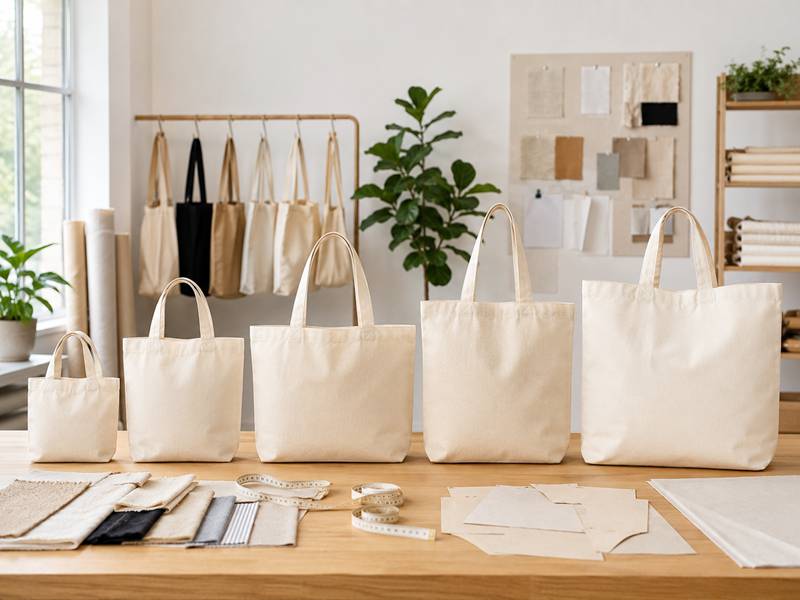
A tote bag often appears to be one of the simplest bag designs, but creating the right size for a commercial project requires much more consideration than choosing a width and height. A few centimeters can change the entire user experience, from whether a laptop fits comfortably to whether a retail package looks premium when placed inside.
For a branded tote bag collection, promotional campaign, retail program, or private label project, dimensions influence almost every part of the final product. Size affects fabric consumption, handle comfort, printing space, packaging efficiency, shipping volume, and even how customers perceive the value of the product.
A standard tote bag does not have one fixed global dimension. The most commonly used everyday tote size is around 14–16 inches wide and 14–16 inches high, with many popular medium totes close to 15 × 16 inches. However, the correct size depends on the intended use, contents, material thickness, structure, handle design, and visual presentation.
A standard tote bag is generally considered a medium-size bag measuring approximately 14–16 inches in width and 14–16 inches in height. Common custom tote sizes include small totes around 10–13 inches wide, medium totes around 14–16 inches wide, and large totes above 17 inches wide. The final dimensions should be selected according to carrying needs, logo placement, fabric choice, and production requirements.
The difference between an average tote and a well-designed tote is rarely obvious from the first look. It appears when someone carries it for eight hours at an event, places a boxed product inside, uses it as a daily work bag, or receives it as part of a premium retail experience.
That is why professional tote bag development starts with understanding dimensions—not simply selecting a size from a chart.
What Are Standard Tote Bag Dimensions?
A standard tote bag does not have one fixed global size. In real product development, “standard” usually refers to the most commonly used dimensions that provide a practical balance between carrying space, appearance, comfort, and production efficiency.
For many everyday tote bags, a medium size around 14–16 inches wide × 14–16 inches high is widely used because it can accommodate common personal items, documents, retail products, and promotional materials. However, the ideal size depends on the intended use, material thickness, handle design, logo placement, and the type of items placed inside.
A tote bag specification should always be based on exact measurements rather than general descriptions such as small, medium, or large.
A complete size specification usually includes:
| Measurement | Description |
|---|---|
| Width | Horizontal measurement across the front panel |
| Height | Vertical measurement from bottom edge to opening |
| Depth/Gusset | Expandable side or bottom space |
| Handle Length | Total strap length |
| Handle Drop | Distance from opening to handle curve |
| Opening Width | Usable space for inserting items |
For example:
15″ W × 16″ H × 4″ DHandle drop: 11″Canvas: 12 ozLogo area: 10″ W × 12″ H
This level of detail creates a clear reference for design, sampling, quality checking, and repeat production.
The most suitable tote size is not always the largest one. A well-designed tote should fit the intended contents comfortably, maintain a balanced appearance, and provide a good carrying experience.
Standard Tote Bag Size
The most commonly recognized everyday tote size is approximately:
15 inches wide × 16 inches high
(about 38 cm × 41 cm)
This size is popular because it provides a practical amount of space without becoming too bulky.
A medium tote of this size can commonly hold:
- A4 folders
- Books
- Tablets
- Small laptops
- Water bottles
- Clothing items
- Retail purchases
- Event materials
However, this size should be considered a reference rather than a strict rule.
Different applications often require different proportions.
For example:
| Application | Possible Size Direction |
|---|---|
| Bookstore tote | More height for books and catalogues |
| Beauty gift tote | More depth for product boxes |
| Fashion retail tote | Wider shape for clothing |
| Event tote | Lightweight size with efficient packing |
| Work tote | Larger opening and stronger structure |
A tote designed for a premium retail environment may intentionally use a slightly smaller body with heavier fabric and refined details. A promotional tote may use a larger size with lighter material to maximize practicality and visibility.
The correct size depends on what the bag needs to achieve.
Are Tote Bag Dimensions Universal?
Tote bag dimensions are not universal because tote bags serve many different purposes.
The word “tote bag” can describe many styles:
- Lightweight cotton shopping bags
- Heavy canvas lifestyle totes
- Fashion shoulder totes
- Zippered work totes
- Promotional event bags
- Reusable shopping bags
Each type has different requirements.
A flat cotton tote used for brochures may only need a simple structure, while a canvas tote designed for daily use may require:
- Stronger fabric
- Wider handles
- Reinforced stitching
- Additional depth
- Better shape retention
Even bags with similar outside dimensions may perform differently because of construction choices.
For example:
| Tote A | Tote B |
|---|---|
| 15″ × 16″ | 15″ × 16″ |
| 8 oz cotton | 14 oz canvas |
| Flat bottom | 4″ gusset |
| Short handles | Shoulder handles |
| No lining | Inner lining |
Although both bags have the same basic size, they create different user experiences.
This is why professional tote development focuses on finished measurements combined with material and structure.
Which Measurements Matter: Width, Height, or Gusset?

All three measurements are important because they determine the overall function of the tote.
Width
Width controls how much space is available across the front panel.
A wider tote can provide:
- More room for products
- Larger logo visibility
- Easier access to contents
However, excessive width may affect carrying comfort because the bag can become difficult to balance when filled.
Height
Height determines how much vertical space the tote provides.
Additional height is useful for:
- Books
- Documents
- Clothing
- Tall packaging
A tote that is too short may limit usability even if the width is sufficient.
Gusset
Gusset refers to the side or bottom depth that allows the tote to expand.
A flat tote:
15″ W × 16″ H
has limited depth.
A gusseted tote:
15″ W × 16″ H × 4″ D
can hold significantly more because it creates three-dimensional space.
Comparison:
| Structure | Advantages | Suitable Uses |
|---|---|---|
| Flat Tote | Lightweight, easy storage | Documents, simple gifts |
| Bottom Gusset | More volume and stability | Retail products, gift boxes |
| Side Gusset | Wider opening and capacity | Larger products |
The right gusset size depends on the contents rather than appearance alone.
A 5-inch gusset may be valuable for a gift set but unnecessary for a simple conference tote.
How Is Tote Bag Capacity Measured?
Tote bag capacity is influenced by width, height, depth, and internal construction.
A larger external measurement does not always mean better usable space.
Factors that reduce internal capacity include:
- Thick fabric
- Inner lining
- Pockets
- Zippers
- Reinforcement layers
- Structured bottoms
For example, a lined canvas tote may have the same external size as an unlined tote but slightly less internal space.
Capacity should be evaluated according to real contents.
| Intended Use | Important Capacity Consideration |
|---|---|
| Documents | Opening width and height |
| Clothing | Overall volume |
| Gift boxes | Depth and structure |
| Electronics | Internal compartment size |
| Shopping items | Load capacity and handle strength |
A useful development method is placing the actual contents together and checking the required space.
This prevents common problems such as:
- Products fitting too tightly
- Excess empty space
- Uncomfortable carrying
- Weak handles under load
What Size Is a Medium Tote Bag?
A medium tote bag is usually around:
14–16 inches wide × 14–16 inches high
This category is widely used because it provides a good balance between portability and capacity.
Common medium tote applications include:
- Retail shopping
- Corporate gifts
- Trade shows
- Lifestyle products
- Daily carrying
A medium tote usually provides enough front surface for branding while remaining easy to fold, store, and transport.
However, the term “medium” can mean different things depending on the product category.
For example:
A medium fashion tote may be wider and shorter.
A medium document tote may be taller.
A medium gift tote may require more depth.
Therefore, final development should always convert size descriptions into exact measurements.
What Is the Difference Between Flat and Gusseted Tote Dimensions?
The main difference is the amount of three-dimensional space created by the structure.
A flat tote generally has two main panels:
- Front panel
- Back panel
A gusseted tote adds:
- Bottom panel
- Side panels
- Additional depth
Comparison:
| Feature | Flat Tote | Gusseted Tote |
|---|---|---|
| Capacity | Lower | Higher |
| Fabric usage | Less | More |
| Folded size | Smaller | Larger |
| Product fit | Flat items | Boxed products |
| Standing ability | Limited | Better |
Flat totes are often preferred for:
- Catalogues
- Documents
- Lightweight promotional programs
Gusseted totes are often preferred for:
- Retail packaging
- Product collections
- Shopping
- Travel use
The choice should be based on what the tote carries most often.
What Should Be Included in a Tote Bag Size Specification?
A professional tote specification should include more than width and height.
Important details include:
| Specification | Example |
|---|---|
| Finished size | 15″ W × 16″ H × 4″ D |
| Material | 12 oz canvas |
| Handle drop | 11 inches |
| Handle width | 1 inch |
| Pocket size | 8″ × 6″ |
| Closure | Zipper or open top |
| Logo position | Center front panel |
| Packaging | Folded or individual packing |
Including these details helps maintain consistency from design approval to final production.
A clear specification also makes it easier to evaluate whether changes in material, structure, or quantity will affect the final product.
The best tote size is not simply a measurement. It is a combination of capacity, comfort, appearance, and practical performance. When dimensions are planned correctly from the beginning, the finished tote becomes more functional, more durable, and more aligned with its intended purpose.
Which Tote Bag Size Is Best for Each Use?
The best tote bag size depends on what the bag needs to carry, how it will be used, and what experience it should create. A tote designed for a retail store, an exhibition, a corporate gift program, or a premium product package may belong to the same product category, but the ideal dimensions can be completely different.
Choosing the correct size starts with the contents inside the bag, not the appearance of the bag itself. The most suitable tote should provide enough space for daily use while maintaining comfortable carrying, attractive proportions, efficient packing, and consistent production results.
A medium tote around 14–16 inches wide × 14–16 inches high is one of the most commonly used formats because it works well for many applications. However, a larger tote with a gusset may be more suitable for bulky products, while a smaller tote may create a more premium and compact appearance for gifts or accessories.
The right size should be evaluated through several factors:
| Consideration | Why It Matters |
|---|---|
| Product size | Ensures the contents fit comfortably without overfilling |
| Carrying method | Determines handle drop and shoulder comfort |
| Weight of contents | Influences fabric thickness and reinforcement |
| Logo size | Affects visible branding space |
| Storage and shipping | Impacts folding size and carton efficiency |
| Usage frequency | Determines required durability |
A well-designed tote is not simply the largest possible bag. It is the size that creates the best balance between function, appearance, and production practicality.
Small vs Medium vs Large Tote Bags
Small, medium, and large tote bags are useful descriptions during the early design stage, but final production should always use exact measurements. Different industries often interpret these categories differently.
A practical reference:
| Tote Size | Approximate Dimensions | Suitable Uses |
|---|---|---|
| Small Tote | 10–13″ W × 10–14″ H | Gifts, accessories, samples, small retail items |
| Medium Tote | 14–16″ W × 14–16″ H | Everyday use, retail, events, documents |
| Large Tote | 17–20″ W × 15–18″ H | Shopping, travel, product kits |
| Oversized Tote | 20″+ W × 17″+ H | Large merchandise, beach, storage |
Small Tote Bags
Small tote bags are suitable when portability and compact appearance are more important than maximum capacity.
Common applications include:
- Cosmetic products
- Jewelry packaging
- Small promotional gifts
- Boutique purchases
- Event samples
- Accessories
Typical advantages:
- Lower material consumption
- Easier storage
- Lightweight carrying experience
- Lower shipping volume
However, small dimensions also create limitations. A small tote may not provide enough space for brochures, apparel, gift boxes, or daily personal items.
For premium products, a smaller size can actually create a more exclusive feeling. A carefully designed small canvas tote with quality fabric, neat stitching, and refined details can feel more like a reusable gift package rather than a simple carrying bag.
The key is matching the size with the product category.
A 12-inch tote may be ideal for a skincare gift set but unsuitable for a clothing retail program.
Medium Tote Bags
Medium tote bags are among the most versatile choices because they balance capacity, visual proportion, and usability.
A common medium tote size:
15″ W × 16″ H
is frequently used for:
- Retail shopping
- Trade shows
- Corporate programs
- Bookstores
- Lifestyle products
- Daily carrying
This size usually provides enough space for:
- A4 documents
- Notebooks
- Tablets
- Water bottles
- Small electronic devices
- Folded clothing
- Gift items
Medium totes are also popular because the front panel provides a comfortable area for branding.
For example:
| Tote Size | Approximate Front Logo Space |
|---|---|
| Small Tote | 6–8 inches wide |
| Medium Tote | 8–12 inches wide |
| Large Tote | 10–14 inches wide |
The actual logo area depends on the handle position, seams, pockets, and decoration method.
A medium tote is often the safest starting point for new product development because it can serve multiple purposes without becoming too large or too limited.
Large Tote Bags
Large tote bags are designed for higher capacity and heavier usage.
They are commonly used for:
- Grocery shopping
- Travel products
- Clothing purchases
- Corporate welcome kits
- Large promotional packages
- Multiple-product collections
Common dimensions:
17–20″ W × 15–18″ H
Large totes often require additional construction considerations:
- Stronger handles
- Reinforced stitching
- Wider straps
- Heavier fabric
- Bottom support
A larger size also affects logistics. More fabric means:
- Higher material usage
- Larger folded dimensions
- More carton space
- Increased transportation volume
Therefore, oversized designs should be selected because the additional capacity is necessary, not simply because a larger bag appears more impressive.
Which Tote Size Works Best for Retail?
Retail tote bags need to perform two roles: carrying products after purchase and representing the store or brand during daily use.
The ideal retail size depends on the products being sold.
| Retail Category | Recommended Tote Considerations |
|---|---|
| Fashion Apparel | Wider opening, comfortable shoulder handles |
| Books | Extra height and stronger bottom structure |
| Beauty Products | Gusset for boxes and gift sets |
| Electronics | Padding, lining, reinforced structure |
| Lifestyle Goods | Balanced shape and premium appearance |
A fashion store selling lightweight clothing may prefer a wider tote with a stylish silhouette. A bookstore may need additional height to keep books upright. A beauty company may require a gusset because rigid product boxes need more internal space.
Retail programs should also consider how the bag looks when carried.
Important details include:
- Proportion between width and height
- Handle position
- Fabric stiffness
- Bottom shape
- Logo visibility
A tote that looks attractive on a product display should also remain comfortable when customers use it outside the store.
What Size Is Best for Events and Giveaways?
Event totes are usually designed for large quantities, easy distribution, and efficient packing.
Common contents include:
- Brochures
- Catalogues
- Notebooks
- Pens
- Promotional items
- Event materials
A medium flat tote is often suitable for general events:
15″ W × 16″ H
For events with larger packages, a gusseted tote may work better:
16″ W × 18″ H × 3–5″ D
The additional depth allows the bag to hold:
- Water bottles
- Gift boxes
- Clothing
- Multiple documents
Before selecting dimensions, arrange all event items together and measure the actual space required.
Important checks:
- Can the largest item enter easily?
- Does the opening remain comfortable?
- Can the handle support the total weight?
- Does the folded size fit storage requirements?
A bag that saves a small amount of cost but cannot comfortably hold event materials may create a poor user experience.
Which Tote Size Fits A4 Documents?
A4 documents measure:
210 mm × 297 mm(8.27 × 11.69 inches)
A tote designed for documents should be larger than the document itself because additional space is needed for folders, multiple sheets, and easy access.
A practical document tote often starts around:
13–15″ W × 14–16″ H
For larger presentation folders or event packages, a gusseted design may be more suitable.
| Document Use | Suggested Structure |
|---|---|
| Single brochure | Flat tote |
| Multiple catalogues | Medium tote |
| Presentation folders | Wider tote |
| Training materials | Gusseted tote |
The opening width is especially important. A tote may appear large enough from the outside but become difficult to use if the top opening is restricted by seams, zippers, or narrow handles.
What Size Fits a Laptop?
Laptop totes require more accurate sizing because laptop dimensions vary significantly.
A 15-inch laptop does not always have the same external size. Different models may vary in:
- Width
- Thickness
- Corner shape
- Charger size
A laptop tote should consider:
- Laptop body dimensions
- Protective sleeve thickness
- Accessories
- Carrying preference
Common requirements include:
- Internal compartment
- Soft lining
- Reinforced bottom
- Strong handles
| Laptop Use | Recommended Considerations |
|---|---|
| Tablet only | Small-medium tote |
| 13-inch laptop | Medium tote |
| 15-inch laptop | Medium-large tote |
| Laptop + accessories | Larger gusseted tote |
A tote intended for professional use should provide enough space without becoming oversized. Too much empty space can allow devices to move around, while insufficient space creates pressure on zippers and seams.
Which Size Works Best for Product Kits?
Product kits require a different approach because the contents usually have fixed dimensions.
Examples include:
- Beauty gift sets
- Employee welcome packages
- Subscription boxes
- Promotional bundles
- Retail launch kits
The best method is to arrange all products exactly as they will be packed, then measure:
- Total width
- Total height
- Required depth
- Additional protective space
A product kit tote often benefits from a gusset because boxed products require three-dimensional space.
| Product Type | Recommended Tote Structure |
|---|---|
| Flat documents | Flat tote |
| Clothing sets | Medium-large tote |
| Beauty boxes | Gusseted tote |
| Multiple products | Box-bottom tote |
The tote itself becomes part of the presentation. A well-sized bag creates a premium unboxing experience, while excessive empty space may make the package feel less carefully designed.
When Is a Gusseted Tote Better Than a Flat Tote?
A gusseted tote is better when the bag needs additional volume, stability, or the ability to carry three-dimensional products.
A flat tote works well for:
- Documents
- Lightweight promotional materials
- Simple shopping use
A gusseted tote works better for:
- Gift boxes
- Groceries
- Apparel
- Product collections
- Travel items
Comparison:
| Feature | Flat Tote | Gusseted Tote |
|---|---|---|
| Capacity | Limited | Higher |
| Folding size | Smaller | Larger |
| Material usage | Lower | Higher |
| Standing ability | Limited | Better |
| Product presentation | Simple | More structured |
However, adding a gusset is not always necessary.
For lightweight programs, a flat tote may be more efficient. For premium retail products or heavier contents, the additional structure often improves usability and perceived value.
The best dimension is the one that matches the real purpose of the tote, from the first customer interaction to long-term daily use.
How Do Materials and Construction Affect Tote Size?

Materials and construction can change how a tote behaves even when the finished dimensions stay exactly the same. A 38 × 41 cm flat cotton tote, a 38 × 41 × 10 cm gusseted canvas tote, and a 38 × 41 cm lined zip tote may look similar from the front, but they differ in usable volume, stiffness, weight, carrying comfort, logo appearance, and packing efficiency.
For custom development, size should be reviewed together with:
- fabric type
- fabric weight
- coating or finishing
- gusset construction
- handle width and drop
- lining
- pockets
- zipper or magnetic closure
- bottom reinforcement
- expected load
A useful rule is simple: external dimensions describe the bag, but material and construction determine how those dimensions actually perform.
Jundong’s tote capability includes canvas, cotton, polyester, Oxford fabric, RPET, PVC, PU, non-woven fabric, and jute, with size, handle length, fabric weight, load-bearing, pockets, zippers, logo, color, packaging, and hangtags treated as separate customization variables.
Canvas vs Cotton
Cotton and canvas are related textile categories, but they create different tote structures.
Light cotton is commonly used when the bag should remain:
- soft
- foldable
- lightweight
- easy to distribute
Canvas is generally preferred when the tote needs:
- more body
- better shape retention
- stronger handle support
- a more substantial feel
Consider the same body size:
38 cm W × 41 cm H
With a lightweight cotton fabric, the tote may collapse flat when empty. With a heavier canvas, the same shape may appear broader and more structured because the fabric resists folding.
That difference affects more than appearance. It can influence:
- carton quantity
- folded thickness
- seam construction
- handle attachment
- print behavior
For a promotional tote that must pack efficiently, soft fabric can be useful. For a retail tote intended to remain in regular use, greater fabric stability may be more suitable.
The material should therefore be selected according to the expected carrying life and appearance rather than simply choosing the heaviest option available.
Canvas Weight Options
Canvas weight is usually expressed in ounces per square yard or grams per square meter.
Practical project discussions often use the following categories:
| Canvas Weight | Approx. gsm | General Character | Common Use |
|---|---|---|---|
| 6–8 oz | 170–230 gsm | Light, soft, easy to fold | Events, simple promotional totes |
| 10–12 oz | 280–340 gsm | Balanced body and flexibility | Retail, everyday totes |
| 14–16 oz | 400–450 gsm | Heavy, structured | Premium merchandise |
| 18 oz+ | 500 gsm+ | Very substantial | Heavy-duty tote concepts |
These figures should be treated as development references rather than universal fabric specifications, because weave density and finishing also influence hand feel.
A dense 10 oz fabric can sometimes feel firmer than a looser 12 oz construction.
When comparing fabrics, check:
- actual weight
- weave
- stiffness
- surface texture
- shrinkage behavior
- color treatment
Fabric weight alone does not describe the final tote.
Fabric Weight and Final Dimensions
A thicker fabric does not usually change the nominal external size, but it can change usable internal space and the way the tote sits.
Heavy material takes up more room at:
- side seams
- folded gussets
- top hems
- handle attachments
- zipper areas
This matters more on compact totes than on oversized ones.
For example, a small structured tote with thick canvas and full lining may lose more usable interior room than expected if the original dimensions were copied from an unlined sample.
A practical approach is to define both:
finished external size
and
required internal fit
If the tote needs to carry a rigid box measuring 30 × 24 × 8 cm, the body should not be designed at exactly those dimensions. Clearance must be allowed for seams, fabric thickness, insertion, and removal.
This is why internal product fit should be checked physically during sampling.
Gusset Construction
A gusset is one of the most effective ways to increase usable capacity without making the front panel excessively wide.
Common constructions include:
- bottom gusset
- side gusset
- continuous side-and-bottom gusset
- boxed corners
The same nominal depth can behave differently depending on how the gusset is formed.
Example:
| Design | Body Size | Depth | Best Fit |
|---|---|---|---|
| Flat tote | 38 × 41 cm | None | Documents |
| Bottom gusset | 38 × 41 cm | 8 cm | Clothing, gifts |
| Side gusset | 38 × 41 cm | 10 cm | Boxed goods |
| Boxed corners | 38 × 41 cm | 10 cm | General shopping |
A gusset increases:
- material consumption
- seam length
- sewing time
- folded thickness
It can also improve:
- standing ability
- loading convenience
- product presentation
For flat brochures, extra depth may provide little value. For boxed skincare products, it can completely change usability.
Handle Length and Drop
Handle dimensions should be developed together with the tote body.
A small tote with very long handles may look poorly proportioned. A large tote with short handles can become uncomfortable when filled.
Typical handle-drop references:
| Carry Style | Handle Drop |
|---|---|
| Hand carry | 12–20 cm |
| Short shoulder carry | 20–26 cm |
| Everyday shoulder carry | 26–32 cm |
| Roomier shoulder carry | 30 cm+ |
Actual comfort depends on:
- body width
- fabric stiffness
- handle width
- expected load
- clothing thickness
A shoulder tote intended for winter use may need more clearance than one used mainly in warm climates.
Handle width matters as well.
A narrow strap concentrates pressure on the shoulder, while a wider strap distributes weight better.
For heavier applications, the handle attachment should also be reviewed. Box stitching, crossed reinforcement, or extended stitching can improve stability around stress areas.
Pockets and Internal Space
Pockets add useful organization but reduce available internal room.
A simple flat pocket has a relatively small effect. A padded sleeve, zipper pocket, or divider takes up considerably more space.
Typical additions include:
- phone pocket
- zipper pocket
- bottle holder
- laptop sleeve
- internal divider
For a work tote, a laptop sleeve may be essential. For a compact retail tote, it may make the interior feel too crowded.
If the tote must carry several fixed items, prepare a simple packing layout before finalizing dimensions.
Example:
Main compartment: 13″ laptop
Inner pocket: phone + charger
Bottle area: 7 cm diameter
Notebook: A5
This is far more useful than approving only an external body size.
Zippers and Opening Width
A zipper changes the usable opening of a tote.
An open-top tote may allow almost the full width of the body to be used. A zippered top usually requires seam allowance and zipper tape, which can reduce the usable entrance.
This becomes important when the bag holds:
- folders
- laptops
- rigid gift boxes
- large retail products
A tote can be wide enough internally but still difficult to use if the opening is too narrow.
When a zipper is included, check:
- zipper opening length
- usable entry width
- slider clearance
- end-stop position
- top-panel construction
If a 36 cm box must enter through the top, a nominal 38 cm tote width may not provide enough practical clearance once the zipper is installed.
Lining and Reinforcement
Lining can improve:
- appearance
- interior finishing
- durability
- comfort when storing delicate items
It can also support internal pockets and concealed seams.
However, lining adds:
- material
- weight
- sewing operations
- internal thickness
Bottom reinforcement creates a similar tradeoff.
A board or stiffener can make a tote stand better and support boxes, but it may affect:
- folded packing size
- carton quantity
- overall weight
For premium retail applications, these additions may be worthwhile. For high-volume event distribution, they may add cost and bulk without enough practical benefit.
The construction should match the expected use rather than being added simply to make the tote feel more complex.
Logo Print Area
The available logo area depends on much more than the body dimensions.
It is reduced by:
- seams
- handles
- pockets
- gusset folds
- zipper construction
- decorative panels
A practical reference for front-panel decoration is:
| Tote Body | Common Usable Logo Width |
|---|---|
| 28–32 cm wide | about 15–20 cm |
| 35–40 cm wide | about 20–28 cm |
| 42–50 cm wide | about 25–35 cm |
The exact area should always be checked against the artwork and chosen technique.
Screen printing usually benefits from a broad, flat panel. Embroidery needs sufficient fabric stability. Patches and labels require spacing from seams.
The logo should also be judged visually, not only technically.
A design that fills nearly the entire front panel may be printable but still look poorly balanced. Leaving controlled negative space around the artwork often creates a cleaner result.
Washing and Finishing
Natural fibers can change slightly after washing, dyeing, or heat treatment.
Possible changes include:
- shrinkage
- softening
- distortion
- seam movement
- handle movement
The effect depends on the fabric and finish.
This is especially relevant when:
- precise product fit is required
- artwork is positioned close to seams
- the tote uses heavyweight cotton or canvas
- washed or distressed finishes are requested
Finished-size control should therefore be based on the condition in which the tote will actually be delivered.
If a washed finish is part of the design, the final sample should be measured after that process rather than before it.
Sample Approval
The physical sample is where size, material, and construction should be reviewed together.
Useful checks include:
- finished width and height
- gusset depth
- opening width
- handle drop
- internal fit
- pocket usability
- zipper operation
- logo position
- carrying comfort
- filled appearance
Jundong’s documented development process treats size and capacity, structure, material, logo, packaging, MOQ, cost, and timeline as connected feasibility items before production.
This matters because a tote can meet the drawing dimensions and still perform poorly in real use. A sample provides the chance to discover that the handle feels too short, the box fits too tightly, the logo sits too close to the seam, or the chosen fabric does not hold the intended shape.
The strongest tote designs are usually the ones where dimensions, fabric, and construction are confirmed as one complete product rather than three separate decisions.
How Are Custom Tote Bag Dimensions Developed?

Custom tote bag dimensions are not created by simply increasing or reducing the size of a standard bag. A successful size is developed by understanding the purpose of the tote, the items it needs to carry, the preferred appearance, the material behavior, and the production requirements.
A professional size development process usually moves from an initial idea to a measurable specification:
Usage purpose → Product requirements → Size calculation → Structure selection → Sample testing → Final specification
For example, a retail brand creating a canvas tote for clothing products may start with a simple idea: “a reusable shopping bag.” During development, that idea becomes a detailed specification:
- Finished size: 42 cm W × 38 cm H × 10 cm D
- Fabric: 12 oz canvas
- Handle drop: 28 cm
- Logo area: 25 cm W × 30 cm H
- Reinforced handle stitching
- Inner pocket requirement
- Folding and packing method
This transformation is what turns a general concept into a production-ready product.
The most important consideration is not creating the biggest possible tote. It is creating a size that feels natural, performs correctly, and remains consistent after thousands of pieces are produced.
What Information Is Needed Before Developing Dimensions?
Before determining tote dimensions, the design team needs clear information about how the bag will be used.
The most useful details include:
| Information | Why It Matters |
|---|---|
| Intended use | Determines size, structure, and durability requirements |
| Product contents | Defines internal capacity |
| Carrying method | Influences handle length and comfort |
| Material choice | Affects thickness and shape |
| Logo design | Determines printable area |
| Quantity requirement | Influences production method and cost |
| Packaging method | Affects final folded size |
For example, a tote designed for a beauty gift set should be developed differently from one designed for conference materials.
A beauty gift tote may need:
- Wider bottom depth
- Better shape retention
- Premium fabric appearance
- Strong presentation value
A conference tote may prioritize:
- Lightweight material
- Easy folding
- Large printing area
- Efficient packing
The size should always start from the real purpose of the product.
How Is a Reference Bag Converted Into a Size Specification?
Many projects begin with a reference image, an existing bag, or a simple sketch. However, a picture alone does not provide enough information for accurate production.
A reference bag needs to be converted into measurable details.
Important measurements include:
| Measurement | Description |
|---|---|
| Width | Distance across the front panel |
| Height | Distance from bottom to opening |
| Depth | Side or bottom expansion area |
| Handle length | Total strap length |
| Handle drop | Carrying height from opening to handle |
| Pocket size | Internal or external storage dimensions |
| Opening width | Usable entry space |
A common mistake is copying only the appearance of an existing tote while ignoring construction differences.
Two bags may look similar but have different:
- Fabric thickness
- Seam allowance
- Bottom structure
- Handle attachment
- Internal finishing
These differences can change the final dimensions.
A proper size review should consider both the visual appearance and the functional structure.
How Does a Factory Set Tote Bag Dimensions?
A tote size is usually determined through a combination of design requirements, material characteristics, and production experience.
The process typically includes:
Product Function Review
The first step is understanding what the tote needs to carry.
Examples:
- Documents require sufficient height and opening width.
- Gift boxes require depth and structural support.
- Clothing products may require wider body dimensions.
- Electronics require additional internal protection.
The contents determine the minimum usable space.
Structure Selection
The same external size can create different results depending on construction.
Common structures include:
| Structure | Suitable For |
|---|---|
| Flat tote | Documents, lightweight items |
| Bottom gusset tote | Boxes, shopping, gift sets |
| Side gusset tote | Larger products |
| Structured tote | Premium retail applications |
The structure should be selected before finalizing dimensions because it changes material usage and internal space.
Material Adjustment
Materials influence the final size decision.
For example:
- Lightweight cotton can follow a simpler construction.
- Heavy canvas may need additional allowance.
- Lined totes require more external space to maintain internal capacity.
- Padded totes require extra thickness.
The same size drawing may need adjustment depending on the chosen fabric.
Can I Request a Pre-Production Sample Before Ordering?
Yes, a pre-production sample is an important step for custom tote projects, especially when dimensions, materials, and construction details are customized.
A sample allows the final design to be checked in real conditions.
Important items to review include:
| Sample Check | Purpose |
|---|---|
| Finished dimensions | Confirm width, height, and depth |
| Handle position | Check carrying comfort |
| Fabric weight | Confirm expected appearance and strength |
| Logo placement | Verify artwork size and position |
| Pocket size | Confirm practical usability |
| Stitching details | Check construction quality |
| Packaging method | Confirm storage and shipping requirements |
A sample is not only about appearance.
It helps identify issues that may not be obvious in drawings:
- A handle may feel too short.
- A pocket may reduce internal space.
- A gusset may be deeper than expected.
- A logo may appear unbalanced.
For custom tote programs, approving the sample before bulk production reduces the risk of large-scale corrections later.
How Are Size Tolerances Defined?
Tote bags are sewn products, so small measurement differences can naturally occur during production.
A size tolerance defines the acceptable variation between the approved sample and finished pieces.
Common tolerance considerations include:
| Measurement Area | Common Control Focus |
|---|---|
| Width | Maintain overall appearance |
| Height | Protect product fit |
| Gusset depth | Maintain capacity |
| Handle drop | Maintain carrying comfort |
| Pocket size | Maintain function |
The acceptable tolerance depends on:
- Material type
- Construction complexity
- Product purpose
- Required precision
For example, a simple cotton giveaway tote may allow more flexibility than a structured retail tote with exact product-fitting requirements.
The key is establishing the measurement method before production begins.
Everyone involved should understand:
- Where measurements are taken
- Whether the bag is flat or filled
- How gussets are measured
- How handle drop is checked
Clear measurement rules create more consistent results.
How Is Sample-to-Bulk Size Consistency Controlled?
The approved sample becomes the reference for bulk production.
To maintain consistency, important details should be recorded:
- Final dimensions
- Fabric specification
- Pattern shape
- Sewing construction
- Handle placement
- Logo position
- Packaging requirements
A complete production specification helps prevent differences between the first sample and later production.
Common areas requiring attention include:
Fabric Cutting
Small cutting differences can affect:
- Front panel size
- Gusset width
- Overall shape
Sewing Process
Stitching position can influence:
- Final dimensions
- Handle balance
- Pocket placement
Finishing Process
Washing, ironing, or other finishing methods may slightly affect natural fabrics.
This is especially important for cotton and canvas materials because they may respond differently to moisture and heat.
How Long Does Custom Tote Bag Sampling Take?
Sampling time depends on design complexity, materials, and the number of customized details.
A simple tote with standard materials may require a shorter development period, while a structured tote with multiple components requires more time.
Factors affecting sampling time include:
| Factor | Impact |
|---|---|
| New pattern development | Requires additional preparation |
| Custom fabric color | May require material arrangement |
| Special logo process | Adds testing time |
| Complex structure | Requires more adjustments |
| Additional accessories | Requires more coordination |
A typical custom tote sample process may include:
- Confirm design information
- Review materials and dimensions
- Create pattern and sample
- Check size and appearance
- Adjust details if needed
- Confirm final version
For projects involving retail products, premium materials, or complex structures, allowing sufficient development time helps achieve better results.
How Does the Custom Tote Bag Process Work?

A complete custom tote development process usually follows these stages:
| Stage | Main Activities |
|---|---|
| Design review | Understand purpose, contents, and style |
| Dimension planning | Confirm width, height, depth, and handle details |
| Material selection | Choose fabric, lining, and accessories |
| Sample development | Create physical prototype |
| Sample review | Check size, function, and appearance |
| Final approval | Confirm production specifications |
| Bulk production | Produce according to approved details |
The most successful tote projects are developed through cooperation between design requirements and practical production knowledge.
A good size should not only look correct in a drawing. It should feel comfortable in use, display the intended branding clearly, fit the planned products, and remain consistent throughout the production process.
When a custom tote project requires specific dimensions, materials, logo placement, or structural development, you can share the product purpose, reference images, target size, and expected quantity with Jundong. The team can help evaluate suitable dimensions and construction options based on the actual application. You can contact info@jundongfactory.com for project evaluation and customization support.
What Affects Custom Tote Bag Price and Bulk Production?
The price of a custom tote bag is influenced by much more than the size of the bag. Dimensions, fabric weight, construction method, logo technique, accessories, packaging, quantity, and production timeline all contribute to the final cost.
A common misunderstanding is that two tote bags with the same size should have a similar price. In reality, a lightweight cotton tote and a heavyweight canvas tote with the same dimensions can have a significant price difference because the materials, sewing processes, and finishing requirements are different.
For example:
| Specification | Tote A | Tote B |
|---|---|---|
| Size | 15″ × 16″ | 15″ × 16″ |
| Fabric | 6 oz cotton | 14 oz canvas |
| Structure | Flat tote | Bottom gusset |
| Handle | Standard cotton handle | Reinforced webbing handle |
| Logo | Single-color print | Multi-color print |
| Cost Level | Lower | Higher |
Although the external size is identical, the production requirements create a completely different product.
For accurate cost planning, the most important factors include:
- Finished dimensions
- Fabric type and weight
- Bag structure
- Handle design
- Logo method
- Accessories
- Quantity
- Packaging requirements
- Delivery schedule
Understanding these factors helps avoid unexpected cost changes during development.
Does a Larger Tote Bag Cost More?
A larger tote bag usually costs more because it requires more materials and often needs stronger construction.
Increasing the size affects:
- Fabric consumption
- Cutting area
- Sewing time
- Packaging volume
- Transportation space
For example, changing a tote from:
14″ W × 14″ H
to:
18″ W × 16″ H × 5″ D
does not simply add a few inches. The additional gusset and larger panels may significantly increase fabric usage and production steps.
However, size is not the only factor.
A smaller premium tote may cost more than a larger basic tote if it includes:
- Heavy canvas
- Custom lining
- Metal accessories
- Complex stitching
- Multiple pockets
- Special finishing
The relationship between size and price should always be evaluated together with the complete design.
Why Can the Same Size Have Different Prices?
Two tote bags with identical dimensions can have very different prices because the internal construction and materials may not be the same.
Key differences often include:
| Factor | Lower Cost Option | Higher Cost Option |
|---|---|---|
| Fabric | Lightweight cotton | Heavy canvas or RPET |
| Handle | Simple cotton strap | Reinforced webbing |
| Structure | Flat construction | Gusseted or structured design |
| Interior | No lining | Full lining or compartments |
| Logo | Simple printing | Embroidery, woven label, special effects |
| Hardware | None | Zippers, snaps, metal parts |
For example, a 15 × 16 inch canvas tote may have:
- Basic 8 oz fabric
- Simple stitching
- One-color logo
Another tote of the same size may include:
- 16 oz canvas
- Inner pocket
- Zipper closure
- Reinforced handles
- Multiple logo positions
The dimensions are the same, but the development requirements are completely different.
When comparing prices, the specification should always be compared line by line rather than looking only at the final unit cost.
How Do Materials and Fabric Weight Affect Price?
Fabric selection is one of the largest cost factors for tote bags.
Different materials create different production values.
Common options include:
| Material | Characteristics | Typical Applications |
|---|---|---|
| Cotton | Soft, natural feeling | Promotional totes, lightweight retail |
| Canvas | Stronger structure | Premium totes, daily-use bags |
| RPET | Recycled polyester option | Sustainability-focused projects |
| Non-woven fabric | Lightweight and economical | Large quantity campaigns |
| Jute | Natural texture | Eco-style shopping bags |
| Nylon/Polyester | Durable and water-resistant options | Functional totes |
Fabric weight also changes the cost.
| Fabric Weight | Appearance | Cost Influence |
|---|---|---|
| 6–8 oz canvas | Lightweight, flexible | Lower material usage |
| 10–12 oz canvas | Balanced durability | Common retail choice |
| 14–16 oz canvas | Heavy, premium feel | Higher material cost |
| 18 oz+ canvas | Strong structure | Higher material and sewing requirements |
A heavier fabric may increase the unit cost, but it can also improve:
- Product lifespan
- Shape retention
- Premium perception
- Carrying performance
The right fabric weight depends on the intended use rather than choosing the thickest option.
How Does Gusset Size Affect Cost?
A gusset increases the usable capacity of a tote, but it also increases production requirements.
A flat tote:
15″ W × 16″ H
requires mainly front and back panels.
A gusseted tote:
15″ W × 16″ H × 4″ D
requires additional fabric pieces, more sewing operations, and more finishing work.
Adding a gusset can affect:
| Item | Impact |
|---|---|
| Material usage | More fabric required |
| Sewing process | More seams and construction steps |
| Shape | Better standing ability |
| Packing | Larger folded volume |
| Capacity | Increased internal space |
For products such as gift boxes, clothing sets, or retail packages, the extra cost may be worthwhile because the bag performs better.
For flat materials such as brochures or documents, a gusset may add unnecessary cost.
The correct depth should be based on what the tote needs to carry.
Do Handles, Pockets, and Zippers Increase Price?
Additional features improve functionality but also increase production complexity.
Handles
Handle cost depends on:
- Material type
- Width
- Length
- Reinforcement
- Attachment method
Examples:
| Handle Type | Usage |
|---|---|
| Cotton webbing | Lightweight everyday totes |
| Wide canvas handle | Premium comfort |
| Long shoulder strap | Travel and daily carrying |
| Reinforced handle | Heavy contents |
A longer handle is not always more expensive by itself, but it may require stronger attachment points because the bag will carry differently.
Pockets
Adding pockets increases:
- Fabric usage
- Cutting steps
- Sewing time
Common pocket options:
- Inner open pocket
- Zipper pocket
- Phone pocket
- Bottle holder
- Divider pocket
For work totes and lifestyle products, pockets can greatly improve usability.
Zippers and Closures
A zipper changes both cost and construction.
Additional considerations include:
- Zipper length
- Zipper quality
- Puller design
- Sewing accuracy
- Opening structure
A simple open tote and a fully enclosed tote may have completely different production processes even with identical external dimensions.
How Does Logo Method Affect Tote Bag Price?
Logo decoration is another important cost factor because different materials and techniques require different processes.
Common logo options include:
| Logo Method | Suitable Materials | Cost Influence |
|---|---|---|
| Screen printing | Cotton, canvas | Usually economical |
| Heat transfer | Smooth fabrics | Medium |
| Embroidery | Canvas, structured fabrics | Higher |
| Woven label | Brand labels | Medium |
| Rubber patch | Casual and outdoor styles | Higher |
| Metal badge | Premium designs | Higher |
The number of colors, logo size, and placement also affect cost.
A large multi-color print requires more preparation than a small one-color logo.
The available print area should also be considered during size planning. A larger tote may provide more space, but the logo should remain visually balanced with the bag shape.
Do You Offer Volume Discounts for Custom Tote Bags?
Larger quantities usually allow better cost efficiency because preparation costs, material purchasing, and production scheduling can be distributed across more pieces.
Quantity affects:
- Fabric purchasing efficiency
- Cutting efficiency
- Production arrangement
- Packaging cost per unit
A simple reference:
| Quantity | Cost Consideration |
|---|---|
| Small production run | Higher unit cost due to setup expenses |
| Medium quantity | Better production efficiency |
| Large quantity | More optimized material and production costs |
However, quantity alone does not determine the final price.
A large order with complicated materials, special accessories, and multiple production requirements may still cost more than a simpler project with fewer pieces.
The best cost structure comes from balancing:
- Quantity
- Design complexity
- Material selection
- Production schedule
What Is the MOQ for Custom Tote Bags?
The minimum quantity depends on the design, material, printing method, and production requirements.
For many standard custom tote projects, quantities often begin around 500 pieces per design. Some simpler projects may be reviewed at lower quantities depending on the details.
Factors that influence minimum quantity include:
- Fabric purchasing requirements
- Custom colors
- Printing setup
- Special accessories
- Packaging needs
A lower quantity does not always mean lower total investment because setup costs are spread across fewer pieces.
For example:
- 500 simple cotton totes may have a different cost structure from
- 500 premium canvas totes with multiple features.
The most suitable quantity depends on the product goal and expected usage.
What Is the Standard Lead Time for Bulk Orders?
Production time depends on the design complexity, materials, quantity, and approval process.
A common custom tote timeline includes:
| Stage | Approximate Time |
|---|---|
| Design review | Depends on project details |
| Sample development | Around 5–7 working days for many standard designs |
| Sample adjustment | Depends on revision requirements |
| Bulk production | Commonly around 20–30 days after approval |
Projects requiring:
- Special fabrics
- Custom colors
- Complex structures
- Multiple accessories
- Large quantities
may require additional preparation time.
A smoother process usually happens when dimensions, materials, artwork, packaging requirements, and approval details are confirmed early.
Do Production Facilities Hold Eco-Friendly Certifications?
For projects using sustainable materials, certification requirements should match the intended application and destination regulations.
Common sustainability-related certifications and documents may include:
- GRS for recycled materials
- GOTS for organic textiles
- OEKO-TEX for textile safety assessment
- BSCI or similar social compliance systems
However, certification availability depends on the specific material and production process.
For example, a recycled polyester tote and an organic cotton tote may require different documentation.
A responsible evaluation should consider:
- Material certification
- Production records
- Testing requirements
- Final product application
Sustainability is not only about selecting a recycled fabric. It also involves verifying the material source, production process, and documentation behind the product.
How Should Brands Compare Tote Bag Options?
A good comparison should look beyond the unit price.
Important comparison factors include:
| Area | What to Review |
|---|---|
| Dimensions | Exact finished measurements |
| Material | Fabric type and weight |
| Structure | Flat, gusseted, lined, reinforced |
| Logo | Printing or decoration method |
| Quality | Sample consistency and inspection process |
| Packaging | Folding, labels, cartons |
| Timeline | Sample and production schedule |
The lowest initial quotation is not always the most suitable choice.
A tote bag represents the organization using it, whether it is sold in retail, given at an event, or included as part of a product package. The final decision should consider quality, appearance, durability, and long-term user experience together.
For custom tote bag projects, sharing the intended use, preferred size, material ideas, logo artwork, and quantity allows the right dimensions, structure, and cost options to be evaluated more accurately. For project discussions, you can contact info@jundongfactory.com and provide your tote concept for professional recommendations.