 Skip to content
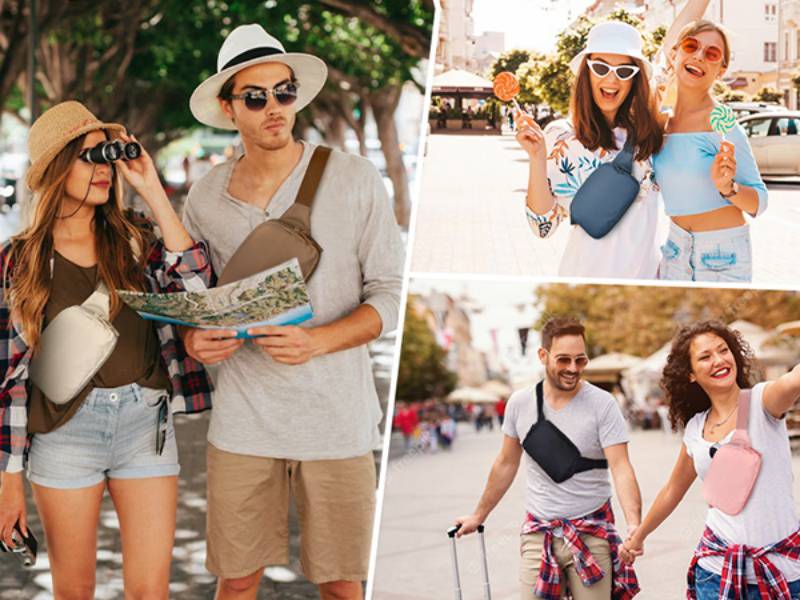
Belt bags have already survived the stage at which many fashion accessories disappear. They were everywhere during the late-2010s revival, became closely associated with compact crossbody styling, and could easily have faded once the first wave of enthusiasm cooled. Instead, the category changed shape.
The interesting part is not simply that belt bags remain visible. It is that they now occupy several different roles at the same time: fashion accessory, travel pouch, running bag, festival bag, compact everyday carry, technical waist pack and premium leather accessory.
Yes, belt bags are still trendy. Their relevance now comes from more than fashion alone: compact storage, hands-free carrying, adjustable crossbody wear and easy access have given the category lasting practical value. Current runway activity is also bringing renewed attention to waist-worn designs. The strongest commercial styles combine recognizable design, comfortable carrying, useful organization and materials suited to a clearly defined retail position.
That mix of function and fashion is important. ELLE reported in August 2026 that Prada, Celine, Coperni, MM6 and TWP were all using belt-mounted bags or pouch-like waist accessories in recent collections. Prada showed small nylon pouches and mini duffel forms attached to belts; Coperni explored small leather interpretations; TWP moved toward larger, weathered Western shapes. The category is not standing still—it is being reworked again.
At the same time, the practical side remains strong. Travel + Leisure continues to feature nylon, neoprene, quilted and leather belt or sling formats for airports, city travel and daily movement, with adjustable straps and hands-free carrying repeatedly highlighted as core advantages.
That creates a useful distinction for any label planning its next collection. The decision is no longer, “Should we make a belt bag because belt bags are popular?” It is closer to: Which version belongs in our assortment, what problem should it solve, and what details will make it worth choosing when dozens of similar bags sit beside it?
Are Belt Bags Still Trendy?
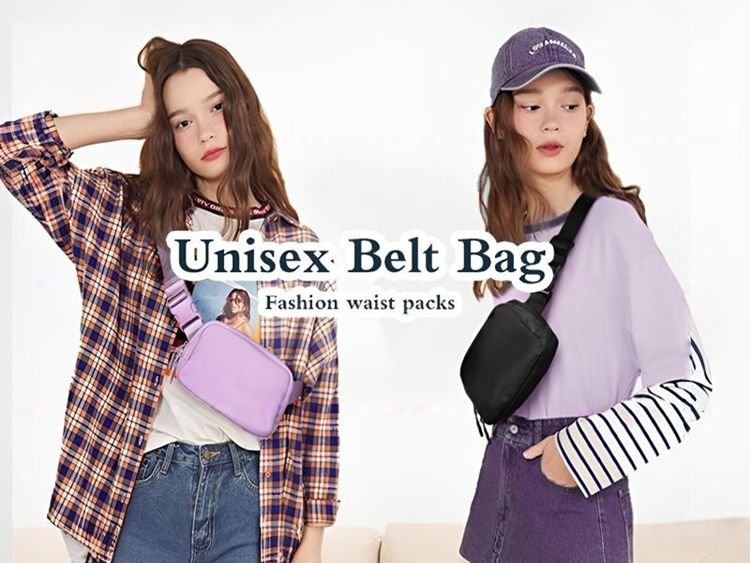
Belt bags have experienced something unusual in the fashion world: they have moved beyond a short-lived comeback and developed into a versatile accessory category. When the modern belt bag revival began, many people viewed it as a nostalgic return of the classic fanny pack. However, the category has continued evolving through new materials, improved designs, different wearing methods and broader lifestyle applications.
In 2026, belt bags are no longer defined by one specific appearance. A compact nylon waist bag used for travel, a premium leather pouch styled with designer clothing, a lightweight running bag, and a crossbody belt bag worn across the chest all belong to the same growing category.
Yes, belt bags are still trendy. The category remains commercially relevant because it combines fashion appeal with everyday practicality. Current successful designs focus on hands-free convenience, crossbody versatility, lightweight construction, organized storage and upgraded materials. The strongest opportunities are no longer based on copying past fanny pack styles, but on creating products that match modern lifestyles, retail positioning and changing wearing habits.
The reason belt bags continue to attract attention is that they solve a real problem. Modern consumers carry more small personal items than ever before, including smartphones, wireless earbuds, chargers, wallets, passports and personal accessories. At the same time, many people prefer not to carry a large handbag or backpack for short trips and daily activities.
This balance between fashion and function has allowed belt bags to move from a seasonal trend into a more stable accessory category.
Fashion houses continue to reinterpret the silhouette. ELLE reported that brands including Prada, Celine, Coperni, MM6 and TWP introduced new approaches to belt-mounted pouches and waist-focused accessories. These designs showed that the category is not simply repeating the previous fanny pack trend, but being redesigned through different proportions, materials and styling methods. (elle.com)
For brands planning new collections, the key consideration is not simply whether belt bags are still popular. The more important question is which version of the category has the strongest connection with the intended audience.
A minimalist nylon crossbody belt bag may perform well in travel and lifestyle collections. A PU or leather version may fit a premium fashion assortment. A lightweight technical style may appeal to outdoor and active consumers.
The category remains attractive because it offers many opportunities without requiring completely different product structures.
Why Are Belt Bags Still Popular?
Belt bags remain popular because they provide a combination of convenience, comfort and styling flexibility that many other bag categories cannot easily replace.
The most important advantage is hands-free carrying. Unlike traditional handbags, belt bags allow users to move freely while keeping essential items accessible. Unlike backpacks, they are smaller, lighter and easier to access quickly.
This makes them suitable for many daily situations:
- airport travel;
- city exploration;
- commuting;
- shopping;
- festivals;
- outdoor activities;
- casual weekends;
- sports and walking.
Travel + Leisure continues to highlight belt bags and compact crossbody styles because of their ability to keep important items secure while allowing easier movement during travel. (travelandleisure.com)
Another reason for their continued popularity is the change in wearing style.
Traditional waist bags were mainly worn around the hips. Modern belt bags are often designed for multiple positions:
- around the waist;
- across the chest;
- over the shoulder;
- under or over outerwear.
This flexibility makes one product suitable for more occasions.
For retail collections, this means a well-designed belt bag can reach several user groups without changing its core construction. A single silhouette can be positioned as travel equipment, everyday lifestyle gear, fashion accessory or outdoor companion depending on the material, color and branding approach.
What Is the Current Demand for Belt Bags?
The broader waist bag category continues to show strong commercial potential. According to Fortune Business Insights, the global waist bag category was estimated at USD 2.43 billion, increasing from USD 2.26 billion in 2025, and is projected to reach USD 4.29 billion by 2034, representing a projected CAGR of 7.32% between 2026 and 2034.
| Indicator | Data | Meaning |
|---|---|---|
| 2025 global value | USD 2.26 billion | Established accessory category |
| 2026 estimated value | USD 2.43 billion | Continued demand growth |
| 2034 projection | USD 4.29 billion | Long-term expansion potential |
| Forecast CAGR | 7.32% | Positive growth expectation |
| Unisex segment share | 42.41% | Broad appeal across different users |
| Premium segment CAGR | 8.10% | Opportunity for higher-value products |
These figures do not mean every belt bag design will automatically succeed. Performance depends on product positioning, design quality, pricing, distribution and how well the style fits the intended audience.
However, the data indicates that belt bags remain large enough to support continued development.
One important trend is the movement from simple utility products toward more refined lifestyle accessories.
Earlier belt bags were often purchased mainly for convenience. Current designs increasingly combine:
- better fabric quality;
- improved internal organization;
- stronger hardware;
- cleaner silhouettes;
- premium finishing;
- more comfortable straps.
This shift creates opportunities for brands that want to develop products with stronger identity rather than competing only on basic function.
Is the Belt Bag Category Growing or Declining?
The overall category is currently showing growth, but individual styles experience different life cycles.
A common mistake is assuming that if one belt bag style becomes less visible, the entire category is declining.
In reality, consumer preferences are shifting between different interpretations.
For example:
| Earlier Popular Style | Current Evolution |
|---|---|
| Basic polyester fanny pack | Refined nylon or technical fabric styles |
| Waist-only design | Dual waist and crossbody use |
| Simple single pocket | Multiple compartments |
| Generic hardware | Premium buckles and zipper details |
| Promotional appearance | Lifestyle and fashion positioning |
The strongest products today are those that maintain the original advantage of compact carrying while improving appearance and usability.
The category has expanded into several segments:
Everyday Lifestyle Belt Bags
These focus on simple shapes, neutral colors and daily usability. They often use nylon, polyester or soft-touch fabrics.
Travel Belt Bags
These emphasize security, organization and easy access. Features such as hidden pockets, stronger zippers and adjustable straps become more important.
Fashion Belt Bags
These rely more heavily on silhouette, material and visual identity. PU, leather, custom hardware and refined details are often used to create a premium impression.
Technical Belt Bags
These are designed around performance. Lightweight materials, stronger webbing, water-resistant fabrics and functional pockets are common features.
This diversity is one reason the category continues to remain relevant.
Are Belt Bags Still Profitable for Retail?
Belt bags can still create strong retail opportunities, but profitability depends on making the right product decisions.
A low-cost product is not always the most profitable option. A basic design may have a lower production cost but face stronger price competition. A better-designed product may cost more initially but create stronger perceived value.
Important factors affecting commercial performance include:
| Factor | Influence |
|---|---|
| Material selection | Determines appearance, durability and price position |
| Product design | Creates differentiation |
| Storage structure | Influences daily usefulness |
| Strap comfort | Affects repeat use |
| Branding method | Builds recognition |
| Packaging | Influences retail presentation |
| Production quantity | Affects unit economics |
For example, two belt bags with similar dimensions can have very different costs.
A simple polyester pouch with one zipper may use standard materials and hardware.
A premium nylon belt bag may include:
- custom zipper pulls;
- multiple compartments;
- lining;
- reinforced strap attachment;
- branded hardware;
- special packaging.
The second product costs more, but it may also support a higher retail position.
The key is matching product investment with the intended selling environment.
Who Is Choosing Belt Bags Today?
The audience for belt bags has expanded significantly.
They are no longer limited to one age group or lifestyle.
Different users value different benefits:
| Usage Scenario | Important Features |
|---|---|
| Daily commuting | Lightweight, easy access, comfortable strap |
| Travel | Security, organization, passport storage |
| Outdoor activities | Durability, stability, weather resistance |
| Fashion styling | Shape, material, visual details |
| Festivals | Compact size, quick access |
| Sports | Low weight, secure fit |
The growth of unisex styling has also influenced design choices. Neutral colors, adjustable straps and simple silhouettes allow the same product to appeal across different groups.
This explains why black, gray, beige, olive and navy remain strong commercial colors, while seasonal colors can be added to create freshness.
Are Belt Bags a Trend or a Long-Term Category?
Belt bags are increasingly becoming a long-term accessory category rather than a temporary fashion moment.
The reason is simple: the underlying need has not changed.
People continue to need a small, secure and comfortable way to carry essential items.
The appearance of the product can change dramatically:
- sporty nylon;
- luxury leather;
- recycled materials;
- outdoor-inspired designs;
- minimalist urban styles;
- oversized fashion pouches.
However, the basic function remains valuable.
The history of belt bags shows repeated transformation. The category moved from practical waist storage in earlier decades to a fashion revival in the mid-2010s, then developed into a crossbody-friendly lifestyle product.
Vogue documented the return of the fanny pack trend during the mid-2010s, showing how designers and celebrities helped transform the perception of the category. (vogue.com)
By 2026, the category has moved beyond nostalgia. It has become a flexible design platform.
For brands, the opportunity lies in understanding that belt bags are not one fixed product. They are a format that can be adapted for different lifestyles, price levels and visual identities.
Do Belt Bags Sell Year-Round?
Many belt bags have year-round potential because their main benefit is not seasonal.
Travel, commuting and everyday carrying needs exist throughout the year.
However, seasonal adjustments can improve collection performance.
| Season | Suitable Directions |
|---|---|
| Spring/Summer | Lightweight nylon, bright colors, outdoor styles |
| Autumn/Winter | Dark tones, PU, textured fabrics, premium finishes |
| Holiday | Special colors, gift packaging, limited editions |
| Travel seasons | Secure pockets, practical layouts |
Core colors and evergreen materials can support continuous sales, while seasonal updates keep collections fresh.
A strong product strategy often combines:
- permanent core styles;
- seasonal colors;
- limited material updates;
- new branding details.
This allows a familiar product foundation to remain recognizable while still feeling current.
What Is the History of Belt Bags?
The history of belt bags shows how a practical product can repeatedly gain new cultural meaning.
The early versions were strongly associated with travel, outdoor activities and convenience. Later, many consumers considered them outdated. The mid-2010s brought a major transformation when designers began presenting them as fashion accessories rather than purely functional pouches.
The biggest change was the wearing method.
Instead of only sitting around the waist, belt bags began appearing across the chest and shoulder. This created a more modern silhouette and helped the category connect with streetwear, luxury fashion and everyday lifestyle.
In 2026, designers continue experimenting with the format.
Some focus on minimalism. Others emphasize premium materials, larger pouches, technical details or unusual attachment systems.
The history proves one important thing: successful belt bags are not defined by one shape. They succeed when they combine practical value with a design language that matches current lifestyles.
Which Belt Bag Types Are Trending?
The belt bag category is no longer dominated by one single silhouette. The strongest styles are developing around different lifestyles, price positions and visual identities. Minimal crossbody belt bags, technical nylon styles, premium leather-inspired designs, travel-focused organizers and fashion-led waist pouches are all gaining attention because they solve different needs.
The most successful designs are not simply smaller versions of traditional bags. They are carefully developed around how people move, what they carry and how they want the product to fit into daily life.
A compact belt bag for city commuting requires quick access and comfortable strap adjustment. A travel version needs security and organization. A fashion piece needs stronger visual identity. An outdoor style needs durability and stability.
This creates more opportunities for brands because the category can support multiple product directions at the same time.
According to Fortune Business Insights, the global waist bag category continues expanding, with estimated growth from USD 2.26 billion in 2025 to USD 2.43 billion, with further growth projected toward USD 4.29 billion by 2034. This growth is supported by demand across travel, fashion, sports and lifestyle applications.
The important decision is not whether to create a belt bag collection. It is selecting the right style direction and developing the details that make the product suitable for its intended use.
Which Belt Bag Styles Are Trending for Wholesale?
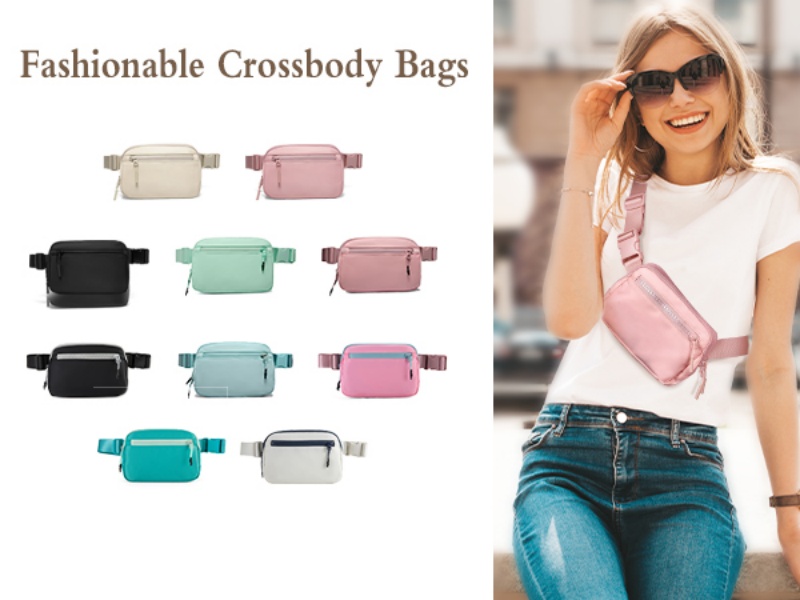
Several belt bag styles are currently showing strong commercial potential because they combine practical use with modern design.
| Style Direction | Main Characteristics | Suitable Position |
|---|---|---|
| Minimal crossbody belt bag | Clean shape, adjustable strap, simple structure | Lifestyle, fashion, everyday use |
| Technical nylon belt bag | Lightweight, durable, functional details | Outdoor, travel, urban collections |
| Premium PU or leather belt bag | Refined appearance, upgraded hardware | Fashion and premium accessories |
| Travel organizer belt bag | Multiple compartments, secure storage | Travel and commuting |
| Sport waist bag | Lightweight, close-body fit | Running and active lifestyles |
| Fashion waist pouch | Statement shape, decorative details | Trend-driven collections |
The growth of these different styles shows that belt bags are becoming more specialized.
A simple one-size-fits-all approach is less effective because different users expect different experiences.
Minimal Crossbody Belt Bags
Minimal crossbody belt bags remain one of the most flexible directions because they fit multiple occasions.
Their appeal comes from simplicity:
- clean front panels;
- lightweight construction;
- adjustable straps;
- neutral colors;
- easy daily styling.
These designs often use nylon, polyester, soft-touch fabrics or lightweight woven materials.
The strongest versions are not completely plain. Small details create differentiation:
- custom zipper pulls;
- refined webbing;
- hidden pockets;
- subtle branding;
- improved lining;
- better internal organization.
A minimalist design can easily become generic if every detail looks identical to existing products. The challenge is creating simplicity while maintaining a recognizable identity.
For everyday collections, practical dimensions are usually more important than oversized capacity. Many successful designs focus on carrying:
- smartphones;
- wallets;
- keys;
- earbuds;
- sunglasses;
- small personal items.
The goal is convenience without creating unnecessary bulk.
Are Technical Nylon Belt Bags Still Popular?
Technical nylon belt bags continue to perform well because they combine durability, lightweight performance and modern visual appeal.
Nylon has become one of the most important materials in this category because it can support many different styles.
A matte nylon fabric can create a premium minimalist look.
A high-density nylon can create a technical outdoor feeling.
A water-resistant finish can support travel positioning.
A lighter nylon construction can create a comfortable everyday product.
The difference is not only the fabric name. Important factors include:
| Material Detail | Influence |
|---|---|
| Fabric density | Affects durability and hand feel |
| Coating | Influences water resistance and appearance |
| Surface finish | Creates different visual styles |
| Thickness | Changes structure and weight |
| Color treatment | Influences premium perception |
Technical styles often include functional elements:
- stronger webbing;
- secure buckles;
- reinforced attachment points;
- hidden compartments;
- reflective details;
- water-resistant zippers.
These features make the product more attractive for travel, outdoor activities and urban lifestyles.
Jundong’s belt bag material capabilities include nylon, polyester, Oxford fabric, canvas, PU, PVC-coated fabric, neoprene, RPET and mesh, allowing different styles to be developed according to intended use and positioning.
Are Crossbody Belt Bags Replacing Traditional Waist Bags?
Crossbody belt bags are not replacing traditional waist bags completely, but they are changing how the category is worn.
The traditional waist position remains useful for activities where stability matters, such as walking, running and outdoor movement.
However, crossbody styling has expanded the category because it fits modern fashion habits.
Wearing a belt bag across the chest provides:
- easier access;
- stronger visual styling;
- compatibility with jackets and coats;
- more flexible outfit combinations.
This explains why many current designs are created with longer adjustable straps rather than being limited to waist wear.
A well-designed crossbody belt bag needs careful attention to:
- strap length;
- strap width;
- attachment angle;
- buckle location;
- bag balance;
- zipper direction.
A product may look attractive in a flat photograph but feel uncomfortable when worn diagonally across the body.
For this reason, wearing tests are important during development.
A good dual-purpose design should feel natural in both positions:
Waist use
- stable fit;
- comfortable around the body;
- limited movement.
Crossbody use
- balanced weight;
- easy access;
- comfortable strap position.
The future of belt bags is likely not waist versus crossbody. It is flexibility between both.
What Type of Belt Bag Is Best for Travel?
Travel belt bags remain one of the strongest practical categories because they solve a clear daily problem: keeping important items secure while moving.
Travel-focused designs usually prioritize:
- zipper security;
- internal organization;
- comfortable straps;
- lightweight construction;
- easy access.
A successful travel belt bag may include:
| Feature | Benefit |
|---|---|
| Multiple compartments | Separates passport, phone and personal items |
| Hidden pocket | Adds security during travel |
| Adjustable strap | Fits different body types |
| Water-resistant fabric | Protects belongings |
| Lightweight structure | Improves comfort during long use |
Travel users often prefer products that do not attract unnecessary attention.
This has increased demand for:
- black;
- navy;
- gray;
- olive;
- beige;
- other neutral colors.
However, fashion-oriented travel collections can also use seasonal colors and special materials to create stronger visual appeal.
The key difference between a normal belt bag and a travel version is organization.
A small bag does not need many pockets. It needs the right pockets.
Poor organization creates frustration because items become difficult to find. A well-designed layout improves the experience even if the external size remains unchanged.
What Makes Premium Belt Bags Different?
Premium belt bags are usually separated from basic versions through material selection, construction quality and finishing details.
The difference is often visible through small areas:
- zipper quality;
- hardware finish;
- edge treatment;
- lining;
- stitching accuracy;
- logo execution;
- fabric texture.
A premium product does not necessarily need more decoration.
Many higher-positioned designs use:
- minimal branding;
- refined materials;
- clean silhouettes;
- carefully selected hardware;
- better tactile experience.
PU and leather-inspired materials are often used because they create a more elevated appearance compared with basic polyester constructions.
However, premium appearance requires more than changing the outer fabric.
The structure must support the material.
A soft PU may require different reinforcement compared with nylon. A thicker material may require different sewing methods. A structured body may need additional support inside.
This is why premium belt bags require attention to both design and production details.
Which Belt Bag Materials Are Trending?
Material selection strongly influences how a belt bag is perceived.
Different materials communicate different product messages.
| Material | Common Positioning |
|---|---|
| Nylon | Technical, lightweight, travel, urban |
| Polyester | Practical, versatile, cost-effective |
| Canvas | Casual, natural, lifestyle |
| PU | Fashion, premium appearance |
| Neoprene | Sporty, soft, modern |
| RPET | Recycled-material positioning |
| Mesh | Lightweight, breathable, functional |
Nylon continues to be widely used because it balances durability, weight and appearance.
PU remains attractive for fashion collections because it creates a smoother and more polished surface.
Canvas works well for brands looking for casual or heritage-inspired designs.
RPET can support sustainability-focused collections when the required documentation and material standards are properly confirmed.
The strongest material choice depends on the product story.
A hiking-inspired belt bag and a luxury-inspired belt bag should not use the same material simply because both belong to the same category.
What Features Make Belt Bags More Competitive?
Small functional improvements often create the biggest difference.
Important features include:
Adjustable Strap Design
The strap determines comfort more than many people expect.
A good strap should:
- adjust smoothly;
- stay secure;
- match the bag weight;
- work across different wearing positions.
Internal Organization
Even one additional pocket can significantly improve usability.
Useful layouts may include:
- front quick-access pocket;
- hidden security pocket;
- internal zipper pocket;
- separated phone compartment.
Hardware Selection
Buckles and zipper pulls influence both appearance and daily experience.
Premium hardware can improve:
- durability;
- opening comfort;
- visual quality.
Lightweight Construction
A belt bag should feel easy to carry.
Excessive reinforcement or unnecessary accessories can make a small bag uncomfortable.
Branding Placement
The logo should match the product scale.
A small refined logo often works better than oversized branding on compact accessories.
Jundong’s customization options for belt bags include capacity, belt construction, buckles, zippers, internal organization, wearing comfort, anti-theft structure, lightweight design, logo, color and packaging options.
The strongest belt bags are not defined by one fashionable feature. They succeed because every detail works together: shape, material, comfort, function and visual identity.
How Do Brands Develop Custom Belt Bags?
A successful custom belt bag begins with more than choosing a popular shape. The strongest products are developed by connecting design, daily use, materials, construction and visual identity into one complete product concept.
A belt bag may appear simple from the outside, but the development process involves many decisions:
- How should the bag sit on the body?
- Should it work around the waist, across the chest, or both?
- How much should it carry?
- Which fabric creates the right feeling?
- Which pocket layout improves daily use?
- Which details create a stronger visual identity?
Small changes can create a completely different product experience.
For example, increasing the depth by only 2 cm can improve storage but may make the bag look bulky when worn. Moving a zipper position can improve appearance but reduce quick access. Changing strap width can improve comfort but influence the overall style.
This is why custom belt bags require careful development from the first idea to the final production version.
A complete development process usually includes:
- Product concept review
- Material selection
- Structure planning
- Pattern development
- Sample creation
- Wear testing
- Design adjustment
- Final approval
- Production preparation
- Quality inspection
Jundong’s development process supports reviewing product ideas, materials, dimensions, structure, logo placement, packaging requirements and production feasibility before moving forward.
The goal is not only to create a good-looking sample. The goal is to create a product that can maintain the same appearance, function and quality when produced repeatedly.
How Does the Custom Belt Bag Process Work?
The custom belt bag process starts by transforming an idea into measurable product details.
Many projects begin with one of the following:
- reference images;
- existing samples;
- sketches;
- design drawings;
- product concepts.
A visual reference shows the appearance, but it usually does not define every production detail.
Important information needs to be clarified:
| Development Area | Important Details |
|---|---|
| Size | Width, height, depth |
| Wearing method | Waist, crossbody, or both |
| Capacity | Items the bag should hold |
| Material | Fabric, lining, reinforcement |
| Structure | Compartments, pockets, opening |
| Hardware | Zippers, buckles, webbing |
| Branding | Logo size and placement |
| Packaging | Labels, tags, retail presentation |
Once these details are confirmed, the design can move from an idea into a workable construction.
A practical belt bag development process usually follows these steps:
Concept Review
The first stage focuses on understanding the product purpose.
A travel belt bag and a fashion belt bag may have similar dimensions, but they require completely different priorities.
A travel version may need:
- secure pockets;
- durable zippers;
- lightweight fabric;
- comfortable long-term wearing.
A fashion version may focus more on:
- silhouette;
- premium materials;
- hardware appearance;
- visual details.
The intended use determines many later decisions.
Material Selection
Material selection affects appearance, durability, comfort and cost.
Common belt bag materials include:
| Material | Characteristics |
|---|---|
| Nylon | Lightweight, durable, technical |
| Polyester | Practical, versatile |
| Canvas | Casual, natural appearance |
| PU | Fashion-oriented surface |
| Neoprene | Soft and flexible |
| RPET | Recycled-material option |
| Mesh | Lightweight and breathable |
Jundong’s belt bag projects include materials such as nylon, polyester, Oxford fabric, canvas, PU, PVC-coated fabric, neoprene, RPET and mesh depending on the intended product direction.
Material choice should consider:
- hand feel;
- weight;
- durability;
- appearance;
- cleaning requirements;
- production suitability.
A premium-looking product does not always require the most expensive material. The best choice is the one that supports the product purpose.
Structure Planning
Structure determines how the belt bag performs in daily use.
Important structural decisions include:
- number of compartments;
- zipper location;
- pocket depth;
- strap attachment;
- internal organization;
- reinforcement areas.
A compact belt bag usually benefits from thoughtful organization rather than excessive storage.
A well-designed interior may include:
- main compartment for larger items;
- front pocket for quick access;
- hidden pocket for valuable items;
- small divider for organization.
Good structure allows users to find items quickly without making the product bulky.
Pattern Development
Pattern development converts a design concept into a physical shape.
This stage controls:
- panel size;
- curved areas;
- seam position;
- body shape;
- strap connection points.
Belt bags often require more attention than they appear to because the product must follow the shape of the body.
A flat pattern may create a stiff appearance.
A carefully developed pattern allows the bag to:
- sit closer to the body;
- maintain a balanced shape;
- distribute weight comfortably.
Sample Creation
The sample stage transforms design decisions into a physical product.
A sample allows evaluation of:
- appearance;
- size;
- comfort;
- function;
- material performance;
- logo effect.
Jundong’s sample development normally takes around 5–7 days, while some simpler designs can be completed within 2–3 days depending on materials, structure and customization requirements.
The first sample is rarely the final version for more complex designs.
Adjustments may involve:
- changing dimensions;
- improving strap position;
- modifying pocket structure;
- adjusting material thickness;
- refining logo placement.
A good sample process reduces uncertainty before large-scale production.
What Should a Belt Bag Tech Pack Include?
A detailed tech pack helps different teams understand the same product requirements.
For a belt bag, useful information includes:
| Category | Details |
|---|---|
| Product view | Front, back, side drawings |
| Dimensions | Width, height, depth |
| Strap | Length, width, adjustment method |
| Fabric | Shell, lining, reinforcement |
| Hardware | Zippers, buckles, rings |
| Logo | Method, size, position |
| Stitching | Important construction details |
| Labels | Brand and care information |
| Packaging | Individual and carton packing |
The more accurate the specifications, the fewer unexpected changes occur during development.
A common mistake is focusing only on appearance.
A product image may show:
- a curved shape;
- a front pocket;
- a stylish strap.
However, it does not explain:
- how thick the fabric should be;
- where reinforcement is needed;
- how the zipper should operate;
- how the strap should connect.
Those details determine whether the final product feels premium.
How Does a Factory Develop a New Belt Bag?
Developing a new belt bag requires balancing design intention with practical production requirements.
A concept may look attractive but need adjustments before it becomes suitable for repeated production.
For example:
A very thin body may look fashionable but cannot maintain shape.
A very thick body may hold more items but become uncomfortable.
A complicated pocket structure may increase functionality but also increase weight and production complexity.
Development decisions usually consider:
- appearance;
- comfort;
- durability;
- production efficiency;
- cost control.
Jundong’s development team reviews materials, structure, size, logo, packaging and production feasibility before sample confirmation.
The purpose is to create a balanced product rather than simply reproduce a visual reference.
How Long Does a Belt Bag Sample Take?
Sample timing depends on the complexity of the design.
A simple belt bag with:
- standard fabric;
- regular zipper;
- common buckle;
- basic structure;
can usually move faster.
More complex designs require additional time because they may involve:
- custom hardware;
- special materials;
- multiple compartments;
- special logo methods;
- unique construction.
Jundong’s standard sample timing is usually 5–7 days, with some simple designs completed in 2–3 days.
The fastest sample is not always the most valuable.
A rushed sample that requires many corrections later can create more delays.
The better approach is creating a sample that accurately represents the final product direction.
What Should Be Checked in a Belt Bag Sample?

A belt bag sample should be tested as a real product, not only viewed as a design piece.
Important checks include:
| Area | Inspection Focus |
|---|---|
| Size | Actual dimensions |
| Shape | Symmetry and appearance |
| Strap | Comfort and adjustment |
| Zipper | Smooth operation |
| Buckle | Strength and usability |
| Practical storage | |
| Material | Feel and appearance |
| Logo | Position and quality |
| Stitching | Clean and consistent sewing |
| Packing | Presentation and protection |
A useful test is filling the bag with realistic items.
For example:
- smartphone;
- wallet;
- keys;
- passport;
- sunglasses.
This reveals whether:
- the zipper still opens smoothly;
- the strap remains comfortable;
- the body keeps its shape;
- items remain organized.
Jundong’s sample inspection includes checking appearance, size, logo, zipper, stitching, components, lining and packaging before sample approval.
How Are Sample Revisions Managed?
Good revisions require clear observations.
Instead of general comments, measurable feedback helps improve the product faster.
Examples:
Instead of:
“Make it smaller.”
Better:
“Reduce depth from 8 cm to 6 cm while keeping the front pocket.”
Instead of:
“The strap feels uncomfortable.”
Better:
“Increase strap width from 20 mm to 30 mm and adjust the attachment position.”
Common revision areas include:
- size adjustment;
- material replacement;
- logo repositioning;
- zipper changes;
- pocket redesign;
- hardware updates;
- packaging improvement.
Jundong’s development process allows adjustments to product size, material, logo, structure and packaging based on sample feedback.
The purpose of revisions is not to change everything. It is to improve the areas that affect daily use and overall appearance.
How Is Sample-to-Bulk Consistency Controlled?
Once a sample is approved, the approved version becomes the reference for production.
Important details need to remain consistent:
- fabric;
- color;
- dimensions;
- stitching;
- logo position;
- zipper specification;
- hardware;
- packaging.
Jundong’s inspection process covers incoming materials, cutting, logo application, sewing, finished products, packing and shipment preparation.
For belt bags, consistency checks usually focus on:
Material Control
Checking:
- fabric color;
- thickness;
- texture;
- coating;
- zipper specification;
- webbing;
- hardware.
Construction Control
Checking:
- seam alignment;
- reinforcement;
- pocket position;
- strap attachment;
- overall shape.
Finished Product Control
Checking:
- dimensions;
- appearance;
- function;
- cleanliness;
- packing.
Incoming material inspection is especially important because material differences can affect the entire production process. Jundong checks fabric color, thickness, texture, coating, zipper details, webbing and hardware before materials enter production.
A successful custom belt bag is not created by one design decision. It is the result of many connected details working together: concept, material, structure, sampling, refinement and consistent execution.
What Affects Custom Belt Bag Price?
The price of a custom belt bag is influenced by far more than its size or appearance. Two products may look almost identical from the outside but have very different costs because of differences in fabric, structure, accessories, workmanship, branding methods and packing requirements.
A simple belt bag with one compartment, standard polyester fabric and regular hardware has a completely different production structure from a premium nylon style with multiple pockets, custom zipper pulls, upgraded buckles and retail packaging.
Understanding these cost factors helps create better products because it allows design decisions to focus on features that create real value.
The main elements that influence belt bag pricing include:
- material selection;
- fabric thickness and treatment;
- product dimensions;
- internal structure;
- zipper and hardware choice;
- strap construction;
- logo method;
- packaging requirements;
- order quantity;
- testing and delivery requirements.
Jundong’s belt bag costing evaluation considers product type, material, thickness, treatment, dimensions, pockets, lining, zippers, webbing, hardware, branding, packaging, quantity, delivery timing and testing requirements.
A successful product does not always require the lowest possible cost. The better approach is creating the right balance between appearance, function, durability and target retail positioning.
What Is a Custom Belt Bag Price Based On?
Custom belt bag pricing is usually built from many individual components rather than one single factor.
A practical cost structure includes:
| Cost Area | Main Influencing Factors |
|---|---|
| Fabric | Material type, thickness, finish, color |
| Structure | Panels, compartments, reinforcement |
| Accessories | Zippers, buckles, rings, webbing |
| Branding | Printing, embroidery, patches, hardware |
| Labor | Sewing complexity and assembly steps |
| Packaging | Labels, bags, boxes and preparation |
| Quantity | Material efficiency and production setup |
| Delivery | Timing, inspection and shipping requirements |
A common misunderstanding is comparing products only by dimensions.
For example:
A 25 cm × 15 cm belt bag may contain:
- one main compartment;
- standard polyester fabric;
- regular zipper;
- simple buckle.
Another 25 cm × 15 cm belt bag may include:
- high-density nylon;
- waterproof coating;
- two compartments;
- internal divider;
- custom zipper pull;
- reinforced strap attachment;
- branded packaging.
Although the size is almost identical, the production value and cost structure are very different.
The most important pricing decisions happen before production begins because material, structure and hardware choices determine most of the final cost.
How Do Materials Affect Belt Bag Cost?
Material is usually one of the largest factors affecting the final price.
However, the material name alone does not define the cost.
For example, “nylon” can represent many different qualities depending on:
- yarn density;
- fabric thickness;
- weaving method;
- coating;
- waterproof treatment;
- surface finish;
- color requirements.
Different materials also create different product positions.
| Material | Cost Influence | Product Feeling |
|---|---|---|
| Nylon | Medium to high depending on specification | Technical, lightweight, modern |
| Polyester | Flexible cost options | Practical and versatile |
| Canvas | Depends on weight and treatment | Casual, natural |
| PU | Depends on surface quality and thickness | Fashion-oriented |
| Neoprene | Depends on thickness and lamination | Soft, sporty |
| RPET | Depends on recycled specifications | Sustainability-focused |
Jundong’s belt bag material options include nylon, polyester, Oxford fabric, canvas, PU, PVC-coated fabric, neoprene, RPET and mesh for different product directions.
A higher-cost material does not automatically create a better product.
The correct material depends on the intended use.
A travel belt bag may require:
- lightweight fabric;
- easy cleaning;
- durability.
A premium fashion belt bag may require:
- smoother surface;
- richer texture;
- refined appearance.
An outdoor belt bag may require:
- stronger fabric;
- reinforcement;
- weather resistance.
Material selection should support the product purpose rather than simply increase specifications.
How Do Fabric Thickness and Treatment Change Cost?
Fabric thickness and finishing treatments can significantly influence pricing.
A thin polyester fabric and a high-density coated nylon may look similar in a photo but perform very differently.
Thickness affects:
- body structure;
- durability;
- hand feel;
- weight;
- appearance.
Treatment processes may include:
- waterproof coating;
- matte finishing;
- glossy finishing;
- lamination;
- special texture treatment.
These processes can improve performance or appearance but may increase material cost.
For example:
A lightweight everyday belt bag may only need a standard fabric.
A travel style exposed to outdoor conditions may require stronger protection.
A premium collection may need a special surface finish to create a more refined appearance.
The key is avoiding unnecessary upgrades that do not improve the final user experience.
How Do Zippers and Hardware Affect Belt Bag Price?
Small accessories often create a surprisingly large difference in both cost and perceived quality.
The main hardware components include:
- zippers;
- zipper pulls;
- buckles;
- D-rings;
- adjusters;
- metal parts;
- hooks.
A standard plastic buckle and a custom metal buckle may perform the same basic function, but they create very different product impressions.
Zippers also vary significantly.
Important differences include:
| Zipper Type | Characteristics |
|---|---|
| Standard zipper | Practical and economical |
| Larger zipper | Stronger visual and functional presence |
| Waterproof zipper | Added protection |
| Custom puller zipper | Stronger brand identity |
For premium styles, hardware often becomes part of the visual language.
A high-quality zipper pull, smooth buckle movement and consistent hardware finish can make a product feel significantly more refined.
However, adding premium accessories should always match the overall product direction.
A simple promotional belt bag may not benefit from expensive custom hardware.
A premium lifestyle product may justify the investment.
How Do Internal Structures Affect Pricing?
Internal design is one of the areas where small changes can create noticeable cost differences.
A simple belt bag may contain:
- one main compartment;
- one zipper opening;
- basic lining.
A more advanced design may include:
- front quick-access pocket;
- hidden security pocket;
- internal divider;
- card slot;
- key attachment;
- separate phone section.
Each additional component requires:
- extra fabric;
- more cutting;
- additional sewing;
- more inspection steps.
However, better organization can significantly improve daily use.
The goal is not adding as many pockets as possible.
The goal is creating useful storage.
A well-designed interior allows users to quickly find important items without making the bag unnecessarily thick.
Does Logo Customization Increase Belt Bag Cost?
Logo customization can affect cost depending on the application method, size and complexity.
Common branding methods include:
- screen printing;
- heat transfer;
- embroidery;
- woven labels;
- rubber patches;
- silicone patches;
- leather patches;
- metal plates;
- embossed logos;
- debossed logos.
Different methods require different preparation processes.
| Logo Method | Suitable Materials | Visual Effect |
|---|---|---|
| Screen printing | Polyester, nylon, canvas | Clean and flexible |
| Embroidery | Woven fabrics | Textured appearance |
| Rubber patch | Technical styles | Sporty and durable |
| Metal plate | Premium products | Elevated appearance |
| Embossing | PU and leather-like materials | Subtle premium effect |
Jundong supports various branding methods including screen printing, heat transfer, embroidery, woven labels, rubber patches, PVC patches, leather patches, metal plates, embossed and debossed logos depending on material and design requirements.
The most suitable method depends on:
- material surface;
- logo size;
- product positioning;
- durability requirements.
A larger logo is not always better.
Compact accessories usually benefit from balanced branding that complements the overall design.
How Does Packaging Affect Belt Bag Cost?
Packaging is often underestimated during product development.
The final packing method can influence:
- unit cost;
- shipping volume;
- storage efficiency;
- retail presentation.
Common packaging options include:
- polybags;
- hangtags;
- care labels;
- barcode stickers;
- SKU labels;
- insert cards;
- color boxes;
- gift boxes;
- custom pouches.
Jundong supports packaging solutions including OPP bags, polybags, hangtags, care labels, woven labels, barcode labels, SKU labels, FBA labels, color boxes, gift boxes and other customized packing requirements.
A premium box may improve presentation but also increase carton size and shipping cost.
A simple polybag may reduce cost but provide less retail impact.
The right packaging depends on where and how the product will be sold.
What Is a Typical Belt Bag MOQ?
For custom belt bags, quantity has a direct influence on unit cost because many preparation steps remain similar regardless of order size.
These steps include:
- material preparation;
- pattern setup;
- cutting;
- logo preparation;
- sewing setup;
- inspection;
- packing preparation.
Jundong’s standard MOQ is generally 500 pieces per design. Selected simpler projects may be reviewed at 200–300 pieces, while some basic low-price products may require higher quantities depending on materials and production requirements.
Larger quantities often improve cost efficiency because:
- material purchasing becomes more efficient;
- setup costs are distributed across more units;
- production flow becomes smoother.
However, quantity decisions should also consider:
- expected sales speed;
- storage capacity;
- seasonal demand;
- color selection.
A lower quantity may reduce inventory risk, while a larger quantity may improve unit economics.
How Can Cost Be Controlled Without Losing Quality?
Reducing cost does not always mean reducing quality.
The strongest cost control methods usually focus on removing unnecessary complexity.
Effective approaches include:
Selecting the Right Material
A higher specification material is not always needed.
Choose the material that provides the required performance.
Simplifying Structure
Removing unused pockets or unnecessary layers can reduce cost without affecting user experience.
Optimizing Hardware
Standard hardware can work well when custom parts do not create meaningful value.
Improving Quantity Planning
Correct quantities help reduce material waste and setup costs.
Balancing Packaging
Choose packaging that matches the selling environment rather than adding unnecessary expense.
Jundong’s pricing approach focuses on balancing quality, cost, delivery timing and product value instead of competing only through the lowest price.
The best belt bag projects achieve a clear balance:
- attractive appearance;
- comfortable use;
- reliable construction;
- reasonable cost.
A well-developed product is not the cheapest option. It is the product where every cost decision contributes to a stronger final result.
Which Belt Bag Manufacturer Is Best for Brands?
Choosing the right belt bag production partner is not only about finding a competitive quotation. A successful collection depends on whether the team can understand the design, recommend suitable materials, create accurate samples, maintain consistent quality and support long-term product development.
A belt bag may look like a simple accessory, but the production process involves many connected details:
- fabric selection;
- pattern development;
- zipper performance;
- strap comfort;
- hardware quality;
- logo execution;
- internal structure;
- packing accuracy.
A reliable production partner should be able to manage these details from the first concept to the final shipment.
The best choice is usually not the company offering the lowest unit price. It is the one that can create the right balance between:
- product quality;
- development capability;
- production capacity;
- communication efficiency;
- quality control;
- delivery reliability.
For established brands, a belt bag is rarely just one item. It may become a repeated style, a seasonal collection or part of a wider accessories program. Therefore, production capability and consistency become just as important as the first sample appearance.
Factory vs Trading Company: Which Is Better?
The choice between a direct factory and a trading company depends on the project requirements, but understanding the differences helps avoid unexpected issues.
A direct factory usually provides closer access to:
- product development;
- material selection;
- sample adjustments;
- production details;
- quality inspection;
- packaging control.
A trading company may coordinate different products from multiple sources, which can be useful for some projects. However, for products requiring repeated adjustments and detailed construction control, direct communication with the production team can make the process more efficient.
The key differences are:
| Area | Direct Factory | Trading Company |
|---|---|---|
| Product development | Direct technical communication | Depends on external coordination |
| Sample revision | Faster connection with production team | Additional communication steps |
| Material control | Closer production visibility | Depends on sourcing network |
| Quality control | Direct inspection process | Requires coordination |
| Cost structure | More transparent production factors | May include additional service layers |
For custom belt bags, details matter.
A small change in:
- zipper position;
- strap attachment;
- pocket depth;
- fabric thickness;
- hardware selection;
can affect the final result.
Direct communication with the team responsible for production can help these details move more accurately from concept to finished product.
What Makes a Reliable Belt Bag Factory?
Reliability comes from consistent processes rather than simply having a large product catalog.
Important capabilities include:
- experienced product development;
- professional sample creation;
- material evaluation;
- pattern development;
- skilled sewing teams;
- inspection procedures;
- packaging management;
- repeat production control.
A strong belt bag facility should understand both appearance and function.
For example:
A fashion belt bag requires attention to:
- silhouette;
- material texture;
- hardware appearance;
- finishing details.
A travel belt bag requires attention to:
- zipper reliability;
- pocket organization;
- strap comfort;
- durability.
A sport belt bag requires attention to:
- weight;
- stability;
- movement comfort.
The same product category can require completely different technical decisions.
Jundong operates with more than 600 employees, approximately 18,000 m² production space and around 80 QC inspectors, supporting product development, sampling, production and inspection processes.
These resources are important because consistent results require coordination between different teams rather than relying on one production step.
Which Factory Capabilities Should Be Compared?

Before selecting a production partner, it is useful to compare the complete development process instead of only comparing prices.
| Capability | Why It Matters |
|---|---|
| Design support | Helps convert ideas into workable products |
| Sample room | Allows faster physical evaluation |
| Material options | Supports different product positions |
| Pattern development | Controls shape and fit |
| Production capacity | Supports repeated orders |
| Quality inspection | Reduces avoidable defects |
| Packaging ability | Improves delivery accuracy |
| Communication | Keeps decisions clear |
For belt bags, several capabilities deserve special attention.
Sample Development Capability
A strong sample team should be able to identify practical issues before production.
Examples:
- a strap may need repositioning for better comfort;
- a pocket may need adjustment for easier access;
- a material may need reinforcement;
- a zipper direction may need changing.
A good sample is not only a visual copy. It is a test of whether the product works.
Material Development Capability
Different materials create different results.
A factory should understand how materials affect:
- sewing difficulty;
- structure;
- appearance;
- durability;
- cost.
Nylon, polyester, canvas, PU, neoprene and recycled materials all require different handling methods.
Jundong’s belt bag projects include materials such as nylon, polyester, Oxford fabric, canvas, PU, PVC-coated fabric, neoprene, RPET and mesh depending on product requirements.
Production Management Capability
A good sample does not guarantee a good bulk order.
Production management should control:
- material preparation;
- cutting accuracy;
- logo application;
- sewing consistency;
- finishing;
- packing.
The production process should follow the approved sample and confirmed specifications.
How Should Belt Bag Quality Be Controlled?
Quality control should happen throughout the production process rather than only at the end.
A complete inspection process usually includes:
| Stage | Main Checks |
|---|---|
| Material inspection | Fabric, zippers, webbing, hardware |
| Cutting | Panel size and consistency |
| Logo application | Position, color and quality |
| Sewing | Stitching, reinforcement, alignment |
| Finished product | Appearance and function |
| Packing | Labels, quantity and presentation |
Jundong’s inspection process covers incoming materials, cutting pieces, logo work, sewing, finished products, packing and shipment preparation.
For belt bags, important quality details include:
Fabric Consistency
Checking:
- color difference;
- thickness;
- texture;
- coating condition.
Structural Accuracy
Checking:
- dimensions;
- pocket position;
- strap attachment;
- overall shape.
Functional Performance
Checking:
- zipper movement;
- buckle operation;
- strap adjustment;
- pocket accessibility.
Final Appearance
Checking:
- loose threads;
- uneven stitching;
- stains;
- shape deformation.
The purpose of quality control is not simply finding problems after completion. It is identifying issues early enough to make corrections.
Do Factories Support Private Label Packaging?
Packaging is an important part of the final product experience.
A complete belt bag program may require:
- woven labels;
- care labels;
- hangtags;
- barcode stickers;
- SKU labels;
- polybags;
- color boxes;
- gift boxes;
- insert cards;
- carton markings.
Jundong supports packaging options including OPP bags, polybags, hangtags, care labels, woven labels, barcode labels, SKU labels, FBA labels, color boxes, gift boxes and customized packing requirements.
Packaging decisions should consider:
- retail presentation;
- shipping efficiency;
- storage requirements;
- labeling accuracy.
For example:
A premium fashion belt bag may benefit from a gift box.
A travel accessory may only need efficient individual packing.
An online sales program may require barcode and SKU management.
The right packaging supports both appearance and operational convenience.
What Compliance Evidence Should Be Reviewed?
Compliance requirements depend on:
- product materials;
- destination country;
- intended use;
- retailer requirements.
Common areas to review include:
- material testing;
- restricted substance requirements;
- labeling;
- factory documentation;
- inspection requirements.
Different products may require different documentation.
A nylon travel belt bag and a children’s product have completely different compliance considerations.
Jundong reviews testing and documentation requirements according to product type, destination and project needs rather than applying one standard to every product.
The most important consideration is ensuring that product claims and documentation match the actual materials and production process.
How Do You Compare Belt Bag Factory Quotes?
A quotation should be compared based on the complete specification, not only the unit price.
Important comparison items include:
| Item | Check Details |
|---|---|
| Material | Fabric type, thickness, finish |
| Size | Exact dimensions |
| Structure | Compartments and pockets |
| Hardware | Zippers, buckles, rings |
| Branding | Logo method and position |
| Packaging | Individual and carton packing |
| Quantity | Production volume |
| Timing | Sample and production schedule |
| Inspection | Quality process |
A lower quotation may exclude important elements.
For example:
One quotation may include:
- lining;
- branded zipper pulls;
- individual packing.
Another may exclude them.
The two prices are therefore not directly comparable.
Jundong evaluates pricing based on product type, material, structure, accessories, branding, packaging, quantity, delivery timing and testing requirements rather than size alone.
A clear quotation should explain what is included so that product expectations remain consistent.
What Should Be Sent for a Custom Belt Bag Quote?
A more complete product brief helps create a more accurate evaluation.
Useful information includes:
- reference images;
- sketches;
- existing samples;
- dimensions;
- material preference;
- color;
- logo artwork;
- quantity;
- packaging requirements;
- delivery schedule.
A simple image is enough to begin discussion, but more details help define the final product.
The most important information includes:
Intended Use
Is the belt bag designed for:
- travel;
- fashion;
- outdoor;
- sport;
- daily lifestyle;
- promotional use?
Wearing Method
Should it work:
- around the waist;
- across the chest;
- over outerwear;
- in multiple positions?
Product Position
Is the goal:
- affordable everyday use;
- premium lifestyle;
- technical performance;
- seasonal fashion?
These decisions influence material, structure and finishing.
Why Choose Jundong for Custom Belt Bags?
A successful belt bag collection requires more than production ability. It requires experience connecting design ideas with practical execution.
Jundong provides:
- more than 20 years of OEM and ODM experience;
- a dedicated development and sample team;
- 18,000 m² production space;
- more than 600 employees;
- approximately 80 QC inspectors;
- support for different materials, structures, logos and packaging solutions.
The focus is creating belt bags that combine:
- practical function;
- reliable construction;
- suitable materials;
- consistent quality;
- strong visual identity.
For brands developing new belt bag collections, a product concept, reference image or existing sample can be reviewed to discuss structure, materials, sample development and production possibilities.