 Skip to content
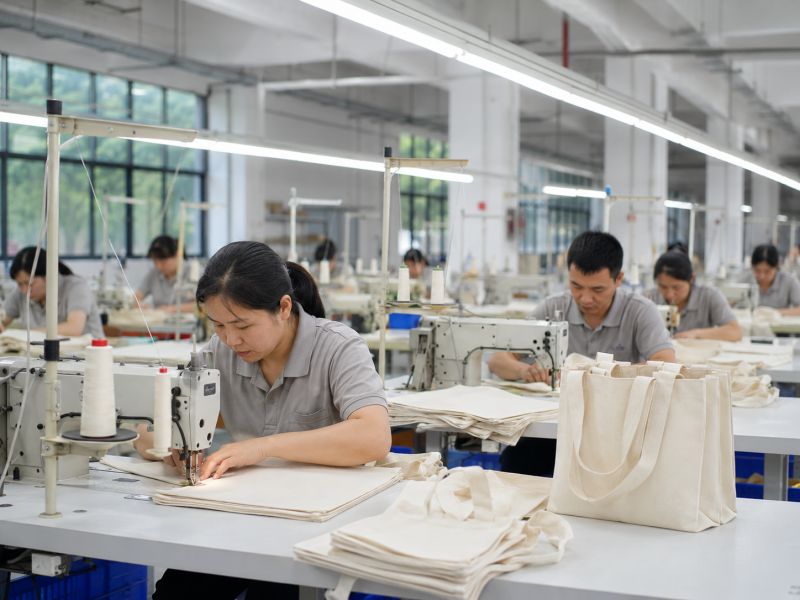
The biggest sourcing mistake is often made before the first sample is sewn: choosing a factory because the quotation looks attractive rather than because the production system fits the product.
Two factories can quote the same backpack from the same drawing and still be offering very different products. One may calculate with a lighter fabric, generic zipper, simpler reinforcement and standard packing. Another may study the load areas, lining specification, foam density, zipper size, logo construction, carton limits and launch date before calculating cost. On a spreadsheet, the first option may look cheaper. Once production begins, the second may prove far less expensive to manage.
A better bag factory is one whose product experience, development depth, material control, production capacity, quality system, communication and commercial structure match the specific project. The strongest choice is rarely based on price alone. It comes from verifying who will make the product, how the approved sample becomes a production standard, how materials and workmanship are checked, and whether the same result can be repeated across larger quantities and future orders.
That distinction becomes especially important after the first successful order. A factory that performs well on 500 pieces may struggle when the same style grows to several colors, several thousand units, retail labels, custom cartons and fixed delivery dates. The real test is not whether one attractive sample can be made. It is whether the entire product can be controlled repeatedly.
What Makes a Better Bag Manufacturer?
A better bag manufacturer is one whose product experience, development capability, material control, production discipline, capacity planning and quality system match the actual project. The strongest factory is not necessarily the largest or cheapest. It is the one that can turn an approved design into repeatable bulk output while keeping construction, appearance, cost, timing and packing under control as quantities and SKUs increase.
For an established brand, factory selection should begin with product fit rather than price.
A technically simple canvas tote, a fashion cosmetic case, a 40-liter hiking pack and a reinforced tool bag may all be sewn products, but they require very different skills. The closer the factory’s daily production experience is to the intended product, the fewer decisions need to be discovered through trial and error.
A useful evaluation therefore looks at several connected areas rather than one headline number.
| Area | Strong Evidence | Why It Matters |
|---|---|---|
| Product fit | Similar structures already developed | Fewer avoidable development mistakes |
| Development | Pattern, sample and feasibility teams | Better conversion from concept to production |
| Materials | Clear specifications and incoming checks | Lower risk of hidden substitutions |
| Capacity | Real line planning by SKU and quantity | More realistic delivery dates |
| Quality | Checks before, during and after sewing | Better bulk consistency |
| Documentation | Approved specs, samples and revisions | Less dependence on verbal instructions |
| Packing | SKU, barcode and carton control | Fewer warehouse and retail errors |
| Repeat orders | Retained standards and references | More stable replenishment |
Product Fit
Product fit is the first filter because no factory is equally strong at every bag category.
A facility that performs well on fashion totes may not be the best choice for technical outdoor packs. A plant with deep experience in heavy-duty tool bags may not be optimized for fine PU cosmetic bags where edge finish, surface appearance and clean stitching matter more than load strength.
Before comparing quotations, classify the product by five practical variables:
- construction complexity;
- intended use;
- material system;
- expected order volume;
- presentation standard.
Construction complexity includes more than pocket count. It can involve shaped panels, binding, foam, curved zippers, laminated layers, molded components, reinforcement and hardware.
The use case determines what matters most. A commuter backpack may prioritize comfort and laptop protection. A tool bag needs abrasion resistance and reinforced load zones. A promotional tote may prioritize printing, cost efficiency and packing volume.
A strong factory should understand those differences without being taught every detail from the beginning.
One useful test is to send the same drawing to several factories and compare what they notice.
A technically experienced team may ask:
- What weight will the bag carry?
- Which areas need reinforcement?
- Is the zipper specification fixed?
- Does the lining color need to match the exterior?
- Will the bag be sold folded or fully shaped?
- Is the logo expected to look premium at close distance?
- Are there retailer carton limits?
- Will the same style later expand into other colors?
Those questions reveal far more than a generic statement such as “we can make it.”
Development Depth
The sample room often tells more about a factory than the showroom.
Custom bag development requires the ability to turn visual ideas into workable construction. That usually involves pattern making, material selection, sewing sequence, reinforcement, logo placement, hardware selection and packing review.
For simpler products, this process may be straightforward.
For more complex work, development can include:
- adjusting panel proportions;
- changing seam locations;
- strengthening handle attachment;
- modifying foam thickness;
- repositioning pockets;
- changing zipper curvature;
- simplifying parts that are difficult to sew repeatedly;
- replacing expensive hardware without reducing function;
- reducing unnecessary material use.
The most valuable development teams do not simply copy.
They identify where the original concept may create problems in bulk production.
For example, a tote handle may look correct in a drawing but sit too close to a side seam for efficient sewing. A backpack pocket may appear large but have an opening too narrow for the intended object. A metal logo plate may be visually attractive but too heavy for the selected fabric.
These issues are cheaper to correct before the first approved sample than after fabric has been purchased.
Development capability can therefore be evaluated through behavior:
- Are technical concerns raised early?
- Are alternatives explained?
- Are revisions recorded?
- Are sample changes linked to cost or timing?
- Can the factory explain why a structure should be adjusted?
A strong production partner should improve manufacturability without unnecessarily changing the design identity.
Category Experience
Relevant category experience shortens the learning curve.
For a backpack, experienced technicians usually pay attention to shoulder straps, foam, back panels, load areas, zipper size, laptop protection and seam reinforcement.
For a canvas tote, the focus shifts toward fabric weight, handle construction, printing, seam finish, shrinkage, shape and packing folds.
For a cooler bag, insulation, lining, zipper closure, internal cleaning, shape retention and capacity become more important.
For a tool bag, the critical areas may include high-denier fabric, reinforcement, pocket architecture, bottom structure, webbing and metal fittings.
For a cosmetic bag, surface finish, zipper appearance, lining cleanliness, shape control and logo execution may dominate.
This category knowledge becomes visible during sample development.
A factory familiar with the product should be able to identify likely failure areas before bulk work begins.
That experience becomes even more valuable when the design is unusual.
If the project combines molded EVA with sewing, requires specialty transparent material, uses several fabric layers or includes custom hardware, previous exposure to similar construction reduces uncertainty.
The right question is not “How many bag types can this factory make?”
A better question is:
“How many products similar to this one has the technical team already solved?”
Material Control
A bag can only be as consistent as the material system behind it.
Many disputes begin because material descriptions are too vague.
“600D polyester,” “canvas,” “nylon” and “PU” are broad categories, not complete specifications.
Depending on the product, a fabric reference may need to define:
- denier or weight;
- thickness;
- coating;
- backing;
- weave;
- finish;
- color;
- hand feel.
Accessories deserve the same level of detail.
For zippers, useful references may include size, tape color, slider, puller and finish.
For webbing, width, thickness, weave and color matter.
For hardware, base material, coating, plating, color and weight may affect both function and appearance.
Before bulk production, the factory should be able to identify what exactly has been approved.
The material-control process should also prevent approved components from being replaced silently.
A practical incoming inspection may compare:
- fabric color;
- fabric thickness;
- texture;
- coating;
- lining;
- zipper size;
- webbing width;
- buckle type;
- metal finish;
- component quantity.
The same principle matters for repeat orders.
A reorder made six months later should not depend on a note that says “same black fabric as last time.”
It should depend on retained specifications, approved references and material records.
Process Ownership
Not every operation needs to happen inside one building.
Specialized fabric mills, printing plants, metal hardware producers, zipper companies and molding facilities are often external.
The important issue is whether those processes remain controlled.
For every critical external step, there should be clarity around:
- who performs it;
- which specification is used;
- what reference has been approved;
- how the output is inspected;
- who accepts or rejects it;
- how changes are communicated.
Custom metal hardware is a good example.
A small branded puller may require artwork, tooling, molding, plating, color approval and dimensional checks. Even if the sewing factory does not make it internally, the process should still be traceable.
The same applies to:
- printed fabric;
- rubber patches;
- silicone logos;
- molded EVA;
- custom zipper pullers;
- laminated materials;
- specialty coatings.
A useful production route should be easy to describe:
material receiving → incoming inspection → cutting → logo application → sewing → assembly → inspection → packing → shipment preparation.
If an important step disappears into an unknown subcontractor, control becomes harder to verify.
Capacity Planning
Factory capacity is more than employee count or monthly output.
The real issue is whether enough suitable resources are available for the exact order at the required time.
A capacity review should consider:
- number of styles;
- number of colors;
- quantity per SKU;
- sewing complexity;
- current factory workload;
- material availability;
- packing requirements;
- delivery deadline.
Consider a program with five backpack colors and 10,000 pieces.
The key operational questions include:
- Will all colors run on the same line?
- Will different colors use separate material batches?
- How will color mixing be prevented?
- How many lines are available?
- How many pieces can realistically be completed each day?
- Is enough packing space available?
- Does peak season overlap the schedule?
A factory may advertise high annual output yet still have limited capacity for a technically complex style during a busy month.
This is why real planning is more valuable than headline numbers.
A strong production team should be able to explain how the order fits into the current schedule, not simply promise that it can be finished quickly.
Quality System
Quality should be controlled during production, not inspected only after the goods are finished.
A stronger sequence begins with materials and continues through several production stages.
| Stage | Typical Control |
|---|---|
| Incoming materials | Color, thickness, finish, trims |
| Cutting | Shape, dimensions, fabric direction |
| Logo | Position, size, color, clarity |
| Sewing | Seam quality, alignment, reinforcement |
| Assembly | Zippers, pockets, straps, hardware |
| Function | Carrying, closure, load, intended use |
| Finished goods | Appearance and measurements |
| Packing | Labels, SKU, quantity and carton marks |
The approved sample should remain an active inspection reference.
A sample approved in development should not become separate from production.
The production team needs to know:
- which measurements are critical;
- which areas have tolerances;
- where logos must sit;
- which seams need reinforcement;
- which hardware finish is approved;
- how the finished product should be packed.
The best quality systems reduce the chance that a problem spreads.
A defect identified after 200 pieces have been sewn is easier to control than the same defect found after 8,000 pieces are packed.
Quality control is therefore partly about timing.
The earlier deviation is detected, the less expensive it becomes.
Commercial Clarity
Professional factories should make commercial decisions easier to understand.
A quotation should not only display a unit price.
It should make the main assumptions visible.
Useful details may include:
- product description;
- material;
- quantity;
- logo process;
- packing;
- unit cost;
- MOQ;
- sample cost;
- tooling if needed;
- estimated production time;
- trade term;
- payment terms.
This is important because two prices can look comparable while representing very different specifications.
One quotation may include branded packaging.
Another may assume only a simple polybag.
One may include higher-grade zippers.
Another may use a generic specification.
One may include custom hardware tooling.
Another may add it later.
The stronger factory makes these differences visible early.
Commercial clarity also includes explaining why cost changes.
If a new pocket adds material and sewing work, the effect should be understandable.
If changing print to embroidery increases labor, that should be visible.
If smaller quantity raises unit cost, the fixed production steps should be explained.
Transparent cost logic makes value engineering possible.
Instead of simply asking for a lower price, the design can be adjusted intelligently without weakening the product where it matters.
Repeat Order Control
The first order proves that a factory can produce the product once.
Repeat orders reveal whether it can preserve the standard.
Reorders become difficult when original details are poorly documented.
Common problems include:
- fabric shade changes;
- different zipper pullers;
- altered logo position;
- slightly different handle length;
- new carton quantity;
- changed lining;
- missing inserts.
A better long-term production system retains:
- approved samples;
- measurement specifications;
- material references;
- logo files;
- hardware details;
- packing instructions;
- carton data;
- revision history.
That creates a production memory.
When a repeat order arrives, the team should not need to rebuild every decision from zero.
This becomes especially important as one successful product expands into:
- new colors;
- new sizes;
- retail exclusives;
- promotional editions;
- regional versions.
A factory that controls repeat work well can support product growth without turning every reorder into another development project.
Practical Selection
The strongest choice usually performs well across several areas rather than dominating only one.
A practical scoring model can be:
| Evaluation Area | Weight |
|---|---|
| Relevant category experience | 20% |
| Development capability | 15% |
| Material control | 15% |
| Quality system | 15% |
| Capacity planning | 10% |
| Commercial clarity | 10% |
| Communication | 10% |
| Repeat-order control | 5% |
A factory scoring very well in product experience, development and quality may justify a slightly higher unit cost if it reduces sampling cycles, material mistakes, delayed launches and repeat-order inconsistency.
The best factory is therefore not simply the one that can produce a bag.
It is the one that can keep the product under control as the project grows from concept to sample, from sample to thousands of pieces, and from the first successful order into a stable product line.
How Do You Verify a Bag Factory?

A bag factory should be verified by matching what is promised in the quotation with what can actually be seen, documented and repeated in production. A polished showroom, attractive samples or a certificate folder is not enough. The real test is whether the same operation can control materials, development, sewing, inspection, packing and delivery for the exact product being discussed.
Verification works best when it follows the same route the product will follow:
design review → sampling → material approval → cutting → logo process → sewing → assembly → inspection → packing → shipment preparation.
Every stage should have a clear owner, an approved reference and a way to detect mistakes before they spread.
For established brands, the purpose is not to “catch” a factory doing something wrong. It is to understand how much control actually exists before a large order, repeat program or multi-SKU rollout depends on it.
Legal Identity
Start with the basic company identity.
The company name shown on quotations, contracts, invoices and payment instructions should be consistent. The registered address should also make sense when compared with the actual production location.
Useful items to check include:
- registered company name;
- business address;
- production address;
- contracting entity;
- payment beneficiary;
- export entity if different;
- main contact person;
- years of operation;
- ownership relationship between office and factory.
A mismatch does not always mean there is a problem. Some factories use separate export companies or trading entities. What matters is whether the relationship is explained clearly.
If the sales office, production site and payment company are different, ask how they are connected.
The structure should become clearer as the discussion goes deeper, not more confusing.
Factory Audit
A useful factory audit should follow production rather than spending most of the visit in the meeting room.
A practical audit can be divided into ten areas:
| Audit Area | What to Check | Common Warning Sign |
|---|---|---|
| Company identity | Licenses, names, addresses | Different entities without explanation |
| Development | Pattern room, technicians, sample records | Samples appear completely outsourced |
| Materials | Storage, labels, batch separation | Mixed or unidentified materials |
| Cutting | Cutting control and fabric direction | No batch or color separation |
| Sewing | Relevant machines and operators | No experience with similar structure |
| Quality | Inspection stations and records | Inspection only before shipment |
| Packing | SKU, labels and carton control | Packing handled casually |
| Capacity | Current workload and scheduling | Delivery promise without planning |
| External processes | Declared subcontracting | Important steps are hidden |
| Documentation | Specs and revision records | Important decisions remain verbal |
An audit should connect directly to the product under review.
If the project is a technical backpack, inspect similar shoulder straps, foam, reinforcement and zipper work.
If it is a canvas tote, look at fabric handling, printing, handle construction and packing.
If it is a tool bag, inspect reinforcement, heavy fabric handling, pocket construction and hardware assembly.
A generic factory tour tells very little if nothing shown relates to the actual project.
Development Room
The sample room is one of the most useful places to inspect.
This is where a design becomes a workable bag.
Look for evidence of:
- pattern development;
- sample cutting;
- material review;
- sewing trials;
- revision records;
- approved samples;
- reference components.
A capable development team should be able to explain how a sample was changed and why.
For example:
- handle position adjusted for better load balance;
- zipper curve changed to improve sewing stability;
- foam reduced because the first version was too stiff;
- reinforcement added around a stress area;
- pocket opening enlarged for practical access.
These details show that the factory is not merely copying appearance.
They show whether the team understands construction.
The most useful sign is not a room full of finished samples. It is a clear development process.
Material Control
Material control should begin before cutting.
A bag can be sewn well and still fail because the fabric, lining, zipper or hardware is different from what was approved.
A strong incoming check may include:
- fabric color;
- fabric weight or thickness;
- texture;
- coating;
- hand feel;
- lining specification;
- zipper size;
- zipper tape color;
- webbing width;
- buckle type;
- metal finish;
- component quantity.
Jundong’s documented incoming inspection process covers these types of material details before production begins.
The important principle is traceability.
“Black polyester” is too vague for repeat work.
A useful material reference should make it possible to identify the same fabric again several months later.
That may require:
- internal material code;
- mill reference;
- color reference;
- approved swatch;
- thickness or weight;
- coating specification;
- retained sample.
For repeat orders, this becomes especially important.
Without retained references, “same as last time” can easily become “similar to last time.”
In-House and External Processes
Not every process needs to be completed under one roof.
Fabric weaving, printing, metal hardware, zipper production, molded EVA and specialty coatings are often completed by specialist partners.
The key issue is visibility.
Ask which operations are completed directly and which are external.
For each external process, confirm:
- who performs it;
- which specification is used;
- how approval is handled;
- how incoming components are checked;
- who takes responsibility if something is wrong.
Custom hardware is a good example.
A branded zipper puller may involve:
artwork → mold → sample → plating → color approval → bulk production → incoming inspection.
Even if the sewing facility does not create the metal part itself, the approval route should still be controlled.
Hidden outsourcing creates more risk than declared outsourcing.
Production Line
A factory visit becomes much more useful when the actual production line is examined carefully.
Look beyond the number of sewing machines.
Observe:
- how work is divided;
- whether operators have clear instructions;
- whether similar products are running;
- how cut parts are separated;
- how colors are controlled;
- where quality checks happen;
- how defective work is identified.
A technically complex bag may pass through many separate operations.
For example:
- panel cutting;
- logo process;
- pocket preparation;
- zipper assembly;
- strap preparation;
- body assembly;
- reinforcement;
- final shaping;
- inspection;
- packing.
Each handoff creates an opportunity for variation.
The stronger the production system, the less it depends on one person remembering everything.
Quality Control
A credible quality system should cover more than final inspection.
Good control begins with materials and continues throughout production.
A practical structure includes:
| Stage | Main Focus |
|---|---|
| Incoming | Material and components |
| Cutting | Dimensions and orientation |
| Logo | Size, color and placement |
| Sewing | Seam quality and reinforcement |
| Assembly | Zippers, straps, pockets, hardware |
| Function | Closure, carrying and intended use |
| Finished goods | Appearance and measurements |
| Packing | Labels, SKU and quantity |
| Pre-shipment | Final order readiness |
Jundong’s documented process covers incoming materials, cut pieces, logo, sewing, function, finished goods, packing and pre-shipment checks, with approved samples and production details retained as working references.
That last part matters.
Inspection is much stronger when there is something objective to compare against.
The approved sample should be supported by:
- measurement sheet;
- material reference;
- logo placement;
- hardware reference;
- packing instruction.
Otherwise, quality becomes subjective.
Capacity
Do not judge capacity only by annual output.
A factory may be large but fully booked.
Another may have lower overall output but enough suitable capacity for the exact product.
A useful capacity review should include:
- number of sewing lines;
- relevant operators;
- current workload;
- quantity per day;
- number of SKUs;
- peak-season load;
- packing capacity;
- material lead time.
For a 10,000-piece order with five colors, ask:
- Will all colors run on the same line?
- How many lines are available?
- How will color batches be separated?
- What is the realistic daily output?
- When does packing begin?
- Is the requested ship date based on an actual schedule?
A good production plan should be understandable.
Statements such as “no problem, very fast” do not provide enough information.
Compliance
Certificates should be checked by scope, not by logo.
A document may apply to:
- the factory;
- the quality system;
- social responsibility;
- a material;
- a specific test;
- a specific product.
These are different things.
Useful checks include:
- document title;
- company name;
- issue date;
- validity period;
- issuing organization;
- product or material scope;
- test method if relevant.
Compliance requirements should also be linked to the final use.
A children’s backpack, lunch bag, RPET tote and industrial case may require completely different documentation.
Jundong’s written policy is to review testing and compliance according to product type, material, destination, packing, labels and project requirements rather than claim that every item automatically meets every regional requirement.
Precise documentation is more useful than broad claims.
Sustainable Materials
Environmental claims need evidence tied to the actual material.
Canvas should not automatically be described as sustainable simply because it looks natural.
RPET should not automatically be described as certified recycled fabric unless the required documentation is available.
Before approving a material, define the intended product claim.
Then verify whether the documentation supports it.
Useful evidence may include:
- recycled-content records;
- mill documentation;
- fiber composition;
- transaction documents;
- traceability records;
- test reports.
Jundong’s material guidelines specifically avoid treating RPET as automatically certified and require project-specific documentation when recycled-material claims are made.
This protects both the product specification and the brand statement printed on packaging or product descriptions.
Packing Control
Packing errors can destroy the value of otherwise acceptable products.
Retail and e-commerce programs may require:
- SKU labels;
- barcodes;
- hangtags;
- warning labels;
- FBA labels;
- color stickers;
- inserts;
- carton marks;
- destination labels.
These details should be confirmed before packing begins.
A strong packing area should show:
- clear SKU separation;
- approved label references;
- carton quantity control;
- visible carton identification;
- final quantity checking.
Jundong’s documented process treats barcodes, SKU labels, carton marks and packing quantities as part of delivery quality rather than as an afterthought.
This is especially important for programs with many colors or destinations.
One wrong barcode can create a warehouse problem even when every bag is physically perfect.
Production Proof
The final verification should connect documents to real activity.
During a visit or live video review, follow a product through the factory.
Look for:
- labeled materials;
- active cutting;
- logo work;
- sewing;
- similar construction;
- inspection stations;
- finished goods;
- organized packing.
Ask the team to explain what is being produced.
If possible, compare what appears on the floor with the quotation and sample already discussed.
The strongest sign of reliability is consistency.
The company identity, sample process, material system, production line, inspection procedure and packing method should all tell the same story.
By the end of the review, it should be possible to explain exactly how the product will move from approved sample to finished carton.
That is the difference between visiting a factory and truly verifying one.
How Should You Test Samples and Quality?

A custom bag sample should do more than prove that the design can be sewn. It should establish the practical standard for material, dimensions, structure, color, logo, hardware, function and packing before bulk production begins. Quality control then checks whether those approved details remain stable as production moves from one prototype to hundreds or thousands of finished pieces.
The most expensive quality problems often begin as small development decisions.
A handle attachment may look clean but be too weak for the intended load. A zipper may match the requested size but feel rough during repeated use. A fabric may look correct under indoor lighting but show a noticeable shade difference beside the retail carton. A backpack may meet the drawing dimensions but feel uncomfortable when loaded.
These are exactly the issues that should be discovered during development rather than after shipment.
A strong sample-and-quality process therefore needs three things working together:
- a representative approved sample;
- written specifications that define critical details;
- inspection stages that compare production against those references.
Jundong’s documented process uses sampling to confirm appearance, size, material, color, structure, logo, zipper, handles, straps, lining, packing, function and overall quality. Once approved, samples and production details are used as references during bulk work and inspection.
Prototype Purpose
A prototype should resolve technical uncertainty before large quantities are committed.
The first sample is usually where the original concept meets real fabric, real hardware and real sewing limitations.
For a tote bag, the prototype may need to confirm:
- finished dimensions;
- canvas weight;
- handle width and length;
- handle attachment;
- bottom shape;
- internal pocket;
- logo scale;
- fold method;
- packed appearance.
For a backpack, the list becomes more complex:
- total capacity;
- shoulder strap shape;
- padding thickness;
- back-panel construction;
- zipper size;
- compartment dimensions;
- laptop protection;
- side-pocket usability;
- reinforcement areas;
- loaded carrying comfort.
For a tool bag, appearance should be considered together with:
- fabric strength;
- pocket depth;
- pocket access;
- base stiffness;
- webbing;
- hardware;
- reinforcement;
- intended carrying weight.
A technically useful prototype should therefore test both appearance and function.
If the product has a specific use requirement, test the sample in that use.
Put the laptop inside.
Load the tools.
Fill the cooler.
Carry the backpack.
Open and close the zipper repeatedly.
A product that looks correct on a table may behave very differently in real use.
Sample Stages
Not every project should move directly from first sample to bulk.
More complex styles may pass through several sample stages.
| Sample Stage | Main Purpose |
|---|---|
| First sample | Check design, structure and feasibility |
| Revised sample | Correct problems found during review |
| Approved sample | Lock appearance and construction |
| Pre-production sample | Confirm final bulk materials and details |
A first sample can reveal whether the design direction works.
A revised version confirms whether identified issues were corrected.
The approved sample becomes the main physical reference.
For higher-risk projects, a pre-production sample can confirm that the actual bulk fabric, logo, hardware and packing are aligned before production starts.
This is particularly useful when:
- custom-dyed fabric is used;
- special hardware is developed;
- several colors are ordered;
- retail packing is complicated;
- the project has strict visual standards.
The number of sample stages should match project complexity rather than follow one fixed rule.
Sample Measurements
Dimensions should be recorded instead of judged visually.
A measurement sheet can include:
- overall width;
- height;
- depth;
- handle drop;
- strap length;
- zipper opening;
- pocket width;
- pocket depth;
- compartment size;
- bottom width.
For structured products, additional measurements may be useful.
A backpack may require shoulder strap width, foam thickness and laptop compartment dimensions.
A cooler bag may require insulation thickness and internal usable dimensions.
A tool bag may require pocket depth and handle spacing.
Tolerances should also be practical.
Soft textile products naturally have more dimensional variation than molded plastic products.
The purpose is not to demand unrealistic precision. It is to define which dimensions matter most and how much variation is acceptable.
Measurements affecting fit, capacity, logo placement or product function should receive tighter control than dimensions with little practical effect.
Material Approval
Material approval should be specific enough to reproduce.
“Black nylon” is not a complete standard.
Depending on the product, useful fabric details may include:
- denier or weight;
- thickness;
- weave;
- coating;
- backing;
- texture;
- finish;
- hand feel;
- color reference.
Lining should also be confirmed.
So should foam, webbing, zipper tape, buckles and metal fittings.
Jundong’s documented incoming checks include fabric color, thickness, texture, coating condition, hand feel, lining, zipper specification, webbing dimensions, hardware color and component quantity.
Retaining an approved fabric swatch can be especially valuable.
For future repeat orders, a physical reference combined with written specifications is much safer than relying on the phrase “same material as last order.”
Color Control
Color differences can appear for several reasons:
- separate dye lots;
- different fabric compositions;
- coating differences;
- printing;
- lighting;
- surface texture.
Color should therefore be reviewed under consistent lighting whenever appearance is important.
For multi-material products, check all components together.
A black polyester body, black mesh, black zipper tape and black webbing may each look slightly different even though all are called “black.”
This may be acceptable.
But the difference should be seen and approved before bulk work begins.
For branded retail products, it is also useful to place the bag beside:
- packaging;
- logo artwork;
- trim components;
- other items in the same collection.
This provides a more realistic visual review than inspecting one fabric swatch alone.
Logo Approval
Logo quality should be evaluated by method, material and placement.
Common options include:
- screen printing;
- heat transfer;
- sublimation;
- embroidery;
- woven label;
- rubber patch;
- metal plate.
The same artwork can look very different across these processes.
During sample review, check:
- finished logo size;
- position from seams;
- color;
- line clarity;
- edge quality;
- distortion;
- attachment;
- surface compatibility.
Embroidery may need backing or fabric stabilization.
Fine printing may lose detail on heavily textured canvas.
Heat-transfer graphics may behave differently on coated surfaces.
Metal plates may need reinforcement behind the fabric.
Logo placement should also be measurable.
“Centered on the front” leaves room for interpretation.
A production instruction such as “logo center 70 mm below the top seam” is much easier to repeat.
Hardware and Zippers
Zippers and hardware are small components with a large influence on perceived quality.
Check more than appearance.
For zippers, review:
- zipper size;
- tape color;
- slider;
- puller;
- opening direction;
- smoothness;
- alignment.
Operate the zipper repeatedly.
Pay attention to curved openings and corners, where poor construction is more likely to create resistance.
For buckles and other fittings, examine:
- fit;
- locking action;
- plating;
- edge finish;
- attachment;
- compatibility with webbing.
For custom metal components, confirm color and finish carefully. Different plating batches can create noticeable variation.
Structural Testing
Testing should reflect how the bag will actually be used.
A lightweight promotional tote does not need the same evaluation as a worksite tool bag.
Useful practical checks can include:
- loaded carrying;
- handle attachment;
- shoulder strap attachment;
- zipper operation;
- buckle operation;
- pocket access;
- bottom stability;
- seam reinforcement;
- repeated opening and closing.
A load-bearing test should use a realistic load.
The objective is not to create an impressive laboratory number that has little connection to normal use.
It is to identify weak areas before production.
For example, if a tote will normally carry 8 kg, testing it only with 1 kg proves very little.
If the design requires formal third-party testing, the method and acceptance criteria should be confirmed separately according to product type and intended destination. Jundong’s documented policy is to review testing requirements by project rather than claim one test standard for every bag.
Sample-to-Bulk Control
One carefully made sample does not prove that thousands of pieces will look the same.
The approved sample needs to be translated into production instructions.
That may include:
- BOM;
- measurement sheet;
- material references;
- logo file;
- placement dimensions;
- hardware specification;
- sewing details;
- packing rules.
The more complex the product, the more dangerous it is to depend on the physical sample alone.
During production, different operators may work on separate sections.
One team may prepare pockets.
Another may sew zippers.
Another may make straps.
Another may assemble the body.
A documented reference keeps those separate operations aligned.
Jundong’s documented development procedure states that approved samples should be converted into production details, QC criteria and packing rules before bulk work proceeds.
That conversion is one of the most important steps between development and stable production.
In-Process Inspection
Quality control is most effective when problems are detected while there is still time to correct them.
A practical sequence can include:
| Stage | Key Checks |
|---|---|
| Incoming material | Color, thickness, trims, quantity |
| Cutting | Shape, orientation, batch separation |
| Logo | Position, size, clarity, color |
| Sewing | Alignment, seams, reinforcement |
| Assembly | Hardware, straps, pockets, zippers |
| Finished goods | Appearance, measurements, function |
| Packing | Labels, SKU, quantity, carton marks |
Jundong has 80 QC inspectors supporting multi-stage inspection across custom bag projects. The documented procedure covers incoming materials through finished goods, packing and pre-shipment preparation.
The timing of inspection matters.
If a logo-placement error is discovered after the first 100 pieces, production can be corrected.
If it is found after 5,000 pieces are packed, the same problem becomes much more expensive.
Finished Inspection
Finished bags should be checked against both appearance and measurable criteria.
Common checks include:
- dimensions;
- symmetry;
- shape;
- stitching;
- loose threads;
- stains;
- logo;
- zipper operation;
- hardware;
- pockets;
- lining;
- function.
Inspection focus should match the product.
A premium cosmetic bag may place more emphasis on clean appearance and symmetry.
A tool bag may require more attention to reinforced seams, handles and load areas.
A backpack may need closer review of straps, compartments and zipper operation.
There is little value in applying exactly the same checklist to every product category.
Packing Inspection
Quality does not end when sewing is finished.
A perfect bag packed with the wrong barcode can still create a serious delivery problem.
Packing checks may include:
- correct SKU;
- correct color;
- correct quantity;
- polybag;
- hangtag;
- barcode;
- instruction card;
- warning label;
- carton mark;
- carton quantity.
Jundong treats packaging, barcodes, SKU labels, carton marks and packing quantity as part of delivery quality.
For multi-SKU orders, separation becomes particularly important.
Different colors or styles should remain identifiable throughout packing.
The final carton should tell the same story as the purchase order.
Defect Control
The strongest quality system is not the one that claims defects can never happen.
It is the one that reacts quickly when variation appears.
When a defect is identified, establish:
- the exact defect;
- affected quantity;
- production stage;
- likely cause;
- rework possibility;
- inspection method after correction;
- preventive action.
For example, if handle placement is inconsistent, the solution may not be to tell sewing staff to “be more careful.”
A better corrective action may be:
- create a positioning template;
- update the work instruction;
- recheck unfinished pieces;
- inspect the next production batch more frequently.
Corrective action should address the cause rather than only sort finished products.
That approach is what turns inspection from simple defect detection into real production control.
A sample is valuable because it allows mistakes to be made cheaply. Quality control is valuable because it prevents those mistakes from becoming thousands of finished products.
How Should Price, MOQ and Lead Time Compare?

Price, MOQ and lead time should never be compared as three isolated numbers. They only become meaningful when material, size, structure, hardware, logo process, packaging, quantity and delivery terms are aligned. A lower quote may use lighter fabric, simpler trims or different packing, while a shorter lead time may rely on stock materials or reduced customization. The strongest comparison is based on the same production specification.
For custom bag projects, cost, quantity and timing are connected.
Reducing quantity may increase unit cost.
Adding custom hardware may raise both MOQ and development time.
Changing from stock fabric to custom-dyed fabric can affect material purchasing, color approval and schedule.
Adding retail packaging may increase packing cost, carton volume and freight.
A professional commercial review should therefore explain not only what the numbers are, but what is creating them.
Price Structure
Custom bag cost is usually built from several layers rather than one simple material calculation.
The main cost drivers can include:
- exterior fabric;
- lining;
- foam or padding;
- reinforcement;
- zipper;
- webbing;
- buckles;
- metal hardware;
- logo process;
- labor;
- packaging;
- testing;
- quantity;
- production timing.
Even a small design change can affect several cost areas at once.
For example, adding one internal zipper pocket may require:
- extra lining fabric;
- one additional zipper;
- extra cutting;
- extra sewing;
- additional inspection.
Changing a plain printed logo to embroidery may increase setup time and labor.
Changing standard hardware to a custom metal puller may add tooling, plating and approval steps.
This is why cost reduction should be handled through product engineering rather than simply requesting a lower number.
A better approach is to identify which features consume the most cost and decide which ones are essential to appearance, function and positioning.
Quote Normalization
Two quotations should only be compared after the assumptions are aligned.
Before looking at unit price, confirm that each factory is calculating from the same product specification.
A practical comparison sheet can include:
| Item | Factory A | Factory B | Factory C |
|---|---|---|---|
| Exterior fabric | |||
| Fabric weight / denier | |||
| Lining | |||
| Zipper specification | |||
| Hardware | |||
| Logo method | |||
| Packaging | |||
| Quantity | |||
| Sample fee | |||
| Tooling fee | |||
| Unit price | |||
| Bulk time | |||
| Trade term |
This often explains large price differences immediately.
A quote using 12 oz canvas should not be compared directly with one based on lighter canvas.
A backpack using a standard zipper should not be treated as identical to one using a higher-grade specification.
A unit price that includes a printed retail box should not be compared directly with one that includes only a polybag.
Price comparison becomes useful only after these differences are removed.
Lowest Price
The lowest quote can be the right choice, but only when the product specification is truly equivalent.
A lower figure may come from:
- lighter material;
- thinner lining;
- fewer reinforcements;
- simpler zipper;
- standard hardware;
- lower-cost logo application;
- basic packing.
None of these choices is automatically wrong.
They may be completely suitable for the intended product.
The problem appears when the difference is not visible before approval.
For example:
| Cost Difference | Possible Production Reason |
|---|---|
| 3–5% lower | Small material or labor difference |
| 5–10% lower | Fabric weight, trims or packing changed |
| 10%+ lower | Specification should be checked carefully |
These percentages are not fixed industry rules, but they are useful as a practical review trigger.
A large gap should lead to a specification check before any conclusion is made.
Jundong’s documented pricing logic follows the same approach: price is affected by material, size, structure, logo, hardware, accessories, packing, quantity, lead time, testing and shipping method.
MOQ Logic
MOQ is connected to production economics.
Even a simple bag still requires preparation.
Typical steps include:
- material purchasing;
- pattern preparation;
- sample development;
- printing or logo setup;
- cutting setup;
- line preparation;
- sewing;
- packing;
- inspection.
When quantity is low, these fixed steps are distributed across fewer units.
That pushes unit cost upward.
Jundong’s standard MOQ is usually 500 pcs per design. Selected simple styles may be reviewed at 200–300 pcs case by case, while some low-unit-price basic products may require 1,000 pcs or more depending on material purchasing, setup and production efficiency.
This is why MOQ should not be treated as one fixed number across every bag category.
Canvas Tote MOQ
Canvas totes often look simple, but MOQ still depends heavily on customization.
A basic natural-canvas tote with one logo is easier to organize than a fully customized version using:
- custom-dyed fabric;
- multiple colors;
- embroidery;
- lining;
- zipper;
- internal pockets;
- metal hardware;
- gift packaging.
The standard MOQ at Jundong is usually 500 pcs per design.
Selected simple styles may be reviewed at 200–300 pcs when material availability, logo method, packaging and production scheduling allow it.
Some basic low-unit-price programs may require 1,000 pcs or more because material purchasing and line setup still remain even when the product looks simple.
The practical lesson is straightforward: a simpler specification creates more flexibility than simply asking for a smaller quantity.
MOQ and Unit Cost
MOQ and unit cost usually move in opposite directions.
When quantity increases, fixed preparation cost is spread across more pieces.
For example, assume a project contains $800 of combined setup-related cost.
| Quantity | Setup Cost per Unit |
|---|---|
| 200 pcs | $4.00 |
| 500 pcs | $1.60 |
| 1,000 pcs | $0.80 |
| 2,000 pcs | $0.40 |
This example is only a mathematical illustration, not a Jundong quotation.
It shows why very small quantities can create unexpectedly high unit prices even when the bag itself is simple.
Lower volume may also make custom fabric, hardware or packaging less efficient.
This is why MOQ decisions should be made together with:
- intended launch quantity;
- number of colors;
- SKU structure;
- packaging;
- expected reorder frequency.
Sometimes reducing the number of colors is more economical than reducing total quantity.
Sometimes using a stock fabric improves both cost and timing.
Sometimes increasing the order from 300 to 500 pieces creates a much healthier production structure.
Cost Transparency
A strong quotation should explain what is included.
Useful commercial details include:
- product description;
- material;
- size;
- logo process;
- quantity;
- packing method;
- unit cost;
- MOQ;
- sample fee;
- tooling fee if applicable;
- estimated production time;
- payment terms;
- trade term.
Complex projects may also need separate notes for:
- custom molds;
- special printing;
- inspection;
- testing;
- barcode requirements;
- mixed-SKU packing.
The purpose is to prevent surprises later.
If the initial quote assumes standard zipper pullers but the approved design uses custom metal pullers, the difference should be visible before production begins.
If retail packaging has not yet been defined, the quote should make that assumption clear.
Commercial clarity protects both cost and schedule.
Sample Cost
Sample cost should be considered part of development rather than treated as a simple product price.
A custom sample may require:
- pattern work;
- material sourcing;
- logo setup;
- cutting;
- sewing;
- custom hardware;
- special packing.
At Jundong, sample fees can be refunded or deducted when the bulk order reaches 2,000 pcs. Standard sampling usually takes 5–7 days, while selected simple styles may be completed in 2–3 days.
Complex structures, special materials, molded EVA, custom hardware or advanced packaging may require longer.
The real value of the sample is not the sample itself.
It is the reduction of uncertainty before much larger production spending begins.
Lead Time
Production time should be divided into separate stages.
A practical timeline can look like this:
| Stage | Typical Jundong Timing |
|---|---|
| Standard sample | Usually 5–7 days |
| Selected simple sample | May be 2–3 days |
| Standard bulk production | Usually 20–30 days |
| Complex projects | Reviewed separately |
These timings should be treated as normal working references rather than unconditional promises.
Bulk time can change because of:
- material availability;
- custom dyeing;
- order quantity;
- number of SKUs;
- logo method;
- hardware development;
- packaging complexity;
- testing;
- production scheduling.
A simple tote made from available stock fabric may move much faster than a structured travel bag using custom hardware and printed packaging.
Production Calendar
A reliable delivery plan should separate:
development → approval → material preparation → bulk production → packing → freight.
Blending all of these into one “delivery date” creates confusion.
For example:
Sample development: 7 days
Revision and approval: 5 days
Material preparation: 10 days
Bulk production: 25 days
Packing: 3 days
Total before freight: 50 days
The exact timing will vary by project, but this calculation is much more useful than simply saying “production takes 25 days.”
Late approval can affect the entire schedule.
So can custom fabric, hardware or packaging.
The important date is therefore not only when sewing starts.
It is when the complete production specification becomes ready.
Packaging Cost
Packaging affects more than appearance.
It can change:
- material cost;
- labor;
- packing speed;
- carton quantity;
- freight volume;
- label control.
Common options include:
- polybags;
- hangtags;
- barcode labels;
- SKU stickers;
- instruction cards;
- color boxes;
- gift boxes;
- custom cartons.
A bulky gift box can sometimes create more logistics cost than expected because freight is influenced by packed volume.
This is why packaging should be discussed during costing rather than after production is finished.
Jundong can support packaging and labels such as OPP bags, hangtags, barcodes, SKU labels, FBA labels, color boxes, gift boxes and carton marks according to project requirements.
Testing Cost
Testing requirements should be identified early.
Different products can require different levels of documentation or third-party testing depending on use, material and destination.
Testing can affect:
- cost;
- sample quantity;
- development time;
- final schedule.
It should not be assumed to be automatically included in the unit price.
Jundong reviews testing and compliance documentation according to project requirements rather than making universal compliance claims.
This is especially important for projects involving children’s products, recycled-material claims or special functional requirements.
Freight Comparison
Freight should be reviewed after packing dimensions are reasonably clear.
Transport cost is influenced by:
- carton size;
- carton quantity;
- gross weight;
- destination;
- shipping method;
- trade term.
A foldable canvas tote can pack very efficiently.
A structured backpack or boxed gift set may occupy much more space.
That difference can materially affect landed cost.
For this reason, factory cost and delivered cost should not be treated as the same number.
The strongest commercial comparison looks at the complete route:
product cost + packaging + testing + freight + handling.
That is the figure that most closely reflects the real commercial result.
Price, MOQ and lead time work best when they are treated as connected production decisions. The goal is not simply to push each number lower. It is to create a specification that can be produced consistently, at a reasonable cost, in a quantity and schedule that support the project properly.
Which Bag Manufacturer Is Best for Long-Term Supply?

The best long-term bag manufacturing partner is not simply the factory that completes the first order successfully. A strong long-term relationship depends on whether the same quality, construction details, material standards and delivery expectations can be maintained across future production cycles.
The first order tests capability.
Repeat orders test reliability.
As a product grows, the requirements usually become more complex:
- additional colors;
- new sizes;
- seasonal collections;
- retailer-specific packaging;
- updated labels;
- larger quantities;
- faster replenishment;
- different destination requirements.
A factory that performs well only when everything is new and carefully supervised may struggle when the product becomes a regular program.
Long-term cooperation requires a production system that remembers previous decisions.
The factory should be able to retain:
- approved samples;
- material references;
- measurement sheets;
- logo specifications;
- hardware details;
- packing instructions;
- quality standards;
- revision records.
This reduces repeated development work and creates consistency from one order to the next.
Jundong’s documented process emphasizes that approved samples, production details and packing rules should become references for future production and inspection rather than remaining only as development records.
The right choice is therefore a factory that can support the complete product journey:
concept → sample → bulk production → repeat order → product expansion.
Long-Term Capability
Long-term capability is built from several connected strengths.
A factory may have excellent sewing skills but limited development ability.
Another may have strong sampling but weak production planning.
Another may offer attractive pricing but lack consistent material control.
A reliable long-term partner needs balance.
Important areas include:
| Capability | What to Review |
|---|---|
| Product experience | Similar products produced repeatedly |
| Development | Ability to improve structure and solve issues |
| Materials | Stable sourcing and clear specifications |
| Production | Organized lines and skilled operators |
| Quality | Consistent inspection throughout production |
| Communication | Clear technical discussion and records |
| Packing | Accurate SKU and carton management |
| Repeat orders | Ability to reproduce approved standards |
The goal is not to find a factory that never faces problems.
The goal is to find one that has the systems needed to identify, control and solve problems quickly.
For example, when a repeat order uses a previous fabric, the team should know the approved specification.
When a new color is added, the process should already exist.
When a retailer requests new labels, the packing team should understand how to update the information without affecting other items.
Long-term capability is visible when growth creates fewer problems rather than more.
Factory Evaluation Scorecard
A structured evaluation helps compare factories more objectively.
A practical scoring model can include:
| Evaluation Area | Suggested Weight |
|---|---|
| Similar product experience | 20% |
| Development and sampling ability | 15% |
| Quality control | 15% |
| Material management | 15% |
| Production planning | 10% |
| Communication and response | 10% |
| Cost transparency | 10% |
| Repeat-order management | 5% |
The weighting can change depending on the product.
For example:
A technical backpack program may give higher importance to development, materials and quality.
A promotional tote program may focus more on cost efficiency, printing and delivery speed.
A premium fashion bag program may place greater importance on appearance, material consistency and finishing.
The purpose of the scorecard is not to create a complicated calculation.
It is to prevent one attractive factor from dominating the entire decision.
A factory with the lowest price but weak development support may create more cost later through repeated samples, quality corrections and delayed launches.
Factory Communication
Communication quality is one of the earliest indicators of long-term cooperation.
Before production begins, technical communication should make the product clearer.
Strong communication usually includes:
- identifying missing information;
- explaining possible risks;
- suggesting practical improvements;
- confirming assumptions;
- recording revisions;
- providing realistic timing.
Weak communication often appears simple:
“Everything is possible.”
“No problem.”
“Same as picture.”
“Fast delivery.”
These statements may sound convenient, but they provide little production certainty.
Professional communication should explain:
- what can be done;
- what needs adjustment;
- what affects cost;
- what affects timing;
- what information is still needed.
For example, if a requested zipper size is unsuitable for the bag structure, the factory should explain why and suggest alternatives.
If a material choice creates a color or durability concern, that should be discussed before production.
Good communication is not about saying yes to everything.
It is about helping the product move forward with fewer surprises.
Repeat Order Control
Repeat orders are where production discipline becomes most visible.
A successful first order creates expectations.
The second order should not feel like starting again from zero.
A stable repeat-order system should preserve:
- original sample;
- approved measurements;
- material details;
- color references;
- logo files;
- packaging requirements;
- inspection standards.
Common repeat-order problems include:
- slightly different fabric shade;
- changed zipper appearance;
- different handle length;
- incorrect logo position;
- updated packing not communicated;
- missing components.
These problems usually happen because important information existed only through conversations instead of documented references.
A strong system turns product knowledge into records.
For example:
Instead of:
“Use the same fabric.”
Use:
“Use approved 600D polyester, same coating, same color reference, same hand feel as retained sample.”
Instead of:
“Same logo.”
Use:
“Same embroidery file, same size, same position measured from seam.”
Specific references protect consistency.
Supply Stability
A long-term relationship also depends on production stability.
Even a well-designed product can face delays caused by:
- material shortages;
- zipper availability;
- hardware delays;
- seasonal capacity pressure;
- packaging delays;
- late design changes.
A stable production plan identifies important dependencies early.
Useful planning includes:
- confirming key materials before production;
- identifying long-lead components;
- approving colors early;
- reviewing packaging requirements;
- planning repeat orders in advance.
For products with regular sales cycles, earlier planning creates more flexibility.
A seasonal bag collection, for example, may require materials and packaging preparation months before the final shipping date.
A factory that understands these timelines can provide better support than one that only reacts after an order is placed.
Product Expansion
The strongest long-term relationships often grow because the factory understands the product family.
A successful backpack may later expand into:
- laptop sleeves;
- travel bags;
- tote bags;
- waist bags;
- accessories;
- matching collections.
A factory familiar with the original product can often support expansion more efficiently because it already understands:
- material preference;
- color direction;
- logo style;
- construction standards;
- packaging expectations.
Jundong’s product categories include tote bags, backpacks, travel bags, cooler bags, cosmetic bags, tool bags, tactical bags, waist bags, wallets, luggage and other custom soft goods.
This broader category experience can be valuable when a product line grows beyond one individual style.
Production Review
Regular production reviews help maintain consistency over time.
Useful review topics include:
| Review Area | Check |
|---|---|
| Quality | Defects, improvements, inspection results |
| Materials | Consistency and availability |
| Production | Timing and capacity |
| Design | New revisions and improvements |
| Packing | Label and carton updates |
| Future orders | Expected quantity and schedule |
These reviews do not need to be complicated.
The purpose is to keep both sides aligned as products develop.
A product that sells successfully often changes over time.
The factory should be able to support improvement without losing the original identity.
Risk Management
Long-term cooperation requires reducing avoidable risks.
Important risk-control actions include:
- keeping approved samples;
- documenting specifications;
- confirming changes before production;
- checking critical materials;
- reviewing production timing;
- maintaining clear packing instructions.
The most common problems are often not caused by difficult technology.
They come from small details that were never clearly defined.
A zipper color.
A logo position.
A carton label.
A lining material.
A measurement tolerance.
Each detail may appear minor, but thousands of pieces depend on them.
A reliable production system treats these details seriously.
When to Choose a New Factory
Not every project requires the same level of long-term commitment.
A factory relationship becomes especially valuable when:
- the product will reorder regularly;
- multiple styles are planned;
- customization is high;
- quality consistency is important;
- product expansion is expected.
For a one-time simple promotional item, the evaluation criteria may be different.
For a core product line, the decision should focus on long-term stability.
A slightly higher initial cost may be reasonable if it reduces:
- repeated sampling;
- production corrections;
- quality issues;
- communication delays;
- supply uncertainty.
The real value of a long-term factory relationship appears over time.
A strong partner does not only produce the current order.
It helps maintain the product standard as the collection grows.
Working With Jundong
Jundong is a Guangdong-based custom bag factory with more than 20 years of OEM/ODM experience, 18,000㎡ production space, 600+ employees and 80 QC inspectors. Its capabilities include product development, sampling, bulk production, quality inspection, packing and shipment preparation for custom bag projects.
For a new custom bag project, the most useful starting information includes:
- product reference or sketch;
- size;
- material preference;
- logo design;
- quantity;
- packaging requirements;
- target delivery schedule.
With these details, the production team can review feasibility, recommend suitable materials, plan sampling and provide a clearer production route.
For custom tote bags, backpacks, travel bags, cooler bags, cosmetic bags, tool bags, tactical bags or other soft goods projects, you can contact info@jundongfactory.com to discuss the product requirements.
The best long-term factory is not simply the one that completes one order.
It is the one that can protect the same product standard through every future stage: new samples, larger quantities, new collections and repeat production.