 Skip to content

Why Are More Tool Bag Pockets Not Always Better?
More pockets do not automatically create better organization. A professional tool bag should be designed around tool usage frequency, accessibility, protection, and working habits instead of simply increasing the number of storage areas.
The most effective designs focus on practical organization: every pocket should have a clear purpose.
What Makes a Tool Bag Pocket Design Practical?
A practical pocket system begins with understanding the relationship between tools and daily tasks.
Different tools require different storage methods.
A screwdriver, measuring device, drill accessory, and spare parts cannot all be treated the same way.
A professional storage layout considers:
| Tool Type | Recommended Storage Method | Main Purpose |
|---|---|---|
| Screwdrivers and pliers | Vertical holders | Fast identification and removal |
| Electronic testing equipment | Protected compartments | Reduce impact damage |
| Screws and small parts | Zipper sections | Prevent loss |
| Large hand tools | Main reinforced area | Support weight |
| Frequently used items | Exterior pockets | Quick access |
For example, an electrician may repeatedly use several hand tools throughout the day. These tools should remain visible and separated rather than hidden at the bottom of a large compartment.
A service technician may carry both tools and sensitive instruments. Their storage system needs a combination of accessibility and protection.
A construction worker may carry heavier equipment, which requires stronger structural support rather than many small pockets.
The best pocket design starts with one question:
What tools need to be accessed first, and what tools need the highest level of protection?
Why Are More Tool Bag Pockets Not Always Better?
A professional tool bag is often judged by how well it supports real work, not by how many storage sections it contains. While a large number of pockets may create the impression of better organization, excessive compartments can sometimes make a tool bag heavier, harder to use, and less adaptable.
The purpose of a pocket is not simply to create another storage area. Every pocket should solve a specific problem: keeping a tool protected, improving access speed, preventing loss, or helping users maintain an organized workflow.
More tool bag pockets are not always better because storage efficiency depends on placement, accessibility, and purpose. A practical tool bag uses the right number of compartments to match tool types, working habits, and job requirements. The best designs combine dedicated holders for frequently used tools, flexible space for larger equipment, and protected areas for sensitive items.
A technician who arrives at a repair location does not need to remember dozens of hidden storage areas. They need a tool bag that works naturally. When a screwdriver, tester, or connector is needed, the location should feel obvious. This is the difference between a tool bag designed around appearance and one designed around professional use.
What Makes a Tool Bag Pocket Design Practical?
A practical pocket design starts with one basic principle:
Every storage area should have a clear function.
A tool bag is not a collection of random compartments. It is a working system where each section supports a specific activity.
A well-designed pocket layout considers:
- How often a tool is used
- The size and shape of the tool
- The protection level required
- The speed of access needed
- The working environment
For example, a screwdriver used repeatedly throughout the day should not be placed inside a deep general compartment.
A measuring device should not share the same space with heavy metal tools.
Small accessories should not move freely among larger equipment.
A practical layout may look like this:
| Storage Area | Suitable Items | Design Purpose |
|---|---|---|
| Exterior pockets | Frequently used hand tools | Fast access |
| Vertical holders | Screwdrivers, pliers, cutters | Visibility and organization |
| Main compartment | Large tools and equipment | Flexible storage |
| Zipper sections | Screws, connectors, accessories | Prevent loss |
| Protected areas | Electronic devices | Reduce impact damage |
The most effective tool bags do not try to give every item a separate pocket.
Instead, they create a logical relationship between tools and storage.
Why Can Too Many Pockets Reduce Working Efficiency?
More pockets can become a disadvantage when the design focuses on quantity instead of usability.
A tool bag with many small compartments may look highly functional, but daily use can reveal several problems.
Too Many Choices Slow Down Access
When every small item has a separate location, users may spend time remembering where each item belongs.
For professionals working under time pressure, this creates unnecessary steps.
A technician may prefer a layout where the five most frequently used tools are immediately visible rather than hidden among twenty smaller sections.
Small Compartments Reduce Flexibility
Tools are not always identical.
Different projects may require different combinations of equipment.
A fixed pocket system may work well for one application but become inconvenient when tool requirements change.
For example:
A maintenance technician may carry:
- Testing equipment today
- Replacement parts tomorrow
- Additional hand tools next week
A completely fixed layout may limit adaptability.
Extra Components Increase Weight
Every additional pocket requires:
- Fabric panels
- Stitching
- Reinforcement
- Zippers
- Additional structure
These additions increase the empty weight of the bag.
For professionals carrying equipment for many hours, even a small increase can affect comfort.
A better design focuses on useful storage rather than maximum storage.
Pocket Quantity vs Practical Organization: Which Matters More?
The number of pockets is only one measurement of tool bag performance.
The more important factor is whether the storage system matches the working process.
Different applications require different approaches.
| Application | Important Storage Needs | Better Layout |
|---|---|---|
| Electrician work | Fast access and tool visibility | Vertical slots and tool loops |
| Field maintenance | Mobility and flexibility | Mixed compartments |
| Construction work | Strength and large capacity | Reinforced main storage |
| Workshop use | Easy organization | Open areas with adjustable sections |
An electrician may benefit from a higher number of dedicated holders because many hand tools have similar shapes and require quick identification.
A construction professional may prefer fewer fixed pockets because larger equipment needs flexible space.
A repair specialist may need a combination of:
- Protected sections
- Small accessory storage
- Open working space
The best tool bag design begins with understanding the user’s workflow.
How Do Professional Tool Bags Balance Pocket Capacity and Overall Weight?
One of the biggest design challenges is balancing storage capability with carrying comfort.
A tool bag should provide enough organization without becoming unnecessarily heavy.
The relationship between storage and weight can be compared as follows:
| Design Choice | Benefit | Possible Limitation |
|---|---|---|
| More individual pockets | Better classification | More material and weight |
| Larger main compartment | More flexibility | Less separation |
| Additional reinforcement | Higher durability | Heavier structure |
| More hardware | More functions | Increased weight |
A professional design should prioritize high-value features.
For example:
A reinforced pocket protecting an expensive testing device provides clear value.
A small decorative pocket with no practical use only increases complexity.
Good storage design removes unnecessary elements and keeps important functions.
What Happens When a Tool Bag Has Too Many Pockets?
Excessive pocket design can create several practical issues.
Tools Become Harder to Locate
More compartments do not always mean better visibility.
If storage areas are too similar, users may forget where specific tools are placed.
The Bag Becomes More Complicated
A complicated internal structure can make:
- Cleaning harder
- Inspection slower
- Organization more difficult
Available Space May Decrease
Every divider and pocket wall takes up internal volume.
A bag may have many sections but limited usable space for larger equipment.
The Product May Become Less Comfortable
Additional layers and hardware increase weight.
For someone carrying tools throughout the day, comfort is an important part of performance.
A professional tool bag should feel organized without feeling overloaded.
How Should Pocket Layout Follow Real Working Habits?
The most successful designs begin with observing how tools are actually used.
A typical working process includes:
- Selecting tools before starting a task
- Carrying equipment to different locations
- Removing tools repeatedly during work
- Returning tools after completion
The storage layout should support this movement.
Frequently used tools should usually be:
- Easy to see
- Easy to remove
- Easy to return
Less frequently used items can be stored:
- Inside protected sections
- Under larger compartments
- In zipper areas
This creates a natural hierarchy.
A user should not need to search through the entire bag to find a commonly used tool.
How Does Poor Pocket Planning Affect Jobsite Efficiency?
Poor storage design can create problems beyond inconvenience.
Increased Tool Loss Risk
When tools do not have fixed positions, they are easier to forget after completing a task.
A clear layout allows quick visual checks.
Reduced Work Speed
Repeated searching adds unnecessary time throughout the day.
Even small delays can become significant when repeated many times.
Higher Equipment Damage Risk
When tools are mixed together:
- Sharp edges may damage fabric
- Heavy items may impact smaller equipment
- Sensitive devices may lack protection
A well-planned pocket system helps separate different tool categories.
What Is the Ideal Pocket Strategy for a Professional Tool Bag?
The ideal strategy is not maximum pocket quantity.
It is a balanced combination of:
- Dedicated storage
- Flexible space
- Protection
- Accessibility
A practical tool bag often includes:
| Storage Type | Purpose |
|---|---|
| Dedicated holders | Frequently used tools |
| Flexible compartments | Larger or changing equipment |
| Protective sections | Sensitive items |
| Small pockets | Accessories and parts |
| External access areas | Immediate-use tools |
This approach creates a tool bag that adapts to real working conditions.
The best designs understand that professionals do not carry tools randomly. Every tool has a role, and every storage area should support that role.
A successful tool bag does not win because it has the most pockets.
It wins because every pocket has a reason to exist.
How Should Tool Bag Storage Be Designed for Different Tools?
A professional tool bag should be designed around the tools being carried, not around the idea of adding as many compartments as possible.
Different tools have different requirements. A screwdriver needs fast access. A measuring device needs protection. Small connectors need secure storage. Heavy equipment needs strong support.
A practical storage system considers:
- Tool size
- Tool weight
- Frequency of use
- Protection requirements
- Working environment
- Carrying method
The best tool bag storage design matches each tool with the correct storage position. Frequently used tools should be easy to reach, heavy tools should be placed where weight is balanced, and sensitive equipment should have protective sections. A well-planned layout improves efficiency, reduces tool loss, and creates a more organized working experience.
A professional does not use every tool at the same time. Some tools are used dozens of times a day, while others may only be needed for specific situations. Good storage design recognizes these differences and creates a system that follows natural working habits.
Which Tools Need Dedicated Pockets and Protective Holders?
Not every tool requires its own pocket, but certain tools benefit greatly from dedicated storage positions.
Dedicated holders are especially useful for tools that are:
- Frequently used
- Similar in appearance
- Easy to damage
- Important for daily tasks
Common examples include:
| Tool Type | Recommended Storage | Reason |
|---|---|---|
| Screwdrivers | Vertical slots or elastic holders | Fast identification and removal |
| Pliers | Reinforced tool loops | Prevent movement and protect shape |
| Voltage testers | Protected compartments | Reduce impact damage |
| Cutting tools | Secure holders | Improve safety |
| Measuring devices | Padded sections | Protect sensitive components |
| Small accessories | Zipper pockets | Prevent loss |
A screwdriver placed inside a large open compartment may technically fit, but the design does not support efficient use.
A dedicated vertical slot allows the user to immediately recognize:
- Which tools are available
- Which tool is missing
- Where each item should return
This simple organization method becomes especially valuable when working in busy environments where time and accuracy matter.
How Do Tool Bag Layouts Improve Technician Daily Efficiency?
Tool bag layout directly affects how quickly tasks can be completed.
Many technicians repeat the same working process:
- Open the bag
- Locate the required tool
- Remove the tool
- Complete the task
- Return the tool
A well-designed storage system supports this repeated movement.
The most efficient layouts usually separate tools by frequency of use.
| Usage Frequency | Recommended Position |
|---|---|
| Used every few minutes | Exterior pockets or visible holders |
| Used several times per day | Upper internal sections |
| Used occasionally | Main compartment |
| Emergency replacement items | Zipper sections |
For example, an electrical technician may frequently use:
- Screwdrivers
- Wire cutters
- Voltage testers
- Measuring tools
These items should be positioned where they can be identified quickly.
A poor layout forces users to remove several tools before finding the correct one.
A good layout reduces unnecessary handling.
The goal is not only carrying tools.
The goal is making every working step smoother.
Which Pocket Configurations Reduce Tool Loss During Field Work?
Tool loss often happens because items do not have clear storage positions.
A professional tool bag should make it easy to notice:
- What tools are inside
- What tools are missing
- Where each item belongs
Effective pocket configurations include:
Vertical Tool Holders
Suitable for:
- Screwdrivers
- Marking tools
- Small hand tools
Advantages:
- High visibility
- Quick access
- Easy inventory checking
Zipper Compartments
Suitable for:
- Screws
- Drill bits
- Connectors
- Replacement parts
Advantages:
- Prevent small items from falling out
- Keep accessories separated
- Reduce searching time
Elastic Loops
Suitable for:
- Frequently used hand tools
- Small measuring tools
- Portable accessories
Advantages:
- Keep tools stable
- Reduce movement during transportation
Adjustable Dividers
Suitable for:
- Changing tool combinations
- Different project requirements
Advantages:
- Improve flexibility
- Support different applications
A well-designed storage system creates a simple habit:
Take the tool out, complete the work, and return it to the same location.
This reduces the chance of leaving equipment behind.
Where Should Heavy Tools and Lightweight Accessories Be Stored?
Weight distribution is one of the most important parts of tool bag storage design.
A bag may have enough space, but poor weight placement can make it uncomfortable and reduce durability.
Heavy tools should usually be placed:
- Near the bottom
- Close to reinforced areas
- Near the center of the bag
Light accessories can be placed:
- Exterior pockets
- Upper sections
- Smaller compartments
A balanced layout helps reduce:
- Handle stress
- Shoulder pressure
- Uneven bag shape
| Item Type | Recommended Position | Design Purpose |
|---|---|---|
| Power tools | Lower reinforced area | Support weight |
| Hand tools | Vertical holders | Quick access |
| Spare parts | Zipper pockets | Secure storage |
| Documents and accessories | Lightweight sections | Reduce unnecessary pressure |
For example, placing a heavy drill at the top of a bag may make transportation uncomfortable.
Placing it close to the bottom creates better balance and improves carrying comfort.
The internal layout should work together with the overall structure.
How Should Frequently Used and Rarely Used Tools Be Separated?
A professional tool bag should create a clear priority system.
Not every tool deserves the same level of accessibility.
A practical classification method is:
| Tool Category | Storage Location |
|---|---|
| Daily-use tools | Easy-access areas |
| Secondary tools | Internal compartments |
| Emergency tools | Protected sections |
| Spare materials | Zipper storage |
For example:
A repair technician may use a screwdriver and tester dozens of times each day.
These should be visible immediately.
However, replacement parts used only occasionally can be stored deeper inside.
This approach improves efficiency because users do not spend time searching through items they rarely need.
Good organization follows real working frequency.
What Internal Layout Works Best for Electricians?
Electricians often carry many similar-sized tools that require quick identification.
A suitable electrical tool bag layout commonly includes:
- Vertical screwdriver slots
- Pliers holders
- Testing equipment protection
- Small component storage
- Cable accessory sections
Important design features include:
Tool Visibility
Electricians often work in different locations and need to quickly confirm equipment availability.
Small Part Organization
Electrical work may involve:
- Connectors
- Terminals
- Screws
- Wire accessories
These require secure small storage.
Equipment Protection
Testing devices may require additional protection compared with ordinary hand tools.
The best electrical tool bag is not simply larger.
It is organized around the specific workflow of electrical tasks.
What Storage Design Works Best for Maintenance Technicians?
Maintenance technicians often require flexible storage because their tasks change frequently.
A typical technician may carry:
- Hand tools
- Measuring devices
- Replacement components
- Repair accessories
Their tool bag usually benefits from:
| Feature | Purpose |
|---|---|
| Mixed compartments | Support different equipment |
| Protective sections | Protect sensitive tools |
| Adjustable storage | Adapt to different tasks |
| External access | Improve speed |
Unlike a single-purpose tool bag, maintenance designs often need balance between organization and flexibility.
A completely fixed layout may become restrictive.
A completely open design may become difficult to manage.
The best solution combines structured areas with adaptable storage.
What Storage Design Works Best for Contractors?
Contractors often require tool bags that can handle heavier equipment and changing job requirements.
Important features include:
- Strong main compartments
- Reinforced bottoms
- Durable handles
- Larger storage capacity
- Easy transportation
Contractor tool bags usually prioritize:
Load Support
Heavy tools require stronger construction.
Durability
The bag may experience:
- Rough surfaces
- Outdoor conditions
- Frequent transportation
Flexible Storage
Different projects require different tools.
A contractor may carry:
- Power tools
- Hand tools
- Hardware accessories
A practical design should provide enough open space while maintaining organization.
How Do Different Working Environments Change Tool Bag Storage Design?
The same tool bag structure does not work equally well everywhere.
Different environments create different requirements.
| Environment | Main Storage Need |
|---|---|
| Indoor workshop | Flexible organization |
| Construction site | Heavy-duty support |
| Outdoor maintenance | Weather protection |
| Service vehicle | Quick access |
| Industrial facility | Durable structure |
Outdoor applications may require:
- Water-resistant materials
- Protected zippers
- Stronger reinforcement
Industrial environments may require:
- Abrasion-resistant fabrics
- Strong stitching
- Stable internal structure
A professional storage system should always consider where and how the tool bag will be used.
How Should Tool Bag Storage Be Evaluated Before Development?
Before creating a custom tool bag, storage design should be reviewed from practical usage needs.
Important evaluation areas include:
| Evaluation Area | Key Consideration |
|---|---|
| Tool arrangement | Are tools easy to locate? |
| Weight distribution | Is carrying comfortable? |
| Pocket accessibility | Can tools be removed quickly? |
| Protection | Are valuable tools safe? |
| Flexibility | Can the design support changing needs? |
A successful tool bag is not created by adding more storage features.
It is created by understanding the relationship between tools, users, and working conditions.
The right storage design makes tools easier to carry, easier to find, and easier to use every day.
What Features Create the Best Tool Bag Organization System?
A professional tool bag organization system is not created by simply adding more pockets, loops, and compartments. The real value comes from arranging storage areas according to how tools are carried, accessed, protected, and returned during daily work.
A well-designed tool bag should answer practical needs:
- Where should frequently used tools be placed?
- Which equipment requires protection?
- How can small parts stay organized?
- How can the bag remain lightweight while carrying enough tools?
- How can different working situations be supported?
The best tool bag organization system combines dedicated holders, flexible compartments, protective sections, and efficient space planning. A practical design allows quick access to important tools, prevents unnecessary movement inside the bag, protects valuable equipment, and improves daily working efficiency without adding unnecessary weight.
Are Open Compartments Better Than Individual Tool Slots?
Open compartments and individual tool slots each have different advantages. The right choice depends on the type of tools being stored and the working environment.
Open compartments provide flexibility.
They are useful for:
- Power tools
- Larger equipment
- Irregular-shaped items
- Temporary storage needs
For example, a technician may carry different equipment for different repair tasks. A completely fixed storage layout may limit flexibility.
However, open compartments also have disadvantages:
- Tools may move during transportation
- Smaller items may become difficult to locate
- Equipment may contact each other and create damage
Individual tool slots provide stronger organization.
They are especially useful for:
- Screwdrivers
- Pliers
- Cutters
- Testing tools
| Storage Type | Advantages | Best Application |
|---|---|---|
| Open compartment | Flexible space | Large equipment and changing tools |
| Individual slots | Fast identification | Frequently used hand tools |
| Combination design | Balanced function | Professional daily use |
The most practical tool bags usually combine both approaches.
A good design may include vertical holders for essential tools and an open main compartment for larger equipment.
Why Are Elastic Loops Important for Tool Organization?
Elastic loops are simple components, but they have a major influence on daily usability.
Their purpose is to keep tools:
- Stable
- Visible
- Separated
- Easy to remove
Without proper tool loops, small hand tools often move around inside the bag.
This creates several issues:
- Longer search time
- Increased tool contact
- Reduced organization
- Higher chance of missing equipment
Common applications include:
| Tool | Why Elastic Loops Help |
|---|---|
| Screwdrivers | Keep different sizes separated |
| Pliers | Prevent movement |
| Marking tools | Maintain quick access |
| Small measuring tools | Reduce damage risk |
The quality of an elastic loop depends on:
- Elastic strength
- Stitch reinforcement
- Position accuracy
- Compatibility with different tool sizes
A professional tool bag should not only hold tools.
It should keep tools in predictable positions.
When a worker opens the bag, they should immediately understand where each item belongs.
How Do Zipper Pockets Protect Small Accessories?
Small accessories are often the easiest items to lose.
Examples include:
- Screws
- Drill bits
- Connectors
- Electrical components
- Replacement parts
A zipper pocket creates a controlled storage area for these items.
Benefits include:
Preventing Loss
Small parts remain contained during transportation.
Improving Organization
Different accessories can be separated according to purpose.
Protecting Components
Sensitive parts are less likely to be damaged by larger tools.
A useful zipper pocket design should consider:
| Feature | Importance |
|---|---|
| Opening size | Allows easy access |
| Zipper quality | Supports repeated use |
| Pocket depth | Prevents items from falling out |
| Position | Matches usage frequency |
For frequently used accessories, exterior zipper pockets are more practical.
For emergency replacement parts, internal zipper sections may provide better protection.
The location of the pocket matters as much as the pocket itself.
What Pocket Materials Withstand Heavy Industrial Wear Best?
Pocket durability depends on both material selection and construction quality.
A pocket holding sharp, heavy, or frequently used tools experiences significant stress.
Important material options include:
| Material | Characteristics | Suitable Use |
|---|---|---|
| 600D Polyester | Lightweight and practical | General tool storage |
| 900D Polyester | Better abrasion resistance | Daily professional use |
| 1680D Polyester/Nylon | High durability | Heavy-duty applications |
| Canvas | Strong texture and durability | Workshop environments |
| Tarpaulin | Moisture resistance | Outdoor applications |
High-stress areas often require additional reinforcement:
- Pocket openings
- Tool holder sections
- Bottom corners
- Zipper edges
For example, a screwdriver slot experiences repeated pulling force every day.
A small pocket holding metal parts may experience constant friction.
The material should match the working condition.
Choosing a fabric only based on appearance can create problems later.
How Do Dividers Improve Tool Protection and Organization?
Dividers create structure inside larger compartments.
Without separation, tools often become mixed together.
This can lead to:
- Scratches
- Noise during transportation
- Difficult searching
- Damage to sensitive equipment
Dividers help create separate zones.
For example:
A maintenance tool bag may contain:
- Hand tools
- Electronic testers
- Spare components
A divider system can separate these categories.
| Divider Function | Practical Benefit |
|---|---|
| Tool separation | Prevents contact damage |
| Space organization | Improves visibility |
| Flexible arrangement | Supports different tasks |
| Protection layer | Reduces impact |
Adjustable dividers are especially useful because equipment requirements can change.
A fixed layout may work well for one application but become inconvenient when different tools are introduced.
What Is the Best Balance Between Pocket Number and Main Storage Space?
One of the most important design decisions is deciding how much space should be divided and how much should remain open.
Too many fixed pockets may reduce flexibility.
Too much open space may reduce organization.
A balanced tool bag often includes:
| Storage Area | Purpose |
|---|---|
| External holders | Frequently used tools |
| Vertical slots | Hand tools |
| Main compartment | Larger equipment |
| Zipper sections | Small parts |
| Protected areas | Sensitive items |
The goal is not maximum compartment numbers.
The goal is efficient use of available space.
For example:
A technician may need space for different equipment depending on the project.
A completely fixed pocket layout may prevent adaptation.
A well-planned combination allows both organization and flexibility.
How Does Tool Organization Improve Workplace Safety?
Tool organization is not only about convenience.
It also affects safety during daily work.
A disorganized tool bag may create risks:
- Missing essential tools
- Incorrect storage after use
- Sharp tools exposed in open areas
- Damaged equipment used without inspection
A structured organization system helps create better habits.
Examples:
- Sharp tools remain secured
- Small parts remain contained
- Equipment condition is easier to check
- Missing items are easier to identify
For professional environments, a clear storage system supports more controlled working practices.
A worker who can quickly confirm that all necessary tools are present before leaving a location reduces unnecessary problems later.
How Can Modular Storage Improve Tool Bag Flexibility?
Different projects require different tool combinations.
A modular storage system allows users to adjust the interior according to their needs.
Useful modular features include:
- Removable dividers
- Adjustable panels
- Detachable pockets
- Exchangeable tool holders
Benefits include:
| Feature | Advantage |
|---|---|
| Adjustable layout | Supports different applications |
| Removable sections | Easier customization |
| Flexible compartments | Better long-term usability |
For example:
A technician may need more space for testing equipment one day and more hand tool storage another day.
A flexible organization system allows the same bag to support different working conditions.
What Makes a Professional Tool Bag Organization System Different?
A professional organization system is built around real working requirements.
It combines:
- Correct tool placement
- Durable materials
- Balanced storage capacity
- Easy access
- Protection features
The strongest designs do not focus on adding more features.
They focus on making every feature useful.
A successful tool bag allows users to:
- Find tools quickly
- Carry equipment comfortably
- Protect valuable items
- Maintain better organization throughout the working day
The best tool bag is not the one with the most pockets.
It is the one where every pocket, loop, divider, and compartment has a clear purpose.
How Should Tool Bag Storage Be Designed for Different Tools?
A professional tool bag should be designed around the tools people actually use, not around the idea of adding as many pockets as possible.
Every tool has different requirements. A screwdriver needs immediate access. A digital tester needs protection. Small components need secure storage. Heavy equipment needs strong support and balanced weight distribution.
A practical storage system considers:
- Tool size and shape
- Frequency of use
- Weight distribution
- Protection requirements
- Working environment
- Transportation method
The best tool bag storage design places each type of tool in the most suitable location. Frequently used tools should be visible and easy to reach, heavy tools should be positioned for better balance, and sensitive equipment should be separated from items that may cause damage. A well-planned layout improves efficiency, reduces tool loss, and creates a more comfortable working experience.
A tool bag is not simply a container for equipment. It is a portable working station. When the internal structure matches real working habits, professionals spend less time searching and more time focusing on the task.
Which Tools Need Dedicated Pockets and Protective Holders?
Not every tool requires an individual storage area, but certain tools perform better when they have a fixed position.
Dedicated holders are especially useful for tools that are:
- Used frequently
- Similar in shape
- Easy to damage
- Important during daily operations
Common examples include:
| Tool Type | Recommended Storage | Main Benefit |
|---|---|---|
| Screwdrivers | Vertical slots or elastic loops | Quick identification |
| Pliers | Reinforced holders | Prevent movement |
| Cutters | Secure tool sleeves | Improve safety |
| Voltage testers | Protected compartments | Reduce impact damage |
| Measuring devices | Padded sections | Protect sensitive parts |
| Small accessories | Zipper pockets | Prevent loss |
For example, an electrician may use multiple screwdrivers with different sizes throughout the day.
If these tools are placed together in one large compartment, identifying the correct tool becomes slower.
A vertical storage system allows:
- Faster selection
- Better visibility
- Easier inventory checking
Similarly, testing equipment often requires a separate protective area because impacts from heavy tools can affect accuracy or appearance.
The purpose of a dedicated pocket is not simply separation.
It is creating a predictable working system.
How Do Tool Bag Layouts Improve Technician Daily Efficiency?
A good tool bag layout follows the natural movement of daily tasks.
Most technicians repeat similar actions:
- Open the bag
- Locate the required tool
- Remove the tool
- Complete the work
- Return the tool
A well-designed storage system reduces unnecessary searching during this process.
Tools should be arranged according to usage frequency.
| Usage Frequency | Recommended Position |
|---|---|
| Used constantly during work | Exterior pockets and visible holders |
| Used several times per day | Upper internal sections |
| Used occasionally | Main compartment |
| Emergency replacement items | Protected zipper areas |
For example, a service technician may frequently use:
- Screwdrivers
- Pliers
- Measuring tools
- Small connectors
These items should not be placed under larger equipment.
A large tool stored above frequently used items creates unnecessary movement.
A practical layout considers:
- What is used first?
- What is used most often?
- What requires protection?
- What can remain stored longer?
The better the layout matches actual workflow, the easier the tool bag becomes to use.
Which Pocket Configurations Reduce Tool Loss During Field Work?
Tool loss often happens because equipment does not have a clear storage position.
A professional tool bag should make it easy to recognize:
- What tools are inside
- Where each tool belongs
- Whether something is missing
Several storage methods help reduce tool loss.
Vertical Tool Holders
Vertical holders are useful for:
- Screwdrivers
- Marking pens
- Small hand tools
Advantages:
- Tools remain visible
- Missing items are easier to notice
- Removal is faster
Elastic Loops
Elastic loops help secure:
- Pliers
- Small measuring tools
- Frequently used accessories
They reduce movement when the bag is transported.
Zipper Compartments
Zipper sections are suitable for:
- Screws
- Connectors
- Drill bits
- Small replacement parts
They prevent small items from falling into larger compartments.
Adjustable Dividers
Adjustable dividers allow users to change storage space according to different tasks.
This is useful when the same bag is used for different projects.
A good storage system creates a simple habit:
Remove the tool → use the tool → return the tool.
This reduces the chance of leaving equipment behind.
Where Should Heavy Tools and Lightweight Accessories Be Stored?
Weight distribution directly affects comfort and durability.
A tool bag may have enough capacity, but poor weight placement can make it uncomfortable to carry.
Heavy tools should generally be positioned:
- Near the bottom
- Close to reinforced areas
- Near the center of the bag
Light accessories are better placed:
- Exterior pockets
- Upper compartments
- Smaller storage sections
A balanced structure helps reduce:
- Handle stress
- Shoulder pressure
- Uneven shape deformation
| Item Type | Recommended Position | Reason |
|---|---|---|
| Power tools | Lower reinforced section | Supports heavier loads |
| Hand tools | Vertical holders | Fast access |
| Spare parts | Zipper pockets | Prevent loss |
| Documents and accessories | Lightweight areas | Reduce unnecessary weight |
For example, placing a heavy drill at the top of the bag may create an uncomfortable pulling force.
Moving the weight closer to the bottom improves stability.
Good storage design considers not only where tools fit, but also how the bag feels when carried.
How Should Frequently Used and Rarely Used Tools Be Separated?
A professional tool bag should create different levels of accessibility.
Not every tool requires immediate access.
A practical storage hierarchy includes:
| Tool Category | Storage Location |
|---|---|
| Daily-use tools | Easy-access areas |
| Secondary tools | Internal sections |
| Emergency equipment | Protected storage |
| Spare materials | Zipper compartments |
For example:
An electrical technician may use a screwdriver dozens of times during a working day.
That tool should be visible immediately.
However, spare connectors or replacement parts may only be needed occasionally.
These items can be stored deeper inside.
This approach improves efficiency because users do not need to search through rarely used items when handling common tasks.
A good tool bag reflects real working priorities.
What Internal Layout Works Best for Electricians?
Electricians usually carry many hand tools with similar shapes and frequent usage.
A suitable electrical tool bag layout often includes:
- Vertical screwdriver storage
- Pliers holders
- Tester protection
- Small component compartments
- Cable accessory sections
Important design considerations include:
Fast Tool Identification
Electrical work often requires switching between multiple hand tools quickly.
Visible storage helps identify the correct tool immediately.
Small Component Management
Electrical tasks may involve:
- Terminals
- Connectors
- Screws
- Wire accessories
These items require secure storage because they are small and easy to lose.
Equipment Protection
Testing devices often need additional protection because they are more sensitive than ordinary hand tools.
A professional electrical tool bag should combine accessibility with careful protection.
What Storage Design Works Best for Maintenance Technicians?
Maintenance technicians often handle changing tasks, so flexibility is important.
Their equipment may include:
- Hand tools
- Measuring instruments
- Spare parts
- Repair accessories
A suitable layout usually combines:
| Feature | Purpose |
|---|---|
| Mixed compartments | Support different equipment |
| Protective sections | Protect sensitive items |
| Adjustable storage | Adapt to changing tasks |
| Exterior access | Improve working speed |
Unlike a single-purpose tool bag, maintenance designs need balance.
Too many fixed pockets may limit flexibility.
Too much open space may reduce organization.
A practical solution combines structured storage with adaptable areas.
What Storage Design Works Best for Contractors?
Contractors often carry heavier equipment and work in changing environments.
Their tool bags usually require:
- Larger storage areas
- Stronger support
- Durable materials
- Comfortable transportation
Important design features include:
Reinforced Bottom
Heavy equipment creates pressure on the base.
A stronger bottom helps maintain shape and protects tools.
Large Main Compartments
Contractors often carry equipment with different sizes.
Flexible space is valuable.
Strong Carrying System
Handles and straps need to support repeated transportation.
A contractor-focused design should balance:
- Capacity
- Strength
- Accessibility
The goal is not creating the largest possible bag.
It is creating a bag that carries necessary equipment efficiently.
How Do Different Working Environments Change Tool Bag Storage Design?
The same storage system may perform differently in different environments.
Working conditions influence design decisions.
| Environment | Main Storage Requirement |
|---|---|
| Indoor workshop | Flexible organization |
| Construction site | Heavy-duty support |
| Outdoor service | Weather protection |
| Vehicle-based repair | Fast access |
| Industrial facility | Durable structure |
Outdoor applications may require:
- Water-resistant materials
- Protected zipper areas
- Stronger reinforcement
Industrial environments may require:
- Abrasion-resistant fabrics
- Reinforced stitching
- Stable internal structures
A professional tool bag should be designed according to where it will be used, not only what it will carry.
How Should Tool Bag Storage Be Evaluated Before Development?
Before creating a custom tool bag, storage design should be reviewed from actual usage requirements.
Important evaluation areas include:
| Evaluation Area | Consideration |
|---|---|
| Tool placement | Are tools easy to identify? |
| Accessibility | Can tools be removed quickly? |
| Weight balance | Is carrying comfortable? |
| Protection | Are sensitive tools separated? |
| Flexibility | Can the layout support changing needs? |
A successful storage design combines:
- Practical organization
- Durable structure
- Efficient space use
- Comfortable carrying
The best tool bags are not designed by adding more compartments.
They are designed by understanding how tools are used every day and creating storage that naturally supports professional work.
What Features Create the Best Tool Bag Organization System?
A professional tool bag organization system is not created by simply increasing the number of pockets or adding more storage sections. A well-designed tool bag should help users understand where every tool belongs, how quickly it can be accessed, and how safely it can be stored during transportation.
The strongest storage designs combine several elements:
- Dedicated holders for frequently used tools
- Flexible areas for changing equipment needs
- Protective sections for sensitive items
- Secure storage for small components
- Balanced space distribution
The best tool bag organization system combines practical pocket placement, durable storage components, flexible compartments, and clear tool separation. It allows professionals to locate equipment quickly, reduces tool movement during transportation, protects valuable tools, and creates a more efficient working routine.
A tool bag should feel like an organized workspace that can be carried anywhere. When every pocket and compartment has a clear purpose, the bag becomes easier to use, easier to maintain, and more reliable during long-term daily work.
Are Open Compartments Better Than Individual Tool Slots?
Open compartments and individual tool slots both have advantages. The right choice depends on the type of tools being carried and the working environment.
Open compartments provide flexibility.
They are suitable for:
- Power tools
- Large equipment
- Irregular-shaped items
- Temporary storage needs
For example, a repair technician may carry different equipment depending on the task. A large open section allows quick adjustment without being limited by fixed pocket sizes.
However, open storage also has limitations:
- Tools may move during transportation
- Smaller items can become difficult to find
- Equipment may contact each other
- Sensitive items may need additional protection
Individual tool slots provide stronger organization.
They work especially well for:
- Screwdrivers
- Pliers
- Cutters
- Measuring tools
| Storage Style | Main Advantage | Suitable Application |
|---|---|---|
| Open compartment | Flexible capacity | Large or changing equipment |
| Individual slots | Fast identification | Frequently used hand tools |
| Mixed design | Balanced function | Professional daily use |
The most practical tool bags usually combine both methods.
A professional layout may include vertical slots for daily-use tools while keeping the main compartment open for larger equipment.
The goal is not choosing one storage style.
The goal is creating the right combination.
Why Are Elastic Loops Important for Tool Organization?
Elastic loops are small components, but they have a major impact on daily tool management.
Their purpose is to keep tools:
- Fixed in position
- Easy to identify
- Separated from other equipment
- Available when needed
Without elastic loops, hand tools often move freely inside the bag.
This may create problems such as:
- Longer searching time
- Increased contact between tools
- Difficulty checking missing items
- Reduced internal organization
Common applications include:
| Tool Type | Function of Elastic Loop |
|---|---|
| Screwdrivers | Keeps different sizes separated |
| Pliers | Prevents movement |
| Marking pens | Provides quick access |
| Small tools | Maintains clear placement |
The effectiveness of an elastic loop depends on several details:
Elastic Strength
The loop should hold tools securely without making removal difficult.
Stitch Reinforcement
The attachment area receives repeated pulling force and requires strong stitching.
Position Planning
The location should match the tool size and normal hand movement.
A well-designed loop system creates a simple visual system.
When the bag is opened, users can immediately see:
- Which tools are available
- Which tools are missing
- Where each item should return
How Do Zipper Pockets Protect Small Accessories?
Small accessories are often the easiest items to lose because they are lightweight and difficult to organize.
Examples include:
- Screws
- Drill bits
- Connectors
- Terminals
- Replacement parts
Zipper pockets create enclosed storage areas that prevent small items from spreading throughout the bag.
Important benefits include:
Better Containment
Small components remain in one controlled area.
Improved Visibility
Separate storage makes different accessories easier to identify.
Reduced Damage
Small parts are protected from contact with larger tools.
A practical zipper pocket design should consider:
| Feature | Design Importance |
|---|---|
| Opening size | Allows comfortable access |
| Zipper quality | Supports repeated daily use |
| Pocket depth | Prevents items falling out |
| Placement | Matches usage frequency |
Frequently used accessories should be placed where they can be reached quickly.
Rarely used replacement parts can be stored in deeper sections.
A zipper pocket is not only a storage area.
It is a method for controlling small-item organization.
What Pocket Materials Withstand Heavy Industrial Wear Best?
Pocket performance depends on both material selection and construction methods.
A pocket carrying sharp, heavy, or frequently used tools experiences repeated stress.
Common material choices include:
| Material | Characteristics | Suitable Use |
|---|---|---|
| 600D Polyester | Lightweight and practical | General tool storage |
| 900D Polyester | Better abrasion resistance | Daily professional use |
| 1680D Polyester/Nylon | Strong and durable | Heavy-duty applications |
| Canvas | Durable texture and strong appearance | Workshop environments |
| Tarpaulin | Moisture resistance | Outdoor conditions |
High-stress areas often require additional reinforcement.
These areas include:
- Pocket openings
- Tool holder sections
- Bottom corners
- Zipper edges
For example, a screwdriver holder may experience hundreds of insertions and removals during its service life.
A small parts pocket may constantly rub against metal components.
Material selection should be based on actual working conditions.
A durable fabric combined with poor reinforcement may still fail.
A strong organization system requires both suitable materials and correct construction.
How Do Dividers Improve Tool Protection and Organization?
Dividers create structure inside larger storage areas.
Without separation, tools may stack together and create several problems:
- Scratches
- Difficult searching
- Uneven weight distribution
- Damage to sensitive equipment
A divider system creates clear storage zones.
For example, a maintenance tool bag may contain:
- Hand tools
- Electronic equipment
- Spare parts
- Accessories
These items have different protection requirements.
| Divider Function | Practical Benefit |
|---|---|
| Tool separation | Reduces contact damage |
| Space control | Improves organization |
| Adjustable layout | Supports different tasks |
| Protective separation | Protects sensitive equipment |
Adjustable dividers provide additional flexibility.
A fixed layout may work well for one application but become inconvenient when equipment requirements change.
A flexible divider system allows the same tool bag to support different working situations.
What Is the Best Balance Between Pocket Number and Main Storage Space?
One of the most important design decisions is deciding how much space should become individual storage areas and how much should remain flexible.
Too many fixed pockets may limit usability.
Too much open space may reduce organization.
A balanced storage system usually includes:
| Storage Area | Purpose |
|---|---|
| Exterior holders | Frequently used tools |
| Vertical slots | Hand tools |
| Main compartment | Large equipment |
| Zipper sections | Small accessories |
| Protected areas | Sensitive items |
A professional tool bag should provide structure without becoming restrictive.
For example:
A technician may carry different tools for different repair tasks.
A completely fixed interior may prevent the bag from adapting.
A completely open interior may create poor organization.
The best solution combines planned storage with flexible space.
How Does Tool Organization Improve Workplace Safety?
Tool organization affects more than convenience.
A well-organized tool bag can support safer working habits.
Poor storage may create risks:
- Sharp tools placed incorrectly
- Missing equipment after work
- Damaged tools used without inspection
- Loose parts falling out during transportation
A structured storage system helps reduce these problems.
Benefits include:
Easier Tool Checking
Users can quickly confirm whether important equipment is present.
Safer Tool Placement
Cutting tools and sharp items can remain secured.
Better Equipment Protection
Sensitive tools can be separated from heavy equipment.
A professional storage system supports a more controlled working process.
How Can Modular Storage Improve Tool Bag Flexibility?
Different tasks often require different tool combinations.
A modular storage system allows adjustments according to changing needs.
Useful modular features include:
- Removable dividers
- Adjustable panels
- Detachable pockets
- Exchangeable holders
| Modular Feature | Advantage |
|---|---|
| Adjustable dividers | Change internal layout |
| Removable pockets | Support different tasks |
| Flexible holders | Fit different tool sizes |
For example:
A technician may need additional space for testing equipment during one project and more hand tool storage during another.
A modular system allows one bag to support multiple applications.
This improves long-term usability and reduces the need for different bags for every situation.
What Makes a Professional Tool Bag Organization System Different?
A professional organization system focuses on how tools are actually used.
It combines:
- Practical storage positions
- Strong materials
- Comfortable weight distribution
- Easy access
- Reliable protection
The best designs do not focus on adding more features.
They focus on making every feature useful.
A high-quality tool bag should allow users to:
- Find tools quickly
- Carry equipment comfortably
- Protect important items
- Maintain organization throughout daily work
The most effective tool bag is not the one with the highest number of pockets.
It is the one where every pocket, loop, divider, and compartment has a clear purpose.
How Does Tool Bag Structure Affect Storage Efficiency?
A tool bag’s storage performance depends on much more than the number of pockets inside. The internal organization can only work properly when the overall structure provides enough support, stability, and balance.
A soft bag with many compartments may appear highly organized when empty, but once filled with heavy tools, the structure determines whether those storage areas remain useful.
A professional tool bag structure affects:
- Whether tools stay in their correct positions
- Whether pockets remain accessible
- Whether the bag keeps its shape under load
- Whether heavy equipment can be carried comfortably
- Whether the storage system continues working after long-term use
Tool bag structure directly affects storage efficiency because strong support keeps compartments stable, maintains tool visibility, improves weight distribution, and protects equipment during transportation. A well-designed structure allows pockets, holders, and dividers to perform properly even when the bag is fully loaded with professional tools.
The difference between an ordinary storage bag and a professional tool bag is often hidden inside the construction. The fabric, reinforcement, base support, and internal framework work together to create a reliable portable workspace.
Why Does Bottom Support Matter for Pocket Performance?
The bottom of a tool bag carries the majority of the load.
When heavy tools are placed inside, the base determines whether the bag remains stable or begins to collapse.
Without sufficient bottom support, several problems can occur:
- The bag loses its original shape
- Internal pockets become tilted
- Tools move into incorrect positions
- The bag becomes difficult to place upright
- Fabric receives excessive stress
A reinforced bottom helps create a stable foundation.
Common bottom support solutions include:
| Bottom Structure | Main Function |
|---|---|
| PP board | Maintains shape and supports weight |
| EVA layer | Adds cushioning and protection |
| Molded base | Provides strong stability and easy cleaning |
| Reinforced fabric layers | Improves durability |
For heavy-duty tool bags, the bottom is especially important because users often place the bag directly on:
- Concrete floors
- Construction surfaces
- Outdoor ground
- Workshop benches
A strong base protects both the tools and the bag itself.
For example, a bag carrying power tools, metal hand tools, and accessories may experience significant downward pressure. Without proper support, the lower section may deform, reducing the effectiveness of internal pockets.
A well-designed base allows the entire storage system to work as intended.
How Do Reinforced Walls Maintain Internal Organization?
Side walls play an important role in keeping internal storage functional.
Many storage problems happen because the bag structure becomes weak after loading.
When side walls collapse:
- Vertical holders lean over
- Tools become harder to identify
- Internal sections lose their shape
- Larger tools may cover smaller items
Reinforced walls help maintain:
- Pocket position
- Opening stability
- Internal visibility
- Overall shape
Common reinforcement methods include:
| Reinforcement Method | Benefit |
|---|---|
| Additional fabric layers | Improves strength |
| PE board inserts | Maintains shape |
| Foam reinforcement | Adds protection |
| Structured panels | Supports vertical organization |
For example, vertical screwdriver holders work best when the surrounding wall structure remains firm.
If the side panel becomes soft, the holder may tilt, making tools harder to remove.
A strong structure does not mean making every part rigid.
The goal is creating the correct balance between:
- Stability
- Weight
- Flexibility
- Comfort
Does a Hard Base Improve Tool Protection and Weight Distribution?
A hard base is one of the most valuable structural features for professional tool bags.
It provides several advantages.
Better Weight Distribution
Heavy tools create concentrated pressure.
A reinforced base spreads this pressure across a wider area.
This helps reduce:
- Bottom deformation
- Handle stress
- Uneven carrying weight
Better Tool Protection
A hard base creates separation between tools and external surfaces.
This is useful when the bag is placed on:
- Rough floors
- Wet surfaces
- Outdoor locations
Better Stability
A stable base allows the bag to remain upright.
This improves:
- Tool visibility
- Easier access
- Faster organization
Different applications require different base designs.
| Application | Suitable Base Structure |
|---|---|
| Lightweight technician bag | Flexible reinforcement |
| Electrical tool bag | Structured support with moderate weight |
| Construction tool bag | Strong reinforced base |
| Outdoor service bag | Durable and moisture-resistant base |
A hard base is not simply about strength.
It improves the performance of the entire storage system.
How Does Bag Shape Influence Pocket Accessibility?
The external shape of a tool bag directly affects how users interact with internal storage.
Important shape factors include:
- Opening size
- Bag height
- Internal depth
- Side wall angle
- Overall width
A narrow vertical bag may work well for hand tools because items remain visible and upright.
A wider design may be better for larger equipment because it provides more flexible space.
| Bag Shape | Advantage | Suitable Use |
|---|---|---|
| Tall vertical design | Better tool visibility | Hand tools and technicians |
| Wide opening design | Easier loading | Larger equipment |
| Structured box shape | Better stability | Heavy-duty applications |
| Soft flexible design | Lightweight carrying | General use |
A poor shape can reduce the value of good pocket design.
For example:
A deep narrow compartment may technically hold a tool, but if the opening is too small, removing the tool becomes inconvenient.
Good structural design considers both storage capacity and daily access.
Which Structural Materials Support Long-Term Tool Storage?
The materials inside and outside a tool bag determine how well it performs over time.
Different materials provide different functions.
| Material | Main Function |
|---|---|
| Polyester fabric | Abrasion resistance and durability |
| Nylon fabric | Strength and flexibility |
| EVA foam | Cushioning and impact protection |
| PE board | Structural support |
| PP board | Shape retention |
| Molded plastic | Strong protection and stability |
A professional tool bag often combines several materials rather than relying on one material alone.
For example:
- Outer fabric protects against wear
- Internal boards maintain shape
- Foam protects sensitive equipment
- Reinforcement panels support high-stress areas
The most important areas usually include:
- Bottom corners
- Handle attachment points
- Pocket openings
- Zipper edges
- Tool holder sections
These areas experience repeated stress during daily use.
Material selection should match the working environment.
A workshop bag may prioritize organization and durability.
An outdoor service bag may require stronger protection against moisture and abrasion.
How Does Structural Support Improve Internal Tool Visibility?
Tool visibility is often overlooked, but it directly affects daily efficiency.
When a tool bag keeps its shape:
- Pockets remain open
- Tools stay separated
- Users can identify items quickly
When a bag collapses:
- Tools overlap
- Small items disappear underneath larger equipment
- Searching becomes more difficult
Structural support improves visibility through:
Stable Openings
A reinforced opening allows users to see inside immediately.
Upright Storage
Vertical holders remain in the correct position.
Organized Compartments
Dividers and pockets continue functioning even under load.
This is especially important for professionals who frequently move between different work locations.
A tool bag should not require users to empty the contents to find one small tool.
How Does Structure Affect Carrying Comfort?
Storage efficiency is not only about internal organization.
The structure also influences how comfortable the bag feels when carried.
Important factors include:
- Weight distribution
- Handle position
- Shoulder strap design
- Bag balance
A poorly structured bag may create:
- Uneven weight pressure
- Handle pulling
- Body discomfort during transportation
A better structure keeps heavier items closer to the center and lower area of the bag.
| Structural Feature | Comfort Benefit |
|---|---|
| Reinforced base | Supports heavier loads |
| Balanced compartments | Reduces uneven weight |
| Strong handles | Improves carrying stability |
| Structured sides | Maintains shape |
A tool bag used for several hours every day needs to perform beyond simple storage.
It should support comfortable transportation while protecting equipment.
How Should Structure and Pocket Design Work Together?
The strongest tool bags combine structural design with storage planning.
Neither element works effectively alone.
A large number of pockets cannot perform well without support.
A strong structure cannot provide good organization without proper storage planning.
The two systems should work together:
| Structural Element | Storage Benefit |
|---|---|
| Reinforced bottom | Keeps heavy tools stable |
| Strong side panels | Maintains pocket positions |
| Structured opening | Improves visibility |
| Internal dividers | Creates organized zones |
| Protective materials | Reduces equipment damage |
A professional tool bag is a complete system.
The fabric, stitching, reinforcement, hardware, and storage layout must support each other.
The best designs are not simply strong or spacious.
They are carefully balanced so every structural element improves the way tools are carried, protected, and accessed.
How Are Custom Tool Bags Designed for Professional Applications?
A professional custom tool bag is not created by simply changing colors, adding logos, or increasing the number of pockets. A successful design starts by understanding how the bag will be used, what tools it needs to carry, and what challenges may appear during daily work.
Different applications require different solutions.
An electrician may need quick access to hand tools and protected sections for testing equipment.
A maintenance technician may need flexible storage for changing tasks.
A construction worker may need strong support for heavier equipment and rough working conditions.
Custom tool bags are developed through a structured process that combines usage analysis, storage planning, material selection, sample evaluation, and production improvement. The goal is to create a tool bag that matches real working requirements, provides efficient organization, protects equipment, and delivers reliable performance over long-term use.
A good custom design begins before fabric selection or stitching. It begins with understanding the relationship between people, tools, and working environments.
What Information Is Needed Before Developing a Custom Tool Bag?
The first stage of custom tool bag development is understanding the actual application.
A tool bag designed without considering real usage often creates problems:
- Wrong pocket positions
- Insufficient storage space
- Poor weight balance
- Incorrect material selection
- Difficult access during work
Before development begins, several details should be evaluated.
| Evaluation Area | Important Information |
|---|---|
| Tool types | What equipment will be carried |
| Tool quantity | Number of items stored daily |
| Tool weight | Expected carrying load |
| Working environment | Indoor, outdoor, industrial, or mobile use |
| Access frequency | Which tools are used most often |
| Protection requirements | Whether equipment needs cushioning |
For example:
A field service technician carrying electronic testing equipment requires a different design from a construction worker carrying heavy hand tools.
The first design decision is not about appearance.
It is about understanding the working situation.
How Is Tool Storage Layout Developed for Different Applications?
Storage layout is one of the most important parts of custom tool bag development.
A successful layout follows the natural workflow of the user.
The development process usually considers:
- Frequently used tools
- Secondary equipment
- Sensitive items
- Spare components
- Larger tools
A practical storage structure may include:
| Storage Section | Purpose |
|---|---|
| Exterior pockets | Immediate access tools |
| Vertical holders | Hand tools requiring visibility |
| Main compartment | Larger equipment |
| Zipper sections | Small accessories |
| Protective areas | Sensitive devices |
For example:
An electrician may need:
- Screwdriver slots
- Wire cutter holders
- Tester protection
- Small component storage
A mechanic may require:
- Larger tool sections
- Reinforced pockets
- Stronger load support
A maintenance technician may need:
- Flexible compartments
- Adjustable storage areas
- Mixed organization options
The best layout is created by matching storage design with real working habits.
How Does the Sample Development Process Improve Custom Tool Bag Design?
A physical sample is an important step because many design details cannot be fully evaluated through drawings.
A sample allows inspection of:
- Actual size
- Tool accessibility
- Weight distribution
- Pocket position
- Carrying comfort
- Structural stability
The evaluation process usually includes:
| Test Area | Purpose |
|---|---|
| Pocket placement | Confirm practical access |
| Loading test | Check weight support |
| Carrying test | Evaluate comfort |
| Material inspection | Confirm durability |
| Structure review | Improve stability |
For example:
A pocket may appear correctly positioned in a design drawing, but during actual use it may be too deep or too narrow.
A handle may look strong but require reinforcement after carrying heavier loads.
Physical testing helps identify these details before larger production.
What Materials Are Selected for Professional Tool Bags?
Material selection depends on the working environment and expected performance.
Different applications require different combinations.
Common materials include:
| Material | Main Characteristics | Suitable Application |
|---|---|---|
| 600D Polyester | Lightweight and practical | General tool bags |
| 900D Polyester | Better abrasion resistance | Professional daily use |
| 1680D Polyester | Strong durability | Heavy-duty applications |
| Nylon | High strength and flexibility | Technical equipment storage |
| Canvas | Durable texture | Workshop applications |
| Tarpaulin | Moisture resistance | Outdoor environments |
Material selection should also consider reinforcement areas.
High-stress locations usually include:
- Bottom corners
- Handle connections
- Pocket openings
- Shoulder strap attachment points
A professional tool bag often combines different materials rather than using one fabric everywhere.
For example:
The outer fabric provides abrasion resistance.
The inner structure maintains shape.
The padding protects sensitive equipment.
The reinforcement improves long-term durability.
How Are Pocket Structures Designed for Professional Use?
Pocket design requires more than deciding how many compartments are needed.
Each pocket should have a specific purpose.
Important design factors include:
Pocket Size
The pocket should match the tool dimensions.
A pocket that is too loose allows movement.
A pocket that is too tight makes removal difficult.
Pocket Position
Frequently used tools should be placed where they are easiest to reach.
Pocket Reinforcement
Areas holding heavier tools require stronger stitching and support.
Opening Design
The opening should allow quick access without reducing security.
A practical pocket system may include:
| Pocket Type | Application |
|---|---|
| Elastic holders | Screwdrivers and hand tools |
| Zipper pockets | Small components |
| Mesh pockets | Visibility storage |
| Reinforced sleeves | Heavy tools |
| Adjustable sections | Flexible applications |
The purpose of pocket design is creating a smooth working experience.
How Are Structural Features Added to Improve Performance?
A professional tool bag needs structural support to maintain performance under load.
Important structural features include:
Reinforced Bottom
A reinforced base helps:
- Support heavy equipment
- Maintain shape
- Protect tools from external surfaces
Strong Side Panels
Side reinforcement helps:
- Keep pockets upright
- Improve visibility
- Prevent collapse
Stable Opening
A structured opening makes it easier to:
- Place tools inside
- Find equipment quickly
- Maintain organization
Reinforced Handles and Straps
Carrying systems must support repeated daily use.
Important areas include:
- Handle stitching
- Strap connection points
- Load-bearing seams
A good structure allows the tool bag to remain functional even after frequent transportation.
How Long Does Custom Tool Bag Development Usually Take?
Development time depends on:
- Design complexity
- Material selection
- Sample adjustments
- Required testing
A common development process includes:
| Stage | Estimated Time |
|---|---|
| Design discussion | 1–3 days |
| Material confirmation | Several days |
| Sample development | About 1–2 weeks depending on complexity |
| Adjustment stage | Depends on changes |
| Final confirmation | After sample approval |
Simple designs may move faster.
Complex tool bags with:
- Multiple compartments
- Special structures
- Protective sections
- Custom hardware
usually require more development time.
The goal is not only creating a good-looking sample.
The goal is ensuring the final product performs correctly in real use.
How Can Custom Pocket Designs Improve Equipment Management?
A well-designed pocket system can reduce unnecessary equipment problems.
Benefits include:
Easier Tool Checking
Clear storage positions make it easier to confirm whether equipment is complete.
Reduced Tool Damage
Separated storage reduces contact between different items.
Better Organization
Tools remain in predictable locations.
Improved Working Efficiency
Less time is spent searching.
For example:
A service team using customized tool bags may create a standard storage layout where every technician carries equipment in the same arrangement.
This helps maintain consistency and makes replacement easier.
What Should Be Checked Before Finalizing a Custom Tool Bag Design?
Before final confirmation, several areas should be reviewed.
| Review Area | Key Consideration |
|---|---|
| Storage layout | Does every tool have a suitable position? |
| Structure | Can the bag support expected weight? |
| Materials | Are fabrics suitable for the environment? |
| Comfort | Is carrying practical for long periods? |
| Durability | Can high-stress areas withstand repeated use? |
| Appearance | Does the design match the intended application? |
A professional custom tool bag should achieve a balance between:
- Function
- Durability
- Comfort
- Appearance
- Cost control
The strongest designs are created when storage, structure, and materials work together from the beginning.
A successful custom tool bag is not simply a container made for tools.
It becomes a reliable working companion designed around the exact needs of the people using it.
Which Tool Bag Styles Provide Better Storage Solutions?
Choosing the right tool bag style is not only about appearance or carrying capacity. Different tool bag structures are designed for different working environments, tool types, and daily routines.
A technician moving between locations may need fast access and lightweight carrying. A construction professional may require stronger support for heavy equipment. A workshop user may prefer flexible storage with easy visibility.
The best tool bag style depends on how tools are used. Tool totes provide open access, backpacks improve mobility, rolling designs support heavier loads, and structured cases offer stronger protection. The right choice combines storage capacity, tool organization, carrying comfort, and durability according to the working environment.
A professional tool bag should feel like an extension of the working process. The best design is not always the largest or the most complicated. It is the one that helps users carry the right equipment in the most efficient way.
Open Tool Totes vs Tool Backpacks: Which Design Works Better?
Open tool totes and tool backpacks are two of the most common professional storage styles.
Both have advantages, but they support different working habits.
Open Tool Totes for Fast Access
Tool totes are designed around visibility and quick access.
Their main characteristics include:
- Wide openings
- Open compartments
- Exterior pockets
- Strong handles
- Easy tool identification
They work especially well when tools are frequently removed and returned during work.
Typical users include:
- Electricians
- Maintenance technicians
- Workshop professionals
Advantages:
| Feature | Benefit |
|---|---|
| Open top design | Easy tool visibility |
| Multiple external pockets | Fast access |
| Large center compartment | Flexible storage |
| Strong handles | Convenient carrying |
For example, an electrician working on multiple electrical systems may need immediate access to:
- Screwdrivers
- Pliers
- Testers
- Wire cutters
An open tote allows these tools to remain visible.
However, open totes may have limitations:
- Less protection from weather
- Limited hands-free carrying
- Less suitable for long-distance transportation
Tool Backpacks for Mobility
Tool backpacks are designed for professionals who move frequently.
Their main advantage is allowing hands-free transportation.
Benefits include:
- Balanced weight distribution
- Easier movement
- Better portability
- More protection for equipment
They are suitable for:
- Field technicians
- Service engineers
- Mobile repair teams
| Feature | Advantage |
|---|---|
| Shoulder straps | Hands-free carrying |
| Multiple compartments | Better organization |
| Upright structure | Tool visibility |
| Protective sections | Equipment safety |
A backpack design is especially useful when workers need to climb stairs, move through large facilities, or carry equipment over longer distances.
The choice between tote and backpack depends on movement patterns.
Frequent access favors totes.
Frequent transportation favors backpacks.
Tool Bags vs Tool Pouches: What Are the Differences?
Tool bags and tool pouches both provide portable storage, but their functions are different.
A tool pouch is usually smaller and designed for essential tools.
A tool bag provides larger capacity and more organization.
| Feature | Tool Pouch | Tool Bag |
|---|---|---|
| Capacity | Limited | Larger |
| Portability | Very lightweight | Higher storage ability |
| Tool variety | Basic tools | Multiple equipment types |
| Protection | Basic | More structural protection |
Tool pouches are useful for:
- Basic repair tasks
- Short jobs
- Frequently carried hand tools
Tool bags are better suited for:
- Professional daily work
- Multiple tool categories
- Larger equipment requirements
For example:
A technician may carry a small pouch when performing simple inspections.
The same technician may need a structured tool bag when carrying:
- Testing equipment
- Spare components
- Additional hand tools
Many professional users combine both.
A small pouch provides quick access, while a larger tool bag carries the complete equipment set.
Which Tool Bag Layouts Suit Mobile Technicians?
Mobile technicians often work in different locations throughout the day.
Their tool bag needs to support:
- Transportation
- Fast access
- Equipment protection
- Flexible storage
A suitable layout usually includes:
| Storage Area | Function |
|---|---|
| Exterior holders | Frequently used tools |
| Main compartment | Larger equipment |
| Protective sections | Sensitive devices |
| Zipper pockets | Small accessories |
| Adjustable areas | Changing tasks |
Mobile technicians often carry mixed equipment:
- Hand tools
- Testing instruments
- Replacement parts
- Documentation materials
A completely fixed layout may become inconvenient because daily requirements can change.
A flexible internal design allows adjustments without losing organization.
Important features include:
Comfortable Carrying System
Long periods of transportation require:
- Padded straps
- Balanced weight distribution
- Strong attachment points
Protective Storage
Electronic equipment may require:
- Foam padding
- Separate compartments
- Shock protection
Fast Identification
Tools should remain easy to locate even in unfamiliar work environments.
What Storage Design Works Best for Industrial Applications?
Industrial environments usually place higher demands on durability and structure.
Tool bags used in factories, workshops, and service facilities often need:
- Strong materials
- Reinforced construction
- Stable internal organization
- Long service life
Important design features include:
| Requirement | Suitable Solution |
|---|---|
| Heavy tools | Reinforced bottom |
| Frequent transportation | Strong handles and straps |
| Sharp equipment | Protected holders |
| Dust exposure | Covered compartments |
| Large equipment | Flexible main storage |
Industrial applications often involve repeated daily use.
A tool bag may experience:
- Constant loading
- Frequent opening and closing
- Contact with hard surfaces
- Transportation between locations
Because of this, structural stability becomes more important than simply increasing storage capacity.
How Do Rolling Tool Bags Support Heavy Equipment Storage?
Rolling tool bags are designed for situations where carrying weight becomes challenging.
They combine:
- Large storage capacity
- Wheels
- Pull handles
- Strong base support
They are useful for:
- Heavy repair equipment
- Multiple tool sets
- Large maintenance tasks
Advantages include:
| Feature | Benefit |
|---|---|
| Wheels | Reduce carrying pressure |
| Extended handle | Easier movement |
| Large capacity | Supports more equipment |
| Strong base | Handles heavier loads |
However, rolling designs may not be suitable everywhere.
Limitations include:
- Reduced mobility on uneven surfaces
- Larger storage footprint
- Higher structural weight
They are most effective when transportation involves:
- Workshops
- Facilities
- Flat surfaces
Which Tool Bag Structure Is Best for Different Professions?
Different professions require different storage priorities.
| Profession | Main Requirement | Suitable Style |
|---|---|---|
| Electrician | Quick access and visibility | Tote or backpack |
| Field technician | Mobility and organization | Tool backpack |
| Construction worker | Strength and capacity | Heavy-duty tote |
| Maintenance specialist | Flexible storage | Structured bag |
| Workshop user | Easy access | Open tote |
There is no single tool bag style that works for every application.
The right design depends on:
- Tool quantity
- Working location
- Transportation method
- Protection requirements
- Daily workflow
A professional tool bag should support the way work is performed.
How Do Professional Brands Choose the Right Tool Bag Structure?
Selecting the correct tool bag structure requires looking beyond appearance.
Important considerations include:
Tool Weight
Heavy equipment requires:
- Stronger base support
- Reinforced stitching
- Durable handles
Working Environment
Outdoor applications may require:
- Moisture-resistant materials
- Stronger protection
Indoor applications may prioritize:
- Organization
- Accessibility
Usage Frequency
Frequently used tools need:
- Visible storage
- Easy access
Occasional equipment can be stored deeper.
Transportation Method
Consider whether the bag will be:
- Carried by hand
- Worn as a backpack
- Pulled with wheels
- Stored in a vehicle
The correct structure improves both efficiency and comfort.
How Can Custom Tool Bag Styles Be Developed for Specific Applications?
Custom tool bag development allows storage solutions to match specific requirements.
A customized design may include:
- Special pocket layouts
- Unique tool holders
- Reinforced areas
- Custom dimensions
- Specific material combinations
The development process usually considers:
| Development Stage | Main Focus |
|---|---|
| Usage analysis | Understand tool requirements |
| Structure planning | Create storage layout |
| Material selection | Match working conditions |
| Sample evaluation | Test practical performance |
| Improvement stage | Adjust details |
For example:
A company providing electrical repair services may require:
- Dedicated tester protection
- Multiple screwdriver slots
- Small component storage
A construction team may require:
- Stronger base support
- Larger compartments
- Heavy-duty handles
A successful custom tool bag is created around real usage rather than general appearance.
What Makes a Tool Bag Style Truly Effective?
The best tool bag style is the one that supports daily work naturally.
A good design should provide:
- Easy access
- Clear organization
- Comfortable transportation
- Strong protection
- Long-term durability
More storage does not always mean better performance.
A professional tool bag succeeds when the structure, pocket layout, materials, and carrying method work together.
The right style helps users spend less time managing tools and more time completing their work efficiently.
How to Choose a Tool Bag Factory for Custom Storage Design?
Choosing the right tool bag factory is not only about comparing prices or checking product appearance. For professional tool bags, the most important factors are design understanding, structural experience, material knowledge, sample development ability, and consistent quality control.
A tool bag is a functional product that must perform under pressure. Poor storage design, weak stitching, unsuitable materials, or incorrect reinforcement can affect the entire working experience.
A reliable tool bag factory should have strong experience in custom storage design, understand different working applications, provide accurate samples, control material quality, and support improvements from initial concept to final production. The right partner should be able to turn tool requirements into a practical bag structure with durable performance.
The best results come from working with a team that understands both the product and the real working environment behind it.
What Experience Should a Tool Bag Factory Have?
Experience plays an important role when developing professional tool bags because many design problems only appear after actual use.
A factory with strong tool bag experience should understand:
- Different tool categories
- Storage requirements
- Structural reinforcement
- Material performance
- Heavy-load applications
- Long-term durability
A tool bag is different from a regular carrying bag.
It must handle:
- Higher weight
- Frequent opening and closing
- Sharp tools
- Rough working environments
- Repeated transportation
A team with relevant experience can identify important details early.
For example:
A handle may look acceptable in a drawing but require additional reinforcement because heavy tools create repeated pulling force.
A pocket may fit a tool size but need stronger fabric because sharp edges create wear.
Experience helps prevent these issues before they become problems.
| Experience Area | Why It Matters |
|---|---|
| Storage design | Creates practical layouts |
| Structural knowledge | Supports heavy loads |
| Material selection | Improves durability |
| Sample development | Refines real performance |
| Quality control | Maintains consistency |
A capable factory should understand that tool bag development is not only about making a container.
It is about creating a reliable working solution.
Why Does Sample Development Ability Matter?
A sample is one of the most important steps in custom tool bag development.
Drawings and specifications can describe:
- Size
- Materials
- Pocket locations
- General appearance
However, many important details can only be evaluated through a physical sample.
A sample helps review:
| Evaluation Area | Purpose |
|---|---|
| Pocket placement | Check accessibility |
| Tool fitting | Confirm storage suitability |
| Weight balance | Improve carrying comfort |
| Structure | Test stability |
| Materials | Verify performance |
For example:
A pocket may look correctly positioned, but during actual use it may be:
- Too narrow
- Too deep
- Difficult to access
A sample allows adjustments before larger production.
Important sample abilities include:
- Understanding design drawings
- Creating accurate patterns
- Adjusting structures
- Improving details based on testing
A factory that can develop samples effectively usually has stronger control over the final result.
How Does Material Knowledge Affect Tool Bag Durability?
Material selection directly influences how a tool bag performs over time.
Different applications require different material solutions.
A lightweight technician bag and a heavy-duty construction tool bag should not use identical materials.
Common material considerations include:
| Material | Main Advantage | Suitable Application |
|---|---|---|
| Polyester | Practical durability | General tool bags |
| High-density polyester | Better abrasion resistance | Professional use |
| Nylon | Strength and flexibility | Technical equipment |
| Canvas | Strong texture | Workshop applications |
| Tarpaulin | Moisture resistance | Outdoor environments |
Material evaluation should include:
Fabric Strength
Can the material withstand repeated friction?
Tear Resistance
Can it handle heavy tools and frequent movement?
Surface Performance
Can it maintain appearance after long-term use?
Reinforcement Compatibility
Can it work together with additional support layers?
A professional tool bag often combines multiple materials.
For example:
- Strong outer fabric
- Reinforced bottom
- Protective padding
- Durable lining
The best material choice depends on actual usage conditions.
What Quality Control Process Should Be Checked?
Quality control is important because tool bags often contain multiple components:
- Fabric panels
- Zippers
- Stitching
- Handles
- Hardware
- Reinforcement parts
A reliable process should inspect different stages.
| Inspection Stage | Main Focus |
|---|---|
| Material checking | Confirm fabric and components |
| Cutting inspection | Maintain accurate shapes |
| Sewing inspection | Check stitching quality |
| Assembly inspection | Confirm structure |
| Final inspection | Verify overall performance |
Important areas include:
Stitching Quality
High-stress areas require stronger construction.
Examples:
- Handle attachments
- Shoulder strap connections
- Pocket openings
- Bottom corners
Hardware Reliability
Zippers, buckles, and hooks should match the expected usage.
Structure Stability
The finished bag should maintain shape under normal loading.
Quality is not created by final inspection alone.
It comes from controlling each stage.
Why Is Structural Design Experience Important for Custom Tool Bags?
Structure determines whether the storage system works properly.
A tool bag may have excellent materials and attractive appearance, but weak structure can reduce performance.
Important structural elements include:
- Reinforced base
- Stable side panels
- Strong handles
- Balanced weight distribution
- Proper internal support
A factory with structural experience can help develop:
Heavy-Duty Designs
For:
- Construction tools
- Industrial equipment
- Large repair sets
Important features:
- Strong bottom support
- Reinforced seams
- Durable carrying system
Technician Designs
For:
- Service equipment
- Testing tools
- Daily maintenance
Important features:
- Efficient pocket placement
- Lightweight structure
- Protective sections
Mobile Designs
For:
- Field applications
- Multiple locations
Important features:
- Comfortable carrying
- Flexible storage
- Easy access
Structural knowledge allows the bag to perform under real conditions instead of only looking good when empty.
How Should a Factory Support Custom Storage Design?
A strong development process should include cooperation between design, production, and quality teams.
Important steps include:
| Stage | Main Activity |
|---|---|
| Requirement review | Understand tool usage |
| Storage planning | Design pocket layout |
| Material selection | Choose suitable components |
| Sample creation | Test performance |
| Improvement | Adjust details |
| Production preparation | Confirm final specifications |
During development, useful discussions include:
- Which tools require dedicated holders?
- Which areas need reinforcement?
- Which materials fit the working environment?
- How should weight be distributed?
- What storage changes improve efficiency?
A professional approach focuses on solving practical problems instead of only modifying appearance.
What Questions Should Be Considered Before Selecting a Tool Bag Factory?
Before starting cooperation, several areas should be evaluated.
| Evaluation Area | Important Consideration |
|---|---|
| Design ability | Can they create practical storage layouts? |
| Sample ability | Can they turn ideas into physical samples? |
| Material knowledge | Can they recommend suitable materials? |
| Structural experience | Can they support heavy-duty applications? |
| Quality control | Are processes clearly managed? |
| Communication | Can details be confirmed accurately? |
A good development partner should understand both technical requirements and practical usage.
The goal is not simply producing a bag.
The goal is creating a tool storage product that performs reliably in daily work.
How Can the Right Factory Improve Long-Term Product Performance?
A capable factory contributes more than production capability.
Strong cooperation can improve:
Design Accuracy
Better understanding of storage requirements leads to more practical layouts.
Product Reliability
Correct materials and structures reduce future problems.
Development Efficiency
Experience helps identify solutions faster.
Consistent Quality
Clear processes help maintain stable results.
For professional tool bags, small details create large differences.
The position of a pocket, strength of a seam, material thickness, and structure of the base can all influence daily performance.
Choosing the right factory means choosing a team that understands how a tool bag needs to work, not only how it needs to look.
Tool Bag Price Guide: How Does Storage Design Affect Cost?
The price of a custom tool bag is influenced by much more than fabric selection or overall size. Storage design plays a major role because every pocket, holder, divider, zipper section, and reinforcement layer affects material usage, production complexity, and long-term performance.
A simple tool bag with one large compartment requires fewer components. A professional tool bag with multiple storage areas, protective sections, reinforced holders, and structured support requires more detailed development and construction.
Storage design affects tool bag cost through the number of components, material requirements, structural reinforcement, hardware selection, and production complexity. A well-planned layout can increase functionality without unnecessary cost, while excessive pockets or complicated structures may add expense without improving daily performance.
The goal of professional tool bag development is not creating the most expensive design. It is creating the most valuable combination of storage efficiency, durability, and practical use.
Does Increasing Pocket Numbers Increase Tool Bag Cost?
Increasing the number of pockets usually affects cost, but the impact depends on how those pockets are designed.
Each additional storage section may require:
- More fabric panels
- More cutting processes
- More stitching operations
- Additional reinforcement
- Extra zippers or hardware
A tool bag with ten well-designed storage areas may be more practical than a bag with thirty small pockets.
The cost difference often comes from the complexity behind each pocket.
| Storage Feature | Cost Influence |
|---|---|
| Simple open compartment | Lower material and sewing requirements |
| Elastic tool holders | Additional stitching and attachment work |
| Zipper pockets | Added hardware and assembly time |
| Reinforced pockets | Extra material and stronger construction |
| Adjustable dividers | More components and design complexity |
For example:
A basic tote-style tool bag may only require a main compartment and several exterior pockets.
A professional technician bag may include:
- Vertical tool holders
- Protective equipment sections
- Small accessory pockets
- Reinforced side panels
The second design requires more development and construction, but it also provides greater daily value.
The important consideration is whether each feature improves usability.
Which Tool Bag Features Add Real Value?
Not every additional feature creates the same level of value.
Some features directly improve performance, while others only increase complexity.
High-value features usually include:
| Feature | Practical Benefit |
|---|---|
| Reinforced bottom | Supports heavier tools |
| Strong handles | Improves carrying durability |
| Dedicated tool holders | Speeds up access |
| Protective compartments | Reduces equipment damage |
| Quality zippers | Improves long-term reliability |
| Adjustable dividers | Provides flexibility |
For example:
A reinforced bottom may increase cost, but it protects the entire bag structure when carrying heavy equipment.
A dedicated tester compartment may require additional materials, but it protects expensive instruments.
A stronger handle attachment may require extra stitching, but it reduces failure risk during daily transportation.
These features create measurable improvements.
How Do Materials Affect Tool Bag Pricing?
Material selection has a direct relationship with performance and cost.
Different fabrics provide different levels of:
- Strength
- Abrasion resistance
- Weight
- Weather protection
- Appearance
Common material choices include:
| Material | Characteristics | Cost Influence |
|---|---|---|
| 600D Polyester | Practical and lightweight | Moderate |
| 900D Polyester | Higher durability | Higher |
| 1680D Polyester | Heavy-duty performance | Higher |
| Nylon | Strong and flexible | Higher |
| Canvas | Durable and textured | Depends on specification |
| Tarpaulin | Moisture resistance | Depends on structure |
However, material thickness alone does not determine quality.
A well-designed 900D tool bag with proper reinforcement may perform better than a poorly structured heavier fabric bag.
Important material considerations include:
Fabric Selection
The outer material needs to match the working environment.
Reinforcement Areas
High-stress sections often require stronger materials.
Internal Support
Boards, foam, or structural layers may increase durability.
The best material choice balances:
- Performance
- Weight
- Appearance
- Cost
How Do Pocket Structures and Stitching Affect Cost?
Pocket construction is one of the areas where design details significantly influence production requirements.
Different pocket types require different processes.
| Pocket Type | Construction Requirement |
|---|---|
| Open pocket | Basic cutting and stitching |
| Elastic holder | Additional attachment sewing |
| Zipper pocket | Hardware installation |
| Reinforced sleeve | Extra layers and stitching |
| Padded section | Additional material assembly |
Stitching quality is especially important in tool bags because they often carry heavy loads.
High-stress areas include:
- Handle connections
- Shoulder strap attachments
- Tool holder positions
- Pocket openings
- Bottom corners
Additional reinforcement may include:
- Extra stitching rows
- Binding edges
- Strengthened fabric layers
These details increase production steps, but they also improve service life.
A professional tool bag should not reduce structural strength simply to lower initial cost.
How Does Structural Design Influence Overall Price?
Structure is one of the biggest factors affecting tool bag pricing.
A lightweight storage bag and a heavy-duty professional tool bag may use similar fabrics but have very different internal construction.
Structural elements include:
- Reinforced base
- Side support panels
- Internal dividers
- Foam protection
- Molded components
| Structural Feature | Cost Impact | Performance Benefit |
|---|---|---|
| PP board support | Moderate increase | Better shape retention |
| EVA padding | Moderate increase | Better protection |
| Molded base | Higher increase | Stronger stability |
| Reinforced panels | Moderate increase | Better load support |
For example:
A tool bag designed for construction environments may require a stronger base because it carries heavier equipment.
A lightweight technician bag may use less reinforcement to maintain portability.
The correct structure depends on the intended application.
Can Better Storage Design Reduce Long-Term Equipment Costs?
A well-designed tool bag can help reduce unnecessary equipment problems over time.
Better organization may help:
Reduce Tool Damage
Separated storage prevents tools from damaging each other.
Reduce Lost Equipment
Clear storage positions make missing tools easier to notice.
Improve Daily Efficiency
Less searching means smoother workflow.
Extend Product Life
Better materials and reinforcement reduce early replacement.
For example:
A professional technician carrying expensive measuring equipment may benefit from protective storage areas.
Although the initial design cost may be higher, preventing equipment damage can provide greater long-term value.
The lowest initial cost is not always the most economical choice.
How Do Order Quantity and Custom Requirements Affect Tool Bag Cost?
Custom tool bag pricing is influenced by several project details.
Important factors include:
| Factor | Cost Influence |
|---|---|
| Quantity | Larger quantities usually improve production efficiency |
| Materials | Premium materials increase cost |
| Pocket complexity | More structures require more work |
| Custom hardware | Special components increase development requirements |
| Packaging | Additional packaging requirements affect total cost |
A simple design with standard materials may have a different cost structure compared with a fully customized professional tool bag.
For example:
Basic Custom Tool Bag
May include:
- Standard fabric
- Simple compartments
- Regular hardware
Advanced Professional Tool Bag
May include:
- Custom pocket layout
- Reinforced structure
- Protective sections
- Special components
Both can be suitable depending on the intended use.
How Can Tool Bag Cost Be Controlled Without Reducing Function?
Cost control does not always mean removing features.
A better approach is optimizing the design.
Useful methods include:
Prioritize Important Storage Areas
Focus investment on sections that users access most often.
Select Suitable Materials
Choose materials according to actual working conditions instead of selecting the highest specification everywhere.
Simplify Unnecessary Features
Remove storage areas that do not provide practical value.
Improve Structural Planning
A well-designed structure can achieve strong performance without excessive material usage.
For example:
A tool bag does not need twenty reinforced pockets if only six are used regularly.
A carefully planned layout often provides better results with fewer components.
What Is the Best Balance Between Price and Performance?
The best tool bag design balances:
- Storage efficiency
- Material quality
- Structural strength
- Production cost
- Long-term reliability
A professional tool bag should not be evaluated only by the initial price.
Important considerations include:
| Evaluation Area | Why It Matters |
|---|---|
| Storage design | Determines daily usability |
| Materials | Affects durability |
| Structure | Supports long-term performance |
| Work environment | Defines required features |
| Production quality | Influences reliability |
A well-designed tool bag may require more investment at the beginning, but it can provide better performance throughout its service life.
The most valuable design is not the one with the highest price.
It is the one where every material, pocket, and structural feature contributes to better working performance.
FAQ About Tool Bag Storage Design
A professional tool bag is more than a container for carrying equipment. The storage design determines how quickly tools can be accessed, how safely equipment is protected, and how comfortable the bag remains during daily use.
Different working environments require different solutions. A field technician, electrician, construction worker, and maintenance specialist may all carry tools, but their storage requirements are not the same.
A practical storage design should balance:
- Accessibility
- Organization
- Protection
- Weight distribution
- Durability
- Flexibility
The following questions cover common concerns when evaluating tool bag storage design for professional applications.
How Many Pockets Should a Professional Tool Bag Have?
There is no fixed number of pockets that works for every professional tool bag.
The ideal number depends on:
- Tool types
- Working habits
- Equipment quantity
- Access frequency
- Application environment
A tool bag with fewer but well-designed storage areas can often perform better than a bag with many unnecessary compartments.
A practical layout usually includes:
| Storage Area | Purpose |
|---|---|
| External pockets | Frequently used tools |
| Vertical holders | Hand tools requiring quick access |
| Main compartment | Larger equipment |
| Zipper pockets | Small parts and accessories |
| Protective sections | Sensitive equipment |
For example:
An electrician may need several vertical holders for screwdrivers, pliers, and testers.
A construction worker may require more open space for larger equipment.
A maintenance technician may prefer adjustable sections because tool requirements change between tasks.
The quality of the storage system matters more than the total number of pockets.
Are More Tool Bag Pockets Better for Organization?
More pockets can improve organization, but only when each pocket has a clear purpose.
Additional pockets become valuable when they help:
- Separate tool categories
- Protect equipment
- Improve access speed
- Reduce tool movement
However, excessive pockets may create problems:
- Increased empty weight
- Reduced internal space
- More complicated organization
- Longer searching time
For example:
A bag with 30 small pockets may appear highly organized, but if many sections are rarely used, they can reduce flexibility.
A better approach is creating storage areas based on actual usage.
A professional design usually combines:
- Dedicated holders for frequently used tools
- Flexible compartments for larger equipment
- Secure pockets for small accessories
The goal is creating a clear storage system, not simply increasing pocket quantity.
What Is the Best Pocket Layout for Electrician Tool Bags?
Electricians often need fast access to multiple hand tools and testing equipment.
A suitable electrical tool bag layout usually includes:
- Vertical screwdriver holders
- Pliers loops
- Tester protection sections
- Small component storage
- Cable accessory pockets
A practical arrangement may look like:
| Tool Category | Recommended Storage |
|---|---|
| Screwdrivers | Vertical slots |
| Wire cutters | Reinforced holders |
| Voltage testers | Protected compartment |
| Connectors | Zipper pocket |
| Small electrical parts | Organized accessory section |
Visibility is especially important for electrical work.
When several similar tools are carried, the ability to identify the correct tool quickly improves daily efficiency.
Sensitive equipment should also remain separated from heavier metal tools to reduce impact damage.
A good electrical tool bag is designed around the sequence of actual work.
How Do You Balance Tool Bag Weight and Storage Capacity?
A tool bag must provide enough storage without becoming uncomfortable to carry.
Increasing capacity often adds:
- More fabric
- More reinforcement
- More hardware
- More structural components
This increases weight.
A balanced design considers:
| Design Factor | Benefit |
|---|---|
| Bottom reinforcement | Supports heavy tools |
| Central weight placement | Improves carrying comfort |
| Proper pocket depth | Prevents unnecessary material use |
| Flexible storage | Avoids excessive structure |
Heavy tools are usually better positioned:
- Near the bottom
- Close to the center
- Near reinforced areas
Light accessories are better placed:
- Exterior pockets
- Upper sections
- Small compartments
Good weight distribution allows a bag to carry more equipment without feeling unnecessarily heavy.
What Pocket Configurations Reduce Tool Loss on Jobsites?
Tool loss often happens when equipment does not have a clear storage position.
Effective storage configurations include:
Individual Tool Holders
Suitable for:
- Screwdrivers
- Pliers
- Cutters
They create visible locations for each item.
Zipper Compartments
Suitable for:
- Screws
- Connectors
- Drill bits
- Small accessories
They prevent small items from disappearing.
Open Access Sections
Suitable for:
- Frequently used tools
- Larger equipment
They allow quick removal.
Adjustable Dividers
Suitable for:
- Changing tool combinations
- Different work requirements
A clear storage system creates an easy routine:
Remove the tool → complete the task → return the tool.
This simple habit reduces misplaced equipment.
Which Tool Bag Materials Last Longest for Heavy Industrial Use?
Material selection depends on working conditions.
Different environments require different levels of durability.
Common materials include:
| Material | Characteristics |
|---|---|
| 600D Polyester | Lightweight and practical |
| 900D Polyester | Better abrasion resistance |
| 1680D Polyester | Heavy-duty durability |
| Nylon | Strong and flexible |
| Canvas | Durable and structured |
| Tarpaulin | Better moisture resistance |
High-wear areas often require additional reinforcement.
Important areas include:
- Pocket openings
- Handle connections
- Bottom corners
- Tool holder sections
For example:
A pocket holding metal tools experiences more stress than a pocket storing documents.
Material selection should match the actual purpose of each section.
Does a Molded Base Improve Tool Bag Performance?
A molded base can significantly improve heavy-duty tool bag performance.
It provides:
- Better stability
- Improved protection
- Easier cleaning
- Stronger weight support
A reinforced or molded base helps prevent:
- Bottom collapse
- Moisture contact
- Tool pressure damage
- Shape deformation
This feature is especially useful for:
- Construction applications
- Outdoor maintenance
- Industrial environments
However, not every tool bag requires a molded base.
A lightweight technician bag may benefit more from flexible reinforcement to reduce carrying weight.
The correct base structure depends on the intended use.
How Does Pocket Organization Improve Workplace Safety?
Organization affects safety because tools are easier to control when they have fixed positions.
A poor storage system may create problems:
- Sharp tools exposed incorrectly
- Missing equipment
- Damaged tools mixed with usable tools
- Loose parts falling during transportation
A well-designed storage system helps by:
- Securing sharp tools
- Separating different equipment types
- Making missing tools easier to notice
- Protecting sensitive equipment
For example:
A cutting tool placed inside a secure holder is safer than one moving freely inside a large compartment.
A clear storage system supports better working habits.
Can Custom Pocket Designs Reduce Equipment Management Costs?
A well-designed pocket system can improve long-term equipment management.
Benefits include:
Less Tool Damage
Separated storage reduces contact between equipment.
Easier Tool Checking
Clear positions make inspections faster.
Better Equipment Control
Users can quickly identify missing items.
Longer Product Life
Proper storage reduces unnecessary wear.
For teams using similar equipment, a standardized tool bag layout can also improve consistency.
When every tool has a fixed location, organizing and checking equipment becomes easier.
What Makes a Professional Tool Bag Different From an Ordinary Bag?
A professional tool bag is designed around performance requirements.
Important differences include:
| Feature | Professional Tool Bag | Ordinary Bag |
|---|---|---|
| Storage | Purpose-designed sections | General space |
| Structure | Reinforced support | Basic construction |
| Materials | Designed for wear | General fabrics |
| Protection | Tool-specific areas | Limited protection |
| Weight balance | Considered design | Often uneven |
A professional tool bag combines:
- Practical storage
- Strong construction
- Suitable materials
- Comfortable carrying
The difference is not only appearance.
It is how the bag performs after repeated daily use.
Can Tool Bag Storage Layouts Be Fully Customized?
Yes, storage layouts can be developed according to specific requirements.
Custom options may include:
- Pocket quantity
- Pocket size
- Tool holders
- Divider systems
- Material selection
- Structural reinforcement
A custom design process usually considers:
| Development Area | Purpose |
|---|---|
| Tool analysis | Understand storage needs |
| Layout planning | Create practical positions |
| Material selection | Match working conditions |
| Sample testing | Verify performance |
| Detail adjustment | Improve usability |
A customized tool bag should solve real storage challenges rather than simply adding more features.
What Should Be Checked Before Choosing a Tool Bag Design?
Before selecting a tool bag design, important factors include:
| Evaluation Area | Consideration |
|---|---|
| Tool compatibility | Can equipment fit correctly? |
| Accessibility | Are important tools easy to reach? |
| Structure | Can the bag support expected weight? |
| Materials | Are they suitable for the environment? |
| Storage flexibility | Can requirements change over time? |
The strongest tool bag designs come from understanding how tools are carried, used, and protected.
A successful storage system is not the one with the most compartments.
It is the one that creates a simple, reliable, and efficient working experience every day.
FAQ About Tool Bag Storage Design
A professional tool bag is more than a container for carrying equipment. The storage design determines how quickly tools can be accessed, how safely equipment is protected, and how comfortable the bag remains during daily use.
Different working environments require different solutions. A field technician, electrician, construction worker, and maintenance specialist may all carry tools, but their storage requirements are not the same.
A practical storage design should balance:
- Accessibility
- Organization
- Protection
- Weight distribution
- Durability
- Flexibility
The following questions cover common concerns when evaluating tool bag storage design for professional applications.
How Many Pockets Should a Professional Tool Bag Have?
There is no fixed number of pockets that works for every professional tool bag.
The ideal number depends on:
- Tool types
- Working habits
- Equipment quantity
- Access frequency
- Application environment
A tool bag with fewer but well-designed storage areas can often perform better than a bag with many unnecessary compartments.
A practical layout usually includes:
| Storage Area | Purpose |
|---|---|
| External pockets | Frequently used tools |
| Vertical holders | Hand tools requiring quick access |
| Main compartment | Larger equipment |
| Zipper pockets | Small parts and accessories |
| Protective sections | Sensitive equipment |
For example:
An electrician may need several vertical holders for screwdrivers, pliers, and testers.
A construction worker may require more open space for larger equipment.
A maintenance technician may prefer adjustable sections because tool requirements change between tasks.
The quality of the storage system matters more than the total number of pockets.
Are More Tool Bag Pockets Better for Organization?
More pockets can improve organization, but only when each pocket has a clear purpose.
Additional pockets become valuable when they help:
- Separate tool categories
- Protect equipment
- Improve access speed
- Reduce tool movement
However, excessive pockets may create problems:
- Increased empty weight
- Reduced internal space
- More complicated organization
- Longer searching time
For example:
A bag with 30 small pockets may appear highly organized, but if many sections are rarely used, they can reduce flexibility.
A better approach is creating storage areas based on actual usage.
A professional design usually combines:
- Dedicated holders for frequently used tools
- Flexible compartments for larger equipment
- Secure pockets for small accessories
The goal is creating a clear storage system, not simply increasing pocket quantity.
What Is the Best Pocket Layout for Electrician Tool Bags?
Electricians often need fast access to multiple hand tools and testing equipment.
A suitable electrical tool bag layout usually includes:
- Vertical screwdriver holders
- Pliers loops
- Tester protection sections
- Small component storage
- Cable accessory pockets
A practical arrangement may look like:
| Tool Category | Recommended Storage |
|---|---|
| Screwdrivers | Vertical slots |
| Wire cutters | Reinforced holders |
| Voltage testers | Protected compartment |
| Connectors | Zipper pocket |
| Small electrical parts | Organized accessory section |
Visibility is especially important for electrical work.
When several similar tools are carried, the ability to identify the correct tool quickly improves daily efficiency.
Sensitive equipment should also remain separated from heavier metal tools to reduce impact damage.
A good electrical tool bag is designed around the sequence of actual work.
How Do You Balance Tool Bag Weight and Storage Capacity?
A tool bag must provide enough storage without becoming uncomfortable to carry.
Increasing capacity often adds:
- More fabric
- More reinforcement
- More hardware
- More structural components
This increases weight.
A balanced design considers:
| Design Factor | Benefit |
|---|---|
| Bottom reinforcement | Supports heavy tools |
| Central weight placement | Improves carrying comfort |
| Proper pocket depth | Prevents unnecessary material use |
| Flexible storage | Avoids excessive structure |
Heavy tools are usually better positioned:
- Near the bottom
- Close to the center
- Near reinforced areas
Light accessories are better placed:
- Exterior pockets
- Upper sections
- Small compartments
Good weight distribution allows a bag to carry more equipment without feeling unnecessarily heavy.
What Pocket Configurations Reduce Tool Loss on Jobsites?
Tool loss often happens when equipment does not have a clear storage position.
Effective storage configurations include:
Individual Tool Holders
Suitable for:
- Screwdrivers
- Pliers
- Cutters
They create visible locations for each item.
Zipper Compartments
Suitable for:
- Screws
- Connectors
- Drill bits
- Small accessories
They prevent small items from disappearing.
Open Access Sections
Suitable for:
- Frequently used tools
- Larger equipment
They allow quick removal.
Adjustable Dividers
Suitable for:
- Changing tool combinations
- Different work requirements
A clear storage system creates an easy routine:
Remove the tool → complete the task → return the tool.
This simple habit reduces misplaced equipment.
Which Tool Bag Materials Last Longest for Heavy Industrial Use?
Material selection depends on working conditions.
Different environments require different levels of durability.
Common materials include:
| Material | Characteristics |
|---|---|
| 600D Polyester | Lightweight and practical |
| 900D Polyester | Better abrasion resistance |
| 1680D Polyester | Heavy-duty durability |
| Nylon | Strong and flexible |
| Canvas | Durable and structured |
| Tarpaulin | Better moisture resistance |
High-wear areas often require additional reinforcement.
Important areas include:
- Pocket openings
- Handle connections
- Bottom corners
- Tool holder sections
For example:
A pocket holding metal tools experiences more stress than a pocket storing documents.
Material selection should match the actual purpose of each section.
Does a Molded Base Improve Tool Bag Performance?
A molded base can significantly improve heavy-duty tool bag performance.
It provides:
- Better stability
- Improved protection
- Easier cleaning
- Stronger weight support
A reinforced or molded base helps prevent:
- Bottom collapse
- Moisture contact
- Tool pressure damage
- Shape deformation
This feature is especially useful for:
- Construction applications
- Outdoor maintenance
- Industrial environments
However, not every tool bag requires a molded base.
A lightweight technician bag may benefit more from flexible reinforcement to reduce carrying weight.
The correct base structure depends on the intended use.
How Does Pocket Organization Improve Workplace Safety?
Organization affects safety because tools are easier to control when they have fixed positions.
A poor storage system may create problems:
- Sharp tools exposed incorrectly
- Missing equipment
- Damaged tools mixed with usable tools
- Loose parts falling during transportation
A well-designed storage system helps by:
- Securing sharp tools
- Separating different equipment types
- Making missing tools easier to notice
- Protecting sensitive equipment
For example:
A cutting tool placed inside a secure holder is safer than one moving freely inside a large compartment.
A clear storage system supports better working habits.
Can Custom Pocket Designs Reduce Equipment Management Costs?
A well-designed pocket system can improve long-term equipment management.
Benefits include:
Less Tool Damage
Separated storage reduces contact between equipment.
Easier Tool Checking
Clear positions make inspections faster.
Better Equipment Control
Users can quickly identify missing items.
Longer Product Life
Proper storage reduces unnecessary wear.
For teams using similar equipment, a standardized tool bag layout can also improve consistency.
When every tool has a fixed location, organizing and checking equipment becomes easier.
What Makes a Professional Tool Bag Different From an Ordinary Bag?
A professional tool bag is designed around performance requirements.
Important differences include:
| Feature | Professional Tool Bag | Ordinary Bag |
|---|---|---|
| Storage | Purpose-designed sections | General space |
| Structure | Reinforced support | Basic construction |
| Materials | Designed for wear | General fabrics |
| Protection | Tool-specific areas | Limited protection |
| Weight balance | Considered design | Often uneven |
A professional tool bag combines:
- Practical storage
- Strong construction
- Suitable materials
- Comfortable carrying
The difference is not only appearance.
It is how the bag performs after repeated daily use.
Can Tool Bag Storage Layouts Be Fully Customized?
Yes, storage layouts can be developed according to specific requirements.
Custom options may include:
- Pocket quantity
- Pocket size
- Tool holders
- Divider systems
- Material selection
- Structural reinforcement
A custom design process usually considers:
| Development Area | Purpose |
|---|---|
| Tool analysis | Understand storage needs |
| Layout planning | Create practical positions |
| Material selection | Match working conditions |
| Sample testing | Verify performance |
| Detail adjustment | Improve usability |
A customized tool bag should solve real storage challenges rather than simply adding more features.
What Should Be Checked Before Choosing a Tool Bag Design?
Before selecting a tool bag design, important factors include:
| Evaluation Area | Consideration |
|---|---|
| Tool compatibility | Can equipment fit correctly? |
| Accessibility | Are important tools easy to reach? |
| Structure | Can the bag support expected weight? |
| Materials | Are they suitable for the environment? |
| Storage flexibility | Can requirements change over time? |
The strongest tool bag designs come from understanding how tools are carried, used, and protected.
A successful storage system is not the one with the most compartments.
It is the one that creates a simple, reliable, and efficient working experience every day.
Let's work together
With over 10 years of OEM/ODM bag industry experience, I would be happy to share with you the valuable knowledge related to leather products from the perspective of a leading supplier in China.

Factory catalogue
Table of Contents
Latest blogs

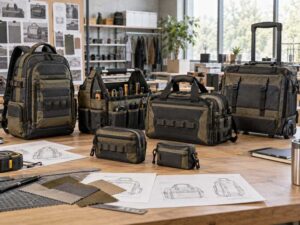
Make A Sample First?
If you have your own artwork, logo design files, or just an idea, please provide details about your project requirements, including preferred fabric, color, and customization options, we’re excited to assist you in bringing your custom bag designs to life through our sample production process.