 Skip to content

Why Schools, Nonprofits, and Trade Shows Use Canvas Tote Bags: A Custom Buyer’s Guide
A canvas tote bag often starts as a simple idea: a practical item that can carry books, documents, samples, or event materials. However, successful organizations have discovered that the right tote bag can become something much more valuable. It can represent a school community, support a nonprofit mission, or extend the influence of a company beyond a busy exhibition hall.
When thousands of people attend an event, receive educational materials, or participate in a community program, the physical item they take home matters. A bag that feels weak, uncomfortable, or difficult to reuse may disappear after one day. A well-designed canvas tote bag can become part of someone’s everyday routine — carried to classrooms, offices, libraries, shopping trips, conferences, and public spaces.
For organizations planning custom tote bag projects, the decision involves much more than choosing a color and adding a logo. Fabric weight, carrying capacity, handle design, printing method, production consistency, packaging, and delivery planning all influence whether the final product creates lasting value.
Schools, nonprofits, and trade shows use canvas tote bags because they provide a practical combination of durability, customization flexibility, large branding space, and repeated visibility. Compared with many short-term promotional items, a well-made canvas tote bag can continue serving its purpose long after an event, campaign, or program has finished.
The most successful projects usually begin by looking beyond the bag itself. The real question is not simply “How many bags should we order?” but rather “What role should this bag continue to play after someone receives it?” That small shift in thinking often determines whether a tote becomes another giveaway item or a meaningful part of an organization’s identity.
Why Do Organizations Choose Canvas Tote Bags?
Canvas tote bags are chosen by schools, nonprofits, trade shows, and many organizations because they provide a rare combination of practical use, visual communication, and long-term value. Unlike many promotional items that are used once and forgotten, a well-designed canvas tote can remain part of someone’s daily routine for months or even years.
For an organization planning hundreds or thousands of bags, the decision is not only about appearance. The real consideration is whether the bag can successfully support its purpose. A school needs a tote that can carry books and learning materials. A nonprofit needs a product that represents its mission and encourages continued engagement. A trade show team needs a reliable bag that can hold catalogs, samples, and event materials while keeping the company visible throughout the venue.
A successful canvas tote bag project combines several elements:
- Suitable fabric weight
- Comfortable carrying structure
- Appropriate size
- Durable stitching
- Clear logo presentation
- Reliable production consistency
- Practical packaging and delivery planning
The reason canvas tote bags continue to be widely selected is simple: they are useful products that naturally create repeated exposure. When people continue using a tote bag after receiving it, the organization’s message continues traveling with them.
What Makes Canvas Tote Bags Popular for Organizations?
The biggest advantage of canvas tote bags is that they solve a practical problem while also supporting communication goals.
Many event materials have a limited lifespan. A brochure may provide information during an event but often disappears afterward. A disposable bag may carry items temporarily but is rarely reused. A canvas tote bag, when designed properly, becomes something people choose to keep.
For schools, this means students can continue carrying:
- Textbooks
- Notebooks
- Campus documents
- Personal belongings
For nonprofits, it means supporters can continue using a product connected with a campaign or community activity.
For trade shows, it means visitors have a convenient way to carry:
- Product catalogs
- Presentation materials
- Samples
- Promotional items from different booths
The practical function is what makes the difference.
A person may accept many promotional products during an event, but useful products are more likely to stay in daily use.
Why Durability Matters for Custom Canvas Tote Bags?
Durability is one of the most important factors when selecting canvas tote bags because the product represents the organization after distribution.
A bag that looks attractive but cannot handle regular use may create a negative impression.
The durability of a canvas tote depends on several details:
| Factor | Impact on Performance |
|---|---|
| Fabric weight | Influences strength, hand feel, and overall quality perception |
| Handle width and length | Affects carrying comfort and weight distribution |
| Stitching structure | Determines how well the bag performs under repeated use |
| Bottom construction | Important for heavier items and larger capacities |
| Fabric finishing | Influences appearance and daily usability |
For example, a school orientation project may require a medium-weight canvas tote because students mainly carry documents, notebooks, and small personal items.
A trade show project may require stronger construction because visitors often place multiple catalogs, product samples, and brochures inside the bag throughout the day.
The correct approach is not always choosing the thickest material. The goal is matching the bag structure with the actual usage scenario.
How Does Canvas Tote Bag Size Affect Project Success?
Size selection directly affects how useful the bag becomes.
A common mistake is choosing a size only because it looks attractive in a sample image. In real use, the bag needs to fit the items people are expected to carry.
Different applications require different size considerations:
| Application | Common Size Direction | Typical Contents |
|---|---|---|
| School events | Medium to large tote | Books, folders, student materials |
| Charity campaigns | Medium tote | Information materials and personal items |
| Trade shows | Medium-large tote | Catalogs, brochures, samples |
| Premium programs | Custom dimensions | Gift sets or special packages |
A tote that is too small may limit usefulness.
A tote that is unnecessarily large may increase material consumption and shipping volume.
The best size is the one that supports the intended experience.
For example:
A university welcoming new students may need enough space for orientation materials, a notebook, and small gifts.
An exhibition team may need extra capacity because visitors often collect materials from multiple companies.
A nonprofit event may prioritize a comfortable everyday size that encourages continued use after the campaign.
Why Is Canvas a Popular Material Choice?
Canvas is widely selected because it provides a balance between strength, appearance, and customization flexibility.
Compared with very thin fabrics, canvas usually creates a more substantial feeling. It gives the product a stronger structure and allows different finishing methods to be applied effectively.
Important material considerations include:
| Material Consideration | Why It Matters |
|---|---|
| Fabric weight | Changes durability and overall product feeling |
| Texture | Influences appearance and printing results |
| Color stability | Affects the final visual presentation |
| Thickness consistency | Helps maintain quality across large quantities |
Different projects require different material solutions.
A large public event distributing thousands of bags may prioritize efficient production and comfortable carrying.
A premium university merchandise program or corporate event may prefer heavier canvas with a stronger appearance.
Material selection should always consider:
- Expected usage period
- Target audience
- Product positioning
- Budget requirements
- Branding goals
How Do Canvas Tote Bags Create Long-Term Brand Visibility?
One reason organizations continue choosing canvas tote bags is their ability to extend visibility beyond the original event.
The impact does not stop when someone leaves:
- a campus event,
- a fundraising activity,
- a conference,
- an exhibition hall.
A reusable tote may appear later in:
- classrooms,
- offices,
- public transportation,
- shopping areas,
- community activities.
This creates additional exposure without requiring another distribution activity.
However, long-term visibility depends on whether people actually want to use the bag.
A successful design usually includes:
- Comfortable handles
- Practical dimensions
- Attractive artwork
- Suitable material quality
- Clean logo placement
The goal is not simply placing a logo on a product. The goal is creating something people naturally continue carrying.
Canvas Tote Bags vs Other Promotional Products
When comparing promotional options, organizations often consider cost, usefulness, and long-term value.
| Product | Main Advantage | Common Limitation |
|---|---|---|
| Paper materials | Easy information distribution | Limited lifespan |
| Plastic bags | Low initial cost | Lower reuse value |
| Small giveaways | Easy distribution | Limited practical function |
| Canvas tote bags | Reusable, practical, and highly visible | Requires careful design planning |
Canvas tote bags are especially suitable when the purpose is to build a connection with the audience.
A school does not only need a bag to hold materials. It wants students to feel connected with the institution.
A nonprofit does not only need merchandise. It wants supporters to remember and share its mission.
A trade show team does not only need packaging. It wants visitors to leave with a useful reminder of the company.
That is why canvas tote bags continue to be selected for organized programs around the world.
What Should Be Considered Before Starting a Canvas Tote Bag Project?
A well-planned project usually begins by understanding the complete usage scenario.
Important information includes:
| Project Detail | Why It Matters |
|---|---|
| Intended use | Determines material and structure selection |
| Quantity | Influences production planning and cost efficiency |
| Size requirements | Ensures the bag matches the contents |
| Logo artwork | Helps determine suitable customization methods |
| Packaging needs | Supports storage, distribution, and delivery requirements |
| Delivery timeline | Helps arrange production planning |
For custom canvas tote bag projects, the most effective results come from balancing appearance, functionality, and production feasibility.
A tote bag should not only look good when it arrives. It should perform well when people actually use it. That is what transforms a simple canvas bag into a valuable tool for schools, nonprofits, and trade show programs.
How Do Schools Use Custom Canvas Tote Bags?
Schools and universities use custom canvas tote bags for much more than simply carrying materials. A well-designed tote bag can support student programs, strengthen campus identity, improve event experiences, and provide long-term daily value after the original activity ends.
For educational institutions, every item distributed during a campus program represents the school. A tote bag is often one of the first physical items new students receive, and it can continue appearing across classrooms, libraries, campuses, and community spaces long after the event is finished.
The most successful school tote bag projects focus on three important goals:
- Practical function for students and staff
- Clear connection with school identity
- Reliable quality for repeated use
A university orientation program may need thousands of bags to welcome new students. A school fundraising event may require a smaller quantity with a more attractive retail-style design. An alumni program may prefer a premium canvas tote that feels like a meaningful gift rather than a simple giveaway.
The right solution depends on how the bag will be used, who will receive it, and how long the school expects the product to remain in use.
What Are Canvas Tote Bags Used for in Schools and Universities?
Educational institutions use canvas tote bags across many different programs because they combine storage function with strong visual identity.
Common applications include:
| School Program | Tote Bag Purpose | Important Design Considerations |
|---|---|---|
| Student orientation | Carry welcome materials, schedules, maps, and notebooks | Comfortable size, lightweight structure, clear school logo |
| Graduation events | Create memorable gifts for graduates | Premium appearance, stronger fabric, attractive design |
| Campus clubs | Promote student organizations and activities | Flexible artwork, custom colors, practical daily use |
| Library programs | Carry books and educational materials | Durable handles and suitable capacity |
| Fundraising activities | Support school campaigns and community events | Appealing design that people want to keep |
| School merchandise programs | Create products for sale or gifts | Higher-quality materials and professional finishing |
For example, a university welcoming several thousand new students may prepare a campus package containing:
- Student handbook
- Campus map
- Course information
- Notebook
- Welcome materials
- Small gifts
A properly sized canvas tote allows these items to be presented together while giving students a useful product they can continue using.
This creates a stronger connection than a temporary package. The tote becomes part of the student experience.
Why Do Schools Prefer Canvas Tote Bags for Student Programs?
Schools often choose canvas tote bags because they provide a better balance between practicality, appearance, and long-term use compared with many disposable options.
Students carry many items every day:
- Textbooks
- Tablets
- Folders
- Personal belongings
- Learning materials
A tote bag that cannot handle daily use may quickly lose its value.
A well-developed canvas tote usually considers:
| Feature | Importance for Schools |
|---|---|
| Fabric strength | Helps support books and daily items |
| Handle comfort | Makes carrying easier during long campus days |
| Printing quality | Maintains school identity and professional appearance |
| Size selection | Ensures students can actually use the bag |
| Overall design | Influences whether students continue carrying it |
A school logo printed on a durable, attractive tote can create ongoing campus visibility.
Students may carry the bag:
- Between classes
- To libraries
- During campus activities
- During internships
- Outside the university environment
This means the product continues representing the institution beyond the original program.
How Should Schools Choose the Right Canvas Tote Bag Size?
Size selection is one of the most important decisions because different school programs have different requirements.
A common mistake is selecting a bag based only on appearance. The better approach is to consider what students or participants will actually place inside.
| Usage Scenario | Recommended Size Direction | Suitable Contents |
|---|---|---|
| Orientation events | Medium to medium-large | Documents, notebooks, welcome materials |
| Daily campus use | Medium-large | Books, tablets, personal items |
| Library programs | Larger capacity | Multiple books and learning materials |
| Graduation gifts | Custom size based on gift package | Apparel, souvenirs, certificates |
For example:
A school giving students only brochures and basic information does not need an oversized tote.
However, a university providing a complete welcome package may require additional capacity because students often receive multiple items at the same time.
The size should match the purpose.
A well-balanced tote feels comfortable, looks professional, and encourages repeated use.
Which Canvas Material Is Suitable for School Tote Bags?
Material selection directly affects how students perceive the product.
A school tote bag is often expected to handle repeated use, so fabric choice should consider durability, comfort, and appearance.
| Material Direction | Suitable Application | Characteristics |
|---|---|---|
| Lightweight canvas | Large campus events | Easy to distribute and comfortable |
| Medium-weight canvas | Student daily use | Good balance between strength and cost |
| Heavy canvas | Premium school merchandise | Strong structure and higher perceived value |
| Recycled fabric options | Sustainability-focused programs | Suitable when material sourcing requirements are important |
For large student events, lightweight or medium-weight canvas may provide the best balance because thousands of bags need to be distributed efficiently.
For alumni gifts or official school merchandise, heavier canvas can create a stronger premium feeling.
The best choice depends on:
- Expected usage period
- Contents carried inside
- Program purpose
- Desired image of the institution
How Can Schools Customize Canvas Tote Bags With Their Identity?
Customization allows schools to create products that feel connected to their community.
Common customization options include:
| Custom Element | Purpose |
|---|---|
| School logo | Creates institutional recognition |
| School colors | Strengthens campus identity |
| Student artwork | Encourages participation and creativity |
| Club graphics | Supports individual organizations |
| Special labels | Creates a more finished appearance |
| Custom packaging | Improves presentation for gifts and events |
Logo application is especially important because educational designs often include:
- Fine text
- School symbols
- Detailed artwork
- Multiple colors
Different logo methods create different results.
| Logo Method | Suitable For |
|---|---|
| Screen printing | Large quantity school events and simple logos |
| Embroidery | Premium programs requiring textured appearance |
| Heat transfer | Detailed graphics and colorful designs |
| Woven labels | Private identity and merchandise programs |
Before large-scale production, confirming the logo appearance through a sample helps avoid issues with:
- Color difference
- Position accuracy
- Artwork clarity
- Material compatibility
What Quality Details Should Schools Check Before Ordering Canvas Tote Bags?
Large school programs often involve hundreds or thousands of pieces, so consistency becomes very important.
The most important quality areas include:
| Inspection Area | What Should Be Checked |
|---|---|
| Fabric | Thickness, color consistency, surface quality |
| Sewing | Stitch strength, handle attachment, edge finishing |
| Logo | Position, clarity, color accuracy |
| Size | Measurements and production consistency |
| Packaging | Correct quantity and protection during transportation |
For educational projects, quality problems can create unnecessary challenges because distribution often happens on a fixed schedule.
A student orientation event, graduation ceremony, or campus campaign usually has a specific date. Delays or inconsistent products can affect the entire activity plan.
This is why many institutions confirm samples before bulk production.
A sample allows the team to review:
- Actual fabric feeling
- Bag capacity
- Logo appearance
- Carrying comfort
- Overall presentation
How Can Schools Reduce Cost Without Reducing Quality?
School projects often require careful budget planning because quantities can be large.
However, reducing cost does not always mean selecting the lowest-priced option.
A better approach is identifying where adjustments can be made without affecting the user experience.
| Cost Factor | Possible Adjustment |
|---|---|
| Fabric weight | Select suitable thickness based on usage |
| Size | Avoid unnecessary extra capacity |
| Logo method | Choose a technique matching artwork needs |
| Structure | Add only useful features |
| Packaging | Match presentation requirements |
For example:
A one-day campus event may not require premium packaging.
A university merchandise program may justify stronger fabric and additional finishing because the product represents the institution for a longer period.
The goal is creating the right balance between:
- Budget
- Function
- Appearance
- Expected lifespan
Why Are Custom Canvas Tote Bags Valuable for School Branding?
A school tote bag is not only a container for materials. It becomes part of campus culture.
When students continue using the bag, the school identity appears naturally in daily environments.
This creates value in places such as:
- Campus buildings
- Student activities
- Public transportation
- Community events
- Alumni gatherings
The strongest school tote bag projects succeed because they consider the complete experience:
A useful size.
A comfortable structure.
A meaningful design.
A durable material.
A professional finish.
When these elements work together, a simple canvas tote bag becomes a practical connection between the institution and its community.
Why Do Nonprofits Choose Canvas Tote Bags?
Nonprofit organizations often choose canvas tote bags because they need more than a simple giveaway item. A successful nonprofit project usually needs to communicate a mission, encourage participation, support fundraising activities, and create a lasting connection with the community.
A canvas tote bag can support all of these goals at the same time.
Unlike temporary promotional materials that may disappear after an event, a reusable tote bag can continue appearing in everyday situations. Supporters may carry it to community activities, offices, schools, shopping trips, or future fundraising events. Every additional use creates another opportunity for people to recognize the organization and remember its purpose.
For nonprofit programs, the value of a tote bag comes from the combination of three elements:
- Practical usefulness
- Emotional connection
- Long-term visibility
A well-designed canvas tote bag is not simply an item distributed during a campaign. It becomes a physical representation of the organization’s mission.
Whether the goal is raising awareness, supporting fundraising, thanking volunteers, or providing materials during an event, the right tote bag design helps create a stronger experience for everyone involved.
How Do Nonprofits Use Custom Tote Bags for Campaigns?
Nonprofit organizations use custom canvas tote bags in many different ways because the product can adapt to different programs, audiences, and campaign goals.
Common applications include:
| Nonprofit Program | Tote Bag Purpose | Important Considerations |
|---|---|---|
| Fundraising campaigns | Sell or distribute branded merchandise | Attractive design and strong daily usability |
| Charity events | Hold event materials and participant items | Suitable size and comfortable carrying |
| Volunteer programs | Provide useful volunteer packages | Durable structure for repeated use |
| Community outreach | Share campaign messages | Clear logo and meaningful artwork |
| Membership programs | Recognize supporters and members | Premium appearance and long-term value |
| Educational campaigns | Carry brochures and resources | Practical capacity and easy distribution |
For example, a nonprofit organizing a community fundraising event may prepare a package containing:
- Event information materials
- Donation information
- Educational brochures
- Small gifts
- Participation certificates
A custom tote bag allows all these materials to be presented together while giving participants something useful after the event.
The bag extends the relationship beyond the event itself.
A supporter who continues using the tote is not only carrying personal belongings but also carrying a connection to the organization.
Why Are Canvas Tote Bags Effective for Fundraising Activities?
Fundraising programs depend heavily on participation and emotional connection.
People are more likely to support a cause when they feel connected to the mission. A thoughtfully designed tote bag can strengthen that connection because it transforms an abstract message into something physical.
A fundraising tote bag can serve several purposes:
| Purpose | How the Tote Bag Helps |
|---|---|
| Fundraising support | Can be offered as merchandise or appreciation gifts |
| Campaign awareness | Displays important messages and visual identity |
| Community connection | Creates a shared item among supporters |
| Event memory | Allows participants to remember the experience |
For example, a wildlife protection organization may create a tote bag featuring campaign artwork.
A health awareness organization may use a tote bag to display educational information.
A community organization may create a design representing local identity.
The product becomes part of the story behind the campaign.
However, successful fundraising items need to balance message and usability.
A design that only focuses on displaying information may not encourage long-term use.
A stronger approach is creating a tote bag that people genuinely want to carry.
Important factors include:
- Comfortable handle length
- Suitable size
- Attractive artwork
- Strong fabric
- Practical daily function
When people choose to continue using the bag, the campaign message naturally reaches more people.
Are Canvas Tote Bags Eco-Friendly and Biodegradable?
Canvas tote bags are often selected for sustainability-focused programs because they are reusable products designed for repeated use.
However, responsible organizations usually consider sustainability from several perspectives rather than focusing only on one material description.
Important factors include:
| Sustainability Factor | Why It Matters |
|---|---|
| Material selection | Different fabrics have different environmental characteristics |
| Product lifespan | Longer use can reduce the need for frequent replacement |
| Production process | Manufacturing methods influence overall impact |
| End-of-life options | Disposal and recycling possibilities vary |
A reusable canvas tote bag can provide meaningful sustainability value when people continue using it over time.
For nonprofit organizations, this is especially important because many campaigns communicate values related to:
- Environmental protection
- Responsible consumption
- Community awareness
- Social responsibility
The product itself should support that message.
For example:
A thin promotional bag that breaks after a few uses may not represent the intended sustainability message.
A stronger canvas tote designed for repeated use creates a better connection between the product and the campaign purpose.
Organizations should also consider the specific material requirements of each project, including fabric composition, labeling needs, and any documentation required for the intended program.
How Should Nonprofits Choose the Right Canvas Tote Bag Material?
Material selection affects how supporters perceive the organization.
A tote bag used during a single event may have different requirements from one intended to become a long-term supporter item.
Common material considerations include:
| Material Direction | Suitable Use | Main Characteristics |
|---|---|---|
| Lightweight canvas | Large community events | Easy distribution and comfortable carrying |
| Medium-weight canvas | Daily supporter use | Good balance between strength and cost |
| Heavy canvas | Premium fundraising programs | Strong structure and higher perceived value |
| Recycled fabric options | Sustainability-focused projects | Suitable for specific environmental goals |
For example:
A nonprofit distributing thousands of information bags at a public event may prioritize efficient handling and comfortable carrying.
A nonprofit selling limited-edition fundraising bags may focus more on premium appearance and stronger construction.
The correct choice depends on:
- Expected usage frequency
- Audience expectations
- Campaign positioning
- Budget planning
- Distribution method
How Can Nonprofits Customize Tote Bags to Strengthen Their Mission?
Customization allows organizations to create a stronger connection between the product and their cause.
Common customization options include:
| Custom Feature | Purpose |
|---|---|
| Logo printing | Improves recognition |
| Campaign artwork | Communicates the organization’s message |
| Special colors | Creates visual consistency |
| Woven labels | Adds a finished appearance |
| Inner pockets | Improves practical use |
| Custom packaging | Supports gift and fundraising presentation |
The logo or artwork placement is especially important.
A nonprofit design often contains:
- Organization name
- Campaign message
- Website information
- Illustrations
- Supporting graphics
Different logo methods can create different visual results.
| Logo Method | Suitable Application |
|---|---|
| Screen printing | Large campaign quantities and clear graphics |
| Embroidery | Premium supporter gifts |
| Heat transfer | Detailed artwork and colorful designs |
| Woven labels | Long-term identity and merchandise programs |
Before large-scale production, confirming the final appearance through a physical sample helps ensure:
- Artwork clarity
- Correct colors
- Proper positioning
- Suitable material compatibility
What Quality Details Matter for Nonprofit Tote Bag Projects?
Nonprofit projects often involve public events with fixed schedules, so reliability and consistency are important.
Quality should be considered from the beginning, not only after production is completed.
Key inspection areas include:
| Area | What to Review |
|---|---|
| Fabric | Thickness, texture, color consistency |
| Handles | Strength and comfort |
| Stitching | Reinforcement and durability |
| Logo | Position and visual quality |
| Packaging | Correct quantity and protection |
For example, if a nonprofit prepares 5,000 tote bags for a fundraising event, inconsistent printing or damaged packaging can create unnecessary problems during distribution.
A careful project process usually includes:
- Reviewing design requirements
- Confirming materials
- Checking sample details
- Maintaining production consistency
- Inspecting finished products
This approach helps ensure that the final tote bags represent the organization professionally.
How Can Nonprofits Balance Budget and Quality?
Nonprofit programs often operate with careful budget planning. However, selecting only the lowest-cost option may create problems if the product does not perform as expected.
A better approach is understanding which factors influence total project value.
| Cost Factor | Possible Adjustment |
|---|---|
| Fabric weight | Match material strength with intended use |
| Size | Choose practical dimensions instead of unnecessary capacity |
| Logo method | Select a suitable technique based on artwork |
| Quantity | Plan quantities according to campaign needs |
| Packaging | Select appropriate presentation level |
For example:
A large awareness event may require a practical tote that can be distributed efficiently.
A fundraising merchandise program may require a more premium design because supporters are expected to keep the product longer.
The goal is finding the right balance between:
- Function
- Appearance
- Durability
- Budget
Why Do Canvas Tote Bags Help Build Long-Term Community Connection?
The strongest nonprofit tote bag projects succeed because they create an emotional connection.
A supporter does not simply receive a bag.
They receive a reminder of:
- A cause they support
- A community they belong to
- A campaign they participated in
- A message they want to share
A reusable tote bag can continue appearing in everyday environments, allowing the organization’s mission to remain visible naturally.
For nonprofits, this is the unique strength of canvas tote bags:
They combine practical use with meaningful storytelling.
A carefully designed tote bag can support fundraising goals, strengthen community relationships, and help important messages continue beyond the original event.
How Do Trade Shows Use Canvas Tote Bags?
Trade shows are highly competitive environments where companies have only a limited amount of time to attract attention, communicate their value, and create memorable interactions with visitors.
In a busy exhibition hall, people often collect large amounts of information within a few hours:
- Product brochures
- Catalogs
- Business materials
- Samples
- Promotional items
- Presentation documents
A well-designed canvas tote bag helps solve an immediate problem: carrying everything comfortably while keeping the company visible throughout the event.
However, the value of a trade show tote bag goes beyond convenience. It becomes part of the overall exhibition experience. A visitor carrying a branded tote through the venue naturally increases brand exposure, while a useful and durable bag creates a stronger impression after the event ends.
Trade show teams choose custom canvas tote bags because they combine practical carrying function with long-term brand visibility. The right size, material strength, printing method, and structure allow visitors to comfortably carry event materials while continuing to use the bag after leaving the exhibition.
For exhibition projects, the best results come from understanding the complete journey of the bag:
Before the event:
- The bag needs to represent the company image.
During the event:
- It needs to carry materials comfortably.
After the event:
- It should remain useful enough that people continue using it.
A successful trade show tote bag supports all three stages.
Why Are Canvas Tote Bags Popular at Trade Shows?
One of the biggest challenges at exhibitions is managing the amount of information visitors receive.
A visitor may walk through dozens or hundreds of booths in a single day. Without a practical carrying solution, brochures and samples become difficult to manage.
Canvas tote bags provide immediate value because they allow visitors to organize everything in one place.
| Trade Show Requirement | How Canvas Tote Bags Help |
|---|---|
| Carrying multiple materials | Provides space for catalogs, brochures, samples, and documents |
| Improving visitor experience | Makes it easier to move around the exhibition hall |
| Increasing visibility | Displays company identity throughout the venue |
| Supporting professional image | Creates a more organized and polished appearance |
| Extending exposure | Continues showing the logo after the event |
A visitor carrying a tote bag may move through:
- Exhibition halls
- Meeting areas
- Networking spaces
- Hotels
- Airports
- Offices
This creates additional visibility beyond the original booth.
Compared with small promotional items that may stay in a drawer, a useful tote bag has a higher chance of becoming part of daily life.
The key factor is usability.
A bag that is comfortable, strong, and attractive is more likely to be reused.
What Makes a Good Trade Show Tote Bag?
A trade show tote bag needs to perform differently from a simple event giveaway bag.
During exhibitions, visitors often carry more weight than expected. A bag that only looks good but cannot handle practical use may create frustration.
Important design factors include:
| Feature | Why It Matters |
|---|---|
| Fabric strength | Supports catalogs, documents, and samples |
| Handle construction | Improves comfort during long walking periods |
| Bag capacity | Allows visitors to store multiple materials |
| Printing quality | Maintains professional company appearance |
| Overall structure | Determines daily usability after the event |
For example, a technology exhibition may require a tote bag that carries:
- Product brochures
- Technical documents
- Sample accessories
- Presentation folders
A fashion exhibition may focus more on:
- Premium appearance
- Attractive design
- Retail-style finishing
A medical or industrial exhibition may require:
- Stronger structure
- Larger capacity
- More durable materials
The best design depends on what visitors are expected to carry.
What Size Canvas Tote Is Best for Trade Shows?
Choosing the right size is one of the most important decisions for exhibition projects.
A bag that is too small may not hold enough materials.
A bag that is too large may increase cost, storage requirements, and transportation volume without creating additional value.
The ideal size should match the event purpose.
| Event Type | Suggested Size Direction | Common Contents |
|---|---|---|
| Small business events | Medium tote | Brochures, notebooks, basic materials |
| Large exhibitions | Medium-large tote | Catalogs, folders, samples |
| International trade fairs | Large capacity tote | Multiple documents and product information |
| Premium corporate events | Customized structure | Gift sets and special items |
Many exhibition teams prefer medium-large tote bags because visitors often collect materials from multiple booths.
A practical trade show tote commonly needs enough space for:
- A4 catalogs
- Product brochures
- Presentation folders
- Notebooks
- Small samples
The internal space should also be considered.
Additional features such as:
- Inner pockets
- Zipper closure
- Reinforced bottom
- Wider handles
can improve the user experience, especially for longer events.
How Do Custom Tote Bags Create Long-Term Brand Exposure?
The biggest advantage of a trade show tote bag is that the visibility continues after the exhibition closes.
A visitor may use the same bag:
- At work
- During business travel
- For daily shopping
- At future events
- In public spaces
This creates repeated exposure without requiring additional promotional activities.
However, long-term visibility depends on whether people want to keep using the bag.
Several details influence this:
Practical design
A useful bag naturally becomes part of everyday life.
Important factors include:
- Comfortable handle length
- Suitable capacity
- Durable material
- Functional structure
Professional appearance
The tote bag represents the company.
A well-designed bag communicates:
- Attention to detail
- Reliability
- Professional presentation
Poor-quality printing, weak stitching, or uncomfortable construction can have the opposite effect.
Memorable visual identity
The logo should be visible but balanced.
A successful trade show tote usually combines:
- Clear branding
- Attractive layout
- Appropriate colors
- Clean design
The goal is not only to display information but to create something people enjoy carrying.
How Do Companies Choose the Right Material for Exhibition Tote Bags?
Material selection affects both appearance and performance.
Different trade show environments require different levels of strength and presentation.
| Material Choice | Suitable Event Type | Main Characteristics |
|---|---|---|
| Lightweight canvas | Large-scale information distribution | Easy to carry and efficient |
| Medium-weight canvas | General exhibitions and conferences | Balanced strength and comfort |
| Heavy canvas | Premium exhibitions | Strong structure and higher perceived value |
| Recycled fabric options | Sustainability-focused events | Supports environmental themes |
A company attending a one-day conference may choose a lighter option because visitors mainly carry brochures.
A company participating in a multi-day international exhibition may prefer stronger materials because the bag needs to handle repeated use.
The material decision should consider:
- Event duration
- Contents carried inside
- Expected reuse
- Company positioning
- Budget planning
Which Printing Method Works Best for Trade Show Tote Bags?
Logo quality is especially important for exhibition bags because the design represents the company in a public environment.
Different printing methods create different results.
| Printing Method | Advantages | Suitable For |
|---|---|---|
| Screen printing | Clear colors and efficient for larger quantities | Company logos and simple graphics |
| Embroidery | Premium texture and long-lasting appearance | Higher-end events |
| Heat transfer | Supports detailed artwork | Complex designs |
| Digital printing | Suitable for colorful images | Artwork-focused projects |
The most suitable method depends on:
- Logo complexity
- Fabric type
- Quantity
- Desired appearance
- Usage period
For example:
A company logo with simple colors may work well with screen printing.
A detailed illustration or premium event design may require another method.
Before large-scale production, reviewing a physical sample helps confirm:
- Logo position
- Color accuracy
- Surface appearance
- Overall presentation
How Can Trade Show Teams Prepare a Successful Tote Bag Project?
A successful exhibition tote bag project usually begins with understanding the event requirements.
Important information includes:
| Project Information | Why It Matters |
|---|---|
| Event type | Determines suitable design direction |
| Quantity needed | Helps plan production and logistics |
| Contents carried | Determines size and structure |
| Artwork details | Helps select printing method |
| Delivery schedule | Supports event preparation |
For example:
A company preparing for a major international exhibition may need several thousand bags delivered before booth setup begins.
The project timeline should consider:
- Design confirmation
- Sample approval
- Production
- Quality inspection
- Packaging
- Transportation
Early planning helps avoid unnecessary pressure before important events.
Why Should Trade Show Tote Bags Be Treated as Part of the Brand Experience?
A trade show tote bag is often one of the first physical items visitors receive.
It can influence how they remember the company.
A well-designed bag creates a positive impression because it shows attention to practical details.
The strongest exhibition projects focus on the complete experience:
- The bag feels comfortable.
- The materials match the intended use.
- The logo appears professional.
- The structure supports real needs.
- The design encourages continued use.
When these elements work together, a canvas tote bag becomes more than an event accessory.
It becomes a practical extension of the company’s presence — during the exhibition, after the event, and wherever people continue carrying it.
What Custom Options Are Available for Canvas Tote Bags?
A canvas tote bag may look simple from the outside, but professional projects often involve many design decisions before the final product is created. The right customization choices determine how the bag feels, how long it can be used, how well it represents an organization, and whether it fits the intended purpose.
A school may need a comfortable tote for students carrying books and learning materials.
A nonprofit may need a meaningful design that supports a campaign message.
A company attending a trade show may need a stronger structure that can hold catalogs, samples, and promotional materials throughout the event.
Because these applications are different, a successful canvas tote bag project usually begins by reviewing several areas:
- Material selection
- Bag dimensions
- Handle construction
- Printing method
- Additional functions
- Labels and packaging
- Quality requirements
Customization is not only about adding a logo. It is about creating a product that works well in real situations.
Which Canvas Materials Are Used for Custom Tote Bags?
The material is one of the most important decisions because it affects durability, appearance, carrying comfort, and overall product value.
Canvas is available in different weights and structures. A lighter fabric may be suitable for large event distribution, while a stronger canvas may be preferred for daily use or premium programs.
| Material Direction | Suitable Applications | Main Characteristics |
|---|---|---|
| Lightweight canvas | Large events, conferences, information distribution | Easy to carry, efficient for high-volume programs |
| Medium-weight canvas | Schools, universities, community activities | Balanced durability and comfort |
| Heavy canvas | Premium programs, retail projects, repeated daily use | Strong structure and higher perceived quality |
| Recycled fabric options | Sustainability-focused projects | Supports specific environmental goals |
The best material depends on how the tote bag will be used.
For example:
A university orientation program may distribute several thousand bags containing notebooks, schedules, and campus information. A medium-weight canvas can provide a good balance between durability and budget.
A premium alumni gift program may require heavier canvas because the bag represents the institution for a longer period.
A trade show project may require stronger material because visitors often place multiple catalogs, folders, and samples inside.
Material selection should always consider:
- Expected weight inside the bag
- Frequency of use
- Desired appearance
- Storage conditions
- Transportation requirements
Choosing the correct fabric at the beginning helps avoid problems later.
How Does Canvas Weight Affect Tote Bag Performance?
Canvas weight directly influences how the bag feels and performs.
A heavier fabric usually provides:
- Stronger structure
- Better shape retention
- More premium hand feel
However, heavier material is not always the best choice.
For large public events, thousands of bags may need to be distributed and transported efficiently. A lighter option may provide better practicality.
For daily-use products, stronger canvas may create better long-term value.
| Usage Scenario | Recommended Fabric Direction |
|---|---|
| One-day promotional event | Lightweight to medium canvas |
| Student daily use | Medium canvas |
| Book carrying programs | Medium to heavy canvas |
| Premium merchandise | Heavy canvas |
The goal is matching material strength with actual usage.
A well-designed tote should feel appropriate when someone receives it and continue performing well after repeated use.
Which Canvas Tote Bag Sizes Are Available?
Size customization allows organizations to create a bag that matches the items people actually need to carry.
A tote bag designed for documents has different requirements from one designed for books, samples, or gift packages.
Common size considerations include:
| Application | Common Size Direction | Suitable Contents |
|---|---|---|
| Event handout bags | Medium size | Flyers, brochures, notebooks |
| School programs | Medium to large | Books, folders, student materials |
| Trade shows | Medium-large | Catalogs, samples, presentation materials |
| Premium gifts | Custom dimensions | Special packages and merchandise |
Custom dimensions can also help improve transportation efficiency.
For large projects, unnecessary extra size may increase:
- Material usage
- Storage space
- Shipping volume
A correctly sized tote provides a better balance between usability and project efficiency.
Important size details include:
- Bag width
- Bag height
- Bottom depth
- Handle length
- Opening size
For example, a tote used for textbooks may benefit from a deeper bottom structure, while a conference tote may prioritize a wider opening for easy access.
What Handle Options Can Be Customized?
Handles have a major impact on comfort because they carry the weight of the bag.
Many tote bag projects focus heavily on artwork but overlook handle design.
However, handle details influence whether people continue using the bag.
Common handle options include:
| Handle Type | Suitable Use |
|---|---|
| Short handles | Hand carrying and lightweight items |
| Long handles | Shoulder carrying and daily use |
| Reinforced handles | Heavy items and repeated use |
| Wider handles | Improved comfort for heavier loads |
Important handle considerations include:
- Length
- Width
- Attachment strength
- Stitching reinforcement
- Material matching
For example:
A student carrying books across campus may prefer longer handles that allow shoulder carrying.
A trade show visitor walking several hours through an exhibition hall may appreciate comfortable handles that reduce pressure.
A nonprofit distributing campaign bags may prioritize simple but reliable construction for large-scale use.
Which Printing Method Works Best for Canvas Tote Bags?
The logo and artwork are often the most visible parts of a custom tote bag project.
Different printing methods create different appearances, durability levels, and cost structures.
| Printing Method | Advantages | Suitable Applications |
|---|---|---|
| Screen printing | Clear colors and efficient for larger quantities | School events, nonprofit campaigns, trade shows |
| Embroidery | Premium texture and strong visual effect | Higher-end gifts and branded programs |
| Heat transfer | Suitable for detailed artwork | Complex graphics and colorful designs |
| Digital printing | Supports detailed images | Artwork-focused projects |
The best printing method depends on:
- Artwork complexity
- Number of colors
- Fabric type
- Expected usage
- Desired appearance
For example:
A simple school logo with one or two colors may be ideal for screen printing.
A detailed illustration created for a nonprofit campaign may require a different technique to maintain image quality.
A premium corporate event may choose embroidery because it creates a more textured appearance.
Before large quantities are produced, reviewing a physical sample helps confirm:
- Logo size
- Position
- Color accuracy
- Surface effect
What Additional Features Can Be Added to Custom Canvas Tote Bags?
Modern canvas tote bags can include many functional features beyond a basic open-top design.
These details can improve usability and create a more distinctive product.
| Custom Feature | Practical Benefit |
|---|---|
| Inner pocket | Keeps small items organized |
| Zipper closure | Adds security for personal belongings |
| Bottom gusset | Increases storage capacity |
| Reinforced stitching | Improves durability |
| Custom labels | Adds identity and professional finishing |
| Special packaging | Improves presentation for gifts or retail programs |
For example:
A university merchandise tote may include an inner pocket for keys and personal items.
A trade show tote may include a zipper because visitors carry important documents.
A nonprofit fundraising bag may include custom labels or packaging to create a more premium presentation.
Small details can significantly improve how people experience the product.
How Can Organizations Create a More Recognizable Tote Bag Design?
A strong tote bag design balances visibility and practicality.
A logo should be noticeable, but the overall design should still encourage people to carry the bag in daily situations.
Important design elements include:
| Design Element | Consideration |
|---|---|
| Logo placement | Ensure visibility without affecting usability |
| Color selection | Match organization identity |
| Artwork size | Balance recognition and appearance |
| Typography | Maintain readability |
| Additional graphics | Strengthen campaign or event message |
For schools:
The design may focus on school colors, symbols, and community identity.
For nonprofits:
The design may highlight a campaign message or cause-related artwork.
For trade shows:
The design may focus on professional branding and clear company recognition.
The best designs do not simply display information. They create a reason for people to continue using the bag.
What Packaging Options Are Available for Custom Canvas Tote Bags?
Packaging is an important part of large projects because it affects storage, transportation, and distribution.
Common packaging options include:
| Packaging Method | Suitable Application |
|---|---|
| Bulk carton packing | Large events and efficient distribution |
| Individual packing | Gifts, retail programs, premium projects |
| Custom labels | Organized distribution |
| Special packaging sets | Campaign kits and promotional packages |
Packaging requirements should be considered early because they influence:
- Production arrangement
- Storage space
- Shipping preparation
- Event organization
For example:
A university distributing thousands of welcome bags may prefer organized carton packing for efficient campus distribution.
A nonprofit selling fundraising merchandise may require individual packaging for a better presentation.
How Does Customization Improve the Value of Canvas Tote Bags?
The strongest canvas tote bag projects are not created by adding the most features. They succeed because each customization choice supports the intended purpose.
A successful school tote balances:
- Comfort
- Durability
- Campus identity
A successful nonprofit tote balances:
- Meaningful design
- Practical use
- Community connection
A successful trade show tote balances:
- Carrying capacity
- Professional appearance
- Long-term visibility
The best results come from understanding how people will use the bag after they receive it.
A canvas tote bag is not only a piece of fabric with handles. With the right material, structure, and customization choices, it becomes a practical product that continues representing an organization long after the original event or campaign has ended.
How to Choose a High-Quality Canvas Tote Bag Supplier?
Choosing the right canvas tote bag supplier is one of the most important decisions for any custom bag project. A tote bag may appear simple, but producing hundreds or thousands of consistent pieces requires experience in materials, printing, sewing techniques, quality control, and project management.
A reliable production partner should not only provide a finished bag. They should understand the purpose behind the project and help transform an idea into a practical product.
For example:
A university preparing welcome bags needs confidence that every piece will arrive on time before student orientation begins.
A nonprofit organizing a fundraising campaign needs consistent quality because the tote bag represents the organization’s values.
A company preparing for an international exhibition needs a product that looks professional when thousands of visitors carry it through the venue.
The right choice depends on several important factors:
- Production experience
- Material knowledge
- Custom development ability
- Quality control system
- Communication efficiency
- Delivery capability
A good canvas tote bag project is built through careful planning, not only through selecting a product from a catalog.
What Should Be Checked Before Choosing a Canvas Tote Bag Supplier?
Before starting a project, it is important to evaluate whether a production partner has the capability to handle the complete process.
Many tote bag projects involve more details than expected:
- Fabric selection
- Size adjustment
- Artwork preparation
- Printing method selection
- Sample confirmation
- Bulk production consistency
- Packaging requirements
A professional evaluation should include several areas:
| Evaluation Area | What to Review |
|---|---|
| Experience | Previous work with similar tote bag projects |
| Material capability | Understanding of canvas, cotton, recycled fabrics, and other materials |
| Custom development | Ability to adjust size, structure, and details |
| Production process | Clear steps from sample to finished goods |
| Quality control | Inspection procedures throughout production |
| Export experience | Ability to prepare international shipments |
Experience with similar projects is especially valuable.
A company producing simple promotional bags may have a different capability from a factory experienced in:
- School programs
- Large exhibitions
- Nonprofit campaigns
- Retail collections
- Corporate projects
Understanding the final usage helps determine whether the production partner has the right experience.
Why Does Factory Experience Matter for Canvas Tote Bag Projects?
Canvas tote bags may look straightforward, but small production details have a significant impact on the final result.
A factory with long-term experience understands how different choices affect performance.
For example:
Fabric selection
Different canvas weights create different results.
A lightweight canvas may be suitable for large event distribution.
A heavier canvas may be more suitable for daily use or premium programs.
Sewing construction
Important details include:
- Stitch density
- Handle attachment
- Seam reinforcement
- Edge finishing
These details influence whether the bag remains reliable after repeated use.
Printing execution
A logo may appear different depending on:
- Fabric texture
- Ink selection
- Printing method
- Artwork complexity
Experienced teams can identify potential issues before large-scale production begins.
This reduces unnecessary adjustments later.
How Important Is the Sample Process?
A physical sample is one of the most important steps in a custom canvas tote bag project.
Images and drawings can show appearance, but they cannot fully demonstrate:
- Fabric feeling
- Actual size
- Carrying comfort
- Stitching quality
- Printing effect
A professional sample process usually includes:
| Stage | Purpose |
|---|---|
| Design review | Confirm structure, dimensions, and artwork |
| Material selection | Choose suitable fabric and components |
| Sample development | Create a physical reference |
| Review and adjustment | Improve details if necessary |
| Approval | Confirm production direction |
For example:
A school may discover that a slightly larger size is needed after testing the sample with notebooks and documents.
A trade show team may adjust handle length after checking how the bag feels when carrying catalogs.
A nonprofit may modify artwork placement to improve visibility.
The sample stage helps transform an idea into a practical product.
What Quality Control Should a Canvas Tote Bag Factory Provide?
Quality control is especially important for large quantity projects because even small inconsistencies become noticeable when hundreds or thousands of pieces are delivered.
A complete quality process should review multiple production stages.
| Inspection Stage | Main Focus |
|---|---|
| Material inspection | Fabric quality, color consistency, specifications |
| Cutting inspection | Size accuracy and pattern consistency |
| Sewing inspection | Stitch strength and construction details |
| Printing inspection | Logo position, color, and clarity |
| Finished product inspection | Overall appearance and function |
| Packaging inspection | Correct quantity and protection |
A strong quality system does not wait until the end to discover problems.
Checking each stage helps maintain consistency from the first piece to the last piece.
For large custom projects, this is especially important because the final products often represent:
- A school identity
- A nonprofit mission
- A company reputation
Why Are Production Capacity and Facility Conditions Important?
The production environment influences whether a project can be completed consistently.
A suitable facility should have enough space and organization to manage:
- Material storage
- Cutting
- Sewing
- Printing
- Quality inspection
- Packing
For example, Jundong operates a custom bag factory in Guangdong with more than 20 years of OEM and ODM experience. The facility covers 18,000㎡ and includes more than 600 employees with 80 QC inspectors supporting quality management throughout production.
A structured production environment helps support projects involving:
- Different materials
- Multiple colors
- Large quantities
- Special packaging requirements
- International delivery schedules
For organizations planning large events or campaigns, production capability provides greater confidence that the final products can match the approved sample.
How Should Production Quantity Be Evaluated?
Quantity planning affects many parts of a tote bag project:
- Material preparation
- Production scheduling
- Cost efficiency
- Packaging
- Transportation
The right quantity depends on the purpose.
| Project Type | Common Quantity Consideration |
|---|---|
| School orientation | Number of students and participants |
| Nonprofit campaign | Expected supporters and event attendance |
| Trade show | Booth visitors and distribution plan |
| Retail program | Sales forecast and inventory needs |
For custom canvas tote bags, Jundong’s standard MOQ is usually around 500 pieces per design, while some simpler projects can be evaluated at 200–300 pieces depending on specifications and requirements.
Planning the quantity carefully helps avoid:
- Excess inventory
- Insufficient supply
- Unnecessary cost increases
What Communication Details Help Create Better Results?
Clear communication is one of the most important parts of a successful custom project.
Before production begins, it helps to provide:
| Information | Why It Matters |
|---|---|
| Reference images | Shows expected style and appearance |
| Dimensions | Defines product requirements |
| Material preference | Helps select suitable fabric |
| Logo artwork | Determines printing options |
| Quantity | Supports production planning |
| Delivery location | Helps arrange shipping preparation |
Good communication reduces misunderstanding.
For example:
A simple reference image may not show whether the bag needs:
- An inner pocket
- Reinforced handles
- A specific canvas thickness
- Special packaging
More complete project information allows better recommendations and more accurate planning.
Why Should Export Experience Be Considered?
International projects involve more than producing the bags.
They also require coordination of:
- Packaging requirements
- Shipping arrangements
- Documentation
- Delivery schedules
A production partner familiar with international projects understands that timing is often connected with important events.
Examples:
A school orientation project has a fixed semester start date.
A trade show project has a fixed exhibition opening date.
A fundraising campaign may have a planned launch date.
Missing these dates can affect the entire program.
Experience with international delivery helps reduce unnecessary risks.
What Makes a Long-Term Canvas Tote Bag Partner Valuable?
A strong production relationship is built on more than one successful shipment.
Long-term cooperation becomes easier when the production partner understands:
- Product expectations
- Quality standards
- Design preferences
- Communication habits
- Future project requirements
For organizations that regularly create:
- Campus programs
- Promotional campaigns
- Exhibition events
- Merchandise collections
having a reliable production connection can simplify future projects.
The most valuable canvas tote bag partner is one that combines:
- Product knowledge
- Production experience
- Consistent quality
- Clear communication
- Flexible customization ability
When these elements come together, a canvas tote bag project becomes easier to manage and more likely to achieve the intended result.
Canvas Tote Bag Price Guide: What Affects Bulk Order Cost?
The cost of custom canvas tote bags depends on much more than the size of the order. Two tote bags may look similar at first glance but have completely different prices because of differences in fabric weight, construction details, printing methods, packaging requirements, and quality standards.
For schools, nonprofits, trade show teams, and companies preparing large projects, understanding the cost structure helps create a more realistic budget and avoid unexpected changes later.
A professional canvas tote bag quotation usually considers:
- Material specification
- Bag dimensions
- Fabric thickness
- Handle construction
- Printing method
- Additional features
- Order quantity
- Packaging requirements
- Delivery arrangements
The goal is not simply finding the lowest number. The better approach is understanding what creates value and selecting the right combination of quality, function, and budget.
A tote bag designed for a one-day event has different requirements from a premium reusable bag intended for daily use over many months.
What Is the Wholesale Price for Bulk Canvas Tote Bags?
There is no single fixed price for custom canvas tote bags because every project has different specifications.
The final cost depends on the complete product design.
For example:
A basic event tote with:
- Standard canvas fabric
- Simple size
- One-color logo printing
- Basic packaging
will have a different cost from a premium tote with:
- Heavy canvas material
- Reinforced handles
- Inner pockets
- Multiple printing colors
- Custom labels
- Individual packaging
The main cost elements usually include:
| Cost Element | How It Influences Price |
|---|---|
| Fabric type | Different canvas weights and compositions affect material cost |
| Bag size | Larger dimensions require more fabric and production time |
| Structure | Pockets, zippers, gussets, and reinforcement increase complexity |
| Logo method | Different printing techniques require different processes |
| Quantity | Larger quantities can improve production efficiency |
| Packaging | Special packing requirements affect preparation and logistics |
For organizations preparing large projects, understanding these factors helps create a product that matches both the purpose and budget.
How Does Canvas Material Affect Tote Bag Cost?
Fabric is usually one of the largest cost factors because it directly affects the appearance, durability, and carrying performance of the final product.
Canvas is available in different weights and qualities.
A lightweight canvas may be suitable for:
- Large events
- Information distribution
- Short-term promotional programs
A heavier canvas may be preferred for:
- University merchandise
- Premium gifts
- Daily-use tote bags
- Long-term campaigns
| Canvas Selection | Cost Influence | Suitable Application |
|---|---|---|
| Lightweight canvas | Lower material usage | Large-scale events and document bags |
| Medium-weight canvas | Balanced cost and performance | Schools, conferences, community programs |
| Heavy canvas | Higher material cost | Premium projects and repeated daily use |
Choosing a heavier material does not always mean better value.
For example:
A trade show distributing 10,000 bags may prioritize comfortable carrying and efficient distribution.
A university selling branded merchandise may prioritize stronger fabric because students are expected to use the bags for a longer period.
The correct material depends on the expected experience.
How Does Bag Size Influence Canvas Tote Bag Pricing?
Size affects cost because it changes:
- Fabric consumption
- Cutting requirements
- Sewing time
- Packaging volume
- Transportation space
A small tote may be enough for brochures and documents.
A larger tote may be required for:
- Books
- Product samples
- Gift packages
- Multiple event materials
| Bag Purpose | Size Consideration |
|---|---|
| Conference information bag | Enough space for brochures and notebooks |
| School welcome package | Additional capacity for books and supplies |
| Trade show exhibition bag | Larger opening for catalogs and samples |
| Premium gift tote | Custom dimensions based on contents |
A larger bag is not always the better choice.
Oversized bags may increase cost without improving usability.
The most efficient design provides enough space for the intended contents while maintaining comfort and appearance.
How Do Printing Methods Affect Custom Tote Bag Cost?
Logo customization is another important factor because different printing methods require different processes.
The choice depends on:
- Artwork complexity
- Number of colors
- Fabric surface
- Desired appearance
- Expected usage
| Printing Method | Cost Consideration | Suitable Application |
|---|---|---|
| Screen printing | Efficient for larger quantities and simple designs | School logos, event graphics, company branding |
| Embroidery | Higher process cost but premium appearance | Premium gifts and long-term use |
| Heat transfer | Depends on artwork complexity | Detailed graphics |
| Digital printing | Suitable for colorful designs | Artwork-focused projects |
For example:
A simple organization logo with two colors may be efficiently produced through screen printing.
A detailed illustration for a fundraising campaign may require a different technique to maintain visual quality.
The printing method should be selected based on the purpose, not only the initial price.
A cheaper printing option that does not represent the artwork well may reduce the overall value of the project.
Why Do Additional Features Change the Cost?
Basic canvas tote bags can be highly customized.
Additional features improve functionality but also add production steps.
Common additions include:
| Feature | Cost Impact | Benefit |
|---|---|---|
| Inner pocket | Additional sewing process | Better organization |
| Zipper closure | Adds components and labor | Protects personal items |
| Bottom gusset | Increases structure | Creates more capacity |
| Reinforced handles | Additional stitching | Improves carrying strength |
| Custom labels | Extra production step | Creates a more finished appearance |
| Special packaging | Additional preparation | Improves presentation |
For example:
A simple conference bag may only require an open-top structure.
A premium corporate event tote may include:
- Zipper closure
- Inner pocket
- Custom label
- Individual packaging
The best approach is selecting features that improve actual use rather than adding unnecessary details.
How Does Order Quantity Affect Canvas Tote Bag Cost?
Quantity plays an important role because many production processes involve preparation costs that are distributed across the total quantity.
Larger quantities often allow better production efficiency.
However, quantity should still match the actual project requirement.
| Project Type | Quantity Planning Consideration |
|---|---|
| School orientation | Number of students and staff |
| Nonprofit event | Expected participants and supporters |
| Trade show | Visitor volume and distribution plan |
| Retail program | Sales forecast and inventory needs |
Jundong’s standard MOQ for custom bag projects is usually around 500 pieces per design, while some simpler projects can be evaluated at 200–300 pieces depending on specifications and requirements.
Planning the right quantity helps avoid two common situations:
Too few bags:
- Insufficient supply during events
- Additional production pressure
Too many bags:
- Excess inventory
- Storage challenges
- Unnecessary spending
A well-planned quantity supports better overall project control.
Why Do Different Canvas Tote Bag Quotations Vary?
When comparing different quotations, the number alone does not always show the complete picture.
Price differences may come from variations in:
| Difference Area | Possible Impact |
|---|---|
| Fabric specification | Changes durability and appearance |
| Construction details | Affects strength and usability |
| Printing quality | Influences visual performance |
| Inspection standards | Affects consistency |
| Packaging requirements | Changes preparation process |
For example:
Two companies may quote the same quantity of canvas tote bags, but one quotation may include:
- Heavier fabric
- Reinforced handles
- Better printing control
- Individual packaging
while another may use simpler specifications.
A detailed comparison should look at the complete product description rather than only the final amount.
How Can Organizations Control Canvas Tote Bag Costs Without Reducing Quality?
The best cost management approach is not removing important features. It is making informed choices.
Several areas can be adjusted:
| Area | Cost Management Approach |
|---|---|
| Fabric | Select suitable weight based on usage |
| Size | Avoid unnecessary extra capacity |
| Printing | Match method with artwork requirements |
| Structure | Add functions that provide real value |
| Packaging | Choose a suitable presentation level |
For example:
A large school event may prioritize a practical tote with efficient distribution.
A nonprofit fundraising program may invest more in appearance because supporters are expected to keep and reuse the product.
A trade show project may focus on durability because visitors often carry multiple materials throughout the event.
The ideal solution balances:
- Product performance
- Visual quality
- Practical use
- Project budget
What Information Helps Create an Accurate Canvas Tote Bag Quote?
Providing complete project information helps create a more suitable proposal.
Important details include:
| Project Information | Why It Matters |
|---|---|
| Bag size | Determines material usage and structure |
| Fabric preference | Defines product feeling and durability |
| Logo artwork | Determines printing method |
| Quantity | Supports production planning |
| Packaging requirements | Influences preparation and logistics |
| Delivery schedule | Helps arrange production timing |
Useful preparation materials include:
- Reference images
- Design files
- Intended usage description
- Required quantity
- Destination information
A clear project description allows the final tote bag to be planned around real needs instead of assumptions.
A successful canvas tote bag project is not built around the cheapest option. It is built around selecting the right materials, design, and production approach so the final product performs well when it reaches schools, nonprofits, exhibitions, and everyday users.
How Does the Custom Canvas Tote Bag Production Process Work?
A custom canvas tote bag project involves much more than printing a logo on fabric and sewing a simple shape. A professional production process transforms an initial idea into a finished product that needs to meet specific requirements for appearance, durability, quantity, and delivery timing.
For schools, nonprofits, trade shows, and organizations planning large projects, understanding the production process helps create better expectations and smoother cooperation.
A complete canvas tote bag process usually includes:
- Design review
- Material selection
- Pattern development
- Sample creation
- Sample confirmation
- Material preparation
- Cutting and sewing
- Logo application
- Quality inspection
- Packaging and shipment
Each stage influences the final result.
A small detail decided during the early stage — such as canvas weight, handle length, or printing position — can affect the appearance and usability of thousands of finished bags later.
What Happens Before Canvas Tote Bag Production Starts?
Before production begins, the project requirements need to be clearly reviewed.
This stage is important because custom tote bags are created according to specific needs rather than produced as standard products.
Important project details usually include:
| Project Detail | Why It Matters |
|---|---|
| Bag size | Determines pattern, material usage, and carrying capacity |
| Fabric choice | Influences durability, appearance, and cost |
| Logo artwork | Determines suitable printing method |
| Quantity | Helps arrange production planning |
| Usage purpose | Defines structure and material requirements |
| Packaging requirements | Influences final preparation |
For example:
A university orientation program may require thousands of medium-sized canvas totes to carry student materials.
A nonprofit campaign may need a visually attractive design that supporters will continue using.
A trade show project may require larger bags with stronger handles because visitors often carry multiple catalogs and samples.
Understanding the final application helps create the right product specification before production begins.
How Is the Canvas Tote Bag Design Developed?
The design stage converts an idea into production details.
A reference image or basic concept usually needs further development before it can become a finished tote bag.
Important design elements include:
- Overall dimensions
- Bag shape
- Handle length
- Handle width
- Pocket structure
- Closure method
- Bottom design
- Logo position
- Printing area
A professional design review checks whether the concept can be produced efficiently while maintaining the expected appearance.
For example:
A design may look attractive visually but require adjustments because:
- The logo area is too close to stitching lines.
- The handle position may affect carrying comfort.
- The bag size may not match the intended contents.
- Certain details may increase production complexity.
Small improvements during the design stage can prevent larger problems later.
What Happens During the Canvas Tote Bag Sample Process?
The sample stage is where ideas become a physical product.
A sample allows the project team to review details that cannot be fully understood through images or drawings.
Important sample checks include:
| Sample Review Area | What to Confirm |
|---|---|
| Fabric | Thickness, texture, and overall feeling |
| Size | Actual dimensions and carrying capacity |
| Structure | Shape, opening, and construction |
| Handles | Comfort and strength |
| Logo | Position, color, and appearance |
| Finishing | Stitching quality and details |
A physical sample is especially important for custom canvas tote bags because fabric appearance can change depending on:
- Canvas thickness
- Printing method
- Color selection
- Construction details
For example:
A company may expect a logo to appear a certain size, but the final visual effect can change after printing on textured canvas.
A school may discover that a slightly longer handle makes the bag more comfortable for students.
A nonprofit may adjust artwork placement to create better visual balance.
The sample stage allows these improvements before larger quantities are produced.
How Long Does the Canvas Tote Bag Sample Process Take?
The sample timeline depends on design complexity, material availability, and the number of adjustments required.
For standard custom tote bag projects, sample development usually takes around several days after specifications are confirmed.
Jundong’s standard sample development timeline is generally around 5–7 days, while simpler projects may be completed faster depending on requirements.
Factors that influence sample timing include:
| Factor | Possible Impact |
|---|---|
| Complex structure | Requires additional development time |
| Special materials | May require material preparation |
| Detailed artwork | Requires careful logo adjustment |
| Multiple revisions | Extends confirmation time |
A well-prepared project with clear information usually moves faster because fewer adjustments are needed.
What Happens After Sample Approval?
Once the sample is confirmed, bulk production preparation begins.
This stage includes arranging:
- Materials
- Production schedule
- Cutting patterns
- Printing preparation
- Sewing procedures
- Quality checkpoints
The approved sample becomes the reference standard for production.
The team checks that bulk production matches important details such as:
- Fabric type
- Dimensions
- Logo placement
- Stitching method
- Overall appearance
This step is especially important for projects involving hundreds or thousands of pieces because consistency becomes a major factor.
How Are Canvas Tote Bags Produced?
After materials are prepared, production moves through several physical stages.
Material Preparation
The selected canvas fabric and accessories are prepared according to project requirements.
Materials may include:
- Canvas fabric
- Thread
- Labels
- Handles
- Zippers
- Other accessories
The material stage ensures that the correct specifications are used before cutting begins.
Cutting Process
Fabric is cut according to approved patterns.
Accuracy during cutting affects:
- Final bag dimensions
- Shape consistency
- Sewing efficiency
For large projects, consistent cutting is important because every finished bag needs to maintain the same appearance.
Sewing Process
The sewing stage creates the final structure of the tote bag.
Important areas include:
- Side seams
- Bottom construction
- Handle attachment
- Reinforcement points
Handle attachment is especially important because handles carry most of the weight during daily use.
For bags intended to carry books, samples, or heavier materials, reinforcement details can significantly improve performance.
Logo Application Process
After the bag structure is prepared, the logo or artwork is applied.
The selected method depends on:
- Artwork complexity
- Fabric characteristics
- Desired appearance
- Quantity
Common methods include:
- Screen printing
- Embroidery
- Heat transfer
- Digital printing
Each method requires different preparation and quality checks.
How Is Quality Controlled During Canvas Tote Bag Production?
Quality control should happen throughout the production process rather than only after finished products are completed.
A complete inspection system usually includes multiple stages.
| Inspection Stage | Main Focus |
|---|---|
| Material inspection | Fabric quality and specification accuracy |
| Cutting inspection | Size and pattern consistency |
| Sewing inspection | Stitch strength and construction quality |
| Printing inspection | Logo position and visual quality |
| Final inspection | Overall appearance and function |
| Packaging inspection | Quantity accuracy and protection |
For large projects, checking different stages helps maintain consistency from the first piece to the final shipment.
Jundong applies multi-stage quality control supported by 80 QC inspectors to help monitor product quality throughout production.
What Are Common Production Issues and How Can They Be Avoided?
Many problems in custom tote bag projects come from unclear specifications or insufficient preparation.
Common issues include:
| Issue | Possible Cause | Prevention Method |
|---|---|---|
| Wrong size | Unclear dimensions | Confirm measurements during sample stage |
| Weak handles | Insufficient reinforcement | Review carrying requirements |
| Poor logo appearance | Incorrect printing method | Test artwork before production |
| Color difference | Material or printing variation | Confirm sample appearance |
| Uneven quality | Lack of inspection control | Check production stages |
The best way to reduce these risks is creating a clear product specification before production starts.
Important information includes:
- Exact dimensions
- Material requirements
- Artwork files
- Usage purpose
- Packaging details
How Long Does Bulk Canvas Tote Bag Production Take?
Production time depends on:
- Quantity
- Design complexity
- Material availability
- Printing requirements
- Packaging needs
For standard custom tote bag projects, Jundong’s typical bulk production timeline is around 20–30 days depending on project specifications.
A complete project timeline usually includes:
| Stage | Main Activity |
|---|---|
| Design confirmation | Finalize product requirements |
| Sample development | Create and review physical sample |
| Material preparation | Arrange fabrics and components |
| Production | Cutting, sewing, and customization |
| Quality inspection | Check finished products |
| Packaging and shipment | Prepare final delivery |
Planning early is especially important for projects connected with fixed dates, such as:
- University orientation
- Graduation events
- Fundraising campaigns
- International exhibitions
Why Does a Professional Production Process Matter?
A canvas tote bag project succeeds when every stage supports the final purpose.
A good process ensures that:
- The design matches expectations.
- Materials fit the intended use.
- Production remains consistent.
- Quality stays stable across large quantities.
- Finished bags arrive ready for distribution.
The difference between an ordinary tote bag and a successful custom tote bag project is often found in the details:
The right fabric.
The right structure.
The right printing method.
The right quality checks.
A professional production process turns a simple canvas tote into a reliable product that supports schools, nonprofits, exhibitions, and organizations long after the first delivery.
How Does the Custom Canvas Tote Bag Production Process Work?
A custom canvas tote bag project involves much more than printing a logo on fabric and sewing a simple shape. A professional production process transforms an initial idea into a finished product that needs to meet specific requirements for appearance, durability, quantity, and delivery timing.
For schools, nonprofits, trade shows, and organizations planning large projects, understanding the production process helps create better expectations and smoother cooperation.
A complete canvas tote bag process usually includes:
- Design review
- Material selection
- Pattern development
- Sample creation
- Sample confirmation
- Material preparation
- Cutting and sewing
- Logo application
- Quality inspection
- Packaging and shipment
Each stage influences the final result.
A small detail decided during the early stage — such as canvas weight, handle length, or printing position — can affect the appearance and usability of thousands of finished bags later.
What Happens Before Canvas Tote Bag Production Starts?
Before production begins, the project requirements need to be clearly reviewed.
This stage is important because custom tote bags are created according to specific needs rather than produced as standard products.
Important project details usually include:
| Project Detail | Why It Matters |
|---|---|
| Bag size | Determines pattern, material usage, and carrying capacity |
| Fabric choice | Influences durability, appearance, and cost |
| Logo artwork | Determines suitable printing method |
| Quantity | Helps arrange production planning |
| Usage purpose | Defines structure and material requirements |
| Packaging requirements | Influences final preparation |
For example:
A university orientation program may require thousands of medium-sized canvas totes to carry student materials.
A nonprofit campaign may need a visually attractive design that supporters will continue using.
A trade show project may require larger bags with stronger handles because visitors often carry multiple catalogs and samples.
Understanding the final application helps create the right product specification before production begins.
How Is the Canvas Tote Bag Design Developed?
The design stage converts an idea into production details.
A reference image or basic concept usually needs further development before it can become a finished tote bag.
Important design elements include:
- Overall dimensions
- Bag shape
- Handle length
- Handle width
- Pocket structure
- Closure method
- Bottom design
- Logo position
- Printing area
A professional design review checks whether the concept can be produced efficiently while maintaining the expected appearance.
For example:
A design may look attractive visually but require adjustments because:
- The logo area is too close to stitching lines.
- The handle position may affect carrying comfort.
- The bag size may not match the intended contents.
- Certain details may increase production complexity.
Small improvements during the design stage can prevent larger problems later.
What Happens During the Canvas Tote Bag Sample Process?
The sample stage is where ideas become a physical product.
A sample allows the project team to review details that cannot be fully understood through images or drawings.
Important sample checks include:
| Sample Review Area | What to Confirm |
|---|---|
| Fabric | Thickness, texture, and overall feeling |
| Size | Actual dimensions and carrying capacity |
| Structure | Shape, opening, and construction |
| Handles | Comfort and strength |
| Logo | Position, color, and appearance |
| Finishing | Stitching quality and details |
A physical sample is especially important for custom canvas tote bags because fabric appearance can change depending on:
- Canvas thickness
- Printing method
- Color selection
- Construction details
For example:
A company may expect a logo to appear a certain size, but the final visual effect can change after printing on textured canvas.
A school may discover that a slightly longer handle makes the bag more comfortable for students.
A nonprofit may adjust artwork placement to create better visual balance.
The sample stage allows these improvements before larger quantities are produced.
How Long Does the Canvas Tote Bag Sample Process Take?
The sample timeline depends on design complexity, material availability, and the number of adjustments required.
For standard custom tote bag projects, sample development usually takes around several days after specifications are confirmed.
Jundong’s standard sample development timeline is generally around 5–7 days, while simpler projects may be completed faster depending on requirements.
Factors that influence sample timing include:
| Factor | Possible Impact |
|---|---|
| Complex structure | Requires additional development time |
| Special materials | May require material preparation |
| Detailed artwork | Requires careful logo adjustment |
| Multiple revisions | Extends confirmation time |
A well-prepared project with clear information usually moves faster because fewer adjustments are needed.
What Happens After Sample Approval?
Once the sample is confirmed, bulk production preparation begins.
This stage includes arranging:
- Materials
- Production schedule
- Cutting patterns
- Printing preparation
- Sewing procedures
- Quality checkpoints
The approved sample becomes the reference standard for production.
The team checks that bulk production matches important details such as:
- Fabric type
- Dimensions
- Logo placement
- Stitching method
- Overall appearance
This step is especially important for projects involving hundreds or thousands of pieces because consistency becomes a major factor.
How Are Canvas Tote Bags Produced?
After materials are prepared, production moves through several physical stages.
Material Preparation
The selected canvas fabric and accessories are prepared according to project requirements.
Materials may include:
- Canvas fabric
- Thread
- Labels
- Handles
- Zippers
- Other accessories
The material stage ensures that the correct specifications are used before cutting begins.
Cutting Process
Fabric is cut according to approved patterns.
Accuracy during cutting affects:
- Final bag dimensions
- Shape consistency
- Sewing efficiency
For large projects, consistent cutting is important because every finished bag needs to maintain the same appearance.
Sewing Process
The sewing stage creates the final structure of the tote bag.
Important areas include:
- Side seams
- Bottom construction
- Handle attachment
- Reinforcement points
Handle attachment is especially important because handles carry most of the weight during daily use.
For bags intended to carry books, samples, or heavier materials, reinforcement details can significantly improve performance.
Logo Application Process
After the bag structure is prepared, the logo or artwork is applied.
The selected method depends on:
- Artwork complexity
- Fabric characteristics
- Desired appearance
- Quantity
Common methods include:
- Screen printing
- Embroidery
- Heat transfer
- Digital printing
Each method requires different preparation and quality checks.
How Is Quality Controlled During Canvas Tote Bag Production?
Quality control should happen throughout the production process rather than only after finished products are completed.
A complete inspection system usually includes multiple stages.
| Inspection Stage | Main Focus |
|---|---|
| Material inspection | Fabric quality and specification accuracy |
| Cutting inspection | Size and pattern consistency |
| Sewing inspection | Stitch strength and construction quality |
| Printing inspection | Logo position and visual quality |
| Final inspection | Overall appearance and function |
| Packaging inspection | Quantity accuracy and protection |
For large projects, checking different stages helps maintain consistency from the first piece to the final shipment.
Jundong applies multi-stage quality control supported by 80 QC inspectors to help monitor product quality throughout production.
What Are Common Production Issues and How Can They Be Avoided?
Many problems in custom tote bag projects come from unclear specifications or insufficient preparation.
Common issues include:
| Issue | Possible Cause | Prevention Method |
|---|---|---|
| Wrong size | Unclear dimensions | Confirm measurements during sample stage |
| Weak handles | Insufficient reinforcement | Review carrying requirements |
| Poor logo appearance | Incorrect printing method | Test artwork before production |
| Color difference | Material or printing variation | Confirm sample appearance |
| Uneven quality | Lack of inspection control | Check production stages |
The best way to reduce these risks is creating a clear product specification before production starts.
Important information includes:
- Exact dimensions
- Material requirements
- Artwork files
- Usage purpose
- Packaging details
How Long Does Bulk Canvas Tote Bag Production Take?
Production time depends on:
- Quantity
- Design complexity
- Material availability
- Printing requirements
- Packaging needs
For standard custom tote bag projects, Jundong’s typical bulk production timeline is around 20–30 days depending on project specifications.
A complete project timeline usually includes:
| Stage | Main Activity |
|---|---|
| Design confirmation | Finalize product requirements |
| Sample development | Create and review physical sample |
| Material preparation | Arrange fabrics and components |
| Production | Cutting, sewing, and customization |
| Quality inspection | Check finished products |
| Packaging and shipment | Prepare final delivery |
Planning early is especially important for projects connected with fixed dates, such as:
- University orientation
- Graduation events
- Fundraising campaigns
- International exhibitions
Why Does a Professional Production Process Matter?
A canvas tote bag project succeeds when every stage supports the final purpose.
A good process ensures that:
- The design matches expectations.
- Materials fit the intended use.
- Production remains consistent.
- Quality stays stable across large quantities.
- Finished bags arrive ready for distribution.
The difference between an ordinary tote bag and a successful custom tote bag project is often found in the details:
The right fabric.
The right structure.
The right printing method.
The right quality checks.
A professional production process turns a simple canvas tote into a reliable product that supports schools, nonprofits, exhibitions, and organizations long after the first delivery.
FAQ About Custom Canvas Tote Bags
Custom canvas tote bags are widely used for schools, nonprofits, trade shows, corporate events, and retail programs because they combine practical use with strong visual identity.
However, many organizations still have questions before starting a project:
- Which material is suitable?
- What size works best?
- How durable is the bag?
- Which printing method should be selected?
- How many pieces are needed?
- How long does production take?
Understanding these details helps create a tote bag that not only looks good when delivered but also performs well during real use.
Are Canvas Tote Bags Durable for Heavy Items?
The durability of a canvas tote bag depends on several design factors, not only the fabric itself.
A strong tote bag requires the right combination of:
- Canvas weight
- Handle construction
- Stitching quality
- Reinforcement details
- Bag size
- Intended usage
For example:
A tote designed for carrying brochures at a one-day event does not require the same structure as a bag used for:
- Textbooks
- Product samples
- Equipment documents
- Daily personal items
Important durability factors include:
| Feature | Influence on Durability |
|---|---|
| Fabric thickness | Determines overall strength and structure |
| Handle attachment | Affects carrying capacity and long-term use |
| Stitch reinforcement | Improves performance under heavier loads |
| Bottom construction | Supports larger or heavier contents |
| Seam finishing | Helps maintain appearance after repeated use |
For schools and universities, a medium-weight canvas tote with reinforced handles is often suitable for carrying books, folders, and personal items.
For trade shows, stronger construction may be preferred because visitors often place multiple catalogs, samples, and documents inside the bag.
The best design depends on how the tote will actually be used.
How Much Weight Can a Custom Canvas Tote Bag Hold?
There is no single weight limit for all canvas tote bags because performance depends on the complete structure.
Factors that influence carrying ability include:
- Fabric weight
- Handle width
- Handle attachment method
- Stitching reinforcement
- Bag dimensions
A simple lightweight tote may be suitable for:
- Flyers
- Notebooks
- Small event materials
A stronger canvas tote with reinforced construction may be more suitable for:
- Books
- Product catalogs
- Samples
- Daily personal belongings
During project planning, it is helpful to describe what the bag needs to carry.
For example:
A university orientation bag may need to hold several documents and small gifts.
A conference tote may need to carry catalogs collected from multiple exhibition booths.
A nonprofit campaign bag may need to support regular community use.
Matching the structure with the intended load creates better performance.
What Is the Best Canvas Weight for Tote Bags?
Canvas weight affects the feeling, appearance, and durability of the final product.
There is no single “best” canvas weight because different applications require different solutions.
| Canvas Weight Direction | Suitable Application |
|---|---|
| Lightweight canvas | Large events and simple information bags |
| Medium-weight canvas | Schools, conferences, and daily use |
| Heavy canvas | Premium programs and long-term use |
A lightweight canvas tote can be a practical choice when thousands of bags need to be distributed efficiently.
A heavier canvas tote may create a stronger impression for:
- Alumni gifts
- Premium merchandise
- Corporate events
- Long-term campaigns
The right choice depends on:
- Expected usage period
- Contents carried inside
- Desired product feeling
- Project budget
What Size Canvas Tote Is Best for Trade Shows?
The ideal trade show tote bag size depends on what visitors need to carry.
A common mistake is selecting a size based only on appearance. A bag should be designed around actual event materials.
Most trade show visitors carry:
- Product brochures
- Catalogs
- Presentation folders
- Business documents
- Small samples
A practical size selection may look like this:
| Trade Show Purpose | Size Direction |
|---|---|
| Document collection | Medium tote |
| General exhibitions | Medium-large tote |
| International trade fairs | Larger capacity tote |
| Premium events | Custom size based on gift contents |
Other design details also matter:
Handle length
Long handles allow shoulder carrying, which is useful during long exhibition days.
Opening size
A wider opening makes it easier to place catalogs and materials inside.
Internal structure
Additional features such as pockets or compartments can improve organization.
The best trade show tote is not necessarily the largest one. It is the one that allows visitors to carry materials comfortably while maintaining a professional appearance.
Which Printing Method Lasts Longest on Canvas Material?
The most suitable printing method depends on the artwork, fabric, and intended use.
Common options include:
| Printing Method | Advantages | Suitable Applications |
|---|---|---|
| Screen printing | Clear colors and strong efficiency for larger quantities | School events, campaigns, exhibitions |
| Embroidery | Premium texture and durable appearance | High-end programs |
| Heat transfer | Suitable for detailed graphics | Complex artwork |
| Digital printing | Supports colorful designs | Image-based artwork |
For simple logos with limited colors, screen printing is often a practical choice.
For premium projects where texture and long-term appearance are important, embroidery may provide a stronger visual effect.
For detailed illustrations, heat transfer or digital printing may be more suitable.
Before larger quantities are produced, reviewing a physical sample helps confirm:
- Logo position
- Color accuracy
- Print quality
- Overall appearance
Can Canvas Tote Bags Be Customized With Logos and Artwork?
Yes. Canvas tote bags can be customized in many ways to match different project goals.
Common customization options include:
| Custom Option | Purpose |
|---|---|
| Logo printing | Creates organization recognition |
| Custom colors | Matches visual identity |
| Artwork designs | Supports campaigns and events |
| Labels | Adds a professional finish |
| Special packaging | Improves presentation |
For schools:
Customization may include:
- School logo
- Campus colors
- Graduation artwork
- Club identity
For nonprofits:
Customization may include:
- Campaign messages
- Charity artwork
- Community symbols
For trade shows:
Customization may focus on:
- Company identity
- Product information
- Professional appearance
The most effective designs balance visibility with everyday usability.
Are Canvas Tote Bags Eco-Friendly and Biodegradable?
Canvas tote bags are often selected for sustainability-focused projects because they are reusable products designed for repeated use.
However, sustainability depends on several factors:
- Material source
- Product lifespan
- Production process
- Disposal options
A reusable tote bag can provide stronger practical value when people continue using it over time.
Organizations focused on sustainability often consider:
| Consideration | Why It Matters |
|---|---|
| Fabric selection | Different materials have different environmental characteristics |
| Durability | Longer use can reduce replacement frequency |
| Reusability | Encourages repeated daily use |
| End-of-life options | Influences final disposal considerations |
For nonprofit campaigns especially, the product should support the message being communicated.
A strong reusable tote reflects values related to:
- Responsible consumption
- Community awareness
- Long-term use
How Many Canvas Tote Bags Should Be Ordered?
The suitable quantity depends on the purpose of the project.
Different programs require different planning methods.
| Project Type | Quantity Consideration |
|---|---|
| School orientation | Number of students and participants |
| Nonprofit event | Expected attendance and supporters |
| Trade show | Visitor traffic and distribution plan |
| Retail program | Sales and inventory planning |
Jundong’s standard MOQ for custom bag projects is usually around 500 pieces per design, while some simple projects can be evaluated at 200–300 pieces depending on specifications and requirements.
Planning the quantity carefully helps balance:
- Available budget
- Storage needs
- Event requirements
- Future usage
How Long Does Custom Canvas Tote Bag Production Take?
Production time depends on:
- Design complexity
- Quantity
- Material availability
- Printing requirements
- Packaging needs
For standard custom tote bag projects, Jundong’s usual timeline is around:
| Stage | Approximate Timing |
|---|---|
| Sample development | Around 5–7 days |
| Bulk production | Around 20–30 days |
Projects connected with fixed dates should allow enough time for:
- Design confirmation
- Sample review
- Production
- Quality inspection
- Shipping preparation
For events such as university orientation, exhibitions, and fundraising campaigns, early planning helps ensure the bags arrive before distribution begins.
Where Can High-Quality Wholesale Canvas Bags Be Ordered?
A high-quality canvas tote bag project requires more than selecting a product style.
Important evaluation areas include:
| Area | What to Review |
|---|---|
| Experience | Similar project background |
| Materials | Fabric knowledge and options |
| Custom ability | Size, structure, and artwork flexibility |
| Quality control | Inspection process |
| Production ability | Consistent output for larger quantities |
Jundong is a Guangdong-based custom bag factory with more than 20 years of OEM and ODM experience. The facility covers 18,000㎡ and has more than 600 employees, including 80 QC inspectors supporting quality control during production.
For custom canvas tote bag projects, providing details such as:
- Bag size
- Material preference
- Artwork
- Quantity
- Packaging requirements
- Delivery location
helps create a more suitable product plan.
Can Schools, Nonprofits, and Companies Create Fully Custom Tote Bags?
Yes. Custom canvas tote bags can be developed according to specific project requirements.
Customization can include:
- Fabric selection
- Size adjustment
- Handle design
- Logo method
- Additional pockets
- Labels
- Packaging
A successful custom tote bag project starts by understanding the purpose behind the product.
Whether the goal is welcoming students, supporting a community campaign, or creating a professional exhibition experience, the final bag should match how people will use it in real life.
A well-designed canvas tote bag is not only a carrying product. It becomes a practical connection between an organization and the people who receive it.
Let's work together
With over 10 years of OEM/ODM bag industry experience, I would be happy to share with you the valuable knowledge related to leather products from the perspective of a leading supplier in China.

Factory catalogue
Table of Contents
Latest blogs
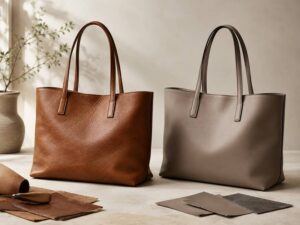
Make A Sample First?
If you have your own artwork, logo design files, or just an idea, please provide details about your project requirements, including preferred fabric, color, and customization options, we’re excited to assist you in bringing your custom bag designs to life through our sample production process.