 Skip to content

Why Do Custom Minimal Cosmetic Bags Work Better for Premium Beauty Sets?
A premium beauty set can lose much of its perceived value through one surprisingly small component: the cosmetic bag. The skincare bottles may use heavy glass, the cartons may have precise foil details, and the color palette may feel sophisticated, yet an oversized logo, bright zipper tape, thin lining, bulky seams, or an awkward pouch shape can make the entire set feel less considered.
The opposite is also true. A cosmetic pouch does not need many decorative elements to feel expensive. A smooth matte surface, controlled dimensions, a balanced zipper line, tonal hardware, clean internal construction, and a small debossed mark can often communicate more refinement than several expensive embellishments competing for attention.
Custom minimal cosmetic bags work especially well in premium beauty sets because they concentrate visual value into material feel, proportion, construction, subtle branding, and usability. By reducing unnecessary decoration, the bag can support the skincare or makeup collection instead of competing with it. The strongest designs also remain useful after unboxing, combining a refined exterior with practical storage, easy-clean interiors, dependable zippers, and durable construction.
This distinction matters because a cosmetic pouch often becomes the longest-lived component of the set. The cardboard box may be discarded within days. The pouch may continue traveling between a dressing table, office drawer, gym bag, handbag, and suitcase for months or years.
A simple design therefore has to survive much more than the first photograph. It has to work in the hand, open easily, hold the intended products, resist everyday wear, stay visually clean, and still feel consistent with the brand after repeated use.
That is where minimal cosmetic bag development becomes more interesting than simply “removing decoration.”
Why Do Minimal Cosmetic Bags Elevate Premium Beauty Sets?
Minimal cosmetic bags elevate premium beauty sets when simplicity is supported by strong material selection, controlled proportion, clean construction, restrained branding, practical interiors, and consistent finishing. Removing decorative elements does not automatically create a premium product. In fact, fewer visible details often make material quality, zipper alignment, stitching, color consistency, logo placement, and overall shape more noticeable.
For beauty and personal-care projects, the cosmetic pouch should be reviewed as part of the complete set rather than as an isolated accessory. Material feel, internal organization, easy-clean lining, logo effect, set presentation, color stability, and bulk consistency are all relevant to the final result.
A useful way to judge a minimal pouch is simple: if decorative elements are removed, do the remaining details still feel intentional?
A strong premium pouch should pass several tests at once:
| Area | What Creates Premium Value | What Can Weaken the Set |
|---|---|---|
| Material | Controlled texture, suitable thickness, good hand feel | Thin, sticky, overly glossy, unstable surface |
| Shape | Balanced width, height, depth, clean corners | Awkward proportions, collapsing sides |
| Zipper | Smooth opening, coordinated tape and puller | Heavy, noisy, oversized hardware |
| Logo | Small, accurate, well positioned | Oversized, off-center, poor attachment |
| Sewing | Straight seams, even stitch appearance | Wavy seams, loose threads, asymmetry |
| Lining | Clean, useful, appropriate for cosmetics | Very thin lining, poor pocket layout |
| Color | Consistent with the beauty collection | Uncontrolled undertones or mismatched trims |
| Packing | Fits neatly into the set | Compression, creasing, excessive empty space |
The most successful minimalist designs do not look “empty.” They look resolved.
What Makes Minimal Design Feel Premium?
Minimal design feels premium when proportion, texture, color, construction, and hardware work together without one element overpowering the others.
This is especially important with cosmetic pouches because the product is handled at close distance. A person may notice the zipper alignment, material texture, stitching, corner shape, logo position, and lining within seconds of opening the set.
That means the design must work at three distances:
- from a distance, the silhouette should look clean;
- at hand-held distance, material and hardware should feel refined;
- during use, the zipper, opening, lining, and storage should remain practical.
Consider a hypothetical 230 × 150 × 70 mm pouch.
One version might include a 75 mm metal logo, contrast piping, bright zipper teeth, two decorative panels, and a second logo on the puller.
Another version could use one exterior material, a 25–30 mm debossed mark, tonal zipper tape, one controlled hardware finish, and a clean bottom gusset.
The second design contains fewer visible components, but each remaining element carries more importance.
A small error becomes easier to see.
For example:
- a zipper line that rises 4–5 mm on one side;
- a logo that is slightly off center;
- corner radii that do not match;
- inconsistent stitch spacing;
- lining showing at the zipper edge;
- front and back panels with slightly different tension.
This is why minimal products often require more discipline, not less.
Sewing quality directly affects appearance, structural strength, service life, and the overall use experience. Relevant checks can include stitch spacing, broken threads, burst seams, seam allowance, symmetry, zipper sewing, corner shaping, and lining cleanliness.
How Does Minimal Design Strengthen Brand Identity?
A strong beauty identity does not need to depend on logo size.
Recognition can come from repeated visual details such as:
- a signature muted color;
- a specific pouch silhouette;
- tonal embroidery;
- a distinctive zipper pull;
- a matte surface finish;
- a contrasting lining;
- a small side label;
- a consistent hardware finish;
- a recurring corner shape.
This is particularly useful when the skincare or makeup packaging already contains a large amount of visual information.
A complete beauty set may include:
- several bottle shapes;
- printed cartons;
- foil details;
- cap finishes;
- product names;
- ingredient information;
- inserts;
- tissue paper;
- outer packaging;
- the cosmetic pouch.
If every element tries to become the visual focus, the set can feel fragmented.
A quieter pouch helps establish hierarchy.
The products can remain the hero, while the pouch becomes the element that visually connects everything together.
Appearance development for makeup bags should consider product proportion, color combinations, logo placement, decorative elements, material feel, and packaging presentation together rather than treating each part separately.
For this reason, a useful design discussion is not:
“Can we make the logo larger?”
It is:
“Which details should make this pouch recognizable even when the logo is small?”
That shift usually produces a more distinctive result.
Minimal vs Decorative Bags: Which Works Better?
Neither style is suitable for every beauty set.
Decorative pouches can work extremely well when the accessory itself is intended to create excitement. This can apply to:
- holiday launches;
- youth cosmetics;
- character collaborations;
- artist collections;
- festival programs;
- limited editions;
- strongly graphic makeup lines.
Minimal pouches tend to work better when the desired atmosphere is:
- refined;
- calm;
- clinical;
- spa-inspired;
- fashion-led;
- understated;
- travel-oriented;
- fragrance-focused.
The choice depends on the role of the pouch.
| Beauty Set | Often Suitable Direction | Main Reason |
|---|---|---|
| Prestige skincare | Minimal | Supports clean, controlled presentation |
| Fragrance gift set | Minimal / tactile | Lets bottle and fragrance identity lead |
| Travel skincare | Minimal functional | Combines refined appearance with reuse |
| Holiday prestige set | Minimal with one accent | Adds occasion without visual overload |
| Youth makeup set | More decorative | Graphic energy may be useful |
| Artist collaboration | Decorative | Artwork may be central |
| Wellness / spa set | Soft minimal | Supports calm tactile presentation |
| Beauty subscription set | Reusable minimal | Practical repeat-use value matters |
The mistake is assuming that “premium” always means less color.
A premium pouch can be burgundy, deep blue, botanical green, lilac, silver grey, or transparent smoky TPU.
The important part is control.
If the color is deliberate, the zipper matches, the logo treatment is appropriate, and the structure is balanced, a stronger color can still feel refined.
Why Does Material Feel Matter?
Material feel is one of the fastest ways a cosmetic pouch communicates quality.
The pouch is often touched immediately during unboxing, and the hand can detect differences that photography does not show well.
These include:
- thickness;
- softness;
- surface drag;
- stiffness;
- grain;
- gloss;
- pile direction;
- coating;
- flexibility;
- recovery after folding.
Common cosmetic-bag materials can include PU, PVC, TPU, polyester, nylon, canvas, velvet, satin, mesh, and different lining materials. Structure, logo method, use scenario, cleaning needs, and packaging should all influence selection.
Material category alone should never be treated as a luxury ranking.
For example:
PU can create a smooth, fashion-oriented appearance, but poor surface quality can make it feel artificial or inexpensive.
Nylon can look technical and clean, particularly in travel-oriented skincare projects, but coarse specifications may feel too sporty.
Polyester can provide excellent color flexibility, but appearance changes greatly depending on weave, coating, density, and finish.
Velvet can create depth and richness, but pile direction and dust visibility need attention.
Satin can feel soft and elegant, but surface snagging and creasing must be considered.
TPU or PVC can create a modern transparent look, but scratching, transparency, flexibility, and surface behavior should be reviewed carefully. Cutting guidance for PVC and TPU specifically requires attention to transparency, scratching, softness, and hardness.
For premium development, compare swatches beside the actual skincare or makeup packaging rather than approving the pouch material alone.
A beige PU may look warm beside a cool-white carton.
A silver zipper may look too bright beside brushed aluminium caps.
A satin lining may look elegant but become visually inconsistent with a very technical exterior.
The relationship between materials matters as much as each material individually.
When Does Simplicity Increase Perceived Value?
Simplicity increases perceived value when it removes elements that do not contribute enough to appearance, function, or durability.
This distinction is important.
Reducing decoration can improve a pouch.
Reducing necessary structure can weaken it.
For example:
| Detail | Can Often Be Reduced | Should Be Protected |
|---|---|---|
| Oversized logo | Yes | — |
| Extra decorative piping | Yes | — |
| Multiple graphic prints | Yes | — |
| Excessive hardware | Yes | — |
| Several exterior panels | Sometimes | — |
| Reliable zipper | — | Yes |
| Clean lining | — | Yes |
| Correct capacity | — | Yes |
| Structural stability | — | Yes |
| Strong seam construction | — | Yes |
| Useful organization | Sometimes | Yes |
| Color consistency | — | Yes |
Suppose a cosmetic pouch includes three decorative metal components.
Removing two may improve visual clarity and reduce weight.
But if the saved cost is used simply to replace a stable lining with a very thin one, the product becomes cheaper rather than better.
A stronger development decision would be:
- remove unnecessary metal decoration;
- retain good zipper performance;
- maintain the lining;
- improve surface material;
- refine the logo method;
- improve corner construction.
Minimalism works best when budget is redirected toward details that are touched, seen, and used repeatedly.
Why Do High-End Beauty Sets Favor Minimal Design?
Premium beauty sets often contain many components within limited visual and physical space.
A set may include:
- cleanser;
- serum;
- toner;
- moisturizer;
- eye cream;
- several cartons;
- inserts;
- cards;
- the pouch;
- tissue;
- outer packaging.
Even when every item is well designed separately, the total set can become visually crowded.
A minimal pouch creates breathing space.
This is particularly valuable when the beauty products themselves communicate:
- scientific formulation;
- clinical precision;
- fragrance sophistication;
- wellness;
- quiet luxury;
- natural ingredients;
- modern fashion.
The pouch should support that message rather than add another competing graphic layer.
Minimal pouches can also adapt more easily across collections.
For example, one approved structure might remain consistent while the following elements change:
- exterior color;
- lining;
- zipper tape;
- thread;
- logo technique;
- hardware finish.
This can help maintain familiarity across a series without making every release look identical.
A skincare brand might use:
- ivory PU for the core collection;
- muted green for botanical products;
- deep burgundy for holiday gifting;
- soft grey nylon for travel;
- smoky TPU for discovery kits.
The silhouette remains familiar while the material language changes.
That is often more sophisticated than creating a completely unrelated pouch for every launch.
How Does Minimal Design Improve the Beauty Set as a Whole?
The pouch should be evaluated with the products inside and with the final outer package.
This is where minimalism can create measurable operational benefits.
Suppose two bag structures hold the same four skincare items.
Structure A: rigid vanity case
Finished size: 260 × 190 × 120 mm
Structure B: soft gusset pouch
Finished size: 230 × 160 × 85 mm
These figures are only an illustrative comparison, not a universal specification.
The second structure occupies significantly less geometric volume:
260 × 190 × 120 = 5,928,000 mm³
230 × 160 × 85 = 3,128,000 mm³
The difference is about 47% in simple calculated volume.
Actual carton utilization will differ because soft bags compress, box structures leave voids, and protective materials take space, but the example shows why pouch dimensions influence far more than appearance.
A smaller, efficient structure can affect:
- gift-box dimensions;
- insert material;
- carton capacity;
- storage;
- freight volume;
- shelf presentation.
The pouch should not be reduced until it becomes difficult to load or reuse, however.
The correct goal is efficient fit, not minimum size.
How Should a Premium Minimal Pouch Be Evaluated Before Approval?
A strong evaluation should happen with the physical sample rather than relying only on drawings or screen images.
The sample can be reviewed in five conditions.
1. Empty
Check whether the pouch keeps the intended shape without excessive stuffing.
2. Filled
Insert the real products and confirm capacity, zipper closure, side-wall behavior, and visual balance.
3. Open
Confirm whether jars, tubes, brushes, and bottles can actually be removed comfortably.
4. Inside the gift box
Check fit, compression, orientation, and presentation.
5. After handling
Open and close the zipper repeatedly, remove products, fold where intended, and inspect visible wear.
Sampling should confirm appearance, material, color, structure, logo, function, packaging, and production direction before bulk production.
Once approved, key specifications should become production references, including dimensions, materials, color standards, logo details, zipper and hardware, lining, packaging, labels, and final revisions.
This is especially important for minimalist products because small deviations remain highly visible.
What Details Most Often Separate “Simple” from “Premium Minimal”?
The difference usually comes down to control.
A simple pouch may use fewer components because cost was reduced.
A premium minimal pouch uses fewer components because the design was edited deliberately.
The distinction can be seen in details such as:
- consistent corner radius;
- centered zipper;
- correct zipper opening;
- balanced gusset depth;
- stable side seams;
- aligned front and back panels;
- clean lining installation;
- restrained logo position;
- controlled hardware finish;
- accurate color matching;
- surface free from obvious marks;
- clean packing.
Minimal design also makes repeat production more demanding.
If one shipment has a warm beige exterior and the next becomes visibly cooler, the difference is immediately apparent.
If a 30 mm logo gradually becomes 34 mm or shifts vertically, the change is easy to notice on an otherwise plain front panel.
That is why approved samples and production details are important references for later production and inspection.
What Is the Practical Value of Minimalism?
The strongest value is not simply visual.
A well-designed minimal cosmetic pouch can provide several advantages at the same time:
- stronger visual coherence with skincare or makeup packaging;
- clearer focus on material and finishing;
- lower risk of decorative elements competing with the products;
- easier adaptation across seasonal collections;
- better potential for long-term reuse;
- fewer unnecessary trims or components;
- cleaner integration with gift-box layouts;
- possible reduction in packing volume when structure allows;
- easier recognition through repeated signature details.
However, none of these benefits are automatic.
A poorly developed minimal pouch can simply look plain.
The product becomes premium only when the reduced visual language is supported by strong decisions in material, proportion, construction, usability, sampling, and quality control.
That is the central principle behind premium minimal cosmetic bags:
Which Type of Minimal Cosmetic Bag Is Best?
The most suitable minimal cosmetic bag is determined by four things: what the set contains, how the pouch will be reused, how the material should feel in hand, and how the finished pouch must fit into the outer gift packaging. PU, nylon, polyester, velvet, satin, TPU, PVC, canvas, and RPET can all work, but each creates different trade-offs in structure, durability, cleaning, weight, appearance, and logo execution. Jundong’s documented cosmetic-bag material options include PU, PVC, TPU, polyester, nylon, canvas, velvet, satin, mesh, and several lining fabrics.
The material name alone rarely tells enough. A 230 × 150 × 70 mm pouch in soft nylon can behave very differently from the same dimensions in PU or velvet. One may collapse flat for transport, one may keep a stronger silhouette, and one may need more careful protection from compression.
A practical comparison should therefore look at the whole combination:
| Decision | What It Affects |
|---|---|
| Exterior material | Hand feel, visual character, durability |
| Material thickness | Shape, sewing, weight, foldability |
| Pouch structure | Capacity, box fit, presentation |
| Lining | Cleaning, organization, internal finish |
| Zipper | Opening access, visual weight, daily use |
| Logo method | Identity, surface compatibility |
| Hardware | Weight, durability, visual balance |
| Packing method | Creasing, carton volume, presentation |
Material selection should never be separated from intended use, structure, logo method, packaging, and delivery planning. Jundong’s material guidance makes the same distinction: polyester, nylon, PU, PVC, TPU and other materials should be selected according to the product application rather than treated as interchangeable fabrics.
What Type of Bag Fits Each Beauty Set?
The correct pouch type starts with the products, not with a lifestyle photograph.
A flat pouch may be ideal for sheet masks and brushes but frustrating for a skincare set containing three glass jars. A deep vanity case may hold those jars beautifully but become unnecessarily bulky for four travel-size tubes.
A useful starting matrix is:
| Set Composition | Practical Pouch Type | Why It Works |
|---|---|---|
| Lip products + compacts | Flat zip pouch | Low depth requirement |
| Serum + cleanser + cream | Bottom-gusset pouch | Better upright capacity |
| Full skincare routine | Box pouch | More predictable internal volume |
| Brushes + makeup tools | Long rectangular pouch | Fits elongated items |
| Fragrance minis | Structured soft case | Better support for glass containers |
| Travel-size collection | Lightweight gusset pouch | Low weight, easy packing |
| Discovery samples | Slim pouch | Avoids unnecessary empty volume |
| Premium gift collection | Soft structured pouch | Balances presentation and reuse |
Product dimensions should be mapped before the pouch dimensions are locked.
For example, a set containing:
- one Ø62 × 48 mm jar;
- one 38 × 38 × 115 mm serum bottle;
- one 45 × 30 × 120 mm cleanser;
- two 20 × 20 × 75 mm small tubes;
requires more than a total-volume calculation.
The zipper opening must also allow the 62 mm jar to pass through without forcing the side walls. The jar should not press continuously against the zipper. The serum bottle should not create a visible bulge in the front panel.
Internal fit should therefore be tested in the actual intended orientation.
PU vs Nylon vs Polyester: Which Feels More Premium?
All three can look refined, but they communicate different visual languages.
PU usually provides more immediate structure and a fashion-oriented surface. Depending on the specification, it can appear matte, smooth, pebbled, soft, or firm. It is particularly useful when the pouch is intended to resemble a small fashion accessory rather than a technical organizer.
Nylon usually feels lighter. A fine, smooth nylon can suit contemporary skincare, travel collections, clean wellness aesthetics, or gender-neutral beauty programs. It also performs well when low weight and repeat handling matter.
Polyester provides broad flexibility in weave, finish, color, coating, and printing. It can be highly practical for repeated programs where color selection and controlled cost are important.
| Feature | PU | Nylon | Polyester |
|---|---|---|---|
| Visual character | Fashion-led, structured | Clean, technical, light | Highly adaptable |
| Hand feel | Smooth or textured | Smooth, light | Depends heavily on weave |
| Shape retention | Medium to strong | Soft to medium | Soft to medium |
| Foldability | Lower on structured grades | High | High |
| Logo compatibility | Embossing, print, metal detail | Embroidery, print, label | Embroidery, print, label |
| Cleaning | Surface-dependent | Generally practical | Generally practical |
| Transport efficiency | Medium | High | High |
PU is specifically identified in Jundong’s material documentation as suitable for makeup bags and fashion-oriented soft goods, while nylon is described as lightweight and abrasion-oriented and polyester as versatile in color and print applications.
The final decision should be made from physical swatches. A good nylon can feel more refined than a poor PU, while a dense polyester can outperform both for a specific travel set.
Velvet vs Satin: When Do They Work Best?
Velvet and satin work most effectively when tactile presentation is an important part of the gift experience.
Velvet provides depth and softness. It works especially well for fragrance collections, holiday gifting, evening cosmetics, limited editions, or gift sets where the pouch should feel almost jewelry-like.
Its appearance changes with pile direction. The same dark green velvet can look lighter or darker depending on how the fibers catch light. That makes cutting direction and bulk consistency particularly important.
Potential concerns include:
- dust visibility;
- pile crushing;
- color appearance under different lighting;
- marks created by tight packing;
- suitability of the selected logo process.
Satin creates a lighter, smoother impression. It can work well for spa collections, bridal cosmetics, fragrance, sleep-oriented beauty products, or soft gifting programs.
Its concerns are different:
- snagging;
- visible needle marks;
- creasing;
- sewing tension;
- excessive shine;
- surface marks after compression.
A simple comparison:
| Use Situation | Velvet | Satin |
|---|---|---|
| Holiday gift set | Strong fit | Good fit |
| Luxury fragrance | Strong fit | Strong fit |
| Daily travel pouch | Moderate fit | Lower fit |
| Spa / wellness | Good fit | Strong fit |
| Heavy glass containers | Needs structure | Needs structure |
| Fold-flat transport | Limited | Better |
| Frequent abrasion | Moderate | Lower |
Neither should be chosen because it “looks expensive” in a swatch. The material must still survive packing, unboxing, and intended reuse.
TPU vs PVC: Which Works for Clear Designs?
TPU and PVC can both create transparent minimal pouches, but transparency is only one part of the decision.
Clear materials make the products themselves part of the visual design. This can work especially well for colorful cosmetics, travel sets, discovery collections, or skincare products with distinctive bottle packaging.
Important variables include:
- sheet thickness;
- transparency;
- haze;
- softness;
- scratch visibility;
- edge finish;
- flexibility;
- zipper attachment;
- folding behavior;
- odor;
- surface recovery after compression.
Jundong’s production documentation specifically notes that PVC and TPU require attention to transparency, scratches, softness, and hardness during cutting.
A fully clear pouch is not always necessary.
More refined combinations can include:
- clear front + opaque back;
- smoky TPU + tonal zipper;
- transparent body + PU gusset;
- frosted panel + small printed logo;
- clear pouch + colored binding.
These combinations retain visibility while giving more control over structure and identity.
Environmental or safety claims should not be assumed from the material name. Documentation should be reviewed according to the selected material and intended application. The Jundong fact base explicitly warns against making unsupported claims for PVC or recycled materials.
Can Eco-Friendly Fabrics Still Feel Premium?
Yes. Sustainability-oriented materials can support a refined beauty set, but recycled content alone does not create a premium result.
A recycled polyester pouch can still feel thin, rough, shiny, or poorly structured if the specification is weak. Conversely, a dense matte RPET fabric with controlled hand feel, coordinated zipper tape, clean sewing, and subtle branding can look highly polished.
Jundong identifies RPET as an available option for sustainability-focused projects while noting that GRS or other recycled-material claims should only be made when relevant documentation is available for the specific project.
For a premium sustainability direction, review:
- fiber or material documentation;
- fabric density;
- weave;
- surface texture;
- coating;
- hand feel;
- color consistency;
- lining;
- zipper tape;
- logo method.
A useful mistake to avoid is combining a sustainability-focused exterior with several unnecessary metal ornaments, thick plastic inserts, and oversized secondary packaging.
If material responsibility is part of the collection identity, the pouch structure and packaging should support the same logic.
Which Materials Have the Longest Lifespan?
There is no reliable universal number of years for a cosmetic-bag material because usage varies too much.
A pouch used twice a year for holiday travel faces a completely different wear pattern from one carried every day with foundation, brushes, metal tools, and liquid skincare.
A better durability review looks at likely failure locations.
| Material | Likely Wear Area | What Deserves Attention |
|---|---|---|
| Nylon | Abrasion, coating wear | Fabric density, seams |
| Polyester | Surface wear | Weave, coating, zipper |
| PU | Edge wear, creasing | Surface quality, folding |
| TPU | Scratching, cloudiness | Thickness, packing |
| PVC | Scratching, hardening | Material specification |
| Velvet | Pile wear | Packing, rubbing |
| Satin | Snagging | Seam and surface protection |
| Canvas | Staining, edge abrasion | Fabric weight, reinforcement |
The exterior material is only one part of lifespan.
A durable fabric with a weak zipper still creates a short-lived pouch.
A strong zipper with poor seam construction can fail at the gusset.
A good outer fabric with a weak lining can develop interior tears while the exterior still looks fine.
Durability is therefore better viewed as:
Exterior + seams + zipper + lining + structure + hardware
Jundong’s QC documentation specifically links sewing quality to appearance, structural strength, service life, and use experience. Checks can include stitch spacing, skipped stitches, broken threads, burst seams, binding, symmetry, zipper sewing, and lining cleanliness.
Which Structure Keeps a Clean Look?
Clean design usually comes from controlled geometry rather than simply removing pockets.
A minimal pouch can still contain a gusset, lining, pocket, or reinforcement as long as these features do not create unnecessary visual interruption.
Common clean structures include:
- flat rectangular pouch;
- bottom-gusset pouch;
- box pouch;
- half-moon pouch;
- soft vanity pouch;
- slim organizer.
Fewer exterior panels usually create a quieter appearance, but the pattern must still support shape and capacity.
Pattern development directly affects size, proportion, sewing, material consumption, and bulk consistency. Jundong’s development documentation identifies pattern making as a critical step in turning a visual idea into a structure that can be cut, sewn, and repeated.
For minimal cosmetic bags, several small geometric errors become highly visible:
- uneven corner radius;
- left-right asymmetry;
- gusset depth variation;
- curved zipper line;
- front panel distortion;
- side seams leaning forward;
- lining pulling the exterior inward.
The sample should therefore be assessed in three states:
- empty;
- half filled;
- filled with the intended contents.
If it only looks good when packed tightly with tissue, the structure may need refinement.
Is an Easy-Clean Lining Necessary?
For many reusable beauty pouches, yes.
Foundation, lipstick, sunscreen, facial oil, mascara, powder, cream, and leaking caps can all create residue inside the bag.
Beauty-project guidance in Jundong’s documentation specifically highlights internal organization and easy-clean lining as important considerations.
The lining should be selected for actual use rather than color alone.
Review:
- surface wipeability;
- stain visibility;
- thickness;
- seam behavior;
- flexibility;
- pocket support;
- hand feel;
- compatibility with exterior structure.
Color also affects usability.
A black lining hides marks but makes small black cosmetic items harder to find.
White or cream improves visibility but shows stains quickly.
Mid-tone grey, taupe, muted rose, or other controlled mid-tone colors can sometimes balance both concerns.
One important distinction is that easy-clean does not automatically mean leakproof.
Liquid may still travel through:
- seam holes;
- zipper openings;
- corner seams;
- pocket stitching.
If leakage control is important, the complete seam and lining construction should be reviewed rather than relying on lining material alone.
What Size Fits a Beauty Gift Box Best?
The most efficient pouch size is calculated from the products first, then checked against the gift box.
A useful sequence is:
- measure every bottle, tube, jar, and tool;
- define upright, flat, or angled orientation;
- select the largest rigid item;
- allow practical removal clearance;
- account for seam and lining thickness;
- define gusset depth;
- verify zipper opening;
- test the finished pouch inside the gift box;
- review carton efficiency.
Consider a hypothetical skincare set:
| Item | Approx. Dimensions |
|---|---|
| Cleanser | 45 × 30 × 120 mm |
| Serum | 35 × 35 × 110 mm |
| Cream jar | Ø65 × 50 mm |
| Eye cream | 28 × 28 × 85 mm |
A pouch should not simply equal the combined geometric volume of these products.
The Ø65 mm jar needs an opening wider than its diameter once zipper tape, side seams, and lining are considered. The serum bottle also needs enough clearance to avoid pushing the exterior outward.
The pouch should remain usable after the original products are removed.
Oversizing creates its own problems:
- larger gift box;
- larger insert;
- more empty space;
- more material;
- lower carton efficiency;
- weaker product restraint.
Undersizing creates:
- zipper stress;
- visible bulging;
- difficult access;
- crushed cartons;
- poor reuse.
The correct target is therefore not the smallest possible dimensions.
How Should Brands Customize a Minimal Cosmetic Bag?
A minimal cosmetic bag should be customized by controlling a small number of high-impact elements: material texture, proportion, color, logo scale, zipper and hardware, internal layout, and set packaging. The objective is not to strip the pouch of identity. It is to make each remaining detail carry more visual and functional value. In a restrained design, a poorly positioned logo, mismatched zipper tape, weak lining, or distorted silhouette becomes much easier to notice.
For premium beauty sets, the pouch should be developed as part of the complete collection rather than as an isolated accessory. Jundong’s documented cosmetic-bag development guidance covers appearance, dimensions, internal organization, lining, zipper, logo, color, transparency, set packing, and retail presentation as connected decisions.
A useful customization order is:
| Design Area | Confirm First | Why It Matters |
|---|---|---|
| Contents | Bottle, tube, jar, brush dimensions | Determines pouch size and opening |
| Exterior | Material, texture, thickness | Controls hand feel and structure |
| Shape | Width, height, depth, corner form | Controls overall visual character |
| Color | Exterior, lining, zipper, thread | Creates collection consistency |
| Logo | Process, dimensions, placement | Defines identity without visual overload |
| Hardware | Zipper, puller, plating | Affects both use and appearance |
| Interior | Pockets, dividers, lining | Determines everyday usefulness |
| Packaging | Box fit, insert, folding | Affects presentation and freight volume |
The most successful minimal pouch is usually not the one with the fewest components. It is the one where every visible component has a clear reason to be there.
How Can You Customize Without Loud Logos?
A strong identity does not require a large front mark.
Minimal cosmetic bags can build recognition through quieter details such as tonal embroidery, blind debossing, a narrow side label, a small metal plate, a distinctive zipper puller, a signature lining color, or a repeated silhouette used across several collections.
One of the most useful decisions is to define logo scale as a proportion of the face panel.
Take a pouch that is 230 mm wide.
A 25–35 mm logo occupies roughly 11–15% of the pouch width and can create a restrained effect. A 70–80 mm mark occupies around one-third of the visible width and becomes a dominant graphic element.
Those figures are not fixed rules, but they illustrate why scale matters.
Position matters just as much.
The same 30 mm logo can feel:
- formal when centered;
- fashion-led when placed low and off-center;
- more discreet when placed near a seam;
- almost hidden when moved to a side label or interior panel.
Jundong supports several logo techniques, including screen printing, heat transfer, embroidery, woven labels, leather patches, rubber patches, metal plates, embossing, UV printing, and reflective printing. The most suitable process depends on material, structure, artwork detail, quantity, budget, and the intended visual effect.
For a minimal pouch, one main logo treatment is often enough.
Instead of repeating the logo on the front, lining, puller, side label, hangtag, and box, choose the one or two locations that contribute the most visual value.
Embossing vs Embroidery: Which Looks More Premium?
Embossing and embroidery can both create a refined result, but they produce different visual and tactile effects.
Embossing or debossing works especially well on suitable PU and leather-like surfaces. Because the mark is pressed into or raised from the material, it can remain almost monochrome and allow the surface texture to stay dominant.
Embroidery creates a more tactile textile effect. Tonal thread can keep it understated, while contrast thread gives stronger visibility.
| Detail | Embossing / Debossing | Embroidery |
|---|---|---|
| Visual strength | Very restrained | Restrained to prominent |
| Surface effect | Pressed into material | Raised thread |
| Color | Usually material tone | Thread color |
| Suitable direction | PU, leather-like surfaces | Nylon, polyester, canvas |
| Main variable | Depth and edge clarity | Stitch density and distortion |
| Fine text | Needs careful tooling | Needs enough stitch space |
Artwork should be adapted to the process.
Very fine lettering may lose clarity when debossed into soft PU. Small embroidered text may close up if stitch density becomes too high. Thick strokes may work better for one technique, while fine lines may suit another.
Logo size, color, location, clarity, adhesion, and durability should therefore be checked during sampling rather than approved from artwork alone.
When Should You Use a Metal Logo?
A metal logo is most effective when it behaves like one deliberate accent rather than an extra decoration added because the pouch is meant to feel premium.
It works particularly well when the beauty set already contains:
- brushed metal caps;
- metallic carton foil;
- silver, champagne, gunmetal, or gold finishes;
- refined fragrance hardware;
- fashion-inspired details.
A metal plate should be reviewed for more than its shape.
Important details include:
- width and height;
- thickness;
- plating shade;
- gloss level;
- edge treatment;
- attachment method;
- backing support;
- scratch resistance;
- exact placement.
A large plate on a thin satin pouch may distort the surface.
A heavy piece on soft PU may require local reinforcement.
A highly polished gold finish may look too bright beside matte skincare packaging.
Metal-logo inspection also needs to cover plating condition, scratches, attachment strength, position, and consistency. Jundong’s logo inspection guidance includes these checks for metal-plate applications.
For a restrained design, one metal element is usually enough. If the zipper puller already carries a custom plated detail, a second large front plate may be visually unnecessary.
Which Colors Create a Premium Look?
Premium color is created through coordination, not through one universal palette.
Black, ivory, taupe, navy, charcoal, muted green, burgundy, dusty rose, and soft grey are often used because they control visual noise, but any of them can look ordinary if the material, zipper, thread, and hardware do not work together.
A better way to build color is to treat the pouch as a seven-part palette:
- exterior material;
- zipper tape;
- zipper teeth;
- puller or hardware;
- sewing thread;
- lining;
- logo.
For example:
| Exterior | Zipper / Hardware | Lining | Overall Character |
|---|---|---|---|
| Warm ivory PU | Champagne matte | Taupe | Soft prestige |
| Deep green nylon | Tonal zipper | Pale sage | Botanical |
| Charcoal PU | Gunmetal | Medium grey | Contemporary |
| Dusty rose satin | Tonal metal | Cream | Gift-led |
| Smoky TPU | Matte black | Cool grey | Modern travel |
A monochrome pouch does not require every component to match exactly. Slight tonal variation can create more depth than forcing every element into one flat shade.
The same color reference can also appear different on PU, nylon, velvet, zipper tape, embroidery thread, and metal plating. Jundong’s documented logo guidance notes that color can vary by material, process, lighting, and production conditions, which is why physical confirmation is important.
For high-value sets, evaluate color under actual lighting beside the real cartons and bottles rather than relying on a screen.
How Should Zippers and Hardware Be Selected?
The zipper is one of the most frequently touched parts of a cosmetic pouch and one of the most visually obvious components in a minimal design.
Its scale should match the pouch.
A compact 180 × 110 mm satin pouch may look overbuilt with large teeth and a long metal puller. A 280 mm structured beauty case holding several bottles may need a stronger zipper and more substantial puller.
Several details need to be confirmed together:
- zipper size;
- tape width;
- tape color;
- teeth type;
- slider movement;
- puller dimensions;
- puller shape;
- plating;
- opening length;
- zipper end construction.
Opening length deserves special attention.
If the set contains a cream jar with a 65 mm diameter, internal volume alone is not enough. The jar must also pass through the opening after zipper tape, end stops, lining, and side seams reduce usable access.
This is why pouch capacity and zipper opening should be checked with actual products rather than calculated separately.
Hardware should also use a controlled finish.
Mixing bright gold, silver, black nickel, and exposed metal teeth in one small pouch can make a restrained design feel unnecessarily busy.
One coordinated finish usually creates a cleaner appearance.
How Can Compartments Stay Functional but Minimal?
Minimal exterior design does not mean the interior should be empty.
The interior can carry much of the functional value while the outside remains visually calm.
A travel skincare pouch may need:
- two elastic bottle holders;
- one flat sachet pocket;
- one main compartment.
A makeup pouch may need:
- several brush sleeves;
- one compact pocket;
- a larger open section.
A fragrance set may benefit from one soft divider between glass bottles.
The most useful principle is simple: every compartment should correspond to a real use.
Additional dividers increase:
- fabric consumption;
- stitching;
- seam thickness;
- internal bulk;
- assembly time;
- dimensional variation.
For example, adding four unnecessary internal walls may require several additional cut pieces, edge finishing, and multiple sewing operations while reducing usable space.
Instead, map the actual contents first.
If a pocket cannot be assigned to a real jar, brush, tube, bottle, compact, cable, or accessory, reconsider whether it needs to exist.
Jundong’s beauty-project guidance specifically identifies internal organization and easy-clean lining as important cosmetic-bag considerations.
How Should Lining Be Customized?
Lining is often less visible during the first unboxing but can have a major effect on repeat use.
Cosmetic products create very specific interior conditions. Foundation, lipstick, serum, sunscreen, mascara, and face oil can stain a pouch quickly.
The lining should therefore be reviewed for:
- wipeability;
- stain visibility;
- thickness;
- softness;
- pocket support;
- seam behavior;
- color;
- compatibility with the exterior.
Color affects usability.
A black lining hides many marks but makes small dark items harder to find.
White or cream improves visibility but shows residue quickly.
Mid-tone grey, taupe, muted green, or similar shades can provide a more practical compromise.
There is also an important technical distinction:
easy-clean is not the same as leakproof.
Even a smooth wipeable lining does not automatically stop liquid from passing through:
- seam holes;
- zipper openings;
- pocket stitching;
- corner seams.
If leakage resistance is important, the complete construction needs to be reviewed rather than relying on lining material alone.
How Should the Bag Match the Beauty Set?
The pouch should be developed beside the products it will accompany.
Place the actual exterior swatch or finished sample next to:
- bottles;
- jars;
- tubes;
- caps;
- cartons;
- foil details;
- tissue;
- gift-box surfaces;
- paper inserts.
This often exposes visual mismatches that are difficult to see in separate digital files.
A warm beige PU can appear too yellow beside a cool ivory carton.
Bright polished hardware can feel inconsistent beside brushed aluminum caps.
A glossy pouch can clash with a soft-touch paper box.
Three relationships should be checked:
Product-to-pouch
Do all products fit naturally without distortion?
Pouch-to-gift-box
Does the bag sit cleanly without excessive compression or empty space?
Gift-box-to-carton
Can the completed set be packed efficiently?
Jundong’s appearance-development guidance connects proportion, color, logo placement, material feel, decorative elements, and packaging presentation rather than treating them as independent details.
Which Minimalist Packaging Designs Work Best?
Minimal packaging works best when each layer has a clear purpose.
A pouch can be presented:
- inside a fitted paperboard insert;
- beside the skincare products;
- as the main container for the products;
- inside a rigid gift box;
- folded beneath an upper tray;
- inside a simple protective sleeve.
More layers do not automatically create greater perceived value.
A beautiful pouch inside a large rigid box, wrapped in tissue, held by an insert, covered by a sleeve, and packed with several printed cards can create more material and visual complexity than the collection needs.
A cleaner option may use fewer layers but better fit.
Packaging must also protect the material.
| Pouch Material | Main Packing Concern |
|---|---|
| PU | Creasing and pressure marks |
| Velvet | Pile crushing and dust |
| Satin | Wrinkling and snagging |
| TPU | Scratching |
| PVC | Surface marks |
| Metal hardware | Contact scratches |
| Nylon | Shape compression |
Custom boxes, hangtags, labels, inserts, and other packing elements can influence cost, MOQ, and production time, so they should be confirmed before the pouch specification is completely locked.
How Should a Minimal Pouch Be Approved?
Approval should happen with the physical sample in real use conditions.
A useful check includes five states.
Empty: Does the shape remain balanced?
Filled: Do the products fit without bulging or zipper stress?
Open: Can jars, brushes, and tubes be removed comfortably?
Inside the gift box: Does the pouch fit without creasing or excessive empty space?
After repeated handling: Do the zipper, material, logo, and shape still behave as expected?
The approval record should capture measurable details:
| Area | Approval Record |
|---|---|
| Finished dimensions | Width × height × depth |
| Exterior | Material code, color, texture |
| Logo | Size, location, process |
| Zipper | Size, tape color, puller |
| Hardware | Finish and dimensions |
| Interior | Lining and pocket position |
| Structure | Gusset, corner form, reinforcement |
| Packaging | Folding, insert, protection |
Jundong’s sampling guidance states that the physical sample should confirm material, color, structure, logo, function, and packaging, while approved details should become references for production and inspection.
The difference between a basic pouch and a premium minimal cosmetic bag is rarely the number of decorative details.
It is the level of control.
A strong design keeps the exterior quiet while carefully managing proportion, material texture, color, branding, zipper performance, interior organization, and packaging. When every remaining element has a clear role, the pouch feels refined without needing to look complicated.
How Does a Factory Develop Custom Minimal Cosmetic Bags?
A custom minimal cosmetic bag is developed by converting a visual idea into measurable production standards: product dimensions, material, structure, lining, zipper, hardware, logo, color, packaging, and inspection criteria. Minimal designs require especially careful sampling because small deviations in shape, stitching, zipper alignment, logo placement, or surface finish are more visible when there are fewer decorative details.
For a premium beauty set, development should not begin with sewing. It should begin with the products that must fit inside the pouch and the final presentation the collection needs to achieve.
A practical development sequence is:
| Stage | Main Decision | What Should Be Locked Before Moving Forward |
|---|---|---|
| 1. Product brief | Use, contents, visual direction | Bottle sizes, quantity, pouch role |
| 2. Feasibility review | Can the concept be produced reliably? | Material, structure, logo, packing |
| 3. Size planning | Finished dimensions and capacity | Width, height, depth, opening |
| 4. Material selection | Exterior, lining, reinforcement | Texture, thickness, color |
| 5. Pattern making | Convert dimensions into sewable pieces | Panels, gussets, seams |
| 6. Trim selection | Zipper and hardware | Size, finish, puller |
| 7. Logo development | Branding process | Artwork, position, dimensions |
| 8. First sample | Physical verification | Appearance, fit, function |
| 9. Revision | Correct weaknesses | Measurements, material, structure |
| 10. Approval | Lock final specification | Approved sample and records |
| 11. Production setup | Convert approval into work instructions | Cutting, sewing, QC, packing |
| 12. Inspection | Control consistency | Material through pre-shipment checks |
Jundong’s documented development process follows the same principle: projects may begin from a reference photo, physical sample, sketch, design file, logo, or product idea, followed by review of material, structure, dimensions, logo, packaging, cost, MOQ, and production feasibility before sampling.
What Should Be Confirmed Before a Sample?
A first sample becomes much more useful when the essential information has already been defined.
At minimum, the development team should know:
- what products the pouch needs to hold;
- approximate finished dimensions;
- preferred visual direction;
- exterior material preference;
- desired hand feel;
- lining expectations;
- logo artwork;
- logo position;
- approximate order quantity;
- packaging concept.
A complete technical pack is useful, but development does not necessarily have to start from one. A clear reference image, existing pouch, sketch, packaging drawing, or actual skincare products can provide enough information for an initial feasibility review. Jundong’s documented process specifically allows development to begin from photos, samples, sketches, design files, or product ideas.
The most important step is translating subjective language into measurable requirements.
For example:
“Small luxury makeup pouch” is too vague.
A stronger brief would read more like:
- finished size: approximately 230 × 150 × 70 mm;
- contents: one 65 mm cream jar, one serum bottle, two tubes;
- exterior: smooth matte PU;
- structure: soft with a stable bottom gusset;
- lining: wipeable polyester;
- zipper: tonal tape with matte metal puller;
- logo: 30 mm blind deboss, centered near lower front;
- packaging: placed flat inside a rigid beauty-set box.
The second version gives the sample room something that can actually be measured and tested.
How Is Feasibility Reviewed?
Before cutting materials, the design should be checked for production conflicts.
A cosmetic pouch may look simple on a drawing but contain hidden problems.
Examples include:
- the zipper opening is narrower than the largest jar;
- the selected PU is too stiff for the intended corner shape;
- a metal badge is too heavy for a thin face panel;
- a very small embroidered wordmark loses clarity;
- internal dividers create unwanted exterior distortion;
- the pouch is too deep for the intended gift box;
- the clear panel scratches when tightly folded.
A useful feasibility review looks at several relationships:
Material ↔ Structure
Can the chosen fabric hold the desired shape?
Material ↔ Logo
Will the proposed branding method work cleanly on the surface?
Capacity ↔ Opening
Can the largest item pass through the zipper opening comfortably?
Structure ↔ Packaging
Will the pouch fit the gift box without distortion?
Appearance ↔ Production Stability
Can the design be repeated consistently across the planned quantity?
Jundong’s development documentation describes feasibility review as a way to reduce blind sampling, unexpected cost changes, and production risk. It covers material suitability, structure, logo compatibility, capacity, packaging, timing, and whether adjustments are required before production.
How Are Dimensions Planned?
Cosmetic-bag dimensions should come from real contents rather than an arbitrary standard size.
Suppose a premium skincare set contains:
| Product | Approx. Dimensions |
|---|---|
| Cream jar | Ø65 × 50 mm |
| Serum bottle | 35 × 35 × 110 mm |
| Cleanser tube | 45 × 30 × 120 mm |
| Eye treatment | 30 × 30 × 85 mm |
A bag must accommodate more than the combined volume.
The development team also needs to consider:
- zipper opening;
- seam allowances;
- lining thickness;
- gusset depth;
- bottle clearance;
- product removal;
- internal pockets;
- deformation when full.
A pouch may technically hold all four products but still be poorly designed if the jar must be forced through the opening or if the serum bottle pushes the front panel outward.
A practical physical test should therefore include three conditions:
- empty;
- normally filled;
- completely packed with the intended products.
The pouch should maintain an acceptable shape in all three.
How Is the Pattern Developed?
Pattern making is where the visual design becomes something that can actually be cut, sewn, assembled, and repeated.
For a minimal pouch, the pattern controls:
- finished dimensions;
- front-to-back symmetry;
- gusset depth;
- corner radius;
- zipper line;
- panel alignment;
- material consumption;
- seam placement;
- internal capacity.
Jundong’s documented process notes that pattern making affects size, proportion, capacity, structure, sewing, material consumption, and production stability.
This is particularly important for minimalist cosmetic bags because the silhouette itself becomes one of the main visual features.
Consider two box pouches that appear identical in a drawing.
One may have:
- 35 mm corner radius;
- 65 mm gusset;
- straight top line.
The other may have:
- 45 mm corner radius;
- 75 mm gusset;
- slightly curved zipper line.
Those differences can change the entire visual character.
A first pattern should therefore be treated as a working version, not a final production standard.
How Are Materials and Trims Selected?
Exterior fabric is only one part of the material system.
A complete cosmetic pouch may contain:
- exterior material;
- lining;
- reinforcement;
- zipper tape;
- zipper teeth;
- slider;
- puller;
- sewing thread;
- labels;
- internal elastic;
- hardware.
These components need to work together visually and physically.
Jundong’s documented material capability includes polyester, nylon, canvas, cotton, RPET, mesh, PU leather, PVC, TPU, EVA, and several lining and structural materials. Material selection is intended to be reviewed according to product use, appearance, quantity, packaging, and functional needs.
For minimalist beauty pouches, the following combinations are worth checking carefully:
| Exterior | Critical Matching Detail |
|---|---|
| Matte PU | Zipper tape and hardware reflectivity |
| Fine nylon | Stitch tension and zipper scale |
| Velvet | Pile direction and packing pressure |
| Satin | Needle marks and seam tension |
| TPU | Scratch resistance and transparency |
| PVC | Surface marks and edge finishing |
| RPET | Texture, density, and documentation |
Physical swatches are valuable because digital files cannot show hand feel, surface gloss, softness, or recovery after compression.
How Is the Logo Developed?
Minimal branding requires precision.
When a front panel contains only one small logo, even a small placement error can become obvious.
The production record should identify:
- exact artwork version;
- finished width and height;
- placement;
- distance from seams;
- process;
- color;
- thread or plating reference;
- attachment method.
Instead of writing:
“small logo in center,”
a clearer instruction might be:
“30 mm-wide blind deboss, horizontally centered, bottom of logo 32 mm above lower seam.”
Jundong supports multiple methods including screen printing, heat transfer, embroidery, woven labels, metal plates, embossing, and related processes. The documented guidance requires logo size, color, placement, and method to be confirmed during sampling.
Different techniques also require different inspection criteria. Embroidery needs stitch and thread-color checks. Metal plates need placement, plating, scratch, and attachment checks. Printed marks need clarity and adhesion checks.
How Long Does Sampling Take?
Jundong’s standard sampling time is usually 5–7 days, while some simple styles may be completed in 2–3 days.
That timing applies once workable details and materials are sufficiently defined.
Development may take longer when the project includes:
- custom-dyed materials;
- special zipper colors;
- molded hardware;
- metal logo tooling;
- unusual structure;
- printed lining;
- complex packaging;
- several revision rounds.
It is therefore useful to distinguish between sample sewing time and total development time.
A launch plan should allow time for:
material review → first sample → evaluation → revision → approval.
For highly visible premium sets, rushing directly from the first sample into production can create far more cost later than adding several days for proper confirmation.
What Should the First Sample Verify?
The sample should be treated as a functional prototype, not simply a visual mock-up.
A practical inspection should cover:
| Area | What to Verify |
|---|---|
| Dimensions | Width, height, depth |
| Shape | Empty and filled silhouette |
| Material | Texture, softness, thickness |
| Color | Exterior, lining, zipper, thread |
| Logo | Size, position, clarity |
| Zipper | Smooth movement and opening |
| Interior | Pocket position and usefulness |
| Capacity | Actual beauty products fit |
| Sewing | Alignment, corners, seam quality |
| Packaging | Gift-box fit and protection |
Jundong’s sampling guidance states that a sample should confirm appearance, material, structure, size, logo, function, packaging, and production direction rather than appearance alone.
A cosmetic pouch should also be tested with the real products whenever possible.
A bag that looks excellent when filled with tissue may behave very differently when holding glass jars and bottles.
What Happens During Sample Revision?
Revision should correct specific weaknesses rather than simply asking for the pouch to “feel more premium.”
Useful revision feedback is measurable.
Examples:
- increase bottom gusset from 60 mm to 70 mm;
- move logo 8 mm downward;
- reduce metal puller length from 45 mm to 32 mm;
- change lining from black to medium grey;
- lengthen zipper opening by 20 mm;
- reduce front reinforcement;
- change exterior from glossy PU to matte PU.
Common revision areas documented by Jundong include dimensions, material, color, logo placement, logo process, zipper, pockets, lining, structure, packaging, and cost optimization.
Clear feedback should be supported by annotated photos, measurements, or marked sample images whenever possible.
Changing several variables at once makes it difficult to identify which revision actually improved the product.
How Is the Approved Sample Converted Into Production Standards?
Sample approval is not simply an aesthetic sign-off.
Once approved, the pouch needs to become a controlled set of production references.
Jundong’s documented approval process can include:
- product photographs;
- finished dimensions;
- material information;
- color standards;
- logo artwork;
- logo position;
- logo process;
- structural details;
- zipper and hardware;
- lining;
- packaging;
- labels;
- carton marks;
- final revision record.
This step is critical because the sample room and production line do not work from visual memory.
The approved sample may show what the finished item should look like, but production also needs measurable details.
For larger, private-label, or multi-SKU programs, a pre-production sample can provide another alignment step. Jundong’s documentation notes that PP samples may confirm final material, dimensions, structure, logo, packaging, labels, colors, accessories, and production standards before full production begins.
How Is Bulk Consistency Controlled?
Minimal cosmetic bags require discipline during cutting and sewing because small inconsistencies can alter the silhouette.
Cutting control is important for:
- panel dimensions;
- fabric direction;
- surface marks;
- color batches;
- material texture;
- PU cutting loss;
- PVC/TPU scratching.
Jundong’s production guidance states that material direction, color batch, and cutting accuracy can affect finished size, shape, sewing, and visual consistency.
During sewing, attention shifts to:
- stitch spacing;
- seam allowance;
- zipper straightness;
- symmetry;
- binding;
- lining cleanliness;
- corner shaping.
On a highly decorative pouch, some small variation may be visually masked.
On a monochrome pouch with a single zipper and one debossed logo, it is much easier to see.
What QC Checks Matter Most?
Jundong documents a team of 80 QC inspectors and multi-stage inspection covering incoming materials, cut pieces, logo work, sewing, function, finished goods, packing, and pre-shipment checks.
For premium minimal cosmetic bags, priority checks should include:
- exterior material consistency;
- dimensions;
- symmetry;
- zipper alignment;
- zipper operation;
- stitch quality;
- logo placement;
- logo clarity;
- hardware finish;
- lining cleanliness;
- pocket location;
- shape;
- packaging appearance.
Sewing quality deserves particular attention because it affects appearance, structural strength, service life, and use experience. Relevant checks include stitch spacing, skipped stitches, broken thread, burst seams, straight zipper sewing, clean lining seams, and natural corner shaping.
The goal is not to claim zero variation. The practical goal is to define the approved reference clearly and reduce avoidable deviation through inspection.
How Is Packaging Verified?
Packaging should be tested before the complete order is packed.
The finished pouch should be placed into the actual beauty-set configuration and checked for:
- correct orientation;
- fold lines;
- pressure marks;
- hardware contact;
- product movement;
- insert fit;
- box closure;
- label position;
- protection during transport.
Material behavior matters.
Velvet can show pressure marks.
Satin can crease.
PU can retain unwanted folds.
TPU and PVC can scratch.
Metal hardware can rub against coated cartons or glass containers.
The packing configuration should therefore protect appearance without creating unnecessary volume.
If the pouch ships inside a rigid beauty box, the dimensions of that box also influence carton efficiency and freight. Jundong’s logistics guidance states that accurate freight evaluation depends on carton dimensions, weight, destination, and transport method.
What Makes Minimal Cosmetic Bag Development Successful?
The strongest projects usually have a clear evidence chain:
actual beauty products → measured capacity → workable structure → approved materials → physical sample → measurable revision → approved reference → production standards → staged inspection → verified packing
Every step confirms the next one.
That is especially important for minimal cosmetic bags because their apparent simplicity can be misleading. Fewer decorative details do not reduce the need for development. They increase the visual importance of proportion, material quality, stitching, zipper placement, logo accuracy, lining, and final packing.
The best minimal pouch is therefore not the one with the fewest components.
It is the one in which every component has a clear reason to exist, every important detail can be measured, and the approved design can be repeated reliably from sample through finished production.
What Should Brands Know Before Ordering Custom Cosmetic Bags?
Before ordering custom cosmetic bags, the most important work happens before the order is released: define the product dimensions, intended contents, exterior material, lining, structure, zipper, logo, packaging, quantity, target delivery date, and destination. These variables determine not only unit cost, but also sampling accuracy, production stability, carton efficiency, and whether the finished pouch actually fits the beauty set.
A minimal cosmetic bag may look simple, but its commercial specification can still be highly detailed. A pouch using one exterior color and one small debossed logo can require tighter material, color, sewing, and finishing control than a heavily decorated promotional style.
Jundong’s documented pricing logic reflects this reality. Cost is evaluated according to material, size, structure, logo, accessories, packaging, quantity, delivery schedule, testing requirements, and shipping method rather than from appearance alone.
A useful pre-order check looks like this:
| Area | Confirm Before Ordering | Why It Matters |
|---|---|---|
| Size | Finished W × H × D | Controls capacity and material use |
| Contents | Actual bottle/tube/jar dimensions | Prevents poor fit |
| Exterior | Material, thickness, texture, color | Affects appearance and cost |
| Lining | Material, color, cleaning expectation | Affects usability |
| Structure | Flat, gusseted, box, vanity | Affects sewing and packing |
| Logo | Method, size, location, color | Affects setup and consistency |
| Zipper | Size, tape, puller, finish | Affects use and appearance |
| Packaging | Polybag, box, insert, labels | Affects cost and freight |
| Quantity | Units per design/color | Influences MOQ and unit economics |
| Delivery | Required date and destination | Influences production and freight planning |
The strongest orders are not those with the most complicated specification. They are those where important details are clear before production begins.
What Determines Custom Cosmetic Bag Price?
Custom cosmetic bag pricing is determined by the complete construction rather than by bag dimensions alone.
Two pouches measuring 230 × 150 × 70 mm can have very different costs.
One might use standard polyester, a simple polyester lining, one-color printing, standard zipper components, and individual polybag packing.
Another might use premium matte PU, custom lining color, debossed branding, plated hardware, reinforced structure, and a rigid presentation box.
Although the second design looks more minimal, it can cost considerably more.
The main cost variables include:
Material type and specification. PU, nylon, polyester, velvet, satin, TPU, PVC, canvas, and RPET have different material and processing requirements.
Material thickness or weight. A denser or thicker specification changes consumption, sewing behavior, structure, and sometimes carton weight.
Finished dimensions. Larger dimensions increase material consumption and may increase packing volume.
Structure. Extra gussets, internal dividers, reinforcement, piping, pockets, and shaped panels increase cutting and sewing operations.
Lining. A basic lining and a more specialized easy-clean or structured interior should not be treated as the same construction.
Zipper and hardware. Size, puller, plating, custom components, and attachment methods affect cost.
Logo. Printing, embroidery, embossing, metal plates, and custom patches have different setup and production requirements.
Packaging. Gift boxes, inserts, tags, barcode labels, and SKU packing create additional materials and labor.
Quantity. Higher quantities usually distribute setup costs across more units.
Jundong’s pricing records specifically identify material type, thickness, size, structure, compartments, lining, zippers, hardware, logo, packaging, quantity, lead time, testing, and freight as cost variables.
This is why accurate quotation should follow specification development, not precede it.
Are Minimal Cosmetic Bags Cheaper to Mass-Produce?
Minimal cosmetic bags can be less expensive when the design genuinely removes unnecessary operations, but minimalist styling does not automatically create a lower production cost.
Possible savings can come from removing:
- multiple printed positions;
- decorative patches;
- contrast piping;
- extra external panels;
- multiple hardware pieces;
- complicated appliqué;
- excessive embroidery.
Each removed element may reduce material, setup, handling, or sewing time.
However, premium minimal designs often redirect spending toward details that are more visible and more frequently touched.
For example:
| Removed Detail | Possible Reinvestment |
|---|---|
| Large metal badge | Better exterior material |
| Decorative piping | Cleaner zipper construction |
| Two extra print positions | Higher-quality logo execution |
| Multiple panels | Better lining |
| Extra hardware | More refined puller or plating |
| Graphic decoration | Better color control |
This creates an important distinction between simplified construction and cheap construction.
A clean pouch made from weak material, thin lining, rough zipper components, and inconsistent stitching may cost less, but it does not support a premium beauty set.
A stronger approach is to simplify only those elements that contribute little to appearance, durability, or use.
What Is the MOQ for a Custom Design?
Jundong’s standard MOQ is usually 500 pieces per design.
Some simple styles may be reviewed at approximately 200–300 pieces, depending on the structure, material, customization level, and production feasibility. Some very low-unit-price styles may require 1,000 pieces or more.
MOQ is not determined by the pouch body alone.
Several components can create their own quantity requirements:
- custom-dyed exterior fabric;
- exclusive lining color;
- customized zipper tape;
- special metal puller;
- molded logo hardware;
- printed lining;
- custom box packaging.
This explains why a minimal pouch with very few visible features can still have meaningful minimum quantities.
A 500-piece beige PU pouch using standard zipper components may be straightforward.
A 500-piece pouch requiring a specially developed metal puller, custom zipper color, exclusive fabric shade, and custom rigid box may need a different evaluation because several separate components are involved.
For multi-color collections, it is useful to clarify whether the stated quantity is per design, per color, or across the total program before sampling begins.
How Do Materials Affect the Final Price?
Material cost is influenced by specification, not just composition.
“PU cosmetic bag” or “nylon cosmetic bag” is not enough information for meaningful comparison.
For PU, relevant differences may include:
- surface grain;
- backing;
- thickness;
- softness;
- gloss;
- color;
- usable yield;
- cutting loss.
For woven fabrics, differences may include:
- yarn density;
- weave;
- coating;
- weight;
- hand feel;
- color;
- finishing.
Jundong’s material documentation notes that material type, thickness, coating, lining, padding, hardware, and order quantity can all affect unit cost. It also specifies that material choice should be reviewed together with structure, logo, packaging, and delivery timing.
Certain materials also create different production considerations.
PVC and TPU require attention to scratching, transparency, softness, and hardness.
PU may involve texture variation and cutting loss.
Velvet needs controlled pile direction.
Satin requires careful sewing tension and surface handling.
These details influence not only material cost but also processing efficiency and quality control.
For premium beauty sets, material selection should therefore be based on value created per visible surface—not simply the lowest price per meter.
How Does Logo Process Affect Cost?
Logo cost is influenced by method, size, colors, position count, setup, tooling, and quantity.
A small one-color screen print follows a different production route from dense embroidery or a custom metal plate.
Jundong’s documented logo processes include screen printing, heat transfer, embroidery, woven labels, leather patches, rubber patches, metal plates, embossing, UV printing, and reflective applications.
Some common cost relationships are easy to understand:
Embroidery becomes more involved as stitch count, coverage, and color complexity increase.
Metal logos can involve tooling, plating, backing, and attachment.
Embossed or debossed work may require a custom die.
Multiple logo positions create repeated handling.
Special patches can require molds or separate production.
Minimal cosmetic bags can use branding more efficiently by choosing one primary treatment instead of repeating the logo across every surface.
For example, one small deboss on the exterior plus a printed interior label may provide sufficient identity without adding a metal badge, printed zipper pull, external side label, and second graphic location.
Logo details should also be confirmed during sampling. Jundong’s records state that size, placement, color, and process should be approved before production and used as later references.
Does Custom Gift Packaging Increase Cost?
Yes. Custom gift packaging can affect product cost, packing labor, MOQ, storage space, carton efficiency, and delivery timing.
Common components include:
- printed color boxes;
- rigid gift boxes;
- paper sleeves;
- molded or paperboard inserts;
- tissue;
- care cards;
- hangtags;
- barcode labels;
- SKU labels;
- protective sleeves;
- outer cartons.
The pouch and gift packaging should therefore be developed together.
Consider a minimal cosmetic pouch measuring 230 × 160 × 80 mm.
If it is placed inside a rigid box measuring 300 × 230 × 120 mm, the external package occupies far more shipping volume than the pouch itself.
If the presentation can be redesigned around a smaller insert or softer outer package while preserving protection, the effect may extend beyond packaging cost into storage and freight.
This does not mean rigid packaging should always be removed. Fragrance bottles, glass jars, satin surfaces, velvet, PU, or metal components may benefit from more protection.
The packaging should justify its space.
Jundong’s documented cost rules explicitly note that custom packaging may influence cost, MOQ, and lead time.
Do Minimal Bags Improve Shipping Efficiency?
They can when the structure is designed to pack flatter or use less unnecessary volume.
The main shipping advantage comes from finished volume and carton utilization, not from visual simplicity itself.
For illustration, compare two structures with similar intended capacity:
| Structure | Finished Size | Simple Geometric Volume |
|---|---|---|
| Structured vanity case | 260 × 190 × 120 mm | 5.93 L |
| Soft gusset pouch | 230 × 160 × 85 mm | 3.13 L |
Using simple external dimensions, the second structure occupies approximately 47% less geometric volume.
Actual freight performance will differ because soft pouches compress, cartons contain void space, packaging adds volume, and protective requirements vary. Still, the comparison shows why structure should be discussed before final packaging is selected.
A smaller pouch may allow:
- more units per carton;
- smaller retail boxes;
- less insert material;
- lower storage volume;
- more efficient warehouse handling.
But aggressive compression can create other problems.
PU can develop creases.
Velvet can show pressure marks.
Satin can wrinkle.
TPU and PVC can scratch.
Metal components can mark adjacent pouches.
Transport efficiency therefore needs to be balanced against presentation quality.
Accurate freight evaluation requires carton dimensions, weight, destination, and shipping method. Jundong’s logistics documentation also notes that larger-volume orders are often considered for sea freight, while urgent shipments may require air freight or split delivery.
Which Factory Fits Premium Beauty Sets?
A strong cosmetic-bag factory should be able to discuss the project in terms of materials, fit, construction, sampling, consistency, and packaging—not simply ask for a logo and quantity.
Several capabilities are especially useful for premium beauty programs:
Material review. The team should understand how PU, nylon, polyester, velvet, satin, TPU, PVC, and lining materials behave differently.
Pattern development. The proposed dimensions should be converted into a stable structure that fits the intended contents.
Logo compatibility. Branding should match the selected surface rather than forcing one technique onto every fabric.
Sample revision. Feedback should be translated into measurable adjustments.
Sample-to-production conversion. Approved dimensions, colors, logo details, zipper, lining, hardware, and packing should become production references.
Multi-stage QC. Inspection should not occur only at the very end.
Jundong documents 600+ employees, approximately 18,000㎡ of production area, and 80 QC inspectors, alongside design, development, sample-room, production, and inspection teams.
The more meaningful proof, however, is not factory size alone. It is whether a design can move from reference image to measurable sample and then into controlled production without losing the details that made the sample successful.
What Should You Ask a Cosmetic Bag Factory?
Useful discussions before sampling should cover the details most likely to affect appearance, cost, use, and consistency.
Ask which material best fits the intended hand feel and structure.
Ask whether the chosen logo method works on that material.
Ask whether the largest bottle or jar can pass through the proposed zipper opening.
Ask how the lining should be selected if cleaning is important.
Ask whether the proposed pouch can be packed flat without visible damage.
Ask how colors, zipper tape, thread, and hardware finishes are confirmed.
Ask what the sample will verify.
Ask how revisions are handled.
Ask what becomes the reference after sample approval.
Ask which inspection stages cover materials, logo, sewing, finished goods, and packing.
These discussions reveal whether the product is being considered as a complete physical object rather than just a printed promotional pouch.
Sampling should verify appearance, material, structure, logo, function, packaging, and production feasibility before full production.
What Should You Send Before Requesting a Quote?
A clear initial brief can shorten several rounds of communication and make the first quotation more meaningful.
Useful information includes:
- reference photo, sketch, or physical sample;
- finished or approximate dimensions;
- intended beauty products;
- preferred material;
- lining requirement;
- logo artwork;
- logo dimensions and location;
- required colors;
- zipper and hardware preference;
- estimated quantity;
- packaging requirement;
- delivery deadline;
- destination.
If the material is undecided, describe the desired effect instead.
For example:
“Soft matte surface, light structure, easy-clean interior, tonal branding, suitable for four skincare items.”
That is far more useful than simply writing “luxury cosmetic bag.”
Jundong’s development guidance allows projects to begin from a reference photo, sample, sketch, design file, logo, or product idea and then reviews material, structure, size, logo, packaging, MOQ, cost, and production feasibility before sampling.
For Jundong projects, standard MOQ is usually 500 pieces per design, sampling is commonly 5–7 days, some simple styles may be completed in 2–3 days, and sample fees can be refunded or deducted when the bulk order reaches 2,000 pieces.
The most reliable ordering sequence is therefore:
define the intended beauty set → confirm dimensions and materials → review structure and branding → sample → revise measurable details → approve the physical reference → convert approval into production standards → inspect → verify final packing.
That sequence does more than produce a cosmetic pouch. It protects the visual consistency, usability, cost control, and presentation of the entire beauty set from the first prototype through finished delivery.
Let's work together
With over 10 years of OEM/ODM bag industry experience, I would be happy to share with you the valuable knowledge related to leather products from the perspective of a leading supplier in China.

Factory catalogue
Table of Contents
Latest blogs
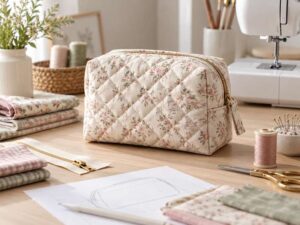


Make A Sample First?
If you have your own artwork, logo design files, or just an idea, please provide details about your project requirements, including preferred fabric, color, and customization options, we’re excited to assist you in bringing your custom bag designs to life through our sample production process.