 Skip to content
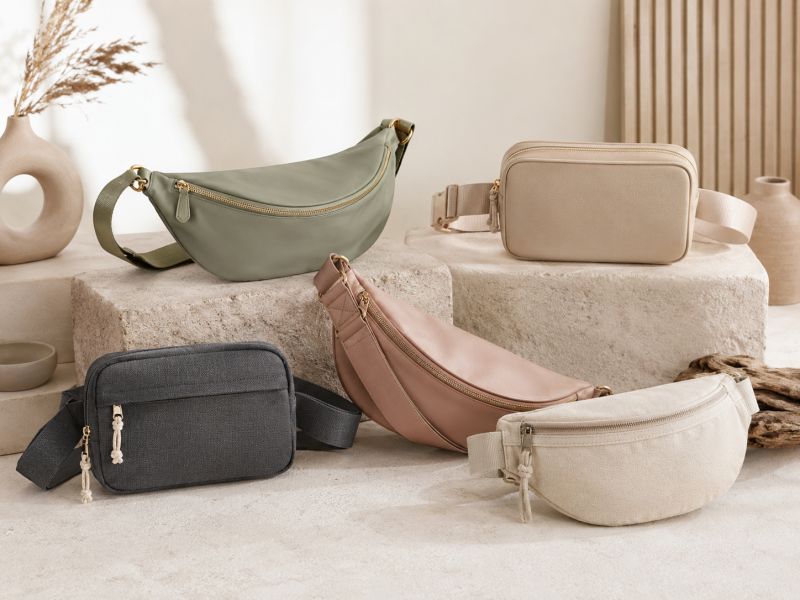
A belt bag can look like one of the easiest accessories to develop. It has a small body, one strap, one zipper, and a compact space for daily essentials. But once a lifestyle brand starts planning a private label version, the decisions become much more serious. Should the body be crescent, rounded rectangle, soft pouch, or structured mini? Should the material feel sporty, premium, natural, or travel-ready? Should the first color group stay safe with black, beige, and taupe, or should it include seasonal colors like sage, butter yellow, powder pink, or cobalt blue?
Private label belt bags still work because they fit modern daily movement. A strong design should carry essentials without bulk, look natural across outfits, support waist and crossbody wear, and stay consistent in bulk production. The best development direction usually starts with use case, then confirms shape, capacity, fabric, color, hardware, logo method, sample details, and packaging.
The real risk is not whether belt bags are still relevant. The risk is creating a bag that looks current in a moodboard but feels uncomfortable in real life, or a bag that looks good in one sample but becomes unstable during bulk sewing. A small product leaves little room to hide mistakes. One zipper wave, one awkward strap angle, one weak lining, or one poorly chosen color can make the whole piece feel cheap. That is why a belt bag deserves the same level of planning as a larger bag collection.
Why Are Belt Bags Still Popular?
Belt bags remain popular because they solve a daily problem that has not gone away: people want to carry essentials without carrying a large bag. Phones are bigger, daily movement is faster, and many people move between work, travel, gym, school runs, shopping, cafés, events, and weekend trips in the same day. A small hands-free bag fits that rhythm better than many traditional accessories.
The category also keeps changing. The old waist-only pouch has become a cleaner crossbody accessory, a travel organizer, a sporty daily bag, a compact fashion piece, and sometimes even a gift item. That flexibility gives lifestyle labels more room to create different versions through shape, material, color, strap design, pocket layout, and logo treatment.
A strong belt bag is not popular only because it is trendy. It is popular because it reduces effort. It keeps daily items close, avoids shoulder overload, works with many outfits, and feels practical in real life. The better designs usually share six traits: compact size, comfortable strap, smooth zipper access, enough space for essentials, clean shape, and colors that fit everyday dressing.
For a private label project, the category is attractive because one approved body can support many product directions. The same basic structure can become a black daily essential, a beige wellness accessory, a nylon travel piece, a canvas weekend bag, a PU fashion item, or a seasonal color drop. That makes belt bags useful for both core collections and limited releases.
| Daily Need | Why Belt Bags Work | Design Detail To Check |
|---|---|---|
| Carry phone and small items | Keeps essentials close without a large bag | Main opening must fit larger phones easily |
| Move hands-free | Works for walking, travel, events, errands | Strap angle should support crossbody wear |
| Match daily outfits | Small enough to blend with clothing | Shape and color should not look too bulky |
| Travel light | Useful for passport, wallet, keys, tickets | Back pocket and secure zipper help |
| Refresh collections | Easy to update through colors and trims | Keep core shape stable before adding colors |
| Improve gift value | More useful than many simple promotional items | Packaging and logo detail matter |
What Is A Belt Bag?
A belt bag is a compact bag with an adjustable strap, designed to be worn around the waist, across the chest, over the shoulder, or near the hip. The modern version is no longer limited to waist wear. Most successful styles today are planned around flexible wearing, especially crossbody styling.
A practical belt bag usually carries items such as a phone, cardholder, keys, earbuds, lip balm, sanitizer, passport, sunglasses, or a small power bank. The exact capacity depends on the product direction. A slim fashion style may only need to carry daily basics, while a travel style may need more inner space and a hidden pocket.
For development, “belt bag” should be defined more clearly than the name suggests. A slim phone pouch, a crescent crossbody, a sporty waist pack, a structured mini bag, and a medium travel pouch may all fall under this category, but they require different patterns, materials, trims, and quality checks.
A clear belt bag plan should include:
Intended wearing method
Waist, crossbody, shoulder, or multi-way use.
Main storage need
Phone only, daily basics, travel items, or event essentials.
Body shape
Crescent, rounded rectangle, soft pouch, structured mini, or utility body.
Material direction
Nylon, polyester, PU, canvas, RPET, neoprene, or mixed materials.
Logo method
Embroidery, print, woven label, patch, metal detail, or tonal logo.
Packing style
Simple polybag, hangtag, barcode label, retail card, or gift-style presentation.
Without these details, a sample may look acceptable from the front but fail in wearing comfort, capacity, zipper access, or final appearance.
Belt Bag vs Fanny Pack
Belt bags and fanny packs are closely related, but they do not always create the same feeling. “Fanny pack” often suggests a casual, sporty, retro, outdoor, or travel item. “Belt bag” usually sounds cleaner, more current, and more suitable for lifestyle, wellness, travel, boutique, and fashion-related collections.
The physical structure may be similar, yet the design direction changes quickly. A fanny pack can accept a more relaxed shape, stronger contrast colors, larger logo, sporty webbing, and more visible utility details. A lifestyle belt bag usually needs cleaner body lines, a more balanced strap, softer colors, better trims, and more controlled logo placement.
The difference matters because naming affects product decisions:
Shape
A fanny pack can look more casual and pouch-like. A belt bag usually benefits from a smoother curve or cleaner body.
Fabric
A fanny pack can use rugged polyester, Oxford fabric, ripstop, or coated fabric. A belt bag may use matte nylon, soft PU, canvas, textured polyester, or a softer-touch material.
Logo
A fanny pack can carry a stronger front logo. A belt bag often looks better with a small woven label, tonal embroidery, rubber patch, leather-like patch, or clean metal detail.
Color
A fanny pack can handle brighter sport colors. A belt bag often performs better in black, beige, taupe, olive, brown, navy, ivory, clay, sage, blush, or seasonal muted shades.
For a lifestyle line, the goal is usually not to copy an old waist pack. The better direction is to keep the practical function of a fanny pack while improving proportion, material, comfort, and styling.
Are Belt Bags Out Of Style?
Belt bags are not out of style. What feels outdated is the careless version: boxy body, thin strap, weak zipper, shiny fabric, oversized logo, and no real capacity testing. The category has grown up. People now expect the product to look intentional, feel comfortable, and hold daily items without becoming bulky.
The strongest belt bags today are less about novelty and more about useful design. They often have a softer profile, better strap adjustment, cleaner zipper path, lighter body, and colors that match everyday clothing. A belt bag can still look current when it avoids the old tourist-pack feeling and becomes a compact crossbody accessory.
The real reason the category lasts is simple: people still need a small carry solution. A tote may be too large for quick errands. A backpack may be too heavy for short trips. A mini handbag may look nice but leave the hands less free. A phone pouch may be too limited. A belt bag sits between these options and gives enough space without extra weight.
Signs of a more current belt bag design include:
Crossbody-first wearing
The strap length, angle, and body shape should work across the chest.
Cleaner silhouette
Rounded edges, crescent body, or soft pouch shapes often feel more modern than stiff boxes.
Controlled depth
Enough space is important, but the bag should not stick out too far from the body.
Better fabric surface
Matte, soft-touch, textured, or natural materials usually feel more refined than harsh shine.
Useful pocket plan
One main compartment, one inner pocket, and one back pocket can be stronger than too many small compartments.
Quieter logo
A balanced logo often feels more premium than a large front print.
A belt bag becomes outdated when it looks like a basic pouch with no design thought. It stays relevant when the shape, material, strap, and color match how people actually dress and move.
What Is Replacing Belt Bags?
Belt bags are not being replaced by one single accessory. Instead, they are sharing space with sling bags, mini crossbody bags, phone bags, small shoulder bags, utility pouches, and travel organizers. These products all respond to the same daily habit: people want small storage, quick access, and less carrying effort.
This shift does not weaken belt bags. It actually gives designers more direction. A modern belt bag can borrow useful ideas from these nearby categories:
From sling bags
Longer strap, angled body position, stronger crossbody comfort, and a more active look.
From mini crossbody bags
Cleaner styling, smaller hardware, softer materials, and refined color choices.
From phone bags
Slim profile, quick access, and lightweight structure.
From travel organizers
Hidden back pocket, passport space, inner divider, and secure zipper.
From outdoor pouches
Durable fabric, reinforced strap area, stronger buckle, and water-resistant surface.
The stronger opportunity is a hybrid belt bag. It may still be compact and hands-free, but it does not need to look like a traditional waist pack. It can be shaped like a soft crescent, styled like a small crossbody, and organized like a travel pouch.
This matters for private label development because the product should not be trapped by old category rules. A wellness line can make it softer and calmer. A travel line can add function. A boutique label can make it more polished. A campus or event line can keep it light and practical. The category is not disappearing. It is becoming more selective.
Why Lifestyle Brands Choose Them
Lifestyle brands choose belt bags because the product is small, useful, easy to style, and flexible across different scenes. A strong belt bag can sit in a daily accessory collection, travel collection, wellness capsule, festival program, event gift, retail add-on, or seasonal color story.
The product has a good balance of visibility and practicality. It is visible enough to show color, logo, fabric texture, and shape. It is practical enough to be used often. That is important because accessories that get used repeatedly create stronger brand recall than items that stay in a drawer.
Belt bags also work well as a collection item. Once the shape is approved, the same body can be refreshed through:
New colors
Core shades for long-term selling and seasonal shades for new launches.
New materials
Nylon for travel, PU for a polished look, canvas for relaxed lifestyle, RPET for a recycled-material direction.
New trims
Different zipper pullers, buckles, patches, webbing, or hardware finishes.
New logo placement
Small front label, side logo, tonal embroidery, rubber patch, or metal detail.
New packaging
Retail card, hangtag, gift box, barcode label, or campaign packing.
That flexibility helps brands test demand without rebuilding the product from zero each time. A black nylon version may serve daily use. A sage or blush version may work for a seasonal lifestyle drop. A canvas version may fit summer or resort styling. A PU version may feel more giftable.
The product also carries a practical sales advantage: it is easy to understand. People do not need a long explanation to know how to use it. If the shape is attractive and the capacity is honest, the product can communicate quickly through photos, displays, and short descriptions.
History Of Belt Bags
The belt bag has always moved between utility and fashion. Earlier versions were mainly practical: small storage close to the body, easy access, and safer carry during movement. Later, waist packs became linked with travel, sports, festivals, outdoor activities, and casual streetwear. More recently, the category changed again as people began wearing them across the chest and styling them as compact daily accessories.
That history explains why belt bags can feel very different depending on design choices. One shape can look retro. Another can look sporty. Another can look refined. Another can look travel-ready. The product does not have one fixed identity.
Different design directions can create very different results:
Retro casual
Bold color, nylon body, contrast zipper, visible webbing, playful logo.
Modern daily
Soft crescent body, matte fabric, neutral color, clean zipper, small logo.
Travel practical
Medium body, secure back pocket, smooth zipper, lightweight fabric, strong buckle.
Natural lifestyle
Canvas texture, warm neutrals, simple woven label, relaxed shape.
Polished accessory
PU surface, structured body, refined hardware, controlled color, neat lining.
Sport wellness
Soft fabric, light body, comfortable strap, easy-clean lining, calm color palette.
The history of belt bags should not be seen as a limitation. It gives the category more creative space. A brand can decide whether to keep a retro feeling, remove it completely, or update it into something softer and more wearable.
The main mistake is leaving the product without a clear personality. A belt bag that is not sporty enough, not refined enough, not practical enough, and not visually strong enough may feel generic. A belt bag with a clear direction has a much better chance to become part of a lasting accessory line.
Which Shape Works Best?

The best belt bag shape is the one that looks clean on the body, carries real daily items, stays comfortable during movement, and keeps its form after repeated use. For lifestyle collections, crescent shapes, rounded rectangles, soft pouches, and compact crossbody-ready bodies usually work better than bulky old waist packs. A strong shape should balance front view, side depth, zipper access, strap angle, pocket layout, and material support.
Shape decides the first impression before anyone touches the fabric. A beautiful material cannot save a poor silhouette. If the bag is too flat, it may look weak and hold too little. If it is too thick, it may feel heavy and stick out from the body. If the zipper curve is too short, daily access becomes annoying. If the strap joins the body at the wrong angle, the bag twists when worn across the chest. If the corners are too sharp for the selected fabric, seams may wrinkle or pull after sewing.
A belt bag is different from a tote or backpack because it sits directly on the body. It moves with the wearer, rubs against clothing, and changes shape when filled with hard items such as a phone, keys, glasses case, or power bank. That means a shape should be reviewed in three conditions: empty, lightly filled, and worn for movement. A sample that looks good on a table may still fail after on-body testing.
A practical first size for a daily lifestyle belt bag often sits around 22–30 cm wide, 12–18 cm high, and 6–9 cm deep. A travel version may move closer to 25–34 cm wide, 15–21 cm high, and 7–10 cm deep. A mini style may be smaller, but it should still be tested with current phone sizes. Many modern phones are around 15–17 cm tall, so the zipper opening and inner length must be checked carefully.
| Shape Type | Common Size Direction | Best Use | Main Risk | Development Check |
|---|---|---|---|---|
| Crescent body | 23–30 cm wide, 12–16 cm high, 6–8 cm deep | Daily crossbody, wellness, travel-light | Can lose storage if too slim | Test phone access and side profile |
| Rounded rectangle | 22–30 cm wide, 13–18 cm high, 6–9 cm deep | Everyday use, events, retail lines | Can look too basic | Improve zipper puller, strap, and logo balance |
| Soft pouch | 24–34 cm wide, 14–20 cm high, 7–10 cm deep | Casual, active, relaxed lifestyle | May collapse when empty | Add lining weight, padding, or backing |
| Structured mini | 18–24 cm wide, 10–15 cm high, 5–7 cm deep | Boutique, gift, fashion-led line | Limited capacity | Confirm phone fit and corner sewing |
| Travel utility | 28–36 cm wide, 15–22 cm high, 8–11 cm deep | Travel, outdoor-light, festivals | Can look bulky | Control depth and back panel curve |
| Slim phone style | 12–18 cm wide, 18–22 cm high, 3–5 cm deep | Minimal carry, ticketing, events | Too limited for daily use | Be clear about what it can hold |
A shape should never be selected by front view alone. Side depth, back panel curve, zipper opening, strap placement, and filled shape matter just as much. A good belt bag should look balanced from the front, natural from the side, and stable when worn across different clothing layers.
What Belt Bags Are In Style?
The belt bags currently in style are cleaner, softer, and easier to wear across daily outfits. Strong directions include crescent crossbody bags, soft rectangular pouches, lightly padded bodies, compact travel shapes, matte nylon styles, soft PU mini bags, canvas casual pieces, and designs with quiet logo placement. The common thread is simple: the bag should look intentional, not like a basic pouch with a strap attached.
Crescent shapes are especially strong because they sit naturally across the chest and follow the body line better than a stiff rectangle. They often feel modern, casual, and easy to style. Rounded rectangle shapes are still useful because they provide better storage and are easier to organize, but they need refined details to avoid looking plain. Soft pouches work well for wellness, athleisure, weekend, and travel-light lines because they feel relaxed and comfortable.
A current belt bag often includes several of these features:
A body that works crossbody first
The strap length and join angle should allow the bag to sit naturally across the chest.
A softer silhouette
Rounded edges, curved zipper lines, or padded shapes can reduce the old waist-pack look.
A controlled logo
Small woven labels, tonal embroidery, rubber patches, leather-like patches, or subtle metal details usually look more refined than large prints.
A better strap
A strap width around 2.5–4 cm often feels more balanced for daily belt bags. Wider straps can add comfort and visual value, especially for larger bodies.
A practical pocket plan
One main compartment plus one inner pocket and one back pocket is often enough for daily use.
A color group that works with clothing
Black, beige, taupe, olive, navy, clay, brown, cream, sage, blush, and pale blue can keep the product easy to style.
Trendy does not mean complicated. Many strong belt bags look simple because the proportions are correct. The curve, zipper position, strap width, logo scale, and color match are doing the work quietly.
Which Shape Fits Lifestyle Brands?
Lifestyle brands usually need shapes that feel wearable, clean, and flexible. The bag should work with casualwear, activewear, travel clothing, weekend outfits, and light streetwear without looking too technical or too old-fashioned. For this reason, crescent bodies, rounded rectangles, and soft pouches are usually safer than heavy utility shapes.
A good lifestyle shape should meet five practical requirements:
It should carry the most common daily items.
A phone, cardholder, keys, earbuds, and small cosmetic item should fit without forcing the zipper.
It should not look bulky from the side.
A depth of 6–9 cm often works for daily use. More depth can help capacity, but it can make the bag stick out.
It should sit close to the body.
The back panel should not feel too stiff, and the strap angle should prevent twisting.
It should look good when empty.
Many belt bags are photographed before being filled. If the body collapses badly, the product can look weak in online photos and retail display.
It should stay stable when filled.
Hard items should not create ugly bumps, sharp corners, or distorted seams.
For lifestyle use, the strap is part of the shape, not a separate detail. A narrow strap can make a medium bag look cheap or uncomfortable. A strap that is too wide can overpower a mini body. A 2.5 cm strap often works for smaller styles, while 3.2–4 cm works well for medium daily and travel-light styles. For larger travel bodies, a wider strap may improve comfort, but it should still look balanced with the bag scale.
The zipper line also changes the user experience. A straight zipper is easier to make and often gives better access. A curved zipper can look softer and more modern, but it must be tested for smooth opening. If the curve is too tight, the zipper may wave, pull, or feel difficult to open with one hand.
Mini vs Large Belt Bags
Mini belt bags and large belt bags serve different purposes. A mini belt bag looks stylish, light, and easy to wear, but it can disappoint if it does not fit real essentials. A larger belt bag gives better storage for travel, events, and outdoor-light use, but it can look bulky if the depth and strap placement are not controlled.
Mini belt bags are strong for:
Fashion styling
They do not dominate the outfit and can work like a small accessory.
Gift programs
A smaller body can feel cute, easy to package, and suitable for seasonal colors.
Events and festivals
They can hold phone, cardholder, lip balm, cash, ticket, and keys.
Boutique collections
PU, quilted texture, small metal detail, or soft colors can make mini shapes feel more polished.
But mini designs need honest capacity testing. A very small bag may look good in photos but fail if it cannot hold a phone. If phone storage is not part of the design, the product should be positioned more like a small accessory pouch instead of a daily carry belt bag.
Large belt bags are strong for:
Travel
They can hold passport, phone, wallet, sanitizer, tickets, keys, and small travel items.
Outdoor-light use
They can carry sunglasses, sunscreen, compact snacks, or small tools.
Parenting and weekend errands
They can hold quick-access items without needing a tote.
Campus or daily movement
They can carry more than a phone pouch while staying lighter than a backpack.
The risk with large shapes is side bulk. A body that is 10–11 cm deep may offer useful storage, but it can look heavy when worn across the chest. A better solution is to increase width slightly before increasing depth. Width usually looks cleaner than too much outward thickness.
| Size Direction | Better For | Suggested Capacity Test | Main Watch-Out |
|---|---|---|---|
| Mini | Styling, gifting, events | Phone, cardholder, keys, lip balm | May not fit larger phones |
| Compact daily | Everyday carry | Phone, keys, earbuds, cardholder, small cosmetic | Zipper opening must be easy |
| Medium travel-light | Travel, weekend, festival | Passport, phone, wallet, sanitizer, tickets | Must control side depth |
| Large utility | Outdoor-light, day trips | Sunglasses case, small power bank, sunscreen, wallet | Can feel heavy if strap is weak |
For many lifestyle collections, the strongest approach is to start with a compact daily size and then build a larger travel version if the shape performs well. That protects the line from overbuilding too early.
How To Choose Bag Size?
Bag size should be chosen by real item testing, not only by visual preference. A belt bag may look balanced at 24 cm wide, but if the zipper opening is too short, it may still be hard to use. Another bag may look large at 30 cm wide, but if the depth is controlled and the back panel is curved, it can still feel clean on the body.
Start by deciding what the bag must hold. For daily use, the test set can include:
Phone around 15–17 cm tall
Cardholder around 10–12 cm wide
Keys with key ring
Earbuds case
Lip balm or small cosmetic
Small sanitizer bottle
Folded receipt or transit card
For travel use, add:
Passport around 12.5 × 8.8 cm
Small wallet
Boarding pass or ticket
Compact power bank
Sunglasses or slim glasses case
Travel-size tissue pack
A good size should allow these items to go in and out without forcing the zipper. The main zipper opening should be wider than the largest item by a comfortable margin. If a phone fits only diagonally and scratches against the zipper teeth, the bag may feel annoying after daily use.
Depth should be reviewed carefully. A 5–6 cm deep bag may look sleek but has limited storage. A 7–8 cm depth often works well for daily carry. A 9–10 cm depth can support travel use but needs better structure to avoid a bulky look. More depth is not always better; it can make the bag bounce, pull forward, or feel heavy.
Recommended size logic:
Daily compact
22–28 cm wide, 12–16 cm high, 6–8 cm deep.
Daily plus
26–32 cm wide, 14–18 cm high, 7–9 cm deep.
Travel-light
28–34 cm wide, 15–21 cm high, 8–10 cm deep.
Mini styling
18–24 cm wide, 10–15 cm high, 5–7 cm deep.
Slim phone style
12–18 cm wide, 18–22 cm high, 3–5 cm deep.
After size selection, the sample should be checked in motion. Wear it while walking, sitting, bending, and reaching for the zipper. A belt bag is successful only when it works during movement.
Which Pocket Layout Works?
A good pocket layout should make the bag easier to use without making it crowded. For many lifestyle belt bags, the most practical setup is one main zipper compartment, one inner slip pocket, and one back pocket. This keeps the outside clean while giving enough separation for small items.
Too many pockets can create problems in a compact bag. Each extra compartment adds fabric layers, seams, weight, and sewing time. It can also reduce usable space. A small bag with five pockets may sound functional, but it may become harder to open, harder to clean, and harder to pack smoothly.
A practical layout by use:
Daily lifestyle
Main compartment plus one inner slip pocket. Good for phone, keys, cardholder, and small cosmetics.
Travel-light
Main compartment, hidden back zipper pocket, and one inner divider. Good for passport, tickets, wallet, and phone.
Fitness or wellness
Main compartment, small key loop, easy-clean lining. Good for gym card, keys, phone, and earbuds.
Festival or event
Main compartment, back pocket, secure zipper, stronger buckle. Good for phone, card, cash, ticket, and lip balm.
Boutique accessory
Clean interior, refined lining, smaller logo detail, simple outer shape. Better for visual appeal than heavy organization.
The back pocket is especially useful, but it must be sized correctly. If it is intended for a phone, the opening must allow easy access. If it is intended for passport or cardholder, the pocket should keep items flat. If the back pocket is too tight, it may bend the body or create an uncomfortable lump against the wearer.
Inner pockets should not be too loose. A loose inner pocket can pull out when a phone or cardholder is removed. A tight inner pocket may be difficult to use. The lining fabric should have enough strength, especially around pocket openings.
Pocket layout should also match material. A soft nylon body can handle inner dividers well if the lining is stable. PU may show pocket seams through the outer panel if the structure is too tight. Canvas can support a casual layout, but thick seam layers need careful control.
Best Shape For Travel
The best travel belt bag is secure, lightweight, medium-sized, and comfortable for long wear. It should hold essentials such as phone, passport, wallet, keys, tickets, sanitizer, and small travel items without looking like a heavy pouch. A travel shape should keep the body close, the zipper easy to access, and the strap comfortable over different clothing layers.
A good travel belt bag often includes:
Medium body size
Large enough for passport and wallet, but not so large that it becomes bulky.
Back security pocket
Useful for passport, cards, or phone when moving through crowded spaces.
Smooth main zipper
The zipper should open easily with one hand and not catch around curves.
Adjustable strap
The strap should work over T-shirts, hoodies, jackets, and coats.
Durable buckle and slider
The strap should not slip after adjustment.
Light material
Nylon, polyester, Oxford fabric, coated fabric, or RPET can work when selected well.
Controlled depth
Enough space for travel items, but not so much that it pulls away from the body.
For travel use, comfort matters more than decoration. People may wear the bag for several hours, open it many times, place it in luggage trays, and carry it through airports, stations, shops, and outdoor streets. That means strap join, zipper strength, back panel comfort, and fabric durability need more attention.
A travel shape should also avoid unnecessary pockets on the outside front if a clean look is important. A hidden back pocket and a well-organized main compartment often feel more useful than too many visible layers. If the travel style is more outdoor-focused, front utility details can work, but they should not make the bag look overloaded.
A good travel sample should be tested with:
Passport
Phone
Wallet
Keys
Small power bank
Sanitizer
Tickets or folded documents
Sunglasses case, if capacity allows
If all items fit but the bag looks swollen, reduce item expectation or adjust body shape. Travel capacity should be useful, not exaggerated.
Best Shape For Daily Use
The best daily-use belt bag is compact, light, easy to open, and easy to match with clothing. It should carry essentials without feeling like extra equipment. A soft crescent, rounded rectangle, or clean pouch shape usually works best because these forms sit naturally on the body and do not interrupt daily outfits.
Daily use puts pressure on comfort and habit. People choose the same small bag again and again when it feels effortless. The zipper should open smoothly. The strap should adjust quickly. The body should not bounce or twist. The bag should not scrape the hand when reaching inside. The color should work with many outfits. The logo should feel natural instead of loud.
A strong daily shape should include:
Compact body
Enough space for essentials, not too much empty volume.
Soft side profile
The bag should not stick out sharply from the body.
Balanced strap width
A strap around 2.5–4 cm works well for many daily designs.
Easy zipper access
The opening should allow quick use while standing or walking.
Lightweight feel
The bag should not feel heavy before items are added.
Simple pocket plan
One inner pocket and one back pocket can be enough.
Clean logo position
Small, centered, side-positioned, or tonal details often work well.
The best daily belt bag is not the one with the most features. It is the one people reach for without thinking. If it can carry a phone, cardholder, keys, earbuds, and one or two small extras while still looking neat, it already meets the most important daily need.
Daily-use samples should be checked in real situations: walking outside, sitting in a car, wearing over a hoodie, opening the zipper with one hand, and placing the bag on a table. If the bag stays comfortable and still looks good after these tests, the shape is much closer to being ready for a full collection.
What Materials Fit Your Brand?
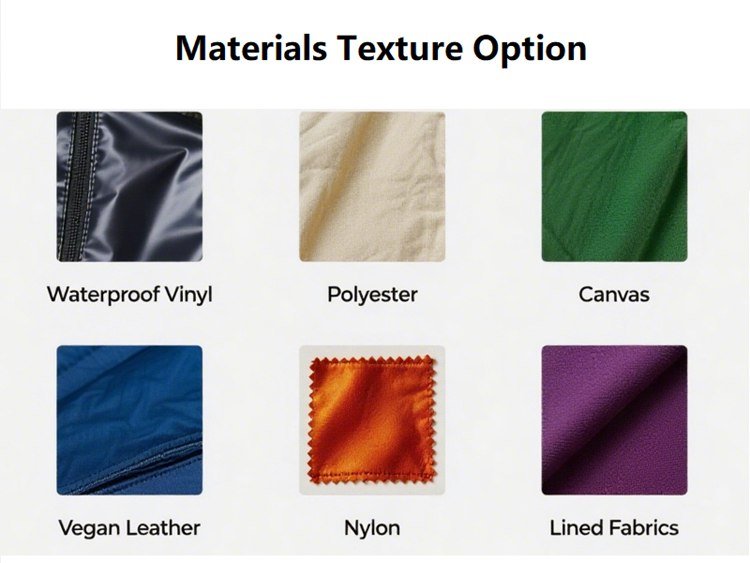
The right belt bag material should match the product’s use scene, price level, hand feel, shape, color plan, logo method, and daily wear pressure. Nylon, polyester, PU, canvas, RPET, and neoprene can all work, but each one creates a different look and different risk. A good selection should feel right in hand, sew cleanly, hold color well, support the logo process, and keep the bag stable after repeated use.
Material is often where a belt bag becomes either polished or ordinary. The body shape may be correct, but the wrong fabric can make the same design feel too sporty, too stiff, too shiny, too thin, or too heavy. A matte nylon crescent bag can feel modern and travel-ready. The same shape in thin glossy polyester may look less refined. A soft PU mini bag can feel more dressed-up, but only if the backing and structure control creasing. Canvas can feel natural and relaxed, but if the fabric weight is too light, the body may collapse when empty.
A belt bag is worn close to clothing and body movement. It rubs against jackets, T-shirts, luggage handles, car seats, counters, and hands. Inside the bag, hard objects such as phones, keys, power banks, cardholders, and glasses cases press against the lining and corners. For this reason, the outer fabric, lining, zipper, webbing, stitch tension, and reinforcement should be considered together.
A good material choice should be checked through five practical areas:
Hand feel
The surface should match the price level. A soft matte finish usually feels more refined than harsh shine.
Body support
The fabric should hold the intended shape when the bag is empty, lightly filled, and packed.
Sewing behavior
Curves, zipper lines, corners, and strap joints should not pucker badly or stretch out of shape.
Color stability
Core colors and seasonal shades should look consistent across fabric, zipper tape, webbing, thread, and lining.
Logo compatibility
The chosen logo process should sit cleanly on the surface without cracking, sinking, pulling, or looking misplaced.
| Material | Look And Feel | Strong Use Scene | Main Risk | Practical Check |
|---|---|---|---|---|
| Nylon | Smooth, light, modern | Travel, daily, active lifestyle | Too thin may lose shape | Test body support and zipper curve |
| Polyester | Versatile, cost-controlled, durable | Daily, events, retail programs | Low-grade shine can reduce value | Check surface finish and thickness |
| PU | Polished, leather-like, dressier | Boutique, gifts, lifestyle lines | Creases and panel waves | Review backing, thickness, and corners |
| Canvas | Natural, textured, relaxed | Casual, resort, outdoor-light lines | Can collapse or stain | Choose proper weight and lining |
| RPET | Recycled story, fabric-like | Sustainability-led collections | Durability still needs proof | Check hand feel, color, and strength |
| Neoprene | Soft, padded, sporty | Fitness, wellness, active use | Can feel bulky | Control thickness and edge finish |
A material should never be selected only because it looks attractive in a reference photo. The final decision should come after fabric swatches, sample sewing, item-fill testing, logo testing, and color review.
Nylon vs Polyester
Nylon and polyester are both common choices for belt bags, but they create different product feelings. Nylon usually feels smoother, lighter, and more refined when the surface quality is good. It works well for travel, daily crossbody wear, wellness collections, and compact crescent shapes. Polyester is versatile, stable, and often easier to manage for cost, color availability, and daily durability.
Nylon is often chosen when the bag needs a softer hand, cleaner drape, and a more elevated surface. Matte nylon can make a simple belt bag look more current without adding too many decorations. It works especially well with tonal stitching, smooth zippers, woven labels, rubber patches, and subtle embroidery. The risk is that very thin nylon can lose shape unless it is supported with lining, backing, or light padding.
Polyester is practical when the project needs stable structure, broader fabric options, and stronger cost control. 210D, 420D, 600D, and higher-denier polyester options can support different looks, from lightweight daily bags to more structured waist packs. A 600D polyester style can work well for events, travel-light items, or outdoor-inspired designs. The key is avoiding an overly shiny or rough surface if the product is meant to feel lifestyle-oriented rather than purely utility-focused.
A useful way to compare both fabrics is to make the same sample shape in nylon and polyester. The difference becomes clear after sewing:
Does the zipper curve stay smooth?
Does the front panel wrinkle?
Does the side depth hold shape?
Does the bag look clean when empty?
Does the surface fit the desired price level?
Nylon may feel better for a premium daily style. Polyester may work better for a cost-controlled, durable, or event-oriented style. The better choice depends on the intended use, not the fabric name alone.
PU vs Canvas
PU and canvas create very different product moods. PU gives a cleaner, more polished, leather-like appearance. It can work well for boutique accessories, giftable belt bags, city styling, and dressier lifestyle collections. Canvas feels natural, textured, and relaxed. It fits resort, weekend, outdoor-light, campus, casual, and eco-inspired product lines.
PU needs careful structure control. If the surface is too stiff, the belt bag may feel uncomfortable against the body. If it is too soft or the backing is weak, the front panel can crease, ripple, or lose shape near the zipper and corners. PU also shows pressure marks more easily than woven fabric, so strap joins, zipper curves, and folded packing should be reviewed during sample testing.
Canvas needs weight and lining control. A light canvas may feel soft and natural, but it can collapse when empty. A heavier canvas can hold shape better, but it may become difficult around curved seams or small corners. Canvas also absorbs color differently from synthetic fabrics, so beige, cream, khaki, brown, and muted seasonal colors should be reviewed on real fabric before approval.
PU usually pairs well with:
Small structured bodies
Soft gold, gunmetal, or matte black hardware
Embossed logo, metal detail, woven label, or leather-like patch
Cream, tan, espresso, blush, black, or soft brown shades
Canvas usually pairs well with:
Soft pouch or rounded rectangle bodies
Woven label, embroidery, leather-like patch, or simple print
Olive, natural, sand, khaki, navy, rust, clay, or warm neutrals
Relaxed retail or resort-style packaging
PU works best when the goal is polish. Canvas works best when the goal is texture and casual warmth. Both can look strong if body shape, lining, stitching, hardware, and logo are matched correctly.
Which Material Feels Premium?
A belt bag feels premium when the surface, structure, hardware, strap, lining, and logo all feel intentional. Premium does not always mean using the most expensive fabric. A matte nylon belt bag with a clean zipper, strong strap, neat lining, and small tonal logo can feel more refined than a poorly structured PU bag with shiny hardware. A canvas belt bag can also feel premium if the fabric weight, weave, seam finish, and trim choices are well controlled.
The premium feeling usually comes from the details people touch and see first:
Surface texture
Matte, soft-touch, lightly textured, or tightly woven surfaces often feel better than harsh shine.
Shape retention
The bag should not collapse badly when empty or bulge awkwardly when filled.
Hardware finish
Zipper pullers, buckles, sliders, rings, and plates should match the overall style and not feel too light or too sharp.
Strap quality
A smoother, wider, and well-stitched strap can lift the whole product. A weak strap can make even good fabric feel cheap.
Lining
A clean lining makes the inside feel finished. Thin lining that tears or twists quickly lowers the perceived quality.
Logo execution
Small woven labels, embroidery, rubber patches, leather-like patches, metal plates, or tone-on-tone details can all feel refined when matched to the fabric.
Premium also depends on restraint. A small bag does not have much space. Too many zippers, labels, patches, metal parts, and contrast colors can make it look crowded. A clean body with one well-made logo detail often feels stronger than an overdesigned piece.
Before approval, review the sample in four ways:
Hold it in hand and check the surface feel.
Wear it across the body and check strap comfort.
Fill it with daily items and check shape.
Place it beside other accessories in the same collection and check whether it visually belongs.
A premium belt bag should feel good before a person reads any description.
What Fabric Handles Daily Wear?
Daily-use belt bags need fabric that can handle friction, repeated zipper opening, body movement, light dirt, sweat, packing pressure, and the weight of small hard objects. Nylon, polyester, Oxford fabric, canvas with suitable weight, coated fabrics, and RPET can all perform well when paired with the right lining, zipper, and reinforcement.
Daily wear creates pressure in several areas:
Zipper mouth
The hand pulls against this area many times. The zipper should stay smooth, and the fabric should not wave or tear.
Bottom corners
Keys, phone corners, power banks, and cardholders press into these areas from the inside.
Back panel
This part rubs against clothing and body movement throughout the day.
Strap connection
The strap joint carries weight and movement, so reinforcement is important.
Outer surface
The bag may touch tables, car seats, luggage handles, counters, jackets, and hands.
Lining
Inner pockets should not tear when items are inserted or pulled out repeatedly.
A thicker fabric is not always stronger in real use. If the fabric is too stiff, the bag may feel bulky and uncomfortable. If the fabric is too soft, the shape may collapse or the zipper may wave. A better approach is to balance outer fabric, lining, backing, foam, and seam structure.
A daily-use sample should go through simple practical testing:
Fill the bag with real items for 24 hours.
Open and close the zipper repeatedly.
Wear it crossbody and at the waist.
Check if the strap slips after adjustment.
Check if hard items create sharp marks.
Check if the back panel wrinkles or twists.
Check if the lining pulls at the pocket opening.
Check if the product still looks neat after packing.
For daily use, durability is not only about fabric strength. It is about whether the entire bag remains easy to wear and good-looking after repeated handling.
How Does Material Affect Price?
Material affects belt bag price through fabric cost, material width, cutting loss, lining, interlining, padding, coating, hardware compatibility, sewing difficulty, logo process, and defect control. Two belt bags with the same outer size can have very different costs if one uses standard polyester and the other uses soft PU, custom lining, metal hardware, shaped panels, and a patch logo.
The main price factors linked to material include:
Outer fabric
Polyester, nylon, PU, canvas, RPET, neoprene, Oxford fabric, coated fabric, and textured fabric all sit at different cost levels.
Lining
A better lining improves hand feel and durability, but adds material and sewing cost.
Structure support
Foam, interlining, padding, quilting, and stiffeners improve shape but add extra steps.
Cutting loss
Curved shapes, directional fabric, printed fabric, quilted panels, or special texture can increase material waste.
Sewing difficulty
PU corners, curved nylon zipper lines, thick canvas seams, and padded structures take more time to sew cleanly.
Logo method
Embroidery, heat transfer, screen print, woven label, rubber patch, leather-like patch, metal plate, or reflective detail each has different setup and unit impact.
Hardware compatibility
Some fabrics require stronger zippers, heavier pullers, reinforced seams, or specific buckles to look balanced.
Color preparation
Available colors are simpler. Custom fabric colors can involve higher material preparation and longer approval time.
Packaging effect
Some fabrics, especially light PU, cream canvas, or pale nylon, need better packing protection to avoid marks.
| Cost Driver | Lower-Cost Direction | Higher-Cost Direction | What To Watch |
|---|---|---|---|
| Outer fabric | Standard polyester | Nylon, PU, RPET, specialty texture | Hand feel and shape support |
| Lining | Basic lining | Thicker lining, printed lining, custom color | Inner quality and pocket strength |
| Structure | Single-layer body | Padding, quilting, interlining | Shape stability vs extra bulk |
| Hardware | Standard plastic buckle | Metal trim, custom puller | Weight and finish match |
| Logo | Simple print or woven label | Embroidery, patch, metal plate | Surface compatibility |
| Color | Available fabric color | Custom dyed shade | MOQ, timing, shade approval |
| Sewing | Simple panels | Curves, PU, quilting, hidden pockets | Stitch control and defect risk |
| Packing | Basic polybag | Retail card, gift box, extra protection | Channel needs and carton volume |
Lower cost should not remove the details that protect daily use. A weak zipper, thin lining, poor buckle, or unstable fabric can create a product that looks fine at first but performs poorly after use. Smart cost control means choosing the right material for the job, simplifying unnecessary features, and keeping the parts that protect comfort and durability.
Do Sustainable Materials Work?
Sustainable materials can work well for belt bags, but they should be judged as real product materials, not only as a story. RPET polyester, recycled nylon, organic cotton canvas, recycled webbing, reusable packaging, and lower-impact fabric options can support a more responsible collection, but the final bag still needs to pass strength, color, sewing, logo, and daily wear checks.
The most common mistake is choosing a recycled fabric only because it sounds attractive. If the surface feels rough, the color looks dull, the body collapses, or the fabric pills quickly, the product will not support a better image. A belt bag made from recycled fabric still needs a good shape, comfortable strap, smooth zipper, clean lining, and reliable stitching.
Sustainable material review should include:
Performance
Can the fabric handle daily wear, zipper stress, body friction, and packed storage?
Appearance
Does the color look clean and consistent across panels, strap, zipper, and lining?
Hand feel
Does the surface feel suitable for the product’s intended price level?
Logo fit
Can the selected logo method work cleanly on the surface?
Documentation
Are recycled content records, fabric details, or testing needs clear for the intended selling region?
Long use
Will people keep using the product, or will it feel disposable?
A durable recycled fabric belt bag with a clean design is more convincing than a weak bag that only carries an eco message. The real value comes from repeat use. A product that stays in someone’s daily routine for months or years has a stronger sustainability meaning than a bag that is quickly replaced.
Sustainable options work best when paired with simple, lasting design choices:
Neutral or earthy colors
Strong zipper and strap
Clean body shape
Useful pocket layout
Reusable packing where suitable
Clear, honest material information
The goal is not to make the belt bag sound responsible. The goal is to make it useful enough to stay in use.
How Should Brands Plan Colors?
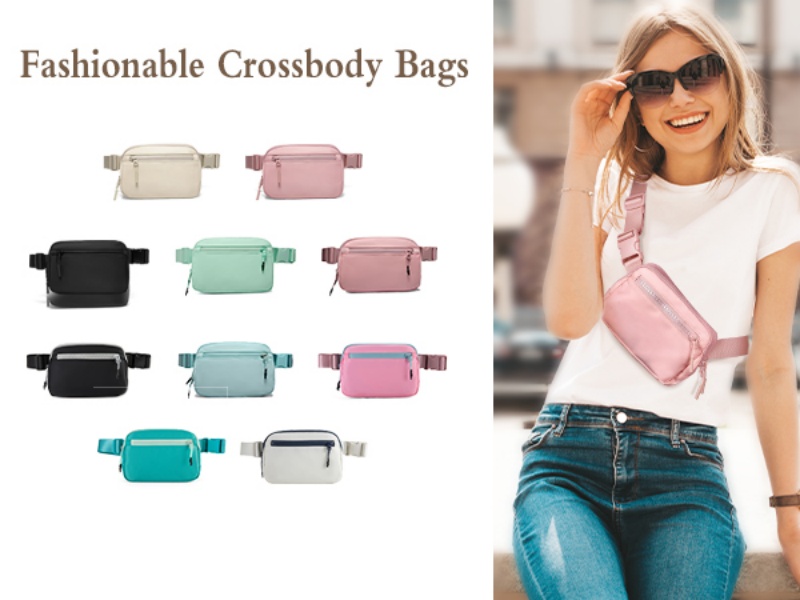
Color planning for belt bags should start with daily wear, not just trend inspiration. A belt bag is worn close to clothing, often across the chest or waist, so color affects how easy the product is to style, photograph, display, reorder, and repeat across seasons. A strong color plan usually combines long-life neutrals, softer lifestyle shades, and a small number of seasonal tones.
For private label belt bags, color is not only a visual choice. It affects fabric sourcing, zipper tape, webbing, lining, thread, logo visibility, hardware finish, packaging style, MOQ, sample timing, and shade control. A beautiful color idea can become difficult if the zipper tape cannot match, the webbing looks slightly off, or the logo disappears on the fabric surface.
A practical color plan should separate colors into three groups.
Core colors stay in the line longer. Black, beige, taupe, navy, olive, charcoal, gray, brown, and ivory are easier to match with daily outfits. These shades are often safer for first launches because they reduce color risk and give the shape more time to prove itself.
Seasonal colors create freshness. Sage, blush, butter yellow, pale blue, lavender, clay, rust, cobalt, and soft orange can make a belt bag feel current. These colors work well when used with controlled quantities, strong photography, and a clear season or collection mood.
Accent colors appear in details. Zipper pullers, webbing, lining, rubber patches, woven labels, stitch color, metal plate, and hardware finish can change the whole feeling of a belt bag without changing the body color.
The first color plan should not be too wide. Too many colors can split quantity, raise material complexity, and make stock harder to manage. A cleaner start often works better: three to five body colors, one or two hardware finishes, and one logo method. After the body shape proves strong, new colors can be added more safely.
| Color Role | Good Examples | Best Use | Main Risk | Practical Tip |
|---|---|---|---|---|
| Core dark | Black, navy, charcoal, espresso | Daily, travel, unisex lines | Can look too common | Improve texture, zipper puller, and logo detail |
| Core light | Beige, ivory, cream, taupe | Wellness, boutique, lifestyle lines | Dirt and shade variation | Test fabric surface and packing marks |
| Natural | Olive, khaki, sand, clay, brown | Outdoor-light, casual, travel | Can look dull on weak fabric | Use better webbing and trim matching |
| Soft seasonal | Sage, blush, lavender, pale blue | Spring, gift, wellness, resort | Shorter selling window | Keep first quantity controlled |
| Bright accent | Cobalt, orange, red, lime | Events, youth, capsule drops | Harder to match outfits | Use for limited colors or trim details |
| Premium trim | Gold-tone, gunmetal, matte black | PU, boutique, giftable styles | Poor finish can reduce value | Match zipper, buckle, puller, and logo |
Which Colors Are Safe?
Safe belt bag colors are usually black, beige, taupe, olive, navy, gray, brown, ivory, and charcoal. These shades work because they match more clothing, suit more age groups, and stay useful beyond one short season. For a first private label belt bag run, safe colors help reduce uncertainty while the shape, material, and logo style are being tested.
Black is still the easiest starting color, but it needs texture and detail. A plain black belt bag in thin shiny fabric may look too basic. A matte nylon black bag with smooth zipper, clean puller, and tonal logo can feel much stronger. For black, the difference often comes from surface, hardware, stitch quality, and strap texture.
Beige, taupe, and ivory are strong for wellness, resort, boutique, and soft lifestyle lines. These colors photograph well and feel calm, but they need careful shade control. Beige can turn too yellow, too gray, or too pink depending on fabric and lighting. Ivory can look premium on PU or matte nylon, but it can show dirt more easily during handling, packing, and daily use.
Olive, navy, and brown are useful alternatives when black feels too common. Olive works well for travel, outdoor-light, and casual collections. Navy feels cleaner than black in some travel or city styles. Brown and espresso tones can make PU, canvas, and textured materials feel warmer and more premium.
A safe first color group could look like this:
Black for daily volume and travel.
Taupe or beige for soft lifestyle styling.
Olive or navy for a more practical outdoor-light direction.
Brown or charcoal for a warmer neutral option.
One soft seasonal shade if the line needs freshness.
Safe colors do not need to feel boring. They become stronger when fabric, strap, zipper, logo, and hardware are well matched.
What Colors Feel Trendy?
Trendy belt bag colors often come from apparel, activewear, travel accessories, resort collections, and seasonal lifestyle palettes. Soft greens, powder pink, butter yellow, pale blue, lavender, clay, rust, warm brown, cobalt blue, and muted orange can make a belt bag feel fresh without changing the whole structure.
Soft green shades such as sage, eucalyptus, or moss are useful for wellness, outdoor-light, and casual lifestyle lines. They feel calm and easy to wear, especially on nylon, canvas, or recycled polyester. Powder pink and blush work well for giftable styles, boutique accessories, and spring collections. Butter yellow and pale blue can give a softer seasonal feeling, but they should be checked carefully on real fabric because pale tones can shift under indoor lighting.
Cobalt blue, red, orange, and lime are stronger visual colors. They can work for festivals, sports-inspired drops, youth collections, and event programs. These colors should usually be used with simpler shapes and cleaner logo details. If the color is already loud, the hardware and logo should not compete with it.
Trend colors should be handled with discipline. A full color group made only of strong seasonal shades can look exciting in a launch photo but may be harder to sell across different regions and styling habits. A stronger plan is to use neutrals as the base and trend colors as controlled highlights.
A balanced seasonal plan may include:
Three core neutrals: black, taupe, olive.
Two soft shades: sage and blush.
One bold color: cobalt or rust.
One trim story: matte black or gunmetal hardware.
This gives enough freshness without making the collection feel scattered.
Trend color also depends on material. Sage may look refined on matte nylon but dull on rough polyester. Blush may look soft on PU but too sweet on shiny fabric. Cobalt may look powerful on smooth nylon but too bright on canvas. Always judge the color on the final fabric, not only from a screen reference.
How To Match Hardware?
Hardware should support the color story instead of fighting it. For belt bags, hardware usually includes zipper pullers, buckles, strap sliders, D-rings, rivets, logo plates, cord ends, and sometimes decorative trim. Because the bag is small, even one mismatched buckle can make the whole product feel less polished.
Matte black hardware is one of the most flexible choices. It works with black, olive, navy, charcoal, gray, taupe, sage, and many sporty or minimal styles. It also keeps the product calm when the body color is strong. Gunmetal often feels more refined than bright silver and works well with dark neutrals, olive, navy, taupe, and cool-toned colors.
Gold-tone hardware can elevate cream, ivory, blush, brown, tan, espresso, and soft PU styles. It is useful for giftable or boutique belt bags, but the finish must be reviewed carefully. If the gold is too yellow or too shiny, it may make the product look cheap. Brushed gold or softer champagne tones often feel more controlled.
Silver hardware can work with pale blue, gray, black, white, and sporty nylon styles, but bright silver can feel too harsh if the fabric is soft or muted. Plastic hardware is practical for lightweight, active, travel, and event styles. It reduces weight and can keep the product comfortable, especially when the strap is worn across the chest.
Hardware matching should review five details:
Body fabric color
The buckle and zipper puller should match the fabric mood.
Zipper teeth and zipper tape
Metal teeth, nylon coil zipper, and color-matched tape create different effects.
Webbing color
The strap should either match the body closely or create an intentional contrast.
Logo material
A metal plate, rubber patch, woven label, embroidery, or leather-like patch should feel connected to the hardware finish.
Weight
Heavy metal parts can make a small belt bag feel unbalanced.
A good hardware choice is often quiet. It should make the bag feel finished without stealing attention from the shape and color.
| Body Color | Suitable Hardware | Good Logo Direction | Watch-Out |
|---|---|---|---|
| Black | Matte black, gunmetal, silver | Tonal embroidery, rubber patch, metal plate | Avoid cheap high-gloss parts |
| Beige / Taupe | Matte black, champagne, gunmetal | Woven label, tonal print, leather-like patch | Shade mismatch is easy to notice |
| Olive | Matte black, gunmetal, dark bronze | Rubber patch, woven label | Bright gold may feel off |
| Navy | Gunmetal, matte black, silver | Embroidery, woven label | Navy and black must be clearly separated |
| Cream / Ivory | Champagne, soft gold, light gunmetal | Metal detail, tonal logo | Handle packing marks carefully |
| Blush | Champagne, soft gold, matte light trim | Small metal plate, woven label | Too much shine can feel cheap |
| Cobalt | Matte black, silver, gunmetal | Small woven label, clean print | Keep other details simple |
Do Custom Colors Raise MOQ?
Custom colors can raise MOQ because fabric, zipper tape, webbing, lining, thread, logo materials, and sometimes hardware need separate preparation. The effect depends on whether the chosen shade is available in stock fabric or requires custom dyeing. A color that looks simple on a moodboard may involve several matching parts in the actual belt bag.
Stock colors are usually easier for first development. They can shorten sample timing and reduce shade risk. Custom-dyed colors give stronger visual control, but they may require higher quantity, longer preparation, and more color approval steps. Pale tones, dusty shades, and special seasonal colors often need extra care because small differences are easy to see.
Custom color planning should include every visible part of the bag:
Outer fabric
Can the shade be selected from an existing fabric card, or does it need dyeing?
Zipper tape
Should it match the body, contrast with it, or stay neutral?
Webbing
Can the strap match the body closely enough?
Thread
Should stitching be tonal, contrast, or hidden?
Lining
Should the inside be matching, neutral, or a surprise color?
Logo
Will the logo remain visible and clean on this shade?
Hardware
Will the finish still look right with the body color?
Packaging
Will the color be protected during packing and shipping?
A common issue appears when the body fabric is custom-colored but the zipper tape and webbing are selected from available stock. The body may be sage, but the strap may be slightly too gray or too green. This can make the product look less refined. If exact matching is required, this should be discussed early, because strap and zipper matching may affect quantity and timing.
For a first run, a safer approach is:
Use available black, taupe, olive, or navy as core colors.
Select one seasonal shade from existing fabric options if possible.
Reserve fully custom dyeing for larger confirmed color plans.
Keep the logo process simple until the color is approved.
Save all approved fabric, zipper, webbing, and thread references.
Custom color is worth it when color identity matters strongly. But if the main goal is to test a new belt bag shape, available shades close to the desired palette can often be a smarter first step.
How To Test Color Samples?
Color samples should be tested on real fabric, in real lighting, and with real trims. A small digital reference is not enough. Fabric texture, coating, weave, surface shine, padding, lining, zipper tape, webbing, and hardware all change how a color looks after the belt bag is sewn.
A strong color test should include the following steps:
Swatch review
Check color on the actual outer fabric, not only on a screen image.
Trim review
Compare body fabric, zipper tape, webbing, thread, lining, logo patch, and hardware together.
Lighting review
View the color under daylight, warm indoor light, cool indoor light, and photo lighting.
Filled-shape review
Fill the bag lightly and check how shadows affect the color.
Photo review
Take photos on white background, lifestyle background, and on-body styling.
Packing review
Check whether light colors pick up marks from folding, handling, or packaging.
Repeat record
Keep approved swatches, photos, and sample notes for later reorders.
Light colors need the most caution. Cream, ivory, pale yellow, blush, sage, and powder blue can shift strongly under different lighting. They can also show dirt, folding marks, and handling marks more easily. Dark colors need checking too. Black, navy, and charcoal can look too similar in online photos if the fabric texture is weak.
The color should also be checked with the logo. A tonal logo may look premium in person but disappear in photos. A white logo may look clear on black but too strong on sage. A metal plate may look refined on PU but too heavy on soft nylon. The best logo contrast depends on material, color, and visual style.
A practical approval set should include:
Approved body fabric swatch.
Approved zipper tape and webbing.
Approved thread color.
Approved logo sample.
Approved hardware finish.
Approved final sample photo.
Written notes for any acceptable shade tolerance.
Color approval should not depend on memory. Physical references and clear records help keep later production closer to the approved sample.
Best Colors For Lifestyle Lines
The best colors for lifestyle belt bags usually combine easy neutrals with soft, wearable seasonal tones. A useful first collection might include black, taupe, olive, ivory, and sage. A more fashion-led collection might include cream, espresso, blush, pale blue, and soft gold hardware. A travel-light collection might work better with black, navy, olive, charcoal, and cobalt.
Different lifestyle directions can use different color stories:
Minimal daily
Black, taupe, ivory, charcoal, warm gray. These colors feel clean and easy to style.
Wellness and soft active
Sage, beige, blush, clay, lavender, soft blue. These shades feel calm and gentle.
Travel and city
Black, navy, olive, gray, espresso. These colors hide dirt better and match practical use.
Boutique casual
Cream, tan, blush, pale blue, brown. These colors work well with PU, textured fabric, or refined trims.
Outdoor-light
Olive, khaki, sand, rust, deep green. These shades work well with canvas, polyester, nylon, and stronger webbing.
Festival and event
Cobalt, orange, lilac, red, lime accent, silver trim. These shades create energy and stronger visibility.
For a first private label belt bag line, the color plan can follow a simple ratio:
60% core neutrals
Black, taupe, navy, olive, gray, or brown.
30% soft lifestyle shades
Sage, blush, cream, clay, pale blue, or lavender.
10% strong seasonal accent
Cobalt, rust, orange, metallic trim, or limited contrast detail.
This keeps the line wearable while still giving it personality. If the first launch proves the shape works well, later color extensions become much easier. The same approved body can return in winter neutrals, spring pastels, summer brights, or holiday gift shades.
Color should always support the product, not carry all the pressure. A weak belt bag in a trendy color is still weak. A strong belt bag in the right color can become a repeatable accessory with many future color stories.
How To Work With A Factory?
Working with a belt bag factory should begin with a clear product brief, not only a reference photo and a target price. A belt bag looks small, but it involves many linked decisions: body shape, size, fabric, lining, zipper, strap, buckle, pocket layout, logo method, color, packaging, carton rules, and delivery timing. When these details are clear early, the sample is easier to correct, the quotation is more practical, and the final goods are more likely to match the approved sample.
A strong belt bag project usually moves through six steps:
Style review
Confirm the intended use, wearing method, body shape, size, and pocket layout.
Material matching
Choose outer fabric, lining, webbing, zipper, buckle, puller, thread, and any support layer.
Logo and color review
Check logo size, placement, color, process, and whether it works on the selected fabric.
Sample making
Turn the idea into a real piece that can be worn, filled, measured, photographed, and revised.
Bulk preparation
Lock the approved sample, material record, color reference, packing rule, and inspection focus.
Final checking
Review size, stitching, zipper, strap, logo, color, lining, packaging, carton labels, and shipment details.
The biggest risk in a private label belt bag project is unclear approval. If the sample is approved only by photo, small problems may appear later: the zipper opening may be too narrow, the strap may twist, the logo may sit too high, the back pocket may not fit a phone, or the body may collapse after packing. A better process checks the product like a real daily item before bulk production begins.
| Stage | What To Confirm | Why It Matters |
|---|---|---|
| Product brief | Use scene, size, shape, quantity, color, logo, packing | Reduces guessing and wrong sample direction |
| Material review | Outer fabric, lining, webbing, zipper, hardware | Controls hand feel, cost, durability, and look |
| Pattern review | Body curve, depth, zipper line, strap angle | Affects comfort, capacity, and wearing fit |
| Sample check | Measurement, capacity, logo, zipper, strap, lining | Finds issues before bulk production |
| Pre-production lock | Approved sample, color record, packing rule | Keeps final goods aligned with the approved version |
| Final inspection | Stitching, zipper, logo, color, packing, carton mark | Protects retail presentation and delivery accuracy |
A belt bag should not be rushed only because it is compact. Small products leave little room to hide uneven stitching, poor color matching, weak hardware, or a badly placed logo. Good preparation saves time later.
How To Choose A Factory?
A belt bag factory should be selected by its ability to handle development details, not only by whether it can copy a similar photo. Belt bags require careful control of pattern shape, zipper sewing, strap angle, pocket placement, fabric behavior, logo process, and final packing. A factory that understands these details can help reduce sample revisions and production surprises.
Several areas deserve close review:
Belt bag experience
The team should understand waist bags, sling bags, crossbody pouches, travel pouches, small lifestyle bags, and related soft accessories. These products share similar strap, zipper, and body-fit challenges.
Material advice
The factory should explain how nylon, polyester, PU, canvas, RPET, neoprene, lining, webbing, and hardware affect hand feel, cost, shape, and daily wear.
Pattern ability
A good pattern should control the front shape, side depth, back panel curve, zipper path, and strap position. This is especially important for crescent and soft pouch styles.
Sample feedback
Before making the sample, the factory should be able to point out possible problems, such as zipper waves, weak structure, difficult logo placement, unstable color matching, or bulky depth.
Bulk consistency
Once the sample is approved, the factory should record size, fabric, logo, trims, packing, and inspection focus so bulk goods do not drift from the approved piece.
Quality checks
Belt bags need checks for fabric, stitching, zipper, strap strength, buckle, lining, logo, measurements, color, and packing.
Packaging support
Retail tags, barcode labels, OPP bags, gift packing, carton marks, and multi-color packing rules should be discussed early if the product will go into stores, online channels, events, or gift programs.
For Jundong projects, the standard MOQ is usually 500 pcs per design. Some simple styles can be reviewed at 200–300 pcs based on structure, material, and color details. Regular sample time is usually 5–7 days, while simple styles may be completed in 2–3 days. Bulk production is usually 20–30 days after key details are approved.
The best factory is not the one that only says “yes” quickly. It is the one that asks the right details before sampling and helps prevent weak materials, poor structure, wrong color choices, and hard-to-control trims.
What To Send For Custom Review?
A useful belt bag request should include enough product details for a realistic review. A photo is helpful, but it does not show exact size, fabric, lining, pocket depth, strap width, zipper type, logo method, color requirements, packaging, or delivery schedule. Without these details, the first quotation may be too rough and the sample may miss the real target.
A complete review brief should include:
Reference images
Front, back, side, inside, strap, zipper, and on-body wearing photos if available.
Target size
Width, height, depth, strap width, strap length, and pocket size if already planned.
Use scene
Daily carry, travel, wellness, event, retail gift, outdoor-light, campus, festival, or fashion accessory.
Material direction
Nylon, polyester, PU, canvas, RPET, neoprene, Oxford fabric, coated fabric, or a reference swatch.
Color plan
Core colors, seasonal colors, Pantone reference, fabric card color, or physical swatch.
Logo file
Vector artwork is best. Logo size, color, placement, and process should also be noted.
Logo method
Embroidery, heat transfer, screen print, woven label, rubber patch, leather-like patch, reflective logo, or metal plate.
Quantity
Quantity per design and per color. This affects fabric preparation, price, and production planning.
Packaging
OPP bag, hangtag, barcode label, retail card, gift box, tissue wrap, carton mark, or multi-SKU packing.
Timing
Sample deadline, launch date, event date, warehouse arrival date, or seasonal delivery window.
Destination
Country, port, warehouse, or forwarder details for shipping and carton review.
A clear request can look like this:
“We are developing a private label belt bag for a lifestyle collection. Target size is 26 × 15 × 8 cm. We prefer matte nylon, one main zipper, one back zipper pocket, adjustable 3.8 cm strap, small woven label on the front, and three colors: black, taupe, and sage. First order may be 500 pcs per color. Please review material options, sample time, logo method, packing, and price factors.”
This kind of request gives the factory enough detail to review the project properly instead of guessing.
| Detail Sent | What It Helps Review | Possible Issue If Missing |
|---|---|---|
| Reference photo | Style, shape, structure direction | Sample may follow the wrong shape |
| Size | Material use, capacity, zipper length | Quotation may be inaccurate |
| Fabric idea | Hand feel, durability, price level | Wrong material may be sampled |
| Logo file | Process, size, position, cost | Logo may not suit the fabric |
| Color plan | Fabric sourcing, zipper and webbing match | Color timing may be delayed |
| Quantity | MOQ, price, material planning | Unit price may be unclear |
| Packing | Retail look, carton size, barcode needs | Extra cost may appear later |
| Delivery date | Sample and production schedule | Launch timing may be at risk |
For unreleased designs or licensed artwork, confidentiality should be discussed before sending complete files.
How Long Does A Sample Take?
A belt bag sample usually needs time for material review, pattern adjustment, cutting, sewing, logo testing, and detail checking. Regular sampling at Jundong is usually 5–7 days. Some simple styles may take 2–3 days when materials are available and the structure is straightforward. Complex shapes, custom hardware, special colors, quilted panels, PU structure, or unusual logo methods may need more time.
Sample time depends on several details:
Material availability
Available nylon, polyester, canvas, PU, lining, webbing, and zipper options are faster. Custom fabric or rare trim takes longer.
Structure difficulty
A simple rounded rectangle is faster than a curved crescent body, quilted shape, hidden pocket design, or structured mini bag.
Logo method
A woven label may be simpler than a custom rubber patch, metal plate, embroidery, or special reflective detail.
Color matching
Body fabric, zipper tape, webbing, thread, lining, and logo color may need matching before the sample looks complete.
Hardware choice
Special buckles, branded pullers, metal trims, or custom slider colors can extend preparation.
Revision level
Changes to depth, zipper length, strap position, pocket size, logo scale, or color can add another round of sample work.
The sample should be checked as a real product, not only as a photo. Fill it with the items it is meant to carry. Wear it crossbody and at the waist. Open the zipper with one hand. Sit down while wearing it. Check the side profile. Look at the logo under indoor and outdoor light. Fold or pack it as it would be shipped. These small tests reveal problems that are easy to miss on a table.
A sample review should include:
Measurement check
Width, height, depth, zipper length, strap width, strap length, logo size, and pocket placement.
Capacity check
Phone, cardholder, keys, earbuds, passport, sunglasses, sanitizer, power bank, or other target items.
Wearing check
Crossbody fit, waist fit, strap angle, buckle comfort, and movement.
Zipper check
Smooth opening, zipper curve, puller strength, and access width.
Shape check
Empty shape, filled shape, side depth, bottom corners, and back panel.
Logo check
Placement, scale, color, texture, sewing, printing, or attachment.
Stitching check
Zipper seam, curved seams, strap joint, pocket edge, lining seam, and loose threads.
Packing check
How the bag looks after folding, inserting into OPP bag, or packing into carton.
A sample should become the physical reference for bulk production. Any change after approval should be written clearly, because even a small change in strap width, zipper type, lining, or logo position can affect cost, comfort, and production.
What Affects Bulk Price?
Bulk price is affected by the full product, not only the outer fabric. A belt bag may be small, but each detail adds material, labor, setup, or checking time. Size, fabric, lining, zipper, pocket structure, strap, buckle, logo process, color plan, packaging, order quantity, and production difficulty all influence final cost.
Main cost factors include:
Outer fabric
Standard polyester is often more cost-controlled. Matte nylon, PU, canvas, RPET, coated fabric, or specialty texture can change price and sample time.
Body size
A larger or deeper body uses more fabric, lining, zipper length, and carton space.
Structure
Extra pockets, hidden back pocket, padding, quilting, interlining, reinforced strap joints, and shaped panels add production steps.
Zipper and hardware
Smooth zippers, metal pullers, branded pullers, special buckles, D-rings, sliders, and metal plates can change the cost level quickly.
Strap
Wider webbing, softer webbing, jacquard webbing, padded strap, or custom-color webbing affects both comfort and price.
Logo process
Screen print, embroidery, woven label, rubber patch, leather-like patch, metal plate, heat transfer, and reflective logo have different setup needs.
Color plan
Stock colors are easier. Custom colors can affect fabric MOQ, zipper matching, webbing matching, and approval timing.
Packing
Simple OPP bag is lighter in cost. Hangtag, barcode, retail card, gift box, tissue wrap, and carton marks increase the full project cost.
Quantity
Higher quantity spreads setup work across more pieces. Very low quantity can make unit cost less attractive, especially when custom color, custom hardware, or special packaging is involved.
| Cost Factor | Cost-Control Direction | Higher-Cost Direction | Practical Decision |
|---|---|---|---|
| Fabric | Standard polyester or available nylon | PU, RPET, texture, custom fabric | Match fabric to use scene |
| Size | Compact daily body | Large travel body | Increase width before too much depth |
| Pocket layout | Main pocket plus one inner pocket | Multiple zippers and dividers | Add only useful storage |
| Hardware | Standard buckle and zipper | Metal trim or custom puller | Use premium trim where visible |
| Strap | Standard webbing | Wide, soft, custom, padded strap | Comfort may justify the cost |
| Logo | Woven label or simple print | Rubber patch, embroidery, metal plate | Choose by fabric surface |
| Color | Existing fabric shades | Fully custom colors | Start simple, expand after approval |
| Packaging | OPP bag | Retail card, barcode, gift box | Match the selling channel |
For Jundong, standard MOQ is usually 500 pcs per design. Simple styles may be reviewed at 200–300 pcs depending on project details. Sample fees can be refunded or deducted when the order reaches 2000 pcs. These rules help balance development work, material preparation, sample handling, and production setup.
The lowest-cost version is not always the safest version. A weak zipper, thin lining, poor buckle, or badly matched webbing can damage the product experience. Better cost control means removing unnecessary complexity while keeping the details that protect daily use.
How Is Quality Controlled?
Quality control for belt bags should cover materials, measurements, cutting, logo, stitching, zipper, strap, buckle, pocket function, lining, color, packing, and carton details. Because the product is compact, small defects are easy to see. A crooked logo, uneven zipper curve, twisted strap, poor thread trimming, or shade mismatch can affect the whole impression.
Quality should begin before sewing. Fabric, lining, zipper tape, webbing, buckles, pullers, thread, and logo materials should be checked against the approved sample or material record. If the zipper tape color is wrong or the webbing does not match the body, the problem should be corrected before cutting.
During production, the most important areas are:
Zipper line
Curved zippers can wave, pull, or twist if the pattern and sewing tension are not controlled.
Strap joint
This area carries weight and movement. Stitching and reinforcement should be checked carefully.
Logo position
Small differences are obvious on a compact front panel.
Body measurement
Width, height, depth, and pocket position should stay consistent.
Lining and pocket seams
The inside should not twist, tear, or pull out during use.
Hardware function
Buckles, sliders, pullers, and rings should work smoothly and stay secure.
Packing
Each color, size, barcode, hangtag, and carton mark should follow the approved rule.
Jundong has 80 QC inspectors and uses multi-stage checks rather than relying only on final inspection. For belt bag projects, this is useful because many issues are easier to fix during material, cutting, logo, and sewing stages than after finished goods are packed.
| QC Area | What To Check | Why It Matters |
|---|---|---|
| Fabric | Shade, surface, coating, defects | Keeps appearance consistent |
| Cutting | Panel direction, size, clean edges | Prevents shape distortion |
| Stitching | Curves, zipper, pockets, strap joints | Protects daily durability |
| Zipper | Smooth pull, alignment, teeth, puller | Affects every use |
| Strap | Length, width, slider hold, buckle | Affects comfort and safety |
| Logo | Size, position, color, attachment | Controls visual identity |
| Lining | Pocket strength, seam finish, twisting | Improves inner quality |
| Measurement | Width, height, depth, tolerance | Keeps bulk pieces uniform |
| Packing | Tags, barcode, polybag, carton mark | Supports retail and shipping accuracy |
Quality control is not only about finding defects at the end. It is about keeping the approved sample consistent from materials to packing.
When To Start Production?
Production should begin only after the final sample, material, color, logo, quantity, packing, and delivery schedule are locked. Starting too early can cause rework. Waiting too long can compress the schedule and create pressure during production or shipping. The best timing is after the product is fully approved, but early enough to protect the launch date.
Regular bulk production at Jundong is usually 20–30 days after key details are approved. Shipping time is separate and depends on destination, carton size, weight, order quantity, trade terms, and transport method. Express, air, sea, rail, and forwarder options should be reviewed based on budget and deadline.
Before production starts, confirm:
Final sample
Shape, size, pocket layout, zipper, strap, logo, hardware, and packing.
Material record
Outer fabric, lining, webbing, zipper, buckle, thread, puller, and trim details.
Color reference
Approved swatches, sample photos, and color notes.
Logo file
Artwork, size, color, placement, and process.
Quantity list
Quantity by design and color.
Packing rule
OPP bag, hangtag, barcode, gift box, carton mark, SKU separation, or retail card.
Inspection focus
Key measurements, stitching areas, logo position, zipper quality, strap strength, and packing accuracy.
Shipment plan
Destination, deadline, carton requirements, forwarder, or preferred transport method.
A practical timeline may look like this:
| Work Stage | Common Timing | Notes |
|---|---|---|
| First sample | Usually 5–7 days; simple styles may take 2–3 days | Depends on material and structure |
| Sample revision | Based on changes | Size, logo, pocket, strap, or color may need adjustment |
| Material preparation | Based on stock or custom needs | Custom colors and trims may take longer |
| Bulk production | Usually 20–30 days | Starts after key approval |
| Inspection and packing | Based on order size and packing rules | Retail labels and multi-color sorting need care |
| Shipping | Depends on method and destination | Plan separately from production time |
If the project includes custom color, special hardware, multiple logo methods, gift packaging, strict carton rules, or a fixed launch date, start earlier. The most common delays come from late color approval, logo file changes, packaging artwork revisions, or unclear quantity by color.
A belt bag may be small, but it still needs a clear handover from development to production. Once the approved sample is locked, every detail should be recorded. That record protects the final goods from drifting away from the product that was originally approved.
To move a private label belt bag project forward smoothly, prepare reference photos, target size, material direction, color plan, logo file, quantity, packaging needs, and delivery timing before requesting a review. These details allow Jundong to evaluate the shape, material, logo process, sample feasibility, MOQ, cost factors, and production plan more accurately.