 Skip to content
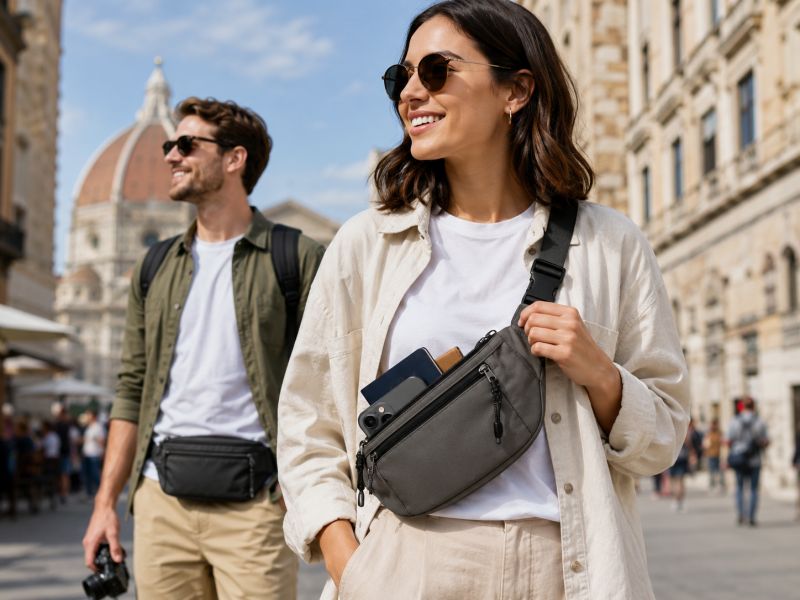
A travel waist bag may look like a small accessory, but in real travel it carries items people worry about most: phone, passport, cards, cash, hotel key, tickets, earbuds, and small daily tools. That makes the design more sensitive than it first appears. A zipper that slides too easily may feel unsafe in a subway. A strap that cuts into the waist may ruin a day tour. A pocket that cannot hold a phone with a case may create returns. A bulky shape may look awkward in photos. For travel, museum shops, resort retail, city souvenirs, events, airline gifts, and private label collections, the product has to feel safe, light, useful, and easy to wear from morning to evening.
A strong travel waist bag should combine close-body secure pockets, smooth daily access, adjustable strap comfort, compact capacity, durable material, and stable sample-to-bulk control. The best designs do not rely on one “anti-theft” feature. They work because pocket layout, zipper direction, strap angle, body shape, lining, and loading comfort are planned together.
The real test happens outside the sample room. Imagine a traveler leaving a hotel at 8 a.m., walking through a busy square, scanning tickets at a museum, paying for coffee, riding a train, and sitting on a tour bus. The waist bag is opened dozens of times. It rubs against clothes, carries hard objects, handles sweat, and moves with the body. If it still feels easy, secure, and clean after that day, the design is ready to take seriously.
What Do Tourists Need From A Travel Waist Bag?
Tourists need a waist bag that keeps high-value essentials close, separates quick-use items from private items, feels comfortable for long walking, and stays slim enough for crowded city movement. A strong travel waist bag should carry a phone, passport, cards, cash, keys, tickets, earbuds, sanitizer, and small personal items without becoming bulky, messy, or hard to open.
A travel waist bag is small, but the job it carries is not small. It sits close to the body, opens many times in one day, and often holds the items people worry about most. A traveler may use it at airport security, in a taxi, on a train, at a museum entrance, in a food street, at a concert, or during a guided day trip. Each setting creates a different need: fast access, better privacy, less pressure, stable movement, and a clean appearance.
The most successful travel waist bags are not designed as “mini storage bags.” They are designed around movement. A traveler does not stand still all day. They walk, bend, sit, turn, lift luggage, hold coffee, scan tickets, take photos, and check maps. If the bag swings, twists, digs into the waist, or hides the phone too deeply, the product becomes annoying very quickly.
For a brand developing tourist waist bags, the most important design work is deciding what belongs in each pocket. Quick-use items should be easy to reach. Private items should be harder to see. Hard items should not scratch the phone. Heavy items should sit close to the body. The zipper should open smoothly without exposing everything. The strap should adjust enough for waist wear and crossbody wear.
A useful travel waist bag should meet five practical standards:
| Tourist Need | Design Standard | Practical Check |
|---|---|---|
| Carry essentials | Phone, passport, cards, cash, keys, tickets, earbuds, sanitizer | Load all items into the sample and close zippers naturally |
| Stay secure | Hidden body-side pocket, inner card area, controlled zipper access | Wear the bag in front and check zipper exposure |
| Feel comfortable | Smooth strap, stable buckle, soft back panel, controlled thickness | Wear for 30–60 minutes with real items |
| Stay slim | Balanced depth, organized inner space, clean loaded shape | Check front and side view after loading |
| Look daily-friendly | Clean shape, discreet logo, practical color, neat strap ending | Review with travel outfits, not only flat product photos |
The most common mistake is making the bag look good when empty but ignoring how it behaves when loaded. A waist bag that looks slim on a table may bulge after adding a phone, passport, wallet, keys, and power bank. A beautiful front panel may wrinkle if the logo sits over a curved pocket. A hidden back pocket may feel uncomfortable if the zipper seam presses against the body. These small details decide whether the product feels premium or careless.
Why Are Waist Bags Popular For City Tours?
Waist bags are popular for city tours because they keep essential items close while freeing both hands. Travelers can take photos, hold drinks, scan tickets, use maps, pay quickly, and move through crowds without taking off a backpack. When worn in front, the bag stays visible and easier to control in busy streets, subway stations, markets, museums, and airport lines.
City travel is full of short repeated actions. A traveler may check a phone 40–80 times in a day for navigation, photos, messages, translation, payment, or tickets. A backpack is too slow for that rhythm. A tote can swing from the shoulder. A pocket may not feel safe enough for a passport or card holder. A waist bag solves this middle problem: small enough to stay light, close enough to feel controlled, and open enough for repeated access.
The popularity also comes from styling flexibility. A well-shaped waist bag can be worn around the waist, across the chest, over one shoulder, or slightly to the side. This makes it suitable for different ages, body shapes, clothing styles, and travel habits. A traveler may wear it crossbody in crowded places, around the waist during a walk, and over the shoulder in a café.
But this multi-wear feature only works when the structure supports it. Side tabs should be placed at a natural angle. The strap should be long enough for crossbody wear but not leave excessive loose webbing for waist wear. The buckle should not press into the ribs, back, or stomach. The bag body should not twist when worn diagonally.
A city-tour waist bag should feel natural during these situations:
| Travel Moment | User Action | Bag Requirement |
|---|---|---|
| Subway entrance | Reach transit card quickly | Fast small pocket or inner card slot |
| Museum entrance | Show ticket and ID | Easy phone and document access |
| Busy square | Keep valuables close | Front wear and hidden back pocket |
| Coffee stop | Pay with card or cash | One-hand opening without exposing passport |
| Walking tour | Wear for several hours | Soft strap and stable loaded shape |
| Photo spots | Move freely | Low bounce and no swinging strap end |
The best city-tour waist bag does not ask the traveler to change behavior. It fits the way people already move.
What Daily Items Should A Tourist Waist Bag Hold?
A tourist waist bag should usually hold a phone with case, passport, slim wallet or card holder, small cash, hotel key card, transit card, earbuds, keys, tissue, sanitizer, lip balm, folded ticket, and sometimes a compact power bank. The goal is not to hold everything. The goal is to keep important small items organized, close, and easy to reach.
Capacity should be planned with real objects, not imagination. A modern phone with a protective case is larger than many flat drawings suggest. A passport with a cover is thicker than a bare passport. A small power bank adds weight and changes the bag’s balance. Keys can scratch the phone if there is no separate loop or small pocket. Cash and cards can slide to the bottom if the inner layout is too loose.
A practical tourist waist bag often works best with 3–5 storage zones:
| Storage Zone | Suggested Items | Design Notes |
|---|---|---|
| Main compartment | Phone, slim wallet, earbuds, sanitizer | Wide enough for hand access, not too deep |
| Body-side hidden pocket | Passport, backup card, emergency cash | Flat, smooth, close to body |
| Inner slip pocket | Transit card, hotel card, folded paper | Easy to find without adding bulk |
| Small mesh or zipped area | Lip balm, coins, tissue, small medicine | Prevents small items from mixing |
| Key loop | Keys or small keychain | Keeps metal away from phone screen |
A useful capacity target for travel waist bags is often between slim daily carry and small utility carry. If the bag is too small, it cannot hold a phone and passport properly. If it is too large, it becomes bulky and loses the waist-bag advantage.
A practical product test can be simple:
| Test Item | Recommended Check |
|---|---|
| Phone with case | Fits without forcing the zipper |
| Passport with cover | Fits flat in secure pocket |
| Card holder | Easy to remove with fingers |
| Keys | Do not touch phone screen directly |
| Power bank | Does not make the bag tilt forward |
| Sanitizer | Does not deform the front panel |
| Earbuds | Easy to find without emptying the bag |
The phone pocket deserves special care. Travelers use phones constantly for maps, tickets, payment, translation, and photos. If the phone pocket is too tight, too deep, or placed under other items, the user becomes frustrated. The phone should be easy to reach, but not so exposed that it feels unsafe.
Passport storage should feel different. It should not sit in the same area as lip balm, coins, or keys. A passport pocket should be flat, protected, and close to the body. It should also open smoothly when needed at airports, hotels, ticket counters, or border-related travel moments.
A good waist bag does not need many pockets. It needs the right pockets.
Who Uses Travel Waist Bags Most Often?
Travel waist bags are commonly used by city tourists, airport travelers, cruise passengers, resort guests, students, festival visitors, sports spectators, museum visitors, guided-tour groups, outdoor walkers, and people who want a small hands-free carry option for daily errands. Different users care about different details, so the product direction should match the setting.
A city tourist values close-body security, fast phone access, and comfort during long walking. An airport traveler values passport access, document storage, smooth zipper movement, and low bulk under a jacket. A festival visitor may value a secure buckle, lightweight fabric, and stronger color choices. A resort traveler may prefer water-resistant fabric, easy cleaning, and a softer style. A museum shop or destination retail program may prefer a clean product that looks good on display.
The same outer shape can be adjusted for different use groups:
| User Setting | Main Need | Better Design Direction |
|---|---|---|
| City tourists | Safety and fast access | Hidden pocket, smooth zipper, stable strap |
| Airport travelers | Passport and document control | Flat back pocket, wide opening, clean lining |
| Resort guests | Light daily carry | Water-resistant fabric, soft colors, easy-clean surface |
| Festival visitors | Movement and crowd safety | Secure buckle, simple inner pocket, strong strap |
| Museum shops | Clean display and daily usability | Compact shape, refined logo, hangtag support |
| Student travel | Affordable function | Durable polyester, simple storage, bright color choices |
| Premium travel collection | Higher perceived value | Nylon fabric, RFID card area, matte trims, discreet logo |
This is why product planning should start with the wearing scene. A waist bag for resort retail should not look too tactical. A waist bag for crowded city travel should not be only decorative. A waist bag for events should not include unnecessary complex parts that increase cost without improving use.
For broader appeal, the design should avoid extremes. A waist bag that is too sporty may not work with casual travel outfits. A bag that is too fashion-focused may lack pocket function. A bag that is too security-heavy may look intimidating. The strongest travel waist bags usually sit in the middle: clean enough for daily wear, structured enough for travel, and practical enough for repeated use.
When Is A Waist Bag Better Than A Sling Bag?
A waist bag is better than a sling bag when the user carries small essentials and wants close-body control, fast access, and less shoulder fatigue. It is especially useful for sightseeing, city walking, airports, museums, food streets, festivals, short hikes, and day trips. A sling bag is better when the user needs more volume or wants a larger urban carry style.
The difference becomes clear when both bags are worn for several hours. A sling bag can hold more, but the weight usually sits on one shoulder. If the bag carries a bottle, umbrella, camera, or other heavier items, the shoulder may feel tired. A waist bag usually holds less, but the load stays closer to the body. This makes it feel more controlled for small valuables.
A waist bag also offers faster access when worn in front. The user can open it without rotating a larger bag around the body. This is useful when scanning a ticket, paying for food, checking a hotel key, or taking out earbuds.
Still, a waist bag has limits. It should not be overloaded. Once it becomes too deep or too heavy, it may bounce, sag, or press into the waist. The product should be honest about its role: valuables and daily essentials, not full-day gear.
| Comparison Item | Waist Bag | Sling Bag |
|---|---|---|
| Best use | Phone, passport, cards, cash, keys, tickets | Larger daily carry, bottle, compact umbrella, small camera |
| Access speed | Very fast when worn in front | Fast after rotating to front |
| Comfort | Strong for light loads | Better for medium loads if strap is wide |
| Security feel | High when worn close to front body | Good if zipper faces body |
| Style direction | Travel, casual, event, compact lifestyle | Urban, tech, street, travel |
| Main risk | Bulky if overfilled | Shoulder fatigue if heavy |
For a travel collection, the two products can work together. The waist bag can serve as the close-essential item. The sling bag can serve as the larger city carry item. That gives shoppers clearer choices and reduces confusion.
What Is The History Of Waist Bags In Travel?
Waist bags became popular because they solved a simple travel problem: people needed a small place for essentials while keeping both hands free. Before becoming a fashion accessory, the waist bag was valued for practical movement. It worked for walking, tourism, outdoor activity, festivals, commuting, and casual daily carry.
Over time, the design moved through different identities. It was once seen as a practical tourist pouch. Later, it became a streetwear and lifestyle item. Today, it sits in both worlds. People want the convenience of a travel pouch, but they also want a shape that looks clean with everyday outfits.
This history explains why the product has many names across different regions and channels: waist bag, belt bag, hip pack, fanny pack, travel pouch, or crossbody waist bag. These names may describe similar structures, but they create different expectations. “Waist bag” sounds functional. “Belt bag” sounds more lifestyle. “Fanny pack” may feel casual or retro. “Travel pouch” sounds practical and compact.
Modern tourist waist bags should respect the practical origin while updating the appearance. A dated shape can feel cheap. A purely fashionable shape can fail in travel use. The best approach is to combine old usefulness with modern refinement.
Good modern details include:
| Older Travel Pouch Issue | Modern Improvement |
|---|---|
| Bulky front shape | Flatter body and controlled depth |
| Rough webbing | Softer strap and cleaner edge |
| Exposed zippers | Zipper garage or controlled puller direction |
| Single loose pocket | Main pocket plus hidden body-side pocket |
| Loud branding | Smaller woven label, patch, or clean logo |
| Basic fabric | Better polyester, nylon, ripstop, or coated material |
| Messy strap tail | Elastic keeper or adjustable strap loop |
The waist bag remains popular because the core idea still works. People still need quick access. They still worry about valuables. They still want to move freely. What has changed is the expectation for comfort, appearance, and organization.
For travel brands, this creates a strong opportunity. A waist bag does not need to look old, cheap, or purely promotional. With the right pocket layout, strap comfort, material, and visual balance, it can become a practical daily product that travelers continue using after the trip.
Which Anti-Theft Pockets Matter Most?

The most valuable anti-theft pockets are the ones that protect items people cannot easily replace: passport, cards, cash, phone, hotel key, and travel documents. A strong travel waist bag should use a body-side hidden pocket, inner card section, controlled zipper opening, and smart item separation. The goal is not to make the bag complicated, but to make quick grabbing harder while keeping daily access smooth.
Anti-theft design works best when it feels natural. A traveler should not need to unlock three layers every time they need a phone or ticket. At the same time, passport, backup card, and emergency cash should not sit in the first pocket that opens. The best layout creates different access levels: fast items in easy pockets, private items in hidden areas, and small loose items in controlled inner sections.
A waist bag already has one strong advantage: it can be worn in front of the body. But front wear alone is not enough. If the zipper pull is exposed, if the card pocket is loose, if the passport pocket is too shallow, or if the main compartment opens too wide, the bag still feels risky. Real protection comes from pocket direction, zipper placement, lining structure, strap stability, and how the bag behaves when loaded.
A strong anti-theft pocket layout usually includes these zones:
| Pocket Zone | Best Items | Best Position | Key Design Detail |
|---|---|---|---|
| Body-side hidden pocket | Passport, backup card, emergency cash | Back panel against the body | Flat, smooth, not too tight |
| Main daily pocket | Phone, wallet, earbuds, sanitizer | Front or top opening | Easy to open, but not too wide |
| Inner card area | Credit card, transit card, hotel key | Inside main compartment | Easy finger access, not loose |
| Small zipped pocket | Coins, medicine, SIM card, folded paper | Inside or front section | Prevents small items from mixing |
| Key loop | Keys, small keychain | Inside main compartment | Keeps metal away from phone |
| Zipper parking area | Main zipper pull | Side seam or fabric cover | Reduces visible puller exposure |
The safest bag is not the one with the most pockets. Too many sections can make the bag slow, bulky, and expensive. The strongest design gives each item a logical place while keeping the outside clean.
What Is The Best Anti-Theft Bag For Travel?
The best anti-theft travel bag is one that keeps valuables close to the body, hides the most important pocket, controls zipper exposure, and remains comfortable for several hours. For tourist waist bags, the strongest option is usually a compact design with a body-side passport pocket, inner card area, secure zipper direction, stable strap, and clean outer shape.
A good anti-theft waist bag should not look like a heavy security device. Many travelers want protection, but they also want the bag to match normal clothes, city outfits, resort wear, or casual airport clothing. If the design looks too tactical, it may feel less suitable for daily use. If it looks too soft and decorative, it may not communicate enough reliability. The best balance is quiet security.
For a travel waist bag, “best” depends on the use setting:
| Use Setting | Better Feature Mix | What To Avoid |
|---|---|---|
| City sightseeing | Hidden back pocket, smooth zipper, stable strap | Exposed zipper pulls on all pockets |
| Airport travel | Passport pocket, document-friendly opening, card area | Deep pockets that slow document access |
| Museum or gallery visits | Slim shape, front wear comfort, clean logo | Bulky pockets that look awkward indoors |
| Festivals and events | Strong buckle, inner cash pocket, light fabric | Heavy locks that slow movement |
| Resort and vacation retail | Water-resistant fabric, easy-clean lining, soft strap | Overly technical appearance |
| Premium travel line | RFID card pocket, zipper garage, refined material | Features that add weight without clear use |
A strong anti-theft bag should pass three basic use tests. First, the wearer should be able to access phone and ticket quickly without exposing passport and cash. Second, the hidden pocket should stay smooth against the body after loading. Third, the strap should not loosen or twist when the wearer walks quickly.
The real advantage comes from balance. A passport pocket is valuable only if it fits the passport flat. A locking zipper is useful only if people will actually use it. RFID lining helps only when cards have a clear storage zone. A wide strap improves comfort only if the buckle sits in the right place. Anti-theft performance is created by the whole structure, not by one feature label.
Do Anti-Theft Bags Really Prevent Pickpockets?
Anti-theft bags can reduce easy pickpocket access, but they cannot remove every risk. Their value comes from making quick opening harder, hiding valuable items, keeping the bag close to the wearer, and reducing exposed zipper pulls. They work best when combined with simple travel habits, such as wearing the bag in front in crowded areas and keeping backup cash separate from daily cash.
A waist bag can discourage easy grabbing because the wearer can see and feel the bag. This is especially useful in places where people stand close together: subway cars, markets, tourist streets, airport lines, concerts, and bus stations. But if the design is careless, the advantage becomes weaker. A front-worn bag with a wide-open zipper, loose card pocket, or dangling puller still creates risk.
A better way to think about anti-theft design is “slowing access.” A pickpocket looks for easy movement: an open pocket, a visible wallet, a loose zipper, a bag worn behind the body, or a distracted traveler. Good design removes these easy openings.
Practical features that reduce easy access include:
| Feature | How It Helps | Practical Limit |
|---|---|---|
| Body-side hidden pocket | Keeps passport and cash against the wearer | Must not press into the body |
| Zipper garage | Hides or parks zipper pull | Must stay easy for the wearer |
| Inner card pocket | Keeps cards away from the main opening | Must not be too tight |
| Strap adjuster with grip | Reduces loosening during walking | Must work with chosen webbing |
| Front-wear shape | Keeps bag visible | Still needs good pocket layout |
| Strong buckle | Reduces accidental opening | Placement must stay comfortable |
| RFID card sleeve | Supports card privacy | Does not replace physical security |
The design should also guide good behavior. If the safest pocket is too hard to use, people may avoid it. If the quick pocket is too large, they may put everything there. If the strap feels uncomfortable in front, they may move the bag to the back. Each comfort issue can become a security issue.
A practical anti-theft waist bag should help the wearer make the safer choice without thinking too much.
What Is The Best Bag To Stop Pickpockets?
The best bag to reduce pickpocket risk is one that stays in front or close to the body, keeps valuables in hidden or inner zones, and avoids exposed openings. A compact travel waist bag can work very well because it sits close, allows fast access, and keeps the wearer aware of the bag’s position during movement.
For tourist use, the product should protect the most important items without slowing everyday actions. Phone, transit card, and tickets need quick access. Passport, backup card, and larger cash need a safer area. Keys need separation from phone. Coins and small items need their own section so the wearer does not dig through the whole bag.
A high-performing anti-pickpocket waist bag usually has this structure:
| Item Type | Recommended Pocket | Reason |
|---|---|---|
| Passport | Body-side hidden zipped pocket | Less visible, flatter, close to wearer |
| Backup card | Hidden pocket or inner card sleeve | Not exposed during daily payments |
| Main card | Inner slip pocket | Easy to reach but not loose |
| Daily cash | Small inner zipped pocket | Prevents bills from falling out |
| Phone | Main pocket or padded sleeve | Fast access for maps and tickets |
| Keys | Key loop or small mesh pocket | Prevents scratches and noise |
| Hotel key | Inner card area | Easy to find at the end of the day |
| Transit ticket | Quick pocket or front inner sleeve | Fast access during movement |
The bag should not open like a large flap where everything is visible. A controlled zipper opening is safer for city travel. The wearer should be able to remove one item without exposing all contents. If the bag is too deep, items fall to the bottom. If it is too flat, it cannot hold real daily items. The best shape has enough depth for essentials but not so much that it bulges.
The strap also matters. A weak strap allows swinging. A swinging bag is easier to bump, pull, or open without the wearer noticing. A stable strap keeps the bag close. Wider webbing, better adjuster grip, and correct side-tab angle make the bag feel more controlled.
For brands planning anti-pickpocket waist bags, the safest structure is often not the most complex. A clean compact bag with a hidden back pocket, controlled main opening, inner card section, and stable strap may perform better than a bag with many confusing compartments.
Are Anti-Theft Travel Bags Worth It?
Anti-theft travel bags are worth it when the safety features improve daily use, not just product description. A hidden pocket, controlled zipper, inner card zone, stable strap, and smooth back panel can make travelers feel more confident in crowded places. The features are most valuable when they protect important items without adding too much weight, bulk, or slow access.
The value becomes clear in real travel moments. A traveler may need to show a passport at a hotel, scan a ticket at a museum, pay quickly at a café, and keep backup cash hidden during a full day outside. If the bag separates these actions properly, it feels more useful. If all items sit in one pocket, the user exposes too much every time the bag opens.
Anti-theft features can also support a higher-quality product position. A plain waist bag competes mainly on style and price. A secure travel waist bag can compete on comfort, trust, organization, and travel readiness. But every added feature should have a reason.
Feature value can be judged like this:
| Feature | Worth Adding When | Less Useful When |
|---|---|---|
| Hidden body-side pocket | Passport, card, and cash protection matter | Bag is only for light event items |
| RFID card sleeve | Card privacy is part of the product story | Price must stay very low |
| Zipper garage | Crowded city use is expected | Quick access matters more than security |
| Lockable zipper pull | Premium security feel is needed | Users need very frequent opening |
| Cut-resistant layer | High-security positioning is planned | Lightweight comfort is the main goal |
| Reinforced strap tab | Bag carries phone, power bank, keys | Load is very light |
| Smooth padded back panel | Passport or phone may press against body | Bag is ultra-slim and lightly used |
A common mistake is adding every possible feature. This can make the bag expensive, heavy, and less friendly. A better approach is selecting a feature level:
| Feature Level | Suitable Product Type | Typical Structure |
|---|---|---|
| Basic travel secure | City souvenir, daily travel | Hidden pocket, inner card area, strong zipper |
| Mid-level anti-theft | Travel retail, airport shops | Hidden pocket, zipper garage, RFID card sleeve |
| Premium secure travel | Higher-end collection | Lockable zipper, refined fabric, RFID, reinforced strap |
| Outdoor secure | Hiking, touring, active use | Strong webbing, water-resistant fabric, reinforced tabs |
The best anti-theft bag feels safe without feeling difficult. It should protect the quiet moments: standing in a line, sitting on a train, watching a street performance, taking photos in a crowd, or walking through a busy night market.
Which Pocket Layout Protects Passports And Cards?
Passports and cards are best protected when they sit in separate, close-body, flat pockets instead of mixing with phone, keys, coins, or cosmetics. A passport pocket should be large enough for a passport with a cover and should not bend the document. Cards should sit in a smaller inner section that keeps them easy to reach but not exposed during every opening.
A passport is not used as often as a phone, but it is much harder to replace during travel. That makes it a perfect item for a hidden body-side pocket. The pocket should open smoothly, but not be visible from the front. The zipper edge should be covered or softened so it does not rub against clothing or skin.
Card pockets require a different approach. Cards are small and slippery. If the inner area is too loose, cards slide around. If it is too tight, users struggle to remove them. For travel waist bags, 2–4 card slots may be enough for a premium version, while one simple slip pocket may work for a lighter style.
Pocket sizing should be tested with real objects:
| Item | Design Check |
|---|---|
| Passport without cover | Fits flat with easy removal |
| Passport with cover | Still fits without bending |
| Credit cards | Do not sink too deep |
| Hotel key card | Easy to find quickly |
| Folded cash | Does not fall out when main pocket opens |
| Transit card | Can be accessed without removing all items |
| Phone with case | Does not press against passport pocket |
| Keys | Kept away from cards and phone screen |
A good passport-and-card layout does not require many sections. It requires correct depth, correct opening, and correct separation. The best test is simple: load the bag, wear it, sit down, then try to remove the passport and one card without emptying the bag. If the action feels smooth, the layout is close.
How Do Hidden Back Pockets Improve Security?
Hidden back pockets improve security by placing important items between the bag and the wearer’s body. This makes the pocket harder to see and harder to reach from outside. For travel waist bags, a hidden back pocket is one of the most practical safety features because it protects passports, backup cards, hotel keys, and emergency cash without changing the outer look too much.
A hidden back pocket should be flat, smooth, and comfortable. If it becomes bulky, it creates pressure. If the zipper edge is rough, it can rub clothing. If the pocket is too shallow, passport corners may press against the zipper. If it is too deep, small cards become hard to find.
Good hidden pocket design should include:
| Design Detail | Why It Matters |
|---|---|
| Smooth back fabric | Reduces rubbing during long wear |
| Covered zipper edge | Prevents scratchy contact |
| Flat pocket depth | Keeps passport from bending |
| Reinforced zipper ends | Handles repeated opening |
| Body-side opening | Keeps valuables less visible |
| Soft lining | Protects cards and documents |
| Controlled pocket width | Prevents items from sliding too much |
The hidden pocket must also work in different wearing positions. When worn around the waist, it may sit against the stomach. When worn crossbody, it may sit against the chest or ribs. A pocket that feels comfortable at the waist may feel stiff across the chest if the back panel is too rigid. This is why multi-wear testing is necessary.
The hidden back pocket should not hold every important item. If it becomes too full, it loses comfort and becomes obvious from the side view. It works best for flat valuables: passport, card, folded cash, and thin documents.
Do RFID Pockets Still Matter For Travel?
RFID pockets can still matter for travel when the bag is positioned for card privacy and higher perceived security. They are most useful as a defined card sleeve or inner pocket, not as a random material claim across the whole bag. RFID lining should support the pocket system, while hidden pockets and zipper control protect physical items.
For travel waist bags, RFID material is often best placed in a small card area. This keeps the feature focused and helps control cost, stiffness, and sewing difficulty. If the whole lining is made with RFID material, the bag may become more expensive without improving daily use. A clear RFID card pocket is easier for the traveler to understand: cards go there.
RFID should not be treated as the main anti-theft feature. It does not stop someone from opening a zipper or taking a wallet. It supports privacy for cards, while pocket placement protects physical belongings. The strongest anti-theft waist bags combine practical physical security with optional card privacy.
Before adding RFID material, review these details:
| RFID Detail | Practical Check |
|---|---|
| Placement | Is it only where cards are stored? |
| Pocket size | Can it hold cards without tight pulling? |
| Hand feel | Does it make the bag too stiff? |
| Sewing | Does stitching damage or wrinkle the lining? |
| Labeling | Can the feature be explained simply? |
| Cost | Does the price level support it? |
| Compatibility | Does it work with the rest of the pocket layout? |
RFID is worth considering for airport retail, premium travel lines, business travel accessories, and city security collections. For simple event waist bags or very low-cost souvenir items, a hidden pocket and strong zipper may provide more practical value.
Is A Locking Zipper Worth Adding?
A locking zipper can be worth adding when the travel waist bag is designed for crowded city use, airports, festivals, or a higher-security product level. It helps slow unwanted opening and gives the wearer more confidence. However, it can also add cost, weight, and extra steps, so it should be chosen only when the use case supports it.
Not every pocket needs a lock. In many cases, a zipper garage or puller parking tab gives a better balance. A zipper garage lets the puller slide under a fabric cover or into a side position, making it less exposed while keeping access simple. This works well for daily tourist waist bags because people still need to open the bag often.
Lockable zipper pullers are better for premium security styles or pockets that hold valuables. They may be less suitable for fast-access phone pockets. If a traveler needs to unlock the pocket every time they check maps or tickets, the feature becomes annoying.
Zipper planning can follow this structure:
| Zipper Type | Best Position | Best Use | Watch Carefully |
|---|---|---|---|
| Standard zipper | Main daily pocket | Smooth everyday access | Puller exposure |
| Reverse zipper | Front pocket | Cleaner look, light moisture resistance | Slider smoothness |
| Zipper garage | Main or hidden pocket | Less visible puller | Fabric thickness and ease of use |
| Lockable zipper | Security pocket or premium style | Slower unwanted access | Extra operation time |
| Double zipper | Wider main opening | Easier access | Two exposed pullers |
| Covered zipper | Body-side pocket | Comfort and concealment | Sewing accuracy |
A locking zipper is worth it only if people will use it. The best way to test this is simple: load the sample and open it repeatedly during normal actions. Take out the phone, put back the ticket, remove a card, zip it again, sit down, and walk. If the lock slows every common action, it may be better to use a zipper garage or hidden puller instead.
How Should Pocket Safety Be Tested?
Pocket safety should be tested with real travel items, real wearing positions, and repeated movement. A waist bag should be loaded with a phone with case, passport, card holder, cash, keys, earbuds, sanitizer, and small power bank. Then it should be worn at the waist and across the chest to check access, comfort, zipper exposure, and loaded shape.
A flat sample review is not enough. Pockets behave differently when filled. A hidden pocket may look perfect empty but press into the body with a passport inside. A front pocket may look clean until a phone creates a bulge under the logo. A zipper may seem smooth until the lining catches after repeated opening.
A practical pocket safety test includes:
| Test Step | What To Review |
|---|---|
| Load all common items | Does the bag close naturally? |
| Wear at waist | Does the back pocket press into the body? |
| Wear crossbody | Does the bag twist or expose zippers? |
| Walk quickly | Does the strap loosen or bag bounce? |
| Sit down | Do hard items create pressure? |
| Open main pocket | Can the phone be reached quickly? |
| Open hidden pocket | Can passport be removed without removing the bag? |
| Check zipper pullers | Are they exposed or easy to park? |
| Shake lightly | Do small items mix or make noise? |
| Inspect stitching | Are pocket corners and strap tabs reinforced? |
| Review side view | Does the loaded bag bulge too much? |
| Repeat opening | Does lining catch or zipper jam? |
For bulk production, pocket safety must become part of the approved sample record. The final sample should define pocket depth, zipper direction, zipper pull type, lining material, stitch distance, strap length, buckle position, logo location, and packing method. These details keep the final goods close to the approved design.
The strongest test is the travel-day simulation. Put real items inside. Wear the bag for at least 30 minutes. Walk, sit, turn, open, close, and adjust it. If the bag feels secure, smooth, and comfortable during that routine, the pocket design is much closer to real travel use.
How Does Strap Comfort Affect Daily Use?
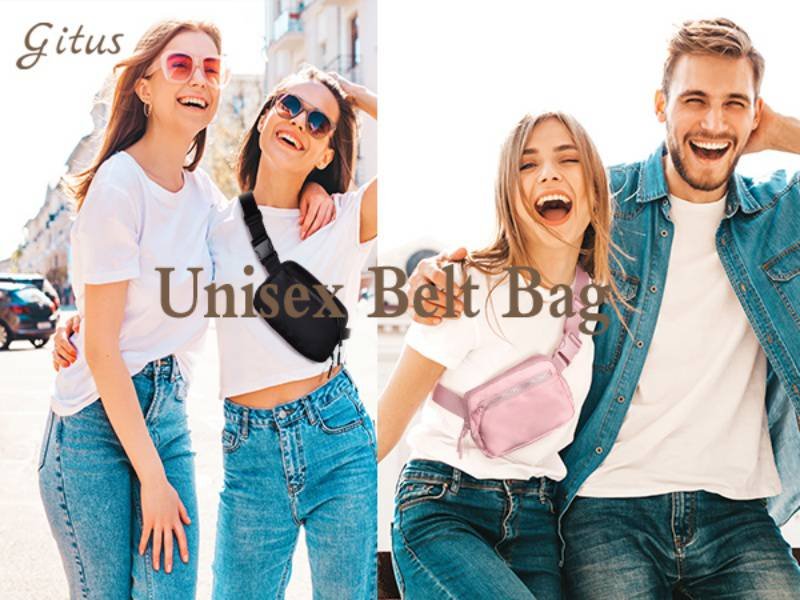
Strap comfort directly affects whether a travel waist bag is used all day or left in a suitcase after one trip. A good strap should spread weight, stay stable while walking, fit different body shapes, avoid rough edges, and work for waist wear, crossbody wear, and shoulder wear without twisting, slipping, or pressing into the body.
A waist bag may be small, but it is worn in a high-contact area. The strap touches the waist, ribs, shoulder, chest, back, or neck depending on how the traveler wears it. During a full travel day, the bag may be worn for 4–10 hours with phone, passport, cards, keys, earbuds, sanitizer, hotel key, and sometimes a small power bank inside. Even when the total load is only 300–700 g, poor strap design can make the product feel tiring.
Comfort is not only softness. A very soft strap may fold, curl, stretch, or slide through the adjuster. A very stiff strap may feel secure but scratch the neck when worn crossbody. A thin strap may look clean but create pressure after long walking. A wide strap may feel supportive but look bulky on a compact bag. The best design balances strap width, texture, edge finish, adjuster grip, side-tab angle, buckle position, and loose-end control.
The strap also affects security. If the bag swings, the wearer feels less control. If the strap loosens during walking, the bag shifts away from the body. If the buckle sits in a poor position, the user may rotate the bag to a less secure position just to feel comfortable. Comfort and safety are connected in daily travel.
A practical comfort target can be reviewed through these areas:
| Comfort Area | Good Result | Risk If Ignored |
|---|---|---|
| Strap width | Pressure spreads across the body | Thin webbing feels sharp when loaded |
| Webbing texture | Smooth but not slippery | Rough edges irritate neck or waist |
| Adjuster grip | Length stays fixed while walking | Strap slowly loosens |
| Buckle position | Does not press into ribs, back, or stomach | User keeps adjusting the bag |
| Side-tab angle | Bag sits close and flat | Bag tilts forward or bounces |
| Back panel feel | Smooth against clothing | Zipper seam rubs or hard items press |
| Loose-end control | Strap tail stays neat | Dangling strap looks messy and catches |
A waist bag that passes comfort checks feels almost invisible during movement. The wearer can walk, sit, bend, pay, scan a ticket, and take photos without constantly touching the bag.
Why Does Strap Width Matter?
Strap width matters because it controls how pressure spreads across the body. A narrow strap concentrates weight into a small line, which can feel sharp after long walking. A wider strap distributes weight better, but it must match the bag size and style. For tourist waist bags, comfort usually improves when strap width is selected according to load, wearing style, and visual balance.
For lightweight waist bags, a 25 mm strap may be enough if the product only carries cards, keys, and a phone. For daily tourist waist bags carrying phone, passport, wallet, and small tools, 32–38 mm is often a more comfortable direction. For larger utility or outdoor waist bags, 38–50 mm may feel more supportive, but the design can become too sporty or bulky for city travel.
The strap width should not be chosen alone. Webbing density, edge softness, adjuster size, buckle size, and side-tab strength all need to match. A 38 mm strap with a weak adjuster may slip. A 25 mm strap with dense smooth webbing may feel better than a cheap wider strap with rough edges.
| Strap Width | Better Use | Comfort Benefit | Caution |
|---|---|---|---|
| 20–25 mm | Light event pouch, small fashion belt bag | Slim, light, lower trim weight | Can feel sharp with passport and power bank |
| 30–35 mm | Compact travel waist bag | Good balance of comfort and clean look | Edge finish must be smooth |
| 38–40 mm | Travel waist bag with more capacity | Better pressure spread | Needs matching buckle and adjuster |
| 45–50 mm | Outdoor or utility waist bag | Strong support for heavier load | May look too heavy for city travel |
A good visual rule is simple: the strap should look strong enough for the bag, but not larger than the bag’s personality. A small refined waist bag with a huge strap may look awkward. A medium travel waist bag with a thin strap may feel cheap. The strap should make the bag feel reliable before the user even wears it.
Which Strap Type Feels Better For Long Walks?
For long walks, the most comfortable strap is smooth, stable, and dense enough to resist folding. Polyester webbing and nylon webbing are both common choices. Polyester is stable, widely available, and works well for many travel waist bags. Nylon can feel smoother and more premium, depending on finish, but needs review for cost, hand feel, and color control.
The strap edge is one of the most important comfort details. When a waist bag is worn across the chest, the strap may touch the neck or collarbone. A rough edge can become annoying within minutes. The webbing should be checked by rubbing it against the hand, neck area, and thin fabric. The edge should not scratch, curl, or create a burning feeling during movement.
A long-walk strap should also stay flat. If the webbing folds near the side tab, the pressure increases. If the webbing twists through the adjuster, the wearer keeps fixing it. If the strap is too slippery, the bag moves out of position. If it is too rigid, it may not follow body movement.
Good strap types can be reviewed like this:
| Strap Type | Feel | Better For | Watch Carefully |
|---|---|---|---|
| Standard polyester webbing | Stable, cost-efficient | Daily travel waist bags | Edge softness and adjuster grip |
| Nylon webbing | Smooth, refined | Premium compact styles | Slippage and color consistency |
| Jacquard webbing | Decorative, stronger identity | Branded travel collections | Cost, MOQ, visual busyness |
| Padded webbing | Softer under load | Larger waist bags | Added thickness and heat |
| Elastic section strap | Flexible movement | Sport or active use | Can stretch out or feel unstable |
| Seatbelt-style webbing | Smooth, modern feel | Lifestyle belt bags | May slip if adjuster is not matched |
For tourist use, fully padded straps are not always necessary. A compact waist bag may feel better with smooth dense webbing and a good back panel than with thick padding. Padding works best when the bag carries more weight or when the design leans outdoor.
The strap should be tested after loading the bag, not while empty. Add a phone, passport, wallet, keys, earbuds, sanitizer, and a compact power bank. Then walk for 30 minutes. If the strap stays flat, does not rub, and does not require constant adjustment, the design is moving in the right direction.
How Long Can Tourists Wear A Waist Bag?
A well-designed travel waist bag should remain comfortable for several hours of walking when carrying normal travel essentials. Many tourists wear small bags for half a day or a full day, so comfort should be tested beyond a quick try-on. The best review includes walking, sitting, turning, bending, and repeated opening while the bag is loaded.
A typical tourist load may be light on paper but uncomfortable if placed poorly. A phone may weigh around 180–250 g. A small power bank may add 150–250 g. A passport, card holder, keys, earbuds, sanitizer, and small cash can bring the total load to around 400–800 g. That is not heavy, but it can feel uncomfortable if the bag pulls away from the body or if hard items press into the back panel.
Comfort over time depends on several details:
| Detail | Effect On Long Wear |
|---|---|
| Strap width | Reduces pressure on waist, shoulder, or chest |
| Back panel softness | Prevents hard objects from pressing into the body |
| Bag depth | Controls outward pulling and bounce |
| Side-tab angle | Helps the bag sit close and flat |
| Buckle position | Avoids pressure when sitting or turning |
| Adjuster grip | Keeps the bag from loosening |
| Loaded shape | Prevents bulging and twisting |
A useful wear test can be simple and realistic:
| Test Time | Action | What To Notice |
|---|---|---|
| 5 minutes | Wear at waist while standing | First pressure and buckle feel |
| 10 minutes | Walk normally | Bounce, slipping, strap twisting |
| 20 minutes | Walk faster and turn | Side-tab stability |
| 30 minutes | Sit and stand several times | Back pocket pressure and buckle comfort |
| 45–60 minutes | Use phone, ticket, card repeatedly | Access comfort and strap movement |
A waist bag does not need to feel like outdoor gear to be comfortable. It needs to disappear into the travel routine. When the wearer stops noticing the strap, the design is working.
Are Adjustable Straps Enough For Global Sizing?
Adjustable straps are essential, but they are not enough on their own. A travel waist bag also needs the right strap length, adjuster placement, buckle position, loose-end management, and side attachment angle. The bag should fit waist wear and crossbody wear across different body shapes and clothing thicknesses.
Crossbody wear usually requires more strap length than waist wear. A strap that works around the waist may feel too short across the chest, especially over winter clothing. On the other hand, a long strap can leave an excessive tail on smaller users. A dangling strap tail can look messy, catch on things, and lower the perceived quality.
For tourist products, strap planning should include different wearing styles:
| Wearing Style | Strap Need | Common Problem |
|---|---|---|
| Waist wear | Shorter length, stable buckle | Long strap tail may hang |
| Front chest wear | Medium to long length | Strap may rub neck |
| Crossbody back/side wear | Longer length | Bag may twist if side tabs are wrong |
| Over jacket | Extra length allowance | Strap may be too short |
| Smaller body size | Good minimum length and tail control | Loose end looks messy |
The adjuster must match the webbing. If the webbing is too smooth, the adjuster may slip. If the webbing is too thick, adjustment becomes difficult. If the adjuster is too small, it can damage the webbing or create a cheap feel. If it is too large, it may look clumsy on a compact bag.
Loose-end control is often overlooked. A simple elastic keeper, sliding loop, or stitched strap management detail can make the bag look much cleaner. For retail photos, travel gift sets, and private label collections, a neat strap end can improve the overall impression immediately.
A practical fit review should include:
| Fit Check | Good Result |
|---|---|
| Small waist setting | Bag sits firmly without excessive strap tail |
| Large waist setting | Strap does not pull too tight |
| Crossbody setting | Bag sits at front or chest comfortably |
| Over jacket setting | Strap length still works |
| Walking test | Adjuster does not slip |
| Sitting test | Buckle does not press |
| Appearance check | Strap end stays neat |
The goal is controlled adjustability. The strap should fit many users, but still look clean at both short and long settings.
How Can Padding Reduce Pressure?
Padding reduces pressure by softening contact between the bag and the body, especially when the bag carries hard items such as phone, passport, card holder, keys, or power bank. Padding can be placed on the back panel, strap, or side contact areas. The best padding is thin enough to stay sleek and firm enough to prevent hard objects from creating pressure spots.
For compact tourist waist bags, the back panel matters more than thick shoulder-style padding. Since the bag sits directly against the body, the back panel should feel smooth, slightly structured, and free from sharp seams. A thin foam layer, brushed lining, smooth polyester, or breathable mesh can improve comfort depending on the style.
Different padding choices create different results:
| Padding Choice | Better For | Benefit | Caution |
|---|---|---|---|
| Thin foam back panel | Daily travel waist bags | Softens hard items | Too soft may collapse |
| PE foam layer | Structured travel styles | Keeps shape better | May feel stiff if too thick |
| Mesh back panel | Sport or outdoor styles | Adds airflow feel | Looks more athletic |
| Smooth fabric back | Lifestyle travel bags | Clean and soft touch | Less airflow |
| Padded strap section | Medium-load waist bags | Reduces shoulder pressure | Can look bulky |
| No padding | Ultra-light pouch | Lower weight | Hard items may press |
Padding should not hide poor pocket planning. If a power bank sits directly against the body, even foam may not solve the pressure. If keys float freely, they may still create sharp bumps. A good comfort design combines padding with item separation.
The back panel should be tested in three positions: around the waist, across the chest, and while sitting. Sitting is especially important because the bag may press into the stomach or ribs. A hidden passport pocket behind the bag should remain flat and smooth. If the zipper edge feels rough, a fabric cover or better zipper placement may be needed.
A comfortable back panel should do four things:
- Reduce pressure from hard objects.
- Protect clothing from rough seams.
- Help the bag keep a clean shape.
- Allow the bag to sit close without feeling stiff.
Good padding is not about thickness. It is about contact comfort.
What Should A Sample Check Before Bulk?
A waist bag sample should be checked while loaded, worn, opened, closed, adjusted, and packed. Appearance alone is not enough. Before bulk production, the sample should confirm strap comfort, strap length, buckle placement, adjuster grip, pocket access, loaded shape, zipper smoothness, logo position, stitch strength, and packing method.
For strap comfort, the review should be hands-on. The sample should be worn by several people if possible. Each person should test waist wear and crossbody wear. The bag should contain real travel items, not paper stuffing. The difference is obvious: paper stuffing may keep the shape smooth, but real items create pressure, weight, hard edges, and movement.
A sample comfort check can follow this process:
| Step | What To Do | What To Confirm |
|---|---|---|
| Load test | Add phone, passport, wallet, keys, earbuds, sanitizer, power bank | Bag closes naturally |
| Waist wear | Adjust strap and walk | No sharp pressure or sliding |
| Crossbody wear | Wear across chest for movement | Strap does not rub neck |
| Sitting test | Sit, stand, bend | Buckle and back panel stay comfortable |
| Adjustment test | Shorten and lengthen strap repeatedly | Adjuster holds position |
| Bounce test | Walk faster and turn | Bag stays close to body |
| Access test | Remove phone and card | Strap does not shift too much |
| Strap tail check | Review short and long settings | Loose end stays neat |
| Pull test | Pull strap tabs by hand | Stitching feels secure |
| Appearance check | View front and side after loading | Shape remains clean |
Strap-tab reinforcement is especially important. The strap tabs carry force every time the bag is worn, pulled, adjusted, or picked up. Weak stitching in this area can lead to early failure. Reinforcement can include bar tacks, double stitching, stronger seam allowance, or thicker backing depending on the design.
The sample should also confirm that the strap hardware feels suitable for the price level. A premium travel waist bag with thin webbing or a weak buckle feels inconsistent. A lightweight event bag with heavy metal hardware may feel unnecessary. The hardware should match the product’s purpose.
A useful sample approval table:
| Review Area | Acceptable Result | Revise If |
|---|---|---|
| Strap width | Matches load and visual style | Feels sharp or looks weak |
| Webbing edge | Smooth against skin and clothing | Rough, curled, or stiff |
| Adjuster | Holds length during movement | Slips or damages webbing |
| Buckle | Secure and comfortable | Presses into body |
| Side-tab angle | Bag stays close | Bag tilts or bounces |
| Back panel | Smooth with loaded items | Hard items press through |
| Strap tail | Neat at different settings | Hangs too long |
| Reinforcement | Strong at stress areas | Stitches pull or distort |
A travel waist bag should not be approved because it looks good in one photo. It should be approved because it feels stable after real movement. The strap, buckle, and back panel decide whether the product becomes part of daily travel or a one-time accessory.
What Type Of Travel Waist Bag Works Best?
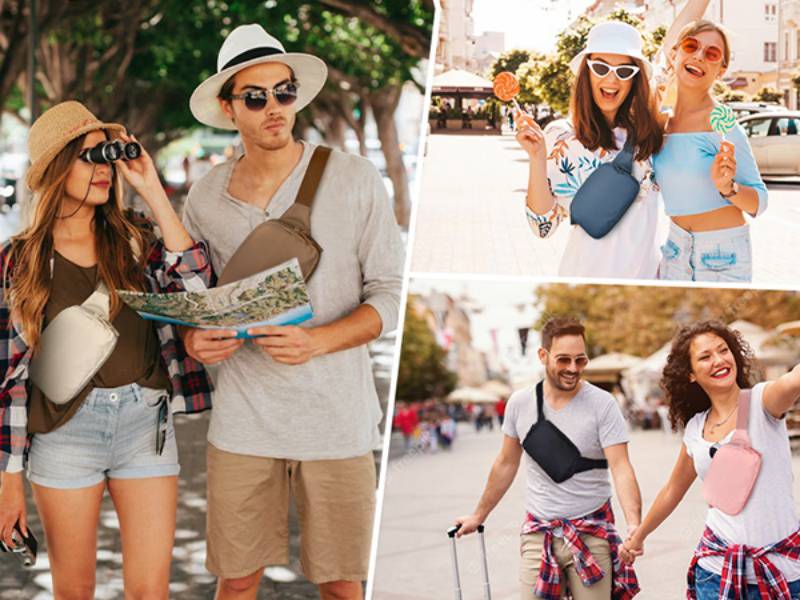
The best travel waist bag type depends on use setting, item load, security level, style direction, and price position. For tourist use, a compact anti-theft daily waist bag often performs best: slim enough for long walking, structured enough to hold essentials, secure enough for crowded areas, and clean enough to wear beyond one trip.
A travel waist bag should not be chosen only by outer shape. Two bags can look similar in photos but feel completely different when loaded. One may sit flat against the body and open smoothly. Another may bulge, bounce, twist, or make the phone hard to reach. The right type should match what people actually carry and where they use it.
For tourist-focused collections, the strongest designs usually sit between fashion and function. A bag that looks too sporty may not fit city outfits. A bag that looks too decorative may fail when holding passport, phone, keys, and cards. A bag that is too large can feel clumsy in museums, cafés, and crowded streets. A bag that is too small may not fit a phone with case or passport cover.
Travel waist bags can be grouped by use:
| Travel Waist Bag Type | Best Use | Strong Detail | Main Risk |
|---|---|---|---|
| Compact daily waist bag | City walks, airport, sightseeing | Slim shape, easy access, light wear | Limited capacity |
| Anti-theft waist bag | Crowded cities, stations, festivals | Hidden pocket, zipper control, stable strap | Can become too complex |
| Sport waist bag | Walking, running, cycling, events | Lightweight, close fit, movement stability | Less premium appearance |
| Utility waist bag | Outdoor tours, staff use, activity programs | More pockets, stronger structure | Bulky body |
| Fashion belt bag | Lifestyle retail, casual travel | Clean look, strong outfit match | May lack secure storage |
| Packable waist bag | Souvenir, emergency travel, gift sets | Lightweight, easy packing | Lower structure and support |
| Premium travel waist bag | Travel retail, private label lines | Refined fabric, discreet logo, organized interior | Higher material and trim cost |
For most tourist use, the most practical type is a compact travel waist bag with three layers of storage: a main pocket for phone and daily items, a close-body hidden pocket for passport or backup cash, and a small inner area for cards, hotel key, or transit card. This structure gives enough function without making the bag heavy.
A strong type selection should consider six details before sample development:
| Selection Detail | Why It Matters | Practical Direction |
|---|---|---|
| Capacity | Decides whether phone, passport, and wallet fit | Test with real items, not flat measurements |
| Body thickness | Affects comfort and appearance | Keep loaded depth controlled |
| Pocket logic | Separates quick-use and private items | Avoid one loose compartment |
| Strap system | Controls fit, comfort, and bounce | Match width with load and style |
| Material | Shapes hand feel, weight, and durability | Choose according to price and use setting |
| Logo style | Influences retail appearance | Keep size balanced on small front panels |
The best type is not always the most feature-heavy option. It is the one that carries the right items, fits the body well, feels safe enough for travel, and still looks natural in daily life.
Waist Bag Vs Sling Bag: Which Is Better?
A waist bag is better for small valuables, front-body control, and fast access during sightseeing. A sling bag is better when more space is needed for items such as sunglasses case, compact umbrella, small bottle, camera accessory, or light jacket. For tourist use, a waist bag works best as a close-essential carry, while a sling works better as a larger city carry.
A waist bag usually feels more controlled because it stays closer to the body. When worn in front, the traveler can see the zipper, feel the bag move, and reach phone or transit card quickly. This is useful in crowded stations, street food areas, museums, airports, and event entrances. The bag does not need to be removed, rotated widely, or placed on the ground.
A sling bag offers more visual surface and more storage. It may work better for tech-style collections or urban daily carry. However, the load sits more on one shoulder. After several hours, a sling can create shoulder fatigue if the strap is narrow or if the bag is overfilled. A waist bag usually carries less, but that limitation is also its comfort advantage.
A practical comparison:
| Detail | Waist Bag | Sling Bag |
|---|---|---|
| Best item load | Phone, passport, cards, cash, keys, tickets | Phone, wallet, bottle, small umbrella, compact gear |
| Access speed | Very fast when worn in front | Fast after rotating to the front |
| Comfort style | Better for light loads | Better for medium loads if strap is wide |
| Security feel | Strong when worn at front body | Strong if zipper sits against body |
| Visual style | Travel, event, casual, compact lifestyle | Urban, tech, street, travel |
| Common issue | Feels bulky if overfilled | One-shoulder fatigue if heavy |
| Retail role | Small essential item | Larger daily carry item |
A collection can include both, but the role should be clear. The waist bag should not try to replace a backpack or sling. It should protect the items people reach for all day: phone, passport, cards, hotel key, transit card, tickets, earbuds, and small cash.
For waist bag development, the main goal is controlled compactness. If the bag becomes too large, it loses the core advantage over a sling. If it stays slim but cannot fit real essentials, it creates frustration. The best waist bag is small on the body but smart inside.
Money Belt Vs Waist Bag: Which Is More Practical?
A money belt is more hidden, but a waist bag is more practical for daily travel. Money belts are useful for passport, backup cash, or emergency card under clothing. Travel waist bags are better for repeated access, including phone, tickets, transit card, hotel key, cash, earbuds, and small daily items.
Money belts are designed for privacy, not convenience. They work well when the traveler wants to hide valuables under clothing and rarely open the pouch. But for a day tour, airport transfer, museum visit, or food street, people need to take items out often. If access is too slow, the hidden pouch becomes annoying.
A travel waist bag gives better daily flow. It can still borrow security ideas from a money belt by adding a close-body hidden pocket. This creates a useful middle option: easier to use than a money belt, safer than a simple front pouch.
A good tourist waist bag should divide items by access frequency:
| Item | Money Belt Fit | Waist Bag Fit | Better Placement In Waist Bag |
|---|---|---|---|
| Passport | Good for hidden storage | Good if hidden pocket is flat | Body-side pocket |
| Backup cash | Good | Good | Hidden zipped pocket |
| Daily cash | Inconvenient | Very practical | Small inner zipped area |
| Phone | Poor | Very practical | Main pocket or soft sleeve |
| Transit card | Poor | Very practical | Inner slip pocket |
| Hotel key | Poor | Good | Inner card area |
| Keys | Poor | Good | Key loop |
| Earbuds | Poor | Good | Small pocket |
The strongest travel waist bag does not need to be as hidden as a money belt. It needs to be safer than a normal small pouch and much easier to use than an under-clothing wallet. The close-body pocket is the key feature here.
For travel retail and private label projects, waist bags also have better after-trip value. A money belt is often used only while traveling. A waist bag can become part of daily errands, walking, events, weekend trips, and casual outfits. That makes the product more useful beyond the first travel season.
Compact Vs Large Waist Bag: Which Sells Better?
Compact waist bags often work better for tourists because they are easier to wear all day, easier to style, easier to pack, and less bulky in crowded places. Large waist bags work better for outdoor tours, staff kits, festivals, or activity programs where more storage is needed. The right size depends on item load and use setting.
A compact travel waist bag should not mean “too small.” It should still fit a phone with case, passport, slim wallet, keys, cards, and small personal items. If a modern phone cannot fit smoothly, the bag will feel outdated. If a passport bends inside, the design is not travel-ready. A compact bag succeeds when its internal layout is efficient.
Large waist bags can carry more, such as a power bank, sunglasses, compact camera, snack, sanitizer bottle, or small folded item. But size creates new problems. A larger body may bounce when walking. It may look awkward at the front waist. It may press into the stomach when sitting. It may need a wider strap, stronger buckle, and better side-tab structure.
A practical size comparison:
| Size Style | Best For | Main Advantage | Main Risk |
|---|---|---|---|
| Slim mini | Events, light fashion, simple daily use | Very light and neat | Passport or large phone may not fit |
| Compact travel | City tours, airports, daily travel | Best balance of comfort and function | Pocket planning must be precise |
| Medium utility | Festivals, outdoor walks, staff use | More storage | Can bounce or bulge |
| Large hip pack | Outdoor activity, equipment, work use | Carries more tools | Less suitable for city styling |
For tourist use, compact travel size is usually the safest direction. The bag should look slim from the front and side after loading. A common target is a shape that holds daily essentials without creating a thick block on the body. Depth is often more important than width. A slightly wider, flatter bag can feel better than a short, thick bag.
The bag should be tested in three states:
| State | What To Check |
|---|---|
| Empty | Does the shape look clean? |
| Half loaded | Does it hold normal daily items naturally? |
| Fully loaded | Does it bulge, tilt, or stress the zipper? |
If the fully loaded bag looks swollen, the size or pocket layout needs adjustment. If the half-loaded bag collapses, the material or lining may need more structure. The best compact waist bag keeps a clean shape in both real use and retail presentation.
Waterproof Vs Water-Resistant: Which Is Enough?
Water-resistant construction is enough for most travel waist bags used in cities, airports, resorts, events, and daily errands. It helps protect against light rain, spills, wet hands, and humid weather. Fully waterproof construction is only needed for stronger outdoor, boating, beach, or wet-condition use, and it requires different material and seam planning.
The difference matters because wording and structure must match. Water-resistant fabric can handle everyday moisture, but it does not mean the whole bag can be submerged or left in heavy rain. A bag may use coated polyester or nylon and still allow water through zipper teeth, seams, or stitching holes. If stronger protection is required, zipper type, seam treatment, lining, and construction must all be reviewed.
For most tourist waist bags, practical water resistance is more valuable than full waterproof claims. Travelers need protection from sudden drizzle, drink spills, sunscreen marks, wet hands, and humid environments. They usually do not expect the bag to perform like a dry bag.
A useful moisture-protection guide:
| Protection Level | Best Use | Material Direction | Structure Notes |
|---|---|---|---|
| Basic daily | Indoor events, casual use | Standard polyester | Limited moisture resistance |
| Water-resistant | City tours, resorts, airports | Coated polyester, coated nylon | Good for light rain and splashes |
| Higher water protection | Outdoor tours, beach, boating | TPU, coated fabric, better zipper | Needs careful seam review |
| Waterproof pouch style | Water sports, wet activity | Welded or sealed construction | Different process and higher cost |
For tourist waist bags, zipper choice affects moisture protection. A reverse zipper can create a cleaner surface and improve light splash resistance. A covered zipper can help in certain designs. However, zipper smoothness should not be sacrificed. If the zipper feels stiff, users may leave it partly open.
Material finish also matters. A fabric that resists light moisture but stains easily may still create complaints. Resort and travel styles should be checked for hand feel, cleaning behavior, color stability, and coating consistency. Light colors may look fresh but show dirt faster. Dark colors may hide marks but feel less seasonal for vacation retail.
The best approach is honest feature matching: water-resistant for daily tourist use, stronger protection for outdoor or wet-use collections, and full waterproof structure only when the product is truly built for that purpose.
Nylon Vs Polyester: Which Material Fits Travel?
Nylon and polyester can both work well for travel waist bags. Polyester is stable, cost-efficient, widely available, and good for many daily travel styles. Nylon often feels smoother, lighter, and more refined, depending on specification. The best choice depends on target price, hand feel, durability, color direction, water resistance, and logo process.
Polyester is common for travel waist bags because it offers a good balance of durability, color options, and cost control. It can be used in lighter versions for event or packable designs, and heavier versions for more structured travel waist bags. Polyester also works well with many logo methods, including screen print, heat transfer, woven labels, and patches.
Nylon can give a more premium touch. It often has a smoother hand feel and can look cleaner in compact travel accessories. It suits collections that want a refined outdoor or lifestyle appearance. However, nylon cost, color control, coating, and availability should be reviewed early, especially for multi-color programs.
Fabric selection should not rely only on the material name. Denier, weave, coating, lining, backing, colorfastness, abrasion resistance, and hand feel all affect the final product. A good 420D polyester may work better than a poor nylon. A light nylon may feel premium but collapse if the bag needs structure.
Material planning table:
| Material | Best Use | Strength | Watch Carefully |
|---|---|---|---|
| 210D polyester | Light pouch, event waist bag | Low weight, easy packing | Less structure |
| 420D polyester | Compact daily travel waist bag | Balanced feel and function | Lining choice matters |
| 600D polyester | Utility, outdoor, stronger daily use | Durable and structured | Can feel heavier |
| Nylon | Premium compact travel style | Smooth, refined hand feel | Cost and color control |
| Ripstop fabric | Active travel, outdoor look | Lightweight strength | Sporty appearance |
| Coated fabric | Water-resistant travel use | Moisture protection | Coating marks and sewing behavior |
| Recycled polyester | Eco-focused collections | Strong product story | Availability and color matching |
The lining should also match the outer fabric. A premium nylon shell with very cheap lining feels inconsistent. A rugged 600D body with thin weak lining may fail at pockets. A bag with RFID card area needs careful lining placement so the pocket does not become too stiff.
Logo method should also guide fabric choice. Embroidery needs fabric that can handle stitch tension. Heat transfer needs a suitable surface. Screen print needs enough flat area and compatible texture. Rubber patches need stable attachment areas. Material, logo, and structure should be chosen together.
What Is The Best Logo Position?
The best logo position on a travel waist bag is visible, balanced, and placed on a stable surface that does not wrinkle or distort when the bag is loaded. Common positions include the front panel, lower corner, side woven label, rubber patch area, zipper pull, leather patch, or small metal plate. The logo should support the product look without overpowering the small surface.
A waist bag has limited visual space. A large logo can make it look like a promotional giveaway. A tiny logo may disappear in product photos. A logo placed too close to a zipper curve may distort. A logo placed on a pocket that bulges after loading may wrinkle. The placement should be checked after the bag is filled with real items.
Different logo methods create different feelings:
| Logo Method | Best For | Visual Feel | Check Before Approval |
|---|---|---|---|
| Screen print | Event, value travel, simple graphics | Clean and direct | Fabric texture and print clarity |
| Heat transfer | Colorful or detailed artwork | Smooth and modern | Adhesion and edge lifting |
| Embroidery | Premium textile feel | Raised and durable | Puckering on light fabric |
| Woven label | Clean lifestyle branding | Subtle and retail-friendly | Edge finish and placement |
| Rubber patch | Sport, outdoor, travel gear | Strong and tactile | Stitching or attachment strength |
| Leather patch | Premium casual style | Warm and refined | Color matching and thickness |
| Metal plate | Higher-end appearance | Polished and firm | Weight, scratching, and attachment |
| Custom zipper pull | Small detail branding | Subtle and functional | Durability and comfort |
Logo position should follow the body structure. A flat front panel can support print, heat transfer, or patch. A side seam can hold a woven label. A zipper pull can carry small branding without taking front space. A lower corner logo often feels more refined than a large centered logo.
A practical logo review should include:
| Review Step | What To Check |
|---|---|
| Empty bag view | Logo looks balanced |
| Loaded bag view | Logo does not wrinkle or stretch |
| Wearing view | Logo is visible but not too loud |
| Close-up view | Stitching or print edge is clean |
| Color check | Logo matches fabric and trim |
| Rub check | Logo resists daily contact |
| Packing view | Logo is visible for retail display if needed |
For travel waist bags, subtle branding often feels more premium. A small woven label, clean patch, or discreet front logo can make the product look suitable for daily use. Event styles may need more visible logos, but the size should still respect the bag shape.
The best logo position is the one that still looks right after the bag is loaded, worn, handled, packed, and displayed. A logo should not only look good on a flat sample; it should stay clean through real use.
How Should Brands Custom Travel Waist Bags With a Factory?
A travel waist bag is easier to develop when the project starts with clear use, real item load, pocket plan, strap direction, fabric choice, logo method, quantity, packing needs, and delivery schedule. The best custom result comes from early review, a realistic sample test, and clear production standards before bulk work begins.
A reference photo is a good starting, but it is not enough for a travel waist bag. A photo shows the outside style, not whether a phone with case fits, whether a passport bends, whether the strap rubs the neck, whether a hidden pocket presses into the body, or whether the zipper opens smoothly while walking. A strong custom project turns a visual idea into a product that can be worn, opened, loaded, packed, shipped, displayed, and used repeatedly.
Travel waist bags have small bodies, so every detail matters. A pocket that is 10 mm too shallow may fail to hold a passport cover. A strap that is 30 mm too short may make crossbody wear uncomfortable. A zipper placed too close to a curve may catch the lining. A logo placed on a bulging front pocket may wrinkle after loading. These details are not small once the product reaches retail shelves, event programs, travel stores, resort shops, or online product reviews.
A practical custom project should move in this order:
| Stage | What To Confirm | Why It Matters |
|---|---|---|
| Use setting | City travel, resort, airport, event, outdoor, daily carry | Decides size, security level, material, and style |
| Item load | Phone, passport, cards, cash, keys, earbuds, sanitizer, power bank | Prevents pockets from being too small or messy |
| Wearing style | Waist, crossbody, shoulder, or multi-wear | Decides strap length, side-tab angle, buckle position |
| Security level | Hidden pocket, RFID card area, zipper garage, lockable puller | Keeps cost and function balanced |
| Material | Polyester, nylon, ripstop, coated fabric, lining, mesh, foam | Affects structure, hand feel, weight, and cost |
| Logo method | Print, heat transfer, embroidery, woven label, rubber patch, leather patch | Affects appearance, sample time, and durability |
| Packing | Polybag, hangtag, barcode, card, box, carton marks | Supports retail, gifting, and shipping needs |
| Sample test | Load, wear, open, close, sit, walk, adjust | Confirms real use before bulk work |
For travel waist bags, the goal is not to add as many features as possible. The goal is to create a balanced product: secure enough for crowded places, comfortable enough for several hours, clean enough for daily outfits, and practical enough to be used after the trip.
How Does A Custom Bag Factory Review Design?
A custom bag factory reviews a travel waist bag by checking whether the design can become a stable, comfortable, repeatable product. The review covers size, body shape, pocket layout, strap path, zipper direction, material, lining, logo method, hardware, sample feasibility, packing, quantity, and delivery timing.
The first review should focus on real use. A travel waist bag is worn on a moving body, not displayed flat all day. The design must be checked for walking, sitting, bending, ticket scanning, phone access, payment, and crowded movement. A bag that looks clean on a table may twist when worn crossbody. A hidden back pocket may look smart but feel uncomfortable when filled with a passport. A large front logo may look fine when empty but wrinkle when the bag is loaded.
Important review include:
| Review | Why It Matters |
|---|---|
| Will the bag be worn at the waist, across the chest, or both? | Decides strap length and side-tab angle |
| What phone size should fit with a protective case? | Prevents daily access complaints |
| Should the passport pocket fit a cover? | A bare passport test is not enough |
| Where should the hidden pocket open? | Affects security and comfort |
| Should the zipper open left-to-right or right-to-left? | Affects one-hand access |
| Where should the buckle sit? | Prevents pressure on ribs, waist, or back |
| Is the logo on a flat enough area? | Prevents wrinkles and poor print results |
| Does the material hold shape when loaded? | Controls side view and product feel |
| What packing style is needed? | Affects barcode, hangtag, carton, and shelf display |
A good factory review should not only say whether something can be made. It should also identify weak areas before sampling. For example, a curved front pocket may need a woven label instead of large screen print. A soft fabric may need backing if embroidery is required. A zipper garage may need slightly more seam allowance. A hidden passport pocket may need smoother back fabric to prevent rubbing.
For anti-theft travel waist bags, the review should also check access levels. The phone should be fast to reach. The passport should be private. Cards should not slide loose inside the main pocket. Keys should not scratch the phone. The zipper pull should not hang openly in the most exposed place. These details create the real user experience.
What Details Affect The Price?
The price of a travel waist bag is affected by fabric, size, lining, pocket count, zipper type, strap width, buckle quality, logo method, RFID material, back padding, packing style, color count, quantity, and production complexity. Two waist bags may look similar from the outside, but their cost can be very different once the inner structure and trims are compared.
Material is one of the first cost drivers. Standard polyester is usually more cost-friendly and works well for daily travel styles. Nylon can feel smoother and more refined, especially for premium compact designs. Ripstop fabric gives a stronger active-travel look. Coated fabric adds moisture resistance but may need more careful sewing. Lining quality also changes the feel: a weak lining can make the bag feel cheap even if the outside fabric looks good.
Structure is another major factor. Each extra pocket requires cutting, sewing, zipper, lining, and inspection. A hidden back pocket adds value, but it also adds process steps. RFID card areas, zipper garages, key loops, mesh pockets, lockable pullers, and strap keepers all increase work. The right is not “how many features can be added?” but “which features will users actually feel?”
Logo method also changes cost and timing. Simple screen print is efficient for many event or value styles. Heat transfer works for colorful graphics on suitable surfaces. Embroidery gives texture but needs fabric stability. Woven labels are clean and repeatable. Rubber patches, leather patches, and metal plates can lift the product feel, but they add setup, material, and attachment costs.
| Cost Detail | Lower-Cost Direction | Higher-Value Direction | Review Carefully |
|---|---|---|---|
| Main fabric | Standard polyester | Nylon, ripstop, coated fabric | Hand feel, color stability, structure |
| Lining | Basic lining | Printed lining, mesh divider, RFID section | Bulk, stiffness, sewing difficulty |
| Pocket layout | Main pocket only | Hidden pocket, card area, key loop, inner zip | Too many sections in a small body |
| Zipper | Standard zipper | Reverse zipper, zipper garage, lockable puller | Smoothness and user convenience |
| Strap | Basic webbing | Wider soft webbing, keeper, padded section | Comfort, cost, hardware match |
| Logo | Simple print | Embroidery, woven label, patch, metal plate | Surface distortion and durability |
| Packing | Polybag | Hangtag, barcode, card, box, dust bag | Added cost and lead time |
| Color plan | One color | Multi-color assortment | Fabric and trim setup |
A stronger price plan spends money where people can feel it: strap comfort, zipper smoothness, pocket logic, fabric hand feel, logo quality, and stitching strength. Features that only sound impressive but do not improve daily use should be questioned early.
What MOQ Should Brands Plan?
For custom travel waist bags, MOQ depends on design complexity, material availability, logo method, trim sourcing, color count, packing style, and delivery schedule. As a practical reference, standard custom waist bag projects often start around 500 pcs per design. Some simple styles may be reviewed at 200–300 pcs, while special materials, custom trims, or multi-color plans may require higher quantities.
MOQ exists because custom production includes fabric purchasing, trim preparation, cutting setup, logo setup, sewing arrangement, packing materials, quality checks, and carton planning. Even a small waist bag includes many parts: outer fabric, lining, zipper, puller, webbing, adjuster, buckle, thread, pocket pieces, label, reinforcement, and packing.
The MOQ may change when the project includes:
| Project Detail | MOQ Influence |
|---|---|
| Custom fabric color | May require higher fabric quantity |
| Special buckle or lockable zipper | Trim sourcing may need higher volume |
| RFID card pocket | Special lining material may add MOQ |
| Rubber patch or molded logo | Mold or setup may need more quantity |
| Multi-color assortment | Quantity per color becomes important |
| Retail packing | Hangtags, barcode labels, cards, or boxes add setup |
| Complex pocket structure | More production preparation and inspection |
| Urgent schedule | Available materials may limit choices |
| Special testing request | Needs added planning and cost review |
A simple compact waist bag using available fabric and standard trims is easier to review at a lower quantity. A premium anti-theft waist bag with RFID lining, lockable zipper, rubber patch, water-resistant fabric, and retail packaging needs more planning.
A useful planning direction:
| Project Type | Practical Quantity Direction | Reason |
|---|---|---|
| Simple event waist bag | Lower review may be possible | Simple structure and standard trims |
| Standard tourist waist bag | Around standard project quantity | Normal fabric, lining, zipper, logo, packing |
| Anti-theft waist bag | Higher planning may be needed | Hidden pocket, zipper details, extra lining |
| Premium travel waist bag | Higher planning is common | Better fabric, trims, logo, and packing |
| Multi-color retail set | Quantity per color matters | Each color needs material and trim control |
| Special trim project | Often higher | Custom hardware, patch, or fabric setup |
For new travel waist bag collections, it is often smarter to develop one hero style first, then add colorways or higher-security versions after the sample is approved. This reduces revision time and keeps the first project easier to control.
How Long Does Sampling Usually Take?
Sampling time depends on how clear the design details are. As a practical reference, standard travel waist bag sampling usually takes about 5–7 days after key information is confirmed. Simple styles may be faster, around 2–3 days. More complex anti-theft structures, special trims, custom patches, RFID sections, or retail packing samples may need longer.
The fastest samples usually have clear information at the start: size, material, color, pocket layout, strap width, strap length, zipper type, logo artwork, logo position, packing style, and quantity. When these details are missing, sampling slows down because the factory has to make assumptions or pause for confirmation.
A waist bag sample should not only confirm appearance. It should confirm function:
| Sample Area | What To Confirm |
|---|---|
| Size | Phone, passport, wallet, and keys fit naturally |
| Pocket layout | Fast items and private items are separated |
| Hidden pocket | Passport fits flat and does not press into body |
| Zipper | Opens smoothly without catching lining |
| Strap | Fits waist and crossbody wear |
| Buckle | Does not press into ribs, back, or stomach |
| Logo | Right size, position, color, and durability |
| Fabric | Correct hand feel, structure, and color |
| Lining | Smooth, clean, and suitable for pocket use |
| Packing | Polybag, hangtag, barcode, card, or box if needed |
Anti-theft designs deserve enough sample time because their details are connected. Moving a hidden pocket may affect comfort. Changing the zipper direction may affect security feel. Widening the strap may require a different buckle. Adding RFID lining may change pocket stiffness. A rushed sample can hide problems that appear later during bulk work.
A practical sample timeline may look like this:
| Sample Situation | Time Direction | Reason |
|---|---|---|
| Simple existing-style waist bag | Faster | Standard fabric and simple logo |
| New custom pocket layout | Normal to longer | Pattern and structure need checking |
| Hidden pocket plus RFID area | Longer review likely | Extra lining and comfort testing |
| Custom rubber or leather patch | Depends on setup | Patch preparation may take extra time |
| Retail packing sample | Longer if included | Artwork, barcode, card, or box review |
| Revised sample | Depends on revision size | Structure changes take longer than logo changes |
A sample is not just a prototype. It is the working reference for bulk production. The more clearly it is tested and approved, the smoother the next stage becomes.
How Is Bulk Quality Controlled?
Bulk quality is controlled by turning the approved sample into clear production standards, then checking materials, cutting, logo work, sewing, zippers, pockets, straps, shape, packing, and carton details through different stages. For travel waist bags, pocket size, strap strength, zipper smoothness, logo placement, and loaded shape deserve special attention.
Small bags need tight consistency. A pocket that becomes slightly shallow may stop fitting a passport. A strap that becomes shorter may reduce crossbody comfort. A zipper that is not smooth can make the product feel low quality. A logo placed a little too high or low can make the front panel look unbalanced.
Important quality checks include:
| Quality Stage | What To Check | Common Issue |
|---|---|---|
| Material arrival | Fabric color, coating, lining, webbing, zipper, buckle | Shade difference, rough webbing, trim mismatch |
| Cutting | Body panels, pocket pieces, lining, foam, reinforcement | Size deviation and uneven shape |
| Logo process | Position, color, clarity, attachment strength | Wrinkle, color shift, poor placement |
| Sewing | Seam allowance, stitch density, corner shape, pocket depth | Loose thread, uneven pocket, weak seam |
| Strap assembly | Strap length, buckle, adjuster, tab reinforcement | Slipping, twisting, weak pull strength |
| Zipper function | Smooth opening, puller direction, zipper ends | Lining catching, hard sliding |
| Final shape | Front view, side view, loaded appearance | Bulging, collapsing, uneven body |
| Packing | Polybag, hangtag, barcode, carton mark | Wrong SKU, missing label, messy packing |
For anti-theft waist bags, hidden pockets need extra review. The body-side pocket should match the approved depth. The zipper edge should be smooth. The back panel should not feel rough. RFID card sections, if used, should be placed correctly. Strap tabs should be reinforced because they carry repeated pulling force.
Quality control should not wait until the end. If a zipper issue is found after all goods are packed, correction becomes slow and costly. If pocket depth is checked during sewing, the issue can be corrected earlier. If logo position is checked before full production, visual mistakes can be prevented.
A strong bulk inspection should include real-use checks, not only appearance:
| Real-Use Check | Good Result |
|---|---|
| Load phone, passport, wallet, keys, cards | Bag closes naturally |
| Wear around waist | Strap stays stable |
| Wear crossbody | Bag does not twist badly |
| Open main pocket | Zipper feels smooth |
| Access hidden pocket | Passport can be removed |
| Pull strap tabs | Stitching stays secure |
| Check logo after loading | Logo remains clean |
| View side profile | Bag does not look swollen |
| Review packing | Product arrives neat and ready |
For travel waist bags, quality is felt through touch and movement. Smooth zipper, soft strap, clean pocket access, and stable shape matter as much as the first visual impression.
What Should Brands Send Before A Quote?
Before requesting a quote, brands should send a reference photo or sketch, target size, material direction, logo file, logo position, quantity, color plan, pocket needs, strap style, packing requirements, target delivery date, and destination. If an existing sample or tech pack is available, it can make the review faster and more accurate.
A clear request helps avoid vague pricing and repeated revisions. Without size, fabric usage cannot be estimated well. Without quantity, unit cost cannot be reviewed properly. Without logo details, sampling method and setup cannot be confirmed. Without packing requirements, the quote may miss hangtags, barcodes, cards, boxes, or carton marks. Without destination and timing, delivery planning remains incomplete.
Useful information to send:
| Information | Helpful Detail |
|---|---|
| Reference photo or sketch | Shows style, shape, and feature direction |
| Target size | Width, height, depth, or items the bag must hold |
| Material preference | Polyester, nylon, ripstop, coated fabric, or open to advice |
| Pocket layout | Main pocket, hidden pocket, card area, key loop, RFID section |
| Strap style | Waist only, crossbody, shoulder, webbing width, strap length |
| Logo file | Vector file preferred if available |
| Logo method | Print, heat transfer, embroidery, woven label, rubber patch, leather patch |
| Color plan | One color, several colors, or custom color matching |
| Quantity | Per design and per color |
| Packing | Polybag, hangtag, barcode, retail card, box, carton marks |
| Timing | Sample deadline and bulk delivery target |
| Destination | Country, port, warehouse, or forwarder address |
A simple starting request may look like this:
“We need a compact travel waist bag for city tourists. It should fit a phone with case, passport, card holder, keys, and small power bank. We prefer water-resistant polyester or nylon, one hidden back pocket, one inner card pocket, adjustable crossbody strap, and a small woven label on the front. First quantity is 500 pcs in two colors. Please review sample direction, cost, and timing.”
If the product is still only an idea, that is also fine. A reference image, target use, rough size, logo, and quantity can already support an early review. The key is to make the first request specific enough to connect design, function, cost, and production planning.
A well-prepared request saves time before sampling and reduces changes later. For travel waist bags, clarity at the beginning is one of the easiest ways to improve the final product.