 Skip to content
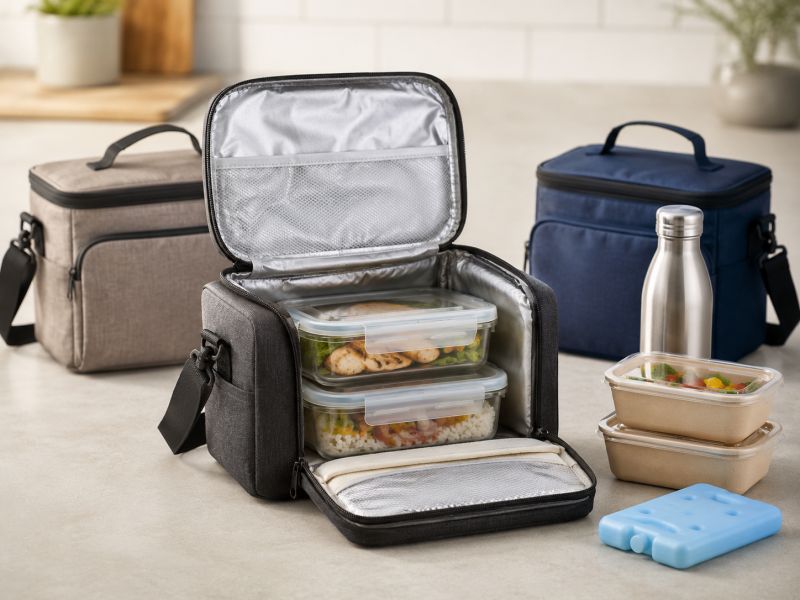
For food brands, an insulated lunch bag is not just a small side product. It may become part of a meal kit, café gift set, healthy food membership program, retail lunch set, delivery upgrade, school food project, or private label collection. That means the bag must do more than look nice with a logo. It has to feel clean, carry food containers properly, support cooling with ice packs, wipe easily after spills, and communicate temperature-control benefits without making promises the product cannot support.
A weak lunch bag can create more trouble than value. The lining may wrinkle, smell, or crack. The insulation may look thick but perform poorly because the zipper leaks air. The outer fabric may stain too easily. The bag may be called “leakproof” even though sewn seams and zipper openings cannot support that claim. For a serious food brand, these details matter because the user connects the bag experience with the food brand itself.
Jundong supports custom insulated lunch bag projects for food brands, cafés, meal kit companies, healthy food teams, retailers, gift programs, and private label collections. With 20+ years of OEM/ODM bag experience, a Guangdong-based factory, 600+ employees, an 18,000㎡ production area, and 80 QC inspectors, Jundong helps project teams review materials, lining, insulation structure, logo methods, sampling, packing, labeling, and bulk quality before the product reaches daily use.
What Makes An Insulated Lunch Bag Suitable For Food Brands?
An insulated lunch bag is suitable for food brands when it combines practical temperature support, easy-clean lining, food container fit, durable outer fabric, reliable zipper closure, clear branding, and responsible product claims. It should match the food brand’s use case, whether for meal kits, cafés, healthy meals, retail sets, delivery programs, or private label products. A good design protects user experience as much as it carries food.
Food brands have a higher trust burden than many lifestyle products. If a tote bag gets dirty, users blame the bag. If a food brand lunch bag smells, leaks, or fails to keep food in better condition, users may blame the brand behind it.
That is why food brand lunch bags should be developed with daily use in mind. What food containers will go inside? Will users add ice packs? Will the bag be used for cold meals, snacks, drinks, sandwiches, salads, kids’ meals, or meal kits? Will it be washed every day, wiped only after spills, or used as a reusable delivery item?
A food brand lunch bag should be simple to understand, but not carelessly built. The best versions often look clean from the outside and solve many small problems inside.
Is An Insulated Lunch Bag Different From A Regular Lunch Tote?
Yes. A regular lunch tote may only hold food containers. An insulated lunch bag is designed to slow temperature change and support food-related use through a layered structure.
A typical insulated lunch bag may include an outer fabric, insulation foam, inner lining, zipper closure, handle or shoulder strap, and sometimes an ice pack pocket. It may also need a leak-resistant inner surface, reinforced base, food container space, and packaging that matches the brand’s retail or promotional plan.
The difference is not always obvious in photos. It becomes clear when the bag is packed with food, carried for several hours, opened repeatedly, and cleaned after a spill.
Who Needs Custom Insulated Lunch Bags For Food Projects?
Custom insulated lunch bags are useful for food brands, meal kit teams, cafés, bakeries, salad brands, healthy meal companies, school lunch programs, corporate meal programs, grocery brands, food delivery projects, and private label retail lines.
They are especially useful when a project needs custom logo placement, brand colors, PEVA lining, aluminum foil lining, ice pack space, food container fit, retail packaging, barcode labels, or multi-SKU packing.
For many food brands, the bag is not only a giveaway. It can become a reusable brand touchpoint that follows the user to work, school, gym, picnic, or travel.
Why Food Brands Should Care About Material, Lining, And Cleaning
Material affects how the bag looks, feels, wears, and cleans. Lining affects how the inside handles spills, odor, crumbs, condensation, and daily wiping. Cleaning affects whether users keep using the bag or leave it in a drawer.
A beautiful outer print cannot save a lunch bag if the inside is hard to wipe. A thick-looking insulated body cannot build trust if the lining smells strong or tears quickly. A premium food brand should treat the inside of the bag with the same care as the outside.
How Does An Insulated Lunch Bag Work?

An insulated lunch bag works by combining an outer fabric, insulation layer, inner lining, and closure structure to slow heat transfer between the food area and the outside environment. The insulation layer helps reduce temperature change, while the lining supports cleaning and food container contact. Zippers, seams, air space, ice packs, food type, and opening frequency all influence real performance.
The most common misunderstanding is that one shiny inner layer makes a lunch bag “work.” In reality, temperature control comes from a full system. The outer shell protects against wear and moisture. The insulation layer slows temperature change. The lining helps reflect, contain, or clean depending on material. The zipper controls opening and air exchange. The container and ice pack setup decide how well the food area is supported.
An insulated lunch bag is not a refrigerator, and it should not be described like one. It helps slow temperature change. That is valuable, but it must be explained honestly.
Outer Fabric, Insulation Layer, And Inner Lining Explained
Most insulated lunch bags use a layered structure:
When these parts work together, the bag feels more reliable. When one part is selected only for low cost, the user may notice quickly.
What Material Is Insulated For Lunch Bags?
The insulation material inside lunch bags is often EPE foam, PE foam, or insulated padding. These materials create a barrier that slows temperature movement. Some lunch bags also use aluminum foil lining to support thermal reflection, while PEVA lining is commonly used for smooth wiping and easy cleaning.
The outer fabric is usually not the main insulation material. It protects the bag and supports the brand look. The insulation layer sits inside the structure and does the quiet work.
For food brand projects, insulation should be matched with container size, ice pack use, target bag shape, and expected price level.
Why One Material Alone Cannot Control Temperature
No single material can guarantee good temperature performance by itself. A lunch bag with shiny lining may still perform poorly if the insulation layer is thin, the zipper opening is loose, or too much air space surrounds the food container.
Likewise, thick foam may not help enough if users open the bag often or skip ice packs for cold food. Temperature control depends on a mix of structure and use.
For serious projects, it is better to test the full bag setup than judge from material names alone.
How Zippers, Air Space, And Bag Shape Affect Performance
Zippers are often overlooked, but they matter. Every opening allows warm or cool air exchange. A wide opening is useful for cleaning and packing, but it should still close securely. A poor zipper can weaken temperature control and user experience.
Air space also matters. If the food container is small and the bag is huge, the extra air inside can reduce efficiency. If the bag is too tight, users may not have room for ice packs. Bag shape should match the real container setup.
What Temperature Control Claims Should Brands Use Carefully?
Food brands should be careful with fixed-hour claims such as “keeps food cold for 12 hours” unless the product has been tested under defined conditions. Real performance depends on room temperature, food type, ice pack use, container sealing, bag opening frequency, and the exact structure.
A safer and more credible statement is that the bag “helps keep food cool or warm longer when used with proper containers and ice packs.” If a brand wants stronger claims, testing should be planned before bulk production.
Which Outer Materials Work Best For Insulated Lunch Bags?

The best outer material for an insulated lunch bag depends on brand positioning, daily use, cleaning needs, print method, water resistance, durability, cost, and target quantity. Polyester works well for many practical projects. Oxford fabric gives a stronger feel. Nylon can offer a flexible premium direction. Canvas looks natural but needs cleaning review. RPET supports recycled material stories when documentation is available.
Outer material is the first thing users see, touch, and judge. It also decides how well the bag handles school shelves, office desks, delivery vans, picnic blankets, kitchen counters, and grocery trips.
Food brands should not choose material only by appearance. A café gift bag may prioritize print and clean style. A meal delivery program may need water-resistant coating and stronger fabric. A healthy food retail set may value lightweight structure and easy packing. A reusable grocery meal bag may need abrasion resistance.
What Material Is Best For Lunch Bags?
There is no single best material for every lunch bag. The best choice depends on the use case.
For most custom insulated lunch bags, polyester and Oxford fabric are practical because they balance durability, print options, cost, and availability. Nylon may be selected for lighter or more premium styles. RPET works when recycled material storytelling matters. Canvas can look warm and natural, but it may need extra review for stains and cleaning. TPU or PVC-coated fabrics can support stronger water resistance and easier wiping, but they may feel heavier or more technical.
The best material is the one that matches the food brand’s real use, not simply the most expensive one.
Polyester, Oxford, Nylon, Canvas, Neoprene, TPU, And RPET Options
Polyester is widely used because it is stable, printable, and cost-friendly. Oxford fabric gives a stronger woven appearance and can work well for daily-use lunch cooler bags. Nylon can offer a lighter and smoother feel for selected projects.
Canvas gives a natural lifestyle look, often suitable for cafés or organic-style brands, but it may not be the easiest to wipe clean. Neoprene is flexible and soft, useful for simple stretchy lunch bags. TPU and PVC-coated fabrics support water resistance and wipe-clean direction. RPET can support recycled material claims when the proper documents are available.
Which Material Fits Cafés, Meal Kits, Healthy Food, And Retail Programs?
Different food projects call for different material direction:
The material should also match the expected price level and order quantity.
When Should Food Brands Choose Water-Resistant Outer Fabric?
Water-resistant outer fabric makes sense when the bag may face rain, condensation, delivery handling, outdoor eating, grocery trips, or frequent wiping. It can also help reduce staining on the outside.
However, water-resistant does not mean fully waterproof. Fabric coating, seams, zipper type, stitching holes, and bag structure all affect the final result. The claim should match the structure.
How Material Choice Affects Price, MOQ, And Lead Time
Material affects cost, MOQ, sample speed, print method, color options, packing volume, and production schedule. Standard available materials usually support faster development. Special colors, recycled material documentation, coated fabrics, unusual textures, or custom lamination may require longer review and higher quantity.
Jundong’s standard MOQ is usually 500 pcs per design. Some simple styles may be reviewed at 200–300 pcs depending on material, structure, logo method, and project details. For a practical material review, project details can be sent to info@jundongfactory.com.
PEVA Vs Aluminum Foil Lining: Which Is Better?
PEVA lining is often better when easy cleaning, smooth hand feel, and daily wiping are priorities. Aluminum foil lining makes sense when thermal reflection and classic insulated-bag appearance are important. Neither option is perfect for every food brand. The right lining depends on cleaning needs, insulation structure, odor control, durability, food container use, target price, and the claims the brand wants to make.
The lining is where the user notices the truth of the bag. If soup spills, yogurt leaks, fruit juice collects, or condensation forms, the inner surface has to handle it. A bag can look premium outside and still feel cheap inside if the lining wrinkles, smells, tears, or traps residue.
Many brands focus heavily on outer fabric and logo, then choose lining too quickly. That is risky. For food-related products, lining should be reviewed with containers, ice packs, cleaning tests, and packaging use.
Why PEVA Lining Is Popular For Easy-Clean Lunch Bags
PEVA lining is popular because it can create a smooth, wipeable inner surface. It is often selected for lunch bags that need daily cleaning and a cleaner look inside.
It can help users wipe away light spills, crumbs, condensation, or sauce residue more easily than rough textile linings. For food brand projects, this matters because cleaning experience affects whether the bag gets reused.
The lining should be properly attached. Loose or wrinkled lining can trap food residue and make the bag feel lower quality.
When Aluminum Foil Lining Makes Sense For Thermal Reflection
Aluminum foil lining is often used in insulated bags because it can support thermal reflection and gives users a familiar cooler-bag look. It can work well in lunch cooler bags, picnic bags, and food delivery-style products.
The trade-off is that foil lining may wrinkle, make noise, or show wear depending on structure and use. It should be reviewed carefully if the brand wants a soft premium feel or frequent folding.
Aluminum foil lining works best when paired with suitable foam and a good closure structure.
How Lining Choice Affects Odor, Wrinkles, Durability, And Feel
Lining affects more than appearance. It affects odor, hand feel, cleaning, folding, durability, and perceived quality.
Some linings look good in a new sample but wrinkle after folding. Some clean well but feel too thin. Some look thermal but may show wear faster. A good sample review should test the lining after the bag is packed, opened, wiped, and air-dried.
What Is The Healthiest Material For Lunch Bags?
There is no single “healthiest” material for every lunch bag. A responsible choice depends on intended use, food-contact risk, target, material documents, and testing needs.
In most insulated lunch bags, food should stay inside food containers, not directly on the bag lining. The bag should support cleanliness, insulation, and spill control. If a brand wants to make food-safe, BPA-free, PVC-free, or related claims, the material scope and testing route should be confirmed before sampling.
Are PEVA Liners Food-Safe, BPA-Free, Or FDA-Approved?
PEVA liner claims must be reviewed based on the exact material, supplier document, intended use, food-contact scope, destination, and testing requirements. It is not responsible to call every PEVA liner food-safe or FDA-approved without checking the material file and testing route.
For most lunch bag projects, the liner is a secondary contact surface. Food should remain in containers. If a brand needs a specific claim, it should be discussed early so the right material and document path can be planned.
What Insulation Layer Should Food Brands Consider?

Food brands should consider EPE foam, PE foam, insulated padding, or related foam structures based on temperature needs, bag shape, flexibility, cost, and packing volume. EPE foam is light and commonly used. PE foam can offer firmer structure. Insulated padding can improve hand feel and softness. Foam thickness matters, but more thickness is not always better if it makes the bag bulky or hard to pack.
The insulation layer is the part users do not see, but they feel the result. If it is too thin, the bag may feel flimsy. If it is too thick, the bag may become bulky and expensive to ship. If it is too soft, food containers may tilt. If it is too rigid, the bag may lose its friendly lunch-bag feel.
For food brand projects, the insulation layer should match the product role. A café gift bag may need a light, pleasant structure. A delivery-style cooler bag may need stronger foam and a more stable shape. A retail lunch cooler may need a balance of hand feel, cost, and appearance.
EPE Foam, PE Foam, And Insulated Padding Basics
EPE foam is lightweight and widely used in insulated lunch bags. It supports basic insulation while keeping the bag flexible and cost practical.
PE foam can feel firmer and may support better structure in bags that need shape control. Insulated padding can be used when the bag needs a softer feel or a more cushioned body.
The right choice depends on bag type, target weight, container size, and cost direction.
How Foam Thickness Affects Temperature, Shape, And Cost
Foam thickness can improve insulation support and shape, but it also increases material use, packing volume, and sometimes shipping cost. A thicker bag is not always a better bag.
If the lunch container is small and the foam makes the bag too large, the user experience may suffer. If the foam is too thin, the bag may not feel protective enough. The right thickness should be tested with the planned container and ice pack setup.
When A Lunch Bag Needs Extra Structure Or A Reinforced Base
Extra structure is useful when the bag carries heavier containers, glass containers, multiple meal boxes, or drink bottles. A reinforced base can help the bag sit upright and reduce container tilt.
Food brands should consider base structure if the product will be used for meal kits, delivery, grocery items, or heavier lunch sets. A stable base can make the product feel more premium and easier to use.
How To Balance Insulation, Weight, And Packing Volume
A food brand lunch bag should not become oversized just to look well insulated. Weight and packing volume affect shipping, storage, retail display, and user comfort.
A practical design protects the food area, allows ice pack use, keeps the bag easy to carry, and packs efficiently for delivery. The best structure is rarely the thickest one. It is the one that fits the real use.
How Long Can Insulated Lunch Bags Keep Food Cool Or Warm?
Insulated lunch bags can help keep food cool or warm longer, but the exact time depends on bag structure, insulation thickness, lining, food type, ice packs or gel packs, container sealing, room temperature, and how often the bag is opened. Brands should avoid fixed-hour promises unless tested under clear conditions. A more reliable approach is to explain proper use and recommend ice packs when needed.
Temperature control is where many product claims become risky. Users may read “keeps food cold” and assume it works like a refrigerator. It does not. A lunch bag slows temperature change. It does not stop it.
A chilled salad, a warm sandwich, a yogurt cup, and a cooked meal all behave differently. A bag opened once at lunch performs differently from a bag opened five times before noon. A container with a tight seal performs differently from a loosely closed box. These variables matter.
Why Fixed Hour Claims Need Real Test Conditions
Fixed-hour claims should be based on real testing. Without defined conditions, “keeps cold for 8 hours” or “12 hours” can create unrealistic expectations.
Testing should define starting temperature, food or test load, ice pack size, room temperature, bag opening frequency, and measurement method. Without that, the claim is more marketing than reliable guidance.
Food brands are better protected when they use careful wording.
How Food Type, Ice Packs, Room Temperature, And Opening Frequency Matter
Cold foods such as yogurt, salads, fruit, dairy, or prepared meals need better cold support than dry snacks. Ice packs help slow warming, but size and placement matter. Room temperature affects results. Opening the bag often lets warm air enter.
Even the container matters. A sealed container helps control spills and temperature exposure. A loose container weakens the whole setup.
When Should Brands Recommend Ice Packs Or Gel Packs?
Brands should recommend ice packs or gel packs when the product is used for cold meals, dairy, salad, fresh fruit, meal kits, kids’ lunches, or longer time away from refrigeration. Ice packs are especially important when food safety and freshness are part of the user expectation.
An ice pack pocket can improve user experience because it keeps the cold source in a stable position and makes packing easier.
How To Describe Temperature Control Responsibly
A responsible product description may say the bag “helps slow temperature change” or “helps keep food cool when used with sealed containers and ice packs.” If stronger performance is needed, testing should be arranged.
This kind of wording does not reduce the product’s appeal. It makes the brand look more honest and professional.
Leakproof Vs Leak-Resistant: What Should Brands Know?
A soft insulated lunch bag is usually better described as leak-resistant rather than fully leakproof unless the entire structure has been designed and tested for that claim. Food containers should handle the main sealing job, while the bag lining helps manage small spills, condensation, and easier cleaning. Seams, zippers, corners, stitching holes, and inner lining attachment all affect real liquid control.
Leakproof is a tempting word because it sounds strong. But for sewn soft bags, it can also create risk. Unlike molded containers, soft lunch bags are usually made with fabric, foam, lining, zippers, seams, and stitch holes. Each of those areas can become a weak path for liquid.
For food brands, a smarter approach is to define what the bag is meant to do. If the bag is designed to handle minor spills from fruit water, condensation, or small sauce leakage, leak-resistant is more accurate. If the brand wants a stronger claim, the full construction and testing plan should be reviewed before that wording is used.
Can A Soft Insulated Lunch Bag Be Fully Leakproof?
A soft insulated lunch bag can be developed with stronger spill-control details, but it should not be called fully leakproof by default. Standard sewn seams, zipper openings, and corners make total liquid containment difficult.
If a project needs a stronger leak claim, the structure may need special seam treatment, reduced stitching exposure, heat-sealed lining, waterproof zipper choices, or tested construction. That usually changes cost, sample time, and MOQ.
For most food brand lunch bags, the practical goal is to reduce mess, improve cleaning, and protect the user experience when small spills happen.
Why Food Containers And Bag Lining Should Work Together
The food container should provide the first level of sealing. The lunch bag should provide backup protection, insulation, and easier cleaning. When these two parts work together, the user experience is much better.
This is especially important for soups, salads, yogurt, sauces, fruit cups, cold drinks, and meal kits. A good food container reduces leak risk. A good bag lining makes cleanup easier if something still goes wrong.
For food brands developing a set, container size and lid design should be reviewed before the bag pattern is finalized.
How Leak-Resistant Lining Helps With Small Spills
Leak-resistant lining helps keep small spills on the inner surface long enough to wipe them away. It can also help reduce odor and staining when users clean the bag quickly.
Smooth PEVA lining is often useful for this purpose. Aluminum foil lining can also support wipe-clean use, but wrinkle resistance and durability should be checked during sampling.
The lining should be reachable. If the bag has deep corners, loose folds, or narrow openings, even a good lining becomes harder to clean.
What Should Be Checked During Sampling?
During sampling, check the lining surface, seam placement, zipper path, inner corner shape, odor, drying behavior, and whether users can wipe the full inside easily.
A simple daily-use test can help: place a sealed container and ice pack inside, carry the bag, remove everything, wipe the lining with a damp cloth, and leave it open to dry. For stronger claims, formal testing should be planned according to the project requirement.
How Can Easy-Clean Design Improve User Experience?
Easy-clean design improves user experience by making spills easier to wipe, crumbs easier to remove, odors less likely to stay, and the bag easier to dry after cleaning. Smooth inner lining, wide openings, rounded corners, fewer exposed inner seams, stable shape, and reachable bottom areas all matter. For food brands, easy cleaning protects repeat use, brand impression, and long-term product value.
People may love a food brand, but they will not love a lunch bag that smells after two uses. Food bags live close to real mess: salad dressing, fruit juice, milk, coffee, oil, sauce, rice grains, crumbs, and condensation. If the bag is difficult to clean, the user notices quickly.
Easy-clean design should be planned before sampling. It is not enough to choose a wipeable material and hope for the best. The opening must allow access. The corners must not trap food. The lining must not wrinkle too much. The inner seams should not create deep dirt lines. The bag should dry fast enough for daily reuse.
Why Smooth Inner Lining Matters For Food Spills
Smooth inner lining helps users wipe away light spills, sauces, condensation, and crumbs. It also gives the inside a cleaner appearance, which matters for food-related products.
PEVA is often selected for easy-clean lunch bags because it can provide a smooth touch and practical wipe-clean performance. However, the lining must be attached properly. If it is loose, wrinkled, or folded into sharp corners, the user may still struggle to clean the bag.
How Wide Openings And Rounded Corners Help Cleaning
A wide opening lets users see and reach the inside. It also makes it easier to place food containers without tilting them. This reduces spills before they happen.
Rounded inner corners reduce crumb traps. Sharp corner seams may look neat in a flat sample, but they can become difficult to clean after real food use. For lunch bags used daily, small shape details can make a big difference.
How Fewer Inner Seams Reduce Crumbs, Odor, And Moisture
Every exposed inner seam can collect crumbs or liquid. Fewer inner seams mean fewer places for food residue to hide. This also helps the bag dry faster after wiping.
If the structure requires seams, their position should be reviewed carefully. Deep seam channels near the bottom are more likely to collect spills than seams placed away from the main food area.
Can The Bag Dry Faster After Cleaning?
Yes. A lunch bag can dry faster when the opening is wide, the lining is less absorbent, the structure can stay open, and the inner corners are easy to reach.
Fast drying is important because many users clean the bag at night and reuse it the next morning. A bag that stays damp can develop odor and reduce the user’s trust in the product.
Which Bag Type Fits Different Food Brand Projects?
Different food brand projects need different insulated lunch bag types. A lunch tote works well for cafés, light meals, and gift sets. A lunch cooler bag suits stronger insulation and bigger containers. A dual-compartment bag separates cold and dry items. A lunch bag and container set adds retail value. Food delivery or meal kit projects may need stronger materials, easier cleaning, and better packing structure.
There is no single lunch bag style that fits every food brand. A bakery gift bag, a cold salad subscription bag, a children’s snack kit, a café loyalty gift, and a meal delivery cooler all have different needs.
The smartest choice begins with the food format. Are the items boxed, bottled, wrapped, frozen, chilled, dry, or mixed? Will users carry the bag for one hour or a full workday? Is the bag sold alone, included with meals, or used as a reusable delivery item?
What Are The Different Types Of Insulated Lunch Bags?
Common insulated lunch bag types include soft lunch totes, boxy lunch bags, lunch cooler bags, dual-compartment lunch bags, bento lunch bags, cooler backpacks, foldable insulated bags, and food delivery cooler bags.
Insulated Lunch Tote Vs Lunch Cooler Bag: Which Is Better?
An insulated lunch tote is better when the brand wants a light, clean, gift-friendly product for daily meals, cafés, or retail bundles. It is easy to carry and usually more compact.
A lunch cooler bag is better when the product needs more insulation, larger capacity, stronger structure, or ice pack space. It may be more suitable for meal kits, chilled food, grocery items, or delivery-style use.
The choice depends on food type, target user, expected carry time, and brand position.
When Should Brands Choose Dual-Compartment Lunch Bags?
Dual-compartment lunch bags make sense when cold items and dry items need separation. For example, a salad and drink may go in one section, while bread, snacks, napkins, or utensils stay dry in another.
This structure can also prevent soft foods from being crushed. However, dual-compartment bags can become bulkier and more expensive, so they should be used when separation truly improves the experience.
How Lunch Bag And Food Container Sets Add Product Value
A lunch bag and food container set can feel more complete than a bag alone. The container size can be matched to the bag, ice pack placement can be planned correctly, and packaging can tell a clearer product story.
This is useful for food brands, meal kit teams, healthy lunch programs, school projects, and retail private label lines. A matched set also reduces the risk of users choosing containers that do not fit.
What Type Of Bag Works For Meal Kits, Cafés, Delivery, And Retail?
Meal kits often need stable capacity, ice pack space, and reusable value. Cafés may prefer light, stylish lunch totes with clean branding. Delivery projects need stronger outer fabrics, easy-clean lining, and reinforced handles. Retail programs need attractive packaging, barcode labels, color options, and reliable shelf presentation.
The best bag type should reflect how the product reaches the user, not only how it looks in a catalog.
How Can Branding Work On Insulated Lunch Bags?

Branding on insulated lunch bags can include screen print, heat transfer, woven labels, rubber patches, embroidery, zipper pullers, hang tags, retail packaging, barcode labels, and custom colorways. For food brands, branding should look clean and trustworthy while staying durable through daily use and cleaning. The logo method should match material, lining, bag shape, quantity, and target product position.
A food brand lunch bag often carries more emotional weight than people expect. It may sit on an office desk, school table, café counter, picnic blanket, or delivery doorstep. The logo becomes part of a repeated food experience.
Branding should be clean, not overwhelming. Food brands often benefit from fresh colors, simple logos, soft textures, friendly shapes, and packaging that explains use clearly. A luxury café, organic meal kit, kids’ snack brand, and grocery delivery program should not all use the same visual language.
Which Logo Process Fits Food Brand Lunch Bags?
The best logo process depends on outer material and brand style. Screen printing is useful for simple bold logos. Heat transfer can handle colorful artwork on suitable panels. Woven labels create a clean private label look. Rubber patches can feel modern and durable. Embroidery gives texture but should be reviewed for placement, backing, and cleaning impact.
Logo placement should avoid areas that fold heavily, rub often, or sit close to food spill zones.
Screen Print, Heat Transfer, Woven Label, Rubber Patch, Or Embroidery?
Sampling is the best time to confirm logo appearance and durability.
How To Match Bag Design With Food Brand Identity
A healthy meal brand may prefer minimal colors and clean surfaces. A café may prefer warm fabrics and simple labels. A kids’ snack brand may need brighter colors and easy name-label options. A premium grocery brand may prefer structured shape, muted colors, and refined logo placement.
Good design does not only add a logo. It makes the bag feel like it belongs to the brand.
What Packaging Works For Retail, E-Commerce, And Gift Programs?
Retail projects may need hang tags, belly bands, barcode labels, insert cards, and shelf-friendly packing. E-commerce projects may need polybags, SKU labels, outer carton labels, and deformation control. Gift programs may need branded cards, bundle packing, or color sorting.
Packaging should be reviewed early because it affects cost, sample approval, shipping, and receiving accuracy.
What Should Check Before Sampling?
Before sampling, project teams should confirm target use, bag type, food container size, capacity, material direction, lining choice, insulation layer, ice pack needs, logo files, packaging, testing needs, deadline, and destination. A sample should be tested with real containers and ice packs. It should confirm fit, lining quality, cleaning, zipper closure, handle comfort, logo placement, and packing method.
An insulated lunch bag sample is not only a visual prototype. It is the first chance to test real use. If the container does not fit, the ice pack has no place, the zipper pulls awkwardly, or the lining wrinkles after wiping, the design needs correction.
Food brand projects should avoid approving a sample only from photos. The bag must be packed, carried, opened, wiped, and reviewed with the planned food container setup.
What Files And Product Details Should Be Sent First?
Useful starting details include reference photos, target use, bag dimensions, container size, capacity needs, outer material preference, lining choice, insulation requirement, logo files, print artwork, quantity, packaging request, deadline, and destination.
If the project includes ice packs, food containers, hang tags, barcode labels, or private label packaging, those details should be included from the beginning.
How Long Does A Custom Insulated Lunch Bag Sample Take?
For many custom insulated lunch bag projects, sampling usually takes about 5–7 days after main details are confirmed. Simple styles may be faster. Projects with custom printing, special lining, ice pack pockets, container sets, or retail packaging may take more time.
A sample should not be rushed so much that the real-use test is skipped.
What Should Be Tested With Food Containers And Ice Packs?
The first sample should be tested with the real or target container. Add the ice pack if the product is designed for cold use. Check whether the container fits, whether the lid is pressed, whether the zipper closes easily, and whether the bag still holds shape.
Also check whether users can remove the container without tilting it. A beautiful bag that spills food during removal is not a good food brand product.
How To Review Lining, Cleaning, Zippers, Handles, And Logo Placement
Wipe the lining with a damp cloth and check for wrinkles, trapped seams, odor, and drying behavior. Open and close the zipper several times. Carry the bag with a loaded container. Check handle comfort and stress areas.
Logo placement should be reviewed when the bag is full, not only when empty. A panel may look flat in photos but wrinkle when packed.
How Does A Factory Control Bulk Quality?
Bulk quality for insulated lunch bags is controlled through material inspection, lining review, foam thickness checks, zipper testing, cutting accuracy, sewing quality, insulation structure, cleaning detail, odor review, logo placement, packing accuracy, barcode checks, SKU control, and carton mark review. For food brand projects, quality control should confirm daily-use function, not only visual appearance.
Insulated lunch bags include multiple layers, and each layer can affect the result. A change in lining thickness may affect cleaning. A change in foam may affect shape. A zipper change may affect closure. A packing change may affect how the bag arrives.
That is why the approved sample should become the production reference. Materials, lining, foam, logo position, stitching details, packaging, and carton marks should be recorded clearly before bulk production.
Incoming Fabric, Lining, Foam, Zipper, And Trim Inspection
Incoming checks should review fabric color, coating, lining surface, foam thickness, zipper smoothness, webbing quality, label accuracy, logo parts, and any custom trims.
For insulated lunch bags, lining odor and foam thickness are especially important because they directly affect user experience and bag structure.
Insulation Structure, Lining Attachment, And Shape Checks
The insulation structure should match the approved sample. Foam should sit properly. Lining should be attached cleanly. The bag shape should support the planned container.
If the lining is loose or the foam shifts, the bag may still look acceptable from the outside, but users will feel the weakness during packing and cleaning.
Odor, Leak-Resistant Detail, Cleaning, And Stitching Review
Odor review is important for food-related products. Strong smell inside a lunch bag can quickly damage user trust.
Leak-resistant details should be checked around corners, seams, and lining joins. Stitching should be neat and stable, especially near handles, zipper ends, base corners, and pocket openings.
Packing, Barcode, SKU, And Carton Mark Review
For retail, e-commerce, meal kit, or multi-color programs, packing is part of quality. Barcode labels, color labels, SKU separation, hang tags, instruction cards, and carton marks should be checked before shipment.
Carton marks may include item number, color, quantity, PO number, carton number, weight, destination, and packing details. Clear marks help reduce receiving errors.
What Affects The Price Of Custom Insulated Lunch Bags?
The price of custom insulated lunch bags is affected by size, outer material, lining, insulation foam, zipper type, logo method, quantity, ice pack pockets, food containers, accessories, private label packaging, testing needs, and delivery terms. A lower price may work for simple gift programs, but food brand products need enough quality to support cleaning, carry comfort, temperature-control use, and brand trust.
Insulated lunch bags can look similar in photos while costing very differently. The difference may be inside: foam thickness, lining quality, zipper grade, printing method, base support, handle reinforcement, or packaging detail.
A smart project does not always choose the most expensive structure. It chooses the structure that protects the user experience. Spend where users feel it: lining, cleaning, zipper, handle, container fit, and insulation support.
Size, Material, Lining, Foam, Logo, And Quantity
Larger bags use more material and packing space. Special linings and thicker foam can raise cost. Complex logo methods require more setup. Quantity affects unit cost and production efficiency.
Jundong’s standard MOQ is usually 500 pcs per design. Some simple styles may be reviewed at 200–300 pcs depending on material, structure, logo, and project details.
How Ice Packs, Food Containers, And Accessories Affect Cost
Ice pack pockets, food containers, gel packs, cutlery sleeves, extra straps, name labels, and instruction cards all affect cost. They also affect packing and inspection.
If the bag is sold as a set, all components should be listed before quote review. Otherwise, the first price may not reflect the final product.
How Private Label Packaging Changes The Project Budget
Private label packaging may include hang tags, woven labels, care labels, barcode stickers, insert cards, polybags, retail boxes, or carton labels. These details can improve product value, but they also affect cost and lead time.
For food brands, packaging should explain use clearly: container fit, cleaning method, ice pack advice, and brand story.
How To Lower Cost Without Weakening Daily Use Performance
Cost can often be improved by using available materials, simplifying unnecessary pockets, choosing practical logo methods, keeping standard sizes, reducing oversized foam, and planning efficient packing.
The wrong way to reduce cost is to weaken the lining, remove useful insulation, choose a poor zipper, or make the handle too thin. Those details are exactly what users notice.
What Should Send For A Practical Quote?
For a practical quote, send target use, bag type, food container size, capacity, material preference, lining choice, insulation need, ice pack requirement, cleaning expectation, logo files, quantity, packaging request, testing needs, deadline, destination, and food-related claim notes. Clear information helps review structure, sample time, MOQ, cost, packing, and delivery direction without repeated back-and-forth.
A request like “quote an insulated lunch bag” is too broad for reliable pricing. A café gift tote, meal kit cooler, school lunch bag, and delivery-style insulated bag have very different structures.
A practical brief does not need to be perfect. Even a reference photo, target container size, expected quantity, and lining preference can help the development team suggest a realistic direction.
Target Use, Bag Type, Food Container Size, And Capacity
Share whether the bag is for cafés, meal kits, healthy meals, retail, delivery, kids’ lunches, office meals, or gift programs. Include the container size if it is already decided.
Capacity should be based on real food use: one box, two containers, drink bottle, ice pack, snack, utensils, or full meal set.
Material, Lining, Insulation, Ice Pack, And Cleaning Requirements
Share preferred outer material, lining direction, insulation needs, ice pack space, and cleaning expectations. If you are unsure, explain the use case and target price level.
Jundong can help review whether PEVA lining, aluminum foil lining, EPE foam, PE foam, Oxford fabric, RPET, coated fabric, or another direction fits the project.
Logo Files, Quantity, Packaging, Deadline, And Destination
Send logo files, color references, target quantity, packaging requirements, delivery timeline, and destination. Vector logo files are preferred for production review.
If the project needs retail packaging, barcode labels, hang tags, or multi-SKU packing, include those details early.
Compliance Needs, Food-Related Claims, And Project Notes
If the project needs food-related claims, BPA-free direction, PVC-free direction, FDA-related documentation, LFGB, REACH, Prop 65, or other testing support, mention it before sampling.
Claims depend on material, destination, use scope, and testing. Early discussion helps avoid choosing the wrong material or making claims that cannot be supported later.
For a practical custom review, send target use, container size, lining preference, material direction, logo files, quantity, packaging request, and destination to info@jundongfactory.com. Jundong can review sample direction, MOQ, cost, and production details based on the project.
Closing: Build The Bag Around Food Use, Not Only Around Logo Placement
A good insulated lunch bag starts with the food use case. What will go inside? How long will it be carried? Will it need an ice pack? Will it be wiped daily? Will users expect the bag to sit upright? Will it be sold as a set, given as a gift, or used for delivery?
Once those details are clear, the material choices become more logical. Outer fabric supports durability and brand image. Foam supports insulation and shape. PEVA or aluminum foil lining supports cleaning and inner performance. Zipper and bag shape affect air exchange. Ice packs and containers support real temperature-control use. Packaging helps the final product reach users clearly and professionally.
Jundong supports custom insulated lunch totes, lunch cooler bags, food delivery cooler bags, PEVA lining lunch bags, aluminum foil lining bags, meal kit bags, reusable food brand bags, and private label lunch bag projects. With free design support, fast sampling, multi-stage QC, packaging and labeling support, and 20+ years of OEM/ODM bag project experience, Jundong helps food brands turn insulated lunch bag ideas into practical products ready for real daily use.
FAQs About Insulated Lunch Bags For Food Brands
1. Can we customize insulated lunch bags for our food brand?
Can we customize insulated lunch bags for our food brand?
Absolutely. Custom insulated lunch bags can be developed by size, shape, outer fabric, lining, foam thickness, color, logo method, zipper, handle style, pocket layout, packaging, barcode, hangtag, and carton mark. For food brands, the smartest start is not choosing a random style, but checking what the bag must hold. A meal prep box needs a different shape from a beverage set or snack gift kit. If you already have container size, bottle height, ice pack size, packing method, or launch deadline, share them early. That allows Jundong to review structure, material, sample time, and cost more accurately before production.
2. What material is best for custom insulated lunch bags?
What material is best for custom insulated lunch bags?
Certainly. Polyester and Oxford fabric are often the most practical outer materials for custom insulated lunch bags because they balance durability, cost control, color options, print effect, and stable bulk production. Polyester works well for lightweight food brand lunch totes, event kits, and retail programs. Oxford fabric is better when the bag needs stronger shape, better surface strength, or a more structured feel. Nylon, RPET, neoprene, and canvas can also be reviewed for special brand styles. The best material is not always the thickest or most expensive one. It should match the use scene, logo method, target price, packaging plan, and repeat order needs.
3. Is PEVA lining better than aluminum foil lining?
Is PEVA lining better than aluminum foil lining?
Sure, but it depends on the project. PEVA lining usually gives a cleaner, softer, easy-wipe interior, which makes it a practical choice for private label lunch bags, daily meal bags, and wellness food programs. Aluminum foil lining gives a shiny cooler-style look that quickly tells users the bag is insulated, so it works well for grocery promotions, delivery kits, and value-focused cooler lunch bags. Neither lining should be judged alone. Foam thickness, zipper closure, seam finish, smell, cleaning feel, and real sample testing matter just as much.
| Lining Option | Good For | Check Before Approval |
|---|---|---|
| PEVA | Clean daily-use lunch bags | Thickness, smell, seam finish, wiping feel |
| Aluminum Foil | Cooler-style visual effect | Wrinkles, tearing risk, bonding, edge finish |
4. How long can an insulated lunch bag keep food cold?
How long can an insulated lunch bag keep food cold?
Realistically, there is no one fixed cooling time for every insulated lunch bag. Cold retention depends on foam thickness, lining, zipper closure, bag size, ice pack use, food starting temperature, outside temperature, loading volume, and how often the bag is opened. A compact bag with a good ice pack may perform better than a large bag with too much empty space inside. For food brands, the most reliable method is to test the sample with the real meal box, bottle, snack pack, or ice pack under the intended use condition. This gives a much more trustworthy result than making a broad hour claim without testing.
5. Do insulated lunch bags need ice packs?
Do insulated lunch bags need ice packs?
Definitely, if the bag will carry chilled meals, dairy items, salads, fruit packs, drinks, or other temperature-sensitive products. An insulated lunch bag slows heat transfer, while the ice pack helps keep the inside cooler for longer. For food brand projects, ice pack planning affects more than use instructions. It can change bag size, inner layout, pocket position, packaging insert, and even sample testing. A simple lunch bag may only need enough room for one loose cold pack. A meal prep or wellness food program may need a dedicated ice pack pocket to keep the cold source in place and improve user experience.
6. Are insulated lunch bags leak-proof?
Are insulated lunch bags leak-proof?
Not always. Easy-clean lining and leak-proof structure are two different things. A PEVA or foil lining may be easy to wipe, but liquid resistance also depends on seam construction, bottom shape, stitching holes, zipper type, heat-sealed areas, inner corner design, and whether liquids are expected inside the bag. Many food brands only need a wipe-clean interior because meals are packed in sealed containers. If the bag must handle condensation, melting ice packs, or possible liquid spills, the structure should be reviewed before sampling. This may affect cost, sample process, and production time, but it prevents bigger problems later.
7. What logo method works best on insulated lunch bags?
What logo method works best on insulated lunch bags?
Of course. Screen printing, heat transfer, embroidery, woven labels, rubber patches, and leather patches can all work on insulated lunch bags, depending on the outer fabric, logo size, color count, position, quantity, and brand style. Screen printing is practical for simple logos on flat panels. Heat transfer works well for colorful artwork and clean graphic edges. Woven labels and rubber patches create a stronger private label feel. Embroidery can look premium on selected panels, but it should be reviewed carefully because stitching may affect structure or lining. A real logo sample is always more reliable than a digital mockup.
8. What MOQ should food brands expect for custom insulated lunch bags?
What MOQ should food brands expect for custom insulated lunch bags?
In most Jundong custom bag projects, the standard MOQ is usually 500 pcs per design. Some simple insulated lunch bag styles may be reviewed at 200–300 pcs, depending on material, structure, logo method, and packaging needs. Low-cost basic styles or special material projects may require 1000 pcs or more because fabric ordering, logo setup, production preparation, and packing work need practical volume. MOQ is not just a number. It is connected to material preparation, production stability, and cost control. If your project is still early, send a reference photo, target size, logo, quantity, and packaging idea for review.
9. Can we start with a sample before bulk production?
Can we start with a sample before bulk production?
Absolutely. Starting with a sample is the safest way to confirm a custom insulated lunch bag before full production. A sample helps review outer fabric, lining, foam thickness, capacity, ice pack fit, zipper movement, handle strength, logo position, cleaning feel, smell, packaging, and carton plan. Jundong’s standard sampling time is usually around 5–7 days, while simple styles may be reviewed faster depending on the design. When the final order reaches 2000 pcs, the sample fee can be refunded or deducted from the bulk order. The approved sample then becomes the reference for production and quality checks.
10. What details should we send to get a practical quote?
What details should we send to get a practical quote?
Please send a reference photo or sketch, target size, outer fabric idea, lining preference, logo file, order quantity, packaging method, deadline, and destination. If the bag must fit a meal box, bottle, snack kit, or ice pack, include those measurements too. A complete brief helps Jundong review structure, material, logo process, sample time, MOQ, packaging, and delivery more accurately. If the project is still at an early stage, start with a similar product photo and target quantity. Jundong can first review the direction, then suggest practical material, lining, logo, and packing options. Project details can be sent to info@jundongfactory.com.