 Skip to content
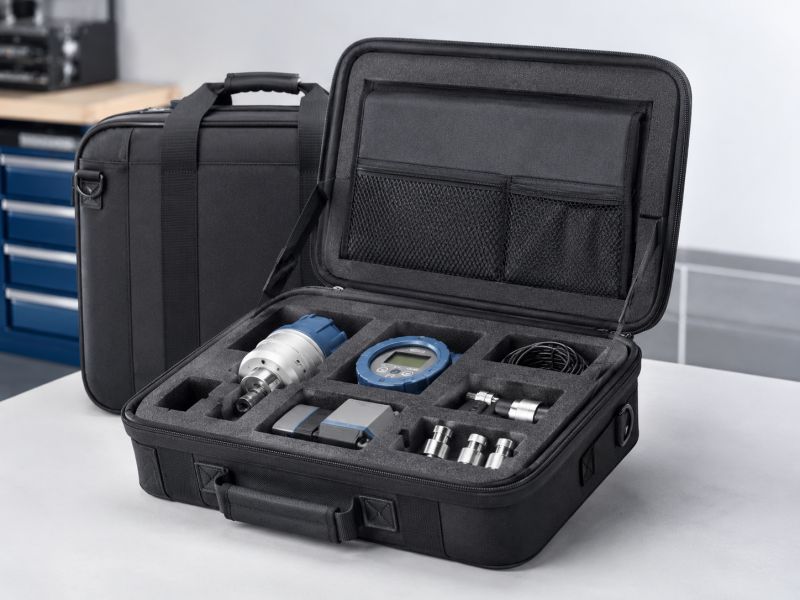
A good equipment carry bag is rarely just a bag. For industrial products, it often becomes part of the product itself. It protects the device before it reaches the end user. It keeps tools, cables, sensors, spare parts, manuals, and accessories in the right place. It helps field teams move faster. It also tells the client that the product inside was planned with care.
The problem is simple: many equipment bags look strong from the outside, but fail inside. The outer fabric may be thick, yet the equipment still moves during transport. The handle may look wide, yet the stress tears after repeated carrying. The foam may feel soft, yet it does not support the weight. That is why fit, foam, and protection design should be reviewed together before sampling.
Jundong supports custom equipment carry bag projects for industrial tools, measuring instruments, electronics, maintenance kits, field service sets, technical devices, and related soft goods. With 20+ years of OEM/ODM bag experience, a Guangdong-based factory, 600+ employees, an 18,000㎡ production area, and 80 QC inspectors, Jundong helps serious project teams move from idea, drawing, or reference sample to practical bag development, sampling, bulk production, inspection, packing, and delivery.
What Are Custom Equipment Carry Bags?
Custom equipment carry bags are protective bags designed around the size, shape, weight, accessories, and use environment of industrial products. They are not standard shopping bags or simple tool pouches. A proper equipment bag may include padding, foam inserts, molded panels, dividers, elastic straps, reinforced handles, water-resistant zippers, labels, asset tags, and branded details to support safer carrying, storage, shipment, and field use.
For industrial products, the bag must do more than look neat. It needs to solve practical movement problems. Will the device shake inside the bag? Will sharp corners wear through the lining? Will a screen touch the zipper wall? Will a power adapter rub against the main unit? Will the handle hold the real loaded weight after repeated use?
A custom equipment bag starts by looking at the product, not the bag style. The equipment defines the structure. Weight defines reinforcement. Fragile zones define foam and lining. Field use defines fabric, zipper, coating, and carry method. Brand presentation defines logo placement, color, label, and packing.
This is also why equipment carry bags sit between product packaging and field-use gear. A carton protects the product during one shipment. A carry bag may protect it many times after delivery.
Are Equipment Carry Bags Different From Regular Bags?
Yes, the difference is inside the design logic. A regular bag usually focuses on storage volume, appearance, and daily convenience. An equipment carry bag focuses on controlled fit, protection, load bearing, and repeated use.
A regular bag may have one large compartment. An equipment bag may need a main cavity, foam slot, cable pocket, charger section, document sleeve, elastic strap, and reinforced bottom. A regular bag may use common zipper tape. An equipment bag may need smoother zippers, water-resistant zippers, puller reinforcement, or zipper guards depending on the device and environment.
The outside may still look clean and simple. The real work happens in the structure.
Who Needs Custom Equipment Carry Bags?
Custom equipment carry bags are useful for industrial product brands, tool companies, electronics companies, testing device teams, medical device projects, safety equipment programs, field service kits, and private label product sets.
They are especially useful when the product is not cheap, not standard-shaped, not easy to replace, or not safe to carry loose. A testing device with probes, a service kit with small tools, or a control unit with cables can quickly become messy without a well-planned bag.
For companies selling equipment as a set, the bag can also improve product presentation. When users open the kit and everything has its place, the whole product feels more professional.
Why Industrial Products Need Better Carrying Protection
Industrial products often travel through more difficult environments than consumer goods. They may move from factory to warehouse, from warehouse to distributor, from distributor to worksite, and then between job locations. Each move creates risk: impact, vibration, moisture, dust, scratching, missing accessories, and user handling mistakes.
A strong outer fabric is helpful, but it is not enough. Real protection comes from layers: outside material, inner lining, foam, dividers, reinforced base, zipper protection, handle structure, and packing rules.
When these details are planned before sampling, the final bag is more likely to protect the product in real use instead of only looking good in photos.
Which Industrial Products Need Protective Carry Bags?

Protective carry bags are useful for industrial products that have high value, irregular shapes, fragile parts, accessory sets, electronic components, or frequent field movement. Measuring tools, testing instruments, electronic controllers, power tools, service kits, medical devices, safety equipment, and technical product sets often need custom protection. If product damage, missing accessories, or poor field handling would create cost or reputation problems, a custom carry bag deserves serious review.
Not every product needs complex foam. Some only need a padded sleeve and durable outer shell. Others need shaped foam, reinforced structure, water-resistant zippers, and separate accessory control. The right level depends on product value, damage risk, use environment, and expected service life.
A simple way to judge the need: ask what happens if the equipment moves inside the bag. If movement causes scratches, broken parts, calibration issues, missing accessories, or poor user experience, the carry solution needs better planning.
Testing Instruments And Measuring Devices
Testing and measuring devices often have screens, buttons, probes, sensors, cables, and calibration-sensitive parts. A loose bag can cause accessories to press against the main unit, which may lead to scratches or damage.
For these products, the inner layout matters a lot. A main equipment slot can hold the device, while elastic bands, mesh pockets, or foam channels can separate probes and cables. If the device is heavy, the bottom panel and handle attachment should also be reinforced.
Sensitive Industrial Electronics And Control Devices
Industrial electronics may need protection from impact, dust, moisture, static-prone handling, and connector damage. The bag should not press directly on buttons, ports, display panels, knobs, or exposed terminals.
Water-resistant zippers, coated fabric, TPU or PVC details, zipper flaps, and raised foam borders can help reduce moisture exposure. These details do not turn a soft bag into a sealed waterproof case, but they can improve daily protection when selected correctly.
Power Tools, Spare Parts, And Maintenance Sets
Tool and maintenance kits usually face abrasion, weight, sharp edges, and repeated carrying. The fabric must resist wear, the seams must hold tension, and the internal layout should prevent metal parts from rubbing against softer items.
For heavy tool sets, simple padding may not be enough. The bag may need 1000D or 1680D Oxford, reinforced webbing, stronger stitching, rivet or bar-tack support, hard base inserts, and divided storage.
Medical, Safety, And Technical Equipment Projects
Medical, safety, and technical equipment projects often require cleaner organization and clearer labeling. Pockets, transparent windows, removable pouches, color-coded sections, woven labels, asset tags, and instruction sleeves can help users identify items faster.
Any testing, labeling, or compliance requirement should be reviewed based on the target region and project details. A serious project should confirm required documents, intended use, materials, labels, and packing rules before production.
How Should The Bag Fit The Equipment?
A custom equipment bag should fit the product closely enough to control movement, but not so tightly that users struggle to remove the device. Fit should consider length, width, height, weight, protruding parts, fragile zones, accessories, cables, and hand access. For industrial projects, a good fit also considers how the product is packed, carried, opened, used, returned to the bag, and protected during repeated movement.
Many equipment bag problems start with poor measurement. A team may give only the outer size of the device, but forget knobs, connectors, cables, rubber feet, handles, or protective covers. These small details can change the inner layout.
Fit also has a human side. A bag can protect well but still annoy users if the device is hard to take out. For field teams, speed matters. A good structure lets users open the bag, see every part, remove the device safely, and put it back without forcing the zipper.
How To Measure Equipment Size, Shape, And Weight
The first step is to measure the real product, not only the drawing. Useful details include:
A photo with dimensions is helpful. A physical sample is better when the shape is irregular or the protection requirement is high.
Why Internal Movement Causes Product Damage
Damage does not always come from a big drop. Small repeated movement can also create problems. A device may rub against a cable head. A screen may touch a hard adapter. A tool edge may scratch the lining and then the product surface.
This is why internal movement control matters. Foam slots, fixed dividers, elastic straps, padded walls, and molded inserts can reduce shaking and separate fragile parts from hard accessories.
A loose bag may look fine during approval, but problems often appear after real transport.
How To Plan Space For Accessories, Cables, And Documents
Industrial equipment often comes with more than the main unit. Chargers, cords, probes, tips, sensors, batteries, manuals, warranty cards, safety labels, spare parts, and installation tools all need space.
The best layout separates heavy items from fragile items. Cables should not press against screens. Sharp tools should not share space with soft-coated parts. Documents should stay flat and easy to find.
For field service kits, quick access may be more important than maximum storage. A clean layout saves time every time the kit is opened.
When To Use Compartments, Elastic Straps, Foam Slots, Or Molded Inserts
Compartments work well when products are boxy or accessories are flexible. Elastic straps are useful for cables, probes, small tools, and parts that need quick access. Foam slots are better for items that need controlled position and edge protection. Molded EVA or shaped inserts make sense when the equipment has a fixed shape and needs a more premium protective structure.
If the product is still changing, adjustable dividers may be safer in early development. If the product is already fixed, custom foam or molded structure can create a cleaner result.
What Type Of Foam Works Best For Equipment Bags?

The best foam depends on equipment weight, shape, fragility, use frequency, and protection level. PE foam is often chosen for firmer support and heavier products. Polyurethane foam is softer and can work well for cushioning and surface contact. EVA foam offers a cleaner, firmer, more shaped feel. EPE foam is light and cost-friendly for many packing and padding uses. The right foam should support the equipment without crushing, sagging, or adding unnecessary bulk.
Foam is not just “soft material.” It is the part that controls energy, space, pressure, and movement. If the foam is too soft, heavy equipment may sink and still move. If it is too hard, fragile surfaces may not get enough cushion. If it is too thick, the bag becomes bulky and expensive. If it is too thin, the protection may be mostly cosmetic.
Foam planning should start from risk. Is the product heavy? Does it have a screen? Does it have sharp corners? Will it be dropped, shipped, stacked, or carried daily? Does the client need a premium molded look or a practical cost-controlled solution?
PE Foam Vs Polyurethane Foam: Which Is Better For Heavy Equipment?
PE foam is usually better when the equipment is heavier and needs firmer support. It holds shape better than many soft foams and can help keep the item positioned. Polyurethane foam can be useful when softer cushioning is needed around sensitive surfaces, but it may compress more depending on density and use.
For heavy equipment, the decision is rarely PE or polyurethane alone. A layered structure may work better: firmer foam for support, softer foam for contact areas, and lining fabric for a clean finish.
The safest choice is to review product weight, drop risk, surface sensitivity, and expected use before confirming foam type.
EVA Foam, EPE Foam, And PU Foam: What Is The Difference?
EVA foam is often used when a cleaner shape, firmer structure, and more premium feel are needed. It is common in semi-rigid cases, molded inserts, and shaped protective structures.
EPE foam is lightweight and useful for padding, packing, and cost-sensitive protection. It can work well when the product does not need a high-end molded look.
PU foam is softer and often used when gentle cushioning is needed. It can help protect surfaces but should be reviewed carefully for heavy products or long-term compression.
Which Foam Density Should Project Teams Consider?
Foam density affects support, cushioning, durability, weight, and cost. Low-density foam may feel soft but may not hold heavy equipment well. Higher-density foam can provide better support, but may feel harder and add cost.
A practical approach is to match density with load and risk. Heavy tools need stronger support. Delicate electronics need cushion and clearance. Product kits with mixed items may need more than one foam type.
When Are Custom Cut Foam Inserts Needed?
Custom cut foam inserts are useful when the equipment has a fixed shape, fragile parts, multiple accessories, or a need for premium presentation. They help each item sit in a defined position.
Cut foam also helps users notice missing parts. If a probe, cable, or tool has its own slot, the empty space is easy to see.
Custom inserts are especially valuable for industrial kits that are sold as complete sets.
How Does Foam Thickness Affect Protection, Bag Size, And Cost?
Thicker foam can improve spacing and shock absorption, but it also increases bag size, material use, shipping volume, and cost. More foam is not always better.
A smart design protects the right areas first: corners, base, screen side, control panel, and accessory contact zones. This can keep the bag practical while still improving protection.
If you already have equipment photos, dimensions, and target quantity, Jundong can help review foam direction and bag structure. Project details can be sent to info@jundongfactory.com for an initial custom review.
Soft Bag Vs EVA Case Vs Hard Case: Which Is Better?
A padded soft bag is suitable for lighter equipment, daily carrying, and flexible storage. An EVA case works well when the product needs more shape, stronger presentation, and better compression resistance. A hard case may be better for high-impact transport, harsh environments, or expensive fragile devices. The best choice depends on protection level, weight, use scenario, budget, packing space, and the way the product is delivered or used.
Many teams start by asking, “Which one is best?” A better is, “Where will this product fail if we choose the wrong structure?”
Soft bags are easier to carry and can be cost-efficient. EVA cases look cleaner and protect shape better. Hard cases are stronger but heavier, bulkier, and often more costly. A hybrid solution can also work: soft outer bag with rigid panels, EVA shell with fabric cover, or hard insert inside a sewn bag.
When Is A Padded Soft Bag Enough?
A padded soft bag can work well when the product is not extremely fragile, the weight is moderate, and the main goal is carrying convenience plus basic protection.
This option is common for field tools, service kits, small devices, chargers, and accessory sets. It can include foam padding, adjustable dividers, mesh pockets, zipper pockets, and reinforced handles.
The key is not to oversell the protection. A soft bag can be strong and practical, but it should not be described like a heavy-duty sealed case unless the structure supports that claim.
When Does An EVA Protective Case Make Sense?
An EVA protective case makes sense when the product needs a more formed shape, cleaner appearance, and better resistance to pressure than a soft bag.
EVA cases are often used for electronics, instruments, compact tools, medical accessories, and branded kits. They can use molded shells, fabric lamination, custom inner trays, mesh pockets, elastic bands, and printed or patch logos.
They are also useful when the bag is part of the product’s perceived value.
When Should Project Teams Consider A Hard Case Or Hybrid Structure?
A hard case or hybrid structure should be considered when the equipment is expensive, fragile, heavy, or exposed to rough transport. It may also be needed when the product requires higher resistance to stacking, impact, or outdoor handling.
For some projects, a hard case is used for shipping and a soft bag is used for daily field carry. This two-solution approach can make sense when one structure cannot satisfy every use.
What Is The MOQ For Custom-Molded EVA Or Industrial Cases?
MOQ depends on material, mold requirement, structure, size, logo process, and project complexity. For Jundong bag projects, the standard MOQ is usually 500 pcs per design. Some simple styles may be reviewed at 200–300 pcs depending on the project. Molded EVA or more complex industrial cases may require a higher quantity because mold, tooling, material setup, and sample work are more involved.
For a practical review, send product photos, dimensions, expected quantity, and protection needs first. This helps avoid guessing.
How To Balance Protection, Weight, Cost, And User Experience
The strongest solution is not always the best solution. If the bag becomes too heavy, users may avoid it. If the foam is too thick, packing volume grows. If the structure is too complex, the cost may rise beyond the product’s position.
The right solution protects the product at the real risk level, fits the brand presentation, and stays practical for daily use.
How To Design Protection For Real Industrial Use

Protection design should match real use, not only product photos. A carry bag may face hand carrying, vehicle storage, warehouse handling, light rain, dust, repeated opening, rough floors, and mixed accessories. Good protection combines impact control, scratch prevention, moisture reduction, abrasion resistance, reinforced stress , and practical access. For industrial products, protection is strongest when material, foam, zipper, lining, handle, and packing rules are planned together.
A bag can pass a first visual check and still fail in the field. The handle may pull at one seam. The zipper may rub against a corner. The lining may tear where a tool edge sits. Moisture may enter from the zipper. The device may be protected, but the accessories may damage each other.
Real-use design means thinking through the path of the product: packed at the factory, shipped in cartons, opened by the end user, carried to a site, placed on a floor, opened many times, and stored again. Each step can reveal a weak area.
Impact Protection For Transport And Field Work
Impact protection starts with fit. If the equipment moves, impact becomes harder to control. Foam walls, base padding, corner reinforcement, and fixed inserts help reduce movement and absorb shock.
For heavier equipment, the bottom is often the first place to review. A reinforced base, hard board, EVA panel, or thicker foam layer can help protect against floor contact and sudden placement.
Scratch Protection For Screens, Panels, And Coated Parts
Screens, coated panels, painted surfaces, and polished parts need clean separation. They should not touch zippers, metal pullers, chargers, sharp tools, or rough fabric.
Soft lining, microfiber-like fabric, smooth polyester lining, foam frame protection, or separate sleeves can help reduce surface damage. For delicate surfaces, the bag should create clearance instead of pressing directly on the part.
How Do Water-Resistant Zippers Protect Sensitive Electronics From Moisture?
Water-resistant zippers help reduce moisture entry through the zipper line, which is often one of the weaker areas in a soft bag. They are useful for field kits, electronic devices, and equipment used in outdoor or semi-outdoor environments.
However, they should be described correctly. A water-resistant zipper can improve moisture protection, but it does not automatically make the whole bag fully waterproof. Fabric coating, seam design, zipper flap, sewing holes, lining, and closure structure also matter.
Can Carry Bags Be Designed Around Military Or Industrial Specification Requirements?
Carry bags can be reviewed around military-style, rugged field, or industrial specification requirements, but the details must be checked project by project. The fabric, foam, stitch pattern, hardware, zipper, webbing, color, labeling, packing, and testing expectations all need to be confirmed before a claim is made.
For strict specification projects, Jundong can review the requirement document, product use, material direction, sample target, and testing needs before development. This is safer than making a broad promise before seeing the actual spec.
Reinforced Handles, Zippers, Seams, And Stress
The strongest material will not help if the stress are weak. For equipment bags, handle attachment, shoulder strap hooks, zipper ends, bottom corners, pocket openings, and divider seams need extra attention.
Bar-tack stitching, reinforced webbing, double stitching, stronger zipper tape, binding, rivets, or inner support panels may be used depending on the design. The goal is simple: make the bag survive the way people actually carry it.
What Materials Are Used For Custom Equipment Carry Bags?

Custom equipment carry bags often use durable woven fabrics, coated fabrics, semi-rigid panels, protective foam, smooth linings, strong webbing, and reinforced trims. Common options include 600D Oxford, 1000D Oxford, 1680D Oxford, polyester, nylon, PVC-coated fabric, TPU-coated fabric, EVA, tarpaulin, PE board, and different inner linings. Material choice should match abrasion risk, equipment weight, moisture exposure, appearance needs, and expected project cost.
Material is not only about fabric thickness. A bag used in a clean office environment does not need the same structure as a field kit thrown into a service van. A lightweight diagnostic device does not need the same base support as a heavy maintenance tool set.
For equipment carry bags, the outer material handles wear, dirt, grip, and brand appearance. Foam handles impact and spacing. Lining protects product surfaces. Webbing carries load. Zippers control access. Binding and stitching hold the whole structure together.
A smart material plan is not the most expensive one. It is the one that matches the real use without wasting cost.
What Fabrics Offer High Abrasion Resistance For Rugged Field Use?
For rugged field use, high-denier Oxford fabrics are often preferred because they offer better wear resistance than lightweight fabrics. 600D Oxford works well for many mid-duty equipment bags. 1000D Oxford gives a stronger feel for field kits and tool sets. 1680D Oxford is often selected when a heavier, tougher appearance and stronger abrasion resistance are needed.
Nylon fabrics can also be useful when strength and flexibility are important. PVC-coated or TPU-coated fabrics may help when the bag needs easier cleaning or better moisture resistance. Tarpaulin can work for rugged outdoor-style projects where wipe-clean performance matters.
The best fabric depends on how the bag will be used. A bag carried by a technician every day needs stronger wear performance than a bag stored mostly in a cabinet.
600D, 1000D, And 1680D Oxford For Durable Industrial Projects
600D Oxford is a practical choice for many custom equipment bags because it balances durability, cost, and production flexibility. It is often used for medium-duty tool bags, service bags, instrument bags, and branded carry kits.
1000D Oxford is better when the bag needs stronger resistance to abrasion and rough handling. It may be selected for heavier tools, outdoor service kits, and rugged field programs.
1680D Oxford gives a thicker, tougher hand feel and a more heavy-duty appearance. It can be useful for premium industrial equipment bags where strength and presentation both matter.
The important detail is not only the denier. Coating, backing, weave, lining, stitching, and reinforcement also affect real performance.
Polyester, Nylon, PVC, TPU, EVA, And Tarpaulin Options
Polyester is widely used because it is stable, practical, and suitable for many custom bag structures. Nylon can offer stronger tear resistance and a flexible feel in selected designs. PVC-coated fabric can improve water resistance and cleaning performance, though the project should review hand feel, weight, and target use.
TPU-coated fabric can offer a cleaner, more flexible coating direction for certain projects. EVA is useful when the bag needs shape, molded structure, or semi-rigid protection. Tarpaulin works well for tough, wipe-clean, outdoor-style equipment bags.
No material is perfect for every product. The right choice depends on use environment, appearance target, expected durability, and cost control.
Inner Lining Choices For Protection And Clean Finish
The inner lining is often ignored, but it touches the product more than the outer fabric does. A rough lining may scratch coated parts. A loose lining may wrinkle and catch equipment corners. A dark lining may hide small parts. A light lining may show dirt more easily.
Common choices include polyester lining, brushed lining, smooth lining, mesh lining, or laminated inner surfaces. For screen protection, a softer contact area may be helpful. For tools, a tougher lining may be better.
If the bag includes foam inserts, the lining can also improve appearance and help protect the foam from wear.
How Material Choice Affects Price, MOQ, And Lead Time
Material affects more than unit cost. It can affect MOQ, sample timing, color availability, printing options, stitching difficulty, packing size, and delivery schedule.
A standard available fabric can make development faster. A special color, coating, texture, or laminated material may require longer sourcing time and higher quantity. Molded EVA or custom foam work can also add development steps.
For early project review, it is better to share the target use and expected price level. Then the factory team can suggest a practical material direction instead of overbuilding the bag.
How Can Logo And Branding Work On Equipment Bags?
Logo and branding on equipment carry bags should look professional, stay durable, and not weaken the bag structure. Common branding methods include embroidery, rubber patch, woven label, heat transfer, screen printing, leather patch, metal plate, reflective print, and custom asset tags. For industrial products, branding should support identity, tracking, product presentation, and field use rather than only decoration.
A carry bag is often the first thing users touch before they see the equipment. If the logo looks cheap, crooked, or poorly placed, the full product set feels less professional. If the branding is too large or placed on a high-wear area, it may peel, crack, or look worn too quickly.
Industrial product branding should feel stable. Small details matter: logo size, position, color contrast, patch edge, stitch quality, tag placement, barcode readability, and whether the label is easy to scan in storage or field service.
Can Custom Branding And Asset Tags Be Integrated Into The Bag?
Yes, custom branding and asset tags can be integrated into the bag during development. Branding may include front logos, woven labels, rubber patches, zipper pullers, inner labels, printed care labels, carton labels, or private label packaging. Asset tags may include serial number labels, barcode labels, QR code labels, service labels, or product identification patches.
For equipment programs, asset tags are not just branding. They help teams track tools, manage kits, identify product versions, and reduce mix-ups. Their position should be easy to scan but not easy to damage.
Which Logo Process Fits Industrial Carry Bags?
The right logo process depends on material, position, color detail, quantity, and durability needs. Embroidery works well on many woven fabrics and gives a textured, stable look. Rubber patches are suitable for rugged and outdoor-style bags. Woven labels work well when small details and clean branding are needed.
Heat transfer and screen printing can work for larger flat areas, but they should be tested on the selected fabric and coating. Metal plates may fit premium kits, but weight, attachment, and scratch risk should be reviewed.
Embroidery, Rubber Patch, Woven Label, Heat Transfer, Or Metal Plate?
The safest approach is to confirm the logo method during sampling, not after bulk production has started.
How To Keep Branding Professional Without Reducing Durability
Branding should not be placed where it will be constantly folded, scraped, bent, or pulled. A logo near a corner, base, zipper curve, or handle stress area may wear faster.
For long-term use, a slightly smaller logo in the right place often looks better than a large logo in the wrong place. Industrial bags usually benefit from clean branding, good contrast, and strong attachment.
If the bag will be used as part of a retail or private label kit, packaging labels and carton marks should be reviewed together with the bag logo to keep the full delivery system consistent.
What Should Project Teams Check Before Sampling?
Before sampling, teams should confirm equipment dimensions, loaded weight, fragile areas, foam needs, accessory list, carry method, material direction, logo files, quantity, packing request, deadline, and destination. A sample should not only check appearance. It should verify fit, foam support, zipper movement, handle strength, accessory layout, branding, packing method, and whether the approved design can be repeated in bulk production.
A sample is not a decoration preview. For equipment carry bags, the sample is where the idea meets physics. Real weight, real shape, real foam, and real access all need to be tested.
Many revisions happen because early information was incomplete. The equipment was heavier than expected. The adapter was larger than the pocket. The screen needed more clearance. The zipper opening was too narrow. The handle felt uncomfortable when loaded.
The more accurate the first review, the fewer sample rounds are usually needed.
What Files And Product Details Should Be Sent First?
Useful starting information includes equipment photos, drawings, dimensions, weight, accessory list, target quantity, logo files, use environment, packing request, and expected delivery timeline.
If available, send photos showing front, back, side, bottom, handles, buttons, connectors, screens, and accessories. A short video showing how the product is used can also help the development team understand access direction.
For private or unreleased projects, confidentiality can be discussed before sending sensitive files.
How Long Does A Custom Equipment Bag Sample Take?
For many custom bag projects, sampling usually takes about 5–7 days after details are confirmed. Some simple styles may be faster. More complex projects with shaped foam, EVA molded structure, special materials, multiple accessories, or detailed branding may need more time.
The timeline depends on material availability, foam cutting, pattern development, logo method, and sample complexity. Rushing a protective equipment bag too much can create problems that appear later in bulk production.
What Should Be Checked In The First Sample?
The first sample should be reviewed with the actual equipment or a precise reference model whenever possible. Do not only check the outside shape.
Important checks include:
How To Review Fit, Foam, Zippers, Handles, And Accessory Layout
A useful test is to pack the full kit and carry it the way the end user will. Lift it. Open it. Remove the device. Put it back. Close the zipper. Shake it lightly. Place it on a table. Carry it by the handle and shoulder strap if both are included.
This simple review often reveals more than a photo. You may find that the foam is too tight, the zipper opening is too short, the handle is not balanced, or the accessory pocket needs a different position.
How To Reduce Sample-To-Bulk Differences
Approved samples should become the production reference. Dimensions, materials, foam thickness, logo position, stitch details, zipper type, lining, packing method, and labels should be recorded clearly.
Bulk consistency depends on clear sample approval, production files, incoming material checks, process control, and final inspection. Jundong’s 80 QC inspectors support multi-stage checks, which helps reduce the risk of problems being found only at the end.
How Does A Factory Control Bulk Quality?
Bulk quality for equipment carry bags is controlled through material inspection, foam and trim checks, cutting accuracy, sewing quality, logo review, structure inspection, fit testing, reinforcement checks, packing review, and carton mark confirmation. For protective bags, inspection should not focus only on appearance. It should also confirm whether the bag can hold weight, protect the product, organize accessories, and repeat the approved sample.
Equipment carry bags are more complicated than simple flat bags. They may include multiple materials, foam layers, shaped inserts, molded panels, zipper systems, straps, inner pockets, logo parts, and packing labels. If one part is wrong, the whole set may not work.
Quality control should be built into the process, not saved for the last carton. A final inspection can catch visible issues, but it cannot fully fix poor material choice, wrong foam thickness, weak handle structure, or inaccurate cutting after the goods are completed.
Incoming Material, Foam, Zipper, And Trim Inspection
The first check starts before sewing. Fabric color, coating, thickness, hand feel, foam type, foam thickness, zipper quality, webbing strength, buckle function, hook quality, label accuracy, and lining should be reviewed against approved requirements.
For equipment bags, foam and zippers deserve special attention. A small foam thickness change can affect fit. A different zipper may affect opening smoothness, water resistance, and user experience.
Cutting, Sewing, Logo, And Structure Checks
Cutting accuracy affects fit. Sewing affects strength. Logo placement affects brand presentation. Structure checks confirm whether pockets, dividers, straps, foam panels, and handles are built according to the approved sample.
During production, inspections may focus on panel alignment, stitch density, seam strength, zipper direction, binding quality, handle attachment, and reinforcement areas.
Fit Testing With Equipment Samples Or Reference Dimensions
When possible, fit testing should be done with real equipment or a reference dummy. This is especially important for shaped foam, molded EVA, fixed compartments, or precise accessory layouts.
If the real equipment cannot be provided, accurate dimensions, drawings, and a clear tolerance plan are important. The goal is to avoid bags that look correct but cannot hold the product properly.
Water-Resistant Detail And Reinforcement Review
Water-resistant details should be checked as a system. A water-resistant zipper helps, but zipper ends, seams, fabric coating, stitching holes, zipper flaps, and closure direction also affect protection.
Reinforcement areas should also be reviewed under realistic loaded conditions. The handle, shoulder strap, D-rings, bottom corners, zipper ends, and inner dividers often take more stress than expected.
Final Packing, Asset Label, And Carton Mark Review
Final packing affects how the bag arrives. A carefully built bag can still deform if it is crushed or packed poorly. For private label, retail, e-commerce, or multi-destination projects, packaging and labels should be reviewed before shipment.
Carton marks may include style, quantity, destination, PO number, SKU, carton number, weight, and shipping details. Clear carton marks help reduce sorting errors and make receiving easier.
What Affects The Price Of Custom Equipment Carry Bags?
The price of custom equipment carry bags is affected by size, material, foam type, foam thickness, structure complexity, molded parts, zipper selection, handle reinforcement, logo process, asset tags, packaging, quantity, inspection needs, and delivery terms. A lower-cost bag may work for simple kits, but high-value industrial products often need better fit, stronger materials, and more controlled protection to reduce damage risk.
The cheapest option is not always the lowest-cost option after use. If a weak bag causes product damage, missing parts, returns, poor presentation, or field complaints, the hidden cost may be much higher than the saved unit price.
At the same time, not every project needs the most expensive solution. The goal is to spend money where it protects the product, improves use, or supports brand value. Foam, reinforcement, and layout should be designed with purpose.
Size, Material, Foam, Structure, And Quantity
Size affects fabric use, foam use, packing volume, and shipping cost. Material affects strength, appearance, and sourcing. Foam affects protection and inner layout. Structure affects labor time. Quantity affects setup efficiency and unit cost.
For Jundong custom bag projects, the standard MOQ is usually 500 pcs per design. Some simple styles may be reviewed at 200–300 pcs depending on the project. Low-cost basic styles or complex molded structures may require higher quantity.
Why Custom Foam Inserts Increase Development Value
Custom foam inserts add cost because they require design, cutting, testing, and more accurate fit control. But they also increase value when the product is fragile, expensive, or sold as a complete kit.
Foam inserts can reduce movement, protect corners, separate accessories, improve presentation, and make missing parts easier to notice. For industrial equipment, that value can be more important than the extra material cost.
How Branding, Asset Tags, Packaging, And Labels Affect Cost
Branding adds cost based on method, size, position, colors, and setup. Asset tags may require label printing, placement control, barcode or QR code readability, and packing consistency.
Packaging also affects cost. OPP bags, hang tags, instruction cards, polybags, color boxes, carton labels, FBA labels, and multi-SKU packing rules all need to be reviewed early.
These details may look small, but they can affect both production flow and delivery accuracy.
How Packaging And Shipping Affect Total Project Cost
Equipment bags can be bulky, especially when foam is thick or EVA structure is used. Packing method affects carton size, shipping volume, and deformation risk.
Express shipping is useful for samples and urgent small shipments. Air freight can support urgent bulk needs. Sea freight is usually better for larger orders. Rail may be reviewed for some European routes. Trade terms and destination should be confirmed before shipping cost is estimated.
How To Lower Cost Without Weakening Protection
Cost can often be improved without making the bag weak. Useful methods include simplifying unnecessary pockets, using standard available materials, reducing oversized foam, choosing practical logo methods, sharing accessory space intelligently, and planning packing efficiently.
The wrong way to reduce cost is to remove the parts that actually protect the product. A better way is to protect the key risk areas first and simplify low-value details.
What Should Project Teams Send For A Practical Quote?
For a practical quote, send equipment photos, dimensions, weight, fragile areas, accessory list, foam requirements, material preference, logo files, asset tag needs, target quantity, packing request, deadline, destination, and trade terms if available. The more complete the details, the easier it is to review structure, material, foam, MOQ, sample time, cost, and production feasibility without repeated back-and-forth.
A one-line request like “Please quote a custom equipment bag” is too vague for a reliable price. Equipment bags depend on the product. A small change in weight, foam thickness, zipper type, or accessory layout can change cost and development direction.
A practical quote does not need perfect information, but it needs enough details to avoid guessing. Even rough dimensions and clear photos are a strong start.
Equipment Photos, Dimensions, Weight, And Fragile Areas
Send photos from multiple angles, including front, side, back, bottom, and all parts that need protection. Mark screens, connectors, buttons, sharp corners, handles, fragile surfaces, and special areas that should not be pressed.
Dimensions and weight are important because they affect pattern size, foam support, handle strength, and shipping volume. If the product is irregular, a drawing or physical sample will help.
Protection Needs, Foam Requirements, And Use Scenario
Explain how the bag will be used. Is it for product delivery, field service, retail kits, warehouse storage, outdoor work, or daily technician use? Will the bag be placed in vehicles? Will it face light rain or dust? Will it carry one device or a complete set?
Also share your foam preference if you already have one. If not, Jundong can review PE foam, PU foam, EVA foam, EPE foam, padding, dividers, or molded options based on your product.
Logo Files, Asset Tag Needs, Quantity, Packaging, And Deadline
Logo files should be clear enough for production review. Vector files are preferred when available. Share logo size, position, color requirements, and whether the logo should appear on the outside, inside label, zipper puller, patch, packaging, or carton.
If asset tags are needed, explain whether they are serial labels, barcode labels, QR code labels, woven labels, or printed identification tags.
Quantity, packaging, and deadline help estimate cost and lead time. For many custom projects, samples usually take about 5–7 days after details are confirmed, and bulk production usually takes about 20–30 days depending on project complexity and order schedule.
Destination, Trade Terms, And Delivery Timeline
Shipping cost and delivery planning depend on destination, carton size, weight, delivery deadline, and trade terms. If you already work with a forwarder, share the shipping method and warehouse requirements. If you need delivery advice, the options can be reviewed based on urgency and order size.
Jundong can support project communication for express, air, sea, rail, and appointed forwarder shipments. Customs and import requirements should always be reviewed based on destination and project details.
When Should NDA Or Project Confidentiality Be Discussed?
If the product is unreleased, patented, private label, or connected to a sensitive industrial program, confidentiality should be discussed before detailed files are shared.
A clear project review can still begin with general dimensions, use scenario, protection needs, and quantity. More sensitive drawings or brand files can be shared after confidentiality expectations are aligned.
For a practical review of a custom equipment carry bag, send photos, dimensions, weight, logo needs, target quantity, and protection requirements to info@jundongfactory.com. The goal is not to guess a bag style, but to build a carry solution that fits the product, protects the equipment, and can be repeated in bulk production.
Closing: Build The Bag Around The Product, Not The Other Way Around
A custom equipment carry bag should start with the product’s real risks. What can move? What can scratch? What can break? What can get wet? What gets lost? What makes field use easier? What needs to look professional when the product reaches the end user?
Fit controls movement. Foam controls pressure and impact. Material controls wear. Zippers control access and moisture exposure. Reinforcement controls load. Labels and packing control delivery accuracy. When these parts work together, the bag becomes more than a container. It becomes a reliable part of the industrial product experience.
Jundong supports custom carry bag projects for industrial tools, instruments, electronics, maintenance kits, technical equipment, EVA protective cases, padded soft bags, and related soft goods. With project review, sampling, multi-stage inspection, private label support, and bulk production experience, Jundong helps equipment teams turn practical protection needs into production-ready custom bags.
FAQs About Custom Equipment Carry Bags For Industrial Products
1. Can you make a custom equipment carry bag based on our actual product size?
Certainly. A custom equipment carry bag should be built around the real product, not around a standard bag size. For the first review, please share product photos, length, width, height, weight, fragile areas, accessory list, and how the bag will be used. If the product has protruding buttons, screens, sensors, handles, ports, or cables, those details should be shown clearly. This helps the bag structure, foam insert, zipper opening, handle position, and inner layout fit the equipment properly. For irregular or high-value devices, a physical sample or 3D drawing can make the review much more accurate.
2. What foam should we choose for heavy industrial equipment bags?
For heavy industrial equipment, firmer foam is usually safer than very soft foam because it supports weight better and helps reduce internal movement. PE foam and EVA foam are often considered when the product needs stronger shape support, while PU foam may be useful for softer surface cushioning. Many projects use a layered structure: firmer foam outside for support, softer contact areas for delicate surfaces, and fabric lining for a clean finish. The best choice depends on product weight, drop risk, sharp corners, screen position, and expected carrying frequency. Foam should be tested during sampling, not guessed from a photo.
3. Do we need custom cut foam inserts, or is normal padding enough?
Absolutely, custom cut foam inserts are worth considering when the equipment is expensive, fragile, irregular in shape, or sold as a complete kit with accessories. Normal padding can protect against light contact, but it may not stop the device from moving inside the bag. Custom cut foam creates defined spaces for the main unit, chargers, probes, cables, tools, or spare parts. It also makes missing items easier to spot. If the product is simple, lightweight, and not highly fragile, padded walls and dividers may be enough. The right choice depends on protection risk and project value.
4. Can water-resistant zippers protect sensitive electronics?
Yes, water-resistant zippers can improve moisture protection around the zipper opening, which is often a weak area in soft equipment bags. They are useful for industrial electronics, testing kits, field devices, and service tools used in semi-outdoor environments. However, a water-resistant zipper alone does not make the whole bag fully waterproof. Fabric coating, seam construction, zipper flap, sewing holes, lining, and closure direction also affect protection. If electronics are moisture-sensitive, it is better to review the full structure instead of relying on one component. For stronger protection, coated fabric, zipper guards, and raised foam areas may be used together.
5. Which fabric is best for rugged field use?
For rugged field use, 600D, 1000D, and 1680D Oxford are common choices because they offer stronger wear resistance than light promotional fabrics. 600D Oxford is practical for medium-duty equipment bags. 1000D Oxford is better for tougher field kits and tool sets. 1680D Oxford gives a heavier, more durable feel and a stronger visual impression. Nylon, PVC-coated fabric, TPU-coated fabric, and tarpaulin may also be reviewed when flexibility, easy cleaning, or moisture resistance matters. The best fabric is not always the thickest one. It should match product weight, abrasion risk, weather exposure, appearance needs, and target cost.
6. Can you integrate our logo, asset tags, barcode labels, or QR codes?
Definitely. Custom equipment carry bags can include outside logos, woven labels, rubber patches, embroidery, printed labels, inner care labels, zipper puller branding, barcode labels, QR code tags, and serial number labels. For industrial product sets, asset tags are especially useful because they help identify equipment, track kits, manage versions, and reduce mix-ups during warehouse or field use. Placement should be easy to scan but not easy to scratch or tear. Logo files in AI, PDF, CDR, PSD, or high-resolution artwork are helpful for review. If the project is confidential, NDA details can be discussed before sensitive files are shared.
7. What is the MOQ for custom equipment carry bags?
Usually, Jundong’s standard MOQ is 500 pcs per design for custom bag projects. Some simple equipment bag styles may be reviewed at 200–300 pcs depending on fabric availability, structure, logo method, and project details. More complex designs, such as molded EVA cases, special foam inserts, custom colors, or highly structured industrial cases, may require a higher quantity because tooling, material preparation, and sample work are more involved. MOQ should be reviewed after the product size, foam requirement, material direction, logo process, and packing details are clear. This keeps the quote practical instead of vague.
8. How long does sampling take for a custom equipment carry bag?
In most cases, custom equipment carry bag samples take about 5–7 days after the main details are confirmed. Simple styles may move faster, while projects with shaped foam, molded EVA, special fabric, water-resistant zippers, multiple accessories, or detailed branding may need more time. The sample should check more than appearance. It should verify equipment fit, foam support, zipper opening, handle comfort, accessory layout, logo position, and packing method. If the first sample is tested with the real device, the revision process is usually much more efficient and the bulk result becomes easier to control.
9. How do you control sample-to-bulk consistency?
Sure. Sample-to-bulk consistency depends on clear approval details and multi-stage checks, not only final inspection. After the sample is approved, the material, color, foam thickness, zipper type, stitching details, logo position, inner layout, packaging rule, and carton mark should become the production reference. Jundong has 80 QC inspectors and checks materials, cutting, logo application, sewing, structure, function, packing, and shipment preparation during different stages. For equipment bags, fit testing with the actual product or reference dimensions is especially important. This helps reduce surprises after bulk goods are finished.
10. What should we send to get a practical quote?
Of course. For a practical quote, send product photos, dimensions, weight, fragile areas, accessory list, expected quantity, logo file, foam preference, material preference, packing request, deadline, and destination. If you are not sure about foam or material, share the use scenario instead: field service, product kit, warehouse storage, outdoor use, retail set, or technical equipment delivery. This helps the project team review the bag structure and protection level. You can send details to info@jundongfactory.com. The more complete the first message is, the faster the quote and sample direction can become clear.