 Skip to content
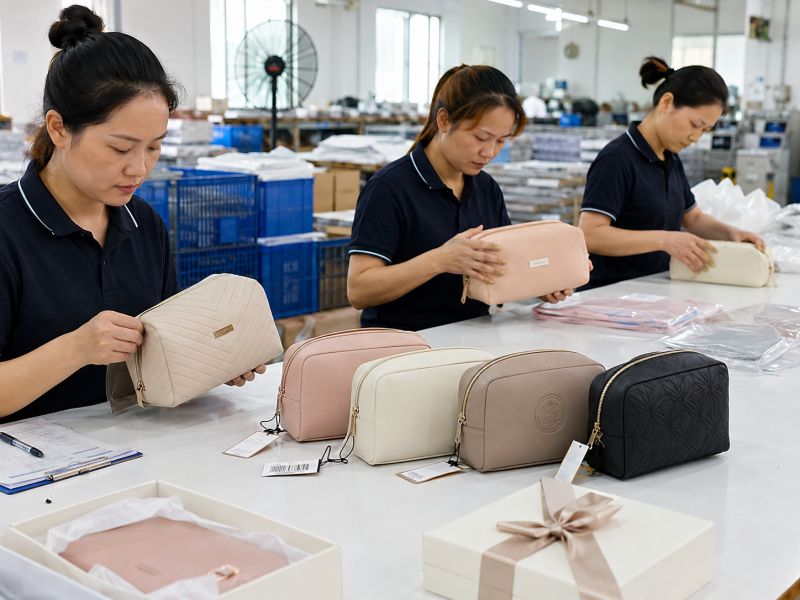
A cosmetic bag logo looks like a small detail.
In real beauty retail projects, it is not small at all.
The wrong logo method can make a good pouch look cheap. It can also slow down sampling, raise unit cost, create color mismatch, scratch during packing, fade after use, or look different from one bulk order to the next. That is why experienced beauty brands do not choose a logo method only from a photo. They check the bag material, the brand style, the selling channel, the order quantity, the packing direction, and the repeat order plan before they approve the logo route.
Here is the part many teams miss.
A cosmetic bag is often seen as a simple accessory. But for a skincare kit, makeup set, holiday box, travel pouch, Amazon listing, subscription box, or retail gift program, the bag becomes part of the brand experience. The logo is what connects that pouch back to the brand. It needs to look right in hand, in photos, inside a gift box, on a retail shelf, and after the end user has opened and used it many times.
The best cosmetic bag logo method is not always the most expensive one. Metal plate gives a premium look. Woven label works well on soft fabric pouches. Printing is flexible for colorful artwork and campaign projects. Embossing or debossing gives PU leather and vegan leather bags a clean branded finish. The right choice depends on material, quantity, price target, packing plan, and how stable the logo must remain during repeat production.
For beauty brands, private label teams, retailers, and online sellers, logo choice is also a production decision. It affects sampling, tooling, inspection, packing, final photos, and long-term product consistency. When planned early, the logo can make the cosmetic bag feel more polished. When left until the end, it often becomes the reason for delays, extra sample rounds, or last-minute compromises.
Jundong works with beauty, lifestyle, travel, retail, and project-based teams that need custom cosmetic bags with practical material advice, logo method support, sampling, packing coordination, and bulk quality control. If your team is developing a new makeup pouch, skincare gift bag, travel cosmetic organizer, or private label beauty pouch, the sections below will help you choose a safer and more suitable logo method before sampling begins.
What Makes Logo Method a Production Decision, Not Just a Design Choice?
A cosmetic bag logo method is a production decision because it changes how the bag is sampled, costed, assembled, inspected, packed, and repeated. A logo is not only decoration. It must match the bag material, surface texture, zipper and hardware, retail use, order quantity, and final packing method. A good choice makes the bag look branded and stable. A poor choice can lead to cracking, fading, loose metal plates, unclear labels, or uneven bulk results.
Many beauty teams begin with a simple request: “We want our logo on this bag.” That sounds easy. But a factory cannot choose the right method from the logo file alone. A thin logo line may look clean on screen but fail on woven label. A small serif font may disappear when debossed into soft PU. A bright printed logo may look different on natural canvas than on smooth polyester. A metal plate may look beautiful on a structured pouch but too heavy on a thin folding bag.
This is why the logo method should be discussed together with the product structure. A cosmetic bag with padding, lining, wide gusset, and a stable front panel can hold metal plate better than a soft pouch that folds flat. A canvas pouch may accept screen printing, woven label, embroidery, or patch, but each option gives a different feeling. A PVC pouch may need UV printing or heat transfer testing because the surface is non-porous and can reject ordinary ink.
The logo also affects packing. A metal plate may need scratch protection. A raised logo may leave pressure marks when bags are stacked tightly. A printed logo may need curing time before packing. A side woven label may be hidden if the pouch is packed inside a gift box facing the wrong direction.
For small trial projects, a simple logo method can keep the first order easier. For mature retail programs, a more refined logo method may support higher shelf value. For repeat orders, stable logo records become more valuable than one beautiful sample.
Which Cosmetic Bag Logo Method Fits Your Beauty Retail Project?

The right cosmetic bag logo method depends on the bag material, retail position, visual style, order size, and packing plan. Metal plate fits premium gift sets and structured pouches. Woven label fits soft fabric cosmetic bags and private label lines. Printing fits colorful artwork, Amazon listings, and promotional beauty pouches. Embossing or debossing fits PU leather, vegan leather, and minimalist beauty designs.
Use this table as a practical starting before sampling.
| Logo Method | Best Fit | Best Materials | Visual Feeling | Main Risk to Check |
|---|---|---|---|---|
| Metal Plate | Premium beauty gift sets, high-value cosmetic pouches | PU, nylon, velvet, quilted fabric, structured bags | Polished, refined, retail-ready | Scratching, plating color, attachment strength |
| Woven Label | Private label pouches, soft lifestyle bags, repeat SKU lines | Canvas, cotton, nylon, polyester | Soft, clean, natural | Small letters, label edge, sewing position |
| Printing | Colorful artwork, Amazon beauty pouches, event projects | Canvas, cotton, polyester, coated fabrics after testing | Clear, flexible, direct | Color shift, fading, cracking, fabric texture |
| Embossing | Premium PU pouches, raised logo needs | PU, vegan leather, faux leather | Tactile, dimensional, premium | Material thickness, pressure, logo clarity |
| Debossing | Minimalist PU cosmetic bags, clean logo finish | PU, vegan leather, leather-like materials | Subtle, quiet, elegant | Shallow effect, visibility on dark surfaces |
| Rubber or PVC Patch | Travel, sporty, outdoor beauty kits | Nylon, polyester, neoprene | Durable, modern, practical | Weight, edge shape, sewing or bonding |
| Embroidery | Soft fabric bags, crafted look | Canvas, cotton, velvet, polyester | Textured, tactile, handmade feel | Thread density, puckering, small details |
A brand selling a clean skincare kit may choose debossed PU because it looks calm and expensive without adding shine. A colorful makeup line may choose printing because the artwork needs to be visible in online photos. A retailer building several seasonal pouch colors may choose woven label because it can keep the brand mark consistent across different fabric colors. A holiday gift set may choose metal plate because it adds a stronger gift-ready feeling.
The best choice is rarely based on one factor. It is the balance between look, cost, production stability, and final use.
When Should Beauty Brands Choose Metal Plate Logo for Cosmetic Bags?
Beauty brands should choose metal plate logos when the cosmetic bag needs a premium retail look, stronger shelf presence, and a polished branded finish. Metal plate works well on structured PU cosmetic bags, velvet pouches, quilted makeup bags, skincare gift sets, and higher-value private label lines. It is less suitable for very thin, foldable, low-cost pouches unless the plate is small, light, and well protected during packing.
Metal plate is one of the fastest ways to make a cosmetic bag feel more finished. It catches light. It gives the pouch a hardware detail. It also pairs well with zipper pullers, buckles, rivets, and gold or silver trim. For beauty retail, that can be powerful.
But metal plate is not automatically better.
A large plate on a small pouch can feel heavy. A shiny gold plate on a soft natural cotton pouch may look out of place. A thin pouch without support may wrinkle around the attachment area. A poorly plated logo can scratch, fade, or look uneven after packing and transport.
Before approving a metal plate logo, check these details:
| Metal Plate Detail | Why It Matters |
|---|---|
| Size | Too large can feel heavy; too small may lose logo clarity |
| Thickness | Affects weight, strength, and premium feel |
| Plating color | Should match zipper, puller, and other hardware |
| Edge finish | Sharp or rough edges can damage fabric or hands |
| Attachment method | Rivet, sewing, adhesive, or backing plate must fit structure |
| Scratch protection | Needed when plates touch during packing |
| Position | Should not interfere with zipper, folding, or gift box layout |
Metal plate works especially well for beauty kits that need to feel like a retail accessory rather than a simple giveaway. It is a strong option for holiday beauty sets, skincare launch kits, VIP gift programs, and high-value cosmetic organizers.
Still, it needs careful sampling. Ask for a close-up photo, flat-lay photo, filled-bag photo, and packing photo before approval. A metal plate that looks good on an empty sample may behave differently when the pouch is filled, stacked, or placed inside a gift box.
When Is Woven Label Better for Custom Makeup Bags?
Woven label is often better for custom makeup bags when the brand wants a soft, natural, clean, and repeatable logo effect. It works well on canvas, cotton, nylon, polyester, and casual travel cosmetic bags. It is also useful for private label programs with multiple colors or repeat SKUs because the same label can be used across different fabric versions with stable branding.
Woven label has a quieter look than metal plate or large printing. That is why many lifestyle, clean beauty, natural skincare, and casual cosmetic pouch projects use it. It does not shout. It simply marks the product in a way that feels soft and intentional.
It also gives flexibility. A label can be placed on the front panel, side seam, inner lining, zipper side, or bottom edge. A small side label can make a pouch feel like a lifestyle accessory. A front woven label can make the brand more visible. An inner label can carry product information, material content, or care details without making the outside too busy.
But woven labels have limits.
Fine lines, tiny letters, thin spacing, and small icons may not weave clearly. If the logo has gradient colors, shadows, or complex artwork, printing may work better. Label color also needs testing against the fabric color. A cream label on beige canvas may look warm and natural, but it may not show well in product photos.
Useful checks before approving woven labels:
| Check Item | Practical Tip |
|---|---|
| Logo size | Avoid overly small text |
| Label edge | Choose folded edge or heat-cut edge based on look |
| Stitching | Match or contrast thread intentionally |
| Placement | Avoid zipper curves and high-friction areas |
| Color | Check under natural light and photo light |
| Bulk repeat | Keep a label sample record for future orders |
Woven label is a strong choice when your brand wants steady branding across a family of cosmetic bags: mini pouch, travel pouch, toiletry pouch, gift set pouch, and organizer bag. It is also a good route when the bag itself has a rich fabric texture and the logo should not fight with the material.
How Does Printing Work for Cosmetic Bag Logos?

Printing works best when the logo or artwork needs clear color, larger coverage, flexible design, or a lower development barrier than metal plate or molded details. Common routes include screen printing, heat transfer, digital printing, and UV printing. The right choice depends on the fabric surface, artwork complexity, color number, order quantity, and how the bag will be folded, touched, cleaned, or packed.
Printing is popular because it is direct and flexible. If your team has a colorful makeup logo, a seasonal campaign graphic, a large slogan, or a pattern that needs to appear clearly in online photos, printing may be the most practical route.
Screen printing is often used for simple logos on canvas, cotton, polyester, and non-woven fabrics. It gives clear solid color and works well for larger quantities. Heat transfer is useful for smoother surfaces and more detailed artwork. Digital printing can support more complex images or small batches, depending on material and artwork needs. UV printing can be considered for harder or coated surfaces, including some PVC or TPU projects, but adhesion testing is needed.
Printing should never be approved only from a digital mockup.
Real fabric changes everything. Canvas texture can break fine edges. Cotton can absorb color differently. Polyester may show sharper lines. PVC can reject ink if the wrong method is used. Dark fabric may need a white base layer. Large print areas may feel stiff if the ink film is too heavy.
Here is a practical way to think about printed cosmetic bags:
| Project Type | Better Printing Route |
|---|---|
| Simple one-color logo on canvas | Screen printing |
| Colorful makeup artwork | Heat transfer or digital printing |
| Clear PVC cosmetic pouch | UV printing or tested heat transfer |
| Full pattern pouch | Digital or sublimation route, depending on fabric |
| Promotional beauty pouch | Screen printing or heat transfer |
| Amazon main-image product | Method that keeps logo sharp under photo lighting |
Printing is often best for beauty promotions, event pouches, online store launches, seasonal kits, and first product tests. It keeps design options open and helps the brand make the logo visible without adding hard components.
Before bulk order, test rubbing, folding, packing pressure, and color under realistic use. A printed logo should not only look good on day one. It should still look clean after the pouch is handled, shipped, opened, and used.
Is Embossing or Debossing Best for PU Leather Cosmetic Bags?
Debossing is often the better choice for PU leather cosmetic bags when the brand wants a clean, subtle, and premium logo effect. Embossing creates a raised logo, while debossing presses the logo into the material. Both can work well on PU, vegan leather, and faux leather, but the final effect depends on material thickness, surface texture, logo line width, pressure, and whether foil color is added.
Many people use “embossing” to describe all pressed logos. In production, embossing and debossing are different.
Embossing raises the logo above the surface. Debossing presses the logo down into the surface. On cosmetic bags, debossing is often more common because it creates a clean, quiet mark that fits minimalist beauty branding.
Debossing works best when:
- the PU surface has enough thickness
- the logo is not too small
- the lines are not too thin
- the surface texture is not too deep
- the panel has enough support
- the logo does not cross seams or curves
Blind debossing means the logo has no added color. It looks subtle and elegant, but it may be hard to see on dark or textured PU. If the brand needs stronger visibility, foil debossing can add gold, silver, rose gold, black, or other metallic color. This works well for skincare gift sets and premium beauty pouches, but foil adhesion and color should be tested.
Embossing can create more dimension, but it may require stronger structure and careful pressure control. On soft PU, the raised effect may not stay as sharp as expected. On small cosmetic pouches, raised logos can also be pressed during packing.
For many beauty teams, the best route is simple: use debossing when the bag should feel clean, quiet, and refined. Use foil debossing when the logo needs more visibility. Use metal plate when the bag needs stronger hardware value.
What Type of Logo Works Best on PU, Canvas, Nylon, PVC, and Velvet Cosmetic Bags?

The best logo type changes by cosmetic bag material. PU leather often fits debossing, embossing, foil stamping, or metal plate. Canvas fits screen printing, woven label, embroidery, or patch. Nylon and polyester fit woven label, heat transfer, rubber patch, or metal plate. PVC and TPU need tested UV printing, heat transfer, external label, or metal plate. Velvet often works better with metal plate, woven label, or embroidery.
Material comes before logo method. A good logo on the wrong surface can still fail.
Use this table when planning a new beauty pouch line.
| Cosmetic Bag Material | Better Logo Methods | What to Confirm Before Sampling |
|---|---|---|
| PU Leather | Debossing, embossing, foil stamping, metal plate | Surface texture, pressure marks, logo depth, foil adhesion |
| Vegan Leather | Debossing, foil debossing, metal plate, woven label | Heat tolerance, grain texture, logo visibility |
| Canvas | Screen printing, woven label, embroidery, fabric patch | Fabric texture, ink edge, shrinkage, stitch tension |
| Cotton | Screen printing, woven label, embroidery | Color absorption, soft handfeel, wash or rubbing needs |
| Nylon | Woven label, heat transfer, rubber patch, metal plate | Heat reaction, surface smoothness, stitch strength |
| Polyester | Heat transfer, screen printing, woven label | Color matching, print sharpness, surface coating |
| PVC / TPU | UV printing, heat transfer, external label, metal plate | Adhesion, cracking, pressure marks, transparency effect |
| Velvet | Metal plate, woven label, embroidery | Pile direction, pressure marks, color shading |
| Quilted Fabric | Metal plate, woven label, embroidery | Seam position, quilting distortion, backing support |
| Neoprene | Heat transfer, rubber patch, woven label | Stretch, bonding, edge recovery |
A beauty brand may use more than one material across one line. For example, a travel cosmetic bag collection may include a PU pouch, a mesh organizer, a clear PVC pouch, and a soft toiletry bag. Using the same logo method on every item may not work. A smarter route may use debossing on PU, woven label on nylon, and UV printing on clear PVC, while keeping the same logo size logic and color style.
This creates a more stable product family. Each material gets a suitable logo method, but the brand still looks consistent.
If you are unsure which material and logo route fit your project, send the bag type, material idea, logo file, and target quantity to info@jundongfactory.com. Jundong can help check which options are safer before sample work begins.
How Do Logo Method, Placement, and Packing Affect Retail Shelf Appeal?
Logo method, placement, and packing affect how a cosmetic bag appears in retail shelves, gift boxes, online photos, and unboxing moments. A well-placed logo should be visible without feeling forced. It should not be blocked by a barcode, hangtag, zipper puller, fold line, or carton pressure. For beauty retail, the logo must work with the final display direction, not only on a flat sample photo.
A cosmetic bag may look perfect when placed flat on a table. But that is not how it will always be seen.
It may be standing inside a gift box. It may be folded in a polybag. It may be photographed from the front for Amazon. It may be stacked in a carton. It may be displayed in a retail set with bottles, brushes, masks, or skincare jars. The logo should still make sense in that real setting.
Common placement options include:
| Logo Placement | Best Use |
|---|---|
| Front center | Strong brand visibility for retail and online photos |
| Lower front corner | Cleaner lifestyle look |
| Side seam woven label | Soft, subtle branding |
| Inner label | Care, material, or private label detail |
| Zipper puller | Small premium detail |
| Metal plate on front panel | Premium gift set or structured pouch |
| Patch on front or side | Sporty, travel, or casual beauty kits |
| Printed pattern | Campaign artwork or strong visual identity |
A front logo may be best for Amazon and online shops because product photos need quick recognition. A side woven label may be better for natural skincare brands that want a softer lifestyle feeling. A metal plate may look great on a retail shelf but needs enough packing protection. An inner label may be useful when the outer design must stay clean.
Packing should be planned before the logo is approved. If the bag will be packed inside a gift box, check the direction. If each unit needs a barcode, make sure the label does not cover the logo. If the bag is folded, avoid placing a printed logo on the fold line. If a metal plate faces another metal plate inside the carton, add protection to reduce scratches.
A good logo does not only look nice. It survives the way the product is packed, shipped, opened, and displayed.
What Affects the Price of Custom Cosmetic Bag Logo Methods?
Custom cosmetic bag logo price is affected by method, logo size, color count, mold or setup needs, material testing, order quantity, number of SKUs, and packing details. Metal plate and embossing may need tooling. Printing cost changes with color and coverage. Woven label cost depends on label size, quantity, and weaving detail. A lower unit price usually becomes easier when the same logo method is repeated across larger quantities.
Price should be viewed as cost per stable result, not only cost per logo.
A cheap print that cracks after folding is not cheap. A metal plate that scratches during packing adds risk. A woven label that cannot show small letters may need a redesign. A debossed logo that is too shallow may force another sample round.
Here are common cost drivers:
| Cost Factor | Why It Changes Price |
|---|---|
| Logo method | Metal, printing, woven label, embossing all use different processes |
| Logo size | Larger logos use more material, time, or print area |
| Color count | More colors can add setup or process complexity |
| Mold or tooling | Metal plate, embossing, debossing, and rubber patch may need tooling |
| Material testing | Special surfaces need real testing before approval |
| Order quantity | Larger orders spread setup cost better |
| SKU count | More colors or sizes require more control and sorting |
| Packing method | Gift box, barcode, hangtag, insert card, and polybag affect handling |
| Quality standard | More inspection steps and tighter tolerance add management work |
For Jundong projects, the usual starting quantity is 500 pcs per design. For some simple styles, 200–300 pcs may be arranged, but the unit cost will usually be higher because material buying, sample work, cutting, sewing, logo application, inspection, and packing still follow a complete process. Once the order reaches 500 pcs or more, pricing usually becomes more competitive.
This is why serious beauty brands often plan logo methods with future repeat orders in mind. If the same woven label, metal plate, or embossing mold can be reused across new colors or later seasons, the development cost becomes easier to justify.
How Long Does the Cosmetic Bag Logo Sample Process Take?
A cosmetic bag logo sample process usually depends on material, logo method, tooling, and revision needs. A regular sample often takes about 5–7 days after key details are confirmed. Some simple styles may move faster, around 2–3 days. Metal plate, embossing, debossing, special printing, or custom components may need more time because logo effect, mold, color, placement, and packing need to be checked before bulk production.
A good sample process should not feel mysterious. It should follow clear steps.
| Step | What Happens |
|---|---|
| 1. Confirm bag style | Cosmetic pouch, toiletry bag, organizer, clear pouch, gift set bag |
| 2. Confirm material | PU, canvas, nylon, polyester, PVC, velvet, neoprene |
| 3. Check logo file | AI, PDF, SVG, or clean high-resolution artwork |
| 4. Confirm logo size | Real size in mm or inches |
| 5. Confirm placement | Front, side, inner label, zipper puller, patch position |
| 6. Choose method | Metal plate, woven label, printing, embossing, debossing |
| 7. Make sample | Logo sample, material sample, or full bag sample |
| 8. Review details | Color, position, handfeel, clarity, packing direction |
| 9. Revise if needed | Adjust size, method, color, or placement |
| 10. Approve before bulk | Keep records for production and inspection |
A full bag sample is usually better than a logo-only test when the project is for retail. Why? Because logo effect changes once the bag is assembled. A front metal plate may pull the fabric differently. A printed logo may sit closer to the zipper than expected. A debossed logo may look too subtle after the pouch is filled.
For beauty sets, it is also useful to test the bag with the actual products inside. A pouch that looks good empty may bulge when filled with skincare bottles. The logo may tilt, curve, or sit too low after loading.
If your launch schedule is tight, send clear files early: bag size, material idea, logo artwork, quantity, target packing, and desired delivery time. This helps avoid slow back-and-forth before the first sample.
How Can a Cosmetic Bag Factory Control Logo Quality from Sample to Bulk?

Logo quality from sample to bulk is controlled by clear sample records, approved color references, logo placement tolerance, material batch checks, process inspection, and final review before packing. The factory should keep approved samples, logo files, woven label samples, metal plate references, print tests, embossing depth records, and packing photos. This helps reduce drift when producing hundreds, thousands, or repeat orders later.
One beautiful sample is not enough.
For a beauty brand, the real test begins when the same look must be repeated across many units. If the first 50 pieces look good but the next 500 have shifted logos, uneven print color, loose plates, or different embossing depth, the project has failed in practice.
Logo quality control should cover several stages.
| Stage | What Should Be Checked |
|---|---|
| Incoming materials | Fabric color, PU surface, PVC clarity, label material, metal plating |
| Pre-production sample | Approved logo size, method, placement, and packing direction |
| Cutting | Panel position, grain direction, print area allowance |
| Logo application | Print color, label stitch, plate fixing, embossing pressure |
| Sewing | Logo alignment after assembly |
| In-process review | Random checks during production |
| Final inspection | Logo clarity, position, scratch marks, loose parts |
| Packing check | Barcode, hangtag, polybag, carton mark, scratch protection |
Jundong is based in Guangdong and supports custom bag projects with design, development, sampling, material sourcing, logo application, production, packing, and export coordination. The team works with many bag materials, including fabric, leather, PU, PVC, neoprene, plush, and other soft goods materials. Its factory scale, internal sampling support, and quality team help support projects where logo consistency and repeat production matter.
For medium and larger beauty programs, this matters more than a quick quote. A stable partner should help prevent problems before they reach bulk order, not only fix them after inspection.
What Should Beauty Brands Send Before Requesting a Quote?
Beauty brands should send bag type, size, material idea, logo file, logo size, placement, preferred logo method, quantity, target retail use, packing needs, sample deadline, and delivery plan before requesting a quote. Clear project details help the factory recommend a safer logo method, estimate cost more accurately, reduce sample revisions, and prepare a cosmetic bag that fits both brand presentation and bulk production.
A strong request does not need to be complicated. It just needs the right details.
Before asking for a price, prepare this:
| Detail to Send | Example |
|---|---|
| Bag type | Makeup pouch, toiletry bag, clear cosmetic bag, travel organizer |
| Size | 20 x 12 x 8 cm, or reference sample size |
| Material | PU leather, canvas, nylon, PVC, velvet, polyester |
| Logo file | AI, PDF, SVG, or clean high-resolution artwork |
| Logo method | Metal plate, woven label, printing, embossing, or open to advice |
| Logo size | Width and height |
| Logo position | Front center, side label, inner label, zipper puller |
| Quantity | 300 pcs, 500 pcs, 2,000 pcs, 10,000 pcs |
| Color plan | One color or multiple SKU colors |
| Packing | Polybag, hangtag, barcode, gift box, insert card |
| Sales channel | Retail shelf, Amazon, Shopify, spa kit, hotel, event, gift set |
| Timeline | Sample deadline and bulk delivery target |
| Reference images | Similar style, material, or structure |
The more clearly your team describes the final use, the better the logo method can be matched. A pouch for a luxury skincare box should not be planned the same way as a trade show giveaway. A travel toiletry pouch for repeat online sales should not be treated like a one-time seasonal gift.
A short message is enough:
“We need a custom PU cosmetic bag for a skincare gift set. Size around 22 x 14 x 8 cm. Logo may be debossed or metal plate. First order around 500 pcs. Need individual polybag, hangtag, and barcode label. Please advise sample time, suitable logo method, and estimated price.”
You can send your cosmetic bag material, logo file, quantity, and packing plan to info@jundongfactory.com. Jundong can help review which logo method is safer for sampling, better for beauty retail presentation, and more stable for bulk production.
Closing
The logo method on a cosmetic bag should never be an afterthought.
It shapes how the product feels, how it photographs, how it sits in a gift box, how it survives packing, and how consistently it can be repeated. For beauty retail projects, that small logo detail can decide whether the finished pouch feels like a polished brand accessory or just another ordinary bag.
Metal plate works when the project needs a premium retail detail. Woven label works when the bag should feel soft, natural, and repeatable. Printing works when color, artwork, and flexibility matter. Embossing or debossing works when PU leather or vegan leather needs a clean, refined finish.
The smartest choice starts before sampling. Match the logo method to the material, brand style, order quantity, packing plan, and quality expectation. That is how a custom cosmetic bag becomes easier to approve, easier to produce, and easier to repeat.
FAQs About Cosmetic Bag Logo Methods for Beauty Retail
FAQ 1: What is the best logo method for custom cosmetic bags?
Certainly, the best logo method is the one that matches the bag material, retail position, order size, and final packing plan. For PU leather or vegan leather cosmetic bags, debossing, embossing, foil stamping, or metal plate often work better. For canvas, cotton, nylon, and polyester makeup pouches, woven label, screen printing, heat transfer, embroidery, or fabric patch can be more practical.
A premium skincare gift pouch may look stronger with a metal plate or clean debossed logo. A natural beauty brand using canvas may look better with a woven label or soft one-color print. A colorful makeup pouch for online sales may need printing because the logo and artwork must be clear in product photos.
Here is a simple way to choose:
| Project Style | Better Logo Choice |
|---|---|
| Premium skincare gift set | Metal plate, debossing, foil stamping |
| Natural canvas beauty pouch | Woven label, screen printing |
| Amazon makeup pouch | Printing, woven label, debossing |
| Minimal PU cosmetic bag | Debossing, blind embossing |
| Promotional beauty pouch | Screen printing, heat transfer |
| Travel toiletry bag | Woven label, rubber patch, heat transfer |
The safest route is to test the logo on the real bag material before approving bulk production. A logo can look perfect in a digital file but behave very differently on canvas texture, coated nylon, soft PU, velvet, or clear PVC. Jundong can help review the logo file, bag material, size, placement, and packing direction before sampling, so the first sample starts from a more practical choice.
FAQ 2: Is metal plate logo suitable for beauty retail cosmetic bags?
Absolutely, metal plate is a strong choice when the cosmetic bag needs a polished, premium, gift-ready look. It works especially well for skincare sets, holiday beauty kits, VIP gift pouches, structured PU cosmetic bags, quilted makeup bags, velvet pouches, and higher-value private label programs. It gives the bag a hardware detail, which can make the product feel closer to a retail accessory instead of a simple pouch.
But metal plate is not the right choice for every project. If the pouch is very thin, soft, foldable, or designed for low-cost promotions, a large metal plate may feel heavy or create wrinkles around the fixing area. It may also scratch if the bags are packed face-to-face without protection. That is why size, thickness, plating color, edge finish, and attachment method all need to be checked during sampling.
For beauty retail, the metal color should match the zipper, puller, and other hardware. Gold, rose gold, silver, gunmetal, and matte black can all work, but each one gives a different mood. A shiny plate may look premium in photos, while a brushed or matte finish may feel softer and more modern.
Before approving a metal plate, ask for front-view photos, close-up photos, packed photos, and a short check on fixing strength. A beautiful metal plate is not only about shine. It must stay flat, secure, clean, and scratch-free through packing, shipping, shelf display, and daily use.
FAQ 3: Is woven label better than printing for makeup bags?
Sure, woven label can be better than printing when the brand wants a softer, quieter, and more repeatable logo effect. It works well on canvas, cotton, nylon, polyester, and casual cosmetic pouches. It is also useful when one logo needs to be used across many bag colors, sizes, or seasonal styles.
Printing is better when the logo needs strong color, larger coverage, gradients, illustrations, or campaign graphics. Woven label is better when the design should feel clean, natural, and stable over time. A woven label also avoids some print issues such as cracking on fold lines, uneven ink on textured canvas, or fading caused by surface friction.
Still, woven label has its own limits. Small letters, thin lines, and complicated icons may not be clear after weaving. If the logo includes tiny text or a delicate symbol, the artwork may need to be adjusted. The label edge also matters. A folded edge looks neater, while a heat-cut edge may work for certain simple styles.
| When to Choose Woven Label | When to Choose Printing |
|---|---|
| Soft fabric pouch | Large visible logo |
| Natural or lifestyle look | Colorful artwork |
| Repeat SKU program | Event or campaign graphic |
| Small outside brand mark | Strong online photo visibility |
| Multi-color bag series | Full front-panel design |
For many beauty brands, the smartest choice is not “woven label vs printing” but “where should each method be used?” For example, a pouch may use a woven label outside and a printed care label inside. This creates a cleaner outside look while still giving enough product information.
FAQ 4: Which logo method works best on PU leather cosmetic bags?
Definitely, PU leather cosmetic bags usually work best with debossing, embossing, foil stamping, or metal plate logo. These methods match the smooth, structured, and premium feeling of PU or vegan leather better than casual fabric labels in many beauty retail projects.
Debossing is often the safest and cleanest option. It presses the logo into the PU surface and creates a subtle branded finish. It is excellent for minimalist skincare brands, spa gift pouches, and private label cosmetic bags. Blind debossing has no added color, so it looks quiet and refined. Foil debossing adds gold, silver, rose gold, black, or other metallic color when the logo needs more visibility.
Embossing creates a raised logo effect. It can look more dimensional, but it needs the right material thickness and pressure control. If the PU is too soft or thin, the raised effect may not stay sharp. Metal plate is another strong option for structured PU cosmetic bags when the product needs a higher-value retail look.
Before sampling, check these details:
| PU Logo Detail | Why It Matters |
|---|---|
| Material thickness | Affects logo depth and shape |
| Surface grain | Deep texture can reduce clarity |
| Logo line width | Thin lines may disappear |
| Heat tolerance | Needed for foil and pressure methods |
| Panel support | Prevents warping around logo area |
| Packing pressure | Avoids marks during shipping |
A PU cosmetic bag should not be judged only by an empty sample. Fill it with bottles, palettes, brushes, or beauty tools, then check whether the logo still sits flat and visible. That real-use check often prevents costly revisions.
FAQ 5: Can printed cosmetic bag logos last long?
Of course, printed cosmetic bag logos can last long when the right printing method is matched with the right material and tested before bulk production. The common mistake is not printing itself. The common mistake is choosing a method before checking the surface.
Canvas, cotton, polyester, nylon, PVC, and coated fabrics all react differently. Canvas has texture, so fine logo edges may look broken if the artwork is too delicate. Cotton absorbs ink, which can soften color. Polyester often gives sharper print results. PVC and TPU may need UV printing or tested heat transfer because regular ink may not bond well to the surface.
Printed logos should be checked for rubbing, folding, scratching, color shift, and packing pressure. This is especially true for travel cosmetic bags and makeup pouches that will be handled often. If the logo sits on a fold line or near a zipper curve, the risk becomes higher.
| Test Item | What to Check |
|---|---|
| Rubbing | Does the logo fade after repeated contact? |
| Folding | Does the print crack on fold lines? |
| Color | Does the printed shade match the approved color? |
| Surface grip | Does ink bond well to coated material? |
| Packing | Does the logo stick, mark, or transfer during stacking? |
Printing is still one of the most flexible options for colorful logos, seasonal graphics, beauty promotions, and online product photos. The key is simple: do not approve a print from a digital mockup alone. Test it on the actual material, in the actual size, with the actual packing method.
FAQ 6: What is the difference between embossing and debossing on cosmetic bags?
Exactly, embossing and debossing are different pressed logo effects, and the choice changes the final look of a cosmetic bag. Embossing raises the logo above the surface. Debossing presses the logo into the surface. Both methods can work on PU leather, vegan leather, faux leather, and some structured materials, but debossing is often more common for clean beauty retail pouches.
Debossing gives a calm and refined look. It is suitable for minimalist skincare brands, premium toiletry bags, spa kits, and soft luxury cosmetic pouches. It does not rely on strong color. Instead, it creates a tone-on-tone mark that feels built into the material. This works well when the brand wants the bag to look elegant without being loud.
Embossing gives a more raised, tactile effect. It can look more dimensional, but it also needs more careful pressure control. If the material is too soft, the raised shape may not stay crisp. If the logo is too detailed, small parts may lose shape.
A simple comparison:
| Method | Effect | Best For |
|---|---|---|
| Embossing | Raised logo | Dimensional premium effect |
| Debossing | Pressed-in logo | Clean, subtle branding |
| Blind Debossing | Pressed logo without color | Minimal luxury style |
| Foil Debossing | Pressed logo with metallic color | Skincare sets and gift pouches |
For dark PU leather, blind debossing may be too subtle in photos. In that case, foil debossing or metal plate may be better. For light PU, blind debossing can look very refined when the logo size and depth are well controlled.
FAQ 7: How do we choose logo placement on a cosmetic bag?
Certainly, logo placement should be chosen by looking at how the cosmetic bag will be displayed, photographed, packed, and used. The best position is not always the center. It depends on the bag shape, zipper direction, front panel size, gift box layout, barcode position, and how the product will appear in online or retail settings.
A front-center logo gives strong visibility and works well for Amazon, online stores, and retail shelf display. A lower corner logo feels cleaner and more lifestyle-oriented. A side woven label creates a softer look, especially on canvas, cotton, and nylon bags. An inner label is useful for material content, care details, or private label information without making the outside too busy. A zipper pull logo can add a small premium touch without changing the front design.
| Logo Placement | Best Use |
|---|---|
| Front center | Strong brand visibility |
| Lower front corner | Minimal lifestyle look |
| Side seam label | Soft and casual branding |
| Inner label | Care, material, or private label detail |
| Zipper puller | Small premium detail |
| Front metal plate | Gift-ready retail look |
| Full front print | Campaign or colorful artwork |
Packing direction matters a lot. If the bag will sit inside a gift box, the logo should face the opening direction. If the pouch is folded, avoid placing printing on the fold. If a barcode label is needed, leave space so it does not cover the logo. The best placement is the one that looks good after the bag is packed, not only when it is flat on a sample table.
FAQ 8: What files and details should we prepare before sampling a logo cosmetic bag?
Absolutely, clear files and project details make sampling faster, more accurate, and less stressful. Before starting a custom cosmetic bag with logo, prepare the bag type, size, material idea, logo file, logo size, logo placement, preferred logo method, quantity, packing plan, and target delivery time.
The most useful logo files are AI, PDF, SVG, or another clean vector format. A JPG or PNG may be helpful for visual reference, but it is often not enough for accurate metal plate, woven label, printing, embossing, or debossing work. If your logo has very small letters, thin lines, gradients, or special colors, send the original artwork and color reference.
Useful details to prepare:
| Detail | Example |
|---|---|
| Bag type | Makeup pouch, toiletry bag, clear pouch, travel organizer |
| Size | 22 x 14 x 8 cm |
| Material | PU, canvas, nylon, PVC, velvet |
| Logo file | AI, PDF, SVG |
| Logo method | Metal plate, woven label, print, debossing |
| Logo size | 45 mm wide, 18 mm high |
| Placement | Front center, side label, zipper puller |
| Quantity | 300 pcs, 500 pcs, 2,000 pcs |
| Packing | Polybag, hangtag, barcode, gift box |
| Sales use | Retail shelf, Amazon, spa kit, gift set |
For Jundong projects, regular sampling is usually around 5–7 days after the main details are confirmed. Some simple styles may be arranged faster, around 2–3 days. If the logo needs a mold, metal plate, embossing die, special print test, or custom component, allow more time for a reliable result.
FAQ 9: What affects the price of a custom cosmetic bag logo?
Definitely, logo price depends on the method, size, color count, material, tooling needs, order quantity, SKU count, and packing plan. A small one-color print on canvas is very different from a custom metal plate on PU leather. A woven label for one pouch color is different from a logo system used across six colors and three sizes.
Metal plate often needs tooling, plating, polishing, and fixing. Embossing or debossing may require a mold. Printing cost depends on the artwork size, color number, surface difficulty, and print area. Woven label cost depends on label size, thread colors, edge style, and quantity. Special materials such as PVC, TPU, velvet, and textured PU may need extra testing before the final cost is confirmed.
Common price factors:
| Price Factor | Why It Matters |
|---|---|
| Logo method | Each method uses different work and setup |
| Logo size | Larger logos use more material or time |
| Color count | More colors may need more steps |
| Mold or setup | Metal, rubber patch, embossing, and debossing may need tooling |
| Quantity | Higher quantities spread setup cost better |
| Material | Some surfaces are harder to logo |
| SKU count | More colors and sizes need more sorting |
| Packing | Gift boxes, barcodes, tags, and inserts add work |
FAQ 10: How can brands reduce logo mistakes before bulk production?
Of course, the best way to reduce logo mistakes is to confirm the logo method, material, size, placement, color, sample, packing direction, and inspection standard before bulk production starts. Most logo problems do not happen because the project is too difficult. They happen because small details were left unclear during sampling.
Common mistakes include tiny logo text that cannot be woven clearly, metal plates that are too large for the pouch, printed logos placed on fold lines, debossed logos that look too shallow on dark PU, and barcode labels covering the front logo. These are avoidable when the project team reviews the product as a finished retail item, not just as a flat bag sample.
A safer approval checklist:
| Before Bulk Production | Check Carefully |
|---|---|
| Logo file | Is it clean and usable? |
| Logo size | Is it visible but not oversized? |
| Logo method | Does it fit the real material? |
| Logo placement | Is it clear after packing? |
| Color reference | Is Pantone or approved sample confirmed? |
| Sample review | Has the bag been checked filled and packed? |
| Quality record | Are tolerances and references saved? |
| Packing method | Does anything scratch, cover, or press the logo? |
Jundong supports logo placement advice, logo size adjustment, material confirmation, sample revision, pre-production sample review, and quality checks during production. For teams planning retail gift sets, Amazon beauty pouches, skincare kits, or repeat private label orders, this early checking step is worth the time. It is much cheaper to adjust one sample than to correct a full batch.