 Skip to content
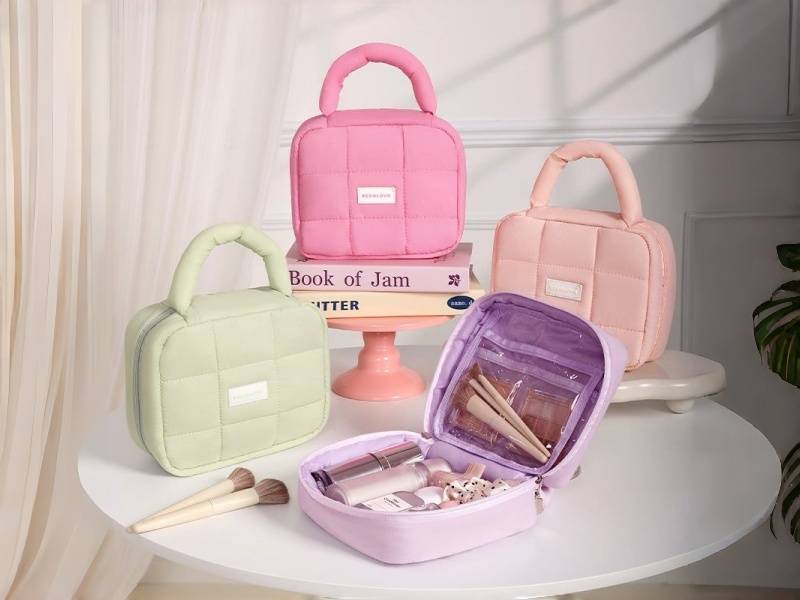
Some bag categories become popular because they are fashionable for a season. Others last because they quietly fix a problem people deal with every single day. Makeup junkie bags belong to the second group.
For a long time, cosmetic bags were either attractive but impractical, or practical but clumsy. A bag could be deep enough to hold a full routine, but then everything disappeared into one dark pocket. A bag could be structured enough to stand up on a vanity, but then it became bulky in a suitcase. A bag could look pretty on the outside, but the inside stained quickly and never really looked clean again. The core frustration was not storage alone. It was access. People did not just want a place to put beauty products. They wanted to see them, reach them, wipe them clean, and pack them again without turning the whole routine into a mess. That exact frustration is part of the public brand story behind Makeup Junkie Bags, which says the concept came from being tired of cosmetic bags that tipped over, became “a black hole,” or got dirty too quickly inside.
Makeup junkie bags are popular because they combine wide-open visibility, flexible storage, wipeable interiors, and everyday portability in a way many traditional cosmetic bags do not. Instead of forcing products into a deep pouch, they let users spread items out, spot what they need quickly, and pack up again with less hassle. That makes them attractive not only for personal use, but also for gift sets, travel programs, boutique retail, and custom branded collections. Official brand materials emphasize features such as a waterproof, wipeable lining, size-based organization, and long-term durability, while beauty editors continue to highlight lay-flat formats as one of the most convenient ways to carry and access makeup.
That popularity is not hard to understand when you look at how beauty routines have changed. A lot more users now carry mixed routines instead of a small lipstick-and-mirror pouch. One person may carry skincare minis, complexion products, brushes, lip colors, tweezers, hair ties, wipes, and chargers in the same bag. Travel has also changed expectations. People want products that move easily from vanity to bathroom counter to suitcase to handbag. At the same time, visual presentation matters more than it used to. A bag is now part organizer, part accessory, part giftable item. Editors still separate the category into “most convenient,” “best structured,” “clear,” “customizable,” and travel-tested styles, which shows that the real demand is no longer just for a pouch with a zipper. It is for a format that matches how people actually get ready.
That is why this style keeps showing up in beauty gifting, boutique assortments, travel programs, and custom-logo projects. It works because the bag is doing more than holding products. It is reducing friction.
What Is a Makeup Junkie Bag and How Is It Different From a Regular Makeup Bag?
A makeup junkie bag is a cosmetic bag style built around fast visibility and easy access, often using a lay-flat or wide-opening structure rather than a deep, narrow cavity. The key difference is not just the silhouette. It is the way the bag behaves during use. Traditional cosmetic pouches store products in layers. Makeup junkie bags are designed to let users find what they need quickly, spread products out more naturally, and clean the interior more easily. Official product messaging also emphasizes wipeable interiors and size-based organization.
The simplest way to understand this category is to stop thinking about it as a cosmetic pouch and start thinking about it as a portable working surface.
A regular makeup bag is usually built on one promise: hold things together. That sounds useful, but in practice it creates three common problems. The first is stacking. Products pile on top of each other, so the smallest item always ends up at the bottom. The second is shape collapse. The bag softens under weight and loses order. The third is residue buildup. Powders, foundation, and pencil shavings gather in corners that are hard to reach.
A makeup junkie bag tries to solve those problems with structure logic rather than extra compartments. Instead of forcing organization through walls and dividers, it changes the opening experience. When the bag opens wide or lays flatter, the user does not have to dig. That is why lay-flat organizers have been singled out by editors as especially convenient: you loosen or open the bag and can see everything at once.
There is also a less obvious difference that matters a lot in product development: behavior under partial load. Many cosmetic bags look fine when fully packed for a photo shoot, but become awkward in real life when they are half full. They slump, tip, or bunch. A good makeup junkie-style bag handles partial fill better because the opening and base behavior are designed around use, not just display. This is one reason the concept keeps staying relevant: it fits real routines better than the old “single cavity with zipper” model.
From a custom development perspective, this category is attractive because the structure can be interpreted in different ways. One brand may want a soft lay-flat version for travel kits. Another may want a more elevated shell with quilting, piping, or printed outer fabric. Another may want a wipeable interior and a simple branded exterior for promotional sets. The underlying value stays the same: easy access, easier cleaning, less chaos.
Why Do So Many Users Prefer This Style for Travel, Storage, and Daily Use?
Users tend to prefer this style because it reduces the three biggest annoyances in cosmetic storage: search time, spill frustration, and wasted space. A bag that opens wider or lays flatter makes items easier to see, reach, and repack. Wipeable linings help with powder and liquid residue, and the overall format adapts well to travel, vanity storage, handbags, and multi-item routines. Public product information and recent editorial testing both highlight visibility, convenience, and easy cleaning as major strengths.
Travel is where weaknesses show up fastest.
At home, a mediocre cosmetic bag can get by because the user has time, counter space, and other storage around them. In a hotel room, airport bathroom, office restroom, or gym locker, that margin disappears. Suddenly, the difference between “opens a little” and “opens well” feels huge. Editors testing travel cosmetic cases still keep rewarding bags that make contents easy to see and reach, including clear cases and lay-flat organizers, because convenience becomes much more obvious on the move.
Another reason this style does well is that it matches how people really use beauty products now. Most routines are mixed. One bag may hold makeup, skin prep, a compact mirror, lip balm, sunscreen, cotton pads, mini fragrance, and even non-beauty items. If the interior is too segmented, the bag becomes restrictive. If it is too empty, the bag becomes messy. The more successful versions hit a middle ground: open enough to give visibility, soft enough to stay portable, controlled enough not to feel like a sack.
Cleaning also matters more than many brands expect. It is easy to underestimate until one serum leaks or a pressed powder breaks. Official Makeup Junkie Bags materials explicitly highlight a waterproof, wipeable lining cleaned with a damp cloth or baby wipe. That may sound like a small feature, but in real use it helps preserve the product’s look over time and supports repeat use rather than “use until dirty, then replace.”
Then there is the emotional layer. A cosmetic bag is one of the few organizing products people use in intimate, daily routines. If it feels frustrating, that frustration repeats every day. If it feels smooth, that satisfaction also repeats every day. This is why convenience in this category often creates unusually strong loyalty. The user is not just buying fabric and zipper. They are buying back a few calmer minutes.
For brands developing custom versions, this is a useful. The bag does not need to look dramatic to feel valuable. It needs to behave well. If you want to build a version that performs well in gifting, travel, or private label collections, that performance should be tested at sample stage, not assumed from a sketch. For project evaluation, sample planning, or structure review, Jundong can be reached at info@jundongfactory.com.
Which Types Sell Best: Flat Lay, Quilted, Clear, Printed, or Custom Logo Styles?
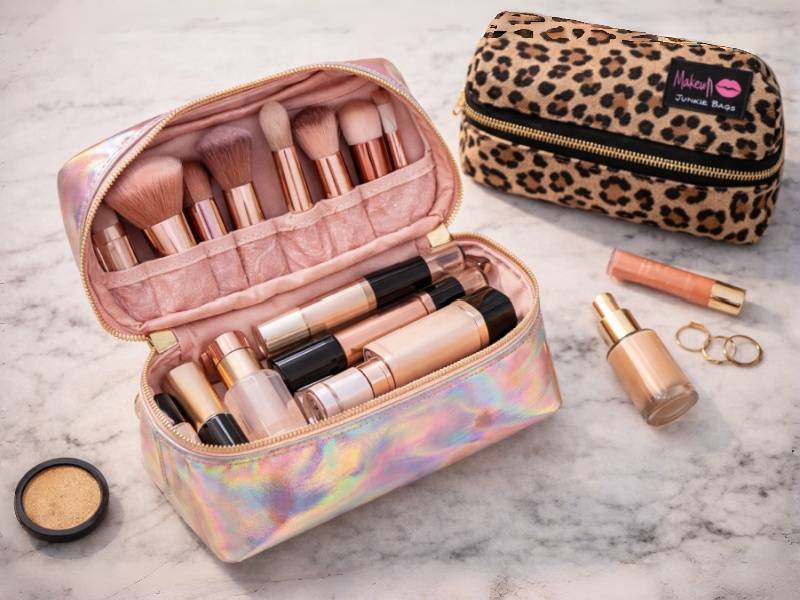
The strongest-selling versions usually fall into a few clear groups: flat lay daily-use styles, premium quilted versions, clear or partially transparent travel-friendly versions, printed fashion-oriented designs, and custom logo programs for gifting or branded use. Each type serves a different purpose. The best choice depends less on trends alone and more on where the bag will be sold, how it will be used, what image the brand wants to project, and what cost level the project needs to hit. Editorial coverage still separates convenience, structure, customization, and travel visibility as distinct strengths, which supports this split.
1. Flat Lay Core Styles
This is the most faithful interpretation of the category and often the strongest starting. It works well when usability is the main selling reason. It is especially suitable for:
- everyday cosmetic carry
- travel touch-up kits
- beauty gift sets
- entry-level branded collections
Its commercial strength is simplicity. The value is easy to explain in one line: open it and see everything.
2. Quilted or Elevated Surface Styles
These add texture, padding, or stitch pattern. The function stays similar, but the positioning changes. Quilting helps the bag feel more giftable, more boutique, and more “finished.” This works well for:
- premium gift sets
- boutique beauty stores
- holiday bundles
- higher-margin retail collections
The risk is that brands sometimes add surface richness without checking whether the bag still opens smoothly and cleans well. Pretty should not come at the cost of function.
3. Clear or Partly Transparent Styles
These are not always the prettiest, but they are often among the most practical. Travel editors continue to favor clear styles because they make contents easy to identify and accessible even when the bag is packed inside another bag.
They work well for:
- travel programs
- stadium/event use
- skincare minis
- brush or tool visibility
However, material choice is critical here. Clear PVC, TPU, or coated windows can scratch, yellow, stiffen, or feel cheap if selected poorly.
4. Printed and Pattern-Led Styles
These rely on emotional appeal. The function brings people in, but the print closes the sale. Floral, graphic, seasonal, and collaboration prints can all perform well, especially in boutique, social, and gifting settings. The challenge is maintaining print quality, shade consistency, and alignment across repeat runs.
5. Custom Logo Programs
These tend to matter most for promotional use, beauty launch gifts, event sets, and brand merchandising. Here the bag is less about fashion identity and more about usefulness plus brand presence. The bag needs to feel good enough that people keep using it. Otherwise, the logo gets discarded with the bag, and the program loses value.
Quick Comparison Table
| Style Type | Best For | Main Risk |
|---|---|---|
| Flat lay core | Daily use, travel, starter collections | Too plain if branding is weak |
| Quilted | Gift sets, premium retail | Cost rises fast |
| Clear / windowed | Travel, visibility-driven use | Material can age poorly |
| Printed | Seasonal and visual collections | Repeat color consistency |
| Custom logo | Events, gifting, merch | May feel generic if structure is weak |
A smarter development path is usually not “launch many styles at once.” It is launch one strong base style, then one higher-value variation. That gives the collection breadth without making the first production round unnecessarily risky.
Who Buys These Bags Most Often, and When Does Demand Usually Rise?
These bags are most often developed or stocked by beauty and skincare brands, boutique retailers, gift-focused programs, online sellers, travel-oriented assortments, and branded merchandise projects. Demand usually rises around holiday gifting, travel season, launch campaigns, and limited-edition collections because the product works both as a stand-alone item and as packaging-plus-product in one. That flexibility is one reason the format has remained visible across retail and editorial channels.
The strongest commercial value of this category is that it does not rely on only one channel.
A skincare brand may use it as a hero pouch for a trial-size routine. A boutique may carry it as a useful impulse gift. An online store may use it as a custom add-on with high margin. A company planning an event may use it as branded kit packaging that recipients keep after the event is over. The same basic structure supports all of these, but the design details need to change depending on who the end user is.
Holiday programs are an obvious peak because the bag is naturally giftable. But travel season matters too. Editorial roundups continue to separate travel-oriented beauty cases from everyday pouches, which shows that people actively shop the category with travel in mind. Clear visibility, washability, and quick access become especially compelling then.
Launch periods are another key window. Beauty brands increasingly need accessories that make a product drop feel more complete. A cosmetic bag can do that without requiring a completely new product category. It extends the set, raises perceived value, and creates a more photogenic unboxing experience. If developed well, it can also continue as a stand-alone item after the campaign ends.
This timing matters in production planning. Cosmetic bags may look simple, but projects often miss ideal launch windows because teams wait too long to confirm materials, prints, logo methods, and packaging. If the bag is tied to a holiday, launch, or travel season, development has to start earlier than many people assume. This is especially true when a brand wants something beyond a stock pouch with a logo.
How Are Custom Versions Developed, and What Should Be Checked During Sample Stage?
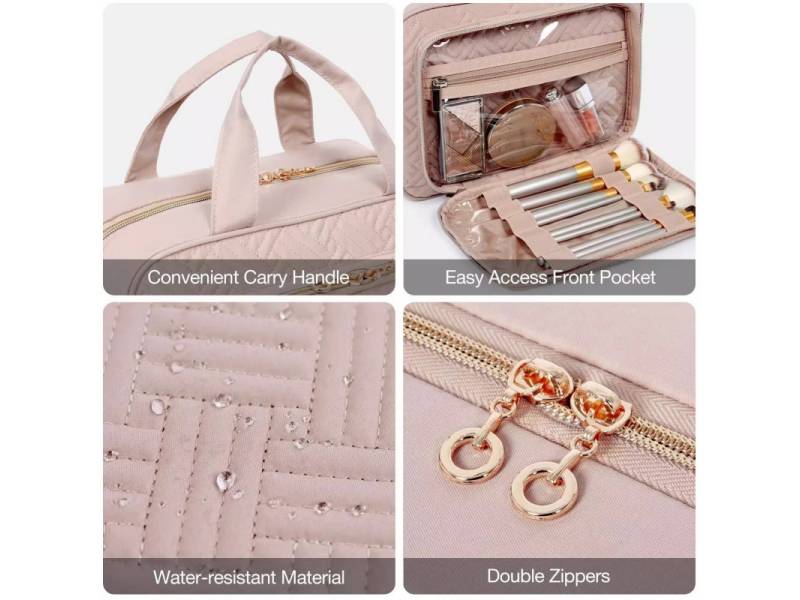
A custom project usually moves through concept review, material selection, pattern development, first sample, revisions, and pre-production confirmation. The most important checks are not just color and logo. Teams need to verify opening behavior, shape retention, usable capacity, lining performance, zipper movement, and whether the bag still works when half full, not only when fully packed. Public factory guidance around cosmetic bag projects also stresses clarifying the level of customization early, from simple logo programs to deeper structural development.
This is the part many people underestimate.
A bag like this can appear simple enough that teams try to accelerate straight from sketch to order. That is exactly where avoidable problems begin. A useful sample stage is not there just to approve the look. It is there to test the behavior of the product.
Step 1: Clarify the Custom Level
Recent factory guidance breaks cosmetic bag projects into practical levels such as:
- adding logo to an existing style
- modifying an existing base design
- full custom development from concept
That distinction matters because the timeline, MOQ, tooling, and revision risk all change with it. For many first projects, a semi-custom route is more sensible than inventing everything from zero.
Step 2: Lock the Outer and Inner Logic
Do not evaluate only the outside fabric. The inside matters just as much. If the product promise includes easy cleanup, the lining must support that. If the bag is meant to feel soft and premium, the shell, foam, and zipper should support that too. Mismatched materials create a bag that looks good in a photo but feels disappointing in hand.
Step 3: Review the First Sample Like a User
The first sample should such as:
- Does it open wide enough?
- Does it lie as expected?
- Can products be seen easily?
- Does the zipper glide well around corners?
- Does the bag distort when only partly filled?
- Is the interior actually easy to wipe?
This is where a lot of projects become much stronger, or much weaker.
Step 4: Revise the Right Things
Not every issue deserves a redesign. Teams should separate:
- must-fix structural issues
- appearance adjustments
- future upgrade ideas
This keeps the project moving and prevents endless sample cycling.
Step 5: Use a Pre-Production Sample Properly
Before mass production, a final pre-production reference should confirm:
- approved material
- approved dimensions
- approved logo placement
- approved zipper and puller
- approved packaging
If the project is for a launch or gifting program, this step matters even more because inconsistencies show up immediately in group presentation.
If you already have reference images, sketches, target size, or desired materials, Jundong can review feasibility and help map the sample route before bulk planning at info@jundongfactory.com.
How Much Do They Cost, and What Actually Changes the Quotation?
Cost is shaped mainly by material choice, size, structure complexity, logo method, packaging, and order quantity. A basic soft version with a simple print can be relatively straightforward. A quilted or highly customized version with upgraded trims, special lining, or premium packaging will cost more because labor time, material usage, and production control all increase. Public custom bag FAQs also show that MOQ and customization level can substantially affect the final quote.
The biggest misunderstanding about this category is assuming that two bags of similar size should cost about the same. They should not.
A quote changes because a cosmetic bag is a stack of decisions, not a single item.
1. Material Drives More Than Appearance
Outer material affects not only price but also:
- hand feel
- crease behavior
- print clarity
- stain visibility
- perceived value
A coated fabric, soft PU, quilted textile, canvas, neoprene-like shell, or mixed-material body may all produce very different outcomes.
2. Structure Changes Labor
A bag with a smooth, simple body is one thing. A bag with quilting, layered panels, piping, stiffened sections, internal wipeable assembly, or shaped corners is another. Structure adds sewing time, handling time, and quality-control checkpoints. That is why “looks similar” does not mean “costs similar.”
3. Branding Method Has Real Consequences
A small print can be simple. A metallic patch, embroidery, debossed tab, or plated nameplate may look like a small design choice, but each adds complexity. The right logo method depends on both image and use. A premium-looking logo that scratches or peels after normal use is a false upgrade.
4. Quantity Changes Efficiency
Custom bag FAQs commonly note that MOQ varies by design and customization level. Larger quantities usually improve unit economics because setup, sourcing, and production flow become more efficient. Small runs can still be worthwhile, but they should be planned with realistic expectations.
5. Packaging Can Quietly Move the Total
Many brands focus on the bag and forget the finishing layer:
- polybag
- insert card
- hangtag
- gift box
- branded carton packout
For retail or launch programs, those details can materially change total cost and presentation.
Practical Cost Table
| Cost Driver | Low Impact Option | Higher Impact Option |
|---|---|---|
| Outer material | basic textile | quilted, coated, premium PU |
| Branding | simple print | embroidery, plate, custom patch |
| Structure | soft body | layered, shaped, reinforced |
| Packaging | basic polybag | gift-ready branded setup |
| Quantity | larger run | short custom run |
A useful quote request should include at least:
- target size
- preferred material
- logo method
- approximate quantity
- packaging expectation
Without those, quotations tend to be broad and not very useful.
How Do You Choose the Right Factory for a Custom Project?

The right factory is not just the one with the lowest starting quote. It is the one that can translate your intended use into a stable sample, maintain consistency in production, communicate clearly, and support the level of customization your project really needs. Recent custom cosmetic bag guidance also emphasizes evaluating factories by audit readiness, material traceability when needed, and how they handle different custom levels before money changes hands.
A weak choice often feels fine at the beginning. Problems appear later, when the project is already committed.
1. Judge the Sample, Not the Promise
A factory can claim experience with cosmetic bags, but the first sample will tell you more than the claim. Look at:
- shape accuracy
- stitch cleanliness
- zipper behavior
- logo execution
- whether comments are understood and corrected intelligently
A sample is not just a prototype. It is a preview of the working relationship.
2. Ask How Quality Is Controlled
Public-facing cosmetic bag factory content increasingly talks about inspections, audits, and quality systems because clients have learned that “we check quality” is too vague. You want to know whether inspection is built into the process or only applied at the end.
3. Match the Factory to the Custom Depth
Some projects only need a proven base shape with custom branding. Others need dimension changes, pocket updates, or a completely new structure. These are different jobs. One reason recent factory guides split projects into private label, semi-custom, and full custom is that the right partner for one level may not be right for another.
4. Watch Communication Quality
A bag project moves through many small decisions. Slow or vague communication creates hidden cost because errors spread. A strong team does not just reply quickly. It asks useful early.
5. Think About Repeat Orders Before the First Order
A cosmetic bag is often not a one-time program. If the first run works, you may need repeat production, color extensions, or new versions. That means the partner needs documentation discipline, stable sourcing logic, and the ability to maintain the same standard over time.
This is the real test. Anyone can make one acceptable sample. Fewer teams can keep the result consistent.
Are Makeup Junkie Bags Still Worth Developing Now?
Yes. This category still makes sense because it sits at the intersection of daily usefulness, giftability, travel convenience, and custom branding potential. It is not dependent on novelty alone. Its staying power comes from solving an ongoing routine problem while also offering enough visual and structural flexibility for different collections, campaigns, and price levels. Continued editorial attention to lay-flat, clear, structured, and customizable makeup bags supports that broader relevance.
A product is worth developing when it meets three conditions:
- it solves a real problem
- it can be positioned in more than one way
- it holds up under repeat use
This category checks all three.
The problem is obvious: people want makeup, skincare, and small essentials organized without wasting time digging through a pouch. The positioning flexibility is also strong: it can be casual, premium, printed, travel-focused, gift-ready, or logo-driven. And if the materials and structure are chosen well, it has good repeat-use value.
That combination makes it unusually practical for custom work. A brand does not have to force the story. The product already has one. Your job is to make sure the version you develop is true to that promise.
The smartest route is often not the boldest one. It is usually:
- choose a clear use case
- build a sample around real behavior
- test a manageable quantity
- refine only after feedback
That path tends to produce better long-term results than chasing novelty at the first step.
Start Your Custom Makeup Bag Project With Jundong
A strong makeup junkie-style bag is not defined by trend language or surface decoration. What makes it work is simpler and harder than that: the opening has to feel right, the inside has to stay usable, the structure has to support the routine, and the quality has to hold when the product moves from sample to bulk.
That is why this category rewards teams that take development seriously. Material choice changes cleaning behavior. Pattern accuracy changes access. Logo method changes longevity. Packaging changes perceived value. None of those details are very dramatic on their own, but together they decide whether the product feels worth keeping.
If you are planning a custom cosmetic bag project for retail, gifting, launch kits, or a branded collection, Jundong can help review concept direction, material choices, sample planning, and production feasibility.
Email: info@jundongfactory.com
FAQ 1: What size works best for a makeup junkie bag, and how do I choose the right size for my product line?
The best size depends on how the bag will be used, not just how much it can hold. Most successful styles are designed around real usage scenarios, such as daily makeup, travel kits, or bundled product sets, rather than maximum capacity.
In practice, sizes are usually divided into three functional categories:
| Size Type | Typical Use | Key Advantage |
|---|---|---|
| Small (15–20 cm) | daily carry, handbag use | compact, easy to sell |
| Medium (20–25 cm) | general makeup storage | most balanced option |
| Large (25–30 cm) | travel or full kit | high capacity |
What many people overlook is usable space vs visual size. A flat lay structure expands when opened, so a medium size often performs better than a large one because it avoids bulk while still offering enough capacity.
Another key factor is product positioning:
- Retail products → medium size sells best
- Gift sets → slightly larger size improves perceived value
- Promotional use → smaller size controls cost
If you’re unsure, starting with a mid-size version and testing feedback is usually the safest approach before expanding into multiple sizes.
FAQ 2: Which materials are best for durability, appearance, and long-term use?
The best material is not the most expensive one—it is the one that matches the product’s purpose and usage frequency. Different materials perform very differently in real use, especially for cosmetic storage where spills, friction, and repeated handling are common.
Here is a practical comparison:
| Material | Durability | Look | Best Use |
|---|---|---|---|
| Polyester | High | basic | promotional / entry-level |
| Canvas | Medium–High | natural | casual / retail |
| PU / coated fabric | High | clean / modern | travel / mid-range |
| Quilted fabric | Medium | premium | gift / boutique |
One critical detail often ignored is the lining material. A good outer fabric with poor lining will still lead to:
- staining
- odor retention
- difficult cleaning
For cosmetic bags, wipeable inner lining is often more important than the outer material.
Also, consider color behavior over time:
- light colors show stains easily
- dark colors hide wear but show dust
- printed fabrics depend on dye quality
A well-balanced combination is often more effective than choosing a “premium” material blindly.
FAQ 3: How long does it take to develop a custom makeup junkie bag from idea to production?
A typical development timeline ranges from 2 to 4 weeks for sampling, followed by 20–35 days for bulk production, depending on complexity and quantity.
However, the timeline is not fixed—it depends on how clear the initial requirements are.
A realistic breakdown looks like this:
| Stage | Time |
|---|---|
| Material preparation | 2–5 days |
| First sample | 5–7 days |
| Revisions | 3–10 days |
| Final sample approval | 3–5 days |
| Production | 20–35 days |
What often causes delays is not production—it is unclear decisions during sampling.
For example:
- changing size after sample
- adjusting logo multiple times
- switching materials mid-process
Each of these resets part of the workflow.
A more efficient approach is to confirm early:
- exact dimensions
- material direction
- logo method
This reduces unnecessary iterations and keeps the timeline predictable.
If needed, you can send your reference or concept to info@jundongfactory.com to evaluate development time more accurately before starting.
FAQ 4: What are the most common mistakes when developing a makeup junkie bag?
The most common mistakes are not related to design—they are related to decision timing and misunderstanding how the product is used.
Here are the most frequent issues:
1. Overdesigning the First Version
Many first-time developments try to include:
- multiple compartments
- extra pockets
- complex structures
This often leads to:
- higher cost
- reduced usability
- longer development time
Simple, well-executed designs perform better.
2. Ignoring Real Usage Behavior
Design decisions are often made visually, not practically.
Examples:
- bag looks good when empty, but not when filled
- zipper position limits opening angle
- structure prevents full flat layout
3. Underestimating Logo Execution
Logo problems are very common:
- incorrect size proportion
- poor placement
- fading after use
Logo should be tested during sampling, not adjusted after production starts.
4. Skipping Proper Sample Evaluation
Some teams approve samples too quickly.
A proper evaluation should include:
- opening behavior
- load capacity
- stitching consistency
- cleaning test
Skipping these leads to bulk issues later.
5. Choosing Price Over Fit
Low cost is attractive at the beginning, but:
- material quality
- production consistency
- finishing details
determine long-term success.
Avoiding these mistakes often saves more cost than negotiating price.
FAQ 5: How can I make my makeup junkie bag stand out from competitors?
To stand out, the product needs to balance usability, visual identity, and small details that improve the user experience—not just a different print.
Most products in this category look similar. The difference comes from execution quality.
1. Focus on Opening Experience
Users notice immediately:
- how smooth the zipper is
- how flat the bag opens
- whether items stay in place
This is often more important than appearance.
2. Use Small Functional Improvements
Examples:
- inner pockets for brushes
- reinforced corners
- slightly thicker base
These details are subtle but increase perceived quality.
3. Control Visual Balance
A good design is not just pattern.
It includes:
- proportion of logo
- spacing
- color harmony
Too many elements reduce clarity.
4. Packaging Makes a Difference
Especially for retail:
- branded tags
- simple but clean packaging
- consistent presentation
These improve shelf appeal without large cost increase.
5. Think in Series, Not Single Product
Instead of one design, create:
- 2–3 sizes
- matching patterns
- seasonal variations
This builds a stronger product line.
If you are planning a new collection, starting with a clear positioning and testing one or two optimized versions usually gives better results than launching too many styles at once.
FAQ 6: What is a reasonable MOQ for makeup junkie bags, and how should I plan my first order?
A reasonable MOQ depends on product complexity, material choice, and cost structure—not just a fixed number. While some projects can start from around 50–200 pieces, more stable pricing and consistency usually appear at 300–500+ units, especially for custom designs.
MOQ is often misunderstood as a “factory rule.”
In reality, it is a cost control mechanism.
Here’s what affects MOQ:
- material sourcing (fabric often has minimum roll usage)
- printing setup (screens, molds, or plates)
- production efficiency
Typical MOQ Strategy
| Stage | Suggested Quantity |
|---|---|
| First test | 100–300 pcs |
| Stable product | 300–800 pcs |
| Scaling stage | 1000+ pcs |
Why Starting Too Low Can Backfire
Very small orders may lead to:
- higher unit cost
- limited material choices
- less stable quality
This is why experienced teams don’t chase the lowest MOQ—they aim for the most efficient starting.
Practical Approach
Instead of asking “what is the MOQ,” ask:
- what quantity gives me stable quality?
- what quantity gives me workable pricing?
This mindset leads to better decisions.
FAQ 7: How can I ensure consistency between samples and bulk production?
Consistency depends on whether the sample is treated as a true production reference, not just a visual approval. The key is controlling materials, specifications, and process details before production begins.
Many inconsistencies happen because the sample stage is treated lightly.
To ensure consistency, three things must be locked:
1. Material Locking
Every material should be clearly defined:
- fabric type
- color reference
- lining specification
- zipper model
Even small changes can affect final appearance.
2. Construction Details
This includes:
- stitching method
- seam allowance
- reinforcement
Without this, different production runs may vary.
3. Pre-Production Sample (PPS)
This is critical.
It confirms:
- final materials
- production method
- overall quality
Skipping this step increases risk significantly.
Simple Consistency Checklist
| Item | Must Confirm |
|---|---|
| Fabric | exact type & color |
| Logo | size & placement |
| Structure | dimensions & shape |
| Packaging | final format |
Consistency is not luck—it is controlled through clear references and disciplined execution.
FAQ 8: How can I reduce cost without lowering product quality?
Cost reduction should focus on optimization, not simplification. The goal is to improve efficiency while keeping the product’s core value intact.
Reducing cost the wrong way often leads to:
- weaker materials
- lower durability
- inconsistent results
Instead, focus on smarter adjustments.
1. Optimize Structure Instead of Removing Features
Example:
- simplify stitching paths
- reduce unnecessary layers
This reduces labor without affecting function.
2. Choose Alternative Materials (Not Cheaper, But Smarter)
Instead of switching to low-grade materials:
- adjust thickness
- use blended fabrics
- refine coating type
These maintain performance while controlling cost.
3. Adjust Logo Method
Logo cost varies significantly.
For example:
- embroidery → premium but expensive
- screen print → cost-efficient for volume
Choosing the right method can reduce cost without changing design.
4. Improve Order Planning
Better planning reduces:
- material waste
- urgent production costs
- repeated setup charges
Cost Control Mindset
Think in terms of:
efficiency + consistency + usability
Not just lower price.
FAQ 9: How do I know if a makeup junkie bag is worth developing for my brand or project?
A product is worth developing when it fits your positioning, solves a real use need, and can be repeated or expanded into a product line.
Not every product works for every brand.
Before starting, ask three key:
1. Does It Match Your Product Strategy?
If your focus is:
- beauty or skincare
- travel accessories
- gift products
Then it fits naturally.
2. Can It Be Repeated or Expanded?
Strong products are not one-time items.
They can be:
- redesigned
- resized
- bundled
3. Does It Solve a Real Problem?
The core value is:
- better organization
- faster access
- easier use
If your target users value these, the product is viable.
4. Can It Be Positioned Clearly?
Examples:
- premium gift
- daily essential
- travel companion
Clear positioning improves success rate.
Quick Evaluation Table
| Factor | Strong Signal |
|---|---|
| usability | high |
| repeat purchase | possible |
| customization | flexible |
| differentiation | achievable |
If most are positive, it is worth testing with a sample and small batch.
FAQ 10: What are the risks when working with a factory, and how can I avoid them?
The main risks include inconsistent quality, unclear communication, delayed delivery, and mismatched expectations. These risks can be reduced through proper evaluation and structured communication early in the process.
Most problems don’t come from bad intentions.
They come from unclear alignment.
1. Unclear Requirements
If details are not confirmed early:
- size may change
- materials may vary
- expectations differ
2. Weak Sampling Process
Skipping proper sampling leads to:
- unexpected production results
- higher correction cost
3. Lack of Communication Structure
Without clear communication:
- delays increase
- errors multiply
4. Overfocus on Price
Choosing only based on price often leads to:
- lower stability
- higher long-term cost
How to Reduce Risk
| Action | Result |
|---|---|
| clear specifications | fewer errors |
| structured sampling | stable outcome |
| regular updates | better control |
| realistic expectations | smoother process |
Final Advice
Work with a team that:
- understands your product
- communicates clearly
- supports revisions
If you want to reduce risk before committing, you can start with a structured sample evaluation.
You can share your idea or requirements with info@jundongfactory.com to review feasibility and identify potential issues early.