 Skip to content
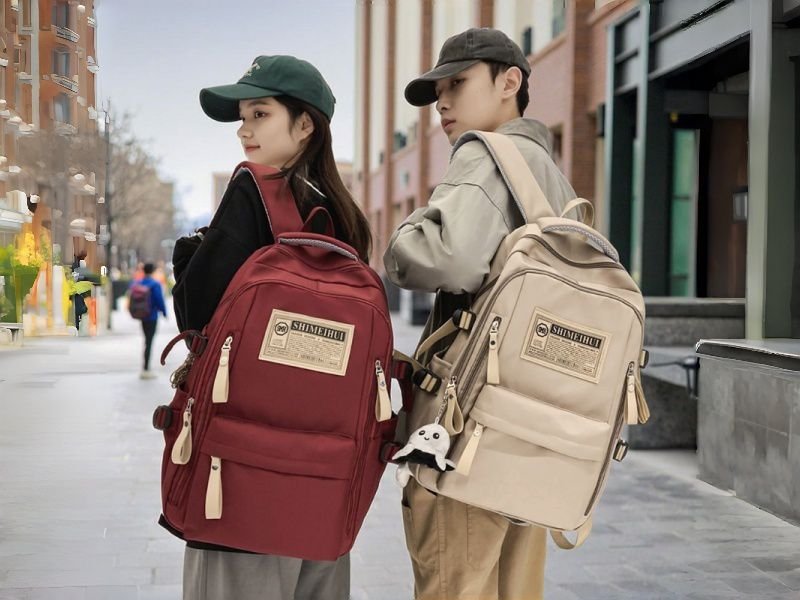
A broken backpack feels like a small problem—until you actually try to get rid of it. It’s not a banana peel. It’s a mixed-material product with fabric, foam, webbing, metal hardware, plastics, coatings, maybe even electronics (AirTag, tracker, USB cable, power bank). And because it’s “just a bag,” people often toss it without thinking. That’s how usable items end up in landfill, donations get rejected, and recyclers receive products they can’t process.
The bigger issue is that “broken” is not one condition. A backpack can be structurally unsafe, hygienically questionable, cosmetically ugly, or simply inconvenient to repair. Each case points to a different disposal path: repair, donate, recycle, trash, or upcycle. The best choice depends on what failed, what the backpack is made of, how fast you need a solution, and what your local waste system can accept.
To dispose of a broken backpack, first decide if it’s repairable, donatable, recyclable, or trash. Repair if the frame and fabric are sound and only parts like zippers or buckles failed. Donate if it’s clean, functional, and safe. If donation isn’t possible, try textile recycling or brand take-back programs, then trash as a last resort. Remove personal items, batteries, and trackers before disposal, and follow local waste rules.
Picture this: you’re cleaning out a closet before a trip. You grab an old backpack, the zipper splits, shoulder strap stitching is hanging by a thread, and there’s a mystery pen leak inside. You’ve got 10 minutes before you leave. That moment is when most “sustainability intentions” collapse into one question: where do I throw this away—right now? Let’s make that decision fast, and make it smarter.
What Should You Do Before You Throw Away a Broken Backpack?

Before throwing away a broken backpack, decide whether it should be repaired, donated, recycled, or trashed. Then remove personal items and electronics, check for sharp or hazardous parts, and clean it if it’s going to donation or resale. Finally, choose the best local disposal route (textile drop-off, reuse center, landfill trash) based on your city’s rules.
Start with the question people avoid: Should I throw away old backpacks?
Sometimes yes. If the bag is unsafe (strap anchor tearing, frame cracking, mold, heavy contamination, broken sharp hardware), throwing it away might be the responsible choice. But many “old backpacks” are not trash—they’re under-maintained assets. A zipper pull failure is not the same as a torn load-bearing seam. A stained lining is not the same as mildew.
Here’s a quick triage checklist you can run in under two minutes:
A. Safety and structure
- Are shoulder straps detaching from the body panel?
- Is the back panel or frame cracked, poking through, or collapsing under load?
- Are there exposed sharp parts (broken buckles, snapped stays, metal edges)?
B. Hygiene
- Is there mold/mildew smell that returns after cleaning?
- Is there pet waste, bodily fluids, or deep contamination?
- Is the interior sticky from spills that won’t come out?
C. Function
- Do zippers close and stay closed under tension?
- Does the bag stand up to normal load without tearing?
- Are buckles and adjusters holding tension?
D. Value
- Is this a premium hiking pack, technical backpack, or branded bag with resale value?
- Does it have salvageable parts worth keeping?
Next: remove what shouldn’t go into any disposal stream. People forget how much personal information and electronics live in bags.
- Trackers (AirTag-style devices), USB cables, portable chargers
- Keys, SIM cards, SD cards, old boarding passes
- Name tags, business cards, school tags with addresses
- Hidden cash in the “secret pocket” you forgot existed
If the backpack is headed for donation or resale, basic cleaning matters. Donation centers often reject bags that smell bad, have visible grime, or look unsanitary. Even a quick wipe-down and a simple soap-water rinse can turn “rejected” into “accepted.”
Simple cleaning steps that work for most backpacks
- Shake out debris and vacuum seams
- Wipe interior and exterior with mild soap solution
- Air dry fully (not damp) to avoid mildew at the donation bin
Industry reality: Most organizations are not equipped to launder or repair bags at scale. Donation-ready means “usable today.” If you want your backpack to actually help someone, the best gift is a clean, functional bag, not a project.
Which Backpack Problems Can Be Fixed Instead of Tossed?
Many backpack failures are repairable: zipper sliders, zipper pulls, seam stitching, strap webbing, buckles, and loose lining. Repair is usually worth it when the bag’s main fabric and load-bearing seams are sound. If the bag’s structure is failing (ripped body panels, torn strap anchors, cracked frames), replacement is often safer and cheaper long term.
The most common reason backpacks get thrown away isn’t catastrophic failure—it’s small-part failure. Zippers, pulls, buckles, and strap stitching take concentrated stress. The good news is that these parts are repair-friendly if the base material still has strength.
Let’s talk real-world decision making: people don’t repair because they don’t know whether it’s “worth it.” Here’s a table that helps.
Repair vs Replace: Typical Cost and Value Check (Ranges)
| Issue | Typical fix | Typical effort/cost (range) | When repair makes sense |
|---|---|---|---|
| Zipper slider slips | Replace slider | Low | Bag fabric + teeth are intact |
| Zipper pull broke | Replace pull/tab | Very low | Almost always worth it |
| Seam stitching popped | Re-stitch + reinforce | Low–medium | Tear is not spreading into fabric |
| Strap padding torn | Patch + stitch | Medium | Anchor points are solid |
| Buckle cracked | Replace buckle | Low | Webbing is not shredded |
| Webbing frayed | Replace webbing section | Medium | Bag body is still strong |
| Body panel ripped | Panel patch | Medium–high | Only if rip is localized |
| Strap anchor tearing | Rebuild anchor | High | Only for high-value packs |
| Frame/stay broken | Replace frame part | Medium–high | Only if parts available |
Even with ranges, the logic is stable: repair is best when the failure is localized and the base fabric still has tensile strength. If the shoulder strap anchor is ripping out of the body panel, the bag can fail under load and cause injury or dropped gear. That’s not a “use it a bit longer” moment.
Now the outdoors angle: What to do with old backpacking backpacks?
Hiking packs often “fail” in ways that don’t eliminate all value:
- The hip belt foam is crushed but the pack still works as storage
- The hydration sleeve is torn but the main compartment is fine
- The rain cover is missing but the bag is still functional
If it’s no longer safe for heavy trekking, it can still become:
- A car emergency kit bag
- A gear storage bag for seasonal equipment
- A “dirty gear” transport bag
- A travel daypack if downsized and cleaned
Manufacturing insight: Repairability starts in design. Replaceable buckles, accessible stitching lines, and standardized zipper types reduce lifetime waste. For B2B buyers, this matters because repairability becomes fewer returns, better reviews, and a more defensible “durable product” claim.
Where Can You Donate a Backpack That’s Still Usable?
Donate a backpack if it’s clean, functional, and safe. Common donation routes include local charities, school supply drives, shelters, community mutual aid groups, and reuse centers. If donation centers reject worn items, consider giving it directly through local community groups where the condition standards may be more flexible.
This section answers the emotional question behind the search: Should I throw away old backpacks?
Not if someone can safely use them. But donation is not a magical recycling system. Donation organizations have limited storage and labor. If an item is too worn, too dirty, or too broken, they pay to dispose of it.
A good rule: If you wouldn’t hand it to a friend without apologizing, it’s probably not donation-ready.
Donation-ready checklist (quick and honest)
- Zippers open/close smoothly
- Straps hold weight without tearing or slipping
- No sharp broken parts
- Clean smell (no mildew odor)
- Interior is not sticky, moldy, or heavily stained
If a backpack meets that bar, it’s usually a good donation candidate.
Donation channels (practical options)
- School supply drives (seasonal)
- Homeless services and shelters (often need durable bags)
- Community centers and local mutual aid groups
- Thrift stores and reuse centers
- Neighborhood “free” groups and community boards
If the backpack is borderline (worn but functional), direct giving can work better than institutional donation. A local community group might accept a “cosmetically rough” backpack if it’s sturdy and usable.
Industry perspective: Donation is a quality filter. The better the product durability, the higher the donation success rate. For brands and buyers, durability isn’t just a feature—it determines whether products become long-term assets or disposal problems.
How Do You Recycle a Backpack When Donation Isn’t Possible?

Recycling a backpack is difficult because most are made of mixed materials (polyester/nylon fabric, foam padding, coatings, metal hardware, plastic buckles). If donation isn’t possible, check for textile recycling drop-offs, reuse centers, brand take-back programs, or mail-in textile recyclers. If none exist locally, separate salvageable parts and trash the remainder.
Here’s the truth many guides skip: most backpacks are not “recyclable” in the curbside sense.
Curbside recycling is built for clean, single-material streams (bottles, cans, paper). Backpacks are composite products. They combine:
- Shell fabric (polyester/nylon)
- Lining fabric
- PU/PVC coatings or water-resistant backings (sometimes)
- Foam padding (EVA/PE/PU)
- Webbing (polyester/nylon)
- Plastic hardware (acetal, nylon, PP)
- Metal parts (aluminum stays, steel rings)
- Adhesives, thread, labels
Recyclers don’t want to dismantle a backpack by hand. That’s labor-heavy, inconsistent, and unprofitable in most municipal systems.
So what’s realistic?
Realistic recycling pathways (ranked by probability)
- Textile recycling drop-offs (if your city or retailer offers it)
- Reuse centers that accept “parts salvage” textiles
- Brand take-back programs (varies by brand, often limited)
- Mail-in textile recycling services (paid in some cases)
- Landfill trash (last resort)
Material recyclability matrix (manufacturing-level view)
| Backpack component | Common material | Recycling difficulty | Why |
|---|---|---|---|
| Outer shell | Polyester/nylon | Medium | Needs clean sorting by polymer |
| Coated fabric | PU/PVC-backed | High | Mixed layers complicate recycling |
| Foam padding | EVA/PU/PE foam | High | Contamination + mixed formats |
| Webbing | Polyester/nylon | Medium | Often recoverable if separated |
| Buckles | Acetal/nylon/PP | Medium–high | Small parts hard to sort |
| Metal stays/rings | Aluminum/steel | Lower | Recyclable if removed |
| Zippers | Mixed metal + tape | High | Composite part |
This is where manufacturing design choices affect end-of-life. Mono-material constructions (or fewer material families) improve the odds of real recycling. Modular designs that allow easy removal of metal stays and buckles also help.
Now the user question: How to dispose of a broken backpack when your city doesn’t accept textiles curbside?
Your best approach is a two-step plan:
- Step 1: Find a textile drop-off or reuse center (even if it’s not municipal curbside)
- Step 2: If unavailable, salvage hardware/metal parts and trash the remainder
That’s not perfect. But it’s more realistic than pretending every bag belongs in “recycling.”
What Is the Correct Way to Trash a Backpack if It Can’t Be Recycled?
If a backpack can’t be repaired, donated, or recycled, trash it as the last option. Remove electronics and personal items first, cut off or secure sharp/broken hardware, and bag it to prevent injury to waste handlers. Follow local rules for separating metal parts if your city accepts them as scrap.
Sometimes trash is the correct answer. The key is to do it responsibly and safely.
How to dispose of a broken backpack (trash scenario, step-by-step)
- Empty every pocket (twice). Hidden compartments trap valuables.
- Remove electronics: trackers, cables, power banks. Power banks should follow your local e-waste rules.
- Remove sharp hazards: snapped buckles, broken frame parts, metal edges. If you can’t remove them, tape them securely.
- Separate metal parts if possible: stays, rings, metal plates. Some areas allow scrap metal drop-offs.
- Bag it: place the backpack in a trash bag to protect waste workers from sharp edges and contamination.
Now, the common related search: Where to throw away broken luggage?
Hard-shell luggage often needs different handling than backpacks:
- The shell may be polycarbonate/ABS/PP (hard to recycle curbside)
- Wheels and telescoping handles add metal and mixed plastics
- The product is larger and may be considered bulky waste
So disposal for broken luggage often becomes:
- bulky item pickup (if your city provides it)
- transfer station drop-off
- reuse center for parts salvage
- landfill trash as last resort
Backpack vs Luggage: Disposal pathway comparison
| Item | Typical materials | Best first option | Common last option |
|---|---|---|---|
| Backpack | Fabric + foam + hardware | Donate / textile drop-off | Trash |
| Soft luggage | Fabric + frame + wheels | Reuse center / parts salvage | Trash or bulky waste |
| Hard-shell luggage | PC/ABS/PP shell + hardware | Bulky waste / drop-off | Landfill |
Critical thinking angle: “Trash it” feels like a moral failure, but sometimes it’s a system failure. If local infrastructure doesn’t support textile recovery, the most responsible choice is safe disposal rather than contaminating recycling streams with non-processable items.
Are There Easy Ways to Upcycle a Broken Backpack Instead of Throwing It Away?

Yes. You can upcycle broken backpacks by salvaging useful parts (buckles, webbing, zippers, D-rings) and repurposing fabric into pouches, organizers, patches, or gear straps. Upcycling works best when the backpack’s materials are still clean and strong in certain panels, even if the bag is no longer usable as a backpack.
Upcycling is the most underestimated option because people imagine it requires sewing skills. It doesn’t have to. Even basic salvage reduces waste and saves money.
Parts worth saving (high value, low effort)
- Side-release buckles (common sizes)
- Ladder locks and adjusters
- Webbing straps
- D-rings and metal loops
- Zipper pulls and zipper tracks (sometimes)
- Foam panels (as padding for storage)
Fabric repurpose ideas (fast, practical)
- Tool pouch or cable organizer
- Shoe bag / laundry bag
- Packing cube-style storage (simple zipper reuse)
- Patch material for other bags
- Protective wrap for fragile gear
Now, the niche-but-real question: What to do with old backpacking backpacks?
Outdoor packs often include premium parts worth salvaging:
- hip belt straps and buckles (excellent for compression straps)
- sternum strap hardware
- gear loops and webbing ladders
- rain covers (even if the pack itself is worn)
If the pack is not safe for hiking, it can still be a “transport bag” for non-critical use: car trunk storage, camp kitchen kit, or seasonal gear container.
Manufacturing perspective: Upcycling thrives when parts are standardized. When brands use non-standard buckle sizes and proprietary parts, repairs and upcycling become harder, which increases disposal rates. Standardization is not boring—it’s sustainability.
How Can Brands and B2B Buyers Reduce Backpack Waste at the Manufacturing Stage?
Brands can reduce backpack waste by designing for durability and repair: replaceable buckles, reinforced strap anchors, serviceable zippers, modular panels, and standardized components. Using fewer material types, reducing mixed coatings, and planning take-back or spare-part programs improves end-of-life outcomes and strengthens sustainability claims for B2B buyers.
This section is where consumer disposal meets procurement reality. For B2B buyers—retailers, importers, brand owners, promotional agencies—waste reduction isn’t just “green.” It’s margin protection.
Here’s how backpack waste shows up as a business problem:
- Warranty claims for strap anchor failures
- Returns due to zipper issues or broken buckles
- Bad reviews from “it fell apart” experiences
- Compliance risk when sustainability claims are not defensible
- Inventory loss when products are disposable rather than durable
Manufacturing choices that directly reduce disposal rates
1) Reinforce load-bearing zones
- Strap anchors should use multi-layer reinforcement and appropriate stitch patterns.
- Seam allowance and fabric tear strength matter as much as stitch count.
2) Use repair-friendly construction
- Replaceable buckles (not permanently stitched in)
- Accessible zipper design and standardized zipper types
- Modular strap assemblies where possible
3) Engineer durability with testing, not hopes
A professional factory should be able to discuss:
- seam strength targets
- strap pull tests
- abrasion resistance expectations
- zipper cycle testing approaches (at least conceptually)
- buckles and hardware quality grade selection
4) Reduce material complexity where it matters
This is the recyclability lever. Fewer material families means better sorting potential. Coatings and laminated layers improve water resistance, but they can reduce recyclability. B2B buyers should decide intentionally:
- prioritize performance for outdoor packs
- prioritize recyclability for simple school/day packs
- match material strategy to product positioning and market expectations
Broken luggage vs broken backpack: why disposal differs (and why buyers should care)
The search “where to throw away broken luggage” is common because luggage is bulkier and has more rigid components. For product developers, that difference matters. Luggage end-of-life often becomes bulky waste. Backpacks can sometimes enter textile streams. If you sell both categories, your sustainability story must reflect reality.
A practical B2B sustainability roadmap (what buyers can ask factories)
| Buyer question | What a capable manufacturer can provide |
|---|---|
| Can you design for repair? | Replaceable buckles, modular straps, spare parts |
| Can you reduce returns? | Reinforcement plan + quality checkpoints |
| Can you support sustainability claims? | Material options, recycled fabrics, fewer coatings |
| Can you build take-back readiness? | Component standardization + part labeling approach |
| Can you hit a cost target? | Material trade-off options by price tier |
Ready to Build Longer-Life Backpacks Instead of Disposable Ones?
If you’re reading this as a buyer, brand owner, or product manager, here’s the simple truth: disposal problems are often design problems that show up years later. A backpack that fails early becomes trash. A backpack designed for durability and repair becomes an asset—then a donation item—then parts salvage. That’s a much better lifecycle for the customer, and a much better story for your brand.
At Jundong (Guangdong, China), we work with B2B buyers to develop custom backpacks, travel bags, outdoor packs, tool backpacks, duffels, and luggage with a manufacturing-first mindset:
- Free design support and material recommendations
- Low MOQ customization for test orders and growing brands
- Fast sampling and rapid iteration
- OEM/ODM for private label programs
- Quality planning focused on durability, repair-friendly parts, and long-term performance
If you want your next backpack line to feel like a “keep it for years” product—not a “throw it away” product—send your target market, price range, and use case. We’ll propose a build plan that fits real user behavior and real manufacturing constraints.