 Skip to content
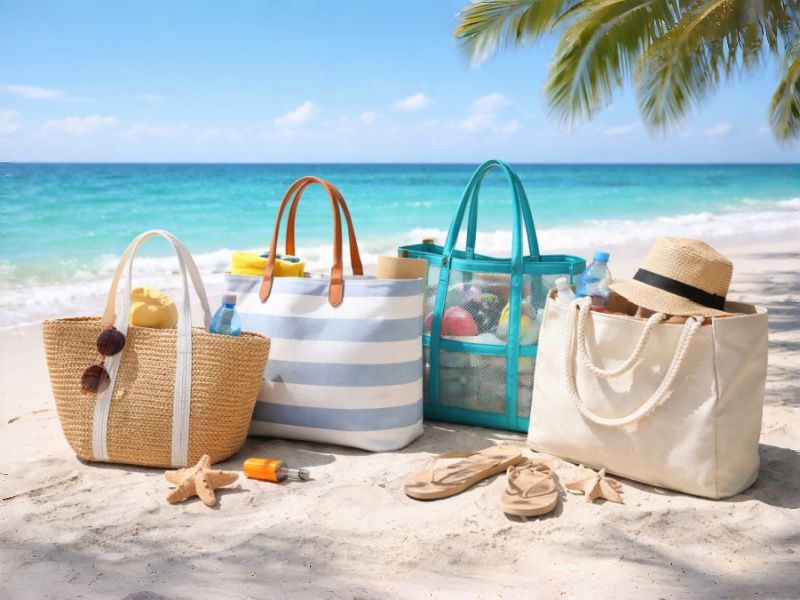
Beach bags used to be easy. A straw tote, a simple canvas carryall, maybe a rope handle, and the job was done. That is no longer enough. Today, the strongest styles sit at the intersection of vacation mood, real-life function, and retail adaptability. A bag now needs to look good in a resort boutique, feel useful on a family beach day, survive wet towels and sunscreen leaks, and still make sense for gifting, travel, and daily summer use. That is why the beach bag category has become much more interesting than it looks at first glance.
The biggest shift is this: people are no longer choosing beach bags only for “beach use.” They are choosing them for multi-scene summer use. A good beach tote may also work for a pool club, boat trip, picnic, day travel, mommy carryall, hotel gift shop, or branded summer campaign. That crossover is driving the strongest styles right now. Natural-looking bags still matter. Raffia and straw still carry vacation emotion. But mesh is winning for breathability and easy sand release. Water-resistant structured totes are growing because they feel more dependable, more premium, and easier to clean. Oversized formats are also moving up because they match how people actually pack in summer: towels, sandals, bottles, pouches, snacks, toys, and extra clothes.
There is another reason this category deserves serious attention. It is one of the few bag types that can move between fashion, utility, gift use, resort retail, and private label programs without changing its core identity. That makes it a strong category for brands that want broad summer appeal without creating a product that feels too niche.
Beach bags trending in 2026 are mainly oversized totes, raffia or straw styles, mesh carryalls, water-resistant zippered totes, and structured utility bags with pockets or cooler sections. The strongest direction is not one single look. It is the mix of vacation-friendly materials and practical function. Natural woven styles still lead for visual appeal, while mesh and water-resistant bags are gaining for easy cleaning, sand release, travel use, and family packing. For branded collections, the best-performing direction is often a bag that looks seasonal but still feels useful after the beach.
A beach bag collection also lives or dies on small details. Many teams spend too much time discussing shape and color, then underthink closure, inner organization, wipe-clean lining, logo visibility, and how the bag sits when half full. These details affect how the bag photographs, how it is used, whether it feels worth the price, and whether people keep reaching for it after summer. The best results usually come from treating beach bags as a use-case product, not just a seasonal accessory.
What beach bags are trending now, and which styles are actually worth developing for retail and private label collections?
The most relevant beach bag styles right now are raffia and straw totes, mesh beach carryalls, oversized canvas totes, water-resistant structured bags, and utility-focused bags with zipper or cooler sections. The strongest commercial choices are usually not the most decorative ones. They are the styles that combine summer appeal with repeat use, easy care, and room for branding. In simple terms, the winning bags look like vacation pieces but perform like everyday summer carryalls.
Raffia and straw remain highly visible because they instantly communicate sun, travel, resort, and warm-weather dressing. Travel + Leisure highlighted a leather-trimmed raffia basket bag as its most stylish tested option, noting both the polished look and the surprising durability of raffia. Glamour also tied raffia’s current strength to runway visibility and broader coastal dressing, which helps explain why this material keeps moving beyond pure beach use into city, holiday, and resort wear. That wider styling life matters. A bag that works only on the sand is harder to sell than one that works from brunch to pool to getaway.
Mesh is trending for a very different reason. It is not driven mainly by fashion nostalgia. It is driven by performance clarity. Mesh lets sand fall out, dries quickly, feels light in hand, and gives people visual control over what is packed. Business Insider named a water-repellent mesh tote its top overall beach bag and praised the easy-clean, easy-carry performance. Real Simple also highlighted the appeal of mesh for keeping sand from collecting inside the bag. In other words, mesh is winning because it solves beach-specific problems without making the bag look technical or heavy.
Oversized bags are also firmly in the conversation. This is partly a family-use story, partly a travel story, and partly a lifestyle shift. People tend to overpack for beach days. They also want one bag instead of three. Business Insider called out the family-friendly popularity of large-format options such as Bogg and structured totes designed to hold more gear. The rise of “big carry” culture in summer bags is not random. It reflects actual use behavior: more drinks, more tech, more kids’ items, more mixed wet and dry gear.
The styles most worth pursuing are usually these:
- Natural-look totes for resort, boutique, and fashion-led summer lines
- Mesh and water-resistant totes for practical, giftable, or family-oriented use
- Oversized canvas or structured utility bags for branding, travel crossover, and broader daily carry
- Hybrid styles that look beach-ready but work equally well for boating, pool, spa, or weekend travel
A good rule is simple: the more limited the use case, the narrower the sales life. The more the bag can move between settings, the stronger the long-term value. If your team is reviewing a summer bag concept and wants input on materials, proportions, or branded details, Jundong can be reached at info@jundongfactory.com.
Which type of beach bag is best for different business uses: resort shops, gift programs, online stores, or branded summer projects?

The best beach bag type depends on where and how it will be used. Raffia and straw work best for resort retail and style-led summer collections. Mesh and water-resistant totes fit family use, travel use, and practical gifting. Canvas and structured utility bags often work better for branding, repeat use, and wider seasonal carry. The right choice is not about trend alone. It is about matching the bag to the selling environment, price target, and real packing behavior.
Resort shops and hotel boutiques usually benefit from emotion-first styling. In those settings, natural woven materials do a lot of work before the shopper even touches the bag. Straw, raffia, jute-look surfaces, rope handles, contrast trims, and soft neutral tones help create an instant vacation signal. These bags also photograph well, which matters when resort retail increasingly overlaps with social sharing. But resort-ready does not have to mean fragile. A lined interior, reinforced base panel, better handle anchoring, and an inside zip pocket can raise the bag from “souvenir feel” to “worth keeping.”
Gift programs and summer promotions often need a different logic. Here, appearance matters, but practical repeat use matters more. A branded summer giveaway only has real value if people keep using it after the event. Mesh totes, coated canvas styles, EVA beach bags, and zipper-top carryalls perform better in this context because they feel usable at the pool, gym, picnic, or grocery run. Alibaba listings also show the breadth of these directions, from recycled fabric totes to EVA beach bags and utility-heavy cotton options with pockets and zipper tops. That tells you there is strong development activity around both natural and functional formats.
Online stores need another balance again. Strong online summer bags tend to do best when the product story is easy to understand in one glance. That usually means one of these four directions:
- Natural and pretty
- Lightweight and sand-friendly
- Structured and wipe-clean
- Big enough for the whole family
If the bag story is too subtle, it gets lost in thumbnails. If the function is too complicated, it becomes hard to communicate quickly. That is why oversized canvas totes, visible mesh bags, boxy utility beach bags, and clean raffia styles keep showing up. They are easy to read visually and easy to explain in a short product description.
Branded summer projects often work best with a hybrid approach. A fully natural straw bag may look great but limit logo methods. A plain polyester tote may take a logo well but lose the seasonal mood. The strongest branded direction is often a mixed-material bag: canvas body with straw trim, coated fabric with rope handle, mesh body with colored branding panel, or EVA structure with custom charm, patch, or strap treatment. That gives more flexibility without losing the summer identity.
Mesh beach bags vs straw beach bags vs water-resistant totes: which one works best in real use?
For real beach use, mesh is often the easiest option because it is light, breathable, and lets sand fall through. Straw and raffia remain the best for summer mood and visual appeal. Water-resistant totes are often the strongest all-around choice for families, travel, and repeat heavy use because they are easier to wipe clean, hold structure better, and feel more dependable when packed full. The best option depends on whether the priority is style, beach practicality, or broader everyday use.
Let’s start with mesh. Its strengths are obvious and honest. It is light. It dries fast. It does not trap sand as badly as dense woven bodies. It is easy to shake out. It often looks casual in a good way. Business Insider’s top overall pick was a water-repellent mesh tote, and Real Simple specifically emphasized how mesh helps prevent the bag from becoming a “sandbox.” That kind of direct functional benefit matters more than many teams expect. On the beach, convenience can beat beauty.
But mesh has limits. It is usually less polished. It may not hold shape well unless paired with stronger trim or base support. It can also make interior organization harder if the bag relies only on open space. From a brand perspective, mesh needs careful treatment to avoid looking too generic. The trick is to give it visual structure: contrast binding, strong handle design, a well-placed branding patch, better pocket construction, or an intentional color story.
Straw and raffia sit on the opposite side. Their job is not mainly to solve sand problems. Their job is to create a summer feeling. That is why they remain so important. Travel + Leisure’s styling notes on raffia show exactly why the category keeps holding value: it elevates simple summer dressing and feels like a seasonal object people want to be seen with. Glamour’s coverage reinforces that raffia is benefiting from a wider fashion wave, not just beach-specific demand. That broader visibility helps natural-look bags stay relevant beyond pure vacation settings.
Still, straw and raffia are not always the best choice for hard use. They can snag. They may not love repeated contact with rough surfaces, damp towels, sunscreen spills, or overloaded beach-day packing. Some versions also lack closure, which may matter for travel or family use. This does not make them weak. It just means they are usually strongest when the bag is being sold on visual value first, not rugged utility first.
Water-resistant totes are where these two worlds meet. They are not always the most romantic-looking option, but they often become the most useful. Business Insider highlighted a large zippered tote made from recycled ripstop polyester as a strong water-resistant option and praised its structure and travel readiness. The viral attention around Yeti’s Camino also shows why structured, durable, wipe-clean carryalls are moving into beach use: people want bags that stand up, hold a lot, and still look controlled rather than floppy.
Here is the clearest way to think about it:
| Bag Type | Strongest Strength | Weakest Side | Best Fit |
|---|---|---|---|
| Mesh | Sand release, light weight, fast dry | Less premium look if untreated | Family beach use, gifting, travel, pool |
| Straw / Raffia | Vacation mood, strong visual appeal | Less ideal for heavy wet use | Resort retail, boutique summer lines |
| Water-Resistant Tote | Wipe clean, structure, heavy-use confidence | Can feel less seasonal without styling help | Family carry, boat, travel, all-day summer use |
The wrong comparison is “Which one is best?” The better comparison is “Which one best fits the life of this bag after it leaves the store?”
What features do people want most in trending beach bags, and why do these details affect repeat use?
The most wanted beach bag features right now are large capacity, easy cleaning, pockets for small items, zippered or secure closure, lightweight build, and, in some cases, cooler storage. These details matter because they shape daily use. A bag may look attractive online, but if it traps sand, collapses badly, leaks, or makes valuables hard to reach, people stop using it. The strongest beach bags are usually the easiest ones to live with.
Many teams still overvalue silhouette and undervalue access. Yet one of the clearest patterns in current coverage is the emphasis on organization and usability. Travel + Leisure described testing bags with real beach essentials and paying attention to features that could hold smaller valuables. Business Insider repeatedly noted organization, water resistance, and capacity in its tested picks. This is not decorative detail. It is usage intelligence.
The most commercially useful features tend to be the least glamorous ones:
- Inside zip pocket for phone, keys, or cards
- Outer slip pocket for sunscreen or bottle access
- Wide opening with some structure so the bag is easy to pack
- Secure top, whether zipper, snap, or magnetic system
- Reinforced handle attachment for heavy summer loads
- Wipe-clean or quick-dry interior surfaces
- Base support so the bag does not collapse into a soft heap
- Wet and dry separation, especially in family or pool use
- Cooler compartment, when gifting or family use is central
Cooler sections are worth special attention. Business Insider’s budget pick included storage space below for drinks and ice packs. That feature changes the bag from a simple tote into a full outing solution. Not every style needs this, but it shows a bigger truth: a beach bag becomes more desirable when it removes the need to carry extra things.
Closure is another detail often mishandled. Open-top straw totes may look chic, but many people still want some security, especially for travel, hotel use, or carrying a wallet, sunglasses, and room key. Even Travel + Leisure’s stylish raffia pick listed the lack of zipper closure as a downside. That is a useful reminder. Fashion and convenience rarely stay in perfect balance by accident. They have to be chosen.
Then there is cleaning. This sounds dull until you watch how quickly sand, salt, damp towels, food crumbs, and sunscreen can ruin the feeling of a bag. Mesh works because it sheds mess. Coated and water-resistant materials work because they wipe down. EVA works because it is easy to hose off. Natural materials may need lining or interior treatment to stay practical. If a summer bag is hard to clean, it becomes a short-use item even if it looked promising on launch day.
This is why repeat use should drive feature decisions. The most successful beach bags are rarely the most dramatic ones. They are the ones that make the day easier.
How do custom beach bags move from concept to sample to bulk production?
A strong beach bag usually moves through a simple but disciplined development path: brief, material selection, size and structure review, logo method choice, first sample, revisions, approval, then production planning. The biggest mistakes usually happen early, not late. Poor size assumptions, weak handle placement, wrong closure choice, or unclear branding instructions create delays and cost more than most teams expect. Clear development work upfront usually leads to smoother sampling and more reliable bulk results.**
A beach bag may look simple, but clean results usually come from precise preparation. The first step is not drawing a pretty tote. The first step is defining the real job of the bag. Is it meant for resort shelves? Family beach use? Hotel gifting? A premium summer collection? A promotional campaign? A waterproof utility line? That decision affects everything else: body material, bottom construction, handle width, pocket layout, logo method, and even how tall the bag should be.
Step two is material logic. A lot of teams choose materials emotionally, then try to fix practicality later. It is better to ask a few hard upfront:
- Will the bag touch wet towels often?
- Does it need to stand upright?
- Does it need to fold flat for shipping or travel?
- Is the look more natural, sporty, minimal, or resort-led?
- Does the logo need to be bold, subtle, or tactile?
- Will the bag sit in a humid environment for long periods?
- Will it be sold at a premium price or given away in volume?
After that comes structure. Beach bags are often oversized, which means handle attachment and body balance matter more than many expect. A bag that looks fine empty may distort badly when packed with water bottles and towels. This is where sampling earns its value. It is much cheaper to fix drop length, gusset width, base reinforcement, and pocket placement in sample stage than after bulk cutting begins.
Logo method needs the same care. On canvas, print and embroidery are common. On mesh, a branding patch or webbing label may work better than direct decoration. On raffia-look or woven bodies, small trim branding may feel more premium than a large printed mark. On EVA or coated materials, emboss, attached tags, charms, molded elements, or stitched add-ons may perform better. The right branding method should fit the material instead of fighting it.
A sound sample path often looks like this:
- Tech brief or reference review
- Material and trim proposal
- Dimension confirmation
- Logo placement and method review
- First sample
- Fit, function, and packing check
- Revision round if needed
- Approval sample
- Production file confirmation
- Bulk planning
This stage is where many future complaints are either prevented or invited. A strong sample should be checked for capacity, balance, comfort on shoulder, empty shape, filled shape, small item storage, stitch cleanliness, and how it opens and closes with real contents inside. A beach bag is not finished when it looks good on a table. It is finished when it behaves well in use.
If your team is already working from sketches, references, or an existing tote and needs help translating that into a workable summer bag sample, reach Jundong at info@jundongfactory.com.
How long does the beach bag sample process take, and when should summer projects begin?
Beach bag development should start earlier than many teams think. Existing styles with simple branding can move quickly, but fully custom bags need extra time for material sourcing, structure testing, sample revision, and packaging approval. Summer bags often look easy because the silhouette is open and relaxed. In reality, the calendar gets tight fast once size, logo, lining, trim, and seasonal delivery are involved. Starting early protects quality more than it protects speed.**
The timeline depends on how much is truly custom. If the body shape already exists and the changes are light, such as logo update, color change, or small trim revision, the path can be relatively short. If the bag is new in material, new in size, and new in structure, the timeline naturally stretches. This is especially true for mixed-material bags, lined straw-like bags, custom hardware, or large-format totes that need testing for weight and shape.
Most delays do not happen because the bag is technically difficult. They happen because decisions are incomplete. The usual slowdowns are familiar:
- Artwork not finalized
- Material direction changed mid-sample
- Color references unclear
- Inner pocket layout revised late
- Packaging approved too late
- Bag size increased after first sample
- Handle drop feels wrong only after filled-use test
- Closure upgraded after the first round
- Price target and material choice not aligned
For summer programs, the safest approach is to lock the direction early enough to allow one real revision round, not just one optimistic sample round. That is especially important for styles with natural-looking bodies, woven surfaces, cooler compartments, or hybrid trims. Even when the bag itself is simple, summer timing can become tight because many seasonal lines, resort launches, and promotional schedules cluster together.
A useful planning mindset is this: if the bag needs to arrive ready for summer selling, then the sample should be treated as a decision tool, not a formality. Teams that rush the sample often pay later in slower approvals, avoidable revisions, or an end result that feels “almost right” but never strong enough to become a repeat style.
How much do trending beach bags cost, and what really changes the final price?

Beach bag pricing is shaped mainly by material choice, bag size, structure, closure, pocket count, branding method, and order quantity. A simple printed canvas tote can sit at the lower end, while EVA bags, neoprene styles, structured water-resistant totes, or bags with cooler sections move higher. Current wholesale listings show low-end cotton and recycled fabric options below one dollar in some cases, while EVA, neoprene, and more developed utility styles can sit much higher depending on structure and minimums.
Price confusion often comes from visual similarity. Two bags may both look like “large beach totes,” yet one is much cheaper because it uses a plain unlined body, simple handle insertion, and one-color print. The other may include base support, lining, zipper, internal organizer, heavier fabric, better handle reinforcement, and more demanding construction. From far away, they look close. From a cost view, they are not close at all.
Current wholesale listings give a rough picture of the spread. Alibaba results show examples such as recycled or plain cotton beach totes under one dollar in some configurations, jute or zipper-top styles around the low one-dollar level, oversize canvas styles spanning a wider band, and EVA beach bags around the eight-dollar level in one listing. Neoprene summer beach totes also appear in a much higher bracket than basic canvas. Minimums vary heavily too, from low double digits on some styles to hundreds on others. That is one reason beach bag pricing should never be discussed without the exact spec.
The main cost drivers are usually these:
- Body material: cotton, canvas, mesh, EVA, polyester, ripstop, neoprene, raffia-look weave
- Size: wider gusset, taller body, longer handles, bigger base
- Structure: unstructured soft tote vs reinforced or stand-up shape
- Closure: open top vs zipper or magnetic secure top
- Pockets: inside zip pocket, bottle sleeves, cooler base, wet/dry separator
- Branding: print, embroidery, patch, woven label, charm, molded part
- Handle treatment: plain self-fabric vs webbing vs rope vs padded construction
- Packing method: flat pack vs shape-protective packing
- Order size: small run vs larger volume
- Material availability: stock fabric vs special sourcing
A common mistake is trying to hit a low target number with a bag concept that is naturally mid-tier. That usually produces frustration, not savings. A better route is to identify which features are non-negotiable and which ones can be adjusted. Often a bag can keep its core identity while reducing cost through simpler lining, fewer pockets, lighter base support, or a different logo method.
Here is a practical view:
| Style Direction | Cost Pressure Level | Why |
|---|---|---|
| Basic printed canvas tote | Low | Simple body, simple trim, efficient sewing |
| Oversized pocketed canvas tote | Low to mid | More material and more operations |
| Mesh tote with trim details | Low to mid | Light body, but finishing and branding matter |
| Water-resistant zip tote | Mid | Technical fabric, zipper, structure |
| Raffia / straw-look lined tote | Mid to high | Material handling, trim finishing, visual quality control |
| EVA / molded utility beach bag | High | Material type, tooling or specialized construction feel |
| Cooler beach bag | Mid to high | Insulation layers, added compartments, thicker construction |
The smartest cost conversation is never “How cheap can this be?” It is “How can this stay attractive, useful, and on target without paying for the wrong details?”
Are low-MOQ custom beach bags a smart move for new collections, and how can risk be reduced before scaling?
Low-minimum beach bag programs can be a smart way to test a new summer idea, especially when the concept is trend-led, seasonal, or linked to a short selling window. The real value is not only a smaller first commitment. It is the chance to test shape, feature mix, branding, and price acceptance before going deeper. Small-run thinking works best when the goal is learning, not only launching.
Low-minimums matter most when the bag direction still carries uncertainty. Maybe the team is not sure whether raffia-look or mesh will connect better. Maybe the logo treatment is new. Maybe the target selling environment is untested. Maybe the bag is part of a resort capsule or seasonal campaign that should stay tight and selective. In these cases, a smaller first run can protect cash and create space for better product judgment.
Current wholesale listings show that some beach bag styles are available at quite low minimums, especially in simpler or more standardized versions, while others still sit at 100, 200, 300, or higher depending on material and construction. That gap matters. It means the lowest entry often belongs to simpler bodies, existing shapes, or more standardized materials. Highly specialized bags may still require larger commitments.
Still, low minimums are not automatically “better.” A small order can carry a higher unit cost, reduced material choice, or fewer customization options. It also becomes inefficient if the team has not made clear decisions. A low-MOQ sample-style order works best when the goal is to validate a few core things:
- Is the size right for real packing?
- Does the material feel aligned with the selling environment?
- Is the logo treatment attractive enough?
- Does the bag photograph well?
- Does the bag feel too generic or distinctive enough?
- Is the price realistic for the intended shelf position?
- Does the shape still look good when full, half full, and empty?
In other words, a smaller opening run should be used as a commercial test, not just a purchasing convenience.
For new collections, this is often the smartest sequence:
- Start with one strong style, not too many
- Keep one clear use case
- Test one or two materials, not five
- Avoid over-designing the first version
- Check the bag in real use with real packing
- Then decide whether to widen color, size, or feature options
This is how many weak summer launches can be avoided. Not by making more styles, but by making one style make more sense.
What is likely to shape the next stage of beach bag demand: natural materials, utility design, or crossover summer carryalls?
The next strong direction in beach bags is likely to come from crossover use. Natural textures such as raffia and straw will stay relevant because they create instant summer appeal, but utility-driven formats are rising fast. Water resistance, easy cleaning, stand-up structure, and wider everyday use are becoming more influential. The beach bag that lasts longest is often the one that still makes sense at the pool, on a boat, in a car trunk, at a resort, or on a weekend trip.
Natural materials are not going away. They still do something that technical materials often cannot: they create emotion quickly. Raffia especially continues to benefit from broader warm-weather dressing and coastal styling. That keeps it relevant not only for beach settings but also for summer wardrobes generally. As long as people want bags that look like vacation, natural textures will keep a place.
But utility is getting stronger. Not boring utility. Better utility. Bags that stand up on their own. Bags that wipe down easily. Bags with pockets that actually fit bottles and sunscreen. Bags that can move from family beach day to lake weekend to road trip. Business Insider’s emphasis on water resistance, packability, family use, and cooler function shows that the category is broadening. The viral growth around structured durable carryalls shows the same thing from another angle. People are increasingly treating beach bags as summer workhorses, not only style props.
That is why crossover design matters so much now. The most promising styles for future development are likely to be the ones that borrow from:
- travel totes
- cooler bags
- resort accessories
- utility carryalls
- oversized weekend bags
- light outdoor bags
This crossover can happen through small details. A structured bottom. Better handle comfort. A zip-top section. A bottle sleeve. A wipe-clean interior panel. A detachable pouch. A sand-friendly mesh panel added to an otherwise polished tote. A natural-look exterior paired with a more practical lining. These are not dramatic moves, but they often create the most commercially useful bags.
The brands and programs that will do best in this space are not necessarily the ones chasing the loudest summer look. They are the ones building beach bags that fit how people actually move in warm weather. If you are planning a new summer tote, gift program, resort collection, or custom beach bag line, Jundong can help review the concept, material mix, and sample direction at info@jundongfactory.com.
Beach Bag FAQs
1. What type of beach bag is the most practical right now: straw, mesh, canvas, or waterproof styles?
The most practical beach bag right now is not always the prettiest one, and the prettiest one is not always the one people keep using. That is why this choice should start with real use, not just trend mood. In most cases, mesh bags are highly practical for beach use because they are light, easy to shake out, and less likely to trap sand. They also dry faster than many dense fabrics, which makes them popular for pool days, family outings, and casual resort use.
That said, straw and raffia-look bags still have strong appeal because they instantly create a vacation feeling. They work especially well for boutique collections, resort stores, and fashion-led summer lines. The weakness is obvious: many natural-look bags are less forgiving when packed with wet towels, sunscreen, snacks, and children’s items. If the body has no lining, no secure pocket, and no structure, the bag can feel beautiful but inconvenient.
Canvas beach bags sit in the middle. They are familiar, easy to brand, and highly adaptable. A good canvas beach tote can move from beach use to grocery runs, travel, and daily summer carry. That wider use often gives it longer product life. Waterproof or water-resistant styles are usually the strongest option for families, boating, road trips, and heavy-use summer packing because they are easier to wipe clean and tend to hold their shape better.
A simple way to choose is this:
| Style | Best Strength | Best For |
|---|---|---|
| Mesh | Sand release and fast dry feel | Family beach use, pool, travel |
| Straw / Raffia Look | Summer mood and visual appeal | Resort retail, boutique collections |
| Canvas | Flexible use and easy branding | Private label, gifting, everyday summer tote |
| Water-Resistant | Easy cleaning and stronger structure | Heavy-use carry, boating, family outings |
If the goal is broad appeal, a hybrid style often works best: a bag that still looks seasonal, but performs well enough to be used long after one beach trip.
2. Which beach bag features matter most if I want people to keep using the bag after summer?
The most valuable beach bag features are usually the quiet ones that make daily use easier. A lot of teams focus heavily on body shape, color, and trim, but long-term use is often decided by practical details. If a bag looks attractive in photos but feels annoying in real life, it quickly becomes a one-season product.
The features that matter most right now are large capacity, easy-clean surfaces, secure closure, inside storage for valuables, reinforced handles, and better organization. A beach bag that cannot comfortably hold towels, bottles, sunglasses, sunscreen, and small personal items will disappoint fast. People also notice closure more than many brands expect. Open-top bags may look relaxed and stylish, but once someone is traveling, walking through a resort, or packing around children, zipper or snap closure becomes much more useful.
Another detail that separates a good beach bag from an average one is interior logic. One inside zipper pocket for keys and phone can completely change how premium and functional the bag feels. Wet-dry separation is also becoming more attractive, especially for family use, spa use, and poolside settings. The same is true for wipe-clean lining, which helps deal with sunscreen leaks, damp clothing, snack crumbs, or sand buildup.
Here is a practical checklist:
- Wide opening for easy packing
- Secure top for travel and personal items
- Inside zip pocket for phone, key card, and wallet
- Reinforced handles for heavy loads
- Base support so the bag does not collapse badly
- Easy-clean lining or body material
- Bottle or sunscreen pocket for quick access
- Lightweight construction for better carrying comfort
The bags people use again and again are rarely the ones with the most decoration. They are usually the ones that quietly solve small problems throughout the day.
3. Are oversized beach bags still trending, or are smaller structured bags becoming more popular?
Oversized beach bags are still very relevant, but the real shift is that size alone is no longer enough. In recent years, bigger beach totes gained popularity because they matched how people actually pack for summer outings. One bag now often needs to hold towels, cover-ups, flip-flops, water bottles, sunscreen, snacks, toys, and sometimes even a change of clothes. That made large-capacity beach bags a natural fit, especially for family trips, road travel, and destination stays.
But the newer development is this: people still want large capacity, yet they increasingly prefer that capacity to come with better structure and better control. In other words, oversized is still strong, but floppy is not always welcome. A very large bag that becomes shapeless, difficult to search through, or uncomfortable on the shoulder will eventually feel frustrating. That is why many newer beach bags are being designed with more thoughtful base construction, stronger handle support, inside compartments, or cleaner silhouette lines.
Smaller structured bags are also getting attention, especially for hotel resort shops, style-focused summer edits, and light-carry use. Some people do not need a giant carryall. They want a bag for sunglasses, a towel, sunscreen, a book, and a few small items. For these users, a more compact bag feels polished and easier to carry.
The key is not really “big vs small.” The key is matching size to the way the bag will actually be used.
| Use Scenario | Better Direction |
|---|---|
| Family beach day | Oversized with pockets and stronger handles |
| Pool / resort / boutique use | Medium structured tote |
| Boat / travel / mixed outing | Large water-resistant structured bag |
| Fashion-led summer styling | Medium straw or raffia-look bag |
The strongest direction today is often big enough to be useful, but structured enough to stay attractive when packed.
4. How do I choose the right material for a custom beach bag collection?
The right material should be chosen based on the bag’s job, not only its look. This is one of the most important decisions in beach bag development, because material affects almost everything: weight, structure, cleaning, logo application, comfort, cost, and how the bag performs over time.
If the collection is meant to feel relaxed, seasonal, and visually tied to vacation dressing, straw-look, raffia-look, jute-look, or woven natural textures can be very effective. These materials communicate summer immediately. They are often the right fit for boutique resort lines, souvenir-style retail, and warm-weather style programs. The challenge is that they may need more internal support, better lining, or protective detail if the bag is expected to carry wet items or take heavier daily use.
If the priority is practicality, mesh, canvas, coated canvas, polyester, oxford fabric, EVA, and water-resistant blends often perform better. Mesh helps with sand release and lighter carry. Canvas offers branding flexibility and a familiar casual look. Polyester or coated materials can be easier to wipe clean. EVA can create a more structured, washable result. The best choice depends on whether the bag needs to feel soft and natural, or more durable and controlled.
A smart material review usually starts with these:
- Will the bag carry wet towels often?
- Does it need to stand upright?
- Will it be used mostly at the beach, or also for travel and daily carry?
- Is the logo subtle or highly visible?
- Does the bag need to feel premium, casual, sporty, or resort-focused?
- How much shape retention is expected?
- Is easy cleaning a major priority?
Many successful beach bags are actually mixed-material designs, because one single material rarely solves every need. For example, a bag may use canvas for body stability, mesh for breathability, rope handles for summer character, and a lined interior for better daily use. That type of balance often leads to a stronger finished product than relying on one material alone.
5. How long does it usually take to develop a custom beach bag from idea to approved sample?
A custom beach bag usually takes longer than people expect, not because the shape is complicated, but because the details matter more than they appear to. Many beach bags look simple on first glance. They may be open-top totes, large carryalls, or relaxed summer silhouettes. But once real decisions begin, the timing depends on much more than the body shape.
A fully custom project often moves through several stages: concept review, material choice, size confirmation, logo method selection, sample making, revision, and final approval. If the bag is based on an existing style with only light changes, the process can move much faster. If the bag is a new design with new materials, custom trim, special pockets, mixed textures, or packaging requirements, more time is naturally needed.
What slows projects down most is not always production work. It is usually late decision-making. Delays often happen because artwork is unfinished, materials are changed midway, handle drop feels wrong after the first test, the bag is too small when packed in real life, or the closure method gets upgraded after the first sample. Even one “small” change can affect the sample path more than people expect.
A clean development flow often looks like this:
| Stage | What Happens |
|---|---|
| 1. Concept review | Shape, use, target feel, and visual direction are discussed |
| 2. Material confirmation | Body fabric, trim, handle, lining, and hardware are chosen |
| 3. Size and structure check | Dimensions, base, gusset, pocket layout, and carry comfort are reviewed |
| 4. Sample making | First physical version is produced |
| 5. Revision round | Fit, function, details, and branding are improved |
| 6. Final approval | The bag is locked for bulk production |
The smartest teams leave time for at least one serious revision round, because the first sample is often where real-life use reveals what a sketch cannot.
6. What affects the price of a beach bag the most?
The biggest beach bag price drivers are material, size, structure, closure, pocket layout, branding method, and quantity. This may sound basic, but many people still assume that two bags with a similar shape should have a similar cost. In reality, beach bags that look close in photos can be very different once construction is examined.
For example, a plain oversized canvas tote may look similar to a structured water-resistant summer carryall from a distance. But once the second bag includes zipper closure, reinforced handles, inside pockets, wipe-clean lining, thicker body material, a firmer base, and more involved logo treatment, the cost logic changes quickly. The visual silhouette may still say “beach tote,” yet the actual work, material consumption, and assembly steps are no longer comparable.
One of the most misunderstood areas is size. Bigger bags do not only use more fabric. They often need stronger handles, better seam support, cleaner balance, and more thought in the base construction. A very large bag also tends to magnify weak construction choices. So, the cost of large format is not only about extra centimeters. It is also about keeping the bag stable and comfortable when packed full.
These elements usually matter most:
- Body fabric or body material
- Bag dimensions
- Structured or unstructured build
- Zipper, snap, or open top
- Inside and outside pockets
- Logo method such as print, embroidery, patch, woven label, charm, or mixed branding
- Handle type such as self-fabric, webbing, rope, padded, or contrast trim
- Lining and easy-clean interior
- Order size
- Packing method
A better way to manage beach bag cost is to divide details into three groups:
must keep, nice to have, and can simplify. That prevents the common mistake of spending money on decorative details while underinvesting in the parts that affect real use.
7. Is a low MOQ a good idea for beach bags, or does it usually lead to higher risk?
A low MOQ can be a very smart move when the style is new, seasonal, or not fully proven yet. It allows a brand or collection team to test shape, price level, visual appeal, and practical function before committing to a larger run. For summer bags especially, this can be useful because timing matters, trend direction can move quickly, and some concepts look better on paper than they perform in real use.
That said, low MOQ is not automatically the cheapest or safest option in every case. Smaller quantities often come with higher unit cost, fewer material choices, and less freedom in custom details. Some styles work well at a low opening quantity, especially if they are based on an existing body or use more standard materials. Other styles, especially those with more custom structure, mixed materials, or specialized trim, may still require a higher starting level to make sense.
The real value of a low opening run is learning. It gives teams a chance to see:
- whether the size is truly right
- whether the logo feels strong enough
- whether the material looks premium enough
- whether the bag photographs well
- whether people actually use the pockets and closure as expected
- whether the price feels acceptable once the product is in hand
A lower starting quantity works best when the goal is not simply “order less,” but rather test the right things first. Many weak launches happen because too many styles are opened at once. A stronger move is often to start with one clear style, in one or two color directions, and let real response guide the next step.
So yes, low MOQ can reduce risk, but only when it is paired with a clear testing purpose. Without that, a small run can still become an expensive guess.
8. What branding method works best on beach bags: print, embroidery, patch, woven label, or something else?
The best branding method depends on the material, the desired look, and how visible the branding should feel. There is no universal best choice, because beach bags cover many surfaces and many style directions. A bold printed logo may look perfect on canvas, but too harsh on a raffia-look body. An embroidery treatment may feel rich on some constructions, but too heavy or uneven on mesh. A subtle woven label may feel premium on one bag and too quiet on another.
For canvas and cotton-based beach bags, screen print, heat transfer, embroidery, woven labels, and stitched logo patches are common. These surfaces usually offer the most flexibility. If the collection is more relaxed or promotional, print may work well. If the design needs more depth or texture, embroidery or a patch can create a stronger finish.
For mesh bags, branding often works better through patches, stitched labels, colored webbing, or a structured front panel, because the body itself may not always be the best place for direct decoration. For straw-look or woven bodies, subtlety often works better than loudness. Small trim branding, a hanging tag, a stitched leather-look label, or a woven name tab can feel more refined than a large printed mark.
For water-resistant or EVA styles, embossing, molded details, attached tags, custom zipper pulls, and branded charms may also be strong options. These approaches can make the product feel more considered, especially when the main body does not naturally support traditional print or embroidery.
A useful way to think about it is this:
| Branding Method | Best Use |
|---|---|
| Clear visual branding on canvas and flatter surfaces | |
| Embroidery | Richer texture and stronger detail on suitable fabrics |
| Patch | Strong identity on mesh, canvas, sporty, or mixed-material bags |
| Woven Label | Subtle premium branding |
| Charm / Puller / Tag | Lifestyle and fashion-led beach bags |
| Embossed / Molded Detail | Structured or technical beach bag styles |
The strongest branding usually feels like part of the product, not something forced onto it.
9. What should I check carefully before approving a beach bag sample?
A beach bag sample should never be approved only because it looks nice on a table. It needs to be checked in the way the bag will actually be used. This is one of the biggest mistakes in summer bag development. Teams review color, logo, and silhouette, but they do not fully test how the bag behaves when it is packed, carried, opened, cleaned, and handled throughout the day.
Before approval, the sample should be filled with real contents: towel, bottle, sunscreen, sunglasses case, pouch, phone, sandals, and whatever else matches the intended use. Once packed, a lot becomes clear very quickly. The bag may suddenly feel too narrow, too deep, too heavy, too soft, or too unstable. The handle drop may become uncomfortable. The top opening may become awkward. The inside pocket may be too small to be useful. The body may collapse too much, or the base may not support the load.
Here are the most important things to check:
- Does the bag look balanced when full, half full, and empty?
- Is the opening easy to access?
- Do the handles feel comfortable on the shoulder and in hand?
- Is the inside pocket actually useful?
- Does the closure work smoothly?
- Is the base strong enough for normal summer loads?
- Does the logo look right from normal viewing distance?
- Does the material still feel good once the bag is packed?
- Does the shape stay attractive in real life, not just in photos?
- Is the bag easy to clean after a realistic test?
A good sample review is practical, not polite. It should be treated as the moment to find problems while they are still easy to fix.
10. How can I make a beach bag collection feel different without creating something too risky?
The best way to make a beach bag collection feel different is not always to invent a completely new shape. In many cases, the smarter move is to take a familiar summer format and improve the parts that people actually notice and use. This creates a product that still feels easy to understand, but does not disappear into a sea of lookalikes.
There are many ways to do this well. A standard canvas tote can feel much fresher with a better handle treatment, stronger color blocking, cleaner pocket design, or a smarter inside layout. A raffia-look bag can feel more elevated with a lined interior, subtle branding, contrast edging, or an attached pouch. A mesh bag can become much more distinctive through better trim, shaped panels, custom webbing, or thoughtful color combinations. A water-resistant beach bag can stand out through cleaner proportions, a more polished silhouette, or details borrowed from travel and resort accessories.
A practical beach bag collection often becomes more memorable through refinement, not exaggeration.
Ways to create difference without adding too much risk:
- Use a familiar silhouette with a better material mix
- Improve the handle design
- Add a pouch, bottle sleeve, or wet-dry section
- Create stronger summer color pairings
- Make the bag more useful beyond the beach
- Upgrade the closure without overcomplicating the shape
- Choose branding that feels integrated, not oversized
- Focus on how the bag sits when carried and when set down
This kind of product direction tends to age better. It also gives the collection more room to become a repeat style instead of a one-season experiment. If you are planning a custom beach bag line and want help reviewing materials, structure, logo direction, or sampling options, you can contact heyzizi for development support.