Skip to content
A Better First Order Starts Here
For brands, importers, retailers, and sourcing teams that want to test styles, verify quality, reduce first-order risk, and build a cleaner path from sample to repeat runs.
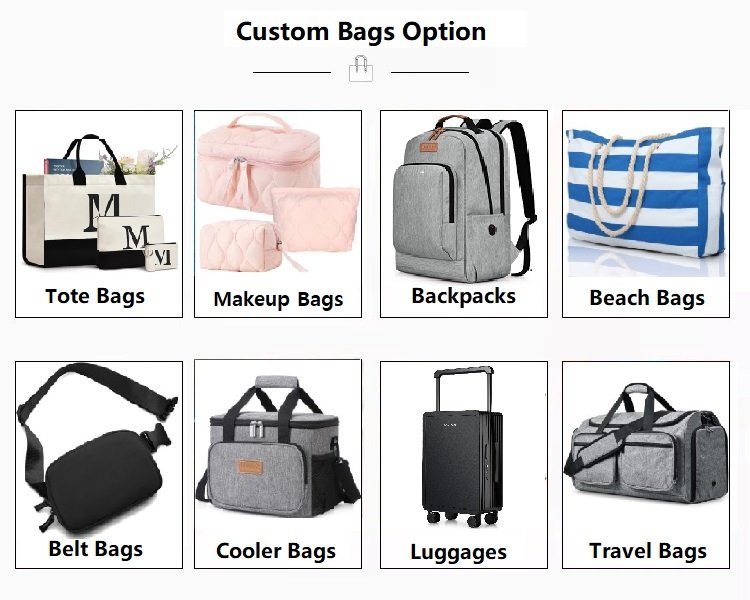
Looking for the best bag manufacturer in China for OEM, ODM, private label, fast sampling, low MOQ, and reliable bulk production? Jundong supports backpacks, tote bags, cosmetic bags, cooler bags, travel bags, and more with in-house development, strict quality control, flexible project handling, and smoother repeat-order support.
Trial-Friendly Bag Projects
A trial-order-friendly bag factory is not simply one that accepts a small quantity. The more useful definition is a team that can help the first order become clearer, safer, and more informative for the next step.
That difference matters. Many first orders fail not because the quantity is small, but because the order does not actually test the right things. A useful first run should help verify shape, material fit, branding result, workmanship stability, packing logic, and repeat-order potential. If those areas stay unclear, the order may be completed but still leave the project uncertain.
This is why a better first-order partner usually does more than say yes to low MOQ. It helps define what the first run should prove, what should stay simple, what should be locked early, and what should wait until the product direction is more stable. That makes the first order less like a gamble and more like a controlled step.
| A Helpful First Order Should Confirm | Why It Matters |
|---|---|
| Shape and size direction | Prevents wrong-product scaling |
| Material and trim fit | Improves real-use performance |
| Branding result | Protects first-launch image |
| Workmanship stability | Shows whether bulk can hold up |
| Packing logic | Prepares for shipment and retail use |
| Repeat potential | Makes the next decision easier |

Why First Orders Feel Risky
A first bag order often feels risky because too many important things are still unknown at the same time. The project may have a promising design, but the team still does not know whether the material behaves correctly, the logo looks right, the packing works smoothly, the workmanship holds up, or the style deserves repeat volume.
This is why a stronger first-order strategy starts by separating what really needs proof. It should focus on the few decisions that matter most at this stage. In many cases, those are product shape, material direction, branding effect, core function, and basic packing readiness.

When first orders feel risky, it is often because the order tries to do too much at once. Too many colors, too many structure changes, too many trim experiments, and too many unresolved details can make the result harder to read. A better first step usually limits the variables so the outcome becomes clearer.
The goal is not just to reduce risk emotionally. It is to reduce risk structurally.
| Verify Early | Why It Should Come First |
|---|---|
| Shape and dimensions | Decides whether the style works at all |
| Main material direction | Affects feel, structure, and cost |
| Logo method and placement | Shapes first brand impression |
| Core function | Confirms real-use practicality |
| Basic packing format | Prevents late delivery confusion |
A Useful Trial Order
A small first order is only valuable when it produces information that helps the next move. If it is too small, too unclear, or too overloaded with variables, the team may complete it and still not know what should happen next.
A useful first run is usually built around one practical: What decision should this order help us make? For others, it is whether the material works, whether the branding reads well, whether the bag suits the target channel, or whether the structure should be simplified before scaling.
A good first order is not defined by the smallest possible quantity. It is defined by the lowest workable quantity that still allows meaningful judgment. That is a more useful threshold. It helps the team avoid both extremes: overcommitting too early or under-testing the product so badly that the result becomes misleading.
This is one reason serious teams often treat the first order as a controlled learning stage. The order should reduce uncertainty, not preserve it.
| Less Useful First Order | More Useful First Order |
|---|---|
| Only focuses on small quantity | Focuses on what must be verified |
| Too many unresolved variables | Controlled comparison |
| No clear next-step purpose | Built around a decision |
| Hard to repeat later | Designed to guide repeat planning |

From Sample to First Run
A first run often goes wrong not because the sample was poor, but because the approved sample was not carried forward clearly enough. This is where many first orders break. The style looked right in review, yet the first run drifts in fabric feel, logo placement, trim choice, stitching detail, reinforcement, or packing setup.
A smoother handoff usually depends on one thing: the approved sample must become a working production reference, not just a visual reference. That means the team should carry forward the confirmed size, material direction, branding method, trim logic, reinforcement, and basic packing rules. If those parts stay vague, the first run can still be completed, but it may no longer represent what the team originally approved.

The bridge between sample and first run matters so much in trial-stage projects. The first run should test the product under more realistic conditions, but it should not randomly reopen decisions that were already settled.
| What Should Carry Over Clearly | Why It Matters |
|---|---|
| Size and silhouette | Protects the visual base |
| Main fabric and lining | Reduces feel and shape drift |
| Logo method and position | Keeps brand presentation stable |
| Trim direction | Avoids mismatch in use and finish |
| Reinforcement | Protects performance in real use |
| Packing format | Prepares for actual shipment |
Lower-Risk First Order Bags
A lower-risk first order usually begins with a style that can reveal useful feedback without demanding too many unstable variables at once. That is why some bag types are naturally better for trial-stage projects than others.
In many cases, the safer first-order categories are tote bags, cosmetic bags, zipper pouches, toiletry bags, drawstring bags, simple organizer bags, lunch bags, and lightweight backpacks. These styles are often easier to evaluate because the team can focus on shape, material, logo effect, basic function, and packing logic without being overwhelmed by too many structure-dependent details.
That does not mean more technical styles should be avoided forever. It means they may require a stronger preparation base. A cooler bag with insulation layers, a technical backpack with multiple compartments, a tool bag with reinforcement demands, or an EVA case with shape dependency may still be the right product, but not always the best first step if the goal is to reduce uncertainty quickly.
A useful first order should make the next decision easier. That usually happens when the style is complex enough to be meaningful, but simple enough to be read clearly.
| Better First-Order Styles | Why They Work Well |
|---|---|
| Tote bags | Easy to read shape, print, and material |
| Cosmetic bags | Good for finish, lining, and branding checks |
| Zipper pouches | Useful for trim and construction basics |
| Drawstring bags | Good for quick style and print validation |
| Lunch bags | Useful for function plus simple structure |
| Lightweight backpacks | Helps test carry shape without overloading variables |

Setting a Sensible Trial Quantity
A sensible trial order quantity is not just the smallest number a factory is willing to accept. It is the lowest workable quantity that still allows the project to produce a meaningful result.
This distinction matters because first-order quantity affects more than budget. It also affects whether the team can properly assess material behavior, workmanship consistency, branding stability, packing readiness, and repeat-order potential. If the quantity is set too low for the product structure, the order may feel flexible at the beginning but weak as a decision tool later.
A better way to think about quantity is to ask: what does this first order need to prove? If the purpose is simple style validation, a more compact quantity may work well. If the goal is to compare colorways, test multiple SKUs, evaluate packing flow, or prepare a retail trial, the quantity must still be large enough to reveal something useful.

Otherwise, the project risks under-testing the product and over-reading the result.
This is why experienced teams usually pursue not the lowest possible number, but the lowest useful number.
| Trial Goal | Quantity Should Be Enough To Do This |
|---|---|
| Style validation | Confirm shape, feel, and logo result |
| Color comparison | Show meaningful differences clearly |
| Multi-SKU test | Support fair comparison across options |
| Packing review | Check unit packing and carton flow |
| Channel testing | Produce enough feedback to judge next steps |
What to Lock Before First Order
A first order should begin with fewer than many teams expect. The project does not need every future upgrade decided in advance, but it does need the core version to be locked clearly enough that the first run can still be judged fairly.
In most bag projects, the items that should be locked first are size, silhouette, main fabric direction, lining direction, logo method, logo position, key trims, reinforcement, and the basic packing format. These are the elements that most directly affect whether the first run still reflects the approved idea. If too many of them remain open, the team may complete the order but still struggle to interpret the result.
Locking does not mean making the project rigid. It means deciding which parts are already stable and which parts are still being tested. That distinction is what keeps a trial order useful. The right first-order structure protects the approved base while leaving a few clearly defined areas open for observation.
| Lock Early | Why It Should Not Stay Vague |
|---|---|
| Size and silhouette | Defines the whole product direction |
| Main fabric and lining | Affects feel, structure, and use |
| Logo method and position | Protects first brand presentation |
| Zippers and key trims | Impacts function and finish |
| Reinforcement | Supports real-use performance |
| Basic packing format | Prevents end-stage confusion |

Mixed Test Runs Need Discipline
Many teams assume that small test runs can be handled more casually because the quantity is lower. In practice, the opposite is often true. The smaller and more mixed the order becomes, the more important it is to keep the project organized, version-controlled, and easy to read.
This matters because mixed trial orders usually introduce more variables at the same time: different colors, multiple SKUs, changing trims, separate label needs, and different packing rules. If those differences are not planned clearly, the first order may create more confusion than insight. The team may finish the run, yet still not know which style worked best, which color performed better, or which details should be kept for the next order.

A more useful mixed-order strategy usually keeps the core logic shared. Similar structures, related fabrics, the same branding system, and comparable packing rules make the result easier to understand. Too much variation too early can weaken the entire purpose of the trial.
The goal of a small test run is not to make everything possible at once. It is to make the next decision easier.
| Better Controlled Mixed Run | Harder-to-Read Mixed Run |
|---|---|
| Similar styles | Unrelated bag categories |
| Shared fabric direction | Too many material changes |
| Same branding method | Different logo systems in one run |
| Comparable packing rules | Different packing logic per SKU |
| Clear test purpose | Too many goals at once |
Reading Quality in Trial Orders
Quality in a trial order should not be judged by a perfect finish alone. A more useful reading asks whether the first run shows stable direction, controllable variation, and enough consistency to support a better next run.
This matters because trial-stage quality is different from mass-scale maturity. The goal is not to pretend the first order already represents the final optimized version. The goal is to see whether the product can hold its shape, stitching quality, material match, logo clarity, trim fit, reinforcement logic, and packing readiness in a way that supports confidence rather than doubt.
A strong trial order usually reveals two things at the same time:
what is already stable, and what still needs refinement. That is why quality should be read with structure. Instead of asking only “Is it good or bad?”, a better review usually asks: Which details are ready to keep, which ones need adjustment, and are the problems manageable before scaling?
That kind of reading gives the first order real value. It turns the order into a stability check, not just a pass-or-fail moment.
Trial-Stage Quality Table
| What to Read in Trial Quality | What It Helps You Decide |
|---|---|
| Shape consistency | Whether the silhouette can be repeated |
| Stitching and finishing | Whether workmanship is stable enough |
| Material and trim match | Whether the product feels correctly built |
| Logo clarity | Whether branding is ready for wider use |
| Packing readiness | Whether shipment quality is under control |
| Adjustability of issues | Whether scaling makes sense next |

First Order Shipment Readiness
A first order can look correct in product review and still create trouble later if the shipment side is not prepared clearly enough. Many teams focus on the bag body first, but first-order friction often appears in unit packing, barcode labels, hangtags, warning labels, insert cards, carton quantity, carton marks, and shipment coordination.
These details matter even at the trial stage because a first order is often used to evaluate more than the product itself. It may also test whether the project can move through warehouse receiving, retail setup, e-commerce fulfillment, distributor handling, or export packing without creating avoidable confusion.

Packing logic should be treated as part of the first-order design, not something added only after production ends. A more useful first run usually defines how each unit is packed, how labels are positioned, how cartons are marked, and what shipment format fits the real use path.
| What Should Be Confirmed Early | Why It Matters |
|---|---|
| Unit packing method | Protects finish and presentation |
| Barcode / label rules | Supports receiving and inventory systems |
| Hangtags / inserts | Improves retail and display accuracy |
| Carton quantity | Affects handling and shipping efficiency |
| Carton marks | Reduces routing and sorting mistakes |
| Delivery mode | Supports timing and cost planning |
Trial Order to Repeat Order
A good trial order does more than complete one shipment. It creates a cleaner base for the next run. That is why the value of a first order is often best measured by what it makes easier later.
A strong first run usually leaves behind something usable: an approved working version, a clearer material decision, a more stable logo method, better trim judgment, a proven packing format, and notes on what should stay unchanged. Without these, the second run often starts with too many repeated conversations. With them, the repeat order becomes faster, steadier, and easier to cost and schedule.
This matters because repeat orders are where the real partnership often begins. A style that performs well may need more units, more colorways, smaller revisions, retail expansion, or shipment splitting. The first run should help prepare that path. If it does not, the project stays stuck in a “trial” mindset for too long.
A useful first order does not try to prove everything. It tries to make the next decision simpler and more reliable.
Repeat-Order Bridge Table
| What a Good First Order Leaves Behind | Why It Helps Later |
|---|---|
| Approved core version | Reduces restart confusion |
| Material confirmation | Improves consistency |
| Logo detail record | Protects branded continuity |
| Trim and function notes | Improves refinement speed |
| Proven packing method | Speeds next shipment setup |
| Review notes | Makes next decisions clearer |

Trial Order Readiness Check
A trial order makes the most sense when the project is clear enough to test, but not yet mature enough to scale with confidence. That middle stage is where a first run creates the most value. If the product is still too vague, the trial may produce confusing feedback. If the product is already fully proven, the trial may only slow the next step.
A practical way to judge readiness is to ask whether the project already has a testable base. That usually means a style direction is visible, the intended use is understood, the material path is starting to narrow, the branding idea is forming, and the team knows what the first run is supposed to confirm. Without that base, a trial order can become too open-ended. With it, the first run becomes much easier to read.
A project is often ready for a trial order when the team wants to check shape, material fit, logo result, workmanship stability, packing logic, or channel suitability before moving further. It may be less ready when major design are still unresolved and the core product idea is changing too often.
| If Your Project Looks Like This | A Trial Order Usually Makes Sense |
|---|---|
| Style direction is visible | Yes |
| Main use scenario is clear | Yes |
| Material path is narrowing | Yes |
| First-order goals are defined | Yes |
| Core design is still changing heavily | Not yet |
| Too many product variables are still open | Not yet |
| No clear purpose for the first run | Not yet |
Our Production Capabilities

Location: Guangzhou, near major ports
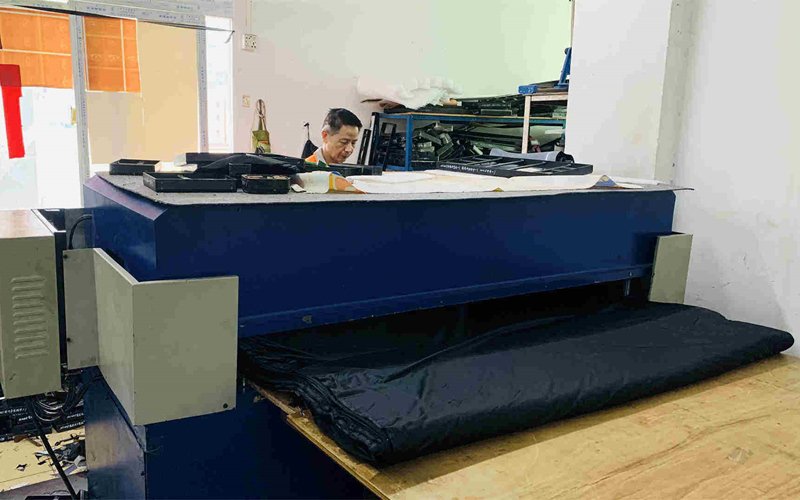
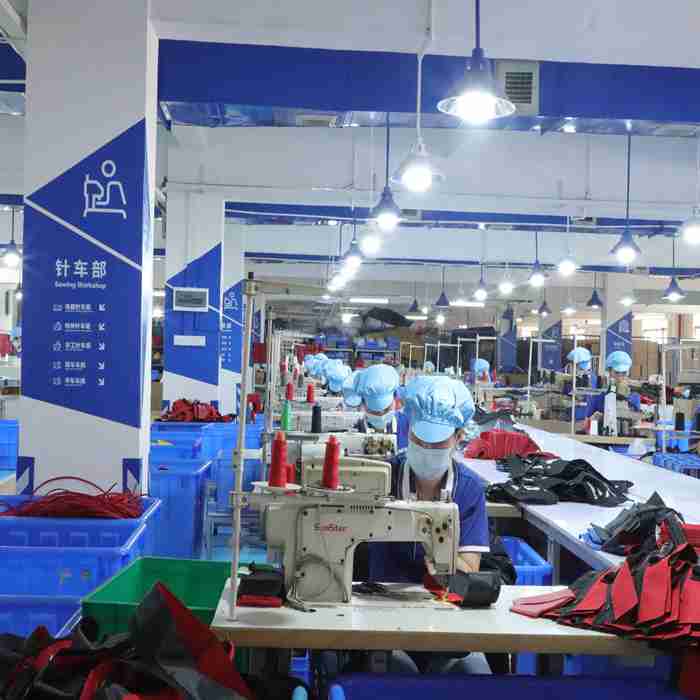
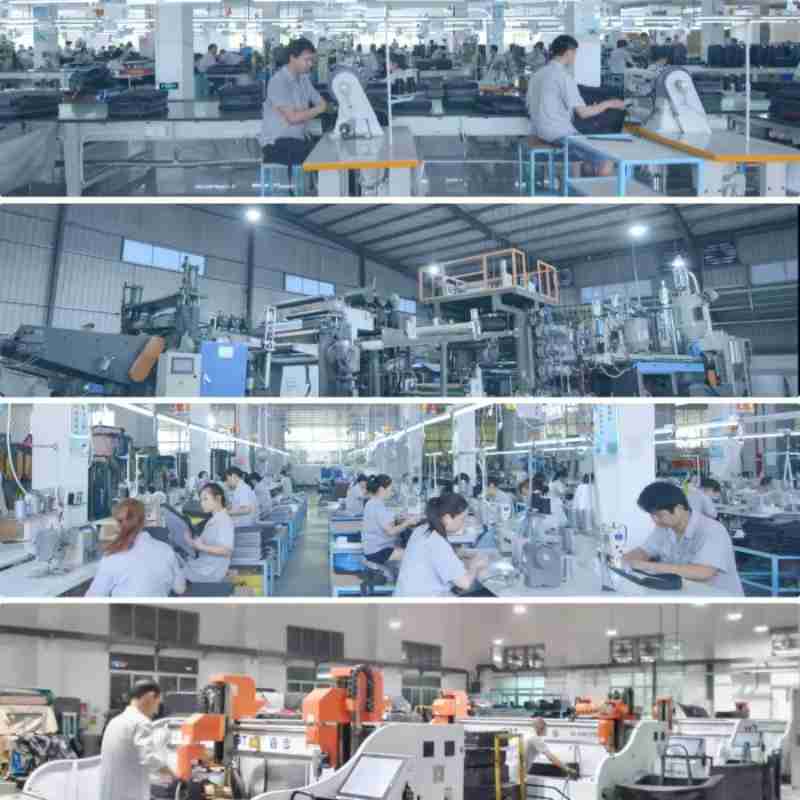
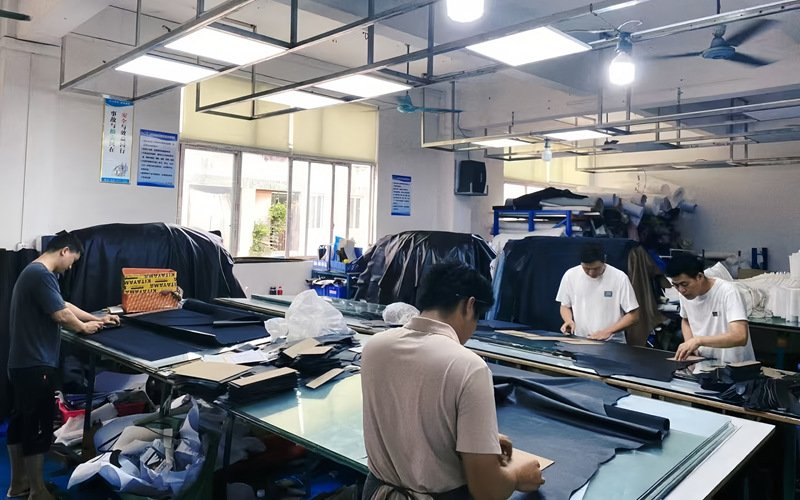
Cutting, sewing, printing, and assembly lines in-house
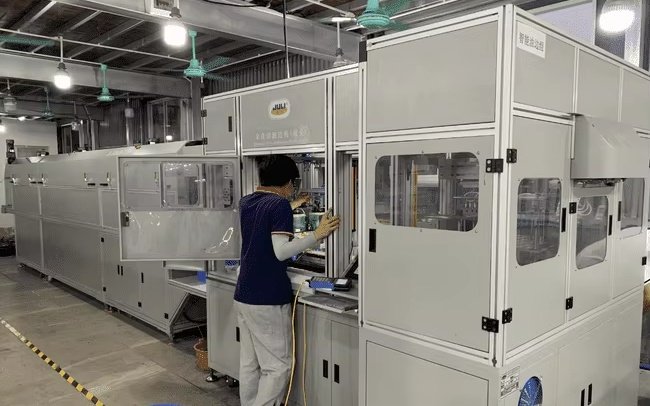
In-house material testing and R&D room
Sample development center
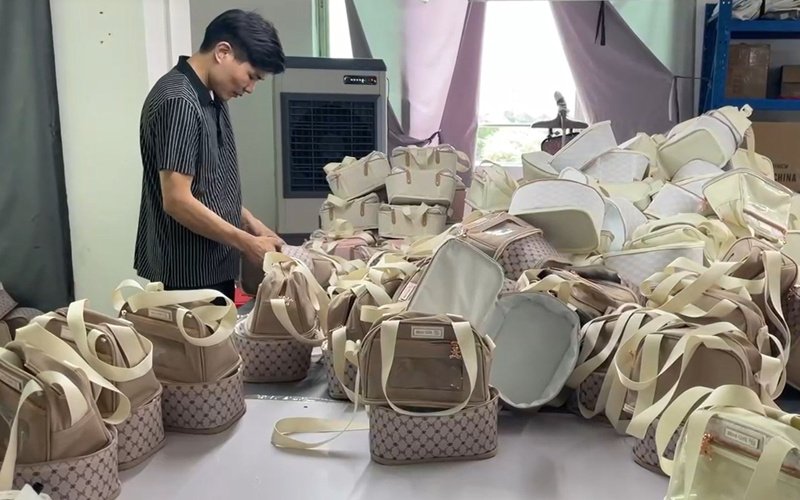
Dedicated QC team for inline & final inspection
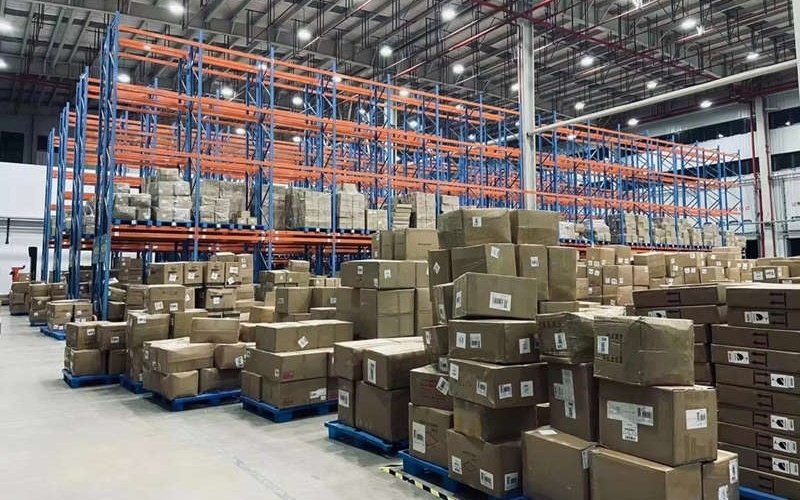
Custom packaging & labeling
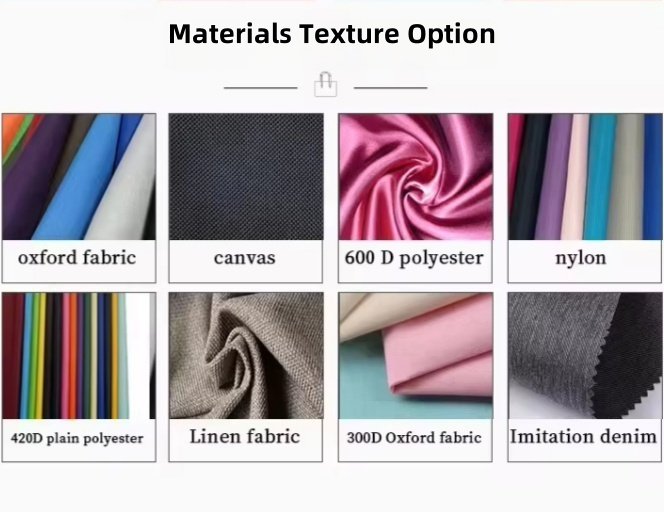
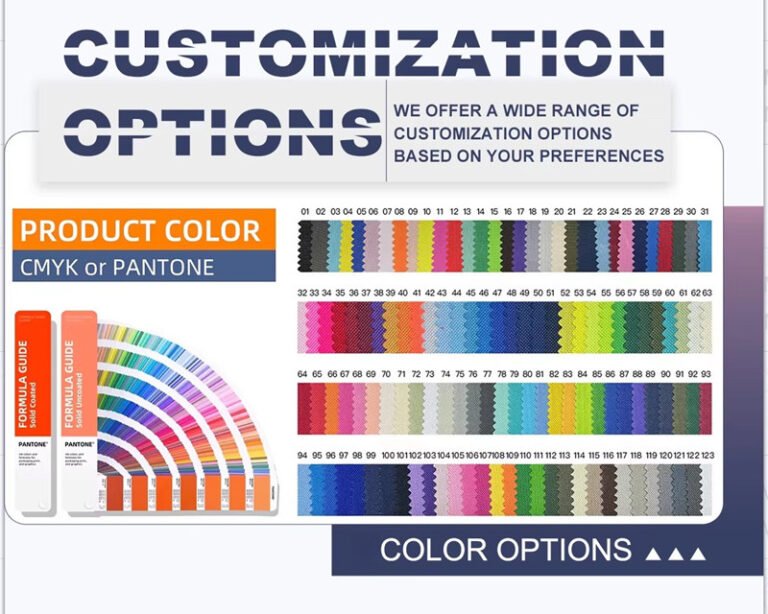
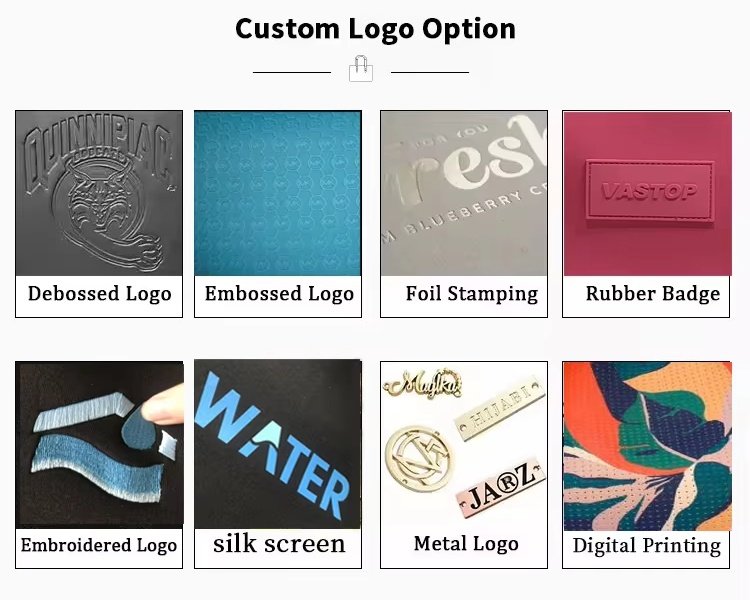
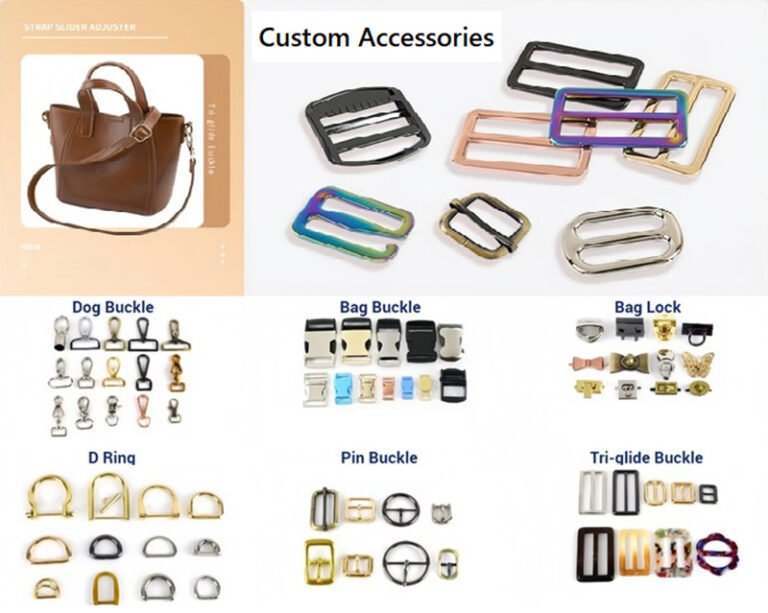
Client Testimonials
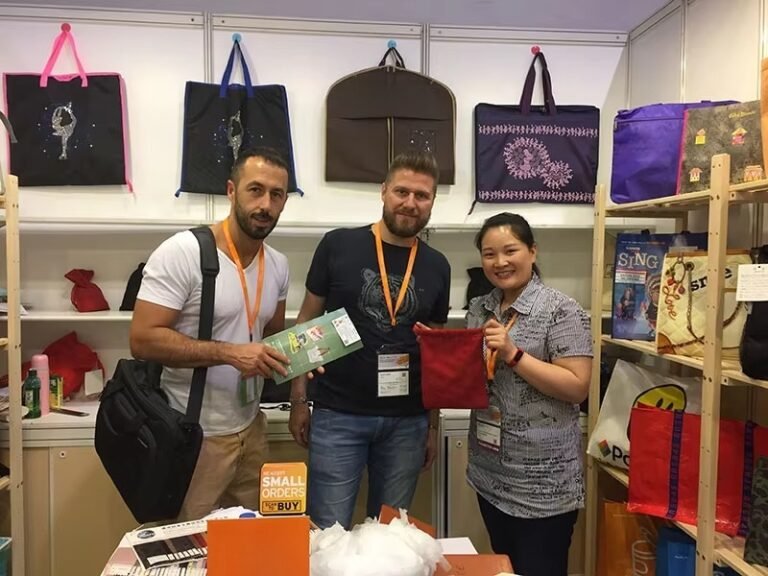
800+ brand Clients Trust Jundong






Make A Sample First?
See your idea come to life before mass production.
At Jundong Factory, we offer free design mockups and custom samples to ensure every detail is perfect — from material and color to logo placement and stitching.
Start your project with confidence today: info@jundongfactory.com.
structured Trial Order Friendly Bags FAQ
What makes a bag factory truly trial-order friendly?
A truly trial-order-friendly bag factory does more than accept a small quantity; it helps the first order produce useful decisions for the next step.
This difference matters because many first orders are technically completed but commercially unhelpful. The quantity may be low, yet the order still fails to clarify the right issues. A helpful first-order partner should be able to guide the project toward verifying shape, material fit, logo result, workmanship stability, packing logic, and repeat-order potential. If these areas remain unclear after the first run, the order may have cost time and money without reducing uncertainty.
That is why “trial-order friendly” should not be read as a pricing promise only. A stronger reading is operational:This often includes helping decide what must be locked first, what can remain under observation, which details should stay simple, and what level of quantity is meaningful rather than merely low.
A strong trial-order-friendly team also usually supports the first run with real process control. That means sample handling, material guidance, version clarity, QC checkpoints, packaging planning, and follow-up review should work together. If the order is small but the process is still vague, the factory may look flexible but not truly useful.
| A More Useful First-Order Partner Should Help With | Why It Matters |
|---|---|
| Setting realistic first-order goals | Keeps the run meaningful |
| Locking key specs early | Reduces confusing variation |
| Keeping the scope controlled | Protects clear feedback |
| Supporting sample-to-run continuity | Prevents approved details from drifting |
| Reviewing what the first run proves | Makes the next step easier |
What is the real purpose of a trial order in a bag project?
The real purpose of a trial order is not only to place a smaller order, but to reduce uncertainty before larger commitment begins.
This is one of the most important distinctions in first-order planning. Many teams believe the purpose of a trial order is mainly budget control. Budget is part of the reason, but it is not the most useful definition. A better purpose is to confirm whether the product can move from idea into a repeatable, controllable, and scalable direction with fewer blind spots.
Does the shape hold up in real life? Does the fabric feel right beyond the sample? Does the logo look correct across multiple units? Is the stitching consistent enough to support future quantity? Does the packing method work? Does the product seem worth repeating, refining, or expanding into more SKUs? These are the kinds of that a trial order should help settle.
That is why a trial order should not be judged by low quantity alone. If the run is too vague, too overloaded with variables, or too small to show meaningful consistency, the team may still finish the order without learning enough from it. A good trial order should leave the project with clearer next-step choices, not just one completed shipment.
The strongest first-order strategy usually treats the trial as a controlled decision stage. The order should help clarify what to keep, what to simplify, what to improve, and whether a repeat run should follow.
| A Good Trial Order Should Help Confirm | Why It Matters |
|---|---|
| Product direction | Shows whether the style deserves more work |
| Material and trim fit | Improves real-use confidence |
| Branding result | Supports launch readiness |
| Workmanship consistency | Predicts scale stability |
| Packing and handling | Prepares for real shipment flow |
| Repeat potential | Guides the next commercial step |
How low should a trial order MOQ be?
A good trial order MOQ should be low enough to control first-order risk, but high enough to produce a useful result.
This is where many first-order discussions become less practical than they should be. Teams often focus on getting the smallest possible quantity, but the more useful target is not the lowest number. It is the lowest meaningful number. That number should still allow the project to judge material behavior, workmanship consistency, branding stability, packing readiness, and repeat potential.
If the MOQ is too low for the product structure, the first order may feel accessible but not informative. A team may complete a very small run and still struggle to know whether the product is ready for broader use. That happens most often when the style is too complex, the number of variables is too high, or the order includes more testing goals than the quantity can realistically support.
A more practical MOQ decision usually depends on the bag type, the amount of customization, the number of SKUs involved, and what the trial is supposed to prove. A simple tote bag or zipper pouch may work well at a more compact quantity. A technical backpack, cooler bag, or multi-style branded test may need a more thoughtful quantity so the team can still interpret the result correctly.
That is why experienced teams usually pursue the lowest workable MOQ, not the lowest possible one. The first-order quantity should serve the decision, not just the budget.
| Trial Goal | MOQ Should Still Be Enough To Confirm |
|---|---|
| Style validation | Shape, material, logo result |
| Color testing | Meaningful difference between options |
| Multi-SKU comparison | Fair comparison across styles |
| Packing review | Unit packing and carton flow |
| Repeat planning | Whether the run deserves a next step |
How do I move from sample approval to a trial order without losing control?
The best way to move from sample approval to a trial order is to turn the approved sample into a clear production reference, not just a visual confirmation.
This is one of the most common breaking in first-order projects. Teams approve a sample, but too many details are still carried forward loosely. By the time the first run is completed, the product may drift in fabric feel, logo position, trim direction, reinforcement, stitching detail, or packing setup. The project then becomes harder to evaluate because the trial order is no longer a clean reflection of what was originally approved.
A more controlled handoff usually starts with locking the core version clearly. That often includes size, silhouette, main material direction, lining direction, logo method, logo placement, key trims, reinforcement, and basic packing format. These do not remove all flexibility. They simply protect the approved base while leaving a few clearly defined areas open for observation.
This matters because a trial order should test the product under more realistic conditions, but it should not randomly reopen decisions that were already settled. Good trial-stage control means separating what is already approved from what is still under test. That separation is what keeps the first run useful.
| What Should Carry Over Clearly | Why It Matters |
|---|---|
| Size and silhouette | Protects the visual direction |
| Fabric and lining | Reduces feel and shape drift |
| Logo details | Keeps branding stable |
| Trims and reinforcement | Protects real-use function |
| Packing setup | Prepares for real shipment handling |
How should quality be judged in a trial order?
Quality in a trial order should be judged by stability, controllability, and repeat potential—not by perfection alone.
This is a critical mindset shift. A first order is not always expected to look like the final most optimized version, especially when the project is still validating a product direction. What matters more is whether the run shows enough stability in shape, stitching, material fit, logo clarity, trim match, reinforcement logic, and packing readiness to justify confidence in a next step.
A better trial-order quality review usually asks three practical.
What is already stable? What still needs improvement? Are the remaining issues manageable before scaling? These are much more useful than a simple “good” or “bad” judgment because they help the team understand whether the product deserves refinement, simplification, or a repeat run.
This is also why consistency matters so much in a trial order. If one unit looks acceptable but another drifts too much, the problem is not just cosmetic. It may reveal that the product is not yet controlled well enough for a wider run. On the other hand, if the result is largely stable and the remaining issues are clear and fixable, the first order has already done its job well.
| What to Review | What It Helps You Decide |
|---|---|
| Shape consistency | Whether the style can be repeated |
| Stitching and finish | Whether workmanship is stable enough |
| Material and trim match | Whether the product feels correctly built |
| Logo clarity | Whether branding is ready for wider use |
| Packing readiness | Whether shipment quality is under control |
| Fixability of issues | Whether scaling makes sense next |
Can one trial order include multiple styles or colors?
Yes, one trial order can include multiple styles or colors, but it works best when the mix is structured to produce clear conclusions rather than extra confusion.
Many teams want a first run to do more than one job. They may want to compare colorways, test two or three related styles, or see which SKU has better potential before moving into a larger follow-up run. That can be a smart use of a trial order. The risk begins when the mix becomes too wide. If the first run includes too many unrelated structures, too many material changes, too many branding differences, and too many packing rules, the order may finish without giving the team a clear read on what actually worked.
A better mixed trial order usually keeps the core logic shared. Similar silhouettes, related fabrics, the same logo system, and comparable packing rules make the result easier to interpret. That way, differences in outcome are more likely to reflect the variable being tested instead of random noise from too many simultaneous changes.
This matters because the goal of a mixed trial is not to try everything. It is to compare a manageable set of meaningful options. The first run should leave the team able to say which style, color, or version deserves the next step. If the mix is too chaotic, the project may create activity without producing decision value.
| Better Mixed Trial Order | Harder-to-Read Mixed Trial Order |
|---|---|
| Similar styles | Unrelated bag types |
| Shared fabric direction | Too many material changes |
| Same branding system | Different logo systems in one run |
| Similar packing rules | Different packing logic by SKU |
| Clear comparison purpose | Too many goals at once |
What bag types are best for a first trial order?
The best bag types for a first trial order are usually the ones that can reveal useful feedback quickly without requiring too many unstable variables at the same time.
That usually means styles where the team can judge shape, material behavior, logo result, finish quality, and practical use without being overwhelmed by highly complex structure. In many projects, strong first-trial candidates include tote bags, zipper pouches, cosmetic bags, toiletry bags, drawstring bags, organizer bags, lunch bags, and lightweight backpacks. These styles often create clearer learning because they let the team focus on the essential product decisions first.
This does not mean more technical products should never be used as a first trial. A cooler bag, functional backpack, utility bag, or EVA case may still be the right product direction. The whether the project needs a quicker validation step first. If the first objective is to reduce uncertainty, it is often smarter to begin with a style that is meaningful but not overloaded with too many structure-dependent risks.
A helpful trial style is not always the simplest one. Sometimes that is about material feel. Sometimes it is about logo clarity. Sometimes it is about whether the style deserves a larger second step. The right first style is the one that gives the clearest with the fewest avoidable distractions.
| Better First-Trial Styles | Why They Often Work Well |
|---|---|
| Tote bags | Easy to read shape, print, and fabric behavior |
| Cosmetic bags | Good for finish, lining, and logo checks |
| Zipper pouches | Useful for trim and structure basics |
| Drawstring bags | Good for quick style validation |
| Lunch bags | Useful for function plus simple structure |
| Lightweight backpacks | Tests carry shape without too much complexity |
Do I need to confirm packing and labels in a first order?
Yes, packing and labels should be confirmed even in a first order, because a trial run should test shipment readiness as well as product readiness.
Many teams treat packing and label details as something that can wait until later, especially when the first order is small. In practice, that often creates unnecessary friction. A first order may be used to evaluate not only the bag itself, but also how the product moves through warehouse receiving, inventory labeling, retail preparation, e-commerce handling, distributor flow, or export shipment. If those details are missing, the first run leaves too many unresolved.
This does not mean the first order needs the most premium packaging system immediately. It means the working logic should still be clear. The team should know how each unit is packed, where the barcode or label goes, whether hangtags or inserts are needed, how master cartons are marked, and what shipment format fits the actual use path. These details affect more than presentation. They affect handling efficiency, accuracy, and the ability to repeat the order cleanly later.
A first order that ignores packing logic may still produce a decent product, but it often fails as a full operational test. A stronger first order is one that checks both product readiness and delivery readiness at the same time.
| What to Confirm | Why It Matters Even in a First Order |
|---|---|
| Unit packing method | Protects finish and presentation |
| Barcode / label placement | Supports receiving and tracking |
| Hangtags / inserts | Helps retail or display setup |
| Carton quantity | Affects handling and shipping flow |
| Carton marks | Reduces routing mistakes |
| Delivery format | Supports timing and cost planning |
How do I know whether a trial order is ready to become a repeat order?
A trial order is usually ready to become a repeat order when it has already reduced the main uncertainties and left the team with a clear, reusable base.
This does not mean the first order must be flawless. It means the run has already done its job well enough that the next step is now clearer than before. In most projects, a trial order becomes repeat-ready when the team can say with confidence that the style direction is correct, the material path is workable, the logo result is acceptable, the quality is stable enough, the packing logic functions, and the remaining improvements are specific rather than fundamental.
That distinction matters. If the first order still leaves about whether the product itself is right, then the project may need another controlled round rather than a wider repeat. But if the main direction is clearly validated and the remaining issues are mainly about refinement, then a repeat order often becomes the right next move.
A practical repeat-readiness review usually looks at three areas together: product stability, operational readiness, and commercial potential. In other words: does the bag hold up, can the project be shipped cleanly, and does the result deserve more volume? When those three areas align, a repeat order usually makes much more sense.
| If the Trial Order Already Shows This | It May Be Ready for a Repeat Order |
|---|---|
| Clear style validation | Yes |
| Workable material decision | Yes |
| Stable logo and trim execution | Yes |
| Consistent quality across units | Yes |
| Packing and shipment flow work | Yes |
| Only refinements remain | Yes |
Why do some trial orders fail even when the quantity is small?
Some trial orders fail even at small quantity because the project is still carrying too many unresolved variables, unclear goals, or weak execution logic.
Small quantity reduces exposure, but it does not automatically create clarity. A first run can still fail when the team has not clearly decided what the trial is meant to prove, which specs must be locked, how much variation is acceptable, how quality will be judged, or how the shipment side will be handled. In that case, the order may be small, but the confusion is still large.
This is one of the most common mistakes in first-order planning. Teams assume that because the order is limited, they can be looser with specs, structure, branding, or packing decisions. In practice, that often makes the result harder to interpret. The project may then produce one of two bad outcomes: either the first order creates too much drift to trust the result, or it creates too little information to guide the next step.
A better first order is not built by minimizing quantity alone. It is built by minimizing unnecessary uncertainty. That usually means locking the core version, limiting test variables, defining the purpose clearly, and making sure the first run is large enough to say something meaningful.
| Common Failure Cause | Better Alternative |
|---|---|
| No clear trial purpose | Define what the run must prove |
| Too many open variables | Lock the core version first |
| Too much variation in one run | Limit the comparison scope |
| Weak quality reading | Review stability, not perfection only |
| Packing ignored until late | Include shipment readiness early |
Everything You Need to Know Before Customizing Your Bags
A first bag order is rarely judged by quantity alone. What most teams really want to know is whether the order can help them test the right product direction, reduce avoidable risk, confirm quality, and create a cleaner path to a repeat run.
That is why the most useful FAQ section should do more than give short replies. It should help clarify the issues that shape real first-order decisions: how to set a useful MOQ, what should be locked before production starts, how to read trial-stage quality, when mixed styles still make sense, and how to tell whether the first run is ready to become a repeat order.