 Skip to content
Moisture-Resistant Bags Factory
Moisture damage is silent—and expensive. We manufacture moisture-resistant bags that protect products in humid warehouses, sea freight, and daily use. Choose from coated fabrics, laminated films, waterproof zippers, seam sealing options, and brand-ready Pantone color control. Built for repeatable bulk quality, clear specs, and evidence-based QC from a proven factory team.
Built for Repeat Orders, Not One-Off Samples
Moisture enters bags in three common ways: through the material, through seams, and through openings (zippers, roll-top, drawstring channel). So the right bag depends on your moisture scenario, not just “thicker fabric.”
(1) Start by defining your moisture scenario
- Humid warehouse storage: long exposure, condensation risk
- Sea freight or container routes: humidity swings and long transit
- Daily outdoor use: rain splash and abrasion
- Product sensitivity: electronics, powders, leather goods, paper packaging, textiles
(2) Choose the protection level
| Tier | What It Protects Against | Typical Construction | Trade-off |
|---|---|---|---|
| Level A: Moisture-Resistant | light humidity, short exposure | coated fabric and standard seams | breathable but not “sealed.” |
| Level B: Water-Resistant | splashes, intermittent wet | laminated fabric and improved closure | higher cost, less breathability |
| Level C: Barrier or Near-Waterproof | high humidity and water contact | film, laminate, sealed seams, and a waterproof zipper | lowest breathability, strict process control |
(3) The 8 RFQ specs that control performance and price
Copy or paste these into your RFQ:
- Bag use case and Tier (A, B, C)
- Material structure: e.g., PU, PVC, TPU coating, lamination, or multi-layer film
- Material weight, thickness, and surface finish (anti-slip, matte, or gloss)
- Seam strategy: standard stitch, bound seam, seam tape (critical zones)
- Closure type: zipper (standard vs waterproof), roll-top, flap, drawstring channel
- Hardware corrosion expectation (if metal): “no rust under normal humidity exposure.”
- Branding method: print, label, patch, and placement tolerance
- Packing & moisture control: desiccant per carton, liner bag, storage rules
(4) Why specs must be evidence-based
Our factory setup includes structured development and QC support (including dedicated inspection resources and 80 QC inspectors), which helps keep bulk aligned once the spec is locked. We also support material and component matching across fabrics, coatings, zippers, hardware, and linings, which is essential for moisture-resistant builds.


Moisture-Resistant Bag Key Specs
Moisture resistance is determined more by material structure than by thickness. In procurement terms, you are choosing how water vapor is blocked: by a coating layer, a laminated barrier, or a film pouch approach.
(1) Three mainstream material systems
(A) Coated Fabrics (PU, PVC, TPU coating)
Best for: light-to-moderate humidity, splash resistance, daily abrasion
Why it works: coating reduces surface wetting and slows moisture transfer
Common uses: outdoor pouches, light protective covers, warehouse protection
Watch-outs
- coating quality and thickness consistency matter
- seam lines remain moisture entry points unless managed
- Some coatings can hold odor if packed too soon
(B) Laminated or Composite Fabrics (fabric and film laminate)
Best for: stronger barrier needs, longer exposure, “water-resistant” builds
Why it works: laminated layer provides improved water vapor resistance
Common uses: travel bags, logistics bags, industrial protective bags
Watch-outs
- edge finishing matters to prevent delamination
- heat or pressure settings affect bonding stability
- breathability is reduced—define whether that’s acceptable
(C) Film Barrier Bags (multi-layer film pouches, foil or PE structures)
Best for: high humidity and long storage, sea freight protection, sensitive goods
Why it works: Barrier films can significantly reduce vapor transfer
Common uses: electronics protection, moisture-sensitive accessories, parts storage
Watch-outs
- lowest breathability (risk of trapped odor if product off-gasses)
- puncture resistance must be designed (thickness and outer layer)
- closure sealing method becomes critical (zipper or heat seal)
(2) Decision table: scenario → recommended structure → risk → acceptance check
| Your Scenario | Recommended Structure | Main Risk | Acceptance Check |
|---|---|---|---|
| Humid warehouse (short cycle) | Coated fabric | seam seepage | seam check and packing dryness |
| Sea freight or long transit | Laminated or film barrier | trapped moisture | desiccant rule and carton liner |
| Outdoor splash and abrasion | TPU-coated | abrasion wear | rub test and coating integrity |
| Electronics or metal parts | Film barrier | puncture or seal failure | puncture check and seal integrity |
| Apparel (needs airflow) | Light coating and breathable design | odor or mildew | Breathability note and airing rule |
| Paper packaging or cartons | Laminated | condensation | inner barrier and desiccant |
(3) How to write specs that can be repeated in bulk
To avoid “we assumed,” specify:
- material system name (coated, laminated, film barrier)
- thickness or GSM range and surface finish
- seam treatment requirements (standard vs binding vs seam tape zones)
- closure system (standard zipper vs waterproof zipper vs roll-top vs heat seal)
- packing moisture controls (desiccant grams or carton, liner bags)
Our factory supports material, or component matching across fabrics, films, zippers, hardware, linings and padding—important when choosing moisture systems. Once specs are locked, a structured QC setup (including 80 QC inspectors) helps maintain bulk consistency.


Seams & Openings: Design to Block Moisture
Moisture typically enters a bag through:
- Seams (needle holes and thread paths)
- Openings (zipper teeth, slider gaps, roll-top folds, drawstring channels)
A moisture-resistant bag is a system: material, seam strategy, and closure integrity.
(1) Seam strategy options
| Seam Option | Moisture Behavior | Best For | Trade-off |
|---|---|---|---|
| Standard stitch | needle holes allow vapor entry | Level A (humid warehouse) | lowest cost, not sealed |
| Bound seam or binding | reduces wicking & fraying | Level A–B | more labor |
| Seam tape (critical zones) | blocks needle holes in key areas | Level B–C | process control required |
| Full seam sealing | strongest barrier approach | Level C or near-waterproof | highest cost, lowest breathability |
Client’s rule of thumb
- If moisture exposure is intermittent → seal stress seams only (base corners, zipper lines)
- If exposure is long and high humidity → define wider seam tape coverage or full sealing
(2) Where to apply seam tape
Seam tape adds cost and reduces flexibility. Use it where moisture risk is highest:
- Base corners (condensation pools here)
- Zipper line seams (high leakage probability)
- Bottom panel joins (contact with wet surfaces)
- Gusset corners (high stress and leakage risk)
(3) Opening systems — choose based on your tier
(A) Standard zipper
Best for: basic moisture resistance, dry storage
Risk: zipper teeth or sliders are leakage paths under splash or condensation
(B) Waterproof zipper
Best for: water-resistant builds, electronics, outdoor use
Risk: stiffer feel; zipper end finishing must be strong
(C) Roll-top closure
Best for: near-waterproof barrier builds (when properly rolled)
Risk: user compliance—must roll correctly; adds height and bulk
(D) Drawstring channel
Best for: low-cost storage protection
Risk: channel seam ends and openings are weak points; not suitable for high-humidity barriers
(4) Acceptance checks should request
You don’t always need lab tests. Ask for:
- seam inspection photos (inside-out) showing tape coverage and alignment
- a basic spray or splash check (for B-level builds)
- zipper function and end seam reinforcement proof
- for roll-top: “roll count rule” (e.g., 3 rolls) and demonstration video
(5) PO-ready decision table: entry point → design choice → proof
| Entry Point | Design Choice | When to Use | Proof to Request |
|---|---|---|---|
| Seams | seam tape on critical zones | B–C tier | inside-out photos |
| Zipper | waterproof zipper and end tacks | outdoor or electronics | close-up photos and cycle check |
| Bottom | laminated panel and taped seams | wet surfaces | spray check photos |
| Opening | roll-top (3 rolls rule) | barrier builds | demo video |
Our capabilities include material or component matching (fabrics, coatings, zippers, hardware), which is essential to sealing strategies. A structured QC system with 80 QC inspectors ensures consistent execution of seams and closures once standards are approved.


Moisture Protection: Packaging for Transit
Moisture damage during shipping is rarely caused by direct water. In most cases, it comes from condensation inside containers, also known as “container rain.” That is why a moisture-resistant bag alone is not enough. You should think in terms of a full packaging protection system:
Protection Stack means Bag material and Seam, closure design, Inner barrier, Carton moisture control, and Logistics handling
(1) Common moisture risks in logistics
We should assume the following risks in sea freight and long-distance shipping:
Container condensation caused by temperature changes
Humidity cycling between day and night
Long storage time in ports or warehouses
Odor trapping occurs when coated fabrics are sealed too early
These factors affect bag durability, fabric performance, and product quality, especially for export orders.
(2) Packaging controls that improve moisture resistance
(A) Inner barrier selection
| Option | Best Use | Trade-off | Tip |
|---|---|---|---|
| No liner | short domestic shipping | higher moisture risk | avoid for export |
| Carton liner bag | sea freight or bulk orders | added cost | define thickness and sealing |
| Individual polybag | retail or e-commerce | more labor | standardize labeling |
| Moisture barrier film | sensitive goods | lowest breathability | Add puncture protection |
(B) Desiccant control
Instead of vague instructions, define:
-
Desiccant quantity (grams per carton or CBM)
-
Placement inside the liner, not directly on the products
-
Optional humidity indicator card for high-risk shipments
(C) Carton & pallet standards
-
Use strong export cartons with standard sealing tape.
-
Apply pallet wrapping for sea shipments.
-
Approve the first carton packing photos before mass packing.
(3) Quick configuration guide
| Risk Level | Bag Type | Inner Barrier | Desiccant |
|---|---|---|---|
| Low | basic moisture-resistant bag | none | optional |
| Medium | coated fabric bag | liner optional | defined grams |
| High (sea freight) | a laminated or waterproof bag | liner required | higher dosage |
| Very high | barrier system | sealed pouch | strict control |
Key takeaway
A reliable moisture-resistant bag focuses on system control, not just fabric. Defining inner barrier, desiccant, and packing standards early can reduce claims, protect product quality, and keep bulk shipments stable.


Use Cases: Moisture Design for Every Scenario
Below are common moisture-related B2B purchasing scenarios and practical specifications to prevent condensation, mildew odor, color transfer, corrosion, and deformation. For moisture-resistant bags, OEM and export packaging, matching the structure to the use case is critical.
(1) Scenario-based specification guide
| Use Case | Risk | Material | Closure | Packing Controls |
|---|---|---|---|---|
| Humid warehouse | odor, carton softening | coated fabric (A–B) | zipper or flap | liner and desiccant |
| Sea freight | container condensation | laminated or barrier film (B–C) | waterproof zipper or roll-top | liner, desiccant, and pallet wrap |
| Electronics or metal | corrosion | barrier film (C) | sealed zipper | inner pouch and puncture protection |
| Apparel or textiles | mildew smell | light coating (A) | flap or drawstring | airflow and avoid over-sealing |
| Paper goods | warping | laminated fabric (B) | zipper | liner, desiccant, and strong cartons |
| Outdoor use | splash, abrasion | TPU-coated fabric | waterproof zipper | abrasion test and reinforcement |

(2) What should be locked first
Warehouse: coated material, seam sealing, desiccant per carton
Sea freight: laminated barrier, closure integrity, liner, and desiccant
Electronics: barrier film, puncture resistance, anti-rust handling
Apparel: breathable design, airing before sealing
(3) Why capability matters
A reliable moisture-resistant bag manufacturer must control coating quality, film thickness, zipper seal, ing, and component matching. Small variations can change real performance.
Consistent results depend on incoming inspection, in-line QC, and final packing checks. Strong QC systems help maintain sample-to-bulk consistency, especially for export and private label programs.
(4) Starter spec bundles
| Bundle | Best For | Core Setup |
|---|---|---|
| Warehouse Control Pack | storage | coated fabric, basic closure, and desiccant |
| Sea Freight Barrier Pack | export | laminated film and liner and higher desiccant |
| Electronics Protection Pack | sensitive goods | barrier film and reinforced structure |
| Outdoor Water-Resistant Pack | daily use | TPU coating and waterproof zipper |
Key takeaway
Effective moisture-resistant packaging depends on combining material, closure, inner barrier, and packing control—not just the bag alone.


Moisture-Resistance Testing & Acceptance
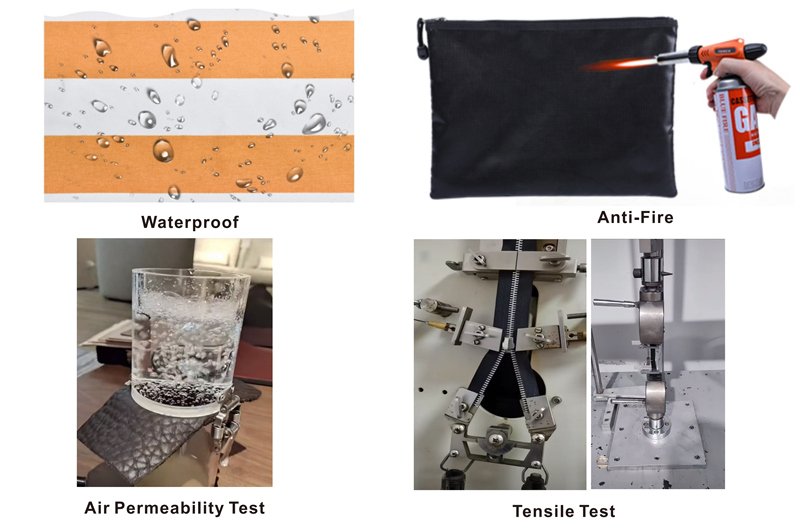
You don’t need to run a full lab program for every moisture-resistant bag. You need the right tests for the right tier and scenario—and proof that bulk follows the approved standard.
(1) The 6 high-value checks (low cost, high signal)
Visual seam & tape inspection (inside-out photos)
Spray or splash check (Level B use cases)
Closure integrity check
waterproof zipper edge sealing or roll-top “roll count rule.”
Humidity-hold simulation (warehouse or sea freight)
controlled time in a humid environment and check odor, condensation
Desiccant and liner verification (packing proof)
First article measurement & workmanship (fit and consistency)
(2) PO-ready test matrix
| Test Item | Recommended For | Pass or Fail Language | Evidence to Request |
|---|---|---|---|
| Seam tape coverage | Level B–C | tape aligned; no gaps at corners | inside-out photos |
| Spray or splash check | Outdoor or B tier | no visible seepage at seams/opening | video + photos |
| Zipper or roll-top integrity | C tier | zipper ends sealed; roll-top holds after 3 rolls | close-up + demo video |
| Humidity-hold simulation | Sea freight or warehouse | no visible condensation inside; odor within agreed level | photos + notes |
| Desiccant or liner placement | Sea freight | liner sealed; desiccant qty per carton confirmed | packing photos |
| Workmanship check | all tiers | no stains; stitch consistent; no loose threads beyond agreed limit | QC photos |
Moisture Protection Cost Optimization
A moisture-resistant bag quote usually changes because of a few high-impact variables. If you lock these early, pricing becomes more stable and cost-down decisions become much safer.
The main cost drivers are usually the material system (coated fabric, laminated fabric, or barrier film), seam-sealing level, closure type (standard zipper, waterproof zipper, or roll-top), bag size, cutting yield, anti-corrosion hardware, logo method, packing controls, and SKU complexity. These factors directly affect both unit price and moisture protection performance.
For smarter cost reduction, focus on safe cost-down moves rather than cutting the wrong areas. For example, moving from a full-barrier film bag to a laminated structure may be acceptable for medium-risk routes but not for long-sea freight moisture protection. Sealing only critical seam zones can reduce cost, as long as base corners and zipper lines remain protected. Standardizing sizes into 3–6 core sizes also improves material yield and reorder efficiency.
Other safer optimizations include switching from large print areas to woven labels, reducing unnecessary inserts, and limiting special color variants. However, should avoid cutting liner bags, desiccant, rust-resistant hardware, or barrier requirements when those features are necessary for export, electronics, or long-transit packaging.
(3) Practical ways to cut costs
(A) Use “critical-zone sealing” instead of sealing everything
Most leaks happen at:
base corners
zipper line seams
bottom panel joins
Seal these first. Full sealing is only for the highest tier programs.
(B) Let the packing carry part of the barrier load
For sea freight, a carton liner and correct desiccant can often deliver better real-world results than over-engineering the bag alone. (You’re fighting condensation, not rain.)
(C) Standardize components across SKUs
Use one zipper model (or one cord or stopper set), one logo method, and a tight color plan. This reduces downtime and defects.
(D) Avoid the “false savings” cuts
Don’t cut:
seam reinforcement at ends and corners
closure quality (waterproof zipper spec) when needed
liner or desiccant rules for high-risk routes
These cuts look cheaper but cause claims and rework.
(4) Quote request format that makes quotes comparable
Ask to quote with:
- tier (A, B, C), material system, sealing coverage, closure type
- size list and tolerance
- packing controls (liner, desiccant grams or carton)
- quantity ladder (1k, 3k, 5k, 10k)
Our factory supports material or component matching and structured QC execution (with 80 QC inspectors) to keep cost-optimized specs consistent in bulk on the highest-tier approved.


Moisture Bag Workflow: RFQ to Bulk Sampling
Moisture-resistant builds have more variables than standard bags: material structure, seam strategy, closure integrity, and packing moisture controls. The key is to lock these variables early and approve them with evidence.
(1) Recommended workflow
We support multi-step development from material confirmation to PP sample, so the bulk stays aligned.
Stage 1 — the RFQ & feasibility (Day 0–3)
- confirm scenario (warehouse, sea freight, outdoor) and tier (A, B, C)
- confirm material system (coated, laminated, film) and closure choice
- output: spec draft, price ladder assumptions, and sample plan
Stage 2 — Material structure confirmation (Day 3–10)
- approve coating, lamination, or film sample
- confirm thickness, GSM, and surface finish
- output: “material master standard” for bulk
Stage 3 — Closure & seam strategy proof (Day 7–14)
- choose zipper type (standard vs waterproof) or roll-top spec
- define seam tape zones (critical vs full)
- output: proof photos (inside-out seam and zipper end finishing)
Stage 4 — Prototype sample and revisions (Day 10–21)
- validate fit, workmanship, sealing logic
- revise until production-ready
Stage 5 — PP sample approval (Day 21–28+)
- lock: material master, closure, seam strategy, packing controls
- approve: labels, carton marks, desiccant rule
Stage 6 — Bulk and evidence pack (after PP approval)
- in-line QC evidence, final inspection record, and packing proof
(2) Submission checklist
| Item | What You Provide. | Why It Matters |
|---|---|---|
| Scenario | warehouse, sea freight, outdoor | sets tier A, B, C |
| Protection tier | A, B, C, and failure mode | avoids the wrong system |
| Size list | dimensions and tolerance | prevents re-quotes |
| Material system | coated, laminated film, and target | controls performance |
| Closure | zipper type or roll-top spec | main entry point control |
| Seam strategy | critical zones vs full | cost and barrier integrity |
| Color | Pantone and approval plan | reorder consistency |
| Branding | method and vector file | avoids wrong prints |
| Packing | liner and desiccant grams or carton | sea freight success |
| Quantity ladder | 1k, 3k, 5k, 10k | comparable quotes |


Moisture Bags: QC Evidence from PP to Bulk
Because moisture resistance depends on multiple systems (material structure, seams, openings, packing), the QC plan must prove each system is executed correctly.
(1) Our QC capability
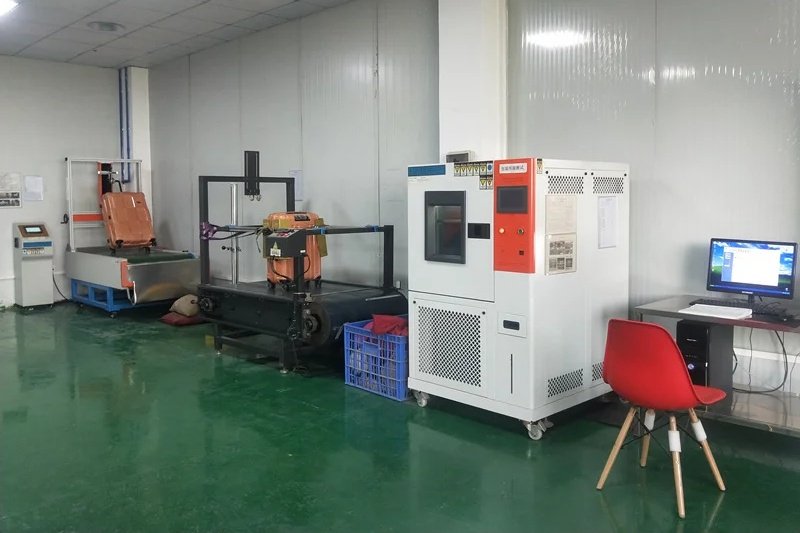
We operate with dedicated inspection resources, including 80 QC inspectors and inspection devices supporting incoming, in-process, and final checks.
For you, the key is turning that capability into your proof package.
(2) The 4 checkpoints that prevent “silent downgrades.”
Checkpoint A — Incoming material verification
What to verify
- material system consistency: coating, lamination, film type
- thickness, GSM range, and surface finish
- zipper, hardware model, and corrosion-prevention spec
- seam tape type and adhesive compatibility (if used)
Evidence to request
- material photos and lot labeling
- close-ups of coating or film surface
- accessory photos (zipper, slider, hardware)
Checkpoint B — First Article: What to verify
- dimensions and tolerance
- seam strategy executed (tape coverage where required)
- closure integrity (zipper ends reinforced; roll-top assembly correct)
- basic spray or splash check if B tier
Evidence to request
- measurement sheet with ruler photos
- inside-out seam photos showing tape alignment
- zipper end close-ups and short function video
Checkpoint C — In-line inspection
What to verify
- tape alignment consistency (no gaps at corners)
- bonding stability (no delamination at edges)
- workmanship (no stains, clean trimming)
- packing preparation controls (liner readiness, desiccant plan confirmed)
Evidence to request
- in-line photos (random sampling)
- short video walkthrough of seam or zipper areas
- packing setup photos before mass packing
Checkpoint D — Final inspection and packing verification
What to verify
- AQL sampling result (agreed level)
- odor or cleanliness checks (if required)
- packing: liner sealing, desiccant grams or carton, carton marks, label placement
- “first carton approval” proof
Evidence to request
- final inspection record report
- carton photos (open and closed) with labels
- desiccant placement photos and count confirmation
(3) Inline inspections: control the real failure points
Inline checks are where you prevent drift. We prioritize:
stress zones: handle roots, strap anchors, D-ring stitches, zipper ends, base corners
appearance zones: edge paint, alignment, symmetry, glue marks, stitching spacing
For each zone, we define a simple pass-or-fail rule and require photo evidence at checkpoints (first piece, mid-run, pre-pack).
(4) Final inspection and proof pack: make acceptance easy
The final inspection verifies the overall appearance, function, and pack-out correctness. For multi-SKU orders, proof pack matters:
carton marks and barcode placement photos
Hardware protection method confirmation
insert or hangtag version confirmation
This reduces warehouse receiving disputes and chargebacks.
(5) What should be requested (simple, high value)
If you want strong control, request:
- CTQ sheet (with tolerances)
- reinforcement map photos
- edge finish process photos (layering or sanding)
- proof pack photos for labels or cartons
This is not “extra work.” It’s a low-cost way to protect your brand.it


Make A Sample First?
See your idea come to life before mass production.
At Jundong Factory, we offer free design mockups and custom samples to ensure every detail is perfect — from material and color to logo placement and stitching.
Start your project with confidence today: info@jundongfactory.com.
Decision FAQ for Moisture-Resistant Bags
What moisture-protection level do I actually need: A (moisture-resistant) vs B (water-resistant) vs C (barrier/near-waterproof)?
Choose Tier A, B, or C based on humidity duration and route risk and product sensitivity, not on the bag name—Tier A fits humid warehouses, Tier B fits splash or outdoor and mid-risk routes, and Tier C is for long sea freight or moisture-sensitive goods where seams, openings, and packing controls must be managed as a system.
You often overbuy (cost spikes) or underbuy (claims) because they don’t define the scenario. Use this fast decision method:
Step 1 — Identify your route risk
- Warehouse humidity (weeks or months, low direct water)
- Sea freight (condensation “container rain,” long dwell time)
- Outdoor use (splash and abrasion)
Step 2 — Classify product sensitivity
- High: electronics, metal parts, powders, paper packaging
- Medium: textiles, accessories, coated finishes
- Low: general storage items
Step 3 — Match the tier to the combined risk
| Tier | Typical Build | Best For | What Must Be Locked |
|---|---|---|---|
| A | coated fabric and standard seams | humid warehouses | material and basic workmanship |
| B | laminated, coated, and better closure | splash or mid-risk routes | closure integrity and critical seam strategy |
| C | film barrier and sealing strategy | sea freight or sensitive goods | seam, closure proof, and liner, desiccant |
The biggest mistake: treating Tier C as “just a better bag.” Sea freight failures often come from condensation inside cartons, so Tier C usually requires carton liner and desiccant grams, carton and packing proof.
For sea freight, how do I set desiccant and carton liner specs so results are consistent (not luck)?
Consistent sea-freight moisture control comes from specifying a repeatable packing system: liner requirement and desiccant grams, carton and placement rules, and and first-carton approval photos. If you don’t quantify these items, performance becomes “luck” and reorders drift.
Sea freight moisture failures usually happen because cartons become a micro-climate:
- condensation forms inside containers (humidity cycling)
- cartons absorb moisture during long dwell time
- moisture gets trapped if cartons are sealed without ventilation
What to specify (simple but complete)
- Liner bag: required/optional, thickness target, sealing method
- Desiccant rule: grams per carton (or per carton volume), type if needed
- Placement: inside liner, not loose against product surfaces
- Moisture indicator card (optional): for high-risk programs
- Carton sealing & pallet wrap: to reduce moisture exposure
Sea-freight packing control table
| Route Risk | Liner | Desiccant | Extra |
|---|---|---|---|
| Medium | optional | X g or carton | airing rule |
| High | required | X–Y g or carton | pallet wrap |
| Very high (sensitive goods) | required and inner barrier | Y g or carton | indicator card |
How do I prevent “silent downgrades” (material substitution) that reduce moisture performance in bulk?
You prevent silent downgrades by locking the material system name and critical components and approval or evidence rules in your PO, then requiring incoming material photo proof before bulk runs—because moisture performance changes most when coatings or films, zipper models, or seam tape types are swapped without control.
Moisture-resistant bags fail in bulk for a predictable reason: the “bag looks the same,” but the system parts are not. The biggest substitution risks are:
- coating or lamination film changes (barrier drops)
- zipper model changes (openings leak more)
- seam tape adhesive changes (tape lifts at corners)
- lining or inner barrier changes (condensation behavior changes)
Use this method:
(1) Lock the material system, not just the “fabric name.”
Write the system in plain language:
“Material system: TPU-coated or laminated barrier or multi-layer film barrier (Tier B or C).”
Add a rule:
“No substitution of coating or film structure without approval.”
(2) Identify the critical components list
For most programs, list:
- coating, film type, and target thickness, or GSM range
- zipper type or model (standard vs waterproof)
- seam tape type and coverage zones (if used)
- liner bag requirement and desiccant grams or carton (sea freight)
(3) Require an “Incoming Evidence Pack” before production
Ask for:
- material lot photos with labels
- surface close-ups of coating or film
- zipper or slider model photo
- seam tape roll label photo (if applicable)
Your factory’s structured QC resources (including 80 QC inspectors) support documenting these checkpoints consistently. Material or component matching across fabrics, coatings, zippers, and linings is also crucial to avoid hidden substitutions.
Which opening should I choose: standard zipper vs waterproof zipper vs roll-top, and how do I write acceptance criteria?
Choose openings by entry-point risk: standard zippers fit Tier A and low-splash use, waterproof zippers are best for Tier B and outdoor or electronics, and roll-top works for Tier C barrier builds when user compliance is realistic; acceptance criteria should include end reinforcement, function checks, and evidence photos or videos, not “good zipper.”
Openings are the number 1 moisture entry point. The right choice depends on your scenario:
(1) Quick selection guide
- Warehouse humidity (Tier A) → standard zipper or flap is often enough
- Splash or outdoor (Tier B) → waterproof zipper reduces seepage paths
- Sea freight or barrier (Tier C) → roll-top and liner, the desiccant system can be strongest
(2) What to lock in specs
| Opening Type | Must-Spec Items | Common Failure | Fix |
|---|---|---|---|
| Standard zipper | zipper size or model | seepage at the teeth or the slider | pair with packing controls |
| Waterproof zipper | zipper model and coated tape | stiff feel or end leaks | strong end tacks and seam strategy |
| Roll-top | “roll count rule” | User rolls wrong | 3-roll rule and demo proof |
(3) Acceptance checks
- Function: smooth pull, no jamming; slider type as required
- End reinforcement: zipper ends must have a tack stitch; no seam opening
- Evidence: close-up photos of zipper ends and opening seam lines
- For roll-top: a short video showing “3 rolls and buckle closes” (if buckles are used)
PO-ready lines
- “Opening type: standard or waterproof zipper or roll-top; model: ___.”
- “Provide first-article evidence: zipper end close-ups and function video.”
- “Roll-top requires minimum 3 rolls; provide demo video for PP approval.”
Our structured sampling flow supports confirming closure details before bulk, so your opening is not a guessing point.
What tests should I request to prove moisture resistance (without wasting time on over-testing)?
For moisture-resistant bags, the most efficient proof set is a tier-based test plan: seam, closure evidence, and a simple spray check (Tier B), plus a humidity-hold simulation (sea freight or warehouse), and packing moisture-proof (liner or desiccant). You don’t need “lab theater”—you need the few checks that predict real failures.
You often over-test the wrong things (complex lab reports) and under-test the critical entry points (seams, openings, packing). Use this practical approach.
(1) Choose tests based on your scenario
- Warehouse humidity: vapor exposure and long storage → prioritize humidity-hold and packing proof
- Outdoor splash: intermittent water contact → prioritize spray or splash and zipper integrity
- Sea freight: condensation cycling → prioritize liner, desiccant proof, and humidity-hold
(2) The “Minimum Effective Test Set” (6 checks)
- Inside-out seam photos (show seam tape zones if Tier B, C)
- Closure proof: zipper end reinforcement close-ups and function video
- Spray, splash check (Tier B use cases): no visible seepage at critical seams, openings
- Humidity-hold simulation (warehouse, sea): confirm no obvious condensation inside and odor within the agreed level
- Packing moisture-proof (sea): liner sealing and desiccant grams, carton, and placement photos
- First-article measurement sheet (fit and tolerance consistency)
(3) PO-ready test matrix
| Scenario | Required Checks | Evidence Format |
|---|---|---|
| Warehouse | humidity-hold and seam photos | photos and notes |
| Outdoor | spray check and zipper proof | video and close-ups |
| Sea freight | packing proof and humidity-hold | photos and record |
(4) Ask for evidence at the right time
- PP sample stage: confirm structure, closure, packing rules
- Bulk start (first article): repeat the quick checks before full production
- Final: inspection record and packing proof
A structured QC system makes these tests repeatable; your factory has dedicated inspection resources, including 80 QC inspectors, supporting consistent documentation.
PO lines
- “Tier B or C requires seam or closure evidence photos at first article and in-line stage.”
- “Sea freight requires liner and desiccant proof (grams or carton) before shipment.”
How do I reduce cost without losing real sea-freight moisture performance?
The safest cost-down strategy is to keep the packing moisture system (liner and desiccant) and the critical entry-point controls (closure and key seam zones), while reducing invisible complexity—SKU count, special colors, excessive full seam sealing, and packaging extras. Cutting the wrong items creates “cheap now, expensive later.”
Sea freight failures are usually caused by condensation cycling. That means the biggest performance levers are not always “thicker bag” but the system design.
(1) Keep these “non-negotiables” for sea freight
- Inner barrier or liner in cartons (as required by risk)
- Desiccant grams or carton locked and placement rule
- Closure integrity: waterproof zipper or proven opening strategy
- Critical-zone seam strategy: base corners and zipper line stability
(2) Cut costs in low-visibility areas
| Cost Lever | Safer Cost-Down | Why It Works |
|---|---|---|
| Material system | laminate instead of full film (if acceptable) | keeps barrier “good enough.” |
| Seam sealing | seal critical zones only | targets real leak points |
| SKU plan | 3–6 core sizes | reduces setup & errors |
| Color plan | 1–2 core colors | fewer dye lots, stable reorders |
| Branding | woven label vs large print | reduces rework risk |
| Packaging extras | Reduce inserts or boards | lowers labor cost |
(3) “Don’t cut” list
- removing liner or desiccant for long transit
- using standard zippers where splash or condensation risk is high
- skipping zipper end reinforcement or corner seam control
- allowing material substitutions without approval
(4) Make quotes comparable
Ask to quote on the same structure:
- tier B or C, material system, seam strategy coverage, closure type
- packing system: liner and desiccant grams, carton
- quantity ladder
Our factory supports material, component matching across fabrics, coatings, zippers, hardware, and linings—helpful for cost optimization without hidden substitutions. With 80 QC inspectors, evidence-based execution helps ensure cost-optimized specs remain consistent.
What AQL and acceptance terms should I use for moisture-resistant bags (so QC is enforceable, not vague)?
For moisture-resistant bags, AQL only works when you define critical, major, minor defects around moisture performance—material system, seams, openings, and packing moisture controls—and require a final inspection record and packing proof. Don’t write “AQL 2.5” alone; write what counts as a failure.
Moisture-resistant programs fail QC when acceptance terms ignore the moisture system. Use this structure:
(1) Define defect classes
- Critical (0 tolerance): wrong material system (coated vs laminated vs film), missing seam tape where required, wrong zipper type/model, missing liner/desiccant for sea freight, severe contamination/mold smell, wrong labels causing shipment rejection.
- Major: seam tape gaps at corners, zipper end seam opening, obvious seepage in spray check (Tier B), delamination at edges, incorrect desiccant grams/carton, size out of tolerance.
- Minor: small cosmetic issues that don’t impact barrier (light wrinkles, tiny scuffs), limited loose threads within agreed limit.
(2) Tie AQL strictness to the route
| Route Risk | AQL Focus | What Must Be “Major” |
|---|---|---|
| Warehouse | workmanship and consistency | wrong tier or material, bad seams |
| Outdoor splash | opening integrity | zipper end failures, seepage |
| Sea freight | packing moisture system | liner or desiccant missing, wrong zipper or seam strategy |
(3) Require evidence
Ask for:
- incoming material photos (lot labels + coating/film close-ups)
- first-article seam/closure proof (inside-out seam photos; zipper end close-ups)
- final inspection record and packing proof (liner sealing and desiccant placement)
Your ability to document matters. We support inspection and reporting with dedicated resources, including 80 QC inspectors, enabling consistent checkpoint evidence.
PO-ready acceptance lines
- “Critical defects: 0 allowed (material system, zipper model, missing liner or desiccant).”
- “Major defects include seam tape gaps at corners, zipper end seam opening, and any visible seepage in the agreed spray check.”
- “Provide final inspection record and sea freight packing proof (grams or carton) before shipment.”
How do I prevent odor/mildew complaints without sacrificing moisture protection (especially for coated/laminated materials)?
Prevent odors and mildew by balancing barrier vs. breathability, adding an airing or ventilation rule before carton sealing, and controlling moisture inside cartons with a liner and desiccant. Many odor complaints come from sealing coated or laminated materials too early, not from “bad fabric.”
Odor or mildew usually happens when:
- coated or laminated materials are packed immediately after production (odor trapped)
- cartons travel in humid routes without moisture control, “over-seal” apparel or textiles that actually need airflow
(1) Choose the right design approach by product type
- Electronics, metal parts: prioritize barrier and packing moisture system; odor is secondary but still controlled by the airing rule.
- Apparel, textiles: avoid turning the bag into a sealed humidity box—choose Tier A or breathable Tier B and add controlled ventilation.
- Paper goods: prioritize moisture control; add a liner or desiccant to prevent condensation.
(2) Add a simple airing rule
Write in PO:
- “Require ventilation or airing before sealing cartons: ___ hours, days.”
This dramatically reduces trapped odor in coatings and transfers.
(3) Avoid mildew by controlling carton humidity
- specify liner bag use for sea freight
- specify desiccant grams, carton, and placement inside liner
- for high risk, add humidity indicator card (optional)
Odor or mildew control table
| Problem Driver | Fix | Proof to Request |
|---|---|---|
| trapped coating odor | airing time rule | packing note and photos |
| condensation in cartons | liner and desiccant | placement photos |
| over-sealed textiles | choose breathable tier | spec confirmation |
Our structured sampling path (material → revisions → PP) supports confirming these rules before bulk.
What MOQ should I expect for moisture-resistant bags, and how can I keep MOQ low without weakening moisture performance?
MOQ for moisture-resistant bags is driven by material system availability (coating/lamination/film lots), zipper/parts MOQ, and color complexity, and you can keep MOQ lower by standardizing 1–2 core colors, using a shared closure platform, and limiting SKUs to 3–6 core sizes—without cutting the moisture system (liner/desiccant for sea freight, critical seam strategy, closure integrity).
MOQ isn’t “one number.” It’s the sum of constraints:
- Material MOQ: coating/lamination/film batch or sourcing
- Accessory MOQ: waterproof zipper model, sliders, buckles, seam tape
- Color MOQ: dye lot minimums (if fabric dyed)
- SKU fragmentation: too many size/color variants inflate per-SKU quantities
Use this playbook:
(1) Keep the moisture “system” intact
For sea freight or high-risk routes, treat these as non-negotiable:
- liner and desiccant grams or carton
- closure type and model (standard vs waterproof zipper)
- critical-zone seam strategy (base corners and zipper line)
(2) Reduce MOQ by simplifying what doesn’t feel
- limit to 1–2 core colors; keep one master standard
- standardize closure parts across SKUs (one zipper model)
- use 3–6 core sizes + 1–2 specials only if needed
- choose one branding platform (woven label or controlled print)
(3) MOQ reduction table
| Choice | Lowers MOQ Because | What to Lock |
|---|---|---|
| 1–2 core colors | fewer dye lots | Pantone and approval plan |
| shared zipper model | fewer part orders | model and slider type |
| 3–6 sizes | fewer patterns | tolerance (±mm) |
| single seam strategy | less process variation | taped zones definition |
(4) What to ask for
- MOQ by material system and by zipper model
- price ladder 1k, 3k, 5k, 10k
- sample lead time and PP timeline
- substitution policy (“no substitution without approval”)
Our factory supports material, component matching across fabrics, coatings, zippers, hardware, linings—important for keeping MOQ low without hidden substitutions. With dedicated QC resources, including 80 QC inspectors, standards stay consistent once approved.
How do I approve PP samples for moisture-resistant bags so bulk doesn’t fail in sea freight or humid storage?
PP approval must lock the moisture system, not just the look: material master standard, seam or closure proof, and packing moisture proof (liner and desiccant). Customapproving a sample for ers avoid bulk failures by signing off with a PP checklist that includes photos, measurements, and first-carton packing confirmation.
Approving a PP sample for moisture-resistant bags is different from standard bags. You’re approving a system with three layers:
(1) Material master
- confirm coated, laminated, film structure
- confirm thickness, GSM range
- confirm surface finish and bonding stability (no edge delamination)
(2) Entry-point controls
- seam strategy: taped zones or sealing rules
- zipper or roll-top: model and “end reinforcement”
- proof: inside-out seam photos and zipper end close-ups
(3) Packing moisture system
- carton liner requirement and sealing method
- desiccant grams or carton and placement rule (inside liner)
- first carton approval photos before full packing
PP checklist table
| Item | Approved Standard | Evidence |
|---|---|---|
| Material system | coated/laminated/film | master sample + photos |
| Seams | taped zones/sealing | inside-out seam photos |
| Opening | zipper model/roll rule | end close-ups + video |
| Packing | liner + desiccant grams | first carton photos |
| Size | dimensions + tolerance | measurement sheet |
| Workmanship | clean, no stains | QC photos |
Our sampling → revisions → PP workflow supports locking material, closure, and packing standards before bulk. With inspection resources including 80 QC inspectors, we can document checkpoints to keep bulk aligned.
PO lines
- “Bulk must match PP for material system, seam strategy, opening model, and sea-freight packing controls.”
- “Provide first-carton packing proof before shipment.”
How do I choose coatings/laminates to avoid yellowing, stickiness, or surface tack in humid shipping and storage?
To avoid yellowing and stickiness, you must specify the coating or laminate as a controlled material system: lock coating type (PU, TPU, PVC), surface finish (matte or gloss), storage or packing rules, and verification checks (surface feel and humidity-hold and clean packing). Most tacky surfaces come from the wrong coating selection or sealing cartons too early.
These issues usually appear in humid routes when:
- coating chemistry is not stable under heat or humidity cycles
- adhesive or lamination edges are exposed and pick up moisture
- products are packed immediately after production (traps volatiles)
- surfaces rub inside cartons and become tacky
Use this procurement method.
(1) Match coating type to use and feel
- TPU coating: better flexibility, often better cold resistance; good for outdoor use.
- PU coating: broad options, balanced cost; define finish and odor control.
- PVC coating: strong barrier but can feel stiffer; confirm odor and surface tack risk.
Instead of “coated fabric,” write:
- coating type and target thickness, gsm range
- finish requirement: matte, low-tack, anti-slip (if needed)
(2) Write measurable surface requirements
Add a simple acceptance line:
- “Surface must remain non-tacky after humidity-hold simulation; no visible yellowing vs approved standard.”
If you want a quick method:
- Compare to the approved PP standard sample under normal light.
(3) Control packing to reduce tack and yellowing
- require airing/ventilation time before sealing cartons
- Avoid direct surface-to-surface rubbing: use inner liner or separators for high-risk finishes
- store away from direct heat/light during transit and warehousing
(4) Ask for two practical checks
- Surface feel check: wipe + hand-feel consistency vs standard
- Humidity-hold simulation: controlled humid environment for an agreed duration, then check tack/odor/yellowing
Coating risk control table
| Risk | Main Cause | Control | Proof |
|---|---|---|---|
| Yellowing | heat/light sensitivity | storage rule + material choice | before/after photos |
| Stickiness | unstable coating/volatiles | airing rule + finish spec | feel check notes |
| Edge delamination | poor bonding/finishing | edge finish standard | close-up photos |
This is where a disciplined sampling process helps: confirm coating feel and behavior before bulk, then lock it at PP.
Can you handle mixed orders (multiple sizes/colors/tier variants) without delaying lead time or losing moisture consistency?
Yes—mixed orders stay on schedule when you run them on a shared platform (one material system, one closure model, one seam strategy) and manage variation with a size×color matrix and batch production plan. Lead time slips when mixing too many small variants or changing tiers or closures midstream.
Mixed moisture programs become complex quickly because each variable affects performance:
- different material systems (coated vs laminate vs film)
- different zipper models (standard vs waterproof)
- different seam tape zones
- different packing moisture rules (liner or desiccant)
To keep lead time stable, use these controls:
(1) Standardize the platform
Keep these uniform for the collection:
- one tier (or two max)
- one material system family
- one zipper model (or roll-top rule)
- one seam strategy definition
- one packing template (liner + desiccant rule for sea freight)
(2) Lock a size×color matrix early
- limit to 3–6 core sizes
- keep 1–2 core colors for the main volume
- treat special colors as a separate batch (protects ship date)
(3) Batch production protects your launch date
Batch 1: core SKUs (majority volume)
Batch 2: specials (minor volume)
This prevents a small special from holding the whole shipment.
(4) Packing discipline prevents mixing mistakes
Write:
- “No mixed sizes in one inner pack.”
- “Fixed pcs/inner pack and pcs/carton.”
- “Carton marks must include tier, size, color, quantity.”
Mixed-order control table
| Risk | Control | Result |
|---|---|---|
| lead time slip | batch plan | ship core first |
| moisture drift | shared platform | consistent barrier |
| wrong shipment | packing rules | fewer 3PL errors |
A structured PP approval package per tier or platform keeps mixed orders consistent in bulk.
Everything You Need to Know Before Customizing Your Bags
Moisture-resistant bag sourcing decisions are rarely based on appearance alone. For procurement teams, a reliable evaluation depends on clear answers around MOQ versus bulk pricing, lead time, material system choice, seam sealing level, closure integrity, inner barrier requirements, packing logic, and repeat-order consistency. This FAQ section is designed to address operational questions up front, helping you assess fit quickly while reducing unnecessary internal back-and-forth.
We recommend structuring FAQs around real procurement triggers: what information is required to start RFQ and sampling, how to choose the right moisture-resistant bag build for warehouse storage, sea freight, electronics, apparel, or outdoor use, how to prevent sample-to-bulk drift in coating quality, laminated film performance, zipper sealing, and hardware compatibility, how to align barrier structure with real transit and storage risks, how to manage multi-SKU size or color programs more efficiently, and which QC checkpoints protect long-term durability and shipping reliability. When written clearly, these FAQs also support long-tail search intent, such as “moisture-resistant bag manufacturer,” “OEM moisture-resistant bags,” “custom export packaging bags,” or “private label moisture-resistant storage bags.”
For a quick evaluation, you can share your bag type, target dimensions, intended use scenario, moisture-risk level, preferred closure type, logo method, and packing requirements by email. Our team will review your inputs and provide structure recommendations, material system options, and a realistic development route to support your moisture-resistant bag program from sampling to repeat production.
