 Skip to content
Makeup Bag Size
Custom Makeup Bag Size Guide for Beauty Sets, Travel Kits & Gift Programs | Jundong
Find the right makeup bag size for beauty sets, travel kits, gift-with-purchase programs, subscription boxes, and retail collections. Compare makeup pouches, box bags, train cases, hanging organizers, and clear PVC cosmetic bags by capacity, structure, fill items, and pack-out needs. The right size helps organize brushes, bottles, skincare minis, and daily beauty essentials more cleanly, while also improving storage, portability, display fit, and user convenience. Choose a cosmetic bag format that matches your product mix, packaging plan, and real-use routine.
Bag Size Shapes Value
A makeup bag can look “fine” on a drawing and still feel wrong in real use. That usually happens when the size is chosen by appearance alone. In beauty sets and gift programs, size changes more than storage volume. It changes how full the bag looks, how premium it feels, how balanced the shape appears in photos, and whether the whole set feels carefully planned or loosely packed.
Public cosmetic bag assortments show this clearly. The category spans from small cosmetic pouches to larger travel toiletry bags and more structured cases, while public guides also separate compact cosmetic pouches from train cases and multi-pocket organizers. That variety matters because a bag that is too small creates friction, but a bag that is too large can make the contents look underfilled and less considered.
| Size Effect | What It Changes |
|---|---|
| Too slim | harder packing, tighter opening, weaker usability |
| Too deep | bulkier look, more empty volume, less elegant display |
| Well-balanced | stronger fill appearance, better gift feel, easier repeat use |





Contents Should Set Size
The safest way to size a makeup bag is to begin with the fill list. Not with the sketch. Not with a target width copied from another style. Public references around cosmetic bags and toiletry bags repeatedly separate use by contents: some are made for daily essentials, some for travel-size bottles and brushes, and others for structured sets with sleeves, clear panels, or multiple zip pockets.
A practical first step is to sort the contents into three groups:
| Fill Type | Typical Contents | Better Direction |
|---|---|---|
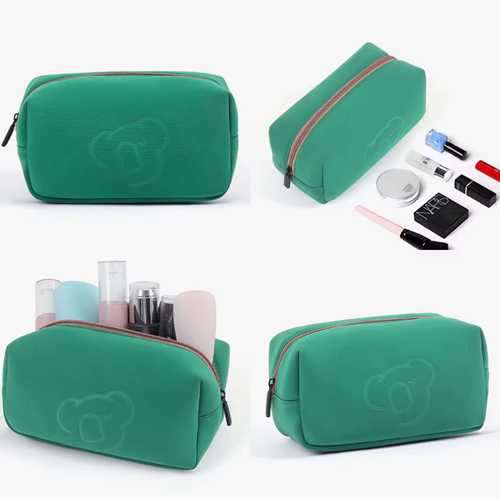
| Flat set | sheet mask, compact, palette, small sachets | slim pouch or flatter body |
| Mixed set | brush, tube, bottle, compact, zipper accessories | medium-depth cosmetic bag |
| Tall or rigid set | skincare bottle, jar, tools, boxed items | boxier body or train-case structure |
This approach avoids one of the most common mistakes: choosing a lovely outside shape that cannot accommodate the real opening width, bottle height, or brush length. When the fill profile is known first, it becomes much easier to decide depth, opening shape, zipper path, and whether the interior needs elastic loops, brush slots, or wipe-clean lining.
Choose the Right Shape
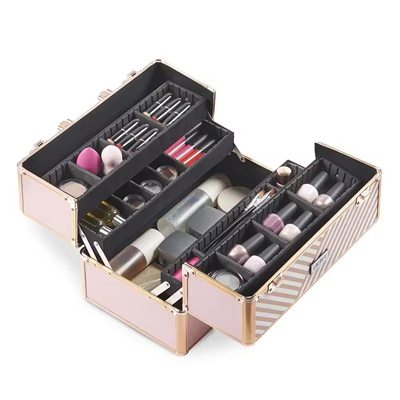
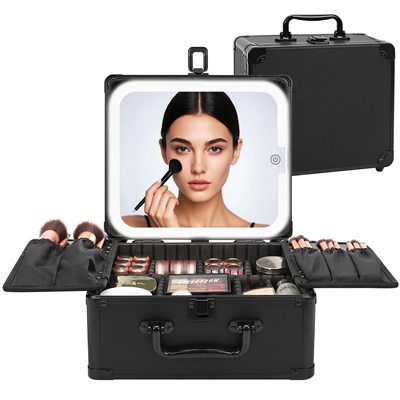
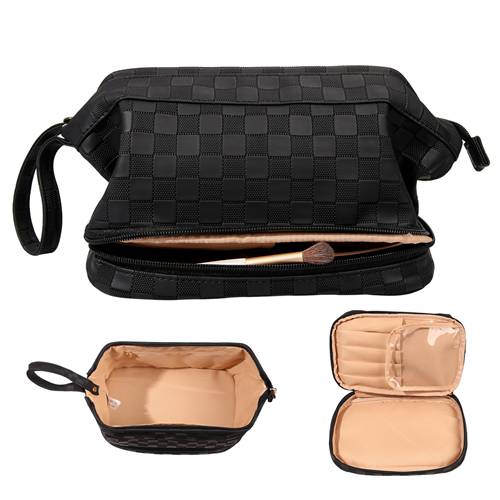
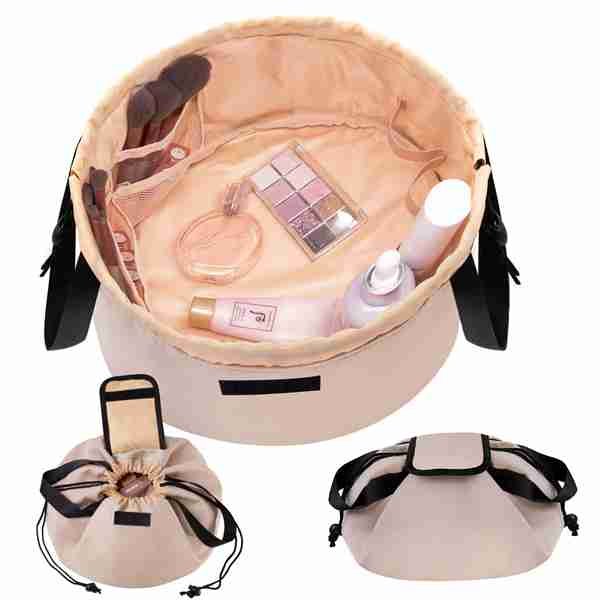
Makeup bag sizing becomes much clearer once the structure type is chosen. Public type guides commonly divide the category into pouch-style bags, box-style bags, train cases, hanging organizers, roll-up formats, and travel makeup bags because each structure changes how size is experienced in real use. A slim pouch may measure well on paper, yet still feel too limited once brushes and bottles are added. A boxier case may take more shelf space, but it often gives better standing volume and cleaner organization.
| Structure | Best Use | Size Logic |
|---|---|---|
| Slim pouch | lighter beauty sets, gift extras, flat products | width matters more than depth |
| Box bag | mixed cosmetics, travel essentials, daily organizers | depth becomes more useful |
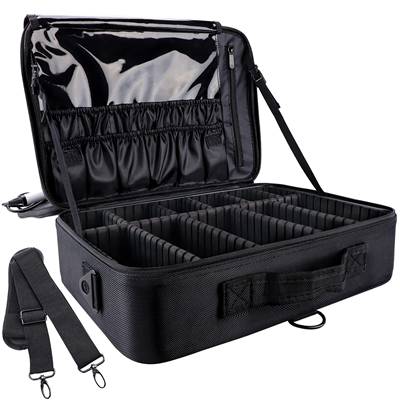
| Train case | fuller kits, taller items, more organized interiors | Height and opening shape matter more |
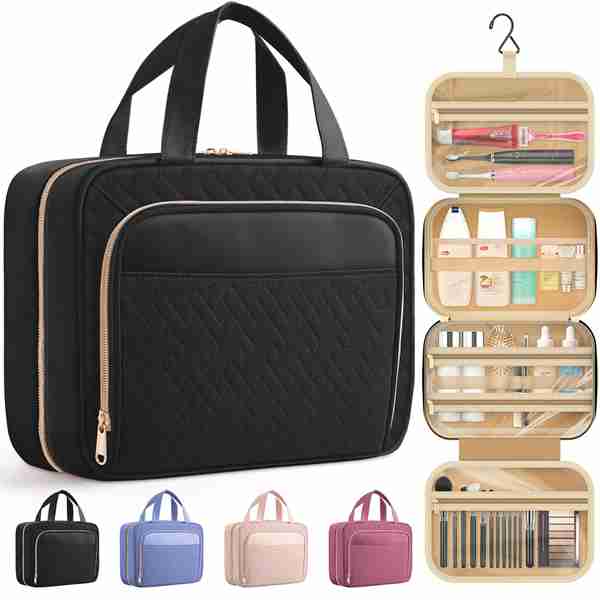
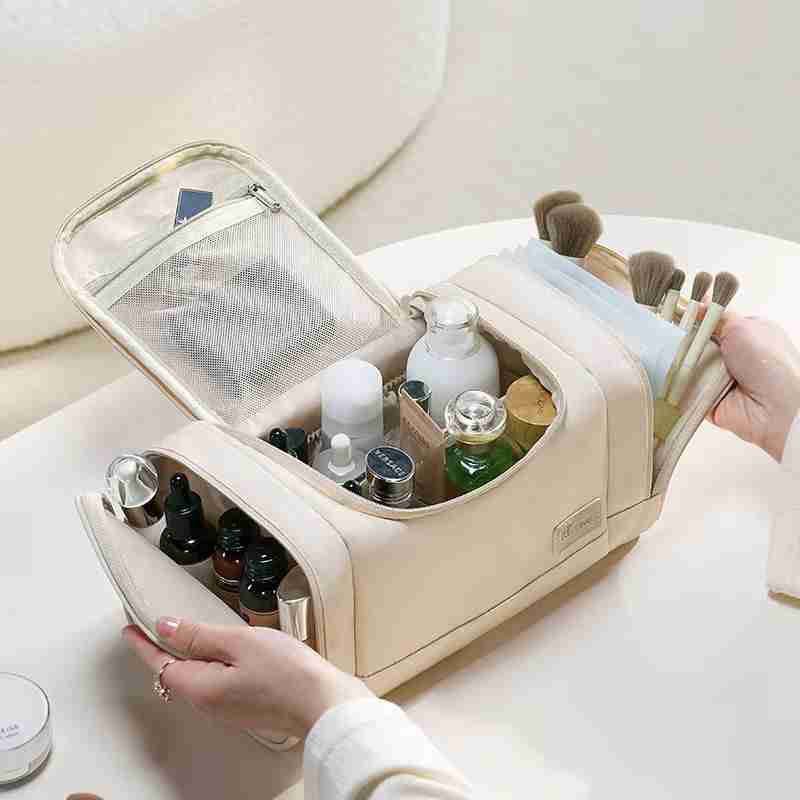
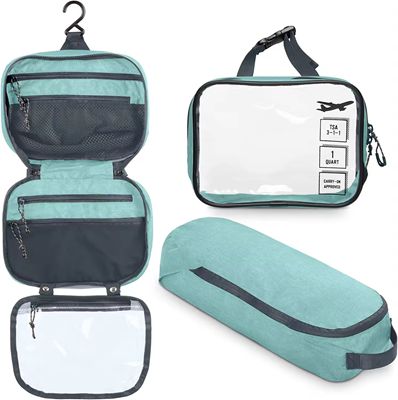
| Hanging organizer | travel use, multi-step routines, visible compartments | unfolded layout matters as much as folded size |






Usable Space Is Different
A makeup bag can have attractive outer dimensions and still disappoint in actual use. That is because length, height, depth, opening width, and usable interior volume do not behave the same way. A bag may look wide enough on paper but feel restrictive if the zipper path is short. Another bag may have enough depth, yet waste space because the opening shape makes packing awkward. Public style references separate slim pouches, box bags, train cases, and hanging organizers for exactly this reason: the same outside size can perform very differently once zippers, gussets, and internal structure are involved.
| Dimension Factor | What It Really Affects |
|---|---|
| Length | whether palettes, brush handles, or tubes can lie flat |
| Height | whether bottles or jars can stand or must tilt |
| Depth | how much body the bag has once filled |
| Opening width | How easy it is to put items in and take them out |
| Usable space | the real storage left after lining, pockets, and seams |
Size Varies by Use
The right size becomes much easier to judge when the use scene is clear. Public cosmetic bag assortments and guides repeatedly separate travel cosmetic bags, toiletry organizers, train cases, hanging bags, and compact pouches because each scene changes what “good size” means. A gift-with-purchase bag should often feel neat and proportionate. A travel kit may need room for bottles, tubes, and brush storage. A salon or professional setup may need more structure and clearer access. A subscription program may need a size that works both for visual reveal and efficient packing.
| Use Scene | Better Size Logic |
|---|---|
| Gift set | Looks full with fewer items, not oversized |
| Travel kit | allows mixed heights and easier opening |
| Retail collection | supports shelf appeal and repeat use |
| Salon or pro use | favors structure, visibility, and larger access |
| Subscription box | Balances reveal the effect of the carton fit |
Public guidance on makeup bag types also shows that hanging formats and train cases are often chosen for more organized or multi-step routines, while flat pouches stay strong for lighter essentials and easier gifting. The smartest route is to size the bag around how it will be received, opened, used, and stored, not around a generic category name.





Same Size, Different Feel
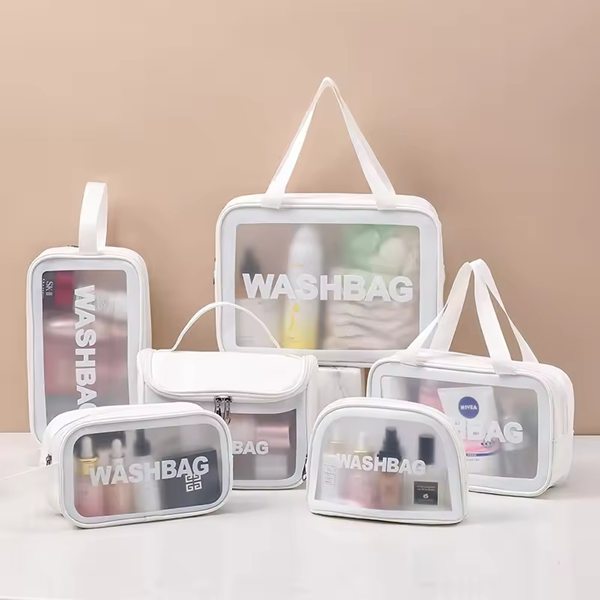
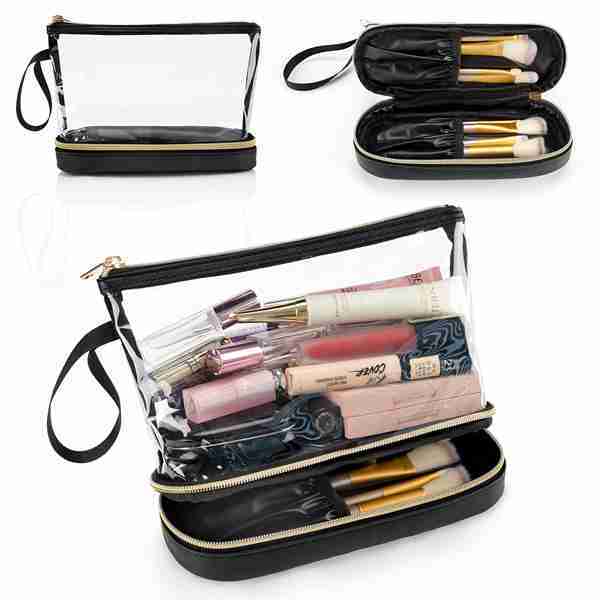
Two makeup bags with the same dimensions can feel like completely different products once the material changes. Public cosmetic pouch references commonly mention cotton, polyester, nylon, leather-like materials, clear vinyl/PVC, and eco-friendly fabrics, while public clear travel makeup bags also show very specific size and structure logic for transparent styles. A small, clear PVC bag, for example, can feel more rigid and more visibly filled than a soft nylon pouch of the same dimensions. That changes both presentation and packing behavior.
| Material | How It Changes Size Perception |
|---|---|
| PU | smoother, more polished, often feels more gift-ready |
| Nylon or polyester | lighter, more flexible, easier for soft packing |
| Canvas | thicker body, stronger presence, can feel bulkier |
| Clear PVC | more visual transparency, more obvious fill level, easier wipe-down |
Inside Details Change Size
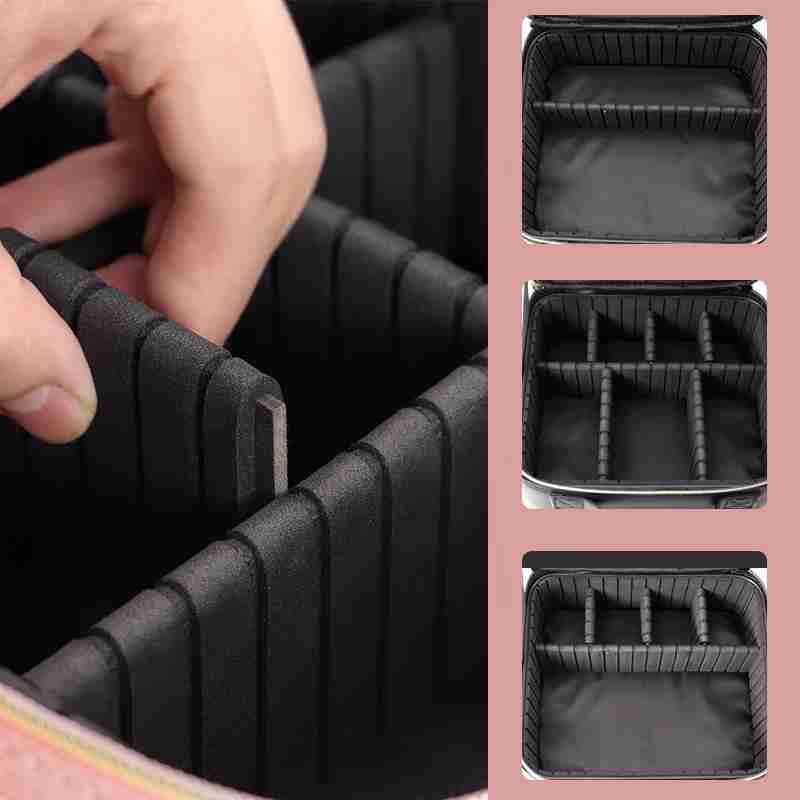
A makeup bag does not retain all of its stated space once organization begins to move inside. Brush sleeves, elastic loops, inner zip pockets, divider walls, wipe-clean lining, and padded panels all reduce the main cavity’s volume, even when the outer dimensions stay the same. Public references for cosmetic bags repeatedly note compartments, pockets, and dividers for makeup organization, while brush holder styles specifically use loops or pockets to protect bristles and keep tools easier to reach. Multi-pocket travel kits also show how extra compartments improve order while changing how space is actually used.
| Interior Detail | What It Changes |
|---|---|
| Brush slots | reduce free width but protect shape-sensitive tools |
| Inner zip pocket | improves separation for small items, but takes up wall space |
| Elastic loops | hold bottles or brushes in place, but limit flexible fill |
| Wipe-clean lining | improves maintenance and spill handling, but can slightly stiffen the body |
| Divider panels | create an order yet reduce one large open cavity |






Filled Bags Sell Better
Public references for giftable pouches, canvas cosmetic bags, and personalized travel kits repeatedly connect roomy but proportionate shapes with gifting, travel essentials, and attractive display. A bag that looks slightly full usually feels more considered than one with too much leftover space.
| Fill Appearance | What It Signals |
|---|---|
| Too empty | underplanned set, weak value impression |
| Overstuffed | poor usability, stressed seams, awkward opening |
| Properly filled | balanced set, stronger gift feel, clearer product story |
A roomy canvas pouch with a bottom gusset can work beautifully when the set really needs that base; public examples show this format used for travel essentials and promotional gifting. But if the contents are slim, the same roomy format may lose neatness. A better fit helps the set photograph better, display better, and feel more complete when opened.
A useful sample review is to check three views: flat on the table, packed and zipped, and partially opened. If the bag still looks balanced in all three states, the size is usually much closer to right.
Size Shapes the Experience
In practice, it can affect how the bag sits on a shelf, how it crops in photography, how substantial it feels as a gift, and how convenient it is in travel or daily storage. Public cosmetic assortments show clear differences between compact pouches, large double travel kits, hanging toiletry formats, and clear travel cosmetic bags because each one solves a different combination of visibility, access, and portability. Public examples also show real dimensions such as 10.5″ x 6.5″ x 5.5″ for a wide double travel kit, 9.5″ x 10″ x 4″ for a hanging kit, and 7.5″ x 5.75″ x 2″ for a clear travel cosmetic bag—three very different size logics for three different experiences.
| Priority | What Size Should Help Do |
|---|---|
| Shelf fit | hold shape neatly and avoid awkward overhang |
| Photo proportion | Keep the bag visually balanced next to the product contents |
| Gift feel | look complete without seeming padded or excessive |
| Travel convenience | slide into luggage, tote bags, or bathroom setups more easily |
The best size usually appears when these priorities are ranked early instead of being treated as equal after sampling. Public hanging and travel kit examples make this especially visible: some formats win on access and organization, while others stay strong because they are compact, tidy, and easier to place.


Size Decisions Raise Costs
A makeup bag size decision can look harmless in sampling and still raise costs later. That usually happens when the bag becomes slightly wider, deeper, taller, or boxier than the contents really require. Public cosmetic bag examples make this visible: an 8″ × 5.5″ × 2″ gusseted pouch, a 10″ × 7″ × 3″ canvas cosmetic bag, a 10.5″ × 6.5″ × 5.5″ double travel kit, and a 9.5″ × 10″ × 4″ hanging kit all serve different fill logic, but they also create very different carton behavior and pack-out efficiency.
| Size Choice | What It Quietly Changes |
|---|---|
| extra depth | fewer units per carton, looser fill, higher shipping volume |
| boxier body | more protected shape, but larger carton footprint |
| wider opening | easier access, but may require a more structured top-down build |
| taller profile | Better for bottles, less efficient if contents are mostly flat |
It means the size should match the real fill list, packing method, and final distribution logic. A compact pouch can ship efficiently, but feels too limited for mixed travel items. A larger structured kit may feel more complete, yet it can also increase master carton size and make grouped packing more complex. The safest size is the one that fits the contents without paying for unused volume.
Make A Sample First?
See your idea come to life before mass production.
At Jundong Factory, we offer free design mockups and custom samples to ensure every detail is perfect — from material and color to logo placement and stitching.
Start your project with confidence today: info@jundongfactory.com
FAQs About Makeup Bag Size
Is there a standard makeup bag size that works for most projects?
There is no single standard size that works equally well for every beauty set, but a mid-size pouch often makes the safest starting reference. Public cosmetic bag examples show meaningful variation even within simple zip styles: an 8″ × 5.5″ × 2″ gusseted pouch, a 10″ × 7″ × 3″ canvas cosmetic bag, and a compact clear travel bag around 7.5″ × 5.75″ × 2″ are all normal, yet each serves a different fill profile and use scene.
A safer way to think about “standard” is to ask what the bag must hold. If the set is mostly flat cosmetics, a slimmer pouch can work well. If the set mixes brushes, tubes, small bottles, and accessories, a mid-depth body is often more forgiving. If the bag must hold taller skincare items or more organized interiors, the dimensions may need to shift toward a boxier or train-case direction.
A practical rule is this: start from a mid-size baseline, then adjust based on the real fill list instead of chasing a universal “standard.”
What size works best for a gift-with-purchase or beauty set?
A gift-oriented makeup bag usually works best when it looks properly filled with fewer items, rather than oversized with visible space. Public cosmetic pouch examples connect gusseted canvas pouches and zip cosmetic bags with gifting, promotional use, and attractive front presentation, which suggests that proportion matters almost as much as storage. The 8″ × 5.5″ × 2″ and 10″ × 7″ × 3″ examples show two common giftable directions: compact and tidy, or slightly roomier with a bottom gusset.
The better question is not “How big can the bag be?” but “How full should the set look when opened?” If the contents are only a few slim items, a large bag may weaken the value impression because the set feels underplanned. If the items include mixed shapes or need a more generous opening, a slightly deeper body can improve both use and presentation. Public gifting-oriented pouch listings emphasize imprint area, bottom gussets, and lined interiors, which indicates that the visual face of the bag matters strongly in this use scene.
For gift projects, a well-sized bag often wins by looking complete, balanced, and easy to understand at first glance.
What size makes the most sense for travel use?
Travel use usually favors a size that balances mixed-item capacity with easy packing into luggage, tote bags, or bathroom setups. Public references show several travel-oriented directions: compact, clear bags around 7.5″ × 5.75″ × 2″, larger double travel kits around 10.5″ × 6.5″ × 5.5″, and hanging kits around 9.5″ × 10″ × 4″. Those examples show that travel size is not one number. It depends on whether the bag is meant for quick essentials, fuller routines, or visible compartment access.
A strong travel size usually needs to do three things at once:
- hold mixed heights like tubes, bottles, and brushes,
- open wide enough for faster access,
- Stay compact enough to place easily inside larger luggage or on a bathroom counter.
That is why hanging organizers and boxier travel kits often appear in public travel selections, while slimmer pouches work better for light makeup or short trips.
The safest travel decision is to size the bag around the routine, not just the trip label. A short trip with light essentials does not need the same format as a full routine with bottles, tools, and step-by-step organization.
When should a makeup bag stay flat, and when should it become boxier?
A flat makeup bag works best when the contents are mostly slim and the project benefits from a lighter, cleaner, easier-to-pack silhouette. A boxier bag works better when the contents mix different heights or need more standing volume. Public assortments and type guides consistently separate pouches from train cases, organizers, and travel kits because those forms solve different fill behavior. Flat pouches are strong for sheet masks, palettes, compacts, and lighter sets; boxier bodies better support bottles, jars, mixed tools, and more organized interiors.
A simple comparison helps:
| Better Flat | Better Boxy |
|---|---|
| slim cosmetics | mixed-height contents |
| light gifting | fuller travel use |
| easier stacking | better standing volume |
| lower visual bulk | more structured presence |
The mistake is forcing a flat silhouette to hold bottle-heavy contents, or using a roomy box bag when the set is mostly thin items. Public product examples show both routes working well when the contents match the structure.
What is the safest way to test makeup bag size before bulk starts?
The safest size test is not a measurement check alone. It is a filled-sample review using the real product mix. Public guides and product assortments show how strongly cosmetic bag types differ by compartments, brush holders, elastic loops, travel format, and overall structure. That means a paper size or empty prototype can easily approve the wrong bag if the contents are never tested inside it.
A useful review sequence is:
| Review Step | What to Watch |
|---|---|
| flat empty bag | shape, opening path, first visual proportion |
| filled and zipped | bulk, balance, seam stress, real silhouette |
| partially opened | visibility, access, product removal behavior |
| packed for shipment | carton fit, stacking, grouped packing logic |
This method catches the most common size failures early: opening too tight, bottles leaning badly, too much unused depth, poor fill appearance, or a bag that photographs well but packs poorly. A safer sample is always the one tested in the same condition that the final bag will actually face.
Does a clear PVC makeup bag need a different size strategy from a fabric cosmetic pouch?
Yes. A clear PVC makeup bag usually needs a tighter size strategy because transparency and material stiffness make every empty gap more visible. Public clear cosmetic bag references describe PVC and EVA as clear, waterproof, easy-clean materials, while public product examples also show compact clear travel formats around 7.5″ × 5.75″ × 2″ rather than oversized bodies. That pattern makes sense: once the contents are visible, the bag is judged not only by capacity, but by how neat and intentional the fill looks.
A soft fabric pouch can hide some spare room because the body relaxes around the contents. A clear PVC bag does the opposite. It reveals whether the set looks sparse, whether the shapes inside are mismatched, and whether the silhouette feels balanced. That is why clear cosmetic bags often work best for small travel essentials, mini sets, liquids, or neatly grouped items, rather than loosely assorted products with too much visual variation. Public guidance around clear bags also emphasizes visibility, wipe-down convenience, and durable waterproof performance, which reinforces their use in more controlled, easy-to-read formats.
A practical size check for clear bags should confirm three things at once:
- The items fill the bag without looking crowded,
- The bag still closes cleanly,
- The contents look orderly from the outside.
If any of those fail, the issue is often not the material itself but the size-to-fill relationship. A clear bag usually performs better when the set feels edited and visually disciplined, not when the body simply offers more room.
How much extra size should be allowed for brush slots, inner pockets, or elastic loops?
There is no universal add-on number, because internal organization changes space in different ways; the safer rule is to test the real insert layout with the real fill mix. Public cosmetic bag guidance repeatedly describes cosmetic bags as smaller, softer-lined formats with pockets or holders for brushes, compacts, and lip products, while broader makeup pouch guidance also notes multiple interior zones, mesh pockets, and loops as common organizational features. Those details do not just add convenience. They also consume width, wall depth, and opening access.
The effect depends on what is added. Brush slots usually reduce usable wall width. Elastic loops improve stability for bottles or tools, but reduce how flexibly the interior can be filled. Inner zip pockets take panel space and can thicken one side. Divider walls improve order while reducing the feeling of one open cavity. That is why two bags with the same outside dimensions can behave very differently once one of them becomes more organized inside. Public references on makeup pouches and cosmetic bags make this distinction clear by repeatedly separating simple pouches from more structured organizer-style interiors.
A more reliable review method is to create the internal layout first, then test the actual products in place. If the bag begins to look crowded, the opening becomes hard to use, or brushes and bottles start fighting for the same zone, the body usually needs adjustment. In other words, do not add space because an internal feature “sounds useful.” Add space only when the real layout and real contents prove it is necessary.
When does a hanging organizer make more sense than a regular zip makeup bag?
A hanging organizer makes more sense when the routine has multiple steps, the contents need visibility, or the user benefits from vertical access instead of one horizontal cavity. Public type guides consistently separate hanging organizers from pouches, train cases, and travel makeup bags, and broader toiletry-bag guidance also describes hanging formats as especially suited to travel and more organized routines. That difference is not just stylistic. It changes how size should be read: folded size matters for packing, but unfolded layout matters just as much for use.
A regular zip makeup bag stays strong when the contents are simple, and the goal is compactness. A hanging format becomes more convincing when the set includes multiple bottles, skin-care steps, compartments that should stay visible, or products that are easier to access upright. Public product examples of hanging travel kits around 9.5″ × 10″ × 4″ also show that these formats are not necessarily huge; they simply distribute volume differently and use vertical organization more deliberately.
The decision becomes easier when viewed through routine rather than category. If the bag is mainly opened on a table and used quickly, a regular zip pouch may be enough. If the bag is expected to hang, stay open, show different zones at once, and support step-by-step use, a hanging organizer often deserves its extra structure. The better format is the one that matches how the contents are reached, not just how they fit.
Is it better to develop one size or two sizes in a makeup bag line?
Two sizes make sense when the line clearly serves two different fill profiles; one size is safer when the product story is still narrow, or the visual system depends on tight consistency. Public makeup pouch guidance already separates compact everyday pouches, mid-size kits, and fuller travel pouches, which shows that size tiering is common when the use logic genuinely changes. At the same time, public assortment pages also show many successful lines built around one clearly defined format, especially when the contents or branding direction stay tightly controlled.
A useful rule is to avoid adding a second size just to “offer more options.” A second size becomes worthwhile when it solves a real difference, such as:
- light color cosmetics vs mixed travel items
- giftable add-on set vs fuller organizer set
- compact daily pouch vs travel-weekend format
When those differences are real, one size can start looking compromised for both groups. But when the contents are close, a second size may only add more sampling, more pack-out complexity, and more visual inconsistency than the line needs. Public references for everyday, mid-size, and full-travel makeup pouches make this distinction visible because each tier is tied to a different use pattern rather than a random size jump.
The stronger decision is usually the simpler one: keep one size if one format already fits the story well; add a second only when the fill logic, routine, and display role clearly justify it.
What should be sent before sampling to avoid repeated size changes?
The most useful pre-sampling brief is a fill brief, not just a dimension request. Public cosmetic and toiletry bag guidance repeatedly ties size decisions to what the bag stores, how it is opened, and whether it behaves more like a cosmetic pouch or a fuller toiletry organizer. Material choice also changes how size feels in practice, as public comparisons between PU and nylon makeup bags show: PU tends to emphasize appearance and presentation, while nylon emphasizes practicality and everyday use. That means size cannot be separated from contents, structure, and material direction.
A safer first brief should include:
- the real product list to be placed inside
- whether the items should lie flat or stand upright
- the preferred structure type: pouch, box bag, train case, or hanging organizer
- material direction such as PU, nylon, canvas, or clear PVC
- whether the bag needs brush slots, pockets, loops, or wipe-clean lining
- whether the bag is meant for gifting, travel, shelf display, or subscription packing
Those details reduce guesswork much more effectively than sending width, height, and depth alone. The size changes that cost the most time are usually not caused by sewing problems. They come from a late clarification of what the bag was actually supposed to do. A clearer brief turns the first sample from a rough guess into a much stronger directional test.
Everything You Need to Know Before Customizing Your Bags
A makeup bag size may look like a simple measurement issue at first, but the real decision usually depends on what goes inside, how the bag opens, how much usable space it keeps, and where it will be used. A bag for travel kits, beauty gift sets, retail shelves, subscription boxes, salon use, or daily makeup carry should not all follow the same size logic.
That is why the most useful questions are rarely about dimensions alone. They are usually about brush length, bottle height, opening width, inner layout, pack-out fit, and whether the bag feels full, practical, and easy to use.
The FAQs focus on the details that usually need to be clarified early: size by use scene, pouch vs box bag vs train case, usable space, material effect on size feel, interior structure, shipping impact, and real fill-item fit.
