 Skip to content
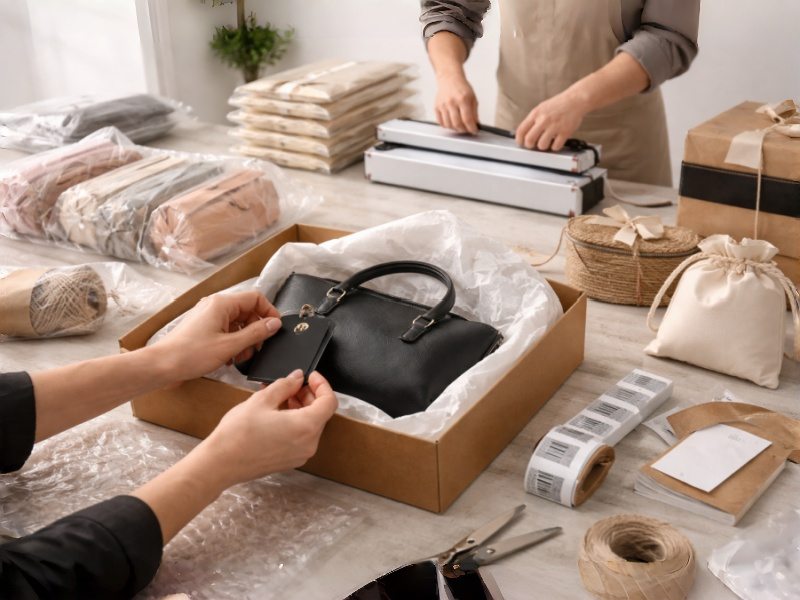
A lot of teams still treat packaging as the last small task before shipment. That is usually where trouble starts. A bag can be well designed, well sewn, and well priced, yet still arrive looking ordinary, damaged, wrinkled, poorly labeled, or harder to sell than it should be. The reason is simple: packaging is not separate from the product experience. It shapes the first visual impression, protects the bag through storage and transport, affects freight cost, controls presentation at retail, and helps the whole collection feel more complete.
This matters even more in bags than in many other product categories. Bags are handled, stacked, compressed, folded, displayed, gifted, photographed, and shipped in many different ways. A soft cotton tote needs different protection from a structured cosmetic case. A travel bag sold online needs different pack-out logic from a leather handbag sold in-store. A private label collection with strong styling can still feel unfinished if the hangtag, dust bag, care card, barcode label, and outer carton details do not work together.
Featured Snippet Paragraph
Custom bag packaging matters because it does far more than hold the product. It helps protect bags from dust, scratches, pressure, moisture, and transit damage, supports brand image, improves unboxing, keeps labeling accurate, and can reduce freight waste when the packaging is right-sized. Current packaging guidance consistently highlights the value of matching packaging to channel needs, with ecommerce focusing more on protection and right-sizing, while retail packaging puts more emphasis on shelf presentation and brand communication.
What Does Custom Bag Packaging Really Do Beyond Holding the Product?
Custom bag packaging does four main jobs: it protects the bag, supports brand presentation, improves handling and labeling, and helps the product fit its sales channel more effectively. Good packaging is part of the product system, not just an outer layer. Shipping guidance from USPS and FedEx also reinforces that careful packing, cushioning, sizing, sealing, and labeling are central to keeping goods safe in transit.
The easiest mistake is to think packaging only matters after the bag is finished. In reality, packaging affects the bag before anyone even touches the product itself. It decides whether the bag reaches the warehouse in good shape. It affects whether hardware rubs against fabric, whether handles crease badly, whether coated surfaces get marked, and whether retail staff or fulfillment teams can identify and sort the product quickly.
In practical terms, bag packaging usually serves several layers at once. The inner layer may include tissue, polybag protection, dust bag, foam support, or desiccant, depending on the item. The presentation layer may include hangtags, belly bands, brand cards, or a printed mailer. The transport layer includes cartons, dividers, stickers, and shipping marks. When these layers are planned well, the bag arrives safer and looks more considered. When they are rushed, the product often feels less premium than it should.
Another overlooked function is consistency. A brand may have strong designs, but if one backpack arrives with a clean dust bag and care card while the next tote arrives in a loose polybag with unclear labeling, the whole collection can feel uneven. Packaging helps create visual discipline across a line.
That is why strong packaging decisions are rarely decorative. They are operational, commercial, and visual at the same time.
Why Does Packaging Matter So Much for Brand Image and Product Value?
Packaging matters for brand image because it often creates the first physical impression of quality before the bag is used. A cleaner, better-structured presentation can raise perceived value, support giftability, and make the product feel more complete. Current packaging guidance also notes that brand consistency, readable design, and a better receiving experience strengthen how people remember the product.
People do not judge products in a neat sequence. They do not first judge the stitching, then later the silhouette, then later the brand. They judge everything at once. If the outer presentation feels careless, the bag itself often feels less special, even when the product quality is fine.
For bags, this effect is especially strong because so many purchases involve identity, gifting, travel, fashion, or personal organization. A dust bag, a clean tag, a shaped insert that keeps the bag’s body looking right, or even a better fold method can make the product feel more intentional. By contrast, poor presentation can flatten the value of a good bag very quickly. Creased handles, crushed corners, scuffed hardware, or generic label application can make the item feel closer to a clearance product than a carefully developed collection.
There is also a price effect. Packaging does not create quality by itself, but it helps communicate quality. When the bag and the presentation match, the product feels more coherent. That can support stronger positioning without changing the underlying bag structure. It is not about making packaging flashy. In many cases, the most effective packaging upgrades are simple: a better dust bag, cleaner tissue wrap, improved hangtag stock, a stiffer insert at the base, or a mailer that fits the item properly.
Here is a simple comparison:
| Packaging Choice | Likely Impact on Perceived Value |
|---|---|
| Loose bag in oversized packaging | Feels less controlled and less premium |
| Properly shaped inner support | Helps preserve form and visual value |
| Branded dust bag or wrap | Improves presentation and memory |
| Clear, clean labeling | Makes the collection feel more finished |
| Channel-fit packaging | Makes the product feel professionally planned |
A bag is never judged in isolation. It is judged as delivered.
How Does the Right Packaging Reduce Damage, Returns, and Costly Delivery Problems?
The right packaging reduces problems by matching the size, cushioning, support, and material strength to the bag’s real risks during storage and transit. FedEx advises using a box large enough to allow cushioning on all sides, while USPS guidance stresses careful packaging and padding to protect fragile items. Right-sized packaging is also widely recommended because it cuts excess movement, reduces waste, and can improve delivery efficiency.
A lot of damage does not look dramatic. Many bag problems happen quietly: a tote handle bends badly in compression, a leather edge gets rubbed, a plated zipper pull marks a coated surface, or a backpack front panel gets flattened enough to make the product photo look better than the delivered item. These small failures may not trigger total rejection, but they weaken satisfaction and increase complaints, exchanges, or discount pressure.
That is why bag packaging should be built from actual risk, not habit. A structured cosmetic bag may need internal support to keep its walls clean and square. A soft tote may need tissue and fold control to avoid sharp crease lines. A leather or PU bag may need separation between hardware and body panels. A travel bag may need extra corner protection if it ships in a compressed export carton.
The transport route matters too. Retail replenishment, direct-to-consumer shipping, and mixed export cartons do not expose the product to the same handling pattern. Ecommerce packaging generally has to survive more conveyor movement, more drops, and more exposure during parcel transport, so protective performance matters more there than in a direct retail floor delivery model.
A useful packaging checklist for bag protection often includes:
- Fit control so the bag does not move too much
- Surface separation to prevent rub marks
- Shape support for structured bags
- Moisture control where needed
- Clear outer labeling for handling and sorting
- Right carton strength for stacking and transit
Good packaging will not fix a weak bag. But it prevents a good bag from arriving in weak condition.
Which Type of Custom Bag Packaging Is Best for Retail, Ecommerce, and Gift Programs?
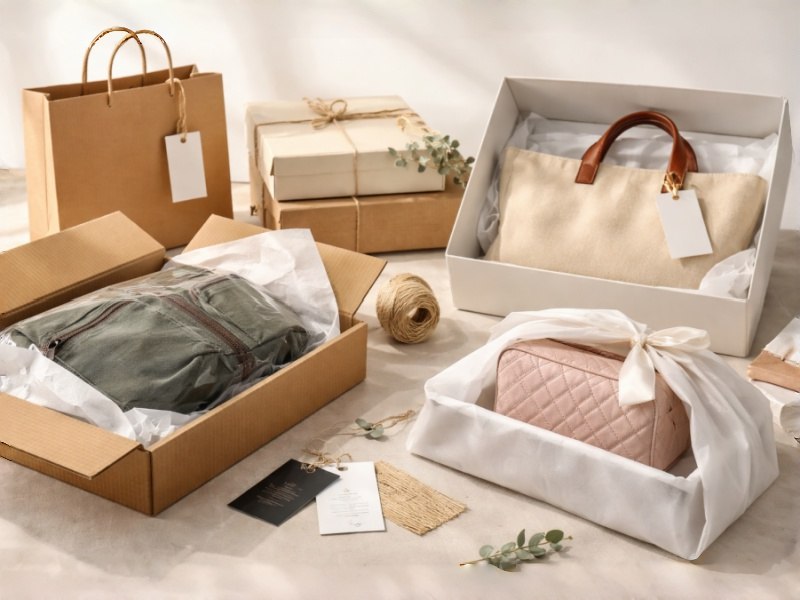
The best packaging type depends on the selling channel. Retail packaging usually emphasizes visual presentation, shelf appeal, tags, and brand identity. Ecommerce packaging places more weight on protection, right-sizing, and shipping efficiency. Gift-oriented packaging often adds stronger presentation value through boxes, wraps, dust bags, or inserts. Industry guidance repeatedly distinguishes retail and ecommerce packaging in exactly this way.
There is no single best packaging style for all bags. The right choice depends on how the bag will be sold, handled, and delivered.
For retail, the bag often needs to look attractive on display and remain easy to identify by style, color, and barcode. This may favor hangtags, simple stuffing, a branded dust bag, a neat polybag for storage, and outer cartons designed for stockroom efficiency. For ecommerce, the priority shifts. The packaging has to absorb parcel handling, prevent shape collapse, reduce damage risk, and keep freight cost from climbing too high. Here, a better-fitted mailer or carton, cleaner void control, and more practical inner protection usually matter more than shelf appeal. For gift programs or special sets, the emotional presentation becomes more important again, so boxes, tissue, belly bands, inserts, or branded messaging may deserve more attention.
Bag type also changes the answer:
| Bag Type | Usually Needs Most |
|---|---|
| Tote Bag | Fold control, dust protection, clear tag application |
| Backpack | Shape support, zipper protection, stronger transit packaging |
| Cosmetic Bag | Surface protection, form retention, clean presentation |
| Travel Bag | Reinforced pack-out, compression control, carton strength |
| Leather Goods | Scratch prevention, dust bag, hardware separation |
Many teams make the mistake of using one packaging method across every channel because it feels simpler. But channel-fit packaging is often more efficient than one-size-fits-all packaging. It reduces overpacking in some channels and underprotection in others.
If your project includes several bag categories or several delivery channels, packaging should be discussed at the same time as the product, not after everything else is already approved. For custom packaging planning that matches your bag structure and delivery route, Jundong can be reached at info@jundongfactory.com.
Why Is Unboxing Now Part of the Bag Product Experience?
Unboxing matters because it extends the product experience into the moment of receipt. A bag that arrives well presented, easy to open, cleanly wrapped, and visually coherent is more likely to feel intentional and memorable. Current packaging guidance keeps linking brand consistency, protective fit, and receiving experience because those details affect repeat sentiment and how the product is talked about after delivery.
Unboxing is sometimes misunderstood as something only luxury or social-media-first brands should care about. That is too narrow. For bags, unboxing is simply the first real contact between the user and the product. Even a practical work bag or travel organizer benefits from arriving in a way that feels orderly, protected, and thoughtfully packed.
That does not mean every bag needs elaborate layers. In fact, overdone packaging can be annoying. The better approach is to create a receiving experience that feels smooth. The bag opens cleanly. The handles are placed properly. Hardware is not tangled. The shape is readable. The tag is attached in the right place. The care card is not lost. The outer packaging does not feel excessively wasteful.
Small upgrades often do more than expensive upgrades. Better tissue. A cleaner dust bag. A right-sized insert. A neater label position. A printed message card only when it adds value. A stronger zipper protector for metal parts. These details improve the feeling of receipt without turning packaging into an unnecessary cost burden.
A good rule is this: unboxing should feel easy, not theatrical. If the packaging helps the product feel more complete, it is doing its job. If it distracts from the product or adds cost without improving protection or memory, it may be too much.
This is why first-run and low-MOQ projects should not ignore packaging. Even simple packaging can lift the entire collection if it is disciplined and well matched.
How Do Packaging Materials, Size, and Structure Affect Shipping Cost and Sustainability?
Packaging size and structure directly affect shipping efficiency because oversized packaging increases material use, wasted space, and often freight burden. Recent packaging guidance and sustainability sources consistently recommend right-sizing, reducing unnecessary weight, and designing packaging for recyclability or lower-fee material choices where possible. The European Commission also issued fresh guidance this week to support implementation of new packaging rules.
This is one of the most commercially important packaging topics right now. Too much packaging does not only look wasteful. It usually costs more to produce, takes up more room in outbound cartons, and can increase shipping inefficiency. Too little packaging creates another problem: more scuffs, more crushed product forms, more dissatisfaction, and more returns.
The smart middle ground is right-sized packaging. That means the packaging is large enough to protect the bag properly, but not so large that the product shifts excessively or carries unnecessary air. This is now repeatedly being treated as a practical lever for lowering waste and shipping burden at the same time.
Material choice matters too. A rigid presentation box may suit a premium handbag or gift set, but may be excessive for a soft tote or drawstring bag sold in volume. A flexible protective mailer may work for some lightweight bags, but not for structured goods that need form control. Mono-material or simpler recyclable structures are also getting more attention because they can make disposal and compliance easier when regulations tighten.
A practical decision table looks like this:
| Packaging Direction | Strength | Trade-off |
|---|---|---|
| Rigid box | High presentation, stronger form retention | More space, more cost, heavier |
| Flexible dust bag + mailer | Light, efficient, simpler | Less structure support |
| Corrugated carton + inner support | Balanced protection | Needs careful fit design |
| Reduced-material packaging | Less waste, often lower freight burden | Must still protect properly |
Sustainability is not just about switching materials. It is about reducing excess, choosing structures that make sense, and avoiding packaging that looks responsible but performs poorly.
What Should Be Printed, Added, or Confirmed in a Bag Packaging Sample Process?
The packaging sample process should confirm print layout, colors, label content, barcode placement, warning text, care instructions, folding method, inserts, and pack-out structure before bulk begins. This helps prevent wrong labeling, wrong printing, inconsistent pack-out, and confusion during fulfillment. FedEx and USPS guidance also underscore the importance of correct sealing, labeling, and packing methods for smooth transit.
Packaging approval should not be reduced to “the box looks okay.” The real purpose is to confirm every part of the physical and printed system that will travel with the bag. That includes what the sees and what the warehouse needs.
For many bag programs, the packaging sample stage should check:
- Hangtag content
- Barcode and sticker placement
- Care card or instruction card
- Warning label needs
- Dust bag size and print
- Polybag thickness or closure method
- Fold method and insert use
- Outer carton marks and carton count logic
This step becomes even more important when there are multiple colors, sizes, or SKUs. Small labeling mistakes can create expensive confusion later, especially in mixed assortments or retail-ready pack-outs. A bag may be perfect, but if the barcode is wrong, the label is unclear, or the carton mark does not match the contents, the whole delivery becomes harder to receive, store, and sell.
A useful packaging sample review usually asks three questions. Does it protect the bag correctly? Does it present the product correctly? Does it identify the product correctly? If any one of those is weak, the packaging approval is not really complete.
For projects with custom tags, care cards, dust bags, barcode systems, or export carton requirements, it is worth locking the packaging sample with the same seriousness used for the product sample itself.
Why Does Custom Packaging Matter Even More in Private Label and OEM Bag Programs?
Custom packaging matters more in private label and OEM bag programs because the packaging often carries part of the collection’s identity and consistency. When several styles share a coherent tag, dust bag, label system, and pack-out logic, the line feels more complete and more deliberate. Packaging is one of the easiest places to strengthen collection unity without redesigning the bag itself.
In a private label bag collection, the bag is not the only thing the user sees. The tag, dust bag, insert card, outer wrap, and shipping presentation all work together to tell the user what kind of brand this is. If the product line has visual discipline, the collection feels more established. If every item is packed differently, the brand can feel fragmented even when the bag designs are strong.
This is one reason packaging often deserves more attention in OEM and private label work than teams first expect. It can improve identity control without requiring major changes to structure, pattern, or hardware. A consistent hangtag shape, card tone, dust bag fabric, print position, or care-card style can help knit multiple categories together.
There is also a practical side. Private label lines often grow gradually. The packaging system should be easy to repeat across future styles. That means choosing packaging elements that are branded enough to be recognizable, but not so complicated that every new style creates fresh approval delays.
When reviewing packaging for these programs, useful questions include:
- Can this packaging system scale across future bags?
- Is the labeling clear enough for multi-style management?
- Does the packaging support the brand tone without overcomplicating the program?
- Can the same visual language work across tote bags, backpacks, cosmetic bags, and travel bags?
These are not minor details. They shape how complete the collection feels from the outside in.
How Can a Bag Factory Help Create Packaging That Looks Better and Works Better?

A good bag factory helps by connecting packaging to the product’s actual structure, channel use, and delivery route. That includes advising on inner protection, fold method, label logic, right-sized outer packaging, and sample approval. The strongest packaging outcomes usually come when presentation, protection, cost, and timing are treated as one decision set, not separate conversations.
A bag factory sees problems that a design-only conversation may miss. It knows which fabrics crease easily, which handles twist in packing, which hardware needs separation, which silhouettes collapse under stacking, and which bag sizes create carton inefficiency. That practical knowledge is what turns packaging from a visual afterthought into a working system.
This is also where warning signs are useful. Packaging may be underdeveloped if it is only discussed after the product is already approved, if no one has reviewed the fold method, if the dust bag size was guessed rather than tested, if carton marks are still unclear late in the process, or if ecommerce needs are being treated the same as store-display needs.
The best teams usually balance four things together:
- Protection
- Presentation
- Cost and freight efficiency
- Lead-time practicality
If one of these is pushed too hard while the others are ignored, the result often becomes weak. Beautiful packaging that collapses in delivery is not good packaging. Very cheap packaging that devalues the bag is not good packaging. Heavy gift-style packaging for a simple volume tote can also be the wrong answer.
Closing Perspective: A Good Bag Deserves Packaging That Finishes the Job
The most useful way to look at custom bag packaging is this: it finishes the job that the bag itself begins. The bag carries the design, function, and material story. The packaging protects that story, presents it clearly, and helps it arrive in the right condition and the right context.
That is why packaging should not be reduced to one late cost line. It affects first impression, shape retention, handling, labeling, transport, giftability, retail readiness, ecommerce survival, and collection consistency. Some bags need very little packaging. Others need far more than teams expect. supports the selling channel, and reinforces the value of the product without wasteful excess.
For tote bags, backpacks, travel bags, cooler bags, cosmetic bags, leather goods, and other custom programs, the strongest packaging is usually the one that looks simple from the outside because the thinking behind it was not simple at all.
Top 10 FAQs About the Importance of Custom Bag Packaging
FAQ 1: Why is packaging such a big deal if the bag itself is already well made?
Because a well-made bag can still arrive looking average, damaged, messy, or less valuable than it should. Packaging is the part that protects the product’s first impression. It helps control shape retention, surface protection, hardware separation, label accuracy, and the overall feeling the product creates when it is opened. Recent packaging guidance keeps stressing that packaging design is tied to how the product is perceived, not just how it is transported. At the same time, parcel and mailing guidance from major carriers shows that proper packing, sealing, cushioning, and right-sized outer protection are basic requirements for safe transit.
This matters even more for bags because bags are soft goods with different body behaviors. A cotton tote can crease. A structured cosmetic bag can collapse. A leather handbag can get rubbed by its own hardware. A backpack can lose its front shape if packed too tightly. So packaging does not just “carry” the product. It helps preserve the product in the condition it was approved. That is why good packaging should be treated as part of the bag program, not as an afterthought once sewing is done.
FAQ 2: What type of packaging is best for tote bags, backpacks, travel bags, and cosmetic bags?
There is no single best packaging type for every bag. The better choice depends on the bag’s structure, surface sensitivity, weight, sales channel, and delivery route. Ecommerce-focused guidance keeps separating protective needs from presentation needs: online delivery generally needs stronger transit protection and better fit control, while store-facing packaging often places more emphasis on visual order, labeling, and shelf-readiness.
A simple breakdown usually works well:
| Bag Type | Common Packaging Priorities |
|---|---|
| Tote Bag | Fold control, dust protection, clean hangtag placement |
| Backpack | Shape support, zipper protection, stronger outer pack |
| Travel Bag | Compression control, stronger carton logic, handle protection |
| Cosmetic Bag | Form retention, scratch protection, cleaner presentation |
| Leather Goods | Dust bag, soft wrap, hardware isolation |
The mistake is using one packaging method across everything just because it is convenient. A soft drawstring bag does not need the same support as a structured vanity case. A travel duffel going into export cartons should not be packed like a gift-ready handbag. Good packaging is not about using more materials. It is about choosing the right level of protection and presentation for the specific product.
FAQ 3: Do custom dust bags, tissue paper, inserts, and printed tags really add value, or are they just extra cost?
They add value when they solve a real product or presentation problem. A dust bag can reduce rubbing, improve presentation, and make the product feel more complete. Tissue can soften contact and help the product open more neatly. Inserts can hold shape and reduce collapse during storage and delivery. Printed tags and cards help identify the product cleanly and support a more finished line presentation. Packaging sources continue to highlight that presentation and receiving experience affect how products are perceived, especially when the first physical contact is the opening moment.
The key is not to add everything. The key is to add what actually improves the bag. Too many layers can become wasteful and annoying. Too few layers can make the product feel underprepared. For example, a premium leather tote may benefit from a dust bag and hardware wrap, while a simple canvas promotional tote may only need clean folding, a neat tag, and a right-sized protective outer pack. Good packaging choices feel intentional, not excessive. That is the difference between useful value and decorative cost.
FAQ 4: How can packaging reduce shipping damage and returns?
Packaging reduces shipping damage by controlling movement, pressure, surface contact, and moisture exposure during handling and transit. Major shipping guidance repeatedly recommends choosing packaging that matches the size and weight of the item, leaving room for proper cushioning where needed, and keeping the product secure so it does not shift excessively in the package. Right-sizing is also widely discussed because oversized packaging can let goods move too much while adding wasted space and avoidable transport cost.
In bag programs, damage is often subtle rather than dramatic. A returned bag may not be torn or broken. It may simply arrive with crushed corners, bent handles, scratched hardware, distorted front panels, or a finish that no longer looks new. These are exactly the kinds of issues that stronger packaging control can reduce. For structured bags, inner support may matter. For coated or leather-like surfaces, hardware isolation may matter. For online shipments, outer pack strength and fit matter much more because parcel handling is rougher than store replenishment. The goal is not to overpack. The goal is to match the packaging to the actual risk profile of the bag.
FAQ 5: Is retail packaging different from ecommerce packaging for bags?
Yes, and the difference is practical, not theoretical. Retail packaging usually needs to support display clarity, barcode visibility, style identification, and a cleaner in-store look. Ecommerce packaging needs to survive parcel handling, sorting systems, stacking, and longer direct-delivery routes. Current packaging guidance keeps drawing this distinction because the two channels place pressure on the product in very different ways.
In a store, the bag may be unpacked, touched, re-displayed, and visually compared next to other styles. In ecommerce, the bag may remain inside protective packaging until the final recipient opens it. That means one channel may justify more emphasis on printed presentation and shelf logic, while the other may justify more emphasis on crush resistance, right-sizing, and internal stabilization. Brands that use one identical packaging setup across all channels often end up either overpacking retail goods or underprotecting ecommerce shipments. Packaging works best when it follows the selling route, not when it ignores it.
FAQ 6: How important is packaging sample approval before bulk production starts?
It is very important because packaging mistakes are often expensive in ways people do not expect. If the bag is right but the hangtag content, barcode location, warning text, care card, dust bag size, or carton marks are wrong, the delivery can still become difficult to receive, sort, stock, or sell. GS1 standards underline how important barcode and logistic label clarity are for identification and supply-chain handling. Carrier guidance also reinforces correct sealing, packing, and labeling as part of smooth transport.
A strong packaging approval step should check more than artwork. It should review the physical packaging as a working system: how the bag is folded, where the tag sits, how the insert holds the shape, whether the dust bag fits correctly, whether the barcode scans cleanly, and whether the outer carton markings match the intended packing method. This is especially important for multi-color, multi-SKU, and retail-ready assortments. In those programs, one small labeling error can create major confusion later. Packaging approval should be treated with the same seriousness as the product sample because it directly affects presentation, handling, and shipment accuracy.
FAQ 7: Does better packaging help justify a higher selling price?
Good packaging can support a higher perceived value, but only when it feels honest and well matched to the product. It does not create quality out of nothing. What it does is help communicate that the product was handled with care, positioned clearly, and delivered in a more complete way. Current packaging guidance keeps linking brand perception to the physical packaging experience because people often judge the product and the presentation together, not separately.
For bags, this is especially true in gifting, travel, fashion, and private label collections. A bag that arrives in a properly fitted dust bag, with clean wrap, readable tagging, and a shape that still looks right, will usually feel more finished than the same bag arriving loose in oversized or generic packaging. That does not mean every item needs a rigid gift box. In many cases, clean execution matters more than expensive packaging. Better fold control, cleaner inserts, more thoughtful tag placement, and a more suitable outer pack can lift product perception without pushing packaging cost too far.
FAQ 8: How do packaging materials, size, and weight affect freight cost and sustainability?
They affect both directly. Larger and heavier packaging usually means more material, more storage space, and often more transport burden. FedEx notes that right-sizing and lighter materials can help lower costs by reducing dimensional-weight charges, and current ecommerce packaging guidance keeps emphasizing better-fit packaging for the same reason. On the sustainability side, current European Commission guidance states that the Packaging and Packaging Waste Regulation entered into force in 2025 and generally applies from August 12, 2026, with stronger emphasis on recyclability and clearer labeling.
The practical message is simple: packaging should be protective enough, but not wasteful. Oversized packaging creates empty space, higher freight inefficiency, and a poorer impression. Underdesigned packaging can create damage and returns, which is also wasteful. A smarter path is to reduce unnecessary layers, choose structures that fit the bag properly, and use materials that make sense for the product and destination. This is not only about looking responsible. It is about building a packaging system that performs well, travels efficiently, and stays commercially realistic as rules and expectations keep tightening.
FAQ 9: What should be printed or included in custom bag packaging?
That depends on the product, channel, and destination, but most well-run bag programs review at least five packaging information layers: product identity, care information, warning or compliance text where needed, barcode logic, and carton marking for transport and storage. GS1 standards are widely used for barcode and logistics label structure, and they are particularly important when products move through fulfillment, warehousing, or retail scanning environments.
A practical packaging content checklist often looks like this:
| Packaging Element | Common Purpose |
|---|---|
| Hangtag | Brand presentation, style info, size/color ID |
| Care Card | Material and maintenance guidance |
| Barcode Sticker | Scanning, inventory control, retail readiness |
| Warning Label | Legal or safety communication where required |
| Dust Bag Print | Brand presentation and product protection |
| Outer Carton Mark | Handling, SKU identification, carton count |
The biggest risk is not forgetting a decorative detail. It is forgetting an operational detail. A beautiful bag can still cause trouble if the barcode is placed badly, the carton mark is wrong, or the labeling logic is inconsistent across SKUs. That is why packaging content should be reviewed early, not improvised late.
FAQ 10: Why does custom packaging matter even more in private label bag collections?
Because packaging is one of the fastest ways to make a product line feel more complete, more disciplined, and more recognizable without changing the bag itself. A private label collection may include tote bags, backpacks, cosmetic bags, cooler bags, and travel bags that differ in structure and use, but they can still feel like one line if the tag system, dust bag style, care card tone, barcode layout, and packing logic are consistent. Current packaging guidance keeps highlighting the value of brand coherence across physical touchpoints because it affects how the collection is perceived as a whole.
This is also a scale issue. Private label lines often expand gradually. If the packaging system is too random, every new style feels like a separate project. If the packaging system is too complicated, every new launch becomes slow and harder to approve. The strongest approach is usually a packaging system that is recognizable but repeatable. It should be branded enough to support line identity, but practical enough to extend across future bag categories without constant redesign.
Start Your Custom Bag Packaging Project With Jundong
Good bag packaging does more than make a product look finished. It protects the bag’s shape, surface, hardware, and overall presentation from the factory floor to the final delivery . The real key is not using the most expensive packaging or the most complicated structure. It is choosing packaging that matches the bag itself: the right protection for the material, the right presentation for the brand, the right packing method for the sales channel, and the right balance between appearance, cost, and shipping efficiency.
At Jundong, we help turn packaging from a last-minute add-on into a working part of the whole bag program. From dust bags, hangtags, care cards, and barcode labels to fold methods, inner support, outer cartons, and channel-based pack-out planning, we support teams that need packaging to look right, protect well, and stay practical for bulk orders. Whether you are developing tote bags, backpacks, cosmetic bags, travel bags, or other custom lines, we can help you build a cleaner and more consistent packaging system around the product.
If you would like to discuss custom bag packaging for your project, contact Jundong at info@jundongfactory.com.