 Skip to content
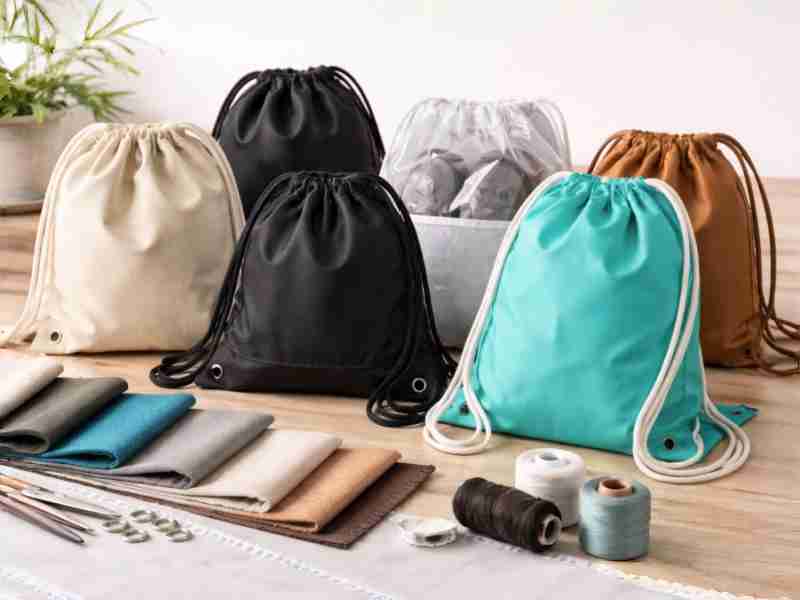
A drawstring bag looks simple. That is exactly why so many people underestimate it.
At first glance, it feels like one of the easiest bag styles to make: two panels, a cord channel, a pair of strings, done. But a good drawstring bag is not just a pouch with a cord. The real difference sits in fabric behavior, seam strength, channel width, rope friction, opening size, corner reinforcement, print layout, and intended use. A bag for a school event should not be built like a bag for boutique retail. A bag for gym shoes should not be built like a bag for cosmetics, and a soft cotton gift pouch should not be priced or developed like a polyester sports cinch pack. Public search results around this topic keep circling back to the same pain : best fabric, step-by-step sewing, lined vs unlined construction, drawstring bag vs backpack, and custom logo or bulk-order decisions. That tells you something useful. People are not only asking how to sew one. They are asking how to make the right one for the job.
A drawstring bag is made by cutting body panels, sewing side and bottom seams, creating a top channel, and threading cords so the opening cinches closed. In practice, the best result depends on matching the fabric, lining, cord type, and reinforcement details to the real use case. Cotton and canvas feel better for giftable or boutique projects, while polyester and nylon often work better for sports, events, and lightweight daily carry. For bulk custom orders, print method, quantity, material, and trim details shape the final cost more than the bag’s basic silhouette.
That is why this topic is worth treating seriously. A drawstring bag sits in an unusual middle ground. It can be a beginner sewing project, a low-cost event bag, a private label retail item, a gift pouch, a travel organizer, or a sports carry piece. The shape is simple, but the decision-making is not. The sections below break the process into the parts that matter most when you are making one for yourself or developing one for a branded program.
What Is a Drawstring Bag, and Why Is It Still One of the Best Bag Types for Daily Use, Retail, and Custom Projects?
A drawstring bag is a soft bag that closes by pulling cords through a channel at the top. Its lasting appeal comes from speed, light weight, low material use, compact storage, and broad adaptability. That is why the style keeps showing up in sports packs, event giveaways, gift packaging, travel pouches, and fashion accessories. Historically, drawstring forms go back far earlier than modern backpacks, with roots traced to ancient Egypt and later small drawstring purses such as Victorian reticules.
The basic idea is old because it solves a basic problem well: carry small to medium items, close the opening fast, and keep the structure soft and flexible. Ancient forms were practical utility pieces. Later versions became fashion accessories. That long history matters because it explains why this style keeps surviving even after zippers, snaps, and molded cases became common. It is not trying to do everything. It is trying to do one job efficiently.
In modern product development, the drawstring bag works because it scales across very different price levels. The same closure logic can be used for a cotton jewelry pouch, a boutique shoe dust bag, a promotional cinch pack, a school sports sack, or a lightweight travel organizer. The body may be soft, but the commercial flexibility is strong.
That said, calling it “one of the best” only makes sense when the project fits the style. A drawstring bag is strong when the goal is light carry, fast opening, easy storage, and economical construction. It is weak when the goal is heavy load support, high organization, laptop protection, or high-security travel carry. A lot of disappointment starts when people expect a drawstring bag to behave like a structured backpack. It will not.
Which Type of Fabric Is Best for Making a Drawstring Bag: Cotton, Canvas, Nylon, Polyester, Mesh, or Leather?

The best fabric depends on what the bag must do. Canvas and cotton usually feel more natural and giftable. Polyester and nylon usually perform better for sports, outdoor use, bright printing, and lighter weight. Open web retail and promo listings repeatedly sort drawstring bags by these same material families, with polyester often positioned as a durable all-round option and cotton or canvas used for a softer, more premium look.
Here is a practical material view:
| Fabric | Best For | Strengths | Watch-Outs |
|---|---|---|---|
| Cotton | gift pouches, boutique projects, wellness sets | soft handfeel, natural look, easy to sew | absorbs moisture, lighter versions can wrinkle |
| Canvas | retail bags, daily use, heavier carry | stronger body, better shape, premium feel | heavier, cost rises with weight |
| Polyester | sports, events, school bags | light, durable, color-friendly, water-resistant feel | less natural handfeel |
| Nylon | giveaways, lightweight carry, packable styles | light, flexible, often budget-friendly | can look thin if spec is too low |
| Mesh | gym, beach, ventilation needs | breathable, quick visual access | limited print impact, less privacy |
| PU / Faux Leather | fashion-led pieces, gift sets | cleaner fashion look, elevated surface | not ideal for all sports or wash-heavy use |
| Leather | small luxury pouches, premium accessories | high perceived value | price, weight, and sewing complexity |
Public custom bag listings describe similar use-case splits: cotton for upscale or eco-leaning projects, polyester for sports and high-use activity, nylon for budget-sensitive event volume, and canvas or recycled options for a stronger premium story.
The bigger issue is not “which fabric is best” in the abstract. It is which fabric is best for the carrying scene. If the bag will hold shoes, a wet towel, and a water bottle, a thin cotton fabric may disappoint quickly. If the bag will hold candles, jewelry, skincare, or a folded garment, a rough sports polyester may feel wrong even if it is durable. Good projects start by defining the payload, not by picking fabric from a swatch book first.
There is also a visual issue people often miss. Some materials make the same bag shape look cheap, while others make it look intentional. A drawstring bag is a simple silhouette, so the fabric does more visual work than it does on a multi-panel structured bag. If you want the bag to photograph well, present cleanly, and feel aligned with a brand story, fabric choice is carrying half the design.
What Materials, Tools, and Sample Measurements Do You Need Before Starting the Sewing Process?
Before sewing starts, you need four groups of things: body fabric, closure materials, sewing tools, and a sample size plan. A lined tutorial from The Spruce Crafts uses separate outer pieces, lining pieces, and dedicated channel pieces, which is a good reminder that even a “simple” bag becomes easier to control when the parts are planned clearly before cutting.
For a home or sample-room project, the usual setup includes:
- Body fabric
- Lining fabric if the bag will be lined
- Cord or rope for the closure
- Thread matched to fabric weight
- Pins or clips
- Scissors or rotary cutter
- Ruler or measuring tape
- Iron for channel folds and cleaner seam work
- Optional eyelets, corner patches, or reinforcement pieces
The sample dimensions do not need to be complicated. The Spruce Crafts example uses roughly 12.5-inch square outer pieces, slightly shorter lining pieces, and separate narrow channel strips, which is a useful starter proportion for a small lined bag. That does not mean there is one correct size. It means beginners usually get a cleaner result when they test a balanced small sample before scaling up.
A good first sample does three jobs at once. It tests sewing feasibility, size logic, and cord behavior. That is why a tiny trial bag can save real time. If your channel is too narrow, the rope drags. If your seam allowance is too large, the opening shrinks more than expected. If the bag body is too tall for its width, the bottom slumps. If the cord is too soft, it will not cinch neatly. These are low-cost mistakes in a sample and expensive mistakes in volume.
For development work, it helps to record five measurements on the first approved sample: finished width, finished height, channel width, cord length, and effective opening width when fully expanded. Those five numbers matter more than generic size labels.
How Do You Make a Drawstring Bag Step by Step, and What Is the Simplest Process for Beginners?
The simplest process is: cut the fabric, sew the sides and bottom, build a top channel, turn the bag right side out, and thread the cords. A lined version adds extra steps because the outer shell, lining, and channel pieces must be aligned and joined cleanly. The Spruce Crafts method shows this clearly, including separate channel preparation, layered assembly, side sewing, turning through a lining opening, and an optional boxed bottom.
A beginner-friendly order looks like this:
- Cut the body pieces Decide whether the bag is unlined or lined. For lined construction, cut outer fabric, lining, and channel parts separately.
- Prepare the channel Press the channel strip edges neatly. This matters because the cord rubs against this area every time the bag opens and closes. Poor pressing here often turns into messy top finishing later.
- Join the top sections In lined construction, the channel pieces sit at the top edge between outer and lining layers. This creates a cleaner, more controlled opening.
- Sew the bag body Stitch around the sides and bottom, leaving any required turning gap in the lining if you are making a lined bag. Backstitch where stress will be higher.
- Shape the base if needed If you want the bag to stand or hold bulkier contents better, boxed corners can be added by cutting corner squares and sewing across the opened corners.
- Turn and finish Turn the bag right side out, close the gap, and top finish the upper edge if required.
- Thread the cords Run one cord through one side and back around the other side. Repeat in reverse with the second cord. That is what creates the classic dual-pull closure.
What sounds easy on paper becomes clean only when the small details are respected. The most common beginner problem is not sewing the side seam. It is misjudging the top opening. A beautiful body shape means little if the bag does not open wide enough for the product, or if the cord rubs so hard that the bag feels awkward in real use.
If you are moving from a home-sewn sample to a branded program, it is worth sending the sample photos, finished measurements, fabric idea, and logo size to info@jundongfactory.com before bulk planning starts. That often reveals fit or construction issues early.
Is a Lined Drawstring Bag Better Than an Unlined One, and When Should You Choose Each Type?

A lined drawstring bag is not automatically better. It is better when the project needs a cleaner interior, hidden seams, stronger body feel, better print presentation, or a more giftable finish. An unlined bag is better when the goal is simplicity, lower cost, lighter weight, faster sewing, and easier scaling for straightforward event or utility use.
A simple comparison helps:
| Construction | Best For | Main Advantages | Trade-Offs |
|---|---|---|---|
| Unlined | quick projects, event bags, light utility use | fewer steps, lower cost, lighter weight | raw or visible inside seams, thinner feel |
| Lined | boutique retail, gift sets, upgraded private label pieces | cleaner inside, better body, refined finish | more material, more labor, higher price |
The lined method shown by The Spruce Crafts uses outer, lining, and channel components as a controlled build. That kind of construction is useful when presentation matters. It hides internal mess, gives the bag more body, and usually feels more intentional when opened.
But there is a trap here. Many teams assume lining automatically raises perceived quality. Not always. If the shell fabric is already heavy enough and the project is a casual gym or giveaway bag, lining may add cost without adding real value. In that case, the money might be better spent on stronger cord, better corner reinforcement, or a cleaner print.
The smarter test is this: Will the user notice and benefit from the lining during normal use? If the bag will hold cosmetics, gifting items, or retail-packaged products, probably yes. If it will be filled once at an event and carried lightly, maybe not.
How Long Does It Take to Make a Drawstring Bag, and What Factors Affect Time, Price, and Production Efficiency?
A simple unlined drawstring bag can be made quickly. A lined version takes longer because pressing, channel prep, layer assembly, turning, and top finishing add steps. In bulk production, time and price are shaped less by the bag’s simple shape and more by material, print method, quantity, reinforcement, number of components, and packing requirements. Open web sellers also show wide variation in minimums and unit pricing depending on style and decoration.
For a first-time sewer, an unlined bag may be a same-day project. A lined bag often moves more slowly because accuracy matters at the top edge and channel area. In a sample room, the first prototype nearly always takes longer than repeat runs because the team is still testing proportion, cord friction, and seam logic.
In bulk work, time is not only sewing time. It is also sampling time, fabric approval time, print approval time, trim matching, and packaging confirmation. That is why two drawstring bags that look similar in a catalog can have very different timelines. A blank polyester event bag can move fast. A lined canvas retail bag with woven label, inner pocket, and custom packaging moves differently.
Public retail customization pages make the pricing logic clear even in simplified form. RushOrderTees says cost varies by style, quantity, and design, while Totally Promotional notes that price changes with style, quantity, and imprint colors, and shows that lower-cost promo versions can be very inexpensive at modest quantities. Those pages are retail-facing, not factory quotations, but they still reveal the same core truth: simple silhouette does not mean flat pricing.
If you want a more accurate early estimate, prepare this small info pack before asking for a quote: finished size, fabric preference, approximate fabric weight, lining yes or no, logo method, print colors, cord type, corner reinforcement yes or no, target quantity, and packaging request. That single habit shortens quoting time and reduces avoidable revisions.
Drawstring Bag vs Backpack: Which Option Is Better for Sports, Travel, School, Promotion, and Lightweight Carry?
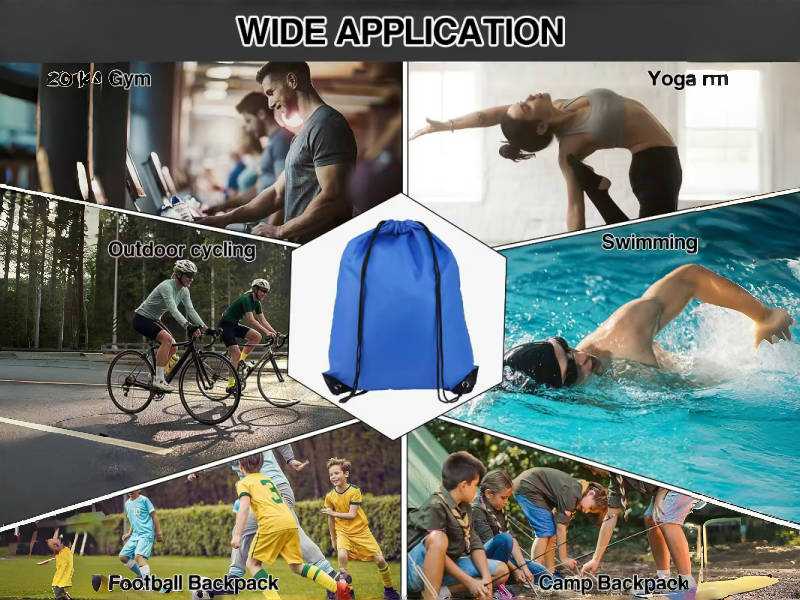
A drawstring bag is better for lightweight, quick-access, lower-cost, easy-store situations. A backpack is better for heavier loads, better organization, improved comfort, and daily carry over longer periods. Public comparisons consistently make the same distinction: drawstring bags are simpler and lighter, while backpacks offer more compartments, support, and order.
Here is the practical split:
| Use Case | Better Option | Why |
|---|---|---|
| gym shoes, spare clothes, event kit | Drawstring bag | fast, light, low bulk |
| school books, laptop, all-day commuting | Backpack | better support and organization |
| giveaway or campaign handout | Drawstring bag | lower cost and broad appeal |
| travel daypack for mixed valuables | Backpack | more secure compartments |
| shoe pouch inside larger luggage | Drawstring bag | compact and flexible |
BackpacksUSA highlights one of the biggest real-world differences: organization. A backpack usually gives users dedicated compartments for laptops, stationery, and smaller items. A drawstring bag usually does not. That is not a design flaw. It is a design choice.
This matters for product planning. Many weak projects happen because teams want the look and price logic of a drawstring bag but the performance of a backpack. That tension usually leads to disappointment. If the bag must carry books every day, support a tablet, hold multiple categories of items neatly, and stay comfortable over long movement, a backpack usually wins. If the bag must be simple, packable, versatile, and easy to distribute, the drawstring format still has a strong place.
Who Should Work With a Drawstring Bag Factory for Custom, Private Label, OEM, or ODM Orders?
Factory development makes the most sense when the bag is not just a one-off sewing exercise but part of a repeatable program. Good examples include brand collections, school or club packs, event programs, wellness sets, travel accessories, sports bundles, retail packaging, or private label launches. Public customization sites also position drawstring bags heavily around events, sports, schools, teams, and branded promotion, which lines up with where this category performs well in volume.
The right time to move from DIY thinking to factory thinking is usually when one of these things happens:
- the bag needs consistent repeat quality
- the bag needs logo placement or color matching
- the quantity is large enough that hand-making stops making sense
- the project needs packaging, labels, or retail finishing
- the bag is part of a wider product line
A factory is not only useful for large volume. It is useful when the decision complexity rises. Once you start asking for custom size, reinforced corners, print alignment, inner pocket, lining, branded cord ends, woven label, or private packaging, the project becomes less about sewing and more about controlled development.
This is also where samples matter. A good sample is not just proof that the bag can be made. It is proof that the fabric feels right, the opening works, the print looks balanced, and the rope closes smoothly under real use. If you are preparing a custom drawstring bag program and want help checking size, fabric, or finishing logic, you can send your idea to info@jundongfactory.com for sample discussion.
Do Custom Details Like Logo Printing, Pocket Design, Reinforced Corners, and Rope Type Change the Final Price?
Yes. Custom details change price quickly, and often more than first-time project owners expect. Public custom bag pages list print choices such as single-color print, full-color print, transfer, and embroidery, and they also show that material family, quantity, and design setup all affect cost. That matches what happens in factory development: the bag shape may stay the same while the quotation changes because the details change.
The biggest price movers are usually these:
- Fabric family and weight A lighter polyester bag and a heavier canvas bag do not belong to the same cost logic.
- Logo method A simple one-position one-color print is usually not priced like embroidery, multi-position print, or specialty transfer work. Public custom pages openly separate these decoration options.
- Construction upgrades Lining, inside pockets, boxed bottom, zipper pocket, or contrast panels add labor and handling.
- Stress-point reinforcement Corner patches, bartacks, thicker cord, or metal eyelets can be worth it, but they are not free.
- Packaging A plain bulk-packed event bag and a retail-ready unit with hangtag, polybag, barcode label, and insert card are different projects.
One useful way to think about this is to separate appearance upgrades from performance upgrades. A woven label or premium print finish may improve shelf feel. Reinforced corners and better rope may improve real use. The smartest development path usually starts with performance. There is little value in a beautiful bag that cinches poorly or tears at the corners.
If you already know your logo size, preferred material, and target quantity, sending that full pack to info@jundongfactory.com will usually get you a more useful quote than asking for a “drawstring bag price” with no specs.
Are There Common Mistakes in the Drawstring Bag Making Process, and How Can You Avoid Them Before Bulk Production?
The most common mistakes are choosing the wrong fabric, under-building the stress areas, making the channel too narrow, misjudging cord length, and approving a sample without real-use testing. These issues are easy to miss because the silhouette looks simple. Sewing tutorials show how precise the top-channel construction needs to be, while public material and use-case comparisons show why fabric choice changes whether the bag feels right in daily use.
Here are the errors that cause the most trouble:
- Wrong material for the payload Soft gift fabrics used for heavy shoes or bottles often disappoint fast.
- Weak corners If the cord exits at a stress and the load is real, reinforcement matters.
- Bad channel proportion Too tight, and the rope drags. Too loose, and the top looks floppy.
- Poor opening logic A bag may measure large enough on paper yet still be awkward to pack because the mouth does not open wide enough.
- Unbalanced print size On a simple bag face, a badly scaled logo looks worse than it would on a more complex bag.
- No wear test A sample that looks good on a table may feel wrong after one week of real use.
There is also one commercial mistake worth mentioning: treating the first sample like the final product. The first sample should be used to check shape, handle feel, closure smoothness, and stress behavior. A better review method is to test the sample loaded, carried, opened repeatedly, and photographed from normal use angles. If it fails one of those checks, fix it before bulk approval.
A drawstring bag may be one of the simplest bag styles to sketch, but it is not one of the safest styles to approve casually. The projects that perform best are usually the ones that respect the basics: fit the fabric to the use, fit the cord to the channel, fit the bag size to the payload, and fit the finish level to the selling scene.
Top 10 FAQs About How to Make a Drawstring Bag
1) What fabric is best for making a drawstring bag?
The best fabric depends on what the bag needs to carry, how it should feel in the hand, and how it will be used after delivery. Cotton works well for soft gift pouches and light daily use. Canvas gives more body and a more premium look. Polyester is a common pick for sports, school, and event bags because it is lightweight, durable, and holds color well. Public custom-bag listings also show cotton, cotton canvas, polyester, PVC, and faux leather as common material options for drawstring styles, which reflects how broad this category has become.
The real mistake is asking which fabric is “best” without deciding the job first. A bag for gym shoes, a water bottle, and a towel should not be built the same way as a bag for skincare, jewelry, party favors, or folded garments. Cotton feels softer and more natural, but it absorbs water easily and is less suitable for heavy loads or rough handling. Polyester is usually a safer choice for sports and outdoor use because it is light, durable, and color-stable over time.
A simple way to judge fabric is to ask three things. How much weight will the bag carry? Will the bag be reused often? Does the bag need to feel premium, casual, sporty, or giftable? If the project needs a more polished retail feel, canvas or heavier cotton often looks stronger. If the project needs quick drying, bright colors, and easier everyday handling, polyester is often the safer route. If you are planning a custom run, choosing fabric after the use case is defined will save more time than comparing swatches too early.
2) What size should a drawstring bag be for gym use, events, gifts, school, or travel?
There is no single “correct” size. The right size depends on what goes inside, how wide the opening needs to be, and whether the bag is meant to feel compact or roomy. Public custom-bag listings repeatedly show 14″ x 18″ as a very common size for sports and event bags, while 17″ x 20″ appears as a larger option for bulkier contents. Smaller styles around 13.5″ x 16″ also appear often for lighter carry or more compact use.
A practical size guide looks like this:
| Use Scene | Common Direction |
|---|---|
| Gift pouch / small organizer | smaller body, softer structure |
| Event giveaway / light daily carry | around 13.5″ x 16″ to 14″ x 18″ |
| Gym / school activity bag | around 14″ x 18″ |
| Bulkier clothing or larger daily carry | around 17″ x 20″ |
These are not hard rules. They are useful starting references based on what appears repeatedly in live custom-product assortments.
The bigger issue is not outer size alone. It is effective opening width. A bag may look large on paper and still feel awkward if the top opening becomes too narrow once the channel is sewn. That is why first samples matter. A sample should be loaded with the real product, opened and closed several times, and checked for how easily the contents go in and out. For travel or sports use, this matters more than the raw width and height numbers printed on a spec sheet.
3) Should a drawstring bag be lined or unlined?
Choose a lined drawstring bag when you want a cleaner interior, a more finished feel, better body, or a stronger retail presentation. Choose an unlined bag when you want lower cost, lighter weight, and a simpler structure. A lined sewing method uses separate outer, lining, and channel pieces, then joins them together before turning the bag right side out. That added construction work gives a neater inside and a more deliberate look.
A lot of people assume lining always makes the bag better. It does not. It only makes the bag better when the added finish is visible and useful. For a boutique pouch, cosmetic organizer, travel set, or giftable bag, lining often improves the result a lot. It hides internal seams, helps the bag feel more complete, and can support cleaner presentation when the bag is opened. In those cases, lining is not just decoration. It changes the experience of using the bag.
For event bags, low-cost sports sacks, or simple shoe bags, unlined construction often makes more sense. The money may be better spent on stronger fabric, smoother cord, reinforced corners, or a better print method rather than on an inside layer the user may barely notice. The smart decision is not “lined looks more premium.” The smart decision is “where will the added cost create a real improvement?” That is that usually separates a polished project from an overbuilt one.
4) What type of cord should I use, and how long should the drawstring be?
The best cord is one that closes smoothly, feels comfortable on the shoulder, and matches the weight and style of the bag. The right length depends on the bag size and how the cord will be carried. In a lined sewing tutorial using a roughly 12.5-inch square bag body, The Spruce Crafts uses 1 2/3 yard of cotton cording or thin rope, then cuts it in half so each piece runs through both channels and ties on each side. That is a useful starter reference for smaller bags.
From there, cord length should scale with the bag. A bigger sports bag needs more length so the wearer can pull the top closed easily and still use the cords comfortably as shoulder straps. A tiny gift pouch does not. This is why cord length should never be copied blindly from another sample unless the bag size is close. A short cord makes the bag awkward to close. A cord that is too long can look sloppy, tangle more easily, and create a less finished appearance.
Cord thickness matters too. Thin cotton cord can work beautifully for lightweight pouches, but it may cut into the shoulder on larger everyday bags. Softer rope can look better but may drag inside the channel if the channel is too narrow. A stiffer cord may slide better but feel less refined. The right test is physical: close the sample with one hand, carry it for a few minutes, and check whether the cord twists, sticks, or bites into the shoulder. That small test reveals far more than choosing cord by appearance alone.
5) Do reinforced corners, grommets, and boxed bottoms really matter?
Yes, these details matter whenever the bag will carry real weight, be reused often, or need to keep its shape more cleanly. Public custom drawstring-bag listings repeatedly highlight reinforced bottom corners, simulated leather trims, and grommets as selling features on polyester sports bags. That is not accidental. The bottom corners are usually the highest-stress areas because the cords pull directly against them every time the bag closes and every time it is carried.
If the bag is only holding light tissue-wrapped products or event handouts, a simpler corner construction may be enough. But if the bag is meant for shoes, clothing, school items, or repeated daily use, weak corners become one of the fastest ways for the bag to feel cheap. Reinforcement does not always have to mean metal hardware. It can also mean layered fabric, corner patches, or stronger stitching. The purpose is the same: protect the stress before they fail.
A boxed bottom serves a different purpose. It helps the bag sit flatter and hold bulkier contents more neatly. In the sewing tutorial, boxed corners are created by cutting squares from the corners and sewing across them, which changes the bag from a flat pouch into something with more usable base shape. That can be helpful for gift sets, travel kits, and product bundles where you want the bag to look more stable when filled. If you are planning a custom style and are not sure whether to spend on reinforcement or shape, corner strength usually comes first, then base shape second.
6) Is a drawstring bag waterproof?
Most drawstring bags are not fully waterproof. Many are only water-resistant, and that level depends heavily on the fabric. ToteBagFactory’s waterproof guide puts it very clearly: the short version is no, because drawstring bags are commonly made from polyester, polypropylene, vinyl, cotton, canvas, or jute, and untreated natural fabrics absorb water easily. Tightly woven synthetics like nylon and polyester resist light moisture better, but that still does not make them fully waterproof.
This is one of the most misunderstood parts of bag development. People often see polyester and assume “waterproof.” In reality, many polyester drawstring bags are only water-resistant or water-repellent under light exposure. ToteBagFactory explains that tightly woven synthetic fabrics can slow water penetration and may bead water on the surface, but extended exposure still leads to dampness unless the fabric has stronger treatment. Public custom listings also describe some polyester bags as water-repellent or resistant to water, which is a much more careful and accurate way to describe them.
For product planning, this means you should match the claim to the real use. A gym sack that may see a little rain is not the same thing as a bag for wet gear, boating, or full outdoor exposure. If you need stronger protection, the development work should move beyond basic fabric choice and include coating, seam treatment, closure style, and test expectations. For light everyday outdoor use, polyester can still be a very practical option. Just do not promise full waterproof performance unless the construction truly supports it.
7) Which logo method works best on a drawstring bag?
The best logo method depends on the bag fabric, the visual style you want, the artwork detail, and the target price level. Drawstring-bag customization notes four common methods: single-color print, full-color print, full-color transfer, and embroidery. The same source also notes that printed drawstring bags are strong value choices for giveaways, while embroidery is a higher-quality option often used for team sports bags.
That split makes sense in practice. If the project needs a bold, budget-friendly front logo for events, single-color or full-color printing often does the job. If the artwork includes gradients, photos, or more visual detail, transfer methods may be more suitable. If the bag is meant to feel more permanent, more premium, or more uniform-led, embroidery can lift the perceived value, especially on sturdier fabrics. But embroidery is not always the best-looking option on thin, low-cost fabric. A rough material and a dense stitch can fight each other and make the bag look heavier than intended.
A lot of weak custom bags happen because the decoration method is chosen before the bag itself. The better order is to lock the fabric, then the bag use, then the artwork, then the logo method. That sequence prevents a very common mismatch: refined artwork on a low-cost body, or a low-detail one-color print on a bag that was meant to feel more upscale. If the logo is central to the project, ask for a physical or visual sample on the intended fabric before signing off. That single step prevents many disappointing bulk results.
8) How can I tell whether my first sample is ready for bulk production?
A first sample is ready only when it works in real use, not just when it looks good in photos. Public sample programs from exist for a reason: teams want to check the bag in hand before moving forward. Their bag sample section invites people to try sample bags first and review what catches their eye before committing. That reflects a sound habit for any custom bag project, especially when fabric feel, print appearance, or structure could change the final impression.
For a drawstring bag, sample approval should cover more than color and logo placement. The bag should be loaded with the real product or an equivalent weight. Then test the opening width, the speed of the cinch action, cord comfort, corner stress, print alignment, and how the bag looks when it is actually full. A drawstring bag can look clean when empty and feel awkward the moment something goes inside. This is especially true when the top channel is too tight, the opening is too narrow, or the body proportion is too tall and narrow for the intended contents. The sewing steps in The Spruce tutorial make this clear: channel pieces, seam allowances, turning, and boxed corners all change the final function, not just the appearance.
A useful approval routine is simple: fill it, pull it, carry it, photograph it, and repeat. If the bag passes those checks without looking strained or feeling awkward, it is much closer to production-ready. If you are planning a custom drawstring bag collection, this is also the stage where it makes sense to ask a bag team to review the sample against the intended fabric, trim, and packaging direction before placing the order.
9) What affects the final price of a drawstring bag the most?
Price is shaped much more by material, decoration, quantity, pockets, reinforcement, and packaging than by the basic silhouette alone. Public custom listings make that easy to see. On Totally Promotional’s current drawstring-bag selection, simple polypropylene and polyester styles start at the low end, while more feature-heavy or recycled options sit much higher. The same live assortment also shows that size, fabric, extra pockets, water-resistant claims, and decoration method all move pricing. Meanwhile, separates common decoration options such as single-color print, full-color print, transfer, and embroidery, which also signals different cost levels.
Here is a practical way to think about price:
| Factor | Why It Changes Cost |
|---|---|
| Fabric | polyester, cotton, canvas, recycled, PVC, faux leather all behave differently |
| Size | larger bodies use more material and often more cord |
| Logo method | print, transfer, and embroidery do not sit at the same cost level |
| Extra features | pockets, mesh panels, handles, business-card holders, and boxed bottoms add labor |
| Stress-point details | corner reinforcement, trims, grommets, and stronger cord increase durability and handling work |
| Packing style | individual packing, inserts, labels, and retail finishing add time and material |
These are the levers that matter most.
That is why “How much is a drawstring bag?” is too broad to be useful. A 14″ x 18″ 210D polyester event bag with one simple front print is one type of project. A lined cotton bag with woven label, inside pocket, and retail packing is another. They may share a closure style, but they are not really the same item. If the goal is a reliable early quote, start with finished size, intended fabric, approximate quantity, logo method, and any must-have details. That is the fastest path to a number that actually means something.
10) Can a drawstring bag replace a backpack for daily use?
A drawstring bag can replace a backpack for light, quick, low-bulk use, but it is usually not the best substitute for heavier daily carry. BackpacksUSA’s comparison explains the core difference clearly: drawstring bags usually have far fewer sections, while backpacks provide compartments that suit things like laptops, writing tools, and more organized carry. Another BackpacksUSA guide adds that drawstring bags usually have one main compartment and are easy to open and carry, which is part of their appeal.
That makes drawstring bags excellent for gym clothes, spare shoes, event kits, quick errands, light travel add-ons, or simple school activity use. They are easy to fold, easy to store, and easy to hand out. They also feel less bulky than full backpacks. But once the load gets heavier or more complicated, the limits show up fast. Thin cords do not distribute weight like padded straps. One large compartment does not organize electronics, books, chargers, and small daily items very well. If the bag is expected to carry a laptop or support long walking time, a true backpack usually performs better.
So the better way to frame it is not “Which is better?” It is “Which one fits the routine?” For light carry and easy distribution, the drawstring format remains one of the simplest and most useful options. For daily commuting, work, or school loads, a backpack usually wins on comfort and organization. If your project sits somewhere in the middle, it may help to build a sample first and test the actual contents before choosing the final direction.