 Skip to content
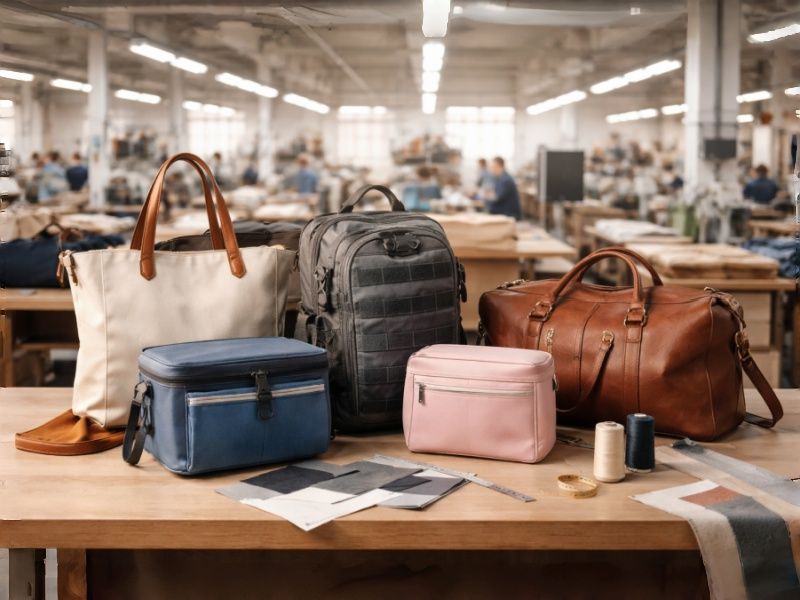
Inventory problems rarely begin when cartons are already sitting in a warehouse. They usually begin much earlier. They begin when a style is approved too fast. When a fabric is chosen because it is cheap, not stable. When a logo method looks good on the first mockup but fails after shipping. When a first order is pushed too large because the unit price looks attractive. When the factory and the brand are talking about the same bag, but not the same end use.
This is why stock pressure is not only a sales issue. It is also a development issue, a timing issue, a materials issue, and a communication issue. A bag program can look healthy on paper and still create slow-moving stock six months later. A travel bag can be well sewn and still miss its actual retail use. A cooler bag can pass visual inspection and still create returns because insulation, zipper smoothness, or carry comfort were not tested in the right way. A backpack can be competitively priced and still become expensive inventory because the first run was too deep, the replenishment window was too long, or the structure was over-customized before demand was proven.
The factories that reduce stock pressure most effectively are not simply the ones that quote fast. They are the ones that slow down the risky parts and speed up the repeatable parts. They push harder on sample approval. They keep first runs smaller when demand is still uncertain. They guide material choices toward repeatability, not only appearance. They split delivery when the schedule allows. They treat pre-production approval, quality control, and reorder timing as connected decisions, not separate departments.
Bag factories reduce inventory risk by controlling the decisions that create excess stock before bulk production begins. That usually includes lower first-order MOQ, a stricter sample process, practical material and logo choices, realistic lead-time planning, phased production, pre-shipment inspection, and reorder systems based on actual sell-through instead of guesswork. The goal is not just to produce bags at a good price. The goal is to help partners avoid dead stock, reduce cash tied up in slow-moving goods, and restock proven styles more safely. Definitions of MOQ, dead stock, and safety stock all support this logic: too much stock, weak forecasting, and poor quality can all damage inventory performance.
What Does Inventory Risk Really Mean in Bag Production Partnerships?
Inventory risk in bag production means the chance that finished goods will arrive in the wrong quantity, wrong timing, wrong specification, or wrong quality for real demand. In practice, that includes over-ordering, dead stock, delayed replenishment, failed samples, quality defects, and poor sell-through. Dead stock is commonly linked to overproduction, wrong forecasting, incorrect deliveries, and damaged or unsellable goods.
A lot of teams define inventory risk too narrowly. They think it only means “we ordered too much.” That is only one version of it. Another version is ordering the right quantity of the wrong bag. Another is launching the right style at the wrong time. Another is filling the warehouse with a custom material that cannot be reordered consistently. The financial result looks similar in every case: money is trapped in stock that is slow, discounted, returned, or hard to repeat cleanly.
This is why a bag project should be judged by more than quoted price. A lower ex-factory cost can hide a much larger downstream loss. A factory that pushes high opening volume without strong demand signals may lower unit cost while raising total exposure. A factory that accepts every custom request without challenging risk may sound easy to work with, but may quietly be building a fragile program.
The strongest partners look at inventory risk across five layers: demand uncertainty, specification accuracy, timing, quality stability, and repeatability. When those five layers are aligned, stock becomes easier to turn. When even one of them is weak, the bag itself can become the problem.
For growing labels, this matters even more. Large groups can sometimes absorb a bad season. Smaller teams usually cannot. One wrong travel bag launch, one oversized private label run, or one delayed school backpack delivery can freeze cash for months. That is why risk control should begin before the PO is signed, not after the goods arrive.
Why Do MOQ, Lead Time, and Forecast Accuracy Matter So Much?

MOQ, lead time, and forecast accuracy shape stock pressure because they decide how much inventory is committed, how early that commitment must be made, and how much guesswork sits behind the order. MOQ is the minimum quantity a seller will accept in one order. Safety stock exists to protect against uncertainty in demand and lead time. When lead times are unstable, buffer stock usually rises, and so does inventory exposure.
MOQ looks simple, but it changes behavior. A high opening MOQ often forces a partner to order beyond proven demand just to access a workable unit cost. That can be acceptable for mature items with long sales history. It is much more dangerous for new silhouettes, seasonal colors, promotional bags, or niche channels.
Lead time changes the equation again. The longer the gap between order placement and arrival, the more forecasting risk sits inside every carton. A partner is not only predicting demand; they are predicting demand several months in advance while also assuming shipping, customs, and internal launch timing will all stay on plan. Safety stock exists precisely because demand and lead time both move in real life, not just in spreadsheets.
A useful rule in bag development is this: uncertain demand should not be paired with rigid volume. When style acceptance is still unknown, a lower first run is often healthier than chasing the lowest unit cost. The cheapest bag on the quotation sheet can become the most expensive one in storage.
Here is a simple comparison:
| Decision | What looks attractive early | What usually protects stock better |
|---|---|---|
| Opening order | Lowest unit cost at larger volume | Smaller test quantity with faster repeat |
| Lead time plan | One large order placed far ahead | Clear reorder window and phased planning |
| Forecast method | Hope-based launch estimate | Conservative demand estimate plus buffer logic |
| Factory choice | High capacity only | Capacity plus flexibility and repeat discipline |
For many partners, the better discussion is not “Can you go cheaper?” It is “Can you help us open lighter and repeat faster?” That is the conversation that protects cash.
How Does a Bag Factory Use the Sample Process to Prevent Wrong Inventory?
A strong sample process reduces stock mistakes by verifying size, structure, materials, logo execution, comfort, function, and packaging before bulk starts. Sample approval helps catch errors while the cost of change is still low. In bag projects, pre-production samples are widely used to confirm that the bulk run will match the approved standard, and quality teams use them as reference during inspection.
Many teams treat the sample as a visual checkpoint. That is too shallow. A sample is not just there to see whether the bag “looks right.” It is there to expose what can go wrong later at scale.
For a tote bag, the real sample may be handle drop, reinforcement, print distortion on soft fabric, shrinkage after treatment, and base shape when loaded. For a laptop backpack, the real sample may be compartment access, zipper path smoothness, shoulder strap comfort, panel stiffness, and whether the logo still reads clearly when the body is curved. For a cooler bag, you may need to check insulation feel, wipe-clean behavior, leakage risk, and whether the chosen lining wrinkles at fold .
The most useful sample process usually moves in layers:
- Concept sample to check shape and basic construction
- Material and trim sample to check fabric, hardware, zipper, and logo behavior
- Revised sample after comments
- PP sample to lock the bulk standard before production
That structure is not bureaucratic. It is economical. Problems found during sampling are annoying. Problems found during bulk are expensive.
Teams should also watch for a subtle trap: over-approving from desktop review. Photos help, but they do not replace touch, load feel, or usage testing. A bag can look clean in pictures and still fail in the hand. Where the project value justifies it, physical review is safer than screen-only approval.
When partners come to Jundong with a new bag concept, the most productive start is usually not “quote this exactly as drawn.” It is “help us test the risky parts first.” That leads to cleaner revisions, better opening volume, and a healthier first shipment. For project discussions, you can reach Jundong at info@jundongfactory.com.
Which Types of Bag Production Models Reduce Inventory Risk Best?
The best production model depends on demand certainty, speed needs, and how much customization is truly necessary. OEM works well when the design is already defined. ODM can shorten development when a proven structure already exists. Private label can reduce opening risk when partners adapt reliable base styles instead of building every detail from zero. New programs with uncertain demand often carry less stock pressure when they start from tested constructions and customize in controlled steps.
There is no universal “best” model. There is only the model that matches the stage of the brand and the certainty of demand.
A fully custom route can be powerful when the channel is clear, the product positioning is already validated, and the design details matter commercially. But fully custom programs also create more places to be wrong. More custom trim, more custom material, more special dimensions, more pack complexity, more approval steps. That can be worth it later. It is not always worth it first.
This is where adapted development is often underrated. A partner may start from an existing backpack body, then customize fabric, color, lining, label, packaging, and a few fit details. That keeps the commercial identity while avoiding unnecessary structural risk. In stock terms, it means less uncertainty in the first run and a cleaner path to repeat.
A practical way to look at it:
- ODM-inspired route: safer when speed and lower development risk matter
- OEM route: stronger when the design is already mature and details are locked
- Private label route: often the best bridge for early-stage collections or line extensions
A mature factory should know when to suggest less customization, not only more. That is often a sign of genuine project judgment.
How Do Good Bag Teams Plan Production Around Real Demand?
Strong bag teams plan around real demand by linking volume to sell-through signals, production capacity, material readiness, and reorder speed. Instead of treating every launch as one large irreversible commitment, they often use trial runs, phased delivery, mixed-SKU planning, and clearer reorder windows. Inventory risk rises when production is disconnected from actual demand timing. It falls when first runs stay controlled and repeats are designed into the program from the start.
A common mistake is treating the first order as the only chance to “get enough stock in.” That mindset often leads to over-ordering. Better teams treat the first order as a proof phase, not just a volume phase.
That may mean opening with a narrower color assortment. It may mean testing one size first. It may mean launching the core style and holding secondary variants until data is cleaner. It may mean mixed-SKU packing that protects assortment breadth without pushing too deep into any one option.
Phased delivery can help too. Not every program should ship in one block. When seasonality, promotional timing, or warehouse space is sensitive, split delivery can lower the burden. It also gives the partner a chance to read early movement before the full quantity lands.
Factories matter here because production planning is not neutral. A factory with no flexibility often pushes all partners toward the same: bigger quantities, earlier commitments, fewer changes. A better-operated team can sometimes support staggered material planning, partial production, or repeat-friendly trim choices that make restocking easier.
The hidden advantage of good planning is not just less excess stock. It is better decision quality. When the program is built for repeat, every opening order becomes easier to judge.
Why Are Material Choices and Component Decisions Part of Inventory Control?
Material and component choices affect stock risk because they shape reorder stability, cost, defect rate, and how easily a style can be repeated. Highly customized fabrics, trims, and hardware can create slower replenishment and stranded leftover materials. More standardized options may reduce dead stock and make reorder timing more manageable, especially early in a program. Dead stock often grows from over-ordering, poor forecasting, wrong product choices, and weak inventory visibility.
Many inventory problems are disguised as design decisions. A partner chooses a highly specific fabric backing, a custom zipper pull, a niche buckle color, and a special lining print. Each choice may look small. Together, they can turn a flexible bag into a rigid one.
The more exclusive the bill of materials, the harder it becomes to replenish lightly, substitute safely, or recover from forecast errors. If a launch underperforms, leftover custom components become trapped value. If it overperforms, replenishment may be slower than expected.
That does not mean custom details are bad. It means they should be used where they matter most. Bag programs usually benefit from separating identity details from risk details. Identity details are the ones the end user actually notices and remembers: silhouette, main color story, logo treatment, hand feel, signature lining, packaging cues. Risk details are often the hidden ones that create complexity without equal commercial payoff.
Early-stage programs are often healthier when they use proven base materials with selective custom accents. Mature styles with strong sales history can carry deeper customization more safely.
A good development conversation sounds like this: “Which details drive brand recognition, and which details only drive complexity?” That one prevents a surprising amount of dead stock.
How Do Quality Control and Pre-Shipment Checks Protect Partners from Unsellable Inventory?

Quality control protects inventory by catching problems before defective goods become finished stock. Defects can turn new inventory into returns, slow movers, or unsellable units. Common dead-stock causes include poor quality and weak inventory control. In bag programs, early checks on materials and components, in-line inspections, and final inspections against the approved sample help prevent that outcome.
A bag does not have to be catastrophic to become bad inventory. Sometimes the issue is obvious: broken zippers, stitching failure, damaged coating, wrong logo, wrong label. But often it is more subtle. Shoulder straps feel uneven. The base panel collapses. The handle edge paint cracks early. The laptop compartment fits the stated size on paper but not in daily use. The tote print placement drifts enough to make the shelf look inconsistent.
That kind of inconsistency eats inventory quietly. It drives returns, markdowns, and internal hesitation about repeat orders. A style that should have been replenished becomes “let’s wait and see.”
This is why quality control should be tied to the approved standard, not to general factory tolerance alone. The approved sample, approved materials, approved logo execution, approved packing method, and approved test expectations all need to speak the same language.
A practical inspection flow often includes:
| Stage | What should be checked |
|---|---|
| Before production | Fabric, lining, hardware, zipper, logo method, color, dimensions against approved standard |
| During production | Stitch consistency, structure, panel alignment, reinforcement, print/embroidery placement |
| Before shipment | Function, appearance, measurement, quantity, labeling, packing, carton marks |
Teams that skip detail alignment often think they are saving time. In reality, they are moving uncertainty from factory floor to warehouse shelf.
Jundong’s internal value is strongest when quality is treated as a stock-protection tool, not only a compliance task. If your project needs a more controlled first run, especially for private label or custom bag development, contact info@jundongfactory.com.
When Should Partners Use Flexible Delivery, Reorder, and Inventory Buffer Strategies?
Flexible delivery and reorder planning work best when demand is uncertain, lead time is long, or sales are seasonal. Safety stock exists to absorb variability in demand and supply, while reorder quantity and reorder timing help avoid both stockouts and excess inventory. One common reorder quantity method multiplies average daily unit sales by average lead time.
A lot of teams talk about inventory control as if the only choice is “order more” or “order less.” Real control sits in timing. A well-timed repeat order is often more valuable than a perfect opening forecast.
For bag programs, buffer strategy should fit the product type. Core evergreen styles can justify a clearer safety stock approach. Event-driven or seasonal styles usually need tighter opening volume and faster decision check. Promotional bags may need a shipment split tied to campaign rollout. School bags and travel bags may need reorder dates backed up from actual sell-through, not from optimism.
Here is a simple planning view:
- Core carryover styles: build modest buffer, repeat on measured cadence
- Seasonal styles: lighter opening, tighter review cycle
- Promotional styles: align delivery with campaign timing, avoid deep leftovers
- New launches: prioritize learning speed over lowest unit cost
Some inventory managers still use rules of thumb like one or two weeks of extra coverage, but more disciplined planning adjusts for variability in both demand and lead time.
The key is not to hold zero buffer. The key is to hold the right buffer. Too little creates stockouts and missed sales. Too much creates trapped cash and space pressure. The healthiest programs accept that uncertainty exists, then design the reorder system around it.
What Should Teams Ask a Bag Factory Before Starting a Custom Program?
Before starting a custom bag program, teams should ask about opening MOQ, sample cost and revision count, realistic lead time, material availability, PP sample approval, inspection standards, pack-out details, and reorder flexibility. Inventory risk is often created by hidden rigidity: long raw-material commitments, vague tolerances, unclear revisions, or weak repeat planning. Reliable partners are usually the ones willing to discuss those details early.
The best first are not glamorous. They are practical.
Ask how the factory handles a first order when demand is not proven. Ask which materials are stocked regularly and which require special commitment. Ask how many sample rounds are normal before PP approval. Ask whether the quoted lead time includes trim approval and booking reality or only sewing time. Ask what parts of the bag are most likely to vary in bulk if the spec is loose. Ask how they manage mixed styles, split shipment, or repeat orders on the same spec.
Also ask what they would simplify.
That single tells you a lot. A thoughtful team will usually identify at least a few risk areas: maybe the custom lining needs longer lead time, maybe a shaped metal logo is not ideal for the opening run, maybe the requested material is beautiful but unstable for repeat, maybe the packaging setup is too deep for the first launch. A weak team tends to say yes to everything and leave the risk with you.
Watch for warning signs:
- Opening quantity pushed too high without a demand reason
- Vague reply on PP sample or approval path
- No clear inspection logic
- No discussion of repeat planning
- Heavy customization promoted before the core structure is proven
- Unit price discussed in detail, but not reorder timing
That last one matters a lot. The right bag partner does not only help you make a bag. They help you decide how much risk should be inside the first run.
A Practical Working Model for Lower-Risk Bag Programs
The most dependable bag programs are usually not the most aggressive ones. They are the most disciplined ones.
They start with a bag that is commercially clear. They keep the first run aligned with uncertainty instead of fighting it. They use the sample process to expose weak assumptions. They customize the parts that matter and standardize the parts that do not. They make quality control measurable. They build reorder logic before the launch, not after the warehouse gets nervous.
That is how stock risk comes down.
Not by one magic MOQ. Not by one factory promise. Not by one spreadsheet formula. It comes down through a chain of decisions, each one small on its own, but decisive in total: the right opening volume, the right sample comments, the right zipper choice, the right inspection reference, the right delivery structure, the right repeat timing.
In other words, inventory health is rarely created by luck. It is created by development discipline.
For partners building tote bags, backpacks, travel bags, cooler bags, cosmetic bags, tool bags, and other custom programs, the safest path is usually the one that treats inventory exposure as part of product development from day one. That is where a capable factory becomes more than a production site. It becomes a risk-control partner.
Top 10 FAQs About How Bag Factories Reduce Inventory Risk for Partners
FAQ 1: What is the safest way to place a first bag order without creating too much stock pressure?
The safest first order is usually not the cheapest one on paper. It is the one that gives you enough stock to test real demand, collect feedback, and protect launch timing without tying up too much cash in styles that have not yet proved themselves. For many bag programs, the real risk is not a slightly higher opening cost. The real risk is going too deep too early.
A safer opening plan often starts with a smaller trial quantity, a tighter color selection, and a clearer idea of which details really matter for the first run. Instead of launching five colors, some teams start with two strong colors and one proven logo method. Instead of ordering every size variation at once, they begin with the most likely winner. This approach gives you cleaner sales data and reduces leftover stock if one option moves slower than expected.
It also helps to build the first order around repeatability, not only appearance. Ask whether the main fabric, zipper, lining, and trims can be sourced again without major delay. Ask whether the style can be replenished quickly if sell-through is stronger than expected. A bag that can be reordered smoothly is often far safer than a bag that looks more unique but is difficult to repeat.
A practical opening-order mindset looks like this:
| Opening Strategy | Lower Risk Approach |
|---|---|
| Quantity | Start lighter on unproven styles |
| Colors | Focus on core shades first |
| Structure | Use a proven construction where possible |
| Custom details | Keep them selective, not excessive |
| Reorder plan | Define it before launch |
If your project is new, treat the first shipment as a measured commercial test, not a final commitment. That one decision alone can prevent months of slow-moving stock later.
FAQ 2: How do samples help prevent expensive inventory mistakes in bulk production?
Samples reduce risk because they expose problems while the cost of change is still manageable. Once bulk production begins, even a small mistake can affect hundreds or thousands of units. Before that stage, the same mistake is usually still fixable through discussion, revision, and approval.
The biggest mistake teams make is treating a sample like a beauty check only. A useful sample should be judged from several angles: shape, size, structure, fabric behavior, logo execution, comfort, functionality, and packing logic. A backpack sample, for example, should not only look clean in photos. It should be loaded, opened, carried, zipped repeatedly, and checked against the devices or items it is meant to hold. A cooler bag sample should be checked for lining finish, insulation feel, zipper closure, wipe-clean ability, and folding behavior after real handling.
The strongest development flow usually includes more than one stage. A rough sample can confirm the main structure. A revised sample can correct weaknesses. A pre-production sample can then lock the approved standard before bulk sewing begins. This step matters because it becomes the reference for production, inspection, and final delivery.
Here is what a strong sample usually helps confirm:
- Dimensions and usable capacity
- Fabric and trim compatibility
- Logo size, placement, and method
- Pocket function and access
- Carrying comfort
- Packing method and presentation
- Potential weak spots under use
When teams rush through sample approval, they often push uncertainty into the bulk run. When they use sampling properly, they reduce that uncertainty early, where it is cheapest to control.
FAQ 3: Which is more dangerous for a bag program: high MOQ or long lead time?
Both can create stock pressure, but they do it in different ways. A high MOQ forces you to commit more units than you may feel comfortable carrying. A long lead time forces you to make decisions earlier, when your visibility is weaker and your forecast is less certain. Which one is more dangerous depends on your product type, launch timing, and how quickly you can repeat a proven style.
For a stable carryover bag with steady demand, a higher MOQ may be manageable if the style is already established. For a new private label backpack, travel bag, or promotional tote, high MOQ can be much harder to absorb because the item has not yet earned trust with real users. You are taking a large volume position before sales behavior is clear.
Long lead time creates a different problem. Even if your first quantity is reasonable, you may still miss the right sales window if your repeat cycle is too slow. That often pushes teams to order deeper “just in case,” which quietly increases inventory exposure. In other words, long lead time can indirectly create oversized orders because people are afraid of running out.
A useful way to compare them is this:
| Risk Type | What It Does |
|---|---|
| High MOQ | Pushes too much stock into the first run |
| Long lead time | Pushes decisions too far ahead |
| High MOQ + Long lead time | Creates the heaviest inventory pressure |
The healthiest bag programs usually do best when at least one side is flexible. If MOQ cannot move much, then shorter replenishment timing becomes even more valuable. If lead time is fixed, then opening volume should often stay tighter. Smart teams balance these two forces instead of looking at them separately.
FAQ 4: How can a factory help reduce inventory risk even before bulk production starts?
A capable factory starts reducing risk long before the first production line is scheduled. The real value is often in the early guidance: helping you simplify the bill of materials, challenge unnecessary customization, adjust the opening quantity, improve the sample process, and identify details that may create trouble later.
This matters because many inventory problems are born during development, not during warehousing. A style may look exciting, but if it uses too many unusual trims, too many exclusive colors, or a fabric that is hard to repeat, it becomes a fragile program. A thoughtful development team will tell you where the pressure sits. That could mean warning you that a shaped metal logo will slow the schedule, that a special zipper color may be hard to restock, or that a custom lining print adds more complexity than commercial value during the first run.
A factory can also reduce risk by helping you decide what should stay standard and what should be customized. This is one of the most underrated decisions in bag development. You do not need to make every part unique in order to create a strong collection. Often, a clearer silhouette, a better fabric hand feel, and a clean logo placement do more for product identity than ten small custom details no one will notice.
Early-stage support usually includes:
- Reviewing structure feasibility
- Recommending practical materials and hardware
- Guiding logo methods based on fabric type
- Suggesting a more realistic opening quantity
- Clarifying lead time based on actual components
- Setting a cleaner approval path before bulk begins
That is why the right factory is not just a place that sews bags. It is a team that helps you lower avoidable mistakes before they become finished stock.
FAQ 5: Is a fully custom bag always the best choice for brands that want to stand out?
Not always. A fully custom bag can be powerful, but it is not automatically the safest or smartest route for every collection. In many cases, the strongest early result comes from a controlled custom approach rather than a fully custom one.
A lot of teams assume that more customization means stronger identity. Sometimes that is true. But sometimes it simply means more complexity. Extra custom fabrics, custom buckles, custom molded pulls, unusual lining prints, special dimensions, and layered packaging can all increase approval time, production complexity, and reorder difficulty. If the style is new and demand is still uncertain, too much customization too early can raise risk without adding equal commercial value.
A more balanced approach is often better. Start with a proven structure and customize the parts that are most visible and most meaningful: the main fabric, color story, logo treatment, lining choice, trim finish, or packaging touch. This still creates a distinct product presence, but it keeps the project easier to sample, easier to approve, and easier to repeat if the style performs well.
Think of custom depth in three layers:
| Custom Level | Best Use |
|---|---|
| Light custom | Fast tests, early launch, lower exposure |
| Mid custom | Strong identity with better control |
| Deep custom | Mature styles with proven demand |
For many developing collections, the safest path is to begin with clear identity, not maximum complexity. That gives you room to deepen customization later, once the product has already shown that it deserves a bigger investment.
FAQ 6: How do material choices affect dead stock, repeat orders, and long-term inventory safety?
Material choices matter more than many teams expect. A bag may look similar on the outside, but the fabric base, lining, zipper, hardware, padding, reinforcement, and surface finish all influence how easy the style is to produce again, how stable the quality remains, and how much leftover risk sits in the project.
The biggest problem with highly specific materials is not always price. It is rigidity. If your program depends on a niche fabric treatment, a special trim color, or an unusual accessory that is not widely available, then every repeat order becomes more vulnerable. If the style sells slowly, leftover special materials may become trapped value. If the style sells quickly, replenishment may be harder than expected.
This is why many strong bag programs separate signature materials from supporting materials. The signature elements are the ones people actually remember: the main fabric hand feel, the look of the exterior, the logo finish, maybe the lining story. Supporting elements should often stay practical and repeatable unless there is a clear reason to change them.
A smart material plan often looks like this:
- Keep the hero material distinctive
- Keep hidden components more standard where possible
- Avoid over-customizing parts with low visual value
- Confirm whether trims can be reordered consistently
- Ask what leftover raw material risk exists if sales are slower than planned
A bag collection becomes safer when the material story is built around both brand character and repeat discipline. That balance gives you more control over cost, replenishment, and long-term stock health.
FAQ 7: What should be checked before approving a pre-production sample?
A pre-production sample should be approved only after you are confident that it reflects the exact standard you want repeated in bulk. This is not just a “final look” sample. It is the working reference for production and inspection, so vague approval at this stage often leads to avoidable trouble later.
At minimum, the review should cover measurements, structure, fabric, color, hardware, zipper, logo execution, pocket layout, sewing consistency, carrying function, labeling, and packing method. If the bag is meant for electronics, tools, travel, cosmetics, or insulated use, then the review should also include realistic use checks. It is not enough that the bag looks correct on a table. It should perform the way it is supposed to perform in the hand.
A strong PP sample review usually includes these areas:
| Area | What to Confirm |
|---|---|
| Dimensions | Match approved size and usable space |
| Materials | Same fabric, lining, trim, padding, reinforcement |
| Logo | Correct size, method, placement, finish |
| Construction | Stitching, panel balance, edge finish, support |
| Function | Pockets, closure, carrying comfort, opening path |
| Packing | Polybag, hangtag, barcode, carton marks, inserts |
This is also the right moment to check for issues that do not always appear in sketches: zipper drag, handle imbalance, soft collapse, bulkiness in packed form, or mismatch between the intended use and the actual carrying experience.
The clearer your PP approval, the easier it becomes to align production, inspection, and final delivery.
FAQ 8: When does splitting a shipment make more sense than shipping everything at once?
Splitting a shipment makes sense when your sales timing, warehouse capacity, or demand visibility is uneven. It is especially helpful when a style is new, seasonal, promotion-driven, or offered in several variants with uncertain movement. Instead of forcing all inventory to land at once, a split delivery gives you more room to read actual performance before the full quantity arrives.
This can be useful in several situations. One is when launch timing is sensitive and you want part of the stock available early, but not the entire quantity sitting idle. Another is when one or two colors are expected to move faster than the others. A third is when you have limited warehouse space or want to reduce upfront freight and storage pressure. It can also help if you are coordinating different channels, such as retail, event use, and direct online sales.
Of course, split delivery is not always ideal. It can create extra handling, extra freight planning, and sometimes a higher total landed cost. The key is whether the flexibility gives you better commercial control than a one-time full drop.
Here is a simple view:
| Delivery Option | Best For |
|---|---|
| Full shipment | Proven evergreen styles |
| Split shipment | New launches, seasonal styles, uncertain color depth |
| Phased replenishment | Programs with repeat potential and slower demand visibility |
If your visibility is still developing, split delivery can be a practical way to keep stock under tighter control without losing access to the program.
FAQ 9: How do quality control problems turn finished bags into slow-moving or unsellable stock?
Quality problems do not need to be dramatic to damage inventory performance. In fact, many of the most expensive issues are small enough to pass casual review but serious enough to weaken sell-through, trigger returns, or delay repeat orders.
Think about a backpack with slightly uneven straps, a tote with print placement drifting across units, a travel bag with zipper pullers that do not feel smooth, or a cooler bag with a lining that wrinkles too easily. None of these problems may look catastrophic in isolation. But together, they reduce confidence. They make the collection feel inconsistent. They create hesitation for retail teams, disappointment for end users, and extra pressure on discounting or replacement.
This is why strong quality control is closely linked to inventory safety. When the bulk run is stable, the stock is easier to sell through and easier to reorder. When the quality is unstable, even “new” inventory can behave like damaged stock because the channel loses trust in it.
The most useful control system usually includes three levels:
- Before production: confirm materials, trims, colors, and reference standard
- During production: check stitching, construction, alignment, reinforcement, logo execution
- Before shipment: confirm function, appearance, quantity, labeling, and packing
Quality control is not only about reducing complaints. It is about protecting the commercial life of the stock itself. Good quality keeps a bag sellable. Consistent quality keeps it repeatable.
FAQ 10: What are the most important to ask before starting a custom bag project?
The strongest early conversations are usually the most practical ones. Instead of starting with “Can you copy this style?” or “What is the lowest price?” it is better to begin with the that reveal how safe the project will be in real execution.
Start with the first-order basics: What is the opening MOQ? How many sample rounds are realistic? What is the real lead time once fabric, trim, and logo approvals are included? Which materials are stable for repeat orders? Which details are likely to create delay or inconsistency? These tell you far more about long-term project health than a fast quotation alone.
It is also smart to ask about the parts of the project that are easiest to overlook: PP sample approval, inspection logic, mixed-SKU packing, barcode and label accuracy, and whether the style can be replenished in phases. If the factory can only talk about price but not about risk control, that is usually a warning sign.
A useful first-meeting checklist might include:
| Topic | Why It Matters |
|---|---|
| Opening MOQ | Controls first-run exposure |
| Sample plan | Controls early mistakes |
| Material stability | Protects repeat orders |
| Lead time | Affects reorder timing |
| QC process | Protects sell-through |
| Packing accuracy | Prevents delivery confusion |
| Reorder flexibility | Reduces pressure on opening volume |
The goal is not just to launch a custom bag. The goal is to launch one in a way that protects cash, reduces avoidable stock, and leaves room for a cleaner second order.
Start Your Lower-Risk Bag Program With Jundong
A strong bag program is not defined by how many units it can produce at the lowest opening cost. The real strength lies in how well the product, quantity, timing, materials, and approval process work together. When these parts are aligned, stock moves more cleanly, repeat orders become easier to plan, and cash is not trapped in styles that were pushed too far too early. In other words, reducing inventory risk is not about being overly cautious. It is about building a bag program that is easier to test, easier to adjust, and easier to grow.
Jundong supports this kind of development with practical sampling, flexible low-MOQ planning, custom bag development, material matching, quality control, and bulk production support for tote bags, backpacks, travel bags, cooler bags, cosmetic bags, tool bags, and more. For teams that want a smoother path from concept to repeat order, we help turn ideas into workable products with clearer approvals, steadier production, and more controlled first-order decisions.
For project discussions, feel free to contact Jundong at info@jundongfactory.com.