 Skip to content
Heavy Duty Fabric Bag Manufacturer
Looking for a reliable heavy-duty fabric bag manufacturer for tools, work gear, outdoor use, logistics, retail carry, and repeated daily loading? We support custom heavy-duty tote bags, utility bags, backpacks, duffel bags, and organizer styles with stronger fabric selection, reinforced stitching, bar tack reinforcement, webbing support, trim matching, sample development, and stable bulk production in Guangdong. From rugged work bags to structured carry solutions for daily use and demanding environments, we help build fabric bags that balance strength, function, and long-term use.
Start With Load and Abrasion
A heavy-duty fabric bag is not defined by thick fabric alone. A bag may look rugged and still fail early if the load path, abrasion zones, handle stress points, base support, and seam structure are not planned correctly. Real heavy-use performance comes from the full build, including outer fabric, reinforcement layout, webbing support, bartack points, trim choice, zipper quality, and panel construction.
A stronger starting point is to look at how the bag will actually be used. Will it carry tools, work gear, hardware, bottles, samples, documents, outdoor equipment, or daily utility items? Will it be lifted often, dragged across rough surfaces, packed tightly, stacked, or loaded unevenly? These use conditions usually matter more than simply asking for a thicker fabric.
A practical planning checklist includes:
- Typical load weight — affects fabric choice, webbing, and reinforcement
- Main abrasion areas — changes base design and panel protection
- Lift method — affects handle placement, stitch stress, and carry balance
- Use frequency — influences seam standards, zipper life, and trim durability
- Storage and transport style — affects fold behavior, edge wear, and shape retention
The best heavy-duty bag usually starts with a clear map of pressure, friction, and repeated handling, not only a request for stronger material. When the structure matches the real load and wear pattern, the bag becomes more dependable in daily work, outdoor use, logistics, and repeated carrying.

Heavy Duty Fabrics Compared
There is no single best fabric for a heavy-duty fabric bag. The right choice depends on load type, abrasion level, surface feel, weather exposure, structure needs, and how the bag will be used repeatedly. A tool bag, utility tote, work backpack, logistics carry bag, and outdoor gear duffel may all need strength, but they do not always need the same fabric system.
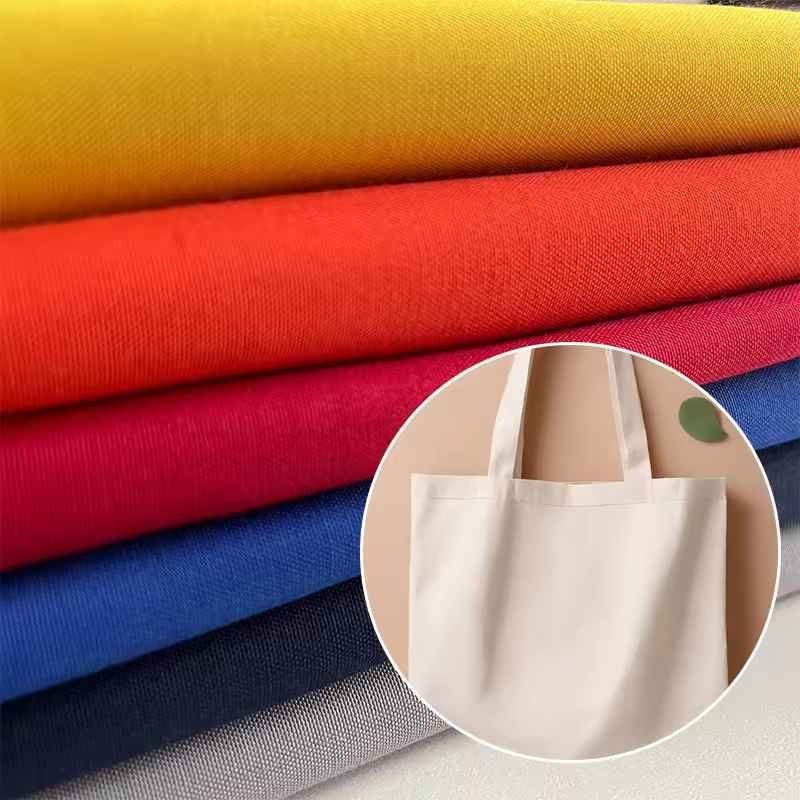


A practical fabric comparison looks like this:
- Canvas — often chosen for structured work bags, retail utility totes, storage bags, and heavier carry styles that need body, grip, and a more substantial look
- Oxford fabric — often used for tool bags, work gear, utility organizers, and rugged daily-use bags where abrasion resistance and shape control matter
- Polyester — useful for repeat-use bags when denier, coating, and reinforcement are matched well
- Nylon — often preferred when tear resistance, lower weight, and a more technical feel are needed
- Mixed build — combines advantages, such as a stronger outer shell with a reinforced base, lining, or webbing system
The best heavy-duty results often come from matching the fabric to the actual wear pattern. Some projects need stronger abrasion resistance. Others need lower weight, easier cleaning, or better fold behavior.
Reinforcement Details That Really Matter
A heavy-duty fabric bag does not become stronger just because more stitching is added everywhere. Real strength usually comes from targeted reinforcement placed where force repeats most, such as handle roots, shoulder strap anchors, zipper ends, base corners, side seams, and high-load panel joints. When these zones are planned well, the bag performs better under repeated lifting, dragging, packing, and daily use.
A practical reinforcement system often includes:
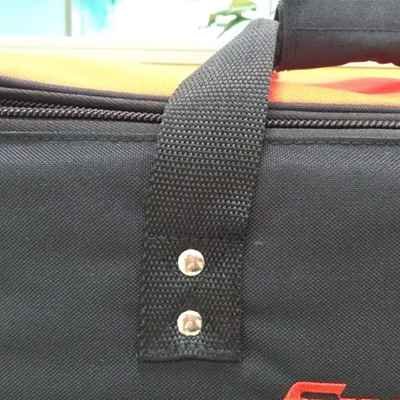
- Bar tack — helps protect concentrated pull areas such as handle ends, webbing anchors, and strap connections
- Box stitching — works well where handles or load-bearing straps connect to the main body and need stronger load transfer
- Binding — helps protect seam edges, reduce wear, and keep stress lines cleaner over time
- Base support — improves bottom load distribution, shape retention, and corner stability when the bag carries dense or heavy contents
In many projects, a bag fails not because the outer fabric is weak, but because the reinforcement layout is too light, too shallow, or placed in the wrong areas. A strong, heavy-duty tote, utility bag, tool bag, work backpack, or duffel usually needs reinforcement that matches the real load path and repeated stress pattern.
The best reinforcement plan is not the most visible one. It is the one that improves durability, keeps the structure stable, and supports repeated use without making the bag bulky, stiff, or awkward to carry.


Where Heavy Duty Bags Fail First
Heavy-duty fabric bags rarely fail everywhere at once. They usually begin to break down at the points where force repeats, weight shifts, abrasion builds, or load pulls against the structure over time. That is why stronger heavy-use bag development should begin by identifying likely weak zones before bulk production starts.
The most common early failure areas include:
- Handle roots
- Shoulder strap anchors
- Zipper ends
- Base corners
- Top opening seams
- Internal stress lines
- Panel joints under repeated load
In many projects, the outer fabric gets blamed too quickly. The real problem is often structural. A bag may use strong canvas, Oxford, polyester, or nylon and still fail early if the load transfer is poor, reinforcement is too shallow, seam layout is weak, or the base cannot handle repeated weight movement.

A practical prevention guide looks like this:
| Early Failure Area | Better Prevention |
|---|---|
| Handle roots | box stitch, bar tack, wider load spread |
| Bottom corners | reinforced base panel, cleaner seam control |
| Zipper ends | end-stop reinforcement, trim support |
| Side seams | stronger binding, stress-aware stitch layout |
| Strap anchors | better webbing connection, improved load distribution |
A stronger heavy-duty tote bag, tool bag, utility bag, work backpack, or duffel is usually the one that distributes force more intelligently, not simply the one that uses thicker material everywhere.
Handle Comfort Matters Under Load
In a heavy-duty fabric bag, the carry system matters as much as the outer shell. A strong canvas, Oxford, polyester, or nylon body will not create a dependable bag if the heavy-duty webbing, handle connection, grip comfort, or anchor layout becomes weak under real weight. This matters even more for tool bags, work bags, utility totes, duffels, gear carriers, and large organizers that are lifted often or carried over longer distances.
A good handle system should be judged by more than appearance. It should match:
- Load weight
- Carry duration
- Lift angle
- One-hand or two-hand use
- Shoulder carry or short-distance site movement
Several details change comfort and stability quickly:
| Carry Element | Why It Matters Under Load |
|---|---|
| Webbing width | reduces pressure concentration in the hand |
| Grip section | improves comfort during repeated lifting |
| Handle drop length | affects balance and ease of carry |
| Anchor layout | controls how force transfers into the body |
| Wrap-around construction | spreads weight more effectively |
In many heavy-use bags, discomfort starts before fabric failure. Narrow webbing can cut into the hand. Weak handle positioning can tilt the load. Poor anchor placement can stress the upper body panels too early.
A better heavy-duty tote bag, work backpack, utility bag, or duffel should not only survive weight. It should also carry weight in a way that feels more stable, more comfortable, and easier to control in repeated daily use.

Hardware Choices for Repeated Use
In a heavy-duty fabric bag, small components often fail before the main body does. A bag may use strong canvas, Oxford, polyester, or nylon and still create problems if the zipper jams, the slider wears out, buckle cracks, the hook deforms, or metal hardware loosens under repeated load. That is why trim selection should be treated as a performance decision, not a finishing detail.
The right hardware plan depends on:
- Opening size
- Load movement
- Access frequency
- Carry method
- Dust, moisture, or rough-use conditions


A practical hardware review looks like this:
| Trim Choice | Why It Matters |
|---|---|
| Zipper size and track strength | supports repeated opening under load |
| Slider and puller durability | affects daily use and smoother operation |
| Buckle strength | reduces cracking or release under tension |
| Metal ring and hook quality | supports hanging load and movement |
| End support and anchoring | helps reduce localized failure near openings |
Larger compartments often need stronger zipper systems and better end reinforcement. Repeated open-close cycles may require more durable pullers and smoother track behavior. Buckles, D-rings, and hooks should match the real load pattern, not only the visual style.
A dependable heavy-duty tote bag, utility bag, tool bag, work backpack, or duffel is often judged by the first part that breaks. In many cases, that part is not the fabric. It is the trim, hardware, or opening system.
Large Capacity Without Collapse
A large-capacity heavy-duty bag is not automatically functional just because it can carry more. When the bag is fully loaded, common problems include bottom sagging, sidewall collapse, zipper distortion, handle imbalance, and awkward access. These issues often arise when volume is prioritized over structural support. True heavy-use performance comes from planning how the bag handles weight, movement, and repeated handling.
A practical large bag design starts with base support, which prevents sag and distortion; side panel balance, which maintains shape under load; gusset proportion, which improves usable volume and weight distribution; and opening support, which ensures smooth access even when full. Handle spacing and reinforcement help the bag lift evenly, preventing tilt and instability, while also reducing stress on anchor points and seams.
| Structural area | Benefits |
|---|---|
| Base support | Reduces sagging, bottom deformation, and uneven load |
| Side panel balance | Maintains shape and prevents leaning or folding |
| Gusset design | Optimizes internal space and weight distribution |
| Opening support | Keeps zippers aligned and access comfortable |
| Handle spacing | Ensures lift balance, control, and comfort under full load |
By addressing these areas, the bag feels stable, functional, and user-friendly, even under heavy weight, repeated use, or rough handling. A successful design focuses on real-life usability, not just impressive empty capacity.

Control Cost Without Weakening Strength
Cost control in a heavy-duty fabric bag should never start by weakening the areas that carry the most stress. A better method is to protect the parts that directly affect load safety, repeated handling, abrasion resistance, and early failure risk, while simplifying parts that add cost without improving real performance.
In many heavy-use bag projects, the most useful savings come from:
- Cleaner panel engineering
- Better material allocation
- Less decorative trim complexity
- Targeted reinforcement instead of overbuilding
- More practical hardware selection
- Smarter pack-out and structure planning
A bag does not become more professional just because every panel is thicker, every zipper is oversized, or every seam is doubled. Overbuilding can increase weight, stiffness, material cost, labor time, and carrying discomfort. In some cases, it can even make the bag harder to use.

A practical cost-control guide looks like this:
| Cost-Control Move | What It Protects |
|---|---|
| Keep strong load zones | preserves daily reliability and carries the safety |
| Simplify non-critical panels | reduces material and labor without weakening the use |
| Use targeted reinforcement | avoids waste from unnecessary stitching or layers |
| Choose trims by real use | protects function without inflated hardware cost |
| Improve structure and pack-out | helps control cost while keeping the carry system stable |
The goal is not to make the bag cheaper at any cost. It is to keep the tool bag, utility tote, work backpack, duffel, or organizer strong where it truly needs strength, and simpler where extra cost adds little real value.
Heavy Duty Bag Styles Worth Developing
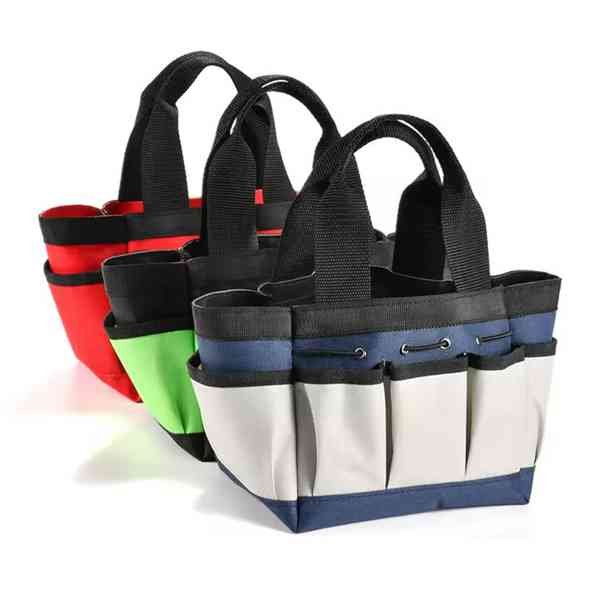
Heavy-duty fabric bags perform best in styles that benefit from load control, reinforcement planning, abrasion resistance, and repeated-use durability. That is why the strongest product directions are often not fashion-led, but use-led. These bags are built for tool carry, work gear, outdoor support, logistics handling, sample transport, and structured daily organization.
Common heavy-duty styles often include:
| Bag Style | Why It Works Well |
|---|---|
| Tool bag | needs a strong opening structure, concentrated reinforcement, and durable handle points |
| Utility tote | benefits from stronger body, base support, and better carry balance |
| Duffel bag | requires large-capacity stability, webbing strength, and reliable hardware |
| Work bag | handles repeated transport, surface wear, and daily load pressure |
| Organizer bag | needs structure, separation, and seam durability under repeated handling |
| Sample carry bag | supports repeated loading, unloading, and cleaner presentation |
These styles are valuable because they solve real carrying problems. A tool bag may need reinforced corners and stronger zipper logic. A heavy-duty tote may need base support and wider webbing. A gear duffel may need better load transfer and large-opening usability. An organizer bag may need shape retention and cleaner compartment control.
The best heavy-duty bag style is usually the one that matches the real load type, carry frequency, handling environment, and storage pattern. Products that stay usable after repeated lifting, dragging, loading, and daily transport usually create stronger long-term value than bags that only look strong at first glance.



Heavy Duty Bags by Use Scenario
Heavy-duty fabric bags perform best when they are built around the real load pattern, movement style, and handling rhythm of the job. A bag for tools should not be developed the same way as a bag for outdoor gear, worksite carry, logistics handling, retail restocking, or repeated sample transport. The outer fabric may look equally strong, but the structural priorities change a lot.



A practical use-based view looks like this:
| Use Scenario | What Should Come First |
|---|---|
| Tools | base strength, opening control, handle reinforcement |
| Outdoor gear | tear resistance, weight balance, closure reliability |
| Worksites | abrasion handling, grip comfort, rough-use tolerance |
| Logistics | shape stability, trim durability, stacking behavior |
| Retail carry | strength with cleaner access and better organization |
For tool bags, stronger opening behavior, base reinforcement, and concentrated stress control often matter most. For outdoor bags, lower weight, tear resistance, and dependable closures may be more useful. For worksite bags, abrasion resistance, grip comfort, and bottom durability become more important. For logistics or repeated transport, structure stability, hardware consistency, and shape control often matter more than surface detail. For retail carry or restocking bags, the bag still needs strength, but also easier access and a cleaner interior layout.
Heavy Duty Samples Must Be Tested
A heavy-duty fabric bag sample should never be approved on appearance alone. A bag can look strong in photos or on a meeting table and still fail quickly in real use if the load transfer, base response, handle behavior, zipper performance, or hardware stability have not been tested under realistic conditions.
This matters even more in tool bags, utility totes, work bags, outdoor gear bags, logistics carry bags, and large duffels because visual neatness does not prove structural reliability. A sample may look symmetrical and well finished, but that does not show how it behaves when filled, lifted repeatedly, dragged, stacked, opened under weight, or carried across longer distances.
A practical heavy-use sample review should include:
| What to Test | Why It Matters |
|---|---|
| Loaded lifting | shows handle stress, body balance, and anchor performance |
| Base response under weight | reveals sagging and corner distortion risk |
| Zipper opening when full | checks whether access remains usable |
| Grip comfort | helps judge real carry practicality |
| Trim movement under load | tests buckle, ring, and hardware reliability |
| Repeated opening and handling | helps predict early wear and fatigue |
A better sample is not only one that looks strong. It can show whether the bag will stay usable, balanced, and dependable after repeated heavy loading, movement, and daily wear.

Make A Sample First?
See your idea come to life before mass production.
At Jundong Factory, we offer free design mockups and custom samples to ensure every detail is perfect — from material and color to logo placement and stitching.
Start your project with confidence today: info@jundongfactory.com.
FAQs About Custom Waterproof Fabric Bags
What really makes a fabric bag heavy duty?
A heavy-duty fabric bag is not defined by thick fabric alone. It becomes truly heavy-duty when it can handle repeated load, abrasion, stress transfer, rough handling, and frequent opening or lifting in real use. A bag may look rugged at first glance and still fail early if the load path, handle anchoring, base support, zipper strength, hardware quality, and reinforcement layout are not planned well.
A good heavy duty bag usually starts with three practical questions:
- What will it carry?
- How often will it be used?
- Where will force and wear build up first?
If the bag is built for tools, work gear, hardware, outdoor equipment, logistics handling, or repeated sample transport, the structure matters more than appearance. Stress often collects first at handle roots, side seams, zipper ends, strap anchors, and base corners.
A practical review should confirm:
- Load-bearing structure
- Abrasion-aware panel planning
- Targeted reinforcement
- Reliable carry system
- Durable trims and hardware
A real heavy duty bag should keep working after repeated loading, lifting, dragging, stacking, and transport, not just look strong when empty.
Which fabric is usually the best choice for a heavy duty bag?
There is no single best fabric for every heavy duty fabric bag. The right choice depends on the bag’s load type, abrasion level, handling style, environment, and expected carry weight. Different fabric systems suit different heavy-use products.
A practical comparison looks like this:
| Fabric direction | Common strength | Better for |
|---|---|---|
| Canvas | stronger body and structured feel | utility totes, work carry, retail heavy-use bags |
| Oxford | controlled structure and practical abrasion handling | tool bags, organizers, utility carry |
| Polyester | balanced durability and cost | repeat-use work bags, daily heavy carry |
| Nylon | stronger strength-to-weight ratio | outdoor gear, mobile kits, technical carry |
| Mixed build | better balance across wear, cost, and load | reinforced outer shell plus stronger base zones |
In many projects, the strongest result comes from a mixed construction, not one fabric alone. For example, a bag may use a stronger base panel, heavier webbing, or more abrasion-resistant zones only where needed.
The better question is not “Which fabric sounds toughest?” It is which fabric system fits the real load, movement, and wear pattern of the bag. That usually leads to a stronger and more usable product.
What reinforcement methods actually make a heavy duty bag stronger?
A heavy-duty bag does not become stronger by adding more stitching everywhere. Real strength usually comes from targeted reinforcement placed at the points where force repeats most, such as handle roots, strap anchors, zipper ends, base corners, side seams, and high-load panel joints.
The most useful reinforcement methods often include:
| Reinforcement method | Main purpose |
|---|---|
| Bar tack | strengthens concentrated pull points |
| Box stitch | improves load transfer from the handle or strap into the body |
| Binding | protects seam edges and helps control wear lines |
| Reinforced base | supports dense load and reduces bottom distortion |
| Wrap-around handle | spreads carrying force across a larger body area |
Bar tacks work well on webbing ends and handle roots. Box stitching is useful where the carry system joins the main body. Binding helps protect edges that wear faster over time. Base support becomes more important when the bag carries tools, bottles, or other dense contents.
A common mistake is adding visible reinforcement only where it “looks stronger” while missing the hidden stress lines that carry the real load. The best reinforcement plan is usually the one that strengthens the right zones without making the bag bulky, stiff, or overbuilt.
What should I test in a heavy duty bag sample before approving bulk production?
A heavy-duty bag sample should never be approved by appearance alone. A bag can look clean and well-made in photos, but still fail quickly if it has not been tested under realistic load, repeated lifting, rough placement, packed opening, or repeated daily handling.
A practical sample review should include both visual inspection and handling tests.
| What to test | Why it matters |
|---|---|
| Loaded lifting | shows handle stress, anchor strength, and body balance |
| Base response under weight | reveals sagging and corner distortion |
| Opening or zipper use when full | checks whether access stays practical |
| Grip comfort | shows whether the bag stays usable under weight |
| Trim stability under movement | tests buckles, pullers, hooks, and rings |
| Repeated opening and handling | helps reveal early wear behavior |
A tool bag should be tested with dense contents. A gear duffel should be checked for balance and opening control. A utility tote should be filled to a realistic volume, not lightly staged.
The most useful sample is not just a presentation piece. It is a decision tool that shows whether the bag will still work after repeated heavy use, not only on the first day it is shown.
How can I lower cost on a heavy duty bag without making it weaker?
The safest way to reduce cost on a heavy-duty fabric bag is to protect the parts that carry real stress, while simplifying the parts that add cost without adding useful performance. Cost control should not begin by weakening handle anchors, base corners, zipper zones, or high-load seams.
A practical cost-control plan usually looks like this:
| Area | Better to protect | Better to simplify |
|---|---|---|
| Load zones | handle roots, strap anchors, base corners | low-stress decorative panels |
| Reinforcement | targeted support where force repeats | avoid doubling everything |
| Fabric system | right outer shell and base logic | avoid making all panels equally thick |
| Trims and hardware | zipper, buckle, connectors | Reduce non-essential upgrades |
| Structure | function-critical shape and carry logic | simplify low-value pockets or details |
A common mistake is treating heavy-duty as “everything bigger.” That can increase fabric cost, labor time, shipping weight, and even reduce comfort. A smarter approach is efficient strength: strong where the bag truly needs it, simpler where extra complexity adds little value.
The goal is not to make the bag cheaper at any cost. It is to keep the product dependable in repeated daily use while controlling waste in materials, construction, and trim choices.
Which bag styles are most suitable for heavy duty fabric construction?
The best heavy-duty fabric bag styles are the ones that truly benefit from reinforced load paths, abrasion control, stable base structure, and repeated heavy handling. Not every bag becomes better by making it heavier or more reinforced. A stronger build only makes sense when it solves a real use problem.
The most practical heavy-duty styles often include:
| Bag style | Why it fits |
|---|---|
| Tool bag | needs strong opening behavior and dense-load support |
| Utility tote | benefits from a stronger body, handle support, and base control |
| Work bag | built for repeated transport and rough placement |
| Gear duffel | needs large-capacity stability and durable carry points |
| Organizer bag | depends on shape retention and repeated access |
| Sample carry bag | handles repeated loading, unloading, and display use |
A tool bag is a strong, heavy-duty fit because dense contents quickly expose weak construction. A utility tote works well when carrying hardware, bottles, documents, or bulkier daily-load items. A gear duffel benefits from stronger anchors, trim durability, and large-opening stability.
The best heavy-duty styles are usually not chosen by appearance first. They are chosen because stronger construction improves performance every time the bag is lifted, moved, stacked, or opened under weight.
How do I choose the right zipper, buckle, and hardware for a heavy duty bag?
The right zipper, buckle, and hardware for a heavy-duty bag should be chosen by load pattern, opening size, access frequency, movement stress, and environment, not only by appearance. Many heavy-use bags fail first in the trims, not in the outer fabric.
A practical hardware review should confirm:
| Trim element | What to judge first |
|---|---|
| Zipper | opening size, load pressure, access frequency |
| Slider and puller | Repeated daily use, grip comfort, rough handling |
| Buckle | closure tension, side-load stress, impact risk |
| Ring or hook | hanging load, repeated attachment, movement range |
| Anchor point | How trim force transfer into the bag body |
A large-capacity work bag usually needs stronger zipper support and smoother opening under tension. A tool or organizer bag may need more reliable opening performance around dense contents. If the design includes shoulder carry or detachable sections, the rings, hooks, and buckles must match the real load, not just the visual style.
The best trim system is not just strong in isolation. It should also work smoothly with the bag’s structure, opening logic, and repeated handling pattern. That is what helps prevent early complaints in hard daily use.
Can a heavy duty bag still look good without becoming bulky or industrial-looking?
Yes. A heavy-duty fabric bag can still look clean, balanced, and commercially attractive when its strength comes from smart structure and targeted reinforcement, not from visible overbuilding. Many people assume a strong bag must look bulky, oversized, or heavily trimmed, but that often creates a product that feels clumsy and harder to use.
A cleaner heavy-duty result often comes from:
| Design choice | Better result |
|---|---|
| Targeted reinforcement | strength without visual overload |
| Balanced proportions | cleaner shape and easier carry |
| Smarter trim selection | less clutter and better control |
| Base support | shape retention without making the whole bag stiff |
| Structured carry logic | keeps the bag looking stable when loaded |
A tool bag can still look tidy when the opening structure is controlled, and reinforcement stays where it matters. A utility tote can feel strong without looking aggressive if the handle spacing, base support, and panel balance are well handled. A gear duffel can stay clean-looking when the zipper, webbing, and anchor layout are coordinated well.
A good heavy-duty bag should feel dependable, not awkward. Strength should be integrated into the product, not simply added onto the outside.
How should I plan handle comfort and carry control under load?
In a heavy-duty fabric bag, the carry system matters as much as the outer shell. A strong body fabric will not create a dependable product if the webbing, handle connection, grip comfort, or anchor spacing breaks down under real weight. This matters even more for tool bags, work bags, utility totes, large organizers, and gear carriers that are lifted often.
A practical handle system should match:
- Load weight
- Carry duration
- Lift angle
- One-hand or two-hand use
- Shoulder carry or short route movement
A useful review includes:
| Carry element | Why it matters |
|---|---|
| Webbing width | reduces pressure concentration in the hand |
| Grip section | improves comfort during repeated lifting |
| Handle drop length | affects balance and ease of carry |
| Anchor layout | controls how force transfers into the body |
| Wrap-around construction | spreads weight more effectively |
A common mistake is looking only at handle thickness. Thick webbing alone will not solve discomfort if the width, drop, or anchor position is wrong. A better carry system should not only survive the weight. It should also help the user control the bag more comfortably and more safely in repeated heavy use.
How can I start a custom heavy duty fabric bag project more efficiently?
The most efficient way to start a custom heavy-duty fabric bag project is with a clear use-and-load brief. Heavy-duty development often slows down when the first request is too broad. If the only instruction is “we need a strong bag,” too many critical decisions are still missing.
A stronger project brief should define:
| What to define first | Why it helps |
|---|---|
| Bag type | sets the basic structure and likely load behavior |
| Typical contents | helps plan load density and abrasion risk |
| Expected weight | guides fabric, webbing, and reinforcement level |
| How the bag is carried | affects the handle, shoulder, and anchor design |
| Use frequency | shapes, trim, durability, and build level |
| Opening needs | influences zipper strength and top structure |
| Special conditions | such as rough surfaces, stacking, outdoor use, or repeated transport |
Reference photos are helpful, but for heavy-duty projects, the use details are often more valuable than appearance references. It also helps to sort priorities into:
- Must have
- Preferred
- Optional
A clear load-based brief usually leads to better fabric planning, more useful samples, and fewer expensive revision loops later.
How do I plan large-capacity heavy duty bags without losing shape or usability?
A large-capacity heavy duty fabric bag does not automatically become a good bag just because it can hold more. Once size increases, the project often faces new problems such as bottom sagging, sidewall collapse, zipper distortion, handle imbalance, awkward opening access, and poor weight control when fully loaded.
That is why large-capacity bag development should begin with structure control, not only volume. A more usable bag usually depends on:
- Base support
- Side panel balance
- Gusset proportion
- Opening reinforcement
- Handle spacing
- Load distribution
A practical review often looks like this:
| Structural area | What it helps control |
|---|---|
| Base support | reduces sagging and bottom distortion |
| Side panel balance | helps the bag keep its shape under weight |
| Gusset design | improves usable volume and weight spread |
| Opening support | Keeps access smoother when the bag is full |
| Handle spacing | improves lift balance and carry control |
A common mistake is focusing only on outside dimensions. A large tool bag, gear duffel, utility tote, or work bag should still feel manageable when full, not only impressive when empty. Better structure helps the bag stay more stable, easier to open, and more comfortable to carry in repeated heavy-use conditions.
How should I plan trial orders and repeat orders for heavy duty fabric bags?
Not every heavy duty fabric bag project should begin with a large first run. In many cases, the safer path is to move in stages: sample first, trial order second, repeat order later. This is especially useful when the product includes new structure, new fabric direction, different hardware choices, multiple colorways, or several SKUs in one program.
A trial order helps confirm whether the bag performs well in real handling, especially for:
- Tool carry
- Outdoor gear
- Worksite use
- Retail restocking
- Logistics handling
- Repeated daily transport
A practical rollout often follows this logic:
| Stage | Main goal |
|---|---|
| Sample | confirm structure, reinforcement, carry logic, and trim choice |
| Trial order | test performance in real use and handling |
| Repeat order | Expand once the bag is stable and easier to control |
For repeat orders, early control points become even more important:
- Approved sample reference
- Material confirmation
- Trim and hardware consistency
- Packing and label records
- Change tracking across versions
A staged path usually reduces pressure and helps teams judge heavy-duty bags by real use, not just by first visual impression. It also makes larger reorder planning more stable once the structure has already been proven.heavy-duty
Everything You Need to Know Before Customizing Your Bags
Heavy-duty fabric bag projects rarely begin with one simple decision. They usually start with several linked questions at the same time: how much weight the bag must carry, where abrasion will happen first, whether the opening stays usable under load, how the handles transfer force, which trims can survive repeated use, and how to keep the structure strong without making the bag bulky or awkward.
That is why a focused FAQ section is useful. It helps turn broad requests for “a stronger bag” into clearer product decisions.
For heavy-duty tote bags, utility bags, tool bags, work bags, duffels, and organizers, the most useful questions usually focus on:
- Load-bearing structure
- Abrasion control
- Reinforcement planning
- Carry comfort
- Trim durability
- Sample testing
- Cost control without weakening the bag
These are the decisions that shape whether the bag still works well after repeated loading, lifting, dragging, opening, stacking, and transport.
The FAQs are arranged in a practical order. They begin with what makes a bag truly heavy-duty, then move into fabric choice, reinforcement, sample testing, heavy-load carry design, and project setup, helping narrow the right direction before quotation, sampling, or bulk planning begins.
