 Skip to content
Flame-Retardant Bag Manufacturer
We manufacture custom flame-retardant bags for industrial, electrical, automotive, and equipment-protection applications, with material selection, structure engineering, sample validation, and mass-production quality control managed in one workflow. If your project needs safer carry solutions—not just a “fireproof” marketing label—we help you define the right test path, reduce compliance risk, and build stable bulk production from sample to shipment.
Flame-Retardant Bags: Define Before Sampling
(1) “Flame-retardant” is not the same as “fireproof.”
A lot of inquiries use terms like fireproof bag, fire-resistant bag, flame-retardant bag, and heat-resistant bag interchangeably. In real product development, these terms may point to very different expectations.
For example:
- Shipping tools in a workshop may only need a bag material that is harder to ignite and has a slower flame spread.
- Making an electrical maintenance kit may need a bag that uses FR outer fabric and FR webbing, and controlled foam choice.
- A company entering a regulated industry may need a product tied to a specific test method or protocol.
- A may also care more about secondary safety behavior than about the word “fireproof.”
This is why a responsible manufacturer should avoid making vague claims. In many markets, “flame-retardant” performance is about defined test conditions, specific materials, and controlled construction, not a universal promise that the whole bag can survive any fire scenario.
(2) They usually care about application risk, not lab language
Most real people are not trying to become fire-testing experts. They are trying to solve a practical risk:
- “Will this bag make ignition risk worse near hot work?”
- “Will the fabric melt or spread flame too fast?”
- “Can we reduce hazards in transport or storage use?”
- “Will we ask for proof or a test report?”
- “Can this be produced consistently after the approved sample?”
Instead of only asking, “What material do you want?”, the factory should also ask:
- What is the use environment? (indoor, outdoor, vehicle, factory floor, electrical job site)
- What is the main heat or flame exposure risk? (spark, short flame contact, nearby ignition source, hot surface)
- Is the client asking for material-level performance or finished-product verification?
- Which market is the bag for?
- Do you need third-party lab testing, and at what stage (material first, then finished sample)?
This is where your factory positioning becomes powerful. Jundong’s existing content already supports a strong “risk-control and sample-to-bulk consistency” story, including an in-house QC team, strict QC positioning, and sample-to-mass-production workflow support—which is exactly what high-risk functional bag projects need.
(3) The standard comes before the material
One of the most common mistakes in flame-retardant bag sourcing is starting from a fabric keyword only:
- “Use FR Oxford.”
- “Use fireproof PVC.”
- “Use UL94 material”
- “Use aramid fabric.”
These may or may not be right.
Why? Because test standards are application-specific. A standard suitable for one product category may not be the right target for another. For example, you may reference frameworks related to textiles or films, tents, vehicle interior materials, or component-level plastic flammability, depending on end use. NFPA identifies NFPA 701 as a test framework for flame propagation of textiles and films; the Advanced Textiles Association notes CPAI-84 updates for camping tentage materials; and U.S. motor vehicle interior flammability requirements are tied to FMVSS 302 (49 CFR 571.302). (NFPA)
That does not mean every bag must use those standards. It means they should help you avoid mismatching the standard to the product.
(4) A flame-retardant bag is a system, not just fabric
Even when the outer shell fabric is correct, projects still fail because supporting materials are not aligned.
A bag is a multi-component system:
- outer fabric
- lining
- foam/padding
- webbing
- zipper tape and zipper teeth
- hook-and-loop / elastic
- thread
- logo patch/print/label
- piping/reinforcement tape
- binding
- hardware (plastic/metal)


Flame-Retardant Bags: Customers & Use Cases
(1) Flame-retardant bags are bought for risk control, not only for storage
A rarely wakes up and says, “I need a bag.” They usually say:
- “We need a safer way to carry this kit.”
- “Our request was for a flame-retardant material option.”
- “We are upgrading a standard bag to fit a higher-risk environment.”
- “We need to reduce ignition or spread concerns in field use.”
- “We need a custom bag that supports our internal safety protocol.”
This matters because the same bag shape can be sold into very different decision environments:
- engineering-led procurement
- operations-led replacement purchase
- brand or OEM client specification purchase
- distributor line extension
- compliance-driven project purchase
They need to feel that the manufacturer can translate operational needs into a manufacturable bag solution.
(2) Core industries that commonly need flame-retardant or safer-material bag solutions
Not every project requires the same level of FR control. But these industries frequently ask for flame-retardant bag options, fire-resistant materials, or risk-reduced carry/storage designs:
A. Electrical maintenance & utility service
Typical products:
- electrician tool bags
- maintenance kits
- cable accessory bags
- portable diagnostic gear bags
concerns:
- field durability and abrasion resistance
- controlled material behavior near sparks or hot work zones
- compartment layout for tools and testers
- shoulder/carry comfort for daily use
- repeatability across batches for service fleets
B. Industrial service, MRO, and factory-floor tools
Typical products:
- tool organizers
- repair kit bags
- maintenance pouches
- portable parts bags
concerns:
- rough handling
- oil or dust exposure
- replacement cycle cost
- quick open/close function
- reinforcement at stress points
C.Automotive/workshop/emergency support kits
Typical products:
- vehicle emergency kits
- service tool bags
- roadside maintenance organizers
- workshop equipment carry bags
concerns:
- trunk storage conditions
- temperature fluctuation
- branding for retail or private label
- organized internal layout
- packaging and SKU management for distribution
D. Energy, battery-adjacent, and technical equipment handling
Typical products:
- inspection kit bags
- protective carry bags for technical devices
- cable/testing accessory cases
- containment-adjacent organizers (non-certified unless defined)
concerns:
- correct language and claims (very important)
- project documentation
- controlled BOM
- sample and test alignment
- change-control in bulk production
E. OEM / private-label safety product brands
Typical products:
- branded safety storage bags
- promotional safety kits with upgraded material specs
- category extension products (existing brand wants FR version)
concerns:
- speed to launch
- MOQ flexibility
- visual branding quality
- consistent branding in bulk
- communication and timeline control


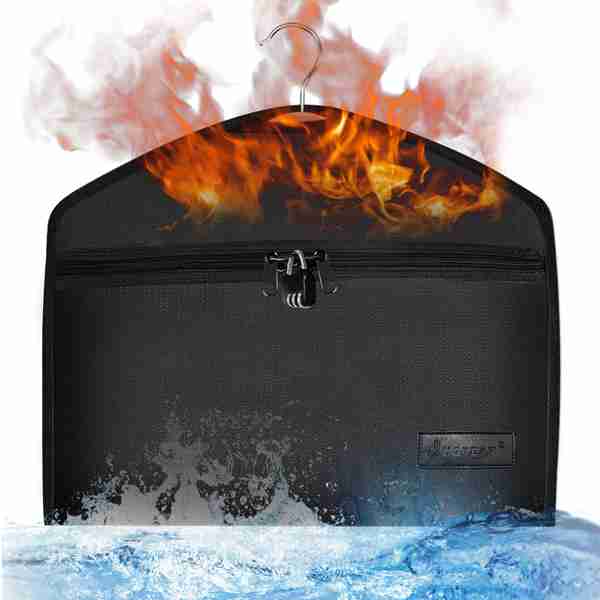
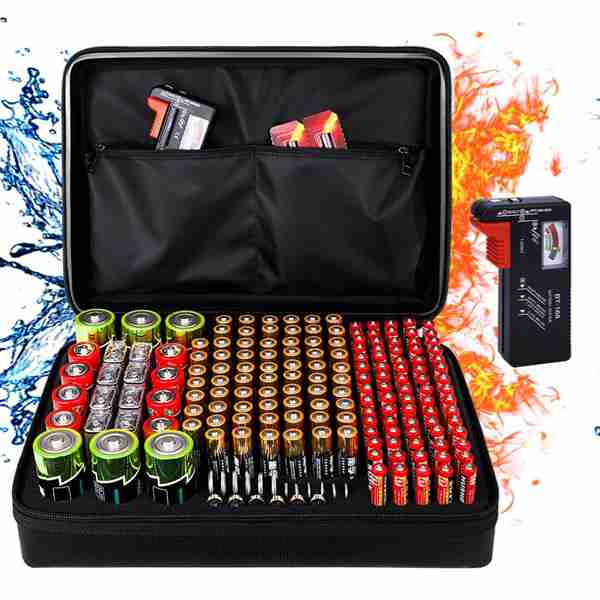
Flame-Retardant Bag Material System
They start with requests like “quote an FR fabric bag” or “use flame-retardant Oxford.” While useful, this is not enough for production planning. A flame-retardant bag is a multi-material system, not a single-fabric product. Even if the outer fabric meets fire-resistant expectations, the bag may still fail in real use if the foam melts, the webbing shrinks, the zipper tape reacts differently, or the thread and seams cannot handle heat exposure.
A reliable manufacturer, therefore, evaluates the bag as a layered structure:
Outer layer: shell fabric and exposed trims
Support layer: lining, foam, reinforcement materials
Load system: webbing, handles, zippers, stitching
Branding layer: labels, patches, prints, binding
Outer fabric selection is also more than choosing a fire-resistant textile. Procurement teams should balance FR performance, abrasion durability, sewing compatibility, branding surface quality, and supply stability. A fabric may meet FR claims but still cause issues if lead times are unstable, the MOQ is high, or logo printing performs poorly.
Professional OEM flame-retardant bag manufacturers usually offer multiple material options—for example, cost-balanced, durability-focused, or premium-performance options—to multiple material routes—for example, cost-balanced, durability-focused, or premium-performance options—so they can align safety requirements with commercial feasibility.
Hidden Components in Flame-Retardant Bag Construction
When sourcing a flame-retardant bag, you often focus only on the outer shell. However, the lining, foam, and functional components are frequently the real sources of performance issues.
Lining and foam play a major role in durability and structure. The lining affects internal abrasion resistance, sewing stability, and pocket organization, while foam controls shape support, compression recovery, and perceived product quality. Common mistakes include specifying only “3 mm foam” without defining density, type, or placement zones, or switching foam materials during cost optimization without retesting. A better approach is to lock foam thickness, density range, and substitution rules early to prevent sample-to-bulk inconsistency.
Webbing, zippers, and thread determine real-world reliability. Handles and straps must match the load path, stitch pattern, and reinforcement layout, not just color and width. The **zipper system—chain, tape, slider, and sewing geometry—**should be reviewed together to prevent stress failures. Thread choice also affects seam strength, stitch appearance, and production stability.
Finally, branding components such as PVC patches, embroidery backing, or reflective trims must be reviewed before final approval. These elements can change material thickness, sewing compatibility, and compliance performance.
For reliable OEM flame-retardant bag manufacturing, successful projects treat every component as part of a complete material and construction system.


FR Bag Construction: Strength & Stability
You experience the same situation: the sample bag looks perfect, but problems appear during bulk production—shape distortion, zipper stress, uncomfortable handles, or seam misalignment. This usually happens because samples are often built as appearance proofs, not production-ready designs.
During sampling, an experienced technician may manually adjust sewing tension, choose the best material pieces, or slow down the process. In bulk manufacturing, however, production involves multiple operators, higher sewing speeds, material roll variation, and packaging pressure. That is why the key question should not only be “Can you make this sample?” but “Can this bag be engineered for stable mass production?”
Start with Load Path Engineering
Professional flame-retardant bag manufacturers begin development by mapping the load path. This means identifying where weight and stress travel when the bag is carried or opened. Critical zones include handle anchor points, zipper ends, reinforcement patches, and bottom corners. Once the load path is defined, designers can plan panel overlap, stitch density, reinforcement placement, and seam types that support both durability and repeatable manufacturing.
For example, handle durability is not determined by webbing strength alone. It depends on a system: anchor length, reinforcement patches, stitch patterns (box-X or similar), seam allowance stability, and operator consistency. This engineering mindset ensures bags perform reliably in real use.
Panel Stability and Structural Control
For industrial or technical bags, panel design strongly affects usability. Weak panel engineering can cause twisting during carry, zipper misalignment, or collapsing structure. Key control factors include:
Material grain direction to control stretch
Panel tolerance standards for assembly accuracy
Corner construction sequence to maintain shape
Layer thickness management to avoid sewing distortion
Reinforcement placement templates for operator consistency
These elements ensure the bag keeps its shape, stability, durability, and professional appearance even under repeated loading.
Reinforcement and Zipper System Design
Reinforcement should be targeted, not excessive. Over-reinforcing every area can create stiffness, sewing difficulty, and zipper misalignment. Instead, strength should focus on high-stress zones such as handle anchors, D-ring points, zipper ends, and bottom corners.
Zipper performance is another critical factor. Many failures occur because of zipper path geometry, not zipper quality. Proper engineering includes controlled seam allowances, balanced panel alignment, stress-free corner design, and testing with the bag under load.
Linking Construction Engineering with Qa uality Control
Reliable OEM flame-retardant bag manufacturing combines construction engineering with QC checkpoints. Factories should measure key dimensions, handle reinforcement accuracy, zipper function under load, and symmetry alignment during inspection.
When engineering design and AQL-based quality control work together, the result is stable bulk repeatability, lower defect rates, and stronger confidence.
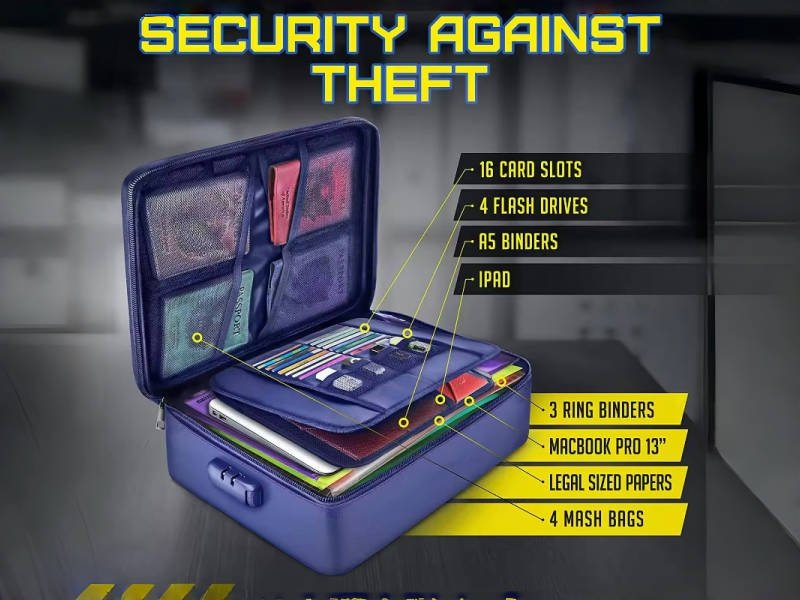
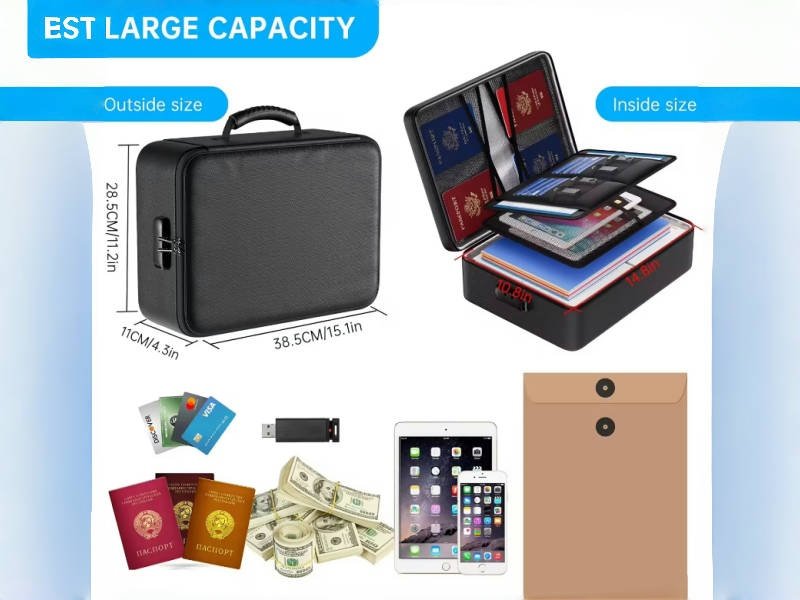
Flame-Retardant Bag Testing: Sample to Bulk
Recommended staged validation workflow
Below is a practical framework your page can present. It is flexible enough for different project types and strict enough to reduce confusion.
Stage 0 — Requirement & claim alignment
Goal:
- confirm the use environment
- confirm what “flame-retardant” means in this project
- identify whether testing or reporting is required
- avoid overclaiming in early communication
Outputs:
- requirement summary
- draft material route options
- risk notes
- suggested validation sequence
Stage 1 — Material and component screening
Goal:
- narrow down feasible routes
- identify high-risk components early (foam, webbing, zipper tape, trims)
- prevent a good-looking sample built on a weak route
What may be reviewed at this stage:
- specs or prior data (if available)
- material samples or swatches
- component compatibility
- preliminary process feasibility
Benefit:
- faster elimination of poor routes
- fewer sample revisions later
Stage 2 — Development sample validation
Goal:
- confirm construction logic and component system together
- check function under realistic use conditions
- identify issues before branding and packaging are finalized
What to validate:
- fit and layout
- opening or closing function (ideally with load, not empty only)
- reinforcement performance
- assembly consistency risk points
- component substitutions that are not allowed
Stage 3 — Verification sample or pre-approval sample
Goal:
- validate the near-final version with approved materials or components
- confirm any required testing or reporting sequence (project-dependent)
- lock BOM and critical process notes
Outputs:
- approved component list
- final revision notes
- test plan status or submission plan (if applicable)
- bulk QC checkpoints linked to the sample
Stage 4 — PP sample and bulk control confirmation
Goal:
- ensure the production-ready version matches approved intent
- confirm no uncontrolled substitutions
- align QC checks with the validation logic
What should be locked:
- BOM version
- key dimensions and tolerances
- critical reinforcement points
- zipper or closure method
- branding trim version
- packaging method (if it affects shape or function)
FR Bag Planning: MOQ, Lead Time
Flame-Retardant Bag Production Lead Time and Cost Drivers
When sourcing a flame-retardant bag manufacturer, you often ask a simple question: “How long is production?” In reality, bulk production lead time depends on how prepared the project is before manufacturing begins.
Several practical factors influence the FR bag production schedule. First is material readiness. If the outer shell fabric, lining, foam, webbing, zippers, and trims are already approved and available, production can start faster. If components are still being sourced or substituted, the timeline will extend.
Another factor is BOM stability. Changes in materials, branding components, or reinforcement parts after sample approval can delay line scheduling. The sample approval stage also plays a key role. A project moves smoothly only when the final prototype and construction method are fully confirmed.
Order structure also affects timing. A single-SKU order is typically faster than projects with multiple colorways, variants, or complex internal compartments. Construction complexity—such as reinforcement zones, thick layered seams, or detailed internal partitions—can slow sewing speed and reduce production output. In addition, retail packaging requirements, inserts, barcode labels, and multi-item assortments add coordination time.
Because of these factors, experienced OEM flame-retardant bag factories often describe lead time as “calendar time plus readiness conditions.” For example, bulk lead time can be estimated after approved materials, confirmed BOM, SKU quantity, and packaging details are finalized. This approach helps prevent misunderstandings later in production.
Key Cost Drivers in Flame-Retardant Bag Projects
For evaluating FR bag manufacturing cost, it is more useful to understand what drives the price rather than simply asking for the lowest quote.
Major cost factors include:
1. Material system cost
Outer fabric selection, foam or padding type, webbing, zippers, trims, logo components, and packaging materials all influence unit price.
2. Construction labor cost
Complex panel structures, reinforcement zones, internal pockets, and thick transitions require more sewing time and skilled operators.
3. Development and sampling cost
Multiple prototype rounds, design revisions, and technical documentation increase project coordination effort.
4. Testing and validation
Material screening, sample verification, and possible third-party testing can add cost depending on project requirements.
5. Order structure
Quantity level, SKU variety, color variations, and split shipment plans directly affect efficiency and pricing.
Understanding these drivers helps you optimize flame-retardant bag sourcing, balancing cost control, safety requirements, and reliable bulk production.


FR Bag Quality Control System
Quality Control in Flame-Retardant Bag Manufacturing
In flame-retardant bag manufacturing, quality control is not only about catching defects at the end. For OEM and industrial distributors, the real concern is sample-to-bulk consistency and reliable repeat production. A strong QC system protects the approved design by controlling materials, construction methods, and component versions throughout production.
Incoming Material Inspection
Many production issues begin before sewing starts. A flame-retardant bag usually includes multiple components such as FR outer fabric, lining, foam padding, webbing, zippers, thread, branding trims, and packaging materials. If incoming checks are weak, factories may unknowingly use the wrong thickness, color batch, or trim version.
Professional incoming material QC typically verifies:
Outer fabric: color, coating, thickness consistency
Lining: hand feel and structural compatibility
Foam/padding: type, thickness, and density range
Webbing and zippers: width, strength, smooth function
Branding trims: correct logo version and color
Packaging materials: labels, barcodes, inserts
These checks must match the approved BOM and sample reference, preventing hidden inconsistencies from entering production.
In-Process Quality Control
Most repeatability issues occur during assembly, not at the final stage. In-process QC ensures that every bag is built according to the approved sample and construction method.
Key checkpoints often include:
Cutting stage: panel orientation, dimensions, reinforcement pieces
Sewing stage: stitch pattern accuracy, reinforcement placement, seam allowance consistency
Zipper installation: alignment, end finishing, smooth operation
Functional checks: handle strength, symmetry, pocket fit, opening alignment
These inspections help detect variation early, protecting production stability and product durability.
Final Inspection
Final inspection confirms that finished bags meet appearance, function, and packaging standards. Typical checks include:
Appearance: stitching quality, color consistency, cleanliness
Function: zipper action, handle integrity, pocket usability
Dimensions: critical measurement tolerances
Branding: logo placement, labels, packaging artwork
Shipment readiness: SKU assortment, carton labeling, counts
Change Control and Traceability
For OEM flame-retardant bag projects, change control is critical. Small adjustments—such as zipper type changes, foam substitutions, or trim variations—can cause repeat-order inconsistencies. Strong factories maintain approved BOM references, documented revisions, and QC inspection records to ensure traceability.
A mature QC system ultimately supports stable bulk production, faster repeat orders, and reduced sourcing risk, which are key priorities for professional clients.


FR Bag Workflow: RFQ to Reorders
Stage-by-Stage Communication
Efficient OEM flame-retardant bag development depends on aligning the right decisions at the right stage. Many sourcing delays occur because teams discuss details too early or too late in the process. A structured workflow helps you move from RFQ to mass production and repeat orders with fewer revisions and clearer expectations.
Stage 1 — RFQ and Requirement Intake
The goal of this stage is to gather enough information for a useful first evaluation. They should share use scenario, bag size or capacity, stored equipment, target market, and performance expectations. A professional FR bag manufacturer will confirm what is known, identify missing details, and suggest a material or construction route instead of guessing a price too early.
Stage 2 — Technical and Route Review
At this stage, they convert the concept into a feasible development plan. Key topics include outer fabric options, lining and foam system, reinforcement zones, zipper structure, and potential construction risks. This review also clarifies the sample objective—whether the sample is for appearance, functional validation, or engineering evaluation.
Stage 3 — Quotation and Planning Assumptions
A reliable quotation should explain the material route, MOQ guidance, sample timeline, and bulk lead-time conditions. Clear assumptions prevent confusion later if materials, packaging, or branding requirements change.
Stage 4 — Sample Development
Prototype or engineering samples test specific priorities such as bag structure, layout, or functional performance. You and manufacturers should align on review format, feedback method, and approval responsibility to avoid unnecessary revisions.
Stage 5 — Validation and Revision
Feedback should be organized by materials, construction, dimensions, branding, and packaging. Each item should be marked as approved, revision required, or pending decision, helping teams manage changes efficiently.
Stage 6–7 — Pre-Production Approval
Before bulk production, the project must lock the approved BOM, construction notes, QC focus points, packaging details, and shipment planning. This ensures the approved sample can be reproduced consistently.
Stage 8–10 — Production, Shipment, and Reorders
During mass production, they manage production updates, in-process QC, final inspection, and packaging confirmation. Clear documentation of materials and construction routes also supports stable repeat orders and long-term OEM bag manufacturing partnerships.


FR Bag Uses: Requirements & Design
Core Applications for Flame-Retardant Bag Development
Flame-retardant bags are used across several industrial and technical environments. Understanding the main application categories helps you quickly identify the most suitable OEM or ODM bag design direction.
Tool Carry and Field Maintenance Bags
One of the most common applications is tool carry bags for technicians and maintenance teams. These bags are used by field service engineers, electrical repair teams, and industrial maintenance crews who need organized and durable storage. Key product requirements include reinforced carry handles, strong bottom panels, and practical zipper openings that allow fast access to tools. OEM design often focuses on reinforced anchor points, structured compartments for tools, and balanced carrying geometry to support daily field use.
Welding Accessories and Hot-Work Support Bags
Another common category involves welding accessory bags or hot-work support kits. These bags store gloves, small tools, and consumables used during welding or industrial repair tasks. Clients typically prioritize durable compartments, strong closures, and stable internal layouts that prevent items from shifting during transport. A well-designed bag in this category often includes reinforced wear zones and easy-access openings suitable for demanding work environments.
Technical Equipment and Instrument Carry Bags
Many projects focus on instrument carry bags or technician equipment organizers. These are used for inspection tools, portable instruments, calibration devices, and service kits. The main design priorities are precise internal partitions, structural stability, and protection during transport. OEM manufacturers often develop custom divider systems, shape-control panels, and zipper routes that allow easy access while maintaining equipment protection. They frequently search for terms like custom instrument bag manufacturer or technician equipment organizer, making this category strong for SEO visibility.
Emergency and Safety Response Bags
Emergency kit bags and safety equipment organizers are widely used in industrial sites. These bags must allow fast identification, clear internal layout, and reliable carrying performance. OEM designs may include label windows, standardized compartment layouts, and consistent packaging systems so teams can easily locate supplies during urgent situations.
Cable and Small Parts Organizer Bags
Another popular application is cable organizer bags and small parts kit bags. These products store connectors, fittings, cables, and installation accessories. Effective designs use modular pockets, elastic loops, and clear labeling systems to keep items organized. Manufacturers often develop multiple size variations within one product family, allowing them to scale their product line and maintain consistent branding across SKUs.


FR Bag Materials, Structure, Branding
Flame-Retardant Bag Customization Options
For flame-retardant bag OEM/ODM projects, customization should be viewed as a complete product system, not only a fabric change. They typically customize four main layers: materials, structure, branding, and packaging. Understanding these options helps align product performance, manufacturing efficiency, and brand presentation.
Material System Customization
Material customization affects durability, weight, cost, and production stability. A typical FR bag material system may include the outer shell fabric, lining, foam or padding, webbing, zipper system, thread, and reinforcement materials. Changing one component can influence sewing compatibility, structure stability, and lead time. For this reason, experienced manufacturers review the entire material system before confirming a development route, ensuring the bag remains functional and repeatable in bulk production.
Structure and Layout Customization
Structure customization often creates the most value for them. Many projects aim to improve internal organization, carrying comfort, and long-term durability. Common options include dimension adjustments, partition systems, accessory pockets, elastic loops, reinforced bottom panels, upgraded handle anchors, and improved zipper opening paths. These changes help solve real field-use problems such as poor tool organization, bag collapse under load, or uncomfortable carrying balance.
Branding Customization
Branding involves more than placing a logo. They can customize logo placement, label types, patches, embroidery, ID windows, hangtags, and barcode labels. These choices influence sample preparation time, approval cycles, and packaging coordination. Confirming branding methods early helps avoid delays during sample validation.
Packaging and Delivery Customization
Packaging is also part of product customization. Options may include individual bag packing, branded polybags, carton labeling, barcode systems, and multi-SKU assortment instructions. These elements support private label programs, distributor shipments, and warehouse receiving systems.
Choosing the Right Customization Level
Flame-retardant bag development usually follows three levels:
Level 1 – Upgrade Customization:
Material changes and basic branding for faster development.
Level 2 – Semi-Custom Development:
Improved structure, reinforcement, and internal organization for better field performance.
Level 3 – Full OEM/ODM Development:
New dimensions, architecture, and branding systems for long-term product platforms.
A reliable manufacturer helps them choose the right customization level based on application needs, timeline, and budget, ensuring the final bag balances performance, cost, and scalable production.


Make A Sample First?
See your idea come to life before mass production.
At Jundong Factory, we offer free design mockups and custom samples to ensure every detail is perfect — from material and color to logo placement and stitching.
Start your project with confidence today: info@jundongfactory.com.
FAQs for Flame-Retardant Bag Manufacturer
What information should I send first if I want an accurate quote for a custom flame-retardant bag?
This is one of the most important questions because quote quality depends on input quality. They understandably start with a reference photo and ask for price. That can be a good starting point, but for a flame-retardant bag project, a photo alone usually does not show the real requirements that affect cost, development route, and lead time.
A more accurate first quote normally requires a project brief, even if it is simple. You do not need a perfect technical document at the beginning. But you should try to provide the following:
- Application/use case (field maintenance, equipment carry, organizer kit, emergency support, etc.)
- What will be stored inside (tool types, accessories, equipment, mixed items)
- Approximate packed weight range (typical and max)
- Target size or size range
- Estimated order quantity (trial + expected bulk)
- Target timeline (launch date or internal approval timing)
- Customization needs (material upgrade only, layout changes, full OEM/ODM, branding, packaging)
- Reference photos/drawings / existing sample photos
- Priority focus (durability, organization, access speed, appearance, cost control, faster launch)
A professional manufacturer should respond with a route-based quotation approach, not only one number. That means they explain the quote basis (for example, upgrade route vs semi-custom route), note key assumptions, and identify what may change after sample validation. This makes planning much easier for sourcing and product teams.
If your team does not yet have full data, send what you already have and ask for a staged review. They can help you identify what missing information matters most before sampling. If needed, you can share your current bag photos and intended application for a structured first review via info@jundongfactory.com (useful when you are deciding between upgrade customization and semi-custom development).a
What is the difference between upgrade customization, semi-custom development, and full OEM/ODM for flame-retardant bags?
This is one of the most important decision questions because choosing the wrong customization level can cause either overbuilding (too slow and expensive) or underbuilding (not enough function improvement).
(1) Upgrade Customization
This route is best when you already have a working bag concept and mainly need:
- a flame-retardant material route adjustment
- minor size tuning
- branding updates
- basic packaging customization
- limited trim changes
Why choose it:
- faster development
- lower project complexity
- easier internal approval for urgent or pilot programs
Where it can fall short:
If your real problem is layout inefficiency, poor carry balance, or repeated structural failures, Level 1 may not solve enough.
(2) Semi-Custom Development
This is the most common “sweet spot” for many projects. It is suitable when you need practical improvements but do not want a full redesign.
Typical changes include:
- internal layout redesign
- reinforcement upgrades in stress zones
- opening/closure usability improvements
- handle/strap optimization
- branding and packaging coordination
Why choose it:
- better field usability
- stronger differentiation than simple logo + material changes
- still manageable in timeline and cost (with clear inputs)
Where it requires more discipline:
Semi-custom projects need clearer feedback, sample goals, and decision control than Level 1.
(3) Full OEM/ODM Development
This route is best for new product platforms, technical fit requirements, multi-SKU systems, or long-term branded product lines with stricter control needs.
Typical scope includes:
- new size and pattern development
- new internal architecture
- defined reinforcement strategy
- component route planning with no-substitution control
- full branding/packaging system alignment
- stronger PP and bulk readiness control
Why choose it:
- highest application fit
- strongest differentiation
- better long-term repeatability when managed properly
Trade-off:
- longer development cycle
- more approval steps
- stronger coordination requirements on both sides
A good manufacturer should not push everyone into Level 3. Instead, they should help you choose based on:
- What problem needs to be solved first
- target timeline
- pilot vs long-term program
- internal approval complexity
- budget and risk tolerance
How can I reduce the risk of sample-to-bulk inconsistency in a flame-retardant bag project?
This is one of the biggest concerns—and for good reason. Many projects do not fail because “cannot make the sample.” They fail because the transition from approved sample to production execution is not controlled tightly enough.
Here are the most practical ways to reduce inconsistency risk:
A. Lock the approved basis clearly
Do not stop at “sample approved.” Confirm:
- Which sample/version is approved
- Which BOM/components are tied to that approval
- which details are fixed (dimensions, layout, reinforcement points, branding placement, packaging)
- which details, if any, are still pending
This prevents different teams from using different reference points.
B. Define no-substitution items
In many projects, not every component has the same risk level. Some items may be flexible; others directly affect function, structure, or approval. A no-substitution list helps prevent unplanned changes that make the bulk feel different from the sample.
C. Align in-process QC to real project priorities
Generic inspection is not enough for many custom bag projects. For example, if your main risk is handling anchor durability or internal layout consistency, those should become visible in-process checkpoints—not only final random checks.
D. Confirm packaging and labeling before bulk
A surprising number of “quality complaints” are actually packaging or labeling misalignment problems. If branding labels, carton marks, or assortment rules are decided late, shipment errors can occur even when the product itself is fine.
E. Use records that support repeatability
This includes:
- version references
- revision logs
- approved sample photos/notes
- Reorder baseline review before future runs
What usually affects MOQ for a custom flame-retardant bag project?
You often ask for the timeline early, and that is the right thing to do. The key is understanding that the timeline is not only “factory production time.” For custom flame-retardant bag projects, the full timeline usually includes:
- Requirement clarification
- Route review and quotation
- Sample planning
- Sample development
- Validation/revisions
- PP sample/bulk readiness confirmation
- Mass production
- Final inspection/packaging/shipment coordination
That means two projects with the same bag size can have very different timelines depending on how many decisions are still open.
What usually makes projects faster
- clear application information from the beginning
- choosing the right customization level (not overbuilding)
- defined sample stage goals
- consolidated revision feedback
- early branding/packaging decisions
- clear decision owner on the side
What usually causes delays
- changing requirements late
- treating prototype samples as final samples
- fragmented comments from multiple teams
- waiting too long to confirm branding or packaging
- introducing route changes near PP/bulk stage
A practical way to ask for a timeline
Instead of asking only “How long is production?”, ask for a stage-based timeline estimate, such as:
- quote/review time
- sample lead time by stage
- revision cycle timing
- PP/bulk readiness timing
- estimated production lead time under current assumptions
This gives your team a much better planning framework, especially if internal approvals are involved.
A professional manufacturer should also explain which parts of the timeline are most sensitive to decisions. That does not mean shifting responsibility—it means building a realistic project schedule that both sides can support.
How should testing and validation be arranged for a custom flame-retardant bag project (without overpromising)?
This is a very strong question because it separates serious project planning from generic sales language. In many bag projects, people say “we will test quality,” but they do not define what will be checked, when it will be checked, and why that check matters to the real application. That creates confusion later.
For custom flame-retardant bag projects, a better approach is to use stage-based validation planning. That means not trying to force every test into the first sample, and not waiting until final inspection to discover practical problems.
(1) Prototype stage: validate concept fit, not final production readiness
At the prototype stage, the goal is usually to confirm:
- overall size direction
- internal layout concept
- access path usability
- carry method logic
- basic structure direction for the intended application
This stage is not usually the place to claim full production readiness. It is a decision stage. They and the supplier should use it to identify major functional issues early, such as:
- item fit mismatch
- opening path inconvenience
- poor compartment sequence
- carry imbalance
If these issues are found early, the project becomes faster later.
(2)Development/engineering sample stage: validate structure and manufacturability
This stage should go deeper. Typical focus areas may include:
- reinforcement logic at stress zones
- handle/strap anchor structure
- zipper path execution and usability
- internal layout repeatability
- material system compatibility in sewing and assembly
This is where many “looks okay in photos” designs become real manufacturing decisions. A professional manufacturer should explain what is being checked and what is still under refinement.
(3) Validation sample / pre-PP stage: confirm chosen route and approval-critical details
Before PP or bulk readiness confirmation, the project should align the key approval basis:
- chosen structure/layout route
- branding placements/methods (if already fixed)
- packaging and labeling requirements (if part of the approval scope)
- version references and controlled changes
If they have internal teams (sourcing, engineering, branding, QA), this stage is where alignment prevents later disagreement.
(4) Final inspection is not a substitute for staged validation
A common mistake is assuming final inspection can “catch everything.” Final inspection is important, but it cannot fully correct earlier route mistakes, such as:
- wrong layout logic
- insufficient reinforcement strategy
- inconvenient access design
- late branding/packaging misalignment
That is why staged validation is more reliable than relying only on the last checkpoint.
(5) How they should communicate testing priorities
To get a more useful validation plan from a supplier, you can clearly state:
- what matters most (durability, organization, access speed, fit, appearance consistency, packaging readiness)
- What is approval-critical vs optional improvement
- whether the project is pilot-only or long-term repeat-order focused
- What application conditions matter in real use
A strong manufacturer response should not overpromise with broad claims. It should present a validation plan tied to the project route and decision stages. That builds trust and usually reduces expensive revisions.
How should multi-SKU projects and mixed orders be managed for custom flame-retardant bags?
This is a high-value question because many do not order only one version. They often need:
- multiple sizes
- different internal layouts for different kits
- branding differences by market/channel
- assorted packaging by distributor or warehouse requirement
If these are handled casually, mixed orders quickly become error-prone. The factory may still produce good individual bags, but the project can fail at sorting, labeling, packing, or version control.
The best way to manage multi-SKU flame-retardant bag projects is to treat them as a program, not just a group of separate products.
(1) Define the platform structure: common parts vs SKU-specific parts
A practical starting point is to split the project into:
- Common platform elements (shared carry system, common material route, shared branding logic, common construction standards)
- SKU-specific elements (size, internal layout, pocket count, label code, color marks, packaging assortment rules)
This helps in three ways:
- clearer quotation structure
- better production planning
- easier repeat-order updates
Without this structure, they often receive confusing quotes or face hidden inconsistencies later.
(2) Create a SKU matrix before sampling or before bulk
For mixed orders, a simple SKU matrix is very useful. It can include:
- SKU name/code
- dimensions
- internal layout differences
- branding differences
- packaging method
- carton labeling requirements
- quantity by SKU
This does not need to be complex at the beginning. Even a clear table can dramatically reduce communication errors.
(3) Control labeling and packaging logic early
In multi-SKU projects, product manufacturing is only one part of success. A common failure point is shipment readiness:
- wrong labels on correct products
- correct labels on wrong cartons
- assortment packing mistakes
- distributor/warehouse format mismatch
That is why packaging and labeling rules should be confirmed earlier than many clients expect—especially if the order is split across channels, warehouses, or markets.
(4) Version control matters more in mixed orders
If one SKU changes, the supplier and they should confirm whether:
- The change applies only to one SKU
- The change affects all SKUs in the family
- packaging and labels also need updates
- Quote and lead time assumptions need revision
This avoids the classic problem: “We changed one version, but another version was accidentally updated too.”
(5) How a professional manufacturer should support mixed-order customers
A capable supplier should be able to help with:
- platform vs SKU-specific structure planning
- mixed-order quotation clarity
- sampling priority recommendations (which SKU to validate first)
- packaging and labeling coordination
- repeat-order baseline control by SKU
This is especially useful for those planning to expand from a pilot launch into a broader product family. Good mixed-order management is not only about reducing errors—it also improves scale-up speed.
How can I reduce cost in a custom flame-retardant bag project without damaging reliability or creating hidden risk?
This is one of the most practical sourcing questions, and it is also where many projects become unstable. Cost reduction itself is not the problem. The real problem is uncontrolled cost reduction—when changes are made without understanding what those changes affect.
For flame-retardant bag projects, a better approach is to treat cost reduction as a structured engineering and sourcing discussion, not just price negotiation pressure.
(1) Start with “must-keep” functions before discussing where to save
Before asking the factory to lower the price, define what cannot be compromised. These may include:
- critical layout function
- key reinforcement points
- carry reliability
- access usability
- approval-critical branding elements
- packaging/labeling requirements tied to distribution operations
If these are not defined, cost reductions may accidentally remove the exact features that matter most to project success.
(2) Ask for cost optimization by impact category
A professional manufacturer should be able to discuss options by category, such as:
- Material system adjustments (where appropriate and controlled)
- Structure simplification opportunities (without removing core function)
- Component route adjustments (with function review)
- Branding method or packaging optimization
- SKU consolidation or phased rollout strategy
This is much better than asking for “best price” with no guidance, because it keeps the discussion practical and transparent.
(3) Review cost changes by function impact, not only by unit savings
A small cost reduction on paper can create a higher cost later if it causes:
- sample rework
- approval delay
- complaint handling
- shipment confusion
- repeat-order inconsistency
That is why cost optimization should be reviewed using questions like:
- What function could change?
- Does this affect durability or usability?
- Does this affect approval risk?
- Does this change increase variability in bulk?
- Does it complicate multi-SKU management?
(4) Separate short-term savings from long-term program cost
Some decisions reduce the first-order price but increase total program cost later. For example:
- changes that create more revisions
- changes that reduce repeatability
- changes that complicate packaging and sorting
- changes that increase complaint risk
For you planning a long-term program, the best cost strategy is often:
- protect core function and repeatability
- optimize non-critical complexity
- improve planning efficiency
- standardize where possible across SKUs
(5) What a trustworthy manufacturer should do in cost discussions
A reliable supplier should not simply say “yes” to every price cut request. A better response is:
- identify what can be optimized safely
- explain what changes carry risk
- show trade-offs clearly
- document approved optimization decisions for future repeat orders,
After the first order is completed, how can I stabilize repeat orders for a custom flame-retardant bag project?
This is one of the most valuable questions for them because many sourcing teams focus heavily on the first order but do not build a repeat-order control method. The result is common and frustrating: the first order is acceptable, but later runs become inconsistent, slower to confirm, or unexpectedly different in small but important ways.
For custom flame-retardant bag projects, repeat-order stability should be treated as a system, not an assumption. A reorder is not automatically stable just because the product name or PO style number looks the same.
(1) Build a repeat-order baseline package after the first order
A practical repeat-order baseline package may include:
- approved sample reference (or approved sample photos with version notes)
- approved BOM / version record
- critical dimensions/layout notes
- reinforcement focus points
- branding placement/method references
- packaging and labeling requirements
- QC priorities (what mattered most in the first order)
- any approved optimization changes from the first run
This package becomes the project memory. Without it, teams often rely on people’s recollection, which is risky when staff changes or when multiple projects run at the same time.
(2) Run a short reorder baseline review before confirming production
Even if the product is “the same,” a short review is still useful. The goal is not to restart development. The goal is to confirm whether anything has changed on either side.
Typical reorder review questions:
- Is the application still the same?
- Are any dimensions/layout details updated?
- Is branding/packaging unchanged?
- Are quantities/SKU mix different this time?
- Are any components under review for change?
- Are there any lessons from the previous batch that should be retained?
This review can be very short, but it prevents many hidden errors.
(3) Control changes instead of letting them accumulate informally
Repeat-order instability often happens when small changes are introduced casually:
- “Only a small label change.”
- “Only a minor trim adjustment.”
- “Only one SKU is different this time.”
Each small change may be reasonable, but if they are not documented and linked to the correct version, the project can drift. Over time, even experienced teams may lose track of which version is the true approved basis.
A better practice is to use simple change control:
- define the change
- define where it applies (all SKUs or specific SKUs)
- confirm impact on cost/lead time/packaging/QC
- record the approved version reference
(4) Keep reorder QC focused, not generic
A reorder does not always need the same emphasis as a first order, but it still needs the right emphasis. The best reorder QC approach is to review:
- what previously caused issues
- What changed in the current run
- Which points remain critical to approval
This prevents both under-checking and over-checking.
(5) Why does reorder stabilization improve profitability
They think reorder control is only a QA topic. It is also a business efficiency topic. Stable repeat orders can improve:
- quote speed
- approval speed
- production planning confidence
- shipment accuracy
- complaint reduction
- internal team workload
That means better margins in practice, especially for long-term programs.
A capable manufacturer should be willing to help them structure reorder control, not only push for faster repeat POs.
How should I prepare my first inquiry email / RFQ so I can get a high-quality reply faster from a flame-retardant bag manufacturer?
This is one of the most practical questions because the quality of the first inquiry often shapes the quality of the whole project. When a manufacturer receives a vague RFQ, they may still respond quickly, but the reply is often generic, assumption-heavy, and less useful for internal decision-making. That can look efficient at first, but later it creates rework.
A better first inquiry does not need to be long or technical. It needs to be clear and decision-oriented.
(1) What a strong first RFQ should include
At a minimum, try to include these points:
A. What the bag is used for
Explain the application clearly:
- field service/maintenance
- equipment carry
- organizer kit
- emergency use
- industrial tools
- distributor kit/channel packaging program
B. What will be stored inside
Even a simple list helps:
- item types
- approximate dimensions of key items
- expected packed weight range (normal + max)
- whether quick access is important
For custom bag development, this information often matters more than a reference photo.
C. Approximate size target and quantity plan
Include:
- target size (or size range)
- trial quantity
- expected bulk quantity
- whether it is a single SKU or a multi-SKU
D. Timeline and internal milestones
Instead of only saying “urgent,” share:
- target launch window
- internal review or approval timing
- whether sampling can start before branding/packaging is fully finalized
E. Customization scope
Clarify whether you need:
- upgrade customization
- semi-custom development
- full OEM/ODM
- branding only / packaging only / layout redesign / structural optimization
F. References and files
Useful references include:
- product photos
- current bag photos
- hand sketches
- simple layout notes
- packaging references
- pain-point notes (what is wrong with the current solution)
You do not need perfect drawings to start.
(2) What to say if details are still incomplete
They wait too long to send an inquiry because they think the RFQ must be fully finalized. That is not necessary. A better approach is to state what is already fixed and what is still open.
Example structure:
- Fixed: use case, size range, quantity range, main compartment direction
- Open: logo method, final color code, packaging details, some pocket layout points
(3) Questions should be asked in the first RFQ
To get a more useful reply, include a few project-quality questions:
- Which customization route do you recommend and why?
- What information is missing for a more accurate quote?
- What should be validated in the first sample?
- What may affect MOQ, lead time, or cost later?
- How do you control sample-to-bulk consistency?
(4) Why a structured RFQ improves conversion and project speed
A good RFQ helps both sides:
- Side: faster internal comparison, fewer quote misunderstandings, better sample planning
- Side: clearer assumptions, better route recommendation, more useful first reply
That usually leads to faster real progress, even if the first reply takes slightly more thought.
Everything You Need to Know Before Customizing Your Bags
Flame-retardant bag sourcing decisions are rarely based on appearance alone. For procurement teams, a reliable evaluation depends on clear answers around MOQ versus bulk pricing, lead time, material system feasibility, construction strength, zipper and webbing compatibility, labeling requirements, packing logic, and repeat-order consistency. This FAQ section is designed to address these operational questions upfront, helping you assess whether they fit quickly while reducing unnecessary internal back-and-forth.
We recommend structuring FAQs around real procurement triggers: what information is required to start RFQ and sampling, how to prevent sample-to-bulk drift in shell material, foam, webbing, zipper route, and finished bag shape, how to align reinforcement architecture with real load conditions, how to manage multi-SKU programs across different sizes or configurations, and which QC checkpoints protect long-term durability and repeatability. When written clearly, these FAQs also support long-tail search intent, such as “flame-retardant bag manufacturer,” “OEM flame-retardant tool bag,” or “industrial FR bag factory.”
For a quick evaluation, you can share your bag type, target dimensions, intended application, preferred material route, internal layout needs, branding requirements, and packing requirements by email. Our team will review your inputs and provide structure recommendations, material system options, and a realistic development route to support your flame-retardant bag program from sampling to repeat production.
