 Skip to content
EVA with Foam Insert Manufacturer for bags
Need a protective bag that actually fits your product, not just a generic shell? We manufacture custom EVA cases with foam inserts for tools, electronics, medical devices, and sensitive equipment—built for fit, protection, repeatable quality, and scalable production. From structure design and foam layout to sampling, QC, and mass production, we help partners reduce damage risk, improve packing efficiency, and keep sample-to-bulk consistency under control. Ideal for brands, distributors, and OEM/ODM projects.
Custom EVA Foam Insert: partner Focus
A custom EVA case with foam insert is a structured protective bag or case solution designed to hold, protect, and organize a specific product or product set. In practical procurement terms, they are not only purchasing an outer shell. They are purchasing a fit-controlled protection system that affects damage rate, user experience, packing speed, product presentation, and repeat order stability.
Here is the basic structure:
Outer structured shell (EVA-based)
Provides shape retention, impact resistance, and a more stable form than soft fabric-only bags.
Foam insert (custom cut or shaped)
Holds the product in place, reduces internal movement, and protects vulnerable points.
Lining, surface, zipper, handle, accessory layout
Determines usability, access speed, carrying comfort, and product positioning.
Dimension tolerance and assembly consistency
Determines whether the bulk order performs the same as the approved sample.
This is why two suppliers can both say “EVA case with foam insert,” but the actual result can be completely different. One may deliver a case that only fits a product in static photos. Another may deliver a case that still works after shipping vibration, warehouse handling, repeated opening, field use, and repacking.
The most common mistake is using a generic EVA shell and trying to solve fit problems later by adjusting foam manually. That usually creates:
- delayed sampling loops,
- inconsistent insert quality,
- poor product placement,
- pressure points on sensitive parts,
- higher packaging or damage risk in bulk.
A better route is to treat the case as a single engineered package from the beginning:
- Define the product (dimensions, weak points, accessories, use frequency).
- Define the operating scenario (travel, technician use, retail set, storage, shipping).
- Build the shell size and opening logic around those realities.
- Build the foam insert to control movement, orientation, and protection priority.
- Validate fit and handling before bulk approval.
At Jundong, this topic also aligns with your broader strengths in structured cases, EVA case manufacturing, foam insert case development, and sample-to-mass production support—all of which are reflected in your page planning matrix and service-focused positioning.


EVA Foam Cases: partner Types & Priorities
A strong tank page should not only describe the product. It should also tell the client, “Is this solution for my situation?” That is especially important for EVA and foam insert projects, because these cases are usually purchased to solve a real operational problem, not just to change appearance.
Below are the client groups most likely to need this solution:
(1) Tool Brands or Tool Kit Suppliers or Service Equipment Providers
These partners usually need:
- fixed placement for multiple parts,
- quick visual identification,
- Repeat packing after use,
- reduced transport collision risk.
A plain fabric bag may be enough for low-risk items, but for tools with metal parts, calibrated components, or presentation kits, a foam insert layout improves both protection and operator speed. This is a strong fit for tool cases, maintenance kits, and field service kits.
(2) Electronics, Device, Accessory Brands
These projects often involve:
- delicate surfaces,
- cables/chargers/adapters,
- product + accessories sold as one set,
- e-commerce or retail unboxing expectations.
The insert does more than protect. It also creates presentation logic. The product sits in the right orientation, accessories are separated, and the case looks organized when opened. This matters for demos, after-sales service kits, and premium packaged products.
(3) Medical, Diagnostic, Healthcare Equipment Projects
These partners usually care about:
- organization accuracy,
- carrying stability,
- fast access in use,
- traceable and consistent assembly,
- reduced handling mistakes.
For medical or healthcare-use kits, a foam insert can help prevent component misplacement and improve setup speed. The case is not only “protective”; it becomes part of the workflow. This aligns with your broader catalog direction that includes EVA medical cases and structured carrying solutions.
(4) OEM/ODM Development Clients
These partners are often building a full product system and need a factory that can support:
- structure discussion,
- prototype iteration,
- fit changes,
- sample-to-bulk consistency.
Your own internal positioning also highlights prototype development, sample-to-mass production, in-house QC, and long-term manufacturing support, which are exactly the trust signals this group looks for.
(5) Distributors, Wholesalers, Multi-SKU partners
They usually care less about “design language” and more about:
- supply stability,
- repeatability,
- SKU management,
- packaging efficiency,
- low damage claims.
For these clients, the value of EVA and foam insert is often measured in fewer complaints, faster repacking, and more stable delivered condition.


EVA vs Foam vs Fabric: Protection Limits
Layer 1: EVA Structured Shell (external shape and baseline protection)
The EVA shell mainly helps with:
- maintaining case shape,
- resisting everyday compression,
- reducing direct impact transfer,
- improving structural feel and handling stability.
What it does not do well by itself:
- precisely locate the product,
- stop internal movement,
- protect delicate protrusions without insert support.
In simple terms, the EVA shell is the protective frame, not the complete protection system.
Layer 2: Foam Insert (fit control and movement control)
The foam insert is usually the most critical part for real product safety because it controls:
- where the product sits
- how much it moves
- which side faces up/down
- Which points receive support
- how accessories are separated
This is where many hidden problems are solved:
- cable pressure on screens,
- accessory collision with the main device,
- stress on buttons/ports,
- unstable placement during transport.
A well-designed insert does not simply “fill space.” It creates intentional support zones and relief zones.
Layer 3: Soft Components / Internal Layout Details
This includes:
- lining fabric,
- mesh pockets,
- elastic bands,
- zipper route,
- lid depth,
- divider logic,
- carrying handle placement.
These parts affect:
- user access speed,
- friction/scratch risk,
- repacking convenience,
- opening behavior,
- whether accessories shift into the main cavity.
A case can have a good shell and a decent insert but still perform poorly if the zipper path squeezes the product during closure, or if the lid pocket puts pressure on the main item.


EVA Foam Inserts: Types, Fit, Consistency
(1) Die-cut or CNC-cut foam insert
This is one of the most common solutions for custom EVA cases.
Best for:
- Tool kits
- Electronics sets
- Medical/diagnostic accessories
- Product-and-accessory bundles
Why partners choose it:
- Precise cavity layout
- Good repeatability
- Easy to organize multiple components
- Clean visual presentation when opened
Watch-outs:
- If tolerances are not planned correctly, the fit may be too tight or too loose
- Deep, narrow cavities can make removal difficult
- Thin-wall sections between cavities may deform or tear faster
This is where engineering detail matters. A good insert is not only “dimension matched.” It must also include finger access, removal path, support depth, and relief areas.
(2) Layered foam insert
For products with more complex geometry or higher protection needs, a layered insert design can work better than a single cavity block.
Best for:
- Fragile devices
- Multi-part kits with height differences
- Projects needing stronger movement control
Advantages:
- Better control of vertical positioning
- Can protect uneven products more effectively
- Allows separation of support and appearance functions
(3) Egg-crate or convoluted foam
This type is sometimes used in lids or secondary compression areas.
Best for:
- General cushioning support on the lid side
- Low-precision hold-down contact
- Supplemental protection, not primary product positioning
Common misunderstanding:
Some clients with s try to use lid convoluted foam as the main fit solution. It may hold the item loosely, but it does not replace a well-designed base cavity insert when precise positioning matters.
(4) Manual pick-and-pluck style foam
Useful in some early-stage or low-volume scenarios, but not always ideal for repeatable branded products.
Best for:
- Internal testing
- Temporary layout validation
- Low-volume non-premium use
Limitations for partners
- Lower visual consistency
- More variation between units
- Less suitable for premium brand presentation
- Not ideal when long-term repeat orders need a stable fit appearance


EVA Foam Development: RFQ to Fit Sample
Step-by-Step Development Workflow
Step 1: RFQ Input Collection
The client shares the basic project requirements. Minimum useful inputs include:
- Product dimensions (L × W × H)
- Product weight
- Photos from multiple angles
- Accessory list and approximate sizes
- Use scenario (storage/transport/field use/retail set)
- Quantity expectation (trial / first order/repeat plan)
- Target market or positioning (industrial / consumer/premium)
- Any special concern (fragile screen, port pressure, drop risk, scratch risk)
Best practice: If available, include a physical sample or 3D file. This reduces interpretation errors.
Step 2: Feasibility Review and Layout Direction
At this stage, the manufacturer should not rush to quote only by outside size. A stronger process includes:
- evaluating whether EVA + foam is the right format,
- identifying protection priorities,
- proposing opening direction and cavity layout logic,
- flagging risk points early (tight tolerance, difficult removal, heavy accessory load, lid pressure concerns).
Step 3: Preliminary Design Proposal
A practical proposal usually includes:
- approximate external dimensions,
- internal layout concept,
- insert cavity arrangement,
- shell structure direction (zip-around, clamshell, handle position, lid depth),
- material suggestions,
- optional revisions if they have multiple priorities (compact size vs easier access, lower cost vs stronger presentation).
This stage is also the right time to align expectations on cost drivers and the impact on lead time.
Step 4: Sample Development
The sample should be reviewed against functional criteria, not only looks:
- Does the product fit correctly?
- Is removal easy but secure?
- Do accessories stay in place?
- Does the case close without pressure on weak points?
- Is the handle balance acceptable when loaded?
- Is the open layout practical for users?
Step 5: Revision and Bulk Confirmation
After sample feedback, revisions are locked. Before bulk approval, partners should confirm:
- final layout and cavity dimensions,
- insert fit tolerance,
- materials/colors/lining/zipper details,
- packing method,
- QC checkpoints (fit check, closure check, appearance check),
- approval standard for repeat orders if this will be a long-term SKU.


EVA Case Structure: Use-Scenario Performance
Common EVA Case Structure Directions
(1) Clamshell Zip-Around Case (balanced and versatile)
A common and practical structure for many kits.
Best for:
- Electronics kits
- Diagnostic or medical accessories
- Tools with organized sets
- Product demo kits
Strengths:
- Wide opening for visibility
- Easy cavity organization
- Good for “open and view all components.”
- Strong fit for foam insert and accessory zones
Design watch-outs:
- Lid depth and pocket design can create pressure on the main product
- Zipper path must allow clean closure without snagging accessories
(2) Half-open or Controlled-opening Case
This structure opens partially and can be useful when the case is used in tighter spaces or quick-access situations.
Best for:
- Field technicians
- On-site service kits
- Mobile tools and test devices
Strengths:
- Faster access
- Better control in a limited working space
- Can reduce accidental spill-out of components
Design watch-outs:
- Must carefully plan the opening angle and retention
- Internal layout should match partial visibility and access path
(3) Deep-base and Shallow-lid Structure
Useful when the main product should sit securely in a deeper cavity while the lid is used for lighter accessories or support.
Best for:
- Device-centered kits
- Fragile products with one main unit
- Cases where product orientation must stay stable
Strengths:
- Better seating stability for the main item
- Reduced movement when designed with proper cavity depth
- Supports clean “main product first” presentation
(4) Multi-compartment EVA Carry Case
For projects with many accessories, clients may need more than a single open cavity layout.
Best for:
- Professional kits
- Bundled sales sets
- Distributor SKU kits
- Equipment with consumables or accessories
Strengths:
- Better separation logic
- Lower collision risk between parts
- Easier operator repacking if zones are clearly defined
Design watch-outs:
- Over-complication can slow production and use
- Layout should follow actual usage frequency, not only visual symmetry


EVA Case Basics: MOQ, Samples, Lead Time
A strong procurement process starts by separating four conversations:
- MOQ discussion (what production setup is realistic)
- Sampling discussion (how to validate fit and function before bulk)
- Lead time discussion (what affects development and production timing)
- Cost driver discussion (what changes price most)
(1) MOQ: Why It Varies by Project Complexity
MOQ for EVA and foam insert cases is not only about factory policy. It is often affected by:
- case size and shape complexity,
- insert cut/assembly method,
- custom material/color requirements,
- logo process,
- packaging customization,
- whether the project is a new development or a repeat order.
The better question is not only “What is your MOQ?” but:
- What MOQ is realistic for this exact structure and insert design?
- Can we start with a sampling or pilot quantity before scaling?
- Which custom elements increase MOQ pressure?
This creates a more practical conversation and helps prevent later quote changes.
(2) Sampling: Treat It as Risk Control, Not a Cost Burden
A sample for EVA and foam insert projects should verify:
- product fit,
- removal path,
- closure safety,
- accessory layout,
- balance in carrying,
- actual usability.
They sometimes try to skip or minimize sampling to save time. That can backfire in bulk if the insert fit is wrong or the lid pressure is not controlled. A sample is usually much cheaper than bulk rework, return claims, or repeat production delays.
Practical sampling strategy (recommended):
- Phase A: structure/fit validation sample
- Phase B: final appearance/detail confirmation sample (if needed)
- Bulk: after fit and use logic are locked
This is especially useful for OEM/ODM projects or kits with multiple accessories.
(3) Lead Time: What Actually Changes the Timeline
Lead time is often discussed too simply (“How many days?”). A more accurate view splits it into:
- Development lead time (review, design, sampling, revision)
- Production lead time (materials, manufacturing, insert cutting, assembly, QC, packing)
- Shipping lead time (depends on route and destination)
What commonly extends project timing:
- late RFQ data,
- multiple accessory changes during sampling,
- unclear approval standards,
- custom packaging added late,
- repeated appearance revisions after fit approval.
They can shorten timelines by locking priorities early:
- fit first,
- then structure usability,
- then appearance details,
- then packaging refinements.
(4) Cost Drivers: What Changes Price Most
They often assume size is the main cost driver. It matters, but not alone. In many EVA and foam insert projects, major cost drivers include:
- Foam insert complexity (cavity count, depth variation, layered design)
- Case structure complexity (special shape, compartments, unusual opening behavior)
- Material and finish choices (surface materials, lining, zipper, handle, hardware)
- Logo process (emboss, deboss, metal plate, print, patch, etc.)
- Packaging requirements (retail box, insert card, barcode labels, protection packing)
- Order quantity (cost distribution and efficiency)
- Revision frequency (development inefficiency increases total project cost)
A smart partner compares suppliers by asking:
- What is included in the quote?
- Which assumptions are fixed vs estimated?
- What changes if the layout changes?
- What changes if the accessory count increases?
- What changes if packaging is upgraded?

EVA Case QC: Sample-to-Bulk Fit Consistency
(1) Incoming Material Check
This stage verifies whether the received materials match the approved specification:
- EVA shell materials / laminated surface materials
- Foam insert materials (type, thickness/density range if applicable)
- Lining, zipper, pullers, handles, webbing, accessories
- Logo components
- Packing materials (if customized)
Why this matters:
If materials drift early, later assembly may still “pass visually,” but function and consistency can change (fit feel, closure behavior, surface finish, durability perception).
(2) In-Process Structure & Assembly Checks
During production, QC or production supervisors should check:
- shell shape consistency,
- zipper path alignment,
- handle attachment quality,
- seam/edge consistency (where applicable),
- lid depth and closure behavior,
- accessory pocket positioning (if included).
For EVA and foam insert cases, structure consistency directly affects whether the insert and product interaction remains stable.
(3) Foam Insert Fit and Cavity Consistency Checks
This is one of the most important quality areas for this product type.
Checks may include:
- cavity dimensions / fit feel against the approved sample standard
- seating depth consistency
- removal accessibility (not too tight / not too loose)
- support zone and relief zone function
- accessory cavity separation and placement consistency
Many clients complaints in this category come from insert inconsistency rather than shell appearance. A good-looking case with an unstable insert fit is still a QC failure in functional terms.
(4) Closure & Loaded-Condition Functional Checks
A case may close perfectly when empty, but behave differently when loaded with the actual product and accessories.
Functional checks should consider:
- closure smoothness under loaded conditions
- no obvious pressure on sensitive points
- accessory retention after handling movement
- zipper function consistency
- balance/handling feel (for relevant projects)
This is especially important for tool kits, electronics kits, and medical device cases.
(5) Final Inspection and Packing Verification
Final inspection should include both appearance and function:
- appearance consistency (surface, logo placement, workmanship)
- fit and closure spot checks
- accessory count and layout confirmation (if sold as a set)
- packing method correctness
- carton labeling/barcode / shipping marks (if required)
If the project is for repeat orders, keeping a reference approved sample or approval standard record helps maintain continuity.
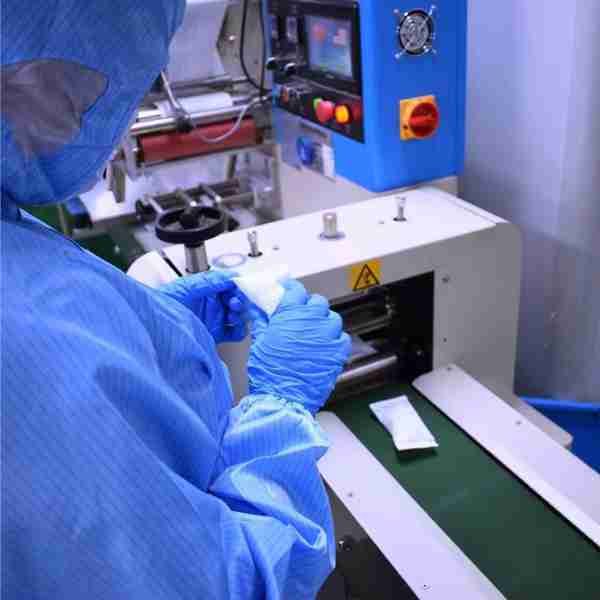

EVA Case Delivery: Packaging, Shipping, Drop-Risk
(1) Unit-Level Packing: Protect Surface, Shape, and Accessories
At the unit level, they should confirm:
- whether the case needs a protective bag or sleeve,
- whether inserts or accessories are packed inside or separately,
- whether movement inside the case is controlled during transport,
- whether surface finish needs anti-scuff protection,
- whether logo areas need extra protection.
Why this matters:
A case can be structurally fine but arrive with surface marks, deformed appearance, or internal accessory displacement if unit packing is not planned.
For premium or retail-facing projects, unit-level presentation is also part of the brand experience.
(2) Carton Packing Logic: More Than “How Many per Carton.”
They often ask only for carton quantity, but carton packing quality also depends on:
- product orientation in carton,
- weight distribution,
- void fill/compression control,
- carton strength suitability,
- whether mixed SKUs are clearly separated and labeled.
For EVA structured cases, over-compression in cartons can affect appearance if packing density is pushed too far. “More units per carton” may reduce freight cost on paper, but increase delivery-risk cost if the cases deform or surfaces rub.
A better approach is to balance:
- freight efficiency,
- delivered appearance,
- damage claim risk,
- warehouse handling practicality.
(3) Shipping Route and Handling Risk Awareness
The same packing method may perform differently across:
- courier shipments,
- air freight,
- sea freight,
- domestic transfer and export consolidation,
- long warehouse storage before final delivery.
They do not always need to redesign the product for shipping, but they should communicate:
- shipping route type,
- destination climate concerns (if relevant),
- stacking risk,
- palletization needs,
- labeling or barcode rules,
- whether cartons will be opened and re-packed by a distributor.
This helps the factory recommend a more suitable packing method and label workflow.
(4) Drop-Risk Reduction Is a System, Not a Single Test
They often ask, “Is it drop-proof?” A better question is:
What combination of case fit, insert support, and packing method reduces damage risk during real transport?
Drop-risk reduction depends on:
- product stability in insert cavities,
- support/relief logic around weak points,
- closure behavior under movement,
- carton packing density,
- handling conditions.
That means even a strong EVA shell cannot solve all transport damage risk if the product moves inside the insert or if outer cartons are overloaded.


Why Jundong: EVA Case Development Support
Jundong is positioned as a manufacturing partner serving overseas partners who often need more than simple product sourcing. Projects may include custom structure discussion, accessory layout planning, sample revision, and long-term repeat production support. For EVA and foam insert cases, this matters because the project’s success depends on coordination among case structure, foam insert fit, accessory organization, and bulk QC, not on any single case structure, foam insert fit, accessory organization, or bulk QC, but on an integrated production processcase structure, foam insert fit, accessory organization, and bulk QC, not just one isolated production step.
What partners usually need from an EVA and foam insert supplier
A strong supplier for this category should support them in five practical areas:
Requirement translation
Turning product dimensions, photos, and usage notes into a workable case-and-insert direction.
Development coordination
Managing sample revisions with clear focus (fit, closure, access, layout) instead of random appearance-only changes.
Production consistency control
Keeping approved fit and functional behavior stable in bulk.
Communication efficiency
Reducing back-and-forth caused by unclear assumptions.
Scalability for repeat orders
Supporting ongoing supply once the SKU is validated.
These are exactly the areas where your broader company setup supports trust. Based on your factory introduction materials and internal planning direction, Jundong has the kind of structure they look for in long-term cooperation: development design support, sample capability, organized production resources, and dedicated QC capacity—which are more meaningful than generic “high quality” claims when the product is a fit-sensitive protective case system.
Why is this relevant specifically for EVA and foam insert bags
This product category creates recurring challenges:
- sample fit vs bulk fit drift,
- accessory placement inconsistency,
- closure pressure issues after loading,
- mixed-SKU packing confusion,
- revision loops when early requirements are unclear.


Make A Sample First?
See your idea come to life before mass production.
At Jundong Factory, we offer free design mockups and custom samples to ensure every detail is perfect — from material and color to logo placement and stitching.
Start your project with confidence today: info@jundongfactory.com.
EVA Foam Insert: Decision FAQ Hub
How can we judge whether an EVA case with foam insert design is truly suitable for our product—not just “it fits”?
A suitable EVA case with foam insert is not defined by fit alone. It also needs to provide stable protection, smooth access, easy repacking, and consistent bulk results under real working conditions.
This matters because many case projects look fine during sampling but show problems later in daily handling, transport, distributor packing, or repeat production. The main reason is simple: many teams only check whether the product fits inside, while a reliable case should be judged through several layers.
1. Functional Fit
Fit should mean more than matching size. They a should check:
- Does the product sit securely?
- Is there internal movement during handling?
- Are fragile areas protected from pressure?
- Can the item be removed easily?
The best fit is usually controlled fit, not the tightest fit. Cavities that are too tight can damage foam and slow use. Cavities that are too loose can raise movement and damage risk.
2. Use Compatibility
A good layout must match real use:
- Who opens the case?
- How often is it used?
- Do users remove one item or several?
- Can accessories be returned quickly and correctly?
A clean-looking insert may still fail if grabbing, sorting, or repacking feels awkward.
3. Transport Reliability
The case should also work well during shipping and movement. Useful checks include:
- Stable internal positioning
- Proper closure after loading
- Lower accessory shifting risk
- Good carton packing compatibility
4. Bulk Consistency
A good sample is only the start. The real test is whether the same fit and user experience can be repeated in bulk through practical insert tolerances, fit-check standards, loaded closure checks, and clear approval criteria.
A strong design should stay reliable from sample to bulk, shipment, and daily use.
What is the right sampling process for a custom EVA case with foam insert if we want to reduce rework and protect bulk quality?
A strong custom EVA case sampling process should follow clear stages: first confirm fit and structure, then refine appearance and details, and only after that lock the bulk approval standard.
Many teams focus only on sample cost, but the bigger issue is whether the sample process reduces risk. A nice-looking prototype can still create problems later if fit, closure, insert function, or repacking logic were not checked properly. A staged workflow helps reduce rework, improve communication, and make later inspection easier.
Recommended sampling stages
1. Feasibility review
Before sampling, confirm:
- Product size and weight
- Accessory list
- Use scenario
- Fragile areas
- Opening preference
- Key priorities such as compact size, easier access, cost level, or presentation
2. Fit and structure sample
This is the most important stage. Check:
- Does the product sit securely?
- Is removal easy and natural?
- Do accessories stay organized?
- Does the case close safely when loaded?
- Does the structure match real use?
3. Real-use revision
The sample should be tested through:
- Repeated opening and closing
- Repacking checks
- Simulated transport
- Handling by real users
Feedback should be specific, such as:
- Cavity too tight at top corner
- Cable presses on the lens
- Lid pocket adds pressure
- Handle balance feels weak when fully loaded
4. Appearance confirmation
After fit is stable, confirm:
- Surface material
- Color
- Logo method
- Zipper puller
- Lining
- Packaging details
5. Bulk standard lock
Before production, fix:
- Insert layout
- Fit priorities
- Loaded closure standard
- Accessory placement
- Packing and labeling rules
- Repeat-order reference sample
A good sample is not the finish line. It should become a repeatable production standard.
How should we evaluate a supplier’s QC ability for EVA cases with foam inserts if we care about sample-to-bulk consistency?
To evaluate QC ability for EVA and foam insert projects, they should check whether the supplier controls functional consistency—especially insert fit, loaded closure behavior, and packing accuracy—not just visual appearance.
This is a strong procurement question because many suppliers can show acceptable sample photos, but not all suppliers can maintain repeatable functional quality in mass production. For this product category, they should avoid evaluating QC only by generic claims like “100% inspection” or “strict quality control.” Those phrases are common, but they do not tell you whether the supplier understands the real failure modes of an EVA case with a foam insert.
What makes QC different for EVA and foam insert projects?
This category combines multiple quality variables:
- shell shape and closure behavior,
- foam insert cavity fit,
- accessory placement and movement control,
- loaded-condition usability,
- packing and labeling consistency.
That means a case can look clean on the outside and still fail in practical use. Example failures include:
- cavity too tight in bulk, product hard to remove,
- cavity too loose, product shifts in transit,
- lid pocket presses on fragile area,
- zipper closes well empty but strains when loaded,
- Accessory slots are inconsistent, and repacking becomes confusing.
A supplier that checks only the outer appearance will miss these issues.
How to evaluate supplier QC ability
(1) Ask what they check by stage, not only “Do you have QC?”
A capable supplier should explain checkpoints such as:
- incoming material checks,
- in-process assembly checks,
- foam insert fit checks,
- loaded-condition closure checks,
- Final inspection and packing verification.
If the answer stays at “we inspect before shipment,” that is not enough for fit-sensitive case projects.
(2) Check whether they inspect the function, not only the appearance
For EVA and foam insert projects, functional QC is critical. Ask:
- How do you check insert fit consistency?
- Do you test closure with actual loaded contents?
- How do you check accessory placement repeatability?
- How do you verify no pressure on weak points (if required)?
These questions help you identify whether the supplier understands the product as a protection system.
(3) Ask how they connect sample approval to bulk QC
A strong supplier should be able to describe how approved sample priorities are translated into production checks. For example:
- “screen corner must not be under lid pressure.”
- “main unit should be removable with one-hand pull.”
- “cable must stay in assigned slot after handling”
This is where sample-to-bulk consistency is built. Without this connection, “approved sample” and “production inspection” can become two separate worlds.
(4) Check packing and labeling control for delivery
Many partners’ complaints happen after the product leaves the factory. Ask:
- Do you verify carton labels or SKU separation?
- Do you check the packing method against the confirmed standard?
- How do you reduce mixed-SKU packing errors?
How should we evaluate MOQ and lead time for a custom EVA case with foam insert without getting misled by a “fast quote” or “low MOQ” promise?
The right way to judge MOQ and lead time for a custom EVA case with foam insert is to look beyond the headline numbers. What matters more is the development logic behind them, including case structure, insert complexity, material setup, packaging scope, and revision workflow.
Many teams compare factories by asking only for the lowest MOQ or fastest delivery. That sounds efficient, but those numbers may be based on very different assumptions. A low MOQ may only apply if the project uses standard material color, simplified insert layout, basic logo treatment, no custom packaging, and limited revisions. That can still work for a pilot run, but only if the scope is clear.
A better question is:
- What MOQ is realistic for this exact case structure, insert design, and packaging plan?
- What assumptions is that based on?
Lead time should also be broken into stages:
- Development time — review, sample making, testing, revisions
- Production time — material preparation, shell forming, insert cutting, assembly, inspection, packing
- Shipping time — based on route and delivery method
This makes comparison more accurate.
It also helps to ask which changes may affect MOQ or lead time later, such as:
- Insert cavity changes
- Accessory quantity changes
- Logo process changes
- Late packaging additions
- Repeated function revisions
- Mixed-SKU packing rules
A useful factory does more than give a fast quote. They should also explain what can start immediately, what needs approval first, what can run in parallel, and what may cause a delay if changed late. That is usually a better sign of reliable project planning.the
How do we choose the right foam insert type for our EVA case (single-layer, layered, egg-crate, hybrid, etc.) based on product protection and use scenario?
The right foam insert type is chosen by matching product geometry, fragility, accessory organization, access frequency, and repacking behavior—not by copying another case style.
This is a very practical question, and it directly affects protection quality, usability, and total project cost. They start with a visual reference (“we want this type of insert”), but the insert type should be decided by function first. Two cases can look similar on the outside and require very different internal structures.
For EVA cases with foam inserts, the insert is not only a filler. It is the core system that controls:
- product positioning,
- movement reduction,
- accessory organization,
- opening presentation,
- user handling speed.
(1) Start with product and kit behavior, not insert appearance
Before choosing the insert type, define:
- Is it one main product or a multi-item kit?
- Are there fragile points that need relief zones?
- Is the product removed often?
- Do users need fast repacking?
- Is the case used in field work, demos, retail, or storage only?
These answers usually matter more than “which insert looks premium.”
(2) Common insert approaches and when they are useful
Single-layer custom cavity insert
Useful when:
- one main product is the focus,
- accessory count is low,
- compact structure is preferred,
- easy production and lower complexity are priorities.
Benefits:
- simple layout,
- easier QC,
- often cost-friendly.
Watch-outs:
- limited vertical zoning,
- less flexibility if many accessories are added later.
Layered insert system (multi-layer)
Useful when:
- There are many components,
- different heights must be managed,
- product and accessories need separate levels,
- Presentation and organization both matter.
Benefits:
- better zoning,
- cleaner organization,
- can improve access logic when designed well.
Watch-outs:
- more complexity in design and assembly,
- more points to control in QC,
- Changes later may affect timing/cost.
Egg-crate / wave foam in lid (usually as a support layer, not a full solution)
Useful when:
- light top-side stabilization is needed,
- contents need gentle contact control from the lid,
- combined with a custom bottom insert.
Benefits:
- helps reduce movement in some cases,
- supports lid-side contact management.
Watch-outs:
- should not replace proper bottom support for fragile products,
- can create pressure issues if used without fit planning.
Hybrid insert solution (custom cavities and top support / mixed zones / different materials)
Useful when:
- protection needs vary by component,
- some items need tight control and others need quick access,
- The kit has mixed shapes and use priorities.
Benefits:
- best flexibility for complex kits,
- can balance protection + access + presentation.
Watch-outs:
- needs stronger design logic and a clearer sampling process.
(3) Choose based on “how the kit is used after opening.”
Many insert decisions fail because they focus on storage and ignore workflow. Ask:
- Which item is removed first?
- Which item is used most often?
- Which item is hardest to repack correctly?
- Does the user need to identify items quickly?
This helps avoid layouts that look clean but are slow in real use.
(4) Ask the supplier to explain trade-offs, not just recommend one type
A good supplier should explain:
- why one insert type fits your scenario,
- what trade-offs exist,
- What changes if accessories increase,
- how the insert type affects QC and lead time.
That explanation is often more valuable than the inserted type name itself.
Can we design an EVA case with foam insert that balances protection, presentation, and user efficiency at the same time? If yes, how do we avoid trade-off conflicts?
Yes, protection, presentation, and user efficiency can be balanced in one EVA and foam insert case, but only if the layout is planned by usage priority and validated in stages instead of optimized for appearance first.
This is a high-value client question because many teams want the case to do three jobs at once:
- Protect the product,
- Look organized and professional when opened,
- support fast and repeatable user handling.
That is absolutely possible. But projects often fail when one goal is optimized too early—usually visual presentation—before protection and use-action logic are proven.
For a custom EVA case with a foam insert, the right approach is not to choose one goal over another. It is to define the priority sequence and build the layout around real use behavior.
(1) Start with “must-protect” zones and “must-work” actions
Before discussing symmetry or display effect, define:
- which product areas must not be compressed,
- where support is needed,
- what the first user action is after opening,
- which items are frequently removed,
- What repacking mistakes happen most easily?
These items form the functional backbone of the insert layout. If this step is skipped, the project may look premium but work poorly.
(2) Separate “visual neatness” from “functional clarity.”
They often request a visually symmetric layout. Symmetry can be good, but it is not always the best for user efficiency. A better goal is functional clarity:
- users can identify parts quickly,
- grab points are usable,
- accessory grouping makes sense,
- high-frequency items are easy to reach.
A layout can look very neat in a photo, but still create slow handling if users need to pull items awkwardly or move other parts first.
(3) Design for the opening sequence, not only the open-state photo
A common design mistake is optimizing the case for one “hero image” (open case display) without checking:
- how users open it,
- what they remove first,
- whether the lid interferes,
- whether items can be returned in the same order.
For field service kits, demo kits, or medical support kits, the opening sequence is part of the user experience. Good design considers both:
- open-state presentation
- workflow after opening
(4) Use staged validation to reduce conflicts
The best way to avoid trade-off conflicts is staged sampling:
- Round 1: protection and fit logic
- Round 2: handling and repacking efficiency
- Round 3 (if needed): visual/detail refinement
This does not always mean three full sample rounds. Sometimes one round can test multiple goals. The key point is that the team should evaluate each goal intentionally, not assume all goals are solved because the sample looks clean.
(5) Ask suppliers how they resolve layout conflicts
A good supplier should be able to discuss trade-offs such as:
- tighter fit vs faster removal,
- compact size vs easier access,
- symmetric presentation vs priority access layout,
- more accessories in one case vs handling clarity.
These trade-offs are normal. The value comes from making them visible early and choosing intentionally.
How should we compare EVA case suppliers fairly for a custom foam insert project beyond price only?
The fairest way to compare EVA case and foam insert partners is not by unit price alone. A lower price can look attractive at the quotation stage, but the real project cost often appears later through extra revisions, slower progress, fit problems, packing errors, and repeat-order inconsistency. A better comparison looks at total execution reliability.
1. Compare the scope before the price
Before comparing numbers, confirm whether each quote covers the same scope:
- Custom insert design or simplified insert
- Logo method
- Packaging details
- Sample rounds
- Inspection scope
- Packing and label requirements
A lower quote may simply include less.
2. Compare understanding during early communication
Strong teams usually ask about:
- Fragile areas
- Use scenario
- Accessory layout
- Repacking actions
- Loaded closure
- Timeline assumptions
Useful questions often tell you more than a fast quotation.
3. Compare development workflow
Ask how the project is handled from:
- Feasibility review
- Sample priorities
- Revisions
- Bulk approval
- Sample-to-bulk control
A clear, staged process usually reduces confusion and saves time.
4. Compare function checks, not just appearance checks
For foam insert cases, useful inspection should cover:
- Insert fit consistency
- Closure under loaded conditions
- Accessory positioning
- Packing and SKU accuracy
5. Compare communication and decision support
Look at whether the team can:
- Explain trade-offs
- Flag missing data
- Give clear next steps
- Support faster decisions
6. Compare repeat-order readiness
Also, check how they manage:
- Approved reference standards
- Change tracking
- Batch consistency
- Improvement or replacement requests
A stronger choice is usually the one that supports fit, workflow, communication, and repeat stability, not only the lowest unit price.
What RFQ information should we send first for a custom EVA case with foam insert so the supplier can give a more accurate quote and faster project direction?
A strong first RFQ for a custom EVA case with foam insert does not need to be perfect, but it should include enough information for a useful feasibility review, layout judgment, and quotation direction. The goal is to help the case team understand fit complexity, insert structure, use scenarios, likely MOQ, lead time, and next clarification points.
A useful first RFQ usually includes:
1. Product basics
- Product name or type
- Dimensions (L × W × H)
- Weight
- Quantity per case
These are the starting points for case size and insert layout.
2. Photos or reference files
- Front, back, side, and top photos
- Photos with accessories
- Existing carrying method
- 3D files or drawings if available
Photos help reveal shape risks, protruding areas, fragile zones, and handling limits.
3. Accessory list
- Items to be packed inside
- Approximate sizes
- Which items need separation
- Which items are used most often
Accessory planning often changes to insert complexity.
4. Use scenario
- Storage, transport, field service, demo kit, retail set
- Who uses it
- How often it is opened
- Whether quick access matters
This helps define whether the case should prioritize protection, presentation, compactness, or speed of use.
5. Current pain points
If replacing an old case, explain issues such as:
- Product shifting
- Hard removal
- Mixed accessories
- Lid pressure
- Slow packing
- Oversized case
6. Project expectations
- Estimated quantity
- Timeline
- Market positioning
- Logo or packaging needs
- Labeling or compliance requirements
Even if some details are not final, it helps to mark them as confirmed, estimated, or pending. That usually leads to a clearer and more useful first response.
How can we reduce sample-to-bulk drift and protect repeat-order consistency for EVA cases with foam inserts over time?
To reduce sample-to-bulk drift and keep repeat-order consistency more stable, sample approval should be converted into a clear production standard. Relying on sample photos alone is usually not enough. In custom EVA cases with foam inserts, small changes can build up over time: fit becomes tighter or looser, accessories sit less cleanly, closure feels different when loaded, or repacking becomes less smooth.
A better approach is to define what consistency actually means for the project. That may include:
- Stable insert fit
- Easy removal without forcing
- Smooth closure under loaded conditions
- Clear accessory positioning
- No pressure on fragile areas
- Correct packing and labeling
After sample approval, it helps to create a short approved standard summary. This can record:
- Approved sample version
- Must-pass function points
- Fit priorities
- Loaded closure check
- Accessory placement rules
- Appearance acceptance points
- Packing instructions
- Acceptable variation, if any
Inspection should also follow the real project risks. For example:
- If movement is the main concern, add insert seating and loaded-condition checks
- If shipment mix-ups are the main concern, strengthen packing and label verification
- If usability matters most, include removal and repacking checks
Repeat-order drift often comes from small untracked changes, such as:
- Accessory size updates
- New cable versions
- Packaging changes
- Logo updates
- Material substitutions
- Layout adjustments
A simple change-confirmation step before repeat production helps keep the same SKU from turning into a different user experience. The goal is not just to approve one good sample, but to protect the same fit, function, and packing logic again in future runs.
What are the most common partner mistakes in custom EVA case with foam insert projects, and how can we avoid them early?
The most common mistakes in custom EVA case with foam insert projects usually come from decision order, not technical difficulty. Delays and rework often happen because teams approve too early, compare unmatched quotes, or leave functional priorities unclear.
Common mistakes to avoid
1. Approving too early
A sample may look clean but still fail in real use. Before approval, check:
- Fit stability
- Removal and repacking
- Closure under loaded conditions
- Accessory organization
- Pressure on fragile areas
2. Comparing quotes with a different scope
One quote may include a simpler insert, another may exclude packaging, and another may assume standard materials. Price comparison only works when the scope is aligned.
Use a simple checklist to confirm:
- Insert scope
- Material assumptions
- Logo method
- Packaging
- Revision expectations
3. Sending RFQ data without a clear status
Incomplete data is normal. The problem is when confirmed and estimated information is mixed. A better RFQ should label items as:
- Confirmed
- Estimated
- Pending confirmation
4. Focusing on appearance only
A neat layout may still create poor handling if grab points are awkward, accessory zones are confusing, or lid parts interfere during use. Evaluate the case by opening sequence and user action, not only by appearance.
5. Treating inspection as someone else’s task
After sample approval, provide a short list of must-pass points, such as:
- No pressure on fragile parts
- Correct accessory separation
- Correct labeling and packing
6. Making late small changes
Small updates to accessories, logo method, packaging, or insert layout can affect fit, lead time, and consistency.
7. Choosing only by low quote or fast reply
A better factory review should also consider scope clarity, case understanding, workflow control, inspection logic, communication, and repeat-order support.
Everything You Need to Know Before Customizing Your Bags
EVA case sourcing decisions are rarely based on appearance alone. For procurement teams, a reliable evaluation depends on clear answers around MOQ versus bulk pricing, lead time, EVA shell thickness and hardness, foam insert type and density, cut method (die-cut/CNC/waterjet), fit tolerance standards, zipper and hardware specifications, interior layout feasibility, packing logic, and repeat-order consistency. This FAQ section is designed to address these operational questions upfront, helping you assess supplier fit quickly while reducing unnecessary internal back-and-forth.
We recommend structuring FAQs around real procurement triggers: what information is required to start RFQ and sampling (product dimensions, 3D/2D files, protection targets), how to prevent sample-to-bulk drift in EVA color, texture, shell rigidity, and foam compression, how to align structure and insert layout with real drop/impact risks, how to manage multi-SKU programs (different devices, colorways, and insert cavities) without mix-ups, and which QC checkpoints protect long-term durability and repeatability (incoming material checks, in-process fit checks, final inspection, and basic stress/drop testing). When written clearly, these FAQs also support long-tail search intent, such as “custom EVA case with foam insert MOQ,” “EVA hard case manufacturer,” “OEM EVA case supplier,” or “custom foam insert packaging.”
For a quick evaluation, you can share your case type, target dimensions (or device model), protection goal (drop height/impact points), preferred exterior finish, foam insert requirements (material, cavity layout, tolerance), zipper/hardware tone, and packing requirements by email. Our team will review your inputs and provide structure recommendations, material system options (EVA shell, foam, lining, reinforcement, and finishing), and a realistic development route to support your EVA and foam insert program from fit-verified sampling to stable bulk production and repeat orders.
